FI Veteran and Southern California Startup Accelerator Graduation Featuring Kelly Perdew
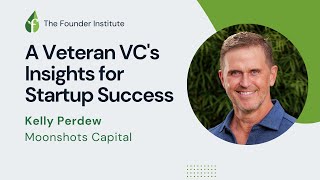
The video records the Founder Institute (FI) Spring 2024 graduation for the Veteran and Southern California accelerator. Host Ryan Micheletti (Head of Global Operations, FI) and co‑host Mike Shcherbakov introduce the event, outline FI’s scale (7,500+ companies, $2 B funding, $20 B portfolio value), and share program statistics (175 applicants, 48 started, 18 graduates). The centerpiece is a fireside chat with Kelly Perdue, co‑founder and GP of Moonshots Capital. Perdue recounts his 35‑year journey from West Point, Ranger School, and military intelligence to law and MBA studies, early angel investing, building syndicates, and launching a venture fund. He explains Moonshots’ investment thesis: a focus on “extraordinary leadership,” especially veteran founders, coachability, and rigorous due‑diligence (red‑flag detection, integrity checks, cap‑table sanity). He shares concrete examples (ID.me equity distribution, the importance of coachability, and the need for a committed fund to invest with conviction). The session then moves to live 3‑minute pitches from the 18 graduating startups, covering a wide range of sectors – nonprofit volunteer coordination (Bugle), emergency communications (SEP Networks), space‑debris removal (Space Cowboy), student‑career platform (MyGPath), curated e‑commerce (Mangrove), smart‑condo rentals (Greetings), medical simulation (Titan Simulation), neuroscience‑music therapy (Mindsonics), wellness fintech (Bloomy), and auto‑parts marketplace (AutoCAD). Each founder presents problem, solution, market size, traction, and funding ask. The event closes with thanks, reminders about JPMorgan veteran fellowships, and encouragement for investors to engage with the graduates.
Chapters
As a founder, you're always selling, right? You're selling the customer, you're selling investors, you're selling your employees on the vision of what's going on. So there's some puffing, but on direct questions, if there's any equivocating or integrity issues or disconnect between, you know, what's actually written down factually and what we find out from evaluating, That's an obvious, very large red flag. And there's, to my knowledge, there hasn't been anybody who's recovered from something that, in terms of us investing after something like that occurs.
Good afternoon, everyone. Welcome to the Founder Institute graduation for the Veteran and Southern California Accelerator Program. My name is Ryan Micheletti. I'm head of global operations for the Founder Institute, and I'm a general partner at the Veteran Fund. It's my honor to host today's event as we celebrate 18 new companies that are graduating from our accelerator program. These companies represent some of the best emerging startups that are coming from the military veteran and the Southern California startup ecosystems. For those of you who don't already know, the Founder Institute is the world's largest pre-seed startup accelerator. As head of operations, I've led the team for the last decade, helping us scale to 7,500 portfolio companies across 100 countries with the largest mentor network in the world of 35,000 mentors. So to kick off the event today, I'd like to welcome our co-host, Mike Shcherbakov, not only my co-director for the FI Veteran and SoCal Accelerator, but also a general partner at the Veteran Fund. So Mike, welcome and thanks for joining.
Awesome, thanks so much, Ryan, and excited to be here. I just want to congratulate all of the founders graduating today. I'm going to run through a quick presentation, talk a little bit about the agenda, and then hand it back over to Ryan and have our inspiring keynote. So again, welcome to the Spring 2024 graduation. Here's a quick overview of the agenda. We'll do a welcome and introduction, and you'll hear an inspiring keynote fireside chat with Kelly Perdue, a sneak peek of the startups that are graduating, just a handful of them from this current cohort, and then some closing remarks so we can end right on time. So if you're not already familiar, Ryan mentioned FI is the world's largest pre-seed startup accelerator with over 7,500 portfolio companies, $2 billion in funding, estimated portfolio value of $20 billion. As you can see, a pretty large global reach. And Adriel Ressi, the founder of Founder Institute, says this, and I think it's a very important quote that we kind of live by, that There's no shortage of problems facing humanity. There's a shortage of ambitious entrepreneurs trying to solve them. So Founder Institute aims to bridge that gap, and you'll see from the founders graduating today, they are all solving something that matters. So FI really does provide lifetime support at every stage. After the founders graduate this core program, they're on to Funding Lab, they're on to raise their pre-seed and seed rounds and get a lifetime of support all the way to some kind of acquisition and hopefully IPO. So here are how the numbers broke down. 175 founders applied to be in the program. 48 of them started 3 months ago. When I first kicked it off, I told them this is gonna be extremely challenging but rewarding. And of the 48, 18 are graduating today. So why? The program is hard and it's meant to be hard because building an enduring business is much, much harder. All of the founders graduating have completed aggressive business sprints. Roughly 30 hours per week of work. They survived epic sprints, reviews from 200 mentors, a lot of harsh criticism and feedback that we value being honest and direct. But the founders that are graduating today really did earn the title of Founder Institute alumni. So without further ado, I want to congratulate all of the new graduates. Here are the 18 startups that are graduating. So big congratulations to them. We'll also put a more formal post on Founder Institute so you can connect with the founders. The companies, learn more about what they're doing, and if you're interested in investing, advising, getting involved, we certainly encourage you to do so. I do want to quickly thank our big program sponsors, Citizen Bank, Holland and Knight, plus the 205 local mentors that have leaned in over the last 3 months and really supported with office hours and supporting with our sessions. A big thank you to all of our ecosystem partners from the universities to the other accelerator programs, the funds. Thank you, thank you, thank you for being involved. And finally, I'm about to hand this back over to Ryan to introduce introduce Kelly Perdue. But if, when I think of an inspiring individual that embodies extraordinary leadership, you can just take a look at some of the bio here on the right. I mean, you know, one paragraph would be enough for one individual. You can see everything Kelly has accomplished and everything he will accomplish over the next several decades. But I just, on behalf of, you know, myself, Founder Institute, the Veteran Fund, Kelly has been an inspiration for all of us since day one. And so just really grateful and honored to have him as the keynote. So let me hand it back over to Ryan to do a proper introduction. Kelly, thank you so much.
Amazing. Thank you, Mike. And so for those of you who are in San Diego, we are doing an in-person graduation event tonight. Go ahead and ping us directly in the chat. I know we're going to be meeting with a lot of the founders that are here today. And then final piece is that our next veteran program starts this fall. So if you are a US military veteran or spouse, you can join the Founder Institute Accelerator Program for free by applying for a JPMorgan Veteran Fellowship. So JPMorgan Chase has generously sponsored up to 50 scholarships for the upcoming program. Founders who are interested in learning more, or if you know a founder who wants to apply to the program, you can go ahead and send them the link I just put in the chat. And they'll be put into the fellowship program. So here's the agenda for today. In a moment, I'll introduce Kelly. We're going to do an awesome fireside chat on extraordinary leadership. Then we're going to bring up 10 founders who are graduating from the cohort to do their 3-minute pitch live in front of the audience. Afterwards, we'll close the event with some final thoughts and send some more information about the in-person event tonight in San Diego. So without further ado, it is my honor to welcome an extraordinary leader from the veteran startup ecosystem who really has been an inspiration not only for Mike and myself, but also for a lot of the founders that are here today. Let's please welcome Kelly Perdue, co-founder and general partner at Moonshots Capital. Kelly, welcome.
Hey, Ryan, thank you very much. And thank you, Mike. And thank you, ADEO, if you're looking at this. I know you've got hundreds of them going on around the world, so it's hard to keep track of them all. But I remember when you launched in Los Angeles in 2010 and I volunteered to be a mentor during that first LA launch you had. So thanks again and keep doing great work.
Yeah, well, thank you and appreciate your support. I mean, you've been a mentor since, yeah, 2010, and it's just awesome to see you coming back into the community now. Maybe we could just start with a quick introduction on you. I know Mike shared the bio, but tell us a little bit about your journey as someone who served in the military that then became a VC investing in startups.
Just condense that 35 years down real quickly.
Yeah, a couple minutes.
Um, so, uh, graduating from West Point, I, um, went military intelligence. Uh, OBC was at Fort Huachuca. I raised my hand and volunteered for Ranger School, completed Ranger training. My first duty station was 7th Infantry Division Light, uh, in Fort Ord in Monterey, California. So, um, my, uh, you know, probably a little bit envious to, you know, some of my, my first home address as a second lieutenant, uh, at a permanent duty station was in Carmel, California. So I was about 3 blocks up from the Hogs Breath Inn, um, Clint Eastwood's place. So that, so that was, that was, that was awesome. I loved that duty station. I, I loved what I was doing in the military. But, uh, the Army in its, you know, wisdom decided to let classes of '89 and '90 out early when they were doing base closures and looking at force reductions and said anybody who wants to get out. And I'd already taken a GMAT and an LSAT. So I went to law and business school. And the reason I went to both of them was, uh, I wanted to, I was of the mindset of like keeping as many options open as possible. And since I'd only really been at West Point and in the military, I didn't know a lot about business. I didn't know a lot about the business world, and I wanted to get as much experience and understanding and knowledge about it as I could. So I picked kind of those two joint, that joint program at UCLA and was able to get into that program. The first year of the program, I started entrepreneuring. And as everybody in the audience knows, it's very, uh, It's like a virus kind of infects you and you just got to go, you want to go solve a problem. And while I was in that program, I raised money for my first startup. It was a video conferencing product. That's how old I am. And we raised a few million dollars and started selling to people like the FBI, Lehman Brothers when it was still around, and some other big companies. But I really kind of cut my teeth on kind of finance and business development. So I learned a lot of the finance piece in business school and the business development pieces from just networking and getting out and trying to make it happen. And those are the skills that I used over time that I still kind of fall back on. That's where I kind of came up. So I'm in the LA ecosystem and I've got a startup, a technology startup, and I'm raising money and I'm meeting all these different people. And back then, the ecosystem was much, much, much smaller than it is now. But I would also run into other entrepreneurs, like I'd meet you two, you were starting something, Ryan and Mike. I'm like, oh God, these guys are go-getters. I really like what they're doing. I know I can help them some here. I'll write a check. And then because I was eating ramen and tuna as a, you know, as an entrepreneur, my checks were very, very small at the time. And sometimes it was only my time. Like I would help with fundraising or I would do something as an advisory capacity. And Over time, my checks got to be a little larger, but I was definitely in the ecosystem investing as an angel. So while I was doing that old-school angel investing, my business partner in Moonshots Capital, Greg Cummings, also a West Point graduate a few years behind me, he had gotten out and was starting his companies. I pulled some angel money together to invest in his company and we got to know each other. He exited that company. And we started sharing deals back and forth and got to like how each other was sharing deals. And we evolved from just writing individual angel checks to running syndicates, which most people have probably heard of by now, but SPVs or special purpose vehicles or single purpose vehicles that are designed to bring together a bunch of checks from and put them into a single company. Helps the founders because now there's only one name on the cap table, whatever that syndicate name is, instead of 20 or 30 or 50 angels. One of the companies that I helped early on before we started running syndicate was called ID.me. And I think a lot of the audience will probably be familiar with ID.me, but that is an example of a cap table, a very large cap table that was, company was being built before syndicates were a thing. So there are a lot of individual, good for each of those individuals having their name on that cap table. So Craig and I started running syndicates until we got to be, the syndicate started to get to $3 million, $5 million. We ran an $11 million $100 million syndicate. So, the network of angels that would follow us and like what we were doing, investing in our deals, got to be much, much bigger and deeper pocketed. The problem with running a syndicate business is it's very difficult to invest with conviction. And for Craig and I, as we looked at all the companies that we'd started, all of the angel investments that we'd made, and then all of the syndicates that we'd run, You know, when we want to invest with conviction, like, I love you too, I want to put money in, and you go, okay, great. You know, we're second-time founders, we're going to raise the money. How much do we put you down for, Kelly and Craig? With a syndicate, I have to go somewhere between $500,000 and $3 million and then spend 2 weeks, 3 weeks herding cats trying to get the people who are in Fiji or wherever they might be to invest their dollars and wire their money before I can commit to you the exact amount I'm putting in. That's why we said, okay, we need to put together a committed fund so that when we meet founders and we want to invest with conviction, we can commit to a check, write a term sheet, go onto the board and help those founders execute on things that they've just never done before, right? We help them clean up their cap table. We help them strategically because Craig and I have 15 operating roles under our belts. There are a lot of things that we made mistakes on that we would want to help the founders that we invest in avoid. And that continued to evolve. And I can get into the thesis of what Moonshot does and why it's important to us if you want to talk about that. But that's been the trajectory. So it was, you know, okay, I'm going to get overeducated, get a JD and an MBA. Oh, now I'm an entrepreneur and that's the virus you can't shake. And so while I'm building companies, I'm writing angel checks, then partnering with my co-founder at Moonshot, Craig Cummings, to write Syndicate checks with our network, and that evolved to raising venture funds, and we're on Fund 3 right now that we're investing out of.
Yeah, that's incredible. And I didn't know about the whole Carmel story. I've spent many late nights at Hogs Breath, so that's cool to hear. You know, there are some questions here. I think Gil mentioned something. I mean, he was being a little sarcastic, but like, do we need to have as impressive credentials as Kelly to be successful in entrepreneurship? I think like at the end of the day, right? I mean, like you put in the work as a starving entrepreneur who was kind of winging it as you were going, you were learning and building, right? And there's this kind of initial phase that I think every great entrepreneur, founder, VC has had to go through that had that sort of like, you know, almost like a, like a tranche of darkness, right? Where you just have to kind of figure it out along the way. Can you speak a little bit more to that? Because there's a lot of, I think, veterans that are interested in entrepreneurship but maybe they're afraid to make that leap because they don't know what they don't know yet.
Absolutely.
So this brings me right back to Ralph's on Olympic on the West Side. Ralph's is a grocery store in Los Angeles. And this was when I was working in the video conferencing company and we'd raised a few million bucks, but not enough for a 20-person company to last very long. And I had been covering my own expenses. I was a co-founder, but I wasn't the CEO. I'd been covering my own expenses, getting a little bit of pay, but not much at all. And I was at Ralph's with my literally full basket of ramen and tuna fish. And they said, sorry, sir, but your credit card is not working. And I'm like, well, that can't be right. And I was about— and it could be right. It was right. I was about $70,000 in credit card debt. I had the JD and the MBA, you know, tuitions piled up. And one summer I had worked for Deloitte Consulting and had gotten an offer after that summer for when I finished school. But I wanted to do the, you know, follow my passion and go after the entrepreneurship. And I called the managing director at the LA office and said, hey, is that, is that offer still available? And could you double the signing bonus? Because if you can, I'll start tomorrow. And they did that. And it took me about 18 months to get back in the black financially to where I could go on to my next startup. So I worked at Deloitte Consulting, working for the man, getting the paycheck. And I will never say a bad word about Deloitte. It's a phenomenal job. You only get certain times in your life when you can learn skills like becoming a quant jock in Excel, or there are different things that you can learn, whether it's presentation development, how you present, you know, we learn a lot of that in the military and at school, but how you learn how to communicate with executives and businesses. There were a lot of great things that I learned working with those really smart people at Deloitte, but you're working for somebody else. You're not building the vision or the dream of the thing that you want to be doing. So that wasn't for me. But it was a phenomenal 18 months to build some more skills and then figure out the next thing that I would jump to and go run with as an entrepreneur. So it is not all roses and rainbows by any stretch of the imagination.
Yeah, you, you really need to put in that work and sort of pay, pay your dues up front a little bit. Um, there's, there's some other questions here, you know, Charles asked a great question around like, you know, what's the single most important character characteristic a founder should develop to grow a unicorn company. Maybe like, can we talk a little bit about moonshots and extraordinary leadership and how you guys view that and apply that?
Sure. So when Craig and I decided to raise a committed Fund 1, we had 73 companies that we'd invested in either as individual angels or via our syndicate vehicle. And When you go out and tell people, hey, I would like you to give me your money because I'm going to go invest it, they want to know very specifically what you're going to do with their money. They have a portfolio and they have to figure out what diversification strategies they have for where they're putting their money. So, you need to describe what stage of the investment cycle you're investing in, whether you're doing a lot of small investments or you're investing with conviction, for a larger percentage ownership on a fewer number of deals, what sector you're going to invest in. They want to know how you are thinking about attacking the market. It's become incredibly competitive as well in terms of being a VC to get into the best deals. That's another reason why knowing what you're good at and what you're doing is important. So Craig and I ran a regression analysis on the 73 companies that we'd previously invested in, a look back and said, What factor could we control for at the time we invested that results in the best outcome? And it unequivocally came down to the quality of the leadership. And I think a lot of VCs say the, you know, bet on the jockey, not on the horse, like bet on the founders, not on the idea. Ours, I think, is a bit more specific and a bit more technical. Likely because we were in a place where a lot of the audience was, which is a place where millions of dollars was spent training us in leadership per se. Like, what is leadership? How do you think about it? How do you take good examples and not use the bad examples? Like specific time and effort, energy training leadership, and not just that, but training how to train leadership. So we have a rubric around how we evaluate founders in looking at, okay, what are the characteristics that are most important for us? How do we evaluate them from company to company? And I saw the conversion funnel of the 18 graduates. To give you an idea of what it's like for, and we're just a micro fund, right? We're a tiny little fund based out of Austin and Los Angeles. And for our fund too, of $36 million that we were investing, we had 5,019 deals come in and we invested in 16 companies out of 5,019. So there's a very, very, very, very tight funnel at the very bottom. And it's, there are a lot of VC funds, there are other ways to get money than VC, but we first cut of anything that we look at, We're looking for demonstrated extraordinary leadership. And yes, military veteran experience is super important for us. And we like to and want to see the deals that have military veterans on the founding team. Of our $210 million AUM, assets under management, total money, the value of investments that we control, about a third of that has gone into deals that have military veterans as part of the founding team. Yep. And there are other factors I think that all VCs look for, right? You want to understand why this team is especially qualified to solve the problem. How big is the total addressable market? Because depending on the size of your fund, you need to have certain size exits and it's very difficult to capture market share. You know, everybody in their business model that I've ever seen has like 10% market share. If I only get 10%, it's going to be the size of a business and it's very, very, very, very hard to get 10% market share and you have to understand and analyze what the real total addressable market is. So all of those things are normal considerations, but first and foremost, because of how difficult entrepreneuring is, the leadership quality is the number one important thing for us.
Is there anything— so obviously military experience is a big factor, right? We like to say that, you know, it's the greatest leadership academy in the world. But what I found through investing through the Veteran Fund is there's a lot of like almost metadata you can pick up about a person based on how they answer questions, when they reply to your emails, and like what their data room looks like. So are there any like meta pieces of information that you look for when looking for extraordinary leaders?
So it is an amalgam, right? There are red flags the other direction. I think some of the things that you just described obviously are not exclusive to military veterans, but attention to detail is absolutely an imperative. The founders that we speak to who haven't talked to a customer in a while or understand exactly what the customers are saying, like if I speak to customer references and they had not talked to the founder, Remember, and I don't know if I said this before, but we invest very early stage, right? We're like what's called late seed, right? So they're approaching $1 million in annual recurring revenue. There's something to evaluate as it relates to the business model, some unit economics. Pricing may not be completely figured out, probably isn't. Team's not fully baked. There may or may not be an institutional investor involved yet. So, but there is enough data to look at and there are customers that we can go talk to and see if they've had correct, you know, the right amount and types of communication with the founding team to really understand what's going on with it. Any hint of anything like, and it's interesting because there's, as a founder, you're always selling, right? You're selling the customer, you're selling investors, you're selling your employees on the vision of what's going on. So there's some puffing, But on direct questions, if there's any equivocating or integrity issues or disconnect between, you know, what's actually written down factually and what we find out from evaluating, that's an obvious, very large red flag. And there's, to my knowledge, there hasn't been anybody who's recovered from something that, in terms of us investing after something like that occurs.
Yeah, that's good to know. A couple of other questions here. So Mickey, one of the founders who's graduated from Carey Lug, he has 3 questions here. You know, you talked about red flags. Can you share some reasons you might decide against investing in a startup that initially caught your interest? Are there other things that maybe you look for?
Yes. So I think this might be in the public domain. When Blake Hall, the founding CEO of ID.me, called me, it was, "Sir, this is Blake Hall." It was like we were on a push-to-talk radio and I was a commander and he was talking to me. And it was kind of awesome because I'd been out of the military for a while. I was like, "Hey, Blake, how you doing? I'm Kelly. You don't have to call me sir." And he had gotten introduced to me from another investor out of New York who said, "Hey, there's an angel investor in Los Angeles who likes military vets, you should talk to him. And because of his amazing attention to detail and understanding of everything that he put together, I was like, okay, I'm going to see what happens here. Let me remember, I was just an individual angel investor that could maybe, maybe at the most stretch to write a $25,000 check. And I spent probably 2 weeks back and forth with Blake, mostly on email, but several calls and we got to the point once where I'm like, okay, send me the cap table. Let me understand what you're trying to do. And he sent me a cap table that had Blake Hall, 3 other people's names, and they all had the same amount of equity. And I'd seen, we'd done 2 or 3 turns on a deck and talked about marketing and all the other components to it. And I, these people had never been on an email thread. I'm like, who are these other 3 people that with the same amount of equity as you? He goes, oh, those are my co-founders from Harvard. And I was like, where are they? He's like, oh, one's in the Navy and one's at McKinsey and one's at Goldman. Or I can't remember, like they'd gone from Harvard Business School off to do whatever they were doing next. And I said, well, you are not gonna be able to raise any capital. They can't own the same amount of equity as you do without either, they have to put money in to equate to this round to have that much capital because they're not doing anything to contribute to the business. And you're going to be too deluded for how long this is going to take over time. So you need to go get them all to agree. This is the hard part. You're going to have to go get them all to agree to come down into 5% total ownership. Not each, cumulative, all 3 of them, you know, 3/5 each. Is that right? Or 5/3 each? 5/3 each. Like, that's all, that's all that, that's all they get. And I thought we were kind of done because that's nearly an impossible task. And 2 weeks later, you know, hey Kelly, got everything worked out. I was like, you did?
How?
Like, was it hard? He goes, only one of them that I had to get a professor, a shared professor that we had together to talk on the phone with them to explain that, you know, 20% of zero is zero, or your percentage here could be worth a lot. And I think that person's probably really thankful now that that that that conversation occurred. But that was an example of, I knew when Blake went and accomplished a very difficult task and was responsive and was coachable on what was required, because a lot of founders would not listen to me and be like, oh, I can figure this out, like, whatever, it's too hard to do that. Or I bet I can get some money from friends and family and do whatever else it is. But showing that there's that coachability and that always comes up in those first, you know, 4 to 8 weeks of discussion when you're thinking about investing in the company. So if they show signs that they are not coachable, that they know it all, there's not a lot of value that Craig and I are going to be able to add. And it also is a little bit close-minded. And we want all of our founders to be constantly curious, open-minded, strong conviction about what they believe, but willing to take input before they make final decisions.
Yeah.
I mean, you know, that's billion-dollar advice. So glad you shared that with Blake. I know we only booked 20 minutes of this and it like in hindsight, like we should have had like at least an hour together. I want to be mindful of your time, Kelly, because I know, you know, it's towards the end of your day now. So let's go ahead and move to some of the pitch pieces. But Kelly, just, you know, thank you so much not only for joining us today, but for everything that you've done to kind of send the elevator back down to veteran entrepreneurs who are in the ecosystem now. You know, when I first got started, you know, back in 2012, like there was no ecosystem, but I knew who Craig Cummings and Kelly Perdue were, and you guys were sort of the beacons and the examples that we were trying to model ourselves after. So thank you for joining us today and appreciate all your time.
Well, you guys are crushing it with the Veterans Fund, and we're excited to work and co-invest with you guys. Thank you for all you're doing to keep passing it, paying it forward. And I'm thankful, I'm thankful, uh, and want to say congratulations to everybody who made it through the course and even those who went through but may not have made it through, but are still thinking about being an entrepreneur. Because I mean, that is the lifeblood of this country. It is the differentiator for what makes this country great. And I feel like even if we're not investing in the military veteran, but we're investing in entrepreneurs in this ecosystem, we're, we're, you know, protecting the country.
Yeah, well, Kelly, thanks again. And yeah, feel free to stick around to watch some pitches and we'll catch up again soon.
And I'll just jump in and echo those words. Kelly, thank you again for being an inspiring leader, a role model of extraordinary leadership. And we'll certainly have to carve out an hour at least next time to do a proper fireside chat because I feel like I have so many more questions. So we're moving into the second half of our graduation where 10 of our graduating founders are going to be practice— are going to be doing their pitches. So think of this as kind of an unofficial demo day. Keep in mind, 3 months ago, 48 founders started the program. Over the last 3 months, they've been perfecting these pitches. They've been getting feedback from mentors, advisors, investors. And so without further ado, excited to hand it off to the first founder that's going to be pitching tonight, Ryan Johnson with Bugle. Ryan, feel free to come off mute, share your screen, and take it away.
Ryan, Mike, thank you so much for having me. Can you hear me?
Loud and clear.
All right. My name is Ryan Johnson. I'm the CEO and co-founder of Bugle. At Bugle, we believe that helping others shouldn't be hard, so we're building software that makes it easy. I'm joined by my co-founder, James Smith, my West Point classmate, our COO, and After graduating West Point, James went on to become a senior trader at Bridgewater and Associates before founding Bugle. Our dev team is led by our CTO, Omar Pineda, who was the former CTO for XVWELL, and our advisors bring more than 40 years of nonprofit experience to the table. In preparation for this venture, we spent 3.5 years in R&D partnership with NC State, went through the Stanford Ignite program, and we're fortunate to go through the PenFed Accelerator. Today, if you want information, you can Google it. If you want a unique place to stay, you can Airbnb it. You want a ride, you can Uber it. But if you want to get involved in your community, good luck, godspeed, we're back to Google. And this is in part because community outreach is challenging and comprised of 3 primary stakeholders: volunteers, nonprofits, and donors. For volunteers, while 1 in 4 Americans volunteer annually, which is more people than have Twitter accounts, over 90% of Americans want to volunteer when surveyed. And of the 1.5 million nonprofits across this country that are making these events possible, it takes over 40 hours to put together a single volunteering event on average. And for donors who are facilitating this impact, they're donating half, nearly half a trillion dollars to charity annually, but 81% of donors are concerned about the impacts their charitable giving. We envision a world where this is entirely changed. For nonprofits, we reduce the time to organize volunteering events by 50%. For volunteers, finding opportunities is as easy as scheduling an Airbnb. And for donors, corporations, and foundations, they can give directly to impact anywhere in the world. Unique to our platform, after these community outreach events are over, each donor and volunteer receives what we call an impact update, quantifying the impact of what their money, time, and resources have achieved. How do we make money? We have 2 primary revenue streams during the seed stage, SaaS and take rate. For our nonprofits that join the platform, they can do so using our freemium model or upgrade to premium and participate in the SaaS. Otherwise, if a donor donates directly over our platform, we take a 1.9% take rate. Today we're empowering over 80 nonprofits across the US and Canada to include Special Olympics, The ACLU, American Red Cross. And today, testing our marketing channels in preparation for go-to-market in just a few short months here in Q3, we're now seeing one new nonprofit join the day on average, or one new nonprofit join Bugle each day.
We're—
the TAM we're going after is roughly $12 billion in size. And of the 1.5 million nonprofits in the US, we're pursuing 50,000 of them that meet our ideal customer profile. We aim to host 8,000 nonprofits on the platform by 2028, generating $70 million in ARR. And unlike our competition, we're at the nexus between volunteer-led fundraising and outcome-based donation marketplace. Today we're raising a $1.5 million seed round led by Command Capital and would love to answer any further questions you have. Thank you so much for your time.
Awesome.
Thank you very much, Ryan. And I just want to encourage all of the advisors, mentors, investors that are joining us either live or watching this recording to please reach out to the founders in these companies if you're interested in participating in their pre-seed or just supporting them in their growth. I also want to make a note that every founder you'll see pitching has a deep why to what they're building. That's core to the Founder Institute's program is week 1, vision, mission. They understand kind of who they are as individuals, why it is they're building the companies they're doing. So you'll see that there's a deep impact part of this entrepreneurial journey, which is a very exciting part of the program for me. So Ryan, congratulations again, really well done with Bugle, and we'll bring it over to Art with SEP Networks.
Hello, everyone. Are you seeing the full screen?
Looks great. Oops, sorry.
All right. Greetings, everyone. I'm Art Salendong. I'm the founder and CEO of SEP Networks. I'd like to introduce you to a wireless technology that will provide communications when it matters the most. Last year, I was sad to see how the wildfires had devastated the town of Lahaina. Over 100 lives were lost, and it took over 5 days to restore power and communications. There was a breakdown in communications causing undue delays in emergency response. Timeliness is critical to saving lives, and today's communications are fragmented, difficult to deploy. I have a proposed solution to support future disasters. My background: I'm an Annapolis grad, former naval officer, former Qualcomm executive. I've been recognized on the Inc. 5000, and the technology I'm presenting today helped me win Virginia's Innovator of the Year. Our solution is a SEP network. It's the ability to instantly communicate device to device without the need for any cell towers, satellites, or a central server. SEP's a software solution on a module that interfaces with your mobile device. SEP provides video, voice, text messaging, and data transfer. The network connects within seconds and automatically reconfigures in a dynamic environment. We've demonstrated video over a kilometer, and the ability to extend that exchanged through relays. We're in discussions with state emergency services including Florida and Hawaii, but there are many other use cases such as the Army and FEMA. There are tremendous opportunities with consumer electronics as well as transportation. The market opportunity is huge. As a dual-use technology, we can penetrate multiple verticals. Peer-to-peer applications such as social media, marketing, or gaming can create an entirely new market. We have 3 patents approved. Emergency management organizations are willing to purchase and sign LOIs now. We have received some initial funding from the DOD, and we've also tested our technology using commercial handsets with excellent results. SEP brings more media-rich functionality, relay capability, as well as spectral efficiency over competitors. It's a software solution where competitors must use their specific hardware. Phase 1 of our go-to-market strategy will leverage DoD R&D funding. Phase 2 module sales will equip emergency responders and other verticals. Phase 3 will be integration on the chipsets using a technology licensing model. Last September, we demonstrated voice and video capability at the Mobile World Congress. Our current module is being productized for immediate sales, and next year we will migrate into a smaller form factor. Eventually, we plan to port our software on the chipsets. My leadership team is former Qualcomm executives with an average of 19 years at Qualcomm. My CTO and I are Naval Academy graduates, served on nuclear submarines. Our team is poised to take this technology forward. I am seeking funding to accelerate productization for immediate sales as well as integrating onto a smaller form factor. The funds will support sales and marketing as well as gaining widespread adoption to make SEP a wireless standard. I thank you all for your time and consideration.
Great job, Art. Thank you very much. Congratulations again on completing the program. You'll notice Art's LinkedIn in the chat. Please connect with him, learn more about SEF Networks, and reach out to him if you'd like to get involved. Next up, we have Joe Guzman with Space Cowboy. And Joe, it's showing you as Yep, perfect.
There we go, now we're good.
Yep, go ahead and share your screen, take it away.
All right, all good.
Looks great.
Hi, my name is Joe Guzman. I'm the founder and CEO of Space Cowboy ADR, aka the Mr. Clean of space, and I Uh, I'm sorry, let me just kill that there. I spent, uh, 16 out of my 28 years of active duty in the Army executing and planning space operations, and I'm what the Army would call a space ops expert. Active debris remediation, or ADR, is cleaning up space debris to make space a safe and sustainable place for all of humanity. And that's important because space debris stands in the way of the development of a $1 trillion space industry by 2030. 2030. My co-founder Aaron Risinger has been recruited to, uh, join me on this journey. He's a 28-year Army Corps of Engineers veteran, and I'm counting on his program management expertise to lead our handpicked team of experts to victory. The problem of space debris has been growing since the 1950s and has reached an unsustainable level, with 1 million pieces of space debris threatening our satellites in low Earth orbit and representing the greatest mission risk to those satellites who are also our paying customers. Although solving space debris is a complex problem, it absolutely must be addressed as part of the critical, critical path towards growing the space economy. Space Cowboy has one of the best and most cost-effective means to do that. Our solution, Space Cowboy, is a microsatellite that reduces space, the space debris population by safe capture and disposal. It offsets collision avoidance expenses that are incurred by our customers saving them 10 to 15% of operating costs and at the same time reduces risk to their capital assets in space. When a piece of debris is identified on a collision course with a customer satellite, Space Cowboy is tasked to conduct what we call rendezvous and proximity operations, maneuvering into close proximity with the piece of debris to collect and share high-quality data. That high-quality data helps drive a better decision on whether no action is required or in the case where a conjunction is verified, Space Cowboy uses its patent-pending capture and arrest mechanism to actually capture and remove the debris. We've got considerable traction with our STTR Phase 1 completed with Space Force and generating interest from our future customer, PEO Assured Access to Space, as well as other commercial companies, and shaping U.S. policy by our participation and leadership in COSMIC, which is a consortium led by NASA. We have a fee-for-service business model where we will capture 3,000 pieces of debris per year, driving the cost per capture down from over $200,000 per capture to just $45,000 per capture, making ADR a compelling alternative to risk reduction practices of our customers today. It's a, it's a huge market with a $400 billion TAM, which represents 300 million pieces of all all size, all debris in all orbits. The serviceable addressable market of $80 billion is the 1 million pieces of medium debris in low Earth orbit, and which we will capture $240 million of ARR using our 30-satellite constellation. Space Cowboy really stands apart from its competitors that are either focused on SSA and not actually removing debris, or in the case of our large debris removal counterparts, focused solely on large debris removal. Space Cowboy really addresses the medium debris problem. That's important because there are fewer policy hurdles to medium debris collection. The target population is, is scale is much, much larger. And these are actually representing an acute threat to specific customer assets, which means paying customers. Large debris removal actually has, is hindered by international policy restrictions, has a smaller population of targets, and really looks at the long-term threat to the general population and and makes it harder to capture paying customers. We're on the road to a great business with a 4-year plan to launch our Space Cowboy 1 initial operation capability, 3 years of scaling to reach our full operation capacity, with our go-to-market strategy being a focus on the government first to secure non-dilutive capital and sole source contracts from Space Force, NRO, and NASA to help us drive down costs as we transition over to the much larger commercial space opportunities of the future. We're raising $1.5 million to prototype our capture and arrest mechanism and host spacecraft digital twin and conduct hardware-in-the-loop testing. I'm Joe Guzman. I'm the Mr. Clean of space, and Space Cowboy rounds up space debris.
Awesome, great work, Joe. I encourage everyone to connect with Joe and Space Cowboy through his LinkedIn URL that's in the chat. Go ahead and unshare your screen, Joe, and let Congratulations on graduating. Over to Zoe with myEDU path.
Hi everyone. Can you see it? Can you hear me?
Looks great.
Yep.
Hey. Hi, I'm Zoe and I am passionate about student success. I want you to meet my student Laura. She's a talented PR senior, excelling academically but feeling lost in her career path. Despite her talent, she's uncertain about reaching her dream role and lacks support from her college. Post-grad, Laura is stuck like many—no job, feeling down, dreams on hold. But it's bigger than her; it's a major financial crisis, with 20 million students facing uncertain futures and mountains of debt, finding a solution isn't an option. It's a must to prevent the whole generation from financial despair. That's where MyGPath steps in. We are helping students like Laura transition smoothly from college to career. We assess her skills, interests, and job needs to create personalized career plans while offering professional networking that is missing in college. Our platform analyzes online data to understand job requirements. It evaluates student skills and matches career path with relevant coursework and internships. With us, Laura gains clarity and gets 50% more prepared to her dream career in just 3 semesters of college. MyJewPath stems from my own struggles as international student navigating job searches With over 5 years of global education experience, I've crafted personalized plans for hundreds of students and seen their benefits. I'm partnering with Yavor from Amazon, Margarita from Microsoft, Walter, our AI genius, and Nick, MBA grad. And together we bring a powerhouse of over 20 years of combined edtech expertise. The career and education counseling market is thriving, and our goal is to capture 20% of obtainable market within the next 3 years. Our business model centers on student subscription. We fine-tuned our pricing through customer interviews to meet their needs. Yet we see a huge potential in teaming up with career services and companies. We are reaching customers through student ambassadors, partnering with student organizations, professors, and career services. Currently testing our beta features with students from 5 colleges. And last week, our in— summer internship program launched and attracted over 50 applications in a week without any ads. I personally interviewed 15 candidates and closed 8 sales in just 3 days, and we are partnering with 7 companies for this pilot phase right now. While our competitors have market presence, none of them offer personalized attention to each unique career path like we do. And we directly engage with students, ensuring tailored support at every step of their journey. We are seeking partnerships with universities and companies and reaching out to angel investors to help us develop MVP through the summer. Come join us on this journey as we empower students like never before.
Thank you very much, Zoe. Congratulations again on graduating. I encourage everyone to connect with Zoe on LinkedIn, as you see in the chat. And we'll bring it over to Stefan with Mangrove. Okay, can everybody see that? We cannot see your screen yet. There it goes.
Okay.
Can we see that now?
Yep, looks good, Stefan. Good.
Okay.
This is our why. Mangrove trees represent a huge majority of the biodiversity of sea life. Worldwide. They basically have this root system that, uh, it's like a tangled maze of roots underwater, and it creates these little crevices for smaller fish to survive. Basically, without mangroves, you'd have the big fish basically eating all of the small fish. This same thing happens in marketplaces, and it can lead to the destruction of a diversity of brands and products. This is why we're building Mangrove, an everything store to protect and nourish great products. Here's my team. In 2011, I pitched selling half-price paddleboards direct to consumer on Shark Tank. Mark Cuban invested, and within 4 years, we landed on the Inc. 500 without spending a dime on advertising. We did $40 million in sales. We basically disrupted the middlemen, which were retailers. Unfortunately, new middlemen have emerged. Today, Amazon takes a 50% cut of each seller sale on average. Google searches, it's a similar story. The problem this has created is that visibility for great products sucks. It's pay to play or don't be found today. Brands are stuck dealing with crippling expense, complexity, and extortion. The solution here is to build a better tool for finding great products, one that's based solely on merit. It's gotta be cost effective, uncomplicated, and high trust. Our company, Mangrove, is building an entirely new type of e-commerce store that sells nothing, but instead helps shoppers find the top 3 products in any product category known to man in about 10 seconds, and then buy direct from those brands. We take no cut of sales. Our secret sauce here is we don't buy or sell anything. We just make the top 3 picks. This allows us to be a one-stop umbrella over everything. Every product, every brand, and even every other store. Our top 3 picks are selected by our shopkeepers, freelance category experts that are paid like Uber drivers, and the whole process is audited. They're paid a 30% revenue share up to $1,000 per category per year, and they can curate 150 categories. Our MVP website is live and we're building out the first 1,000 categories. Over the next 18 months, we aim to pick the top 3 products in 9,000 product categories and convert 15% of those to our $95 per month enhanced listings and a smaller subset of this to our higher-dollar category sponsorships. Using the principle of reciprocity, we pick the top 3 products for a new product category, and then we give each of those brands a free listing on our website and an award for their top 3 win. And then we try to upsell them to a $95 per month enhanced listing. We estimate our SOM to be $1.5 billion, which is comprised of inexpensive enhanced listings plus high-dollar category sponsorships. We're really the only competitor out there that gives people everything they love about stores plus leverages all of the major retail disruptions of the digital age, all in one solution. We're raising $2.5 million to build out the first 9,000 categories, and our goal is to achieve a $4.5 million ARR within 18 months. Thank you.
Great job, Stefan. Thank you very much. Congratulations on the success with Mangrove, and congratulations on graduating the program. Next up, we have David with Greetings.
Mike, can you see it?
Yep, looks great. I appreciate the opportunity. Thanks, FI, Mike, and Ryan for the mentorship. Kelly, that was inspiring and so cool to see everyone, how far we've come. My name is David, and my company Greetings provides well-furnished smart condos for midterm rentals. We're similar to Airbnb, but the company owns the homes. This is a similar return profile and patterns as to buying homes after the financial crisis because the way people live and work has forever changed. We're getting the band back together. Joseph can develop you anything and then some. Jessica acquired homes across the states on behalf of sovereign wealth, has title and escrow experience, and owns a real estate brokerage. Kelly is an international award-winning attorney and set up a banking transaction of $1 billion. And I acquired about 5,000 homes and then managed portfolios, developing a lot of useful software with teams cross-functionally. Flying around with cashier checks to buy homes at auction. Working for those companies was a gift. The marketplaces don't own the homes, and therefore the quality is inconsistent. There's not enough furnished midterm rentals, and customers waste time wondering if the property will be available and what the quality will be like. So we buy good homes in great locations and provide consistent quality in the midterm rental market. And our software provides— creates seamless transactions. Users land on the website, create a free account, they're presented with company-owned homes in pre-vetted locations. Click, click, boom, lease is generated. We have extremely strong traction, 4.9 out of 5 stars, a Superhost rating from Airbnb reserved for 10% of hosts on the platform, extremely strong and consistent cash flow. You're one. We're gonna buy 25 condos and we're gonna finalize version 1 of the software, which has these subset of features. Real estate is valued based on income, and the software produces more income, reduces expenses, and provides the personalized experience for the customers. Customers will be able to walk into any one of our homes anywhere in the world and it will be dialed into their settings. We're going to tap into the equity created by assembling a portfolio of cash-flowing homes and buy more homes. The goal is 2,500, and our revenue is from rent appreciation, tax advantages such as depreciation and expense. We're going to go to market organically and pay-per-click, and because we provide outstanding memories, customers are going to continue to refer us. And some home sharing sites such as Airbnb— no company owns 100% of the homes. We target single-family homes, condos, in highly desirable area where people want to be. We're seeking an investment of $5.3 million to acquire 25 condos, 2 years of runway, and to get to an extremely strong version 1 of the software, which will yield a top line of $1 million a year. We appreciate the opportunity and very much have enjoyed being a part of FI. Thank you.
David, well done. Congratulations again on graduating. Next up, we have Troy with Titan Simulation. And Troy, it looks like you're on mute and video is off. Yep. Ready to rock.
Great. Can you see that?
Okay. Looks great. Great. Hi, mentors.
I'm Troy Royston, CEO of Titan Medical Simulation. I retired as an Army medic, and when I first joined, I got 4 months of training before going off to combat. Nothing I trained on prepared me for seeing my first amputation, so I vowed to make training better. Now I'm a published academic scientist bringing medical simulators to market, and I'm assembling a team of world-class experts in the field of material science, medical education, health policy, and insurance mandates. In fact, the vice presidents for healthcare for 3M and Mayo Clinic are joining our company because they believe it's the real deal. We're shaking up the medical education space by providing realistic tissues with models with sensors for data collection. It's like a flight simulator for doctors. The third leading cause of death right now is medical error, and 90% of that is poorly trained doctors. Doctors, this comes down to time, money, and lives. It takes too long to educate doctors right now. Over 10,000 hours per procedure and over $17 billion are the cost of these errors that resulted in over 250,000 deaths just last year alone. Medical education is just broken, and as costs rise, training must change with the times. Old models are vinyl and plastic, and we can't even access animals and cadavers anymore. Our solution is better training, physical models and tissues with added VR plus sensors to reduce clinical training time. We've gotten novices to experts in under 2 hours at 1/10 the cost of our competition. We're increasing patient safety and saving lives with a reduction of clinical error by 40% already. These are the most realistic tissues and you never have to train on an animal or cadaver again. We have 3 product components. We have tissues, These are the practice models that— and mannequins you work on. Then we add AR and VR for pathology overlay and sensors for assessment. In just a few months, we've sold to 13 hospital systems that have trained over 1,200 doctors. We also have strategic partnerships locally with the Mayo Clinic, Lucid Reality Labs, and Children's Hospital. To the best of our knowledge, we have a highly scalable business model with a $2.49 billion TAM, and we're focused on first responders. That's 3% of the market. To unlock the next level of, of this funding, our vision is for certification of all healthcare providers on all medical skills. We're in phase 1 of our 5-year plan of selling these tissues. That, those mannequins get us to $1 million ARR. Phase 2 is the rental of the technology for large courses. That's the $10 million market. And phase 3 uses those sensors and certifications for all healthcare providers with individual subscriptions for $100 million ARR. We've reached a unique spot in terms of cost and realism, and in over 10,000 user interviews, we've determined this list of priorities that we are the only ones to meet the need for affordable realism. We have 3 go-to-market strategies. Like I said, first, first responders and government. We have local distributors and 2 LOIs with ECAT on that government catalog already. And as a dual-use company, we have strategic name partnerships with with Mayo Children's and the DOD. Our goal is to ask for $1 million to get to $10 million ARR by the end of 2025. We want to increase our customer acquisition and grow on an annual basis. So join us at Titan Simulation where better training doesn't have to cost you an arm and a leg.
Awesome, great work, Troy. Really well done. Congratulations on graduating. Next up we have Nakea. And just a quick time check, we're going to be wrapping up in about 10 minutes here. So again, thank you all for joining us, whether virtually now or watching the recording. Nikkea, over to you.
Thank you. Can you hear me okay? We can hear you great. Okay. I'm joining you from Bali. My name is Nikkea Davida of Mindsonics, where neuroscience meets the healing power of music. I'm a seasoned COO, project manager, and singer-songwriter. I'm an Air Force Academy grad, master's in business from USC Marshall, and certificate from Musicians Institute. On our team, we have a music producer to Grammy winners, a certified sound healer, data-driven marketing team, fractional CTO, and software developer. Post-traumatic stress, pts, is a $232 billion problem affecting 24 million people, which leads to 35 other symptoms like anxiety, depression, obesity, and addiction. I understand this market because I am this market. I was hospitalized for 4 months with a severe eating disorder, bulimia, medically discharged from the Air Force for PTSD and MST, military sexual trauma. In '95, I learned in neuroscience that our subconscious beliefs drive over 99% of our results. With Mindsonics, you can reprogram your subconscious beliefs in the time it takes to listen to a Mindsonics song. Mindsonics is different than alternatives like Headspace, Calm, with only meditation and relaxation techniques. Mindsonics reprograms beliefs at root cause to overcome trauma and increase peak performance. We have many beliefs around an issue, which means hundreds of thousands of beliefs to reprogram. When I reprogram my beliefs from negative to positive, my eating disorder got better in 6 weeks. We have 1,000 past paying clients generating over a million in revenue from our DVD line. I've been doing this for 20 years in a physical low-tech way, and I believe now's the time to optimize our product by building an app that can help millions of people globally. We have hundreds of success stories from people who've improved their mental health and wellness, confidence, finances, relationships, ideal weight, and more. The subscription is $997 a year, $497 each additional user. They can purchase additional categories, and we give back with our Buy One, Vet One Free campaign, which sponsors a military veteran for free. Users get 12 life areas called belief categories that address mental and emotional health, wellness, relationships, and more. Each category has 30 beliefs that users can do a before and after assessment using biofeedback to verify the process is complete after listening to the song. This is a one-and-done process. Mindsonics is the fastest, most effective subconscious belief change system in the world. It's safe, easy, and it works better than alternatives. We have copyrights for trademarks in process, trade secrets, and a potential for a patent later. Our early adopters are purpose-driven leaders, entrepreneurs, and holistic practitioners. We'll use social media ads with data-driven metrics and direct response marketing to find product and channel market fit at the lowest customer acquisition cost, highest conversion rate, reducing the guesswork. With $300,000 in funding, to the best of our knowledge, we believe we can sell 1,000 subscriptions for $997 a year to reach $1 million in ARR in 18 to 24 months to fund the software development, production, and marketing. I'm looking for a full-time CTO co-founder for the tech team. Let's connect if you can make introductions and you'd like to support Mindsonics to do well by doing good. I'm Nikia Davida.
Thank you. Nikia, really well done. Thank you for joining us. I know it's 2 in the morning over in Bali. Congratulations again on graduating the program. We'll miss you at the in-person mixer this evening, but look forward to connecting again in person. So really well done. Thank you, everyone. Over to Bray.
Awesome. Thanks, Mike. Thanks, Ryan. Great to be here. Can you all see that screen? Looks great. Awesome. Hi everyone, I'm Bray Wilcock, co-founder and CEO of Bloomy. We empower people to take proactive care of their well-being. My co-founders and I met at a previous health and wellness company where Jeff hired me and I hired Michaela. Jeff is a published applied artificial intelligence engineer and software developer with deep expertise across fintech and employee benefits. Michaela comes from the experiential marketing world, working with Nike and Diageo for startups in the natural supplement and nanox space as well. I spent my early adult life serving in the US military, first attending the Naval Academy and then as an infantry officer in the Marines. After active duty, I worked at a venture studio and as an early-stage chief of staff. Unfortunately, during that time I lost 3 Marines I was close with to suicide and found myself struggling to take care of my mental health. Michaela suggested I come to a breathwork class with her, which I was pretty apprehensive about as a hard-headed Marine. But after going to my first class, the only question I could ask myself was, How have I never heard of this before? I was in the best mental state I'd been in quite a while. Mental and physical health in America is on the decline, with reactive treatments and backwards incentives in the healthcare system. In response, there is a massive movement right now that goes beyond traditional healthcare, and that movement is all about people using things outside of the current system to help themselves get healthier, be happier, and live a longer life. There are thousands of passionate entrepreneurs building incredible products and services to help people take better care of themselves, proactively, from wellness studios to wearables, AI meditation apps, and biohacking technology. But it's hard to find these businesses. It's even more difficult to afford. Businesses have high customer acquisition costs, and the incumbent financial institutions, institutions charge high interchange fees. Bloomy is connecting these dots to accelerate making our population healthy, fit, and well. We're taking this unorganized and disaggregated market and building an encompassing ecosystem around it. Democratizing access so you can actually afford to take better care of yourself while simultaneously lowering customer acquisition costs for wellness businesses. In private beta, our fintech products provide a seamless customer experience in a never-before-seen way. BloomyCard incentivizes and rewards you for being healthy and well, and the underlying checking account is the building blocks for our closed-loop payments network that takes inspiration from Starbucks and Target, saving businesses millions of dollars every year on transaction fees. Bloomi currently features thousands of brands, studios, products, and experiences. We've facilitated over a quarter of a million dollars in transactions and built our entire tech stack as a bootstrap team of 3. Our community and events are a place where you can meet a best friend, your next business partner, or a date for Saturday night. Our fintech product makes money on interest on member deposits and interchange when the Bloomi card is swiped. In addition to our marketing services, as we continue to develop our platform's merchant offerings, we will be instituting a platform fee for wellness businesses to be featured on our platform. The market we're building in is massive, uh, with both consumer spending and employer spending through wellness benefits. There is a huge demand to organize and innovate this vertical. We have developed a route to achieve rapid scalability while we continue to expand our consumer go-to-market channels in 2024. We also have an early blossoming relationship with Workday. There is a large opportunity to empower millions of people to take proactive care of their well-being and drive significant retention and productivity goals for workforces around the globe. We're raising $1.8 million to build upon this vision, launch our fintech product out of private beta, and empower people everywhere to take proactive care of their mental and physical well-being. Thank you.
Awesome, Bray. Really well done. Congratulations again on graduating. All the great work that you've put into Bluemi, and I encourage everyone to reach out and connect with Bray. Last but not least, we have Charles Masters Rodriguez coming up with AutoCAD to bring us home. Charles, whenever you're ready, take it away. Thank you very much. And I'll also just quickly note while Charles is getting that ready, a big congratulations to him. A few weeks ago, he went to the eMerge conference in Miami, perfected his pitch deck, and brought home $30,000 in non-dilutive funding. So congrats. That's just the start of this journey. So over to you, Charles. Thank you so much, Mike.
Everybody can see my screen and hear me? Looks great. Hi, my name is Charles Massis Rodriguez, and I'm the founder and CEO of AutoCAD. We're repairing the way auto shops order parts. Now for the last 5 years, I bootstrapped my automotive wholesale distribution company from zero to a couple million in revenue. And as I did this, I noticed a huge gap in the market for both auto parts suppliers like myself and the auto shop customers that I care so deeply about. Now, 50% of all auto shops in the US are owned by small— and these small auto shop owners struggle on a daily basis for parts. It's time-consuming. On average, they spend around 6 hours per week ordering parts. They have tight margins as it is, only a 6% net take-home for the year, and they face huge out-of-stock issues because of a fragmented supply chain. So they're barely staying above water here. The solution is an intuitive B2B marketplace to purchase from auto parts suppliers directly. This saves them more time, giving them back 24 hours, a full day, for their monthly schedules, higher margins with a 10% increase, and now they can find all their parts in stock with a one-stop shop marketplace. The product is a multi-sided platform that makes B2B e-commerce easy for auto shops and auto suppliers to do business with one another. The auto shops can search and purchase their parts, and the auto suppliers get more leads and better sales. So it's a win-win for both parties. Now the business model is simple, a 10% transaction fee for suppliers and a monthly subscription for shops depending on the add-ons they want. They can start free and then work their way to the advanced package that includes data analytic dashboards and AI automation procurement systems. Now in terms of projections, we are set to be the most lucrative investment in your portfolio as our projections show $50 million in net revenue by year 5, and that's not including any additional revenue streams such as direct-to-consumer, B2B automotive services, or advertising. Now the market is massive. We're going after a $75 billion serviceable addressable market with over 300,000 auto shops in the US alone. This is definitely a scalable consumer base. Now in terms of traction, we've hit the ground running. We have 5 auto suppliers and over 100 auto shops on the waitlist ready to go. We've recently incorporated, won top 5 first place university track at the Emerge Tech Conference, and were awarded $30,000 non-dilutive funds which we'll use for the MVP launch of the 1st of August. Now, in terms of go-to-market, the automotive industry is all about relationships, and that's why we're starting strong leveraging direct sales and partnerships like we currently have those with Stellantis, then working our way into some of the biggest trade shows in the automotive industry like the SEMA Show, developing community, and then working YouTube and advertising to increase the education play. Now, in terms of competition, we're built different from the bottom up with small business in mind. Amazon and eBay are actually hurting small businesses because they're taking upwards of 50% of the revenue of some of these auto parts suppliers. Advanced Auto Parts is only doing B2C, and PartSec and NextPart are doing B2B, their auto niche, but they're leaving B2C off the table and they're not at all convenient to use. In terms of the team, I have 5 years experience as an auto parts supplier, e-commerce and marketplace expert, graduate from West Point, FYU MBA, and former Army diver. My CEO, CIO, corporate business, it, cybersecurity, 20 years experience, Graduated from the Naval Academy and NYU Stern, former Navy pilot. My CTO, a polymath full-stack developer, AI, ML, cyber, and fintech, 15 years experience, former senior software engineer at Forcepoint and Mastercard, and a former Navy nuke. In terms of funding, we are raising $1.5 million to help 5,000 auto shops, 100 auto suppliers, and to reach $2 million in annual recurring revenue in the next 2 years. In addition to that, $50 million net revenue by year 5. Thank you, and please join the auto parts revolution with AutoCAD.
Amazing. Charles, congratulations on graduating. Thank you very much. I encourage everyone to connect with him. I think it's perfect timing. My 11:11 AM alarm was just going off as you were wrapping up, which is a moment to stop, breathe, and be grateful. And I do want to express my gratitude, first of all, to all the founders that completed the program. It is not easy. 3 months ago you started. I told you it was going to be an extremely challenging it's been a long but a rewarding journey, and here you are on the other side. I'm sure that when you look back, you can see you've come quite a long way. So congratulations to all of you. A big thank you to my co-director, Ryan Micheletti. A big thank you to Kelly Perdue for paving the path a decade ago for us to go down. Big thank you to our partners, our sponsors, those that continue to make this program as great as it is. I'm honored to be a small part of it. I'm grateful for all of you being involved. The last piece is, as Ryan mentioned, we are offering because of JPMorgan fellowships to the veteran and military family community. I put the link in the chat one more time. It's fi.co/join/jpmc. So 50 fellowships being awarded because of JPMorgan Chase. So a big thank you to the great organizations like JPMorgan that are leaning in and supporting. So finally, please stay connected to these great founders, these great startups as they go out and raise their pre-seed and seed rounds. If you'd like to get involved as an investor, we encourage you to do that. Please stay updated with all the great things they're doing. Support them in their journeys. And again, expressing my deepest gratitude. A big congratulations to all the founders. For those of you that are local and flew into San Diego, we'll see you at our mixer this evening here in just a few hours. Congratulations again. Honored. Grateful. Ryan, any final words?
No, just thank you once again. And, you know, if you have other founders that are interested in joining the Southern California program or if you know of military veterans or military spouses, we'd like to issue them scholarships. So feel free to introduce them to us or just contact Founder Institute about the veteran program and the JPMorgan scholarships, and we'll be in touch with next steps. Thanks everyone. Happy founding. Take care.










