Founder Hotseat May 2021: Watch Early-Stage Entrepreneurs Pitch & Get Feedback from Startup Experts
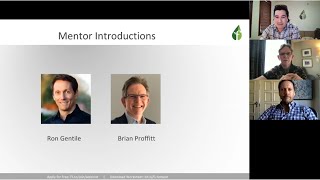
The video records a live Founder Institute hot‑seat session hosted by Jonathan, featuring two mentors—Brian (a digital partner in private equity with extensive tech and government experience) and Ron (founder of the mental‑health app MoodFit, former Adobe engineer). The agenda includes a brief elevator‑pitch workshop using a “Mad Libs” worksheet, followed by live pitches from five early‑stage founders (Vivek – hotel housekeeping staffing platform, Christina – fast‑acting residual disinfectant for hospitals, Mauro – B2B food‑and‑beverage international distribution marketplace, Vic – data‑driven foot‑traffic acquisition tool for brick‑and‑mortar stores, Juan – VR‑based ophthalmology screening device). For each pitch the mentors ask probing questions about problem definition, target paying customer, market size, chicken‑and‑egg dynamics, distribution, procurement, and unique value proposition, offering concrete suggestions (e.g., focus on paying side, secure advisors, clarify USP, consider alternative distribution channels). Jonathan repeatedly emphasizes the importance of a clear, concise elevator pitch, the need to identify the actual payer, and the value of collecting feedback rather than protecting ideas. The session concludes with instructions for a virtual feedback lounge where participants can network in B2C or B2B tables, exchange 30‑second pitches, and gather further input. The video also promotes the Founder Institute’s pre‑seed accelerator and provides links to the hot‑seat worksheet and feedback lounge.
Chapters
Welcome everybody to this online founder hot seat session. We got a great event lined up for you today, so we're excited to have you here. We've had, uh, it was, it was almost 350 people that registered for this event, uh, so it should be an interesting time. This is a 100% live event and these events are best when there is interaction, right? I, I think we're all getting a little bit of Zoom fatigue these days, So please try to participate in the event as much as possible. I promise you, you'll get a lot more out of it. You'll meet interesting people from all over the world, and you'll get feedback on your ideas, which is the whole reason we put this event on. So a good way to get this started is to let us know where you're joining from today. I do know that we have people registered from basically the entire Western Hemisphere, all of Europe, Middle East, and Africa. Usually we get a couple brave people from Asia as well who are staying up super late or or super early, however you wanna look at it. So please let us know where you're joining from in the chat. We're gonna try to make this event as interactive as possible. All right, so I'm gonna quickly go through the agenda that we have today. We got two great mentors that we'll be introducing in just a moment. And I see here, all right, well, thank you. We got Detroit, Atlanta, Ronnie in Detroit, Lee in Atlanta, Vic is also in Atlanta, Frankfurt, Germany, Artem, welcome Artem. And yeah, anybody? Vilnius, Ankara, Turkey. We got lots of people. Amsterdam as well. Another one from Turkey. Johannesburg. That's awesome. Let us know where you're joining in from. These events are international, which is great because you can get a really great diversity of opinion on the ideas that you're sharing. All right, so back to the agenda. We're going to start with some speaker introductions in a second. Then I'm going to go into the first workshop, which should take less than 5 minutes, I'm just gonna give you a rundown of essentially this worksheet and this format that we use at the Founder Institute to help you create a great elevator pitch. Then after that, we are going to go through some of the submitted pitches. For anybody that registered to this event early, we sent a link for you to submit pitches, and we selected a few of those. We contacted those founders, and we're gonna go through a few of those with the mentors. And then finally, the longest part of this event is going to be the feedback lounge, and that's where you're gonna go right back in to that sort of poker room style virtual conference space where you can meet a lot of different people, share your ideas, and get feedback. That is the point of this event today. To get you ready for that portion of the event, I strongly recommend you download our founder hot seat worksheet at bit.ly/FI-hotseat. It's also gonna be on the footer of, I believe, every single slide on this presentation. and we're pasting it into the chat right now as well. So please, please have that open and ready to go, and you'll get a lot more out of this event. All right, so with that being said, I'd like to invite our two illustrious mentors onto the stage here. We have a nice international flavor. I'm joining from Colorado, and then we got California and the UK, so maybe we'll start We'll start with the UK first. Brian, would you like to introduce yourself?
Yeah, hi guys. So although I'm from the UK, I'm actually in the Channel Islands at the moment. So I'm mid-Atlantic, just off the coast of France, enjoying some escape from our lockdown frenzy. I look— I mentor sessions with Silicon Valley, London, Dubai, and Paris. So I'm kind of used to people turning up from Melbourne middle of the night as well, if any guys on the call from there. My commiserations. As well as that, I'm a part— I'm a digital partner in a PE firm. I'm non-exec of several high-tech businesses, including an AI business. I built Samsung's connected car platform. I work with PE firms on acquisitions and exits. I'm working with several business intelligence firms. I'm working with a previous FI business who's just done their seed round for a social media gaming company. Previously, I built Samsung's connected car platform, built a fintech that got Apple and HP and GE as clients. I was CTO in the UK government, CTO in British Telecom, CTO in Marsh, the Prudential, Qorus, Cargill, and head of innovation at British Airways in the days when we used to fly aircraft. So that's it. I probably work with about 200 businesses at a time. So I've seen lots of stuff, but it doesn't mean I know very much.
Thanks. Is that it, Brian, or was there anything else? Well, that's it. Just kidding. No, it's just you have an impressive background and have worked in a lot of different areas that are different too. You've worked in social gaming and in a technology role with the government. I mean, it's just interesting all the angles you've seen.
I was HealthTech Innovator of the Year last year and built a virtual hospital. So any health tech people on the call, very interested in that as well.
And we've got two actually in some of the pre-prepared pitches in health tech too. So that should be interesting.
Excellent. And my digital post-production business has just won a contract for special effects for The Matrix.
Hmm.
So that's quite good as special effects go.
When is that coming out, The Matrix 4?
Well, I thought it was summer, but they're saying it's probably going to slip into next year now. But you didn't hear that from me because it's all secret.
I'm trying to break news here now on the Founders Institute webinars. So, all right, well, thank you, Brian. And Ron, that's a tough act to follow. I'm not going to lie. But Ron, would you like to provide an introduction?
Yeah, it is. The Matrix, that is a tough act to follow. Well, good morning from Northern California. I started my career at Adobe, originally came out of school, PhD, EE, specializing in digital video and imaging. And then after Adobe got involved in a lot of startups at various points, have raised venture capital, angel capital, have been an operator of startups, have had and other C-level roles. My sectors that I spend a lot of time in are sort of all things wellness, digital health, consumer-facing products in general. And of course, I have that, that longtime affinity for all things video and imaging. So welcome and good morning.
Yeah. Tell us a little bit about MoodFit, which you can see at getmoodfit.com. I'm going to put a little code in here.
Yeah. So currently I'm the founder and CEO of MoodFit, which is an app in the mental health and mental wellness space. Helps people reduce stress. It's— yeah, you put the code in and actually I think it will give people a free month to be able to use it. We're in the category with the big guys like Calm and Headspace, and we recently were voted number 1 mental health app of 2021. So it's a very exciting time, and I encourage you to check it out.
Yeah, and there were a lot of virtual claps and high fives going there, and I— at least I've suffered with some issues as well. Being an entrepreneur, we are very, very vulnerable in more ways than one to some of these mental health issues. And at the same time, kind of holding back by this, you know, you call it hustle porn culture, right? Where you don't wanna talk about some of these problems. So it's a really important thing that you're doing. And thank you, Ron. And yeah, check out getmoofit.com for anyone on the line. All right, so we have, as you could see, we got two mentors here today with a great breadth of background. To give you feedback. So let's get moving on the agenda. So here's the first workshop that I'm going to do, and this is going to be real quick, okay? And honestly, if even if you don't want to hear me talk, just go to bit.ly/fi-hotseat, and on that worksheet you will get essentially exactly what I'm about to talk about right now, okay? Um, one of the biggest problems that we see with early-stage founders at the Founder Institute— we work with a lot of early-stage and idea-stage founders— is that they can't really get out of their way when they're describing their business or their idea. Okay, with an elevator pitch, your goal is not to impress people with how smart you are or how big the words that you use are or how complicated it sounds or how many buzzwords— AI, machine learning, you know, all these different things that you use. Your one and only goal with an elevator pitch is to create a shared understanding with your audience right, whoever you're giving the pitch to, so that they don't, you know, understanding that you have a limited amount of time so that that time is not then spent just trying to understand what you do. It's so that they understand it so quickly that that time, the limited time you have to talk to them, is actually spent on a useful conversation where they can dive a little bit deeper into the business and see if they can help you and provide you actual useful feedback, right? And that's why, I don't know, I don't even know, am I a millennial now? I keep getting mixed up with the words, but there used to be a little, you know, a physical workbook that we would call Mad Libs, right? And it would be, you just put different words into a story and then you'd read it and it'd be kind of funny. So we call the startup Mad Libs where we literally try to make it as simple as possible, okay? It's just fill in the blanks. So my company, and you know, if you don't have a company, that's fine. You could just call it your idea, whatever, right? You could even just call it like idea one if you're that early. Is developing a defined offering, all right? This is usually where people get lost because instead of saying something simple like, I'm developing a mobile app or a website, they'll say, I'm developing an AI-powered recommendation engine, right? Just like, okay, what the hell is that? You want— this is super important in the beginning because as soon as you lose people, they start getting confused and they start to listen a little bit less and less about the other things that you say. So be super specific. Is it an app? Is it a website? Is it like an e-commerce store? You know, maybe is it, is it like a subscription product or a SaaS product for businesses? Just be super specific. Then you're developing this product to help a defined audience. Okay. The biggest trip up that you'll have here is to be way too broad with your audience. So, for example, you're trying to help women. Right. That's about half the planet last time I checked. Right. That's probably not your target audience. You want to get just a little bit more specific than that. And then the other thing is just to understand that your audience is, generally speaking, the person who's going to pay for your product. Okay. So a lot of people will say, oh, I want to help like small businesses, for example. Right. Even that is too broad because the small business is not— you can't just go pitch a small business. Right. It's a specific person in a small business. Maybe it's the CFO, maybe it's an HR manager, right? You have to very, very be focused on exactly who the person is that you're selling because that's going to inform the next part, which is you're helping them solve a problem. All right. If you're not solving a problem for a very specific customer, you probably don't have a viable business. And solving that problem, again, just be very clear. Specific, and the kind of the beauty that I think of this format is that it's not just sequential, it's just as you go through each part, you can then go back to the last part and be like, okay, well, is that exactly the problem that this audience has or do they have a different problem, etc.? And, you know, this is really big, I see, especially with B2B and SaaS types of companies because, you know, you have to solve a problem for the exact person that will either pay or directly influence the payment for your product, right? And especially it's each person who has the problem that you're solving for, they're gonna have specific KPIs and things that they're aiming for, right? And that's where you see a lot of issues with B2B companies is that when they go to start selling these companies, they actually realize that the problems that they're solving are actually not that important or it's split between 12 budgets and different departments or whatever. So that's a big trip up. And then finally, you want to do that with the secret sauce, right? And the secret sauce for if there's any MBAs here or people that have read up a lot about, you know, kind of the science of business, right? It's just unique value proposition, unique selling proposition, that kind of thing. It's your unique approach to actually solving the problem for the audience with your defined offering that you have as a pitch. Okay, so again, I just gave you sort of the Cliff Notes version of this. If you go into bit.ly/FI-hotseats, that'll give you even more tips to look at on this pitch format. And we are going to go through now a bunch of some of the pre-submitted pitches that we selected, and we just tried to get a range of different business ideas, different geographies, and that kind of stuff here, right? If you weren't selected, I'm sorry, you know, I think we got over 100 submissions, right? So we just had to be sort of picky on how we selected some of them. But again, we're going to start with these pre-submitted pitches. But for anybody in the audience, if you would like for us to possibly review your pitch, and we're going to try to make sure that we have some time on the back end here to review some pitches in text format, you can throw them into the chat. Okay? And once again, we're pasting to the chat here our Mad Libs format that should try to make it easy. And once again, it's my idea, name of company is developing a defined audience to help, or developing a defined offering to help define audience, solve a problem with secret sauce, right? The more strictly you can follow that format, the easier it will be for us to understand, the more compelled we'll be to bring it onto the screen and get some feedback. All right, and then the last thing I'll do before we get here is hashtag shameless plug. This event is run by the Founder Institute. I'm a co-founder of the Founder Institute. We are the world's largest pre-seed startup accelerator. We help companies at the pre-seed stage. So that generally means anyone from an idea to a small team that, that maybe has some product in the market, but they haven't reached traction or funding yet. We help you get to that traction and funding stage, and we help you do that through a very structured process and through expert mentorship every single step of the way. You can learn more about the Founder Institute at fyi.co, or, and you can apply at fyi.co/join. /webinar. Okay, so with that being said, let's bring up— first up is going to be Vivek. So if we can bring Vivek up to the stage. And for the mentors, you know, we try to look at the feedback that we're giving these founders in, in two ways, right? First, there's the pitch. Do we understand the pitch? Do we understand what the person's talking about? Does it all make sense? And then the second part then is the idea. right? Does the idea make sense? Is there potential? What are some of the risks and some of the feedback there? And we're going to try to aim, um, so Vivek, uh, are you there? Hi, yes, I am. Okay, cool. All right, so we told Vivek he's got about 30 to 45 seconds or so. So Vivek, why don't you get started, then we'll, um, Brian and Ron, we'll start doing some Q&A and we'll go from there. So the floor is yours.
Sure, thank you, Jonathan. Appreciate it. Hi everybody, um, my name is Vivek Tengudu. I just graduated from Texas A&M a week ago, um, but currently developing Plarate. It's a staffing platform to help hotels find and manage housekeepers, um, with the mobile app. So I got started about 2 and a half months ago, um, just got $3,000 in grant funding from my university and just working on my MVP at the moment. So I wasn't sure it's a 45-second pitch, so feel free to let me know when I should stop jumping.
No, that works, that works. So, and by the way, for anybody following along and also for Ron and Brian, we're pasting in just the short version of that pitch here into the chat. And yeah, it's just, the thing that I really liked about this pitch feedback is just, it was extremely easy to understand. Right, so I feel like now we can get into some questions. So Brian or Ron, if either of you have any questions or feedback for us, we can get started.
Yes, so Vivek, a staffing solution. So what you didn't get a chance to say was what's unique about your hotel staffing, because there are a lot of recruitment solutions out there. I guess every every cohort of founders we see, there's at least 3 or 4 people doing recruitment for a particular niche. What will be your, your special USP?
Sure. Well, in terms of my marketplace, I haven't secured any housekeepers on my platform, so I would say that my secret sauce would probably be like the actual workflow of my app, how they would find opportunities in their area, their geographic area, and then the actual workflow automation of how they go through the checklist of getting their tasks complete. And it's specifically for housekeepers. Typically workforce staffing platforms like Thumbtack or other platforms out there, they're for all types of contractors and general types of positions. But my platform is specifically for housekeepers. But does that answer your question?
It does. And I think you described the challenge as well. It's a two-sided marketplace. So the housekeepers won't come to the platform without the hotels, the hotels won't sign up without the housekeepers. So have you thought about that?
I have, yes.
But— Would you like to share?
It's the chicken and egg problem, so there's a lot to do, yep.
Can you give us a little insight on that, Vivek? Because when you were talking about your customer, you were really talking a lot about the housekeepers, but presumably you make money from the hotels, right? So they're the ones who have a pain point. Um, can you give us a little bit of idea about this pain point? They have a solution today. Somehow they do this. What's not good about that solution? Uh, and what is the cost to them of not having a good solution, turnover, whatever it is.
Sure. Yeah, no, housekeepers in general have a really high turnover. This is kind of how I got into the problem, was interviewing a lot of hotel managers. Completed about 40 customer interviews, and what I learned from that was typically hotels look for third-party agencies to typically find housekeepers that they can contract temporarily. You know, typically hiring housekeepers is a fixed cost. And so depending on occupancy rates, it might be more advantageous for them to just hire someone temporarily. And so typically these housekeepers who come in from a third-party agency, they're either unreliable, they don't show up, and sometimes even with their immigration status, they might show up as undocumented. And so that's also been the problem that's come up in the past. And so I think that solution would be a mobile app that really provides that access for hotels.
Vivek, can you speak to the cost of that in some way? For example, what's compelling to investors is if you say, you know, there are n hotels and it costs each of them x to solve this problem. That gives us an idea of how big the problem is, how big the scope is, how deep is the pain.
Right. No, I actually haven't done the formal calculation, so I can't give you an answer on that.
No.
But I think that Ron hits the nail on the head. You see, you've got— the problem is either I can't find them, or I can find them, but they cost too much, or I can find them and they're an affordable cost, but they're not reliable, or they are reliable and they cost the right amount and I can find them, but I can't keep them, or I can't flex them when I want. So you're going to be solving probably one of those dimensions, you know, reliability, flexing staff, reducing cost or something. And that will be key to the investor proposition. And it's got to be something that is meaningful to hotels. So one of the first things you'll need to do is to kind of take your feedback on 40 to 100 hotels and have them say, yeah, this is a problem. Yes, I would use your solution. I'd hesitate to call it a mobile app. A mobile app is an instrument of execution. Everyone's building a mobile app. They're kind of last year's news. There may be a mobile app in there, and there almost certainly would be for the housekeepers. But the hotels aren't going to be walking around with mobile apps. They'll be sitting there and saying, am I rostered OK for next week?
[SPANISH] Yeah, and just to follow up on some of this, you know, we're talking about it as feedback for investors, but honestly, it's also— it's feedback for your customer development, right? I think what we're all getting at here is there's a couple things. Um, number one, you have a chicken and egg problem, right, where it's a platform. Whenever you have a chicken and egg problem, the way to solve that is to go to the people that pay, right? Because if you're on a marketplace and there are people that are paying, it's going to be a lot easier to get the people that are selling right? And in this case, your customer, as we've been alluding to here, is the hotels, right? And it's not just the hotels, it's a specific person at the hotels. And as Brian was saying, they have a very specific problem, right, that they need to be solved. So like, that really is where you're, you know, just digging into that, to those issues, is how you're going to build a compelling offer to your paying customer who is I don't know, I don't know much about hotels, but maybe it's a staffing manager, whoever it is, the operations person at a hotel, right? Understanding the problem that you're solving for them. And maybe that problem is on the backend, you know, you access a much larger community of people that could be, that could be, you know, some of the workers on the platform because it's a mobile app, right? But I think you're— there's just— you're talking about solving a problem for a couple different audiences here, and I think that's where it gets a little confusing.
Yep.
Sorry.
And when you have solved that, Vivek, you need to make that the strapline. You know, we provide flexible housekeepers, or reliable, or low cost, or whatever dimension it is. You know, describe the problem you're solving and try and say we are the number one in Texas, or the Southwest, or or the US or the world, because that always helps as well. By the time you do it, no one else will be number one, so you might as well adopt the position.
So, Vik, one more thing I was going to mention is be aware that in some kind of businesses, what's tricky is if you do your job well, you lose your customer. Okay, because you've— oh, I've staffed up your hotel and they're Great. I don't need them for maybe until 6 months later when I lose some staff. So look for opportunities to provide ongoing value to both sides of this equation as you go along. So that may mean that, yeah, the hotel uses it to find people, but then it also uses it perhaps to communicate with them on an ongoing basis, maybe On the housekeeper side of it, there is a community angle where they're able to network or connect with each other or learn about new opportunities. Just look for opportunities to provide ongoing value so you can keep those customers long-term.
Absolutely, I agree. Can I respond? Wasn't sure.
I gotta— we gotta move on, Vivek, but Thank you. So, but look, Vivek, there's been a lot of feedback in the chat, okay? And one of the things that I want to reiterate on this event is, you know, we have, we have mentors here and we're experienced and all that, but a lot of the time, you know, there's probably some people in the chat that have questions and maybe in the industry and that kind of thing. So please engage in the chat, go scroll back up, people were leaving feedback. And we'll, let's, let's start bringing on Christina, who's our next pitch. Thank you, Vivek. All right, so that was, that was a great start. And I think this is a big thing too, the chicken and egg thing, right? I, every time I see somebody making a marketplace, it's sort of, I always equate it to like, okay, it's, it's like you're, you're gonna throw this big party, right? And you want 1,000 people to come and you only have a month to do that, and you spend that whole month trying to make the venue and everything look beautiful.
Right.
And that's what a lot of people, when they build a marketplace, they're like, oh, well, what's a marketplace if nobody's there selling? Right. So they spend all the time on the, on the selling side of the people that are selling stuff, which is usually not the easiest value proposition. Right. Because it's just like, hey, there's nobody there. Whereas in reality, you should be trying to build the audience more and doing that in parallel. So I think for anybody who's building any kind of two-sided marketplace, focus. It doesn't mean you ignore the other side, but you have to focus your time on the side that will actually create liquidity, the side that will pay for the services on your platform. Because if there's a lot of people ready there to buy, you'll have a much easier time getting people there ready to sell. Right.
Okay.
So, Christina, welcome. And if you'd like to get started, Christina, the floor is yours. Cool guitars in the background, by the way.
Thanks. So hi, my name is Christina Drake, and my company Kizma Technologies is developing a residual disinfectant to help healthcare providers reduce hospital-acquired infections with NanoRad, our spray-applied, long-lasting, and fast-acting disinfectant. Our patent-pending NanoRad kills viruses and bacteria nearly 10 times faster than the current residual disinfectants on the market, getting rid of the need for continued and constant surface disinfection between applications.
Okay, well, Brian, I believe this is your— this is your line of expertise. Yeah, you want to go?
Yeah, no, this is, this is totally my line of expertise. I know a lot about music and guitars. I mentor at least 4 of the world's leading providers of amplifiers, pedals, power supplies. But when it comes to hospital sanitization, My virtual hospital doesn't have any sanitization, so that's one dimension. But I was working with a founder a couple of years ago who was creating— you get the surface treatments that are antibacterial, and I was quizzing them about how would you deploy those in a hospital? And they said, well, actually, you only need to deploy them to the columns and the ends of beds. That's where 80% of the bugs reside. So it seems to me you've got a solution, but actually your target area for application application is actually quite well defined. If generally your product can outperform the others, you know, with a 10 times speed factor, then your biggest challenge will be convincing people that it's not an acid that destroys everything in the process and getting to the buyers. And that's where the challenge comes. Even though you've got the world's best mousetrap and someone's got loads of mice, when you find the buyer in in charge of mousetraps, you think it'd be an easy sell, but it never is. So you're going to be selling to hospital procurement managers, and when you sell to them, what you've got to do is displace something else that they're buying. So you've actually got to oust somebody from that chain. So I don't know what you've done so far, but I'd start nurturing a group of those guys as advisors rather than potential clients. To say, how would you go, you know, recommend how you'd go about selling this to hospitals? Because that's, if you've got the world's best product, and in a minute you're going to tell us why it actually works and why no one's ever done it before, that will be your biggest challenge, you know, getting through the procurement guys. And I mentioned I was in UK government. I actually ran procurement for all the major government departments as well. And boy, was it hard selling to UK government. And they're They're probably just as hard as the medical profession. I looked after the National Health Service in the UK as well, so I know a lot about their procurement policies, and you'd think it would be easy to sell these things. Anyway, I'm waffling now. Tell us how you're going to sell to these guys, and how have you— what have you tried so far in terms of getting them warmed up?
Yeah, so we've already reached out to two hospitals in our area and one up in North Carolina about doing an HAI study. Study. So current products that are on the market that are residual disinfectants take 2 hours to kill bacteria and viruses. So in the United States, the EPA requires that you continue to disinfect surfaces as you normally would. So they're kind of like safety nets to disinfection, where what we're developing would be actual self-disinfecting surfaces that last for up to 7 days. And so the hospitals and doctors that we've spoken with, because hospital-acquired infections cost hospitals upward of $40 billion a year in the US, they have a huge interest in, you know, a solution to help decrease their healthcare cost or their operating cost in the healthcare space. So we feel like step one is actually getting validation with a hospital study to show that it works outside of just a, you know, we do an efficacy study with a virus or bacteria, that's great, we want to see it work in the real world. And so that's what we're working on now.
Well, one thing I would do is contact Mercedes Bankston in FI and find out the name of the London founder who was developing antibacterial surfaces for hospitals in Europe, because if you can get in touch with them, They'll tell you about the research they did. Their product almost certainly has the same benefits as yours, but theirs was a much harder sell. So they can tell you how they went about researching it, how they went about selling it to non-US markets, and that might save you some time or give you some insights into sales propositions and so on. You also need way more than 3 hospitals, I'm afraid.
You need to have—
Yes.
50, 50 talking to you about whether they'd buy or not. But use those first 3 as advisors. Try and get them on board to, to tell you how to do it, because it's a lot easier getting in front of someone if you can say, I need some advice on bringing this to market, what would you do?
Yeah, and so the other benefit is that, um, ours is non-toxic. So when it goes into a biofluid environment, it doesn't have the same reactivity that it does on a bare surface, um, when it's just in contact with air. And so that's part of the, I guess, the secret sauce and what we invented with our new material. And so, yeah, so we're working on getting more hospitals and doctors on board with helping us with testing and requirements.
Yeah, so yeah, Ron, yeah, let's, let's, yeah, I was just going to expand on one thing Brian said that I think is especially important, which is this is one of those situations where you've got a product that does something substantially better and there's a procurement process, as Brian has noted. So we as product people or founders, we often think, well, my gosh, of course that would totally make sense. Why wouldn't they want it? But you have to really understand the procurement process and the psychology of those procurement people. Because a lot of times it's not solely about, oh, they're sitting there trying to just have the best product, do these things. They have their own incentive system and a variety of things. So you really have to understand what is it that resonates with them? What is the angle on this? Is it that they're able to say, oh my gosh, I've now saved the hospital all this particular amount of money and they look great, or there may be other quote-unquote psychological angles to it that go well beyond just the fact that it's a substantially better product.
Yes. All right, well, that was—
one last quick thing to add, Christina, is don't underestimate looking for alternative distribution channels as well. If you sell face-to-face, you'll sell to 5, 10, 15, 20, 50 hospitals. If you find somebody that sells to all hospitals, you will, you will forego margin, but you'll get 100% exposure.
Yeah, we are also looking at working with a company that produces an electrostatic sprayer that already sells to hospitals. So we're looking at multiple routes to get our product out and trying to see which one is the best fit for us.
Yeah, awesome. All right, thank you, Christina. And again, if anyone has questions or comments for Christina in the chat, throw them in there. And just, just to reiterate for everybody, I know we're getting a lot of great pitches into the chat here too, which is great, but the, the last part of this event is where everybody can provide feedback, okay? And that'll be in the feedback lounge where you can get feedback from other people using the worksheet at bit.ly/feedbacklounge. FI Hot Seat. All right, so Mauro, the floor is yours. Thank you guys, appreciate it.
My company is Pocketrade and we're developing a B2B website to help new and upcoming food and beverage entrepreneurs distribute their brands internationally by combining the shopping, shipping, and payment solutions, coupling that with data analysis all from a single location. The industry in the United States last year was a $996 billion industry. New and upcoming brands are only capturing $12.1 billion, and we are projected to reach 300 million by year 5, which is about 2.5% of the available market share. And we do that just by charging—
I'm gonna cut you off there, Mauro, but I think we got the gist of it. So I'll start quickly here. So, and we put it in the chat as well. It's a It helps them reverse the— so the premise is that it helps, uh, the brick-and-mortar stores reverse the decline in foot traffic with big data analytics and AI. There were events that were only available for e-commerce. Can you, can you just, you know, that's— those are technologies, right? But like, what are, what are the problems that they're solving? How is that exactly happening?
The, the, the main issue is it's, it's a two-sided marketplace. Yes. On one side we have the supply that does not know where to go or where to find the supply for them because they normally don't navigate international markets. They only know their immediate markets. And on the other side we have all the retailers that are looking for new brands, new products to cater to their new consumer tastes, basically changing consumer tastes. New— and what we do is we match both needs and we handle the entire process for them, for that, from picking up the product from a manufacturing plant all the way up to a market, to a supermarket shelf. At some point we want to evolve, develop our data to get into a point of sale so we can actually get into predicting demand. But we have to develop the technology to get to that level.
And we—
yeah.
And I just want to apologize, I was just looking at the wrong pitch. So, but you handled it, you handled that really well, Mauro. So thank you.
I had a question. So on one side you have brand, new beverage brands. On the other side you have retailers. Right. Who is it that has the great pain? My guess is it's a new beverage brand that has come up with this new beverage, has to worry about all kinds of things, including distribution. And they're the ones who have the most pain. If I'm a retailer, yeah, I like to be aware of new brands and things, but I'm guessing that is not one of my huge pain points.
It depends on your location, for instance. And yes, you identified exactly correctly. Perhaps who has the biggest pain point is the supply side. But depending on the location, for instance, we are targeting and we are focusing more on emerging markets and finding supply to those areas, it's normally a— I'm going to say, for lack of a better word— a hard problem to find, to solve. And we speak with supermarkets that spend about 50% of their day just going through products that they can actually bring into their shelves and have to analyze everything, not just from the price, look, from the price point, but also when it comes to getting the products to them logistically.
Who's going to pay you, the brand or the retailer?
We, right now, our model, we take a commission out of the transactions that we process on our marketplace. So it has to— they both have to interact basically for us to be able to profit.
So, Mauro, both of them pay you? Yeah, excuse me, both of them pay you?
Who?
It's a transaction that happens where the retailer is paying the brand for some number of products.
Go ahead. We, we take a percentage of the, uh, of the, uh, selling, uh, of the product of volume when the retailer actually buys. Basically, that's, that's how it is. If, if If there is connection, but there's no purchase, there's no revenue for us.
What prevents them from just connecting, finding each other here, but then going outside and not having to pay the transaction fee?
Great question. As a two-sided marketplace, yes, we gonna circumvent that problem. We're gonna tackle that problem by bringing them, offering them It's the service, basically. It's the ability to have unlimited offers, basically, or supply. We bring products from— we pull products from many different locations of the world, but we give them the ability to source different products from specific or different locations, and we basically solve all the problems with them when it comes to getting the products to them. We deliver to their door without they're having to necessarily worry about how to get the products to their location, aside from all the data that we're going to build and collect that we can process and eventually put it to their use.
Okay, so Marrow, it's a transaction slicing platform then, to answer Ron's question, but one that maintains those transactions because of the full service, the shipping, and so on. When you started talking, I thought you'd gone— we're seeing lots of hyper-local food supply going on, and it sounded like you were doing a hyper-innovative global supply. I thought, oh, that's quite interesting. You know, the proposition to the supermarket was you can get access to specialist brands that we can prove are selling. But actually what you're saying is in areas of Asia and the Third World, it's more about guarantee of supply than it is about innovation of supply.
That's exactly right. You touched a very good point, and this is what we see, for instance, in not just in— thank you for mentioning Asia, but we do a lot of business with Africa, and that's exactly what the problem is. Products, because there's no consistency, and not just in the product itself, but on the quality, product, there's a lot of churn and there's difficulty in, when it comes to supermarkets, maintaining loyalty because it's brands change or they change based on availability. And what we are, what we're helping them is to create a system where we ensure that the brands that we bring to them are brands that they can eventually take on longer spans basically, or longer periods of time, and develop loyalty to their, with their clients basically.
So then the next question of course is how are you going to get around all these African supermarkets and sell things?
I am originally from Africa, so I have a lot of, what we have done thus far is, and prior to the pandemic, Basically, there's a— there's ways to connect to them that I've done it aside from going to TRIPS. It's— there's a lot of government agencies that help us reach out to them. We have access to a database of contacts that we can pull and bring into our system. Right now, we actually have users on both sides of the marketplace, but we're just looking for ways to build our MVP as we just finish our prototype.
Distribution, as ever, will be key here.
Yeah. Yes. All right, thank you, Mauro. And there were some comments in the chat there too. And we got two more pitches to go through here. So Vic, Vic, are you there? Then why don't we bring on Vic and Juan, who are the last two prepared pitches. And we can get them going, and we'll see if we have any time for any of the other pitches that have come into the chat. But once again, even if you submitted a pitch earlier and we don't get to your pitch here in the chat, the second part of this event is where we're all going to go back into that conference room, and you can get feedback there on your ideas using the worksheet at fi— or bit.ly/fi-hotseat. All right, uh, Vic, are you there, Vic?
Yeah, I'm here. Can you hear me?
You are, and I think I, uh, I got confused before and I was talking about your pitch when Moro was on, so I apologize for that for everybody. But yeah, Vic, the floor is yours.
Okay, thank you, Jonathan. I appreciate it. My company, uh, Paytm, has been developing a software service to help physical, like brick-and-mortar stores to increase sales and compete against e-commerce by giving them a new way to acquire walk-in customers. And we do it by marrying the store's private data about their sales, inventory, with the data they don't have, which is the big data, cell phone data, social data, to grow their— find new customers as well as upsell the customers who are walking in.
Thank you.
Okay, Ron, do you want to—
yeah, Ron. Yeah, so I, I maybe at the concept, but I need some more detail. So I'm a Let's walk through a use case. I'm a brick-and-mortar store, retail, I'm mom-and-pop. I'm assuming this is for small to medium-sized businesses. Correct me if I'm wrong. What is it— I'm sorry, go ahead.
That's correct, Ron. So most of these mom-and-pop stores know about their customers, but they don't know outside of their customers.
Right, understood. So how, what is this platform doing for me to draw more customers in? Is it drawing customers in in real time by making them aware of things in their location, or what, what is it doing to help draw customers in?
Okay, in two ways we are doing it. So one is, um, people who are, uh, by doing what we call a like match, right? So by understanding how, what your customers are, we find like customers in the neighborhood. So that is one way. Second way is by looking at what they bought previously, we are upselling so that you can stock what, what they are going to buy and that type of thing. So in two ways where we are growing the in what we call walk-in customer sales.
And are these customers— are you— so a retailer has a list of existing customers. Finding like customers implies to me the notion that you've now got some big data set of potential customers through social media or another place. That's what is that, that big Data set you are using.
Yeah, in our industry they call it geospatial. There are 3 big inputs. The US Census data is a huge input, and we go through a process of refinement due to what we call a neighborhood profile of that, you know, where the physical store is located. That is one large input. The second large input is the cell phone data, which is the telecom data. And the third one is the social data. So there are the 3 large inputs that being superimposed by this private data to find those like matches.
So Vic, why wouldn't you just put your customers into Facebook and do a lookalike marketing campaign to people in the area?
Oh, they're already doing it, right? They're already doing it.
Yeah, that's what I do.
Yeah, no, no, the thing is that requires the store owner to become a data scientist, right? So this is like a data scientist for $79 a month. That is the product we have.
Okay, okay.
So is helping them— so then is it— yeah, is it solving the problem where it's helping them understand that data so they could do it right? Because then I think, I think that's what you're getting at, Brian, right? It's, it's like, what exactly is the problem?
That's right. And also, you know, in the US there has been a lot of resistance to, you know, like Facebook is one example. There are a lot of business that is not on Facebook, right? So, and also, um, some metrics, you know, like, um, Facebook's data is also, you know, there is a, you know, suspicion is there.
There is a—
it's not available to you. You can only have to pay. It's not, you know, it's not expensive. Facebook PPC is very expensive. So this is a much cheaper solution to most of the customers that we have. They are using it in addition to Facebook and Google advertising. So they're actually using our platform to determine where to spend their ad dollars.
So maybe talk a little bit about the customers you have, how many you have, what kind of revenue you're bringing in. I mean, traction in terms of generating customers and revenue often can trump our misunderstanding perhaps of your concept, because if you— so maybe tell us about that.
Okay, thank you for asking that question. So we actually, we are a 3-year-old company, so several times in our history we have pivoted to by listening to the customers. So it was started by listening to big customers like the Macy's, the—
so Vic, I'm gonna— Vic, I'm gonna cut you off here just because we're going short on time, but I think I, I would take that feedback and, you know, It seemed like Ron was talking about, you know, being super specific, right? Because the pitch is very broad and that's why it's hard to understand. And then I think Brian's point was just that the problem that you're solving also is not that clear, right? So I would take that feedback and try to refine that messaging because again, with these pitches, right, you just, you want people to understand it right away. It just clicks. Right? So then we could start to dive into it. So it seems like there's just some confusion here. Doesn't necessarily mean it's a bad business or a bad idea. It just means with this pitch, it was hard to, hard to exactly understand what you were doing.
Thank you. Yes, and then finally, Vic, you were about to say we've got some customer results here. I, I'd start with those. We have done this with 150 whatever stores and we have achieved— yeah, then you've got to— then you, then you don't have to explain it, you know, you've got the evidence.
Thank you.
All right, thank you, Vic. So our last pitch that we have lined up here is Juan. Hey, Juan, are you there?
Yes, hello, how are you, Jonathan? Thank you. Good morning for everyone.
I'm good, Juan. It's a little bit hard to hear you, Juan. I don't know if you can go closer to the mic or anything like that, but we can hear you. It's just a little muffled.
I try, I try to to improve my sound.
Okay, it's okay, it's okay, we can hear you.
Okay, our company is A-Health VR, is developing a device that performs all basic ophthalmology tests to help patients to prevent blindness using virtual reality technology. You can use it in mass exam campaigns, new house a clinic, university, or work. Then you can send the results to your ophthalmologist to check your visual acuity, visual field, macular vision, and color test. It allows us to detect very fast almost any eye disease, mostly in place where there is not available an ophthalmologist. Also with data that we collected and using artificial intelligence, we can predict the prevalence of eye illness in a specific place. That, that's my presentation.
All right, thank you, thank you, Juan. Um, Brian or Ron, you want to kick us off?
Well, yes, so I'm, I'm, I've been talking to the CEO of an op ophthalmic technology business, and they're not doing it with VR technology, they're just using it with cameras on mobile phones. But they're looking to augment the services that a physical ophthalmologist can do with things they can do after the fact. So this is a market that's being explored quite extensively. So can you talk about— I mean, the two biggest challenges you're going to face is one, outcompeting all the other startups doing this, and then the hardest of all is how you will— who's buying? Who's going to pay you for this? Is it the clinicians? It won't be the patient. So what's your approach?
Yes, it's different about the mobile phone because with the mobile phone it's very easy to cheat the mobile, but with a virtual reality device, automatically we can cover one eye. Okay, the future clients may be the people in general, also the big company or university, laboratories with a lot of employees that can check a lot of patients with small time, time. You don't have a remote much time to check all the patients. With this device, in 10 minutes, you can check very well almost all these patients. For example, in the army, in the university, in the factory, we can check a lot of eye exams without the necessity that an ophthalmologist is present. It's only the assistant or or nurse, maybe.
Okay, maybe that's a lot, that's a lot of use cases you just outlined, Juan, right? So I would, I would try to, try to focus on one use case that provides the most value to somebody that could pay, right? Um, just because, yeah, I mean, that, that would be my feedback. And Ron, I don't know if you, if you have any, uh, final questions or feedback I want to be cognizant of everyone's time here.
Yeah, the thing, and it was a little hard to hear, but it's the particular workflow. I mean, for example, VR at home isn't necessarily going to be there for everybody who just wants an eye test. So it sounds more like, okay, you're going to take a VR solution into to ophthalmologists or eye doctors, and now you're, to Brian's point, competing with these others. At one point, I think you said something about military and other applications. That's a place where I can see you selling a solution where they have a number of these, they have a large population, tested regularly. The final thing I was going to say is if you're doing it in the context of VR, there's all kinds of opportunities with the VR itself to have the eye doctor be able to say, not only am I just giving you an eye test, but I'm giving you some kind of interesting experience that it's allowing the eye doctor to more easily market themselves. Because of that interesting experience.
Okay, yes, I think it is. It's okay.
All right, well, thank you, Juan. And there are some— I believe there was some more feedback in the chat, but we have run out of time here. So I want to thank Brian and Ron. There was a ton of feedback. A ton of people were saying, hey, are we going to get this video? Because some of the feedback was super valuable. And I hope everybody on the line— and I'm sorry we weren't able to get— we're never going to get to everybody's pitches. We have over 100. But if we didn't get to your pitch, I hope you were still able to gather some good feedback off of what we were telling some of these other companies. But yeah, Ron or Brian, do you guys have any final parting words?
Yeah, I would say that a lot of the issues come down to the same thing, which is, to Jonathan's It's who's paying and how you're going to persuade them. So, you know, finding out who the actual buyers of your service are and getting their feedback, initially getting them to act as advisors and coaches. Distribution is key in a lot of these things. A lot of these solutions I describe as, "I've got a perfect mousetrap." But really, it's how you're going to get the perfect mousetrap to the people with the mice. So that is what stops founders in their tracks. Ron, do you want to throw some more light?
The other thing I was going to say is that be very aware of the simplicity of the pitch. The Mad Libs format that Jonathan has given you is very important. Don't get lots of buzzwords. Remember that someone, an investor, is very important. Don't get lots of buzzwords. Remember that someone, an investor, whomever, is hearing this cold for the first time and they've spent the whole day hearing a variety of things. Simple, clear, which is, my company solves this straightforward problem. Here's why it's important. Um, keep in mind the context of someone who's not familiar with what you're doing. To get them on the bus before you start driving the bus away with a lot of other details.
Awesome. Thank you, Bron, or thank you— I just combined your two names. Thank you, Brian, and thank you, Ron. Bron for short. That was awesome. Now we're going to get into the next part here. This is the feedback lounge. For everybody, you're gonna go back into this basically virtual networking lounge and there's group video chat tables. So the tables are split up pretty basic, okay? We just did B2C, which is if you're building a product for consumers, right? So if it's like an app for just a normal consumer, and then there's B2B if your customer is actually going to be a business. And again, which I think we've covered here today, is that your customer is who pays you. Right? So you may think your customer is a consumer, but in some, but in a lot of cases, it's actually, you're, you're actually selling to a business. Um, so you'll be able to jump in those different tables and share your ideas and get feedback. And also there's a chat roulette style random one-to-one matching at the top if you just want to be randomly matched with somebody around the world. And that can be kind of fun too. Um, and the, the format that we recommend, and again, this is, uh, you have to be on Firefox or Chrome on a desktop or a tablet for this to work. Okay, it's just a limitation of this platform. It's a very powerful platform, but it's still kind of new. Um, try to keep everybody to about 30 seconds per pitch, right? You speaking for longer and longer and longer does not help you. If anything, it hurts you, right? I think it was, uh, Einstein that said, you know, if you can't explain it simply, you don't understand it well enough. And that is like so incredibly important for entrepreneurs, especially in an elevator pitch format. It's super easy to talk about how awesome your idea is in 5 minutes, right? The challenge is doing it in 30 seconds, 1 minute. And then again, I would say we sort of have to self-police here in these tables, okay? Try to keep everyone to maybe about 5 minutes per person. Now that doesn't mean a 5-minute pitch. That means, okay, they give their about 30-second pitch and then there's questions and there's feedback, right? And then we move on to the next person. And the last thing that I'll say here is we see this a lot in the Founder Institute. Okay. It's your business idea. A lot of times people treat it like it's their baby, right? They'll treat it like it's their baby in two ways. Number one, they'll treat it like you already know what the baby is. So they'll assume a lot of knowledge and start getting into buzzwords and stuff. So you want to avoid that. Speak plain English. And then secondly, they'll become very defensive when you start asking questions and critiquing their baby, right? Nobody wants to be told that their baby is ugly. But the important thing here is that if you're at this idea stage, you need to be collecting as much feedback as possible, okay? Even if you completely disagree with the feedback somebody is getting you, you know what? Maybe next week and the week after and tomorrow or whatever, you're gonna keep getting the same feedback, and then maybe that person's not so stupid, right? So you just want to be collecting as much feedback as possible, and that is the attitude of you're listening with the intent to learn, not to argue, okay? If you ever cut off somebody who's giving you feedback because you want to disprove the feedback they're giving you, you're doing yourself a disservice, okay? It's not a debate club. You want to collect feedback. And again, you can completely disagree with it, but the more info that you gather, the better off you're going to be as you start to build a good business idea. All right, so, um, with that being said, uh, oh, last note here: nobody's going to steal your idea, okay? Um, your goal is to get as much feedback as possible. The worst thing that you can do as an idea stage entrepreneur is hide your idea from everybody, keep it in your head, raise this idea just in your head, kind of in a basement locked up in secrecy, right? Um, spend a lot of money building an idea and then put it out in the market and realize nobody wants it. That's sort of amazing and fast way. If you're interested in losing a lot of money and losing a lot of time, that's how you do it, right? Collect as much feedback as possible. Go into it with the attitude that nobody's going to steal your idea. Literally, it's that the chance of somebody stealing our idea and turning into a billion-dollar business is probably very similar to you winning the lottery, okay? Um, you have much more to lose by keeping it a secret than you do by sharing it. All right, well, thanks everybody, and we're going to go now into the networking lounge, and I hope you all have fun. Again, uh, download that worksheet. It should be a good guide, and I hope you get some more good feedback on your ideas and and you make some interesting connections today. Thanks everyone.










