Founder Institute Alumni Panel - 7 December 2020
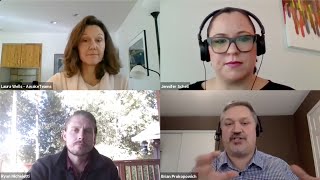
Three Founder Institute alumni—Brian from Growth Driver, Laura Wells from Awake Teams, and Jennifer Schell from Finlitty—discuss the program's structure, mentorship, and post-graduation support. They cover balancing FI with full-time work, the difference between Launch Track and Growth Track, and how the program connects founders to funding labs and a global mentor network.
Chapters
Hello everyone and welcome to the Founder Institute Alumni Panel. My name is Ryan Micheletti and I'm Head of Global Operations for the Founder Institute here in Silicon Valley. Today we've got 3 really great alumni that will share with you their journeys through the Founder Institute and just talk about their startups and their experience in launching a company from Toronto and Silicon Valley and other ecosystems from around the world. So for those of you who don't know, Founder Institute is the world's largest pre-seed startup accelerator. We've been around for 11 years, we've helped launch almost 5,000 companies around the world, and we have operations in almost 200 cities worldwide. And so you can learn more about Founder Institute by going to fi.co. We'll also send a link to everyone after this so you could take a look and learn more. And the agenda today is pretty simple. I'll introduce the alumni here in a moment, And then we really just want to answer your questions. So this is live. We want to try and make this as interactive as possible. So if at any time you have questions, go ahead and just pop it into the chat, and Felicia, who's the producer for this event, will be in the background either answering it through the chat or proposing it to me, and we'll, we'll ask everyone here. So if you do have questions, go ahead and maybe just start off by introducing yourself and where you're from and just pop that into the chat. So for today, let me introduce Brian first. So Brian is the founder and CEO of Growth Driver. You're a Toronto Founder Institute alumni. Do you want to do a quick introduction on yourself and your company?
Absolutely. Yeah. Thanks, Ryan. I'm Brian, directly from Growth Driver. I guess from Toronto. Growth Driver is all about helping founders, you know, and that's one of the reasons we really, really resonated directly with Founders Institute. We're about helping founders and helping them generate revenue and brand exposure. So we're all about helping you guys as best as we can. So I'll sound that one off and right back to you, Ryan.
Awesome. Thanks for joining us today, Brian. Really appreciate it. Uh, next up is Laura Wells. So Laura and I actually work together through the Silicon Valley Founder Institute, and she is the founder of Awake Teams. So Laura, do you want to do a quick introduction?
Sure. Thanks, Ryan. So I'm Laura Wells, the founder of Awake Teams, and Awake Teams is an enterprise training platform that empowers employees to show up fully and connect with each other at work. So we— what's unique about us is that we train, track, and improve communication, trust, and collaboration over a 3 or 6 month learning journey, and we do it together as a team.
Awesome, uh, thanks for joining, and as always, good to see you again, Laura. And last but certainly not least, we have Jennifer Schell, So Jen and I also work together through the Founder Institute Toronto program, and she's the founder and CEO of Finlitty. So Jen, do you want to introduce yourself?
Sure. Thanks, Ryan. Happy to be here. I'm Jen Schell with Finlitty, and what it is, it's a support platform to help do-it-yourself investors get up to speed quickly, invest wisely on their own. We also have a behavioral component to help you make really wise financial decisions.
Awesome. Thanks for joining us today. So I already see people are engaging with the chat and answering or asking questions. And so I always like to start this off with a quick question to each individual founder here, because, you know, everyone on the call today knows Founder Institute is, you know, we focus on pre-seed, but I mean, that's such a wide-ranging spectrum. And so I guess, Laura, for you, what stage were you at when you first joined the Founder Institute program?
So I had the seed of an idea and that's it. It really, it was me and an idea in my head. Yeah, and I've just now, thanks to the program, I've just now finished the MVP and I'm ready for pilots.
Awesome. Yeah, we were talking about that before you jumped on the line today about the pilots that you have coming up. So that's really exciting. Brian, what about you? Because you, I think you had a company when you first started, right?
Absolutely. We actually had a, and you know what, you're always involved directly with the startup communities and that's really what led us directly to start Growth Driver. We were always consulting and sitting down with founders and we identified certain pain points and those pain points were, you know, how do we get our name out there? How do we help, you know, generate more revenue? And so that what really drove us to the, you know, the reason for starting Growth Driver. And we actually were in the process, we were actually incorporated in December. So we were, I think we're about 6 months in. And when we saw the opportunity of actually getting into Founders Institute, it actually piqued our interest because it was one way of us, you know what, sitting down and redefining who our audience was. And you know what, because of COVID and because of everything that was going on, we thought maybe it would be a way of getting us a little bit more organized, getting us to better understand who our audience is and, you know what, maybe give us a little bit of better launching, I guess, a little bit of a launching to where we want to be. And that's one of the reasons for us joining.
And I guess kind of piggybacking on that, I mean, did it meet your expectations? Like, did you get customers? Did you, like, where are you at right now?
Well, we're actually quite lucky because again, you know, you might, I guess, as a founder, you understand there's a lot of things going on through the process. You understand that Like with anything, there's— it's like, think of being like a founder, like being like a puzzle. You understand all these little puzzle pieces. You might understand a lot of the processes, but like with anything else, you don't know what you don't know. So there's all these little missing puzzle pieces that you have along that process. And part of that missing puzzle piece, you might understand maybe how to build your technology, or you might understand a certain part of this. Like, I'm in the sales, so I understand a little bit of the sales process, but I might miss on how to build a team or might miss about how to build an, you know, how to understand equity and how to build that equity piece or how to do that pitch properly. So you understand certain part of the process, but you're missing sometimes those key individual processes, which are really important. Or even more importantly, an outside view of your process. As a founder, you're so laser-focused. It's like you have these blinders on. You understand your process, you understand what you're doing, But sometimes you need these outside influences or outside guidance. And I think that's what's really important with the, with, I guess, with mentors or even with your founding team members as you're going through the process to really get their perspective. You understand, really, am I going the right way? Am I not going the right way? You know, it's nice getting that perspective.
Awesome. Yeah, that's a good summary. You don't know what you don't know and help kind of fill in the other pieces. So, so Jen, uh, what about you? Where were you and where was Finlity at when you started FI?
So I had incorporated in 2019 and I had a small team working with me and I wanted to know that I knew the direction I wanted to take, but Founder Institute really helped me with the structure because I came from the corporate world. And I came from wealth management where I saw a lot of companies, I saw what made them fail and what made them succeed. So I know that if you want to go anywhere and you want to build a multinational corporation, you have grandiose ideas like I do, you really need like a super sound structure in place. And you need the confidence to be able to execute. And that was really important to me. And I got that, I got my answers that I needed. So, you know, it's all about incremental improvements at the end of the day. So you can't just do it all at once. And that's what I got out of it. So I was really happy with the program. I'm a big advocate for it.
Awesome, thank you, Jen. So I see Gina has a couple of questions here. The first one I can answer directly, which is, you know, how many startups participate in every cohort? So it really depends on the market. So for example, in Toronto where Jen and Brian took the program, I think we started with almost 90 founders and I think 40 or so graduated. And it was one of the larger classes that we've actually run. And part of that was due to virtual. It'd be hard to get 90 people into a room together. But, you know, it also varies. You know, you could go as small as like 20 to 30 founders. And I think on average, again, depending on, you know, if you're in a major city or what region you're in, it's anywhere between like 25 and 40 founders is sort of the average. And then your second question here, Gina, is if a venture already has a pilot and revenues, would you say Founder Institute is a good option for founders? And so Brian, I think, you know, you were kind of at this point already, so maybe this is a good question for you. So what would you say to a founder who already has, you know, an MVP or a pilot and some revenue?
You know what? It might be interesting for the fact that you might have your MVP, like we did. We might be, you know what, and we were, we actually did have a little bit of revenue, but at the end of the day, I think some part of the, I think the value from FI really came down through the fact that we actually had a sounding board. And it's— we use the members as a sounding board. We used, we used FI, uh, the mentors as a sounding board, I guess, to qualify or and to actually quantify the idea that you actually had. We actually use them again to validate the, the pricing models. We use them to validate your idea because again, it's one thing to have the idea of who you are as an ideal customer because everyone comes in and thinks you know, when you're first thinking of your product, this is my ideal, or these are my buyer personas that I'm going to be going after. But then halfway through, even the FI program, you might think these are the buyer personas we're gonna be going after, but then maybe later on through the process, you might think, hey, maybe there's somebody else I can be going after. Maybe there's other low-hanging fruit that might be easier for us to target that we should be going after first, and then we can go after these other groups later on. I think that's one of the good things that FI actually showed us specifically, that again, maybe these original buyers are not the ones we should be going after first because we don't want to either piss them off or they'll be good later on as a later stage. But there is this other group that we should be going after first and then use that as a stepping stone to get the next stage of buyers.
Awesome. Yeah, the only thing I would add to that too is you kind of nailed it, right? Like, there's a lot of assumptions that you might have And business is pretty straightforward. It's like build something that someone wants and that can generate revenue. But building a globally scalable startup and the 20-year time horizon that that takes and the support that you need along the way is much different. You may need to sequence things differently, or there just may be things that you just never understood. And we've had plenty of MBAs go through the program and say they've learned more doing FI than they did through their MBA. And so I think it depends on where you're at, but to answer your question as well, I mean, we've had founders who have had $10,000 a month in revenue join the program and $750K raised in their pre-seed round. And they were really looking at is like, how do I get sort of this lifetime support and access to this network to launch their company? And so, Jen, I don't know, are you part of, or is anyone on the call here, are you part of Funding Lab right now? I know we just started that program.
I'm doing the homework for Funding Lab, so I hope so.
Yeah, okay. I thought I saw your name on the list. And for everyone here, you know, the reason I ask that is, you know, a lot of the time founders can kind of get laser, you know, focused on, on the core program, which is, you know, it's our 3-month program that we run in all these different cities. But once you graduate and become an alumni, it really unlocks the global network and a lot of the postgraduate programs that we, we offer One of which is a fundraising accelerator called Funding Lab, which Jen and Laura, I don't know if you're in it or not. Could you— are you in the program?
I'm not, Ryan. I'm gonna wait. I'm gonna do it. My target is like 2 times from now, right? If it's every quarter, then probably in 2 quarters. I wanna get more traction and more of a team built and all of that. So not yet.
I agree with that. So you basically have, you know, a Silicon Valley accelerator backing you for the rest of your life. So whether you're fundraising or building a product, it's not just this 3-month engagement, it's really this lifetime of engagement that happens from office hours with leaders and people in your city to other free postgraduate programs. So let me ask a couple other questions here. And so Andrew, you ask, to what extent does FI accommodate social impact businesses? For example, if the governance always "Is the governance always corporate style, or does FI accommodate and help explore mixed model systems that would serve more mission-oriented businesses?" So I certainly could answer that, but I want to see if Jen or Brian or Laura have any comments. You know, you've been through the curriculum, you've kind of seen how we integrate impact a little bit. So to answer Andrew's question, you know, how does FI accommodate social impact businesses into our model?
Brian, are you wanting to take this one? I feel there's a big focus on ESG, so environmental social governance. They have these UN goals that they really try to encourage that we follow. And if you— I would say yes, because the whole point of— it seemed to me that if I was trying to make a difference and have a world impact, So if that's your objective, I think you're in the right place.
Anything else to add, Brian or Laura?
No, I was just gonna basically second what Jen said because the whole focus when you first start off FI was really going in and understanding the UN goals and understanding it is more than just about revenue and understanding that there is, you know what, you want a better off the world. You want to do a little bit more. I mean, when I first started off with FI, I thought, oh yeah, I just— me, it's revenue, revenue, revenue, revenue. But there is a little bit of a bigger picture. So, you know, there is a lot more about your work, a little bit more about what you want to do. I mean, the way the world is changing, it is a little bit about making things a little better. So I'll just definitely pass that— pass it on directly to Laura or to Ryan.
Well, so go ahead, Laura.
Yeah, I would just add, so the UN Sustainable Development Goals for sure, even in the application process, that was clear that was a frame for the Founder Institute program. And that drew me coming more from the mission-driven side. And then it's definitely about scaling a business, right, which means profit. And what I realized is that that means impact. So in my case, I am still mission-driven. And the scalable model that the Founder Institute enabled me to develop will maximize is the impact.
Yeah, definitely.
Yes.
And just to kind of answer that question as well from an HQ perspective, Andrew, so impact is really the core of everything we do. You know, even just looking at our 2021 plans, we're taking impact and we're going to bring it to a whole new level. And so we, you know, back in— it was a year ago now, hard to believe— but at the end of 2019, you know, we came up with the theme for 2020, which was global startup alignment. And the idea is that founders should really be, you know, focusing their time and energy on something, on building something that matters. And so because we have this global scale, our vision is to ensure that every single startup that's coming out of Founder Institute has some sort of level of impact. And for, you know, a company like Bryan, where he's helping, you know, businesses drive sales and increase revenue, that's very impactful, especially during COVID-19 and times where businesses are shutting down. And they have to rethink how they're going to make money. So, you know, or it could be something more dramatic as, you know, trying to clean plastic out of the ocean using technology. So there's sort of direct impact and then there's indirect impact. And that is absolutely part of our model. And it's actually just going to be integrated even further into our DNA. So next question here, Usman asks, did any of you join while still working a full-time job and how did you manage juggling both? Both. Was everyone full-time when you started FI?
I was full-time, but I also ran— like, I run my own wealth management business and I'm a partner in that firm. But I'm using that because I'm a licensed individual there, so I'm using that information, my research and all my charts to provide information for Finlitty. But I had to leave the corporate world. I was at a big bank before this, and you know, you need to survive. So until you can, you know, get up to speed and go out on your own or raise friends and family money or whatever you have to do, you have to survive. And that's realistic. But it's also good to be able to prioritize your business. So do what it takes, and you'll find out what it takes and find the time to do what it takes if you really believe in your venture.
That's a super good point, Jen, because, you know, we actually like the original Founder Institute program was specifically geared towards people who had a full-time job. So, you know, very early on in FI's history, we wouldn't take someone who was full-time on a startup. It was like only people who had jobs, and so the program was really structured in that way. To Jen's point, you can absolutely do Founder Institute and also work a full-time job. But in order for you to kind of overcome that hurdle, because it's an extra 20 hours of work every week, you really have to be passionate about what you're doing. And if you're not that passionate about it, you know, let's say you have a 40-hour-a-week job, and then on top of that you have your, your family and social engagements, uh, and then you have 20 hours of FI work on top of that, you know, you're easily clocking like a 60-hour work week, which isn't horrible, but it's also You know, it's kind of the standard for startup founders. If you're launching a company, frankly, working less than 60 hours a week is low in general. And so the way you want to look at this is like, if you can manage to go through the Founder Institute program, do all the extra work associated with it and come out on top and really enjoy what you're doing, because if you're not enjoying it, you shouldn't be doing it, then that's a really good signal that, you know, you actually have a really good fit and you're able— you should potentially go and put your day job and focus full-time on it. And although it's not certainly not required to quit your day job by the end, you know, I've seen companies who, you know, kind of made that leap and then within 6 months it's like their growth just was exponentially larger than if they had stuck around with their full-time job. So it's really a personal question for you. Is it possible? Absolutely. Does it happen? It happens all the time in the program. But some founders like might also be full-time on their startups. So a next question here from Connie, and this is for you, Laura. You say that you have your MVP now. What did you have at the end of the Founder Institute program? I think this is in terms of product maybe, but maybe you could talk about like where were you or what had you achieved in the program?
Yeah, great questions. Let's see if I can break that apart. So what I had at the end of the Founder Institute program was a final idea that was vetted and approved. So like that first stage of a startup done. So meaning, yes, I have a unique solution to a problem that matters in a market that's big enough for this to be scalable to the Founder Institute standards, uh, and that's high growth, has high growth potential. So, so what does that mean? I, um, it means I had conducted close to 50 customer and expert interviews that helped me really develop what is the product. So, so from this idea in my head, remember I started the program with just an idea in my head, um, that what, what actually— so what are the arms and the legs, you know, and the hands and the feet on this idea built together with customer conversations so that it's not just my idea anymore, it's It's a marketplace, like customer-driven product, and still kind of at an idea stage, I would say, when I graduated. So, letters of intent to pilot based on the idea at that stage. I had incorporated, which was a big step. And I'm trying to remember like what all the steps of the Founder Institute program were to get to that final vetted program. I mean, sorry, final vetted idea. But it's been in the months since graduation that I've really gotten my MVP. And in my case, that means because I'm— so it's a training program, it's an enterprise software training program, and it's original content. So I'm both a platform and the content, right? I mean, not I personally, but the Awake teams is a platform and training content and an assessment tool. So I now have all of that. So there's been a lot of a lot of creation involved in my case, product creation, in addition to platform, figuring out how to deliver that in an MVP fashion online. Hopefully that answers your question.
Awesome. Thanks, Laura. So there's some questions here around time commitment and schedules, which I'll get to in a moment. I also see just some quick, more like administrative questions, which I'll just jump in and answer. So Nishant, you ask if there's not an FI chapter where you live, Can you join a chapter in another location? And the answer is absolutely. I recommend joining the closest chapter to you because that network is going to be more relevant for you than if you were to just go and take the Silicon Valley program if you're not from, you know, California or at least, you know, in this area. But yeah, you absolutely have the ability to join any chapter around the world. And so if you're, you know, curious which one might be a good fit, You could go to fi.co/global and you'll see a map of all of our different programs. Alternatively, you could always just reply back to one of your emails that you might have gotten from Founder Institute and just say, hey, I live near here, you know, I want to move my application or my program over to this other city, and, you know, we'll help take care of it on the backend. Another question here from Gina. So you ask, what is the key difference from other accelerators like Techstars and the Founder Institute? I'll certainly— I'll take the first stab at answering this, but then I'll pass it over to the other founders. So the key difference is really stage of company. So we focus on pre-seed, and so, you know, we actually have a big event that we're doing with Techstars and our alumni this week. We have a big partnership with them where we pass our companies over to Techstars all the time to join their programs. And I think probably scale a little bit. You know, you may get 500 to 1,000 people applying to a Techstars program, but they'll pick 10 because they invest in the companies and they're able to, you know, only select like the top 10 out of that. So where do the other, you know, 990 companies go when they still need an accelerator, they need help, and they want, you know, that sort of level of support from, you know, a major Silicon Valley-based accelerator? And so that's really where Founder Institute fits in there. And then, you know, our companies obviously are encouraged to go and join other programs. We really see ourselves as like this sort of unifying force that can bring in, you know, mentors and investors and people from all sorts of different aspects of the ecosystem to help support the companies that are coming out of the program. And so we really see ourselves as a referral source into other programs like Techstars or Y Combinator, and we have tons of examples and grads that have done both, especially from Toronto. So founders and alumni, are there any questions or is there anything else you would want to add, either how Founder Institute is different from other seed accelerator programs?
Right, if you want, I'll jump in and give you a different perspective from sitting down and talking to a lot of different startups. And, you know, I've interviewed many startups, I guess, through the last few years and seeing a lot of students that maybe go join incubators and other accelerators directly through university programs or from outside. And the difference between some of the other programs and directly with Founders Institute is, I guess, the level of concentration and how they really focus on building the startup. What I really, really enjoyed is the level of focus in what you're able to do in a short period of time. How instead of just joining in and it being really fluffy, as opposed to some of the other programs and seeing some of the students that go through. They want to do a business, but they're not too sure, and they just kind of, they float through, as opposed to something like a Founders Institute. And again, I'm taking this just from my perspective. We're joining Founders Institute because we want to do it. We're putting the money up because we want to do it, and we're focused to do it. And you know what, every week when we have our deliverables and when we're trying to go through it, you know, we're hustling because we want to do it. And the— when I've seen and interviewed students that have graduated Founders Institute, what I've seen through the years, and I think I've told you and I've mentioned this to other founders as well, the level of success where people have gone through the Founders Institute, it's, it's a different mindset. You see the ones who graduated and then went in into the Techstars or other programs later on, they're that much they're that much further ahead, or they've just, they seem to know a little bit more. They just have that something special, you know, as opposed to other founders who either try to do it completely on their own and either get lost in the shuffle, or they pivot, or they just kind of fizzle away, or they just don't, you know, they'll join another accelerator, or they'll join other founders, and they just mishmash and then disappear. And I'll just say this again, something with joining with Founders Institute, I don't know if it gets, it beats you up and it just gets you through it. And because you've done so much homework, we've had so many discussions and it just, it's something for me personally, and I have to go through, and that's one of the reasons I went through it because again, it fills in some of the blanks that we were missing. And I think that's one of the things that I got directly out of it.
Any other comments from Laura or Jen?
I thought it was a very customized journey, which I really appreciated, and any answer that you want, you can get. So the mentorship was really good. We have added some people from my team from connections that I made through the Founder Institute and through the mentors. And they've been very valuable resources for us. So I think if you're a self-starter, this is a good program for you if you expect to get you're handheld through the whole way, then it might not be ideal because it's a lot of work, but it's very rewarding work. But you really do have to put in the effort if you want to get anything out of it.
Awesome. Um, so I'll ask another question here. This comes from Jordan. Uh, he says the greatest cost associated with FI seems to be time and effort. How much time would I have to commit? And can you offer tips for someone with a very busy schedule. So I won't answer this, I'll pass it over to you. I know everyone here was busy. Any tips for busy founders?
You know, I'll chime in first. And you know what, I might not be working a full-time job because I'm working, you know, Growth Driver is my full-time job. I'm telling this as a full-time dad. I'm telling you, you know, working, mentoring startups and consulting on the side as well, doing a whole bunch You know what, it takes a lot of time. You know what, when you're mentioning the 20 hours, it takes you about the 20 hours. But again, it is something that you're going to be doing anyway, so it's not like you're taking 20 hours on top of something you'd be doing, you know, extra, extra, extra. This is what you'd be doing anyways. You're evaluating your business. This is time and effort you'll be doing anyways. So this is not like, you know, compiling extra time on top of something that you would be just doing for the sake of just doing it. This is actual time that you're putting into your business because you're researching, you're putting in your due diligence, or you're researching, or you're reevaluating your pitches, or you're refining things. So this is not like useless time. This is not just sitting around wasting time. It is valuable time. And I'm talking as a dad who's sitting down trying to juggle many things at the same time, but well worth it.
Yeah, thanks, Brian. I would agree with Brian on that one. Also, I found that I happen to have some level of perfectionism, and it's good to tackle that perfectionism. So if you give yourself a finite time to do it, you probably will, because they always say that, you know, the time that it takes is the time you allocate. So give yourself like a time frame of 20 minutes and get as much done as you can. And try not to be perfect about it, and then you will get it done.
Laura?
Yeah, I would just add that, you know, coming in with, with a seed of an idea, it was more than 20 hours a week, just, you know, just for me, just to be honest. And, you know, it was intense, and there's definitely not hand-holding. It's not that kind of— it's not like a soft, you know, come be inspired. I think they say that on the website, like, don't come here to be inspired. But there's a lot of support, and they immediately get you, like, creating a circle of support around you. And that, for me, was the, like, one of the most brilliant things about the program was that immediate build a circle of support, and you're in a working group. And so, as— so for me, as a solo founder and as, like, just a seed of an idea in my head, the intensity would not have been sustainable without that circle of support.
Awesome, great answers. So the next question here, Andrew, you asked, how culturally specific are the programs? You're an American living in Switzerland, and is Switzerland the right program? I mean, Jen and Brian, you, you were in Toronto, but you also observed some of the Silicon Valley sessions, and obviously there's a lot of sort of cultural relevance between Canada and the US. But did— does anyone have any, you know, input from, uh, someone who might be an American living in Switzerland?
You know, I'm gonna— I'm gonna say, being a Canadian, listen, listening what you guys are doing down in the US, it's very relevant. I mean, I'd say the differences between Canadian and Canadians and Americans are very similar anyway. So for us, whatever you were talking about was very relevant. The only things that were a little bit different was it come— when it came down to anything legal, when it came down to legalities or came down to, I guess, a little bit more of the nuances. I think things get a little bit muddled when it comes down to some of the small differences. But the reality in today's day and age, everything is, you know, it's technology. I mean, if that's what you're selling and that's what you're creating, technology is technology. I think things are, it is what it is. I don't think there's that much of a difference. Jen, if you want to talk a little bit more about your perspective. I'd like to get you to chime in. I didn't see, I didn't see that much of a difference.
Yeah, we had a pretty assertive group in our summer 2020 cohort in Toronto. There were a lot of different people from different backgrounds, different countries. After the fact, I actually spoke with a lot of people from Europe. So I connected with them through the alumni or through our various WhatsApp chats. And it all seems to be the same kind of vibe. You know, it's like we're a global world, there's globalization everywhere. So I think you're— it doesn't really matter where you are. You might actually learn some new things about the place, the new place that you're doing the program in. And from those people, it might actually add value to your business depending on what it is.
The only thing I would, I would jump in and add there as well is, you know, the core program is the same. So the curriculum's the same, the structure's the same no matter where you go in the world. But what's different is like, who are the mentors running, you know, coming to the program? Who are the directors leading the program? And also, you know, there is some localization that happens. So, you know, the legal session in Mexico is obviously gonna be different than the legal session in California. And so the relevance kind of comes down to this is like, I would ask yourself, where are you going to be launching your company? Are you going to incorporate a US company that operates in Switzerland, or are you going to be operating in the US while you live in Switzerland? And that could help determine it. I would say, you know, take the program in the city where you plan to launch your company, because that's where, you know, the magic of FI is really the network and the people you work with every day. And so like, if you're planning to launch in the US but you're working with a bunch of people from Germany, it's probably not as relevant as if you were to, say, take the New York program. But other than that, the program is fairly similar across the board. So hopefully that answers your question. Usman, you ask, apart from the course fees, are there any other costs involved? You said that there is a stage where you have to use a lawyer to incorporate. Does that come with the course? So apart from the, the course fee, there's no cost of Founder Institute, um, where you have to pay money. Now you do have to incorporate a company, but that's not done through us. That's either done through a legal partner or through some kind of online site that you use to incorporate. And it is a mandatory part of the program, but that's not something that we collect. And you're able to have a little bit of flexibility to determine, like, you know, how you go about incorporating. And if at that time you're not ready to incorporate, then you can just drop out of the program and rejoin in a future cohort when you are ready. Founders, is there anything else you'd want to add to that?
No, I mean, there are business building costs, but if you're building the business, you need to do that anyway. So what— they weren't Founder Institute costs, they're just business building costs that you either choose to do or you don't. Yeah, and then the legal costs.
Yeah, definitely.
Yeah, get a couple quotes on legal costs. Ask around, that's one thing I could say, like get 3 quotes.
Yeah, yeah, there's lots of different prices and, you know, costs associated with it. So as with anything, it's great to get multiple quotes. Vadim, your question was similar to the last one. So you basically say that you're based in Moscow and you applied to the Melbourne, Australia program to validate your sports tech MVP in the Australian market. What would we recommend, stay in Melbourne virtual or move your program to Moscow even if you don't plan to have your startup in Russia? You know, in that scenario, I would say probably stick with Melbourne because there might be more relevance there. However, the Melbourne program I'm actually running as part of our Silicon Valley cohort. So it's a special program that we're running for Melbourne founders. If you want something that's more localized with specific local mentors from, from Australia, I would highly recommend Sydney. And we're also launching a program in Adelaide. So if you're looking for like, you know, very much specific Australian mentors, I would go Sydney or Adelaide. If you're, you know, just looking for a great program, then the Melbourne Silicon Valley program is going to be really good. So hopefully that answers your question. Michelle, just kind of an administrative question here. You asked, what is the rate of acceptance into the program. I think it's around 60%, um, I'd have to double-check, but about 60% of the people will be accepted, um, and that's based upon how they scored on the DNA assessment, how they did in their app— written application, and just what their idea is overall, making sure it's relevant. Um, Lauren, you asked how do we find out who the mentors are in, in our area. So if you just go to fi.co/mentors or just go to our website and look for the mentors tab, it'll pull up the entire mentor list for whatever city that you're, you're in. And then in the top right-hand corner of the screen, you can actually change your location. So if you were pulled up and you're in Melbourne, it'll list all of Melbourne mentors. But then if you wanted to look at the Moscow mentors, you would just change your location to Moscow and you could see all the mentors. And if you click their profile, bring you to their LinkedIn. Um, so, uh, Jens Pamp asks, How can FI help us get in contact with people who not only are ready to invest some money, but also who have the knowledge and experience we are looking for? So kind of a general question. Let me, let me turn it over to the alumni first. So how does FI help people put, uh, get in contact with investors and relevant mentors?
So I'll jump in. I described this to somebody the other day and said The Founder Institute leads you to the water, but that's like, then you have to drink. So, you know, so you get a lot of tools and you get an education about how to do it and what you'll have to do, but they're not handing you things. So, you know, you're going to have to find your customers if you have to do customer interviews. And there are, there are mentors that are available, and some of those mentors are probably investors. You know, we're not given that information, but— or some— or they are definitely investors, but, you know, but it's a mentoring relationship. It's not an investing relationship. And it also depends on where you are, you know, where the idea is. So as a pre-seed accelerator, you know, we— nobody in my working groups were actively trying to raise money at that stage.
Any other feedback from the founders?
Yeah, I think I'll definitely second what Laura is saying, and that was a great way of saying it because, again, through the Founders Institute, it gives you the information to really understand where you are as a company or as a founder. Are you ready? A lot of times you'll sit back, we do our pitches, and we identify, you know, it's nice, we have these grand visions, we're going to generate money. When we first come in, we all want money. We want money. This is gonna be great, fantastic. But then you realize through the process, one, are we ready for it? And most of the time we're not. I mean, we will start identifying and then realizing this is not the right time. When you talk about even coming down to, I guess, you know, your founding programs and going through the process of doing your pitches, is this the right time to generate the revenue and to get money, to get the investment? And a lot of times it's not. So as an example for us, we're not looking for outside funding as of yet. We want to make sure that we can generate enough income in-house first before we start going out and start raising any kind of capital to find out if that is the right fit for us. So again, every business is different, and you have to identify when you're ready for it.
Michelle has a similar question she just asked in the chat, you know, does FIF assist with funding and raising VC funds? Is there education given during the accelerator about raising funds? Specifically for you, Michelle, looks like you're going to be in beta by the time your cohort ends in May. So the first thing I would say is yes. We actually have a program called VC Lab, which is a structured founder institute type program, but for venture capitalists who are raising funds. So these are like first-time fund managers, and we launched two programs of that this year as a beta. We want to just test it and see if it was a good fit, and it turns out it was. Our vision is to create over 1,000 new venture funds through our network over the next 5 years. And so for you, you're in your beta now, so you're gonna maybe like close the seed round by the end of next year. You know, by the time you go and raise your Series A, I think we've already created about 75 new venture funds with money in the bank closed, And one of the things that we do is we actually do a little bit of matchmaking. So later on in the Funding Lab program, which is our postgraduate program that's 100% free for our alumni, you can take it anytime. So that answers your question about the education around raising funds. We'll actually take the VCs who are going through VC Lab and we'll have them do office hours with the founders who are raising money to do some matchmaking with that. You know, in addition to that, I mean, we have almost 20,000 mentors worldwide now, and you'll— there's a tool that you have access to where you can search the network based upon keyword or location or name. So you can— you have access to that entire database, and you can reach out to them or look at their LinkedIn and see if it's a relevant fit for you. But, you know, we very much try to— if there's like synergies between like a mentor or an investor or a founder, We want to make those introductions happen because that's how we create value. And so we have, you know, a pretty robust network with lots of different people in it. And so if we see a fit, we'll absolutely do it. And you can always— we have a grad support team as well. So if you have questions around a particular topic or you're trying to get a hold of a particular person, usually they'll have a good, you know, person to reach out to or introduction to make. So yes, we do help and You know, for those of you who maybe tuned in late, you know, FI has our core program that runs globally. And once you graduate that core program, you get lifetime support from our HQ in Silicon Valley, including free postgraduate programs like Funding Lab, where we help you raise money. We put you through a structured program similar to the Founder Institute, but it's 100% dedicated to fundraising. And Jen, you just started the pre-curriculum work for that, but it's got a very, very high success rate in terms of funding. Okay, so let's move on to the next question here. So Michelle, you just asked that. Okay, so TGM, can you please elaborate further on whether a startup should regard itself as launch track versus growth track if the startup had completed a number of required FI tasks? So if you developed an MVP but you haven't launched it yet. So, you know, this is more administrative, so I'm just going to jump in and answer it. So Founder Institute has two tracks in the curriculum. The Launch Track is for founders who are sort of like maybe where Laura was at, idea stage, wants to validate the idea before, you know, diving full-time into it and really kind of build something. And then there's the Growth Track, which Jen or Brian, I don't know if you came in on the Growth Track, but that's more suited for someone who already has a company, they have an MVP, and they're really looking to kind of get more traction and scale and get ready for funding. And so depending on where you're at on that spectrum, whether you're idea stage or MVP stage, you'll be directed to either go on the growth track or the launch track. And specifically for you, TGM, since you have an MVP but you haven't launched it yet, you'll probably— I would say you'll probably want to go in on the growth track because it's all about kind of taking that MVP and like putting it in the hands of customer and doing sort of like deeper customer development. To make sure that, you know, you're launching it appropriately. But Jen or Brian or Laura, I don't know if you have any comments on Launch Track versus Growth Track.
Well, Brian and I were in the same team together at first, so we really supported each other and we were both on the Growth Track. And I think if you do have a start, it's really good. And if you have an MVP that's partially built, that's good too, because you can build out your customer traction and build your audience. Because you could have the most perfect product in the whole world, but if you don't have people who want it, then, you know, you're dead in the water. So, you know, if you have something and you want to test it out, or you want a group to support you who's kind of in the same place as you, I would recommend the Growth Track. If you're still in the idea stage and you're not exactly sure what your vision is for the company, then go through the Launch Track. You will be with similar people there and, you know, you can collaborate with them to define your vision.
Awesome. So I actually was on the, on the Growth Track. I'm not sure why. It took me a while to even realize that. I would, yeah, I didn't play. So I was on the Growth Track and it was fine, you know, but I, my vision was clear even though I say like I just started with the seed of an idea. It was a clear idea based on work that I've been doing. So, you know, the, yeah, the vision, I wasn't trying to figure out what's my vision. It was, you know, how to put the arms and legs on it, basically.
Cool. Let's keep going here because I know we're kind of running out of time. So a quick question here. Stephanie, you asked, what are the benefits of being awarded a fellowship in FI? As an accepted and enrolled founder. So we have several cause-based fellowships. We have a veteran fellowship, we have a female founder fellowship, and basically just waives the course fee. So you can join the program for free, and the goal of that is basically stimulate entrepreneurship in communities that are underserved and underrepresented. So you can think of it as a scholarship to the program, but you just join the regular program with everyone else, and the big perk is that it's a— you get a course fee if the course fee is waived. Next question here. So Leslie, you ask, how are you three balancing your big ambitions with getting to market and earning revenue as soon as possible? So I mean, like, maybe you could talk about some strategies on like work-life balance or some tactics that you've learned through Founder Institute or just launching your company that have been helpful for you.
Okay, I'll chime in really quick. I mean, at the end of the day, everything for myself, everything's about sales. So at the end of the day, we're just selling, selling, selling, trying to balance off what you can do, balance your day. Part of it's sale, you're doing your outreach, you're taking what you've learned directly from FI when it comes down to evaluating your products, understanding your value proposition of your company, your refining, because at the end of the day, you're constantly refining, refining your pitch, refining your product. So we're doing that as well at the same time, because again, we're still early on in the process. So we're still refining who our, I guess, our buyer personas are. So that is still part of our process. But again, for me, revenue, revenue, revenue, and early on.
Any other tips? All right, let's go on then to, uh, so Christina, it looks like you're, you're currently enrolled and you're asking about the tool I just mentioned, the Search the Network tool. You have to be a graduate to access it, um, so, but the link is fi.co/network. So the idea is that once you've kind of proven your business and proven yourself through the program, that's when everything gets unlocked, including the free postgraduate programs. So let's see, next question here is from Richard. Richard, you're in the US, but your company is in Tanzania. Will you have to incorporate another company here if you join the FI program in the US? It kind of depends, right? Depends on your personal circumstance. If you're planning to eventually bring your company over here, then you might want to consider it. And if you're planning to— certainly if you're planning to raise investment capital from US investors, you'll have to have a US company. Not necessarily the case, you know, if they were to invest in a Canadian entity, but just more so like that's sort of the standard. And, you know, it's going to be— unless that Tanzanian company has a lot of traction, investors won't feel comfortable investing in it because it's just a different type of entity in a geography they're not familiar with. So it's really kind of a case-by-case basis, and I would, I would say like, you know, maybe talk to your leaders about it. To answer your question in general, you do not need to create a new company in the program, but you have to have a company by the time you graduate. So for some of you, if you don't have a company, that would mean you have to go and incorporate one. For others who already have a company that's been incorporated, you can then, you know, use that in the, in the program, and that would, that would suffice. So Michelle, you ask a good question here. So for solo founders seeking a co-founder, does FI offer resources? So I'll ask that to the group here, but we also have an actual co-founder event that's coming up. I think it's this week or next week. If you go to fi.co/events, you'll see it, but that could be a really good event for you to check out. You know, finding co-founders in, in a virtual isolated world is certainly presents more challenges because normally you would go to events and meet people and shake their hands, those sorts of things. So, so we're actively like testing new ways to make this happen. But for, for the alumni, you know, uh, do you have any tips, or, uh, did you come across any other founders that met their co-founder in the program? What, uh, what recommendations would you have?
Um, I didn't meet my co-founder through the program, but the program led me to my co-founder. So we talked a lot about do you hire friends and family, and you can network even with your friend circle or LinkedIn and find a co-founder who might work for you. So I found a really great technical co-founder and he just happened to be in my friend circle. So you never know, like, you know, you have to turn over that stone and find out these, find these hidden opportunities. So yeah, there are ways to get there.
Any other feedback from the alumni about co-founders or team in Founder Institute?
Well, I guess I'll just quickly chime in. Originally, when we first come in, I think with Founders Institute, you originally think when you first start your startup, you have all these original members that might be your co-founders or might be your team members and might be everything anything else. As you go through the program or as you go through your business, these people start changing. And I think that's one thing that happened with Growth Driver. We originally thought, hey, this will be our original board, these are our original co-founders, because we had these 3, you know, friends or people that we've vetted in the beginning. You know, this is almost a year in. These same 3 people, they're not the same people that we have now. You know, these people that could be our co-founders. So we're constantly looking and constantly changing, constantly evolving. So that is, again, the next part to it. You know what, I'm a solo founder, a solo founder, and to find the actual co-founder that you really want to be with, it is a marriage and you want to think of it like that. So it's not something you're going to go half-hearted in. It's not going to go in, you know, you don't want to do this something, just jump on in and just give a bunch of equity. You really want to think about it really, really carefully. So That's the one thing I want to do. I made a mistake once before, never doing that again. So this is why I'm being very careful when I'm going in the next time. And when we first sat down with the first original pool, I made sure not to give, you know, the equity. We made sure to hold off everything until we're really, really ready and really secure. And then when we found out the relationship really wasn't there, we were able to pull back and say, you know, thank you, but no thank you.
Awesome. So I know we, this sort of like the last call for questions here. Michelle, you have one that I could just answer directly. You know, it's going back to growth track versus launch track. You know, is growth track for people who already are making revenue? No, it's more about someone who has an MVP. So you really want to have something that you can put in the hands of customers in order to help you get further along that way. If you don't have an MVP, that's fine, but you should probably go on the launch track. So about, I would say maybe like, I don't know, 25 or 30% of the cohort will be on the Growth Track and the rest will be on Launch. And frankly, there's even people on the Growth Track that even though they have an MVP, they would benefit a lot from doing the Launch Track because there's a lot more validation that happens in making sure that you kind of built the wrong or the right MVP because you don't want to spend $200K building something and, you know, 2 years of your life just to find out it was the wrong thing. Which unfortunately happens sometimes. So Mina, question here, you just launched your platform and need traction and growth. You've done your research and validation, you're a product designer, you had a business mentor, which program is appropriate for you? I would say probably Growth because you already launched your platform. So again, if you have like some kind of MVP, then the Growth track would be a good fit. So I actually see a question here from Aislinn. Is there a way to help out with current FI founders with their idea to test out whether you would like funding? I think what that says. So it— yes, there is. You can, you can basically become a mentor, but you really, in order to be a mentor, you need to have some kind of like startup founder experience. We really want CEOs of companies being mentors and not so much like service providers, just because we don't want founders to be sold anything in the program. We want like startup executives coaching them. So depending on where you're at, you can reach out to the local leadership team or you could just send an email to our general mailing@fi.co account and we should be able to route you to the right people. If you're interested in being a mentor or if you wanna launch a program in your city, you can do that too as a director, just go to fi.co/lead. So in the last couple minutes here, I just have a question, like kind of a wrap-up question for each of the alumni, and maybe we'll start with you, Laura. What's the one sort of takeaway or piece of startup advice that you would give to someone who's looking at launching a company?
Know why you're in it, you know, and especially if you're going to do the FI program, it's super intense. And it, like, I'll speak personally, like, it pushed my edges. And I had to continually come back to, why am I in this? Like, why, why am I here? And is it worth it? So, and that's just true. Like, now I have that habit and that reflex, right? That it didn't stop after the Founder Institute program ended. So know why you're in it, really, like, do that soul searching or whatever it is. And then and then go.
Awesome. Couldn't agree more. Chen, what about you?
Learn to love feedback. That's what I would say. Just take it in. Get rid of the stuff that you don't think is appropriate for your business because you know your business the best. And don't worry about feedback or taking the feedback. Take it all in like it's your last sip of water. The other thing is, as you become successful, you might have people who are not supportive of you, and that's okay. Like, you know what, sometimes success is intimidating. So surround yourself with supportive people, like supportive friends, supportive family, and kind of leave behind or distance yourself from those who aren't.
Very true. And Brian?
I guess one of the things I learned early on was, you know, It boils down to fail fast. If you're going to make mistakes, do it as quick, as fast as possible. Don't be stuck on the mistakes, you know, just keep on moving forward. The next part directly to that again is listen to your customers. Don't build something because you think you understand or you think the customers want it. Too many people have done that. I've done that myself where I thought the customer wanted it. Yes, yes, I know, I know my customers better than anybody else. You build it and you find out nobody cares. So listen, and I think that's the one thing that FI really harps on, and it really makes a lot of sense. And listen to your customers.
Yeah, measure twice, build once.
That's it.
Awesome. Well, I want to thank the alumni for joining us today. I know it's Monday, so I appreciate you taking time out of your busy schedule. For everyone who attended, you'll get a copy of this webinar in the next 48 hours or so. And if you have any questions at any time, you can just reply back to any of the emails we have sent. And you can even set up a time to speak with someone at Founder Institute HQ. So again, alumni, thank you so much for joining. We love hearing from you and congrats on the success you've had. And thank you everyone, have a wonderful rest of your day and happy holidays.
Thanks, Ryan.
Thanks, Ryan.
Take care.
Bye, everybody.
Take care, Ryan.
Bye now.










