Founder Institute Female Founder Demo Day 2018
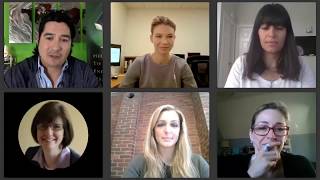
The Founder Institute’s Female Founder Demo Day 2018 featured four early‑stage, female‑led startups presenting to a live audience and investor Christine Herren (Intel Capital). Moderator Jonathan Gritchen introduced the event, highlighted its diversity across space, finance, hiring, and heavy‑equipment sectors, and facilitated audience Q&A via chat. The presenters were: Vanessa Clark (Atomos Nuclear & Space) – a space‑tug company using nuclear power to move payloads between orbits, outlining technical risk, a $1 M seed raise, non‑dilutive government funding, and a 6‑year path to commercial service; Hoda (Stock Card) – an AI‑driven investment platform that aggregates data, offers a free data layer and premium subscription for behavioral advice and automated trading, targeting both DIY investors and robo‑advisor users, with influencer‑driven acquisition and a focus on building a differentiated dataset; Clara McTaggart (Square Peg) – an intelligent job‑matching platform that uses proprietary assessments, AI‑based skill suggestion, and curated recommendations for both candidates and employers, operating a subscription model for employers and a free tier for job seekers, with early traction of 6 000 users and 40 enterprise customers; Barbara (BTrack Tech) – an IoT‑based predictive maintenance solution for heavy equipment (initially forklifts), employing non‑invasive sensors, SaaS pricing tied to asset count, partnerships with leasing firms and OEMs, and a $2 M raise to scale pilots and patent work. Throughout the session Christine provided investor‑focused feedback on traction, data differentiation, go‑to‑market, and fundraising strategy. The demo concluded with a reminder that recordings and contact information would be shared.
Chapters
Welcome everybody, my name is Jonathan Gritchen. You're joining us today for our female founder online demo day, and we got some great companies to show you today across a wide variety of industries. I mean, literally, it might be the greatest diversity of companies that we've had, no pun intended, but we have companies across space, hiring, finance, and heavy equipment. Which honestly is, is pretty unique thing. So, uh, today, uh, the way things are going to work is that I'm going to bring on a special guest investor in a second, and we're going to have 4 of our companies pitch. These represent some of the 4 most promising companies that we have in our global portfolio. These companies have traction, some of them have raised a little bit of funding already, and really we're trying to show you the companies now that that you should be reading about in the press tomorrow. One of the big things that we like to do during these Demo Days is to make it interactive, okay? And that's up to you. So if you look over here in the chat, you'll see a nice little chat box. Everybody hopefully knows how to use chat these days. And if you have any questions for the presenters, these can be questions about their business, what inspires them, no matter what it is, just be sure to get your questions in the chat. And we have a member of our team that will be going through the chat, feeding the questions to me so that we can make this interactive and so that everybody can participate. So just as an introduction to the Founder Institute, I'm a co-founder of the Founder Institute. We are— I'd like to think we're the most challenging startup program out there. It is really hard to graduate the program. And as I said, the companies that are presenting today not only graduated the program but are making some really great progress thereafter. And who better to have see the pitches, give feedback on the pitches, and ask questions than one of Silicon Valley's top investors, Christine Herren. So Christine, I'm going to bring you up on screen here. Christine, if you want to give an introduction to yourself, the floor is yours.
Hi. So I'm always happy to do something that allows me to fulfill my diversity as a mother. So thank— I love the online Demo Day. I am an investor with Intel Capital. I'm currently co-leading the diversity initiative there, which basically means we're doing our extra work to make sure that our top of the funnel is open and reaching out into diverse communities, which you don't necessarily get to know just doing the normal, you know, sort of demo days in Silicon Valley. And separately from that, obviously Intel is looking at deals across a number of sectors. We're a fairly large organization and we invest, you know, on average about $400 million per year, anywhere from, you know, 35 to 50 new investments per year. So we're very, very active. And prior to that, I have done a lot of early-stage work, worked at First Round Capital. I'm on the, currently on the advisory boards or mentoring at Bullpen Capital, which is a post-seed fund. Um, uh, StartX, which is a Stanford accelerator, and then obviously, uh, 500 Startups, which I think is how I originally got to know the Founder Institute guys and Adeo. So I'm really happy to be helping out and to see what you guys have for me today.
Yeah, great to have you. Um, you know, one thing I've also got to point out, and if you guys that are watching tonight, definitely check out what Dell Capital is doing with the Dailing Diversity Initiative. They've pledged $125 million over 5 years to quote unquote zealously seek out Qualified technology entrepreneurs with dinosaur phones.
Well, and actually what we've done, and I think the proof is always in the pudding, right? So we made that announcement, $125 million over a 5-year period, 2.5 years ago. We've already met that number and have invested past it, which is the advantage of investing off of our balance sheet as versus having a fixed dollar, fixed duration. Funds, you know, just what you typically do with the partnership model. And sort of in that 2.5 period, we've gone from about 6.5% of our investing being into diverse teams to just over 20% of our new investing going into diverse teams, which is fantastic.
That's great. It'd be great to see the rest of Silicon Valley follow suit as well.
And we're, well, you know, we're not there yet because if you were really at full representation, full parity, half of our investing plus, because we'd have all the ladies plus some of the other categories that, you know, men are also diverse in. So still work to do.
Yep. But we appreciate the work that you're doing. And yeah, as I said, no one better to have on today to see some of these companies. And hopefully you're impressed by some of the companies that we have. We know, honestly, these are amazing founders that we're going to see today. So let's get on with it. All right. So first up, All the way from Denver, Colorado, really not that far, but Vanessa Clark is joining us here. And Vanessa's— I had mentioned a space company, and we're going to start off swinging right with space companies. So Vanessa is the founder and CEO of Atomos Nuclear and Space, and Vanessa The floor is yours.
Thank you. Thank you, Jonathan. Do apologize.
We are—
there we go.
Okay.
So, hi everyone. I'm really excited to talk to you about our company. Thanks, Jonathan, for the invitation and the great preface there. So we are a space company that's really focused on enabling deep space and opening up the frontier for future exploration and also lowering some of the barriers to entry for companies wanting to enter the space sector. So space, as well as being pretty inspirational, drives a lot of our economy today. So as many of you may know, our navigation systems, weather prediction, climate change science, telecommunications, broadband internet, So many things are actually enabled by space and the satellites that we put there. So it's actually a big part of our economy today, numbering in the hundreds of billions of dollars in size. So I personally have worked on a few large space programs for industry and agencies, and there is sort of an acknowledged gap in how we operate in space today. So essentially, rockets, the only transportation infrastructure we have for this industry, are okay at getting into space, but they are not okay for moving beyond lower orbits. Rockets are really optimized to get out of the gravity well that is Earth, but they're not that efficient at moving around once we're in space. So a satellite could be lost, is difficult to recover, and also the entire process is more expensive and cumbersome than it needs to be. So there is actually a far more efficient infrastructure that we can be using, we can break it into two segments and optimize each segment based on the physics that governs it. So rockets are great for getting into space, but when we want to move around in space, we should use a different mechanism, such as a space tug. Space tugs have been proposed since the 1950s and '60s by NASA, and what makes them so efficient and optimal is they can do multiple transfers. So if rockets can get satellites and payloads to low orbits, space tugs can move them to their final destination. This also enables a lot more versatility and opens up the market. So firstly, it benefits satellite operators. So a satellite operator that is launched to a low orbit and then transferred to a final orbit has, um, would experience cost savings of 20 to 40% on typical launch costs. So average launch costs are around $100 million today. But this model doesn't just benefit the satellite operators, it benefits the launch providers too. So launch providers will be able to tap new markets and will be able to reach space and new orbits for more diverse launch sites. So leveling the playing field and promoting competition in the industry. So this is a good thing for all of us space data users here on Earth, uh, and not just NASA and the space agencies. So, um, one analogy that I like to use for Coloradans is that if we lower the barrier to entry for space, we can have widespread broadband internet, which is fantastic for us on the ski fields and stuck on on the jammed freeways around our state. Finally, it does benefit space explorers. So not just NASA and other agencies, but then SpaceX and Blue Origin as well. So our model works synergistically with their launch vehicles, enabling them to reach their target destinations, be it the moon or Mars or the asteroid belt, for a much lower cost at greater efficiencies. So our co-founding team has a very diverse background. So I have an aerospace engineering background with several years of research in this particular field. The last job that I had before leaving to create this company was executing a multi-hundred million dollar contract at Lockheed. So we do have William and Brandon who bring in business analytics, finance, and entrepreneurship in their backgrounds. So our initial market is targeting a market that exists today, geostationary Earth orbit. So this orbit typically costs $111 million for satellite operators to reach today. With our model, they'll be able to launch to a low orbit such as low Earth orbit for approximately $45 million, and we will complete the transfer for them for a contract fee, leading to the up to 40% cost savings on the launch. So we do have an initial development period, uh, but after which we do have revenue in the hundreds of millions. So we did just graduate from the Founder Institute in January of this year. Uh, we have started our seed raise and have firm commits. Current raise is $1 million, and this is for filing our patents, securing long-lead contracts with customers, and also with government agencies such as the Department of Energy and NASA. Everyone, thanks for your attention. So, Atomos Nuclear and Space. So, we are splitting the atom to connect the planets.
All right, great job. Great job, Vanessa. So, okay, so let's see here. Everybody, if you do have questions, please don't be shy, put them into the chat. Christine, I'll open the floor to you first if you have any feedback or questions for Vanessa.
Yeah, absolutely. And I just wanna make sure you hear me since I heard I was a little echoey, so I put some headphones on.
Great.
So I think the first question is, And I think for a typical Silicon Valley investor, this would be very common, which is you're raising a seed round of $1 million. It sounds, you know, much like pharmaceuticals or companies in health tech. There's a lot to get done. You don't really get product into market with that seed round. You don't even necessarily get a beta product up with that seed round. So how much capital is it going to take before you know that what you're building works? And how many years is that, you know, how much is that million dollars going to give you enough time to get the evidence required to get those long lead contracts that you talked about? And I imagine that that is what would get you the next round of capital to demonstrate that there's, you know, customer appetite.
Yeah, absolutely.
Can you sort of talk through that funding strategy? Because I think that actually might be your biggest problem.
Okay, okay. So I'm going to break the question down into 3 parts. So firstly, we're talking technical risk. Next, we're talking I guess, our cadence at which we can demonstrate at this technology. And then the third part is getting the customer contracts and what's required for that. So the first part of it, uh, the technical risk. So we, um, have identified some of the high-risk items, but our system is really designed to rely on heritage technologies that are either available commercially off the shelf or have been developed for decades by NASA. So essentially we are taking heritage designs but applying some new material technologies to them. So to prove out these new materials in a heritage system is actually very, very low effort. So we can do a lot of the, I guess, most risky technology development within a 12-month period with essentially all of our key technical risks completed within a 24-month period. So we do aim to have those key risks completed before our seed raise and our Series A raise in 12 months' time. So that's the technical risk part. The funding need to do all of that technical risk burn down. So we actually are looking at non-dilutive funding as well as dilutive funding. So the $1 million raise will be able to do that for the first 12 months with the second 12 months completed under government contract. So a lot of the tech work that we want to do is strongly aligned with DARPA, DOE, and NASA technology roadmaps. So, we're looking to cost share with them. So, really, the $1 million seed really gets us to the point where we can partner with these agencies. Final point that I'd like to say is the total timeline until we have a product in space. So, the man-hours required to do this, if we had full facility usage and so on, would only be around 2 years to launch a demonstrator and then 3.5 years to launch the final product. But as you pointed out, It's sort of analogous to the pharmaceuticals industry. So we're expecting the certification licensing process starting immediately to take 4 years from now. So we are conservatively predicting that we'll be able to launch our fully operational vehicle with and serve paying commercial customers in 6 years' time.
And do you need to have any of the technical risk removed before you can go out and start doing those customer sales, or can you get to work on that right away?
So we can get to work on that right away. So the contract structure that we're using is take or pay. So essentially they will be obligated to use our service if we hit certain milestones. So there is, so it in this early stage, it's really helping us validate our customer segment and the market and demonstrate the market size to our investors while also enabling our customers to sign those contracts with us while we're perceived as high risk. But they will be upgraded and changed in our Series A as we burn down those risks.
Right.
And what else needs to happen in the market for you to be successful? So do you require that the US government wants to fund a lot of space exploration, or are you okay if only the private market addresses it? If Elon, if Elon gets hit by a bus, are you still in business? Like what, what else needs to happen for your success?
So our model is complete, is based on a lot of factors. So the, the financial model that you actually saw was us lowering our prices to, um, to work very well with SpaceX. So essentially, we enable every other launch provider to have a cost point that's the same as SpaceX's best prediction. So if SpaceX succeeds, that brings us more business. Inverse to that, um, if SpaceX, um, if they have an increase in their, in their contract price, or, or a drop in their cadence, or more market capture, that also makes this a fantastic option for other launch providers to work in synergy with. Second part of your question, does anything need to happen in terms of the government? No, we really want to be a purely commercial entity. We do want to reduce the capitalization needs that we need through funds and dilutive funding by relying on government contracts, but that's not an enabler. That's really just a sweetener for us to make us a better deal for early-stage investors in particular.
Got it.
Okay, I have a question from the audience here too. So Julie asks, can you elaborate more on the technological differences between what you're doing and what companies before you have tried to do here?
Yeah, absolutely. So essentially no one has looked at commercializing a space tug before. So NASA has a few programs, um, and DARPA has also looked into this in the past, but none of them have really flown. There are, um, 3 other companies pursuing space tugs, but we do use a different technology to them. So we are targeting future markets, so very heavy cargo transfer to the moon and to Mars, and then the very heavy satellites that are going to GEO and are predicted to stay at a steady, constant market growth rate for the next decade. So to be able to target these heavier payloads, we need different technologies than these other startups that are looking at space tugs. So their systems use solar power. We are using nuclear. So I know that that is a taboo word, or I guess is a little daunting for people, but launching a reactor on a rocket to space has been done multiple times in the past, so tens and dozens of times. Um, and a reactor is completely safe until it's been operated. And so the radiation from a reactor is actually more benign than the space environment itself in a lot of cases. So this is, this is a fantastic system for space. It's like using nuclear in, in your submarines, you know, it doesn't operate in your backyard. It is a fantastic application for that technology rather than terrestrial power. So reactors have been developed by NASA over the past 4 decades. So we're essentially using some of their designs with new materials and fuel technologies that are inherently safe. So our IP portfolio and actually secret sauce is the fuel that we're using that is incredibly safe and optimized for space applications.
Applications.
Okay. And is that, is that, um, you know, you'd mentioned the, the IP that you guys will be filing. Is that what it's related to?
Part of it, yes. So we, um, we are essentially creating an, uh, a patent thicket around in-space transportation systems. So we're looking at the reactor system and any associated systems. So the power management system, conversion system, thermal management, anything that's unique to our spacecraft, um, We are looking to patent, and it is all patentable material. There is some in the open domain that NASA has published, but of course they are more academic studies than our, our design specifications that we have developed with industry partners.
Okay. Uh, Sarah asked the question as well, how do you dispose of the spent nuclear fuel?
Okay, that's a fantastic question. So our reactor can operate without being refueled for 15 years. Once it's approaching its end of lifetime, we have essentially two options. So the first option is to put it into a graveyard orbit. So these are designated orbits around the Earth that really don't interfere with any of the satellites that are there and have a very, very low probability of ever being on a collision course. So there are already 30 disposed of reactors in this orbit, all of them from the Russian space program and one of them from NASA. They launched a vehicle in the 1960s. So we, um, our reactor essentially, um, the radiation decays down over a period of a couple of decades, after which it's a completely benign piece of space debris. So that's one option, um, which we don't feel is very responsible, even though it is what is, um, the— what, what we're obligated to do in terms of international regulations. What we would like to do is insert ourselves into a heliocentric orbit and which is in orbit far away from the Earth where we won't interfere. So think, think about where Elon Musk's Tesla is flying. We're looking to put the reactor up there. So like I said, the space radiation is more dangerous in a lot of cases than the reactor radiation itself, particularly after we've stopped operating it. So it's— there is no safety issue or risk concern concerning this. Definitely not any more danger than what SpaceX is done with the Tesla.
Sure.
Okay.
Well, that was great. Christine, do you have any closing thoughts or pieces of advice for Vanessa as she tries to do something very ambitious?
Yes. And I love how ambitious this is. So I think my first piece of advice is probably about I want to say maybe 8 years ago, you know, sort of 7 to 10 years ago, there were a number of tiny satellite companies that got funded. And, and so what I would, number one, if you have not already done this, given the amount of capital you're raising, I would certainly go check out Crunchbase. I know you know the companies better than I do. See who funded them and reach out to those folks.
Sorry, um, can I try to jumpstart No, I think it's probably value-added if I say this. So we already have our Series A investors lined up if we hit our seed round milestones. So we are talking to all of those companies and we're actually establishing formal relationships with them so that they have, um, you know, rights of first refusal and also, um, more obligations to join our Series A. But yeah, it's, it's— there are space investors out there and they're very committed to this project, just not in our seed round. 'cause we're a little bit early.
Yeah. And so, and so, and my second piece of advice is now to be very cautious about saying we already have our Series A investors committed because then every investor out there will say, well, why aren't they doing the seed? If they're not doing the seed, they're not really committed. They're just blowing smoke or kicking your tires. So you might want to think very carefully about how you frame that engagement and just to make sure you don't, you know, accidentally create an issue for yourself you know, in terms of perception with the potential seed community. So I think that's number one. And then number two is from what you've described, you have a very close timeline on taking out that 12 months around technical risk with private funding. And then you've got another 12 months that you're anticipating based on non-dilutive funding, which is fantastic that you have access to. Um, I think it would be prudent to have either a backup plan or, you know, something that you structure ahead of time for if that takes longer, if that sales cycle to get that non-diluted funding takes a bit longer. I'm assuming your financial, uh, co-founder has, you know, that grant writing experience in his background. Um, hopefully someone does because that is a gnarly problem. And, uh, because I have, you know, whether it's, you know, your own, your own development issues or just sort of market based issues, or who knows what, you know, Donald's going to do next month, right? Um, you don't need things getting in your way that you don't anticipate. So I always advise, if, if you only need $1 million— and I say only with air quotes— if you only need $1 million to go for 12 months, I would seriously consider, you know, bumping up with like a 30 to 50%, uh, margin of error on that. Um, just because when you're at those smaller dollar amounts, a lot of the seed institutional investors you know, they don't have a big difference between writing you a $250K check and a $500K check. So you might as well take the $500K check and have some, some security buffer for you because you just don't want to be out scrambling to get more private capital when you're also trying to get the other work done.
All right. Thank you, Christine. Thank you, Vanessa. That was great. Awesome start to it. And we're going to start moving on now. So we are moving from space to finance. And we're bringing on Hoda, who is coming all the way from Silicon Valley. Hi, Hoda. So Hoda is the founder and CEO of Stock Card. Hoda, if you'd like to introduce yourself, and we're ready to go.
Sure. Thank you so much. I'm just bringing up the slides. Give me one second. Here we go. Okay. So hi everybody. My name is Hoda. I'm co-founder and CEO of Stock Card. And I'm today, I'm here to talk to you about how we are building the investment platform of the future. There we are. So this is, This is all of us. When we hear investing and wealth management, that's how most of us feel. It's pretty overwhelming. It's pretty intimidating. But despite that, almost all high net worth individuals invest their money and grow their wealth. And that's because they are able to afford hiring very expensive wealth managers who support them and guide them through the investment process. But these wealth managers are deprioritizing the rest of us, with lower net worths because we just have a smaller amount of assets that they can manage. That means a significant portion of global investable assets is left untapped by the investment management industry. And we think that's not right. We believe everybody, regardless of their net worth or their background or their education, should be able to invest and generate wealth for themselves. In order for that to happen, 3 things need to come to place. One is we need to make sure the investment process is not confusing and people have access to understandable data and insights. Second is we need to make sure the human who is making investment decision is not making those decisions based on emotions. And third, we need to remove ambiguity and unclarity out of the investment process. And that's what we actually call the investment platform of future. It's the perfect trifecta of intuitive research, behavioral guidance, and automation of the transactional part of the investment. So behind this platform that we're building sits a set of reliable APIs, natural language processing, and machine learning to help build this, the whole platform. So we've been at this, this work for a couple of months and we've built the data platform side of the solution. And the beauty of the solution is once we build the trifecta for one investment class, asset, we can actually significantly scale our product by applying the same trifactor to all other investable assets that are out there. So let me show you a little bit so that you can feel what the product looks like. So far we've built the investment, intuitive investment platform side of it, the data platform side of it, and the goal there being to create an intuitive research process. So we went to other walks of life and looked for intuitive frameworks that we can apply back to investment research. So we're creating almost like an app store for all investment opportunities that people can engage with. And then if people want to get to know one investment opportunity, we use other intuitive solutions or concepts such as, you know, traffic lights to just convey the quality of that investment opportunity instead of using very complicated rating system. Then, although on the backend hundreds of different structured and unstructured data points are being collected and analyzed, I don't know why I lost— did I lose my presentation here?
You did.
Yeah, I don't know what happened.
Yeah, it looks like it just disappeared.
Yeah, okay, so I'll bring it back on. So yeah, we were— yeah, okay, backend. So yeah, hundreds of different structured and unstructured data points are being collected together and analyzed. Users only see very easy-to-understand insights in everyday language. And then really, this is the last part of what is already live, is that people are getting started to almost like a shopping cart system. The investment opportunities that they realize, they put it in their personalized portfolio. And at some point when we automate the transactional part, they can just buy the investments that they picked in one, in one shot. So as I said, we've been at it for a couple of months, and we've, so far we have hundreds of users on the platform, and we were able to delight them. We've received people that they put Stock Card as a must-have part of their investment research. Some people love the platform so much that they can't wait to pay us. They're asking for, where's the paid version? We don't have a paid version, but they're like, I can't see the paid version. So we, that's why we're very confident that we're actually going to be able to compete in the market. I'm going to pause here and just talk about our team and then return back to the question. Myself and my co-founder, we built the platform for ourselves, and I keep losing my presentation.
I'm sorry. Keep going, keep going.
Yeah, so basically, um, yeah, both of us, um, we are product managers. We've built, uh, first in several different companies, we've built very successful digital consumer products, but we built the platform first for ourselves. We we wanted to be able to be a better investor. And then we realized, we showed it to our friends and we realized we have a gem in our hands. And that's how the company came about. And we're just getting started to raise our, our angel round, about $800K. And I really love to invite everybody to go to StockCard.io and feel the power of the platform, the data side of the platform, and be in the know for the future releases that are coming on. Thanks.
Great. All right. Thank you. So Christine, if you'd like to get it started, I have questions as well, but I'll leave it to you.
Yeah, absolutely. And especially I think we'll get more questions because unlike space exploration, everyone's got an opinion about personal finance. So, so I think so. My first question to you is, given the target that you're going after, Are you looking to take folks away that currently use a wealth manager, or are you going for greenfield? Are you looking for people that are maybe growing out of using a Mint.com or something from Schwab or one of the automated other automated advisors and you're a better automated advisor? How are you going to do market entry?
Yeah. So the product originally is targeted for people who are managing their own wealth. But that doesn't mean that we cannot serve people who are using other platforms. So one interesting fact to say is that using— are we on? Are we good?
Okay.
Okay. So even people who are using automated funds, on average, after 4.5 years, they get out of the fund and they make something wonky. They do something wonky with their investments because they don't have the, the type of support that they need to in order to make sure that they're good over the long term. So even people who are using robo-advisors or like Vanguard and those things, they still make decisions that they're not sure about and they make a lot of mistakes. And our goal is to be able to support even those that, those who are automated, using automated systems, to be able to have complete support.
Okay. And yeah, I mean, I had a related question there too. So if you're going after sort of It seems like greenfield is really where the biggest opportunity is, right? What's been kind of the main source of user acquisition so far that you've seen, you know, get some traction there?
Yeah, so we believe that every stage of our development needs its own perfect channel. It's almost like product-channel-market fit kind of thing. So in the early stage, we're using influencer marketing because investing by nature is a trust based decision making, so you need to be able to get this trust established. We've tested several ways of using mid-tier influencers, people who have blogs, people who are admins of Facebook groups, people who have podcasts about investing that a lot of people log into, and they've been able to basically just test the product and then almost like a review, like an open it, like when you send your Apple iPhone to a reviewer, they basically just review Stock Card and then that is the best, biggest source of acquisition. That's for our early stage, and obviously as we grow, we find other ways of acquiring users when we get bigger and bigger.
Okay, so Abhijit asks, and I saw, I think we saw the slide very briefly, but Abhijit asks, what's the revenue model? You know, I'm assuming you're taking a percentage off of or some type of fee?
Yeah, it's a premium subscription model. So once you come to the platform, the basic data platform is free. And then when you want to use the more advanced features, so let's say the behavioral advisor side of the platform, or if you want to automate the portfolio that you create and you want to automate that investment, investing in it on a regular basis, you have to pay subscription fee.
Okay.
Anu asks, as a customer, is there any minimum or maximum in terms of investable dollars that are needed in the platform?
No. That's actually because we are targeting everybody who is starting and people who are managing their money. We see that actually the platform's minimum required investment is a barrier for a lot of people to get started, and we're moving away from that model because we are not managing your money. You are, as an investor. You're in charge. The whole purpose of the platform is to enable everybody to be able to make good decisions, just like if an advisor did for you. So we're putting investors back in charge of the decisions. Therefore, you decide how she will invest.
Okay. Christine, looks like you're back.
Yes, I had to escape because bad things were happening.
Of course.
Um, so yeah, we were just talking about, um, some of the user acquisition strategy. It looks like influencer marketing has been, um, really useful, uh, for Hoda.
Um, and, and so sort of to that point, because I think that, you know, like, this is one of those categories where you're going to have some instant pent-up demand, right? You're going to go out and whether it's people you know or people that are just a perfect fit for what built so far, um, you get— you can get more quickly. So, you know, there's that first 100 users, there's that 1,000 users, there's 100,000 users. You know, where do you see you are as far as, you know, how you got the folks you have now? And, and I apologize, this was already covered while I was restarting Chrome. Uh, you know, how, how are you going to make that progression? And how are you really standing out, um, competitively? Because you might be better, but until people come in, you— they don't know that you're better. And there are certainly products out there that have a lot more marketing dollars being spent.
Yeah, so the way we're building the platform is obviously, as you saw, roadmaps and milestones. And every milestone, it's the way we designed it. We designed it in a way that we could, we could make it more appealing to a bigger, your startup audience. We started from the data platform. The data platform is obviously appealing for people who are actually interested in getting into the nitty-gritty of making their own investment decisions. So that's perfect for that. We build the product around them. And then as we introduce the rest of the platform, as we introduce automation of your portfolio, there will be more people. This appeals to a bigger audience because you could come one time and create your portfolio and then just automate it and let it invest for the selection that you made on a regular basis. So it suddenly becomes appealing to people who are more about passive investing. And then as we bring AI advisory into it, which is behavioral advisory we're talking about, it's now appeals to people who actually are not very familiar about making good investment decisions. So we help them throughout the process of making decisions. So, and then, you know, the last part of the platform, but right now we're focusing on the stock market, but once we build that system, we can scale it to other assets. Let's say we can scale it to bonds and we can scale it even like to cryptocurrencies, we can scale it to any other investable asset. And we basically just constantly increasing this target audience, this addressable market, by introducing this product into the platform.
And when— and I know we're running short on time, sorry, I want to get this question in. When will you have enough of a dataset built out? You know, what critical mass do you require for a dataset for your AI to learn what it needs to learn? And how differentiated is that dataset going to be from ones that other people might be working on.
Yeah, so the, the, the AI, basically the AI is very dominant. AI, as everybody does it, it has some specific set of rules that is already known, right? Meaning that, for example, we already know when the market sentiment is negative, possibility of people just cashing out of their portfolios, out of their investment, is really high. We can immediately even start bringing those things into the platform saying Okay, market sentiment is high, very negative today. You are making very bad decisions. And nudge the user that this is not the right time to cash out, you know, and just kind of help them stay on track. So that part of the AI is difficult because these are pretty fine, very clear set of places that people make bad investment decisions that we could already build that. And so that will actually help us collect enough amount of data about how actually they react to these kind of nudges. And then we will personalize, and then it becomes really smart AI because it means you realize that where you are more prone to make those investments, make mistakes. So it is really not much difficult because from early on we could build this foundation of, from that preset set of things that we know, to be able to get to know you faster. But that's how different from people who are starting from like from scratch and have no data. Early on, even from now on, we can start getting to know the user in terms of how they react to market, which is what we're trying to help them out.
All right, thank you, Hoda. That was great. So we're gonna move on now to our third presentation, which is Square Peg, coming from New York. So going across the country here. As Square Peg and Clara McTaggart comes on, I just had a quick question for you, Christine. So You know, with the products like we were just looking at where it's sort of greenfield B2C type of product, I mean, are there specific metrics that you're looking for? It seemed like there for a moment you were kind of alluding to the fact that really retention was going to be a big part of it. You know, do you have any thoughts there on really what you would look at?
Yeah. So, well, and again, it depends on stage of the business, right? So assuming we're talking about a seed stage or very early stage company, Anything that's going directly to consumer or directly to small business would be similar. You know, I'm looking for team products and customer acquisition plan, which isn't necessarily— or customer acquisition, you know, sort of the traction you have so far and is what you've been doing something that's going well and you're going to keep, you know, implementing or, you know, sort of evolving around, you know, your plan of record. Because as folks know, If you're going to be successful in consumer, you need momentum, and you need that momentum to get talent, to get folks into the company. It's incredibly competitive, you know, given the salaries that Facebook and Google will pay for someone who knows how to do a consumer-facing product effectively, um, or how to market it effectively. So, uh, you need to have that momentum to attract employees, to get the press excited, to get investors excited. And for, again, for consumers specifically, if you are able to demonstrate that momentum even if it's just at the very small early stages, that will make a big difference in your creating that, that center of gravity that people want to come, you know, come get, you know, drawn closer into. And I think in other areas you can go organically without, um, uh, without necessarily having that scale happen very quickly. But if you're a consumer and you don't have something that's a greenfield space and personal finance definitely is not a greenfield space. So I think in particular, um, uh, for Stock Card, it's going to be important to show what is differentiated. So for example, you know, when you're talking about AI, when you're talking about data sets, and again, it's all marketing, it's all about how you market yourself, right? When you go out to raise capital, I know for a fact that many investors, us included, will basically just get very excited if you have a smart team that's that's doing AI straight out of a lab even, and they've got a line on a unique dataset, which is why I was asking. Because if you were to say, we have a unique dataset around personal finance that other people don't have, and we have this team that's very smart about, you know, how to get an applied, you know, artificial intelligence around that and do things that create value. We're going to take relentless parallel attention and create this value with that attention from AI. That will differentiate you enough to get the capital that you need to then go figure the other stuff out. You know, so you have this ability to get the resources you need to be successful, you know, a couple of different ways because you do have that AI, right? Yeah, coloring you. But yeah, but if you're going straight consumer and you don't have the latest snazziest thing on Sand Hill Road, then yes, you've got to have that plan. And it's got to be something that people are excited about. They believe you can execute on. Just 'cause it's— execution's everything. I would worry much less about feature sets at this point.
No, that's great feedback, and yeah, that's why I wanted to dive in there. All right, so Claire, without further ado, Claire, as I said, coming from New York, is at Job Matching Service, where she's also doing some pretty cool stuff with data. So Claire, are you there? Claire, can you hear me? Okay, looks like we may be having some connection issues with Claire.
Hopefully that ominous face behind Claire has not hurt her.
Can you hear me?
Sounds like an R2-D2. Unfortunately. Okay, so let's see here. We have— okay, so Claire, now we can see you.
Are you able to hear me now?
Yes, yes, I think you moved into the suite with Wi-Fi. All right, can you hear me, Claire?
So I can hear you. If you can hear me, I'll get started.
Yeah, yeah, let's get started. Thank you. So online events are challenging, by the way, for anyone who's watching, especially when you're broadcasting and bringing in people from multiple places around the world. So appreciate your patience.
Should we move on to the, the fourth company and let Claire get resituated?
Yeah, that probably makes sense. Um, so, uh, Barbara, are you there?
I'm here.
Can you hear me?
All right, great. Yeah, Barbara, we can. All right, so, uh, coming back here from San Francisco is Barbara, who is the CEO and founder of BTrack Tech, doing some pretty cool stuff with IoT and heavy equipment. So, uh, Barbara, if you want to get started, we're ready to go.
Just give me a second to pull up my presentation here. I was looking forward to hearing Claire. So, 2 seconds. And just to save bandwidth, I'll take off my video.
Okay.
All right, are we good?
Yep, we can see you. Let's go.
Okay, super. Well, worldwide, businesses spend over $140 billion a year on the repair and maintenance of heavy equipment. And just for perspective, that's bigger than all of video and mobile gaming combined. In my experience, I was an executive doing facilities and operations leadership, so I personally experienced this, as I show here, a ticking time bomb of heavy equipment. Where the breakdowns caused really expensive downtime. And when I reacted to failures instead of anticipating them, it increased repair costs by up to 10 times. And that's been proven. And surprisingly, if you have mixed types of assets or older equipment, there is no predictive maintenance solution for that equipment. So we developed E-Track. We use the Internet of Things to turn this powerful equipment data into actionable information for our clients. And we do it across vendors and vintages. We alert you to problems before they become serious. And what we found is this not only saves a lot of money by eliminating downtime, but of course improves productivity and it improves maintenance costs, reduces them by 25% or more. So quick tutorial on how this works. We connect our proprietary non-invasive IoT sensor system to the equipment. It sends data to our eTrack cloud there in the middle, and before something really big and expensive goes wrong, we send an alert via text, API, or app. And just a quick look at the app, we can see what's going to break. Next, we can see the details of what's wrong. And finally, and this is super cool, the maintenance tech can see the history, and our master tech who's worked with us on on this said that it will save time, which of course will save our customers money. So a lot of people are surprised that there isn't something like this already. And here's the situation. The OEMs have some IoT monitoring, but it's only for their stuff and only their new trucks. They don't monitor other brands or the older trucks. Pre, pre-technology fleet trackers can handle multiple brands, but they don't have predictive or real-time work orders. So our business model is software as a service to monitor each asset. We also sell hardware and we have a global partner who provides that to us, and that's part of our professional services installation package. Longer term, we'll also have extensive data to sell to interested parties, you know, like those OEMs. So the market's really interesting. $8 billion of the world's heavy equipment repair market is just in the US with lift trucks. Forklifts. This equipment, as you know, is like critical to revenue because it's between the factory and you, and it breaks down a lot, and there's no predictive solution. So forklifts are an initial focus for our team right now. We're really excited to have Fortune 500 companies in our pipeline. We have commercial pilots, and we have some really exciting strategic partnerships underway with both the heavy equipment folks and some facility service providers, and they're going to help introduce eTrack to their businesses who need this solution. We have a team that is just so exciting to work with. We, my co-founder and I, we have deep experience with this kind of problem given our past business experience, and we bring together our IoT, our maintenance, and the, the team experience here to solve these kinds of problems for our customers. And I've done a lot of business scaling. Right now we have finished our early friends and family round and we're now raising $2 million to accelerate our market entry through new use cases and pilots. And it will also support our patent process. So we are transforming fleet management through predictive machine insights. And I'll just say that everyone who's listening knows someone who uses heavy equipment. It might be you. So please visit our website and we'll help you make your workplace work better.
Awesome. Thank you, Barbara. So I had a quick question first, Barbara. You'd mentioned that the term non-invasive IoT sensor— can you dig a little into that?
Yes. You know, a lot of heavy equipment has warranties. Where if you interrupt the equipment mechanics, you violate the warranty. And so actually one of our patents that we're applying for has to do with the installation procedure to make this non-invasive. So we can measure a bunch of things that normally you need to stick a probe into. We can measure it without putting the probe in by using algorithms and a unique installation technique. So we don't mess with your equipment. It's, it's in the same condition before we came as after we come.
Yeah. Is— are most of those assets owned by your client or are they leased?
Both. Interestingly, one of the clients we're working with leases over 20,000 forklifts. And when you have a lease, you pay for any kind of repair that's considered abuse or not under warranty. And one of the things that we German is there's a bunch of stuff that should be under warranty that's currently with the leased equipment. So we do both. Uh, there's, you know, actually equal advantages to leased or owned. I think if you're owned, you oftentimes have your own maintenance people too, so we can help make them a lot more efficient and effective because they know what's—
yeah. And is there an opportunity for you to get third-party distribution by working with leasing companies and doing partnerships on that side, or do you anticipate go having a direct sales model?
Actually, having partners in the middle is a big part of our model, but they're maybe not quite what you're, you're thinking there with leasing. OEMs are a target down the road, so we'll definitely be talking to them about incorporating our solutions so their distributors who do most of this leasing can take advantage of it. Also, there are a lot of companies that already provide specific services to these types of equipment, like wheels. And so we can partner with the wheel and tire folks to bring a solution so they know when that tire needs to be repaired. So we're really excited about the partnership opportunities. I'll also make another note on the partnerships. It's surprising that a lot of the big companies, even the ones that have IoT, and I won't embarrass them by mentioning their names. They are still looking for someone who goes from sensor to insight. We do the data analysis with, of course, we have a business rules engine, but machine learning makes that stronger and then take it all the way to something the operator can do with it. And then asset insights. In a lot of companies, you need to hire another company in the middle to do that work. So a platform that kind of is Full life on the, on the data cycle is really what we're offering. And we're plug and play. We don't need to do everything. You pick the equipment, we can do just that specific equipment.
And are you, are you a useful vendor for someone who only owns one forklift, or do they have to own 100 forklifts? Like, what, where's that critical mass where you become useful?
Um, it depends on how important that one forklift is. I think we to that. It's really, if you think about it, it's cost-benefit, right? I will tell you, doesn't mean you want to chase that business though. No, our focus is on mid-market folks who have at least 200 assets, and then enterprise, which, you know, 2,000 is very low. One enterprise folks we're working with have 100,000 assets, but those small ones, I think our service partners who help us do installations, they can identify those. Right now, the small business people I love because they've been doing our pilots with us. And one guy has a piece of equipment that we're monitoring that's a $250,000 piece of equipment. And so one piece of our equipment is totally worthwhile for that piece of equipment for him. So it's—
when do you And when do you become profitable on a contract? Is it month 3, month 6, month 1?
We've looked at our profitability in terms of the total number of assets that we're monitoring rather than a specific contract because we're building our entire ecosystem. So as a company, we become profitable when we're at about 1,500 assets. So that's That happens right about, about in a year or a year and a half from now.
Okay. But I would encourage you because I mean, it's very, if you're out there as a SaaS business, it's a very common question for SaaS companies from investors is when does that contract become profitable? Because we assume there's a bunch of upfront sales costs, there are perhaps some upfront, you know, setup costs, maybe NRE for you guys because you actually have some hardware that has to go into the equipment or around the equipment. Get deployed in the market. So that number is also very interesting because people have an expectation for where you should be, right?
And I can— we could go into more detail on that, but we do know the contract size and all the individual buckets. Charge for the installation process and the setup process as part of our professional services because we do some analysis for folks that's valuable. So each— the contracts actually become profitable at a pretty small number of assets.
Right. If you're able to get that money up front, that's great.
Yeah.
Well, we had a question or two from the audience here. So technical questions, it seems like. So Sarah asked, what is the IoT device and what standard are you using for the network connectivity?
Ah, okay. So I won't go into all the weeds there, but one thing that's different about us is we use sensors that are best-in-breed sensors for— and they're all different types of sensors. And so we connect that to a custom configured sensor hub. And by the way, those are all available on the open market.
We don't—
we have only invented one sensor. So those all connect to an industry standard device. And so we're following all kind of the industry standard protocols for that. And, you know, she can reach out to me separately. I'd be happy to share all the details because I don't want to bore everybody else. And we— the one thing I'll say is we, we use the cellular system for everything. So we're not riding on company networks. One of my co-founders has a background in cybersecurity, and this is one way we have been able to fly through the enterprise security process because we're not exposing any of their systems to risk with our, with our stuff.
Oh no, that's great. That was actually the sec— we had a bunch of questions here about security.
So yeah, yeah, IoT, IoT. Every one of our devices is its own endpoint. So even if somebody messes with us, it's one. So that for us, and there's no backwards signal. We actually started out considering doing energy management because we do heating, ventilation, air conditioning monitoring. And it was the return signal that gave us heartburn, and so we decided to stick with one way.
All right, thank you, Barbara. That was great.
Thank you, and I'll, I'll put my contact information in the chat room for people who want to reach out.
Yeah, please do. And just for everybody else, we will be sending the video and all the contact information out shortly after this webinar. All right, so we got one final presentation. So, Claire, how are you?
I'm good.
I'm sorry about the earlier hiccup. I have another computer next to me if this one doesn't work for any reason.
Not a problem. It's kind of always— something always goes wrong on these webinars.
It always works until it doesn't, right?
Yeah.
But okay, if you're ready to go, we're ready to see the presentation. So as I mentioned before, Clare is coming from New York, and she's the founder and CEO of SquarePak.
Okay, great. So thanks for hosting me. I'm the founder of Squarepeg. We are a platform for intelligent job matching. So the future of hiring is going to be intelligent and personalized. Online platforms are going from the initial model, which is searching through long lists of results based on keywords and filtering, to smart matching and recommendation systems. Square Peg is curating the job matching experience for employers and talent based on fit. So why does this matter now? The first is that the current systems really aren't working for either side. You have nearly half of new hires which are considered a mistake or a failure 6 months in, and 80% of job seekers saying that online platforms are painful. Also, our priorities and values are shifting. Employers are caring much more about diversity, and job seekers for the first time are ranking fit with a company over their salary. Also, we see more tech acceptance. Big data, machine learning, and AI are actually entering the HR function for the first time, and job seekers are willing to give up some more data for a more personalized and curated job experience. So what is our approach and how are we different? So it starts with the data that we collect. We have our own proprietary assessments that we use. We assess both job seekers and employers, and we assess them before their job search. Actually, we look at everything from skills to preference to personality type so we can do a much more curated match. When it comes to matching, this data allows us to get really personalized, giving you 5 to 10 high-quality results rather than, you know, long lists that you have to search through. Also, we give insights at every step, so we give free reports as well as transparent results. Along the way. So what does our platform actually look like? You come on and you take our assessments. We use computer adaptive assessments that have AI skill suggestion engine, and they're smart and adaptive. So as you take them, they get smarter. Also, we have a personalized matching recommendation. We'll give you lots of analytics about that match with the candidate or with the role so you can make a smarter decision. And then we give insights. One of the most popular is the free report we give to job seekers about themselves and what environments and roles might be best for them. And so in terms of some of the data that we look— we have a parsing engine, so we look at everything from the resume and the job description, and we can do some semantic matching based on that. But we also look at your behavior and role fit. We also, for the employer side, will assess the hiring manager and the teams to identify the top attributes and source some candidates for that. Also, as anybody uses our platform, it gets more intelligent over time. So the HR tech space is very crowded. Crowded. How are we different? So job boards are high volume and they're matching basic, basically on resumes and high-level data. So it's a lot of keyword matching, whereas SquarePed provides a really highly curated, sorry, a highly curated environment due to the data that we collect. Also, for assessment tools, we're really different from them because we actually source on both sides the candidates and the employers that should be speaking to one another rather than just acting as an application process. There are some AI machine learning smart tools available, most of them in the bot space yet. We are incorporating some of the technology, but definitely on the space in what it comes to matching. So what's our business model? We are a subscription-based model for employers, and it's free for job seekers. And when it comes to job seekers, we're looking at business generalists, so no tech hires. It's mainly sales, marketing, and your business hires. We also have a large database of passive candidates who are currently employed and thinking about their next career. We launched an invitation-only beta in the fall, and since then we have 6,000 users actively using Square Peg to find their next career and 40 companies working with us, from BBC to Audible to L'Oréal. Our team is a mix of business, science, and technology. So I have a background in management consulting, and led a recruitment team for 4 years. Dr. Scott Highhouse leads our IO psych and science team, and he's one of the leading experts on personnel assessment selection. Also, we have a team of sort of engineers and a leading NLP data scientist. And that's it. So Square Peg, we're currently coming out of our first MVP. We're coming out with the second product and raising our seed round.
Great, thank you, Claire. So, all right, so Claire, we got your video back up. Christine, do you have any questions for Claire?
Yeah, absolutely. And so I think the— I'd like to hear a little bit more about what's actionable. So particularly for this category, if you're gonna go, you're gonna do this quiz, you're gonna learn a bunch. And I think that's true, you know, is that if it's, you know, two-sided, those tests need to be actionable in some way. So what's the actionability for your seeker and for your employer based on, on that report you're giving back?
Yeah, so for the job seeker, they take the assessments and they'll immediately get a lengthy report really personalized about themselves. You're highly detail-oriented, you might be great in this environment, in this job. And then we say we're only going to send you roles that are really going to fit you from a preference perspective, environment, maybe it's flexible work hours, environment where your personality fits as well as Is it just me that can't hear?
It looks like it is. It is. There's a little bit of a connection issue here with Claire. Claire, are you there? Okay. Well, It seems like Claire's having some connection issues today, which is unfortunate but expected whenever we do an online event. So we got through most of it today. And so that's about as best as we can hope for. But we do have Claire's full presentation, and we do have the full presentations for all 4 of the companies. So for everybody who— joined us today, I'd like to say thank you. We will be sending along all the videos, contact information, and all that kind of stuff for the companies that presented. And I'd especially like to thank Christine as well for joining us and for, you know, providing, I think, some really interesting insights that some of the founders that are watching today can learn, you know, how an investor is going to be looking at their business and especially across the different types of businesses.
Yeah, well, I'm just gonna have to keep dialing into these so that I get to be there when it finally works perfectly on the tech side, and then I'm gonna go invest in whatever that platform is.
Yeah, not WebinarJam, apparently. Okay, so, all right, well, thank you everybody, and as I said, you'll all be receiving a video. Thank you again, Claire. Thank you again to our presenters. That was great. Take care and have a good day, everyone.
Thank you.
Bye-bye.










