Founder Institute Graduate Panel (11/1/16)
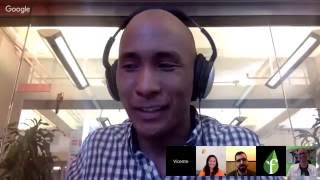
In this recorded webinar, Founder Institute CEO Zadeo hosts a panel of three alumni—Nupur (Rigplenish), Vicente (MapNYC/Mise en Place), and Pierre (Homehunt)—to discuss their startup experiences. The conversation covers how each founder entered the FI program, pivoted or refined their ideas, built teams (including unconventional co‑founder roles), validated their products (including concierge MVPs and early customer LOIs), leveraged FI’s structured curriculum and mentor network, and progressed to later‑stage accelerators such as Y Combinator, Techstars, and NextJump. The panel also explores common challenges like receiving harsh feedback, developing thick skin, and maintaining disciplined weekly milestones. Finally, the graduates share concrete advice for prospective participants, emphasizing trust in the program, openness to learning, and the importance of starting immediately and talking to customers. The discussion is interspersed with audience Q&A about mentor processes, the value of FI versus going it alone, and practical tips for new founders.
Chapters
Hello everyone, my name is Zadeo. I'm CEO of the Founder Institute. We're excited to bring to you today a webinar featuring some of our most interesting graduates from around the world. Welcome everyone, and we're gonna have an exciting discussion today, and I'm happy to have you participate. So let me quickly introduce myself and the Founder Institute. As I said, I'm the CEO of the Founder Institute. I've been a serial entrepreneur for about 22 years. I had the joy of creating about $2 billion of shareholder value, uh, all the scars and bruises to prove it. And what we do at the Founder Institute is try to make it easier for the next generation of companies to get off the ground. Than let's say it was for me. And we're going to have a lot of our grad— or a number of our graduates come on today and tell you about some of their experiences. Now I want to make something clear. It's never easy to start a business, and it's not easy to start a business whether you're in the Founder Institute or not. Um, but our goal is to make it easier. Um, now I'm going to lay some ground rules on before I start, um, pulling on the grads to talk about their experiences building a company, et cetera. If you have any questions that, uh, pop up as we're talking about different things, you can type it into the chat and one of our team members will queue it up to be answered. So, uh, don't be shy. There's a chat box on the side. That box is there for us to try and address any and everything that you're thinking about. Now, very quickly I'll go through and pull the grads on screen and I'll say something about them and then I'll let them add anything else about their business or themselves. So first one coming on is Nippur. Are you going to come online? There you go. Hi there, Nippur.
Hi, Adew.
So Nippur is an amazing young lady. She graduated from the Founder Institute here in Silicon Valley under the stewardship of one of my very good friends, Carter Loren, who was the director at the time. After graduating from the Founder Institute, she achieved a lot of success very quickly, including getting into the prestigious Y Combinator program, among many other things. I— very quick on the business. She's making, you know, the delivery of emergency medical services much more efficient by improving the forms and systems that they use throughout the day. And Nupur, why don't you tell us more about what Rig Planish does? Sure. And then we'll invite some of the other grads on. Welcome.
Thank you. So yes, I think you gave a really great summary about how we are making ambulances more efficient. But just to give you guys an idea, each ambulance run is approximately 2 hours long. And they're spending 40 minutes filling out paperwork. And at Replenish, we reduce those 40 minutes to 4 minutes. And that is where our team really focuses on, on how to make it more efficient, reduce all the paperwork that they're doing and comply with everything that the different regulations require. So that's us.
Yeah, that's great. And, um, So, you know, kind of stupid question for you, but since we're talking about your business and I love it. So how does it vary state by state, the 40 minutes, or is it pretty much just universally 40 minutes no matter where you are?
Yeah, so there are many different models that exist within different, even counties within states, but we have kind of averaged all of it together and It turns out to be 40, like, on average.
Okay, great. Yeah, now remember everyone, if you have questions in the chat, if you have questions, pop it in the chat. We'll try and get to everyone's questions. But we have some questions to kick things off. Next, I'm going to invite Vicente on screen. He's from New York City, really one of my also favorite grads. He runs a company called MapNYC. Mise en place, if you will. Did I pronounce that correctly?
Perfect.
Well, okay, that's what you're saying. But if you were French, you'd be like, not in a million years. But anyway, so it's a—
I'm sure Pierre has a different pronunciation.
It's an innovative food delivery business that delivers to you same day really high-quality ingredients so that you can prepare a home-cooked meal in a lot less time. Hopefully I got all that right. You've gone on after the program, made a lot of traction with actually delivering product, which is fantastic, and had success with both Kickstarter and angel funding. And you're currently in Next Jump being incubated, and Next Jump is run by one of our mentors. You want to add anything about Meece Platz that to tell everyone?
Yeah, I think you hit a lot of the bigger points. The big thing is, look, this is— we are classic, not the first mover in the industry, but able to learn from everyone that's come before us. So I think, you know, the other competitors in the fields of Blue Aprons and Plated's, they've done a good job educating the market, but what we've been able to do is listen to the consumer feedback, what's working, what's not, and optimize for what we think is the biggest pain point, which is the actual peeling, chopping, and dicing. So that's what we take care of for our customers. We've labeled it as the final, last mile of cooking.
But you also—
And in that way—
Yeah, sorry, you also do that within the same-day model, right?
Yeah, exactly, sorry, exactly. And so for us, a lot of people who are busy don't know what they're having for dinner that night. How do you expect to plan 'til you plan a dinner a week in advance with these services, so we also implement a same-day delivery model.
Right, which is great because then, you know, oh, I have some time tonight after all. I'm getting home at 9:30 versus 10:00. I can, because of change, I can order mise en place and get something to make with my girlfriend, wife, or whatever.
That's exactly right.
Great, and last but not least, Pierre. Pierre, co-founder and CEO of Homehunt. You came from Montreal, so we've got kind of a spattering of North America here— Silicon Valley, New York, and Canada. I guess we can have a lot of them. Welcome, Pierre. Talk a little bit about Homehunt, an AI-powered messaging service that helps people find their next home. Now, you just got back from the Techstars gathering. Are you enrolling in Techstars? What's going on there?
Yeah, thank you, Alejo. So first of all, The Home Hunt is actually a virtual real estate agent that helps people find their next home by text message. I mean, all of us have experienced the messages sent on Craigslist, you know, as if you're sending a message into the void. While what you're trying to do is fixing that, actually, whenever you have a question, you put it through this form and you have this artificial intelligence that gets you the answers. And to get back to Techstars, yeah, we're in the selection process and hopefully everything's gonna go well.
All right, well, fingers crossed. So, uh, um, welcome everyone. Well, so again, we've got a number— we got about 50 grads, uh, 50 viewers, excuse me, and 3 grads. And I want to encourage and remind anyone in the listening audience or watching audience that if you have a question Don't be shy because we're here to try and help you understand the program and everything else. So I'll start off with one. At what— like, you all came into the program at different stages, right? Or maybe similar but slightly different. Maybe if you could just say a couple sentences each and we can start in the same order that we went. But I'll vary the order going forward. This is like, where were you when you decided to enter the Founder Institute program in terms of your idea or if you have a job, anything like that? Nippur, do you wanna go first?
Sure, yeah. So I was, I went into FI with a very different idea which got shot down in the first week or so of the program. So I kind of had to look back into what other things I had done within, you know, my limited work experience and where I could see the problem. And actually, Rigplenish was founded while in FI. So I was very early stage. We had no customer development and no product, nothing. We just knew the problem existed and we went from there.
All right, so you're sort of asking, you're answering a question from Lisa. Why did Nippur and other graduates choose their startup idea? And so essentially you came in with a different idea and the Founder Institute program helped you choose it.
Exactly.
And, but now, so just to clarify, how stuck were you, or clearly not that, how in love with you with your first idea Not that in love, I would guess, because you switched.
Of course not. I actually liked it, but I remember we had this one conversation in the bar and it was, it was like either you figure out a revenue model for this or there's not a big enough market and you need to switch. So F.I. kind of helped me look through all the, you know, market research and all the different aspects of a business and just not that one part that, oh, I need this and that's why I'm making it. There are many more aspects that you have to consider before you choose a business idea.
Vincente, so where were you in the program? Maybe then, you know, did you have your idea at that point or did you refine it in the program?
Yeah, so I think I was, I was more of the advanced stage of joining the program, meaning I'd already left my full-time job. So prior to founding Mise en Place, I was at JPMorgan doing investment banking. And had been sort of— I had left, I was developing the business plan but very vague on a lot of the points. And so when joining Founder Institute, what was helpful was I basically brought this mess of a business plan and it got gutted and tortured and wrenched, but coming out of it was a very refined, much more focused way of moving forward.
Ah, so you were a banker.
Yes, regretfully so.
And you didn't have a good business plan.
I had a good business plan, but I mean, no, like the difference between an investment banking point of view of this is how a business should work versus an entrepreneur's viewpoint of how things actually work in real life, not in a vacuum. I think that was the biggest sort of lessons that I learned. You could pretend to graduate from these things and know how businesses work, but until you're rolling up your sleeves and boots on the ground, you have no idea.
I've been really proud of you, by the way. So one of the things I love about Vincente, by the way, is that he has actually started the business. You really bootstrapped the business. I mean, is that accurate? I mean, yeah, I mean, because you were delivering, you know, relatively early in your life cycle without a lot of capital, so you, you learn by doing, which by the way, some of the largest businesses in the world have all done. So I find that very commendable.
No, I appreciate that. I remember doing some of the bike deliveries in the winter in New York, and I literally bought a bike messenger reflective gear, and my mom said, wow, all that tuition for you to be a bike courier. But it gave me no better reason to learn that these, some of these costs are, you know, worth paying, and you don't do that unless you feel out each way. So yeah, appreciate that.
You actually did bike messenger in the winter. Mental note. By the way, so I'm just going to throw this out there. You remember I said no matter what, it's always going to be hard starting a business. I think doing bike messenger deliveries in the New York City winter chalks up as definitely an example of it not being easy. I don't want to leave you behind, Pierre. So where were you? And maybe what were some of the motivations that drove you coming in? And I'm going to be reading some questions that are coming in here as well. So Pierre?
So basically, before joining the program, like I arrived to the program with one failed company. So I spent the last, before joining the program, spent the last half a year building and coding a platform only to discover that's not the way we're supposed to launch a business. So I got to the Founder Institute already smashed with a simple idea, and that got me into the program. And obviously this idea has been modified over and over and over again, till up to a point where it was solid to be able to launch a company based on this.
So there's a question for you, Pierre, in the chat. By the way, if you see me playing with my face, I grew what might be best called a beard. I'm like, oh, this is unusual, I always clean-shaven. So how did you discover, Pierre, that you had a market for your app? And how did you do, and this is coming from Shalom, and how did you discover that people wanted to use a mobile app instead of going the regular route using a website? Right, and so as you guys go, if there's specific questions for you, I'll pop them out.
Yeah, so basically we don't have a mobile app now. So we started with a mobile app only to discover that people don't want to download apps anymore. So now what we have is that we have zero apps, zero websites. All people have to do is send a text message using their messaging service, either SMS, Facebook, whatever. So how we did this, it's a, actually a very funny story. So we launched this in a couple of like 48 hours, we launched a very hacked MVP online, and we acted as the actual chatbot behind the scenes, so I was sleeping and having my laptop right next to me, whenever my phone rings, I wake up in the middle of the night, act as the bot, reply to people, and that's what drove engagement to our system, and we ended up in like in 2-3 weeks, we ended up with 500 people sending us requests, through text messaging, and I was acting as the bot, and that validated our idea, and we went forward and hired our artificial intelligence engineer who coded the whole AI and chatbot behind it.
So that's very interesting. That's, for those of you in the audience who don't know, that's called a concierge MVP, and what that means— and you can tweet about it or whatever— What that means is that you, the founder, are the concierge, and you basically manually do the work behind the MVP. So it may even look like it's some sort of system on the backend, but that system is you. Now, a lot of people are asking in the chat here about team, and you, Pierre, just brought up— so you were the team. You were the AI, and then once you realized that people liked it, you went and found someone to do what they liked. Is that an accurate assessment of this? So you validated the customer need and then built the team around that customer need. And this is a question from Alisa and a few other people. Is that right?
Exactly. We actually were two people, me and my co-founder, and we were doing shifts nights and day to validate that needs. Then once we validated that need, as you said, areo, we went and we hired developers to help us build the actual system in place.
So you did have a co-founder at the time in the program? Yes. Were you both enrolled in the program?
No, it was just me.
Okay. So were you the business or the technical side? I'm just getting it clear for everybody.
I'm, I'm the tech co-founder.
Okay, so you were in the program and your other co-founder was more the business guy?
Yes, he has a background in marketing and my background was in tech.
And then once you validated the idea, you started building out the rest of the team. So you had co-founders, one of whom was in the program, you were technical. As you validated the idea, you started hiring the team. So since there are a bunch of team questions, Vincente or Nupur, who wants to talk about how they formed their team you know, in the program, outside the program, etc. Anyone want to take that?
Yeah, first. Okay, I, uh, so I would classify myself as the business co-founder in that sense, and since we're running a food company, um, I would classify our chef as our tech co-founder. Um, and so when I was—
oh, interesting. Wait, wait, can I just hold you off a second? That's actually very interesting. That I think we should throw out there because a lot of people are like, you need a tech co-founder, you need a tech co-founder. And you said that your chef is in fact your tech co-founder because of the type of business you're in. So I just wanna— that's like, sometimes people say things really fast and then they get overlooked. So I want to be very— this is an important point for everyone on the call. That based on the kind of business that you have, and Nipun, I'd love to hear your thoughts on this in a second too, the type of person you have as a co-founder may not classically be like a programmer, but in your case it's a chef, right? So sorry, so you were going through the program, you found—
Yeah, so we basically, I was Googling recipes, that was taking up too much time, there had to be traction channels established and everything like that. We will need a tech component because we're a tech-enabled business, but with all the e-commerce software out there now, our MVP of being able to hit a website and order something online is extremely easy for you to do now that we— our first need was finding delicious food for people to eat at home and then streamline the process. But I'm similar in Pierre's standpoint where we have a concierge MVP-esque nature. And that I am— our small team is replying to the emails, but to the consumer-facing side, it looks like an automated generation of an e-commerce platform.
So, and then, so now you found the chef during the program, correct?
Uh, we started interviewing, uh, right in the middle of the program, right? Once we fleshed out that that was a need we needed.
Yeah, right. So during the program, you're doing the manual stuff You're like, my God, I'm not a chef. This is horrid. That's a need that I have. So you use the tools of the program to help start the search for the chef. Then you found the chef after the program. And now, like, if you were to outline what your team looks like, so you got yourself, your chef co-founder, and what other people?
We've got one food media person with a journalist background, and we've got 2 prep cooks as well. So we're a team of about 5 to 6 and we're now hiring an acquisition manager.
Oh, great. Nupur, why don't you talk about your experiences? There's a lot of great questions coming in that I want to get to. So go on the team side.
Yeah. So I was the non-technical founder. When I went into FI, I was the only one on the team and there were 2 people helping me out throughout the program. One became my advisor and the other became my technical co-founder. And I had known her since middle school, but we never thought that we could, you know, work together until this need came up and it just worked out. So that's how I met my co-founder.
So you met her in middle school. So you started— so let's be a little more precise about the experience. And then someone's asking like why you went into Y Combinator and maybe Pierre, you can— I guess you're in an incubator as well, Vincente, but it's kind of unusual. But, um, so, so let's stay on the co-founder for a moment.
So you're good.
One of the things we ask you to do in the program is set up a mailing list and get in contact with people and keep them up to date.
Exactly.
Was she one of the people that you put on your mailing list?
Surprisingly, yes. Those mailing lists work very well. We still do those.
Oh, great. So yeah, so for everyone on there, we sort of— we don't sort of— we very— we push you to regularly communicate with stakeholders, which includes friends and family members, and you keep growing that out. So that communication helped to inspire the co-founder relationship, would you say?
Definitely. It was like a building relation. So as she saw my progress, It was something that kept on going. It was like something that she kept updated with and felt connected with. So when the time was right and I needed somebody to do something really quickly, it just worked out that, you know, here you go.
Yeah. And now, um, oh great. So that's so good. So the tools of FI in all of your cases to one extent or another helped formulate the team or find a co-founder. Let's go with you though on then a question that came in about YC, and then I have some other questions from— there are a lot of great questions coming in, so keep them rolling. We'll try and get to them all. Why did you choose YC? I'm paraphrasing a question from— I'll find the name, but why did you choose YC? From Baba.
Yeah, so I think FI set a really great foundation. And it set the stage for YC because there were a lot— there are a lot of things that you need to do with the business before you are in YC. Just to clarify, FI is much more of an early stage foundation kind of incubator, while YC is more on the growth stage. And without FI, we would not have gotten into YC. And I think after going through the program, establishing the foundation, We were ready to grow and that's why YC was the right choice for us.
Right. So there's— that's an important point because now Pierre is looking to go into Techstars and Vincente is in a program with one of our mentors as well. So you can look at, for those who are out there, there's sort of steps in the journey, if you will. There's things like— and please clarify anyone who wants and then I've got I've got some more questions for you. But a step in the journey might be getting interested in a startup and there could be a hackathon like a startup weekend or something like that that inspires you. Then you need to formulate your idea and set up the business and that's where the Founder Institute really excels. Once the business is set up, you might need some capital and some pushing around growth. And then there are programs like Techstars, which Pierre is looking at, Y Combinator, which Nupur went through, and then a variety of special incubators. So Vincente went through the, the one of Next Jump, which is a, which is a company in New York that is run by a mentor. And so there's specialty ones like Next Jump. So then there's these programs that I like our finishing schools focused on growth. And then after that, you know, there's all sorts of things. You have more specialty accelerators and incubators. You've got angel groups, venture capital, etc. So we'll focus on this early part. Now, one of the questions that's coming up a lot in the chat is, and maybe we can turn it over to Pierre on this to answer first, is you came through the program and like what are some of the biggest challenges you had going into the program and how the program may have helped you with that? Now, Pierre, you had mentioned you had a failed business before, but, but, but leave all expectations aside. What were some of the big challenges you faced going in?
Better, um, I would say probably two things. One is changing your habits and two, um, developing a thick skin. Like, you know, in the program, you have to get the feedback in, and you don't have to, as you said, you don't have to fall in love with your idea, you have to keep, you have to stay agile, you have to take the feedback in, apply the feedback, learn from that, and then go forward. I mean, that's a habit that's hard to develop at first, but the sooner you build this thick skin, and you develop this habit, you have more chances to succeed in your company and succeed in the program. So I would say in my case, my challenge was overcoming this old habit of loving the idea, loving the product that I'm doing since I'm coming from a technical background and letting this idea and product go and focus on actually finding a problem that people are facing and fixing the problem. With a solution that people want to use.
That's beautiful. Yeah, I mean, it's some— it's— listen, feedback is hard to hear, guys. I mean, even for me, right? It's like, you know, people say the FI website's awful, which it is, but I built it, so fuck you. So we're redesigning it, by the way, and it's going to be very beautiful because because I had nothing to do with the redesign. But with that said, it's hard, it's very hard to take feedback, but it's an important part of being an entrepreneur. Vincente, maybe what was the challenge you were facing in the program and how did the program help you? And then we'll come back to you before last.
Yeah, I think it's something similar in terms of you come into this business or with your idea with assumptions on what will work and what won't. and it's fine to have those assumptions, but FI creates a great framework and structure to not ask any questions and just to test it, gather data. And if you're a B2C company, we had to reach out to hundreds of data points. If you're B2B, it's like, you know, scaled down, but either way, whatever you're guessing, have this framework of a scientific method to say, what's your hypothesis? What are you testing? And what do you expect the conclusion? And to Pierre's point, rinse and repeat that as many times as possible. And the data that we gathered was immensely helpful, but what the difficult part was, you know, you just assume you know because you've talked to your parents or your friends who give you very like cushioned feedback, um, versus getting objective data from your actual target market.
Okay.
So pushed you really to do a lot more customer development, to go deep in understanding your business. Nipun, what was some of the biggest challenges you faced coming in and how did it help? And I'm reading some great questions in the chat, keep them going, we'll try and get them all answered. So you can tell I'm sort of bundling them, by the way, for everyone out there. So, 'cause a lot of similar questions are coming, but yeah, Nipun.
Yeah, I think both of them brought up very great points. So I'll go with the short story about what happened to me one of the weeks. So just a background, I am, when I got into FI, I quit my college. I was an undergrad at USC to focus on my startup. I had no—
You're one of our younger grads.
I was the youngest one.
Yeah.
Yeah.
Do you mind saying how old you are? Is that awkward or?
No, that's fine. I'm legal to drink now.
Okay, but you weren't when you graduated. I remember, I remember, I think I remember your birthday because it was like the first day you could come in the bar illegally after the session.
Yeah, I remember that.
Yeah, anyways, you graduated before being legal to drink.
Let's leave it at that. So anyway, oh no, no worries. So I remember one of the weeks, um, I think Carter and Marcos were like, you need to go get an LOI. I didn't have a product. The only like thing I had was the information I had learned from shadowing all these ambulance companies and paramedics and EMTs. And I was like, I'm supposed to get an LOI with no product. How do I convince these people? So I had taken a paper, like drawings of the wireframes and explained it. And I was so happy that I went ahead and went to the customers because that was a great thing and a start of a great relationship. Like one of the CEOs of that company is a phone call away if I need anything. And because FYI pushed me to take that first step so early stage, it helped us, you know, set the base for it. So Just a program.
That's beautiful.
I sometimes, when I get on to tell a story, I'm like, ah, is it a good story or a bad story? So I mean, look, I mean, they're all kind of good stories and bad stories, and maybe we'll take a tangent on that. I mean, the program is hard. It really is. I mean, it's designed to be hard, so it's by design. It's not accidentally hard. And, you know, but we do it because we love you. Really, like, we want you to be the best. So maybe, you know, Baba has a great question, which is positive, but let me go dark a little bit for a moment. Maybe you could tell like a challenging story or something that really pushed you to your limits in the program. We can do like Vincente and Napur and Pierre in that order. We'll switch it up a little. Unless someone wants to go first. Does anyone really wanna go first?
I can go. With us entering a crowded market, right? Getting beat over the head week after week with mentors, 'cause you pitch every other week.
Or sometimes every week.
Yeah, or sometimes every week. We are entering a crowded, very crowded market from an investor perspective, maybe consumer perspective as well. And getting beat into saying like, "It's not worth it. The logistics aren't there. There's so many failed companies before you," right? Like, and to have the person, like, it was dark in the sense that these extremely intelligent people who have done it before or who have invested in companies that have been super successful are so skeptical about your business. But again, it's all out of love, right? 'Cause they never end the feedback by saying, don't do it, right? It's just here are the— come eyes wide open, but certainly challenging to think that this is— I know something that they don't, and that even though they've got 10, 15, 20 years of experience ahead of me, that was, you know, I guess the darker parts of the FI, but all for the better.
Hey, so let's speak about— let me dive into that for a second. I mean, I think that that's the way of the future, by the way. I've been thinking a lot about the future, which I do often, and we, all humanity, is great, right? Everyone listening, you guys, the world is filled with really great minds and great people, and nobody should tell you what to to do, right? And I don't think— sure, we will say you should do this and we push you to do things and there are consequences if you don't do them. One of the things I really like about the Founder Institute is we try not to tell you what to do per se. We make consequences for not doing things, which is unfortunately how the world works today. But to your point, Vincente, even the manners that we'll say like, you know, I'm really concerned, I don't think this is going to work, this and this, it's kind of dumb, blah blah blah. And it's oftentimes hard to hear, but they're not like, they don't like, they're not like command and control, right? They're giving you their views and their feedback from a kind-hearted place. And I think that's a beautiful thing. Now I had an order here, was it Vincente, Napur, and Pierre? So Napur, what was something hard that you dealt with And then we'll go to Pierre, and then I got a nice question from Baba.
I think the hardest thing that we had to deal with was kind of like making sure that we stay up to date with all the different tasks for each week. And they were challenging, but I think they really prepared us for what was to come next, because after we graduated FI, we didn't have any structure. We had to come up with all those things. Ourselves and kind of set the goals and keep the rigor up. So yeah, that's—
yeah, so, so, okay.
Yeah. Yeah, that's a good one. So let me rephrase that.
Sure.
For the people who don't understand. Yeah, I got— sorry to interrupt, but I understood what you said. That may have not made sense to everyone listening. So FI is like, like a playbook on how to build a business. Right? So it's like page 1, page 2. If you just follow it all, you'll get pretty good, right? We have an 81% survival rate among 2,200 companies from Afghanistan to Paris, right? Now, the problem is when you come out of the program, the book's over, right? It's closed. So a lot of times you're like, what the— what do I do now? Like, where's my book? It's like, sorry, no more book for you. You know, and we try to let like the book gets sort of less detailed in the later part of the program to sort of help you segue, but there definitely is a tough leap when you leave the program because there isn't as much structure in the real world. Do you want to add anything to that? And I presume that's what you were saying. Yeah.
And I think like going through Founder X and all of that, they are great resources that has helped us keep in check with FI and if you're in the right direction or not. But that was exactly what I was kind of going forward to, you know, be ready for way worse than FI. Yeah.
So the world is harder than FI, right? And we do have later stage programs. As you brought up Paul Fenrich. Pierre, your shot. Hopefully I'm right. So you were— yeah, Sergio, okay, I'm ready.
Yeah, I mean, passing through—
Did you cry?
Yeah, I mean, passing through the program where Sergio was directing, it was harsh. I mean, we developed a thick skin after one week or so, you know? So the thing is, the most challenging thing in my opinion is around the end of the program, where when your idea becomes a bit mature and you start getting opposing feedback from mentors, like as you said, the mentors, they give you their perspective on the business. And sometimes you face two different mentors and everyone has a very valid point, but the opinions are opposing and it's up to you as CEO to take the right decision for your business. And I think that was very challenging to us earlier on. But then when you start developing these experiences around getting the feedback and analyzing what's good for your business, you're going to be able to make the best decision going forward.
Yeah, let me— can I comment on that as well? So for everyone in the audience, again, we all understand what he means, but you probably are like, what does So when you get up and pitch your business, there's usually 2 to 5 CEOs, very accomplished CEOs, that will often give you feedback. Now, they not always, but sometimes they fight, right? They're like, no, you're wrong. No, you're wrong. Like, they don't fight with you, they fight with each other, right? So they'll be like, I think it's a great idea. And then the next CEO will say, no, that's dumb. And then they'll start fighting in front of you about you. And you're just there like, ah, what do I do? And you have to sort of take, you know, like listen to them fight it out. And by the way, a lot of times there's no conclusion.
Absolutely.
So then you're like, ah. Well, that's not super helpful. He thinks my revenue model is good and she thinks my revenue model is bad and there's no consensus. Um, and that's awesome. So then you have to, right, you have to figure out like, well, is it good or is it bad? So yeah, that, that, that's— as a director, that's tough because usually they're both right, right? So there is, which leads to the point that there really is no right answer in entrepreneurship. In fact, it's the guidance of the CEO and founder that unfortunately has to lead the way. Baba was asking a really, there's a couple questions actually. This is a good segue. Cullen asked a question. I'll get to your question in a moment, Baba. How does the mentor section— mentor section process work? How much do they— how do they provide feedback? How much benefit do they provide to you? So I'll answer the procedural part and you guys can answer the benefit part. So, you know, mentors basically comprise the session. So you've got— you pitch them in what are called hot seats and they give you feedback. But it could be a minute of you and 10 minutes of their feedback, right? Or some— the amount of time you pitch increases over time. Then they give talks, right, which eats a big chunk of the session. And then there's sort of Q&A in a panel. So you really discuss the things that are on your mind. But their column was also basing, you know, how does the mentor selection— not section, okay, so we clarify that. And we pick mentors who are top CEOs in the cities where we operate. But, you know, maybe you could talk about your mentoring engagement experience, and we'll do Nipun, Pierre, and Vincente this time. We can keep it short because there's a lot of great questions here. but did they engage with you, become advisors, um, before?
Yeah. So there's a couple of mentors that I still meet outside of FI regularly, or if I have any questions. I remember one time we had a problem and I needed some feedback. I reached out to one of the mentors and within the next 5 minutes we were on a FaceTime call, um, solving that. So definitely. There's— FYI, doesn't end with the program. The mentor relationships are whenever you need them.
Yeah, and it's been like almost a couple years now, right? Yeah, yeah, yeah. So that's great. And then who did I say was next?
Pierre?
Me. In our case, like, mentors are typically people who are extremely busy, right? So these people are accessible, they're in your network, it's up to you to hustle to get in contact with them and have the feedback on your business, and most of the mentors that mentored our program, we're still in contact with on a regular basis, because these people, they believed in our business, they gave us feedback and time and energy that up to a point where they feel like they belong in the team of the company, you know, so some of these These mentors are now advisors in our company, and that's how, how, right, so they help us.
Can I— let's talk about this. So that you've got in the average city, you have at least 20, but more like 30 mentors. I think you can't really have more than 36 just because the way the sessions work. Now You might list more than 36, and some may show up who don't officially mentor, but that's sort of the max number that the program can actually fit. So it's somewhere between 20 and 36. You'll probably, in my guess, and Vincente, you're going next, I'm just clarifying something Pierre said, have relationships with like 5 or 6 of them that emerge. Is that right? Yes. What about you, Nipor? 5 or 6?
Yes.
And Vincente, was it about 5 or 6 with you?
Yeah, exactly.
Okay, so yeah, that's pretty common, and this is like natural, right? And then a subset of those will become advisors where you might have like a deeper ongoing relationship with them and And if anyone didn't get an advisor with a mentor, speak up, but that's pretty common as well. So that's sort of the normal flow. 20 to 36 overall mentors in the program, 5 or 6 of them you forge a relationship with that's sort of enduring, just— and it's personality, business, stuff like that that causes that to happen. And then a subset of those you form real deep advising advisory relationship with that's ongoing over time. So Vincente, can you talk about your experiences with the mentors? And then I wanna get to a question from Baba.
Yeah, I think I've probably got the most unique experience with mentors in the sense that, again, first of all, I wanna say like the caliber of the mentors, especially in New York and, and in all the cities is incredible. It's not just CEOs, but it's founders and it's also investors, right? VC partners. Of the top firms. So you're getting the insight. Sometimes when we're pitching, it's as if we got a pitch meeting with the top VC in New York and he's giving us feedback, or he or she is giving us feedback. So it's incredibly helpful. But we had 3 advisors actually come out of the mentor network, and 2 of the biggest ones, Charlie Kim and Megan Messenger, co-CEOs of NextJump, and they took their mentorship to the next level. So they're incubating us in their office in New York. And they've got offices in San Fran and London and are rolling us out in that way. So very value-add partnership, but really, again, the mentor network is incredibly strong.
Right, you're in a mentor's office right now, right?
Yeah, this behind me, I can't afford this glass on my own.
And they're essentially not only incubating you, but using you and encouraging their employees to use you. To you. Is that correct?
Yeah, that's exactly right.
So yeah, that's amazing, by the way. That's such a great story. It's really heartwarming in every way because he really cares, the mentor that's helping you, or the co-mentor, I would say. Baba had a question, and we got about 5 or 10 minutes left. So if you got some stuff, let me know. Someone said they can't see the chat anymore. You might want to reload. There's a constant theme here I hear, which is that your original idea is not your final idea. But one of my original ideas, the iteration of an existing proven idea, what benefit can I get from FI? So, and, you know, he's mentioned that your scenario, Vincente, is somewhat similar to this. So maybe Vincente, you can take it, if anyone else wants to talk about that. So, you know, before you take it, Vincente, let me just add, I would say that a lot of people come in with one idea and leave with another idea, but if you actually look at, is it in a similar field, a lot of people will come in with one idea in a field and morph it into another idea but they'll stay within the field. And then some people just switch all around. But Vincente, maybe you want to take this one from Baba first. Like, if your idea is good, how can the program help it be better?
Oh, yeah. So, so sorry, cut out a little bit. But yeah, the answer I have for that is even post-graduation to now, our idea has changed so much, right? So unless you're at the life cycle in your idea that it has no much more room to grow, which is never, then FI will always be incredibly helpful despite if you already narrowed— as narrowed down as you think your idea is. It has to be continually refined. Assumptions need to be tested and checked. So I question whether or not an idea is fully baked at whatever stage it's at.
Okay, so it's never fully baked. Anyone else want to comment on that? I, you know, the changing of ideas over time. I mean, I think all of us can say that all of our ideas change over time, but anyone?
Yeah, in my case, my idea has morphed a lot. Like, I would say it changed drastically a couple of times. And to add to Vincente's point, It keeps on changing every couple of months. You have to adapt to the market dynamics and you have to adapt to the new opportunities in front of you. And again, don't stick to the idea, stick to the business and the problem and the solution you're trying to fix that problem with. And that's it, I think. The idea doesn't matter much by the end of the day.
Tom has a question that I wanna throw out there because I love, this is gonna be one where it's gonna, you know, all right, let me just read it. So do any of the founders think they could have reached the same level that they currently are with their business if they didn't take FI? So this is a real like, oh boy, very interesting, what do you have to say? Now I want you to be, so I wanna say something on this first, but I want you to be like very honest. Here, okay guys? You're not gonna hurt my feelings. This isn't a sales pitch for Tom or anyone else. I really want brutal honesty, but what I'll say is that I think you would have done it because I believe in you guys. So I'll take the first answer. I know these people. I've got to know them over the years. Maybe not like you know, like my brother, but pretty well. And I believe in them 100%. I'm sure they would be successful no matter what. But does anyone want to take Tom's question first and be brutally honest?
I can go first. Yeah, we would have got to where we were, just much in a much longer time frame. I think to Adeo's point is, all to get into FI, you need to be extremely intelligent. We need to have a certain I don't know the formula, but they do a good job of screening founders, and to get into the program is one thing. So I think anyone that gets in has the potential to achieve it. FI's framework just allowed us to achieve all of that in a much faster way. So it just, again, accelerator or whatever you want to call it, just saved us a lot of time and got us to a much further point in our company lifecycle. Because of going through it.
Yeah.
Okay. Thank you. That's very nice. Uh, before—
yeah. So I think building the product is just one aspect of your startup. There's other things like press, um, you know, branding and, um, kind of like how to get your first user, how to close your first deal, that if you're going solo, um, you might not be able to consider all of those things at the same time in that frame, timeframe that FI teaches you to go with the rigor, the fast, and it provides you with all the resources. So I also—
structure, structure and resources again helps you achieve things faster. Exactly.
And I think I had worked on like two other startups before this and I knew exactly what went wrong in the other two because of the structure that FI sets up for you and what steps you're supposed to follow. It's like a proven model.
So yeah, awesome. Uh, Pierre, so, uh, how did FI help you become more successful or successful as per Tom's question?
Um, just to add to your point, uh, it's right that FI gives you the tools to build a company, but what in my opinion, what's more important is that they give you the order of things to do to build a company. So the thing is, it might have taken us a couple of years, as Vincente said, to build our own business, but with Founder Institute, we were able to do it in a couple of months, which is amazing. Plus the order of things, as I said, I failed my first business because I started backwards building a company by starting with the product and going back to my customers. And I think that order and that structure is the most important thing in FI. And without it, probably I would have been at the product level again.
Yeah, and let me talk about that quickly. And we're running a little light on time here. And, you know, what I would say is that there's not like necessarily a right way to do things, right? But there's definitely some wrong ways to do them, right? So You know, there's a lot of subjectivity about the right way, but there's not a lot of subjectivity about the wrong way. And I'll give a great example. Like, so many friends and myself have named the business after we incorporated. Because you start working on it, you're like, holy crap, I need to sign a contract. Crap, I need to incorporate. So you incorporate with a random name. right? And then you switch the name later on. And switching your name is a really kind of pain in the ass experience, right? And you never actually do it right because it's so expensive. So naming before you incorporate is like a really good idea. So they're just things like that. So there's a lot of wrong ways to do things that you definitely wanna avoid. But in the right way. There's some subjectivity, but the structure really does matter. Tons of questions coming in. A lot of them are, you know, but I want to give you each an opportunity these last few minutes. And if you don't answer a question that I see, I'll come back around and try and pepper it in if we have a few minutes left. But I have a minute left, but If you were to give like— so most of the people here today, and this is also being recorded, are at some point of considering enrolling in the program. They've been accepted or applied and about to be accepted and considering enrolling. You know, obviously, you know, hopefully you think they should enroll, right? But Leaving that aside, what would be your big piece of advice to them, you know, that they should do now to succeed when they get into the program? Like one tip, if you will, before they enroll. We can go back to the original order. So Nippur, do you want to go first, followed by Vincente and then Pierre?
Sure, yeah. One thing that I, that really I would love to tell people is trust the program. There will be times where you would feel like, why am I doing all this research? Why am I doing all these things? But they are helpful and they are going to come and become so important at some stage of your startup. So just keep your head down, trust the program, and follow the guide.
Yeah.
Amazing people who have done this.
So it's funny you bring that up, right? 'Cause a lot of people are like, why am I doing this stupid thing? Some things don't seem to make sense, but they've been woven together like a complex tapestry. So it's a good point. Vincente, you were next.
Yeah, I think for the most part, for a lot of the first-time entrepreneurs that are still at their full-time job or haven't founded a company before, you'll realize that there are so many unnatural muscles you have to use when you're a founder starting a new business that, riffing off of Gabor's point, it's— so many things will feel unnatural to you, but there's a method to the madness. And if anything, like, in terms of how do you prepare, it's you have to be open to the the fact that you know nothing, right? That these guys have been there and seen the darkest of dark moments that I don't think any of us on the panel have yet seen, right? Like, but based on those experiences and everything, be open to the fact that there will be a lot of things and methodologies and strategies used that you think don't make sense. Only after you go through it will you look back and say, okay, like, extremely helpful and valuable.
Yeah, yeah, there's a— and we're gonna, by the way, um, and Pierre, you're last. So one of the things we also do— so I look at the Founder Institute like maybe one part training, uh, and like three parts conditioning, right? And so by training, I would mean classic educational, like Oh, look, there's some information on how to do this. But a lot of it's like conditioning you for success. And to your point, you're gonna do things that you're not comfortable with. But like, you kind of have to do those things all the time as a founder. Right? So fast forward a year or two years later, that you were once uncomfortable doing at the Founder Institute like every day, right? Like unfortunately or fortunately in some cases. Pierre, last but not least, do you want to give some tips before entering the program or thoughts about tips?
Absolutely. The only tip that I might think of is if you really as graduates or as entrepreneurs, you really want to build your own company, do it today. You can never be ready to launch a new company, right? I have so many friends who tried to prepare themselves for this journey for months and months and months, and ended up wasting time. Whenever you jump in, you have to jump in the soonest, because the soonest is like the best thing you can do today is start building your company, and the best thing you can do for building your company is start talking to your customers. If you really believe in this, you have to do it today.
Yeah, I mean, I would agree with that. I mean, we, uh, there's no time like the present. And, you know, the Founder Institute, you don't need to prepare so much to go in the Founder Institute. I think you have to be open-minded and ready for challenges, right? But you need to be open-minded, ready for challenges to pursue your Anyway, right? So, uh, you need to be no more prepared to start a company than to enter the Founder Institute, right? The level of preparation is the same, but there's no point in waiting, right? Because, uh, if you— someone— I had a grad explain it really well, which was, um, you know, you can— if you, you, you have a series of reasons why you would do it now and you have a series of reasons why you wouldn't do it now. If those aren't really going to change in a material way in like 9 or 12 months or 2 years, right, then you might as well just do it now. Because usually what happens as time moves on is the reasons not to do it increase because you have another kid, or you get a big raise at your job. And in one hand you say, well, then I'll have more money to start now. But on the flip side, then you're going to have more expenses, more commitments, la la la. So actually time creates more reasons not to do it. And so if the general equation isn't going to change materially in 9, 12, 18 months, then you might as well just do it now. Listen, I want to thank you all for coming on. This was so lovely. I love you guys. You guys are doing amazing work in the world, and my fingers are crossed for your great success. And super appreciate the time. Thank everyone for listening. And yeah, I can't wait to work further with you to see you all succeed. For those on the call and the grads, thank you guys.
Thank you for having us over.
Yeah, of course, anytime.
Good luck.
Our house is your house. Okay everyone, bye.
Take care.
Talk to you soon.










