Founder Institute Graduate Q&A Webinar
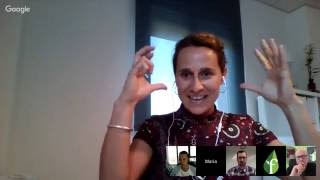
The webinar is a live Q&A panel hosted by the Founder Institute (FI) featuring three recent FI graduates: François Poirier (MakerBlox), Maria Tevrián (AOM.tv), and Scott (Kangaroo Time). The moderator introduces the FI program—a 3.5‑month accelerator that takes founders from idea or pre‑MVP stage through launch—then asks each graduate to describe their company, the stage at which they entered FI, and their journey. The discussion covers topics such as low‑cost MVP creation, fundraising (angel rounds, seed, Series A), leveraging the FI mentor network, building and scaling teams, aligning business ideas with personal strengths, handling setbacks and the intense conditioning of the program, gathering market feedback, navigating pivots, and strategies for growth and plateaus. Audience questions are answered throughout, touching on idea protection, the value of sharing ideas, recruiting co‑founders, and advice for prospective FI applicants. The graduates emphasize self‑awareness, persistence, and the importance of asking for help, while the moderator repeatedly encourages participants to engage with mentors and the FI community.
Chapters
Hey everybody, how are you doing? I'm very excited today, we've got a graduate panel, we have Founder Institute graduates from around the world. Right now the Founder Institute is enrolling founders from over 20 cities across the US, Latin America, and Europe. We have 3 graduates from the program that are going to join us in a moment. I presume many of the people on the webinar today will have some questions. If you have any questions for me or for any of the graduates— hopefully for the graduates— you can ask them in the chat. My team will review them and put them on, and I'll help get them answered for you. Very quickly about the Founder Institute, we take people who are at the beginning of their entrepreneurial journey usually before they have a minimum viable product ready, and we put them through a 3.5-month-long program, and out the tail end of which comes a well-formed company pursuing a good market, building some great technology, and changing the world. If you've already been accepted in the program, we generally recommend that you enroll earlier rather than later. A number of our programs have actually come in full or oversubscribed. In different cities, we have some incentives to enroll by the early admissions deadline as well. So what I'll say is that in general the program is very hard. We'll be talking about that with the grads today, um, and the more time you have to prepare, the better it is for your success. So I'm gonna start inviting graduates on the screen momentarily. Again, remember, questions in the chat. So why don't we start out with Francois from MakerBlox. Why don't you come on screen there, Francois. Hey everyone.
Hi there. Hey.
Now, I have kids and, you know, I love what you're doing. Why don't you take a moment and introduce yourself and your company and then we'll go through all the others and start diving into the agenda.
Sure. Hello everyone, I'm François Poirier, but everybody calls me Frank. I'm the co-founder and CEO of MakerBlox, and we do electronic building blocks that introduce young kids to complex concepts like electronics or coding. So we build these little building blocks that connect to apps. So what kids actually build in physical life will define the adventure either on their tablet or on their TV. So it's really a fun way to engage kids into STEM subjects and hopefully grow them into new engineers or get them interested in robotics. It's a very interesting product to work with because we work with kids and they are ruthless judges, which I hope everybody can have as their mentors and advisors.
Yeah, well, you just finished Techstars last week and you've also raised a few hundred thousand dollars through crowdfunding. Correct?
Correct. So we finished Techstars Retail last week with, in Minneapolis, in partnership with Target, which was amazing. And yes, we just, we closed an angel round last fall, and we're currently raising our initial seed round in order to launch MakerBlox with our new retail partner.
Great. And I have, I'll have some recommendations for you there. I know a couple seed-stage VCs that love STEM and education. I'd like next to bring on Maria. She's coming in from Madrid, AOM TV. Welcome to the screen, Maria. Are you there? Can you say something?
Hello?
Hi, we can hear you. Great. Welcome. Do you want to introduce what— I always say AOM, but it's Aum. Aum.
The yoga sound.
Yes. Did you want to tell us a little bit about what you're doing?
Yeah, well, I'm Maria Tevrián. I am founder and CEO of AOM.tv, and we are the leading Spanish-speaking yoga and Pilates online platform in the world at the moment. We offer over 500 classes online to improve the practice of thousands of people all over the world. In their yoga, Pilates, and meditation. And we are selling in 81 countries at the moment. We have a revenue of almost €400,000 this year, so we are expecting to reach that revenue. So we are doing pretty well. We've been in the market for 2 years now, and we work basically in Spain, but also in Latin American countries as well as in Miami. So we work with the best teachers from every Spanish-speaking country. So we shoot there and we work, we have partnerships with media in all these countries. And yeah, we are building up the business.
The videos are beautiful. You've also raised, I believe, a Series A, correct?
Yeah, well, we are in this process at the moment.
Great, that's amazing. And everyone should check it out, especially the Spanish speakers. The videos are very high quality and some of the best I've seen. Next we're gonna— well, my pleasure. Scott, we're gonna bring you on screen from Kangaroo Time. Kangaroo Time's down in Los Angeles. Why don't you tell us a little bit about what you do? So we've got Canada, Spain, and Los Angeles, sort of a mix, and specifically in Canada, Montreal. But Scott, tell us a little bit about Kangaroo Time.
So yeah, I do. Thank you. So at Kangaroo Time, we, we are the operating system for early education centers. And we do 3 things. We have 3 primary functions. First and foremost, we automate the childcare business. So we completely take our, our customer partners out of the business of running their centers so that they can focus on building culture and education. Second thing we've done is we've automated the classroom. So teachers are inherently not scalable. There are ratios in every state, and they've got their hands full. They're forced to document. So in 3 clicks or less, every point-of-care documentation we take care of for them on a tablet. The final thing we do, and if you can see me, is we hardwire parents into the early education experience. This is my demo family. With I think 13 kids. But when I pull up to childcare or when I pull up to check into a child activity, we use geolocation to make that process frictionless. So we sign in and that sets off a chain of events. It also creates connectivity for our parents. So you have children, Adeo, you know how emotional it can be to leave your child when they're not in the best shape. Our app allows teachers to communicate with them and build that connection.
Great, yeah, I know it's an amazing app and you've raised some funding and now you've got a big partnership that you've closed as well.
We've closed a couple franchise players, we'll have more than 500 centers live by the end of the year and our goal is to have 5,000 by the end of 2017. We've raised more than $1 million and we're currently in early talks with our our future Series A investors.
Yeah, and all three of you are amazing graduate companies. Thank you for taking the time. Now, for the people who are watching online, if you have questions, type them in the chat. We'll get to them because we're really doing this for you. So one of the— I just want to sort of start out with, and anyone can take this, You know, you're all pretty far along, you know, revenues, customers, and in some cases, you know, going through other accelerators. And when did you start the Founder Institute? And maybe if you, like, at what stage were you? Were you at the idea stage? Did you have some product? And maybe if each of you could give a quick answer, and we can go maybe Maria first, and then we'll give Frank and then Scott in that order. But, you know, keep it short and sweet.
Maria, when did you start?
What stage were you at when you joined the program?
Well, I was— I just had the idea in my mind. That was the stage I was at. To be honest, I was dreaming with this idea of making Aum possible for 2 years, and then an American friend of mine who lives in Madrid told me about the Founder Institute. And I just thought, well, that's exactly what I need. I need a program where I can learn more about the internet business. I used to have a video production company, but it was a very small company focused on services to companies, and it was a different story. So for me, it was just, wow, that's perfect for me. I need to learn, I need to make contacts. The way the Founder Institute is organized with the mentorship that you get from mentors is amazing, and that's going to be one of my biggest recommendations to all of you. Say, make the most out of their advice and their company during this program. It's very, very important. So for me, it was just like perfect, you know, like the— the perfect situation to join the Founder Institute. So I'm very lucky.
Awesome. So just an idea, but you've been stewing on it for a few years, and you said you were like an entrepreneur, like a small business entrepreneur, and you've got hundreds of thousands in revenue now. So that's great. Frank, what stage were you at when you started? Because you got a little more complexity with your business.
Well, I was at the earliest possible stage, 'cause I came in Founder Institute with another company, which got destroyed in the first week. So I actually had to pivot really quickly. But actually, what I'm doing now is so close to what I love to do and my strength, which I had to dig deep in order to figure out what's my next step. So MakerBlox is really close to me because of that, because I had to move quickly. So I had to do something that I was really good at. To begin with. So I remember that I pitched a new idea, a new idea on the second week to a panel with Adeo, which also got destroyed.
Ah!
But I came out of it with really good advice, which was do one thing and do it great. And that's how I focused on the building block aspect and figured out a way for kids to combine the physical activity with the digital entertainment. So I had to start from scratch. So you don't have to have a really strong idea when you come and Founder Institute. It definitely helps, but it's not the prerequisite to have your whole idea validated because that's what the program is for. Right.
And you abandon your idea. And yeah, so questions are coming in and we're gonna get to them all. We're just gonna get this sort of opening question underway. Last but not least, let's go to Scott. Did you have the idea? Were you— how far along were you?
So I was post-idea and was pretty solid on what I was going to do. I was in the middle of another startup that had raised a Series A. I had built a big business unit with over 100 employees and knew that the same economies would apply from what we were doing in that business to childcare. I was mid-customer development, so I had talked to hundreds of customers. I was, oddly enough, the creepy guy that was walking into childcare centers and asking, "Hey, what do you guys do?" You know, so I was already in customer development mode, but I was pre-product. And so, you know, ideation for the first couple weeks, and then you go through a lot of customer development. Things that I really refined at FI in the beginning And then that really solidified what we did when we started building the MVP and built the product.
So yeah, I like to say that we work with founders through the launch phase, and I would say the end of the launch phase is when your MVP is starting to get traction. So we sort of work with everyone up to when they have an MVP. And then once the MVP starts to get traction, it starts becoming a little late. So you guys are squarely within the realm. Let's go to some questions here, and maybe if anyone wants to take the question, because we have a lot of them flowing in, just sort of raise your hand and I'll call on you like a school situation. But Karen was asking, I was always afraid that if I speak my idea out loud that it will be stolen. What are your thoughts about this? Anyone want to take that one?
Yeah, I think—
Italian. Go, Maria!
I just remember, Adeo, you were saying no one is going to steal your stupid idea. I remember that very clearly. For me, the experience was just the opposite. The more I told people my idea, the more ideas I got back, the more feedback, the more contacts. People would tell me, oh, I know someone you can connect, and I can help you develop this or that. It was the best thing ever. Share your idea all the time, anyone. It will help you to practice your pitch, it will help you to make contacts, it will help you to start developing this idea into something real. Honestly, don't be afraid.
So you had the idea, so you were a good one to raise your hand too, because you had the idea for 2 years-ish before you entered the Founder Institute. And did you feel the same way as Karen, that you were a little afraid to share it until you came into the Founder Institute? Was that something you experienced as well?
You mean to me?
Yeah, to you.
I'm sorry, I thought you were— yeah, no, I never— no, I was never afraid of sharing it. I remember you saying that because a lot of people in the program in Madrid were feeling that way, and I think Spanish people are especially cautious with that, you know, like, oh, someone is like the Gollum entrepreneur, we call it in Spain, no? Gollum as in Lord of the Rings. I don't know if you say that in the States, but no, I was never afraid of sharing my idea, no, not really.
Okay, let's move to the next question and we'll give someone else a chance to answer it. Sagar was asking, there must have been a time after you guys started your journey in the Founder Institute when you thought, I can't do this, or you faced some setback. How did you overcome that setback? How did you bounce back? And you know, we deliberately manufacture setbacks for you, so anyone want to take that one, you can just raise up. Okay, Frank? Go.
Well, I'm going to start by saying that this feeling never goes away.
So while I've had it twice today, yeah, exactly. Only once for me.
You always say that as an entrepreneur, you always have like 10 bad days for every good day. So you have setbacks constantly. So you just have to learn to roll with the punches and focus on something that's gonna make you happy for a few hours and then go back to that problem. And by hustling your way through it, everything gets solved. Problem is just a means to get new solution. But yeah, that will never go away.
Yeah, I mean, to be fair, and you guys can comment on this as well, dude, a lot of people say, are you a training program? Are you an education program? I like to say we're a little bit training, maybe, I don't know, 15-20%, but we're like 80% conditioning, right? And so we actually create those stressful moments for you that you need to overcome within the program. Now, maybe Scott, do you want to talk about some of the situations that the Founder Institute put you in?
Yeah, yeah, you know, So there's nothing like executing in a business that could ever be duplicated. I mean, this is a daily crisis of confidence, you know, every day you're faced— even when things are great, I sometimes look at an email and think, you gotta be kidding me. There's no— so, you know, you have 11 or 20 employees, things happen, you're a full-time psychologist. But when I was in Founder Institute Thank God our classes were on Monday. I'd come to Monday class, I'd red-eye out to the East Coast, typically work with my day job with customers, cut dinner early, try not to have too many beers, and then go work from 8 to 2 in the morning. So just the rigor of the schedule was preparation enough. And there's time management in there, and then there's this manufactured, these false motivators that you have to get 20 pages of this shit done before Monday or you're gone. But I'll be one to jump on the bandwagon of that stuff is great conditioning, like you said, for what happens in real life when you have 25 hours of work that's due in 20 hours or 23 hours or whatever. I don't even know how long days are anymore, but it's all relative. But no, the conditioning's great. And I think that, you know, with the camaraderie and the support, you know, just within the meetings you learn to leverage and reach out for help and delegate and make those things more palatable. And then you learn to function on less than a couple of hours sleep.
Yeah.
So yeah.
I'm a master at little sleep. I'm probably, clocking between 3 and 6 hours if I'm lucky. So let's go on to some other questions though, not lament the tough stuff. So Mohammed was asking a question, how do— so his question is sort of fundraising related, in particular not having any capital. So you come in the Founder Institute or whatever even build a business and you don't have a lot of money. So how can I implement my idea if I don't have a ton of capital on hand? And was FI helpful there? Does someone want to kick that one off, maybe raise their hand? Okay, Frank, you want to go first?
Yeah, I'm gonna start because what I do is actually very costly because we have these hardware blocks that needed full hardware development, and then we partner with developers to build online content. So we have like the worst of two scenarios, but my MVP was built with 30 cents. It was actually 3 pages of color cards that I drew, printed. And so I tested the idea with cards with kids to see if the concept works. So the concept of an MVP, how can you do the minimal viable product? And I emphasize on minimal. I did that on pieces of papers to validate, do kids like to assemble color shapes in order to have a reaction, which was me. I was the reaction. So funds is a relevant term in terms of trying to figure out how can you minimize the cost to a minimum to have the effect that you're trying to get with your product, with your concept, and then build on that based on the feedback of new customers. So every iteration is going to cost a little more, but your first one should cost close to nothing.
Right, and I mean, so anyone want to add to that? Maria, you seem—
Yeah, I had the same experience. I just built up an MVP with, I think it was 10 videos that we produced ourselves. We just, we sent, well, we hired this guy in India to make like a very simple webpage just with the videos and start sharing that to all our friends, everyone we knew, in the social networks, and we started to test the product and get feedback from people and see what do you think, you know, do you like it, did you find it useful. It was a very simple version of what we have now, obviously, but it got us started, you know, and that's a very important point. Just do something, start with something, start getting information from users right now, you know, from the beginning. So it was the same experience as you.
Did both of you start— do that? Um, it sounds like you probably both did it during the actual Founder Institute 3.5 months. Is that correct?
That's correct. Yeah.
Awesome.
Yeah.
So you get the program, the mentors will give you suggestions. Um, I have a guy in my class building solar panels and he's like, I can't build a solar panel. I'm like, that isn't expensive, right? Because manufacturing a small batch of solar panels is very expensive. So we said, you know, manufacture or make something that looks like it, right? Out of plastic or wood and try and see the installation process and try and figure out the other stuff about it without actually having the solar energy. And he started working on that. So there's always ways to test something without, you know, making the final product. There's a lot of questions coming in, so I'm just going to keep going. Maria, this one's for you. And so, how scalable could a company like AOM be? Isn't it only local in some city? And some people are asking similar questions. And, you know, you had mentioned your revenues earlier, so it sounds pretty scalable to me, but I'll let you take that.
Well, in our case, we thought about Aum in a very global perspective from the beginning. So we knew that we wanted to scale the company very early. So we decided to shoot with the best teachers wherever they were. So we went to Mexico, we went to Miami, you know, as soon as we had money. We started shooting content, local content. You know, if we were going to reach the American-speaking— sorry, the Spanish-speaking Americans, or the Mexicans, or the Chileans, we would go there, start making contacts there, start shooting there right from the beginning, as soon as we had the opportunity to do it. So for us, Without making like a huge effort, we've managed to get 30% of our clients are in Latin America at the moment.
Right, and you're in Spain, so that's quite a—
I'm here in Spain, so yeah, it hasn't been all that difficult. We now, we are implementing a specific strategy now to reach the Mexican market, for example, so we are hiring a country manager there. And we are traveling there, and we are focusing the energy there. But to start with, you know, you can reach a lot of people through, you know, just social networks, Facebook, Instagram, you know, everyone is everywhere at the moment. So it's not all that difficult to reach people from other countries.
We got another question from Mohammed. I'll leave that now to the two gentlemen, whoever wants to take it. There's a decent bit more questions, and don't be shy with your questions, we'll get to them. So I want to fulfill my dream of being an entrepreneur, how do I find the strongest team to implement the idea, and has FI been helpful in finding those team members? Scott or Frank, anyone want to take that one?
Yeah, so for me as a non-technical founder, finding my CTO was, was It was a miracle. So, and I think you have to establish some sort of inertia or momentum before your recruiting efforts will even start to pay off. I went to my current CTO and recruited him before I joined FI, and he said, "I do not want to do your stupid daycare center software." He was working at 3DR. And he had done his own startup and had a big exit, so he could do whatever he wanted. And then as we gained momentum and won a contest, he came back to me and said— because of course I was pushing it to him on Facebook, look at all this momentum— came back and said, I can do some part-time. And within a month from him going part-time, uh, it, it went well. So that, that, that, that concept of recruiting the best and the brightest If you're lucky and you have a connection with somebody you've worked with in the past, great, as a co-founder. But you're not out there proving yourself or gaining traction so that you can gain investors. It's also helped a lot in recruiting. We have 11 right now, and if I could hire everybody, every A-player that wants to work for us, we'd have 40. And many of those are just kind of on a waitlist as revenues come in. But gaining momentum and having kind of a positive presence in your marketplace, that gives you the opportunity, just kind of the hunting license to go find great people. Before that, it's very hard. It's almost a miracle if you do find a great CTO that can crush code and, you know, his code contribution skills are great. That being said, the number one rule for recruiting great people is traction and vision.
Yeah, and how many people do you have, Frank, and then how many people— Next, and then Maria, what are you at now in your headcount?
Now we're only 5 people, but we're currently a little bit like Scott. We have right now world-class players who are in line in order to join us the minute we can. Afford them. And by afford is simply to be able to give them a secure payday, because you'd be surprised how much A-player don't require that much capital. They just want to join winning projects. They want to— they have the big picture in mind and they just want to join winning players.
That's great. Maria, where are you in your headcount right now?
Yeah, we are 14 people in the team at the moment, and I can say almost all of them started part-time. Even like I had a similar experience with our CTO, who is an amazing guy, and he started like 2 hours a week. That's it. And he fell in love with AOM, and I managed to get him in as soon as I had money. So we had a similar process with key people in the team. Maybe that's something like a good strategy. Start with a few hours so the person can get to know the project, you know, they can get to know you, you can sort of, they can fall in love with your company.
We have a great guide on hiring too, so one of the nice things that happens at the Founder Institute, we have sessions on how to hire and recruit advisors and team members. But then when you graduate, there are common problems, and this is leading to the next question that graduates face, like how do I hire, how do I fundraise, how do I do this? So we create content around that. Sometimes it's video content, sometimes it's webinars, sometimes it's written guides, and we provide that— oops— we provide that content to the graduates so that they can have it Ted was asking, so you all seem fairly successful, especially from the perspective of many of the people in the webinar and many of the people who watch it later. What might be a common thread of your success, right? And, you know, what do you see in yourself that made you successful versus some of your classmates that failed? Right? And I don't know who wants to take that first. So like, what's something that made you successful that you didn't see? I see Frank, did you have a hand up there? Was that a glitch in the screen?
Yeah.
No, no, I can start. For me, it was really simple. I mean, I've been a product designer for 15 years. I've built toys for Mattel. So building a consumer electronic toy was really in line to what I naturally am good at. And I think the people I saw in my, in my class at fail were people who were chasing an opportunity that had nothing to do with their background. Someone who saw, oh, there's a big gap here in this financial possibility in startup, and my background is I'm a teacher. So that's where I saw most of the common failure, where what they were pursuing was not aligned with what they're actually really good at and connected.
So, yeah, I'll add to that. So for me, I think it was just this quick reckoning that I had to deal with self-awareness. So I'm a salesman, I'm great at creating culture, I, you know, I get people excited about stuff, but I suck at organizational structure. So my first hire was Patrick, who is just— he's militant about organizational structure. He keeps the backend of our business nice and nice and tight. But yeah, I had to come to grips with that concept of self-awareness, know where my strengths were, hire the next 3 or 4 people around me that could really make up for those deltas where I'm not very strong. And technically, that was— and with product, I'm not like Frank, I'm not a product guy, though I tend to think I'm one. But just having that self-awareness to know I need to hire great people to really fill in my deltas.
And Maria, do you have any comments like what made you successful and maybe some of your peers struggle?
Yes, well, I feel a bit similar to what you were saying before. It's really that for me it was a chance to bring together yoga and video production, which was you know, my passion. But now, 3 years down the line, I feel that it's more like the purpose that is really pushing me forward and to have a lot of energy and a lot of hard work. It's not only passion, because passion makes everything a little bit like splashy or foggy, I don't know how to say this in English, but purpose is something much more important to achieve that because it gives you a lot of focus and it keeps you positive when things go wrong. I don't know if you get my idea.
No, I get it, it was very clear, and in fact I think all of you brought up in different points today, and this is a really important thing, this concept of self-awareness. Frank, you brought it up. You came in with one business and you sort of came in and then switched it to something that was more in line with yourself, which is sort of a step in self-awareness. And you were just talking, Maria, about how you realize that these two things you really love came together in this business. And so that's, that's a form of self-awareness. And you were pretty just explicit about it, Scott, saying that, hey, I'm a good sales guy and I needed to round myself and realize where my weaknesses were. And, you know, that's, I would say, one of the goals of the program from my perspective. And then we have another great, um, couple more great questions. That we try and help founders not just build a business, right, because you can build a flower shop or McDonald's franchise, but build the business that's right for them or for you. And that's a big difference, right? Because sure, I can give you 100 business ideas, and if you did them, you'd make money, right? But then you might not be very fulfilled, and I think that's sort of a key thing finding that fulfillment. And so sort of in a related question from Neil, how do you reconcile that original vision— this is a little bit of what you were talking about as well, Maria— with your idea and company, and then the stream of feedback that you're getting that causes you to adjust, right? Because I don't think any of you did exactly what you thought you were going to do. It's changed a little bit over time. So Neil was asking, how do you reconcile that with the feedback?
So, you know, you don't. The market reconciles that. So back to self-awareness. As you're pitching these things, as you're going to mentors, and when they're telling you they don't care about your stupid effing idea, the market's regulating your idea and pivoting that original concept that you're trying to execute on. But there is that very important quality that you have to be able to understand that, take that, and then execute on something that's better. When we started, our revenue model was way different, and then we got led into becoming revenue cycle management partners with our customer. That took me a month to just get my head around. Why would people pay me to do their billing and not just pay me for the software? It's turned out to be the best decision we've made, and we really wrestled with it. It took a long time to actualize that into execution.
Anyone else want to comment on that? I mean, it seems— Frank or Maria, reconciling your vision?
Yeah, well, in my case, it was more about the product. The business model is being kept. It's a subscription-based model, and it's being kept like that. Like for 3 years. But in terms of the product, I was very reluctant to introduce Pilates in the product, but then the users started asking for it. We want Pilates, we want Pilates. So we ended up opening like a Pilates collection of videos, and it's working really well. So, you know, that's just a tiny example, but you will get a lot of feedback And in our case, we pay a lot of attention to the client support system we have. And we get the person who runs that— we have one person who runs the client support— give us feedback every week, every week on the problems the users have, the content they miss, everything, any suggestions. And this person shares all this information with all the team every week. So we pay a lot of attention.
So you're listening to feedback from the users, but you still feel centered in the business, but some of the things change. I mean, with FI, my original vision was to run programs in one place and then sort of video it around the world, and we started testing the videos and they didn't produce very good results in terms of creating companies. So we had to, in order to create the Good Companies, we realized we needed to open physical programs around the world. And you know, while it's the same vision, right, helping entrepreneurs launch their business, it's a very different execution model. So I don't feel like I compromised, I just had to do things differently to get the scale that we wanted. There's a few more questions here, so Ted was asking, and there's also a question for you coming up, Frank, so Why don't we let the other two grab this one? Ed was asking, so how do you get out of a plateau? So, and what he means by this is he's got a few companies that are making money, but they sort of hit this situation where they're not making as much money as they think. They're maybe not growing fast enough, and for him it's a chicken and egg situation. But do you guys, have you hit plateaus that you haven't been able to break through? I mean, Frank, I mean Excuse me, Scott, Kangaroo Time seems like it's just killing it, same with you, Maria, but have you hit plateaus that you've had to fight?
Yeah, in my case, our growth, it hasn't been like this line, a straight line, okay? So it's always been as a, I don't know how you say this word.
A plateau. Yes, yeah.
It's something that you cut the wood in the forest, you know, this sierra.
I saw, saw, okay.
That's, that's the shape of her growth. Okay, so it's not always like a straight line, but the fact is that the, the, the trend, you know, is always going up. But, but it's not like every month we make more and more money. We have ups and downs. We, we have been able to identify, um, a seasonal kind of trend. Do you understand that? Like, we know the good months for selling home, we know the bad months, we have a pattern now, and it's very important to work with that and to be very aware of your strength and when is the opportunity to sell, and each market, each business has their own opportunities in that way. As long as you find this growth pattern, you are going to have ups and downs. It's so impossible to get like a straight— I don't know what you think about that, you guys.
You know, if you want to respond, and then Frank, we got a question coming up for you.
Sure.
So yeah, as a former lifetime career in distribution, I always look at plateaus as they're There are a couple of answers. So you can turbocharge distribution and really, you know, hire sales guys and measure the unit metrics of if this guy's in territory, can he close 10 deals a month and can I duplicate him and how many times? And then sometimes your macro, sometimes you just, you saturate the macro. So you've got to evaluate how big your macro is and what the TAM opportunity is. But I think the most important thing to do is look at product. So if you've hit a plateau, do you have a massive product issue? And, and what can we do to address that? And I think that's where you go right back to the basics and customer development and go to your customers. Something we like to do once a quarter: hey, what would you like to see? Just, just really, uh, just, just really get aggressive with customer development. Try to find answers. So those three areas, you're covered. And If you can't fix it, there might be time to look elsewhere.
Yeah, I think that's a great idea, going back to your customers and saying, what are we missing? What can we do better? Because at the end of the day, you're doing what they want, and there's enough of them to your total addressable market point, then you should grow. Antonio was asking Frank— Antonio from the audience— What can happen if I only have a patent but I don't have the qualifications to build the first version because I'm not a programmer? Will I still be able to participate, and if I, will there be value there? And I guess he's asking you, Frank, because you're a product guy.
And yeah, but anyway, while you won't be penalized or you still can join Founder Institute if you have this great company idea, I strongly advise into getting a co-founder who can own the product. I think every founding team should own the product, and you should not rely on your core product to a freelancer or to someone that you found on Fiverr, uh, 'cause product is key. Product is everything you are, especially at the beginning. So, and, and FI is a really good validation in order to bring a co-founder with you. We have a company in Montreal that has been founded with 4 Founder Institute graduates. So either have another, like someone in the program join you, or use Founder Institute as attraction to bring a co-founder, but the company should definitely own the product.
So this, that's a great segue into a question from Yesen, hope I pronounce her name right, if I got that correctly. And they were asking, you know, if— like, can you tell us a little bit about the value of the FI network and how maybe how it's helped you and possibly popularize the— and you can do it either before, during, or after the program, but let's— you know, whatever you're comfortable with. Who wants to take that one first and then—
Well, in my case, it was just probably the most important aspect of the program, to be honest. I think the support group you have, or— well, I call it support group, but it's a working group, but it becomes your supporting group, really. They become your best friends, you know, for 4 months. You talk to them more than to anyone else in your life. You share, everything is so intense. Honestly, try to make good relationship with them because they are going to support you a lot, they are going to unlock a lot of difficult situations for you, they are going to give you support but also very good ideas about your business because sometimes you are very much, you have a very narrow vision of things and they open your mind, you know, they bring a lot. Into your idea and the way you are developing things. So please go and, you know, just make the most out of this. And as I said before, get a lot of support from the mentors. They know a lot. They are great people. They are there to support you, to help you. Some people feel a bit embarrassed to talk to them, and I just— well, that's so Stupid. Go, they are here, they want to do their job, you know, it's part of their program.
Yeah. I'm gonna make you blush, so get ready. So, every dollar that I've raised today has a direct connection to FI. So my advisors at FI introduced me to my investors. So that's one thing. The other thing, my managing director, she realized early that I was pretty stubborn, so she made me do everything 15 times. But that refinement, once I hit the open market for competing for investors, that refinement, my pitch deck that had been done 500 times, was going across my investors' desks looking pretty good. Once we got into Founder X, you told me how shitty it was, but And we refined it even further, but that separation, just being able to polish up before you get to the dance floor, that's a big one. And then like Maria said, having the network. So entrepreneurship is a sickness, right? So you treat it like you're about to battle cancer. You need help, you need support, you need people to run down to the store for you, feed you, everything. FI kind of gives you the boilerplate therapy group to initiate that journey.
And then, do you want to add anything, Frank? And then we'll do the last question.
I agree with everything. Having your support group as a FI, it's a group of people that I can say literally anything. Something that I can't share with my girlfriend, with— something I can share with my investors or so this is the one place where you can be totally open with all your fuck-ups, with everything that is going wrong and right. But having this support group is priceless.
So my last question for you guys, so this is designed for people who've been, um, applied or, or mostly accepted into the program, and, you know, they're making a decision now to come in and they want to see that they can be successful in the program, right? Hopefully. So if you were to give like one or two pieces of advice, and maybe we'll start with Maria first, what would that— so you're about to enroll in the program and you're about to go through this journey. How best can they take advantage of either the program or their journey? And Maria, you want to take that first? How best can they prepare?
Yeah, well, I think the program is so rich, and honestly, everything is there. So you have to just go there and take everything you need from it. I just would say that everything is there, and just don't be afraid. Don't be afraid. Get the fear out of your life. Go for it. Just, you will be able to make it. I don't know, I get a bit emotional there, but honestly, I think fear is what stops you from everything, from asking this mentor, from sharing this idea, or just Don't be afraid and go for it and take everything that the program offers you. That is a lot, is everything.
Wow, you've done great by doing that. Maybe we'll do Frank next and then Scott.
Yeah, for me it's really don't be afraid to ask. Talk about your idea all the time and ask. People are so eager to help. And the network of Founder Institute is so large that just ask. People are— you will be surprised by how many doors can be opened if you just ask. And that's the power of the network that Founder Institute brings you.
Well, we're all here to help, right? That's why, that's why we do it. And, and last but not least, Scott.
Yes, so something that, that we talk about every day at KangarooTime is a culture of sharing. So that means distribution team is there to help our tech team. Our engineers are, you know, relentlessly prioritizing our customers and wanting to help. And that's the thing about entrepreneurs is I've been very amazed with these great entrepreneurs that have great pedigrees. That's my phone, by the way. That have these great pedigrees that are willing to spend time with an early-stage guy that's not— that's really done nothing, because it's this culture of sharing that's inherent with entrepreneurs. And be ready to kind of invest in that because it's a two-way investment. Like Maria said, you need to be willing to be vulnerable and go in and have the ability to live through a filleting by Adeo and then come back and improve. And, you know, back to why we do these things— be mission-driven. You're not charged to start this business so that you can go make a lot of money or so that you can go and employ 11 people. You're doing it so you can change the world, and you've been given a gift or an idea, and it's— you should prioritize executing on it and feel, feel like you have to, that it's your mission, and the people at FI are there to push you along.
Well, I gotta say, so I love grads and I love you guys. All your products and services are amazing. Like, just to remind you, you got Frank from MakerBlox. Should definitely check them out. It's this cool way of doing circuitry for children. You got Maria from AOM, A-O-M-M, just for the spelling in case you don't know. And that's beautiful, beautiful videos of Pilates and yoga and really, really just amazing. And then Scott, last but not least, of Kangaroo Time. It's a complete program management tool for early education centers and is really also killing it. All three of you are doing amazing. And that to me, by the way, is why we do what we do, right? We do it for— to see your, your success to me is, um, you know, just beyond measure in terms of my own fulfillment, because to see you guys go out, do what you love, and the world respond in a favorable way is really, you know, the biggest reward for me. And that's, by the way, why all the mentors feel the same way. Which is why you shouldn't be afraid to ask, because when they then see you be successful, it's all worth it for them too, right? They share that sentiment that I have. So I want to thank the three of you. I'm very proud of you, quite literally. And I want to thank everyone for watching today and in, in the future. If you're thinking of enrolling, we'd love to have you, we'd love to help you, and you can go to fi.co/join to finish up your application and enrollment. So thank you guys.
Thank you.
Thanks, guys.
Thanks.
Bye, everyone.
Bye.
Bye, and good luck.
Good luck, guys.
Keep it up. Good luck is right. A lot of work ahead.
Ciao.










