Founder Institute Graduate Q&A Webinar (02/23/17)
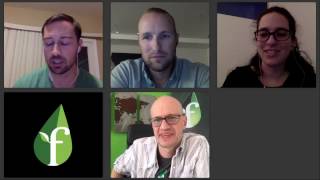
In this recorded webinar hosted by Founder Institute CEO Adeo Ressi, three recent graduates—Reva Minkoff (Digital Ground Up, Chicago), Timothy Hamilton (Rentlit, South Florida), and Eric (Residential Way, Boston)—share their experiences with the 3.5‑month Founder Institute program. The discussion covers the stages at which they joined (idea, MVP, or pre‑idea), the program’s intensive workload and how they balanced it with full‑time jobs, the value of the mentor network, customer‑development lessons, challenges of building a technical team as non‑engineers, preparation for fundraising (including the post‑program Founder X), the role of business models versus formal business plans, essential personal skills (time management, self‑motivation, public speaking), suitability for non‑tech and social entrepreneurs, high dropout rates and the importance of commitment, and practical advice for prospective applicants. The panel emphasizes the program’s focus on learning how to learn, leveraging mentors, and maintaining a disciplined, open‑minded approach to building a startup.
Chapters
Slow, it's coming.
Hello everyone and welcome. We have a new webinar system here. I'm excited to test it out. Hopefully it runs smoothly. My name is Adeo Ressi. I'm CEO of the Founder Institute. We run a 3.5-month-long program to help aspiring entrepreneurs create meaningful and enduring technology businesses. The program is hard. You'll get access to videos and assignments, the mentor list, and more to prepare to build your dream company. So I'm very excited today to be talking with a number of grads, and we have programs open in over 25 cities. So if you're thinking to apply, you can go to fi.co/join. They're going to paste that into the chat. And as we go through the webinar today, if you have any questions, you can also type them into the chat, and we will do our best job to answer anything and everything that people try and ask. So just to jump right in, let's, let's start inviting the grads on screen. I'll do one by one, and then if you can just give a 30-second intro about yourself, that would be lovely. Reva, why don't you come on first? You're the founder of Digital Ground Up out of Chicago. Are you there, Reva?
Yep. Hey everybody. So yeah, hi. So I'm Reva Minkoff. I'm the founder and president of Digital Ground Up, which is an interactive technology platform that teaches people how to do digital marketing in an experiential way. So we teach and train in digital marketing, and then I also founded another company, Digital for Startups, which is a full-service interactive digital marketing consultancy. So we both do digital marketing and teach digital marketing. And I graduated from Chicago in, I think, September 2012. So it's been a little while. We're about to turn 5, which is crazy, and it's been great. So yeah, I'm a full-time entrepreneur.
Well, you look a little older than 5. So with that said, let's turn it over next to Timothy Hamilton. He's the founder of Rentild out of South Florida. Hey there, Tim. Do you want to do a quick intro on your business?
Yeah. Hi, everyone. My name is Timothy Hamilton and I founded Rentlit.com. I graduated from Founders Institute just in our South Florida chapter in November. And what we do with Rentlit is we help landlords to self-manage their rental properties. And we do that in 3 categories by helping them find and screen good tenants. We help them collect rent automatically online, and we help them cover maintenance issues.
Amazing. I wish I had a place to rent, or for many reasons. Last but not least, we're going to invite Eric on screen. He's the founder of Residential Way from Boston. Eric, are you there?
Yes.
Hi, Adewu. Can you hear me? Yes. And you just graduated, so you are—
I did. I'm the founder of Residential Way, which is currently under development. So if you tried to search for it, there's not much there, but it is a real estate-based platform also, just like Tim's, except it's in the purchase and sales side. So it's going to streamline the purchase and sale process for realtors and consumers and also moving deposit money across all the parties.
Great. So, um, first off, you know, we have people who are applying to the program, we have people who are thinking to apply, we have people who are accepted, and so, uh, we want to take as many questions as possible from them. But I'm going to kick it off with some questions, and, and maybe we'll go in the order that, uh, you were introduced. Um, at what stage were you when you started the Founder Institute? Were For example, were you just hatching the idea, or did you have something already underway? Riva, why don't we start with you, and then we'll just go down the list.
Sure. So when I applied to the Founder Institute originally, like when I first found out about it, I didn't have an idea or anything. I had not started any of this, and that was actually part of why I was drawn to it, was because it didn't require me to already have an idea. It was interesting because between when I applied and when I was accepted, I actually had my idea.
Ah.
So by the time we started, I had the beginnings of an idea, but it still, you know, was very loose and freeform, and I thought it was great that the program makes you start at the beginning.
I think all that research was really helpful for getting us to where we are.
Awesome.
And Timothy, where were you?
I was a little bit ahead of where most people were in my cohort, and I think most people people who are going through Founders, and that I already had started my company and was nearly completed with my minimal viable product. Yeah. And I really wished that I had known about Founders Institute before I had gone through that, because I had made already by that point decisions that I didn't realize I should have surveyed my customer base and tested and so forth before I had started building something. And, you know, so Founders Institute was valuable for me to be able to test what I still was able to, and even in some cases go back and adjust some decisions that I've made without realizing I was making them.
That's a very good point, Tim, and I'll come back to that in a minute, Timothy, because I think we should dive in on, you know, if you're a little bit further along, you know, You have to go back sometimes and think about things. So we'll come back to that one. Eric, do you have anything to add? Where were you at when you came into the program? And this was not that long ago in your case.
Yeah, I would say at the idea stage plus a little bit. And what I mean by that is I had all the development requirements written out. I knew exactly what I wanted to build, but I felt like I was going through things a little bit out of order and I wanted some structure and a regiment. And I thought I could get that in the Founders Institute. And I I ended up getting that.
Now I have, I want to go back to what Tim brought up. And again, if you're in the audience and you have questions, do not be shy. There's a little chat bubble and you can click on it and write your questions. We'd love to have them. So Tim, being further along and having, or Timothy, being further along and having progress on your MVP, you know, the first, third of the program forces you to go back and do some customer development, think about the idea, do some business modeling. How, you know, was that— you said you rethought some things, but maybe you can explain to people who are further along if that was useful for you or how you thought of it at the time, how you think of it now. It would be helpful.
Yeah, it was very useful. Founders Institute, as they already mentioned, is, is a lot of work, but it's not work just for the sake of being work. It's really work that you're doing to learn what your company should be and what your customer wants. So even though I had built a company and I had an idea, um, and I started to build a, a software, um, what I didn't realize was that there was a lot of questions I needed to be asking my customers. So, and though it helped me, even though I was already building, to understand more clearly what my customer's problem was and exactly what my solution should look like. Um, so although I had made some decisions, that just helped me have additional clarity on exactly who I was and what my service was.
Great. Um, what were some of the goals that each of you had when you came into the program, and I realize, Rivo, this is probably a long time ago for you, so we're gonna put you in this case last, and Eric, we can start with you because this was only a few months ago, right? So you came in the program and you said, you mentioned already that you wanted some structure. What were, what were some of the goals that were other goals that you had?
So how do I get from this, I think I have a good idea to something that I can actually show people and, uh, potentially make some money on and be successful. I didn't know how to, how to get there. Um, like I said, I felt like I was going out of order and I looked at the curriculum and I said, this is everything I need in like a 2 or 3 month time span to get to where I need to get to. Um, it goes through, you know, marketing, uh, customer segmentation, uh, how to build your products, how how to get in touch with professionals in the right industry and learn a lot in a short amount of time about how to build what you want to build.
Great. Who wants to go next? Timothy or Riva? Riva, do you remember what your goal was?
Yeah, I have a weird story about it though. So I actually—
Don't we all?
I actually found Founder Institute when I was debating. I knew the company that I was at. Wasn't gonna need me full-time anymore soon. Like I could tell that they were pivoting. And so I was trying to figure out what I was gonna do next and if I should go to business school. And I found the Founder Institute right as I was in the middle of thinking about that. And I looked at the curriculum and I said, oh wow, this is everything I'd wanna learn in business school, but this is, you know, 4 months and doesn't require me to quit my day job. This is great. And I could, and it's, you know, at a price I can afford, it's not gonna be $120,000. I should do this. So that was kind of what started me thinking about it. And then what it turned out to be, which I think was really interesting, is so between when I applied and when my cohort started, or maybe right, like in the first week was when they said, hey, we don't need you full-time anymore. We want to pay you the same amount to work for us as a consultant. And I said, sure, I just need a desk. So that was like, that was day one of me suddenly becoming a full-time founder. Cause all of a sudden that was my new job. And, and then at that point, I thought just having a website was all you needed to do to start a company. I had no idea about all the other pieces, you know, incorporation, IP, hiring a team, all the different elements. So even though I had a website, I definitely wasn't close to having a fully developed company. And I really am grateful for Founder Institute for sort of walking me through that, or else I would still think that having made a blog meant I was running a company and I had done everything I needed to do.
Yeah, well, there's a good line that says, you know, there's a big difference between working on the business and working in the business. So when you're writing a blog, you're essentially working in your business, but you're not managing. And a question that relates to what you just said coming from Taren I hope I pronounced your name right. Tarn has some travel and other commitments and asked if the assignments take about 20 to 30 hours per week. Can you describe a bit of the workload? And a couple of you brought up the workload, so maybe if you could— and you mentioned, Reba, that you had a job, right? Did all three of you have a job when you enrolled?
Yeah, I did.
Timothy?
Uh, I had just left my, um, my job, uh, about, about 2 weeks before I found out about Founders Institute, which was about a month before my cohort started. So I just become a full-time founder before I started.
Okay, so you were— you're the one. So why don't the, uh, other 2— and, um, Eric, do you want to take that first, followed by Riva, and we'll We have some other questions coming in, which is great. Uh, Eric, so how did you manage it with your job? And you just got through, so you clearly did a, a good job.
Yeah, so I was working, uh, full-time Monday through Friday, you know, kind of a 9-to-5 sort of job. Uh, the Founders Institute, my class met once a week, typically on Thursday evenings for a 3 to 4 hour time span. And then I don't know how many hours a week I actually spent on the homework, but I would dedicate, um, typically a whole weekend day to get it done and then speak with my team about the homework. You get assigned a team, and we met twice a week to discuss what was going on with the class and our businesses and the homework.
And Reva, do you want to add anything about your experiences having a full-time job?
Yeah, so I actually really liked how it was structured. I thought it was very conducive to juggling the two. So we also had all our classes once a week. It was every Tuesday night. So I just block off that time and know that was when I had Founder Institute. And our groups, we also had a group, they also met twice a week, but one of our times was right before class. So it really helped. I could take that one weekend day that Eric was talking about and the day we were set up for, for class and really block that time for Founder Institute. And it made it a lot easier to manage everything. Because I really didn't have to worry about it during the day. I could only worry about it when I had blocked for it, and that helped a lot.
I love Youssef's question, and so I'm going to ask it to you guys. What were your biggest fears and misperceptions about FI? Frankly, I'm kind of interested in that as well. Who wants to take it? I guess fear and misperception, maybe if you want to answer one or the other or both. Who wants to go?
I'll go. I would say a misconception is that Founders is going to somehow show you how to make your company successful. That's not what it does. What it does is it, it's a, a guidebook to teach you how to learn yourself how to be successful. So it's teaching you all the areas you need to be aware of But it's certainly not saying, hey, this is how you make it work. Because if it was that easy, believe me, it's not that easy.
Anyone else have a fear or misperception they want to share?
I definitely entered not thinking I would be my own founder. I was very excited by all the language on the website about how you could join with other founders in your group and maybe become co-founders. So I was sort of hoping I would be the CMO to somebody else's CEO. That definitely, as you can all see, did not happen. It kind of went the opposite, which is great. But I do think you should be prepared to do your own thing if you're coming just to find someone to pair with. A lot of people may have different ideas in different areas or already have co-founders or whatever it is, and I think that's a big risk.
Valerie was asking a question, unless you want to— do you want to add something else, Eric, because we have a lot of questions coming in right now on—
Not necessarily, just what I already said. I think the biggest fear of me was, can I handle it given everything else I have going on in my life? And I answered that pretty quickly because if you're considering becoming an entrepreneur, you need to be ready to bite off a lot. So I said, if I can't handle taking some classes at the Founders Institute, I don't think I'm ready to start a company.
Now that's a good point. All right, Valerie asked the question which I think is best for you, Timothy, which is Given that participants come in at varying stages, you know, is the program, you know, did the deliverables change or, you know, how does the program fit you? And since you came in at a bit later stage, you already discussed this a little bit, is there anything you want to add for Valerie?
Yeah, I would say to that, that the program is applicable to almost any any, uh, founder, from someone just without even an idea, um, all the way to they've established their company and maybe you even have some early revenue. And the reason is, is because they're taking you through, um, things from, uh, that Reva mentioned before, from, uh, looking at corporation to, um, to asking your customers real questions about what the real problem is, um, uh, that any company should, should should, uh, should be going through. And if you haven't already asked those questions of yourself, they'll certainly help you go through it. Additionally, one of the things I found the most valuable at the Founders Institute was not the curriculum but actually the network of mentors. Um, and, uh, that is valuable to any founder.
Yeah, I would add it as a funny story. We had— I had a grad in my— our company in my class, and he came in with 35 million monthly users. And what he said to me was, and he actually spoke at graduation to this, that, you know, the Founder Institute for him was like stretching his entrepreneurial muscle because he had sort of built this business but not really thought about some of the underlying things and sort of going back and rethinking everything helped him a lot. Questions are flying in, so I'll try and parcel them out. People finally found their voice. And this maybe is one that everyone can answer from Alan. What is the most important thing that you got out of or learned from the program? Now, you had just mentioned mentors, Timothy, so maybe we'll give this one over to both Riva and Eric.
I mean, I'm happy to say, I mean, I think the network and the mentors was a really big part of it. I think you meet people who are incredible. We found our dev team connection through Founder Institute. We had people who were interested in investing with us who were mentors in Founder Institute and like got, got into that pitch meeting from it. So it really helped set us up to be successful. And I think the biggest thing for me is also just what I alluded to before, like actually realizing that there was more to it. I felt like it gave me a roadmap. For what I needed to do with my company and where to go and what I needed to be thinking about. And that was invaluable to me, or I would have had no idea.
Do you want to add anything, Eric?
So that roadmap idea is what I can say was really important for me. I'm an attorney. I've been an attorney in Boston for 10 years. I went to business school a long time ago, so it wasn't like any of that was fresh in my mind. And, um, I didn't want to, like, have to read a million books or go to this— go back to business school to learn what I needed to learn in order to start a company. And I just wanted a checklist of things. Basically, the Founders Institute gave me a checklist over a 3-month time span that gave me, like, an arsenal of information and people, uh, that could help me accomplish what I wanted to accomplish.
And not to bust on business school, but I, I hear a lot of people say who, who have considered both— we even have people who go into business school and they go into FI at the same time, a lot of them feel that FI is more practical to their objective, which is exactly what you were saying, Eric. So this also related to that, can non-tech startup founders join FI or is it strictly tech startups? And I mean, to some of you just mentioned you're a lawyer and technically we have two real estate related businesses here. I would refer to them as technology-enabled, maybe more tech-centric than some, but what are your thoughts about non-tech startup founders or non-tech businesses in the program based on your experience?
Any—
who wants to take that first?
I'll go first because I'm proudly still not very tech-savvy at all. I never have been, but I had an idea and I said a piece of technology can really fix these problems I see. So absolutely, 100%, you don't need to be tech savvy or, you know, an engineer or anything to go into the Founders Institute.
One of the things that I think was so valuable about it—
Are any— are none of you are engineers, right? Of the three of you? No. So you're technically non-tech. You're marketer, lawyer, and business, right? Is that correct as backgrounds? So correct. I think that speaks for itself. But yeah, sorry, Reva.
Oh no, I was just going to say, like, I actually— one of the things I thought was so valuable was that people our class at least had so many different backgrounds. So we had some engineers who were very helpful in that respect, and, you know, former lawyers and people on the business side, people on the marketing side, and we could all help each other out, which I thought was, was one of the things that was so great about the program.
Do you want to add anything, Timothy? No, I, I think they covered it really Well, and in a related thing, because you all are also launching product, um, Kyle, I hope I pronounce your name right, was asking, is it essential to have a CTO to get the product out there, and how did you get your initial technical team together? And I'd love to hear, uh, now I presume Eric, you're in the beginning stages of that, so why don't we give that to Timothy first, and if you want to add anything, Riva, we'll give you a second shot at that. Timothy, how do you get—
That's a fantastic question because it is a— if you're not technical, if you're not a software engineer, it is a big challenge to recruit or otherwise get people to be able to create a very good technology. And the reason for that is, of course, is that there's so many demand for software engineers these days, especially where I am in South Florida, but I'm pretty sure everywhere in the US, or in the world for that matter, it's very hard to find good people. So I've— I, um, I don't have a CTO. I have several different software developers that work for me that I have, that I've hired. But finding engineers with sufficient experience is a huge challenge, especially because I am a company that is, we're not profitable yet and I'm bootstrapping. So I'm spending my own money to hire these people. So to have my savings effectively go far enough to be able to hire adequate talent to be able to create a product is a huge challenge. But so far I'm happy with what we've done.
Hey, you cut off there a minute. It's a huge burden.
I was just saying it's a big burden.
Yeah, yeah, yeah. So we are testing a new version of our webinar software, so not sure why that happened, but it seems to be working okay on the whole. Do you want to add anything to that, Reva, about the technical side?
I mean, I was going to say, so I mean, it was a big concern of mine as well because, you know, I don't know how to code. It's an issue that you're going to have to get around one way or the other, so I think you just need to be prepared to figure out how you're gonna get around that. There are a lot of people who spent, spend a lot of money getting an outsourced technical team to build things. I desperately was hoping to find a CTO. I have a COO who's awesome and has helped me deal with the technical side, but he is not technically a coder. I think there's another guy who graduated the semester before me in Chicago. Who then spent 6 months teaching himself how to code so he could build it himself. I just think you need to make sure that you can maintain and understand what it is that's going on, because fundamentally, if something breaks, like, it will come back to you and you will have to deal with it. So the more you think about coming up with an idea that you can actually handle, I think the better.
Great. Um, quickly, uh, the couple, couple people, Christy and Juan Yi, were asking about funding and how we help for funding or help prepare you for funding. You know, I'll throw one thing out there very quickly. So we do have a post-program once the Founder Institute is over called Founder X, and we take, uh, graduates that apply for Founder X and put them through, uh, essentially a free 3.5-month-long boot camp to help them get their first checks. And in fact, we're running one right now. We're about 2 months in and people are getting money. So, but, but leaving aside the POST program, what are some of the things in your different cities that helped you prepare for funding in your mind? And yeah, anything you can add. Who wants to go first on this one?
I'll just say that as, as part of our classes on a weekly basis, you have to, you have to pitch to a bunch of mentors and they're very, very thoughtful in their feedback. So they, they either politely or impolitely critique your idea and who you are and your motivations and your thought process and your product. And you need to be able to answer those questions and you do it week after week. And you get better and better and better at it. So it helps you become a more polished, confident entrepreneur and basically a salesperson, because at the end of the day, you're selling a product. And when you're trying to get money, you're trying to sell yourself and your company to get money.
And a sizable double-digit percentage of our mentors worldwide are angel investors, because the mentors are generally successful entrepreneurs. We just did and a one email survey and had almost 10% of them express interest in investing. And, you know, we didn't really nag. We just said, who's interested? So that was almost 10%. So my estimation is at least a quarter of the mentors are also angel investors. Does anyone want to add anything else on funding prep? Or we have a bunch of other questions coming in.
I'll just say briefly that my limited experience is that if you have a good company, people will, if you're a good founder, if you have a great company and you're doing the right things, people wanna contribute and be a part of it. And so the funding environment in South Florida is not as robust purportedly as like Silicon Valley or New York. But we have, with Rentlet, we have people interested in investing in us even though we're not actively looking for it. So I think if you're doing the right things, people look.
Excellent. George asked the question, and it makes me smile. So if you saw me smiling when you were talking, it's not at you, it was at the next question. George was asking, did all of you use the information to create a tangible business plan Or did this give you some type of business management expertise? And the reason I smile a little bit is, you know, in the modern-day world, I'm not really sure that anyone uses a business plan to build a technology startup. It's certainly useful for a lot of conventional businesses, but I'm just interested in your thoughts on that. And I like this idea, or did it give you tangible business management expertise. So, uh, Riva, you haven't spoken for a while, so did you leave with a business plan?
Um, I actually think I did have a business model at the end of it.
Business model or business plan?
Uh, I think business model, not really business plan. Um, I don't know. So we've never— we— I mean, everyone's definition of what a business plan is is different.
Yes.
Which is one thing I found. So we walked out of it, right, with a pitch deck and a 3-minute pitch and the basis of an MVP and a business model, like a financial model, and a, um, and, uh, like an executive summary of what we were doing. So I feel like we kind of had a plan, um, but like Adil said, I don't think the plan was the point of what we were doing.
Um, anyone else? Plan versus expertise?
I would say that in a tech startup, you should be changing constantly and iterating and just testing what your customers want. So business plan becomes obsolete pretty much weekly unless you're updating it. I don't know. I haven't found a need for one.
I agree with him. I wrote a business plan before I entered the Founders Institute. And if I look back at that now, I would kind of laugh at it because where I am now is not remotely close to what I put down on paper at that point.
Yeah, and that's actually pretty interesting. So, back to George's question, I would say really it's about the expertise of how to run things and think about things as a founder. And the reality is, you know, when you write a plan, it's sort of at a fixed moment in time, but the circumstances surrounding the business in the modern world change so quickly that— let's use an example. A classic business plan will have a marketing section. Modern-day marketing is hand-to-hand combat with pocket knives, right? Because I mean, and Riva, you must know this, right? I mean, you're a digital marketing expert. You can't just run one tactic over and over again and continue to get good results. You probably have to switch your strategy on a daily, monthly, or quarterly basis? I mean, you tell me, you're the expert, but—
I mean, I think it depends, right? But sometimes, like, everybody expects with marketing there to be like a golden goose, and there's this one thing, and if you do it, it will scale infinitely at the same cost, and everything will be perfect. And it's not really that simple. Most people take at least 3 interactions to convert, so you have to be in multiple places and develop something integrated, like Adeo said. And there are a lot of new amazing technologies that weren't around before that are new. So like, so he's right, like it's, you know, the plan from 5 years ago doesn't have things on it that I would want now.
Well, retargeting is becoming like very, very good. So that 5 years ago would have been like cutting edge, almost impossible to do. But today, to your point, we have to do retargeting. All right, um, a couple more questions here. Uh, there are a lot more, but we'll get to a few more. William was asking, what are the skills that you might want to have going into the program to help you be more successful? So, you know, you're thinking of joining, I mean, we again, we have 3 different backgrounds here, digital marketing, but like, leave out like professional skills, maybe being a good listener, for example, what are some things that might help someone succeed in the program?
Time management.
Time management. Yeah. Yes.
Being organized because there's a lot— like, you definitely need to be organized.
Yeah.
And self-motivated because, I mean, your team will push you, but if it's not coming from you, you know, there's a way to do the assignments really well and a way to do them just to get by. And so I think to get the maximum effect out of it, you really have to be pushing yourself to do the best job you can do. And then also, if you're comfortable with public speaking, I think it really helps.
Great. We got a little bleep there. So time management, and what was the last one that you said?
Comfortable with public speaking.
Ah, comfortable with public speaking. Well, you can learn that.
You can, but it will help you if you do not freak out at the first hot seat.
Do you want to add anything, Timothy?
Yeah, I mean, I think that there's a lot of different skill sets that are valuable to different founders, but certainly just the ability to be self-motivated, as we've already mentioned, hardworking, you know, as they, at least in my cohort, we lost a majority of the class, you know, dropped out of the program because they're just not willing to put in the work. And that's probably a good indication for them as entrepreneurs. It's not definitive. But being an entrepreneur is a lonely, hard task. And you have to be willing to do the work every day. No, it's fun, Bill.
Yeah, it's also fun.
No, I'm teasing. Look, being an entrepreneur is super hard. There's no question about it. I'm like a, I look younger than I am, which is weird because it probably added like 100 years to my physical, state and mental state, but somehow I managed to— probably I'm pickled from all the alcohol I have to consume to tolerate the stress. But, Eric, do you want to add anything?
Sure. I would say—
still have to prepare?
Yeah. Being open to constructive criticism, not being so rigid and hardheaded in your thinking about what you want to do or how you want to do it because you may— be told a number of different ways that you should do it. And at the end of the day, you need to decide what the best way is, but you need to be open to other ideas and other thoughts on how it should get done, because you're going to hear a lot as you go through the course.
Great. So I want to do— there's a bunch of like quickie questions in here, like what state did you incorporate? I presumed all of you incorporated in Delaware, especially since this is a US group of founders. Is that right? Did anyone do it outside of Delaware? Yeah, okay, so everyone— and we have a lawyer. If you need legal advice, just ask Eric. But no, Delaware is the place to go. Wan Lee was asking about, you know, social entrepreneurship applying to FI, and, you know, would that be applicable? You know, from— we graduate a huge number of social businesses, maybe 10%. We create 2,000 businesses a year this year. So, you know, around 200. Now, definition of social business is pretty vague. We have 3 sort of not classically social businesses on the call today. But what are your thoughts about someone who's maybe doing something more social in nature joining the program? Anyone want to take that first?
I think it's awesome. I know we've thought about becoming a B Corp because our mission is so important to what we do. I think, you know, Founder Institute definitely requires you to incorporate in a certain way and be a C Corp and, you know, be set up in a certain structure that if you're trying to become a straight nonprofit, you may not— like, it may not be the best way to do it, but I think having companies with a social mission works very well in the FI structure, and learning how to pitch as well really helps too.
Great. Any, any, any final things for a social entrepreneur? And I've got a wrap-up question for you guys. Okay, yep, were you going to say?
I was just going to say there were some in our class that had social missions, so You're not going to be a one-off if you're a company with a social mission trying to get into FI.
That's for sure. Okay. So, you know, there are a bunch of questions in the chat. And by the way, so just for everyone, thank you for all the questions. Started out a little slow, but now we're getting a little inundated. You know, it's been great and you can always email us as well to get your questions answered. So Before we go to the wrap-up questions, someone did ask, define a majority of the class, and it was in relation to your statement, Timothy, about people dropping out, I presume. So I want— and that was Lafayette. So what I'd like to just quickly clarify is about somewhere around 60 to 65% of a class will drop out. Before I do the wrap-up question, do you want to add any comments? You sort of mentioned that people give up because they don't want to do the work, they don't have the drive. Timothy, Riva, or Eric, do you want to add anything to that?
My class was weird. Most people didn't drop out. We were like one of the highest graduation rates ever, I think.
Yeah, you were in that 21-person class that graduated like 17 people.
15. Yeah, yeah, so, so I think, um, and a lot of the ones for us who dropped out, some of them the timing wasn't right or the idea really wasn't there. So I do think, you know, the program is challenging. You need to have a good idea. If you don't, it will catch up with you. That's kind of the biggest thing I found, I think, since then.
Yeah, you were— you had a really anomalous group, but it does happen. Do you want to add anything about dropping out, Eric?
I think my class started with about 18 and finished with about 8. So it's in that 60%. So there were a whole bunch of reasons that people dropped out, but most of them tied to what Riva just said about timing or the idea not being right.
Yeah, I mean, look, and I'll add one thing before we go to the wrap-up question, which is if you go into a program and you can make a decision in a short period of time that your idea—
I think Adeya dropped for a second.
Yeah, okay.
I didn't know if y'all could still hear her.
Timothy was saying like people love his idea and are coming to him to give him money, right? And he's executing well. So Having a good idea and really wanting to be an entrepreneur are the two prerequisites to being successful, and I think the program helps you figure that out very quickly. So final question, since most of the people here have applied or been accepted, what tips would you give someone to be, uh, successful not only just through the program but then eventually to the point where they build the company? So You had mentioned some of the skills going in, right? Comfortable with public speaking, self-motivated, hardworking, open to criticism. What are some of the tips, more practical things that you would say, hey, if you do this, it will really help? And why don't we go in the order that we started? So Riva, do you want to go first?
Sure. So I think the biggest thing, the best advice I got was really that to kind of trust your gut and to listen to yourself. You'll get a lot of different opinions and ideas and feedback, and some people will love your idea, some people will hate your idea, and I think it's really important to stay true to yourself. And fundamentally, you have to be able to live with the decisions that you make. So it's— I think it's just really important to sort of know that going in, know that you're going to hear a lot of different things, know that you have to really find what works for you and what you're okay with and what you can live with. And really do that diligence and then trust your gut. And I think that'll really get you far.
Yeah, because you do, you'll sit in a hot seat and one mentor will say, that's a dumb business model. And another mentor will say, no, it's a great business model. And you're like, uh, is it dumb or great? I don't know. So let's keep going. I believe, Timothy, you were next. So any sort of tips, practical tips?
Practical tips. It took me about halfway through the program to figure it out that the most valuable thing about Founders Institute, the curriculum is fantastic, but it's really all those mentors that are coming in and giving you all that feedback. They're just a great network, especially because I didn't come from a startup background. I came from a background as an executive. So I started just reaching out to any mentor that I liked what they had to say or whatever. And many of those people are still my advisors today and have been great, a great benefit. So I would say really take advantage of those mentors that are there giving you that great feedback.
Yeah, a lot of people don't do that until, as you said, a little later in the program. And we do say in the guides, you know, hey, go speak to Matt. We don't want to matchmake because we think it's an important skill for a founder to identify someone that they can learn from and forge relationships on their own. But yeah, definitely, definitely a good point. And Eric, you just got through the program. So of all the three, you're the most recent grad. What are some of the tips that you can give people who are about to enter?
Sure. So similar to what Tim said, but you're going to be introduced to a bunch of really, really helpful people, whether they're in your cohort, they're instructors, they're mentors, or they're alumni like us. And just take advantage of that. Talk, talk to as many people as you can about your idea, about your product. The more you do it, the better feedback you get, and the better you'll be able to simplify what you're trying to do and get people to understand it easily.
The peers can be a great big asset too, and I think you alluded to that but maybe didn't use And I mean, a lot of times when we survey graduates, they say that the peers are as helpful sometimes as the mentors. I don't know if you all agree with that.
100%.
All right, well, this was lovely. I want to thank you guys so much for coming out, helping these guys. We're going to record it and share it so it will live in posterity for maybe ever. And if you're out there and you're thinking of joining the program and haven't applied and been accepted yet, reminder that the link is fi.co/join. There's a great list of some questions in the chat. If we didn't get to your question today, you can just email back to any message you received from us, and there is someone on our side there to help you however we can. Thank you all, and congratulations on the success of your businesses, and Eric, the future success of your business. It's really, really been a pleasure talking with you. Thanks, guys.
Thank you. Thank you.
Have a lovely day, everyone.
Bye. Thank you.










