Founder Leadership Best Practices, AMA with Wendy Ryan, CEO of Kadabra (17 Feb 2022)
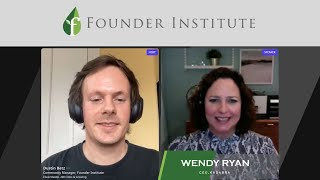
In this Founder Institute VIP networking summit, community manager Dustin Betts hosts an AMA with Wendy Ryan, CEO of Kadabra, bestselling author and leadership coach. Wendy opens with a definition of leadership as influencing others to achieve results beyond personal interest, and introduces two guiding questions for founders: why they want to lead and who they want to be as a leader. She presents the "I EAT Leadership" mantra (inclusive, equity‑minded, authentic, trauma‑informed) and the "Learn‑Lead‑Lift" framework that links mindset, skill‑sets, and behaviors. Wendy shares four core pieces of advice: put people first (including small‑talk and human connection), treat diversity as essential, focus on making others feel smart rather than showcasing personal genius, and be decisive even amid uncertainty. Throughout the Q&A she expands on these ideas—offering remote‑culture icebreakers, tips for managing ego and confidence, meeting‑hygiene best practices, creating space for team input versus consensus, handling performance pressure with clear deadlines, and recommending tools such as the free Diversity Hiring Toolkit. She also promotes her short, actionable leadership book and suggests podcasts (Will to Change, Brené Brown), sci‑fi shows, and other media for continued learning. The session concludes with networking logistics and best‑practice reminders for using the Airmeet platform.
Chapters
Welcome everyone to today's Founder Institute VIP networking summit. Um, if you've been to one of these before, we're now running these, our private networking events that we're running regularly about twice per month. These are closed to the public. They're just for meeting others from across the FI global network, whether you are joining us as an FI alumni, a currently enrolled founder, or a mentor or director who might be joining us. If you joined early or you've been to one of these events before, then you've already been in the Airmeet networking lounge, which is most of what we'll be doing here. So let's kind of get right to it. Today's kickoff event. My name is Dustin Betts. I'm a community manager at the Founder Institute. I'm calling in today from Central Pennsylvania, USA. Most of you probably know FI is a global network though. We're expecting founders to be joining us from all across the world. So yeah, introduce yourself in the chat kind of while we're kicking off here in the AMA. You can tell us, you know, what's your name, what's your company, where are you joining us from, and then we'll know who you are kind of before we move to the open networking after this portion. So yeah, the agenda for today is we're gonna kick off here with a private talk and AMA featuring one FI Global mentor, and today we're pleased to be joined by Wendy Ryan. She's a best-selling author, speaker, and the CEO of Kadabra, who's going to give a brief talk and then answer your questions. And then for part 2, as I mentioned, we'll move to the actual open networking. There's one-to-one speed networking randomly matched, and then there's different group video chat tables organized around different topics and geographies for those who you might want to connect with in an industry or an area. Housekeeping note about using Airmeet: this is a great networking platform, but it works best if you are joining either on Chrome or Firefox on a desktop or laptop. So if you have to join this event via a phone or a tablet like an iPad, then we recommend you use the Airmeet mobile application to join the event. Otherwise, some of those networking features in the lounge won't work for you. Other upfront reminder is our guest Wendy Ryan is here to answer your questions, so please don't be shy. You can put them in the chat at any point during her presentation, and then we will get to them right away as soon as we move to question and answer. So I'm thrilled to introduce Wendy Ryan. She's a bestselling author and speaker, as I mentioned, and the CEO of Kadabra, where she leads a team of change and leadership experts expanding what's possible for people and organizations. She advises HR leaders, board members, and CEOs about issues including leadership, strategy, sustainability, equity, and inclusion in the workplace. She's a coach, a mentor, and an investor in women, BIPOC, and LGBTQ founders whose talent has historically not received equal access to capital. And Wendy brings over 25 years of combined experience in human resources, organizational development, and nonprofit leadership and executive coaching. So yeah, I'm thrilled to introduce Wendy Ryan as our featured guest for today. Wendy, welcome.
Hi, it's great to be here, Dustin. Thank you. And great to, to see we've got some people joining us and more coming in. That's exciting. So I'm going to, I think I can share my screen now.
And I'll turn it over to you, and we'll take me off camera for while your presentation, and then as soon as you're done, yeah, as I said, don't be shy, put your questions in the chat, and then we'll ask them to Wendy as soon as she's done with her presentation.
Sounds good. Thank you. So appreciate everybody's patience here as I'm getting my slides up. My topic today is leadership. So we're going to just kind of take you on a brief journey about some, some thoughts I want you to take with you about leadership, and particularly in the context of being a startup founder. What does that mean? And what are some things that people years later in the journey wish they had known when they were starting out? So I define leadership as influencing others to achieve a result, not solely for the purpose of satisfying your own interests. So when you look at that definition, it's pretty clear that lots of people can be leaders. It, it doesn't mean that you have the CEO title or that you have necessarily a formal position that says you are the leader. It's really about a role and an intention. And it's about how you execute that role and intention. So I want to suggest two North Star questions. So I think a good way to think about what do we need to be paying attention to as a founder, especially in the early stages of our business, is you've, you've got a lot of things to worry about. You've, you've got to figure out how to get your MVP. You've got to figure out how to raise funds. So I am not here to add things to your to-do list. That, that is not my intention. It's simply to say that a good starting point is to figure out what is going to be your North Star for leadership. How are you going to build a very simple compass that you're going to take with you right from the beginning, that's going to carry you through your journey, that's going to help you kind of stay grounded and centered? In, in being the best leader you can be. And leadership matters. We're not going to go into all the reasons why today, but trust me when I say that, looking back, you'll be glad that you thought about this at the beginning. So the 2 key questions here are, why do you want to be a leader? A lot of times we say, well, I'm starting a company. I'm the co-founder, the CEO. So it's sort of by default. I don't know that I, I don't want to be a leader so much as I want to do this thing. And that's OK. However, realize that in doing that thing, you're going to be recruiting people to join you in that effort. And so guess what? You are now going to be a leader of people. So even if that isn't where your heart is, even if that isn't the place that you're starting intentionally, guess what? You're gonna, you're gonna end up there. So thinking now about why you'd want to be a leader. So, so coming up with a reason other than this thing you want to get done is really important. And then who are you being as a leader? This is one of those questions you want to come back to when I mentioned grounding and centering. Who am I being today as a leader? The, the trick that I use is something called "I Eat Leadership." which stands for inclusive, equity-minded, authentic, and trauma-informed. So every morning, I encourage leaders that I work with to wake up and say, "How am I going to 'I eat my leadership' today? How am I going to show up as inclusive, equity-minded, authentic, and trauma-informed?" And when we go to bed at night, we can ask that same question. So you can build in these very simple reflections to help make sure that you're following that North Star. Sometimes it helps to have a little bit more detail. And so I do want to share with you one way to think about a North Star and one option for you, which is the Learn-Lead-Lift framework. And this is a framework that I developed based on all of my years of experience working with leaders, and also a lot of interviews with people that didn't necessarily jump to mind as a traditional leader, like a therapist, an artist, an athlete. I asked a whole bunch of people, "What do you think makes for great leadership?" Because I don't want to just use my, my own experience. I want to look at this with a really broad lens. And so the framework emerged out of that. And it, it really is the interplay of 3 things. Great leadership is your mindset, how you think. It's your skill sets, what you know or know how to do, or your expertise. And then the third thing is your behaviors, which is, how are other people experiencing you? How do you show up to others? You know, it's so important if we might think that we are, you know, hitting a home run with respect to being decisive in our business and that people around us are really appreciating that. But if that's not how they're experiencing us, we, we still have a gap there we need to work on. So I think it's useful when you're putting together that north star to have a model or a framework that you can kind of go back to and say, "How am I doing here? Am I paying attention to these things?" Gives us a nice place to start. And I wanna share 4 pieces of advice with you. So the first is always put people first and business second. And I know this probably sounds a little trite. It probably sounds like you've heard this before, nothing new. But here's the thing. When, when I talk about putting people first, it means that every interaction you have with people, whether it's a vendor, a 1099, an investor, a W-2 employee, it doesn't matter who it is. Look for the human first. Look at the human, acknowledge them, and even engage in that thing that I know a lot of founders don't love, especially if you are not someone who identifies as a people person, which is small talk. Yes, you have to do it. We need to see each other as people first before we get down to business. You will have a lot more success in your business, whether it's fundraising or whether it's getting and keeping the best talent, if you do this. The second is recognize that diversity is not a nice-to-have; it's actually a must-have for your business. And when I talk about diversity, it's not just who, who is the team of people that are working for you; it's who is in your ecosystem. Are you reaching out to people that hold different identities than you have to to be your graphic designers, to, you know, help you with your branding, to be your investors. So casting a really wide net. It's so easy when we're busy to get very insular with our network and just go ask the same people, well, who do you use for this thing? And then I'm just going to go talk to them. And we really do not get the best thinking. And I, and I meet a lot of experienced entrepreneurs who really wish they had integrated This intentionally from the beginning. My third one is, don't worry about looking like a genius. You, you are often going to be the smartest person in a lot of rooms you walk into, but that's really not what's important. It, it will turn people off if they feel like you're trying too hard to prove that and hold on to that. So much better is to really focus your energy and intention on how are you bringing out the genius in others? So, you know, you want people that you're pitching to as investors, you want them to feel smart. There's nothing worse for me than when I'm hearing a pitch from someone and it is so scientific and it is so specific to a particular technology and I'm having trouble following and I feel dumb. And that's not how you want me to feel because that's not going to encourage me to invest in your business. So it's not about you being smart. It's about how are you making other people around you look and feel smart? And my, my 4th piece of advice is be decisive, even when you're unsure. So gather your facts, gather your data, but then get comfortable moving to a decision quickly and not worrying about whether it's the best or the right decision. Because there are so many unknowns, particularly in the early stages of a business. And there's more than one right answer a lot of times. So I think what holds back a lot of people, particularly who have been trained in scientific disciplines or where they had this idea of there is one right answer, or there is a need to have a very huge burden of proof, before we declare something to be, to be right. Sometimes this holds us back. And speed is everything. In an early-stage company, the thing we do not have is time. It is more precious than money. It is more precious than anything else. So decisiveness is a big factor in your success over the long haul. So if you're interested in connecting with me, I certainly welcome that. I think my, my capacity kind of, you know, contracts and expands depending on what else I have going on. But I definitely encourage you to follow me on LinkedIn. I do post frequently and have resources there. And also, if you scan this QR code that's in the slides, and I I think there's a way for me to make these slides available later as well. It will take you to a page on the Kadabra website that has a lot of resources for you related to Learn, Lead, Lift. So if you're interested in this idea of having a North Star for leadership, there's, there's a lot there that you can start using and integrating right away. And I think we're gonna go ahead and open it up to questions.
Here I am. I'm back. Okay, I'm back on screen. That was wonderful, Wendy. Yeah, there was a lot of really big ideas in there. So yes, for everyone watching, if you have questions, please start dropping them into the chat and we'll ask them. I have a question sort of to kick this off, which is a derivative of a question I've asked a lot of our top mentors like ask yourself, which is, as an experienced startup mentor, you know, are there common mistakes that you have particularly seen or that stand out, mistakes you've seen founders make with regards to their leadership? Does anything come to mind there of like areas where you just see a lot of errors?
Yeah, I, you know, it goes back a little bit to what I was talking about, and I think having a clear point of view on leadership and understanding that, even if that wasn't the, the thing that induced you into becoming a CEO, you're really more passionate about the product or the, the, the solution that you're, you're trying to bring to the world. You are a leader, and there, there's a responsibility that comes along with that because you are going to be impacting people. And oftentimes that impact lasts far longer than, than actually our business does. So really, it really behooves us to take that seriously, even if it's not kind of where our passion is highest.
Yeah, another thing that I really liked that you highlighted was the people-first aspect and the importance of small talk. And my question is around culture-building tips for our brave new, you know, remote-first world. Do you have, yeah, tips around that, those culture and small talk for for remote teams specifically, ways that they can implement that kind of—
Yeah, you know, I think early on in the, earlier on in the pandemic, we were trying things like virtual cocktail hours and, you know, fun, and no one wants to do that now. Everybody's totally, you know, fatigued out. So what I'm, what I'm recommending lately is saying, you know, as you're having your team touchpoints, those huddles, whether they're a couple times a week or every other week with your team, just take the first 10 minutes of the agenda and ask a question that's unrelated to business. So I just had this conversation on Tuesday with, with someone I'm coaching. And I said, "Why don't you take the first 10 minutes of the meeting and ask about if you could play any Olympic sport you want, which one would you, would you play? Which one would you do and why?" Right? And I know it can feel like a waste of time because you're saying, "Wendy, I've got 100 things on my punch list I have to get done in the next 2 weeks. But it is so, so important. We've got to take that little, little chunks of time to reconnect about something that has nothing to do with the business.
Yeah, that seems like good advice. And I like that icebreaker in particular. I'm tempted to answer it, but I'll spare everybody. So a question here from Carmela. She asks, I think this was an acronym that you used in your presentation, IET. Can you expand on this a little bit more or define it again?
Yes, so I call it I EAT Leadership. And if I had to describe the Learn-Lead-Lift framework and what's contained within it, so once you drill into the specific mindsets, skill sets, and behaviors, the essence of it is this acronym I EAT, which it stands for inclusive, equity-minded, authentic, and trauma-informed. And those are the 4 things that leaders today need to be able to show up with and be concentrating on. It's not what we're taught in school, necessarily. It's not what we sort of externally get messages from the business and investor world that, you know, no investor is like, "Are you being inclusive?" Yet. But they will. So, so, so I want people to be thinking about how to be a great leader today, but also 10 years from now. And we need to start building these muscles now.
Yeah, definitely. And I feel like that sort of answers another question that I wanted to ask, or it's an answer to, but you mentioned, and I really like this, the importance of staying grounded, but I feel like in the startup world, there's also this need to have like a healthy ego. It's something very common among founders. And so, yeah, do you have, I guess, other tips or thoughts on just, yeah, that putting that being grounded into practice, or would it go back to that kind of IE principles?
Yeah, I think some of us are, you know, some of us are sort of have to work on projecting confidence, and others of us need to work on sort of sitting back and not taking up so much space. So I think this is an area where it really helps to get feedback from mentor, team member, friends, you know, how do people experience you when you're in a room? It's so important when we're pitching that we come across as confident. But again, we don't want to veer into what I mentioned earlier, which is, "I am the smartest person in the room, and I'm going to prove to you why." That is really off-putting. So, and we need to be mindful of the fact that depending on the identities that we hold, confidence, taking up space, those are kind of get a little more complicated. And not everybody sort of fits our typical pattern of what we're used to seeing from white, cis, hetero men. Yeah.
Marco asked a question that's sort of, yeah, leaning the other direction, I guess. So somebody who is, you know, less, has less, I guess, ego to begin with. And these are all kind of follow-up questions, derivatives on what we're talking about, but just he asked, could you share key tips on how to be decisive? So if you're somebody who tends to be more, I guess laid back is not the right word, but just kind of less out front in your leadership style, do you have actionable tips on being more decisive? It becomes less natural to you.
Yeah, I think setting, setting time limits for yourself is really important. So I like to encourage founders to say, OK, I'm going to make this decision in 3 days. So give yourself some period of time to gather the information you need, but then hold yourself to that. So there is nothing worse for a team, and, and very few things undermine a high-performing team than a lack of decisiveness from the leader. If people aren't really clear on what we're doing, what I'm supposed to be prioritizing my energy and time on, they will spin and you will lose traction. So again, even if you're like, I don't know, this is a risky decision. I wish I had more time. I wish I had more information. You're probably better off to go ahead. So some of this is just practice and, and really holding yourself accountable for a time limit that might feel aggressive to you.
Yeah, yeah, that makes sense. It's hard making fast decisions if it doesn't come naturally. It's hard. So you have to have some kind of forcing a question.
Yeah, and I'm not suggesting don't do your homework, don't look at the data, not at all. I'm not suggesting we be thoughtless in our decision-making. It's just in my experience, that is less of an issue for people than taking too long.
Yeah, Eric has a question here that I think is interesting, which are, what are some common bad habits that you've seen leaders pick up after being leaders for a period of time? So is there like some kind of function where you can kind of settle in and settle into bad habits? Have you seen Any examples like that in leaders who have been leaders, I guess, for a while? Eric's asking.
Yeah, I mean, I, you know, the bad habits are kind of different depending on your own leadership maturity and also the maturity of the organization or the team that you're in. So a couple of things that I think are, are always kind of good hygiene habits for leaders. One is making sure that you are always thoughtful about meetings, for example. I know this sounds really boring. It's not sexy. But it's, what are we, what are we doing in it? Why are we meeting? Right? So what's the agenda? Giving people the information they need to consider ahead of time, and then walking out with, what are our next steps and action items? Who's going to do what, by when, and who? Right? Those kinds of things. Like, we need to keep that structure. Sometimes we get a little lazy. Because it's not that fun and exciting to do meeting hygiene. But it makes a big difference for performance. So I think that's something to always keep forefront. And you have to kind of keep adjusting it as you go and you have different types of meetings, different groups of people, different issues you're dealing with.
Yeah. Dennis asks a question here. As a founder, you know, who's on a business quest that never really lets you sleep— hopefully you have some sleep, Dennis, but I know what you mean.
Yes, me too.
If you're always in this business mindset, he says, how do you put people first? He says, I guess, what if we treat people as a resource like capital? I'm going to assume you're going to push back against that idea. But any feedback for Dennis there?
Well, recognize the limitations of that, right? Recognize that if you choose to hold that view, you are going to miss some things sometimes that are truly wonderful and remarkable. Sometimes the best ideas don't emerge from the, the most likely places. Sometimes people ask questions that we go, "Well, that was a weird question," and then that sparks thinking that otherwise would not have happened. So when we sort of focus on people first, and we make space for these, you know, getting-to-know-you moments, like I talked about earlier, or Some people would call it team building, even if it's only short periods of time. That's what we're nurturing and we're cultivating is people are more likely to offer their ideas because they feel safer. They feel safer. When we know people, we trust them more. We work harder for them. We put in more discretionary effort. So you're, you want to be thinking about this strategically. It's like, how am I nurturing this asset? It's different than other assets I have.
Yeah, yeah. Human capital, it's just inherently different. And it's kind of, yeah, just like you said, nurturing and empowering those people to be their best because it's not, it's just a lot less intangible, I guess. Yeah.
Yes.
Kyle asked an interesting question here. So do you implement any democratic processes within your organization or organizations you advise? He said, like about what the next product should be, or how do you tell the majority that they're wrong or that we need to go in a different direction? So ideas on, yeah, that democratic kind of processes within organizations.
Yeah, I mean, I don't think— very few organizations operate as a democracy, and I think that's okay. I don't think that's our objective. I do think I do think everyone has to be clear on who is the decision-maker, right, or who has the decision rights in a particular area of the business. And that the, the best decision-makers make space for getting input and ideas. So it's a matter of having kind of a process where you're saying, "Hey, this is— we're looking to think about what our next product is going to be." This meeting and session and time is our container for brainstorming, for ideation, for getting kind of our best thinking. But there's clarity that it's not going to be a consensus, a group vote.
Yeah. Mohammed has a very similar question. I guess I'm just asking it because it goes back to back, which is how to motivate people to engage in that, in more in making decisions. So people besides yourself, he says he thinks in an agile world, we need more space for others besides the founder and CEO to participate in that decision-making. And it sounds like you said, I mean, it's about creating the space for where and when that happens. Is that sort of the best practice?
Yeah, I think a lot of founders in particular, you know, we tend to be very, have a bias toward action and tend to be people who in a room will raise our hand and be like, I have an idea. And we're not as shy, sometimes inherently about doing that. And so sometimes, because that's sort of how we're wired, we have a really hard time appreciating that other people on our team might have a great idea in their head, but they're just not going to raise their hand and talk about it. So you have to create that formal container and explicit time and say, like, "Now is the time we're going to look for new ideas." And then you have to call on people; you have to invite them. Give them really explicit permission to engage and contribute. So it's a combination of making the environment really safe for people so that if they do that, you're not going, "Oh, well, that's a dumb idea," or, "Oh, they're getting shot down," but also giving people really formal and explicit permission. Even though you may not need that, most other people do.
Yeah, there's so much overlap here between leadership and management. And I feel like that's like a lot of the conversation But it, but these are, it's, it really is two sides of the same coin.
Yeah. For early stage companies, I mean, that's, that's our reality. You know, if I were talking to a group of Fortune 500 CEOs, we would be having a little different conversation, you know, because we're, we're kind of dealing with some different things. Yeah.
Isha also asks a derivative, I feel like, or in this area, she says, how do you continue to put pressure on people who work for you that you urgently need them to get things done, maybe something that they don't necessarily like to do or they already have a lot of workload. She says it's— she apologizes, it's very specific, but yeah, I guess that's just a more pointed way. But yeah, ideas on people who you're really trying to squeeze, maybe because it's your best human capital. And so you're like, wait, I could just get more from this person. I don't know, ideas on that kind of management.
Sometimes, you know, sometimes we sort of notice someone starts out being really responsive and timely, and then we sort of notice that it gets a little less so, and there's a pattern. So I always say it's better, you know, the first time there's a deadline missed, if it's something like that, you want to say, oh, you know, I thought we had agreed that this was a deadline. Help me understand what happened. And just kind of a very neutral tone of voice. Sometimes we have to work on that, that we don't come across as scolding or fault-finding, like more curious and supportive. And then if you, if you haven't done that, or if it continues, then you need to address this as it's not a one-time thing. This is a pattern of behavior. And this pattern of behavior is starting to erode my confidence in you. So you have to point out that the relationship is taking a hit when this is a pattern of behavior. And when, because when people realize that now the stakes are higher, it, that tends to motivate some people that might not sort of understand that that's going to be one of the consequences, right? So that's part of it. And then I think Being really clear. A lot of times founders will say, "Well, I need this as soon as possible." And we say that about 100 things. And that is, again, how are people, people supposed to prioritize? So what I do with my team, for example, is I will tell people, "I would like this by Friday at 3 PM. Is that doable?" I would like— and that is not my natural style at all. I am much more naturally wired to be like, just kind of little less structure, a little more go with the moment, that kind of thing. So I've had to learn and train myself to make up a deadline and be super specific about it, even though it kind of annoys me. Does that make sense?
Yeah, it does. Yeah, hopefully it works for Isha. Yeah, it sounds very practical and actionable to me, but yeah, actually doing it is the hard part. So yeah, um, I want to be mindful of your time. We're past the half hour here, and I don't know yet how much more time you have to hang out or answer any questions. So—
I'm happy to keep hanging out. I'm happy to do that in the networking space or continue here. It's your call.
OK, well, I guess I do want to ask one more question then that I wanted to get to, which is like the role for technology in empowering leadership. I know specifically, like, you have a focus on diversity and inclusion. It seems like there's so many new tools. I mean, just since the pandemic and tech that are out there to kind of look at company internal data or with an eye towards diversity and, you know, make improvements in that direction. Are there any processes or specific tools that you might recommend that relate to founder leadership?
Yeah, definitely. I love— there's a new tool that came out last year. Rocky Howard really spearheaded that. She was with Smart Recruiters. She's now with The Mom Project. And it's called the Diversity Hiring Toolkit. And you can— it's free. So that's also great for early-stage companies. So you can go on the Smart Recruiters website, or you can Google Diversity Hiring Toolkit. And you can actually take an assessment. And it'll help give you a report and tell you kind of because what I like about it is it looks at practices, it looks at policies, it looks at kind of the nuts and bolts, not just the fluffy stuff. And I think that's a great starting point to just understand the landscape of what's possible, especially in the world of recruitment. And then I guess I would just beg people to understand and know that even if you do the most fantastic job, recruiting a diverse workforce, you, you have to do the work to have a culture that makes it possible for everyone to thrive there. So otherwise you're just creating a turnstile.
Yeah, perfect. I think our producer in the background, Felicia, was able to find the link or she dropped a link that looks like Diversity Hiring Toolkit into the chat for founders to check out. So yeah, great, great recommendation.
Awesome.
I guess the final question to end on before we move to the open networking, which you're welcome to hang out if you're able to, is just, you know, for you personally, when you take some R&R, when you're not working, whether it's related to leadership or not, is there anything that you're streaming, reading, listening to, other resources besides your own book that we've dropped the link into that you would recommend maybe founders check out who are interested in learning more in this space, or if not leadership-related, just anything else that you've been watching and enjoying recently that you want to recommend?
Yes. Well, I do have to plug my own book because I do think it's great. And one of the reasons it's great is it's a really short read. Like each chapter is really short and it's very actionable. So you can like go right to a topic and be like, what is important here and what can I do about it? So it's one of those books, like I designed it with this thought that a leader could keep it on their desk. And be like, OK, now I need to hold this person accountable. You can go right to that chapter, read, read really quick, and instantly get some support around that and some really practical how-tos. So that, I think, is a, is a great starting point. Besides that, I think, I think it is important to keep challenging your own thinking. I think, especially when it comes to diversity, equity and inclusion, there's so much that all of us need to continue learning. And it is a continuous journey. It doesn't matter what color your skin is, how you identify, we all have a lot we have to continually work on and learn and be open to changing our mind about. I think that's, it's the, it's the flexibility in being willing to question our own assumptions is super important. So whatever helps you do that. So I love the Will to Change podcast by Jennifer Brown. I love Brené Brown's podcast. She has a lot of great leadership and also diversity, equity, inclusion ideas. And then from a, from a fun standpoint, I'm a total science fiction geek. So anything Star Trek, Star Wars. I've been watching Raised by Wolves lately, which is—
Me too.
Yeah, like I just, because that stuff just, you know, makes you think. It makes you think. And of course Ted Lasso, if I just want to feel good. Love him.
So awesome. Great, great recommendations all around for those looking for more practical advice or just to unplug. I guess not necessarily unplug if you're, if you're streaming, but dive into something else. So awesome. Yeah, thank you so much, Wendy. A lot of really big ideas here to think about and put into execution. So yeah, check out your book for those practical kind of tips. I love that it's meant to be more of like an actionable resource in short, because most books could probably be shorter, nonfiction books, let's be honest. So it's great that you wrote it with that in mind. Yeah.
I wrote it for short attention span people. Like myself.
Perfect. Perfect. Well, yeah, thank you so much for your time. And if you can keep hanging out for the networking session, please do. And I'll just give a couple more quick reminders here before we all move to open networking. So as I mentioned before, this is just reminders about using Airmeet. You want to be in Chrome or Firefox if you're joining from a desktop or a laptop, or using the Airmeet mobile app if you're on a mobile device. Please be respectful of everybody's time when you're in the group networking tables. That's just the best practice for online networking in general, but try to be brief with your own introductions and take turns speaking and asking one another questions. Another pro tip that I always like to mention because I've seen this go wrong is if you meet somebody who you want to connect with further, make sure you search for their names in the tab and exchange social contact information so that you don't, like, lose touch with one another after this event ends. And yeah, that's just my final pro tip for networking. You can download this worksheet if you want some other tips on networking best practices online. But beyond that, yeah, please have fun. We're excited to be hosting these private events just for the FI Worldwide network and hope that you'll enjoy this time to connect with others here in the networking lounge. So we'll see you out there in a few minutes. Thanks everybody for joining.










