Founder Showcase December 2021, with Brant Cooper: watch Global Startups Pitch to Investors
The livestream captures a Founder Institute showcase where six startups presented their solutions to a panel of investors and an audience. The session begins with Modjli, a smart home energy storage and virtual power plant platform that offers plug‑and‑play battery modules, AI‑driven load management, and a utility‑facing interface. The founder outlines the product, market opportunity ($169B smart grid, $32B addressable), beta sales, pilot with Alabama Power, and a $1.5M seed round via SAFE notes. Next, Radical Girl Gang (Bree Cookshank) pitches a mobile‑first marketplace for emerging women‑owned brands, describing its commission model, community growth, and a $500K crowdfunding round. Dreamfully (Matt Rubik) presents a science‑backed enterprise wellness app that uses guided breathing, immersive visuals, and a freemium B2B subscription, highlighting a $2.5M LOI pipeline and a $750K raise. Flight (Shilpa Sharma) showcases an AI‑powered meeting‑note generator that converts recordings into organized notes, detailing its LLM training pipeline, beta customers, security, and a $700K pre‑seed raise. Raya Health (Dallas Barnes) introduces a personalized birth‑control recommendation platform with a $7/month membership, a medical advisory board, and a pre‑seed raise, noting regulatory considerations for expansion. Finally, FairUpThere (Malcolm Woods) offers a flight‑booking and passenger‑survey platform that monetizes through data licensing and commissions, describing its beta traction, reward‑based survey incentives, and a seed raise. Throughout the session, investors ask about fundraising structures, product roadmaps, data privacy, regulatory compliance, go‑to‑market strategies, and competitive differentiation. The content provides rich details on product concepts, market sizing, business models, technology stacks, partnership strategies, user metrics, and fundraising terms.
Chapters
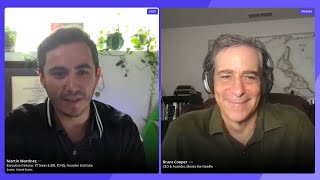
Welcome everybody to Airmeet. My name is Martín Martínez. We will begin here shortly. I want all of you to just get settled on the Airmeet platform and introduce yourselves. Again, my name is Martín Martínez. I am the entrepreneur-in-residence for the Founder Institute. I also serve as executive director for the Texas chapters that we've been hosting in the Lone Star State since 2017. I've been with Founder Institute for going on 5 years now, and it's exciting to be able to meet all of you from around the world as we host— this is the biggest event that we have every year showcasing some of the most amazing founders we have on the planet that have graduated from the Founder Institute programs over the past year to 18 months. So we got a great show for you today. I can't wait for you to meet these founders, but before we do that, let's get through some housekeeping. Let's get through some housekeeping today. For all of you coming in around the world, we're sitting, we're about to crush 300 attendees just in the Airmeet. And for many of you, you might be watching us on YouTube or LinkedIn or Facebook or Twitter. And if you're coming from any of those channels, welcome, you're more than welcome to stay there. We're doing something very interesting broadcasting to all these channels simultaneously from Airmeet. And so tell us where you're coming from. If you are an Airmeet, drop in the chat. We're sitting, we're cracking 300 right now. The numbers are still going up. So get those messages, drop your LinkedIn, tell everybody where you— we got people from Brazil, Luxembourg, Houston, Texas. I love it. I'm coming from Austin, Texas. Howdy y'all. Switzerland. We got a ton of people here, y'all. This is great. And if you are having issues with sound, make sure you're toggling with your audio, your audio settings here, but also be ready, be ready to interact with each other immediately following the broadcast stream. We're gonna open up the Airmeet floor so that you can connect directly with these founders and with each other. Airmeet is a very useful tool that allows everybody from all around the world to connect in these weird times we've been seeing and experiencing over the last couple years. Hopefully that changes in 2022, but before we get to that, we still have these platforms right now to help us really get to know each other while we deal with these weird times. We have a great keynote speaker I'm going to bring up here shortly. His name is Brant Cooper, based out of San Diego. I see some people coming in from Southern California. Welcome, welcome. Los Angeles, Tampa, Florida, France, Washington, DC, Abuja, Nigeria. I love this. This is the global community that makes FI one of the most expansive and impactful organizations all around the world. So I'm gonna tell you a little bit about FI and then we're gonna get into that fireside chat with Brant here in a little bit. But y'all are already figuring out some things here too. So Airmate, as I mentioned, is an event networking-based platform that allows you to connect with each other. But here down here at the bottom, again, you can't see this on YouTube or any of the socials, but click that little emoticon right there and tell me how you feel. Give me some claps, give me some hearts, give me some celebrations. All of that, keep doing that throughout. I wanna see your engagement all the way there. Fantastic. So Founder Institute, as I mentioned, is a global organization. We help entrepreneurs, many of you probably in this room right now, turn your ideas into longstanding, enduring companies that can scale the globe and impact the communities that you wish to serve with revolutionary products that can change the game in those industries that you're looking to disrupt. And disruption is going to be a big conversation point here in a little bit. Applications are open for our winter and spring 2022 chapters. There's probably a chapter recruiting right now where you live, so head on over to fi.co/join. See if there's a virtual program that might be of interest for you to take that idea to reality. I'll have some more information as we get to that later on during the event, but we're at the Founder Showcase, as I mentioned. Founder Showcase is one of the most premier events that we have a chance to really showcase, as the name suggests, some of the most amazing companies we have coming from around the world that are graduating from these Founder Institute programs. And maybe some of you in this audience might be at this stage in a year's time, maybe less, we'll see. Only time will tell and your work will demonstrate that. So let's dive right into it. We're gonna start with a great special guest, Brant Cooper, So we bring him up to the stage. I'm going to give him a little bit of time just to get his camera, get ready to go, and I'll give him an introduction. We're going to spend about the first 30, 35 minutes kind of having this conversation about this new book he has coming out, and then we'll get into our showcase a little bit later. So without further ado, please welcome to the stage, welcome to Airmeet, welcome to all the social media channels we got all around the world, Mr. Brant Cooper. Brant, how are you doing today?
I'm doing great. Thanks so much for having me, Martin. Happy to be here with the Founder Institute.
I'm excited for this conversation. I know we talked a little bit yesterday, but I know you're coming out of Southern California. I'm sure the weather's lovely there still right now.
Yeah, it's a little bit overcast, but we're okay.
You're okay? We're living, man. I envy that weather. Texas is unseasonably warm right now for some reason, but who knows? Your foreword in the book talked a little bit about the crippling freeze we had back in February. I hope we never see that again, but we need impactful companies to kind of change that so so we can avoid these kinds of things as the world continues to change around us. So tell us, you know, let's kick this off. And for those of you in the audience, welcome. If you're just joining us right now, you're in the Founder Showcase. I'm sitting down with Brant Cooper. A little background on Brant. Brant is a New York Times bestselling author of The Lean Entrepreneur and CEO of Moves the Needle. He's been a trusted advisor to startups, large enterprises around the world, over 2 decades of experience helping change industrial or the mindsets in the digital age. And you've helped people from the founder level all the way up to the C-suite with so many different ways to just think about how to run your business, but also how to evolve through insurmountable change and disruption, not just in industries, but at the macro level. So tell us, before we start diving into maybe some of the things you've been working on as of recent, how did you get to this point. Tell us a little bit about that journey that led you into this world of helping other entrepreneurs and change leaders.
Yeah, you know, I think it's, you get to be a little bit older like myself, you look back and you try to find a thread that runs through your life. And it's interesting when you can find that thread. I never thought of myself as an entrepreneur. I never thought of myself as a founder. I never thought of myself as being one that was going to invent something, but I was also not really looking for a 9-to-5 job where I was told what to do and I was going to simply execute tasks all day long. I mean, that's a thread that's run through my entire life. Out of college, I had some normal jobs and I was wondering, is this the future? This is just what I'm going to do for the rest of my life, and that was not very satisfactory. The late '90s, I ended up— '97, I ended up joining my first startup in Silicon Valley. And I joined as the IT guy, the only IT guy. And that was the first place where I discovered what really is the startup ethos that, you know, we all sort of take for granted now. This, what I call this exploration mode. Where as an employee, you're sort of expected to go and figure out how to solve problems, right? So that it's not this structure where you are simply supposed to do what your, your boss tells you to do. But in a startup, you have to wear multiple hats and you have to drive impact on the business. That's really what you're measured by, is how do you help the business grow. And, uh, and so my background really, you know, I, I worked in, in that area and the startups up in the Bay Area through the dot-com boom and bust. And in a number of different roles, starting in it, but ending up running product management and marketing and business development and these different parts of the business. And then I sort of ventured off on my own and some of my early endeavors were trying to start my own businesses. They failed miserably. But out of that crash, there were a number of people and a number of frameworks that were emerging about, well, how do we, how do we make startups not try to act like big businesses who struggle to bring new value to the world? Uh, and so, you know, design thinking and, and, uh, Steve Blank's customer development stuff and some Eric Ries, uh, Lean Startup. And so I ended up writing the first book that talked about these things— customer development, Lean Startup, uh, product-market fit. And I self-published that to a group of people that were on this Google group that were talking about how to actually implement the practices. So beyond the theories, beyond the frameworks, how do you really test your assumptions? How do you really understand what your customers need? And that eventually evolved into The Lean Entrepreneur, which was a deep dive on how to do those things, what metrics to be focused on, and how do you move from focusing on one to another, and how do you grow teams around accomplishing what you need to do in order to drive impact, in order to grow the business. So after The Lean Entrepreneur, I took that to large enterprises, and that's, you know, now been a decade about of attempting to teach to large enterprises some of these principles and some of this ethos, this exploration mindset. And so that's actually what led to Disruption Proof and brings us up to brings us up to today. I know we'll dive a little bit deeper into some of those principles, but I think what's key for the audience is to understand that startups are born with that exploration ethos. And the challenge is, you know, how do we maintain that?
Fantastic. Thank you, Brent. Thank you. And again, audience, if you have questions for Brent, drop them in the chat. We will get to those towards the end. Of our conversation. So as you mentioned, it sounded like you were busy over these last couple, couple years with writing, um, because we have been experiencing some insane levels of disruption throughout all of our lives. I, you know, just a year ago, uh, we were, we were still experimenting with this platform, Airmeet, and now it's really revolutionized the ability for us, uh, the Founder Institute, to really engage our global audience in a way that we never really thought was possible. So, so tell me, as you, as you were starting to really scratch the surface on, on this book for Disruption Proof, kind of what was that impetus that really kind of took you over the edge and said, hey, I need to put this down on paper, there's something that just needs to be told?
Yeah, so, so the book was actually in, in works for a couple of years, uh, and, and originally it was purely my observations, here are the 10 things or so that companies, large enterprises need to do to build this exploration ethos beyond innovation. So innovation is like, I always put scare quotes around the word innovation because it's just a buzzword and people don't define it and what it means for their organization. And so it gets instantly lost, especially inside of large enterprises. And so I wanted to move beyond the word and really get to the mindset. And so I was designing the book for a couple of years, and I think it was, you know, found my publisher, publisher made me an offer in December of 2019. And so the book changed in March of 2020. And so I didn't set out to, write a pandemic book, but it's next to impossible to have written a book in 2020 without a heavily influence of the pandemic. And it sort of crystallized some of my views around this idea of expanding this exploration mode across the enterprise. So the idea essentially is that we face uncertainty. When you face uncertainty, you actually have to go and learn what works, right? Execution mindset only doesn't work because you're executing on what worked yesterday, yet in the face of uncertainty, what worked yesterday might not work anymore. And so instead of just executing, you have to go into this learning mode again and again. Startups naturally start in learning mode, but they want to get to execution mode as quickly as possible because that's what allows them to grow. But so it's easy to think of, if I'm trying to design a new product or service And I realized, and investors realized, that you're really not going to get a return on that for 5 or 6 years. It's, it's easy to understand that you're out in there in learning mode and you're creating this blueprint that you're— that'll allow you to grow the company. But what happens when a pandemic hits and your existing market no longer is there? And so if you're a big company, for instance, and you're relying on your innovation group to figure out, you know, where you're going to go in 5 or 6 years, and suddenly your core business is struggling, consumers are not spending money and they're losing their jobs, small businesses are going out of business, suddenly your market is evaporating. What do you do if you're only in execution mode? You fail. And so what was extraordinary about the pandemic was that companies that I had worked with over the last 10 years showed this remarkable ability to pivot, to, to change their core business in the face of this disruption to their core business. And so I've got a couple of those case studies in the book, happy to talk about it. But it was just— it's rare that you get to see, you know, academia loves to look at the— look at history and create these models of how those companies achieved what they achieved.
And we—
and then we promote those to the— to businesses today. And yet we don't— we don't see that practicing those principles actually leads to the change that we hope we hope occur. And so it's unusual to be actually living in the experience where you can see that companies adopted those things and made them their own. This isn't about Brent Cooper's philosophies. It's about, you know, this exploration mindset. But it's interesting to have these examples where they actually applied it over the last 5 or 6 years. So then when they're faced with a disruption, they were able to turn and literally create new value in their tumultuous times. And I guess the other fundamental thing is, you know, people running around calling this the once in a century pandemic, and I'm here to say this isn't the last disruption that's gonna hit us this century. I think things like when I raise things like the energy grid collapse and the ransomware attacks took out a hospital system here in San Diego, shipping, like supply chain issues, right? I mean, these type of things, ripple through the economy and ripple through our businesses like never before. And it's really because of the digitization of the world, right? We're all so intermeshed. We're so interconnected. And the speed of information, the speed of disinformation, the power— we're all running around with computers in our pockets that are thousands of times more powerful than the computers, you know, that launched the digital age back in the '50s. And so all of these factors mean that there's an increased complexity of the world and so much more uncertainty that affects all parts of our business. That we can't allow our, our businesses as we grow to shift into execution-only mode. We have to maintain that startup ethos, that exploration mode, and it becomes a balance. It's not only exploration mode, right? I said earlier that startups want to get into execution mode because that represents growth. But you have to be able to maintain this culture of recognizing when we face uncertainty and recognizing that we don't know we don't necessarily have the right answer and that we have to go and learn what the right answer is again before we start executing. And so it's fundamentally this balance that we have to maintain in our businesses that's different than the industrial age. And that's sort of the primary idea. So disruption-proof is how do we build that ethos into our business so that we're always prepared at some level to respond to sort of the craziness, the complexity, and the uncertainty that's in the world today.
Wow, thank you. That's incredible. So yeah, Brent, for everybody just joining us, we're sitting at over 500, going on to 550 attendees just on Airmeet. I don't even know how many people are watching us across all the socials, but if you are watching us across the socials, hop into Airmeet. You're gonna have some fun and meet some really cool people here in the room. So just, we'll be dropping links. We got an amazing team behind the scenes. Helping with the stream, helping behind the scenes right now, running the show, dropping in the chat. So for if you all just joined us, welcome. We're The Founder Showcase. I'm Martin. I'm sitting down with Brant Cooper, author of Disruption Proof. Empower people, create value, drive change. Book's on shelves right now. I think we do have a special link, brantcooper.com/FI. We'll be dropping that in the link too. Grab your copy today. Go to a local bookstore, support local, just like everybody would appreciate, especially in these times right now. So tell me, with Disruption Proof, I mean, it seems like, and you, for all of us over the past year, especially up through 2020, we were just kind of holed up in our little studio offices. I'd just been living in this 16 by 9 box for 2 years at this point, haven't left. And so what was some of the research and some of the people you talked to that really opened up your eyes as you were writing this book, especially as you changed from the initial topic into obviously what we're facing today? Any interesting insights or learnings that might be worth sharing to our amazing audience right now?
Well, I think that— I guess I think that what's interesting is that corporate America wants to be like big tech. They want to grab that startup ethos. But they sort of don't know how to. And so it's, it's interesting to talk to a number of companies. ING comes to mind, that their research was essentially when they were looking at how are they going to, uh, reorganize, restructure their business, uh, for the digital age. They went and looked at Amazon, and they looked at Zappos, and they looked at Spotify, and they looked at a number of these other tech companies that have essentially built that exploration, built that agility into their business. And so ING ends up being really an interesting example because they structured their business differently. So they got rid of organizing around functions and instead organized around missions. And so if you can imagine, organizing around functions, in my opinion, is a legacy of the industrial age. And so say, Martín, if you were producing a microwave oven back in the '50s, you didn't really care about the number of models that you had or the color or even the features. You had to worry about the technology. Do we have the technology to produce this microwave oven? And can we produce it in a way that is operationally efficient such that the cost of the microwave was affordable by the middle class. And if you were able to do that, then, uh, then you— there was not market risk. The middle class was raising their standard of living, and microwave was sort of life-changing, uh, and so you could be assured that if you priced it right, they would, they would buy, the middle class. And so the way you organized your business there was around this operational efficiency. And so you had your assembly line and, you know, where the product moves and the workers stand still and they do their specialization, whatever their cell is on their assembly line. And then the rest of the business operations and marketing and sales and supply chain, all of those became other functions that were essentially along the assembly line continuum. And so you organized your business around this idea of the assembly line. And so then the natural management of that becomes very hierarchical because I'm going to manage people, I'm going to make sure that they're doing whatever their cell function is as efficiently as they can. And so whole businesses were modeled around this efficiency of getting the product out. But if you fast forward today and we're thinking mostly of digital products, SaaS, mobile applications, other technology, it really isn't around invention. It's not really around operational efficiency because now the risk is really the market risk. We sort of know that we can produce these products. We don't necessarily know the time or the cost, but, but technical risk isn't really where the risk is. The risk is really around, is there a market for this? Can we produce this in such a way that, that people will achieve value from it such that they want to buy it? And so if we started from scratch today, would we actually organize, structure our businesses around the assembly line or around achieving the overcoming this marketing risk? And so this idea of structuring the company around missions instead of around functions starts to achieve that. And so ING completely restructured a bank. This is like mind-blowing to me. A bank completely restructures their business around missions rather than around the functions. And so I think that you see that in tech companies to a certain degree, and you really see that larger businesses are trying to figure out how to do that, and they kind of don't know how, right? And so this, again, I imploring startups to, to think about that, because when you're small, it's easier to start there than to grow yourself big based upon structuring around function and then trying to change. That's a tough nut. And of course, it's on the investors and the advisors then to actually encourage the founders to think differently about how they're gonna structure their companies in order to maintain that mission focus and that exploration. And to be clear, by mission focus, I don't mean that they have to be philanthropic or they have to, cure social ills. That's great if they want to, but that's not, that's not really why, you know, most businesses are in business. By mission focus, I mean that you are in business to produce certain products and services that create value for your customers, and that value for customers needs to be the guiding light, not an arbitrary efficiency metric.
Very interesting. I like that again, that mission over function really resonated with me right there. And And I agree. Yeah, it's very legacy industries struggle with that because they're in these different methodologies that just aren't relevant now for this day and age. May change gears a little bit. Let's dive more into Disruption Proof in terms of the content and kind of what you're outlining on this. And we actually have a question from the audience that lines right up with kind of what I was about to ask. Marco asked about top 3 core principles startups should focus their energy and time on. You actually have the book broken down into 3 kind of pillars of things to focus on. Would you mind elaborating a little bit on how you approach these 3 pillars?
Well, so there's a, you know, we're using a SoCal acronym here, RAD, and it's in order to create, you know, resilient organizations. So ones that are strong, obviously, but also flexible And then building in awareness into the company. And by awareness, I really mean that you're looking outside the company, you're looking outside even your market, you're paying attention to trends, to demographic changes, to how needs are being addressed, technology changes. You're looking at, you know, macroeconomic around, you know, around the globe, not just even centered on your own country. Country, but obviously if you're getting, if you have supply chains, then you have to be paying attention to that. But you're really, it's building in the awareness. So rather than just sort of assuming that I'm reading the Wall Street Journal or something like that, you actually have people and functions that are keeping their ears and eyes wide open to what's going on externally. But also it means increasing awareness inside of the company. How are your employees doing? This is especially important during like in a pandemic or when everybody's working remotely, you know, it's not sufficient to check in to make sure everybody's sitting on Zoom all day long. You actually have to understand what are the dynamics that are going on in your employees' lives and how are they feeling? And are they scared? Are they fired up? Are they engaged? You know, what's going on there? And by the way, because you're paying attention to that stuff doesn't mean necessarily that you're taking action on it. It means that it's it's informing your actions. And so then the final, the D, is being dynamic. And so that's building into the processes this ability to change based upon that new information. And so there are a lot of things that are, you know, it kind of gets right down into the 5 elements. So these 5 behaviors that I think we build into the company in order, and this is, again, this is all across the company. This is all employees from the front lines to the C-suite. So the first E is empathy. So that's really sort of this awareness, right? But it's building this idea of understanding our customers deeply. It does not mean doing what they say. It means understanding why they say what they say. And it's understanding our employees and it's employees understanding leadership. Where are they coming from? What are they focused on? What keeps them up at night? Then there's exploration. And so that's, again, that's admitting when we don't know. And, you know, so that causes a little bit of vulnerability. We need to build some vulnerability that we're allowed to fail small in order that we don't fail big. And admitting when we don't know and then being able to go and learn what it is that we need to learn so that we do know. Evidence. So taking data and insights to help us inform our decision-making, cutting through our biases. So it's not We're not making decisions based upon whoever wins the argument, but rather how can we look at running experiments and looking at data that will actually help us inform what the right way is to proceed. Equilibrium is the fourth E, and so that's this idea of figuring out what the balance is in different parts of the company or even on different teams, the idea of balancing exploration with execution work. And so for example of this, Hopefully you've got Agile working inside of your enterprise. When I talk about Agile, I'm talking about the Agile principles. So go to agilemanifesto.org. It's not based upon specific implementations of Agile like Scrum or Kanban or SAFe or whatever.
You can—
those are fine as they are, but it's really the principles that we want to adhere to and that really all all functions in the business should adhere to those principles. It's not just software development anymore. And so the Agile principles are really how you can build in exploration mode. So if you're designing what a team is going to work on for the next week or 2 weeks or month, you build in exploration activities and that starts creating this balance. And we can understand and see that Expiration mode actually makes our execution more efficient because we're not guessing or we're not applying things that don't work anymore. And then the final E is evidence— or no, I'm sorry, is ethics. And that's building our values into our work. So it's not enough to have values, you know, plastered on the About Us, What page. It's really around, How do we build that into our daily work and remember that our focus is on creating value for our customers and it's really around our mission. And so I think that's— it's difficult to do, but again, I believe that if one adapts this agile mindset, then you can build the ethical behavior into the mission statements for a particular team. And I think, believe that the social structure of the team itself will reinforce the company values. And so that's actually what you see at companies like Zappos, in my opinion. And it ends up creating the social structure rather than managers having to try to enforce it because then it doesn't really come from the heart. It gets back to this, I'm doing what I'm told as opposed to exercising even my own personal values. And so the social structure of a team is a great way to implement that. So I'll pause there as I've gone through the RAD and the 5Es.
You're getting me going, Brant. You're getting me going again. I think you're— and also for many of you, if you are just joining us, we're sitting at the half hour, a little over. My name is Martin Martinez with Founder Institute talking with Brant Cooper. Author of Disruption Proof, now on shelves right now. We'll drop another link in the chat for y'all to get it. We are blowing up the chat, Brant. Everyone is having so much fun. We got people in Nigeria, we got people in London, we got people all over the world. Welcome.
Nice.
I'll turn up the Texan howdy for those of y'all in Texas. So we're going to take a couple more questions from the audience, um, and then of course I know you're a busy man, got more to do, and we got some founders that really much aligned with some of these. Again, it just, it resonates so much as you were talking. I hear some of these pitches already. I've been working with these founders for weeks now, getting them ready for the showcase stage. And a lot of this is already lining up. So let's take another one. So Stefan, a simple but yet direct question, and I'm gonna build on it a little bit more. What's been the most, what's the number one mistake that startups, and I guess in this case too, enterprises, have been making, especially just over the past 2 years, outside of, you know, if they're lacking any applications from what you're already showing in the book?
Yeah, well, I mean, I think 2 things come to mind. So first one is it's really almost always around this awareness idea, right? So empathy is almost a buzzword now. Lexus has it in their car commercials, so that's always a sign of, you know, where we are with a a particular buzzword. And I think for a lot of corporations and maybe for startup founders too, this idea of customer development or empathy for your customers or being customer-centric is another good phrase, means sitting around a boardroom or sitting around a conference room table and imagining you are the customer. Well, what would I do if I was a customer? As opposed to talking to them or observing them. And so I think that the— I think that, uh, you know, we still— it's kind of crazy to me that with The Lean Startup and design thinking and all of these things out there, that most founders still focus first on product, on building product. And, and I really think that we end up overbuilding products and we keep on adding stuff, hoping that we're going to discover our market by adding stuff to the product, as opposed to understanding our customers more deeply as opposed to really trying to understand them. And that doesn't mean going and asking your customers what features they want. I mean, that's how I did product management 25 years ago. So it's really more about why are they saying what they're saying and what are their decision-making processes and what's driving their need. And so it's getting at this whole different layer of understanding. And so you don't ask your customers to predict their future. You don't ask them things. What will they do? What will you buy? What will you pay for? They don't know. Customers are horrible at predicting their own future. And so it's not easy. Believe me, it's not easy. But so, you know, what I like about the design thinking is that there's a number of tools that, you know, card sorting and these other like activities that you can do with your customers that sort of try to get there, you know, try to— doesn't get them to predict their own future, but sort of tries to uncover what their actual needs and aspirations are. And so that's what we are really trying to get to. It's up to you to solve the problem, but you really can't solve the problem or address the need until you really understand the need or the problem. And so we start off with a lot of assumptions. And what you really need to get to is what really moves the customer. Anything that we're doing with products and services is trying to change people's behavior, right? They're doing something now, or maybe they're not doing anything, and you're trying to get them to do something different. And changing people's behavior is really tough. And, and so you can't just like tell them to behave, you can't just implore them to change their behavior, you have to move them. And sometimes moving them means like working with them. And so, you know, we often try to get companies to scale before they figure that out, right? And so again, this is sort of on investors, you know, If your companies haven't figured this stuff out yet, then you can't worry about whether a particular activity is scalable or not. Scaling comes from figuring it out and then figuring how to scale what you figured out. And so it's, uh, there's a lot of analog that needs to happen before we worry about digitization. And so I think that's still the number one mistake in startups. The second thing that I was going to say though was the same thing applies to your employees. And so I think like, especially in the enterprise, you know, these HR or executives come up with their remote versus work policies and hybrid approaches and all of this stuff, and they do it without even trying to understand what it is their customers are facing. So all the mucky mucks inside of the companies with their home offices, you know, all sheltered from the rest of the family, are like, "Yeah, this is great." And they don't understand what the needs are of their employees who are sharing the kitchen table with their partner who also has to be on a Zoom call and the pets and all. So it just, again, it doesn't mean that you actually solve particular problems, but it certainly, it informs how you're going to make policies. And so I'm really astounded by the larger enterprises not taking the time to try to understand and develop empathy for their own employees faced with, the issues of the pandemic. And again, this is just not the last disruption that's gonna ripple through us in this century. Matter of fact, we'll probably have other pandemics this century. So it's, I just think we need to really, we need to start building this into the companies that we build as opposed to waiting for the, like, so I was an old it guy And we— I never implemented a disaster recovery program until after the disaster. But, you know, if you— if you— you don't survive a second disaster if you haven't implemented that plan.
Interesting. I love it. I love it, Brent.
Thank you. We are—
we're running a little bit short on time. We're running a little bit over, but I'm enjoying this conversation. So I'm going to take you— I'm going to take in one more question, and then we're going to kind of wrap up here. I'm actually combining a couple, uh, because they do line up very closely together. Anthony and Reem both say, basically asking them basically the same thing, which kind of lies in with that second point you just made, but really from the employee standpoint. So how do you, how can you implement some best practices, whether you're a startup or an enterprise-level company for your employees and actually have them adopt it genuinely? How can you get them to embrace these values, these ethical standards without, conflicting with maybe their own particular values?
Yeah, I think it's a tough question and I think it's really the big, it's sort of the big hurdle that people need to overcome. So number one is implement Agile for everybody inside the company. And again, you don't have to make it as rigid as a lot of engineering or R&D groups implement, but the idea of planning your work for the next week or two weeks or months, sprint length doesn't matter, You're assigning this team a mission statement. And so their job is, that team's job is to self-organize, to actually figure out what work they need to do in order to accomplish the mission. They have to supply you as a manager or as a founder with the right metrics. So you're working with them to define the mission. You're working with them to establish the guardrails of behavior and expectations and those type of things. And you're giving them the metrics that they need to report on that measure the progress towards the accomplishment of the mission. So that's not task-level metrics. It's not, you know, we tend to measure tasks over time. We want to get to progress towards achieving— what are the signs that we're making progress towards achieving that mission? And so the biggest hurdle is establishing the trust between those teams and the manager. And so you have to start small and start simple. Start with a challenge or a mission that you think your team is able to accomplish. But the key is to give them the authority and the resources they need to accomplish the mission. You have to give them permission to exercise their creativity and their intelligence and their ability to solve the mission. And so do it at the level that you can trust at first and you start building that into the organization, into the culture. And so even if you have employees that aren't naturally on teams, figure out how to get them on a team and so that they have these other resources or as a group they can accomplish this mission. And again, I believe it's the social structure of a team that's going to enforce ethics, that it's going to hold each other accountable for their work performance and that are going to adhere to the guardrails and to achieving that mission. And what that does is that frees up the managers or the founders so that they don't have to be managing individuals all the time. It frees up time so that they can be more strategic, can be more proactive, can be more focused on on what's needed to grow the company. And so I talk about this in the book as being the team as the new unit of work. And so if you're able to manage a team of, you know, what Jeff Bezos would call the two-pizza team, right? So, you know, 8 people or so, if you're managing the team and the team is able to self-organize and regulate itself, you know, then that's going to free up all sorts of time and ability for you as the founder or you as a manager to go focus on improving it and driving impact for the business.
Fantastic. Thank you, Grant. We're just about out of time, but I want to give the floor for you for just one little last bit before we head over into our next thing. Any final thoughts that you want to share with this amazing audience? We've been hovering right over 535 attendees the whole time.
Well, you know, I, as you can tell, I talk a lot, so I'll just sum it up like this. I'll just sum it up like, uh, connect with me. I respond to all messages, emails, or whatever. Happy to help out. I love helping, uh, founders. So I'm Brandt at brandtcooper.com, Brandt Cooper on all social media. And, uh, you know, reach out, especially if you're here in San Diego. Uh, so, uh, yeah, that's it, Martín. Thanks so much for having me. And, and, uh, I, I love the, the crew. And by the way, I'm hoping to get back to international travel too. So if things open up again beyond this next variant, you know, figure out how to bring me to your country, and I'm happy to— I'm all about the startup ecosystems and helping the ecosystems. I've worked hard here in the San Diego ecosystem, and so I have a lot of ideas about that. So, yep, reach out, and, you know, good luck to you all in your pitches and demos, and Yeah, more power to you.
Awesome. Thank you again, Brant. And again, thank you one more time to the audience for bringing in these amazing questions and already being an amazing, amazing crowd. Probably the biggest one we've had on Airmeet over the past year. One more time, Disruption Proof, Brant Cooper. Disruption Proof: Empower People, Create Value, and Drive Change. On shelves now. We have some links in the chat so you can pick up your copy today. Definitely shop local and pick it up at your nearest bookstore. Brant Cooper, thanks again for joining us. It was such a joy speaking with you today. I hope you have a great rest of your week.
Yeah, thanks so much, Martin. Great talking to you.
Likewise. Cheers, my friend. Right on. So as we transition, we're going to go straight through it, ladies and gentlemen. Once again, if you're just tuning in, all 500+ of you, you are at the Founders Showcase hosted by the Foundry Institute. This is one of the biggest events, if not the biggest event we host every year, featuring some of the biggest and brightest fastest growing companies we have in the Founder Institute ecosystem, companies that have just launched through our programs around the world over the past 18 months or so. You're about to meet 8 of them coming from all walks of life all around the world, and I'm excited for you to meet them because I've had a chance to get to know them very closely over the last few months and longer. Before we do that, we have an incredible panel of investors, featured investors coming from also all around the world. So we're gonna start bringing them up to the stage. While we do that, I do wanna recognize my team. This takes a village to produce, ladies and gentlemen. We are on every major social network platform right now. If you're watching us on YouTube, LinkedIn, Twitter, Facebook, our team Dustin and Elijah are behind the scenes moving those needles and ensuring that you're having a quality experience, whether or not you're on the Airmeet platform.
Platform.
So I give it up to them, and please give some emojis on Airmeet for that amazing team doing that too. If you are following us on any of those socials, well, you know, we have some Airmeet links in there. We want you to come engage in the conversation. Come on, head over. It's a fun time. The water's warm. For all— for the people behind the scenes in Airmeet, we also have some amazing people supporting us, the producer and the support level. So Veda, Felicia, thank you for all the hard work that you're doing behind the scenes. Please give it up for them. And oh, by the way, it's Felicia, our producer's birthday today. So I want to see the chat lit up celebrating her. Well done, Felicia. Thank you for working so hard. Based in Greece too. So the hours are ready, like global organization. So thank you, team. I'm having a lot of fun. I hope they are too. I can't see them, but I will when we wrap later today. We're getting everybody coming in. So as we're still pulling people from the audience. Uh, we have Adil, Ranjit, Tiana. I think we're still waiting on, uh, Miss Genevieve and Marshall, who will be joining the stage. Well, but while we're bringing— while we're still waiting on a couple of our, uh, esteemed investors coming to the stage, let's start the introductions. So everybody, it's so good to see you. Welcome, welcome to the Founder Showcase. Welcome. My name is Martin Martinez, EIR at Founder Institute. Let's get to know our panel as we roll into these 8 fantastic founder pitches that you're going to spend about the next hour and change getting to know. So let's start with our introductions. First up, I have Mr. Adil Jaffer. Adil, you mind muting, telling us all a little bit about yourself? I know I'm turning up the twang a little bit because he's based in Houston, Texas. Adil.
Well, yes, thank you, Martin. It's a pleasure being on the panel here, and we're focused on sustainability and clean tech sector based out of Houston, focused on US firms, and looking forward to all the wonderful presentations and pitches today. Thank you very much for having us.
Hey, we're excited to have you, my friend. Good to see you. Good to see you. Next up, coming from the other side of the world, Mr. Ranjit Ranjit, what's going on, bro?
Hey, hi, Martin. Yeah, it's coming along well. So I'm a partner at Yonest Venture Capital. And, you know, we invest, you know, across a variety of areas, primarily deep tech. So, you know, right now, you know, NFT is going nuts, crypto is going nuts. But so a variety of areas, that's what we do. I'm enjoying working with you, you know, as we've done at FI. So Yeah, happy to be here.
Fantastic. We're happy to have you too, Ranjit. Got two more amazing investors coming to the stage as well. Next up, coming from also Austin, Texas, uh, with a nice background, nicer than my little jungle over here, it's Tiana Lawrence. Tiana, how's it going today?
Hi, I'm so excited to be here. Um, Tiana Lawrence, uh, Lawrence Innovation. We invest in pre-seed technology companies My background is in IoT and blockchain technology primarily before I started investing actively about 7 years ago.
Fantastic. Thank you for being with us, Tiana. It's good to see you as always. Last and certainly not least, coming from the Bay Area, please give it up for our final esteemed panelist of the evening, Genevieve Lemauchaux. Genevieve, how we doing?
Hello there. Actually, I'm in San Diego. I'm in Southern California.
Oh, you're down by Brent right now. Y'all should go hang out after this.
Hi everybody. I am the managing director of Expert Dojo's healthcare venture fund. We're a growth accelerator program and I'd say pre-seed and seed stage venture fund. And I run all the healthcare investing and programming here. And I'm also the managing partner of Suncoast Ventures, which is a seed to Series A fund focusing on healthcare. So we're doing medtech, digital health and some select therapeutics and things like that.
Amazing. One more time, thank you, Genevieve. I'm so excited for this panel. I think y'all are gonna enjoy what you're about to see over the next hour and change. So one more time, ladies and gentlemen in the chat, welcome our panel, use those emoticons at your leisure and let's begin. Let's begin. So here's how it's gonna go down, everybody. We've got some great videos that we're gonna present. All of our founders are live and in the house right now. Have these pre-taped pitches that we're going to play for you. Immediately following these 3, 3.5-minute presentations, we're gonna be bringing them up to stage for some live Q&A, getting to get to know, uh, each of our investors one-on-one. We'll have a few questions if we do have time. We might not. We may pull some questions from the audience, but don't let that stop you, ladies and gentlemen. These founders are here in the chat. They are here. Connect with them directly if you have some really great questions. Hey, when we know we have investors outside of the esteemed panel here in the audience, if you want to connect with them, please do so. They also have people on their team that are ready to answer those questions, so do not be shy dropping those questions in the chat. Either the founder themselves or some of their teammates will be able to connect with you and get those questions answered. So let's get to it. Our first founder is actually— is coming from India, um, and is working in building enterprise software that's going to be scaling around the world. So Alicia, if you can do us a favor, let's queue up Quoco from our founder, Kitán. Let's start the showcase.
As we begin, we are a legal tech startup providing legal infrastructure for fast-growing businesses globally. Hi and welcome to Quoco. We are a legal tech startup providing legal infrastructure for fast-growing businesses globally. I am Chetan, the founder, and I bring with me more than 20 years of experience in technology and corporate law, both as a partner in tier-1 law firms and in-house experience with companies like Facebook. The name Foco is derived from the word status quo, which we are changing in the world of legal. Business owners are often tired of managing contracts. They constantly have to juggle between sales teams and legal teams to drive contract closure. Plus, they constantly juggle law firms in different geographies every time they have an international contract to close. It takes forever to close even a simple NDA. Did you know that fast-growing businesses often lose up to 9% of their annualized revenues because of poor legal infrastructure? We have the perfect solution at Quoco. We offer a cutting-edge automation platform that provides core legal solutions for growing businesses as a vertical SaaS with built-in legal support through partner law firms globally. Think of us as Pilot.com, but for legal. Businesses can use our plug-and-play legal infrastructure to streamline legal processes, NDAs, contract management, MNAs, and even legal due diligence, all with Quoco's cutting-edge automation technology with built-in support globally. Our products come with several cutting-edge features that are simple to use even by businesses, and they come with extensive feature sets. With Quoco M&A, we support businesses in a variety of corporate transactions by automating the documentation and providing legal advisory through our partner law firm network. We offer seamless platform-based support for both contracts and transactions. In the US, UK, India, Singapore, and the BVI. We currently service clients in all of these locations. Our contract management and NDA products are billed as a SaaS, and our transactional products are billed at a very competitive hourly rate globally. We have excellent traction and continue to grow revenues at a very rapid pace. We should cross $250,000 in annualized revenues in November. We continue to work with and service several dozen clients across geographies. On the Cocoa M&A side, we have closed 8 cross-border deals since launching the product in late July this year. On the enterprise side, we started working with the Dynas Bank team in Singapore in August this year. We have a solid pipeline and we have made a step change in the type of businesses that we have begun to attract as clients. We expect to start working with high-quality large customers both on the B2B and professional services side as we begin to scale with new products in the pipeline. Meet our core team. Well, Nandan, who spent a decade at Cisco, handles the tech side and is building a data scientist team for the POCO DigiGence product. We have an excellent set of advisors who also opened many, many doors for us. In terms of future roadmap, we have standalone products, Coco NDA and Coco Diligence, rolling out in this month. And we hope to go truly international by 2022. We also hope to close a seed round of up to $1.5 million soon. We are currently bootstrapped and have started receiving commitments towards our round. You know, the money that we are raising is to cover 18 to 24 months of growth. Thank you for listening.
Have a good day.
Right on, Keaton. Let's welcome to the stage Keaton. Let's get your camera on. Fantastic way to kick off the showcase portion of this event. Keaton, how you feeling today? How you doing?
No, this is fantastic for hosting this. It's been great listening to the keynote speaker and, uh, and, and good to meet the investors around the panel as well. Thanks for putting me first.
Oh yeah, well, again, I appreciate you staying up late for us and, uh, and attending this event. Um, so we want to make sure you're the first one up so you can meet and set off the tone in the right way with this amazing panel. So I'm going to kick it over to our investor panel. First investor up, whoever wants to initiate the conversation, more than welcome to. I already see Adil, Ranjit, Genevieve, everybody's mic's on. They're already ready to talk to you. I'm gonna let that— I'm gonna shut up.
I have a question.
Um, so for your, um, your, um, on your, on your revenue, your annual, your run rate, you said you're at about $250,000 this year. Is that where you were at for 2021? In run rate for 12 months?
Hi there, yes, um, you know, we incorporated the company in April this year, so it's been the run rate till, um, you know, till the end of the month, uh, November 30th. So that's very good.
And about how many customers is that total, like contracts or accounts?
Or, uh, we've now handled more than 3 dozen customers globally.
Okay, and how are you acquiring them? How are you finding them on board? Onboarding them, building a pipe?
Our number one channel has been reference by existing customers and organic growth. So this has been, you know, we've basically, you know, especially on the M&A transaction side, we have completely grown organically without any advertisement whatsoever. And since I've also spent about two decades in legal practice, I have a few connections and therefore, you know, we are able to get all of these things, you know, moving, uh, especially on the, on the enterprise side.
Um, like, so I mean, I do healthcare, but I think that they're in the United States. I noticed you wanted to be tech here, which is fine, but I think there's a lot of competitors in the United States for this, for this type of technology. Am I wrong?
Yes, I think the main thing is, uh, you know, apart from sort of like providing the portal, we have built-in legal support. So we are not sort of like, you know, you've got companies like iCertis and other large folks who just provide you the platform. I've just been in, you know, just this week I've talked to two major customers who spend more than $3 or $4 million on these products and their legal teams just don't use it, neither their business teams. So, you know, they're basically looking for someone to help close, close deals in addition to providing platform support. So I think that's where we are. So we have both of platform and operational support to be able to help transactions, help close contracts, do the negotiations on a global basis. So that's, you know, that's where we stand.
Are you interested in taking investment from United States companies or US investors?
Yeah, absolutely. In fact, John from your company has been in touch with me very closely as well. Oh, John Wallace? Yeah, so, you know, I think We've had at least, what, 7 or 8 different conversations till now. So, but, but, uh, but yes, yeah, so we've got, uh, uh, you know, we— in fact, our first customer came from the US, uh, though we launched— our launch market was, uh, India and 2 states in India. Our first customer came from the US, uh, so I know that, uh, uh, you know, we, uh, we have a big market there. It's just that we needed to make sure that, you know, our product offering The operational side is completely up and running, and it's been a good learning throughout. And, you know, we started actually when we forecasted, we said we need about 300 or 400 customers in India to be able to hit about $1 million in revenue. It's been a big learning for us that even with a small subset of our customers, you know, we can deep mine them and cross-sell our products to them. We can hit that at 10% of what we actually forecasted. So that's how the product has been taken, and that's how we are growing right now.
Great.
Cool.
Hey, Chetan, thank you. That was a great presentation. Good job.
Thank you.
Very interesting. I didn't catch, did you put what your thoughts for evaluation are on your company?
Uh, no, uh, completely open. So, uh, for something like this, me being a venture capital and, uh, a lawyer on the tech side, so I'm not going to set valuation straight away, so I'll leave it to you.
Oh, is this part of your negotiations?
Fun.
Um, okay, speaking of that, uh, with the map that you showed, uh, did you say that you had US customers?
Yes, we have US customers.
Right now.
Yeah.
How many?
So we work, uh, um, so we have two sets of customers, one actually coming from the US and also US, uh, India-based customers who have incorporated in the US. So I would say at least about, uh, about, uh, half a dozen of our customers, or perhaps more, um, you know, are, or at least I would say about, I'd say about a dozen customers actually in from the US right now.
So, so not 6, 12?
Yeah, yes, I think this is how we have grown. Our first, you know, we are quite active in the crypto space. We've got customers in that space as well. So, uh, we've got customers are coming, uh, um, you know, our first customer from the US was in the crypto space. Our company used to be our existing customers.
Um, speaking of that, like, um, I've used LegalZoom before and other types of products and stuff like that. Why, why would I choose to use your product over something like LegalZoom?
So one of the things about LegalZoom is, you know, they provide certain templates, maybe like writing a will, or perhaps you need a lease agreement and things like that. We are completely focused on B2B, so we do commercial contracts for businesses. And depending on the industry and the sector business operates in, you know, we've got, you know, we've put together more than 25,000 documents which are very relevant to a particular industry or sector. So if you want, for instance, if we, uh, we are going to be launching a new product, uh, called Coco NDA, uh, on December 7th. And once we do that, you know, in fact, uh, we plan to offer NDAs which are very specific to industries. So we have that domain knowledge and the capability. So this is something that, uh, that sets us apart from, say, LegalZoom and things like that. And also with integrated legal support, you know, you can ensure quality of delivery and timeliness. You know, we set up a cloud-based contact center for, you know, for handling incoming contracts, things like that. So the whole, you know, I spent basically more than 2 months, you know, setting up some of these basic things so that the customer experience is excellent. So apart from using the platform, you know, if you want to contact us, You know, you can, you know, have these— we have this centralized cloud-based contact center. So these are some things which really sets us apart.
LegalZoom is—
if you want to use standard template documents and things like that, you go there. You know, perhaps you can also hire independent contractors and things like that. You know, from our perspective, you know, we have an operational team. You know, my own background of being licensed in a number of jurisdictions and also having been a partner in major law firms. You know, this kind of experience you won't get at LegalZoom. So this is, it's both the product, the platform, and the overall customer experience that we can provide.
Okay, I also heard that you guys are more industry-specific, where LegalZoom has sort of more broad consumer-facing products. Is that correct?
That's correct. So if you, if you go to some of our partner firm websites, you know, you can see that, you know, we've covered more than, more than 60 sectors. It goes all the way from AI to genetics and things like that. You know, there's a lot of experience which has been gained over the last couple of years. So yes, industry-specific is the is the next thing that we're going to be focusing on. So, and especially in the crypto and blockchain space, we've handled quite a few clients. We've also recently, you know, featured both in the Bangalore Technology Forum, which is a global forum, and also in the Abu Dhabi FinTech Festival, which just concluded as well. So we've in terms of our technology and in terms of our reach, there have been, we've been able to gather more than about 1,000 leads from just attending these two. So now it's time to sort of like really pursue some of these things as well, but we are a small startup. So industry-specific is the way to go. Yes, thank you for that.
Thank you.
Hey, I'll go next, Adil, if you don't mind. Yeah, so I think the market and product has been covered, so I'll ask about the team. So what do you think are the strengths that make your team like the premier group to capture, let's say, the lion's share of the market or a big share? What are the strengths that you think?
See, I think since I've dealt with Sunil Goel at YourNest as well, so I met with him, so I know your group and things like that. Since you're from India, I'll say that I've been a partner at AZB. So I've been a deal partner on more than 250 deals in the VC and PE space across the globe. I was APAC general counsel for Facebook. I was a very early employee, and my job was probably the first legal hire across APAC for Facebook. So, you know, and for more than 19 years, I've held Google as a client, so I've launched a lot of products for them and things like this. So sorry, I'm just patting myself on my back, but this is my domain expertise which I bring to the table. In terms of our team, this is a team which has on average worked with me. The core team, especially in the operations and delivery side, they've worked with me on an average of for 6 years. So it's not some, you know, and they've built a lot of experience, uh, you know, working. So we work well as a team. On the technology side, you know, we've got Nandan, um, you know, who spent, uh, more than a decade at Cisco, hardcore tech guy, and he also holds an MBA from IIM Bangalore. So he manages all of these things. He's been able to put together a very good team, especially on the data sciences side. Which powers our upcoming CocoDiligence product. So, you know, this is the team. We try and— we've got good mentors, you know. We've outsourced our marketing and finance completely, so, you know, that takes care of a few things. So, but at the moment, you know, resources permit all of these things since we're also a bootstrapped company and revenue-driven. So So this is on the sales side, you know, we use a lot of software to be able to actually know, we now procure a lot of software to be able to sort of like prospect and reach out. But as I said, you know, our growth has been fueled by direct referrals, you know, organic growth, number of funds such as yourself, you know, we've reached out to, we've got good connections in the marketplace. We've been— we're doing a lot of stuff for VC funds in India as well. So I think this is— sorry, it's long story short, but this is our team and we're growing and this is how we are able to—
Just a quick question before I hand over to Aadil. Have you sent us the deck or have you sent Sunil the deck by any chance?
No, I actually haven't. So this is not, you know, not really, you know, we've, we, uh, we've been introduced by founders who've sort of, uh, been funded by other funds internally to their funds as well, you know, the founders of, uh, who are there. But we have not made a very, uh, big outreach, uh, you know, to the funds and things like that, right? Not for anything else, primarily this requires time. And at this point in time, you know, I'm in the middle of product launches and, and also, uh, you know, on board coding or talking to new customers. Even today I had, you know, 2 live product demos. So it's been a busy time and this is where we are.
Thank you, Chetan. You can send me the pitch deck if you don't mind. And over to you, Adil.
Thank you.
Thanks, Ranjit. Chetan, congratulations on all the traction. It sounds wonderful. How much are you exactly raising at present?
So we initially— so we are raising up to $1.5 million. Others, you know, to cover about 18 to 24 months of growth. And this is primarily, you know, going to be in, um, uh, in, in towards product development and essentially hiring more full-time resources, um, you know, than, than we currently have, uh, both in terms of, you know, engineer, engineering teams, data sciences teams, uh, have some marketing resources. So this is where we are Got it, thanks.
Follow-on question on that. A significant portion of your effort seems global at present. Given sort of the pandemic and things like that, how do you see— does that create headwinds for your execution internationally, or is that facilitating your product growth? How does that work?
No, that's an excellent question. In fact, we get a lot of inquiries internationally. And, you know, we've had, uh, uh, you know, this is one of, you know, we, we, to give an instance, we've got a lot of inquiries in the last 5 weeks from Africa, uh, and, uh, and the Middle East. In fact, there's a lot of demand for legal tech as well. Singapore, we just, uh, you know, we, we, we opened a beachhead in Singapore in August because we got our first institutional client there, and that has now branched to 2 more companies and things like that. So, you know, at the moment, you know, we are taking in customers as our existing team can take it. Infrastructure can— is already set up to handle a lot more on the technology side. So, but there's a lot of demand. And also, even today I was talking to— today one of the pitches that I had was with India's top transaction M&A advisory firm. And I have a follow-up call tomorrow morning with at least 3 of their founders and the team because at least whom we demoed to, they were very impressed with what we had built for the products and how we covered this. So we know that apart from sort of like traditional B2B businesses, there's a large play especially on the professional services side and these tend to be very international.
As well.
So, um, and we've— and the other area where we've got a lot of interest internationally is, uh, in the UK. So, you know, I've actually had more than, uh, more than a dozen conversations and demos so far, um, over the last 2 months, uh, have a few this month as well. And, um, you know, some of the firms that are very interested in our technology are very large and old law firms in England, you know, are interested in sort of like utilizing the technology as well. So it's been— so from an international perspective, you know, we have both B2B businesses and professional services firms, you know, that are interested. And, you know, some of our mentors are very well connected. We've got both Ravi Raj Gopal, who is chairman of Fortes, you know, Hermes, and a couple of other listed entities in the UK and India. We've also got Jeremy Small, who's built a legal empire in the UK and a personal friend over many years. So, you know, these are some of the folks that are backing us on the international side. So we have, uh, uh, we have route to market. Essentially to all of these. It's a question of execution capability and time for all of these things, and we want to make sure that we get this right because legal has traditionally been high touch. So you need to make sure that clients are well situated and starting to use this. So I hope that answers your question. Thank you for that.
It does very well. Thank you, Chetan. Good luck in your efforts. It's wonderful.
All right, thank you. Keithan, we did go a little over, a little bit more than over on this first pitch. So I want to be respectful for everybody else's time. We got 7 more to go. So Keithan, well done, my friend. If you have questions for this magnificent founder, please meet up with him at the chat, in the chat. He'll be answering questions along with some teammates, as well as go drop by his virtual table when we conclude the rest of the showcase. We got 7 more to go. So just as a reminder, if you're just joining us, we got, we're still hovering around 500 attendees. Welcome to the Founder Showcase. We got 7 more founders to present to you this evening, morning, afternoon, wherever you find yourself. And so let's get into the next one. Let's keep moving. And just for, for our founders that are coming up, let's make sure that we get our answers very rapid-fire out of respect for the subsequent founders that will be presented after you. So next up, we're heading west, but not too far west. We're just dropping off in the UK, uh, to show off dating app that's revolutionizing how millennials and Gen Z are really engaging with each other in this new modern way of authenticity and video. So let's give it up for our next presenter, Emma Clarke, founder and CEO of The Sauce.
I'm one of the founders of The Sauce, and we're on a mission to make dating less dry. So the problem is that photos are absolutely useless in telling you whether or not you're going to get on with someone in real life. Existing dating apps are plagued with racial bias. There are massive problems with superficiality on there and they are causing mental health problems as well. Dating apps are also massive business. So pre-pandemic, it was worth £5.5 billion British pounds per annum. And that is when just 35% of relationships are formed online. Now over 70% of relationships are formed online. And App Annie thinks that the revenue could double over the next 5 years. This is an uploading sector. And our solution to this is the source where profiles are made up of videos. And let me show you what that looks like. Looks like this, uh, full-screen video profiles, TikToks, Instagram stories, candid videos from your holiday. This isn't the 1980s. We're not going to introduce ourselves to camera. Our user base is about 70% Gen Z. They have a lot of this footage on their phones already. They simply put their profiles together by uploading video clips from their existing photo library. And our secret sauce, our analytics and our algorithm is working really well. There are 11 times more matches for people who might have experienced bias on other dating apps, which we are unbelievably happy about. 95% of dates are leading to a second date. And I'm sure all of you will agree with me that the best way to get your users to recommend you to someone else and to have that virality is by having a good product that really works. 48% of initial interactions include a message. Our users are incredibly engaged. And that is coming through in our user growth here. As you can see, when we started in May this year, we went nationwide in May this year, we had just 300 users. We now have over 4,000 users. Yesterday alone, I think we had about 14,000 videos viewed on the platform. It is being picked up in the press a lot. LGQ, The Telegraph, Glamour. There's a bit of a buzz here in London, which is great. Our revenue model is a classic freemium subscription model. We're pre-revenue at the moment, but this is what we'll be doing. It is well established. People do pay to date. There's a human need here. People want to meet people and they're willing to put money behind that. Now, I would be remiss not to mention Sachin, my co-founder here. He not only does he bring the male perspective, He also brings perspective as a person of color to the team, and he's the one that really came up with the core to this idea. He's a brilliant full-stack developer, very creative brain. I'm the corporate square of our duo, originally trained to become a corporate lawyer, then moved into finance, and our team works with us on the front end acquiring users. We have the most exceptional group of advisors. Vincent was Vice President of Social Media at the BBC for 5 years. Lucy was Head of Amazon UK PR, but also at Playboy Enterprises. So she brings that kind of fun consumer brand focus to the team. Pierre helped build Amazon Prime Video, helped design it, which is incredible, as our technical advisor. And Tom Davies is Head of Internal Markets at SeedLegals. Now, we're looking to raise £1.25 million to acquire 200,000 really high-quality users within 18 months. But these are really conservative numbers. And if we continue to grow as we have been doing, of which there is every sign that we will do, we're going to absolutely smash these targets. So I hope you're as excited as I am. Thanks very much.
Bam! Let's welcome to the stage Emma Clark. I'm from the UK. Oh, how are you today? Somebody I appreciate. Love your backdrop. We've talked about this all the time. We're both plant, plant, plant brothers and sisters in arms. But let's get to our panel already. I'm just going to go hide now and let's, let's make some magic happen with our investor panel.
Hi, guys.
Good job, Emma.
That was lovely. Sorry, there's a little feedback. Can you hear me okay?
Absolutely fine.
Yeah.
Okay, great. Loved your presentation. It looked like you dialed it in really nicely. How long, um, how long has your app been around?
So we started working this project in May 2020, the beginning of the pandemic. We spent about a year developing it. We had an MVP, we put that up for a while. We learned loads from the first version, things like the fact that Gen Z hate to have to say yes or no to someone. They like to just be able to skip past them. So we changed the feed and we started this version, uh, on TestFlight with a, with a group of what we call like a really inspirational crowd of cool kids in April this year, and we went nationwide in May this year.
Okay. And, uh, is London the big city for you guys? Like, what, where, where do you have most of your users?
Yeah, 90% in London at the moment, but actually it's now spreading to other parts of the UK pretty quickly.
Okay.
Um, and then what does it usually cost you guys to launch a city?
So at the moment, our cost of acquisition is getting down just past £5, and it's getting, it's getting lower than that. Um, sometimes we're getting as low as £2 on TikTok using the TikTok ads platform. So it really depends. We think the network effect sets in at about 30,000 users.
Thank you.
Thank you.
Panel, any other questions right now for Emma?
Aside from the video thing, what do you see as your, your competitive advantage and differentiator?
Yeah, so it's our analytics and our algorithm. So, um, we've kind of built it ourselves. We built it with a not all-white development team. We've got women on the team, and it is really different. Um, we also have our own algorithm, which is matching people based on interests and not just on who they've liked before. So I think there's a big problem with dating apps at the moment where they railroad people into seeing the same people time and time again, or they show people— you— people that look like you. But this is showing people, um, things where the videos might have the same content and they're looking at the same stuff, they're interested in the same stuff.
So are you going through the videos and figuring out what they're doing? Are you expecting context from it?
So it's all automated on the back end. We do have a human element, like a human overlay, and we're teaching it all the time and improving it all the time.
Okay, yeah, that's it, that's it from my end. Thank you.
Awesome.
Any final thoughts, questions for Emma Clarke? Right on, Emma. Anything else you want to add right now while we still have the floor for for you, for the Founders Showcase?
Yeah, just if you have any more questions about us and the team, you know, we've been working this a long time. We speak to Gen Z all the time. Like, even if you're in a different Gen Z industry, I would love to talk to you because we have so many insights on what they're doing, what they're thinking.
Fantastic. Thank you, Emma. And if you want to reach out directly to Emma, her contact info is in her profile here. Give her a DM, go sit down at the Sauce table, when we break that broadcast.
Right on.
Thank you, Emma.
Thank you.
Yeah. All right, ladies and gentlemen, we are going to jump across the pond, as they say over in the UK. We're going to head over to some North American companies. We're going to start out in Canada. This founder is working on a really interesting solution in sustainable energy. So please, without further ado, let's bring up Jonathan Lommer, founder and CEO of Moduli.
I'm the CEO of Modjli. I started Modjli to make a real sustainable impact on climate change, but also to reinvent this energy market as we know it today. And here is my team from Mexico, Hong Kong, and Canada. All of us have shown something really special and important expertise in the energy field. And all our partners supporting our mission. Our mission is to reduce greenhouse gas emissions, to reduce consumer electricity bills, reduce peak energy consumption for power utilities. To resolve this type of problem, we need to start optimizing the energy efficiency by making peak load management with home energy centralization and connect consumers and utilities together. But first, let me introduce you to our module for consumers. Air is our smart energy storage, a plug-and-play solution that you can distribute in key areas in your house. You can power up the most important devices through your wall outlet without any installation to the grid. Increase your energy capacity as you want by simply stacking more batteries to it. Now, to use it, you need our mobile app. With that, you're able to centralize all your energy activities. That means all production, consumption, and energy storage. With our artificial intelligence, you can optimize all your smart devices such as electric vehicle charger, thermostat, and water heaters, and also use your electric vehicle as backup energy and monitor your solar production. If we combine both together, we call that a nano-grid solution that brings resiliency, cost-saving, and clean energy to your home. But we— now I will explain you why utilities work With Moduly. Well, with Moduly. Here is our smart interface, and with that they are able to monitor remotely a group of users using Moduly, perform peak shaving and valley filling, control and monitor solar, EVs, and smart appliances, but also improve their customers' experience and services. And now we call that a smart virtual power plant services from a utilities perspective. And they love Moduly because we help them saving billion dollars to build a new power plant like this one. The smart grid market will reach more than $169 billion by the end of 2025, and our total addressable market represents $32 billion annually. Here is what we have accomplished so far. Now we have launched our beta sale that will reach more than $100 million by the end of the month. We put in place 2 pilot projects and 2 coming soon, and we're running our pre-crowdfunding campaign. Now we are ready to deploy Moduly to the world. To reach the next step, we're looking for $1.5 million seed round to finalize our development, reach our go-to-market, and build our team. And with that, we are about to reach $2 million in revenue. Thanks for listening to me today and join our modularly community. Thank you.
Right on. Let's welcome to the stage Jonathan. Jonathan, how you doing?
Really good.
Right on, man. All right, well, let's just take it away. Let's dive right into our esteemed panel. Jonathan, I hope you're ready. Audience, please put your comments in the chat. Any questions, please direct to him after the presentation. Let's start with you, Adam.
Sure, thank you, Jonathan. Very impressive product and very timely, I must say. Can you discuss a little bit about the uses of the funds, the $1.5 million that y'all are raising at seed round. Is it a priced round or are you using SAFE notes? Can you give us a little bit of an idea on that? And then what does your product roadmap look like in general over the next 6 to 9 months?
Yeah, okay. At the moment we accept SAFE agreements or we accumulate SAFE agreements. We already accumulate around $500,000 and pretty pre-round, and we're now looking to raise $1.5 million for the round. So we're working on it now. And for the product roadmap, we now at the moment, we start sending our beta version, and we have first production starting for this first beta users. And at the same time, we're working with Alabama Power for a 2-year pilot project here in Alabama, because at the moment, we finalize our tech our program in Rich Tech here in Birmingham. So, and we expect to be able to deliver the first bigger production at mid-2022.
Got it. And so your partnership with Alabama Power enables you to actually access their customers for the storage solution?
Is that correct? Yeah, I guess mostly it's two separate things. We have them the smart platform that the user would use at home, and the other side we have the interface that the utilities would use to connect with their users. Working with Alabama Power, we use their network, sure, because they would deploy this directly to their network, their current customers. So it's the purpose with them, and at the same time what we do with them is to improve our artificial intelligence data and etc., because The way they work is for the peak shaving, right? So, and with that, they are able to test the thermostat management through the system with the EV cars and water heater.
So, um, that's phenomenal. Can you talk a little bit about the peak shaving part of it? It sounds like you're heading for sort of the virtual battery market that's fast developing now with in the buildings and demand side management and everything that can be now adapted with the new technologies and IoT and things like that. Can you talk a little bit about that?
Uh, on our vision, what we want is first simplifying the customers because now our customers starting adopting new technology like Google Nest or smart water heater. And every time you had some new technology, you need to add a new mobile app to manage. And it's start just probably like It's like a nightmare for them to manage different types of technology. And what we try to do is more like centralize all energy activities at one place and using to the, at the same time, the storage to improve the peak shaping during the high freight period, right? So it's the strategy we use at the moment. And but mostly is the peak load strategy. At the same time, we give resiliency because the customer are able to use it, has backup energy at the same time. So it's not just for the peak load management. Let's make sure.
Great. Just one last point. This is very much— this falls within our thesis. Would love to see your deck.
Yeah, sure, no problem. Can we send it?
Great presentation. I was wondering, so you— it sounds like you already have product out market. Are these paying customers or kind of like where exactly are you in your product?
Yeah, we're starting with what we call on our side the beta version. So it's not the final version. So we sell. So now we take payment from our first customer. So they buy the technology itself. And the same for Alabama Power. They would pay for the unit, they would pay for the system. The only part Alibaba will not pay for the moment is the software. But at the end, when they will use the system, they would pay a monthly fee for the interface side. And the other part is the hardware. The hardware is direct sale directly. So at the moment we start selling the beta version until mid-2022. And mid-2022 we relaunch the final version and continue selling. I think what we want to prove that is first the customer pay for the product and that we're able to deliver hardware product to the market. It's not just an idea, so we made this small production with homemade manufacturing.
Okay, and so I guess this is sort of like a two-part question. So one would be, what would be the cost for a regular consumer to put this in their home? And then is there some kind of recurring revenue model that you guys have besides just like the one-time hardware cost.
Excuse me.
Yeah, for the hardware side, for the customer side, it's $1 per watt-hour. So the same price for watt-hour to watt-hour, for example, if you compare to Tesla Powerwall. The difference is that we don't need the same energy capacity to reach a purpose. So if we compare both products, monthly would cost 50% less than Powerwall. So an average basket for customers around $4,000 to $6,000 to reach their peak shaving and their resiliency. In the house that make a big impact. And at the same time, we're able to reach the mass of the population unserved at the moment. So if you have a small apartment, condo, we are able to fit on this, this, this market too. And for the other part, for the, the monthly fee, it's at the moment is $3 per user per month for the utility side. So they have 1,000 customers, $1,000 customer per $3 per month users, but they need to pay the direct sale for the system at the same time. I don't know if I answer well your question.
I'm trying to figure out how much you guys' product costs. So I heard $4,000.
Yeah, oh yeah, for you if you buy it, it's $4,000 around, and that gives you 4,000 for 4 kilowatts because it's $1 per watt-hour. So if you buy a 4-kilowatt 4-kilowatt product is $4,000. If you buy 6 kilowatts, it's $6,000.
Your hardware, is it mostly like, um, just like off-the-shelf stuff, or how are you procuring the parts and what's your manufacturing?
Uh, everything is built in-house. So here is my CTO in charge of storage. Um, but yeah, everything is built in-house and we have partners in China at the moment for the assembly. So they assemble our product, but everything we do, we develop by ourselves. So we don't necessarily buy something. The only thing we buy is the batteries because we are not a batteries company, we are an efficiency company. So just make difference between both.
Okay. Yeah, Ranjith, so nice presentation. I believe you said you have a Hong Kong presence or a China presence, right? Is that because there's a founder there, or is there a strategic reason for having that presence?
We have a founder based in Hong Kong, based in China since 11 years, uh, and his expertise in manufacturing since 20 years. So he's the person in charge of manufacturing electronic and electric manufacturing there. And yes, it's strategic because Asia is a big market too. So we start building our ecosystem at the same time.
Okay, all right, thank you.
Right on. Any other final questions for Jonathan while we have—
we good?
Thank you, panel. Jonathan, thank you for joining us again. I hope you had some great conversations out of those connections. If you have questions for Jonathan in the audience, please direct in the chat. Go meet him at his table when we conclude. We're about crossing the halfway point here. If you're just tuning in, thank you for joining the Founder Showcase. My name is Martin, EIR at Founder Institute. We're actually coming to our next pitch, someone who I hold dear, coming out of one of our Austin chapter cohorts over the past year, couple of years. She's changing the game and raising up the bar for women creators, women brands. Without further ado, I am honored to present founder and CEO Bree Cookshank and her company Radical Radical Girl Gang. Let's take the video.
Company Radical Girl Gang is harnessing the power of consumer activism to empower and amplify women entrepreneurs. Consumer behavior is changing. 90% of millennials and Gen Z prefer to shop from brands that align with their values. At the same time, female entrepreneurship is exploding. And more brands are being founded by women than ever before. Here's the problem. Emerging women-owned brands are struggling to gain exposure. Marketplaces like Etsy are massively oversaturated with millions of sellers, and brands are struggling to break through the noise on their own. On the flip side, consumers that want to shop from women-owned brands are struggling to simply find them due to market fragmentation. Radical Girl Gang is the solution. We are the online marketplace to shop emerging women-owned brands. In doing so, we solve for both exposure and discoverability. Leveraging my background at Nike and Outdoor Voices, we've created a best-in-class mobile-first marketplace. But it goes deeper because consumers are searching for more than a transactional shopping experience. Radical Girl Gang empowers them to actively participate in the success of women entrepreneurs. Since launching this business as a bootstrapped solopreneur, we've converted more than 3,000 customers, grown a community that's 40,000 strong, and increased revenue by 34% month over month on average. Our business is a marketplace model, We take a 20 to 30% commission on each transaction. In the next 18 months, we'll onboard 500 brands, and our revenue projection is $1.4 million. Millennial and Gen Z women represent a collective $300 billion in consumer spending power. This is a massive market that actively wants to vote with their dollars. On the flip side, It's worth noting that women-owned businesses have grown by nearly 3,000% since the 1970s. It is time to start addressing this underserved market of women entrepreneurs. Unlike our competitors, we are a brand with cultural influence. Our marketplace is expertly curated, and our target market is millennial and Gen Z women because we know that their buying habits are driven directly by their values. I am uniquely qualified to bring this to life. I spent 5 years in product management at Nike and e-commerce at Outdoor Voices before launching my own brand, which I have single-handedly scaled into the startup that you see today. We're raising $500K in order to scale our business to $1.4 million in the next 18 months. We're currently crowdfunding on Republic because we believe that like entrepreneurship, investing should be accessible. Radical Girl Gang is leading a movement. Vote with your dollars and join us. Thank you.
Thank you, Bri, for that presentation. I was just chatting with Bri right in the middle of the video. She is having unfortunately some technical difficulties getting on camera and her mic. I apologize to our panel. However, she Bree is in the chat right now. So, you know, esteemed panel, anybody in the audience, if you want to connect with Bree directly, she just can't get camera ready for this time being. So I'm gonna say a couple things on her behalf. I've met, I've met Bree when she was just singular clothing brand and got through the Founder Institute program and transformed that brand into what you see right now, ladies and gentlemen. I am very proud of the work she's been able to accomplish just over the past year, especially through what's been happening in the pandemic. And I truly believe that she is changing the game for women creators in this space. Me as a Texan, longtime Texan, I have a vision that the world will be led by women at some point, especially in the state of Texas at some point. So if you are interested in supporting Radical Girl Gang, check out that link, that Republic link, support her today. And if you're an investor either on this panel or in the audience, please connect with her in the chat. And learn about how you might be able to support this mission in supporting Radical Grow Again. So let's keep moving, ladies and gentlemen. I know we are approaching about 20 minutes to the top of the hour. We have another 4 founders that we are about to talk. So the next one is in the mental health and wellness space, really provided in a unique way, not only for individuals, but enterprise-level companies to provide mental health and wellness services. To their employees. So without further ado, let's go to founder and CEO Matt Rubik of Dreamfully.
A science-backed enterprise wellness tool that helps teams— Hi, I'm Matt, founder of Dreamfully, a science-backed enterprise wellness tool that helps teams take deep breaths and support their organizational well-being. The vision of Dreamfully is to take the single most powerful research-backed wellness practice, guided breathing, and make it more engaging and adoptable than ever. While there are many solutions to help employees practice wellness, even the leading ones struggle with retention, do not adapt to modern content consumption habits, and fail to make personal impact. This costs organizations time, lost productivity, and money. And not only is corporate stress reduction a massive problem, it's also a massive market worth over $7 billion in the US alone. We tackle this market at Dreamfully with a visually immersive solution that leverages guided breathing, healing audio, therapeutic messaging, and more to put employees in a better place in as little as 90 seconds. The best way to understand is just to see. So you could see here on the left, we have a variety of science-backed breathing exercises that are clinically designed to put you in a better place depending on what you need. Sometimes you need to calm down, sometimes you need to energize. You could also select your emojis at the top and we'll automatically put you in a breathing experience depending on how you feel. So let's say that you need to calm down, then you will find yourself at this screen. You could select your vibe, immersive background that has a little more meaning to you. There's a lot of cool customization options. And then ultimately you— enter the experience. This is a custom responsive solution we built. If you swipe, you could change the background, for example, and there's a lot of other exciting features I'd like to share, but this gives you a basic idea. Um, okay, so we also have customized programs for specific targeted communities, for example, veterans, first responders, people working from home, and more, which notifies you to breathe 2 to 5 minutes at a time, 3 to 4 times per day for deeper impact customized to your lifestyle. It's also important to understand that the solution comes from testing with over 300 early adopters, and all of the data shows that our users are deeply engaged, effectively relaxed, and wanting more. In terms of traction, we've recently built a marketable MVP, distributed to pilot programs, secured our first paid enterprise contract, and confirmed distribution and the LOI agreements worth more than $2.5 million. In terms of where we're headed, we're on track to publicly launch in early 2022, execute our distribution agreements and paid offer, and end the year with 10,000 paid subscribers. We have a standard freemium subscription-based business model, um, typical for the enterprise wellness space, and again are focused on B2B contracts. Wellness apps are crowded. Um, we differentiate ourselves by focusing on visually immersive, engaging breathing tools and have greater advantage in leveraging our team's powerful distribution network. Our go-to-market is focused on scaling via B2B in this distribution market, which will see us get in front of 10,000 paid subscribers in the first year. Ultimately, we have the perfect team to execute, composed of meditators, seasoned developers, nationally leading mental health professionals, and more to help make Dreamfully a massive success and positive impact in the world. And we're now raising $750K so we can execute on the customers and paid offers we have lined up and reach the next level to scale. Thank you so much.
I feel so relaxed now. Matt, welcome to the stage, man. How we doing?
Good.
Thank you so much for having me.
Right on. I'm gonna kick it over to our panel. I'm too mellow for this. So you'll take it away from here.
I'll go first. Can you share a little bit about what you said is your proprietary distribution network for B2B?
Yeah, absolutely.
So that really comes through our advisors. We have advisors with incredible networks, both in the enterprise space and the clinical space. And fortunately, they are able to directly slot us into channels that will get us in front of tens of thousands, honestly hundreds of thousands of users without us spending $1 in marketing.
So those channels are health plans and brokers or—
It's actually a little bit of both. There's a lot of opportunities. Again, we're focused on the enterprise space right now. So we're looking at corporations, but we are in talks with a distributor in the employee benefit space. Who's interested in doing a local and a national launch with us. But again, we do have advisors with direct connections to companies and different kind of channels that have very large numbers of potential clients. We also have channels in the healthcare space, even though that's not our primary focus. It does show the potential and there's a lot of exciting opportunities.
I have a question. Since this looks like it might be tied to work in some way, and it's also— and you're able to monitor somebody's mental well-being, is there some kind of Chinese firewall there to help prevent, um, you don't want, you don't want like employee, that kind of personal healthcare data being sent to bosses and stuff like that. How are you managing that situation?
Definitely, definitely. We manage that by just taking the most simple approach, which is not sharing any personal information with employers.
Okay.
Um, That said, we are exploring the best way to kind of take the insights we have and share those with the organization, possibly in a not personal way where the organization can understand, okay, my employees are feeling really tired these times of weeks and during this project, we're getting this type of stress response. That's very valuable. But our first concern is, of course, keeping the trust of our customers, which we're we're never gonna take any risks with that.
Yeah, I would assume if an employee thought that here it has a mood checkup and he has to always be positive, otherwise his manager is gonna look at it, I don't think it—
who's gonna use it, right?
Yeah, right.
Very cool.
All right, thank you.
Yeah, no question for me because I had something similar to the what she asked.
So thank you. Any other final thoughts or feedback from Matt? Right on.
Well, the only feedback I have— Martin, sorry, quickly— the only feedback I have is I think the science behind this comes through from the depth of the team, but it didn't come through from some other aspects of the pitch deck, maybe. So maybe, you know, some aspect out there might help us understand better. But thank you very much. It was a lovely presentation.
I second on that too, Ranjhi.
Thank you so much. I'll be sure to follow up with some science that does go into our app just so you could check it out. Thank you all for your feedback and time.
Thank you. Awesome. Thanks so much. And you all know in the audience where to find Matt at the virtual tables when we conclude. Thank you again, Matt. Appreciate you sharing with us today. We're heading into the final stretch, ladies and gentlemen. Everybody here on Airmeet and online throughout all of the social web that you may be watching us. Founder Showcase got 3 more pitches to go. Next one, we're going to head over to Flight AI. Let's take it away from there.
Finished your 4th back-to-back meeting and you want to know what's Imagine you just finished your 4th back-to-back meeting and you want to know what someone mentioned in your first meeting. You look at your quickly scribbled notes and can't find it. My name is Shilpa. I'm the co-founder and CEO of Flight. Did you know that manual note-taking is costing companies $55 billion in lost revenue every year? That's right. There are over 11 million meetings happening every day, resulting in countless hours of note-taking and needless documentation. What if you could focus on the conversation and get well-organized meeting notes automatically in your notebook? Wouldn't that be wonderful? Introducing Flight. Flight's AI technology converts a call into precise meeting notes and action items, saving 80% of the time that professionals spend on documenting and sharing notes with their team members. Let's see how it works. Just press a button to start recording. When meeting is done, press stop recording, enter meeting title, and click on create notes. Notes show up in your Flight notebook, categorized by topic, speaker, and summary length. You can also track actions and questions for follow-up conversations. So we asked salespeople, what would you do if you didn't have to take notes manually? They said they'd sell more. Flight enables sales representatives to save up to 200 hours per year spent on manual note-taking. Resulting in over $45,000 of incremental revenue per salesperson and 16x return on investment for businesses. We compete in the growing conversational AI market, including AI tools targeting sales, marketing, consultants, and a number of other professionals. Our revenue model is extremely simple. Any business professional can use FLYTE for a fixed monthly subscription fee based on the number of hours of usage. In just past few months, over 30 businesses have started using Flight for automated note-taking. We're onboarding new professionals on Flight every day, liberating them from the hassle of manual note-taking forever. And we are just getting started. Unlike most of our competitors that offer either verbose transcript or audio replay features, Flight creates meeting notes just the way you and I would by focusing on key pieces of information discussed during a meeting. That's what makes us the best solution for business professionals. We are targeting sales and customer success professionals in mid-size tech companies and using referral-based marketing to acquire businesses. We are leveraging Techstars and Founder Institute communities, AI conferences, channel partnerships, and product-led growth to accelerate customer acquisition. We are a team of two co-founders with background in AI and business development, with experience building SaaS applications and managing enterprise sales. And mentorship from serial entrepreneurs and industry leaders. We are well positioned to build and scale Flight into a leading platform for automated note-taking. We are raising $700,000 pre-seed funding to accelerate product development and to acquire enterprise clients. Thank you so much for your time. Say goodbye to Chaotic Notes. Say hello to Flight.
Impressive. Let's welcome to the stage founder, CEO Shilpa Sharma. Flight. How are you?
Hi, I'm good. How are you?
Oh, we're doing fantastic here. Thank you for joining us for the Founder Showcase. I'm gonna kick it over to our awesome panel of investors. Investors, take it away.
Can you tell me a little bit about how you trained your algorithm? I'm assuming it's like an NLU, um, based engine. Yeah, can we just talk a little bit about that?
Sure. Um, so our platform is actually converting transcription into well-organized notes and action items. We built our— it's an ensemble of AI applications that are working at the back end and that are turning transcription into the notes. Most of our models are coming from a lot of conversations that have happened over the last 1 year. So we have spent last 1 year building these LLMs to create notes, and that includes a lot of like research conversations or Zoom conversations. Pandemic helped us to build more models ourselves as well because there were too many like Zoom calls for last one year that we kind of used to train our AI models.
Okay.
And then how many, um, what's your revenue at and how many customers and what's growth looking like so far?
Sure. Um, we joined Techstars in July this year and while we were part of the program, we conducted our beta program, ran for 2 months. Uh, we have over 30 companies that are using Flight to create meeting notes. And, uh, we concluded our beta program and started, like, launched our product in the market in end of September. And we are starting to see the revenues. It's been 2 months, so it's like after free beta trial, people are turning into the paid tier customers for us. So it's the beginning.
Ranjit here. Sorry, Genevieve, do you want to go continue?
I'm good, thanks.
Okay, thanks.
Hey, so Ranjit here. Maybe I misunderstood, so, you know, you can correct me, but does this have to work with Google Meet, Microsoft Teams, and stuff, or is it standalone? How does that work?
Sure, that's a great question. Right now it's It's a web application. It is agnostic of any platform. So all the companies that are using Flyte today, they can just use the recording or uploading feature on our platform and create notes. But we are working on Zoom, Cisco Webex, Microsoft Teams integrations, as well as HubSpot and Salesforce integration for sales teams, because that's our initial target. That will automate the process of recording manually or uploading an audio directly in the platform.
Got it. Okay, thank you.
No problem.
A lot of meetings have very private information that needs to stay secure. What kind of security do you guys have in place to ensure that these meeting notes are not breached?
Sure. All the data in in transit or at rest, it's all encrypted. So nobody can like check or see the data if it is even leaked, but our secure system at the backend makes sure that all the data resides in a secure place. In addition to that, we have arrangement with the companies where when they come in agreement with us, we try to give all the audios to them. If they choose to delete their data from Flight platform and keep it on their own computer, on their own their own servers, they are free to do that. That's how we try to maintain all the data on our servers for a while, maybe it's 7 days or even a day, and after that they can keep the data themselves.
Okay, I'm assuming that you're, um, you're going to continue to train your AI with the different meeting— that your customers' data, is that right?
Yeah, so that's part of the agreement, and that's the terms and conditions. So if they agree to the terms that we have in place, uh, we would love to just create, like, use that data to train our algos. That's how we have trained our algos so far. And once, like, we have this agreement, we train our algos using the data that we get from customers, because that helps us to give customer insights. And if they want to look at, look at some analytics, some, uh, information based on the conversation with their clients and stuff, happy to do the research on that too.
I'm curious, are you doing it industry-specific? Like, I noticed you have some VCs piloting it, of course, and so, you know, we have our own language basically, and like weird things we say and ways we say them, and same with tech and, you know, all of that. So is that how you're training, or is it cultural or geographic, or how are you approaching that?
Sure. Yeah, so we are starting with sales and consulting professionals and mid-sized tech companies, but we are experiencing a lot of investors, media agencies signing up on the platform. We try to do like custom vocabulary, industry-specific words. We train on them based on the customizations. Every time a customer is changing or making some edits or even like crossing off some bullet points, words that are AI-generated, uh, we try to train our algos to see if we can just remove it for like for those customization and make it more accurate and better. So that's why our focus is mid-sized tech companies in the beginning. We want to further go into project management, marketing professionals. We understand their language as well. We are seeing traction from financial industry, mostly financial services companies, financial advisor and insurance companies. As well as healthcare, mostly like healthcare practitioners when they are having a chat with the patient or something. We are seeing people stop the conversation after 20 minutes for a 30-minute conversation because for 10 minutes they have to take notes. So healthcare is— healthcare, we are seeing those conversations going on. It's just we want to have product level maturity and right training before we go into regulated market. That's why financial financial services and healthcare would be our phase 2. Phase 1 would be mostly tech industries. So we'll go into enterprises after small, like medium-sized companies before getting to financial and healthcare.
Fantastic. Any other final questions for Shilpa while we have her?
No, just Shilpa, just a quick comment. I'm actually a user of a similar product and I think a couple of features that you mentioned in terms of organization and takeaways, I think those are very much needed in the marketplace. So I think I was glad to see that in your product feature.
Thank you. Yeah. When we started this company, we also looked at the competitive landscape and we realized a lot of companies that are providing similar services, they are either into transcription or audio replay. We couldn't see automated, like well-organized meeting meeting notes that are required by business professionals. And based on our customer validation calls, it was so clear that they have to spend another 30 or 40 minutes to just go through the whole, or sometimes have some keywords, but it's not well organized notes. And that's where this demand came in and we started building this tech. And our, after spending one year, we do see people appreciate the way the, like, notes are constructed and they like it. Believe in it, and that's why they go ahead and pay for it.
Thank you. Awesome. One more time, thank you, Chef, for joining us. Hope you have a great rest of the day. And, uh, yeah, we'll keep moving. If you want to talk more about Flight, feel free to drop in at that virtual table as we conclude our final two pitches of the Founder Showcase for December 1st. Thank you all again for joining us wherever you find yourself in the world. My name We got two amazing more pitches. I hope you've enjoyed the first thing because the next two are just as great. So heading into the final stretch, we have Dallas Barnes, founder and CEO of Raya Health, revolutionary platform that's helping women better access healthcare needs and providers. So let's take it away for Dallas.
Founder and CEO of Raya Health. Rea is women's digital reproductive health counselor, and we're just starting with birth control. There is a major health crisis that's not being addressed within women's health, and that is that birth control is often misprescribed. This results in a grueling trial and error process, leaving 75% of women frustrated with their birth control experience. This process is also time-consuming and expensive. Expensive. I have my own personal struggle with this story, spending years trying different options and experiencing unwanted side effects. One method in particular, my body reacted so adversely that I was admitted to the hospital. I ended up taking matters into my own hands and doing countless hours of research to find an option that worked well for myself. This experience was so liberating and empowering, I wanted to share it with other people who I had quickly learned was also struggling with this problem. Rhea provides personalized information and support to help women navigate contraceptives, find an option that works for them, track and monitor any side effects, and the planning and use of that birth control and beyond. Our web-based solution has a 95% user satisfaction rate, and we save women money and time. Our web-based solution utilizes a smart algorithm that takes information about an individual's medical history, hormonal profile, past experience with birth control, preferences, etc., to match them to birth control methods that could work really well for them, and it explains why. Our side effect and symptom tracking system is currently manual. Our app is in development so that our entire process will be automated. Our initial target audience is young people aged 18 to 26 who are struggling with this issue. There are 45 million women in North America alone. On our team is myself, our tech lead, and our digital marketing lead. We also have an expert board of advisors. One of our medical advisors is a lecturer at the University of Toronto and a physician at Planned Parenthood. Our marketing advisor was the growth and partnerships director at Ancestry and the digital marketing director at Sephora. We sell our service on a monthly membership direct-to-consumer for $7 a month. We have worked with a group of about 80 beta users and they're loving us. Kim has actually said that she's in awe of the information provided and she's learned more from Raya than any of her past doctor's appointments. Our go-to-market strategy is first direct-to-consumer. Our growth plans and expansion plans is through strategic partnerships with university and college student health services plans, other benefit plans, and telehealth partnerships. These will then become recurring revenue streams. We're currently raising a pre-seed round and are looking to chat with any aligned investors. We're also asking the FY community for any university and college connections so that we can build relationships and work towards these strategic partnerships. REA goes beyond birth control. We see our system being replicated within areas of sexual health, endometrial conditions, and mental health. Thank you so much.
And thank you, everybody. Welcome to the stage, founder and CEO of Rhea Health, Dallas Barnes. Dallas, let's get that camera up and meet this awesome panel. How you doing today? Good, how are you? Oh, we're living. We are funny that you're not Texas-based given the name, but I'll forgive you on that. Investors, take it away.
So are you providing actual, um, like pharmaceutical recommendations direct to the consumer through your platform? What birth control method they should be using?
Yes, this is a really great question. So we provide personalized support and information on birth control methods. We don't provide any medical advice. We're there for a, a support tool, essentially. We then categorize our options. So our database covers all methods that are available in Canada, that being hormonal and non-hormonal birth control methods. And it filters through the information that we get from our users to present them with a few different options that could work well for them. So someone might get paired with, you know, the Mirena IUD, or for instance, like a low-dose estrogen, second-generation progestin option, or even condoms or fertility awareness method.
And so your algorithm, it's taking— how is it taking their— is it taking EHR data? Is it pulling like laboratory— like where are you getting the data in order to make recommendations?
So when a user interacts with Raya, one of the first steps is they go through our intake process, which is basically a questionnaire, and they answer questions that we have set up working with our medical board, and they answer questions about their medical history, hormonal profile, past experience with birth control, lifestyle, all of these things that really paint a comprehensive picture for what option could work well for them.
I have a question. What would prevent you from having your product go into other markets like the United States or Mexico or or, you know, anywhere else?
Yeah, so we do plan for international expansion outside of Canada within the new year. The ultimate biggest barrier for us right now is just a limited budget, and legal is expensive.
What kind of legal hurdles do you think you'll see? Do you expect to have any in the United States?
Um, some of the big ones are, uh, we are FIPDA compliant here in Canada, but ensuring compliancy and abiding by those regulations in the US, as well as making sure that, um, state by state we're all intact, as well as which options are available per state. Um, that's just a matter of really filtering our database, but something for us to keep in mind.
Okay, so you think it's more of a being able to fit your, your database to the specific market, um, you don't see like specific any kind of like specific, uh, like HIPAA compliance or any kind of regulatory compliance around that?
Um, definitely we will abide by those and we'll be compliant in those areas. Um, we've gone through that process here in Canada and kind of have our foot in the door there. Um, So that's definitely something that, yeah, we will face.
Thank you.
Hey, Ranjit here. So, you know, it's really nice to see solutions that, you know, give women control over their body, their health, and their future. So, you know, great work out there.
Thank you.
Yeah.
I think I would like to ask you one thing, which is, you know, the market that you're doing, which is $7 per month, is there a way, you know, and I don't know the answer necessarily, but is there a way for you to tap into employers so, you know, they don't get access to the employee information? But given the fact that it shortens, you know, health concerns for women, is that, is there a way for you to play into that market? That's a question I had.
Yeah, so we are thinking about various ways that we can expand beyond the direct-to-consumer model. So we're doing some customer discovery right now in these various B2B channels, um, for growth, one of them being employer benefit plans. Um, we see that channel being a little bit further on down the, um, the timeline and focusing more on the student health services. Is that demographic, so largely young women 18 to 24 in university university and college. And most universities and colleges that I've come across do have plans and benefits for their students, and REA can play really nicely into that.
All right. Thank you. Fantastic. Any final questions for Dallas Barnes while we have her?
I—
one more. Revenue models. I am imagining about a dozen. And tell me your top 3.
Yeah, for sure. I mean, um, the first and foremost is our direct-to-consumer, so that monthly membership. As we continue to expand the features and the value that we are offering to our users, there could be some sort of play within the, um, freemium or in that premium model, um, ultimately moving towards more of that B2B play. So as Ranjit and I were just chatting about using the universities and the colleges as the ultimate buyers, so they then weigh in and buy in, and then Rhea becomes fully accessible to their students.
I think that the FDA is going to consider this clinical decision support. Do you have anything in mind in terms of how you plan to approach your compliance strategy?
Yeah, and I think this is something that we are in constant conversation about because it's of course something that we hold in high importance. Right now we do have disclaimers and acknowledgement agreements that every user signs off on before they interact with Rhea, and this comes up a few points without the user lifecycle that we do not provide medical advice and this is just used as a guiding and support tool. We would love to have more capacity to bring on medical professionals so that it can become more of a medical tool that users are able to take advantage of in that way. But right now we're just focused on that support.
Amazing. Any other final thoughts? For Dallas while we have her. Looks like we are good. Thank you again, Dallas. Appreciate the amazing presentation, and I hope you have a great rest of the day. Please stick around if you have more questions. The chat is lighting up for Dallas right now. Please drop by her table, Beret of Health, and connect with her directly. We're at the final pitch, ladies and gentlemen. I know you're sick of hearing this Texan draw, so I promise you it's going to be done. Very soon. Uh, we got one more coming back from the Lone Star State. Uh, this app is going to be changing how we, uh, travel as we're starting to get back into that in the year ahead, as the world is starting to come back to normalcy. At least we hope. At least we hope, given what's— what we're reading in the news right now. So without further ado, our final pitch of this amazing Founder Showcase, coming to you from Houston, Texas, founder and CEO Malcolm Woods, uh, of Fare FairUpThere. Let's take it a moment.
Co-founder of FairUpThere. FairUpThere's flight booking and passenger survey platform follows passengers through their pre- and post-flight booking journeys, delivering rich passenger insights across multiple channels. And this is an absolute gold mine for airlines. But first, I'm proud to announce that we just finished our private beta landing the number 3 product of the day on Product Hunt, where we sold over $10,000 in flights. Now, if you've taken a flight in the last few decades, upon landing, airlines will always send you an email survey asking how your trip went. But if you're like most people, you're just ignoring these surveys, and that valuable data never gets back to the airline. But why is this data important? The data collected from passenger surveys are used for a multitude of reasons. First, travel companies use this data to anticipate demand, which allows them to adjust marketing and staffing budgets. It also allows them to identify passengers' motivation for traveling. But really, it's about making money. Airlines are like movie theaters, except sub out the popcorn and the hot dogs for upgraded seats and alcohol. Traditionally, though, this data has been very difficult difficult to get. In fact, in a recent meeting with Qualtrics, it was found that only 15% of travelers are completing post-flight surveys. Through our beta, over 60% of their users are sharing detailed accounts of their flight experiences. We accomplished this with our suite of products, including our website and app, where travelers can search and book flights, commercial or private jets, and earn points that can be redeemed for reward miles or gift cards for answering surveys about their trip. We also have our in-flight product that prompts passengers with questions about their trip during their flight. And this is just installed to those screens on the back of the airplane seats that you see. And finally, our enterprise dashboard and API, where airlines can target passengers with specific questions. And since they're highly incentivized to answer questions for rewards, those who response rates remain high. To go to market, Farether earns a percentage of bookings through our website and app. We own the entire booking process from start to finish without routing users to third-party sites. And we've already started demoing our API and in-flight software to some enterprise products, which operates on a SaaS model. And really, all this has been possible with help from our amazing partners, who are all leaders in in the travel industry in their own right. And the travel and tech community has really responded well to our product as well. FareUp there has already been featured in numerous publications, and as of this week, we've now reached over 25,000 followers on Instagram. My co-founder and I, Sabrina, are both developers, so we built our product ourselves, and Oliver is a seasoned tech executive who recently raised $5 million for his last venture and was an early investor in Fair Affair's pre-seed round. And now we're raising our seed round Q1 of 2022 to give us 18 months of runway and to grow the B2B side of our business. I'm Malcolm, and thank you. At this time, I can answer any questions.
Thank you, Malcolm. Thank you so much. Let's welcome to the stage our final founder. This evening, afternoon, morning, wherever you find yourself. Malcolm Woods, welcome, my friend. How are you?
I'm doing fine, doing fine. Thank you for having me.
Oh, we're excited to have you too. Panel, please take it away.
And not all at once.
I book a lot of flights. And so I went and actually checked out Air your software to see, okay, how is this different than like when I want to look at everything except for South by Southwest, I go to Google Flights to get an overview. And then I, I'm just telling you my customer, how I navigate this. And then I book directly with, with the airline after I found it. Why would I come use your product instead of my current workaround.
Yeah, yeah. So I think it really depends on what stage of traveler you are. Um, our search experience is similar to probably a lot of products you've seen, except that we value amenities and comfort first. So with our platform, you can search flights by comfort. So you could say, hey, I want 28 inches of legroom, I must have Netflix, and I must have vegan meals. You hit and we'll show you just that. Uh, and furthermore, I don't mind if you book flights with your carrier as long as you keep the boarding pass and take the surveys in our product. That's where our gold, our gold is. Uh, we're selling flights just to go to market, but Data is really the type of company that we are right now.
So how do you convince somebody to install your app? I mean, what is the motivation?
Yeah, so for travelers, the motivation is rewards. Um, our whole product is based on survey data and passenger data. So as I said before, um, so Tiana, you know, you can use any product to book your flight. Well, I hope you do it with us, but if you don't, um, taking the survey after your flight or during your flight is where we make our money and where we want to put our foothold in the market. So for example, if you fly from here, from Houston to California, you land, you take a survey, you'll probably earn enough money to buy Starbucks. And this is totally free for you.
Well, if you would have told me I got a Starbucks when I got off my flight, should have started with that.
Yeah. So we have gift cards at over 150 different retailers, Best Buy, McDonald's. And all this is just rewards for, for completing the post-flight surveys.
Okay, how do you get me to take the post-survey? Like, I, I've actually never gotten a survey. I'm like, they wanted my opinion? I thought they didn't want my opinion.
Yeah, yes, it's actually important. Okay, so we have a lot of tactics of like push notifications We do send emails to remind you about the surveys. We use a lot of machine learning to learn about your interests so we could offer you a gift card. We might know that you're interested in Starbucks, so we might send a push notification and say, hey, answer this quick survey about your trip and get a gift card to Starbucks.
How do you know that I've booked a flight? What's the catalyst between I just booked my flight to San Francisco and interacting with your guys' company.
Right.
So we know if you've booked the flight, if you booked the flight through us, and furthermore, if you have booked the flight directly with Delta and you tell us you booked it and scan your survey. But also we could target people, and we've tested this out, we can target people who've landed from flights. At airports through different marketing tactics, which we've experimented with, but we haven't spent a lot of money on marketing. But we definitely know how to target people that have just finished flying.
Yeah, the, the geolocated ones where you can do push notifications.
And some, some of them even easier. Lots of people complain about their flights on Twitter and Facebook, and so those are really easy targets for people.
What are you going to do with the data? Once you have it?
Yeah, so we are collecting that data. We're offering the survey system via API and enterprise dashboard. And so this is the sort of data that airlines and really anyone selling to a travel audience needs in order to do marketing, to target market and sort of get business intelligence on their company. So, uh, all of that data is going to be leveraged as a data platform to airlines and travel-related companies.
I would give out that— I use that as a hook trying to get people to, like, you know, rather to install. On Ranjit's question, like, how do you get people to install an app? Because it's really hard to get— I mean, nowadays if there's an app, it's like, oh gosh, another app. Um, but you know, like, I'll buy you a Starbucks, like I don't know if there'd be a way to even make it kind of instant, you know? Like, I was thinking the same thing.
Then I'm like, put a QR code next to the Starbucks, like, that is right next to where you pick up your bags.
Yeah, yeah, yeah.
I mean, we have lots of ideas. Like, once we get airline partners, yeah, we want to be like— like I said, we have software installed to the back of the seats. Um, we have those inserts in the back of the chairs. And so we want to be top of mind when we open our enterprise product up in Q1 2022.
I have an idea. I mean, continuing what Genevieve was talking about, right? If the hook that she's talking about, that's what I'm thinking of. So is there a way for you to hook people and give them the reward when they're trying to board their flight, so that by the time they land, they will do your survey. So it's kind of like instant gratification rather than a delayed gratification that, okay, I got a reward and I can use it the next time I fly or the next time I step out, which is a bit of delayed gratification. Can I somehow consume my reward during the duration of that entire flight itself? Is there a way? Not that I know, but I'm asking you.
Well, I do not trust the consumer that much, to be honest. As you see, the survey numbers for post-flight surveys is extremely low. I cannot, with a kind heart, give the gift card first and then—
Yeah, no, what I was thinking, is there a way to lock that in somehow? I mean, maybe that's not— not that I have the answer. I agree with you. You can't do it on trust, but you know, that would, because that would give a kind of instant gratification while I'm going, hey, my Starbucks is free while I'm waiting for my flight. And then when I land, by the time I land, I do the survey. It's kind of, it's a done deal. It's a package deal, you know, sort of something if that is possible. That's all. It's just an observation or a comment.
That's all. Thanks.
Yeah, that's a good idea. It's going to take a little brainstorming, I think.
Just a couple of comments. First of all, very glad to see a Houston-based company up there. So that's wonderful. And I think your location is very interesting also for partnerships that you describe with airlines and things like that. And I think there will be more options opening up and as that whole industry innovates in and of itself as well. Could you just comment on your 500,000 raise and what the next 12-ish months look like in terms of partnering relationships and then strategic sort of execution.
Yeah, absolutely. Um, so we've, we've only been doing FareUp there since 2021, which sounds crazy to be building a travel startup during the pandemic, but we did just that. Um, since everything was homegrown. Um, and so So we were just building out the consumer part and we're just now finishing the enterprise product, meaning the API, the dashboard, and the back of the seat software that we've done. And so we really want to spend the raise not to build more products. So we've handled that already, but to set up meetings and get in front of airlines to present the product. Some more targets for us is companies like Away. Who makes luggage, people like that who want to get in the mind space of travelers and sell them products. So, you know, really most of that money is going to be spent just really, you know, making people aware of the enterprise product and also probably expanding into the UK. We haven't spent any money on marketing, so we were pretty surprised to have, you know, several hundred users come out of the UK. And we were like, well, how do they know about us? Well, I took a trip out there and, and just saw how people in Europe travel, uh, more aggressively than we do in the United States. So I definitely want to, on the consumer side, you know, tap into that, those travelers, and then hopefully spend the money on spreading the awareness of the B2B product.
Thank you, that's very helpful.
Fantastic. Any other final questions from Malcolm while We have— looks like we got it. Malcolm, thank you again. It's great to see you. Thank you. And I'll be using this app very much so as I start traveling again in 2022. Um, thank you all again. One more time for all of the founders, use those emojis down there, ladies and gentlemen. I know you, I know you enjoy it. Yes, thumbs ups, claps, claps, claps, claps. You can't see this on YouTube, so just hop over onto the Airmeet link. I know It's gonna be much more fun here. Thank you again to this amazing panel. Ranjhi, Adil, Tiana, Genevieve, thank you so much for spending your time with us. It was invaluable feedback to our founders, and I'm glad you've had a chance to connect with some of the best that we have to offer here out of the Founder Institute programs over the past year and change. So that's a wrap on you all. You're more than welcome to stick around for the networking portion, but I know you all have busy days, so one more time, give it up, audience, for our awesome investors who spent their mornings and afternoons with us and evenings, or maybe early morning, meeting our founders here. So without further ado, we're almost all done. This is going to be the end of the broadcast piece of the Founder Showcase, ladies and gentlemen. I am so honored that you spent so much time with us today, wherever you are in the world, to meet some of these amazing showcase presenters. You're going to get to meet them more directly in person. So here's what's going to happen. Again, if you're watching us on the socials— Facebook, YouTube, Twitter, LinkedIn— however you consume that media, hop on over to Airmeet for the networking piece. And for those of you who might be familiar with Airmeet, you do have a chance to network one-on-one with the audience that, that has been watching this event and also sit at virtual tables. For best experience, you're going to want to use Chrome or Firefox on a, on on a laptop, uh, browser-based platform. So please do that. You're not going to get the full experience if, say, you're watching this on a mobile device. Unfortunately, there are some limitations to that. But once this disappears, you will be taken to the lounge where you're going to see each of these tables branded with the logos of those founder companies. Founders will be there as some of their teammates. Feel free to chat one-on-one if you're interested in learning more, understanding how the product works, maybe using product right now, or even better, investing in one of these amazing companies as all are in the middle of their pre-seed to seed rounds. So let's take it away from there. On behalf of the entire Founder Institute team, HQ, on throughout the world, I, I can't thank you enough for joining us for the Founder Showcase. Stick around for the networking piece. Our next showcase is going to take place next year on January 12th, uh, at 5 PM Pacific time, featuring some more amazing companies that, that have come through these programs over the last, uh, 18 months or so. And whatever it is you're doing out there in the world, be it you're investing in the next generation companies, you're building something that's going to change the next generation of people, wherever you are, for whatever it is you're trying to build, keep doing that. Founder Institute is definitely a platform that can help you turn those dreams into real Applications are open for the upcoming winter and spring 2022 cohorts. So if there is a Founder Institute chapter near you, I definitely encourage you to apply. And just by joining this event, you should get some more information on how to get involved, be it through applying as a founder or even mentoring future founders and company builders. So thank you all again. My name is Martin, coming to you from Austin, Texas. Wherever it is you are in the world, we hope you're well. We hope you're safe. Keep building the future, and we'll see you again next time.










