FounderX 2022: Ask an Angel, with investor panelists Martin Tobias, Peter Adams, & Alejandro Galvez
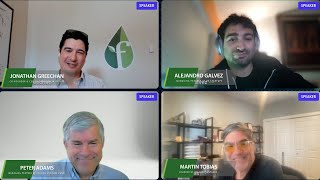
Peter Adams, Martin Tobias, and Alejandro Galvez discuss what they look for in founders: honesty, grit, and the ability to pivot. They debate SAFE notes versus convertible notes, warn that founders should report bad news early, and explain why thinking about the exit from day one creates more value.
Chapters
Hey everybody, I think we are live here. Welcome to this Ask an Angel session. I'm having a hard time just getting all my windows in order here, uh, but we do have 3 amazing angel investors here from a lot of different places, which is great, uh, and that invest in a lot of different kinds of companies. So I do believe that the majority of the audience that we'll have today will be people that are angel investors, that are interested in angel investing, or are even maybe, God willing, didn't lose some money on angel investing. But maybe you have, and we can pick the brain of some of these people that have been doing this for a very long time, that I'm doing, doing so pretty successfully. So as we get into this, why don't we start from the top? So Peter Adams, who is based not too long ago— or not too long ago, not too far away from here. Peter, you're based in Denver, Colorado. Tell us a little bit about yourself, Peter.
Sure. So, well, I'm the executive director at Rockies Venture Club, which is one of the oldest angel investing groups in the country going back to 1983. But we do a lot. We, uh, we have the Rockies Venture Fund, um, and we have the Hyper Accelerator program, a one-week accelerator. And we've been working with founders for quite a long time, and we do about 30 deals a year and, um, looking for things pretty horizontally, but it turns out to be about 35% life science and then a lot of tech and a little CPG. So I've been doing this for a long time. I wrote the Venture Capital for Dummies book back in the day and really just have a blast doing it.
So just a quick question, Peter. So I believe the Rockies Venture Fund is— or the Rockies Venture Club, it's one of the oldest angel clubs in the United States, isn't it?
Yeah, yeah. There's— I mean, we've been continuously operating since then. The next one is maybe '85, '86 that I've seen.
Been doing it for a long time. Awesome. All right, great to have you here, Peter. So next up, we'll bring up Martin. So Martin, I believe you're up in the Northwest. Yeah. All right, tell us a little bit about yourself.
Today I'm out at my ranch in Spokane, Washington. It's 110 degrees, so loving the summer. What?
In Washington? That does not seem normal at all.
It does not. It's the eastern side. It's over closer to Idaho. But I was— I used to live in Seattle and LA. I've been an angel. I started my career at Accenture, and then I was at Microsoft. I've been angel investing for about 25 years, invested in about 200 companies, total of, I don't know, $30, $40 million. I started an angel group in Seattle, not quite as old as Peter's, but it's called Element Eight, focuses on climate investing. For the last 3 years, I've been focusing on investing in companies that I call reducing friction at scale. I kind of went back 3 years ago and looked at the 150 investments I'd done and said, which ones were any good and which ones did I know anything that other people didn't? And, you know, which companies could I really help? And I came around to this idea of software that reduces friction at scale. I was an early investor in DocuSign. Recently, I applied that thesis and invested pre-seed in companies like OpenSea and Jeeves and Papa that are all now unicorns. I have a small fund as well, $10 million pre-seed fund, and I do about 10 deals a year, $250,000 each.
Reducing friction at scale. I feel like that is You know, I'm a marketer, so that's a 4-word kind of description for a lot of what people in our space should be trying to do, right?
They should be. It's surprising how many companies don't typically, you know, reduce friction. One of my best memories or ideas of this is I met a friend of mine in 2000. He was a hedge fund manager and he was really long on Walmart. And I was long on Amazon. And so we bet each other who would have more money in 20 years if we bought $10,000 worth of stock. And my thesis around Amazon is that they were fundamentally reducing friction. One-click ordering, who bought this, bought that, delivery, you know, all this friction in the retail market. And what Walmart was doing was worrying about placing physical locations and getting a limited selection at a very good price from China. And I didn't think that was the right strategy. Turns out Amazon increased in valuation 100 times more than Walmart did over those 20 years. So by focusing on friction and grew it, you know, roughly 18% annually, where Walmart grew at roughly 3%, which was the same as the population. So what I have found over and over again, if you focus on reducing friction in whatever area that you're in, you can get outsized returns and grow faster than the average.
Okay.
Thanks. It had nothing to do with the fact that they're a local company for you, right?
It didn't. And by the way, at the time, it was super counterintuitive. In 2000, you probably remember Amazon was $6. The consensus on the street is that they were going to go out of business.
I—
that's the way you make money in angel investing. You have counterintuitive thesis that turns out to be right.
Way overvalued.
Yeah, if it's— if everybody believes what you believe, the asset will be overvalued or fairly priced, and you won't get the alpha, right?
Okay, awesome. And let me, uh, let me chat with our, our last panelists here. For everybody in the chat, please do throw in questions, okay? This is the time that you should throw in questions. I have some, uh, some questions that I'd like to ask them, you know, and hopefully I put together some decent questions. But again, the whole point of this Founder X event is to create connections and learning. So please, I would much rather this event be just taking your questions and feeding it to them. So throw them in there. All right. So Alejandro, so you are a VC at 99 Startups and you are— are you based in Mexico City? Is that correct?
Yes, I'm based in Mexico City, but we invest all over Latin America, Spanish-speaking LATAM. We're a small $5 million fund. We invest in healthcare, logistics, and fintech in Latin America. And I was an angel investor for 7 years all over the region. And it started in 2016 when there was not that much startups in Latin America, and the ecosystem has, has grown a lot, and it's just starting. So I'm really excited about the, the next decade, decade, the next couple of years for, for Latin America and for the emerging markets.
I feel like these last— I mean, even pre-COVID, right? I mean, I feel like COVID threw some— COVID threw rocket fuel on a lot of technology markets, but even pre-COVID LatAm already was, especially in e-commerce and fintech and things like that, was just growing incredibly quickly. So, you know, what were— how did you get into angel investing there to begin with?
Yeah, it was a funny story. I'm a lawyer and I saw all these big new waves of technology like artificial intelligence, blockchain, biotech, And I thought that everything from a legal standpoint was going to be automated in 20 years. It's not really, and it's going to take longer. But I just saw these waves of technology, and I decided that I needed to be in those industries. So I started to learn more, learn how to code, and then start speaking with early-stage startups and started investing. And yeah, little by little and learning a lot with a lot of learnings. And then I got to know other guys that were doing the same. And then I went to YC, to Silicon Valley, to all the startups. And I saw that there was another level that for the startups that I could be playing at. So yeah, it was kind of by accident. I just saw the technology and decided that I needed to, to be there.
I feel like with most successful angels, it's sort of by accident, um, but certainly not all. Peter and Martine, would you, would you— I mean, did you, did you think you would be investing in early-stage fast-growth technology companies, you know, um, or, or was it sort of a by accident? You were just kind of there and you saw some opportunities and that sort of became your career?
Kind of, kind of a little bit of each. Um, I've always loved this space, always loved startups, been a startup founder myself. And as soon as I exited my first company, I actually joined Rockies Venture Club back in the early '90s as an investor member. And I was like, huh, I learned a lot of this stuff by running my own company and seeing how hard it was. And so it was a natural jump for me. But I will say, when I look at new founders coming in, we see so many founders who are in their early 20s. I just got a mailing from my, my old high school in Switzerland, and they're doing all this startup stuff. And I was like, man, we didn't have any of that in high school or even in college. And so now it's become such a part of the culture that I think, you know, it's just, it's, it's ubiquitous.
Martín?
Yeah, I started angel investing when I was at Microsoft, and my job at— well, I was at Microsoft before the IPO, and so I made a little bit of money there, and my job at Microsoft was to help them get into what they called at the time electronic software distribution, which was how do you digitally license software to enterprises. and I was working on the systems that did that. And many of the companies we were working with were startups at the time. And so in digital rights management and all these other things, and I just love the energy that I got out of the startups. Um, and it seemed like they were having, uh, more fun than I was at the big company. So I said, uh, maybe I'll take some of that money and support some of those entrepreneurs.
Also electronic. So that was ESD. That's, that was essentially SaaS. I remember DRM. I'm I'm not able to remember that stuff.
But well, that was, you know, the way the whole digital distribution of software started with the enterprise, because, you know, enterprises would call Microsoft and say, we want, you know, 10,000 copies of Office, but we don't want 10,000— at the time they were shipping boxes with CD-ROMs. And they're like, isn't there just like a server that we could download this thing on and track people's licensing? Because we don't want to physically handle all these boxes because you had to verify your license by having this coded watermark piece of paper. The enterprises were just like, "This is an operations nightmare for me. Can you please fix that?" In the process of fixing all that for the enterprise, they transitioned to digital licensing for everyone.
I'm going to start getting to some questions that we're having from the audience here. I'm going to sprinkle in some of my questions as well. Anybody in the audience, please keep them coming. All right, um, and, and for you all, uh, uh, the speakers here, we have a team that's feeding them to me. So, um, John is asking, uh, you know, safe notes. I mean, is, is that the way that you guys are doing your investments these days? Just a general, a general thought on that. Um, oh, and there it is. Wow, look at that feature. Yeah, so what do you guys think? John from Philadelphia, safe notes.
I'll jump in. Just as when I introduced myself, I didn't point out that I'm on the board of the Angel Capital Association, and New York Angels, of course, is a very active member of the Angel Capital Association. So as a group of hundreds of angel groups around the country and around the world, I'll say in general, ACA members, of which there are tens of thousands, really don't like SAFE notes. And I'll just say I'm realistic and we do safe notes because, you know, that's the market and you want to get into deals. But, you know, there's, there's just so many reasons not to do safe notes from the investor's point of view. And I totally get it from the entrepreneur's point of view. You know, it's fast, it's easy, there's not a lot of controls, and you can, you know, you can have a rolling close and just get the money in right away. All of those represent giant risks, not just to investors but also to founders. And I think anybody who's been an angel investor for a while has seen founders who do half the raise and then can't raise another penny, and then everybody loses, right? It's sort of like building a bridge halfway over the river. So when you do—
well, but you've already contributed your first section of the bridge, so—
yeah, yeah, exactly. And now we all get wet, uh, because we're, you know, we're not going anywhere. So, so I see a place for them. They're great for the FF round. They're great for a true bridge, um, you know, and they're great for coming out of accelerators, uh, that sort of thing. But, you know, uh, there's a fallacy about SAFE notes, and that is that you can use them to avoid valuation. And, um, for me, the formula for calculating a valuation cap on a SAFE note is exactly the same formula you would use to do an equity round. So, um, there's no difference. If I invest in in a SAFE note with a cap of $6-7 million, that's what I would have wanted if I'd done an equity round. So it's just— there's no reason I would pay more for something because it's going to, you know, become equity in 2 years.
Alejandro, yeah, I'd love to hear your thoughts on that.
Yeah, I, I, I investing in SAFE notes and I do like them. I mean, it's, it's not the best instrument, but especially for the entrepreneurs In Latin America, like, it's difficult to raise money. I mean, more difficult than in the States. And it's really entrepreneur-friendly, so they can do a rolling closing, rolling close, and that's always good because they can start getting the money and start hiring people and building. I mean, there is a risk, but I think it's really friendly for the entrepreneurs.
Yeah, and, and that's— it's, it's a balance, right? It's like, um, entrepreneurs need something and, and, uh, and the investors need something as well to be able to balance this stuff out. Uh, Martín, I'm not going to make you the arbiter on this topic, but I'd love to hear your, uh, your thoughts as well.
I, I can just share my experience. You know, we all know that SAFEs came about because of, uh, this shift where everybody said you got to be founder-friendly, and SAFEs obviously more founder-friendly than they are investor-friendly. They're unsecured, you can rate them at any price, you don't have any rights and things like that. But I think that we've pushed it too far on the SAFE notes. And I appreciate the fact that there's all sorts of problems with SAFE notes, as Peter pointed out. But, you know, we're— and we're starting to see some of those in the market now. And what I'm seeing is a pushback now that the shift has switched a little bit more towards investors being able to asks for certain things. Uh, I am not doing any more post-money, uh, safes. I've never done an uncapped safe in my life, and I never will. And, um, so what I'm doing is, um, post-money safes, because the pre-money safes have all sorts of conversion problems, like where does the option pool go and stuff like that. You have no idea how much you're going to own. And, uh, I'm doing a side letter that has includes things like pro rata and information rights and things like that, which are also typically not in a SAFE. And so I think that the terms are coming back a little more favorable to investors, but also frankly for founders having a giant pile of uncapped SAFEs. I can't tell you how many of my companies have gone, you know, raised a couple, $3, $4, $5 million in SAFEs, try to do a priced round, and then they, They look at the SAFE overhang and they're like, wait a minute, there's too much of this. And so you can go overboard on SAFEs. And I think that the shift has gone back and going forward. Personally, what I'm going to do is only do post-money SAFEs that have an MFN clause in them as well, so that if someone gets—
Most favored nation clause for anybody who's not aware.
This happened to me. I signed a SAFE at $20 million and then 6 months later the company was struggling. They signed a SAFE at 10 and didn't reprice my 20. And so I was screwed as an early investor and you don't want to have that happen. So the MFN clause says if this company signs a SAFE at a lower cap in the future, you get repriced. And I think those are fair and safe things to do. And that's what I'm doing as an investor, post-money SAFEs, MFN clause, pro-rata side letter, and Yeah, to try to do that. If I had the choice, to Peter's point, uh, I would go back to convertible notes because that also gives you, uh, security on the balance sheet. But I'm not sure we're going to go back to convertible notes.
Yeah, that's— I agree. Hey, I have one other point, and, you know, I try to argue this both from the investor side and the entrepreneur side. I mean, a lot of the time my job is to be Switzerland, right, as a you know, somebody who's doing accelerators and also, you know, helping me too.
Me too, right? So we're gonna connect them.
As Switzerland in this deal, I'll say, you know, I don't like them as an investor, but I really am concerned for what I see. And Martin mentioned this about the overhang of multiple notes on top of each other and the surprise dilution that you get, and founders end up not really ending up— it's not as founder-friendly as you think. But the other thing I don't hear a lot of folks talking about is just the tax consequences of doing SAFEs, and that is you miss out on the whole QSBS Section 1202 tax breaks. And if I'm a founder and I'm going to work for 5 years and then get a, you know, $10, $20, $50 million payout, whatever it is, I'd sure love to have that be tax-free because I structured it as a QSBS Section 1202 deal. And of course, the investors definitely want that because we're basically making 23% more than somebody who did a SAFE and we didn't hit our 5-year window. So things to think about from the founder side as well as the investor side.
Yeah, I think it's a balance. And I, I for sure, right, convertible notes and SAFEs were created so that this stuff can get just get done quick and dirty, right? But I literally, yeah, I was, I was involved in a deal not too long ago. I, I literally, I think there were like 40+ SAFEs on this deal. Right? And that creates— and, you know, so it's almost like you kick the can down the road. Um, and there's, there's good sides to both of it, right? A lot of those safes probably brought money at a time for the founder where they needed that money to get to payroll or whatever, right? But now when they actually need to do a price round, it creates a lot of complexity. So Yeah, it's sort of a little bit of a give and take. I mean, I'd love to hear from your guys' perspective. Like, so you're talking about, you know, how you would prefer to do some of this stuff. Like, what direction are you seeing these things going now recently, um, based on the market? I mean, I think I could probably say at a high level that things— that some of the power, or at least some of the leverage, is going towards investors, right? In some of those ways, yeah, I mean, I guess whether that's positive or negative for investors or founders, I mean, I'd just love to hear some thoughts on that, on some of the dynamics of the deals that you've been seeing. I don't know, maybe in the last 2 or 3 months. Maybe, Martín, since you wrapped up the last one, I'll start with you.
I think it's going back more towards normal where you would have I mean, that is—
yeah, I mean, it went—
and by normal, I mean, you know, whether it's a SAFE or convertible note, any of these kind of convertible securities would— you would want to tend to try to see them as less than 20% of the total raise that happens in the priced round.
And so you I'm losing you a little bit, Martin.
I want to do that, and I thought this is to—
yeah.
Uh-oh, am I still frozen?
A little bit. I'll come back to you in a second.
Alejandro, Peter, what are you guys seeing these last couple Yeah, I think it's, it's a pendulum. It moves from, from founder to investors and then again to, to the other extreme. But I think it's, it's healthy where it's going back right now because like last year was a little bit crazy. And also, um, like deals were closing, uh, really fast and without proper diligence. And that's, that isn't good for, for anybody, like not for the founder, not for investors. And I think we're— I mean, there's, there's still a lot of capital out there and still a lot of companies closing their rounds, but it's just taking a little bit more time. But I think it's healthy. It's healthy to, to push a little bit the brakes and to, to be more like not so much on the, on the founder side, but neither on the investor side, like try to be more in the middle.
Right. And I also, I'll just say here too, we're saying things like founder-friendly, investor-friendly. In an ideal world, those two, you know, they're not on opposite sides of that medium, right? I mean, it's all, it's all about finding that equilibrium where everybody benefits from that. Peter, where, what are you seeing recently, Peter?
Yeah, well, I'll just say, you know, sort of three big trends and they're all tied together. And that is, over this last year. Certainly we've seen a lot more SAFEs versus, you know, equity or notes, um, but we've also seen, um, we've also seen these valuations bump by like 100%, um, you know, depending on the deal. But I've just seen incredible valuations in 2021, and those are starting to reset as well. And, um, so, so, so those are sort of two big things. And then the other one Alejandro mentioned, but I think it's really big And that's just speed. And we've seen deals closing so much faster over this last year. And now I think things are slowing back down a little bit. So all three of those trends, you know, going back to some, some non-safe rounds, we're seeing valuations start to normalize a bit, um, and we're seeing some due diligence happening. But, uh, I'd say we're still ahead of where we were a year ago today. We're, we're faster, more expensive, and more safes as a percentage of overall deals.
Right.
And it's, it's like anything, right? It's like everybody was— speed is great in investments until that speed creates billion-dollar valuations for companies that have no revenue, right? So, um, which, which bites everybody in the ass as we go along. All right, so let me— more questions in the chat here. Um, so I'm going to paraphrase this first question. So I mean You know, Alejandro, Martin, and Peter, so you've all a little bit graduated from individual angel to fund or angel group in some shape or form, right? But kind of going back to your, you know, when you were investing your own money and some of the, maybe you learned some hard lessons, and at that point there's not a lot of data. My guess is, is that a lot of times you're, you're trying to look at things like the actual founder, or the market. And we have some people in the audience that would love to know, you know, just kind of what are— let's maybe break it down to the top 1 or 2 criteria that you would use in some of those spaces. So maybe Peter will kick it off with you again.
Yeah, well, I'll just give you 2. Well, and we all have our battle scars, right? So I'll start with the battle scar and then I'll tell you kind of my main thoughts.
They're learning experiences.
Yes, my— I'll share with you my learning experience. So we, you know, especially over the last few years, we've seen this, this increasing gap between first round and Series A, right? So that's usually now pre-seed, seed A, seed B, you know, and then a Series A. So, um, my learning is that there was a company we went through probably 5 rounds of investment, and by the time we got to the third round I got complacent and I was like, I know these guys, I know the business, they're growing the top line, it's looking good. And I didn't do the due diligence that I do when I'm doing a first round. And it turned out, uh, that it— all of the fundamentals, if I had looked at the portfolio underlying this company, were crumbling and were, were not using good, good, good— I won't go too much into who it was, but anyway, it was, it was really bad. And a quick look, just like we would have done And normal diligence would have told us, hey, let's take some corrective action. So I end up losing 100% of my money, you know, bam. And it was just one of those ones looking good, good, good, invest round after round, right?
And keep doubling down.
But yeah, right, so can't get complacent. So that's, that's lesson one. And then I'll just share my main filter because it's a little different than, you know, the traditional team, team, team, great product, and a big market, you know, which are the You know, that's the standard answer. But my filter is just one thing, and that's the exit. And I'm looking at the exit in a more sophisticated way. It's not, you know, M&A or IPO, because, you know, bam, that doesn't really tell you anything. You might say, well, what's your business model? Buy low, sell high. You know, it makes for a quick 5-minute pitch, right? You know, buy low, sell high for 5 years, and then we'll have M&A and IPO. So, you know, being more sophisticated companies who think more about their exit, I think, create more value because they realize, you know, they're not just, you know, thinking about who their customer is who buys their widget or whatever it is, but they're thinking about this second customer who buys the company. And that's sort of a simultaneous value proposition that companies need to think about. And who, who are the people for whom they create selling the entire company as opposed to these widgets? And I know thinking about the exit is unpopular among a lot of people, and it's contrary to advice that a lot of angels—
contrary to it at that stage, at that angel stage.
Yeah, yeah. So, and I go back to the 7 Habits of Highly Successful People and point out that habit number 2 is begin with the end in mind. And I think a lot of the companies I've seen who do that, they not only get to the exit faster, but they also create more value and have higher value exits. So beginning with the end in mind, you sort of are building that value in for the acquirer from day one, and it accelerates that process.
Okay, I'm going to switch up the order a little bit. Maybe Martín, um, yeah, it's a peer's point. Things other than the normal, oh, I look for the team or the product Well, since we're telling war stories, I have a war story.
I invested in a company—
Learning experiences, guys.
Learning experience. I invested when I was at a venture fund. We invested in a company and the numbers looked great, great, great for 2 years. Everything was amazing. On a board meeting, we raised 2 follow-up rounds, got extra investors in, but they were having a problem completing their audit and the auditors couldn't complete the audit. And they, there were all sorts of reasons from management. What we ended up finding out 2 years later is that the CEO and the CFO were keeping 2 sets of books and lying to the board in every board meeting about the numbers, and the actual numbers were completely different. So that was a case of actual fraud, um, from the CEO and the CFO. They ended up going to jail. But the funny thing is, um, you know, investors you don't have anything to rely on other than what management tells you. And it's pretty hard if management's going to lie to you. So one thing that I look for very early is, you know, incredible honesty and resilience from the founders. Very early, if they're gonna, you know, mislead you or overstate— every CEO wants to be optimistic about possibility of their company. But if they're optimistic to the point of fantasy, or if they— so in the very first meeting, I try to ask them questions that just get to, is this person fundamentally a truthful and honest person with themselves, honest about the traction in the company? If they, if they are overstating things, you know, very early in terms of their current traction, or, you know, how quickly they will grow or stuff like that, Some of it is optimism, but you have to decide for yourself, is it bordering on sort of lying or fantasy? And you can a lot of times figure that out in the first meeting. And so I look very hard to see if this person is fundamentally honest with themselves and grounded in reality, many of whom, are not. So that's my number one thing, is this person have the ability for self-reflection, honesty? And that will lead them to, you know, respond to the market and pivot if they have to, which is fine. Like, 60% of my companies end up pivoting. But many times, company guys that are, you know, in love with their original vision won't pivot when the market's telling them they have to pivot, which is also a mistake for founders. So I try to get to that honesty and reality. Are you grounded in reality? And will you react to the world the way it is and tell me the truth, even if it's bad news?
Right. And it's, it's, it's, there's like a humbleness there too, right? Where it's because so much everybody talks about, oh, irrationally confident, like these kind of founders, right? But that, that's where you start to cross over into fraud.
Well, I mean, confident is fine. But being, but you know, not accepting reality or not being honest with your investors. I just had a portfolio company that I participated in around, they said it was a $500,000 round. I put in $100,000 and he called me a month and a half later and said, well, I didn't raise the additional $250,000. So the round's only $250,000 now. And I said, well, why didn't you call me 6 weeks ago? Well, I was embarrassed and afraid, then blah, blah, blah, blah, blah. And I'm like, that is a huge red flag. The minute the second half of that money wasn't coming in, you should have called me and we should have had a conversation about what to do. You shouldn't have waited. And, you know, that's a flag.
Okay. I'd like to dive into that more a little bit too. But Alejandro, I'd love to hear some of your thoughts on this. So, you know, what are you looking for that maybe aren't some of the, uh, the standard stuff?
And yeah, I'm, I'm, I'm really, uh, yes, standard, just about the team. Like, if I find someone that's, that is really intelligent and has a lot of grit and a lot of drive, I just invest in them. On the other side, sometimes there are a lot of markets that I don't understand And if they have— sometimes I find the people working in startups in a, in a market that I think it's, it's not interesting, but the traction says otherwise. If they're really selling a lot, they have something. Maybe I don't invest in them because I don't like the founders, but I look for, for a similar company or for a different in the similar market with founders that, that I do like. Because I mean, I'm just one person. I don't understand most of the markets, and probably I just know that I just try to invest in people that are more intelligent than me. So I just find them and trust them.
How do you build that trust? Kind of building off what Martin was saying, right?
It's—
because you— a lot of this stuff Right. And I think we talked about it a little bit with Esther in the opening talk. It's like entrepreneurs know what they don't know. Right. So there's always that balance of, yes, they need to like charge through walls, but at the same time, they have to like be able to know when to actually take some feedback. You know, how have you seen any ways when you've been able to see that with the founder where it's, you know, maybe it's a market you don't understand. And they're able to educate you about it. But now it's— they can also be humble and realize that, hey, I may need to pivot.
Yeah, it's difficult. And as Martin was saying, you gotta invest in the right founders, and they gotta be self-aware and really honest about what they're building. Like, everybody wants to be positive, and that's fine, but it's different from being positive to from exaggerating that things that are not there. And I think that you can look at for those things, like, like all the little details, if they are honest or not. Like, uh, just the, the small things. If they lie in the small things, probably they're gonna lie in, in everything.
Exactly.
You know, I'll pile in and say I couldn't agree more. That's the one red flag that kills a deal. One little lie, and it's—
there's—
I don't care about how big the freaking market is. But I'll say I just looked at a deal this week where the founders weren't lying. They were just straight out of school and super naive, and they didn't understand what they were doing and they didn't see what they were doing. So it's not intentional deception as a lie, but they definitely spoke untruths. And so this, this was like a durable medical equipment company. And they said, yeah, people 65 and over spent $68 trillion a year. And I'm like, yeah, but DME is like this big. That's an irrelevant number. You might as well just say we're in the $68 trillion global economy. You know, it's, it doesn't, right? It's not a thing.
So we only, uh, we're gonna wrap up here in a second and then we're going to go out into what's called this, uh, fluid networking where people can chat and ask you more questions directly as well. Thank you guys for joining. Before we leave though, I mean, we're talking about this trust and, you know, I've been a founder, I've had investors, many of which have treated me very well, some of which have treated me pretty terribly. I'd love to hear, I mean, you know, we talk about trust, like, would you want a founder to come and tell you, I mean, literally like, hey, I got, you know, like, I'm fucked, right? Or like, I have this, like, and so there's always, it's sort of that same balance, right? It's confidence, fraud, two sides of the spectrum. Then there's, there's like, uh, there's honesty, you know, incompetence, maybe, or maybe, uh, you know, there's probably a different, better, more better way to do that. But I'd love to hear, you know, an example of a founder, or maybe just a mindset of, yeah, you know what, I want to hear from you not when you're getting your, you know, 30 month, 30% month over month growth, but I want to know when you're struggling, and, you know, and there should be an open dialogue about that, and it won't change my perception or the amount of help that I provide to you. So I know that's sort of a very large open-ended question, but if anyone wants to jump in first, I'd love to hear it.
Well, I'll say I think all of us like to hear when there's bad news, and better to hear when it's fresh than 3 months later. Always. And so this is what builds trust. I just got an update from a founder last night and she said, hey, year over year, we're down 31%. And all of the metrics she put in her monthly update were red. And so this is bad, but it was right in the middle of a transition from a per month, you know, type of business model to a per transaction business model. So there's always a dip. As that happens. I appreciated she's sharing this bad news and she's getting input from all of the investors. So it was a, it was a super positive thing. I sent back a thank you very much, you know, note and just gave her a lot of encouragement and a little bit of advice. And so I think you can't help if you don't know. And I have seen companies go out of business when we could have provided solutions or we could have provided another round of funding, but nobody ever even asked. They just kind of you know, hid their head in the sand.
There's a shame element there. Yeah, right, there is.
Yeah, there's definitely a shame element there, but I would obviously rather prefer to get the news too, um, uh, in for two reasons. One, I'm already invested, like you already have my money, so why not ask me? Two, if you're gonna need money to get out of this hole, the only— the most likely people to give to you are your existing investors. So I don't understand why CEOs put their head in the sand. One of my portfolio companies was in the HR space and they were growing really well, like 30% month over month. And then March of 2020 happened and all companies stopped buying HR software. They had a call like that week with all the investors and they said, you know, here's what's happened in the market. Here's what we think we are going to do. And they, you know, enunciated this pivot, and then they got feedback on the pivot. And, um, you know, I, I want to hear the news, but then I also want to hear what are you going to do about it, or what ideas are you looking for, and how can I help? Because I'm already invested. So, you know, I really want you to help you with that pivot. Hopefully you've got some ideas for a pivot, um, and I, you know, I can maybe add some value there. But I wanna know right away and I wanna know what you're gonna do about the bad news. Does it mean you need to raise more money? Are you gonna make a pivot? What are you gonna do? In this case, they were running a two-sided marketplace and they went and sort of monetized the other side of the marketplace. That business started growing. And then when HR software came back, they now have two revenue streams instead of one. The company raised a huge up round, everything's fine. But they were on top of it, like literally within a couple of days. When they saw the change in their business. And, uh, that is really best practice that I would love to see more of from my companies.
Yes, exactly. You're already an investor, so there's no need to hide the bad news. And also, if you need to close the company, there's nothing wrong with that, but you need to close it the right way, like to pay employees and to pay taxes and to pay everything so you can close it the right way. And if you don't have any more money, like, there's no problem in closing a company, but you have to leave enough money to close everything right.
All right, awesome, everybody. This was a great conversation. For everybody else in the chat, please, I'm gonna— we're gonna close this down and then go into this little metaverse networking portion of the event. Thank you so much, Peter. Thank you so much, Alejandro. Thank you so much Martín, uh, for joining us. Thank you. Hopefully, uh, I learned a lot from this conversation, and I'm sure some of the other aspiring angels or early angels here learned some stuff as well.
All right.










