FounderX 2022: Deciphering Bad Pitch Decks & Finding the Hidden Gems, with Russell Brand
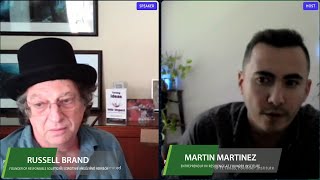
Russell Brand breaks down why great startups get rejected over bad pitch decks and weak ones get funded with polish. He shows what investors actually need to see: early traction, customer validation, founder expertise, and non-dilutive funding. Moving these proof points to the front of your deck and ditching generic templates makes the difference.
Chapters
What is up, everybody? Welcome to the third session in our Investors Advisors track. I'm seeing a lot of you kind of pipe in, um, let us know in the chat. I think y'all are starting to get the hang of this cool, you know, Airmeet conference-level platform. What's been some cool sessions that you've seen already? Maybe you've connected with some people in regions you've never even visited or knew. That we had an FI presence. Let us know how you feel right now. It's been a good, good day. Um, but otherwise, um, we're gonna get right to it. Uh, we have Russell Brand, uh, fantastic mentor, advisor, member of the FI community, diving into some of these little tips and tricks that he's been able to uncover looking at hundreds and hundreds and hundreds of pitch decks over his career. So let's just go right in. I'm gonna bounce out into the ether. It's gonna be the Russell Brand Show for the next 40 minutes and change. I'll be back immediately after his presentation, and we'll start servicing some questions. Y'all are getting the hang of this. Y'all use the chat for general discussion, use that QA tool for the questions, and upvote the questions as you see them. Which one's the most popular? I will surface them up for everybody to see. But without further ado, I leave the floor to Mr. Russell Brand. Covering hidden gems in pitch decks. Russell, take it away, man.
Thank you, Martin. So I'm Russell Brand. I've recently become a local leader in the Silicon Valley chapter. I've been a mentor for a long time. In being a local leader, I have an appreciation for how much more work all of this is than I would have ever thought. I've been reading the Epic Sprints, and there are people who are getting more done in a couple of days than I could imagine getting done in a in a semester. And I have an appreciation for the logistics, just the difficulties of setting things up, the sessions, the cohorts in this, and it's very humbling. And I'm very, very grateful to be here. I want to talk about my recent experiences in humility. And it all start— It may start with my inability to know how to use any of the tools. A couple of months ago at FI, a group came up and gave a talk about banking for marijuana dispensaries, and that led to my writing a piece which was called the Faster Than Light Antigravity Unicorn Power Perpetual Motion Time Machine. Because from their talk, it sounded about as plausible as that. And since then, I've been saying over and over again, the thing I've learned, it's impossible to tell the difference between a wonderful company presented terribly and a terrible company presented accurately. For those of you who've heard the stories, I'm the one who wears the hat. I channel Simon Cowell, and I'm officially on the red team of of saying, what are all the investors going to do to object and be confused by? Because I'm really good at objecting and even better at being confused. As mentors, we see companies and presentations that are not yet perfect. Unlike investors who can just, you know, say, oh, it's not perfect, I'll ignore it. It's our job to go and help perfect these things. I see two types of hidden gems: companies that need work and presentations that need work. And today is really about presentations that need work. It's easier to fix presentations than companies, right? There could be another talk about companies, much of which would be, in my experience, that they should charge more money and sell more to customers that have— that care more than their customers, than the customers they're targeting, people that will pay more and see higher value. If we're going to help people fix broken presentations, we have to notice that the presentations are broken. And this is much, much, much harder than it sounds. Most frequently, it's not that there's something wrong in the presentation, but there's some single important thing which is left out. And like the proverbial dog that didn't bark in the Sherlock Holmes novel to let him know, ah, it was someone who knew the house rather than a stranger, it's hard to notice that things are missing. So today I'm going to go through some real examples. Most of these are within the past 3 months in FI companies. And we'll talk about what I've noticed with the caveat that I didn't notice all of these in anything like the first time they were presented. I will note that for every one of these presented, in real life, when I've been on an intake committee for an angel group, I would have discarded every one of these companies without bothering to ask a question. In real life, I have discarded thousands and thousands of companies that never got a chance to present, never got a chance to pitch. And, you know, it might be that lots of them were hidden gems. So the first example is banking for marijuana dispensaries, right? Clearly, this is naive. It's illegal. Everyone knows that. But some rules had changed recently. I didn't know that. The founders were among the first to realise that the rules had changed. On top of that, they believed they found a loophole. Would have been worth mentioning some of this, since they deeply knew that everyone else didn't know because they think they're the first to know. Now that we know what they're doing, it's, wow, this is exciting. We've introduced some folks. I don't know whether it'll work. I still don't know whether their idea works, but it's worth a look. But from just listening to their talk without asking, quote, the right question, I would have dismissed it out of hand. And in my manner, I— said something like, looking at the video, "That would clearly be very valuable, but it is clearly illegal!" And my voice tone sort of conveyed, "You idiots!" But I didn't actually say, "You idiots." I did mention that I channel Simon Cowell, wishing that I could channel Gene Simmons instead. Now, what should I have said? Maybe it should have been, "I thought that was illegal in the US." Because I could have gotten the same little education. Without myself feeling like an idiot afterwards. And I might have, like, scared them into not giving an answer. I might have reburied that hidden jewel by not asking more politely. Next set of companies I'd like to talk about are in the wellness space. And again, we've got two skills here: the noticing, which is very hard, and the asking nicely, which is really hard for me and not necessarily as hard for anyone else. I'm still working on asking nicely. So the first set of these companies were all in behavioral health, obesity, diabetes, etc., where there are, you know, two questions. Yeah, how do you rise above the noise to be seen? How do you know it works? And if those two things are true, we might get as far to, to talk about adoption. But most of the talks don't talk about either of those things, right? Sometimes they have strong answers and strong evidence, and sometimes they don't. And so I try to start all such situations with my favorite generic question, which is, why will you succeed where so many others have failed? And the scary thing is that most of the time they don't know that there were others that have tried this. They don't know that others have failed. They're clueless about the history, right? The first page of what would show up on a Google search would be more about the history than they know, in the same way that the first page of a Google search is often more than a company knows about its competitors. But in the past couple of months, I've gotten 3 really good answers. The first was that they were going to not make people feel guilty when they missed a goal. We remember, you know, Seinfeld was famous for the story which says, "Every day of progress, I put an X on my calendar to show I've done it that day. If I miss a day, then I make sure I don't miss a second day in a row." It may not be the best recovery strategy, but it's a recovery strategy. Having any recovery strategy at all is better than what most people and most programs and most software and most startups have. Now, had they put on on slide 1, "We're going to combat obesity by making people not feel guilty about failures, about teaching people self-forgiveness, letting it thin," I would have been absolutely riveted. It wasn't on slide 1. It wasn't on slide 10. It wasn't anywhere. The second group had another novel, wonderful answer. They were going to get support from existing in-person organizations that were set up for for other purposes and we're already servicing these same people in the community. Again, it's brilliant. Will it actually work? I don't know. But it differentiates them from all of the failures. On top of that, they had organizations lined up, good, well-chosen organizations with agreements. Now, they were entirely unaware of all the research data saying that things like this should work. They were entirely unaware about government grant programs that they were eligible for this approach. But once we asked the right question, we could point them in those directions. But in real life, their talk would have gotten discarded because it was indistinguishable from all the others before them have failed. The third is really odd because they had an answer that on the face of it was not plausible to me. They said that they were going to do systematic follow-up using medical staff. The economics of this could not possibly ever work. Had they mentioned that this was not in the US but was, was in a lesser developed country, which they eventually did after a few questions, it might have been more plausible. But we go through and look at what their program is. And with some small changes, it might work in the US. There are, in fact, Medicare codes that they could ask for reimbursement under. If they were trying to run in the US, in certain parts there might be government grants they were eligible for. My mind literally races with possibilities. I am excited about taking their model and trying to make it work everywhere else. But hearing the talk on its own or seeing the deck on its own, I would have thrown it away. Learn the second part. How do you know that it works? And the answer is almost always of the form There is this far-fetched vague analogy which says on some other planet, 3 people that have no relation to this condition solve some other problem by doing something that might rhyme with what we're doing. Um, but again, we've got 3 cases where the answer is, is much better. In the first case, they actually had a large-scale published study, peer-reviewed in a top-tier journal. Now, I haven't read the paper. The paper might be convincing. Paper might not be convincing. Getting into that journal is probably convincing. It's worth a second meeting. But without a reference to that paper, it's indistinguishable from all the failures. It doesn't get a second meeting. The second, in asking the question, they claimed this incredible level of statistical success. In a few minutes of questions, it became clear that they did not know experimental design, they did not know statistics, and they were horribly confused and their company was going to fail. But in good conscience, they could have mentioned that statistics. They would have then gotten the second meeting and they would have gotten the feedback that they were, that they were insane. But without it, they remain indistinguishable. The third example, we go back to the medical staff follow-up. Their stats, their trials, they are Amazing. I believe their results. I believe the validity of their study, and it's by far the best that I've ever heard of anywhere in the history of the world. Worth mentioning in the talk. All right. The third category we sum up with where am I— where I really want to say, that's the dumbest idea I've heard in a long time. Nobody would want that. And I've learned to instead ask, have you spoken to many customers or customer surrogates? What has their response been? And very occasionally the answer is a lot of people who are anxious to adopt. Again, recent real examples. One company had a 5,000-person waiting list and didn't think to mention that in their talk. Another company had a huge stack of 3 orders not worth mentioning in their 5-minute talk. This next one isn't an FI company yet, but I'm recruiting. They have a system for detecting leaks in water mains. In their 10-minute talk, they didn't mention that they had 4 successful pilots, 14 utilities that wanted to run trials and become early adopters. It's great stuff. It's worth a second meeting, but it's missing from the talk. I got several other cases where the companies had paying customers. They were profitable. Not mentioned anywhere in the talk. All right. Next, let's go to non-dilutive funding. 3 companies to speak of. The first one isn't in FI yet. Maybe we can convince them. Deep tech, interesting area of physics. Their 20-minute talk did not mention that they had $2.3 million of government grants. They were on track for getting more. Second one was doing something in social services, had in excess of $1 million of federal grants, didn't mention it. Third one was doing drug development, and they had more, more non-dilutive grants than I think all the companies I've seen in my life put together, not mentioned in their 10-minute talk. Now, these non-dilutive grants, right, it's validation. Someone put a lot of effort into seeing it's real. It's real due diligence, and it's progress that we're not paying for. And in many cases, there's additional money and additional grants that they might get. In two of these cases, the only way I learned that they had already gotten government grants is when I found a grant and sent it to them and said, could you might this work for you, they then mentioned that they had previous federal grants, but they managed to graduate through the FI program without any of us noticing that they had gotten non-dilutive grants, so it wasn't in their pitch deck. A similar thing is when founders invest in their own company. Founders investing cash in their own company is a big thing, a big a big thing to investors, a big reason to believe. And many of the companies have done that, but they don't mention it anywhere. So at this point, whenever I see a cap table and history, I'm asking about non-dilutive funding. I'm asking about whether they, whether they've invested themselves, because it's, you know, it's, it's an easy thing to ask. And if it's left out, then then they're needlessly at a disadvantage. All right. Fifth, I want to talk about experience in the field. We've got one recent FI graduate. They got their first chunk of outside funding this week. Yay. They're building an AI-assisted SaaS platform. The founder has been doing this without AI for decades in the field. Has an existing relationship with all of the potential early adopters in the field and not mentioned in the first many iterations of their deck. It's credibility. It's a reason to believe they will succeed. I personally believe they will succeed. In the second company, medical device company, this one wasn't an FI company at all. The inventor of this medical device had in fact invented the entire field 30 years ago, right? All of the papers in the field reference his work. All of the work is using his original compounds. Not mentioned anywhere in the investor presentation. We've improved their story some. They received $3 million of non-dilutive funding this past month, some of it in government grants, some of it in corporate contributions in kind, because it's worth mentioning that they created the field. Next, we have a women's clothing company. They make a better type of skirt, right? The idea of this skirt is it has pockets. I know that as a man, I take pockets for granted, and it's stitched such that the skirt's never going to blow up like Marilyn Monroe's did. Every male mentor I spoke to just didn't see why this was Interesting. Almost every woman I spoke to, including those in my family, they wanted one, right? After graduating, they ran a very successful Kickstarter. They're doing well. But as mentors, investors, investor surrogates, we're often not the target audience. This one, it happens to be that, you know, I'm not a woman. More often it's I'm in my 60s and the target market is in their, you know, their 20s or their teens and asking my son will give me a better idea whether the market cares. My intuition is limited for people who are very, very different than myself. So here, in addition to asking them about their customer experiences, because they generally have them, it's us asking people that are like their customers rather than presuming the whole world is made up of people like me. The most fun thing that was left out of their pitch deck was a problem that they had had while doing the focus groups. For the focus groups, they had made a couple samples of these skirts, and everyone in the focus group insisted on buying the samples to take them home. Probably counts as a successful focus group. This last story isn't an FI story. In the 1970s, M-cycle thermodynamics was invented by a researcher named Massoncourt, which I cannot pronounce, a more efficient way to make a heat pump. It really was a little more complicated than that beneath the hood. But you look at the numbers and it is obviously impossible. Every simulation shows it's impossible, and I know why all the simulations are wrong. They got an independent measurement by the Department of Energy and NREL lab showing it worked exactly as claimed, 10x more efficient on the typical case, 20x more efficient in the intended use case. But it was so clearly impossible that even with a DOE independent certification, it took not years but decades to get funded. Was acquired in a narrow space. It's now almost the 50th anniversary of that, more than 1,000 refereed journal articles published later, and it's still only this itty-bitty narrow use. So there's lots of things that even if you perfectly tell the story and surface the gem, that may not be enough. But if you can't surface the story, They have no chance. The missing parts of the story are the big thing that I think we need to focus on. There are some shallow issues that are common that are, that are worth mentioning. There are people that make charts that are hard to understand, and so many people are making hollow circle charts with, with keys off there. We're, we're giving people bad advice about charts. And so I'm trying to very simply say, I don't understand the chart, don't explain it to me here, make a chart that explains itself and come back because the entire half-hour mentoring session can get lost into that, into fixing that, that chart or fixing the fact that they are using dark white on light green 1-point fonts that no one can read. Need to tell them to fix it, but you can't lose the time in it. More often than the gem being entirely missing is the gem comes late. On slide 7 or 8, they have incredible traction, they have a study result, they have something that's worth talking about. In real life, no one would get that far. And the biggest thing I say is this is what will get the investor attention. This is there. This can be no later than 40 seconds in, preferably no later than 20 seconds in slide 2, and maybe slide 3, but no later. We need to let people know what is going to get them that second, that second meeting and put it early. I think the biggest contributing part to this problem is while we have 4 really good templates, each of which would position the right slide early, somehow people are only seeing the first template, the problem solution template. And if they got tons of traction, that's the wrong template to use, right? You need to, to use a template that makes what's important early. So when we find the important thing, we need to get them to move it early. Now most of the initial talks are really terrible compared to what the standard templates would give them. We've got to get them as far as the standard template so it's a clear story, and after that we can go further to really emphasize what is powerful about what they're doing. The standard templates are just a step. It's a huge step, but there are further steps that should be taken. We have a lot of people that are going to be pitching to American investors and have English as a second or third language, or have a dialect of English that isn't American English. And so for a lot of people, both on the slides and in, and in their their talk, I'm saying, that's not American English. That's not the idiom of American English. We need to change this for an American English speaker. You need to practice with American English speakers. All of this set of shallow issues, and a, you know, a 5-minute pitch might have 50 or 60 of them, more than someone can easily keep track of. So for all of my practice pitches, I am recording them. I'm using Fathom because it creates a transcript and afterwards sending the recordings and transcripts to the presenters so that they, you know, have a checklist of what the shallow things are that they can be fixing. And so, you know, in conclusion, I'm really practicing or advocating 3 things I'm not yet practicing. One is the gentle questions, the gentle questions asked with humility, the probing to see whether there is something wonderful that they're not mentioning, the what What makes you most excited? How do you best know this works? What most encourages you? And being very clear when the feedback is about the pitch than the company, saying this is, this is one of the worst pitches I've ever seen. It's still one of the most promising companies I've seen. It's easier to fix the pitch than the company. What I'm saying often in that is literally Your talk does not do justice to your company. Your company, your idea is much stronger than your talk, right? It's impossible to tell the difference between a wonderful idea presented terribly and a terrible company presented accurately. I'm officially the red team. I find the things that are wrong. There are other people that are good at encouragement and being cheerleaders. It's not me. That they should never apologize to me, right? I'm a practice dummy. Make all the mistakes with me in as many sessions as you want, because it's better to make all the mistakes with me, even if you make each one a dozen times, than it is to make any one of these mistakes and blow it with an investor. If you were perfect already, you wouldn't be at FI. We are starting with people who are at the beginning. No one is expecting you to be perfect, especially on week 1. Some of you can probably recognize some of the actual companies from this talk. I would appreciate in the questions if you don't mention any company names because I am telling people that they have done dumb things and I would rather not mention by name people having done dumb things, even if now they fixed them. The only dumb things I want to talk about are my own, and there are more than enough of those to fill out any talk. Happy to take questions and hope that I can help all of us to better encourage our companies that are coming to us with great hopes and great ideas and just need help with presentation skills. Thank you.
Russell, thank you for an awesome presentation full of some really great anecdotes, man. And I'm excited to have you joining us as a leader with the current program. So what week are y'all in? Are y'all just— are y'all still about to launch y'all's current cohort?
We're just— we're about to do second mentor review with our cohort, so we are almost done, and there are some really, really amazing companies in this cohort. I am optimistic about great success, and I worry about whether there were other great companies where the greatness was so well hidden that not only did we not realize it, but we may have accidentally convince those founders that, that they didn't have it? Hmm. It scares me every day.
That can be, that can be a very profound thought experiment that I try to avoid these days. Though, though you do see a certain archetype of founders. They're all A-types. It's just some are more introverted than others. Others are very extroverted. You tend to know who they are on day one. Um, so people in the audience, you may be a founder listening to what not to do, you may be a leader. I see a lot of familiar names, local leaders in this space. Um, please drop some questions in the chat. We got about another 5 minutes or so before we head into the fluid networking if you want to go get some one-on-one time with Russell. But I got one while we're waiting on the audience to kind of upload some things on the— actually, here's something a little more— keep it on the existential. Guy Olivier, who I think is also probably leading the leaderboard right now in engagement, he really wants a Dell laptop. He's asking you, what is something you think is right that nobody agrees with?
In our, in our own universe, no one seems to agree that we need to do qualitative customer discovery before we do quantitative customer discovery. We have people saying you must interview 1,000 customers, set up SurveyMonkey, when they could get much more value out of having 4 deep in-person or even over Zoom conversations with customers. The, the in-person conversations allow us to, to find the things we didn't know. Until we know what the right questions to ask are, then it's too soon to start counting. The second thing is, in our ecosystem, no one thinks about what companies should not be raising There are companies that will do much better by bootstrapping. There are companies that will do much better by government grants. There are companies that will do much better by having customer investors. And even if they raise money, it's going to take them more hours to raise that money than it would to do one of these other things. So I think we need to be encouraging more qualitative customer discovery. And we need to be encouraging people to think about what the different funding options are.
I love that. Um, this is actually gonna probably tie in a little bit. Our final talk or session of this track for today is about diversity, or how investors identify more diverse founders from underrepresented regions. And I've been seeing this, you know, we, we have a show every Friday. I get to speak with some founders in the network and one of which came out of our program in Austin a few years ago, just says, you know, she doesn't even look for investment. She just goes and gets customers. She's like, if you want to make money, go get some customers. And you kind of hit it right on the head there.
There is never anything more valuable than talking to customers. Yeah, and talking to customers is something you can do now. You don't need a deck, you don't need a prototype, you don't even need a smile. You don't have to Right. But with talking to investors, even if that's scarier, you can put that off for months. Yeah, you're not willing to talk to customers, you're not going to have a good chance of succeeding. The first few sales are going to be done by the founders, they're not going to be— maybe you have some salesperson coaching you. But you're the one that's going to close those sales.
So, so I mean, well, we have a little bit of time. You know, when we talk about how we run our core program and the kind of founders that come in through the door, they're not even founders yet. They're still trying to figure it out, really just aspiring entrepreneurs. But as I mentioned, those archetypes, you get the really forward personalities, you get the ones that are very reserved, and there's that dichotomy very much in your presentation. So how do you— what would you normally do to maybe encourage maybe one of those timid founders who is that diamond in the rough, but they don't realize it? The presentation didn't show to get them over that hump. But how do you also bring back maybe some of those cocky founders to reality? Because there's some gems on both sides, but you gotta get 'em somewhere in the middle. Is there kind of a secret sauce to that, or at least a way that you've approached those dynamics?
Well, they're very different problems for the shy, understated founder. And you'll find lots of these in, in deep tech. And you'll find lots of these that aren't old white guys. It's find out what they are excited about in their company. And let them talk about what excites them in it. And find out how you can be excited about it. Work not initially with the company, but work around that excitement. For the people that are over cocky, it's, so how do you— would you explain this to your grandmother? In fact, I am thinking about recruiting some of my mother's in her 80s and some of her cohort to be listening to explanations cold. At the point you've got to explain it so your grandmother— we used to say 5-year-old, but I think grandmothers are more realistic— can understand this and see the value. It makes you, it, it, it makes you reexamine your assumptions. When a talk has 5 or more acronyms I haven't seen in it, then I am concerned that the investor is not going to be able to explain this to ordinary people. And if I can't get them to talk to grandma, there's like, go talk to your bowling buddy. Just talk to people who haven't heard about it, explain it and see if they can explain it back to you in a way you believe. We need to get this into very simple terms.
No, right on point. One last thing too, because I see this a lot, especially in the first couple weeks. Everybody thinks it's a Shark Tank pitch. Not everybody, but there is a certain subset of people who pitch just like they think they're hitting up Mr. Wonderful for $1 million. What do you say to them? Because that's not how you do it. That's just for TV.
Outside of the world of FI, I also under a pen name write short fiction. I've got maybe 2,500 pieces out there. Every piece of writing that I've written is written for an audience of one, right? That one person is going to deeply understand and appreciate. If other people like it too, that's fine. It's not that the shark tag pitch is wrong. Is that the Shark Tank pitch is wrong for places other than Shark Tank. If you're going to be pitching to, to people that value some particular thing, then you need to emphasize that thing. If you're going to be pitching to the first set of people that are innumerate, you may need to have big picture. If you're going to be pitching to individual angels then part of what you're selling them is not just that this may eventually make money in time for their great-grandchildren's graduation. You're pitching them cocktail party conversation that they can tell their friends about what they're doing. That cocktail party conversation probably is much higher value than the expected value of your company, even if, even if you think it's going to be a unicorn. So I don't want to tell them that they're wrong about, about a Shark Tank pitch. I want to say that this particular audience needs something else. It is a common failure that people try to have one pitch deck for both investors and customers. And, you know, customers care whether it's going to work. Customers care whether they can adopt it. Customers do not care whether you're going to IPO. Customers do not care this, that, that. Similarly, investors don't care. This is the— if you know what is valuable to your audience, then you can focus that pitch. And if your audience isn't someone trying to resell emotion and light comedy to people having after-dinner drinks, then the Shark Tank talk is probably not the right talk. And seriously, in terms of Shark Tank, 2 years ago we had, call it a merger offer, not quite an acquisition offer, from someone who had pitched on Shark Tank. And they made such an idiot of themselves on Shark Tank that we felt that accepting their money, even though the terms were great, You know, their marketing channels go, oh, that was great. We felt that accepting their money was too much of an embarrassment risk for our brand because they made idiots of themselves on Shark Tank. And it was the perfect talk for Shark Tank, but it would be an embarrassment to show to real, to real investors or real customers or the FDA in this case, especially the FDA.
You don't want that kind of heat.
Well, I thought I'm gonna, I'm gonna close out there, Russell.
We got, we got, you're gonna stick around a little bit for that Fluid Network, and we're gonna start right after this. All right, thank you. We've had, again, great crowd. We've been averaging about 150 people on this session. Y'all have been amazing today, day one. We got one more session, ladies and gentlemen, here in FI land for Founder X 2022, um, a panel focusing— I'll be moderating on investing with a diverse mindset, looking from representing founders. But thank you again, Russell. We will catch you later over here in the, in the Fluid Networking. Stick around, everybody. Go meet Russell, and then we'll see y'all here in a little bit for our final panel of the Investor Advisors track for day 1 at Founder X. Thanks, y'all, again. We'll see you here in a little bit.










