FounderX 2022: Diversity in Startup Investing, with VC panel Asya Bradley, Kamal Hassan & Diane Yoo
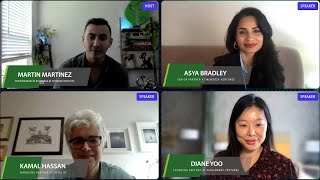
In the final Investor Advisors session of Founder X 2022, moderator Martin convenes a panel of four venture investors—Kamal Hassan (Loyal VC), Diane Yoo (Philcore), Asya Bradley (Mendoza Ventures) and a brief intro to their backgrounds—to discuss why women and founders of color continue to receive a tiny share of venture capital. The conversation opens with stark statistics (sub‑2% of VC dollars to women‑founded companies, even lower for women of color) and explores the systemic causes of the backslide: visual and narrative bias in pitches, homogenous decision‑making bodies, and reliance on gut‑feel rather than data. Panelists describe concrete internal reforms—diverse investment committees, transparent scorecards, mandatory public diversity dashboards, and data‑driven deal sourcing—that can reduce bias. They also highlight the need to broaden the LP base, create emerging‑LP programs, and educate potential limited partners about capital‑call thresholds. The discussion repeatedly returns to the idea of “building our own tables” rather than waiting for inclusion at existing firms. Throughout, each panelist shares examples from their own funds (e.g., 30% women CEOs at Loyal VC, 80% diverse investment committee at Mendoza, Asian‑American‑focused Philcore) and showcases portfolio companies that embody inclusive finance, creator‑economy equity, and LGBTQ‑focused neobanking. The session ends with a call to action for investors to adopt measurable diversity metrics, publish them, and redesign processes to fund the most promising founders regardless of background.
Chapters
Welcome everybody, waiting for y'all to slowly trickle in. Final session of the Investor Advisors Track Day 1, Founder X 2022. It's been a good day. It's been a great time meeting a lot of really interesting people. You guys, I hope y'all have had a chance to connect with others in the FI community that you've have yet to meet maybe in person. Hopefully you all get to do that too. Um, and y'all are already doing it right. Y'all are getting used to the chat function. Um, the networking has been incredible. Guy, good to see. Dominique, thank you for coming in. Um, but yeah, it's the final session of the day. Uh, we got, uh, Funders and Founders Lounge for people that want to do some one-on-one networking with investors. But this is— I'm really looking forward to this conversation, um, with some really great panelists, investors from all around the country and really North America right now. We're going to talk about something, um, you know, particularly close to my heart, founders that I get to work with here in Texas, that I'm sure many of you as investors, as leaders, especially the founders in this room, uh, are looking at, which is how can we better support founders who are launching businesses that maybe don't see themselves reflected in the entrepreneurial and startup community. And this is going to be coming from the investor perspective, not just the founders. We have a great panel or workshop tomorrow with Juan Lisi coming from the founder perspective on how they can kind of break through these glass ceilings and raise money against all odds. But this conversation is going to be geared more from the investor perspective. How can you empower these communities? How can you identify and support these entrepreneurs and communities that might be often neglected. So let's dive right in. It's the final session, so we're not too rushed for time, but I do want to be respectful to our investor panelists that are here. So let's get in some introductions. First up, coming from, coming from the great north of the, uh, north of north, uh, the U.S., we got Kamal Hassan at Loyal VC, one of the most prolific investors at FI grads. Usually the first check-in in many cases. Certainly has supported a lot of Texas companies. But Kamal, welcome to Founder X. Always good to have you. And you have a session tomorrow too, so just quick bio on yourself and all the fun stuff.
Sure, absolutely. So, uh, that founded— co-founded Loyal VC, launched in 2018. Um, vision for Loyal VC was to say, hey, there's all sorts of great, uh, Founder Institute grads out there who aren't getting funded, and, uh, because people don't really know the program, etc. So we've funded over 100 Founder Institute grads around the world. We've actually made over 250 investments in 50 countries since we launched. And we will get a chance to talk about diversity, but our— we've got about 30% women CEOs around. I think it's 48% CEOs of color in our portfolio right now. And we really look at If we're not doing a good— if we're not funding a diverse group of founders, there's probably bias in our process. So let's figure out how to improve our process so we can actually fund everyone, not just people who fit patterns that everyone expects.
Fantastic. Thank you for joining us, Kamal. And yes, you've touched on this a few times. We've had a lot of conversations over the years on this. So I'm glad that you're with us. I wouldn't expect anybody else for this conversation. We got two more people that I'm also really excited to introduce. Next up, Diane actually joined me for a panel during the pandemic. And if I heard right backstage, you're in New York these days, Diane, you? Formerly Metagenie Fund, but now you've got Philcore.
Yeah, Philcore, and I go back and forth from New York to Texas. So hi everyone, welcome. I'm so excited to be here. Good to see you again, Martin, and this exciting panel today. My background is a techpreneur turned venture capitalist. From Houston, Texas, and now in New York, so I go back and forth. Went to Rice University to get my MBA and launch into venture capital. Was a founding managing director of the Rice Angel Network, and then from there started over 5 funds. Today, my last fund that I started was Medigenia, partnership with the largest medical center. And then I also launched Philcore Capital, and Philcore Capital is the first Asian American, pan-Asian American woman-focused VC fund.
That's awesome. All right, thank you again. It's good to see you. Hopefully we can meet again in person at some point when you find yourself back in the Lone Star State. Last but not least, Asya Bradley. We have yet to meet in person, but I am glad you're joining us with this panel. So Asya, if you don't mind giving us a quick intro to— now we're hitting 130+ people in the room already for this panel.
That's awesome. Thanks, Martin. So I'm Asya Bradley. I used to be actually an FI chapter managing director for the San Francisco San Francisco chapter, and that's actually how I know Kamal as well. I'm a Pakistani-Canadian immigrant to the United States. I'm actually a serial founder myself. So I founded, I think, 4 companies that have been exited really well. And just over the last few years, started writing angel checks, found that I really enjoyed it, really wanted to make sure that we had more diversity in terms of who was getting funded. And so I realized I needed to put my money where my mouth was and make it actually happen. But just recently, and some of you may have seen the announcements last month, but I actually made it over to the other side and I am now a full-time VC. I joined Mendoza Ventures, which is really exciting because this is a VC fund that actually walks the walk. And so I'm seeing a lot of messages from folks talking about, you know, investing in women. Et cetera. And our portfolio, 80% of our portfolio is diverse in the CEO role. So that means women, minorities, immigrants, LGBTQ, but you name it, we've got the diversity in there. And that was something really important for me in terms of deciding which VC I was going to work with.
Oh, that's awesome. We got an amazing panel, y'all. I'm going to bring everybody up now. We're now in this nice little grid view, Brady Bunch style. We're going to keep it that way. So if you've been watching Founder X programming on these tracks all day, You know the drill now. Definitely keep the conversations in the chat. Right next to the chat is the Q&A section. That's where we're going to be able to surface the most relevant questions for our panel. Upvote them if you really want to see somebody's question that was asked, and then I'll surface them and feature your question if it makes it up to the stage. But I'll start first with some moderated Q&A, and then we'll kick it over to the audience with their questions a little bit later.
Later.
Uh, so the first one, I mean, obviously, you know, I was talking about this ad nauseam backstage, but now for all of her— and we know the stats, you know, as all of you as investors, you read this in the news, it's single digits, sub-digit points for, for founders, like women founders. So I think it was before the pandemic around like 2, maybe 3% of all venture-backed companies that are women-founded got investment. It's gotten lower from what I've seen, it's like 1.9% since last. It's even lower for founders of color, especially like women founders of color. So, you know, is there anything that you've seen that, that's resulting in this backslide? We can point to the obvious variables, but is there anything in just your daily work so far that's been like shocking to see, see this backsliding in investment? Asya, maybe we'll start with you first.
Yeah, I mean, already to begin with, less than 2% of VC funding goes to female-founded companies and You know, you see even less of that going to women of color, going to Black people, brown people, LGBTQ, etc. So we've already seen that. So I think going to a backslide is even more dire when you start from such low numbers. I mean, the way that I've seen is that we tend to invest in people that we feel comfortable with and we, you know, kind of look like. So who does the VC community really look like right now? If you look at the actual breakdown of the actual VC community, only 4% of VCs all over in terms of like general partners or partners are Black. So you have like less than 4%. In terms of women, it's also just as small of a number. So how are you going to see numbers increasing when the people writing the checks don't look like you. And I think that's what needs to change, and that's why I'm here. I could have gone on and just kept on starting more companies, but I realized that if I wanted to see the change, I had to be the person that was controlling the capital. And it wasn't enough to just join a VC company, because we all know if you are just one woman on a team of, you know, 5 or 6 or 10 or 20 white male partners, you're not going to be able to influence any of that check writing. And so I joined a team where 75% of our investment committee happens to be diverse, right? 50% of our investment committee happens to be female. 50% of our investment committee happens to be LGBTQ. And so that's where I can actually step in and make an impact. I didn't want to join a VC that— and I had offers. I didn't want to join a VC where I would just be the poster child of, hey, we've got diversity. but never be able to write the checks that I wanted to write.
Yeah. Yeah. You're starting to make me think of those like Twitter memes where it's just all the emojis and then you finally get the people of color at the bottom of that here. Thank you. Thank you for that. And thank you for the work that you're doing. Diane, you mentioned, and you've been in the fund, the investment space, this new fund with Philcore specifically is targeting, you know, women and Asian, the Asian community. So how are you approaching again this dilemma that we're seeing given the stats that we all know? And despise.
Yeah. Economic times, right? Tumbling valuations, disparity is only growing for women in tech. The total decline is happening, right? So right now what we're doing is getting more stories out there. We need to empower more Asian American women as LPs, emerging LPs. So what we're doing is we're creating programs for these emerging LPs. So that being high net worth or angel investors, and then giving them opportunities to serve on boards or executives through our portfolio companies.
Interesting on that. And so, and Kamal, so to round out with you, which is going to kind of tie into this next question, something that Asya mentioned right off the bat, um, again, you, you have a lot of data now, you know, being able to work with so many, uh, FI companies, grads outside of the FI network, but also at the very beginning of the journey in very different regions. So is there, is there, looking at these stats, these current trends that have been going in the wrong direction. Is there anything that you're noticing either from a region or at a macro level that's affecting this backsliding?
It was interesting. There was some really good work which was done out of Harvard a couple of years back where they did a study and they just took the same pitch and they had it voiced by male and female actors and they put a photo of the male and female actors up. And then they gave it to a whole bunch of room, room full of men, room full of women, and asked them to grade all the pitches. And what came out of that was that the good-looking men scored better than bad-looking men. Not bad-looking men scored better than all women. And for the identical pitch, the identical script voiced by actors— and by the way, that was the same whether or not the person doing the judging was a man or a woman. So one of the very clear conclusions of that is that the pitching process is biased by definition. If you hear an identical pitch, and I don't care who you are listening to the pitch, you will rank a good-looking man giving the same pitch. If George Clooney gives the pitch, you will be more likely to invest than if Asia Bradley gives exactly the same pitch. So for us, that's one of the things we looked at is to say, well, look, if we know this whole process is biased, then how do we invest? If you want to get the best possible outcomes, then how do you think about pitching? How do you think about picking businesses without listening to pitches? Because we know with the best will in the world, pitches are biased. Now, of course, you can always follow Diane's strategy, which is to say we fund Asian American women and therefore we are going to be sort of the women are all sort of on a level with each other. But if you're sitting there saying, I'm going to allow George Clooney in my door, how do we make sure you don't have a fund full of George Clooneys? And I think that's fundamentally the challenge, is that human beings tend to look a certain way. Maybe to Asya's point, I think that's the other thing, is that people are trying to fund people like them. And maybe our goal shouldn't be to fund people like us. Our goal should be to make money. And how do you fund the people who are going to make you the most money, whether they look like you, whether you like them, whatever else it is? How do we just make sure we fund the companies who are going to make us the most money? And I think that's not enough VCs think about that. Too many VCs take shortcuts into looking at other things, into listening to pitches, into sort of picking someone you like rather than saying, where's the money?
Yeah.
Well, that's interesting. you know, as a techpreneur pitching, you know, technology and fashion. I used to be a fashion designer. It really is about, um, and I remember going to all these pitch competitions, hitting the roadshow, trying to fundraise as an Asian American woman or a minority woman here, and fashion would go over their head. Tech would go over their head. I remember I was in a room of angel investors, particularly in Texas.
Martin won't say any names.
Typically engineers, white engineers in oil and gas that are 65 years and above, right? And they asked, you know, what about fashion, that went over there. And they asked about what is blockchain. I knew right then I was in the wrong room. So, I really believe it's at the end of the day, we need to put more people that look like us in those rooms. And when I talk to Asian American women, we've already hit a national tour hitting grassroots organic and meeting these Asian American women entrepreneurs because they are invisible and their data is invisible. We get incredible feedback and the things that they say is we will make room at the table for investors that understand us like you.
Yeah, I think Diane, you're hitting on it really correctly. And even the first thing that you said in terms of finding opportunities for people that look like us to be LPs in existing funds, right? I can't even tell you how often I spend time within my network of you know, men, women of color, LGBTQ folks that basically trying to explain to them how it works to even become an LP, right? Everyone thinks you have to be rich, you have to be loaded in order to do that. And they don't realize that you can even become an LP with like, if you have the ability of being able to meet a capital call of $10,000 a year, right? And a lot of folks that are professionals just don't realize that they think that they have to have a million dollars or $100,000 just sitting there in the bank that they can just go and transfer to somebody, but there is this thing called capital calls. And so I think that is part of the process of getting more people that look like us at that table that are making the decisions on who gets these checks. Because the studies are already out there, Kamal, right? The studies are out there that show that if you have a homogeneous leadership team, and a homogeneous founding team, you are going to be less profitable than that team that is heterogeneous. That is already out there. That's proven. There's no argument there. So now when you ask, well, why aren't we just putting the money where the— putting our money where the money is going to be, where we're going to make the most profit? Bias. And that's something that's deeply rooted, psychological bias. We've learned it not just from our parents, but generations beyond. You know, where we've all tolerated that racist uncle, right, that we all just whisper about, we just kind of shrug, we don't confront. And so this is the stuff that is part of society. This is how the entire infrastructure was built to exclude people like us. And so by saying like, hey, let's just go and invest in things that will make profit, if that was the case, the entire banking system would be kaput. But it's not. Right. People are not incentivized to do that, to do the right thing. And the only way to do that is not just make room at the table, but build our own freaking tables.
You took it right out of my head. I was like, let's just build the damn table, huh? Don't fight for a seat.
So build your own table. Build your own freaking table.
That might be the quote of the day for Founder X. Build the damn table yourself. So again, bias, bias, bias, bias. You know, there's all this inherent bias, there's implicit, all of this stuff, right? And again, is there a way maybe to the majority of the VCs out there who again aren't necessarily well identified in this room at the moment, um, to make it in their self-interest to reduce that bias? I mean, again, the stats are out there, but what else do we have to do?
You know what's really interesting is if you sit around and talk with VCs, VCs desperately want to find more diverse entrepreneurs. They're sitting there saying, I want more female founders, I want more diverse founders. Why am I not seeing them? And the funny thing is, and I'm trying to get stats out of some of these VCs and haven't been able to get the stats yet, But you can talk about maybe there's a self-selection bias out of people not going to them. But I think it's also just that they are seeing them and they don't recognize them. And I remember, for instance, I was at a pitch, a pitch competition, judging a pitch competition in Switzerland, and there was a female founder and a male founder. And the female founder got up and said, I've got this detailed plan for how I'm going to build my company to be a 100-person company. And the male founder got up and said, this is going to be a billion-dollar company. My business is going to be a billion-dollar company. And it's almost like we've got these sort of— and then people coming up afterwards, oh, well, the woman wasn't sort of ambitious enough. But I mean, it's nonsense because you can't get to a billion-dollar company without getting to 100 employees first. Who's going to get to 100 employees first? The one who has a plan, the one who doesn't. But on the other hand, this is all made up. We don't know. I mean, you can say whatever you wanna say. Neither one of them was a billion-dollar company or a 100-employee company. And I think this for me falls back to the error of pitching. The more we say, hey, what people promise is how we judge them. I mean, look, that is some of the sciences that men, I'm sure the women on the panel may agree with this. You could just nod politely, but often men seem to have an overinflated view of their own self-worth and their own abilities. And apparently women have a much more realistic view of their own abilities. But I think that's part of it is the pitching process says if you make big promises, you are more impressive. And we need to start saying to ourselves, well, is big promises really what gets results in, gets you to the end results? And I mean, look, 96% of VC companies are not home runs when every VC thinks every deal they do is a home run. So I guess the whole answer is, guess what? Big promises don't necessarily mean anything. So why listen to them? Why use that as your factor? Fair enough.
Any thoughts on that, Diane, Asya? Again, are you seeing that too when you're hearing pitches? Because again, I'm, you know, from y'all's perspectives.
I mean, at the end of the day, we need to hire more, you know, invite more diverse investors at the table to see that happen. And I see that firsthand. Coming from both sides, from founder to VC, and then talking in return to entrepreneurs, really being able to connect with them and understand what they're going through. So we need more diverse LPs at the table, but also internally, there needs to be more— we need to question what is assessment going on in terms of internal scorecards, assessment of deals, and the founding teams. So that's something we also have to review.
Got it. Let's actually go into founding teams. Lesslie, did you have any other thoughts on that?
I was actually just gonna build on what Diane said, 'cause I think that internal, those internal processes are so important. And I kind of touched on it earlier in terms of like the investment committee and how decisions are made within a fund. And so I remember, so during my last company, we closed our $15 million A round last year in July. That didn't happen overnight. It was, you know, 200 different conversations Right. A lot of nos, just a lot of conversations. And so if you imagine my co-founder is a Black male, I'm an Indian Pakistani woman and queer and older, etc., etc. And basically just trying to convince people that we needed a neobank for Black America so we could build generational wealth within our community. So it's not an easy sell, right? It's like everything is against us. But as we were having these conversations, what really struck me is that it was very rare that you found a room full of people that looked like us, right? There was always that same demographic that we were pitching against. And it was always that head scratching and like, there's just something that they couldn't see in us that was making them say yes to the check, right? And I think even when we saw women or Black people you know, on that Zoom call during those pitches, we realized also that those folks also weren't necessarily empowered because when they would bring our deal to the investment committee, they were still faced with, you know, 80 to 95% of people that were going to vote against us. And so even if we happened to talk to somebody, you know, that looked like us on that call, that totally understood what we were building and wanted to invest, they couldn't get the deal through. So I think finding ways that you can have more unbiased processes that are internal within a VC firm so that you don't invite that ability for certain partners to come in and kind of say, ah, I just don't feel convicted enough to let this deal go through. So if you're able then as even a junior investor, a principal, someone can bring in a deal. And if they're able to check all the boxes that make for a good investment that that investment should be able to go through. So I think, I think that's definitely something that, you know, has, has to happen if you want to see that in those VCs where you don't have the diversity.
I agree completely with Asia, by the way. It's all about getting comparable measures and just saying, let's check the boxes, check the same boxes for each deal we're doing, and don't have it beyond gut instinct, but actually just say, hey, we're going to compare these 5 deals on these consistent factors, and what are the numbers for each of these factors? Let's make decisions based on that.
Yeah, I mean, I've literally heard of investors that have come to me and told me, oh man, I really like that guy, he just seems like such a cool dude, like I would love to grab beers with him, I'm going to invest in them. Literally, you know. And that's just not something I know people are going to say about me. I'm not someone that is a cool dude. I'm not someone you want to grab beers with. I just am not that person. You know, so, so that's the thing. If that's your criteria of who do you want to hang out with and shoot some hoops with, or who do you want to go grab a beer with, I'm never going to get a check.
That's fair. And again, there's the bias right there. That, that, that's just a— what you've said in the most, in the most informal terms, uh, but that's what you see. Um, maybe it's something to deposit for the audience who might think that way in, in terms of how they write checks.
And I'll grab a Cosmo, Anita. I'll grab a couple after this baby comes out though.
Oh yeah, yeah, I'll grab a Cosmo with you. I'm a tequila soda guy, but I'll definitely get that in. Let's talk about that checkbox too, because I actually want to pull a question from the audience. Cindy has got a great one. I'm going to pull it and show it on stage as well. So again, how are we— how do you all, you know, are navigating this diversity dilemma right now when we're seeing this funding drop? but at the same time watching, you know, increased deal flow, you know, then she's, she's pointing to this, uh, PitchBook article. But again, actionable change versus the just the checkbox change that we've been talking about. Anybody want to kind of jump into this?
Well, so we do actually have a lot of very clear metrics in terms of how we write our checks at Windows of Interest. So we have that, um, you know, so it depends. For example, if it's a growth stage investment versus a pre-seed We do, for example, want to see that the product is already out. We want to see some traction, some metrics in terms of users already onboarded. If it's a growth stage, we are going to be looking for between $1 to $3 million in ARR. And so, and then in terms of the founding teams, that somebody had asked a question, is it just the founders or also the founding teams? And then makeup of the team, because believe me, I have seen companies that are founded by Black men who don't have any other Black person on the team at all. And so that's not enough of a metric. So we do look for things like the board makeup. We look at the types of advisors that the people have on board, um, everything. And so those are all parts of the process as we're evaluating a company. Obviously, we do a tech assessment as well, so we want to make sure that there's something special in the actual technology that's worth investing in. And then we look at an overall long-term plan of if something were to go wrong, is this company even something that is acquirable so that we have a successful exit for the founders as well as for our LPs and ourselves.
If we want to see system change here, I think there's a very simple thing, which is if pressure were put onto every VC to just display their stats, what percentage of companies go to female founders, to the founders of color, etc. If that were something which every VC had to have a page on the website which said this, The second is measured in public. People are going to start changing things. And by the way, founders can start asking those questions too. They can say, hey, I didn't apply to your fund for funding because remember, a lot of these companies with all male VCs want to fund women founders. They really do. So if you say to them, I'm not going to apply to your fund because you haven't given me any stats on your web page which tell me that you've funded people who look like me before. Let's see those stats. The more people ask for it, the more it's pushed for. And by the way, limited partners are the best people here. The, the institutions who fund ask to see it because what we're seeing right now, um, and look, it's making a big difference for people like Assi and Diane, but what we're seeing right now is people saying, let's get more diverse team members into VCs, which is great. It's a great first step, but nobody is standing up and saying, okay, let's see the end results of that. Let's see the diversity of the companies being funded. And that is just, there's not enough pressure to put that out there. If you put it out there, people will be ashamed, they'll change.
Kamal, that's a great point. I think people at the end of the day, VCs may be driven by not ethnic or diversity or D&I, it's maybe returns because they have to go back to their investors and say, look, you know, market there, fund one, fund two, and we hit this IRR and this, you know, all these numbers that they have to rattle off in terms of credibility. So it does come down to sometimes very narrow-minded into hitting that. You know, surprisingly, not saying any names, I've talked to a VC fund that's very large that has invested in the past 10 years zero women in Houston, Texas. So, and then it flipped because it comes down to, it's just not PC, you know, to have a diverse executive, diverse board. And to be, you know, in having women and diverse people on hand in your portfolio to executive.
And I'm the Texas boy here too. So I think I have an idea of which firm you're talking about. Not to name names. That's a name names day.
Name them and shame them.
I'm the moderator here. I'm basically Switzerland in this scenario. I got 2 more days of this, y'all. But to allude to the question that Oscar brought up that led to this discussion, it was from Guy, which was talking about diverse teams from Strictly the Founders. So thank you, Guy, for bringing that up. We're already 30 minutes into this. We're running over on time because I know, again, I know y'all have a lot going on today. I knew this conversation was just— we're going to get right into it. So just a couple couple more. Um, and again, y'all are throwing some great questions in the audience. Uh, please keep them coming if you can. I mean, if not, try and maybe grab, grab some time on the one-on-one networking stuff right immediately following. Um, a challenge maybe for the investment community, maybe the investors in this room or the people that work with investors that are in the audience right now, what are some potentially actionable things they should be considering or they could implement now? Into their investment thesis to, to find, you know, these founders that are there? To your point, Kamal, they're there and they want them, but they're just not looking in the right places. Anything that you're— that, that you could share that, that helps you kind of find these great deals from these amazing founders that are often overlooked?
Well, there's some great studies out there from people like ClearBank, for instance. I guess they're called ClearCo now. And I'm trying to remember, there was another fund, um, run by Chamath in Silicon Valley. But basically, anybody who funds based on data and not based on pitches tends to instantly see 10 times more women funded, for instance. So I think the challenge for all of us as investors is to downplay the factors Asia is talking about of I like this person, I want to have a beer with them and say, hey, gee, that's nice. But I mean, let's put a factor in there which says, what is this company's revenue valuation to revenue metrics right now? Let's start looking at some of these things. Let's look at their progress, how big their mailing lists are, whatever metrics you want to use. But the more we push ourselves to say, I don't care if I want a beer with that person, let me just look at the numbers, the the more you'll get diversity in who you fund.
Diane, any thoughts on that?
Well, I mean, you can reach out to us, for example. It really comes down to we have over 500 VC partnerships. It comes down to partnerships if you're needing access or pipeline to diverse deals. For example, we get into a lot of premier deals that others can't get into because of our track record alone. And it's all about the value we bring as investors. I know founders look at that. We've been asked multiple times, you be the lead investor because of what you bring to the table. And we bring immense value to our portfolio companies in terms of holding their hands, spending a ton of time with them, giving them all our resources, introductions, anything that's needed to get them going.
Yeah, I fully agree with both of, um, both Kamal and Diane. I was actually going to say the same thing about partnerships. We work with a lot of other different funds that will reach out to us because they know that we don't have a pipeline problem. You know, we don't have that issue at all. I think when people look at our website and see the diversity on our team, they see the diversity in our portfolio. They do reach out to us. They're not— they know that it's going to happen with us and they know that they're going to get a fair chance with us. But yeah, just look at the data, look at the stats. And then I would say for the founders out there, you know, and I know that there are a lot of founders looking at the, the chat here, is think about who it is that you want to make rich, right? Um, don't just think about, I need the money. It's— we all need the money, right? But think about who do you want to take on this journey with you to make rich, because that's in your hands here. And once you take on that that power role versus the, the desperation role, you realize that your demeanor is going to change. And so what I found is that even though we had those 200 conversations to raise that Series A last year, we ended up with an oversubscribed round. And at that point, I literally was picking to see who am I going to make a millionaire, because this was my company that was going to succeed. And I didn't want anybody on my cap table that I wasn't going to be proud of. And so at that point, I was able to pick and choose the folks that I really felt a deep connection with. And so make sure you feel that deep connection with any of these VCs that you are interviewing, because you are interviewing us. I am out there begging for the best deal. And when you, when you notice that switch in that power dynamic, you will be speaking to us in a very different way. And that's where you need to get to.
Yeah, so we're— I'm sorry if I said the name wrong. We're seeing the same thing when it comes to Asian women founders. They are pushing aside other VCs because they resonate with us, and that is what is also going to change systematically.
Awesome. This is fantastic. Final thing, and I know I had a few more things I wanted to cover, but we're going to have to save that for another longer discussion, hopefully at another Founder X where all of you are person. But for this one, maybe close out with a founder that you're working with right now that's been bucking that trend that really— I know they're all your babies, but maybe we'll just pick one right now that is kind of showing that, that you just love to talk about. Nasi, we'll start with you and then we'll round out to Daya and then Kamal.
It's so hard to pick because they are literally all my babies. I'm gonna, I'm gonna pick a few. So Daylight is a neobank that's focused on the LGBTQ community. I love that it's not just an affinity-based product, but it's something that actually is building a new product in terms of financial inclusion. Like, think if you are a trans individual or you're in a same-sex relationship, you can't build a family the same way that a heterosexual family can, and access to financing for that kind of a thing is not something that's easy. So I love what they're doing because it's really changing the entire dynamic of the financial institutions. Another company, it actually is— they had already invested in this company before I joined. It actually is my partner's company, but I love that he is a white male, but his entire team happens to be non-white males. So it happens to be like women. He's got non-binary, he's got immigrants, but it's so amazing because he's the only non-diverse person on his entire team. And I love that. And it's focused on building inclusion in the creator economy because it really pisses me off whenever I see those high earner lists of creators and they're all white people and they're all men. Meanwhile, like, it's the Black and brown people out there with the creative dances, the creative music, but then, you know, Addison or whatever, some white girl does the same dance and she gets $50,000 from a sponsor. While the Black girl who actually choreographed it gets $5,000. And so he's found a way to kind of change that. And then finally, Finch is a really cool app that actually just launched. So check them out in the App Store. It's Finch Money. But basically, you connect to your own checking account, and you can make money out of your regular purchases. So they just take that money that you've spent, take some interchange split out of it, and put it into investments for you. But it's basically, you're already using this checking account. It's already there. You're going to buy that coffee. So it's like free money. Why not do it? So sign up for that.
I love it. Diane?
Yeah, again, too many to pick from. And I'm telling you, there's not a lack of incredibly talented Asian American women. They tend to— Asian Americans score high in school, maybe go to the Ivy League. Score high at work or be those executives. And what we're seeing is their lack of funding. So that's where we come in. We also see an opportunity for Asian American corporate executives hitting glass ceiling. So we're pulling all those women into our portfolio to say, hey, you built a Fortune 500, but you're hitting that glass ceiling. Come into our portfolio and manage the next future of these tech companies. So one of the companies is She's over a decade led a $700 million media company and then from there went on to do a brilliant media partnership and within one month was fully funded and now at seed stage has over 600,000 subscribers, is growing so fast. She had over 35 investors on demo day and she closed out. So extremely talented, a lot of experience. We're so excited for her. When you hear the partnerships, your jaws will drop. So there's a lot of Asian American women out there that we would love to fund.
All right.
Kamal? Yeah, 60 different stories, over 60 different stories to tell. But let me pick, let me pick because she is from Texas, from the Founder Institute in Texas, Ashley Connell, Prowess Project. It's basically a business which says there's a lot of really good women looking to return to the workforce after having children, and they've been away for a few years, and how do you get them the first step back into the workforce? So she set up effectively a training program for women is how she started off to get them re-established. And then she's just done such a good job of matching people that a lot of people don't even think about who her workforce is anymore. They just think about the fact that she matches people with really good employees who are a really good fit. And is now doing a very exciting business, doing very well while actually currently managing motherhood herself right now. So it's, it's a lot of fun for her.
That's right. Yeah, Ashley's been one of our, one of our shining rock stars coming out of Texas right now. Very proud of everything that she's been able to accomplish and managing a newborn too. I think on that note, Kamal, Diane, Tasha, this was a great way to end up, wrap up day, day one of Founder X. Thank you again for your insights, for your support of founders, uh, founders that don't often get to even walk into the room and look at the table because y'all are building one for them too. Um, again, for everybody here, thank you for all the love in the chat, not just in this session but all day, for your great questions We're going to close out here on this panel. We're all going to disappear out into the ether, but feel free to jump into the Fluid Networking immediately following this. And then immediately following Fluid Networking, it's just going to be open networking. Go stop at a booth, go jump into some of the open networking tables based on topics, regions, all that fun stuff. And then we'll come back a little bit later, share some closing remarks for what to expect for tomorrow's Founder X Day 2. Which will actually be starting right around now local time. It'll be a long night for us, right? But it'll be some awesome, great content. Again, thank you all for being with us today. Everybody in the audience, please stick around, connect, just figure out why each of us are building something that's going to make the future better for all of us. Without further ado, you all have a great rest of the afternoon, evening, morning, middle of the night, wherever we find you. And we'll see you next time.










