FounderX 2022: Founder Showcase Opening Keynote Interview with Andrew Filev (Founder & CEO of Wrike)
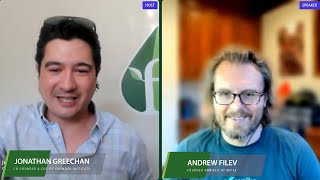
Andrew Filev built Wrike from a solo laptop to 100,000 users by bootstrapping to 3,500 paying customers before raising Series A. He learned that customers validate product better than investors, and that the best time to fund is when revenue already works. Wrike's research found that fragmented tools cause hidden productivity loss in modern workplaces.
Chapters
Let me know in the chat, all right? And I'm seeing people from all over the world. I saw Brazil, I saw Ivory Coast, etc. Who in the chat uses Wrike? Wrike is an amazing product. It is fairly ubiquitous now, I think. And if anybody— honestly, with every speaker that we bring on to these events, you know, we do some research and we learn about kind of the founding story. Of the business. I highly recommend searching the founding story of Wrike because it is just sort of— honestly, you could make a movie out of this, Andrew. You came to the United States with the laptop and a backpack, you went to Silicon Valley, you started this thing, you bootstrapped it. Anyway, I'm here telling your story, which is probably not the best way to do this. So welcome, tell us a little bit about yourself, and then I'd also just like to encourage anybody in the chat to throw questions in there.
Thank you, Jonathan, for the great intro and welcome everybody. As you have hinted, I was born in Europe. I was from the early days very much interested in computers. Back then they were still magical. Right now, for my kids, tablets, PCs, laptops, everything just comes for granted. Back then it's like, oh my God, this is magic. I got very fascinated with them, try to understand how they work. And also, for me, the magical piece was that, like, I could actually do that myself, right? It's like I do something, write some lines of code, and something happens on the screen. So I was very fascinated, loved it. I got very intrigued by Silicon Valley and specifically by building the products that people use. I— that was kind of my dream, right? I was always coming up with these ideas, but it's not enough. I wanted to to build something that actual people will use and recognize and get some value. And that's when I decided that the best place to learn to do that is Silicon Valley. And I packed the bags and moved and kind of the rest of the history, as they say, we've gone through and we'll obviously talk about it, but started the company and gone through every single phase you could imagine, like bootstrapped and venture funding and PE recap and strategic exit. So seen all phases, grown the business and the team and the product through all of them and stay kind of happy, engaged, and excited through all this, all those chapters.
Let's drill down a little bit into that too, right? I feel like especially now with everything that's going on in the tech market, okay, you're seeing a lot of businesses that literally just popped up out of nowhere within like 2 years' time were so-called unicorns, right? And then actually once we pull the veil back a little bit, maybe some of that was some smoke and mirrors, right? But Wrike was built slow, steady, bootstrapped, I believe. And, um, so it was started in 2006. You didn't raise funding until about 2011 or 2012, right?
That, that's correct. Yeah, when we raised our Series A, we already had, I think, 3,500 customers. Um, so we, we bootstrapped it. Um, that's 35—
just, sorry to interrupt, but, you know, 3,500, for anybody that's B2C, maybe that doesn't sound like a lot, but for a B2B SaaS-style business, 3,500 paying customers, I mean, that's, that's at that point the investors were knocking on your door, right?
That, that's correct. And that's, uh, one funny lesson I learned, uh, through this journey is the best time to raise funds is when you don't need funds, right? So when we were truly struggling, uh, and couldn't figure out our own business model, uh, and try to kind of sell through that and raise capital back then it didn't work. I do think it worked a year or two ago for some people, but when— back when I started, it didn't work. And when we did have the working model where we knew, hey, we put a dollar in, we get $3 out, that's when the fun times began and we got a lot of kind of interested inbound calls. Then the life was much easier. But then—
awesome. Anybody's just— just to reiterate, throw questions into the chat. We have a team producers at the Founder Institute who are in the chat and they're feeding. We're super sophisticated here. We use a Google Doc, right? Maybe that's something where there can be some better solutions on the work side. I wish I had some kind of like fancy Matrix-style headset here, but we're still using a good old Google Doc to communicate. Let's dive into that a little bit. All right. I know the audience today and for most of our events, as you know, and Andrew's been a longtime mentor for Founder Institute and has been super super helpful for everything that we've been doing since the company was founded back in 2009. A lot of people in here that are definitely bootstrapping, right? And there is a little bit of a cognitive leap there, I think, for a lot of people to say, oh, well, you know, the best time to raise money is when you don't need to raise money, right? So when you're at that point where you have no money, like how you did it, so how like any pieces of advice or tips you can give to those people that are, you know, genuinely trying to build something, trying to solve a problem for a customer, but just need to be able to get to that point where they have some customers and then, uh, and then they have the ability, they have options, right?
So for me, um, one of the key principles that I, I learned and I kind of communicated frequently to my team is that at that point, customers are your best investors. And I still believe up until this point today, that customers are still our best investors. And I don't mean trying to raise capital from them. What I mean is that they give you the revenue which funds the business, and that's their most honest kind of fair money you can get, right? They're paying you because you're providing value to them. And that's extremely helpful kind of in the early days. Back then, when I started, freemium was getting kind of starting to get popular as a model. And I certainly appreciated and liked it, but I couldn't afford freemium for my business. I couldn't wait 1 or 2 years to monetize. So I had to kind of live with a simple mantra that if I build a product that provides value for the customer, specifically in B2B, they should be ready for that, ready to pay for that product. And if they're not ready to pay, it means that I'm not providing the value. So it also becomes kind of a very honest and brutal feedback loop, right? Which is good. I know, like, the word brutal is not good, but having the feedback loop is very important. Understanding that, hey, what you're building truly helps them solve their problems. Also, they're paying you and not your competitor, right? So you should be doing something better. And I still remember a funny conversation with one of my friends. He was like, hey, you gotta 'Oh, you got this competitor Basecamp and they're much cheaper than you.' And I'm like, 'Yeah, because I've got a much better product.' Or I remember another conversation where like, 'Hey,' like a customer called and they're like, 'Well, but you guys are different from Basecamp.' And I'm like, 'Yeah.' And he's like, 'Why?' I'm like, 'Well, do you like Basecamp? Does it solve your problems?' He's like, 'No.' Well, that's why we're different from Basecamp, right? So by the way, back then Basecamp was the reason I mentioned that today people might not even know know the name, but back in the day, those were kind of our first main competitors.
Yeah, what is— I'm just curious, Basecamp. Yeah, if there's anybody in the crowd, it's— that was the big player. Yeah, I guess we're probably going back to like the early 2010s or so, right?
Yeah, yeah, dating ourselves. Yep. So back then it was Basecamp for their kind of more forward-looking companies and Microsoft Project for the more corporate world.
Yep.
And I felt that neither was actually delivering on what they're supposed to. So Project kind of the usage was super siloed and kind of bottlenecked by project managers and we want to build a system that helps the whole company manage their work kind of for the rest of us, if you will. And then Basecamp was just too simple. You couldn't manage any kind of sophisticated program or project in it. It was basically kind of file sharing and chat. And I felt that, hey, for the file sharing you got Box, which is a wonderful system. And for the chat there are other solutions that emerged as well. So I wasn't in the mind to try to do just, just a better file sharing, that, that's a different market than Box and Dropbox and SharePoint, right? Or a different chat system. We wanted to build the best work management system to help people orchestrate their work and workflows and just scale from, you know, 3-person startup to 30,000-person enterprise, which we did very, very successfully. Took, took a lot of years. So right now our largest deployment has north of 100,000 users. Well, we still serve tons of small companies and now we do have a premium version these days. But at one point when we could afford it, we opened it up there as well. So we support the whole continuum, but it took a lot of years. Something if you're working in B2B and in enterprise, as you start getting larger and larger customers, you realize how much kind of pressure and change it puts on your product where And the tricky part is making sure that it still works for their 5 guys in the garage and at the same time works for this large corporate environment with all their regulations and complexities.
We have a lot of questions coming in. I'm going to start to get to some of these in a moment, so keep them coming for sure. Ibrahim, Simon, Sumitra, Sadesh, keep the questions coming. And I can't wait to ask some of those. I want to get just quickly So we have a ton of SaaS businesses, right? And a SaaS business, I think, uh, it just inherently has that ability to make their customers kind of their first investors, right? Um, and at least in my experience with, with that, one of the biggest challenges is figuring out, okay, well, uh, you're, you're— it's always that product-market fit question, um, where there are so many different options, right? And as you said, it's, it's like, no, we, we shouldn't be doing file sharing. Someone else is doing that better than we can do that, right? We need to be doing this other thing. How do you actually, from all of the, the deluge of feedback that you get from these customers, actually be able to focus and say, okay, these are the features that we should double down on, these are the features that we should expand on? And then as a result, you know, when you make those right decisions, then then you, you're— it's really products-led growth, right?
That, that is a billion-dollar question, and I'm not being cheesy right now with that B. Um, and that, by the way, I recognize that, that fairly early. Like, I was explicit— this is what I would tell my team. And back, back then, you know, we would have like, uh, $10 million ARR, and there would be this question. I'm like, hey guys, you know, this is a $100 million question, right? It determines our future and success. And yeah, they're, uh, generally to a lot of jobs, there are like a couple of layers. There's first And when you know nothing, you think, hey, this is complex. And then when you're actually in the job doing this, you're like, oh, that's actually easy. There's next layer. So in product management, people think that generating ideas is the hard job. No, it's not. Like, yes, for an outsider it's hard, but for the insider, you should brew with ideas like every day. That's for granted. Otherwise, that's not the job for you. You're in the wrong place. So that's kind of that basic layer, right? But the hard layer is actually prioritizing those ideas. And I remember in the early days of my entrepreneurship, I had a partner, and like, I lovingly called him the butcher of my ideas. He had more gray hair than I did. And so I would like, every day I would like wake up and like, hey, let's do this. And he's like, and he'll tell me like 10 reasons why not, not do this. And then we'll kind of raise our voices and have a very passionate discussion about it. And then I would kind of sleep on it and understand that he's correct, right? So it took me actually several years of that kind of going through that trimming process. It took me also a couple of failures. Wrike was not the first product that I started. And frankly, one of the lessons for me was not, which I realized consciously, it wasn't that, hey, those ideas were bad. It just I had too much on my plate, right? I was trying to do this and that and this and that. And any of those ideas was good enough if I made it my main idea and the passion of my life and the passion of people around me. And if we really, really focused and decided that that is the thing, we would actually be able to make it the thing. So at some point I realized that and I kind of realized that for Wrike and we stuck to that through the journey as well. There were Many times in our history where we actually built inside and forget even about kind of the outside surface of the product, even inside the company, we built the technology for ourselves that later some other companies created the whole categories for those things. For example, in go-to-market engine, I'm a sort of AI junkie. So very early on, we had like built predictive analytics to feed our go-to-market engine. And later there was this whole category of companies popping up doing exactly that, and we would periodically evaluate them. And most of the time we would decide to stick with internal stuff because it was, at least for us, already better. Or recently I looked at one of their DevOps companies, looked like a good investment, and I pinged my engineering team like, hey, what are you guys thinking? And they're like, ah, you know what, we actually have better tech already built in-house. But we're not productizing it. And again, it's not because it's a bad tech and it's not because it's a bad idea. It's just because we operate operate in a huge market that's very competitive, that's very attractive from different standpoints. It's attractive from the point that we can help millions of users. It's attractive from the points that it's a huge TAM and it's growing. And so we can't afford to get distracted. But back, back to your question, there's no perfect formula. Like, being able to say no is very hard for people like me, but it's an essential skill that you kind of learn through your career, either through pain or whatnot. But, but you kind of, you have to learn it, and, and that becomes the hardest part of the job.
It's such a great point. I feel like the majority of the population thinks that, um, a good entrepreneur or a good founder, a good CEO is, is like a quote-unquote idea person, but there it's actually almost the opposite, right?
But that, that's the next level, right? You can't just be the, the, like, just be butchering somebody else's ideas, right? That's, that's when you get into that, uh, kind of corporate stiffness. And again, some corporates are great, but some corporates are like too risk-averse and stiff because yeah, every single idea that you have at that level, I can tell you, can— a group of smart people can kill any idea. And that's what we face internally as well, right? So any idea that you can come up with, uh, or I can come up with, uh, if I get a group of smart people in my company, they'll tell you where, where it's gonna fail, right? But, but we can't kind of sit on our backs and do nothing. We, we have to continue to innovate and push. And that's, uh, that's again, that's the next level. That's where you need to figure out, okay, this is— and, and you can only do it for a select number of things. Back, back to my point, you got to focus, right, for the things that matter. No matter all those roadblocks, you got to figure out either the way around them or you need to break through them. But, but, but that's kind of the future of your company. You made a bet on it and you kind of rally, rally the people, people around it.
Awesome. All right, so I'm going to start sprinkling us some questions. So Sumitra, and this was This is a good segue, right? So Sumitra is asking, how do we know if the product is ready and you need to start hiring more salespeople than tech people? So, you know, to kind of piggyback on the conversation that we've been having, it's right, it's, I think essentially to paraphrase, like, okay, we have, we're building products, we're doing A/B testing, we're doing all these things we need to do to actually figure out which features and which problems we should be focusing on. Right? Um, kind of, at least in your experience, where do you see that tipping point where you're like, okay, you know what, like, we're not perfect, but it seems like something's here now, let's hire some salespeople to accelerate that?
I'll tell you how I did this, which is more of a funny story. It's not necessarily a recommendation for how you did it. So, um, as an— again, more of an engineering product guy and originally an introvert, Sales was the furthest thing from what I was comfortable doing. So we didn't do sales early on. And as an engineer, it was easier for me to focus on digital funnel because again, I approached it more with that kind of scientific method and engineering mentality of like, hey, let's build an engine that works and where it doesn't work, let's tweak it and let's make it work. So I built— well, I shouldn't say I, it's completely incorrect. We built the digital engine that worked and that scaled. And at some point now that we had this engine, And I already had a couple of people in customer support, which we lovingly called customer success. I later realized the difference and we built two very different— well, similar but different organizations. But back then we called everybody customer success, had two people.
And it's one word but completely different functions. Yeah, for sure.
And, and, and I was like, yeah, there is this sales thing that I've kind of been pushing back for, for quite a while, but Maybe it does work. And so again, as an engineer, I did a funny thing. I took those two reps or friends, however we call them, right? And I asked them, hey, you know what, starting next week, why don't you call those trials that are coming in? And I did simple spreadsheet math where, hey, here was the conversion rate for the trials that they didn't call as opposed to here's the conversion rate for the trials that they did call. Here's an uplift in conversion rate. Here's the result in uplift in MRR or ARR, and here's the cost of those reps. And the funny thing is that that math worked positively for us, which was wonderful, uh, because then, as you— if you know anything about the business and sales, which I didn't know back then and know right now, uh, that's not how you do sales, right? You, you got to build the playbooks, you got to train people, you gotta have commission structure. You're not just telling people, hey, why don't you start selling tomorrow? Uh, so Of course, again, as we started putting kind of more programs around that, that became an even more effective and efficient program. And luckily it coincided with our Series A. I wouldn't say that one thing drove another or the other way, right? It just kind of time-wise was the company was already kind of at the cusp of that next chapter. And so because of that, kind of things started to coalesce at the same time. And so we raised the funding. I also hired an amazing chief revenue officer. who I knew, uh, knew before that, uh, from a company called LogMeIn. So he's seen the scale, and, and he, he definitely knew, uh, a thing or two about, about sales, which I did not. And so he, um, he helped us build, build that, uh, that engine. But long story short, again, uh, I— in my case, it was very pragmatic economic approach of like, hey, let's test it, and if it, if it works, then it works, and if it didn't, then then it didn't. If you can test it, then by all means. And of course, again, ideally your company should have somebody who knows a thing or two about sales even before you get to 3,000 customers. And just that we didn't have that luxury, so we had to stumble our way into that.
Oh, it's fine. We all stumble our way into insights, right? And I guess the faster way to stumble your way into an insight is to be to use the scientific method, right? And instead just A/B test and do not make assumptions. And just to give everybody else a little bit of background, I remember Andrew, the first time we met, we— it was a Founder Institute, is one of our marketing sessions, uh, for the Silicon Valley cohort. And I remember everybody else came up, like I came up, I was talking about PR, talking to TechCrunch and stuff. Andrew comes up, no deck, just gets a little whiteboard out, and, and he literally broke down all of marketing and saying, look, It's a funnel. This is the math, right? Um, so I, I feel like that, that it seems like that's the approach that you take to everything. Um, yeah, you understand.
Now again, when the company gets bigger, uh, and that's the advantage of, by the way, of the startup— when the company gets to 1,000 employees, um, you cannot, um, stumble your way into things anymore, right? You've got large, large organizations that have momentum, and so you need to be thoughtful about what you deploy and how and when you deploy, a lot of those things need to happen at scale, which takes preparation. And so, and that's kind of, again, every kind of like your growth and growth as a person, every stage of that has this wonderful moments, but it's got its kind of its pros and cons, like little babies versus the kids versus, you know, teens and tweens and young adults and mature adults and whatnot. Similar with the company. There are things at the startup that you can do that a larger company cannot, and you gotta absolutely do those because that's your advantage. And vice versa, there are things that large company can do that a small business cannot do. And of course, you need to play your game as opposed to somebody else's game in order to kind of survive and grow. You cannot— and that's of course, you know, plenty of stories where like a large company executive lands at a startup and doesn't glue in, and it's kind of a terrible disaster. And it's not that it's a bad person, but it was just, just a bad decision for that company and for that person to join it. And vice versa, you can hear kind of about their startup folks who do not grow in large companies. But again, it's not that one is, uh, bad. It's just like, hey, every single stage has its strengths and you need to play to the strengths, not, not to the weaknesses.
Perfect. And I'm— I wanna— I think this is a good transition. First of all, I just want to point out, we weren't able to, to discuss this, but As you know, in F5, we talk a lot about, with our companies, new entrepreneurs coming up, that a simple vision is incredibly important. And one of the quotes that we found, my goal is to help the whole world get their work done. So I just want to commend you, like, an amazing vision. It's— and probably, uh, that is— it's simple, it's clear, and it really is what Wrike does.
For—
so for anybody, uh, that doesn't know too much about Wrike, they just— they help They help the world get their work done. But to that point on the team-building side, and keep the questions coming, everybody. We got some great questions in here. On the team-building side, especially now that a lot of us are in a hybrid environment. I think it made a lot of news last week where Andreessen just said, okay, we're virtual. But that is, I mean, this is just, I feel like a lot of people like aren't coming out and saying, hey, like we're a virtual organization now, right? Because it seems less, maybe it seems less professional or something. But I know from managing a virtual organization that it is, it brings a whole new set of challenges. And something that we read recently was that you have been very outspoken of saying that CEOs over-communicate and invest in explaining why something is important as a job. And I feel like that probably is true for any organization, but it just becomes magnified in a virtual and hybrid work world. Can you elaborate a little bit on that?
Yeah, no, something again I learned very early on because I was part of distributed teams since the beginning. Before it was even kind of like a term. We just again stumbled our way into doing things that way, kind of trying to get access to the best talent or the best markets. So, uh, for— so I, I, uh, we were lucky enough to get exposed. And actually, personally, again, uh, as a, as a founder of bootstrap company, I got a privilege to work from home for, for a couple years, which I'm sure many of you got as well, but long before work from home was, was, was a thing, right? So, um, with that, uh, one of the key things I learned is that, um, the distance, be it geographical or time distance or any other form of kind of that separation, of course, uh, it, it can drive confusion and misalignment, right? And so you need to, uh, make sure you dedicate enough time to, uh, explaining, um, not, not just what needs to be done but why, uh, because then people, if they misunderstood what, or if the environment changes a tiny little bit and what needs to be tiny little bit or a large bit different, if they know why, then they can make the right decisions. If you hired the right people, right? If you hired the wrong people, then it all doesn't make sense. It's a different story. But if you hired the right people, it's important to kind of keep everybody aligned on this kind of key ideas. So then yes, you can discuss the plan and I'll get back to it in a second. But if the plan changes or something, then they need to be able to make autonomous decisions because you might be asleep or you might be unavailable and whatnot. And they to be able to execute. Now, I do think that plans are important, and that's not a surprise that I work at the work management company. And to me, it's important for us personally, it's important at work. It's like, hey, you have a goal, it is helpful to think how you're gonna reach that goal. And then that's even at one person's level. An organization, the reason why it's extremely important is because in organization, people have different goals. And if I'm, uh, I've been working on something really important for the company, really, really important, and you're working on something that's really, really important for the company, but we're working on different things, and I've got dependency on you and you got dependency on me, then those of you who can put one and two together can see that we're not going anywhere, right? And we're producing zero value for, for the company. So at a company, it's, uh, in a team of any size, coordination and that quote-unquote alignment on what are our top priorities, what do we want to agree on together, is important. And then also in the remote work, that transparency and visibility, like, hey, here's the plan and here's where we stand on it, is extremely helpful and helps avoid a lot of politics, emotion, miscommunications, frustration, stresses. And like, yeah, we might be behind, but again, it's helpful information that we all need to know so then we can readjust in real life. So I think that transparency is extremely important. So we're all kind of on the same page. And as managers, I feel that, you know, you might confuse it with micromanagement, but it's the opposite, right? Micromanagement is like we were trying to like babysit and tell a person how to, well, like in the moment, as opposed to— I do think it's important to upfront figure out what's our path to success and enable our people to succeed. That's our jobs as managers. And then of course, if it's transparent, then again, everybody can sleep well. And know if things are going the right way or the wrong way. And again, we can— and in startups, in growing businesses, there are 10 times that things will not go the way originally planned. That's just for granted. And the sooner you know, the less drama there is. It's, it's, it becomes— it's not a problem, it's just, just an adjustment, if you will, right? We planned X, instead we're getting Y. It is okay, it's life. What do we do about it? How quickly can we change and adapt and kind of improve our plan?
Yeah, I honestly, I don't know, maybe I'm overstepping here, but literally, I think it's fair to say that just being, yeah, being a CEO, being a founder, being a leader of any organization has just become much harder in a virtual environment, right? A lot of the culture things, it's reinforced by day-to-day, right, conversations people are just having. And when you're not in the same place, when You know, if you're on the other side of the planet, it becomes so much more important to reinforce those top-level, you know, ideas and values and mission. Because every— it's essentially, it's an asynchronous world of work, right?
Yeah, I agree. And personally, again, I did experience work from home before, and as an introvert, as an engineer, I enjoyed working at home.
And how were you communicating? Were you communicating using like AOL Instant Messenger back then?
Oh, well, we used Wrike a lot, and then I forgot Zoom was not there, so I forgot what was Skype, probably, right? I'm sure we used Skype before Skype.
It was like, it was a chat platform that brought in all the different chat platforms. I'm trying to remember what it was called that I used back in the day.
I think we're not that old as a company. I think it was mostly Skype. Skype was already there, so I think that was the thing for us. But anyways, I did kind of personally, on a personal level, I enjoyed it, right? But then we started building our offices and—
ICQ, sorry, sorry to interrupt. Nick threw it in there. ICQ, does anyone else remember?
Oh yeah, yeah, I remember that one. I used, but that was personal.
Trillion too. Trillion was a great one. Yes. Okay, sorry, I'm getting excited.
I'm learning a lot. Yeah, but, uh, so the point I was trying to make is that on a personal level, again, I'm a productivity freak. I hate commute. Um, so I did enjoy working from home, but when we build those offices, there is something magical about people coming together and again kind of having that, that culture and energy and whatnot. And again, I, I, as a person, as an introvert, I like working in a quiet environment, but I did fully enjoy when we had an office kind of in our, uh, buzz room and we have the salespeople right next to the marketing people. And yes, it is noisy. Yes, it's different from working at home, but at the same time, there's this level of energy that feeds each other and a lot of things kind of happen faster. And so I feel kind of the world right now got thrown down in that kind of working in the piggies and got a little bit lazy. But at some point, we will kind of reevaluate the value of those in-person interactions. And I think we'll grow back into that. And so while we're in this transition, yes, I don't think it's the right idea for companies to force people to do something unnatural because I think they'll just lose the trust of people, if not the people themselves. Right. And then, but I do think, again, it's kind of a little bit of prisoner's dilemma where individually in the short term, yes, it does look like working in the pizzerias from home is more productive. But in the long term, actually getting together and spending some time in person, having that energy actually helps us on a lot of different levels, not just as a company, but also as people feeling better about ourselves and our lives. So from that perspective, like, even if you're fully virtual, I think it is important to figure out a budget of how you can get together. And again, when we were a distributed company startup, we did things that the large company cannot do. Like, our people flew very cheap. And their accommodations, let's call it that way, were very cheap as well. And yeah, we didn't force people to do that. It just naturally, we wanted to be together and it was between like, hey, we can have less travel but travel at a corporate level, or we can have much more travel but travel at a pretty stingy level, right? And so, and people chose that company of each other and there was a lot of travel and meetings and whatnot. And I think that's where, which needs to happen right now as well with a lot of those teams. Like periodically you need to get together, either offsites or quarterly reviews or kickoffs or celebration of the launches or planning of the new launch or hackathons or product sessions, design sprints, whatever it is, kind of whatever is part of your culture. I think again, it's important to have those moments. And then I do think that unless this pandemic or some other pandemic spikes very hard, I do think we'll go back, we'll grow back into kind of having a little bit of that. And, and don't read too much into recent announcements. Um, I have a lot of respect for, for them, but also remember that venture capitalist firms are much more disconnected as an organization than a typical startup. Um, so, so venture firms are collective of partners.
Yes, sure, they're, they're pretty distributed just by—
yeah, they're exactly right. And decision making is more distributed, and execution is definitely more distributed. Um, and, and by the way, execution is mostly on the companies, right? Um, as opposed to we as, as their portfolio companies, whereas entrepreneurs, we're startups, we, we, we're— it's inherently team sport. I, I cannot say it enough internally, and I say it all the time, is like, hey, we win together and we lose together. It's absolutely team sport. And, and again, yes, it'd be wonderful if it all worked, worked in metaverse, and we'd save on travel and commute and fuel and pollution, but In reality, we still are very social beings and it helps us to get together from time to time.
So we're going to wrap up here in a minute. But before we go, I want to talk about— so for anybody, Reich put together an amazing research study. And the term that you've talked about a lot, Andrew, is the dark matter of work. And to me, this term really resonates in this virtual world. Right? It is there, the amount of value that is lost in just, you know, it's information that's not being connected between different departments. It's not having like a single source of truth. Right? It's, I mean, I'm still, I'm dealing with this now. I mean, I guess I'm old school in my organization. I still like to use Google Docs. I'm like, hey guys, throw it all into this Google Drive. Right? But now we have all these other tools that are coming in here. The amount of— it's not just productivity, right? It's the amount of turnover, of employee angst, of employees like not even— they're not— they don't feel like they have the ability to do a great job at what they're trying to do in this online environment. And you put out this research study, The Dark Matter of Work. If somebody in the FI chat here. Throw that into the chat. It was— it's a really amazing study. Some of the things here, okay, so, um, the Bureau of Labor Statistics in the U.S. announced that we just had the largest decline in quarterly productivity since 1947. How the hell is that possible, man? In 1947, in 1947, I would have to go to my kitchen and grab a phone and and Twist. How is productivity going down like that? It's insane.
Yeah. And what's insane is it's happening through the good things, right? It's not that a bad thing hit us. It's just a combination of good things became too good, if you will, right? So I'll give some examples that lead to this. Right now, I'm sure a lot of people on this call are using tools like Slack. Work, right? And what is the easiest thing than me just shooting you a note like, hey, Jonathan, do this, or check into that, or whatnot, right? So I personally call it kind of the hot potato problem. I don't have to think about it. I just threw it your way. And I don't have to organize it, specify the priority, think about how it maps into the bigger things. I don't know or care about the other things that you do. But now that we're kind of throwing all these hot potatoes around, then the day goes by and it's like, hey, 'What am I doing?' Or you kind of, you want to talk to your boss about increasing the size of your team and like, 'What are you guys doing?' And so everything is like urgent and priority. And when everything is urgent and priority, nothing is a priority. And we talked about both from product and company perspective how it's important to prioritize these things. Then we talked about importance of alignment. Again, people working together on achieving something as opposed to kind of this random bits and pieces. and we also kind of lose a lot of control, and there's also a lot of lost productivity. Uh, this is what I call kind of push versus pull, right? Uh, where tools like Slack or email, you push the information, there's no way to pull information. If I have a question at, you know, Saturday morning, I gotta call you or Slack you or email you, as opposed to me just going into some system of recording and saying, seeing what's going on and kind of making my own conclusions and making my own, my own decisions. So And as a result of it, we all feel overwhelmed and kind of feel that we're losing control of the situation, which contributes to the stress. If you, if you read the psychological study of stress, it's not just the amount of grind that you have, it's kind of the perception of that grind. Do you feel that you're in control of that grind or do you feel that the situation controls you and you're just kind of being thrown left and right? So I feel we're, we're all in this situation where we're overwhelmed, we're overstressed. I personally feel that for most of us, there is absolutely, definitively more work than we can do. So it's not an exercise of finding more hours in the day or working harder. It's an exercise of figuring out which exact work I'm going to do to make an impact. And it's an exercise of making sure again that we're all together aligned. So I don't think we have time to repeat kind of all the insights from the study. So I would recommend you to check it out. There's like gazillion of different data points and different angles and also kind of different areas where there's this lost productivity. Um, and, and you can either come up with your own thoughts on like how you can improve it, and then, um, we'll also keep, keep, keep, keep producing some materials on kind of the next steps and how, how you can get, get, get out of that situation.
I want to— yeah, if somebody— it's a, it's a PDF study. I mean, you guys worked with, uh, with like, I mean, you literally went, this wasn't just some SurveyMonkey, right? You guys did a legitimate study using thousands and thousands of large organizations. Somebody, I mean, I just Googled, right, human cost, dark matter of work. Somebody throw the link in there because I stumbled upon this the other day, to be honest. It was not something I was aware of. I stumbled upon it because I was researching in preparation for this talk. And a lot of the stuff that I saw in there just really, for me, as somebody trying to manage this remote organization, it really resonated. And it definitely spoke to a lot of the issues that we have, right? Information is scattered. Even for us, for example, like we have— this is a massive problem with with Google Drive. Like, originally in 2009, I set up the team Google Drive as my personal Drive, and still to this day I've been trying to transfer that to the organization Drive, but I haven't been able to. So we have two different Drives, we have Slack, we have all these different tools. Um, yeah, it's, it's, and it's massive.
But at least one thing you're doing right is that Drive is an asynchronous tool, which is important, right? As opposed to like Zooms or Slacks are mostly treated asynchronous tool. So people can still— I know it's messy and not well organized, right? But at least they can get access to that information and they're not inundated by, you know, every single change in every single document in that Google Drive kind of landing in their inbox. That's essentially what happens in chat systems. Like, and imagine you're the leader, right? How does it help me that you send 1,000 messages to Mary? Does it help my visibility into where we stand in it? Like, what am I going to do? Well, I'm going to contribute and send you 1001st message and ask you, how are we doing, right? So, so again, I feel it's kind of a self-fulfilling prophecy and a little bit of a hamster wheel where it just more and more, like, contribute— the problem contributes to a bigger, bigger problem and kind of reinforces itself.
For sure. All right, well, thank you, Andrew. I don't want to take more of your time. Thank you so much, Andrew. Um, it was amazing to hear your story. I also, again, I just researching Andrew's story Um, it literally— we can make a movie out of you, man. I don't know, is anybody in Hollywood here? We have anybody from our LA chapter here? He came, he came to the United States from Saint Petersburg, Russia, and I don't know, about 2006, laptop, started this, this company. Now you had some other failed companies too before that, that's fine, that's— we all do. And, uh, you bootstrapped this thing in an environment where the whole game plan has been for like the last 15 years in Silicon Valley to just hype something up, raise money, and exit it as fast as possible. You actually bootstrap something. You build something sustainable. You built a product that your customers would pay you for to give you validation that, okay, I'm actually building something useful. You exited it and you continue to do this. So I just, I just, I want to say thank you. Thank you.
I think— thanks everybody. Enjoy the rest of the day and good luck with your startups. I know, I know it's a hard grind, so if you have the right ideas, don't, don't give up. Uh, talk later. Bye-bye.
All right, thanks, Andrew.










