FounderX 2022: How Startups Can Build Communities, with Dell For Startups Sr. Program Manager YJ Lin
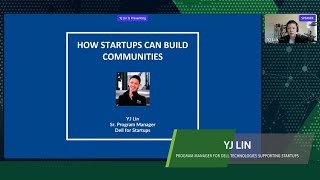
YJ Lin from Dell for Startups explains why founders should build communities around their products and how to do it. CB Insights found most startup failures stem from people problems, not product ones. He walks through a framework: identify your audience, define shared purpose, then measure growth, retention, and engagement as your community scales.
Chapters
Welcome, welcome everybody to our third session in the Founders Track for today. This is the Dell Partner Workshop: How Startups Can Build Communities. Again, we have a lot of content jammed into these three days, so I want to get as quick as I can over to introduce our speaker. His name is YJ Lin. He's the Senior Programs Manager at Dell for Startups working closely with us at the Founder Institute. He's also a business owner of an e-commerce shop. That's— this is just an interesting fact— that sells and makes custom board games and accessories. And he enjoys mentoring and supporting entrepreneurs throughout their journeys to facilitate conversations. And he also has his own podcast where he does that as well as through Dell for Startups. But without further ado, because we're all pressed for time and there's so much to cover, I want to turn it over to you, YJ, to take the floor away here with your presentation. And also just want to say thank you again to Dell Dell for being the sponsor for this event. We're super excited to be partnering with you guys. And for those who don't know, there's a virtual booth where you can go over and learn more about the, the partnership offerings between Foundry Institute and Dell for Startups. So just wanted to give that a plug too, but the floor is yours.
Thank you so much, Dustin. Really excited to be here. Foundry Institute is probably one of my favorite partners to be able to work with. And as a senior program manager for Dell for Startups team, I have to work with startup communities all across the US. And so one of our biggest initiatives this year is to expand in cities such as Denver, Chicago, Atlanta, Miami. And so we are really relying on Founders Institute and all the different local chapters to figure out how we can better support you at your area or at your region. So if anything, feel free to drop a comment where you're located at just so I can get a general feel on who I should visit next. But we do have a lot of giveaways. We're raffling off a laptop. I'll share that form at the end of this presentation. And we are also having pitch competition for Founder Institute members later on mid-August. So that being said, I'll go ahead and start my presentation. I think Dustin pretty much covered all this. I'll pretty much run through this pretty fast. Went to the University of Houston, studied entrepreneurship, marketing, minor in sales. I got to meet Warren Buffett for a little bit through my entrepreneurship program. And since then, I've started working for Dell for a little bit over 3, 4 years. We started the Dell for Startups program back in 2019, and within 3 years, we have now grown to 600 dedicated it advisors, which talk, which we talk to about roughly 2,000 or so startups every single month. So just to kind of share some of the things that we're focused on, and we're looking at how can we continue to grow this program, and we do that with partnering up with communities such as Founders Institute, MassChallenge, TechCrunch, VentureBeat and a bunch of other entrepreneur centers. So who is this for? So going out to this topic, really the reason why you should be paying attention to this is if you're a founder looking to drive more experiences to reach and connect with their customers, um, if you're an association looking to drive, uh, more member signups, if you're building a platform business, um, or if you're simply, uh, an executive looking to figure out how to better connect your employees together as you are growing, or just really want to look at how can we drive more insights from people, whether they are from employees or customers. So today I'm really here to show you what it means to create community growth strategies that will drive business results. And to start this conversation, I want to share two stories, right? So you guys may have been familiar, in 2009, after being acquired for $1.2 billion, Tony Hsieh stated in his book Delivering Happiness, our goal is for our employees to think of their work not as a job or career, but as calling. For Zappos, customer service was a mission. It was not a script for the customer loyalty team, but this mission: how can we make the customers happy no matter what? But in order to do this, they needed to make sure that they have the right employees that had the interest of building a long-term relationship with their customer. And so what they did is regardless of the role or position they're hiring for, they had to spend 4 weeks or a month on intensive training on culture relationships. Most of that is spent on actually taking customer service calls. But after the first week, they were given a choice. Would you take $2,000 to quit? What Tony Hsieh did was he created a culture where he built a group of committed employees that was interested in staying in the long run. For their mission. And talking about in 2007, we had two founders who built a personal livestreaming site who then pivoted to allow anyone to broadcast their videos online. And so we had two founders, Justin and Emmett, who realized majority of their most engaged content creators was focused on e-gaming. And 4 years later in 2011, they spun off their livestreaming platform to focus on gaming content. And so within the first year of Pivoting to Twitch, they received over 3 million unique visitors each month, and this startup was also acquired for $1 billion. So the question that we want to ask ourselves is, how can we create our startups with a culture that inspires our customers' employees with this shared interest? How can we drive insights that can shape the way that we run and do our business? And why should we even start to care about creating community strategies? For our startups? Well, to start this conversation, we wanna look at why startups fail. And so CB Insights actually did a postmortem of 101 startups. And if we look at the top reasons why they fail, 5 of the top 10 were actually related to customers. First one being no market need. Then we have customers choosing our competitors, ignoring customers, product is mistimed with the market, and poor marketing. And then if we look at 7 of the top 10 reasons, they're actually related to the people and culture of company. We don't have the right team. You lack passion, lack focus. You're not utilizing your network. And only 2 of the top 20 is actually related to cash or lack of funding. But none of this should be really a surprise to us because inherently business and the startups that we're building is all about people. We're bringing together people to help solve problems that people have. And it's not a surprise to us because if we ask investors, what are the biggest questions that you want answered? What are they going to say? Well, do people even care about this? You know, what's the market size? Do you have customers that are actually paying for it? How many customers will we target by the end of the year? Or what's the total customers that, that would be able to utilize the solution that you're creating? And the second question, are you qualified to do this? Do you have the right team? Are you competent enough? What's your story? Why do you have this? How did you discover this problem? And why do you care so much about it? And who's in your network? Are you a technical founder? And so if a lot of reasons why startups fail are because of related to people, you're going to see how creating growth strategies that are focused around people will help you with your startup. And so I really want you to explore as a founder what your priorities are at this moment, because there is not— there is no right answer. It really depends on your stage and your priorities. And so what does it mean when you are organizing people? Like, am I developing a team? Am I developing community? Well, I would say it's a spectrum, right? If you're developing a team and you're really more focused on goals right now and you don't need as much feedback from your customers and employees, this is where you go to Upwork and Fiverr. You're hiring contractors to get things done, to get my product launched, so that you can get more insight. But when, as you grow your startup and as customers' feedback, customer support, employee engagement starts becoming more important, we have to shift the way that we do business and create strategies to be more considerate of what we are trying to get our employees to do for us or our customers to do for us. And so when we define these terms, we're going to define the differences between developing team and community. If you're organizing and bringing a group of people that are sharing a common goal, you're building a team. If you're bringing a group of people that share a common interest, you're building community. And then we're gonna talk a little bit at the end of this presentation on what it means to build both. So where do we start? Well, contrary to Simon Sinek, I would argue to start with who, right? Which is just as important. And the reason why is that you might have an interesting why that no one cares about, but we need to first start with the people. Who do we need? Who do I care the most deeply about? Who do I share interests, identity, or pace with? Who do I want to help? And who do I need to bring together to make this happen? And then we go into why, you know, why are we coming together? You know, what do people need more of? What's the change that we desire? And what's the problem that only we can solve together? And so when you first start about how can I build a community growth strategy, we need to first start with who are we trying to serve and who do I need to bring on board, and then talk about why we're doing this, why should we come together. So how do we start by creating strategy? The first step really is to understand the type of community that you're trying to build. You have to be very deliberate on the kind, because depending on the type of community that you build, it will dictate the types of conversation you will have, the types of relationship that you will have, and the type of results that will bring back to the business. And so we need to approach community building as really developing another business. If you think of how you first started developing the company that you are now, or the startup that you're developing now, what was your first MVP? How can we test our community strategy to understand how it's contributing back to business? And as you grow and scale your community platform or your community, uh, whether it's for employees or customers, how can we incorporate other aspects or other community types that can help me with my business? And what you'll notice here is that there's actually a missing type that's not on here, and that community type is the one that talks about how great you are and how wonderful you are, because those are almost impossible for organizations to create in a very sustainable manner. So what does that journey look like? If you imagine your startup journey as you first started with, how can I develop my product? Let me test this with my customers. Similarly, we have a cycle for communities. When you see that how at different stages as you're developing your community, your focus and your priorities will need to change, and how closely this resembles to start a development cycle. The very first customer and the very first employees that are engaging with your startup or with your platform are the ones that like you. And so your priorities at the beginning should always be about building relationships and building one-on-one conversations with them. And so it's really interesting when we look at this is that if we look at the first stage where there's not really a sense of community, which is more so a relationship with you as a founder or your friends or or the team that you have. As you grow, you'll realize it's less about you as a founder, but more about the product you're developing. And some of your first customers during early engagers will probably drop off because they know it's no longer about YJ, it's no longer about you. It's more about the product and the community that you're trying to serve. And so one of the things that we can look at is as you're looking at developing community, creating a community engagement curve. Just like how you would create an employee career plan as an employee that you first onboarded, how you can continuously over time give them more responsibilities, how can we do that for our customers? How can we do that for the community that wants to engage with us? Now let's talk about metrics, because at the end of the day, without measurable metrics, just like developing OKRs and rocks, we need to make sure they're as unambiguous as possible so that we are doing it well. And so these are a few metrics that we track. Growth, how many people are joining your community? How is growth changing over time periods? Retention, of those joining, how many are sticking? Community to community engagement, how many people are collaborating and working together? Company to community engagement, how effectively are your staff engaging in community? And delivery, is the community delivering results within the audience persona? If you're looking to develop a community full of developers, are they producing code? If you're developing a community full of content creators, are they developing useful content? And attendance, how well attended are your in-person events? Efficiency, how efficient are your various processes such as onboarding, collaboration, conflict resolution, uh, resolution elements work? So these are different types of metrics that you can use to evaluate the health or the success of your projects. But now how can we check the impact? And so we'll have a lot of different types of metrics and you will have to understand which one's important to you. but it's really important as someone who's developing community to track and measure these metrics. But ultimately, at the end of the day, take it for a grain of salt because the only way to know the success of your community to success of what you're doing for your employees or customers is to really just have one-on-one conversations with them. Try to understand if by asking them questions about your community to see if their answers matches your intentions. That's the only way to understand the successful of it. So I share these metrics because it's important to measure and to test it over time. But the most important thing is to figure out how to have those one-on-one conversations to understand if it's being healthy. So with that being said, I'll share a little bit more about the Dell for Startups program and how to reach out to me. The Dell for Startups program started with, well, Michael Dell with only $1,000 in startup capital realized that no company at its time back in 1984 was actually building custom computers for people. IBM and other big companies back then were just having, just had one product that they were sharing to everyone. And now we're at a stage where we can support and create custom solutions for people. And the way that we do that is to make sure that you have dedicated point of contacts to reach out to that can give you any advice in anything related to technology-wise. We also have the OEM team that can actually help you if you're a hardware startup to develop some of the hardware that you're working on by powering it with the Dell chips and the Dell systems that we have. So with that being said, I'm going to open it up to Q&A. And then here are some links. If you visit dell.to/founderx, you'll see a form where you can get in touch with one of our dedicated advisors, find a mentor, Or if anything, just join for the raffle of the laptop that we're gonna be doing at the end of this event.
Yeah, I'll make sure we definitely share these links in the general chat for everybody who's in the conference over in the other track right now. But yeah, really, really appreciate you being here as well as having Dell for Startups as a sponsor. And yeah, we are on time again now. So let's kind of end it here and then we'll jump over to the fluid networking session so founders can connect with you one-on-one to ask questions that to have about building community. So thank you so much, YJ, for your presentation and to Dell for being the sponsor. And yeah, let's wrap this one and head over to the fluid networking session.










