FounderX 2022: How to Build a Remote Team in 23 Countries, with Evgeny Kruglov (AppFollow)
Evgeny Kruglov, co-founder of AppFollow, shares how to build and scale a remote team across 23 countries. He covers onboarding, payroll systems like Oyster and Deel, timezone challenges, and why offline meetups matter for culture. The company went fully remote during the pandemic and now manages distributed teams across multiple continents.
Chapters
Without further ado, you know, happy to introduce Eugene. So Eugene started his career with Accenture in 2001, and then spent several years working for a mobile telco called Beeline, where he headed a partner program. 2005, Eugene joined his first startup, having co-founded a company which designed mobile applications for operators. He sold his stake in that one in 2016 to a concentrate fully on App Follow. Now, you know, at this point, Eugene, I'm gonna hand it over to you. Feel free to elaborate on your background or on your intro, but yeah, from here on out, the floor is yours.
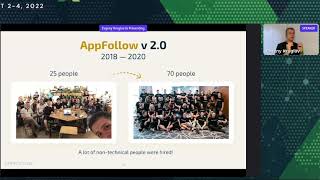
Thank you very much, Ben. It's a pleasure to be here. Thanks everyone for coming. I know it's been challenging. I'll do my best to run as quick as I can, but also try to do my best to make it interesting for everyone. Actually, now you were making an intro, I prepared an intro of myself. I did graduate in 2001 and started my career at that time. I've been in multiple roles, mostly customer support, sales, a little consulting as you mentioned, and then a product manager. Started my entrepreneurial career in 2006. And yes, I've been with a company that's been developing mobile applications and this is how I got into AppFollow. Where I'm absolutely non-technical co-founder. I don't know how to code, and that's why I run operations, revenue team, and also fundraising. And from a grumpy look on my face, you can also understand that I am a little bit into martial arts. I spent 12 years practicing Aikido, and I really love peated whiskey. But as much as I wish to talk more about myself, let's get to more juicy part. Of this presentation, and this is about AppFollow. So AppFollow is a B2B SaaS company. We started it in 2015, and we're doing our best to help product teams build successful mobile products through amplifying voice of customer. This is how we see the value we're bringing to the teams worldwide. We're working with companies of different size and origins. Obviously, we are very shy startup, so this is our Hall of Fame. Specifically prepared for this event. But what is more interesting about us is that we've been remote from day one. And this is, as we usually say, is a part of our DNA. Today we're 96 people. We have people in 25 countries all over the world. In the beginning of, like, it was announced it's 23 countries, but while we were preparing for the event, we actually hired a few more people and added a few more countries to the list. But we are headquartered in Helsinki in Finland and this is where I'm talking with you today. So without further ado, let's start with our experience from version 1.0. In 2015 it was 3 of us and within a few years we got to the 25 people. As I said, we started building company as remote from the early days. Speaking like from, from the geographical perspective, we're very compact as a company. As Russian founders, we started hiring people specifically in Russia, Ukraine, and Belarus, which is not the best choice as of today, but at that time it was really very convenient and easy to go geography. At the very same time, we were thinking about building a global company, and that was one of the reasons we decided to move to Finland and South Korea. Company, legal company there. From work organization perspective, these were really good old days. Everything was very simple. And if we're speaking about the remote setup at that time, uh, it was simple as well. We used minimum tools, mostly free ones. Instead of Zoom, we use Skype. Instead of Slack, we use Telegram app. Everything was, you know, like really, really done in the way that if we can not pay for something, we shouldn't be paying. And that was kind of a bit of a motto for us. At the same time, as a small company, everyone was doing everything. So, it was also like a situation when basically every single member of the team knew what everyone else was doing. And we've been changing this setup basically on a monthly basis. Like, this month let's focus on this part and we will align with these goals, and next month we'll focus on something else and we'll align our processes on a different goal. And that means that that's why we didn't have any established processes whatsoever. We've been changing those processes on a regular basis, and we were even at some point very proud of that because we felt that this flexibility gave us a lot of strong strong, good ways of actually knowing what we're doing. And also, and you will learn a little bit about that, we also had no onboarding for the new team members. Basically, the whole onboarding would be a one day when every founder would talk to a newcomer. We will just tell what we were doing recently, and then from day one, you practically start doing whatever was needed to be done. From the key challenges perspective of the company, our main focus was on finding product-market fit, and that's why we actually didn't need any processes. We didn't need any, any specifics or complicated tools, because unless you don't have a product-market fit, there's nothing to scale. We also have been bootstrapping, and that also defined our choices, which I've mentioned before. And we only started gaining our remote experience at that year. None of us been working remote before that. So we had to find our ways on how to organize stuff. But again, keep it simple. That was our motto in these years. Key learnings from this period. So for everyone who is starting and everyone who is considering a remote company, I would say it is very easy to be effective and efficient when you're small. Basically, if you broke something, you can fix it the next day. If something is not working or you've been doing something wrong for the next week, most likely you will see it very quickly and you will change the route of things. And then the next week, probably you'll get some progress. And that's why none of the processes did make any sense for us at the time. And every mistake was covered by the way how fast we were moving and how fast we were changing everything within the company, within the product, within basically everything we were touching at the time. Um, on the other hand, um, the use of free and commonly used tools like, like, um, Skype, which I mentioned, or Telegram, or instead of using a Google G Suite, we've been just using our personal Gmail accounts. Um, probably that was not the best solution. So I would really, really advise everyone, as soon as you've got some money and, and a few, um, like be motivated enough to kind of save a little bit of that money to spend on those tools like that. It will really, really help you in the future when you start building and start using proper tools as early as possible. I would really kill for Slack in 2015, what I know about Slack today. But in 2015, when we tried to use Slack for the first time, we actually didn't understood what it was about. So, it was a complete disaster for us. Start focusing on the process centers early. That's a little bit contradictory to what I said early, but on the other hand, maybe start at least thinking about them. Start recognizing that some processes are appearing at some point of time, and this can actually give you kind of a signal that the company, the business, and the team is maturing. And when you see that there's some default processes are actually established without even you knowing that, that actually means that you're probably moving to the next stage. And one other thing that we learned very early on is that it turns out offline is important even though you're a remote team and everything is supposed to be online. But offline actually is something that really brings the team together. When we accidentally decided to bring everyone together in one place and we were, I think, 7 or 8 at that at that point of time. And when then we asked the questions, are you happy about that? Everyone was super excited because it was the first time the whole team meet each other. We had a lot of casual time together, you know, going to a pub, having a drink and not only working and not only discussing business stuff. And that actually brought the team very close to each other. And that was really good. The next phase, Apollo 2.0, from 25 people to 70 people. At that point, the way how I understand that we've moved to this different setup of ours is that because we started hiring a lot of non-technical people and we were almost not doing that before. Our main focus was, were engineers, obviously, and product people, because again, product-market fit. But when you start thinking about sales or customer support or even customer success, that probably means that the company and the business is growing in the right direction. At that point of time, there was 12 countries, so we kind of, um, how many, uh, tripled, tripled the number of countries that we've been covering. Um, we didn't feel, uh, that like it was important for us to bring people from other countries, so in most cases we've been hiring Russian-speaking, uh, people that are just seated outside of Russia. But at some point we did recognize that we need to be more diverse, and we started hiring people that were not that did have Russian as their mother language. From work organization perspective, I think the biggest shift that happened is that we started moving to company-wide tools as a remote team. Slack, which I've mentioned, something like a default or anything that works for you. It might not be Slack, it might be Discord or Mattermost or whatever there is on the market. Try it all and see what works for you best. Pretty much the same with a video conferencing tool. We went with the default version, Zoom. Zoom was not popular at that time at all, but just we found it easy to use. And G Suite, actually, yes, that was not our default choice in the early days, but then at some point we did move to the G Suite and that was quite beneficial because we started— we stopped messing with our own personal accounts. And there were a few more tools that we started using across the company and that helped us actually make things a bit more systematic and a bit more easy to manage. We started doing project goals and tracking. We actually were not doing that before. We would just look at some basic metrics of ours. Did we get enough new customers? Is our MRR higher month over month? That was pretty much all that we were tracking in the early days. And then when the team started growing and when we understood that now we have an engineering team, now we have a product and we have a sales team and support team, it started to be important to have project tools, project management tools, and goal tracking tools for each of the team. A big shift that happened with us in, at this stage was hiring an HR director. I will speak about it a little bit later. Like, there was a misconception of how we hired an HR, but definitely it was a really good move. One of the things that our new HR director introduced to us was teams introductions, get-to-knows. We started celebrating people's comings, intros, outros, or farewells. We started pronouncing anniversaries all in Slack, all online. And that was something that we were not doing before. So basically, we were trying to add some personal touch to the communications that we were doing within the team. Another big shift is that we introduced 360-degree reviews. So people were now reviewing people, and not only founders were reviewing people. And again, I think that's kind of a signal of you being maturing and becoming like a bigger organization. Probably you can start doing 360-degree reviews from the early days, but we felt it only makes sense when we were around 50 at that time. And building on top of the offline piece, we started doing quarterly offline meetings. They started small, 5, 6, 7 people, And then they actually ended up bringing together 15, 16 people. And that was the moment they stopped being efficient. But anyway, what we understood, there should be a certain timing when you have to bring everyone in one room. And it's not only online that matters, but also this offline. And offline is not just sitting and showing your slides and reporting on your progress and talking about your next quarter goals, but also everything that goes after it or before it, having a breakfast together, having a dinner together, walking around the new place, and, you know, just sharing some personal stuff. On top of that, one of the things that we started doing on a regular basis were all-hands hackathons. And this is awesome for an IT company, doing a hackathon, giving an ability for every team member develop something in 2 days that then can become a future product, uh, is an awesome opportunity. And that was an excellent way of building cross-functional ties that We really, really love them. Key challenges at the time. Onboarding, quite vague. Well, we moved from just talking to a person for the first day to something more like more of an onboarding type. We were telling that, okay, we use Slack and we use Slack like that. Please answer in threads. And I really, really encourage everyone answering threads. Zoom, please turn on your cameras when you're on Zoom call because this is just being polite. You don't talk to people when you're in the darkroom, obviously. And some other stuff. But, well, the problem here was that most of our onboarding was still oral, viral, all in our heads. We just put just a very few things on paper. And that's why it was quite vague. Really, really, I'm focusing on this stuff. And I really believe it's important. Another thing that was coming out of this, no knowledge transfer. Again, that was the time when we started not only hiring people, but also losing those people. And yes, a person could have left and we would just be guessing what they were doing after they left. This was like, we recognized this very early and we started trying to do something about that. And actually, that was one of the reasons also to get those goal tracking and project tracking tools that I've mentioned before. But obviously, knowledge transfer is important. So think of it. If you are, if you are planning to expand as a team. Another, another quite contradictory to what I've just told before is we recognize that we don't have regular syncs between departments. We did understood that if you have a kind of a team or a department of its own, you have to bring those people together on a regular basis. But what we didn't recognize until some point of time is that we were not bringing those teams together enough. And you know, when, uh, when we have customer support and sales, they sometimes don't know what engineering teams are doing, and they don't feel very comfortable talking to engineering teams because they basically never get across each other. And especially for the customer support, when you need to fix something on the platform, it is really, really important that you get along with your engineers. Or when we decided to introduce a customer success function It turned out customer support felt intimidated because they thought that customer success is somehow superior to them, but pretty much doing everything that they were doing before. At the same time, they were not doing any tickets tracking and they were dealing with the customers in a different manner. And only when we brought these teams in one place together and started talking and sharing and like, can you explain what customer success is doing? And can you explain how customer support can be helpful to customer success and vice versa? This is when this team collaboration started. So be sure that the teams, as soon as they appear within your organization, they start syncing on a regular basis. One unfortunate thing is that it was that period when things really started kicking off that pandemic killed offline, and that was really a bummer. As we've been telling everyone how important an offline event is, and then all of a sudden we've got none. So key learnings, I promised you this one. So HR, the one mistake that we did about hiring HR is that we thought that hiring HR, we actually only covering recruiting, and we thought that what HR does is recruiting. Uh, it turned out that they actually do way more than that, uh, and, and it took us a while to recognize other functions that HRs are, uh, are capable of and the way how they can help the company in It's not only like bringing new people, but also working with the people that are already in the company and helping them getting along, helping them onboard. And again, if you're thinking about HR as a recruiter, you don't think of them as someone who can help you onboard the newcomers and also offboard those who are leaving the company. Start documenting processes early. Again, I've mentioned the knowledge transfer thing. We didn't have it. And then when we realized that we're losing the knowledge of the product that we've been developing. This is when we started being really serious about documenting things. I said offline, regular offline events are key for cross-team relationships. They are. And it is really, really difficult. And it was really, really difficult to find a good substitution for them when you're not allowed to have offline, when it's practically forbidden in the whole world. And finally, learning, don't underestimate the value of swag. Once again, in the early days, only We founders got this type of t-shirts because we were visiting some kind of events. And on one of the offline meetings that we had with the team, we started asking questions after it. And practically everyone was telling us that they wish to have a t-shirt like we do. It was an easy decision for us what we're going to make as a Christmas present for the team that year. But also I understood that things like that, things that have your company on them, your company name on them, actually really, really help bring the team together. They really feel as one. And pretty much we started making those joint photos of ours because everyone had one and the same t-shirt. Yeah. So, so pay attention to this pretty much as pay attention to the tools. And our current setup of Apollo version 3.0, it started last year, pretty much with pandemic, and it's probably still going on. We haven't grown in the number of people that much, but a lot of things have changed during that process, during that time. So first of all, we really, really expanded in the number of countries. Now it's 25 instead of 12. But more importantly, we've been spending a lot of time as founders on trying to understand how to make a remote team online only. Because again, you know, pandemic. We've basically reinvented the company events. Our monthly all-hands meetings that were quite boring in the old days, became like really kind of a show of its own. And we started preparing and started engaging other team members on those all-hands sync-ups. Like if you're a customer success team, maybe you can share some insights that you've learned from the customers during your last QBRs. Or if you're a sales team, maybe you can share a bit more on how you've been closing the customers and why they decided to pick up our service. We started doing the QBR sessions and the QBRs, the way we've been starting doing them online were very much different from the way how we've been doing them offline. In offline, it could be like a 2-3 days event, very intense, a lot of talking, a lot of discussions when you are sitting behind one table. When you're online, you cannot spend like online the whole day. So it will be 5 or sometimes even more days in a row when every department has to report on their monthly— sorry, on their quarterly goals and accomplishments and goals for the next quarter. And everyone— and we have to be sure that everyone has time to prepare for that and also everyone has time to ask questions about that. We also did online hackathon instead of an offline hackathon. It was not not that big of a success, but it was better than having no hackathons at all. And we introduced a thing, but that is called Donut Coffee, which basically would bring people together randomly and they will talk about personal stuff. And I actually understood that it is as much important to let people talk about personal stuff as also as about the working stuff. People always have something to share, and you definitely have to give— you need to give them the ability to share about something that happens in their personal life. In that regard, you're feeling more connected and you're building trust within the team. And this is something that really helps you get along in the remote environment. As we've been growing, we started establishing HR processes and hiring processes much better, in a much better way than before. Building proper profiles to hire a person, building a plan on how much people we need to hire. Engaging on the onboarding and onboarding people. We've hired an HR Ops that helped you. So instead of now founders setting up accounts in different systems that we've been using, we now have people that are specially designed for that and they know how to do this even much better than you as a founder. As a submission to the— like, not the right word. Like instead of offline events, we started building hubs. So, as the team was growing, there were places where we have more than one team member. And that helped us in a way that we realized that we can allow these people to meet in this particular place because, you know, we can fly to this place altogether. And then when it turned out that it's quite a success, within the team, some of our team members started asking us if we can just allow them to go to a coworking, like not allowing that, but can we compensate on them visiting some coworking place? They might be no team members, but they will be people and we are social beings. So, we need to keep among other people from time to time. So, we've been allowing and build it as a package. So, our team members can once in a while if they wish, go to just a coworking space and spend some time with real humans if they want. A big thing, a big change that happened in the company is that we started embracing more services for remote teams. So again, Slack, Zoom, some others like their default and they're very obvious ones, but there are a lot of other non-obvious tools. My favorite example here is a service called TravelPerk. That's basically a service that allows your team members to buy tickets and book hotels themselves. Everything is connected to your company account and you can set up policies and it's actually really very simple and straightforward with an interface of a booking.com or Skyscanner. And, and I cannot tell you how happy I was when I didn't need to buy 40 tickets and book a hotel for 40 people myself when we were organizing one of the events, just when we got to know this travel perks system, because before that it was my role and I had to deal on a personal— personally with basically everyone in the team on buying them tickets or compensating them tickets if they bought them themselves. And it was a mess. And so sources like this really, really help and really, really optimize your workflows and your load. On top of that, as soon as we started hiring from more and more countries, we recognized that we cannot hire people to the Finnish legal entity as we used to. At some point, every single team member in the company was an employee of a Finnish company, of a Finnish legal entity. And then we decided to launch a US team. As you can see on the slide. And it turns out, yes, people don't really want to be hired in the Finnish company. They really want to be hired in the US legal entity. And then it turned out we don't know how to do that. And then we found out that there are special companies that actually help you with that. We also started hiring people from UK and, you know, they also wanted to be hired by someone who knows UK legislation. And then of course Europe, when we started really scaling there. Yeah, a good tool for that would really help. You probably heard of those names like Oyster HR. This one we started in the first place, then we moved to Deal. And, and, but I've heard that our HR people are not that happy with the Deal, so they're also testing Remoto.com. Whatever works for you. All of them have their pluses and minuses. I'm pretty sure you will find the one that works for you better. but just understand that there is a really good and efficient, efficient option to hire people worldwide, uh, through, um, providers like, like those. Another example, uh, very much connected to these ones is a company called Safety Wing, which was providing medical insurance again for employees worldwide. Um, a very convenient thing to have. And then last but not least, Spendesk. Uh, again, there was a moment in the company life when if we needed to subscribe for a service, I would come because I was the only owner of a corporate banking card. And then we've got Spendesk, which allows anyone to ask for a virtual card and apply this card to any subscription they need to set up. And you can allow this and you can budget this and you can plan for this. And it can be all organized in a very handsome and convenient way. So when your only corporate credit card expired, and you received a new one, you don't need to go through all of those services manually and update, uh, your, um, card details. Uh, that was a nightmare, and I'm really, really happy we've managed to solve that. Um, I assume there are more services like that, uh, and, and I'm pretty sure that you may have heard something that I've never heard about. But, uh, just be sure that again, at a certain scale, uh, the cert— all of the services are starting to make a lot of sense for the company because they help you optimize and help you ease things significantly for everyone involved. So maybe you're only getting started, so you don't need it yet. But knowing that it is there actually helps you to start using it earlier than later. And we were late with most of the services during our history as Upfollow. And yes, launching US team. Launching US team is difficult. It is complicated. And I'll be honest, I don't think we actually figured it out because, you know, I'm in Helsinki in Finland and someone is on the East Coast and there are 7 hours difference time. Okay. With the East Coast it's 5 hours, but still a lot. And how you can run and how you can work with these people effectively in the same way as you're working with the people that are in a similar time or the same time zone as you are. That's a challenge. The way I do it is I just set up my US working hours. Which are from 9 to 11 PM my time, and that really works well with the East Coast, a little bit less good for the West Coast. That's why we don't have anyone on the West Coast at the moment and only hiring people on the East Coast. And we also have a lot of people in UK, so these guys only have 3 hours difference, and that is actually way better than 5 or 7. Okay, key challenges. When we became really big, we understood that mission, vision, and values are really important. Important things to pronounce, especially a mission. You have to be sure that everyone knows what they're doing and why they're doing it. And then also values. If we're speaking about hiring people, you should always hire according to your values. You, you, you, you, this, this, like, you have to have special questions in, in your hiring process to be sure that people share the same values as you are. One more thing, onboarding got even more complicated at that point, and it was like 1 or 2 days in the early days, then it was 1 or 2 weeks somewhere in the middle, and now it's definitely just 1 month when a person just learns how things are done within the company, where you should go, who you should ask, what everyone does, and so on and so forth. So, so this is, this is, I really can't stress how important onboarding is, and, uh, and I really, uh, kind of urge you to, to think about how you onboard people from, from as early as possible. In order to help do onboarding, we also started defining policies. And again, early days policies were oral. They were all in our heads and we've been sharing them on the calls. And if you forgot to share something, then this person doesn't know that there's a policy like that, like use threads in Slack. And now all of these policies were written in the document and there's one single document so everyone knows where to check and you actually use this document as a part of your onboarding process. And this actually helps in your online communication. Hiring managers of managers, that's another big challenge that we've got through. So initially, we're only hiring individual contributors and we were managers. Then at some point, the team got bigger and we hired a few people that were managing those individual contributors and we were managers of managers. And then, and now we have people that that we hire, that manage managers that manage individual contributors. So they're like two managing layers in the company at this, uh, this state. And hiring managers of managers, uh, is complicated. I, I actually still not sure I know how to do that, but the way you can approach this is to find a good mentor who can teach you that, someone who've been through that before and who understands the process. That, well, good manner is always helpful, but specifically for this, someone with this specific experience would do a great job of helping you understanding how you should be hiring people and especially those people that are managing other people. Yes, and individual performance and contribution to the company goals. Well, The thing is, the bigger we were, the more difficult it was to actually understand an individual contribution to the company goals. In the early days, we were just looking at the MRR per full-time employee ratio, and it was always growing. That was always good. But again, it doesn't actually show you that the person is really working according to what was set up as their goals. 360-degree reviews did help us a little bit. But actually have to have a plan for everybody. That is something that we're also still cracking. Well, there's challenges and then there's a location. When we're preparing the slides, we got really competitive in which map to use. This is the one, but I'll go with this one. As you know, unfortunately and quite devastatingly, there's a war happening in Europe. And our company got very much affected by this war because basically half of our team was situated in Russia at that time. And initially it was a benefit that we had because we've got very talented engineers and product people and some other people at a relatively low price because, yeah, we could, we could really work with that at a given point of time. And it was a benefit of the company. For some period of time and then overnight it just became a threat to the company's future. So, we had to define our strategy on the go and basically the strategy was like, get the hell out of there as quick as you can. But actually people cannot get from one country to another just by buying tickets. It's a much more complicated process. So, we've been First of all, we started talking to the people and we started explaining why it is important and trying to build like the urge for leaving the country. Not everyone decided to leave the country. So actually some of the people decided to stay in Russia and we had to part our ways. And you have to respect those decisions even though you might personally not agree with them. In order to help people and to motivate people, we developed a relocation package. We also started providing some mental health support. And as I said, yeah, but still be ready to lose people. Well, I hope no one ever needs to relocate in an emergency way, ever. This thing should be planned and should be somewhat prepared. But I do believe that any business at a certain point will need to relocate people from one geography to another. There might be kind of a call for that. Like we've heard, Instagram wants to move to UK now because they say it's cheaper, and not because TikTok has a big office in, in London. Uh, but, but that means that they now have to develop some policies and some processes of taking people from one country and bringing them to another country. Um, yes, be sure that you communicate why you need to relocate people very openly. Be sure that you develop some kind of a package that supports people. Um, that will definitely help. But also be sure that you also support people after they actually move to the new country. We've learned recently that a good, a good way of understanding if people, if a person got really kind of established in a new place, if they, they got used to the grocery store they're going to and they know where to buy their groceries, if they have some kind of a favorite pub or a place to chill out and hang out, if they've got a hairdresser in the new place, that's turned out to be very critical. And also if they have children, so they've got to go to daycare or school for their children. If those 3 or 4 things are in fit and people are happy about those, it probably means that you kind of succeeded with their relocation after all. A few more learnings from the Biber perspective. So if you're online and only online and there's no offline, double down on synchronizing with the teams. We literally got more calls on Zoom after pandemic than before, even though we've been remote before pandemic and after pandemic, but we lost offline and we just understood that we need to make more calls. We made them shorter because there's still 24 hours in a day, but we had to speak to more people in a given period of time. Onboarding, onboarding became really, really complicated at that point of time. And again, as we established a lot of processes and a lot of things we learned about how and what we need to do when onboarding, we define that an onboarding of individual contributor will take 3 months. And if we're onboarding a manager, it will take 6 months actually, because the first 3 months will be basically an onboarding of this manager as an individual contributor, and then another 3 months as a manager. So yeah, it will take longer. Embrace that and also know that and also build goals for these people according to that. Another big thing here, career path and development plans. They're absolutely of no importance in the early days because no one thinks about their career development plans when you're just only getting started. But when the company grows and you kind of start defining some, some, some rules and some roles, and then you can say, okay, we need to hire a a senior developer and then a junior developer. So, for the junior developer, you have to be sure that there's a kind of a path to become a senior developer. And for senior developer, well, to become even more senior. Or maybe if they want, they can become managers in the company. And at some point, you're big enough to make this happen. And last but not least, invest in your employer brand because it's just easier to hire people and to keep them. And obviously start doing this sooner because sooner the better. But I have to be honest, we were not thinking about employer brand until 2, 3, 2 years maybe ago. And we only started thinking about it and we've been starting pronouncing something that would influence people's decision to be hired by the company just a few years ago. Okay. Okay, so that's actually it. I'm wrapping up. So, key, 3 key takeaways, 3 key thoughts from what I've been sharing. The first one, onboarding is a game. I don't know if I've mentioned before that, but let me tell you once again, onboarding is really, really important. And there's a good book I'll recommend after on the next slide about it. But I really can stress out how big of a deal it is, especially, and like 100%, especially when you're a remote company, because a person is still alone on the other side of the laptop. And it's very different from the way how the person comes to a room full of people in the usual office. So, so really be sure that you're doing onboarding in the right way. Online is amazing, remote is amazing, but offline is needed too. That's my second takeaway. We've been missing offline, and every single time we ask people about what they really want, every, in the last 2 years, every time people are telling us we want to meet offline and when we can do this, when would it be possible. Hopefully soon. And last but not least, be more transparent and, or as much transparent as possible about your processes and decisions and vocalize them. This is also in regards of the relocation, which I've mentioned. But also it's important when you're changing processes because when you don't have processes, it is important to pronounce that, okay, from 1st of September we're changing things, but it might change on the 1st of October and might be very different on the 1st of November and everyone knows it. Again, the early days, they're crazy, cool, but crazy. When you're a big company, if you want to change something very minor, you have to be sure that everyone heard about it. And again, it's not, enough to pronounce it once. You usually have to pronounce it like 5 or maybe 7 times to be sure that everyone in the team heard you, and not only heard you but also understands you. So communication, a very transparent and a very effective communication in the remote culture, is super critical and super important. Okay, I just promise, very quickly. So these are 5 books that I really recommend. And The First 90 Days, in the one book that you you should read on the onboarding. That, that's a great book. Others are great too. I'll be honest, I didn't have time to read High Output Management and Culture Map, but I was really highly advised of this book. So please, uh, put them, uh, in, in your reading list. And last but not least, uh, that's, that's just a global advice. It works offline and online, in work and in your personal life, but always assume good intentions. In remote setup, it's sometimes really difficult because you don't know what happens on the other side of the screen. But if you have this mindset and use it as wide as possible, it really helps. Okay, that's it. Thank you very much. I hope I wasn't too long. I did my best to run it as quick as I can.
Excellent. Thank you very much, Eugene. Really super insightful. You know, really, really appreciate, really appreciate the information here today. We do have a couple of questions that I would love to I'm going to run through if you have a second.
Sure. Yeah, I'll be happy.
Yeah, absolutely. Here's one from Russell. Fairly high level, but has language been a challenge working globally?
Yeah. I didn't actually mention that, but we've been like a monolanguage company in the early days, and then we had to shift to a different language, like from Russian to English. Some of us, like me, were speaking English their whole life. It was very easy. Some did not. Like engineers, they write and they read in English, but they rarely talk in English and maybe in different languages as well. I don't know. But yeah, that was a challenge. And it was like when we've got our first person, international person who didn't speak Russian, we still spoke Russian on most of the calls. Then it was 2, then it was 3, and I think when there was 4 of them, this is when it actually changed and we started switching English practically everywhere. And now all of our communications are in English. There is like, we try to like, speaking Russian is probably like your native language is just in a small group in, in like, in a, in a very kind of exceptional way. But all working-based communications, everything, documents, messages, calls, all are in English. And this is super important. And again, you have to hire people to be sure that they do speak English or the language you would decide as a default language for your company. Be sure to know that ahead because we had a few cases when people were not very comfortable doing that. We started giving them English courses to bring up their language But unfortunately, it's not working all the time. Interesting.
So, oh, we have another question from Matthias or Matthias, sorry. Can you elaborate on what offline means for your company? I have an e-commerce company. How would offline apply?
Well, offline, I think it does not depend on the type of the business. Well, unless the only way of doing your business is offline. But if you're— if your company is remote, whatever it's doing remotely, just be sure that once in a while you're bringing people together and allow these people to talk whatever they want to. It works like— like no planning at all works for small groups of people because you just can buy them a glass of beer and that will be enough to kick off the conversation for the whole evening. But the bigger the team becomes, the more important it is to have some kind of a plan. We arrange it around the hackathon thing. So, we would announce it ahead of the event a few months. We would start giving ideas what would be cool to develop within the hackathon. Also, it's very important that not every team is technical. Like, salespeople still can have a project on a hackathon. That will be a sales project, maybe no engineering, but still a very important one. Like, we developed a few times a new pricing system on the hackathons specifically with the sales team. But the idea is that you kind of give the people a purpose to meet and work together. But at the same time, you don't put too much limitations on that. So they can still have fun. They can still have their beer. And obviously, you have to have some kind of a common event at the end. And we're giving prizes to the projects that did their best. We've been teaching everyone that it's not only a good thing to develop a project during the hackathon, but you need to pitch it. Pitching is also something that you have to master. There's a lot of aspects of this. It's quite complicated. On top of that, when we were starting having smaller teams within a bigger team, bringing those teams together in one place also became very much important. We're asking those teams to do this on a regular basis, like once or twice a year. Be sure that your team got together. There may be newcomers, they've never met anyone. It will be great for them to, you know, to really touch a person. There are some changes you need to communicate, whatever it is. Be sure that you're bringing your team together and give them enough time to spend and communicate. And also, again, organize it a little bit so it's more efficient. This is— I don't know if I answered your question, but this is why, how we understand offline in our product.
Right, got it. Okay, last two quick questions here. So another one from Russell: were the team employed as contractors or employees? How did the HR manager go with managing the payroll taxes, etc., and regulatory reporting requirements in 23 countries?
Yeah, so first of all, like how they were hired both ways. We actually allowed people to decide the way how they wanted to be hired. When it, like I mentioned, like when we started hiring in from, from, from not from Europe but from US, we understood that we cannot hire directly into the Finnish company and that's why we started using those tools like, like Oyster I mentioned or Deal or Remote.com. So, so this is how we manage today hiring for, for, for, for, for, for the people. Half of the team is still hired directly, uh, uh, into, into the Finnish legal entity. Uh, not maybe half, but no, less, probably less. Yeah, okay, less, less than half. I don't know, one-third maybe. And the rest are hired through these platforms. And, and then it's actually up to the person whether to be hired as a contractor if they wish, because sometimes it's, you know, tax effective. Or as a full-time employee. We're providing a gross salary, so it's up to you to decide whether you want to optimize on your gross salary or not. It can be done both ways. We're trying to be very flexible here. Maybe it will change in the future, I don't know, but for now we believe that that's quite effective and that's quite like— it's working, it's working for the team.
All right, excellent.
Okay, last question.
How are you able to execute undistracted work on a consistent basis?
I really need to understand what you mean under—
I guess if I understand the question correctly, and I think Matthias, if you're in the chat here, you can maybe elaborate, but I think what the question is, is that with a team that is so spread out, you know, everybody in their isolated kind of silos, they'll have all kinds of distractions.
Oh, oh yeah, yeah.
So how do you keep the whole thing in unison?
Yeah, so, um, I'm— yeah, I didn't emphasize that. So I, I told that you have to hire according to your values or against your values. So, so we, we started at some point, we understood that remote culture is, is our key value, and we started speaking about people on how they should work remotely and do they understand remote because some did not and they were quitting the company. We had one person that was hired, worked for us 2 hours and then left the company. Just 2 hours. It was enough to understand that they didn't understand what remote was. Well, our take here is that we don't do time tracking. We don't do any kind of a obligatory hours or any kind of things like that. We are trying to establish an expectation of a person's performance. And I mentioned that it's still a challenge for us. It's actually really difficult, and especially when the team is growing. But overall, we're trying to understand whether a person or a team is performing according to their targets. And if they do, we're happy and we actually don't care how you perform that. I'm mostly working with the salespeople and telling them, if you want to sell at night, sell at night. If you feel comfortable selling, I don't know, on your porch, you can do calls from your porch, whatever works for you. But what is important is that you close, that you hit your quota. This is what counts. I don't care, like you can do it from your phone, you can do it from your laptop, you can do it from, I don't know, library computer. But if you're closing, that works for me. We do have some rules, like if there's a team call or a call that you confirmed, you have to be on the call or you have to pronounce that you won't be there early enough to cancel or reschedule it. If you have to do like, we do stand-ups in Slack, so please be sure that you're doing a stand-up there. So we kind of looking at what you're putting in the plan section and in the accomplished section. Of your stand-up. But pretty much that's it. So, we don't believe in time tracking. I personally do not believe in time tracking at all. I don't think it's working. But then you have to just give ideas of how to organize the work process for a person. Like, we would say, feel free to turn off Slack for a few hours if you need to do something that takes more time or plan ahead. Block a time in your calendar that I am doing a presentation slides and it, and I need 2 hours for that. So you're not distracted or kind of if you need someone to help you, be sure that you book their time and you're on the same call, something like that. So there are ideas and usually person either already knows what works for them or have to find a way how it works or adjust this, how it works for the company. But that's it. I don't know if we have any secret sauce here. It's just, yeah, like believe that people can perform and be sure that we evaluate their performance in the right way. And that's it. Excellent.
As somebody that enjoys working evenings and nights more so than early mornings, I'm very, very much on board with the—
Yeah, I'm a night person. I have two children. It's really killing me because I have to wake up at 7:00 or 6:00 AM during the school year, but I still work very effectively only after 10:00 PM. These were my working hours for the whole of my life and they still are. For me, this works. Excellent.
Well, with that, Eugene, thank you very much for your time and thank you for bearing with us throughout the technical difficulties and everyone in the audience as well. We very much appreciate your patience. So we're going to move now to the main stage now that we're done Q&A.
Thank you very much.
We'll wrap up from there. Thanks a lot, Eugene. Have a good day.
Yes, thank you very much. Yes, and good morning from Helsinki. See you.
Thank you very much, bud.










