FounderX 2022: Keynote Interview with Jenny Fielding, Co-Founder & GP of TheFund.VC
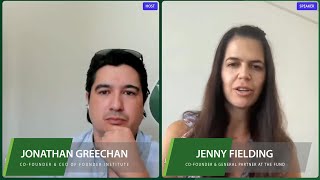
Jenny Fielding, co-founder of The Fund.VC, has written over 200 pre-seed checks and looks for founders with resilience, a market secret only they see, and coachability. She invests in money, health, and work—what she calls the table stakes economy—and pitches advice: hook listeners, cut 75% of your deck, and find investors who become part of your team.
Chapters
So I'm going to kick it over to John. Our next keynote is great follow-up from the last one and just even more timely after these pitches. Jenny Fielding of the Fund. John, take it away, sir. I'm gonna go hide into the ether while you have this awesome combo. All right, awesome. Jenny, throw your camera on and your microphone on, and here's Jenny Fielding. It's amazing. We were just having a conversation offline before this, and we were talking about some interesting trends, and I'd like to get into some of those trends. A lot of interest coming into the pre-seed and idea seed space. But before we do so, I want to make sure that I give you a proper introduction. I allow you to introduce yourself. So let me— yeah, tell us about yourself, Jenny. I'm probably going to come in and throw a little bit of insight on top of that. But tell us about the fund and tell us about what you're building.
Awesome. Well, thanks for having me. Big fan of what you're doing here. So I started a long time ago as a founder. Like many people probably watching this, I learned a lot of hard lessons and I thought I could kind of share some of the things that I screwed up, some of the lessons that I learned. With other founders. And so really the way I got into investing was by being a mentor, spending time with founders and just kind of talking through some of the things that I struggled with. And through that, got recruited by the founders of Techstars who said, hey, founders make good investors. This was like 2013. So that was a little bit less of a common thread. And yeah, I spent the last 7.5 years at Techstars running the New York office. I was lucky to invest in 70 companies, including companies. One went public, a few unicorns. So I've kind of seen it all. And then 4 years ago, while I was still at Techstars, I started a side hustle, which has now become my main hustle. And that's a founder community called The Fund. And we've actually just invested in our 200th company, which is a big milestone for us. We do all first-check investing. So we write checks between $50K and $250K, and we invest globally, which is pretty unique.
It's super unique. And just for everybody in attendance, and we have the audience today is going to be fairly distributed across idea, early-stage, pre-seed entrepreneurs, but also a lot of pre-seed investors. So I just want to give a little bit of a shout out here, okay? Putting over 200 first checks into companies It is really hard, okay? That's not an easy thing to do. A lot of the market these last couple of years has started moving toward the pre-seed and the seed and all of that. It's come earlier, but trust me, like, that stuff is incredibly risky and you're doing it at scale. So I guess my first question is, I mean, clearly being the MD of Techstars in New York, which must be one of the biggest Techstars programs around the world for 8 years, help you get some insights into this, but we have so many people in the audience today that are investing first check, second checks, third checks, just very early into a lot of these companies. I mean, in this, like, you don't have a lot of data, right? So how, how, uh, can you just share some of the best practices that you have in figuring out who to invest in and, you know, deciding the signal versus the noise?
Yeah, I mean, Techstars was the greatest training I could have ever had, right? It was thousands of applications. So the New York program would typically get 1,500 applications for 10 spots, and I would read every one of those applications, and I would meet with hundreds of those founders. So the pattern recognition, um, was very strong. And just, um, and then I would, you know, mentor other programs, and I'd be on the selection committee of other programs. So it was literally just like learning by being in it, right? Because no one taught me anything. I was like, my first program, they were like, all right, you're off to the races. So, you know, over the years you learn, you iterate, you refine your process, you know, you learn from things that don't work, you learn from things that do. And so that, that was really incredible training, what I call zero-to-one investing, right? So, you know, that kind of first check, oftentimes these were kind of idea stage barely prototype stage, and that really helped me. And then the things that I like really honed in on, obviously you have to focus on the founder. We all know that, that's pretty obvious. And it was really like founder characteristics. And so I started kind of getting more, you know, specific about the founders that I could work with. And so I put that as a caveat because the things that I'll kind of outline are really, you know, different for every person. But these were— Right. When you're working with an early-stage company or early-stage founder, you have to help them kind of unlock their greatness, right? And so there are certain types of founders that you can work with better than others. So you have to kind of know your own, you know, know what resonates with you. And for me, there are a few things. One is like the resilient founder, right? So I, you know, I started my first company and it was really hard. Like, you know, it was the hardest thing I ever did. Nights I'd come home and I could barely make payroll, I'd be crying. I mean, this was like really intense stuff. And so, I was always looking for that founder that kind of had the chip on their shoulder, they had something to prove to the world and that when things got bad, the money wasn't there or the customers weren't there, that they were gonna be resilient, not kind of give up. So I think that that was like one of the characteristics that I was really looking for. Really looking for. And I'd say the other one is a founder that really has a secret about the market that other people don't know. So although we weren't looking specifically at products, we were looking for founders that kind of have that vision and they can tell you, articulate a world that doesn't exactly exist. And that to me is really exciting. We don't really want to be investing for stuff that's today. We really want to see if this is going to be a big company, where's the future going to be? And so when I started investing, say, in the blockchain space in 2015, that was one of those moments where a lot of people said, like, market size is small, right? And fast forward to today, 7, 8 years later, we know market size is large. Despite the ups and downs, we know that crypto is a thing. And so I would come across these founders. I didn't know a ton about crypto, but they could articulate a vision and a world that was so much further ahead of anything that I was hearing or anything that I could possibly think of. And so that was like the other thing we're looking for is like, does this founder have a secret? And then I'd say the third characteristic was really about, you know, what, you know, how they process information, right? And so we're looking for founders— I don't like to use the word coachable. I think we're looking for founders that can respond to data and that are kind of open to feedback, which is slightly different because as an early stage founder, like you need to get a lot of feedback and then you need to synthesize that feedback. And whether that's from your customers, your investors, or from whoever, that was kind of like the third characteristic. Are you open to data? Right. And so are you so set in your idea that you're not gonna be able to be responsive? So I'd say those were the three things I kind of learned and refined along the way that really worked for me to become a pre-CEO.
And it's so— there's so much in what you just said that I think is of value. So I want to start to dive into a couple of things. So one of the first things there was the fact that, okay, you are trying to find as an investor, right? And I think a lot of entrepreneurs don't grasp this concept. You know, you're trying to find companies where I think you phrase it as a fit culturally for what you're doing, right? But at the end of the day, it's literally like we're forming teams here. You're putting money into this business, but at the end of the day, like you want to become essentially a team member. You want to help this business, right? So tell me, like, is it— and you are a— you're stage agnostic? Well, not stage agnostic, but at least you're sector agnostic.
Yeah, we're definitely not stage agnostic. We only do pre-seed. We're relatively sector agnostic, although we do focus on a few verticals. But yeah, and we're global, so we invest in companies around the world.
So how do you— it's— so there's that mix, right? It's like how somebody that's cultural, this stuff, I'm trying to see like that connection there. It's probably I'm looking in between the lines. It's probably, okay, is this a founder that I can help? All right. Honestly, there may be a lot of founders out there that are super talented, right? But maybe you're just not the right investor, right? Maybe you're just not the right team, the right partnership to create for them. So how do you see that connection?
Yeah, I think we all put on filters. And so for me, having invested over 200 companies, there are certain archetypes of founders that I just work better with. I actually work really well with technical founders, right? And so I I can often be a nice synthesis for them because they're technical and I can see things on the commercial side that potentially they don't see. I was the CEO of my own company and had technical co-founders, and that was like a good match. So for me, that's one of the things I'd say. Another archetype that I work really well with is what I call the empath founder, right? So this is the founder that I was. I was solving a problem. That I personally had and I needed to see it fixed in the world. And so that empath founder, you know, just doesn't care if they don't get money, doesn't care if people don't like it, like they want to see this problem solved. So that's an archetype. So, you know, again, investing is very personal and, you know, you have to kind of find the investor that resonates. I'll give you the flip side, which is I tend not to work, you know, really well with founders that are the classic kind of like MBA founder, right? So, you They see a white space, they've researched it quite well. You know, these are like, you know, the classic case, you know, if you go to business school is like the Warby Parker founders, right? Who met at business school. They saw, I mean, and they're amazingly successful. So this has nothing to do with success. It really has to do with like how you relate to those founders and again, what you can unlock. So I don't think in investing, especially at the early stage, there's any rules to live by. It's really, the chemistry that you have with your community, right? And those are your co-founders, those are your employees, and those are your investors and your customers.
I couldn't agree more. And I bring this stuff up because literally, as you know, when I open this talk, it's the early stage, the idea stage space is something nobody wanted to touch this space for so long. It became very sexy over these last couple of years. And the reason why I was so excited to have Jenny join us today is because the fund— there are a lot of people trying to attack this space. The fund has already written 200 first checks. So I just, I just want to bring that to mind. Okay, so I also want to point out, you were talking about before, right? We're in a space where you're trying to invest in founders. There's not a lot of employment. And there's a quote that I found that you have said a couple of times, which is that as a CEO, your job is to inspire, not to educate. Okay. And I think it's a brilliant quote, but I want to ask you to elaborate on that.
Yeah. So when you meet an investor, you probably have— so it's a 30-minute call after chitchat and bad IT. It's a 20-minute call. And so, you know, often—
Oh, that's great. Yeah, yeah. Honestly, yeah, you should probably assume one-third of it. Right.
And so, you know, I assume that I am the dumbest person on the call, right, or in the room. And so for you to explain the minutia of your business in 20 minutes to make the dumbest person in the room smart is just not going to work, right? And so on those first meetings, you know, at some point you will have to, you know, go deeper with an investor. But in that first meeting, you just wanna hook, right? And the hook is like to get me excited. I just wanna lean into the Zoom because I don't wanna be like on my email or looking at my phone or doing all these other things. And when founders get super in the weeds, 'cause you know, it's not coming from a bad place, they're super excited, but all of a sudden I can't follow. Again, I'm the dumbest person on the call. And it's like, then I start thinking about other things and what am I gonna have for lunch? And like, what am I gonna do? And so, you know, what you need to do to the investor is hook them in. And so, you know, I just went through this to all the founders out there. You know, I just raised my third fund and it was the same thing. Like, I got really excited about our model and I would like get into how the sausage is made. And it's like, it's not necessary, right? The investor or the LP in our case, like, they can only remember two things from the call. What do you want them to remember? And then just say that thing over and over and over during the meeting, right? And so get me excited about a hook. Emphasize it, say it again, but don't try to educate me on all the stuff that you're doing. I'm sure it's great, but I cannot process that. That's not how the human brain usually works.
Right.
And listen, I give this advice all the time, and then I went out to pitch a new type of LP, and I fell into the same thing.
It's so hard, right? Because we work on this shit every day.
Everything. And we have this person, that person. And I literally had an LP like after one of my early pitches call me and say, that pitch was like actually kind of confusing. Can you, can you like tell me about this aspect? And I just thought, oh my God, I did the exact same thing I coach hundreds of founders on. And so the best thing you can do is just practice and get people that will tell you the truth, right? So I think programs like this Founders Institute and the like are just brilliant because you're getting feedback and you just have to take that feedback and then really action it. And let me tell you, that investor that gave me that feedback, I repitched him and he ended up investing. And I totally changed my pitch for the rest of my fundraise based on that really hard feedback that, that, trust me, when he told it to me, I didn't, I like, I had a moment of like, oh, I did not want to hear that, right? I practiced and all these things, but, you know, I sat with it and he was totally right. So That's what I mean.
I can't agree more. There must be— if there are any psychologists in the chat here, maybe raise your hand because this goes far beyond like entrepreneurship, venture capital, whatever, right? It's like we get so far into our heads that we, when we start talking about this thing that we have and the people that we're talking about it to have no idea what the hell we're talking about and we're already like on like points 9 and 10 and 11 and 12, you know what I mean? This is— it's such a trap no matter what you're building, startup, fund, whatever, right? It's— it is. Yeah. And to this day, like, I still— like, somebody will call me tomorrow, tell me about Founder Institute. I'm probably going to talk to them about stuff that they have no idea what I'm talking about. I should just focus. I should focus about points 1 and 2, right? But learning what points 1 and 2 are, like, that's kind of the trick, right?
So that's the minutia.
And especially so we brought this up here with you, you know, raising funding for the fund. But it also like it's doubly important because these are the companies that you're working with. They're at a point right now where they are you know, I'm sure they— a lot of them have products, some have customers, right? But at that pre-seed and idea stage, being able to get that message down is 10 times more important, right? So we talked about it here, it's incredibly hard. I don't think anybody has the answer. If they did, they'll be a trillionaire. Um, what are— what's some of the advice that you give to a lot of the founders that that you guys are investing. Again, I just want to point this out, guys. 200 checks, first checks into entrepreneurs. All right, I feel like a lot of entrepreneurs don't appreciate the, uh, the investor side of it. As Jenny said, she's out there, she's selling, she's, she's, uh, you know, it's, it's not, it's, it's not her money that she's investing largely. Like, she's going out and selling other people on the thesis that she has. So how are you communicating that to the founders that you're seeing?
Yeah, I think the biggest thing is just simplicity, right? And so going back, picking those one or two things, and then we can get into how you pick, but just simplify. So I tell all my founders, before you do a deck, just write it in a Google Doc, just write it in a Notion page of what your story is. And then literally cut 75% of it and keep on reading it through. Well, does this make sense when I've cut 75% of it and it literally distilled down to like one paragraph or a few sentences, right? So it's just that iterative cutting and simplifying, cutting and simplifying. And then what to pick. I mean, I go back to what I said about painting a picture of a world that doesn't exist. I think if you want to raise venture capital and you are pitching a high-growth scalable business, right? So as opposed to kind of a small business or a business that doesn't need a lot of funding, because those are, you know, quite different. But if you think this is a business that's going to be fueled on other people's capital, VC money, then you have to pitch a massive idea, right? A big vision. And, um, you know, that can be, that can be really tricky, right? Because, um, you oftentimes don't have, you know, the metrics to back it up or some people will say, well, this sounds really unfocused. So the art is how do you pitch something big and stay and sound focused, right? And that's kind of the balance. And again, we went through this with our fundraise. We're literally 2 general partners and we're telling people that we are investing across the world. And we had a lot of LPs that were like, I'm sorry, like, what are you smoking, Jenny? Like, how can you be sitting in New York and investing in Nigeria and telling me you're getting access to the to the best deals. And so it's there that then you unpack how you're able to do that, right? We were lucky in that we have, you know, a track record that we could go back on. And, you know, some of you guys were starting, won't have the traction yet, but you think you've got the first principles that you can articulate why you're the ones to do this, you're the ones to execute, and why this big vision can come about through your, your work.
So I, yeah, I could not agree more with any of this. I mean, literally, it's like whatever you're trying to build, it's you're sort of in a continual A/B test, right? I mean, is that an oversimplification?
No, I mean, I think like, you know, it's all just about hearing feedback. And I think, you know, as founders, and again, I was a multi-time founder, we get so caught up in our product and our mission that we actually just don't hear what people are saying. And people will tell you, their response is how they look at you, you know, Are they engaged? Are they excited? Like, you can read it all. And I think as founders, we have to just be super intuitive and read the signs, right? As opposed to focusing on our product, getting so excited, focusing on the fundraise. We have to read the person in front of us and just say, like, do I need to course correct on this pitch? Because this person is not getting it. And we do that all the time. Like, literally during the pitch, we're like, this is like not working. Like, let's try something else. And you have to just kind of be on your toes. Yeah, that's part of, you know, the founder job, I think.
And it's part of the investor job too, right? So we also have a lot of people in the audience today that are investors, a lot of angels here, a lot of angels that are trying to raise micro funds and things like that. So it's kind of, I don't know if I would say it's funny, but it's like, yeah, an angel fund, a VC fund, It's all, it's all the kind of the same practice. You have to find an audience, you have to come up with a thesis, you have to come up with a pitch, and you have to continually refine that until you really hit that chord. And all the while, you have to literally be like slapping yourself on the leg to not talk about the 9 or 10 features that you're so proud about that nobody else cares about, right?
Yeah, I mean, I'll tell you a funny story about our fundraiser, which is like, I don't know if I really should be sharing this with the 400 people that are tuned in, but we'll go for it. So as we were kind of talking about our thesis global and whatnot, there were some LPs that were like, okay, Jetty, you're definitely trying to do a lot here. So I kind of went back to the drawing board of like, how can I make this sound a little— how can I bring this in a little bit? And when we looked across our portfolio, we were actually directionally, although we're generalists, we were actually investing kind of in 3 areas, which I call, or, you know, which is like money, health, and work. And, you know, we do stuff on the edges of that. And those are very broad. Money can be Web3, it can be payments, it can be fintech. Work can be future of work, automation, productivity. So these are quite big. They do encompass a lot. But I like woke up one morning and I was like, money, health, and work. What are those things? I mean, those are the things you actually need to live. So I came up with this idea that I call the table stakes economy. So now like I was pitching and people say, well, what do you invest in? I'd say, oh, the table stakes economy, money, health, and work. And I'm telling you, the LPs like ate it up. They loved it, right? Because it sounded, even though we were doing nothing different than the day before, we kind of encapsulated this into something that felt tangible. It felt focused. It had like a snazzy like tagline. Like what does table stakes economy mean? It's totally made up by Jenny. But it really, really resonated with a lot of LPs. And so I tell this to especially that if you're raising a fund, I tell it to you, but also to the founders. It's like package this up into something, as you said, that's sellable, right? And LPs want something that feels very quantifiable. They really like that it had this. It's almost like a tagline. And I cannot even tell you how that kind of changed things for us. And so, you know, my co-founder and I just like always kind of laugh about like the table stakes economy, but it really like was instrumental in our fundraise. And I, so I think you can use those threads whether you're raising a fund or you're raising funding for your startup is just, you know, come up with a way where you're doing what you wanna do, but you're really kind of anchoring it in something that people relate to. Right. And so that was something definable. These are 3 areas that they invest in. Right.
So the job of any founder, in my opinion, it's not— and we were talking about this with Andrew, uh, Philab of Wrike before— it's not— you're not an idea person. You— I don't even know what the, what the parallel is. It's like literally you're a translator. You're somebody that can see— you have— there are amazing ideas in all of our heads. I'm sure we all have amazing ideas, right? It's the people that can actually translate those ideas just something that's simple that are the ones that are super successful. Okay, so we're going to wrap up in a minute here. So two more things. Okay, you brought up this table stakes economy, and I think you said there were three things. Can we hear those three things?
Yeah. So what are the things you actually need to live? Right. So you need money. Right. So to simplify it, right, if you don't have cash, it's it's going to be kind of hard. You need your health. So that's the other area that we focus on. And then work. Most of us have to work. And so we— and there's so many things that can be derived from that. But at the end of the day, these are like basic human needs. And so we thought a lot of the other stuff is just a little external. Doesn't mean they're not important, but that we're going to focus on these kind of core areas. And we didn't pull those out of the air. Again, we looked at our portfolio. We've been running the fund now for 4 years. We looked at our portfolio and we're like, where are the outliers coming from? And they did, they fell into these buckets, right? Our top performers were kind of directionally in these areas. And so we were like, okay, well, we should double down on those, but we didn't have a name for it. So we just called ourselves generalists because we were opportunistic. But once we kind of, couched it in this framework, it really kind of catalyzed for us and for our story.
That's amazing. And the last thing I just want people to know, tell us about the fund. Okay. And just, this is the first time Jenny and I have never met. I sent her an email, she responded to me, thank you. And now we are on the slide chat with—
You can send cold emails. Jonathan wrote a very thoughtful email and I was like, yeah, of course I'll come help.
Yeah, send a good cold email. But honestly, I just, I also like the reason why I reached out is because literally you are probably, maybe not even probably, but I mean, the amount of venture capital that has gone into the whole venture capital space for the last couple of years All right, that's invited, uh, you know, pension funds, a lot of tourist investors, so to speak. At the end of the day, this pre-seed, this idea stage, which a lot of people that don't know how to do it have been coming into, all right, is very challenging. And the fact that, um, that I've seen, Jenny, I've been watching what the fund has done, uh, from afar. I live in Colorado, so I know some of the people that, that you have Colorado network here. Um, it's— yeah, you're writing first checks to companies at scale. That is not an easy thing to do. Um, it's not an easy thing to do as an investor. It's not an easy thing to sell to LPs. It's not an easy thing to do in any way, shape, or form. And the fact that you guys are doing this at scale better than anybody that I've seen recently— so I just want to say that that's why I reached out. Thank you for answering my email. But I guess, all right, this is a very verbose way of me saying, do you have a final piece of advice for, you know, you're looking at obviously thousands of investments if you put in 200 first checks. So for a founder that doesn't have a lot of data, you know, the definition of traction at their point in the company is so nebulous, right? I'd say that's my question number 1 to finish. And then my question number 2 to finish is an investor, at the same time, how can they actually, you know, kind of sort through all of the stuff to make a decision for them that might be a, you know, a decent financial decision?
Yeah, well, I mean, I think, you know, this might sound obvious, but as a founder, you need to differentiate yourself. And I think the last few years there have been a flood of people coming into venture capital, which on the one hand is exciting, um, that more people are starting businesses, but on the other hand, we were seeing so much derivative stuff, right? So someone would pitch me and I'd be like, this is like those 10 other things. And they'd be like, no, no, but, um, it's different like this. And it'd be like this one little like nuance. And so, you know, that's like feature number 9 or 10. Yeah, right. And so again, going back to like, you're not pitching a feature, you need to pitch a company. And I say that to founders all the time. Either like, this is Oh, there's a tool that does this. I'm like, okay, I don't want to invest in a tool. I have to invest in like a groundswell and like, what is this thing that's going to change the world? And so, you know, I think that is, you know, the biggest thing is figure out how to differentiate yourself, your product, your vision, your team, all those things. And I think that will grab the attention of the investor. And then on the investor side, you know, doing pre-seed at scale is quite hard. I was lucky to spend 7 and a half years at Techstars kind of learning and also seeing what I thought worked and didn't work. And so what we do is a little bit different. So instead of saying myself and my co-founder, the general partners will provide value to our portfolio or provide or get all the deal flow or all of this, we've created a community. It's a community of founders and operators, and that community will provide the deal flow, the vetting, the diligence, and help us with our decision-making. And then once we invest in the companies, those founders will also help support the companies. So instead of what we, you know, what a typical VC is one-to-many, the general partner helping the portfolio company, we've pioneered something that we call many-to-many, right? So we've got this kind of community of 500 founders and operators, and those people are supporting the fund and supporting the portfolio in a many-to-many model. So it works for us. So if there's other, you know, investors listening and they want to, you know, talk about how you can, you know, use your community to kind of power your venture fund. But, and if you're a founder listening, again, like, if you're going to take money from someone and you want to kind of understand the value, you know, you got to ask. But just understand that if you're a general partner and you have a portfolio of hundreds of companies, it's very hard, you know, to provide value on a one-to-one. And so you kind of have to get creative. So the way that we kind of did it was slightly different.
Awesome. Okay, uh, thank you so much, Jenny, for joining us. Thank you for everybody for the questions in the chat. Uh, Jenny, I'm a New York native. Maybe next time I'm there, we'll, we'll connect.
Sounds great.
Good to meet you. Thank you for joining. And everybody, yeah, throw any emojis you have— hearts, hands, claps, 100%. Whatever else I'm seeing here. Thank you so much, Jenny.
Thanks everyone. Good to see you.










