FounderX 2022: Keynote Interview with Phil Libin (Co-Founder of mmhmm, Evernote, All Turtles)
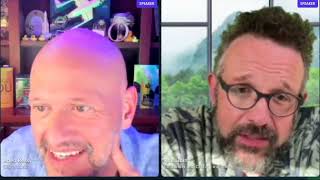
Phil Libin, who founded Evernote and mmhmm, moved from San Francisco to Arkansas as part of a larger shift where knowledge workers can live anywhere. He argues the real productivity gain is mixing synchronous and asynchronous work, and warns that AI-generated misinformation is eroding our shared ways of knowing.
Chapters
So let's turn it over. Can we bring my first guest on stage? I went a little long, sorry about that. Hi, Phil.
Hey, Dale. Good to see you.
Yeah, it's really good to see you too. This is great, everyone, because Phil and I are friends and we haven't seen each other in a while. So maybe we could just open with, tell me a little bit about what's going on. How's life? How's Arkansas? How's the company?
Oh man. Yeah, it's been a very long time. I think it's like well before COVID right? So probably—
Yeah, I saw you right around when COVID started, like right before COVID started. But yeah, we were at the Modernist, I think.
Life is weird. You know, I mean, what else can you say? It's been a weird couple of years. Yeah, I moved from San Francisco to Bentonville, Arkansas. More or less at random, but it's kind of great here. We started a new company called Mm-hmm right when the pandemic started. A few other companies are doing well. You know, I agree with what you said. I think this is the— it feels like we're living through the changiest time that the world has ever seen. Everything's up for grabs, and that's kind of scary for a lot of people, but it's ultimately good news for for entrepreneurs because entrepreneurs are supposedly the people that run at the change and, you know, use it to make the world better.
The amount of, I mean, the talent available to entrepreneurs is at all-time highs. I mean, these big company employees are like jetting out the door left and right. And, you know, they're not helping by being like, come to work, don't come to work, you know, like, eh, eh, eh, eh. I don't know. Are you excited as an entrepreneur right now?
Yeah, I mean, I am, you know, it doesn't take that much to get me excited. I'm trying to moderate my general excitement, you know, trying for more equanimity these days. But yeah, I think, look, industries that used to be kind of fundamentally resistant to change, like the real, like the real bones of civilization are up for grabs right now. And this is the first time really in my lifetime, and I just turned 50. It used to be that when you start, when you make startups, I'm on my 5th startup right now, but startups could only really compete in certain pretty narrow fields that weren't very resistant to change. You can make SaaS software because no one really knew what that was a few years ago and stuff like that. But, you know, but if you were trying to work at like sort of the fundamental, like bedrock of society, like, you know, banking and healthcare and real estate and like stuff like that, it was really tough for startups to make an impact because those industries were so dominated by, you know, giant players that were very resistant to change. But kind of since COVID it's all— there is no such thing as an industry that isn't changing. Every industry is changing. So everything is now possible for startups to disrupt. Which is, uh, oil went to zero. Like, yeah, I mean, it's not there anymore, but yeah, yeah, no, it's definitely not there anymore.
Well, I mean, and that's pretty funny. It went to zero to show us it's possible, and how it went to like the opposite to make it needed to happen right now. I mean, it's unsustainable what's happening in the world today.
It's been a, it's been a very interesting few years. Um, And I think, you know, I try to think of myself as someone who has agency in this, you know, the world. I don't have to be a passive bystander in the world. I don't have to just sort of sit back and let the world, you know, happen to me. And I think more and more people now can have that kind of agency because, yeah, these things that used to be almost impossible to change, you can now change.
I mean, you know, and I'm living through that with the venture world, right? Like, I tried to change it and I did. I like dented it. Like I was like, eh, eh. You put some big dents in a messed up thing, but now I'm actually just changing it. Like it's possible. And it's, is it a mindset or is it just a function of these, in your opinion? Is it like our minds have changed or has actually something else changed?
Well, I think there's, I think there's a bunch of stuff that's happening. Uh, I think I'm really focused on what I'm kind of— what I've been thinking about is the out-of-office movement. This idea that for a lot of people, um, you know, that's the mind change.
The offices are still there, right? It's not like they got demolished. COVID helped, so there was a physical—
right?
Yeah.
And I mean, a lot of them are A lot of the, like, look, when we were younger, right, the way you would think about your career is, you know, you have to, when you're young, you do some work and you have to make all sorts of compromises for your career. You have to, you know, live in a place that's probably smaller than what you could afford so you could be relatively near the office. And then you have to spend a lot of time commuting and you make all sorts of compromises around, you know, family and relationships and health. And maybe at some point in a few decades, you can retire and then you can enjoy life. And that was sort of like the treadmill, the model. And that I think is being fundamentally challenged. Um, and I think in— Yeah. And it changes everything. It changes the whole idea of how you live and where you live and how you work and how you think about leisure and how you think about about your career and how you think about just about everything. Things that we haven't— Michel Foucault, French philosopher, talked about historical continuities and historical discontinuities. The idea is that society goes through decades, sometimes hundreds of years, with certain things being talked about kind of the same way. Things don't change for decades and decades and decades. And then all of a sudden, society starts talking about something that hasn't changed for decades in a different way. And so we're living through this, like we're living through several historical discontinuities piled on top of each other, probably since COVID started, you know, in many ways triggered by COVID, but also now triggered by a bunch of other stuff.
I think they were underway, but maybe at a slower pace and COVID was just like, poof. I was like, wham. But it's happened before. I mean, I was just in Paris like yesterday I know a place near and dear to your heart. I had a party at a founder's who's building space stuff at their factory. It was pretty awesome. And Napoleon built Paris in like his lifetime. It was not that way. And he was like, I want a road here, move that town. We're going to make buildings look like this. And like within his lifetime, it totally So it is possible. So tell me a little bit. We're going to take questions in the Q&A. So everybody, I'm losing my voice a little bit. If you've got a question for Phil, there's Q&A on the side, pop it in there and we'll bring them on screen. But before we do, tell me about what you're working on. What— why is obviously this big change you brought up is the basis of your company, right?
Yeah. So I have, I have I have two companies. So there was a company called All Turtles, which is our product studio. We started that about 5 years ago. And the goal of All Turtles was just to make products that could be important for the world with kind of as little of the Silicon Valley kind of bullshit as possible. And we've spun a few things out of it. One of the things that come out of it is a product called Mmhmm, which we started right at the beginning of the pandemic, right after the pandemic. Started, which is something to really be the next generation of video communication. It's a way for distributed teams to be more productive than they ever were when they were all, you know, sitting together in one room. But all of the various projects that I'm either, you know, investing in or the few that I'm running myself, they all have this common thread. They all have this common thread of we have— we can decouple how we live and how we work now in ways that most people couldn't really do before. And that decoupling, like the ability to let people live where they can have the best life and work where they can have the best job, and those two things don't have to be in lockstep anymore, that's a profound change. That's a profound change in the world that will affect every industry. And so we are working on, you know, a few different companies, you know, some I'm very active with. Others, it's just a, you know, investment or, or some advice. But they all have this in common of like reimagining what the future of work and life is when those two things are no longer firmly connected.
So are you technically CEO of both All Turtles and, uh, Same?
Yeah, I'm CEO of, um, and that's, that's my full-time job. I mean, that's the vast majority of my time. Uh, All Turtles, um, have a great COO who, who runs all of the day-to-day stuff. So I, you know, I do some general, you know, advice and strategy or whatever. But it's other than, like, you know, kind of specific tasks where I'm needed. My full-time job, my day job, is CEO of Mm-hmm, which is super interesting. It's fun to be, you know, kind of—
I said Satan. I meant Mm-hmm. Sorry about that. We had a company, Satan. So that's like—
I remember.
I used to tease him about the name, and you did the same mistake. The many Ms. Lots of Ms. Yeah. But didn't you buy like all the Ms that you could write?
Well, we save money on vowels, so we can afford a lot of Ms.
Should we turn it over to some audience questions or do you wanna, you mentioned you're investing. Is there anything you wanna add about that or?
Yeah, I mean, we are investing in helping build, and again, the hypothesis is the out-of-office world. It's what's just about everything is changing and just about everything's changing because Uh, yeah, look, think about it like this. Like, let's say 3 years ago, right, before COVID how many people do you think there were in the world that could, uh, live wherever they thought would be their best life without any thought about how that would affect their career? Like, they just wouldn't matter. Like, they can live anywhere they wanted and, and their job would stay the same. Like, there was probably a couple of hundred thousand people like that in the world, you know, generally. And over the past 3 years, it's gone from— let's be generous about it. Let's say there was 200,000 people like that. It's gone from 200,000 people to right now worldwide, it's probably 200 million. Like, if you just think about the 1.5 million knowledge workers, you get 10, 15% of those, which I think is an undercount. So you've kind of gone from 200,000 people that have this opportunity, 200 million people that have this opportunity. And I think And I think in 10 years, it'll be like 2 billion. I think it'll be like a quarter of the world's population. So you've got 2 billion people that can choose how to work and when to work and where to live and how to live and be where they want to be and work the times that they're most productive. And that's going to change absolutely every part of life for 2 billion people.
So that's what I think is going to happen. Well, I think moving out of the cities is— Cities are not the easiest place to live, always. Less than— they're becoming less and less so.
Well, and I think the cities, you know, if, if the only people that, that were in, you know, New York at any given day, or the only people that were in Tokyo were people who really wanted to be there right now, they would become, you know, it would become paradise, uh, as opposed to the, you know, 90% of people who right now don't actually want to be there. They're just— they just have to be there, you know, for work. And so that you're, you know, stuck in traffic, you're driving up real estate prices. If, if there was more intentionality about life and work, right, if more people were able to be where they really wanted to be, not because— not be somewhere because they had to, because of this fundamental compromise, it's better for everyone. So it's better for cities by far, but it's also better for obviously more, you know, smaller communities as well, like, like the one that I'm in right now.
Okay, how small is your community?
Well, so I'm in a place called— so I'm in Bentonville in Arkansas. So, you know, there's probably— the city itself is about 50,000 people, but the metropolitan area is maybe half a million. So it's not tiny. It's a small city. Like, there's probably half a million people within a half-hour commute of where I am. So like, if where I'm sitting right now, if I were to like get in a car and drive for a half hour, I'd probably get to about half a million people. Compared to like in San Francisco. And I used to live in the middle of San Francisco. That's what, a half-hour commute is probably a million people? So you can't get very far in a half hour in San Francisco.
Yeah, well, fair enough. It's, it's, um, I think it's 7 million in the wider Bay Area, so maybe an hour you'd get to all 7.
Yeah, exactly. Um, so it's, you know, it's smaller, but it's still— it's not rural, uh, which for me is like, this is the ideal balance, right? There's like, if there's enough stuff to do, there's enough stuff to walk to, there's lots of bars and restaurants and coffee shops and museums, but it doesn't have any other problems with the bigger cities.
So you, so basically you chose that, right? Consciously or unconsciously, but it was still a choice. And that would, like, you know, it's interesting, like, and so a lot of people here are probably wondering, well, what's your view? Obviously some businesses can't do what you're talking about, right? Because they make car, or I went and saw a friend who's building space hardware. They have to be there, right? Because they're actually screwing stuff together. So aside from those, like, do you recommend that everyone considers being virtual or do you say like some like knowledge worker business is really still needed in person?
I think that the real question, the more important question I think isn't actually distributed or in person. That's important, but I think the actual more fundamental question is synchronous or asynchronous. The real productivity win for organizations is moving, is kind of breaking out of the tyranny of all work being synchronous work, meaning you have to do things at the same time as other people all the time. The real win is saying there's a lot of things that are just much better asynchronous. So even if you're like together in an office, you still shouldn't be forcing people to sit in a meeting that's, you know, where one person is talking and 50 people are bored. That should all be done, you know, asynchronously. So the synchronous and asynchronous is the real shift. That's the thing that we're playing with most. That's the thing that mm-hmm is really for. Distributed teams like we are don't have a choice. We have to do a lot of stuff asynchronously because otherwise it's just all on Zoom, which isn't that good because synchronous video is good for certain things, but it's bad for all sorts of stuff. But being in person is bad for all sorts of stuff too. So whether a company is going to have an office or not, the real thing is to think through What stuff do you need to do live in real time at the same time as everyone else and what kinds of stuff are better done asynchronously? Then once you have that, then you should let people be where they're most productive. If you're making rockets and you need to be at the rocket plant, then yeah, that's where you're going to be most productive. Of course you have to be there, there's no question. Or if you're a brain surgeon, you got to be where the brains are.
[FOREIGN] Well, actually, they have the robots now, that are pretty crazy. So that, and there are asynchronous, I'm not sure brain surgery, there's asynchronous heart surgery though, for sure.
Yeah. Well, and that synchronous to asynchronous transition is also like, that is one of the central—
It's synchronous, but let me rephrase. It's synchronous in that it's surgeons doing it, but they may not be in the room, right?
Yeah, so that would be like synchronous and geographically distributed. Basically, think about like distributed both in time and in space, right?
And very few times, like, I, I think less and less the in-person is going to be needed.
Less and less in person and less and less at the same time.
So for example, um, where do you think we'll get to in terms of population?
50? For what? What do you mean?
Percent of humanity can be in, let's say, asynchronous or not in person. Where do you think it's going?
Well, I think if you're talking about big picture stuff like that, you're kind of getting into universal basic income and questions like that. I think the real question is what percentage of humanity need to work? And in a few decades, what percentage of people need to be engaged in an economically productive activity?
Well, can I throw it? And I point out that I see on that question, since you brought it up, I think a lot of people, because we have a lot of work to do. Yeah, I actually think this is an all hands on deck moment. You know, it's not like— I mean, could we do it without all hands on deck? Yes. Uh, could it be done faster with all hands on deck? I mean, everyone can help with the transformation that's needed.
Well, a lot of people have— there's this, there's this great book, I'm trying to remember the author, but No matter, it's called Bullshit Jobs. Um, of which there are many, and its main hypothesis is that, yeah, there's an ever-increasing number of bullshit jobs— jobs that don't actually do anything, don't produce anything in the world other than making the people in them miserable. Because people in bullshit jobs tend to not be very happy, they kind of feel that they're at bullshit jobs. And just because it's a bullshit job doesn't mean it's It's easy. It could be quite stressful. It could be quite hard. So you have a very large percentage of humanity stuck doing meaningless bullshit jobs in a way that's bad for them.
I could make so many jokes right now. Okay, so yeah, keep going.
No, do it.
Well, I'm not gonna try to do like meta.
Well, no, exactly, exactly. I mean, look at all the news of the layoffs recently, right? You do like a, you hear Coinbase laid off whatever, 15% of its people, and you do the math backwards and it's like, oh, they must have had 7,000 people. Employees. And like, what the hell could 7,000 people possibly be doing at Coinbase? What can 150,000 people do at Meta? Whatever, however many people they have. Like, it feels like they should have gotten to 100 people and then stopped, and it would have been, you know, it would have been a better company, it would have been better for the world. It's like, whatever went wrong with Meta went wrong with, uh, you know, the last 149,900 people that they, you know, that they hired. So yeah, like, there's a lot of bullshit jobs, uh, and the tech companies are nowhere near the worst of this, obviously. Like All big companies, governments, bureaucracies. So I think it's a significant step forward to get rid of— not force people to do bullshit work, which is stressful for them. Uh, but then how many people can, can do non-bullshit work? Well, yeah, as many, as many as want to, of course. And how many of those need to be in person? I don't know. Yeah, 50%. That seems like a good, you know, kindergarten math round number.
There's a lot of work to do. All right, let's take a couple audience questions and then we have the venture side coming on. I couldn't agree more, by the way. In fact, I'd love it if everyone here who has a bullshit job right now were to quit. I can point you in 100 directions of non-bullshit areas that you can contribute to and you're needed. Okay. This is an easy one. Any book you can recommend? Obviously, this is asked by startup founders primarily and some investors?
Well, I mean, we just talked about Bullshit Jobs. It's a good book. Uh, you know, one, read that. Most important book that I've ever read, you know, most influential on, on my life, is, is The Clock of the Long Now by Stewart Brand. Um, it, you know, the, the Long Now Foundation, for people who don't know, is just an organization devoted to long-term planning, long-term thinking. And, um, I just think that the book The Clock of the Long Now is just profound. It's very brief. You can read it in, you know, 40 minutes. You should. In fact, there's one chapter, chapter 7, chapter 7 of The Clock of the Long Now. There's like one diagram in chapter 7. It's like the most influential diagram I've ever seen in my life.
So check it out.
Wow.
I've become really good friends with the director. So it's Xander.
He's awesome. Yeah, Xander's great. Yeah, that's a super high-quality organization. And Stewart Brand is You know, one of the, one of the best thinkers in the world. Uh, but yeah, everyone should, everyone should read that book.
So staying on the founder side, Habib has a question. What's the most critical aspect of the journey, uh, to focus on before launching a startup? So you haven't launched yet and you should focus on one thing. What would it be?
Uh, I mean, I don't know why, why launch a startup to begin with, I think. You know, if you don't have to.
All right.
A friend of mine is a writer and I asked her like, when, you know, like, how do you think about when should you write a book? Like, I've always kind of wanted to write a book, but I never have. When should you write a book? And she said, well, you got it. You can do, you should do, you should write a book when you can't not write it. Like when it's just like so much needs to get out that you really have no choice. Like you have to write it. This is a terrible, terrible process. So you can only, you only do it when you can't not do it. I'd say I'd apply the same thing for startups. Like, No one should want to make a startup. It's a horrible thing. It's a horrible life. It's brutal. Only do it when you can't not do it. When you've got something that's so important that you're willing to pay the price because you're going to pay the price. The price of a startup, startup failure is brutal, very expensive personally. Startup success is much worse. Startup success is much harder than startup failure. So you're going to pay a really hefty price by making a startup whether you succeed or fail. So, you know, don't do it unless, you know, unless you really can't not because you've got something so fundamentally important that you're willing to pay that 100% guarantee, pay the price for it.
I could be in the, um, category of— because it is hard, right?
Of course.
But I, I love it. I wouldn't trade it for the world. But I also only do things I really want to do, right?
I also only do things I really want to do, but I would trade it for like a week off at the lake.
I just came back from a week off and I lost my voice. So, you know, but I will say it's the first week off I've taken in God knows how many years. It's been like years. So maybe I'm just in an optimistic mood. Okay, so this is a kind of general question from Sarah. Maybe we make this the last one. What do you think the future of work looks like and what problems need to be solved? Now, you talked a little bit, we got into the 50%, but yeah, however you wanna answer that.
Well, I'll tell you the problems that are most, maybe I'll take the second part, the problems that need to be solved. The problem that I'm most worried about right now, like genuinely, the problem that I'm most worried about is I think that we're seeing an erosion a significant failure of our— what I think of as our epistemic infrastructure, um, the infrastructure of how we think we know things. Um, you know, if you think about like, how do we know things? And how do we know things 5 years ago?
Let's put it that way.
And like, 5 years ago, like, a big part, right? Google was like a big part of our epistemic infrastructure. You want to know something, you look, you Google it. You know, Wikipedia was like a big part of our epistemic infrastructure. Like, if, if you Google it and it says something, you look it up on Wikipedia, we can pretty much agree that, that, that that we know it. And that's eroding. That's eroding very quickly. Um, and it's not clear to me how in the near future we're going to know things and how do we agree on what we know and what we don't know. And I think you're seeing that, you're seeing the effects of that dramatically in, in war in Ukraine and all of the yelling, uh, you know, politically and in the media and people just making really, really, really, really stupid decisions all the time and all the nonsense spinning around Web3 and crypto, a lot of this is basically a failure of people to even agree on how you're supposed to know something. And a lot of the AI is about to just like shit on whatever is left of our infrastructure. Oh, yeah. Like the natural language AI stuff, you know, Lambda and GPT-3 and that stuff, super impressive. But it's super impressive how they're basically psychopaths. Like, they just like— the AIs like lie and then don't know they're lying. They like lie quickly and then gaslight you. And so much of the content in the world on the internet is about to become generated by psychopathic AIs and humans.
Well, they can invalidate every rating system on the planet with a click of a button.
Yeah, so I'm actually really a, you know, a problem that I worry about and I don't have a good answer to. I have the beginnings of some answers. But I would love to see, if you're going to work on something, I'd love to see people work on how do you rebuild our epistemic infrastructure? Because just like we need roads and bridges and broadband, we need a way to know things. We need a way to agree on how we even agree on things. And the way things are going, we may not have that in 5 years.
That's an interesting, interesting problem, right? And so when you hear it said, it can sound scary.
Yeah, right.
But on the other side, you're thinking of it like an opportunity. And in fact, that's what we need to do. Right. And I guess opportunities— it is, right? I mean, look, our climate's in trouble. Well, we got to fix it. That's a multi— probably trillion-dollar opportunity. Like our environment's been degraded. We need to fix it. That's also probably a multi-trillion-dollar opportunity. There's lots of places we can't live that if we fix, we can live. What, so wrapping thoughts, Phil, that you wanna share about where we are, how things are going, what everyone should be working on, whatever you feel is important.
I think that what you're doing, Adeo, here is really important. I agree with what you're saying. I think that we have a, people who are fortunate enough to have the agency to make an impact in the world owe that as a— it's an obligation. Working on something meaningful is an obligation, I think, for anyone who is smart enough to understand that there are things that are meaningful. Because not everyone's going to understand that. Not everyone can work on it. But if you can, and I think the people who are watching us are probably— people with agency are probably overrepresented in our audience right now. There's a lot of people who have the capacity to do something. And if you have the capacity to do something good, you really need to. You really should. You really have to. It's a moral calling. Doesn't mean you have to start a company. By all means, don't make another startup. Like I said, that's horrible. But find something real. Find a real problem and work to fix it. And now is the— not the easiest time ever to do it, but it's easier to be more ambitious now than it ever has been before.
Amen. Thank you for the kind words as well. Everybody, big round of applause for Phil. Let's see it.
Thank you.










