FounderX 2022: Patrick Lee Closing Keynote on Founder Focus (Rotten Tomatoes Co-Founder, former CEO)
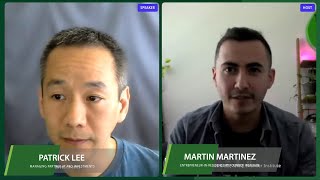
In the closing keynote of FounderX 2022, Patrick Lee – co‑founder and former CEO of Rotten Tomatoes – shares the central thesis that relentless focus is the single most important factor for startup success. Drawing on his own experience across six ventures (three successful, three failed), he explains how unfocused founders dilute resources, increase stress, and jeopardize product‑market fit. Lee uses vivid analogies – a magnifying glass concentrating sunlight to start a fire, and the “kitchen‑sink” deck slide – to illustrate why startups must narrow down to one feature, one category, and one small market. He outlines practical steps: reduce scope to a single core feature (e.g., Rotten Tomatoes’ Tomato Meter), launch a minimum viable product quickly using methods such as customer interviews, landing pages, Kickstarter, or manual mailing‑list prototypes, and iterate or pivot based on early validation. He stresses that focus reduces stress, improves mental, physical, and emotional health, and recommends basic wellness habits (sleep, diet, exercise, social support). Alignment among founders and leadership is essential; clear communication of the problem, target customer, and optimal solution enables teams to move in the same direction. Lee also discusses hiring strategy – hire slowly, delegate to people better than you, and avoid rapid expansion that harms culture. He answers audience questions about pre‑founder advice, mental‑wellness practices, managing growth, deciding which features to prioritize, and scaling responsibly. Finally, he shares recent reading (the book “Power Law” on venture‑capital history) and a Netflix documentary “High Score,” and provides his social handles (Twitter, Instagram, LinkedIn under “Rotten Doubt”).
Questions this video answers
Start by clearly defining the exact problem you are solving and identify precisely who you are solving it for, rather than beginning with technology or a vague “everyone” audience.
Focus on doing less, get enough sleep (aim for 8 hours), maintain a healthy diet and regular exercise, and keep strong connections with friends and family to reduce stress.
Ensure top‑level alignment on the core problem, target customer, and solution; keep the organization focused on a single direction, which makes communication and execution clearer.
Use A/B (or multi‑variant) testing to experiment, but avoid trying to be a “spork” or Swiss‑army‑knife; focus on the one feature that most users need, and validate with cheap customer interviews (e.g., small incentives for 5‑10 interviews).
Hire conservatively to preserve culture, delegate to people who are better than you in their domain, and avoid expanding too quickly; focus on alignment and clear direction.
Chapters
But last but not least, I am so excited, uh, to bring, uh, our final presenter, final keynote up to the stage here. I believe he's already with us. Um, it's a very storied career, um, and has a really interesting presentation he's about to show you. Patrick Lee, um, again, serial entrepreneur, uh, has been, has been a founder of 6 startups in his life, exited 3 across 3 different countries, including what, you know, little review site for films called maybe Rotten Tomatoes. Maybe you've heard it before, where he was a co-founder and former CEO. He's currently the managing partner over at PKO Investments, and he's also an advisor to multiple companies out in the world. Patrick, thank you for joining us. Thanks, thanks for your patience. It's been a great day, but we're finally, finally getting you to the stage. So thank you for being with us today. How you doing?
Good, thanks for having me, Martin.
Fantastic. Well, I'm going to disappear into the ether. I'll let you get to it. I know you got some slides, presentation. This is the last session too, so if you have a hard stop, let me know, but we can run as long as you feel comfortable. But otherwise, we'll let you take it from here. Everybody give a warm welcome to Patrick Lee.
Great, sounds good. Thank you all. I guess I'll get started. Can you see this?
Oh yeah, perfect. All right, I'm gonna disappear, show is yours, sir. All right, take it away.
So thank you. Hi, my name is Patrick, I'm a co-founder and founding CEO of Rotten Tomatoes, and today I'm going to talk about focus. My story began the summer of 2019. I was volunteering as entrepreneur in residence at Blue Startups, a tech accelerator in Hawaii. There I worked with 7 different startups daily over a period of 3 months, and the advice I gave to each of them over and over again was that they were all trying to do too much, that they needed to focus. Over the course of hammering that point in, I realized that I had not followed my own advice, that I had not been focused with my last few startups. I'm a serial entrepreneur. I started 6 companies, of which Rotten Tomatoes was the third. The companies where I was focused worked. The ones where I was not focused failed. And when I looked around at every successful company I could think of, every one of them started off focused. And that's when I realized that being focused is the most important trait for a startup to have. Ironically, almost everyone gets this wrong, and it's why so few startups make it. But why do so many entrepreneurs make this mistake. Entrepreneurs believe they can do anything, so they want to do everything. It's actually harder and against their nature to focus. Too many features, too many categories, too many markets. They want to be everything for everybody. You can spot the worst offenders a mile away by looking at their deck. They have a competitive landscape slide On one axis, they have their company and their competitors. On the other axis, they have a list of features. Each competitor has a few features checked off, and for their company, they have a line of checks all the way down. I'm sure a bunch of you have this exact slide in your deck right now. These entrepreneurs are building everything but the kitchen sink and trying to service everybody. This is the most common problem entrepreneurs face by far. They are not focused. So what is focus? Focus is answering one question as quickly and cheaply as possible: do people want this? The goal is to get to product-market fit, which I define to be when a product is so good that people tell other people about it without being asked to. In other words, the product sells itself. Think of the recent Netflix show Squid Game. With Rotten Tomatoes, for example, we saw early signs of product-market fit when: 1, the site was featured on Netscape and Yahoo. 2, Roger Ebert listed Rotten Tomatoes as one of his favorite movie websites in a magazine article he wrote. And 3, we saw a spike in traffic the day Pixar released A Bug's Life, and it turned out that that traffic was coming from Pixar. People wanted our product, and because of these early signs, we went out and raised money for— to run Rotten Tomatoes as a real company. I like to think of finding product-market fit as trying to start a fire. Being everything for everybody is like sunlight hitting the earth. It provides light and heat, but isn't enough to start a fire. But what happens when you add a magnifying glass? By focusing the sun's rays to a single tiny point, it is possible to start a fire. Now imagine your resources as the sunlight. By focusing your resources on a tiny point, it is possible to find product-market fit. And one important thing to remember about fire It spreads. If everything falls into place just right, you could end up with a forest fire. That's Facebook, Amazon, Google. Their fires are so big you couldn't put them out even if you wanted to. So how do you focus your resources? You reduce scope, cut away until it's one feature, one category, one market. This is the opposite of building everything but the kitchen sink. For feature, pick the feature that is the main reason why anyone would use your product. For Rotten Tomatoes, that's the Tomato Meter. You can get rid of everything else on the site and it still 95% works. For Twitter, that's the tweet. Category, choose the category that makes the most sense for your business. For Rotten Tomatoes, That was movies. Market: go for the lowest hanging fruit. The smaller and more niche the market, the better. For Rotten Tomatoes, we initially started with hardcore movie buffs. At the start, entrepreneurs generally have extremely limited resources, so reducing the scope of the problem increases the chance of success. Not only does it allow you to do things faster and cheaper, it ends up being a better product too. One way to tell if you've cut enough is to see if you can explain your product in 15 seconds. If it takes 5 minutes to explain, it's too complicated. For example, Rotten Tomatoes is a site for movie reviews and news. We save users time and money from not seeing a bad movie. We do this by aggregating reviews from professional critics in one place and then giving you a score based on the percentage of critics that recommend seeing the movie. A product that you can explain will spread. A product you can't explain won't. Before Rotten Tomatoes, I had a design firm called Design Reactor. We provided web design, 3D design, and print design services for any type of client. We were super unfocused. However, we quickly realized that 3D took way too long to render and print took too long to wait for color proofs. So we focused our services down to just web design. And after we landed a contract with Disney Channel, we focused our market down to just entertainment. Once we were web design for the entertainment industry, everything fell into place. Our portfolio made sense, we were able to charge much more, and we never had to cold call again. And the money we raised for Rotten Tomatoes, it came from the clients we had from our design firm. The best products and best companies do primarily one thing at the start. Think Rotten Tomatoes, Eventbrite, 23andMe, ClassPass, Houzz, Instagram, YouTube, Twitch, Twitter. You can't be more of a single thing than Twitter. It's literally a status update. Amazon started with just books. They went public just selling books. It wasn't until the second year of being public that they launched into a second category. eBay started with Beanie Babies. Google was just simple search. When Google started, Yahoo was huge, but Yahoo was a portal. In other words, they were everything but the kitchen sink. Yahoo had unlimited resources. Google was a pair of PhD students right out of Stanford. Yet Yahoo was beaten by Google at the one thing that Yahoo should have been good at—search. But even Google Video, with all the resources of Google behind it, couldn't beat YouTube, and instead Google was forced to buy YouTube. Same with Facebook buying Instagram and Amazon buying Zappos. In every case, the larger company with infinitely more resources could not compete with the smaller, focused startup. Going back to the competitive landscape slide I talked about earlier, instead of having a line of checks all the way down for features, You should have one check for a single feature and do that one thing better than anyone else. That was Google for search, YouTube for video, Instagram for photos, Zappos for shoes, Rotten Tomatoes for movie reviews. As Peter Thiel says in his book Zero to One, start small and monopolize. Every startup is small to start. Every monopoly dominates a large share of its market. Therefore, every startup should start with a very small market. Always err on the side of starting too small. The reason is simple: it's easier to dominate a small market than a large one. If you think your initial market might be too big, it almost certainly is. Look at Facebook. The temptation for most people would have been to launch into all schools at once. Instead, Facebook launched just in Harvard. Within 24 hours of launching, 1,200 students had signed up. Within a month, over half the undergraduate population was registered on the site. Facebook monopolized Harvard, and then slowly and systematically added schools, and later countries. Until their monopoly grew to cover the entire world. The goal is to get a monopoly. Going by Peter's advice, shrink the market to the point where this is possible. For example, if you reduce your market to just yourself and you use your own product, you would have 100% market share. By focusing on one school, Harvard, Facebook had a monopoly within a month. If they launched all schools in the same amount of time, they'd likely have more students overall using their service, but it'd be very unlikely that they would have a monopoly of all schools in that same time frame. Why is this important? When you have 1% of the market, the other 99% has never heard of you. When you have 10%, some of the other 90% has heard of you, and it's easier to sell or sign them up as a result. When you have 50%, everyone's heard of you, and at that point you'll find that your market share will continue growing by itself. I recommend to reduce your market to the point where you have a realistic shot of capturing over 50% of that market in 1 year. Start with a tiny market and monopolize it. Regardless of how focused you are, you can't start a fire until you actually launch something. Do what you can with the resources that you have to get something out there. Don't worry about resources you don't have, otherwise you'll get stuck. Without money, you're stuck trying to fundraise. Without tech people, you're stuck trying to hire an engineer or find a technical co-founder. Rotten Tomatoes went from idea to launch in 2 weeks by one person our creative director at Design Reactor, Sen Duong. Sen was not a coder, so he built the website using static HTML. Twitter was born out of a hackathon and built in 1 month with a minimal team. Facebook was built by 1 person, Mark Zuckerberg, in a few weeks. And FaceMash, an early prototype of Facebook, was built in 1 night. To launch quickly, you should release a minimum viable product. A minimum viable product is a product with enough features to validate an idea early in the development cycle. This is the equivalent of drawing blueprints before building a house. It's a lot easier to move a room around when you're working with blueprints than when you've already built the house. There are several approaches to putting out a minimum viable product. Customer interviews. You can actually validate a product idea just by talking to customers you think are the most likely to use your product. Landing page. Make a landing page for your idea, buy Facebook ads, and see if people sign up to get notified when your product launches. Kickstarter. What's great about Kickstarter isn't just that you can raise money from the platform, it's that you can validate your product idea before actually building the product. Do it manually. Craigslist and AngelList have list in their names because they started as mailing lists. It wasn't until they became very popular that they built a platform. Any one of you could launch a mailing list within a day at zero cost, and you could pair that with email and Google Sheets to test and improve your product before ever writing a line of code. Reduce scope. And launch as quickly and cheaply as possible. By launching your product, you can see if you are able to start a fire. In other words, trying to find product-market fit for a tiny initial market. But what happens if it doesn't light? You pivot, change the feature or the category or the market, and launch again, or even try something completely different. Things don't always light on the first try. Rotten Tomatoes was my third company. Mark Zuckerberg did multiple startup projects before Facebook. Max Levchin did multiple startup projects before PayPal. ClassPass originally tried to be Groupon for fitness classes. YouTube originally tried to be Hot or Not with video. Justin.tv pivoted to pivoted to Twitter. Does focus always work? No. Being focused does not guarantee success, but being unfocused guarantees failure. Look at Quibi, which raised nearly $2 billion, or more recently Fast, which raised over $100 million. Both prematurely scaled before finding a viable business model and failed in record time. Or even the drama around WeWork. What was the first thing they did after they fired their CEO? They cut all their non-core businesses. In other words, they focused. But these examples are all of companies that got big enough to be noticed. The majority of unfocused startups you'll never hear of. They struggle in silence, which leads me to my next point. Stress. Stress goes hand in hand with entrepreneurship. It's natural when it's your own thing. You will put in 110% and care more about your company than almost anything. You carry the weight of protecting your employees, investors, clients, users, your company's brand, your reputation. The 3 startups I did after Rotten Tomatoes all failed. Combined, I spent over 14 years of my life and nearly $7 million in funding. Looking back, my success with Rotten Tomatoes made me try to do too much. I was unfocused, and as a result, all 3 times I was unable to start a fire. The stress I endured during that time led to mental, physical, and emotional problems. I was suffering from insomnia, shortness of breath, even full body rashes, all due to stress. There have been startup founders that have committed suicide, all due to stress. Stress is one of the main reasons why founders start fighting with each other and taking their startups down with them. And why am I talking about stress during a talk about focus? Because the good news is that being focused reduces stress. A huge source of stress is being unfocused and biting off more than you can chew. You get stuck and everything is harder, takes longer, and costs more money. Reducing scope and focusing makes things easier, faster, and cheaper, which leads to less stress and better mental, physical, and emotional health. It's better for you and it's better for your company. I'll end with a quote from Steve Jobs. People think focus means saying yes to the thing you've got to focus on, but that's not what it means at all. It means saying no to the 100 other good ideas that there are. You have to pick carefully. Don't say yes to 100 things and end up being unfocused. Take that magnifying glass and focus all your resources to a single tiny point, one feature, one feature, One category, one market. Now get out there and start some fires. Thank you.
Wow, Patrick, thank you for that. The Steve Jobs quote. I mean, just all of this, all of this. Thank you. Like, the audience has been going nuts. All of this has been such a resonating message. We give a talk. I host an event. Quarterly called Idea Fest, where we're taking a lot of these focus points that you're talking about. It's how do you drill down? And you said it in an interesting way too. It's like one feature, one category, you know, one market where we, I've kind of phrased it as, you know, one problem, one customer, one solution, one way to make money with one killer feature. So yes, this is something that is a big dilemma for a lot of our founders right off the bat. They get just to your point, they come in with a cloud of ideas It's hard for them to parse out what to prioritize and they want to do everything for everybody all the time. But if they do that, they don't do anything for anybody well at all. Out of all this, my first question, if you do have questions, audience, by the way, please drop them in the chat. I got a view over here, I can see them because we want to hear from you all as well while we still have time. But my first one is, before a founder even starts, you know, it's a question I like to ask guests that we have on events like this. It's like, what would be that first piece of advice you give before they take even the first step forward?
I would say one of the best ways to focus is to start with the problem, figure out exactly what problem you're trying to solve. And then I think the second step is to figure out exactly who you're solving I'm trying to solve this problem for? A lot of times I see people do things kind of in reverse where they're like, "Ooh, I have this cool technology." Then, "What am I trying to solve?" They don't know. "Who am I trying to solve this problem for?" "Oh, everybody." And when you start like that, and then even if they're doing customer surveys, rather than using that to narrow things down, it ends up being the opposite. And they talk to a lot of people and then they try and do everything that everyone asks. You're incredibly unfocused at that point and then you're pretty much almost like dead in the water. So usually I find it best to start from the basics and it's like, what exact problem are you solving?
And then who exactly are you solving this for? Yeah, yeah, absolutely. Again, that's so true for this entrepreneurial journey for many of our founders in this room right now. And it's given me all these, you ended with that Steve Jobs quote, right? And I'm a big fan. I got the biography. I've gone through that a few times. But there's this— I don't know if you recall this, but that one video, he just returned back from Apple. He's got the long hair and he's doing like a WWDC. And there's that one guy in the audience who's basically just yelling at him about killing a technology solution he was working on as a consultant. Steve had to just like calm and collective, not throw the chair across the room at him, but basically eloquently explain that You know, when you have to make these decisions at the top, you can't just focus on the technology and a problem that it solves. You have to think about those customers and the problems that they're purchasing your products to solve. And it was a very— there was this big— it was just like a big aha moment for the room, 2,000 people in that audience. And it kind of made that guy look with egg on his face. But otherwise, it's a really great example of that. And then you can get looking again, as you talk about what he's done. The famous Punnett Square that he did where it's just, all right, we're cutting all these products, we're just focusing on 4 categories, that's it. Hyperfocus. But everybody tries to aspire for that. But he was also a result of the stress. It ended his life prematurely. And our CEO John gives a really interesting talk on managing this too. I know he was excited about hearing this as well. Another thing to focus on the well-being, because focus helps, but is there any practices that you do in your day or things that you advise maybe the startups that you work with on how to maintain that mental wellness while they're building, while they're enduring all the stress that comes with launching a company?
I mean, the number one thing is focusing and not trying to do too much. That is just For people who are trying to do too much versus someone who's extremely focused, I mean, it's gonna take 3x the resources, time, money, everything or more when you're unfocused. So that's the number one thing is do less and actually have more. But then besides that, the simple things like get enough sleep, try to get 8 hours a day if you can. Diet, exercise, you know, still maintain contacts to like friends and family, you know, as much as you can, like realistically can. I think when people get really busy, they tend to put everything in, which is not a bad thing, but to the point where they lose connections to their friends, their family, and then they end up with people that they can't necessarily talk to as much. Like when things are going bad, sometimes it's hard to talk to your employees about it, you'll freak them out, you know, you've talked to your co-founders about it, they have the same problems if it's work-related, you know? But I think, you know, a lot of things too in terms of stress and stuff, you know, a good night's sleep can solve a lot of things. When you're like, feel like everything's crumbling around you, go and take a long nap and you'll probably feel a lot better.
Oh, I couldn't agree more. I've been there, you know, with companies that I've worked on and launched. It's like you forget, you drank too much coffee maybe and like you've been up for a day straight trying to get that deck out the door. Sleep can help a lot. Exercise can help a lot. Talking to somebody that loves you certainly can help a lot. Let's go. Let me get some questions from the audience and production team behind the scenes. Feel free to ping me on time as we have it. I know it's the last session, so definitely wanna make it worth it. Riva in the audience is asking, managing in terms of management and kind of juggling that as you're starting to grow, like how do you cut that noise from management and by management? When it comes to just adding to your focus, reducing load while you're also managing the team, right? Is there any things that you've seen in your experience that help with that or can reduce that?
I would say a lot of times for focus, it's really important for everyone to be aligned at the top, founders, executive management, etc. Is to try to get them all together. And really, I feel like sometimes it's easier, it depends on the stage you are, but rather than think about cutting things, even think about, again, going back to basics, what's the problem? Who are you solving it for? And then what is the best solution that you come up with in a realistic, like, time, money, resources standpoint? To solve it rather than, hey, we have these things, we have like these 20 things, which ones do we cut down? It— when doing that may not properly be solving the problem or solving for who you're, you know, or who you're solving it for. So I think, and then once you can make sure everyone is aligned on that vision, and generally I think it's easier to align when you're not doing too many things. When you're doing lots of things, everyone may have their own part that they like and they'll be pushing these 5 different directions. And if you're like, well, we only have one direction because we're super focused, it makes it easier for everyone to move in that same direction. So I think trying to get everyone together, get to a point where you are focused and you're like, what's that one thing we're doing? What's that one thing we're solving? Then, and once they're aligned, I think it trickles all the way down where every level will know like, here's the direction we're going in and everyone can move in that same direction.
Yeah. And just communication right at the top on there. So we got John. Got a guest appearance by John. What's going on?
Yeah, sorry to interrupt, but this is where kindred spirits here, Patrick, where we are always trying to instill that into founders, right? It's like focus. Do one or two things well rather than trying to do 10 things decently, right? And we were talking about this a little bit earlier with Andrew from Wrike. I think that the billion-dollar question is how he phrased it, right? It's like, how do you— all of us like have this idea of like, okay, we're going to solve this problem for a customer, right? And there are a couple of different use cases that we sort of have this like large bullseye of, all right, it seems like there's something here in this general vicinity. It's figuring out how do you get from that general vicinity of problems and then realizing, okay, this is the feature, this is the feature, right? And again, this is the billion-dollar question. Anybody that knows the answer to this question will be minting billions, right? So, but, but yeah, just your opinion, like how do— how can they find that decide what, what's the ancillary thing that we shouldn't be focusing on, um, and what are the, the one or two things that we should focus on?
So I would say two things there that I would recommend. Um, one, it's totally fine to, uh, A/B test or A/B/C/D test, you know, try out different things. It doesn't mean you pick out one thing, you don't do anything else. But you don't want to be A plus B plus C plus D, for example, right? Like, I like to say, uh, you can be a spoon or you can be a fork, but don't be a spork, right? Like, people don't need sporks. Or you could be a knife driver or whatever, but you shouldn't be a Swiss Army knife. Like, not a lot of people— like, way more people need knives, um, than, like, people need Swiss Army knives, for example. Um, that's one. The other thing is, you know, it's very hopeful to talk to customers. Like if you're like, here's the problem, here's who we strongly believe is the problem that we're solving the problem for, we'll get out and try and talk to some of those people that you think you're solving the problem for. Right. You know, even hypothetically, even if let's say you wanted, you had to spend money and you, you know, you got 50 people, you gave 'em each a $20, you know, Amazon gift card, that's $1,000. And I guarantee you, if you even did an interview to like 5 of them, 10 of them for half an hour to an hour, you probably already can answer a lot of your questions before you built anything. And if you talk to 50 of them, like I'm pretty sure by the end of that you're gonna have a pretty good idea of is this actually a problem for them, like a burning problem for them? Is your solution actually something that seems likely that they will use? right? And that's only $1,000 and, you know, maybe 50 hours. So you could probably do that in a week of your time, like assuming you did an hour per person. And that's a lot cheaper and faster than like, hey, let's go out and like hire a bunch of engineers and hire this design firm and build it. And 6 months later you spent, you know, a good chunk of your life savings to then put it out and then be like, oh wait, no one actually wants this.
Looks like we may have lost Jonathan's connection real quick on that. Let's— well, we get Jonathan back. Let's take another question from, uh, the audience. Simon is asking, not only on focus but that work-life balance that you're talking about, how do you prepare for that while you're just on the precipice of growth? Maybe you've just closed a big round, you're about to hire a bunch of people, and now it's really starting to pick up. Is there any tips or tricks that you've seen that can be helpful for founders that are about to cross over that hump?
Yeah, I mean, I would say two tips there. One, I actually think it's best not to expand too quickly. I tend to be more conservative and go hire more slowly overall, 'cause I feel like sometimes when you expand too quickly, it's hard to maintain kind of your culture. And then you run into problems too if things don't go as well as you expected. And then suddenly you— it's much easier to hire people, I feel like, than to let people go. The second thing is learning to delegate and hiring people who are better than you at that thing, right? So Bring on someone who's better than sales at you or better at finance than you or better at design or better at engineering and learn to trust them and work with them to allow them to be able to take on those things and do it better. Your job as the founder or CEO is to try to make sure everyone is aligned and then make sure they're running that same direction, but you don't need to micromanage. You don't need to try and do everything yourself because even if somehow you're better than everyone at their one job, one, you're probably not hiring the right people, but two, you can't do everything better than everyone combined. And if you are, again, there's something wrong. So you have to learn to delegate. You have to learn to bring on people that are better than you at that.
Particular job. Awesome, awesome. And, um, and yeah, I know where it looks like we are running a little, uh, closing out on time on this, and I want to be respectful for your day. Is there anything that's, that's cool that you're working on right now that might be worth sharing for the audience while we have you? Any interesting books that you might have been reading that might be something that, that we could dive into?
Um, books— I just read a book called I think it was like power law or something, mainly because more recently I've moved over towards the investing side and I run a syndicate that invests at the intersection of tech and entertainment. So I was kind of trying to learn more about that. And I thought it was just really interesting, was I believe it's like power law. And it talked about kind of the history of venture capital, like all the way from the beginning, you know, Fairchild Semiconductor, all that kind of stuff. And it's just all the way till like very recently, like it talked about Y Combinator and Dreesen, Horowitz, all that stuff. And I just found it very fascinating because a good chunk of it, you know, since like, say the '80s, '90s, you know, were companies that, you know, I'm familiar with. And I, you know, just seeing all that and all the things that were happening on like the venture side, because I could only see it from either the founder side or from like the public side. I thought that was quite cool. And then more recently, I just saw a documentary series on Netflix called High Score. Which talks about like the video game industry and stuff. And it talks— I think it's like 6 episodes, and each one talks about, you know, like ones like Nintendo, Atari, Sega, something like that. And again, I thought it was super interesting. For me, um, I find it useful to kind of understand the history of things. Like, it's not— I don't think it's required or anything, but, but it is interesting if it's something that is kind of touching your world to kind of see what's been tried, what how people did things in the beginning. And there are actually a lot of similarities between even these early VCs, these early game companies and everything to, you know, any startup.
Oh, I love that. And again, lastly too, is there any good channels that we might be able to follow you? Is there anything that you're writing or something that's public that people can kind of follow on the journey, learn more about what you're up to these days?
I'm on Twitter, Instagram, LinkedIn, all Rotten Doubt, like rotten from Rotten Tomatoes, doubt from no doubt. So it's Rotten Doubt. So you can find me on any of those. I believe you can message me on like Twitter or something like that. And if you, yeah, if you're interested in connecting, you can ping me there. Just say that you saw me through this, the Founder Show.
Founder Institute. Awesome. Thank you again, Patrick. I really appreciate it. Just kind of closing things out with an awesome bow on top. I hope you're well. I hope you stay safe, and I hope we can have you back for a future showcase, ideally in person. We're going to be— hopefully we'll be back in person in 2023. So definitely have the invites extended out to you there. Yeah, definitely. Let me know. Well, we wish you well, sir, and yeah, we'll talk to you here soon.
Thank you. Thanks so much.










