FounderX 2022: RIP Good Times? Navigating A Startup Through Uncertainty, with Rami Essaid of Finmark
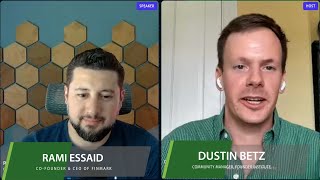
In this FounderX kickoff session, Rami Essaid, co‑founder and CEO of Finmark, delivers a fast‑paced, 20‑minute briefing on how early‑stage founders can steer their companies through macro‑economic uncertainty and a looming funding contraction. He begins by stressing the importance of planning to avoid the most common cause of startup failure—running out of cash. Drawing on historical recessions, he estimates a 2‑3 year period of tighter capital markets and urges founders to focus on levers within their control: increasing cash flow and revenue, cutting costs, and adapting fundraising strategies. Essaid introduces the "default‑alive vs. default‑dead" framework (a Paul Graham concept) to assess whether a startup will become cash‑flow positive before its runway expires. He outlines concrete, often scrappy tactics to boost revenue—annual billing, price increases, non‑scalable sales activities, and diversifying beyond startup customers. For cost reduction, he recommends pursuing government rebates, eliminating inefficient growth channels, freezing hiring, trimming contractors, and, if necessary, executing early, deep layoffs to avoid a death‑spiral. On the fundraising side, he explains that post‑2020 valuations will be lower, outlines the metrics investors now prioritize (product‑market fit, ARR milestones, burn multiple, Rule of 40), and suggests practical options such as extending the last round, raising bridge rounds, or communicating transparently with existing investors. Throughout, Essaid references real‑world examples (Airbnb, Stripe, Sequoia’s RIP Good Times memo) and Finmark’s own tools (valuation calculator) to illustrate his points, concluding with a call for founders to adopt a lean, data‑driven approach to survive and thrive in the coming years.
Chapters
All right, welcome everybody to the very first session in our Founders Track for, uh, it's our kickoff today, day 1 of Founder X. My name is Dustin Betz. I'm a digital content and global community manager at the Founder Institute. You probably know who we are. We're the world's largest pre-seed startup accelerator. And as I said, we're kicking off here with our first session on the Founders Track of a 3-day summit. And so without further ado, I'm just gonna introduce our keynote speaker who is going to give the talk here for this session. So his name is Rami Essad. If you've been around the Founder Institute network for a while, you might have seen one of the other public events that he has done with us in partnership. He's the co-founder and CEO of Finmark, a financial planning software tool for fast-growing companies. He's a venture partner at several venture funds, including Pioneer Fund and Idea Fund Partners. Previously, he was the founder and CEO of Distill Networks, which was acquired in 2019, and the founder of ChitChat Communications, which was acquired in 2005. With that abbreviated intro, I'm going to turn the floor right over to you, Rami, and hide myself and let you take it away. After this, we'll have time for Q&A in the fluid spaces that we'll start up right after this. Yeah, please take it away.
Awesome. Well, great to see everybody. Didn't realize I was kicking things off, so that sets the bar high. Hopefully I don't scare anybody away. First time using Airmeet, so I'm gonna just jump in here. Hopefully the slides look all right. Today we're here to talk about navigating your startup through uncertainty. I'm gonna go, we have about 20 minutes here, but then there's a lot of Q&A time, so I'm gonna blast through things pretty quickly. If at any point you guys want recordings of this, reach out to me, reach out to Founder Institute, happy to provide the deck. So focus on, you know, kind of absorbing the material, and then hopefully we can come back to the data, to the slides later. Navigating through uncertainty. Right now we're going through a really weird time in the world. The macroeconomic climate, there's potentially a recession, you know, people are worried about, uh, the, the funding environment. What can you do? A lot of this is out of our control as founders, um, and so I want to focus on what is in our control. How do we plan for what we don't know, um, up ahead? The first thing that we want to talk about before we start planning is why should we plan? Well, the reason we want to plan is because we don't want to end up as a statistic. The number one reason that startups fail is because they run out of money. Don't let that happen to you. If you get caught where the market turns or the conditions change outside of your control, you don't want to run out of money being the only reason that you fail as a startup. So don't be a statistic. Let's plan for every potential scenario that's up ahead. And that way we can, you know, focus on other things that we need to overcome to win as founders, right? The next question that I often get is, how long is this period of uncertainty gonna last? Most founders that I talk to nowadays have never been through a recession, right? Usually founders are typically younger in age, right? It takes wear and tear on you as a founder to keep going through this. So most founders are a little bit younger, and because of that, they haven't seen a recession because we've been on one heck of a bull run since the 2008-2009 housing crash. Crash. Um, since then, valuations have been up, funding has been up, uh, more startups have been created than ever. And that is, um, that, that's a, an unprecedented, uh, run that we've had. Um, so it's important to kind of look back in history to think about how long might this last, right? I'm not saying that, um, you know, what we're facing right now is equivalent to 2008, 2009, Um, but, but it could very well be. And if history is any indication, right, that lasted about 2 to 3 years. The dot-com bubble, um, also that, that crash also had 2 to 3 years, um, behind it. Now the big difference, um, between those, um, those recessions and what we're facing today is that those recessions had some serious, um, underlying issues with the assets, right? The dot-com bubble, those businesses weren't real. The housing crisis, those mortgages were in default, right? Today, the biggest thing that we face right now is monetary policy that's uncertain. Now, that could result in, you know, contraction in the, in GDP, and that could result in unemployment. But right now, we're not really facing that. So worst case, what we want to plan for is the next 2 years for the environment to be different. This is historically what Series A funding dips look like, um, but you can see it happened across Series B and it happened across Series C, um, in that same time range. Proportionately, the number of deals dipped, the amount of capital that was deployed dipped. What's interesting to note is that even in the worst of it, it didn't go to zero. We're not talking about a lack of capital where everything dries up. Just a lack of capital comparative to the previous years. Now, um, where we, where we are right now is coming off of the, the craziest bull run in 2000, 2000, uh, 2020 and 2021. And so we're going to see a serious contraction from that, from those highs, right? So if we want to prepare ourselves for the next 2 to 3 years where fundraising might be more difficult, um, might not be able to raise as much money. What can we do as founders, right? We can't control the economy, but what we can do is work on getting profitable. That's within our control. We could raise more money, right, to make sure that we are well funded, or we could really probably have to do a little bit of both. We're going to have to adapt our business model even if we raise more money. If we can't raise more money, then we definitely have to adapt our business model and our costs and our revenue growth projections. So both is probably the answer that we want to talk through. So I want to talk through a little bit of those levers that you guys can have. First, around getting profitable, right? The number one definition to me of getting profitable or turning to profitability is a little bit misleading, right? We have maybe some revenue coming in today, but it's not like a light switch where you can instantly become profitable in a day. Um, really the thing that we want to think about is being default alive or default dead. And this is something that Paul Graham coined, and it's essentially if you look at how much money you have left in the bank and map out your revenue growth at a conservative rate, right, and keep your expenses the same, do you run out of money first or do you get to profitability first? If you run out of money first, then you're default dead. If you get to profitability before you run out of money, then you're default alive. That means if you continue on the pace that you're at without spending more money than you have, then you're currently spending, eventually your revenue is going to grow into a place where you're cash flow positive. That's the place that we want to get to if we want to make sure that we have— we're kind of masters of our own domain, we have our own control, our own lives in our own control. The number one way to do that as well, increase revenue. Right. And I know that sounds easier said than done, right? In fact, if you probably could increase revenue, maybe you would have already done that. Maybe that's kind of the duh response that you might have. But there's a lot of little things that I find that founders don't do, that founders in normal operations don't try because they're maybe either a little bit scared or it feels like not the right time to do it. So let's talk about a couple of those things, right? The first thing is getting a little bit scrappier, right? Do things that don't scale. This is another great thought leadership piece from Paul Graham. If you haven't read that blog post about doing things that don't scale, please, please, please go read it. It talks about a lot of different ways that he's seen startups really get off the ground and, and just get scrappy in the early days. Some famous examples: Airbnb. They went and sold— they made, um, they made cereal boxes and sold those on the side to pay their bills. Um, the founders of Stripe used to do all the implementations themselves. They would just go over to somebody's office with their laptop and go and implement them right there in person. Um, this was a thing that the founders did, right? So things that don't scale might help you get customers faster, um, might, might unlock some, some opportunities for revenue growth that maybe you, you aren't thinking about, right? Um, the next thing that you can do, it's not increasing your revenue, but you can increase your cash flow. Um, and the way to do that is converting your customers from paying you monthly to paying you quarterly or annually. You would be surprised how much of a difference that makes in terms of, um, your runway. Um, right now we kind of at a company that's growing from $1 to $2 or $3 million in revenue, by converting customers from paying you monthly to paying you annually, you can add 25 to 45% more runway to your forecast by converting those customers to paying you annually. It's like a free loan. And as long as you're growing, that loan doesn't run out. So that's a really, really powerful way to improve cash flow. Another thing that you can do, which founders are scared, scared to do all the time, is increase your pricing. Um, you know, we, we're, it's every customer that we get in the early days as a founder I know is hard fought. Um, and so the idea of charging them more, risking them churning seems scary. Um, but if you think about it, you get to do more with less, right? Let's say you had, you, you double the price. That you're charging all your customers, then as long as less than 50% of your customers churn, then on net you're in, you end up with more money. And what that also means is that it means you have less customers to support, less infrastructure costs. Um, so a price increase isn't necessarily a negative thing. Um, we personally did that at Finmark, um, experimented with it, um, a few months ago, and our base price was $25 per month per company. We doubled it. We said, hey, nobody, we're not gonna sell lower than $50 per month per company. And we saw conversion rates dip a little bit. They dipped about 15%, but that, that's more than made up between the number of companies that ended up signing up and the double revenue that we were making. And it meant that we supported less customers. It's worth trying. If you're afraid to do something as drastic as doubling, then increase your price by 50% 5 to 10% until about 10% of customers push back. That, that is an easy way for you to kind of gradually test the waters. Next thing you can do is diversify your business, right? In the past 10 years, there's been such an influx of startups that have been formed that we all got accustomed to selling to startups as our primary audience. It's the easiest way. We all know each other as founders. We can sell to friends. We're all networking together. Why not sell to startups? Well, a year ago there was no reason of why not. Today, a lot of startups might be going out of business. And so selling to startups means that you're gonna have a pretty volatile customer segment. And maybe it's important to think about how do we reach more traditional businesses outside, outside of startups? The recession that might be happening right now is really, really focused around tech. Um, and so moving beyond tech, moving beyond startups could really help you weather the storm. And the last piece is, um, reallocate resources. All hands on deck. Get everybody in sales. Get your co-founders, even though if they're technical, into selling. Get— heck, get your marketing people to help you sell. Get your product people to help you sell. Um, talk to the company. Right? The reason people join startups isn't for security, right? Um, don't be afraid to talk to your employees and tell them, hey, we're going into battle, this is going to be tough times ahead, and we need all hands on deck. Um, you'll find that people rally around that. They want to have command of their own future. They want to feel like they're in control of the, of the survivability of the company. And so asking them to help carry the company forward, um, won't be a— isn't a negative thing. It actually will be interpreted as a positive thing, in my experience, with, with a lot of employees that, that are in it for the right reasons. The other way you can get to profitability is by cutting costs, right? Um, first and foremost, look at rebates. If you haven't done the R&D tax credit in the U.S., if you're in Canada, there's some terrific, um, uh, rebate programs there. All around the world, there are some great government grants, government tax credits, or non-dilutive loans that you can access. In the US, the Small Business Association can offer you up to a $5 million loan. That's crazy. People don't realize that there are some government options to get money that you should always, always explore. Then the next thing you want to do is kill inefficient growth. The way that I— what I call inefficient is if the CAC payback is longer, if it takes you longer to make, to get value back or to break even on that acquisition cost of the customer than you have in runway, kill it. There's no point in it because you're not going to break even before you run out of money, right? So if you have a 12-month CAC payback but you have 9 months of runway, well, stop investing into that channel that's 12-month CAC payback. Figure out how to get, you know, either lower CAC payback channels that can break even before you run out of runway, or just get scrappier and, and, uh, do more organic type of, uh, growth. Freeze all hiring. Stop the bleeding now. You don't need to expand the type of services and, uh, and headcount that you have right now. Just pause all hiring. Everybody from Google to Facebook have done this, right? If you listen to the earnings call this week, um, you know, or last week, Zuckerberg was like, hey, we need to do more with less, and that stops with not hiring more people. Right, then look for opportunities to save on tools and vendors. Um, that is the, the very next step that you can do if you're not using every tool. Easy, easy way to cut costs. But most of your costs are in headcount. Um, and so how do you do more with less? Well, the first thing that you can do is cutting— is cut contractors. Somehow, um, contractors emotionally, I think, feel less impactful to cut as a company, as a founder, than your full-time employees. But so maybe starting there could buy you enough runway, enough savings to not have to make any major layoffs. But if you do need to make layoffs, do it early and do it deeper than you think. The biggest piece of advice— I've done 3 rounds of layoffs in my career across different companies. The best— they're never easy. The largest one was almost 80 people. But the best thing that I can advise you is go deeper than you think you need to, just so that you have enough buffer, enough room. What's going to happen when you lay off people is that they're going— the rest of the organization is going to feel uncertain. They're going to feel scared that we're not doing well. And the last thing that you want to do is cut once and then tell everybody, okay, now we're good, and then 3 months later, 6 months later, have to cut again, because then you lose credibility, right? If you can keep the cut to just a single layoff, then you can rebuild from there. This is a chart here from Sequoia. This is from their initial RIP Good Times memo back in 2008, and this is the— what they call the death spiral. Spiral where a company tries to cut once, they move forward, they don't, you know, and they don't really— they haven't cut enough, they have to cut again. And then by, by the third, fourth cut, they're just spiraling downward. Whereas a company that cuts early and cuts deep, um, they have enough extra buffer to then start reigniting growth. Um, so that is the, um, the, the, the visual way to think about making sure you cut early and cut deep. Um, the next thing to think about is how to raise capital, right? Um, there's, you know, as startups, we've— we're building our company to lose money, to be venture-backed. Um, pivoting all of a sudden to get the profitability may not be in the cards, right? And so how can we raise more capital? Because that's, that's really the type of company that we built. Um, well, there's a couple of things. First of all, the first thing that you need to make sure that you understand going into raising capital is that valuations aren't the same, and quite frankly, they're never going to be the same again. The the, the mania that we saw in 2020 and 2021 is never going to be repeated, at least not in the next decade, um, unless, unless something really crazy happens. Um, those were abnormally large, um, valuations and multiples based off of, um, you know, inflated monetary policy, right? And so if you look back historically, um, we can say what were the traditional valuation multiples, right? This is looking at public valuations, but that percolates down. Investors look at public comps and then they discount them back into private valuation. So this is the benchmark that investors are going by. When public markets went crazy, then private markets went crazy. Now that public markets have retraced, the private markets are retracing. And so historically, um, we can think of one of two scenarios for the next next 3 to 4 years. Either we're going to go back to that trend line— you see that trend line going up from 2017 all the way to 2019 before the pandemic. We were starting to slowly march our way up in terms of valuation, so we might go back to 2019 valuations in the next 6 to 12 months. Um, or if things get really bad, we might go back to maybe 2013 or 2015 valuations. That was back with the SaaSpocalypse where valuations really cratered. I think that's kind of the worst case and best case scenario over the next 2 years. In fact, we built a valuation calculator at Finmark. If you want to check it out, go to finmark.com, go to our blog. You can put in how much you're looking to raise and a couple of things, and it'll tell you, um, you know, based off of historical values, what we think the lower end of your valuation and the upper end of that valuation, um, will be for you. And you can actually play around with the underlying numbers as well. So take a look at that, but go into your fundraise understanding that valuations aren't going to be the same. They're going to be lower at best. You know, you're going to do a flat round if you haven't grown considerably. Um, and, and take that with, you know, be okay with that. That's okay. Um, we're still at a point, you still got to take advantage of the, the mania a couple years ago, and you The main thing is making sure that your company stays alive. And so how do we make sure that we get that round? Well, one option is to extend the last round. If you did a round recently and you have, you turned down capital because you didn't want to be diluted, go back to those people and say, hey, what if I extend the last round price? You get, you know, the same price that people paid 6 months ago, but, you know, we've grown since then. I know the market has changed, but those two things balance out. That's the easiest way to get around done, add a few more million dollars to your pocketbook to help you ride out the storm. Now, if that's not an option, then make sure that you can go out and you're fundable, right? The, the, um, being a, being able to get, um, raise money is going to be harder. It's not just that the valuations are going to be lower, but people are going to be more stringent about making sure that you've reached your milestone. Um, so that means if you're raising a seed round, people are going to want to see that you really have product-market fit, that you have some paying customers. It used to be that you could raise a seed round without any paying customers. Now that's going to be more, more important of a metric. To raise your Series A, you need to be closer to that million-dollar ARR mark. I mean, you need to be able to show that you're going to grow by 3x in the next 12 to 18 months. You know, if you rewind a year ago, people were getting Series A, $20, $30 million Series A done with half a million dollars of ARR. It was crazy. And then the unit economics for, for growth rounds are changing. So make sure that you are steadily fundable, otherwise you're going to end up having to raise at the last type of round, right? And so valuations have gone down, but also you, you might have a— you want to make sure that you hit the metrics. And you can go to Finmark's website or look up the previous webinar that I've done with Founders Institute to talk— that talks a lot more in depth about what these milestones mean. Um, one thing that's new that investors do care about now is your burn multiple. That means how much money you're spending to grow, right? And early days, you know, they're looking at, you know, maybe 4x as a worst case for a burn multiple. Um, but as you grow in scale, they want to see that you're a lot more efficient and you're getting towards that profitability before you get to $100 million of revenue. It used to be that they want you to get to several hundred million dollars of revenue without even worrying about being profitable. But now the markets are shifting, and so they want to see a path towards profitability, and they want to see an efficient growth path to that. Now, that said, it's not all about just efficiency. Um, here there's— there are two lines here that, that are really interesting and important to look at. The dark blue line is revenue multiples as correlated with just revenue growth rates, right? Um, so this is a kind of a statistical number, R-squared. It's how correlated things are, um, together. And so when you looked at the revenue multiple of a company, how much they were valued, their enterprise value, and correlate that with how fast they were growing, usually that's the number one driver, um, for, for growth rates. In fact, um, as of November of last year that R-squared was actually close to 0.9. It was 0.89, so it was almost 1 for 1. If you're growing really fast, your revenue multiple is going to be much higher. Now, if you rewind back to the SaaSpocalypse, what we saw happen back then is that investors got scared, and so they said, hey, we want to see value, we want to see companies grow efficiently. And so this light blue line shows that it is the Rule of 40. It is where you're taking your revenue growth percentage but adding it to your burn or your fully contributed margin. Um, and so the rule of 40, you can look that up on online to see how you calculate that. But you saw that is a measurement of, of, uh, efficient growth, and that started being more correlated than just revenue growth. And then everything plummeted, and then things went back to, hey, we want to grow at all costs, right? At some point, the, the market's going to go back to just valuing growth But for now, they want to value efficient growth, but growth still matters. You can see here the blue line always caught— the light blue always caught up with the dark blue. It never went so far above the dark blue where growth never mattered anymore, right? Um, and just because of the sake of time, um, you can look up, uh, uh, Kraft Ventures. They did a really great webinar about, um, how fundraising— the bars tier now for fundraising, but these are some of the, um, the key, uh, metrics that they said you need to get to, and a few other metrics. And, um, the last thing I'll just mention here, I'm going to take 30 seconds more: raise a bridge round. Talk to your existing investors and see if you— if they can bridge you, um, forward. The best way to get a bridge round raised if you can't get to the next phase, um, is to be communicative with your investors. Build out plans, talk to your investors about plans, and make sure that they feel comfortable backstopping you. A lot of investors create— have dry powder left over to support their existing companies. And the way they do that, the, the way you can make sure that you get a piece of that dry powder is by talking and communicating with your investors, right? Tell them, hey, we're going to try to go and, and raise money in the best case, but if we can't raise money in the worst case, Can you help us out? This is what'll get us to the next point and keep us alive. You guys are aligned. They don't want you to go to zero, but they want to know that if they put more money into it, that it's not still going to go to zero. And they want to know that they— any more money that they invest really dramatically increases, increases your chances of survival. Awesome.
Yeah, that was super information dense. I could tell you were just pushing it through to try to get through the slides. Um, Our showrunner is going to open up the Fluid Networking session where folks can jump over to ask questions and connect with Rami. But yeah, for those who are asking in the chat here when they can get a copy of the presentation, yes, all the sessions, all the panels across the conference 3-day track will be recorded and we'll send follow-up emails with that information soon. But thank you so much, Rami, for that awesome kickoff. I think there was a lot of great tactical advice in there that founders can go out and employ and trying to be more lean and mean in their own businesses and looking at their roadmaps. And thank you so much for your time and for kicking us off strong.
Hey, thanks for having me, guys. I'll jump into the Q&A session and feel free to come in, ask questions. Happy to help.
Perfect. All right.










