FounderX 2022: The Closing Roadmap For New Fund Managers, with Mike Suprovici (VC Lab)
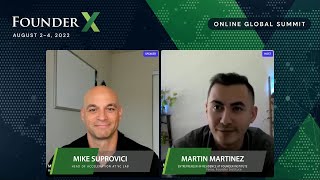
Mike Suprovici from VC Lab walks new fund managers through closing their first fund. Build a focused investment thesis, size your fund by multiplying early commitments by five, then target 500 ideal LPs and distinguish hard commitments (50% close rate) from soft ones (10%) before hiring lawyers.
Chapters
Welcome, welcome. That was a fantastic keynote, wasn't it, everybody? So now, welcome. I'm Martin. I was one of those faces on the screen putting this Founder X program together. It's been a whole fun time. We got a great, great set of sessions. The first one's gonna be really setting the tone. Good man right over here, Mike Supravich. Before we get into his talk, uh, the Closing Roadmap for New Fund Managers. Just want to give y'all some quick heads-ups. Um, if you're bouncing around, you can bounce over into the workshop track, uh, and check out all of the founder workshops. Ramy is going up right now. If you're here in the investors advisors track, um, it's more than safe to presume, um, you're probably a local leader running an FI program around the world. Maybe you're, you're interested in looking at the VC Lab program that Mike Adeo have been earnestly building out for the last couple of years. You might be already an investor, you might be a mentor that is supporting entrepreneurs. This is the track that's going to have all that content for you. We're really excited to have all of that. Mike's going to come up, give a big talk on that. Please direct your questions in the QA. I'll pop up a little bit later and we can go back and forth on some of the best ones. Be sure to keep them relevant. One thing we noticed just in the keynote, some of the stuff should have been in the chat. If you have just random connect requests, use the chat. Chat's going to be great for all that stuff. Connect with each other there. But otherwise, if you have some really good questions for Mike, use that Q&A tool, and we'll try to get to as many as possible. Then immediately following this talk, we'll have a quick 5-10-minute break in the Fluid Networking space. Mike, if you have some time, feel free to stick around. It's kind of like when we break and hang out in the lobby for a second after, after your talk and people will kind of swarm you, all that fun stuff. But I'll let you get to it, my friend. Everybody, please give a warm welcome, use those emojis down at the bottom for Mike Superbici, head of Excel— or head of VC Lab, uh, head of acceleration at VC Lab on this awesome talk kicking off the Investors Advisors.
Amazing.
Thank you.
Thank you so much, Martin. Uh, you know, much love. Uh, you and I go way back, uh, and it's just so, so great to be, you know, part of the, uh, back here with Foundry Institute family where I basically kind of, you know, learn a lot and cut my teeth. You know, I was at Foundry Institute for almost 6 years managing portfolio and so on. And now I'm here at VC Lab, which is a relatively new initiative that we initially started within the Foundry Institute and then we ended up scaling it out even beyond that. And so what I wanted to talk to you about today is really the closing roadmap for new managers. Um, and the reason I wanted to talk to you about this is because that's essentially what we've been doing a lot at VC Lab. So quick little background on me right now. I'm the head of acceleration at VC Lab. VC Lab is an accelerator for VC firms. Um, to date we have launched over 200 venture capital firms in the last 2 years, and we've done this everywhere. We've done this globally, Uh, and what we do really well is we help people get to a first closing. And so I've helped hundreds of new managers launch funds, and I've seen, you know, literally at this point it's probably thousands, right? Just because of the folks that have come into the program and so on and so on. Uh, before that, um, I at Founder Institute, I, uh, together with Adeo, I, I managed the select portfolio, uh, process. Many of your mentors have gotten emails from FI about that. And so I've helped launch over 13 funds, and I managed all the investor relations, uh, while I was a Founder Institute there. Um, you know, as well as, if, you know, you just kind of joined us recently, I was also head of portfolio. And really, that's where VC Lab, the whole concept around VC Lab, started, because we were noticing that it was just very difficult for Founder Institute founders to raise capital, particularly in you know, regions that are less developed, or if the founders were like underrepresented, or, and so on and so on. Just very, very difficult, right? So we said maybe we can start a process to kind of help launch professional venture capital firms that are ethical, that are good for the world, and then, and so maybe we can solve the issue, uh, at the FI portfolio level. But it just took off beyond any of our imaginations, and now VC Lab has become the leading accelerator for venture capital firms by literally every single metric.
Okay.
And so what VC Lab does, just really quick plug here, we help you new managers close a fund in 6 months or less. It's 100% execution, no theory, just like the FI program. Again, we built a lot of our roots within FI. We provide people all sorts of tools, the entire stack of managing your firm. That comes as part of the program. It's also free. The program is free. We provide template legal agreements. It's free. Everything is for that is free. And the whole goal here is to basically turn venture capital into a force for good in the world. Okay. And so that's VC Lab. If you want to learn more about the pro— the program and so on, go to govc-lab.com and you can learn more about it. We have a new cohort starting on August 30th. So Feel free to ask questions about that later. And the program, as I mentioned, super, super effective. You can just see some of the stats here. What we're particularly proud of though is that 66% are outside the United States. Over 26% at this point are women, just, you know, compared to the industry average of 2%. So we're definitely democratizing the whole asset class because of this initiative. All right. So let's go ahead and talk about getting to a first closing, right? So why does this— let me just, before I get into this, why is first closing even important? Okay, so first closing means this is the first time you raise money from LPs and you're deploying that into, into companies. And the reason that this is super important, and it's like a seminal step in the world of funds and world of fund creation, is because before first closing, you're a person with a deck. Okay, after a first closing, you are a person with a firm. Very, very big difference. After the first closing, you're significantly de-risked to future investors and so on and so on, and just makes everything, uh, a little bit easier, right? And so this is why this roadmap to a first close is so important. You're just going to be— it's a seminal step in the launch of a fund. So I'm going to talk about all the different steps that go into that and basically launching a fund in this presentation. So let's first start with the thesis. Without an awesome thesis, you're toast, okay? However, if you do have an awesome thesis, the perfect kind of triangle happens, and the triangle goes like this: when the perfect general partner or fund manager meets the perfect thesis meets the perfect LP— LP is limited partner, those are the folks that invest in venture capital funds— magic happens, right? We've seen people where they've gotten this thesis just right, and 1 in 3 conversations with limited partners, 1 in 5 conversations with limited partners, and they've committed, right? That's why it's so important to do that. So I've put together here a little template, uh, about how to put together an investment thesis, uh, that gets, that gets started. But before we do that, uh, let's just go ahead and take a look at like what a bad thesis is. And then I'll go into why, why it is, and then we'll go into what a good thesis is. So in this case, Joe's fund is launching a $100 million early-stage venture fund in Europe to fund companies that develop SaaS tools leveraging the partner's passion for enterprise software. So what's, what's bad about this? So first thing, $100 million, okay? If you're a new manager, you're not going to raise $100 million. It's like very unlikely, right? Because the kind of people that would fund a fund that's $100 million are usually, uh, prevented by charter to invest in new managers. Okay, so these big like institutional funds and things like that, they never do fund ones, right? Because they're too risky for them, right? The people that will fund fund ones are typically high net worth individuals, and they don't have $20 million sitting around or $30 million sitting around to be able to go and fill this, right? So very large fund size. For fun ones, not, not, not good. Early stage. Early stage is not a stage, okay? LPs don't understand what early stage means. LPs have different allocations for the types of funds that they allocate to. So they'll put money into a seed fund, maybe they'll do a pre-seed fund, maybe they'll do a Series A fund. But early stage, that's not a stage. That's way too broad and has no— absolutely no differentiation in Europe. Europe's a very large continent, right?
There's—
investing in France is very different than investing in the UK, which is not part of the EU anymore, or it's very different than investing in, you know, Bulgaria, a very different region, very different language, very different mechanics around deal flow, very different legal system, right? It's really difficult to kind of make investments like that all over the world, right? That develops SaaS tools, super broad, like what kind of SaaS, you know? And the secret sauce here, leveraging the partner's passion for enterprise software. Okay, this person's not very differentiated and is really gonna struggle, right? So now let's take this and let's take a look at what a good thesis is, all right? Acme Ventures is launching a $10 million, small font size, seed stage, seed stage, right? Venture fund in Palo Alto, very specific. That is investing in AI, artificial intelligence, leveraging the partner's track record. Now we're getting into the secret sauce of 15 industry-specific investments, right? So this person has made 15 investments in AI. So this person has a clear knack of what they're doing, yielding 5x MOIC, right? Very specific that they've done this before in the last 2 years, right? So it's also— they've done it very fast, right? So this is a very specific way to kind of show your thesis in a very, very, like, quantifiable way. Okay, and so this is kind of how you want to start thinking about this. So if you're, like, thinking about, like, launching a venture capital firm right now, maybe look back at your track record, look back at some of the commonalities. Maybe there's a specific type of company that you have angel invested in that have performed really well. Maybe, uh, if you're more at the advisory level, maybe there's a specific type of a company that you advised and they perform really well, and maybe that's your secret sauce. So it doesn't necessarily have to be investment track record here, right? It could be other things like your network and your ability for your network, but it needs to be quantified to show that you've had some success in the past. Okay, all right, so now you've got a good thesis, then you really got to start thinking in terms of font size, right? And a lot of people ask us, like, you know, like, how should I think about, like, my font size? What should it be? And so on. A good way to think about it is like this. Let's say you were to wake up tomorrow morning and you're like, okay, I'm gonna go talk to all the limited partners that I know really well, and by the end of next week or the week after, I'm gonna get some commitments for them, right? And whatever those commitments are, multiply that by 5, and that's a pretty good target size. So if you think you can pull down you know, a million bucks in the next 2 weeks from the— your close inner circle of people, then $5 million is a good target size for your fund size. Okay, so that's how you want to think about it, right? And as you can see here, you know, it's, it's, it's gonna— it's not— that's not going to support a very big team, right? Because you're not going to have management fees that are going to be able to cover a very big team, right? And so That's how you want to think about Fund 1. But that's okay. It's okay for you to have a small Fund 1 because Fund 2 is going to be 2 to 3 exercises, and you're going to launch that at 18 months. And then Fund 3 is going to be 2 to 3 exercises of that. You're going to launch another 18 months. So all these things are going to stack up over time. Okay. All right, so now you've got the funds right, you got the fund thesis right. Now you go out and start pitching limited partners. Okay. All right, so new managers pitch 500+ LPs on average. Now VC Lab alumni pitch significantly less because they get this triangle right, which is like the, the thesis meets the, you know, the right LP meets the right, you know, uh, GP. And so maybe they're pitching 300, okay? But the number is still very high, okay? It's just part of the process. Um, but the key is The key is number 1 here. You want to create a list of 500 ideal limited partners, ideal investors for your fund. Okay, so who are the ideal limited partners for Fund 1 people? High net worth individuals, super, super wealthy individuals. Okay, they're the most likely to commit, they're the most likely to make a very fast decision for you within like a week or 2. They're the most likely to take a risk on you. Okay, so that's who usually comes in and does these fund ones. There's other types of limited partners like corporates, like institutional, like family offices, and they typically again are prevented by charter to invest in, in first, first-time funds. And even if they're not, it could take them 2 years to make a decision. Okay, very long process, and by that time your fund's done and you're moving on to fund 2. Okay, so finding the right LPs, super, super, super important. Okay, uh, number 2, then, okay, you start testing this, uh, on what we call confidants. Confidants are people that you know pretty well that are in, in this area that, you know, maybe are an LP, maybe they're like not, but they have— they could potentially be an LP, right? So you test it on your like close inner circle. Does this thesis, does this pitch work really well? Most likely, like most things, it won't, right? And then you're going to iterate and get better at it. Then you're going to take your learnings and pitch what are called connectors. Connectors are people that know LPs or to know investors, right? People with very large networks, right? Um, folks like the, you know, maybe some mentors in your local chapter, or maybe the local leader in your local chapter, and so on, right? Then it's very likely then you're going to iterate again and improve, right? And then you're going to go out and start pitching more and more LPs. Okay, that's basically the process that you're going to go through, and that's how the, the average new managers works their way through it and then does this in the most efficient way. Okay, okay, so now people are like starting to get really interested, and this is where we see a lot of challenges, right? So in the fundraising world, there's this concept of LP love, okay? An LP will tell you, I love you, I love you, I love you, you're like the greatest, you know, person, this is the greatest fund I've ever seen, I love this thesis, and so on. And they end up never investing, and they'll waste a ton of your time. They'll put you through the wringer asking you questions and all these other things. And so for you, as you walk through this process, you almost have to run it like a, like almost like a marketing funnel, right? Like if that lead didn't convert, you move on and you move to the other person versus like kind of trying to take advantage of like this diamond that you have and like keeping it alive and hopefully it'll work, right? You just gotta run people through a funnel, right? And so what you wanna do is just think that every non-yes is a no. Okay, very important as you're kind of fundraising through this process, right? Then segment out some of these commitments into hard and soft circles. Okay, so hard means that they've signed like a letter of intent for you saying I'm going to invest in your fund for $500,000. Okay, soft circle means, you know, I'm, I'm, I'm in, but they don't give you a number, right? Soft circle, you have a 10% chance of closing them. Hard circle, people that have signed a letter of intent, that's 50% chance of closing. Okay, so you really want to just kind of focus on the hard circle people and trying to move them through the funnel. Okay, really important, I can't stress this enough, this happens all the time: don't waste time with LPs that are unlikely to fund, to come into your fund or come into your first close. Institutional investors, fund of funds, corporates, you know, large, very large family offices, they're just not likely, and it's going to take you, you know, a year to close them. Okay, you go through this process, you get 10 to 20% of the fund in hard-circled commitments, which are like signed commitment letters, and now you're in a good place to start closing. Okay, and when you get to that point, that's when you engage legal, and that's when you start the closing process. Okay. Very big mistake we see in the VC Lab cohorts all the time. People waste a lot of money and time forming entities, forming their stuff before they're ready to close. Avoid doing that. So if you're on this call thinking about starting a fund and you don't have 20%, 10 to 20%, in hard-circled signed commitments, okay, from limited partners, please don't form anything. It's a big waste of time. Okay, an LP might tell you that I don't want you to have your fund set up in Delaware, and you just spend a whole bunch of time creating it in Delaware. I don't want your fund being in, you know, Singapore, and you spend a whole bunch of time doing that. So you just don't know until you know. And that's how these legal bills get super, super, super expensive. So please, if I can, if you can, leave you with anything, don't form anything until you're kind of at that point to go out and All right, so now you got here, you got here, right? You've got like the first close, you're getting ready to get it done. Um, now you could go talk to your LPs and say, where do you think I should have my fund? Would you prefer that I have it in Delaware, or would you prefer I have it in a different place, right? And oftentimes they'll tell you that, right? Then you figure out where the domicile is, then you engage legal okay, uh, and get that start to that fund formed, okay. Then once the legal docs are set up, then you go out and send that to limited partners and say, hey, I'd like to get some comments on the legal docs. You integrate their feedback, then you get signatures of definitive agreements, okay. And then you do what's called a capital call. So in other words, you ask, you have them wire the money Okay, and only then, after you've actually received the wire, have you performed the first close and you can start funding companies. Okay, so that's the process end to end about how you would get to a first close and in with an actual actionable set of steps. Okay, so I'm done with my presentation at this point. Uh, what I'd like to do now is just get into the, uh, question and answer. I'm sure a lot of people will have questions about this, uh, about my talk here, but If you are interested in launching a venture capital firm, we can help. Go to govc-lab.com, and I'm happy to answer any questions about anything that comes up.
Right on, right on. Thank you, Mike. Love that talk. So, you know, I learned something every single time, and it's always a good refresher as well for things I may have slipped my mind. Um, audience, we got plenty of time. On, uh, on this talk. So please, uh, let us know what you're thinking in the chat. If you've got some direct questions, put them in the Q&A tool, prioritize as needed. But we got about 80 people in the audience right now. Um, let us know, are you thinking about joining, uh, VC Lab? Have you closed a fund with VC Lab? Let us know on that in the comments right now. Um, but let me ask you this, Mike, while we're waiting. Obviously, I think we got Dave's coming out tomorrow evening for his State of VC. Without maybe teasing too much or giving too many spoilers, I mean, what's been your take over the past few months? I mean, obviously the climate's changed a little bit. Are you seeing anything, at least from VC Lab, you know, emerging managers, about conversations with limited partners? Is that changing at all given the current public market dynamics?
Sure. So the conversations are definitely different, but the commitments are the same. So, you know, our tools basically provide managers the tool, the ability to go and secure these hard circle commitments. We call them PACs. I discussed that in my presentation, and that has been very consistent. We've seen that the aggregate data has been very consistent across the world. Pretty much for a few months. There's been a slowdown now because it's August and it's kind of a bad time for most of the world unless you're in the Southern Hemisphere, uh, to close because people are on vacations. But overall, it's been, it's been the same. And, and, you know, and it makes sense. Look, um, most venture, most people launching venture capital firms out of VC Lab are you know, early, right? They're like pre-seed or seed because they're launching small funds and so on. And a lot of these funds are, are not going to be affected by this, right? Because the exits are not going to happen for 10 to 15 years. They're going to skip any sort of like potential turbulence in the market. And in fact, if you look at all the data, whether it's Cambridge, whether it's any of those, the funds that launch now at moments like this historically have overperformed at a level that's just, you know, unreal compared to everything else. It's like top, that's all, right? And so what ends up happening is, is that it has— back to kind of what you're getting out with regards to limited partners— there's a segment of LPs that, um, are doubling down or coming in more, right? Uh, and so those are, those are folks that are more sophisticated they have a pretty good understanding. And quite frankly, there's just— this is one of the best— this is the best asset class to go into as an LP in general, uh, at least historically over the last 4 or 5 years. You're backing the future of innovation, so it's actually a pretty good bet if you think about it long term. So folks with like that type of attitude are coming in and making investments. Just, just the line of questioning is different. They're like asking managers how they're dealing with this stuff, so you have to have a pretty good answer. They're asking, you know, what their thoughts are on the market and how that affects their portfolio and how you would manage that, how your value-add is. So you need a pretty good answer. So they're essentially testing to ensure that you kind of got your, like, kind of act together. Now, with regards to, like, high net worth individuals that are new to venture, right, that have never invested in a venture capital fund before, yeah, some, yeah, some have gotten some cold feet, but they're kind of coming back, back into the fold now that they're realizing that it's not potential. It doesn't look like it's going to be a long-term thing. And family offices, the way they're treating it, for the most part— and I know this is a broad generalization— they're like, look, I mean, they're— we went through a pretty crazy turbulation with COVID okay? Uh, COVID has put a lot of people are not working. A lot of people got long COVID, and that's not really talked about that much. It's like tens of millions of people. So that was like reduce productivity overall, right? Um, and then once we get through this, then, you know, things will probably be okay. So they're, they're generally pretty comfortable with the future.
Awesome, awesome. So now we're getting, we're getting some stuff out of the audience now. Um, Anna's asking, you know, what's, uh, what's the motivation that makes someone want to start a VC fund? Are you seeing patterns there? Is there, are there good reasons? Are there certainly bad reasons? For people starting these events?
Yeah, so I don't, I don't know if this is causation or correlation on this because look, we have a very kind of opinionated approach to venture capital, right? We want to try to turn venture capital into a force for good for the world. And in order to get accepted in the VC Lab, people have to share on their social media the Mensarius Oath, which is an ethical code of conduct that says you're going to fund things that matter, right? Because we don't want to work with, uh, if you don't agree with that, we don't really want to work with you as well, right? Because we're trying to kind of change the future of venture capital. So, you know, you can argue that because of that we attract very missionary style of VCs, or maybe just that's just where the market's going in general. I, I don't really know what that answer is, right? But, but what I would say is that overwhelmingly the types of VCs that end up being very successful in our cohorts are very mission-driven, okay? They're very similar to entrepreneurs where they're doing this for a greater purpose of themselves, and they want to basically kind of change the, the future with— through finance in, in many ways. So, you know, that's on a high level. Now maybe we can take a step below that and we can talk about various different profiles of folks that tend to be very successful in VC Lab, and then we can talk about that motivation. So let's say we have a lot of people who are very successful angel investors, right? And they apply to the program because they're saying, look, I'm, I'm so successful at this that I want to start a business around this, an enduring venture capital firm around this. So that's their motivation, like, look, I want to go out and take this to another level. Where I can have people helping me and so on. We have a lot of folks that we call network leaders, people that run conferences like this, or professors, or, you know, people that just are in the circle of amazing type of entrepreneurs, right? And they're like, look, there's all of this happening here. I need to be able to start creating a process to get these entrepreneurs funded, or I have, you unique early insights where I can come in and do that, right? And so launching a venture capital firm is like the next logical step in their career. The other profile that tends to do really well in VC Lab are like very successful entrepreneurs. When you're a very successful entrepreneur, other founders come to you for advice often, right? So you have incredible deal flow. So you're saying to yourself, well, maybe I should also try to support these founders with finance. Right. And then the final one, it's pretty self-explanatory. There are people leaving very famous venture capital firms, and now because of just like the profile and, and everything, we've had people leave very, very, very famous venture capital firms to come into VC Lab. Because generally, and this has been well put together, like the transition plans for most of the famous firms has been suboptimal at best. And so a lot of the younger partners are saying to themselves, well, maybe I can just start my own thing and really get better economics and have bigger impact.
Yeah, you've knocked out like a few questions just from that answer that I saw I was catching in the track from, again, typical profiles. How often do you see founders, like successful founders, go and start funds now that they've kind of hit it big, knocked it out the park, and want to nurture people with the same kind of values and missions? You know, another thing, another thing that's coming out is that assurance. You know, you touched on it on the previous answer, but Steven's got a question about, you know, how do you, how do you manage those expectations with LPs given any success won't be for nearly a decade down the road? Is it just, is that just kind of how LPs are already thinking, or is there something an emerging manager has to do to prepare themselves? To— for that long haul?
Yeah, so, um, there's a couple ways to kind of think about this. So it really depends where you are. Um, and so if you're in an emerging market, that's a very different strategy and approach than if you are in a market where there's lots of venture capital and the LP that you're speaking with is likely has, has been pitched by another venture capitalist before, so they have a better understanding of the dynamics of the asset class. Okay, um, going up to the top, and I'll come back down and kind of COVID those. Going up to the top, um, look, venture capital is a long-term investment. It is, because it takes companies 10 to 15 years to exit, and that needs to be abundantly clear to limited partners, right? And what they— what you're essentially doing is you're taking the money right, that they're investing in your fund. And auto— as soon as you get it, you're putting that into a company, right? So the money doesn't sit in your thing, it doesn't sit in your fund. If that happens, then you've really messed up, okay? And so you're essentially like putting the money, their money, to work into amazing companies. And those companies just take a long time to exit. That's just what happens in the private markets, right? The, the counter to that though is, is that one day, if, if you do it right, you're gonna be really right, like really, really right. You're gonna— it's not uncommon in this business to have 100x level, like, returns and things like that, right? Um, because of just the growth and the stage and everything that happens, right? So that's the, that's the way you want to kind of think about this. And you're going to do a portfolio approach. You're going to fund 25 companies and 2 or 3 of those are going to break out, right? And that's going to pay off for any of the ones that fail or give you 2x or 3x, right? So the probability that the experience— the, that the LP experiences total loss with this portfolio approach is pretty low. Is it still there? Of course, right? But it's, you know, pretty low because you're going to make lots of bets. Okay, so that's on a high level how the whole thing works. Now let's talk about emerging markets really quick. In emerging markets, you're going to have LPs that have made their money in different things. Real estate, very common. Natural resources like mining, things like that, right? And so they have a very different approach to kind of how they think about returns, right? Because, you know, returns in real estate look very different than real returns in, you know, venture or other asset classes like this. And so in that case you do have to do a little bit more work to kind of try to get them to understand how venture capital fits into their portfolio of investments. And one of the best ways I've found to do that is with what's called like the barbell strategy. So the barbell strategy, if you can just imagine like a barbell with like two weights on like the side, right? So on one side of the barbell, you're going to have relatively low risk but low return type of investments. Like real estate— very, very, very kind of safe but also not super high level of returns. On the other side of the barbell, you want to try to kind of balance that with some investments that are more high risk but also higher return. And venture capital fits really nicely into that, right? And so that's the part that you're going to have to like try to convince them of so that you can get to that that yes from that LP.
Got it, got it. We got a couple minutes left. I want to do one more question, and it's going to be a fun one on that. And again, if y'all— I know this is the first time for many of us using the big conference level Airmeet, but definitely use the QA tool because then I get to surface your questions up for everybody to see. This might be— this might actually be a tough one, but it's a good one to close with. So Tariq, asking for a successful angel with a proven track record. What's, what's your view on just doing that, or, or actually just taking the leap, taking other people's money and becoming a GP? Um, you know, again, given his feedback, what's, uh, that he's been getting so far, what would you say to challenge maybe that assumption?
Well, look, uh, I— this is kind of like a question that you're essentially asking me what I should do with my life, and And I can't really answer that question. But one of the questions that you might want to ask yourself, Tariq, is to say, like, you know, where you— is this something that you want to do for your career? Right? And if you want to do that for your career, in creating a business to scale this out is generally a good way to do it, you're gonna have more leverage, you're gonna have team members, you're gonna have a lot of other benefits that's going to allow you to win better deals, more competitive deals, and probably do it with less risk. But that requires a lot more work, right? It's when you're launching a venture capital firm, you know, this is a 15-plus year commitment, right? And so if you like this so much that you're willing to go out and start a business around it, right, then go by all means start a venture capital firm. Right? If you're just like, just angel investing part-time on the side and it's just kind of like a nice hobby and you want to just keep it that way, then that's, that's cool too. This is not one versus the other, right? It's just you really want to have to think through like, where do you, where do you want to end up in your life, right? And with the venture capital firm, the impact is going to be pretty significant, right? And you're going to have impact about where capital goes and what type of founders and what type of innovation and so on. And, and, you know, that's for some people, really like that, and for others it's not for them.
It's a good way to note that too. And, uh, yeah, I think the first few weeks of VC Lab are very existential. What do you want to be when you grow up? Um, so that's a good way to, to close, uh, for today. Mike, uh, I know, are you going to be hanging out a little bit more throughout the day? I know you got VC Lab stuff still working on, but definitely, definitely. So we're going to open up Fluid Networking here. So, uh, so you're going to see this little 2D metaverse experience. If you're in the audience, go jump in. Mike will be in that space too. We'll start that here shortly, um, but— and then you can connect a little bit more. And Mike, if there's anything else you want to share in the chat later on in the main event space about VC Lab, uh, I'm sure we're getting the emails and all that fun stuff. But thank you, Mike, for starting off this track so well. Um, we got a lot more coming, uh, on the investor advisors track. The next one coming up The top of the next hour is gonna be Ask an Angel. So we're gonna just be thinking more on the angel investor perspective with some great panelists. And Jonathan Grecian, CEO, co-founder of FI, will be moderating that panel. So we'll see you back here in a little bit, but we'll catch you over in the Fluid networking right now. Thank you, everybody.
Awesome. Thanks everybody for joining me.










