Funding for Women Entrepreneurs with Kalsoom Lakhani
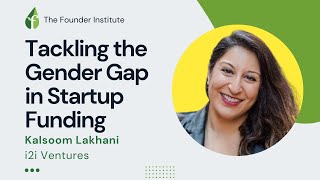
In this webinar, Kalsoom Lakhani—co‑founder and general partner of Idaai Ventures and founder of Invest2Innovate—discusses the persistent gender funding gap in emerging markets, especially Pakistan, and shares data, personal experience, and practical guidance for women founders. She explains that only 2‑3% of capital goes to women‑led companies, cites research showing that women‑led firms are often investment‑worthy but not investment‑ready, and highlights a funnel problem where 90% of pitches she receives are from male‑only teams. Lakhani describes how unconscious bias manifests in investor questioning, with women more often faced with risk‑focused queries that reduce their funding odds by 6.5‑7× compared to aspirational questions. She argues that venture capital is not the only solution and advocates for alternative financing (revenue‑based, mezzanine, debt) tailored to non‑VC growth trajectories. Practical advice covers how founders should determine raise size (align money to specific milestones), vet VCs via portfolio companies, and the founder traits she values (grit, execution bias, humility, alignment). She outlines successful programs she helped launch—Women’s Entrepreneurial Finance Initiative (WEFI), bootcamps, and the WeRaise program—that increased the pipeline and helped ten women‑led startups secure capital, prompting the World Bank to consider replication. Lakhani also addresses the idea of adding male co‑founders, warning against tokenism and power‑dynamic pitfalls, and encourages founders to stay authentic, leverage their unique strengths, and seek supportive communities. The session ends with a call for inclusive ecosystems and networking.
Chapters
I think some of the best female founders that I've worked with are ones that are just like unapologetic about who they are, are going to be building it and just doing it regardless if you're along for the ride or not. And I think that's kind of amazing. And I feel like I've, I have had, you know, the female founders in our portfolio, but also the ones that aren't in our portfolio, I'm super inspired by on a regular basis because they are unapologetic about that. So don't be afraid to just lean into the things that make you different and don't try to be someone you're not. My name is Kulsum Lakhani. I am the co-founder and general partner of Idaai Ventures. We are an early-stage venture capital fund focused on Pakistan and the region. I've been an investor in that ecosystem for about 5 years now, since 2019. But prior to that, I've been the founder of Invest2Innovate, which is the sister company to our fund. It's really the prelude to how I began becoming an investor, but really started similar to what Bounders Institute does, really started by first accelerating entrepreneurs, supporting the Pakistani startup ecosystem in its earliest days back in 2011. So really was a founder first. So started Invest to Innovate, you know, about 13 years ago now as, as really a player to really support startups in places like Pakistan and emerging markets where it's a really hard place to be a founder, just like where you guys probably are in your part of the world. We launched Pakistan's first startup accelerator program back in 2012. Have now— that has now scaled beyond just our own accelerator program, have launched a number of other programs throughout Pakistan as well as in with programs in the region as well. We've worked in the Middle East. We've supported incubators and accelerators throughout Southeast Asia, Bangladesh. So really kind of worked and expanded the work, have been doing research work as well with Invest2Innovate that has been kind of benchmarking the ecosystem. Since 2014. And really that experience of working really closely with startup founders, working in the ecosystem with local angel investors, really started to form the thesis around why we decided to launch our venture capital fund. We aren't the typical VC investors in terms of, I personally don't have an MBA, so don't have a very linear path to becoming an investor, but I'm not a traditional investment banker launching a fund the way that some of my colleagues have done in the Pakistan space. But I think actually my superpower has been that I've been more on the inside of the ecosystem, working with founders, helping them build, really kind of understanding the market from a very in-depth vantage point and really close to the ground. And I think that experience has kind of given me an edge as an investor. And then my partner, Misbah, on the fund has more of a linear background. Coming from finance, also very nonlinear as well. But I think our backgrounds, I think, make us a really interesting VC in the space. We are the only women running a venture capital fund in Pakistan, but we are not only investing in female-led companies. We have invested in 14 companies. 30% of our companies are female-founded or co-founded, but about 60 to 70% have women in the C-suite position. So to the point of really thinking about the gender gap going beyond just who's at the top and really thinking about inclusion and what we invest in. But most of our companies are fintech, but have also invested in a number of logistics and e-commerce companies. We've invested in an electric vehicle company. So really investing in companies that are trying to solve some of the market's largest problems. And that's what we get really excited about and investing really at the earliest stages. So pre-seed and seed stage is really our sweet spot. and we've really developed a really strong reputation in the market amongst our founders as being really founder-friendly and founder-driven as investors as well. So that's a little bit about my background.
That's pretty interesting. Thank you so much, Kelsey, for sharing. Okay, let's start the discussion about the topic today, which is the gender gap. First, let me ask you the question: do you believe there is a gender gap in the funding space or not? And then you will walk through the other questions. What is your opinion?
Yes, of course. I mean, how much time do you have? Of course, there's a massive gender gap when it comes to the funding side of both for female-led companies as well as for female fund managers. I think we face a lot of the same challenges that women-led companies face in raising funding, whether it's an issue of unconscious bias, whether it's the type of questions that are asked, whether it's the types of opportunities that exist, exist for the same way for female fund managers as well. So it's a, it's a problem that I live personally. And so as a result, it's kind of made me more empathetic as an investor now, because just because I am a female investor does not necessarily change the bias necessarily, because we've all been conditioned in the same world that we're living in. And so thinking about also for us how we interrogate our own biases is important. But even in Pakistan, as an example, you know, it's a really similar percentage in terms of funding that's gone towards women-led companies. I think it's about 2 to 3% similar to the, to the rest of the world. In the US, I believe last year, women only receive about 38 cents to every dollar men raise, even though it's shown that investing in women return shows higher returns overall. So obviously that gap is, is huge. And from a, from a VC fund perspective, you know, for us, even though we aren't only investing in women-led companies, we really try to make sure we're as inclusive as possible in how we think about both how we source companies into our pipeline, but also how we invest in the types of questions that we ask. So it's a really nuanced issue. So I can't just say that, yes, there is a gap and that be the end of the conversation. I think it's a much deeper discussion that needs to be had.
Yeah, okay, of course. So according to you, the calcium— what are the, uh, some of the key factors contributing to the gender gap in fund, particularly in emerging markets, like for example Pakistan? And how does this compare to what you've what you've observed globally?
Yeah, I think we tend to see the same things both in Pakistan as well as globally as well. So I think for, I think overall, so the Invest Innovator sister company has actually done research on this topic specifically when we've done our ecosystem studies, we've looked at it from a gender lens as well. So one thing that came across when we've, when we've done surveys of investors is that when you survey investors, And this was, I think, our 2019 study that we did. We found, or no, it was actually our 2021 study that we did. We found that 75% of investors said that they did not see a difference in quality between women-led companies and companies that were solely founded by men, but they did not see enough women-led companies. And I think that is one potential challenge. Number one, it's a funnel issue. So in terms of the amount of women-led companies that are out there versus the ones that are run just solely by men, there's just a huge discrepancy in terms of the overall number So if you're thinking about it from a funnel standpoint, you're just seeing a lot more from a pipeline perspective of male-led companies. Even right now, I think out of companies that I'm looking at in my own pipeline as an investor, I would say that 90% of the companies that are pitching to us right now are run— are companies that are solely founded by men. And so there's an overall funnel issue. So you really have to think about how are we helping to increase the funnel. One thing that we also discovered, and this is something that is quite global, at least quite regional, is something that we've definitely seen throughout the Middle East as well, is that there are a lot of, a lot of female-led companies that are investment worthy, as in they should receive investment, but they are often not investment ready. So there's a huge gap between women-led companies that could actually receive investment today. There's still a lot of things that need to be fixed in their businesses. They might, may need, you know, certain things to be a little bit more from an investment standpoint, more attractive in order to receive investment. And oftentimes that gap is not addressed in the ecosystems that are there, right? So really thinking about the onus being on incubators and accelerators and other entrepreneurship support organizations of how we help close that gap of companies that really have the potential, but aren't fully there yet. And that's oftentimes something that I see as an investor as well, is I'll see a lot of really great companies run by women, but they need a little bit more help that as an investor, I'm not going to be allocating the time and the resources too, because I like to invest in companies that can, that can receive investment today. So that's an issue as well. I think another challenge is that, and this is at least in Pakistan, so I don't want to generalize this for the rest of the world, but I think a lot of women-led companies that at least I've seen are often, are often not venture-style businesses. And I think what's really important here is that we tend to attach success to venture-style businesses, that if you've raised venture-style financing, you must be successful. And I don't believe that's the case at all. I think that we need to actually diversify the types of financing, the types of funding that exists in these environments in order to meet companies where they are and provide the type of financing that they need. So as an example, if a woman-led company is building, you know, something in the e-commerce space that may not have that hockey style, hockey stick style growth that venture style funds like to see, they may be a better candidate for mezzanine or revenue-based financing. Or debt to a certain degree where venture financing just will not, you know, you will not get the returns that you want if you invest in a company like that. So rather than say, turn that female-led business into a venture-style business, why not say, how can we improve the landscape of the types of funders that exist to meet female-led businesses where they are in their journey and the types of financing that they need to be successful? So I think we've often, in the, in the global ecosystem as a whole, every time you look at like the COVID of a Fast Company or the COVID of something, those are mostly companies that have raised venture capital style financing. And we've also seen venture capital financing break a lot of great companies, right? Because the types of expectations that exist from venture capital funds is kind of ridiculous and insane, right? We want to see 100x growth, and that's not the case for 90% of the companies that are out there. So Instead of saying turn those companies into VC businesses where we'll often see those companies break because they grow, they grew too fast, there was culture issues. You know, there was, it just was not a company that was meant to grow ridiculously fast. Why not instead say that, hey, let's support other types of funds in these markets. I think Aman Ventures in Jordan is a really great example of that, that specifically does SME financing, right, as an example. And so I think those are some of the things that are really important. Right, is actually saying like, instead of retrofitting female-led companies for the world that we live in, why not instead say, how do we actually meet people where they are and provide the types of money that they need in order to be successful on their terms, not what other people are deeming success. And I think that's really important as well. And I say this as someone in a venture capital fund. I oftentimes, I often believe that VC is not the solution or the answer. And if anything, sometimes can be the counter answer to a lot of types of businesses. Very specific in the types of businesses we invest in, in our asset class. So why not offer things that are different? Sorry, that was a really long answer. And what I also want to mention is that sometimes I throw a lot of words that might seem like buzzwords to the audience. And so please feel free to ask questions, or if you want me to distill things down a little bit more, I'm super happy to do that as well.
Thank you, Kelsey. Please, audience, feel free to ask any questions, put them in the Q&A section on the right here, and we will view them up on the screen and I also would be happy to answer your questions. So I don't want it to be just an interview. I want also you to be more into the discussion with us. So feel free to ask any questions. So, Kelson, let's suppose, like, some argue that the funding landscape is gender-neutral with investors prioritizing merit and potential rather than gender. How would you respond to this perspective? And what evidence supports the existence of a gender gap in funding?
I mean, it's, that's total BS, right? Like, I mean, for it to believe that there isn't any sort of bias that exists. I mean, there's bias that exists across not just gender. It exists with like people based on class. It's based off of if you have, especially if you're an emerging market, if you have a foreign degree versus if you don't. It exists if you're from a minority, some sort of minority group. So it's intersectional and it cuts across every single class. And I think oftentimes when people believe that there is a neutrality that exists, those are often people that are part of the status quo, right? So those are the people that are making remarks like that. I would actually say this, that, you know, I think that there is bias that exists among all of us. We were not in an, unfortunately, we're not in a colorblind or a neutral world. So I think when it comes to the gender gap specifically, there's been a lot of data and studies that have been done on this. I think some of my favorite research that's been done has been by Dana Cans. Specifically. And she's done a lot of really great research on this about specifically what, where is the bias and how have they measured it. So as an example, women-led companies and women-led funds, by the way, because I've experienced this firsthand, oftentimes will get asked risk-related questions as opposed to aspirational questions. So as an example, if you're speaking to a funder, instead of focusing on the opportunity, the market opportunity, they're like, tell us how big this opportunity can be. It's Kanze, K-A-N-Z-E. I'll spell it in the chat for folks that are writing questions. There we go. I believe she's with Columbia Business School. Um, but, and so as an example, as a risk-related question, um, as an aspirational question, someone will say, tell me more about the opportunity that exists. How big can this business be? That is an example of an aspirational question. An example of a risk-related question is they're like, well, tell us all the reasons this business can fail. Why are you, you know, um, how are you, you know, you have all this things, these things that you haven't done yet. You know, why, why are you the person to solve this? The challenge with those risk-related questions is that means that for you as the founder, you're often on the back, you know, you have to defend yourself, right? And oftentimes you're not being able to frame how big something can be because you're so quickly trying to show them, you know, because they painted you into a corner, how you are, you know, dealing with the risk related with this.
Something happened here. Today is the day of technical issues, I guess. Can you hear us, Carlsen? Okay, Marianne, please put your question in the Q&A section and we will queue it up on the screen and answer it gladly.
I'm bad. I got kicked out because I think this is when the session was supposed to end, not when it's supposed to start.
No, I guess it's also your unlucky day today with it.
It's not my unlucky day. I knew when it was supposed to start. I was like, I just don't know what's happening. So yeah, I mean, I've been fine. But in what I was saying before about the reason why this data is important for you guys is because when women get asked, or anyone, if any founder gets asked a risk-related question, they are 6.5 times less likely to raise funding than someone that was asked an aspirational question. The data is really interesting. I believe it's either 6.5 or 7 times. So it's, it's quite huge, the delta in terms of the people that are likely to raise funding. So what ends up happening, and this is something that we've, on our sister company, what we pulled into even our program design when we worked with women founders is that oftentimes it makes, like, if I'm a founder getting asked a risk-related question, then I have to turn that risk-related question into an aspirational answer in order to change the conversation and to tilt it in my favor, basically. And so as someone who's been a female fund manager that has had to raise my own fund, we've had to do that as well, my partner and I. And so, you know, when it comes to neutrality, I think everyone wants to believe believe that they are neutral. The reality is, is that the opportunities that exist, or even getting into the door, is oftentimes the first barrier. And then when you're in there, the types of questions that get, get asked are oftentimes those unconscious style, unconscious style barriers that exist. And so it's often the labor, unfortunately, is on you as the founder to turn that into something that works in your favor. So yeah, I think that is a very long answer to your question, but neutrality is is BS in any form of the word for, you know, any type of minority group that exists in this world.
Good. Thanks for the answer. I would like to jump to take some of the questions because there is a question that I pretty like here. So I'll just show it on stage. And so, to your opinion on women-led startups not being investor ready and therefore not being immediately investible, do you think male-led startups get a bit more off a pass when they aren't actually ready and still get investment?
Yeah, 100%. I think that's a great question and a great point. I think what's really interesting, and again, this is like super qualitative, right? I oftentimes, and I don't want women to have to do this necessarily, but I oftentimes see, not every guy does this, so I don't want to like paint a bad lens on guys in the audience. But sometimes, you know, what I'll notice with guys is they'll tell you about the world that could be, Right. And that is aspirational, but it's oftentimes not what they're doing right now. And I do this as a female fund manager, as the founder myself. I will tell you exactly what I can do and what is exactly happening right now. That will mean that I'm not painting something that could exist that hasn't happened yet. And I think that's the challenge, right? I've, I've definitely noticed that, that men will be like the ones that will show like and kind of fake it till they make it. And I think women are much more like, like, this is what we can do. This is what's happening now. This is what we don't know how to do. And yes, totally agree that that happens 100%. And I think the investment worthy versus investment ready is something that exists whether you're a female or male-led company, by the way, as well. I think we've just seen that as like one of the challenges when we were doing research on that issue in Pakistan. But I think that that exists either way. I've definitely seen, I was on a Y Combinator demo day and there was a company from Pakistan and I was attending because one of my other companies was a YC company. So I was, I was there to support, support him. And when I was in the audience, they posted a slide and it talked about a license that they had received, you know, by the state bank and everything. And I knew for a fact that that was incorrect. That was not true. But as a result, that company went on to raise a lot of money because people in that audience just didn't know better. So I think oftentimes you turn I think there's things that you can do about faking it till you make it where you want to show that you have a big ambitious vision. And I think that's really important. But I think when you fake it in a way that is disingenuous, where it's dishonest, I think that is a major issue. And I think that's why, you know, people buy into that. And actually what was really interesting about that company, which by the way has now shut down because of issues around fraud, major issues actually, And we detected that really early on as investors. We never wanted to do that deal. But what was so interesting listening to feedback from investors in the US market, because every investor in the US market was putting money into this company and I just didn't understand why. And they're like, "Oh my gosh, Callis, he's just so aggressive in what he talks about." And I'm like, aggressive, but he's actually not stating the truth. It's actually not what he's talking about is not something that can be done, nor does he have the background. So I do think it's quite interesting when we think about, you know, if we were to call out people's biases, it's like, why are you biased towards— I think people are biased towards action, which is great, and people that can execute and have that action. But when you are biased towards people that are overly ambitious without there being real, real substance behind that, I think that's really problematic. And that's also why we've seen fraud that exists in our space. It's also why we've seen things fall through where those founders just never actually were able to do what they said that they were going to do. And so to the point of women, I think it, I think there's a value in all of us being the type of women that are like, this is what we can do. This is what we can do well. But sometimes there's that happy medium of like, can we be a little bit more ambitious in our vision? Can we talk about that in a little bit more of an aspirational, inspirational way, because that's really where early-stage investors get excited, right? Early-stage investors want to be caught up in the inspiration part of what you're building. They want to know how big you can be. So I really think that's a little bit of the balance there of actually saying, like, can we move a little bit more into the middle without being dishonest or disingenuous, but actually saying, can we paint a vision here of that thing that'll get people excited about?
Great, good answer. Let's take another question. There's, uh, here. It's not very related to, uh, female-led startups, but it's a good question, I believe.
So yeah, great question. Um, yeah, I mean, DCF is a terrible way to, to value your company at pre-seed when you're probably pre-revenue. Um, I think this is why, right? So when we think about like, there's many different ways to do valuations, um, for a company. Oftentimes when you this has been popularized by Y Combinator, we'll often see people use SAFEs for that reason, which is a simple agreement for future equity. What it does is just sets a cap on your, on a ceiling basically on how big you think you can be and be able to justify that. But I think discounted cash flow is, is just not really a good methodology this early on. I think it's a little bit better maybe to think about market multiples, looking at comparables in other markets and maybe discounting it for the market that you're in. Yeah, market size is a really good way to calculate valuation. So I think really what's an important point here is that when you're early stage as a company, keep in mind that a valuation discussion with an investor is more, more parts art than science. And so when you get caught in the weeds of like trying to get into a particular number at a pre-seed with an investor and they're trying to like base it off of numbers, that's really very unfair to you. And instead, But if you're thinking about it in terms of market size and potential, this is how big the total addressable market is. This is the opportunity that we see. If we look at the version of us in Indonesia as an example, the version of us in Brazil, this is what they were able to achieve and working backwards from that. But also know that like it is always going to be a, you know, a safe helps because it kind of gives a cap there, but it just kind of know that it's a little bit more of a negotiation of what an investor feels comfortable doing and also what you feel comfortable giving up at the point of equity converting. And so, you know, we have this conversation a lot as investors, and we've always had negotiation with our companies, but I always say, like, do not steer away from— I think price rounds are quite uncommon now at this point in the startup world at a pre-seed stage. I think more often than not, you're going to see a SAFE. If you do have a price round, which is fine, don't use DCF as your methodology. I just don't think that's very helpful, especially if you're pre-revenue.
Great. Thanks, Kalsum. Let's take another one here from Peter. Also, I believe it's a very good question. He said that, what are the qualities you must look for in a startup founder or team? And how should a startup best decide on how much money to raise? Pretty generic.
I love it. No, it's not generic. It's great actually. Um, so two questions here, right? The first thing that— so every investor is totally different. So this is, it's not a cop-out answer. It's just that every fund is very different on how they assess founders. Some people want to assess the business, they value the business model more than they value the founder. I'll just give you my, my thought process and why we're, you know, early stage, so pre-seed and seed stage. I'm much, much more driven by the founder than I am by the business model. Where the business model is really important for sure, but at the end of the day, that business can change, it can shift, it probably will shift if you're really early on in the journey. And what really matters to me as an investor is, is the founder themselves, right? So number one, do they have grit? Which, you know, there's a really great book called Grit by Angela Duckworth, which is basically grit is the confluence of passion and determination. How is that being shown by the founder? Have they put their own skin in the game? Have they done stuff before this? Is this maybe their second company? If it's not their company? What have they done before that demonstrates that they might have that? Because things are going to be hard 99% of the time. Is this the type of founder that you want to bet on? The second thing that I think is really important is, do they have a bias towards execution? One thing I've noted, we actually have done like this really great cognitive assessment or personality assessment of all of the founders in our portfolio, and we discovered that almost all of them had the same traits. It was really interesting. So they all lacked patience. I think if you're a founder, you're probably one of the most impatient people in the world, right? Because you weren't going to wait around for someone to solve the problem for you. You went out and did it. A lack of patience also means that you have that bias towards execution. You're going to be someone that's going to just put up your hands and say, I'm just going to go do it myself. Ideally, you have a sense of humility. So you have a sense of like, I don't know everything. And so I think that really helps because if you're going to be very pigheaded or very strongheaded about doing doing things your way, you're not going to be someone that necessarily hears feedback from an investor who's in your corner, right? And I think what's really important is that an investor isn't just someone this early on, an investor isn't just someone on your cap table, they're actually someone that's in your corner helping you build your business. And so I think it's really important that you, number one, are aligned value-wise, but from an investor standpoint, I would want you to be someone that that gets, hears feedback, but also, you know, knows what you, knows the feedback that is important to listen to, so can drown out the noise as well and be really focused. So those are the things that I think really matter to me personally as an investor. Those are the things that I look for and I get excited about when I meet a founder that I think is really great. What was the second question? I'm sorry, it was about, there was a second question that was very different. Now it jumped out of my brain.
Yeah, I guess, yeah, it's the second question. How should the startup best decide how much money to raise?
Yeah, so I think when you think about the money that you want to raise, I think the best way to think about it is what is this money in service to, right? So don't just think about it like I need money to, um, to hire people. What does hiring people achieve, right? Will that allow you to be, as an example, I need to raise $1 million. That will get me to what I'm deeming as product market fit for my company, right? It allows me to achieve, let's say, 1,000 paying users on a recurring basis. It allows me to basically prove my hypothesis that my business isn't just something in my head, but actually works. It will allow me to, if I'm growing to a new market, it will allow me to do market entry there and grow a certain amount, right? So think about what, what you're doing it for and don't just raise money for the sake of raising money. I think the biggest thing that I can impart to you is that you don't raise money unless you have to, because if you give up equity, that's, that's someone on your cap table that's there forever. So if you don't have to raise money, don't do it. If you can bootstrap for as long as you can, do that. if when you do raise money, because it puts you in a better position of power at that point, raise money because it's going to help you achieve a certain milestone or goal. So that's a pre-seed round. Think about what that money should be that buys you, let's say at this point, because of where the markets are today, 24 months of runway. It buys you the ability to achieve a certain amount of product market fit, and it allows you to achieve a certain amount of monetization based on your own assumptions of your business. right? Put all of those things and then work backwards from there. What is the amount that you need to achieve that? That's kind of how I would think about calculating it, but everyone is different based off of your business. But yeah, that's what I would do.
Great. Let's take a question from Mariam. Uh, uh, pretty nice question as well. Which countries provide better opportunities for women entrepreneurs in the emerging markets, and do they support international startups?
I think right now a lot of— it's very— and it's to be a woman entrepreneur right now, there is a lot of funding that exists, especially in the Middle East, especially in South Asia, Southeast Asia, actually pretty much throughout the world. There is funding that's being allocated. There are a lot of women-led funds coming up in those markets that are specifically supporting women-led businesses. So from Mariam in Dubai, you know, Heather Henyon has a great a fund that is based there that is investing in women-led startups as an example. So there are like, I think everyone is kind of alerted to the fact that the same data, right, that investing in women-led companies shows higher returns, and yet there is a huge gap that exists from a gender perspective. And so I think most places probably have money that is allocated even from a grant perspective. Yeah, and I think international startups, partnerships can— I think every country has it, so you could probably avail it in your own market. But especially if you are international, there's a lot that is out there, you know, even in terms of awards, competitions. What I would caution against is like, I think sometimes what I see as a challenge is that because there is so much funding and visibility available for women-led companies right now, oftentimes I'll see women-led companies winning, going to all these competitions and awards and roadshows and all of this stuff, which is, might be great in terms of getting some visibility, but then you kind of get caught up in that and that becomes what you deem as your success versus actually focusing on the business. So if you're going out and getting awards or funding or grants or something like that, really think about like, is this something that will get my business from point A to point B in order for me to raise serious investment or serious funding later and steer away from doing it for too long, right? Because I think oftentimes when I see people, Honestly, my biggest pet peeve is when I open a deck from a founder and in their attraction slide, they're telling me all about the awards that they've won, which is really like a turnoff for me because it means they weren't actually focusing on building their business. It meant that they were going to these awards and things like that. So there is a balance there. Like I think you can get funding from those things. So I think that's great and do that. You can also get, you know, access to network and other investors, but really kind of play the balance of saying like, how much of this is taking away time from focusing on the execution of my business? And what do I need to actually get from point A to point B? And then choose it that way. But I think most countries and most markets at this point have opportunities even from like development finance institutions, from embassies. All of them are providing support in some way to women-led companies.
Great. Since, since Maria mentioned some of the opportunities, Kelsom, I'd like to ask you, since you've been involved in various initiatives aimed at supporting women entrepreneurs, could you share with us some successful initiatives or strategies that you've seen or implemented that have effectively addressed the gender gap in funding?
Um, yeah, so I've been— we were a big implementer, our sister company Invest2Innovate, which is the company that I originally found, uh, founded. I'm on the board of it now. I'm still an advisor on a number of projects, but I don't run that day to day anymore. So we have been a big— they've been a big implementer of the Women's Entrepreneurial Finance Initiative, which is called WEFI. And that is a global secretariat that is every— I think most countries in the world have signed on to and put money behind. And that is now being implemented by World Bank offices around the world. AFC around the world, Asian Development Bank, all of that. So we've been a major implementer of Leafi in Pakistan and then also have been an implementer of them in the Middle East as well. And I think we Invest to Innovate— when I say we, sorry, is our sister company. They've been doing some really interesting boot camps that have been geared towards— so they did two things. Number one, they did boot camps that were really geared towards increasing the funnel of women-led companies that were just like ideas starting out and really helping them build the initial elements of their business, which I think was great. The most, the more successful initiative that we also did was a program that they did was a program called We Raise, which was under WeFi and specifically was supporting women-led companies that were investment worthy, but not investment ready, and actually giving them the support that was necessary to be able to raise investment. And they were able to show that 10 companies Over 2 years, we were able to raise investment as a result of— because they provided a lot of really tailored coaching support, helping companies like fix all the gaps that existed, connecting them to investors. And so over those 2 years, we saw those 10 companies be able to raise significant amounts of capital, especially in the last year, which was like the hardest year to raise capital ever. So I think it was a really good example of really tailored customized support that WeRaise was able to achieve. And I think as a result of the success of WeRaise, The World Bank is actually now looking to replicate that in other countries now. So really proud of the team at Investivate and what they did with that.
That's pretty interesting. That's very interesting to hear. Let me take a very good question from Amber. I will show her on the stage. It's, she said that, would partnering with a male co-founder help mitigate the gender bias and there is, uh, and there is for women-led startups. What kind of unintended consequences might arise from doing that?
Ah, this is a hard question. Um, first of all, technically, I mean, ideally, like, you just— if you want to build a company just on your own, you should be able to do it with— and, and just like mitigate the bias by like some of the things that I talked about, right? Aspirational, um, aspirational answers, framing yourself with that vision. I have seen that, you know, oftentimes, like when we, when we've done the disaggregated data for Pakistan, women co-founded companies had an easier time of fundraising than companies that were solely founded by women for sure. And I think that's also indicative globally as well. But to answer your question, I don't think that you should have a male co-founder just to be able to raise funding. I've definitely seen red flags that have come up up with that. I just looked at a company recently where it was a really kick-ass female founder, and you could totally tell that there was a weird power dynamic with her male co-founder. And that was a reason we didn't invest in that deal. So you can tell, like, if you're not value-aligned, if you're not naturally coming together as founders, you know, I think coming together just because it's a guy that's on, you know, that's going to be joining you is not really the right reason to build a business. And I can say this as someone who has a co-founder, my My co-founder is a woman, but it is like a marriage, right? My partner and I talk about the fact that we sometimes speak to each other more than our respective husbands because we are literally together and speaking all the time. And so if you're going to be building a business with someone, it is really like being in a marriage with them. And so if you, if you're doing it for the wrong reasons, which is like, I personally think that just because you want to raise funding and you feel like putting a guy on your cap table will achieve that, that is not the right reason to do it. However, if it's someone that you know and trust really well, you feel like he adds a lot of value beyond the fact that he has, you know, a Y chromosome, I think it's really— and brings other value to the table, you guys have been able to see that this is a match for you, great, do it. But don't do it because it's in service to dealing with other people's issues because that should not be the reason that you to bring a male co-founder on.
Perfect. Thanks, Kelsey. Let's take one last question from the audience. I like this one as well. It's from Daniel. Daniel says that, how should the first-time founder looking to raise funds vet VCs, and what are some questions, feedback you look forward to from founders who are pitching you?
I love that question. What I always tell, um, so I definitely believe that founders should vet the venture capital funds that they're speaking to. The best way to to do it is to go to their portfolio companies. I always say that portfolio companies, um, your founders will speak volumes about you in a good or a bad way. Um, and so we— I've often told this to some of our founders who, when they were raising investment, and especially in Pakistan in 2022, it was— in 2021, it was a really competitive landscape. So sometimes what I would do is I would just be like, all right, I was like, well, go talk to our founders and, and let them tell you what we provide. Because we know, for us as VCs, we provide a lot of value to our companies after we invest in them. But I was like, don't let us tell you that, because obviously every single VC will say that, you know, we're very founder-friendly, we do all of these things. And so I would just send founders to our portfolio companies and they would talk about what we've done. And I'm really proud of that, that our founders are actually our best ambassadors for us. And so I think that's something for you as a founder to do as well, is that every time you look at a VC fund, go go speak to their companies, like ask them, ask them, number one, are they the types of investors that have been valuable on their cap table? Are they investors that do provide value after the deal is done? Are they people that are really onerous? Are there any red flags? So definitely ask those questions. What are the things that I'm looking for from founders when they pitch us? I kind of mentioned in terms of traits before, I love when I also meet founders that I feel like it just, it stops becoming like a pitch and just really kind of feels like we're, we're just vibing. It's like a great alignment. We're already talking about the business and all the things that they want to be building together. So I think, you know, what I, what I really sometimes look for is that kind of alignment and excitement around what they're building. And so if you're not in love with what you're building, how can you expect me to be in love with it? And so I really love when I'm in a conversation with a founder and there's actually just happened last week where I just felt so— I let the call go half an hour longer than it was supposed to. I just like kind of got really excited about what they were doing and just asking a lot of questions. You wanna have that, right? And I think that's really important as a founder is you want to, you're ultimately selling us your vision. So you should, you should be as bought into that vision as we are as well, or as you want us to be as well.
Great, thanks, Carlson. Let's maybe close up with one final question from myself, which is, I would like to ask you, Carlson, what advice or words of encouragement would you offer to inspiring women entrepreneurs who may feel discouraged by the challenges they face in accessing funding? And what can, what can the broader entrepreneurial community do to support them in their journey?
Yeah, and I'll definitely talk about for women. I also see, I wanna be inclusive of the fact that I can see there's some men in the audience too. So just, I recognize that it's hard to be a founder regardless if you're a man or a woman. It's Women's Month for sure. But so for women first, because I think this is important, I think what's really important first is that I think we're oftentimes told that we are not enough, that we can't do it, we can't do these things. And I think for me as an investor, when I came into the space, the amount of men that made me feel like I did not belong, right? I did not have a traditional investor background. I didn't have an MBA. Actually, my master's is in conflict resolution, which is interestingly something that I use way more than investors that use their MBAs. So I use it all the time as an investor now. I think what's really important is to remember that what is different about you is actually what makes you special. It's something that you should lean into. I don't think you should try to become like, be more like, be to the point of what was asked earlier. Don't feel like you have to have a male co-founder on your cap table in order to make it. Don't feel like you have to sell something that doesn't exist in order to make it. You do have to sell a vision, of course, and you do have to get people excited, of course, but don't feel like you have to behave differently in order to, you know, don't feel like you have to act like a guy in order to to achieve those things. I think the more authentic you are to yourself, to what you're trying to build, I think people buy that. I think people will always, people will always resonate with, you know, what you're, what you're building if you're staying true to that. And so I think some of the best female founders that I've worked with are ones that are just like unapologetic about who they are, are going to be building it and just doing it regardless if you're along for the ride or not. And And I think that's kind of amazing. And I feel like I've, I have had, you know, the female founders in our portfolio, but also the ones that aren't in our portfolio, I'm super inspired by on a regular basis because they are unapologetic about that. So don't be afraid to just lean into the things that make you different and don't try to be someone you're not is what my feedback would be. To founders that aren't women, but just generally, I think I would say that same advice, right? And also it's really hard depending on where you are in the world, But it's hard to be a founder today. It is like not easy. It is definitely something that is, it's an, it's an invest—
Kalsu, Kalsu, we cannot hear you. There is a problem with— there is an issue with the sound. We lost you. Oh no, no luck. Maybe try, uh, leave and rejoin the event. I told you today is the day of technical issues for some reason, but it's okay. I guess she has some issues with her audio, so just wait for a few seconds to close the event. Uh, please stick around, there is like the networking lounge after this event, you can stay in the tables and talk to each other and to network and so on. Can you hear us? No, still no luck. It's worth it though, everything she's been saying. Yeah, she's— oh, I'm here but can't hear. Oh, you can't hear us as well? Weird.
Try.
All right. Now we can.
All right. I don't even know where I was left off at that point.
You were talking about the male founders.
No, I was basically saying like, have, I think communities like this are really important. And so making yourself feel not alone and how crazy all of us are in building what we're building. So that's it. That's all I was going to say.
Thank you so much, Kalsum. You, like, everything you shared was really inspirational. Thank you so much for all the content, for all the valuable resources you have shared. Everyone, the recording of the session will be sent to you after this meeting. Kalsum, I don't know if you have a few time to join the networking tables. Maybe some people would like to talk to you, or a few minutes.
I can stay for a few minutes, but I can't stay for very long.
Okay, sure. Uh, after this meeting, after this meeting, you can have the tables there. You can talk to Kalsum, and otherwise you can talk to each other as well, network and so on. Thank you so much for being here. Uh, thank you, Kalsum, for being here today. Uh, we really appreciate the resources you gave. Have a good day, everyone, and see you in the networking lounge. Bye-bye.
Bye.










