Global Startup Alignment & Founder Mindset - Ryan Micheletti FI Colombia Keynote (May 2022)
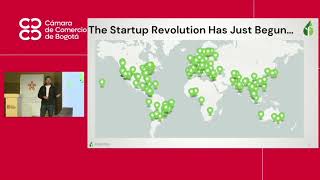
Ryan Micheletti, Head of Global Operations at the Founder Institute, outlines a vision for connecting purpose-driven founders with global resources and impact investors. He presents the Impact KPIs framework that ties startup outcomes to UN Sustainable Development Goals, and describes the Founder Institute's scale: 6,000+ startups across 200 cities with 25,000 mentors. For Colombia specifically, he highlights $1.6 billion in recent venture capital and calls for more local VC firms.
Chapters
¡Gracias! I've had the pleasure of working with thousands of startup founders and leaders from all around the world. And my hope is for the founders in the room today that the heartfelt lessons that I have learned, you'll be able to take with you on your journey as a startup entrepreneur. So really quickly on me, my name is Ryan Micheletti. I'm head of global operations for the Founder Institute, which is the world's largest pre-seed startup accelerator. I've been leading teams at Founder Institute for the last 8 years that helped scale the organization to over 6,000 startups across 200 cities, building the largest mentor network of 25,000 mentors. And we're just getting started. Additionally, I'm also a venture capitalist at the Veteran Fund, which is a brand new VC firm that's investing in military veterans, military spouses, and dual-use startups. Between the work that I've done at VetTech, which is the first startup accelerator for veterans that I co-founded back in 2012, my work at Founder Institute, and my work at the Veteran Fund, I've directly launched over 600 startups. That have raised $200 million and indirectly over 6,000 startups. And I share that with you not as a measure of success, but truly in honor of the founders that are here, because I started exactly where you are. And through my 12 years of being a startup entrepreneur and being in the ecosystem, fortunately in Silicon Valley, I know that the path that you're taking right now is going to require extraordinary leadership. And extraordinary courage. And so for that, I'm humbled to be here, and I'm really excited to share with you some of the things that we're gonna discuss today. I believe that the only way to solve some of humanity's greatest challenges is to empower smart, talented, and virtuous people to build technologies and companies that will improve the world. And I believe that now is the time for humanity to unite together to build a great society through mindfulness and impactful entrepreneurship. So like many of you, I started out with a kid— as a kid with a vision. So this is me about 12 years ago at the very beginning of my startup journey. I was just graduating college, and I was serving in the California Guard in the reserves. And the gentleman to the left of me, a good friend and one of my first startup mentors, is Spiro Mitsanis. God bless his soul, he's no longer with us. Spiro was the reason why I got into startups. He actually opened the door for me and invited me to join a startup called Popin, which was the first company that I had joined. And like every kid that grew up in the Bay Area, of course I wanted to jump into startups. That was where the future was. And so, uh, that really kickstarted the journey that allowed me to ultimately end up in front of you, uh, today. And so the first 4 years, like many founders when they first start out, I spent as a starving entrepreneur. I was working really late, really long hours, making no money, but I was following my dream and my passion. And even though that those were some really hard times, I recognized that those were the times where the real work was being done. And through that, I had the freedom to create my own path and the freedom to go and follow my vision into its ultimate fruition, which is where I am at today. And so I wouldn't trade any of that for the world. And through that process of failing forward, learning all these different lessons from the ecosystem, I realized that there's a lot of correlation between military service and entrepreneurship. Things like leadership, purpose, teamwork, the ability to be dynamic in a rapidly changing situation where the risks are extremely high and the failure could be fatal. So I went and started a company called Vet Tech, which is a nonprofit that focuses on military veterans launching companies based in Silicon Valley. We're the very first accelerator focused on veterans and veteran issues that was actually based in the heart of the Bay Area. And fortunately, I've seen a lot more companies grow and there's a lot more support for the veteran community. But that really— when I, when I came to that opportunity, I just felt this like strong commitment and strong passion. I knew I was on the right path. And so I want to talk to you today about something called global startup alignment. And this is a term that we discussed and we created at Founder Institute. Everyone here can probably agree that the world is broken. Over the last 250 years, humanity has made really great strides in terms of being able to increase the amount of abundance for this world. And I think a lot of that has to do with the fact that 250 years ago, the United States coined in the Constitution the idea of the right to pursue life, liberty, and the pursuit of happiness. And I think when you turn on the news, you see war, famine, disease, natural disasters, right? It looks like the world's ending. But I'm here to tell you that there, in this darkness, there is a great light within all of us, that if we can harness it, we can use that power to change the world. And I know that entrepreneurs will solve the greatest challenges that are facing humanity today. The good news is that this is already the case. Startups are leading global change, and you can see on this chart here, this is the global GDP per capita. Really, it starts to get a little bit of the hockey stick effect, like around like the mid-'70s when the use of computers started to become more mainstream. And then through the '90s, through the 2000s, and even through 2010 to where we are today, the technology boom has just exploded. And this has led to an enormous amount of abundance, increased quality of life, wealth creation. And so the good news is that even though there are hundreds of thousands of startups being created every single year, and at times it feels like the market is saturated, we're just getting started. These are chapters of where our Founder Institute operates in over 200 cities around the world. We believe that every single startup founder should have access to the resources of the global network that we've been curating over the last 13 years. And so whether or not you're in Canada, or in Lagos, Nigeria, or in Singapore, All of these resources and founders are working towards a common goal, which is to take their vision and use that to change the world. And so what is global startup alignment? We, we define global startup alignment as a situation where founders with strong principles and beliefs build things that actually matter, that solve real problems. These founders are then supported by local startup ecosystems that are connected globally. And these investors will then fund companies that bring about a positive change in humanity. And with the increase of impact investing that we've seen over the last several years, we know that this is the trend and this is going to continue to grow. For the first time in human history, we have this global self-awareness, the self-awareness of not only ourselves but the people that we interact with. It's really the first time humans have been able to look at themselves in the mirror at a global level. And this is increasing the speed of impactful innovation. I can pick up the phone right now, talk to someone in China with my idea, build a startup, and we can bring that vision to light in less than 24 hours. This has never been possible. Humans have never been able to do this, and we're still really only about 30 years into the technology revolution. So even though over the next 50 years, growth will still be determined by basic economics and market fundamentals, I believe that the next generation of founders are going to be bringing deeper spiritual impact and mindfulness into their startup. And so let's talk a little bit about how we can achieve global startup alignment, starting with institutions. So as I mentioned, the Founder Institute is the world's largest pre-seed startup accelerator. Over the last 13 years, we've scaled the organization to 200 cities, 6,000 portfolio companies, We have over 25,000 mentors, and a lot of those companies are really only 3 or 4 years old. At our current scale, we create 1,000 startups every single year, and we do that on an operating budget that's probably equal to a local startup accelerator that can create mere about 10 to 20 companies. That's major impact, and we're doing this not just in Silicon Valley and New York, but we're doing this in Rwanda, Kabul, Afghanistan, Kazakhstan, places where there is no startup ecosystem. We're there on the front lines to tell people that they can go and build a startup, they can become masters of their own destiny, and the power is within them to do that. And so our goal by 2025 is to create 10,000 startups globally that are— and integrate impact as a global standard. So let's talk a little bit about impact. Why does impact actually matter? Well, there's a couple reasons. It really comes down to growth and engagement, growth of your customer gate— base, engagement of your employees, engagement of all of your stakeholders. You can see here on some of the stats that consumers are 4.5 times more likely to champion a company to their friends and family that they believe the company has a strong purpose. You can see at the bottom that 85% of executives believe that a purpose-driven company drives profit. And that's because the best founders and the best employees want to work on things that matter. They don't want to build just another app. They want to go and solve something meaningful. And so by telling the story of your impact, by bringing that to the forefront and communicating that, it becomes part of your culture. It becomes part of the startup ethos that your employees will share, your investors will share, and your customers will also share. And so we know impact matters, but how can we measure that impact? Most everyone in this room have seen the UN SDGs, the United Nations Sustainable Development Goals. And I was really proud to find out that the origination of the UN SDGs actually came from Colombia. It was back in 2012, the Colombian people came up with this concept of the UN SDGs, and it was later ratified by the UN. So impact and forward thinking is built into the DNA of the Colombian founder. Unfortunately, we have not made meaningful progress on these goals. If this was ratified in 2015 and it's 2022, we're halfway to 2030 when these goals should be met. And we have a long way to go. And I believe that we can't rely on governments or corporations to do this. We need to rely on ourselves. We need to find great leaders and empower them. We need to find people that are actually building things that matter and give them the resources to bring that vision to the world. And so now is the time to build our future. The startups that are built today, literally today, are the ones that will mature in the next 5 to 8 years when the 2030 goals should be met. So if you're a startup founder in the room, I ask you, what's the impact that you're making? What are you working on that matters, and why does anyone care? To help with this, the Founder Institute created something called the Impact KPIs, or IKPIs. This is a framework that allows startups to manage and measure the impact that they're having. We also created the concept of a for-progress company, because we believe that for-profit companies can also be for-impact companies. You don't have to be a nonprofit, and beg for donation dollars that make an impact in the world. If you're able to wrap that into a for-profit company, that's gonna be far more powerful than any nonprofit can be. And so we believe that for-progress companies are the future. And so we actually have a Plan Your Progress tool. You can take your startup, use keywords, find out what UN SDG you're working on, and then map that to specific IKPIs that you can hold yourself accountable to. And you can do this without being a public benefit corp. Anyone can go on and measure this. So I want to give you a couple examples of For Progress companies. This is Gabriel Castillo. He is the co-founder and CEO of DocDoc, which is the largest virtual hospital in Colombia. And it provides access to healthcare across 25 different specialties. This was especially impactful during the COVID-19 pandemic. He's also a Founder Institute alumni based here in Colombia. This is Mike Smith. He's a military veteran. He's part of the Veteran Fund. He's the co-founder and CEO of Acclimate. He used to fly fighter jets for the military. He's built a SaaS tool that tracks and manages a company's climate footprint in 5 minutes or less per month. So think TurboTax meets climate footprint, and then you can use that to then share with your stakeholders. You can use it to talk about the impact of your startup. This is Luz. She is the co-founder of ADU Works. Which is building affordable additional dwelling units to help solve the housing crisis. And then finally, this is Diego Rodriguez. He is the co-founder and CEO of Lynx. It's a payment and financial solutions that's opening up credit opportunities for the larger Colombian population. And so every single one of these companies can be a very big business. Every single one of these companies can back— can be backed by venture capital, but they're also working on things that matter. And so we know that we can create for-progress companies at scale. We know that we can have a big impact integrating impact into the fabric of the global startup ecosystem. But how do we fund for-progress companies at scale? I think a big question in the room, a lot of the founders that I've spoken with were asking about access to funding. So 2 years ago, the Founder Institute launched a program called VC Lab. Originally, this was just a test, because we realized that creating 1,000 companies a year is not sustainable unless we're also creating venture capital firms that could fund them. So we thought it was our responsibility and our prerogative to go out and do that. And so what started with a small 10-person cohort that launched 10 venture capital firms quickly ballooned into 5 completed cohorts. We're doing our 6th right now. With thousands of applications per cohort, launching over 200 venture capital firms. I want you to think about that, launching 200 venture capital firms in 2 years. Our goal is to get to 1,000 venture capital funds by 2025. And so I invite the Colombian people to build the future together with us, because when you take the largest company creator in the world that creates 1,000 companies a year, and you take the largest venture capital firm creator and accelerator in the world, and you put the two of those things together, we're gonna see impact on a global scale like we've never seen before. And so I would like to see a meaningful portion of these companies be from Colombia. And so how can we make Colombia one of the top startup ecosystems in the world? Let's talk a little bit about Colombia startup alignment. I've talked to many startup leaders here. Before I came here, I talked to a lot of founders just to get their impression of like, what is going on in the ecosystem? And I can say that Colombia has a tremendous amount of support for the startup ecosystem. I was really happy to see that. And I work with leaders from 200 different ecosystems around the world. But just the fact that the Bogotá Chamber of Commerce invited us down here, they're putting on this event. There are so many resources for founders that I believe in the next couple of years, the Colombian startup ecosystem will continue to grow. And I believe that 2022 is the year that the ecosystem will break out and become one of the top startup ecosystems, not only here in the region, but also globally. And so at Founder Institute, we have something called the Startup Ecosystem Canvas. This is a list of resources that we put together. So these— there's 250 resources on this list. This is Bogotá-based. We're going to expand this out so that founders will have and access to a list of resources that can help them on their journey. And so talking to founders about the Colombian startup ecosystem, there's really 3 main pillars to any startup ecosystem. There's the people, there's the market, and then there's the capital. And I think everyone in this room will agree the people of Colombia are incredibly talented, incredibly vibrant. You have strong universities, you have strong support for the ecosystem, and you have the entrepreneur DNA that's really been built through adversity, and that's extremely important. I'll get into that in a moment. The market is also growing very quickly, and it's one of the largest markets in LATAM. So that's a very positive sign. We need to ensure that that continues to happen. One area that I think that the ecosystem could improve is the need for more corporate innovation. And to be fair, I don't think anyone is doing corporate innovation really well. There's programs that charge corporations millions of dollars A lot of organizations out there are bringing in experts to help with their corporate innovation, but no one has really cracked the code and done it exceptionally well. So this is not just a Bogotá or a Colombia issue. I think this is a global issue. And if we can unlock that, if we can find out how to tap into that, I think that it's going to be a tremendous growth source for startups. And then finally, the capital. Every single founder I talked to was asking me about how to raise capital, how to access international capital. And so last year, Colombian startups raised $1.6 billion. That's pretty tremendous. And this data is from Invest Bogotá. The US participated in half of those deals, which I think is great. We need to encourage that. I think we need more US capital to come into Colombia. But at the same time, we need more Colombian venture capital firms being the source of capital. So I believe that now is the time to increase this cross-border collaboration. We need to drive more awareness of the talented Colombian startups that are here in the ecosystem to US investors. And my goal is to create a superhighway of resources between my home in Silicon Valley and here in Colombia. And so I'm really happy to hear that the President of Colombia is actually visiting the United States now, which is why he couldn't be here today, because we're celebrating 200 years of diplomatic relations. We've been working together for 200 years, and Colombia is a tremendous partner of the United States in South America. And we need to continue to foster that. We need to share resources. We need to build companies and things that matter together. But we must build more Colombian-based venture capital firms. Local investors have an advantage over international investors. It really comes down to understanding the culture, understanding where the opportunities are, And most importantly, having strong local networks that are going to help those startups grow. And so I'd like to highlight my friend Guillermo Guzmán, who's not only a VC, he's the co-founder and managing partner at Indio VC, which is a $50 million fund for pre-Series A companies throughout LATAM, but he's also the managing director of Founder Institute Colombia. And so Guillermo has been launching companies through Founder Institute and funding them through his fund. And we need more leaders like Guillermo to stand up and take a stand to do those types of things. And so Guillermo, I just want to personally thank you for your years of service to the Colombian ecosystem. And I recognize you as one of the top startup leaders in Colombia. So can we give Guillermo a round of applause, please? To help build more venture capital firms, I spoke with my friend and mentor Adeo Ressi. Adeo is the chairman of Founder Institute, who went on to become the CEO of VC Lab to launch that initiative for the Founder Institute network. And he's agreed to give priority access to Colombian VCs that are applying to VC Lab, which by the way is a free program where we help you launch your fund. So I make my commitment to every single person in this room today that whether you're a startup founder working on a startup, or if you're an aspiring venture capitalist that wants to invest in startups here in Colombia, The Founder Institute will back you throughout your entire journey. So that all sounds great. We've talked about global startup alignment, we've talked about Columbia startup alignment, but frankly, none of that matters unless you focus on the founder. And so at the Veteran Fund, we created something called the founder mindset. And before I give you the definition of what that means, I think there's an important distinction between what an entrepreneur is and what a founder is. This is the Oxford Dictionary definition of an entrepreneur. It's a person who organizes and operates a business, taking on greater than normal financial risk to do so. Sounds like a startup founder, right? Pretty reasonable. But I define a founder as a person who has a strong core belief and a purpose, with an unwavering conviction to transform that purpose into a business or organization through the entrepreneurial process. So what's the difference between the two? It really comes down to a founder is someone that applies a deeper level of spirit and vision into what they're doing and imbues that into the organizational building process. It's not just simply a person looking to arbitrage and make money. It's someone who has a much bigger meaning and purpose behind every single thing that they do. So there are some great founders. In the US, some of the best examples of founders are our founding fathers of the country. These are the people who 250 years ago believed that England was overstepping their bounds and that they took a stand and said, we believe that every single man and woman has the right to pursue happiness, to pursue life, and to build the life that they want. And so these principles of the founding fathers have really been imbued in the United States Constitution and have spread globally. And there's lots of great examples of founders in, in Colombia with similar stories like this. But a founder isn't just an entrepreneur. A founder is someone building an organization and building a movement. And so the founder mindset is the set of attitudes and beliefs that allows that founder to overcome the immense obstacles that are laying before them as they set out to change the world. And so at the Veteran Fund, we've established a series of core values to the founder mindset as well as principles that underlie each, each core value. And these core values are purpose, leadership, and resilience. When we look at companies to invest in, if a founder doesn't demonstrate one of these three things or all of these three things, then we won't invest in them because we know the greatest founders of our generation have purpose, they have leadership skills, and they have the resilience to see it through. And so let's talk a little bit about purpose. The most important part of any endeavor or journey is the intention behind it. Why are you doing what you're doing? That's very powerful, because if you have a strong purpose and intention, you'll climb the highest mountain, you'll accomplish great things. But if you don't have a strong purpose or a strong why, you're going to crumble in the face of adversity. So the very first thing you have to do as a founder is figure out why are you doing what you're doing. What is your purpose? And so the first principle that I'd like to share for you for purpose is that you need to recognize that there is an innate power within you. I believe that there's a power within every single individual that will allow them to achieve extraordinary things. And we've all seen it before, right? We have friends or family, or maybe you've done some extraordinary things that allowed you to push the boundaries of what you thought is possible. But the first step is you have to understand and recognize that power. If you don't, the people that fail to recognize that, they're basically going to be trapped in mediocrity for the rest of their life. But the people that understand this principle and they harness it and they grow it within themselves, those are the people that are going to go on to be successful. So you also have to believe in your greatness. This is principle number 2 of purpose. I believe that everyone has greatness within them. Some people don't believe that they're destined for greatness, and that's okay. But at the end of the day, the best founders believe that they have this strong purpose in this great thing that they're doing. Where they get into trouble is like, you don't want to be egotistical about it because there's plenty of people you need to learn from. You have to be humble with it. But at the end of the day, you have to believe in your greatness. Some of the greatest minds of humanity, whether it's Marcus Aurelius, the greatest Roman emperor, or George Washington, the first president of the United States, they all talked about divine providence. They all believed that they were here for something greater than themselves, and they were able to change the world based upon that belief. And the third, and probably the most important part of your purpose, is you need to accept the responsibility of that power. If you don't accept it, if you, if you push it off, or you give, give that power away to someone else, then you, you're left powerless. You need to realize that you have this power within you and that you're able to take that and use it to change the world, but you have to do it in a responsible way. So take ownership of it. Now, how do you find purpose? And there's tons of books and things you can read. There's, you know, we could probably have a 12-hour session on this, but here's some things that I found helped me along my way to find my purpose. And so I think it's important as a first step that you become self-aware. Become aware of yourself, become aware of your surroundings, become aware of the world around you. And one of the best ways to do that is through some kind of daily spiritual practice or meditation. Most of the best founders that you'll talk to have some kind of meditation practice that they do daily because it keeps them sane. It creates space. It's easy to get wrapped up in the world around you, so you need to take time out of your day to separate yourself. And through that pause Through that calmness, that's where the light will shine. That's where you can figure out what your purpose is. And so at the end of the day, you need to discover what excites you, what's going to get you out of bed so that you never work a day in your life. You're just working 12 hours a day, 7 days a week on things that you're passionate about. And so when you do this, when you're able to figure out your purpose, when you align your heart with that, And when you take actions based upon that, you'll start to see signs of it working around you. Maybe it's a meeting, some— maybe it's meeting someone, a co-founder, or it's an article you read, or maybe it's a conference you went to. Signs will start to point you along the way that you are on the right path. And so it's important to think deeply about your why. And if you can't answer, why are you here? What are you doing with your life? Then you need to keep searching. And that's more important than going to university or launching a company or raising a venture capital fund. You need to get that right in order for everything else in your life to make sense. And so let me ask you here, why are you here? What are you doing to make your life better, to make the world better? So let's talk about the second core value of leadership. It's important that you lead from the heart. If you're here for a purpose, and that purpose gets presented to you through creating space and really tapping into who you are, then that means the pathway will unfold itself when you lead from the heart, when you take that passion and that purpose and you bring it out into the world around you. It's extremely important, and you'll notice that the best leaders and the best founders They're all intelligent. They all have intelligence behind them. But the best ones have an immense amount of heart because that's the thing that's going to get them up every day. Every time they fail, they're going to get back on the horse and they're going to keep going. So intelligence is not enough. You must have heart. And that's arguably more important. At the Veteran Fund, we have this concept we call light the torches of others. And it really comes down to empowering other people around you. One of the most important jobs for you as a leader is to go out and find other great leaders and bring them together. Unite your tribe, find the people that want to support you, and then imbue them with that vision, light their torch so that they can go out and spread that word for you. And if you can do this right, if you can integrate the impact that you're having, those people will feel it. They'll want to work with you, they'll want to go out and spread the message. And so you have to light the torches of other people. In the military, there's this concept of extreme ownership. We call it 360-degree accountability. Now, you can't control everything, and if you try, you're going to fail and get really, really frustrated. So this isn't about control. This is about taking accountability for the people around you. So whether or not someone on your team failed, whether or not you got the contract, or whether or not you were able to hire that employee, Take accountability for that, even if it was someone else's fault. It's important to own the failures, but give away the successes. Don't take credit for the success. Give that to your employees, give that to your co-founder, empower them. But you need to ultimately be the one accountable. Someone has to lead the ship, whether it's mid-afternoon on a Sunday or middle of the night on a Friday night. Someone has to be accountable, and that has to be the leader of the organization. So the last principle and the last core value I'll share with you is resilience. It's important that you stand strong in the face of adversity because the world will try to break you. You're going to run into people who say, no, you can't do that, or I don't think that's a good idea, or even worse, you could spend hundreds of millions of dollars on rockets that explode and you're all out of money, like Elon Musk. He almost ran out of money for SpaceX, but he stood strong in the face of adversity and kept going. And there's many other anecdotal stories about that. And so this builds what we call an adversity muscle. So if you can overcome really challenging obstacles in your life, then the smaller things that happen to you won't really bother you, right? You'll be able to get up and do more and lift a heavier weight and be able to carry the weight of other people. So it's important that you are this strong figure for your team. You also have to take courageous action because I really like the quote that Greg shared around what Elon Musk said about entrepreneurship is chewing glass and staring into the abyss of death. And I think that's accurate. I think that there's also the exact opposite of that, which it could be the most amazing thing in your life. But it's important to know that you're not going to know the next step. Minute to minute, you're literally— the path is unfolding, and you have to be courageous. You have to take that step, and you have to have the faith to know that the path will open itself to you if you just keep going. And so what many people don't realize is the darkness that you're staring out into, it's not evil, it's not bad, it's actually pure unlimited potential. And it's your job as the leader to take the mission, the vision that you've built in your heart, that you've lit in the torch of other people, and you take a stand out into the darkness and you shine your light because that's going to create the world around you. And you have to demonstrate unwavering conviction to your purpose. Now, this doesn't mean to be inflexible, right? You have to bend or else you will break. And I love the cartoon that was shared earlier. About this, and I think it's a really important point. It's okay to pivot. In fact, you, you won't know everything. You won't know where the path leads. Maybe you find a better solution, or maybe you come up with a new product idea. Those things are okay. You have to be open-minded. You can't have lockjaw on just the one thing that you think is right. Be open to other people's ideas and suggestions, but ultimately know that you're responsible to lead the ship. And so Whatever path you choose, you need to choose it with all of your strength, and you need to be able to follow that and have conviction to it. But you also need to be aware enough when it comes time to pivot. And there's so many great companies that have pivoted. Twitter pivoted. There's many, many examples of this. But at the end of the day, it's important to remember, don't pivot on the purpose of your life. It can change. It can adjust. Maybe you come up with a different purpose. But don't give in to temptation. Don't do things that you think, oh, well, maybe we could make more money this way, or this is a nice shiny object over here, like, let's go and pursue that. Keep the conviction towards your purpose strong, because that's what's going to guide you through the hard times. And so before we wrap up today, I just want to say that it's up to us, it's up to the leaders in this room to protect future generations, because the only reason why any of this can be possible is because we all have the right to express ourselves. We all have the ability to go out into the free market and do the things that we want to do to create the world that we want to create. So the biggest threat to that is tyranny. It could be tyranny from a government. It could be tyranny from a boss. It could be tyranny from a family member or a naysayer. You need to learn to overcome that. And so the future is up to us. It's up to the people in this room. The founders that take action today are the people that are going to change the world. And I promise you, there's a couple of unicorn founders in this room. They just don't know it yet. And so I'm going to say this again. Now is the time for humanity to unite together to build a great society through mindfulness and impactful entrepreneurship. Thank you for your time, and God bless Columbia.










