Global Startup Report, powered by Founder Institute (25 March 2022)
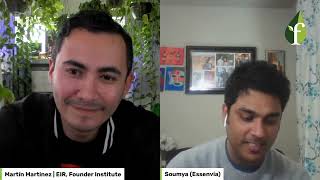
Soumya Mahapatra founded Ascendvia to fix medical-device regulatory submissions, which face a 40% rejection rate due to formatting errors and fragmentation. His software cuts administrative errors by roughly 50% and shortens review timelines by 2 to 4 weeks. The company now serves about 100 customers across six countries.
Chapters
How we doing, everybody? Welcome, welcome to another, actually final episode of season 1, our pilot, uh, pilot, uh, series, uh, of the Global Startup Report. My name is Martin Martinez, EIR at Founder Institute. Thank you all again for joining us on another fantastic Friday afternoon, morning, evening, wherever you find us out in FI land. Many of you are watching us on LinkedIn. If you're here again, welcome. I can see all the chat. We broadcast to Facebook, YouTube, Twitter, of course LinkedIn, as many of you watch us on. So drop a hi in the chat, let me know, or the comments rather, throughout. I can see it all. Um, you know, I'm joined with Dustin Bets. You'll see him coming up here in a little bit, our producer behind the scenes making things happen. But I want to thank you all again. We've had about 5 episodes for this pilot run. I've been having a lot of fun. Seems like all of you out in FI land have also been having a lot of fun watching these. So let us know what you think. You know, we want to come back for season 2 with a lot, with a lot more episodes, a little bit more kind of programming if y'all are looking for some little bit more extra to what we're doing every Friday here, having a lot of fun. All right, Francois, what's happening? A GenoMatrix in the house! I love seeing other founders coming out. Maybe we'll bring you up for season 2. Let's definitely get you on the books for that. And you're coming out of Facebook, right? On, right on. Um, so as I mentioned, I'm Martin, EIR over at FI. I'm also the executive director for our Texas programs. Applications are open for our summer programs across the Lone Star State, so check out over fi.co. /Join if you want to join some of the upcoming cohorts. Uh, we got a great show for you today. Uh, we got, we got a very special guest, founder and CEO of Ascendia, um, Soumya Mahapatra. He's going to be joining us here a little bit after we get through the news. Um, but before we do that, again, this has been a big undertaking. We've been thinking about putting on a show like this for quite some time. Um, took a lot of work just to get this first pilot season off the ground. So if you really love what you're watching right now, we want to do a lot more for season 2. So thank you all for supporting, thank you all for watching us across the internet, and looking forward to what else is to come for the rest of the year. So without further ado, let's get into the news. We got some great updates across the FI global community. Let's bring up Dustin, our, our, our—
how's it going, Martin?
The backbone of the Global Startup Report. How you doing, my man?
We made it Pretty good. Yeah, that's right. Yeah, we got through our pilot season. We're excited.
Yeah.
Yeah. How are you feeling about it?
Uh, pretty happy. Yeah. Yeah. I think we've had some really interesting guests. It was really cool to be— yeah, when you, uh, joined the live from South by Southwest, I think that was pretty cool, experimenting with the format a little bit. But yeah, excited to, uh, speak with Sonia and hear more about SNB, uh, here, our guest, uh, in a minute. But I guess, yeah, let's get to the news stories.
Yeah.
All right, let's drive in, man. Let's get this happening.
All right, so the first story I'll share, the headline is mobile retail tech startup Slip, that's an FI London company, they bagged funding ahead of their summer launch. So this is a mobile receipts app and they announced £750,000, UK pounds, in a pre-seed fundraise. And another thing that I really like about this story is, yeah, this founder is currently in our Funding Lab program, which is one of our post programs that we offer for FI alumni. So it's really cool to see founders who are closing funding, closing the round while they're in the funding lab. And yet this company was just founded in 2021 by Tosh Grossman and Eddie Harmon. And basically the venture, it allows them to— users to receive digital receipts via QR codes to manage their omnichannel spending and then receive exclusive discounts and offers that are personalized to them based on their buying habits with like an impetus of decreasing waste that comes from receipts because Receipts look like paper, but they actually have plastic in them. And my understanding is, yeah, they don't biodegrade well. So this is an eliminating paper receipts company.
No, I love that. I think CVS is going to have a completely different business model because, you know, they basically print out a whole thing. I can, I can wrap my, my, my holiday presents with that. So I feel bad for you, CVS. Slip is coming for you. Yeah, well, next up on the list too. Oh, I guess before we get into that, A lot of, a lot of people in FI land don't really know that, you know, after you graduate from our core programs, which is what we're known for, for over the last decade or so, the Funding Lab postgraduate program exclusively for FI graduates can help you get to your first close on that fundraise. So maybe you've done a friends and family, you're ready to take it seriously to the pre-seed to seed level. Many of our founders, when they're at that stage, come back to us and we walk them through the mechanics of how to get through that first fundraise. And in many cases, just like the team over at Slip, they get— they close that round in less than 4 months, 4 to 6 months, which in many cases it could take you up to 18 for many of those founders out there. So, uh, it's magical. I love watching it. I love being involved in that and getting to meet grads right as they're about to break through. So congrats over to Slip for getting to that, getting that raise while still being in the program. Looking forward to seeing your growth continue for the years ahead. Next up, um, I love this company, Susu. They're back in the news. They've joined forces, uh, to transform single-family rental housing. Um, so this just came out on the wire. A lot of really interesting things that they're doing. But, you know, to— for those who may not be familiar with Susu, they just announced a few months ago Big, big Series B, pushed them into unicorn territory working with SoftBank, biggest fund on the planet. Really exciting to watch them. What they're trying to do is close the wealth gap. Many people, first generation, underserved communities in America have very difficult time just trying to get their first house. The lending rates are much different for people in underserved communities. It's much harder. So what they're doing is closing the wealth gap by reporting on-time payments from landlords and renters to credit bureaus, which is ridiculous because it's many— for many renters, it's the biggest expense you have, but it only gets reported to the credit bureaus when you're late. So they're changing the game on that. It's definitely— it's a beautiful thing to watch. And it's nice to see that they're continuing that trend forward and starting to create partnerships. They're going to further solidify their presence. In this, in this space. So congrats to Susu on the awesome news.
Yeah, huge. Yeah, and they have had some other like big partnerships. I don't know if this is like their biggest one ever, but yeah, just as you said, yeah, it's their presence there, the newest FI-minted unicorn, and yeah, have these really cool partnerships that are helping them extend their reach. So totally agree. Yeah, congrats to the folks at eSusu. So yeah, the third story here, it's a profile piece that's in VentureBeat, and it's for a Swati Srivastava. And she's the founder of Lightsprite, which is an FI Seattle company. It's an interview about showing gratitude to your friends, actually in a video game. And so, yeah, it's on the Games Beat page of VentureBeat. But basically, Swati Srivastava has been working on games that improve people's mental health for 10 years as a game developer. And so this is a new mini game that they added, mini games called Gratitude, and it's nested inside their existing game. It's called Sprite. Lightsprite is the name of the company. The actual game, I don't want to say it wrong, but Cena Sprite. So the game is called Cena Sprite and this is a mini game called Gratitude inside it. And the cool thing is like, yeah, the story here, they've done like peer-reviewed research. So this was through the Ohio State University and their peer-reviewed analysis determined that Cena Sprite delivered clinically relevant improvement, which meant that a player was productive 2 or more days a week than before the intervention, i.e., playing the video game. So this is like video games that are designed to improve people's mental health. And this new minigame is all about gratitude. Yeah, pretty cool profile in VentureBeat.
No, that's awesome. Yeah, it's good to see you on that too. Right on, Lightsprite Games. Final news update of the week. Final news update of season 1. Clubstar Port. Uh, it's almost better, but we got, we got a lot more of this to come, ladies and gentlemen, in the future, right? Kangaroo Time. Uh, they've been in the news. They've— we've talked about Kangaroo Time in the past. It came out of FIALA, uh, the— but close to the end, the beginning of 2020. Um, but they're based in, in Buffalo.
Oh no, now based in Buffalo. Yeah, but this is about their launch into the Australian market.
Yeah, so they launched out in, uh, Australia. So Um, so Kangaroo Time, they're actually a, they're a childcare management software system. So, you know, if you're thinking, if you're childcare service providers, schools, you know, daycares, you know, a lot of that has been very manual. So they're building, you know, a customer relations management software effect essentially for the childcare industry. Um, so they're, they're, they've now been named best in class in Australia just a year after launching in that market. It's been really cool to see. They've been doing some really big strides just in this space. Another market that a lot of people tend to forget but is very vital, especially for build a family. You need these kind of services for those providers that you're taking, that you're leveraging those services. So great to see all the news, great to see such a big milestone as well for KangarooTime. Y'all are doing some amazing things. Congrats, y'all.
International company for real now. Yeah, yeah, well established in Australia, best in class there, as well as, uh, yeah, definitely one of the top providers of this kind of software solution in the United States. So yeah, congratulations, Kangaroo Time. And yeah, founder Scott Winton over there.
Yeah, right on, Scott. Awesome. Cheers. Cheers, mate. Uh, I'm not gonna do an Australian accent ever again, Dustin, I promise. Uh, so let's get into our special guest.
All right, I'll see you.
Yeah, thank you, Dustin, as always. Migo, we'll see you towards the end of this as well. Um, so yeah, our final guest for season 1 Global Startup Report, I'm excited to, to be speaking with today. Um, if you do have comments, you do want to interact with us, again, we're broadcasting all around the socials, and we're on Facebook, we're on Twitter, on LinkedIn, or on the YouTubes. Um, drop, drop something in the comments. I can see that. François was already in the house giving us some shoutouts. So I know you're watching out there in FI land. Let us know. We'll surface some of the best stuff up. If you have a question, we can bubble that up too and ask our guests. So our final guest for season 1, founder and CEO of Ascendvia. It's a software company helping medical device startups navigate the regulatory landscape. It is a very complex complice. He could tell you a lot more about this than I can. But we have so many founders that come in to the FI programs trying to really figure out how do they do this. You know, many of them might even be in the medical profession and, you know, they're identifying a gap in the market that's not serving their needs or their patients' needs. And, you know, just having the idea is only one thing. You got to go through all this bureaucracy, all this red tape. So Ascendia is really helping with that. So without further ado, I, I am thrilled to welcome our final guest for season 1 of the Global Startup Report, founder and CEO of Ascendvia, uh, uh, Soumya Mahapatra. So, Soumya, how you doing, man?
I'm doing good. Thanks for having me, Martin.
Oh, absolutely, absolutely. So, so tell, tell us— you were telling me before we were going to live, but tell where you, where you calling Where you at?
Well, I was born in India and then I moved to the United States in 2011. I was here before for another work trip, uh, but then since 2011, June, I've been pretty much here. And I landed in Los Angeles and this is where I've been since I came. And I love this city, obviously the weather, I mean, nothing can beat it. Um, and, uh, yeah, I got to make a a lot of colleagues and friends over here. And, you know, what started out as my primary work location when I was working for my previous job, uh, just ended up being, you know, almost home. Uh, and, uh, yeah, I love the valley and, uh, been here since then.
Oh, I'm jealous, man. The weather ain't too bad here in Austin, Texas, uh, after just kind of some up, back and forth. We had— believe it or not, Tom, we never have this, this south in Texas, but we had like 6 tornadoes dropped down on Monday. That never happens. Like, it never go— like, if you know, like, you know, Texas in general, Austin's like right in the middle. There's all this geology and stuff that really kind of keeps that weather from happening. But that didn't matter. It was, it was definitely weird. I've been living in, I've been living in Texas my whole life. I've been in Austin for about 18 years, and I'd yet to see something like that. Um, so I am jealous. LA does not get that kind of weather. But it is nice outside right now too.
So, uh, no, I was in Austin, uh, I was in Austin around, I think, in December.
Yeah.
And yeah, it's, it's awesome city, very vibrant. I mean, food is just too good, you know. I mean, that's another thing.
Oh yeah, you can get lost just in the food truck scene just alone.
It's a fun city. No, definitely. And a lot— and tech's just booming in Austin too.
Absolutely, absolutely. As you know, you ever come back, you got a family here waiting for you. It's the FI family's going good and strong here in the capital of Austin. Um, so yeah, well, again, thank you for being on the show. Um, promise gonna be painless, super painless. Yeah, it was fun. We had, we had Khalil last week with Fight Camp. We were just, you know, we were just having a good old time. Um, so let's learn a little bit more about you. I mean, you met, you came to the US, you fell in love with LA, you fell in love with the beautiful SoCal weather. You know, what were you doing before, um, you know, SenVIA became reality? You know, and no, you don't necessarily have to tell us, you know, the whole journey with FI. You know, we have other events that really kind of drill into that, but like, what was that vision? You know, what, what kind of brought you to this point? And, um, and then maybe is, you know, to the FI piece, you know, how did, how did FI maybe shape a little bit of that vision for you?
Yeah, sure. So, um, the over a decade of my experience, um, of the 14 years or so that I worked in my corporate job, it was all in healthcare, right? And I, I ran transformation programs, uh, digital transformation programs involving tech and business process re-engineering as the core themes when I was doing those transformations. And that's where my love and passion for healthcare comes in, right? And, you know, large enterprises, Fortune 500 companies, and tech being a core theme. When, you know, I started seeing these silos within the processes where one system or one functional team doesn't have the tools and technologies to actually work efficiently in moving medical technology forward. And what I quickly found out was this is a problem that not only small companies or startups have, but also across the bigger companies. Where I think I started to shape this was when I was doing my Executive MBA at UCLA Anderson while I was pursuing my full-time MBA. And we got to do this as our research project towards the end, and which allowed us to kind of build more conviction around the problem, find out, you know, who's facing this problem, how big is it, and, you know, how big it can become. Healthcare as such is a very large market, right? We know like a trillion-dollar market. It can have sub-verticals and segments. But medical device as such hadn't evolved much. It had sort of been the left-out piece, right? And right after that, it got to the point that I really started thinking about not taking the learnings from my MBA program and advancing in my corporate career. I thought, you know, this is a good enough problem. I'm passionate about healthcare. I know tech, right, I think I can, I should go for it, which is when I actually found Founder Institute because the best part about Founder Institute was one, I think you were just starting out in LA, it was probably the second or third chapter and I had to find people who were like-minded first. It's a huge part of I think building a startup especially if you're a first-time founder. right, you don't have the connections, the kind of people or mindset of being a founder and what it takes. And you want to do as much due diligence as you can to validate your idea, right, and even if I had done some of the work Founder Institute sort of gave me that platform to do this in a more structured manner. Like carving out time to specifically focus on something that I cared about and was really looking forward to starting a business in. Met with other founders and then the more you get deep into the problem the more you understand your customers and the problem the more conviction you build and that kind of allows you or helps you to push beyond your safe, secure corporate job. And think like, dude, I gotta give this a try, right? And this is the time. There couldn't be a better time than this. So that is it. And then one thing led to another and here we are. Oh, that's awesome, man.
So I guess to walk us out a little bit then. So I mean, you got through the program, you launched the company. What was that core mission? Has the core mission changed at all? And what is it doing now? For your customers?
No, the core mission hasn't changed. My core mission always has been to transform how regulatory affairs is managed and handled within the medical device industry, right? Very, very focused. As you will notice, I'm not talking pharma, I'm not talking other biotech companies, right? We are very focused on medical devices and that's our core focus. Now. And the goal is to streamline or simplify or integrate regulatory into product development and R&D, right? So that technologies can get to market faster and hopefully more of them can actually see this path to getting to the patients and customers who need them. So the mission has stayed the same. Of course, we've been been working with companies both in US and Europe now. So we have global customers in over 6 countries already. And I see that, you know, the problem is global, right? Regulations are complex anywhere in the world, right? And it's not something that you can just solve by hiring more staff. You need a tech-enabled view into solving this problem, right? Because, and that's kind of our focus, to empower who do this, to do this better, right? And that mission stays the same and hopefully will continue to stay the same. You know, businesses pivot over a period of time, but right now, yes.
Yeah. So I mean, I'm curious then, you know, I mean, I've, I've been running Founder Institute programs in Texas for about 5 years. I have certainly had a great many of founders that might have a little bit of experience in the medical space. They might not at all. They might have had their own physical ailment that they decided, hey, I might— there may be this thing I want to build it, make my life better, make people who suffer from this same ailment better. But as soon as they wade into these waters of creating a medical device, they get hit left and right with all of this stuff they did not know was there. So, you know, before, you know, I guess before you started this, you know, is there, was there like a typical flow of time and also just hurdles that you would face trying to get a medical device to market? And then, you know, is there anything that your company right now has helped alleviate and basically removed from that? From that process?
Yeah, I think the lack of standardization in the process and the pace at which regulations change by itself is overwhelming, right? And it's exaggerated by several factors, right? One that, you know, the use and introduction of more software and AI in medical devices, right? They are completely different, they're governed by completely different rules and FDA is learning as we go and so are the other regulatory authorities, right? And you know, you need to be up to date if you want to bring such devices to market, which is the future and is the biggest trend that's going to continue to happen, right? More at-home diagnostics, right? And all of these have to be more real-time where you can get data insights into your health on a more real-time basis instead of waiting a month, week, and so on and so forth, right? So that is a primary driver. And almost 70-80% of our customers are actually software-based medical devices. Processes, right? So it's a natural fit and we see that our product alleviates these administrative issues and challenges so companies can focus on the actual work of bringing the technology to market by not having the peace of mind that all these other aspects which is 30-40% of work is very, very administrative and regulatory affairs and it's just because how disjointed the data is, you know, how hard it is to, you know, go do this research of finding additional information and insights and make sense of them. When that part is, is simplified, it just allows you to, to bring that insight and knowledge and then, you know, add it back to your devices workflow. So it allows you to focus more on things that are really important instead of, you know, worrying about the things that, you know, are actually frequently the cause for rejections, by the way, right? So almost 40% of applications do get sent back because of trivial administrative issues even today. And it is not just US, it's across the board, any geography you go to. So technology has an easy use case there in terms of, you know, looking at ways to solve them.
So you said 40%, all applications get kicked back. That's nuts. You know, what are some common reasons? You said it's mainly administrative, but like, you know, is it like they missed a date somewhere, or did they, you know, did they forget another Form Sub B/A that they forgot to submit on that? Like, are you seeing a lot of commonalities in that?
I almost feel you've done a submission before and had to send back, which is not uncommon. You're right, you're right. Simple things. That you could actually miss out but are critical to the administrative review of your applications, right? And when you're putting— by the way, a fun fact, unlike a tax form, a medical device application is typically 1,500 pages or longer. Oh, so you can imagine just having to review a completed application internally as a medical device company company is overwhelming, right? And imagine all of that information actually coming from 10 or maybe more cross-functional teams, right? Now you're talking about different levels of friction that the regulatory affairs teams have to deal with on a daily basis, right? And that adds a lot of unpredictability into the process. It introduces errors that are unintentional, but have to be dealt with. Um, simple issues like that. But let me tell you one of the— or the other things. Every regulatory agency or health authority that reviews your application for approval, they have a very specific format in which you have to submit the 1,500-page document. Technical requirements. About 20% of applications actually get sent back or are put on hold simply because your formatting wasn't correct, or you didn't have the bookmarks to get the document. Of course, everybody looks at 40% reject, but a lot more actually see extended review timelines simply because there is no way to put in the best-in-class or best practices into collecting the document and submitting out, right? And that's kind of also the simple things that we do to reduce your chances of, you know, getting cleared, or reducing or compressing the the time that it needs to for reviews and analysis.
Gotcha. So I mean, but I guess in before times, before this existed, you know, those 40%, you know, how often would, you know, a typical applicant see like a return application come before they actually get it approved? How much time would that actually take up to having to correct 1,500-page document on average? And just the missing footnote, I'm starting to get flashbacks from college because I forgot to mislabel a footnote on my essay.
Yeah, this is like regulatory science, right? It is very science-oriented. So all these things have, you know, very specific way that you would describe and write and everything has to be consistent. If you're making a claim of what your product does, if it is an at-home, I don't know, blood diagnostic product, and you say exactly how it works, but you miss a few words because you have to mention that across many different pages, then it is a cause of concern or inconsistency, right? So you are going to be dinged to make sure which of these claims are you actually making that your device can actually do. So all of these are reasons for rejections, right? And, you are looking at a 2 to 4 week additional time that gets added to your review timelines each time your application is sent back, right? And imagine a world where new devices are coming into the market in about 24 to 36 months, and you as a medical device company spending 6 to 12 months in getting it approved or cleared regulatory-wise, right? That's a lot, right?
So just 12, like 6 to 12 months just to get the application in, another 24 to 36 just to get it approved. Is it my fault?
No, 24 to 36. So you have to have a— right. So, so you're looking at about one-third of the time spent on just getting the regulatory approval when, you know, a lot of the work is engineering and R&D, that gets done, and then you're still spending so much time, right? So there is, there is opportunities to actually look at these as, as, as work streams that should be much more connected so as to reduce some of the friction and the errors. So your final output is, is correct, right? And a lot of times what— and the reason applications also go through this is a lot of the regulatory work is actually put towards the end, right? You let everything else happen and then the regulatory world a lot of times to actually take all the information and do all the work, cram it up in 6 to 8 weeks and try to finish this. It's prone to error, right? So we need to look at this more from a process streamlining standpoint. but also in terms of, you know, how else can we reduce these errors?
Got it. Got it. That's really— so I guess before the CNB even existed, was this just like a space crowded with like consultants or were they like bespoke little things that helped you with just one little piece of that submission process?
Yeah.
So I think the solutions mostly have been, you know, file storage systems, right? You, you put all your files in Box, Dropbox folder, or SharePoint folder, check in, check out, you know, a lot of the traditional way of document management, right? And you don't have a data space. Like regulatory teams will essentially work on bolt-on tools that they were just handed over because the rest of the team is working there. And that's essentially the challenge. We need a dedicated workspace that actually caters to the specific needs of medical device regulatory affairs leaders. And what they need to do in order to make this process more streamlined and better, right? And it still continues to exist. I mean, it will need some time to actually evolve, but I'm seeing that trend, especially with COVID Now the teams are more remote, you know, paper is going away faster than we thought it would. And we are seeing the same thing. And I mean, FDA still accepts the application in a thumb drive. So you have to actually send— yeah, yeah, there isn't a gateway where you push the button and you submit it to FDA. So I mean, you FedEx the application essentially with a cover letter printed out and a thumb drive that has the PDF copy of that application.
Now that sounds real safe, doesn't it? It's very secure.
Wow, man.
Um, it sounds like you're— again, you're, you're doing, you're doing a great service right now. I mean, what's changed a little bit? I mean, is there any results you can speak to at least right now, at least in this public setting about, you know, how you might been able to kind of shave that time down, increase the time to get a device to market?
Yeah, so at least 50% of the errors that are administratively found, we eliminate them, right? So as someone who's working on applications or preparing your medical device submissions, those are areas that you do not even have to worry about through this process, right? And the whole process, at least from Ascendia standpoint, we've shrunk by at least 2 to 4 weeks for every medical device application that we process simply because of the parallelization and the automation that we have introduced into the whole regulatory process and the collaboration that it allows you to do with the cross-functional teams.
Wow, wow, that's impressive. And you put up a little, you made a minor note earlier just about how, you know, the pandemic last few years, this grand experiment of ours, has kind of accelerated some things. Has it changed at all in the medical device company? We know, you know, how it really pushed a lot of things on the vaccination space to the forefront, but have you seen anything else develop outside of it that has either loosened or restricted regulations?
No, regulations are only going to become more strict and dynamic, right? If at all what it has done is, I know everybody has probably seen the number of antigen tests and COVID tests and diagnostic tools that have come into the market. But trust me, there is also a very big number of devices that have been taken off the market by FDA because they don't perform or don't work. What that means is, you know, you're going to continue to have ways to catch up with the rapid technology growth that's happening in medtech, right? And for that to happen, you have to put balances and controls in place. And for us everywhere, we know balances, controls means regulations, right? So it's important for the public health and safety, right? And that's essentially what is FDA's job, or as a matter of fact, any other health authority's jobs to have these balances and controls in place. And, you know, as much as we see this as a bottleneck, you want to be sure as a parent when you hand over a diagnostic tool or another medical device for one of your family members or kids, You want to feel good and confident about the results that you get, right? And that it is actually safe. It does what it is supposed to do and does it 95%, 96%, 97% of the times, right? And for that to happen, and with the pace at which technology is evolving, with software, AI-based imaging systems, robotics, surgical arms, for example, right? You have to have those regulations catch up. And that's essentially why we have seen almost 600% new regulations come in just in the last 2 years.
Wow. Wow. So changing gears a little bit, 'cause I know we're hitting the top of the hour. I wanna be respectful of your time. I know you got a company to run. You know, how has it been doing? You know, I know you got some funding last year. Can you tell us a little about that raise? You know, What are you— how are you leveraging that for a little bit of growth? Where do you see this going throughout 2022, throughout the rest of this decade?
Yeah, so we raised a pre-seed, seed round, venture funding, and yeah, that has allowed us to definitely build a team, give the much-needed love that our product needed, and scale and acquire more customers. Customers, right? So we're still very early stage, but we've got close to 100 customers now that we work with. And a lot of these have to be customers who are fit to work with us because we also want customers who understand where we're going and are ready to work with us on the longer run, right? So it's definitely allowed us to do or spend some time in acquiring our customers and improve and build automations around the product that we've always had in mind. But still a lot to do. And yeah, that's essentially where we're spending a lot of our time and the funds that we had raised.
Gotcha, gotcha. And I'm curious, you just mentioned, like you seems that Sounds like you have an application process just to become a customer on this end too. True to form, true to form. So what are some like basic requirements? Maybe I'm, you know, maybe I'm trying to start a medical device company, I am just being inundated with all of these things that people are telling me not to do as well as to do.
What would be—
what's like an ideal fit that kind of matches this 100 customer profile that you already have?
Yeah, so I think the The primary qualification for us definitely is, are you a growing business, right, that has expert you've hired in-house, or are you a startup, right, with CTO, CEO, operations all being the same person? Two completely different profiles because if you fall into the second bucket, which is, you know, a startup medical device company, just starting out, few engineers, and you have a prototype, then of course there's a very different model for you to work with us. You would have an expert and the platform work with you. Very important because there's a science associated with it, there is an expertise associated with it in understanding of regulations and doing different aspects of it. And then if you're a regulatory affairs, head of regulatory affairs at a company, then you have a very different workflow path. You are a direct user or buyer, so our sales process is very different around that, right? But in terms of qualification, it's very critical and important that you align with us in terms of the problem statement, the changes. That are seeing, and you see that there definitely is a better way of how things are done, right? That understanding and alignment is actually very, very important for us to work with customers.
No, awesome, awesome. Um, well, good, good to know on that end. You know, it sounds like that, again, if they're, if they're coming out, they're a little bit, they're much earlier, smaller team, there's a services layer that is helping them guide to that process. That's really nice to see. You're really kind of ensuring that they're going to avoid those pitfalls as they get bigger, and then you can more or less automate it once you get to that point for their growth. That's fantastic. So again, I know we're hitting the top of the hour. I want to be respectful for the rest of the day that you have going on over in sunny, sunny California. Uh, sunny over here too. So yeah, I'm gonna enjoy the sun later today as well. But one question I always love to ask to kind of wrap things up, I've been doing it for every other episode, definitely want to close it out with you too. You know, startup founder, CEO, you know, if there was one thing, one piece of advice you would give somebody maybe watching right now here at FI Land of what they should think about, maybe what they should do before they ever even begin building the company, what would that be?
Grit. Be prepared to grind it out, right? Nothing trumps your grit because there'll be more failures than success, right? You'll hear more nos than yeses for sure, right? And the only thing that will help you go further along and for the fulfilling ride, right, the one thing is that the one thing that's definitely common with any startup is the amount of fulfillment you get building a business doesn't compare, nothing else can compare to it, right, it's an experience by itself. But for that you need to have that conviction and grit and commitment to keep building, keep learning, keep innovating, right, and keep evolving. All of what you do, you know, it'll only take you so far and there'll be multiple valleys of death as we call it. I've heard these terms now.
I've seen the graph.
It'll come many times, right, at different stages and you need to have that conviction and grit to be able to overcome them and go past them.
That's great, man. Thank you for sharing that. And thank you for being, again, our final guest on season 1. The Global Startup Report. How can everybody here follow you, follow the journey? Maybe they want to get in touch with, maybe they got, maybe they have an idea or they're working on a device and this is so daunting that they're so lucky that you were on the show today.
Sure, I mean, absolutely, just follow me on LinkedIn or message me and I'll get back to you as soon as possible. Or, you know, if you feel like emailing, I'm happy to leave my email address on the comment block of the section and happy to connect and share my experience and journey with anyone who's looking forward to starting a business, definitely from my experience. But now the good thing is you also get to connect with other founders. So there are some nuggets of advice that I have collected over the years. Happy to share that as well. And even if I'm not able to help, happy to connect with other founders who might be in a space where someone else is building a company. So any which way, founders always need more help than you think you need. And I've gone through that phase, definitely gotten a lot of help from many mentors and advisors. So happy to, you know, pass it on in whatever possible way it can be helpful.
Um, Samia, uh, thank you again for joining us. Uh, thank you again for sharing a little bit of your story and kind of how, how you've gotten to this point, where you see it going. Um, really, really happy you could join us for this final, uh, final episode of season 1 of the Global Startup Report. Any final things you may want to share with the audience for before we let you go? I know you got a busy day to close out the week.
No, it was good catching up. It's sort of a time off from your usual hustle of running a company. So, you know, would love to chat again sometime with Martin. I mean, I'll hit you up when I'm in Austin for sure.
Oh yeah, absolutely. I'm planning this summer. Definitely planning this summer. Need to hit the beach. We don't have the, or the third coast as they call it here, isn't, you know, too much of those. I'm a 7th gen Texan, I can say that. Uh, but no, thank you again. Uh, thank you everybody for watching on that. Samya Mahapatra, founder, CEO of Ascendvia. Thank you again for joining us, man. You have a phenomenal weekend, and I hope to bring you back. Hope to bring you back on the show again for season 2, maybe season 3. We're going to keep doing this. So love to hear what else is going on as you build. All right, everybody. Well, thank you again, Sonia. You know, thank you all again for watching. We've gone through 5 episodes of this. I'm having fun. If you do like what you've been watching with us, a lot of you have been coming back every Friday to check this out on the socials. If there's a channel that we may not be on that you want to see us on, let us know, drop it in the comments. If you have interesting ideas on maybe things you want to see us talk about, maybe some special guests out in the Founder Institute, a global community that you would love to see on, let us know. We want to keep with this format, try to keep it short, keep it conversational. But obviously, sometimes when the conversation gets too good, we want to keep it running. If you're liking kind of this flow or you want to see more, let us know in the comments. We want to provide some really great quality weekly content for you from the Founder Institute community as often as possible. So Dustin, if you want to come back out just for one little send-off, final episode of the pilot season, you know, what's going on? Yeah, anything you want to share with the audience too as we kind of round out this first run in a GSR.
Yeah, yeah, yeah. Well, so the big, uh, I guess announcement here for our closing segment— I put the website there— uh, Founder Showcase. We do this, we run this, uh, big networking and pre-seed pitch event about once a quarter. And, uh, yeah, I think you'll be hosting again, Martin. Is that, is that right for the Founder Showcase?
Absolutely. That's one of my favorite, favorite, uh, of the many events I get to, to host for, for the global community. Founder Showcase is, is by far one of the— my favorite, just because we always have an amazing guest come up. Um, this time around, our CEO and co-founder Jonathan Gritchen is going to be sitting down in a fireside chat with the co-founder and chairman of Techstars, Mr. David Cohen. Um, two powerhouses. This is going to be an amazing, amazing conversation. One thing that maybe the FI Global community that aren't founders don't really know is that many, many, many of our FI grads, after they leave the core program, one of the routes they may take is inevitably joining a Techstars global community. In Texas alone, we've had about 5 FI Texas grads over the past 5 years get into a program. We actually just had one graduate and a demo day on Wednesday. Saneva, who also won on the pitch stage at Dell a couple weeks back at South by Southwest, just graduated from Techstars too. So it's a really beautiful relationship. We hope to continue such strong ties with the Techstars community and inevitably follow the journey of our founders as they join, you know, programs around the world. They're only getting bigger too, so I'm sure David's going to talk a lot about that on April 6th, coming up in a couple weeks. I'll be in—
not this week, yeah, the week after. Yeah, so 2 weeks from now. Yeah, a couple of weeks.
So we got that. So we got that coming up. You know, we have the— we have the— we have the fireside. We're gonna have an amazing showcase of pitches from people not only from the FI family grads but also some people in the audience. So, uh, we, we've, we've started to select. We're going through the final selection process. We'll be announcing those presenting companies in the weekend.
Yeah.
And, uh, and you'll see a little bit of Founder Institute companies. You'll see some people in the global community too that we want to elevate to the world stage. And we've had some amazing companies over the years present at the Founder Showcase. Udemy, Thumbtack, a bunch, a bunch of great ones. So just head on over to Founder Showcase. You can see the whole, whole thing. I'm looking forward to that.
Free to attend. Yeah, anybody. There's a networking components too, so you'll be able to like meet other attendees. Yeah, we usually have hundreds of people who, uh, join the Founder Showcase live, and yeah, it's free to attend. So yeah, check it out, foundersshowcase.com, and yeah, we'd like to see everybody there. Yeah, in about a week and a half from now. Yeah, absolutely.
Absolutely. I'm looking forward to that too. Yeah, getting back in, getting back into the groove of the virtual events, uh, coming back from 10 days of standing on my feet and doing, doing in-person. So it's a good mix. It's been a good mix. Um, so yeah, thank you again, Dustin. This has been awesome to put on. It's great working with you, kind of building this out. Really looking forward to seeing what we might be able to come up with, with the support of the community. Again, let us know what you want to see. You know, we want to deliver content that's going to be valuable to you, insightful to you, and give you a little bit of glimpse at what we are so blessed to see at Founder Institute headquarters, of what's going on around the world with Founder Institute helping shape the next generation of entrepreneurs. So without, without saying too much else, Thank you all again for watching. We don't have dates yet on season 2, but I'm sure that'll come soon, likely sometime over the summer as we head into the fall. But until we get to that point, ladies and gentlemen, thank you all again for watching. Please be safe, be well, take care of each other, take care of yourself, build that future you want to see.
That's right. And don't forget to have a great weekend, everybody. No, it's not a great weekend.
Absolutely. We'll see you all next time.
All right, awesome. Thank you, Martin. Bye, everyone.










