Global Startup Report, powered by Founder Institute (9 Feb 2022)
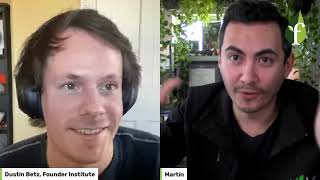
The episode is a live broadcast of the Founder Institute’s Global Startup Report hosted by Martin Martinez with producer Dustin Bent and guest Janet Todorova. The show opens with a roundup of recent funding news from the FI network: Sequoia’s Surge fund co‑led a $4.5 million round for Australian no‑code legal‑tech platform Checkbox AI; FI‑San Francisco alumni Asusu became a Black‑owned unicorn after raising $130 million led by SoftBank to build credit for renters; and FI‑London portfolio company Finverity secured a $2 million pre‑Series A to expand its supply‑chain financing platform for emerging markets. The conversation then shifts to the Leading Institute program, which provides an “accelerator‑as‑a‑service” model that lets local leaders launch FI chapters worldwide. Janet explains the four‑phase launch process, the 6‑week cohort training, and the recent rollout of vertical programs (space‑tech, health‑tech). She also shares regional trends in Eastern Europe—B2B focus, fintech, sustainability, and the need for global‑first startups. The hosts promote upcoming FI events (angel‑investor panel, co‑founder networking), provide links (fi.co/lead, fi.co/events), and close with founder advice: surround yourself with the right people. The tone is upbeat, conversational, and promotional, aimed at FI alumni, mentors, and prospective local leaders.
Chapters
¡Hola!
And I love that new opening intro. Welcome everybody. Welcome to the Global Startup Report. My name is Martin Martinez, Entrepreneur-in-Residence for Founder Institute based in Palo Alto. I'm coming to you from Austin, Texas. We got a great show for you. This, if you recall a little bit last year, we did a little pilot test run with me and our content producer for Founder Institute, Dustin Bent. Dustin, I don't know if you're there behind the scenes, but we're gonna jump in real quick and just again, welcome you to this. We're gonna try and bring this to you pretty often. Like every week for the next few weeks moving forward, bringing in special guests, telling you about interesting news and updates throughout the Founder Institute world, and also dive into some interesting things that are going on regionally throughout the world with some of our Founder Institute programs. So let's get into it, right? We got some people on Twitter. I have Twitter over here just going. Hey everybody on the Twitter land. Dustin, There's my man. How you doing today, brother?
Hey, hey, Martín. Hey, everybody in Twitterland or watching everywhere that we are broadcasting. Excited to be here, yeah, to kick this off as the first, I guess, of what will hopefully be a recurring series of kind of live updates. But yeah, for our first segment here today, we're going to talk about news stories, network news from around the Founder Institute. And we have a couple of stories. January was a really big fundraising month, I feel like, or more than a normal January for a lot of FI grads. So all 3 stories that we're going to share here quick are funding stories, and we're also live tweeting links to all of these stories over on Twitter. So if you want to read more about what we're talking about, you can go over to Twitter and look at the thread where we're currently live streaming. The first story I just dropped in there, this is Sequoia's Surge. They co-led an investment of $4.5 million for an Australian no-code platform called Checkbox. AI. Yeah, so Checkbox is a graduate of Founder Institute Sydney. And yeah, this arm of Sequoia called Surge, it's based in for scale-ups in Australasia, like the whole region. And yeah, this is obviously a really hot space right now, you know, no-code, low-code tools. And yeah, certainly want to mention the co-founders' names, James Han and Evan Wong. Yeah, their no-code solution is really based around legal tech. So this is a solution that's designed to save people like lawyers a lot of time doing manual tasks. They can design their own sort of workflows using Checkbox AI. And yeah, so they can free up their time to work on more high-value projects.
Love it.
You want to tell us about the second story there, Martín?
Yeah, let's do it, man. I'm really excited about this one, Dustin. I think this was just blowing up the internet over the last few weeks in FI land. Our latest unicorn, big unicorn announcement, ladies and gentlemen. Woo, I want to hear it all throughout the internet. Yes, big fintech startup coming from our FI San Francisco 2018 program. So not too long ago, just a little less than 4 years ago, this unicorn, newest minted unicorn out of the FI family is aiming to bridge the wealth gap. Typically for first-generation Americans, people that have recently emigrated, Americans, underserved communities, it's a lot more difficult to get reasonable rates on home loans and build credit so that you can purchase homes in the past. It's just systemically broken. So Asusu, get Asusu if you want to follow them on Twitter, raised $130 million led by SoftBank, biggest fund on the planet. Really proud about that to help bridge this wealth gap. So what they do, how their platform operates, is that they work with landlords to update credit reports based on renters' good on-time monthly rent payments. Rent typically is the largest expense for many people out in the world, or at least in the United States, to and it's not getting reported. It should be reported. So what they're doing is helping build credit with on-time payments, working with landlords and renters so that these people, anyone really, sign up over at Asusu. If you're interested in kind of building your credit, get yourself some reasonable rates when you are in the position to actually buy a home, which hopefully can be much sooner than you were expecting. So we got a lot more news on there, more to come with them. I even signed up. I want to buy it.
It's super interesting. Yeah, yeah. This is a fintech tool that anybody who's currently renting, you know, like if you want to build your credit, I mean, it can boost you by tens of points because like you just said, it's like one of the biggest monthly expenses that people pay. And the default is that you only get docked if you like miss a rent payment and it hits your credit score. But this is a way to proactively, unless if you're paying on time every month, to build it.
And so, yeah, it's a fantastic thing, Dustin. And, you know, you're seeing a lot of fintech products out there right now that are helping with credit building. Most of them are going to be focused on just, you know, creating another bank account and working with a debit card or some kind of unsecured or secured credit card payment for on-time payments, but at low, low, no rate, zero, zero rates, but also just minimal on-time payments. So this is going on the other side of the coin, working with big payments and reporting those as well. So Susie is really in a unique position. We're really excited to see such a massive round coming out of them in such short time as well, coming out of the FI program.
We should also mention, this is, uh, so the co-founders, um, Abe Wamimo and Samir Goel, as you mentioned, they're either both like first-generation Americans or, or they're, or they are immigrants themselves. And this is like not only a fast unicorn because the company has just started a couple of years ago, but this is a Black-owned, uh, business that's a unicorn, of which there are very fleetingly, still few, unfortunately. And so it's another success story in that respect as well. And yeah, congratulations to the co-founders.
Yeah, absolutely. Yeah. Hopefully we can bring them on the show here in the next few weeks.
Yes.
Once they get a little settled in. Yeah, you can tell my excitement on that. Well, let's keep moving. I know we got—
Okay. Yeah, we have limited time. We're moving here quick. So our third story that I'm going to drop into our Twitter feed is from Finverity. This is an FI London portfolio company, and they just raised a $2 million pre-Series A to accelerate the growth of their supply chain financing platform. Yeah, this is for supply chains in underserved and emerging markets. And obviously, like, since the pandemic especially got underway, supply chain is much more in the zeitgeist than probably ever before. And so this is like financing solutions, sort of like getting credit for, you know, payables received and things like that. But just an interesting finance solution. And yeah, obviously, you know, people are talking about supply chain right now more than ever. So yeah, if you're a company who does cross-border trade, especially in emerging markets, go over and check out, yeah, Finverity, and it could be a solution for you. Yeah, congratulations to the co-founders, are Slava Oganezhov and Alex Finichu. And yeah, we're excited about their pre-Series A.
That's fantastic. Great news coming out just in the past month. We expect a lot more. It was a big year for grads historically for Founder Institute. 2022 is going to prove potentially even bigger. So stick around for more of these shows in the future, ladies and gentlemen. We'd love to share with you first. Yeah, hello to some people coming in from LinkedIn. We got somebody watching right now out of Burundi. How you doing, Fabrice? Good to see you. Thank you for being with us. So yeah, I guess let's transition to our next segment.
Okay.
All right. See you.
All right. Thank you, Dustin. All right. Back here. I'm going to bring up a very special and— doing in Europe, but also has been being on board with any new director that comes in that wants to lead a program in their city, regardless of region, geography, or language. So please, everybody, welcome to the stage, Janet Todorova. Janet, I know it's late. Thank you for sticking around with us. You've been on camera all day. How you doing?
I'm doing great. I really enjoy these events with you, Martin, so I'm really happy to be here.
Oh, good, good. Well, tell us again, just a little rundown. How's the day been? I said, again, you mentioned been doing events. Your day is kind of just always packed. Be it working on our Leading Institute program, running programs yourself, you know, what's, what's a day in the life look like for you?
Well, it's a little bit crazy these days. Like, on one side, we're expanding throughout the world. We have chapters all over the place. I was just at a pitching event for our chapter in India. Figoa is just launching. So I was you know, mentoring and listening to some pitches, very promising startup ideas over there. Then my other hat that I'm wearing, I'm a director of an accelerator, FI Accelerator, myself. So we're running an Eastern European program. Also a lot of interesting things happening in this part of the region, of the world. So yeah, it's events and talking to founders, talking to partners, talking to investors. Crazy.
Oh yeah. Well, let's, uh, let's start— let's break that up a little bit. Again, you mentor, you lead, um, you know, you work with us at HQ just doing all the things that, again, without you, I don't know what we'd be up to in Europe, period, or even just, you know, many of the regions that were operational. But you were mentioning also you were, um, you know, you just mentored Angola. So I'm curious, you know, if you can speak to maybe some of the companies you've seen historically come through the programs or anything that's catching your eye right now. We did talk about fintech, right? There's a lot of really interesting fintech coming out. You know, is there any initial takes that you're seeing, trends that might be interesting for the region that, that, that's starting to excite you?
So definitely I would love to share, um, maybe a little bit of background. I started initially, um, working with FI in Berlin, so I First got my experience from that part of the world, then I moved back to Bulgaria. So I know a little bit of the market here. In terms of trends, what we see right now in Eastern Europe is, of course, a lot of B2B mainly. The markets are small, so most of the founders are starting companies that are global from day one. We don't really target local markets because you know, a population of 6, 7 million people, it's not worth the effort. So that's actually exciting because we can get to this global scale quite quickly when you have the right mindset from day one. So in terms of industries, we see fintech, we see a lot around sustainability. The European Union in general is supporting a lot a lot of initiatives around climate change, sustainability. So naturally, people get excited about topics around that. So every now and then, we see a few waste management startups, a few green tech ideas. So yeah, I would say these are the main industry focuses we see.
That's awesome. Um, that's great to hear. So changing gears a little bit, we have you, you work on our Leading Institute program. Without you, our new emerging local directors around the world would be blind. They wouldn't know what to do or how to effectively build a community for Founder Institute for their local ecosystems. So tell me, I mean, you, you basically kind of spearheaded this from the ground up, you know, working with, with headquarters. You know, what's been that process like? And could you share a little bit more about maybe some of our audience? We're getting a ton of chatter on LinkedIn. LinkedIn, they love us on LinkedIn. We should just live on LinkedIn all day. Uh, you know, if somebody watching right now wants to bring Founder Institute to their community, you know, where's a good place to start? And, you know, how does, how does Leading Institute help accomplish that?
So, uh, we have evolved a lot Back in the days, FI had different processes how to launch new chapters, and it mainly started through the network of the founders of the Founder Institute. But right now we do this on scale. So we actually have developed an acceleration program, so to say, for the people who would like to start an accelerator themselves. So you can think of the Founder Institute as a accelerator as a service type of business even. So we have an amazing HQ team that is running the back office of all these accelerators globally. So we are right now present in about 90 countries, 200 cities, and then in each city we have a small local team, usually 2 to 4 or 5 people. We call them local leaders, and they are the face of the Founders Guild locally. So everything that can be done remotely is done by HQ. So we are processing applications centrally, we are dealing with portfolio management, operations, marketing initiatives in a central way. And then you have the small local teams that are working to onboard local mentors to help bring the local perspective on founding company, also local partners, local investors. So usually the local leaders running an FI chapter start by forming their team. So they learn about the opportunity to run an accelerator, and instead of reinventing the wheel, we give them the entire infrastructure, this amazing team to help them on the background, and then we engage them in the process. It's a 4-phase process, very simple. You first form a team. The team needs to have complementary skills. So we're looking for people with entrepreneurial experience, people who are already active in the startup ecosystem, people who are organizing startup events, conferences, who have access to this community. Then once we form the team, we take them through this training program I already mentioned. It's a 6-week experience and it's a cohort-based program. So basically, when you your training to become a leader. You meet other people from all over the world who are doing the same, trying to launch a chapter in their country. And then once the leaders complete the training, we officially announce the program and then we start recruiting the first cohort and then running the accelerator in the new location. Maybe one last thing to mention, since we are expanding. We're kind of out of cities because we're almost everywhere. So we are also launching now vertical programs. So it's also about focusing on specific industries and making the programs regional and accessible. So we recently launched the space tech program and a health tech program. So let's see how that goes in 2022.
I'm really excited about seeing those. I've been— we've been talking about vertical-specific programs for a very long time. If anything, that makes the pandemic an opportunity is us to finally focus and create these verticals, breaking down regions. I know we just recently wrapped up a Leading Institute cohort for just, yeah, those reasons. Any new cities that you're really excited about that we just got launched and live that might be worth sharing? First Time Founder Institute. Getting into these, into these markets?
So I think one of the great teams that I'm particularly proud of is the team in Sweden. So we have been active there before, but now there is a new team that has done an amazing job partnering with the local organizations, spreading the word, and sounds like, seems like we're going to make a big impact in the Nordics. With this team. I'm also very excited with the verticals. As I mentioned, it's a completely new field for us. But let's say space has been historically interesting for FI. We have, you know, our— one of our co-founders of the FI, Adeo Ressi, who was very much into space. So it's, yeah, a great thing to see a program like this now running. Um, what else? I think these are two good examples.
Oh, that's fantastic. That's, that's two good examples. That's enough. Um, tell me, there's another one coming up as well. Are applications still open? We're going to be kicking off another round of that for those of us might be watching that, that may be interested in bringing FII to their town.
So yeah, we have an upcoming program starting on March The way it works is we have a very simple kind of application process where people can just sign up and say, hey, I'm interested in launching in this city. This is my background. We ask a few questions in terms of their experience as entrepreneurs and ecosystem leaders. And then we basically give the opportunity to anyone who wants to try and has this good fit in terms of background. We really see the role of the local leader as someone who is like similar to an angel investor in their ecosystem, just because by helping those startups, leaders get compensated with equity. So in a way, they invest their time in order to help founders in the very early stage to build amazing companies. So that's why we are kind of welcoming anyone who is kind of already into angel investment and would like to help founders in this stage, who's passionate to mentor. This is a great opportunity. We're organizing an event on Thursday, 10 AM, focused on this topic of angel investing. So it's mostly guests who are mentors or directors at FI who will share their experience. So I highly recommend this one.
Awesome. And that's going to be our angel investor event host featuring Russell Brand. Is that correct?
Exactly. Yeah, this one.
Awesome. Yeah, we'll be sharing the link. And if you are interested in joining the Founder Institute family as a local leader for your city, or if you have a vertical that you're really excited about potentially launching with the FI program similar to our food tech vertical or space tech, many of that Janet are mentioning, head on over to fi.co/lead. We'll drop that in Twitter thread. Head on over there and follow that link over at fi.co/lead. And I'm coming from Texas. I've been the executive director of our programs in Texas since 2007. 17. I'm always looking for really interesting people to join the team, and I've been looking for some support in a couple other markets. So if you're watching in San Antonio, you're watching in Fort Worth or El Paso, feel free to reach out to me, get in touch with Janet. We want to expand throughout the whole Lone Star State, but that's another conversation for another day. Uh, we're almost about out of time, uh, so thank you again, Janet, for spending your, your day or evening with us. I know it's late, it's just the morning's just starting for me over here in Texas, but I know it's just wrapping up for you over there. What else is going on? Anything else that you're really excited about you want to share for the community while we still have you?
Maybe just two things. I see a lot of progress overall in the ecosystems globally as I meet people from all corners of the world that are launching an accelerator, an FI chapter. So we definitely see more and more entrepreneurs interested to start programs like this, solving really meaningful problems. Somehow the pandemic unlocked this kind of new way of thinking where people really focus on problems that are global, that really matter. So this is one thing I'm seeing, and I'm encouraging everyone who is thinking about starting a new business, now, now is the time to try. It's perfect timing. In terms of opening new chapters, I also see a lot of great people who have done a lot in the past in terms of starting their own companies or working for global organizations. And now it's time for them to pay it forward by just doing things for their own ecosystem and for their own startup community. So it's super fulfilling. I do this myself and It's great working with founders in their early days and helping them become big technology companies.
Awesome, Janet, thank you. What's— for those in the audience that are watching us, LinkedIn, Twitter, Facebook, all over the internet, what's a good way to follow you, get in touch with kind of what you're sharing and going on, events you're hosting, you know, what platforms that can, can they connect and learn more?
So in terms of expansion and opening chapters of EFI, or city-focused or verticals, the link that you mentioned, fi.co/lead, that's the perfect place to start to find out more about the upcoming training programs for new leaders and also fill in application. For the Eastern European Accelerator, it's fi.co/eastern/europe. That's a good place to find more about our upcoming program And you can connect with me on LinkedIn. I'm on Twitter, I'm on Instagram, Facebook, everywhere. So feel free to reach out.
All over the interwebs. That's how it should be, right? One last thing. I like to ask this for all my guests, for most, for all the global events I get the opportunity to run, moderate, host, etc. There's one piece of advice that you could give right now to somebody that wants to launch a company in 2022? What would that be?
Huh, so many things you can share here. But I think surround yourself with the right people. So one thing I'm seeing with the accelerator in the beginning, people think, oh, I need funding. And then they're trying to, you know, figure out who are the investors and how to get more funding. But actually, in the early days, it's much more valuable to get advice from the right people, to be surrounded by peers who are trying to build a company similar to you, where you share common challenges. So once you're in this right environment, magic happens. So just figure out who, who are the 5 best people to be around you when you're building your company, and then you'll see how things will fall into place.
Surround yourself with brilliant minds. That's a good place to start. Thank you, Janet. I appreciate it. Um, thank you for joining us one more time. I'm sure I'll be catching you a little bit later. We got some stuff at HQ, so it'll be a long time no see just in a few more minutes. We're just about out of time, ladies and gentlemen. Thank you all again for watching. We're gonna be bringing you more of these events. Or these live segments. This is very much a show, um, and featuring amazing guests like Janet to tell us about what they're doing in the FI community and giving you a little bit more glimpse in all the things going on over here at Founder Institute Global. Um, so that takes it for, for kind of a, for our guest segment for, for today. Got a couple things before we wrapped up and, and send you off for, for the rest of your day, evening, morning, wherever you find us. In, in the world, ladies and gentlemen. Um, as mentioned, uh, if you want to join us for this roundtable discussion on lessons learned from investing in startups in the U.S., Brazil, and Europe, join us online tomorrow. Um, we'll drop an RSVP link in our threads for you to RSVP, but head on over to fi.co/events and you'll be able to see everything that's going on. But check out that one tomorrow. We're gonna have a great panel lined up, and hopefully, you know, if you're in the angel investment space, you want to be more effective in making sure that your dollars are going to amazing companies that can scale and that have the right team. This might be a great place to start. Next week, Wednesday the 16th, we'll be hosting another round— I love this event, been hosting it for a few times— our Global Co-Founder Networking Event. It's going to be an interesting conversation on teaching you the basic mechanics on how to really connect and find co-founders, understanding the mechanics, the dynamics, and all of the relationship things you have to build up before you even put things on paper and pursue a co-founder and bring them onto your team. A lot more than you think. So we're going to dive into the nitty-gritty for that and then give you the attendees an opportunity to network with each other on Airmeet, the event networking platform we've been using during the pandemic. It's been really looking well, working well for us. More to come on that platform here soon in 2022. But definitely check that out if you're looking for somebody to help build that product and share that vision of changing the world. That's a great place to do it. And head on over to fi.co/events and learn more and check out some of the other regional events we have going on. All around the world. But that's a wrap for our very first episode. I want to thank Dustin, our magician behind the scenes, producer, putting this all together, getting the live streams going, being the wizard pulling the levers and switches on the Restream account that we have, uh, and helping us troubleshoot some things before we went live. Uh, but without, without that, connect with me on LinkedIn. My name is Martin Martinez. You can follow me on Twitter as well, Martin Martinez M-A-R-T-I-N-M-A-R-T-E-E-N. You can see my musings and startup thoughts and perspectives and more ways to get involved with the FI community on both those platforms. Thank you all again. Hope you find yourself safe and well wherever you find yourself. Take care of those around you, take care of yourself. Keep building the future. We need entrepreneurs and investors like you out there in FI LAND supporting that next generation of company builders and changemakers. And keep pushing, don't give up. We'll see you next time.










