How They Did It: Success Stories & Advice from Top Entrepreneurs in Tech
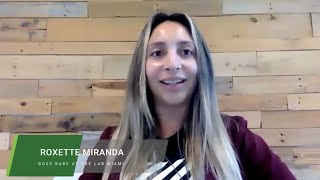
The webinar, hosted by Martin Martinez of the Founder Institute, brings together three entrepreneurs—Roxette Miranda (The Lab Miami), Sneha Lundia (Step2Growth), and Harold Hughes (Bandwagon)—to discuss their journeys, the role of the Founder Institute, and practical advice for early‑stage founders. The conversation covers how each panelist built and nurtured startup communities in Miami, Austin, and globally; the importance of inclusion and diversity in tech; strategies for fundraising and investor outreach, including the use of FI’s “Mad Libs” pitch framework; creative talent acquisition methods such as deferred equity and leveraging dev shops; the impact of COVID on remote collaboration and global networking; perspectives on luck versus adaptability; and concise take‑away advice for new founders (focus on feedback over perfection, stay adaptable, and consider the collateral impact of disruption). The session also includes audience questions about app development costs, co‑founder agreements, and the role of luck, with each panelist offering concrete, experience‑based recommendations.
Chapters
Welcome everybody. I hope all of you joining us here on the Zoom webinar, I'm letting y'all file in. Thank you for your patience. Looks like we're gonna have a big crowd today. We're already cracking about 100 attendees and counting just here on the Zoom webinar. My name is Martin Martinez. Welcome to the Founder Institute event series. I get the privilege to host an amazing panel today. Titled How They Did It: Success Stories and Advice from Top Entrepreneurs in Technology. Wherever it is you are in the world, again, we hope you're safe and well. You might be watching us on LinkedIn. You might be here in the Zoom webinar. We're now at 168 attendees. So do me a favor, regardless of where you're watching us, just light up that chat, light up those comment section, let us know where you're coming from. For those of you that are joining us from the United States, we hope you had a safe and relaxing Martin Luther King holiday weekend where we get to celebrate the life and legacy of Dr. Martin Luther King and the many things he did for people in civil rights and more. So we thank you all for joining us this week. We have an amazing panel. A little bit about Founder Institute, if you're just joining us for the first time, we are the world's largest pre-seed accelerator for entrepreneurs at the very beginning of their startup journey, whether it is they have a working prototype but don't really know how to build the business, or they might just have the idea. We help you. We have chapters in all parts of the world, not just the US. We're active in over 200 cities in about 65, 65 countries globally. Helped about 5,000 companies launch their businesses with the FI Core Program since 2009. If you want to learn more about that, head on over to fi.co. And see what we're talking about and maybe join one of these upcoming programs if you're looking to turn your idea into the next big thing. Looking at the chat, we got a lot of people from Europe, Germany, a lot of Germany representing, Canada, Brazil, London. Keep it coming, y'all. Keep it coming. Connect with each other. We're just about hitting 200 attendees just on the webinar. So thank you, thank you, thank you. I'm gonna join my panel. I'm gonna bring my panel up right now. Let's get right into it. I'm gonna I'm really excited about this conversation. I'm joined here from Miami, Florida, Roxette Miranda. Coming from the Bay Area, Sneha Lundia. And here in Austin, Texas, where I'm coming from, Mr. Harold Hughes. Welcome, panel. How we doing today?
Doing good, doing good.
Good, Roxette.
7.5.
Doing well.
Yes, yes, it is a good week. It is starting— the sun's starting to show up a little bit here in Texas. I don't know where— it's always sunny in Miami. I'm sure in the Bay Area it can be. Oh, yeah. A little bad weather from time to time. We do have a saying here in Texas, you know, if you don't like the weather, just wait an hour. But we'll go from there. So let's get started, all right? All of you, I know, I love y'all. We've had a chance to connect with each of you one-on-one over the year and more. And we're all involved with Founder Institute to a certain extent. Our journeys are all different, how we got to FI, how FI has kind of changed and evolved in our work, how it's enhanced it, how we've been able to enhance others using the program. But let's learn about each other first. So Roxette, we'll start with you. We're going to work our way east to west. Roxette, tell us a little bit about yourself, what you're doing over at Lab Miami, and some of the other work that you have going on, just to give our audience here— now cracking 200 attendees just on the webinar— what you've been— what's going on in your world.
Yeah, no pressure. Yeah, so I run The Lab Miami, which is the first coworking and incubation space in Wynwood. So it's been around for 10 years and I took ownership of it pretty recently. I used to actually run FI events out of The Lab probably 3 years ago. Just so you know, I'm one of the Florida chapter directors of FI, and the way I got involved through FI was My entrepreneur journey was very different than most. I didn't know what startups were. I usually worked with small businesses and taken them from, you know, struggling or from small businesses to bigger businesses that got either acquired or bought. So, you know, I finally came to the term startup and SaaS and tech startups until I was in 2016 when I was starting to hear these words when I jumped into the coworking industry. So I got approached by Adeo to join FI and never heard of an accelerator program until 2016 and then decided like, this is pretty much somewhere that I want to be, which is helping other entrepreneurs find that journey themselves and find their niche. So yeah, I hope that's like a good intro for you of what I do.
It's a great starting point, Roxanne. I'm really excited for you to be joining this. And I think this is the first time we've been able to be on a panel before. So I hope I do you justice. Joining me next, my friend, my brother, coming here from Austin, Texas, Mr. Harold Hughes, a man of many, many things. I don't even know where to begin with what Harold does, but I'll let him say it.
Yeah, man. I can't keep track. I'm excited to be here. I'm excited to be here, man. It's been really great. I started my company Bandwagon in Greenville, South Carolina, one of the lesser-known tech hubs in the country. And so given that, I had to think through how we acquired the resources we needed to grow. I knew I was coming into this thing with a couple of things at my disadvantage, I would say. I was a first-time founder. I'm a Black founder. I didn't have the Facebook, Apple pedigree. I didn't have Stanford or Apple— or excuse me, Stanford or Harvard as one of those education things. That I was outside of the Bay and outside of New York. And so it was great when Founders Institute came to Greenville, South Carolina. We were the first chapter in the Carolinas, and it was an accelerator where my goal of when I came in was, well, if I graduate at the top of this class, then I will get all of the notoriety, all of the press, and be able to have this engine behind me that's been at the time I think only 100 cities, right? So you could talk about how it's grown. And so that allowed me to propel myself forward and start to get more notoriety, access to investors, access to customers outside of my small city and town. And now, as you know, after participating there, I came to Austin and where I'm a director for Founders Institute as well. So I think that for me, understanding the journey was leveraging the resources that the program was going to put in front of me and putting in the work. And so excited to talk a little bit about what we built and how we got there and some of the things we've learned along the way. Thank you, Harold.
As always, it's going to be a great discussion. And yeah, I got a lot of questions that we haven't caught up in a while too. So I'm excited to learn what you, what you got going on right now as well. Last but not least, we're cross-country now, heading to the Bay Area. Really excited to introduce our final panelist for this evening, afternoon, morning, wherever you find us, coming from the Bay Area, Snehil India.
Snehil.
Hey, thanks, Martin, for having me, and great to meet both you, Roxy, and Harold. A little bit about me, I'm the founder and CEO of Step 2 Growth. And we work with early-stage startups to help them with marketing. But I did not start my journey as an entrepreneur. I've had quite a journey. I was born and brought up in a small town in India, and from there, today I am sitting here in Silicon Valley talking to other startups. I really enjoy talking to startups and helping them out. And I started my career as a software engineer, and I was working with Cisco Systems, and I always was intrigued by the fact that how can this small piece of code which I'm creating help this big giant actually generate business. So that led me to doing my MBA, and from there I started working as a business analyst. And all of this together kept me close to technology but also introduced me to marketing. And technology, marketing, all of that together led me to startups. And cutting down to the chase, When I was working as a marketing leader for startups, other early-stage startups started reaching out to me for help. And the main help which they needed was that marketing foundation, because many marketing companies help you when you are funded, generating revenue, and have that money to pay to agencies. But what happens to these early-stage startups who don't have that much money? That gave birth to Step 2 Growth, and we are so passionate about helping early-stage startups just not make the mistakes which other founders make, and we've learned, we've had startups who have been acquired, we've worked with startups who had to shut down. So we've seen everything and we are trying to bring that experience and help early-stage startups not learn from those mistakes and then help them grow. So that's about me and Step2Growth.
Awesome, thank you panelists. For those of you in the chat, please connect, follow, share this event. I'm really looking forward to what we're about to get into. So before we, before we dive into some questions that I have, some quick reminders for those of you in the Zoom webinar where we're crushing 235 attendees. This is a popular topic. People really want to talk to you all today. And just if you have questions, put them in the chat. Our production team behind the scenes will give them to me. We'll pick some of the best. If we can try to get to all of them, we will. Because of how many people are here, it might not be the case, but that's okay. We'll try to get to some of the best ones that we have, and I'll be able to read them towards the end of the hour. Let's start off. We got about 45 minutes. I think it's gonna be a good discussion for everybody. So, you know, as we, you know, as we talk about, you know, each of your journeys, you know, different parts of the country, different parts of the world, you know, we've all had to deal with just the struggles of just being an entrepreneur, the struggles of, you know, the othering that comes with not being what is normally defined as a tech startup. Entrepreneur. We've all seen it. We've all had to deal with them, those experiences. But outside of that, you know, what if they're— I like to have tones of optimism when we open these things up, you know, what's changed? What's progressed? And how have you been able to, you know, really define what it means to be an entrepreneur in 2022 using that experience, using the upbringing and the backgrounds that have been given to us and blessed by us over the years? So, Neha, let's start with you. Because you have a very interesting journey coming from India to the US and then building and working with entrepreneurs.
So I feel that one of the things which has changed is I am a very big optimist. So I think COVID has helped in many ways. And the biggest thing is it has brought all of us together. I remember Founder Institute being such a localized chapter initially, but today I get to talk to founders all across the world. They get to have that opportunity to leverage resources from Silicon Valley, which was not— it was difficult, I would say. I won't say it was not possible. So being able to talk to each other and have that actually create a global network, COVID has made that possible. And that is something which we are seeing more and more as companies are thinking about globalizing as opposed to staying local. Keeping that in mind, I do feel that the trend in the future is going to be leveraging resources across. Picking out strengths of different— every location geographically also has its own strengths. So picking out strengths from these different geographical locations and then putting it together to make this world a much better place and making sure all of us play to our strengths.
Thank you, Roxanne. We're going to kick it over to you. Same question, because I know your background also has brought you a journey that led you into startups working with tech and then FI kind of helping bring that to the Miami area, you know, what's changed? What's improved? What are you optimistic about, you know, given everything that you've been able to bring to the table and enhance this community of ours?
Yeah, I think what's changed is pretty much I agree with the global aspect, but there's been a very big talk about inclusion and exclusivity. You know, there's been this opportunity for minorities and women who didn't have the chance to work in tech to actually be able to work in tech. And similar to Harold, I don't have a tech background, but I do work and advise on tech companies. And I managed to join a tech company even though before that I was at a medical device company, which I did not have that skill set. So I feel that now people have the opportunity to learn a trade very quickly. And even if your background isn't in that trade, you have the opportunities to get into an industry in a field There's so much opportunities for education through virtual programs like Coursera and other programs that you can get certified in just so that you can learn a new industry. So we didn't have these opportunities before. I think that, you know, online education has made that possible where you can do these kind of global cohorts and get insights into what's going on around the world, which, you know, it's changed. Before, you would actually have to go to a university or a college and actually physically be there and spend some time there. So I think that's pretty important too.
Access to knowledge, breaking down these barriers, barrier to entry into that knowledge, big, big things. Now, obviously, the last 2 years have been a little weird. I'm understating that. But let's kind of close this out and then dive into maybe some more tactical things about what we do to help startups and how we've built our own. Harold, same to you, because I know your background. I know it's taken you from, from the South to Texas, which is its own can of worms, and all the things that happen between those. Tell us about what's evolved and what's changed and how, what's the optimism that you're bringing forward into the year ahead?
Yeah, yeah, for sure. I mean, one of the things that I learned at Founder Institute, and I was already kind of practicing it, was making sure that I thought through, am I the right person to start this business? I think that there are programs and content out there, whether it's TechCrunch or Shark Tank, that is inspiring so many people to be entrepreneurs. But oftentimes people are making some really, really risky decisions, leaving a good job or health insurance. Y'all remember health insurance? To make a— to get into startups. And so one of the things I was able to focus on was making sure I de-risked the idea. Like, I invested time into making sure I understood the problem, looked at the market opportunity, as well as understanding the competitors. Then I de-risked the business. Like, what is the business model? How is this unique and different from others in the space? And then lastly, I de-risked myself. Would a customer buy a product or service from me? Would an investor give me money? Could I hire talent? And so one of the things that we had to do in the very beginning was think through, well, where do we get the best people that we can? And we're fortunate to be able to do that by really opening that up in the beginning. So yes, COVID has definitely accelerated remote work and all that, but from the very beginning, it was important to me to make sure I found people who were highly qualified and passionate about what we're doing to join us. And so being able to see some of that accelerated, where you're seeing more and more people leave their centralized, I guess you'd call them hubs of Silicon Valley, and go into these smaller communities where cost of living is different, or they can join a company that has a different kind of impact. I think I'm excited about the future of that, where you're seeing more people empowering themselves to make choices on now not only how their work and their talent accomplish a product or service goal, but also how it fulfills them as an individual. And so I'm super excited about that going forward.
Love that. Thank you, Harold. And that ties into my next question. We're gonna keep it back at you, Harold. Tell us a little bit about Bandwagon specifically. Um, you already talked about, you know, that, that initial journey of just figuring out, am I the right guy to do this? But, you know, how did you also, you know, build the community around it and really get that buy-in? Because, because again, you know, as startups, uh, it doesn't matter who you are, You're not going to be able to afford talent from Google. You're not going to be able to afford talent from Facebook. You're finding people who are just as passionate as you, but that can be a big struggle for many entrepreneurs. So how did you overcome that challenge?
Yeah, in the beginning, I did a podcast with a good friend. Her name is Shontavia Jackson. I talk about how do you get people to join your team and work for free? Because in the beginning, you really don't have money and you're trying to really sell on the vision. As an entrepreneur, I think, especially as the founder, you've got to be a great storyteller. You've got to not only see the future, but be able to convey the future in such a way that someone else gets excited, that they're willing to trade hours that they could be watching Netflix or hours they could be sleeping or vacationing and doing it with you for free. And so, for me, it was really leaning into what I thought the opportunity was. When we first started the company, I thought about how segregated and segmented our audience was. You think about at home, sitting at home, your friend groups are pretty homogenous. They look like you and probably think like you. But I love that at live events, you would be sitting and seeing people from different political affiliations and different religions and different education levels all enjoying the same team or all enjoying and singing the lyrics to the same song. So we wanted to bring people together from the very beginning. And so Bandwagon is an experience technology company. We're using Web3 tools like blockchain and NFTs to create community at live events that typically are People show up, they stay for 3 or 4 hours, and then they leave. So we're working on eliminating that ephemeral experience, as you would call it, where it disappears, and creating a more lasting community by working with artists and entertainers and teams. And so for us, it's really been thinking through that North Star and staying with that top of mind, and from there conveying that message. And so I'm fortunate, while, you know, we've had some people who we offered, and they took a job at Salesforce— it's honestly, that's like the number one The number one company that we've lost candidates to is Salesforce, but we've been able to take people from Google or take people from Disney, and so that has been really empowering. And so as we continue to grow, we're really excited, you know, coming out of Founder Institute since then. We were the first cohort in 2015. We've raised $3 million. We've created jobs in the state of South Carolina that didn't exist before, and now we're looking at how we continue to educate the community as we plug into those coding camps and those coding schools and making sure we lean into a diverse team that's leading and building from within. So I'm excited about what the opportunity is, and my company leans into a lot of the principles that Founders Institute has and saying, let's make sure that we are taking these steps in such a way that everything we built stands and lasts beyond us. Yes, our company can be incredibly successful, but if we only do that in the capitalistic lens, We aren't doing a great job of investing back in Greenville, South Carolina, which is where we're headquartered. So that's why we're positioned where we are and excited about what's to come in Greenville.
Incredible, Harold. That's awesome to see and great to hear on top. Sneha, same for you. Community and building that, especially when you're under great pressure and lack of resources. You're working with startups day in, day out that are struggling with this. Every single minute of the day. So, so what do you, what have been some really interesting techniques that you've been able to advise or you've seen from the startups that you work with to help them achieve, get over that hump similar to where Harold's at, where now he's in a position not only to really define the community that, that he has on a scalable way, but also bring talent in, you know, is there, is there like a nexus point for startups to just know it's like, all right, this is the time I can actually compete. Let's go.
So great question, and I agree with everything which Harold said. And bringing my thought when it comes to community, and in general, I feel being an entrepreneur myself and also talking to so many founders, is that it's, it's a lonely journey and you need people who've either gone through it or at least believe in you to be around you. And that to me is that startup community where you can Talk to people who've gone through similar experiences, and it's not about the product or technology, but it's a big emotional rollercoaster. Today you might talk to a customer and they might commit to signing a deal and you get so excited. Okay, I'm going to have some form of revenue and then something doesn't work out and tomorrow you don't have that customer. So like you really have to deal with a lot and having the right set of people around you, mentors, advisors, co-founders, is really helpful. Having that initial team who can, who understands your vision and supports you also really helps. I started this company, my company, as a solo founder, and I know the struggles. Like, it's hard to do it until you have a team who understands your vision and supports you through it. For people who are solo founders, please find a co-founder or at least have a support system. Like my family is my support system who are walking with me through this journey. Other than this, look at other things where you lack skills and build mentors, advisors, or team members around it. Know your strengths, but know your weaknesses more. I know things which I don't know, which is difficult to actually figure out. And spend that time and figure things out and then start connecting with people. Also, please stay in touch with people you've connected to. Sometimes that's what startup founders miss out on. They initially have a conversation and never follow up, or everything need not be transactional. It can be more personal because that builds a lasting relationship. I've had advisors who were first my managers when I was working, and I've stayed in touch with them. Every person has a different perspective. So maybe people can be more transactional, but let's not do that and try to build a relationship and you'll see how others impact your life. So that's like my experience and my advice for all early-stage founders. And even throughout the journey, I feel you really need that support. Otherwise, it can be very lonely.
Absolutely. Spanish support network is vital. You can't do it alone. It certainly takes a village. And speaking of community, in the actual, in the actual flesh, Roxette, the Lab Miami. If you haven't been to Miami and you want to get in the startup scene, there is no other place to be. So, Roxette, obviously it's been a surreal couple years. You know, you as the managing director for that organization, you thrive on community. That's your lifeblood. So how have you been able to navigate those waters? How have you been able to also apply some of these things with building community and keeping people together to help and help keep the lab not only sustaining but thriving like it has been over the past year?
Yeah, I just want to echo what Harold and Sergio say. I mean, community is very, very important. And I know some of you during the chat, I was monitoring it, a lot of people were like, where can we find these startups communities? Where do we go? Where are these resources? Sometimes someone like yourselves have to take the initiative to be that resource. And I know it sounds like, well, I'm trying to be a founder. I don't have the bandwidth to do this. It's something as simple as creating, let's say, a meetup. I've been fortunate enough that like with FI and Lab, you know, they have a big, big following. But now I don't know if many of you guys are familiar with Miami, but Miami didn't have a very strong startup scene, you know, a few years back. It used to be— in the US, it used to be laughed at, like, why would you start a company in Miami when you can be in Silicon Valley or New York? And Miami was kind of a joke in the startup scene. It was only after COVID that really Miami was starting and is starting to be seen as a serious startup ecosystem. A lot of the big financial institutions are moving here. A lot of the big tech companies are opening their HQs here. But during that time, the startup ecosystem was very, very small here. There was only a few, maybe 5 aside from the lab people that were local leaders that were doing it. But those 5 local leaders really took the initiative to drill down through with Excel sheets, little link to websites, making PDFs of all the coworking spaces, accelerator programs, mentor programs. And it was just a small group of people that were doing it. And then now, you know, after the years and that COVID acceleration, now we have this big community where we're able to welcome pretty much all of the expats that are coming here to Miami. So biggest thing is start small, start with a meetup of 4 or 5 people, and then, you know, tell them to tell someone else, to tell someone else, to tell someone else. And then you'll see, eventually you'll find your tribe.
So yeah, I love that. There's a lot in common with— Yes, yes, yes.
Can I add a question or add a point to that? Jump right in. I mean, that's one of the things I think about oftentimes. You know, Roxette kind of said it, as founders we've been conditioned to be like, oh, I've got to constantly be talking to investors. And some of the best advice, some of the best doors that have been opened for me have come from other entrepreneurs. And so one of the things that I constantly try and preach and encourage folks is to think about how you create and define what peer mentors look like for you. And so it's really Roxette being able to say on Twitter, hey, I'm working at the lab today, is anyone else coming? Or hey, I'm grabbing a coffee at this coffee shop, who wants to come by? And you'll find that as you find other founders that are at the same stage as you or a step above or step behind, you're able to share some tools and tips and you're able to talk a little bit about certain investors who may or may not be a good fit and so on and so forth. So I think that, you know, we talk a lot about community and we did not do a prep call for this, so It is cool to see that we are all on the same page in that way. But I think that peer mentorship is so vital, and that is one of the things that is kind of baked into the FI program. It is like these workgroups and all those other things, and you can kind of just take that model and that mindset into the real world as you are talking about your community. So it is incredibly valuable, and I just wanted to support exactly what Roxanne said.
That is awesome. And it is great to add on there, too. Very vital to this discussion. I am seeing some common themes here. From just these, just the first 20 or so minutes of us having this conversation. We got another 30 minutes, a little less than that, sitting at 250 attendees strong here on the Zoom webinar, another 50 or so watching us live on LinkedIn. So welcome to everybody. If you're just joining us, my name is Martin Martinez, EIR over at Founder Institute headquarters. We're talking today with Roxette Miranda, Sneha Linnea, and Harold Hughes. Learn about their founder entrepreneur journeys and what they're doing right now, working with startups, building communities, and beyond. So let's change it up a little bit. You did mention investors, and I know that's always a question that comes up in these conversations in these hours. So I'm going to go back to you, Harold, and just talk a little bit, because I know we could spend a whole hour just on this one question. We have, we have. But, you know, when for startups, especially those who may have not even, you know, been familiar with the world of investors and how to even engage with them. Community is one way to get in contact and start building that network. What happens then? You, you know, you catch the, the spinning tire, but now what do you do with it? Now how do you engage? What are some— what have been some tips and tricks that you have been able to apply over the years to get such a successful raise like you have with Bandwagon?
Yeah, I think that in the beginning it's really important to make sure you set and define what the what the traction parameters will look like. As an investor, it's your job to quickly get companies out of your funnel. You want to pick the good ones, like, and take that time, but the bad ones, you want to get them out of the way. And founders often end up finding themselves being compared to companies that they don't even know about. And so when you think about it, when you make that initial touchpoint with the investor, it's important to not only start off saying, hey, this is my company, we do X for Y group of people, and Z is how we do it, that secret sauce or whatever. And Founder Institute has a great resource for this called Mad Libs, which I reference literally every day, which is fi.co/madlibs. I'm sure someone can post that. But being able to say very succinctly what it is I do, and then defining what it is that you are going to accomplish next. Mark Souster talks about this notably, that investors make decisions based on lines and not dots. And so your first touchpoint's like, hey, just want to let you know what we're building. We expect by the end of Q1 to have this level of traction. You define it, entrepreneur. And then at the end of Q1, you follow up with another email. Hey, Roxette, so great to follow up with you. Just want to let you know what we told you that we were going to accomplish this at the end of Q1. Well, we ended up being at 117% of goal. We're really excited about it. That said, we think we could have probably ended up around 140% had we done these things. So these are some learnings. We're going to apply this. In Q2, and this is where we're going to go. And as you do that from month to month or quarter to quarter, what you do is you get that investor in the mindset or the habit of nodding. So every time I read your update, I'm like, yep, they said they were going to do this in Q1 and then they did it. They said they're going to do this in Q2 and then they did it. And now in Q3, they're raising around the funding and they say they need half a million dollars to take them here. And you say, well, sure, they're going to do it. I've been nodding. I'm already conditioned to it, right? And so being able to, as I said, define what it is you do very clearly Set the boundaries and the definitions of what traction looks like for you, and then build that rapport with that investor of, oh, they have a history of accomplishing their goals and objectives. I want to back this team. I think those three things really allow founders not only to control and navigate the investor landscape, but also to make sure that you don't get caught in one of these, you're too early conversations, and you're playing catch-up and trying to chase the investor. That allows you to control that narrative and make sure you're putting your company in the best light. And from there, of course, you have opportunity to take action items. But those are the 3 things I would definitely encourage founders to do as they're getting the relationship started with investors.
Thank you, Harold. Roxette, I see your head nodding. I feel like you want to jump in on this.
Well, I'm just like 100%, like, check, check, check, check. Something that's very, very important too is please do research on the investors and the investments. And not only reach out to, you know, the investors, like look at the portfolio companies, right? You want to reach out to the founders of those portfolio companies because they're the ones that are going to have the in and the information and tell you, you know, how they got that investment. So you want to be friends with the founders of their portfolio companies. So that's like a tidbit for sure is start looking at those portfolios. If you fit in that portfolio, there is a likelihood that they'll have that conversation. The other thing too is I know you guys are starting to raise money early, but one of the biggest mistakes that most people make is that they're so eager to get that first check that they're not realizing that this is going to be a marriage. You always hear about that complaint about, "Well, I'm not happy with the terms. I'm not happy with the investor." So you want to make sure that when you're talking to these portfolio companies, have been invested in, that you ask the founder, are you happy with that investor? Are you good with that investor? Are they providing resources to you? Like, are they helping you in that growth journey? Because if they're not, then, you know, it's not gonna look good for you guys. So that's, you know, everything Harold said, check, check, check, check. And then definitely add that to that pockets of checks.
Thank you, Roxy. Now your head's nodding. What's going on in your mind?
So, uh, exactly what both of them said, uh, that's true. Other things just adding on to them, uh, would be, uh, when you're researching, also make sure that that investor has not invested in a competing product or a competing startup because they are then not the right investors for you. I always recommend startups to create two lists of investors. One is who they really want investment from, and then the other is your practice list. Who you talk to just to get feedback and input because it's a long journey and it requires a lot of patience and practice and follow-ups. So just make sure that you have that list. One thing which I've heard a lot of investors say is they are looking at your founding team when it comes to investment. So it's less about the actual product or idea, but it's more about your enthusiasm towards that product or idea. So do you, are you passionate enough? Do you have the capability to actually convert How do you convert that into the vision which you are talking about? That's what investors would be judging in the first conversation. And also look at the trends of that investment company. Does your product fit into their portfolio and does it help them? Will they be as vested in the startup as you are? It's not about just getting money from them, but if they are vested, if they really want want you to be successful, and if your startup falls into their vision, they will give you more than just the money, and that's what is also really important.
Awesome. Yeah, thank you. We're just about hitting 20 minutes, a little bit more, and I'm just getting a ton of great questions from the audience, y'all. So I'm just gonna shut up and I'm gonna go pull some of these gems and ask all of you all. We got about Yeah, we had— and just for those of you joining us, I know some of you have coming in late, um, and some of you really want to network. So I have a surprise for y'all. We're going to drop— if y'all are in on the webinar link, we, we do some networking via Airmeet. If you've joined me for some of our showcases and co-founder events over the last 6, 7 months, we're going to drop that in there so y'all can get to meet each other. Seems like all of you all around the world want to collaborate and just connect. So We're at special treat, surprise, jump in there, but keep the questions coming. We're getting into audience questions. So I'm going to start with just one direct. It's kind of general and a little bit existential. Hedzer has a question to all of you. We'll start with you, Roxette. How big has luck been a factor in your journey towards the businesses that you're currently working on?
I wouldn't say it would be luck, but more like adaptability to luck. You know, I saw the opportunities to take and then kind of shifted and chameleoned my way into just figuring out what I wanted to do. So I kind of always been that type of person that had to set goals and always had a plan. So if I set my mind to it, I was like, okay, where can I find this opportunity? So I'm constantly on the lookout. For, okay, where is that opportunity? But I think luck mixed with adaptability is kind of what makes it the ease for things to happen. I don't know if that's like a good answer, but I think you shouldn't rely on luck is what I'm pretty much saying. There are people who you kind of see that they get a lucky hand and it just happens, but yeah, wouldn't rely so much on it.
Harold, you're already off mute. I think you got some thoughts.
Well, I mean, well, that's one of those like how I built this questions, right? And so to me, luck has mattered very little in our journey. And I say that primarily because a lot of what we've done, a lot of folks can replicate. And that's why I try and share as much as I have on our journey. The last thing I'd want someone to think is like, oh, Harold has done this and it's it's unachievable because the stars had to perfectly align and he's the lucky one to have pulled it off. No, there's a lot of things that we took time and invested into and researched and learned and were patient or aggressive. And so I think that when I look at our journey, I don't think there was much luck at all. I think that we looked at market movement, we looked at user behavior, we were thoughtful about our capital use and were able to stick around and now we're seeing, you know, some great opportunities. So I don't look at it is luck. I try to learn in— not— excuse me, I try to learn in public and let people see my journey because a lot of this stuff everyone on this call can do. And so that's why I share as much as I do. So I do not think a lot of our success has anything to do with luck.
But, so, uh, I don't know if many of the people know this, but India is a pretty superstitious company— uh, country. Like, uh, People are superstitious there. So I know like this feeling where people say that you've succeeded. If somebody succeeds, the first thing that comes to mind is, oh, that person is lucky and I'm not. But that's not true at all. I feel that every action you take today is a stepping stone for your tomorrow. And Everything you do today is based on your current situation and circumstances. There are things you cannot predict. COVID hit everyone, and there are companies who've excelled in it, and then there are companies who haven't. So there's no luck involved with it. It's more about how— what do you do once a situation has occurred, and what kind of actions are you planning to take against it or towards it? So pivoting at the right moment is important. Understanding the market trends and learning from them is important. We've been successful because I've watched how things have moved. Step2Grow did not start as a marketing incubator. It started as a marketing services company, and we realized things. We realized how competitive the market is. We also realized what we offer is different from everyone around us. And how do you position and pivot at that point in time? How do you bring on the right people? All of that creates that success. Successful story. One thing is, when a startup gets funded, or very heavily funded, or they are very successful, that's when media covers it. But it's not something which happens overnight. They've really spent a lot of time, effort, uh, to make that journey possible. So this is another thing— you read things, uh, and it's depicted in such a way that it happened overnight. But please go ahead and read how people actually did things. It takes 10, 15 years to reach the stage they are at. So luck, I would say, is not the factor. It might help you for temporary reasons, if at all, for people who are superstitious, but that's not the reason why you'll be successful. You'll only be successful if you, one, believe in yourself and work hard to be where you want to be.
I love that. A lot of execution here is what I'm gathering from all your responses. A wise mentor once told me, "Luck is nothing but timing and opportunity." As long as you execute at that intersection, you can achieve that own luck. But so, good question, but definitely think about how you want to approach it moving forward. I'm getting, I'm getting a few questions, so I'm going to combine them. Fabi is asking me a question on building apps yourself or acquiring these skills via Fiverr or some other kind of freelancing app. And Kuyun's really suffering from a similar thing. If you're in the case of app development or any kind of web-based application in general and not having the financial resource, what's the cost-benefit of just trying to do it yourself or trying to just find those skills outright and biting the bullet on cost? Any advice in that perspective when you're struggling with that at the very beginning? You might be, you may not have the technical chops to actually execute on something that you think is possible. And I'll just leave this open for anybody who wants to start.
So I could jump in quickly.
Please.
So one thing which I've observed a lot is founders consider the monetary value as cost. Like money is not the only measure of cost. The amount of time and effort you put in is also the cost. So if it is something you are skilled at and you can quickly whip up, go for it. But if it is something which first you'll have to learn how to code and then create an app, just hire somebody else to do it because the amount of time you spend to do that is not worth the cost. So always evaluate your cost not based on the dollar value but also a combination of the dollar and the amount of time you will take, because I feel time is more important. If you are skilled at bringing on an advisor or bringing on an investor, if that's your strength, go do that. Let somebody else actually— hire somebody else to create the app, initial version of the app for you.
There's also dev shops that you can go to. So here We're lucky enough to have a slew of, like, dev shops that work out of this space, and a lot of our dev shops actually are investors into some of the startups that they work with. Um, so it'd be worth looking at your local dev shops or dev shops around the world and seeing if any of these dev shops also invest in some of these earlier stages, because more than likely they were, before they became dev shops, founders themselves, and they're just trying to give back to founders like yourself. So I would go that route as well.
So for me, starting is— and I've talked a lot about our journey and funding the technical team and development. I'm a big fan of figuring out creative compensation plans. One of those we did for our very first deal was a deferred compensation plan. So we found an engineer that fell in love with the story that we created. Of what we wanted to build, and they said it would cost me this much cash to do it over this amount of time. And I said, well, what if you could go slower, and instead of me paying you all that in cash, I give you part of it as equity? It's like, you get this out by beta, you get this much in equity, this much in cash, or this much out at the production, you get this much in equity, and then I'll give you cash based on us fundraising. So for us, that aligned our interests because they knew if they built me the thing that I thought I needed and I could go raise on it, I would cut them a check. And I still remember, you know, the first round of funding, we raised $310,000. And the reason we raised $310,000 is because we had told our investors we can do this with $300,000, but I needed to raise another $10,000 because I told him I would pay you $10,000 after, you know, the cash and the equity mix. So for me, I think it's a huge opportunity for folks to get really creative with compensation, and that goes back to getting people to not really work for you for free, but to think through how they can support you while they're doing their main gig.
Fantastic. And ties in with my next question, Harold. You're so good at that. These secretaries. So you found some people that can actually— I'll give you some time. Okay. But they're not really co-founders yet. How do you get into that position? I know, Harold, you started— you've been a solo co-founder, but you've built a team It's basically your founding team.
You can call it that, right?
So when does that change? You know, as you're going through that, you know, I just hosted a Founder Institute session on this topic last night. So it's very fresh on my mind, but I'm not a panelist, I'm a moderator. So what's the, uh, you know, what's been like, is there, how do you kind of go about that going from the dating to, you know, really sealing the deal and formalizing that relationship outside of project-based relationship?
Yeah, I mean, I'll start there. I think there's this, for me, when we hire, I actually go into it, it may sound crazy, but on the first day I tell my team member, my new team member, hey listen, super excited for you to be on the team, we're really looking forward to what we can accomplish. At the end of the day, this is probably going to go one of three ways. Either one, we've grossly misrepresented the company and we told you all these amazing things and you get here and it's a complete nightmare and you're going to quit. Or you misrepresented your interests or your skill or your talent, and we're going to fire you because you're not meeting the objectives that you set based on the interview process. Or third, my preferred path, is that this company continues to grow thanks to your contributions and the rest of the team, and either we grow at a pace or a little faster to put you in a position to excel and grow in this company, or you are growing so fast So you need to leave and you're getting coached and I would love to write you a letter of recommendation. Like, that is where I want to end it. And so we want to try and make sure that that expectation is set up front saying we want to constantly check in and be able to do that. And so along with that, as part of the onboarding process, I make sure that folks understand that I'm doing everything I can to make sure I'm leveling myself up as a CEO because the person that I hired as our CTO in 2016, didn't necessarily have the things we needed to be our CTO in 2022. And so that was something we had to be very transparent about. So for me, as a solo founder, I wanted to make sure that my team understood that we're going to do everything we can to put the company in the best position possible. We've got options, we've got whatever these benefits are, but it was important to make sure we set the stage to say that our goal is to accomplish this audacious thing, and we want to make sure we have the team members there. We want to support you as you come in and out, And that's really it. It's proper setting of expectations and being just really, really honest when it comes to information.
Roxette, Sneha, you're already on mute. You have some thoughts there, Sneha?
Yeah. So when it comes to, like you were mentioning, Martin, about like how do you figure out now is the time to actually sign a contract? It's a long-term engagement, and it's rightly said it's a marriage. So just like when you're dating, you're trying to get to know each other, uh, that's the phase where you're trying to get to know each other. Do your personal and professional goals align? And for the time you've been working together so far, do you really enjoy working together? Like, at the end of the day, it all boils down to that. Does it bring you happiness, or are you stressing out? So until you are sure that it's the right marriage, you might not want to move forward. Don't set a time limit, like you don't have to make this decision in 3 months of engagement or 8 months. Take your time. I've worked with startups where the co-founder was onboarded 1 year after their initial engagement. So take your time to figure things out. That person is still a part of your team. It's just not legally— he or she may not just legally be a part of the team. but their attitude and the way they are working together helps. Another thing to always keep in mind is make sure you're doing your SWOT analysis so the person you bring on board actually complements your strengths and weaknesses and is not like— there's no conflict of interest. If you know your roles defined, if you are going to be the CEO, then the other person should know that what would that person's role be, and you are again making sure there's no conflict. So that's how I would approach finalizing and signing an agreement before actually moving forward with it.
Roxette, any final thoughts, co-founder, Enigma?
Well, I know I had to, you know, clean house, so to speak, which wasn't the most comfortable, and then bring on a brand new team, and it can be very daunting when you do that, especially if there is a long-term following with a company already. You know, you got to remember a lot of these companies, you're gonna get a fan base eventually. And then that fan base gets used to seeing your team and that team only. And then eventually, when that roles of the team change, or you get a new co-founder, a new CEO, you could always see, especially on Twitter, on LinkedIn, you You could see the negative remarks of change of teams. So one thing is important is that when you are hiring or when, let's say, you're changing these roles from a new co-founder or a new technical CTO, that it kind of aligns with where your vision's going. I kind of joke now that we're not Lab 0.1 now, we're Lab 2.0. This is the new journey. This is the new, like, team. And when I was finding the new team, I found people that meshed. I did something where I actually took the one person I hired to interview the people that we were bringing on board to make sure that, you know, can you guys work together? And when we finally settled on that second new hire, I mean, they're like brothers and sisters now. Like, we're an entire family now. And it's a, it's a good, strong team. So I highly suggest also bringing your close team members that you trust to interview to make sure that there is no toxic work environment moving forward too.
And Roxette, can I say something to that point? 'Cause you mentioned family and that's one thing, like when we were building our company, part of our values or whatever, it's like, we do not talk about family. We are a team. Family, I've gotta keep my brother, I've gotta keep my aunt, I've gotta keep my cousin. With the team, you are You are here to do a job. Your performance matters. And if I'm the leader and I'm not holding you to the standard that is allowing the team to hit their goal, I'm doing a bad job. And your team, your other employees will feel that. They'll see, why is this person always showing up late? Why are they coming in and leaving meetings early? Why are they not delivering their work on time? And they'll realize that you're not doing what you should be to take it all the way to the top. And so for me, I make sure I never talk about We are a team. That means that sometimes team members have to be let go, and that's okay. And so that has helped us make sure that accountability stays on top of it. And also, as our leadership team, they're able to say, hey, Harold, this or that, that is important for me. So I wanted to make sure I said that. You reminded me of that point.
Oh, yeah, I love this panel. This might be my favorite panel of the year already. It's going to be a hard one to top. I got another 11 months to go. For those of you in the audience, we've gotten a lot of the same question and we're just about out of time. So I'm going to answer one just directly to many of you who, who are struggling with just trying to figure out what to do first. You know, how, where do you even start? Founder Institute is the place where you can begin that journey. Uh, head on over to fi.co, check out some of the local events that we're having in countries all over the world. I'm sure I'm sure there's going to be a chapter not too far from you, if not in your city. We can help you, whether you have the technical skills or not, to really understand, is this idea something worth turning into a company? Something I'm willing to spend the next 10 years of my life building and sacrificing my energy, my resources, everything to do? FI is one of the best places to begin. And you're talking to a whole panel of people who can vouch for that experience. People like Harold who have graduated the program and also lead not only as a mentor for other programs, but as a director for our Austin program. Roxette, who helps bring and run our Founder Institute programs in Florida, as well as Neha, who's mentored some of the top fastest-growing companies that have come out of the FI Accelerator. So check out what we have going on. I promise you, you're going to learn so much so quickly. About what's possible and whether or not you're the person and is this the idea to build the future with. So head on over there and check that out. We're only, we're just about out of time. So I'm gonna ask one more question to my amazing panel today. My name is Martin Martinez, CIR over at FI. One piece of advice to somebody that I just addressed, to the 200+ people still in this webinar, the 50 or so on LinkedIn. There's one thing that you want our audience to take away from that to help them just get started on that journey in 2022.
What would that be?
Harold, let's go to you.
Beware of the collateral damage of disruption. Most of these startups that are being created are going to come and say, we're going to disrupt healthcare, we're going to disrupt retail or e-commerce. You have to acknowledge the fact that there are some massive companies that are are truly compensated on making sure that doesn't happen. They are paid to make sure that the status quo is preserved. And so instead of coming in and saying, how do we disrupt this industry, I would really look at leaning into collaboration instead of competition, understanding how you and your product or service can increase the market size, enhance the customer experience, and therefore derive an amount of value for what you've been able to create. So my biggest point of feedback would be to beware Beware the collateral damage of disruption.
Thank you, Harold. Neha, one last piece of advice for anybody that's starting their journey. If there's one thing that they can take away from this conversation today.
So the one thing would be don't waste your time on being perfect. Focus on feedback over perfection. I've seen a lot of startups be so focused on creating the perfect product that they are not even listening to their early adopters or their customers. So don't waste time on perfection is my big advice.
Last but not least, Roxette, one piece of advice.
I'm gonna echo to them: adapt, adapt, adapt. Definitely, you know, you gotta be fluid, especially in these changing times. Like, you can't be pigeonholed into one way of thinking. So, you know, find new ways to pretty much adapt, and that's how you survive in the entrepreneur space.
Be flexible, be open for feedback, and be aware of what's to come if you really do disrupt that market you're looking to change. I think we're about just about out of time, ladies and gentlemen. For all of you still joining us here on the webinar, thank you again. Roxette, Sneha, Harold, one more time, please give it up in the chat for our amazing panelists. Please connect with them. We've been dropping links on how to find them all across the interwebs. Please connect with us. We'd love to learn more about you and just keep you updated on the things that we are working on. Head on over for post-networking on Airmeet. We dropped the links also in the chat as well. So if you want to keep this conversation going wherever you are around the world, please do head on over to Airmeet. Such a fun tool. I think y'all are going to have a lot of fun getting to know each other just as you did. With this panel. So for everybody here at the Founder Institute, I want to thank you for spending this past hour with us. Thank you again to our panel. Thank you to our production team behind the scenes, Felicia, for being able to maintain the madness of this chat and the audience that we've had across the internet. For all of us here, we hope we find you safe and well, and we'll see you next time.










