How to Be a Better Angel Investor: Lessons Learned from the US, Brazil, and Europe
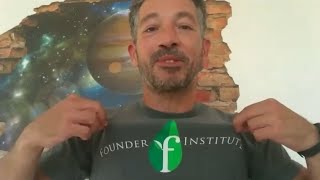
The Founder Institute hosted a live virtual panel titled “How to Be a Better Angel Investor: Lessons Learned from the US, Brazil, and Europe.” Host Ryan Michaeletti introduced the event and the panelists – Russell Brand (co‑director of Founder Institute Silicon Valley), Lucia (co‑founder of Lumos Investment Collective), Jeanette Todorova (Head of Expansion/Eastern Europe), and Nima Katz (serial entrepreneur, CEO of Jupiter). The discussion covered practical angel‑investing fundamentals: the “table stakes” investors use to deem a pre‑seed company investable (customer evidence, founder motivation, learning ability, and proximity to the problem); the importance of fluid intelligence, learning/unlearning, and the Founder Institute’s Entrepreneur DNA assessment; when outsourcing development is acceptable versus building in‑house; how to think about valuation in the wild‑west pre‑seed market and the power‑law focus on outsized returns; strategies for new angels such as joining syndicates, writing deal memos, and building a thesis that evolves with experience; advice for founders on timing and relationship‑building with angels, including seeking feedback before asking for money; bias mitigation through standardized questioning; emerging trends like customers becoming investors and the role of cultural timing; and each panelist’s parting advice for better angel investing. The session concluded with a networking invitation and a call for leaders to launch FI accelerators worldwide.
Chapters
All right, welcome everyone to the How to Become a Better Angel Investor event hosted by Founder Institute. Some really good angel investors and partners here you see today. My name is Ryan Michaeletti. I'm head of global operations for the Founder Institute. For those of you who don't know already, Founder Institute is the world's largest pre-seed startup accelerator. So over the last 13 years, we've built an international organization that spans over 5,500 startup companies across 200 cities with a mentor network of over 21,000 mentors. And so in addition to being the largest company creator in the world, we recently launched a new accelerator program for venture capital firms called VC Lab. And that's where we help these emerging venture capitalists launch their fund. And so it's really exciting because now not only are we the largest company creator, but we're quickly becoming the largest venture capital firm creator in the world. And the intersection of two, two of those things is where a lot of the magic will happen. So if you're an experienced angel investor or ecosystem leader supporting startups, and if you're interested in either launching a fund or a startup accelerator through the Founder Institute, you can visit fi.co/lead to learn how we can help you. And we'll also send follow-up details to everyone here with that information as well. And so let's go ahead and jump right in. I'll give a brief agenda for today. So in a moment, I'll introduce the investor speakers. We'll do live audience Q&A. I have some questions that I'd like to ask, but I also wanna make sure this is very interactive for the audience. So if you have questions or you have something you wanna ask an investor, Go ahead and put it in the chat, and then we'll field those questions on the back end, and I'll ask them on your behalf. And then what's really exciting is, you know, in this virtual world, it's harder to make that one-on-one networking connection. So after the session, we're going to invite everyone who's here to go over to Airmeet, which is what we use as a networking platform. So you can meet with founders, mentors, investors, and peers to build your network internationally. So as a reminder, this is a live event, so put your questions in the chat whenever you get the chance and go ahead and drop in the chat where you're from, and we're excited to have you here today. So without further ado, today we have an all-star international panel joining us. First, I'd like to introduce you to not only a friend and Founder Institute mentor and angel investor, but Russell Brand is the co-director of Founder Institute Silicon Valley, of which we just had our graduation last night. So Russell, Do you want to do a quick intro?
Great. So I'm Russell Brand. I started 3 software-related companies. Each of them did well enough for the founders to retire. None of them did well enough for anyone to have heard of us. We taught our federal government about open source software back in the '90s before it had a name. First project saved the taxpayer a quarter billion dollars. I've been active in the, in the Caretsu forum ecosystem and involved in about 100 due diligences there. Active in a couple of other syndicates. I'm currently interviewing investors from all over the world for my How Investors Think series. And while it is really written for founders, if you'd like to see how other people think about investing, I encourage you to subscribe and start reading. I've learned a lot in the past couple of months of talking to people and writing.
Yeah, that's great. And yeah, I enjoyed being on that interview as well. So thanks for putting that together. And thank you for joining us today. So next up, we're joined by Lucia. Lucia is the co-founder of Lumis Investment Collective, a female angel investing club to help more women become angel investors. And Lucia, before I pass it over to you, last night at our graduation, I think our female graduation rate was like 60%. We had, I think, 4 or 5 men, and then the rest of the 18 were women, and they would absolutely crush it. I want to send you the recording after this because the pitches were very strong. But do you want to do a quick intro?
Yeah, thank you. Of course. And please send it to me. That's great to hear. So hi everyone. It's great to be here. So my name is Lucia. I'm originally from Slovakia, but I live in London. We decided to start Lumos when I lived in San Francisco and I was working for a startup called Slido that got exited to Cisco. And I was just like really curious, like why we don't have enough gender diversity in the investment. So that was our mission. Now what we do is that we work with female angel investors, we educate them about investing, or we work with senior and seasoned angel investors and we invest in startups Predominantly in the CE region, CE stands for Central and Eastern Europe, but we are also active in Israel and the UK. So basically like the whole Europe with the focus on the CE region. Currently we have 350 angel investors and we are still recruiting more. So yeah, that will be the quick intro.
That's awesome. Yeah, we have, for those in the audience who don't know, we have something called our Global Female Founder Initiative. And so I'm really excited to hear about what you're doing and what you're working on, 'cause I'm pretty sure we can do some really great things together. Next up, I'd like to introduce Jeanette Todorova, who's not only Head of Expansion for Founder Institute, but she's also the Director of the Eastern Europe program. Jeanette, do you want to do a quick intro?
Hi, Ryan. Hi, everyone. Nice to be here. I see a lot of familiar faces, not only here with the mentors and speakers, but also in the audience. You are probably familiar with my name from your interactions with FI because you want to start the chapter. So I'll be here in the background to answer any questions in the chat, anything related to our Eastern European program, but also the program related to starting your own Foundry Institute accelerator.
Awesome.
Enjoy.
Thanks for joining us. All right, we have one more introduction and I'm really excited about this. We were just talking about this, but I'd like to introduce Nima Katz, who's a serial entrepreneur, investor, and co-founder and CEO of Jupiter, which has been really our major partner in Founder Institute in Brazil, helping us expand to, I think at our high point, it was like 15 different cities there, Nima. So really happy to see you, welcome aboard. And do you wanna do a really quick intro for the audience?
Yeah, please. Pleasure to be here. Thanks again for this invite. It's always an honor to put on the Founder Institute t-shirt. You know, as Ryan mentioned, I've been an entrepreneur since the early 2000s. I started building software products and tried to take them to market, had a lot of difficulty doing that. Eventually, in around 2005, I started a decentralized stock exchange called Ocean Exchange. It had to be in the middle of the ocean for that to work, and I was basically I guess condemned and ridiculed and not supported enough until the fact that I turned it into a venture builder and I started learning about investing in that world and I did it every— I did everything wrong in that business and trying to invest in companies and I noticed that a lot of companies die too early and investors are somehow wrongly to me as an entrepreneur happy when just that one makes it and all the other ones can, you know, go to hell or whatever, and my mission is very aligned with the Founder Institute because it's all about how do we make more founders succeed and not have founders fail at the, you know, or founders succeed at the expense of other ones. So I joined the Founder Institute in 2015. I thought actually the Founder Institute was going to accelerate a company of mine, and little did I know that they were going to ask me to be a director for the program. I started helping launch the program here in Brazil in Curitiba first, then I became a director in several other cities, and then we decided let's make Foundry Institute Brazil at least the second largest market in the, in the Foundry Institute, you know, the US being the biggest one. And I think, Ryan, momentarily at some point Brazil was as big or bigger than the US in 2019, but we gotta look at those numbers momentarily. I think we were just, we had that volume there. So, you know, I'm more than happy today to share my experiences investing in companies that have come mostly now, you know, doing it the right way, have come mostly through the Foundry Institute and a few other sources. So I'm very happy to be here and share my experience among these other, you know, stars of the investment world.
Awesome. Well, thank you for joining me, man. And just a reminder to the audience, if you have questions anything investing, angel investing, VC, go ahead and put it in the chat. I want to make sure that we get to your questions. If not, I've got a bunch of questions I would love to dive into. And so maybe I can ask the first one. So let's talk about table stakes for investment. You know, I've worked with hundreds and hundreds of different startup founders at every different stage, and there seems to be a misconception of like when a company is ready to go and raise capital. And so for you, as you know, if you put on your angel investor hat and you're looking at a company, right, let's just say it's an angel round or a pre-seed round, what are the table stakes that you're looking for to just say, okay, this company is investible? Russell, maybe we could start with you.
Well, most companies fail because they build things that no one wants. So I say, customers, customers, evidence of customers. Statistically, companies either talk to less than 20 potential customers or more than 100 before they start building. You can guess which group does better. Figure half the companies fail outright because they've guessed wrong about customers. Two-thirds of the others pivot at least once before they make it. So customers, customers, customers.
I love it. Lucia, what do you think?
So 100% behind what Russell said. It's about solving problems to, of like people and of customers. But I think what is also important is motivation, right? So I like to understand why they are building what they are building. Have they experienced a problem personally or someone close to them was going through something they want to solve? And I think it's extremely important that the motivation because, you know, as everybody knows, it's not easy to build startups. So they need to sustain themselves and they need to have sufficient motivation. And also, I like to talk about past mistakes. I like to understand if they learn, if they learn mistakes, because I know that everybody makes a lot of mistakes. They will make a lot of mistakes. So it's important to see that their intellectual capacity and their self-awareness is actually at a certain level. So whatever happens, they're able to pivot, they're able to, you know, like get back to what they were doing before, but learn from all the mistakes and new insights they're gathering.
That's really interesting because, you know, one of the things that we have at FI, some of you may have taken it already, but we have this thing called an entrepreneur DNA assessment. And really like we've been able to like backtest this data, like who's successful, who's not, who has the potential. And one of the things we find is that people with high fluid intelligence, meaning they have the ability to learn things quickly, and high openness tend to do really well. So what that means is it's someone who's adaptable and can learn fast. They can learn from the mistakes. They can move quickly. And so that's really interesting that you've helped validate that on your side. Nima, what about you? What are some of the things that you look for?
So we were earlier, just before the event, talking about the science of problem solving. So it's literally how do you identify and prioritize problems that you can solve, and in order, I believe that, you know, the essence is what's your proximity to the problem. So I find that, you know, it needs to be, there needs to be some sort of a proximity to the problem that the founder or the founders have that allows them to be able to identify not only the problem, but then also how to prioritize the subset of problems within a problem set, and understand which ones to attack first. And definitely that requires within the founding team the ability to at least execute on the first stages of the business themselves, to not depend on any outside entities to build or to tell them what to do or to create any type of product. So the proximity to the problem, proximity to the customer, like my colleagues here said, I think are the main things that I would, I would be looking at initially. And I've been known to make investments pre-everything, like pre-revenue, pre-product, pre-everything, just being able to find out if these people have the right proximity to the problem set and then the ability to execute on the product themselves.
Yeah, that, that's huge, right? That's, that's really important. You know, Russell, this kind of goes back to a conversation you and I had, which is For those of you who don't know, I also launched a fund called the Veteran Fund that invests in military veterans. And one of the things that we look for, because we're pre-seed, right? So we want to be the first check-in. It's kind of a combination of what everyone here has said. You know, there's sort of this notion of like, how do you validate the team? How do you then look at like how close they are to the problem? And usually that's like some kind of like background or industry expertise in it. And then what are the factors of success? Like, what, you know, is it validated? Do they have customers? Where are they at? And so like, there's a lot of founders that would say, well, you know, if it's pre-seed, like, you know, maybe I don't have customers or maybe I don't, you know, have revenue. And so one of the questions here in the chat is from Philip, what are effective lean ways to get that customer feedback? And I know this isn't like a customer development session, but Russell, I mean, you run that session for Founder Institute. So Let me, let me ask this to you. Like, what are some ways to get customer feedback?
Well, in my world, when people tell me lots of people have the problem, I don't care much. Lots of people want to solve the problem. I don't care much. Everyone wants to exercise more and be thinner and stop smoking and read more. What I care about is people who are looking for solutions, actively engaged in solution finding. So I tell people to go on Reddit, go on Quora, go on Facebook, and look for people asking for advice or giving advice on that problem. You can find a big list of those people, you probably have something. And when you find them, you say, hey, can I talk to you about it? And they're desperate to find problems. So they're proud about how they've done it with a rubber band and piece of duct tape. And they'll talk to you and you don't have to pay people and yet you can book 100 customer interviews in an hour. If it's hard to find customers to interview, then it's really gonna be hard to find customers who'll buy. If you can't find customers to interview very easily, you better have a huge market for educating, advertising, PR. And that means the angel investors are gonna get washed out when you gotta have the round to get all that money in. And as an angel investor, I run the other way.
Yeah, that's really insightful. You know, there's kind of going off of something that you had said, Nima, which is like you look at the team, you look at how close they are to the problem. Like usually what you hear when it comes to like really, really early stage investing is team, team, team. Russell said customers, customers, customers. And so let's talk a little bit about team. Like what is it that you as an investor look for in the team?
So Ryan, you hit the nail on the head earlier when you said about, you know, the ability to have fluid intelligence. So the Entrepreneur DNA Test is like gold to me. You know, our friend Jordan Peterson from University of Toronto who created that test initially and the founder has perfected it over the years. And it was incredible for me to see so much correlation between The ability to have fluid intelligence, which means the ability for a person to be able to learn new things. And then the other thing is how to unlearn new things. It's very important to have the ability to unlearn things that don't work for you as of now, you know, things that worked for you previously, but that might not work for you today or in the future. So the proximity to the customer I see is like literally has to do with those things, you know. How open are you to find out who it is that really has the problem? And not only who has the problem, because a lot of people generally, a lot of companies, they have a solution for everyone. But the answer for you on day one isn't to try and solve the problem for everyone. It's for you to identify who has the highest, what I call the degree of the difficulty of the problem, or degree of the difficulty that the problem causes for them. And then also the highest frequency of that problem for those people. So either the problem is very intense for someone and/or it's very frequent for someone, therefore the cost of not solving that problem is high enough that they're willing to invest their reputation, time, money, and risk a lot with you as you are going to solve a problem for them with this first ever attempt. At, you know, trying to build a solution. So they're okay with you making the error because the problem is so big in their lives. So you need to identify who are those people that have— who is the sub-segment of the sub-segment of the sub-segment of the market who has that problem at such a high degree that they're willing to, at a low acquisition cost for you, be able to answer your questions, help you understand the problem better, help you prioritize the sub-problems within the problem set better, so that you can solve solutions for them and then they can help you validate the solutions even though they're ugly, broken, not working very well, they'll still help you develop through the process.
Yeah, really great feedback. Lucia.
I have actually a question for Nima. So you mentioned something very interesting, like identifying founders who can learn and unlearn very quickly. Do you have any strategies or questions you like to ask when you're talking to founders as angel investors where you can identify this?
I mean, that's like the, I think the billion-dollar or trillion-dollar nowadays question, right? Like if I had the answer to it, I would definitely, you know, be much more successful and wealthier than I am today, but I think that's the answer that needs to be solved. So like we were talking about the science of problem-solving, that's one of the things that's not solved yet, like Literally, how do you prioritize which question is asked, and how do you prioritize what's the quality of the answers in that sense? But what I'd like to do, like, let's talk about an extreme case. What I used to do in Canada before I learned from the Founder Institute, a more delicate approach, was that a team would come to me and say, they have— I have this software, I want to raise funding, and then I would say, okay, well, in order for me to invest with you, I need to understand that you can develop this software yourself. So I would literally take a functionality within— if one of the functions within the code, I would delete it and I would ask the founders to write it in front of me. So that would just show me that, you know, either they already knew how to do it or they would be resourceful enough to be like, well, okay, let me open up all the tools. I'd say, you know, you have as much time as you need, you can stay here in my office as much time as you need and execute on this function. I just can't have you outsource the development. And then I would find out either they already knew how to do it or they would learn at that moment how to do it, because the number of times I've had to learn things from zero, and I literally just nowadays, like, we have the luxury of Google. Back in our days, we didn't have the luxury of Google, you know, you had to open up that big book and start to learn everything. And nowadays you just literally open up a guide and open up GitHub and open up a compiler and, you know, test through and build whatever it is that you need to right away, and I don't see any reason why anybody cannot do that if they are going to be a world-class founder competing, right? I don't mean everybody has to be technical, I just mean everyone has to be able to learn and unlearn. Unlearning is always more difficult, and it usually comes at a cost of great loss. So I didn't— I don't think I ever was able to unlearn something that was bad for me unless it cost me a lot. Nowadays, it costs me less to unlearn things because I've learn the cost of not unlearning fast.
I've got this really bad strategy for unlearning things. I just like can't unlearn it.
You know, I would say this, like, you know, Nima, first of all, that's evil genius, deleting like lines of code and having them fix it. I've seen a lot of things, but I haven't seen that. And I think it's actually really, really interesting. And that kind of brings up a good question here. There's a lot of founders out there that think like, okay, all I need, Mr. Investor, is your $1 million so I can outsource the tech development to build this company. And, you know, it's pretty pervasive. Like, I don't think founders like realize like how much of that needs to be in-house. And so when you're looking at deals, like putting your angel investor hat back on, and this is for everyone here, not just you, Nima, but how do you feel about companies that use outsourced development firms? When is that appropriate and when is that not appropriate from an investment perspective?
All right, so I'll answer right away because Ryan knows my answer. It's like, you know, I ran the Foundry Institute for 5 years, like hands-on here in Brazil, and I told every single founder, if you outsource your development, I don't want to see you here, you know, and that was my initial point of view. Now that's changed a lot. I think that I've seen a lot of low-code and no-code solutions. So my extreme view of you had to be a coder or you had to be a product developer has changed. Now I understand that you have to at least learn product management, and I think anyone can learn product management really quickly. It's sort of a soft skill. It basically means talk to your customers and know what your customers really prioritize as a solution for their problem. And then, you know, prioritize based on the resources you have, what you can build first for them and build something that you can build first for them. So outsourced development, especially in the early stages, does not work because at the best case, it'll provide a solution that doesn't really fit what it is you're trying to build, and it'll cost you more every time you need to develop a new iteration on it. So unless you're a good product manager, you've built yourself into a great product manager, then it's very hard for you to understand how to divide up like the different functions and get people to build a function for you, and you compile them together yourself and execute the product in the end yourself. That's the best case scenario. Worst case scenario is something like what happened with Tinder and some other companies that I know of where basically— and Tinder, like, man, the founder was a product manager, like it's not like you made an error in that sense, but one of the investors, early investors had also a venture builder in-house and they ended up building some of the functionalities of the product in-house and then later when Tinder went to raise, it was its first time, I think it had a $3 billion valuation, they got sued for $94 million because, you know, oh, guess what, if you look through your code, there's a function that has the annotation in there and that annotation says fuck you, It says in there that I built that code and it's mine. And basically, you know, there was this big legal battle, which I don't know where it went in the end. Like, I'm not, you know, inside that. I just heard from the sources about this thing here. But I see it happening all the time too, where, you know, the person who developed the first version feels like they have some sort of ownership on it. So in the worst case scenario, you end up building something useless, or you end up building something that you can get sued for later on. So I would rather you taking the harder route of understanding really well your problem, your customer, and then doing whatever it takes to hacking your way to the first solution.
What, what do the others think?
I think I've got a, a more nuanced view, view of it. You're going to compete on something that you're better at.
Something—
if what you're better at is you got the best software in the world, then yeah, it better be in-house. But a lot of people aren't competing on having better software. It's entirely fungible software. They're competing on better marketing. They're competing on better customer support. They're competing because they built better hardware that it runs on. Whatever is the core competency differentiator, what's going to make you win and make me a billionaire, that's got to be in-house. And everything else, push out so you can focus on the one thing that's important.
That's a really great framework, Russell. I'm glad you shared that.
So—
Yeah.
Yeah.
Oh, so I just wanted to say no to myself. Don't go as the last person because then everything important was already said. But I agree with Russell with his nuanced view that you have to have something you compete on. And then basically you can make informed decision if you want to outsource something. But what I wanted to add to this discussion is that If you really need to, if you really feel that you need to outsource your code, I think it's a good example of your abilities as a CEO of the company to recruit people. And if you really want to pay for some outside or outsourced development, I would be asking why you cannot recruit someone who would build it for you, why you cannot get people on board, what is in it. So sometimes you get very interesting questions from people. Sometimes it's just not their strategic objective, but sometimes they really struggle to get people excited to get on board. And I think it tells a lot about like the future CEOs and how do, how they can actually manage the team in the future.
One of our startups where no one on the team knows how to write even an Excel macro, they have a brilliant idea. We've really looked, there's nothing else in the marketplace for it. And they're doing prototypes on big sheets of butcher, of butcher paper. And we're taking those, and we've got someone on Fiverr that's turning those into pretty PowerPoints. And at the point that quietsces, we'll turn that into a spec, and we will outsource it because it's probably going to be a very small amount of code to write. It's something I could write in a weekend. And when you talk about project management and iterations, if you can get through a lot of the specification before you have people start building things, then outsourcing is manageable. If you're going to be giving them vague instructions and changing your mind every other day, it will be expensive. You will hate it. They will hate you. Go and spend a week doing a coding bootcamp. It almost, almost anything that you want to build in the consumer space, you can, you can build a version of with a week's worth of with a week's worth of training either in React Native or in Ruby on Rails depending on what it is you're trying to build.
So Russell and Lucia, you guys, what you guys just mentioned is what I've been learning through my fluid intelligence over the years is that it doesn't— like, you know, I was an extremist in that sense. And as I go forward, I start to see more and more how if a founder has that, you know, the customer development's got to be down right, right? Russell, you and I, like, You run customer development. I think I get the highest ratings in FI when I do customer development sessions, which is, you know, my specialty too. So I think like literally it's that if you understand customer development well enough, you understand your customer, prioritize their problems well enough, prioritize what is the feature that will deliver that benefit for them, prioritize it enough, then I think that starts to become the first step. And then if you can actually manage the product development in a way that you can prioritize what features and functionalities you need to deliver first after the next ones, then yeah, you can use, you know, the help of other people to help you develop it. But by all means, it's like Lucia said too, it's always gonna be easier for you if you can leverage that knowledge that you've been building with your customers and the opportunity that you have in a startup and bringing that grander vision to recruit people internally into your team and get them to buy in and start building with you as of today for the long haul, right? That's always the best solution, I think. But there's always a— the science is not clear yet.
Let's move on because now the chat is lighting up with really, really great questions here. So I want to try and do some rapid fire here. This one's to you, Lucia. So Pamela— or excuse me, Claudia is asking that she's new to the space, she's interested in learning to become an angel investor. For someone that's like trying to get into the space, maybe they don't have a tech background or maybe they've never started a company, what would you recommend to help them get started on an angel investor journey?
Good question. I would probably ask, why would you like to do it? Because I think angel investors are people who really, really like building startups, who like to collaborate with people very early on, bounce ideas off, help them to navigate this very bumpy ride of like trying to figure it out, was your product market fit? So, I mean, there is, there is a ton of resources on the internet, how to be a good angel investor. But what I really think and what really matters is to have an experience either like from startups or just talk to friends that are building startups. So you can understand these nuances. You can understand exactly what you were mentioning before, what kind of problem is the startup trying to solve? Maybe you can build better empathy for talking to users, talking to customers, talking to startup founders. Maybe you can educate yourself a little bit more about product management in general, user research, you know, how does basically code work. All these things which are actually applicable to founders when they're building their startups. And then I believe that that's basically what makes good angel investor and obviously have high emotional intelligence so you can judge people as well. All the financial modeling and all the more financial background that's applicable much later for the growth stage of investing. So we don't really need it early on as an angel.
Yeah, that's great. And someone was asking about emotional intelligence in the chat as well. So that answers that. One other thing I would recommend too is if you're completely new to the angel investing space, you need to create a benchmark of quality for founders. You need to know like, okay, this is a good founder, this is a bad— and not that they're inherently good or bad, but like, what does a good company look like? And so I really encourage almost everyone here, if you have the expertise to be a Founder Institute mentor, you absolutely should. You join a session, you see a bunch of pitches, you give some feedback, you give a presentation, and you could literally see hundreds of companies a year by doing that while also building an equity portfolio because you get equity in the cohorts and in the companies that graduate. So Honestly, it's like one of the best value propositions in the ecosystem from what I've seen. So I recommend if you have that ability, like join Founder Institute as a mentor to like get that expertise. Russell, it looks like you have something to add.
Doing anything new on your own is really hard. Join a syndicate. Any angel syndicate is better than, than doing entirely on your own. Some are stronger than others. General rule of thumb is join a syndicate and don't make an investment for the first 6 months. Volunteer to help on the due diligence committees. And after 6 months of doing that, you'll now be able to evaluate. And then for the next year or maybe 3 years, don't pick out companies on your own. Pick out companies that, that other people in the syndicate who've been doing this longer than you have have done. What you can learn pretty quickly is how to notice companies that are going to fail badly so you can avoid them. But going from the ones that'll fail badly to the ones that will do well versus limp along versus whatever, that's really hard. So lean on the expertise of people that have a head start.
Yeah, that— the power law is real. And that's where you also need to be able to go for volume as well. It's not just about investing in 3 companies. You really need to, over time, build a larger portfolio. And it doesn't have to be done in a year, but you should be able to tolerate that risk level to get a portfolio of 25 to 30 companies to really make sure that you'll get a return from them. But great feedback there. I want to ask a question here about valuation. And what we've seen over the last year has been crazy. I mean, I've seen pre-seed companies asking for $10 million valuations and caps. I've seen $100 million valuations. And so it's gone all over the map. It kind of got crazy for a little bit. It's now coming back into what I would consider a little bit more normal. But because it's the Wild West, you don't know what these companies are really worth. What are some of the terms you're seeing or how do you actually value these companies? Do you just use a standard benchmark like a $5 million cap depending on the size that they're raising, or do you even care what that cap looks like? Would you be willing to go much higher beyond your normal fund mandate to invest in a good company? What do you guys think?
So that's a great question, Ryan, but just on the last one a little bit, if you're gonna be an angel investor, learn how to be a founder of your angel investment career. So I think it's very important that you do the process of customer development. So what I would actually do is I would put small checks in many different companies wherever I have the opportunity, especially if you're starting off, because probably you're not gonna get a lot of deal flow in the beginning. So just having the opportunity to put checks in and understand and learning from those companies is probably going to help you be a better angel investor in the future. About valuations, especially today and to this day, I'm not very worried about the initial valuation of a company. I don't optimize for loss anymore. I optimize for outsized gain. So if your valuation is like $10 million, or if it's $1 million or $100,000, that's not the most important thing. The most important thing is what can I expect your company to grow to and what type of, you know, and that factors into, you know, whether it's an interesting valuation or not on the first round. But again, if you're starting off investing, don't even like— I wouldn't even judge companies based on this stuff. I would just say, look, I'm a newbie and what I'm here to do is to learn. First of all, I'm gonna put aside a set of money that I'm ready to lose and I'm gonna take that set of money and I'm gonna divide it up between, like Ryan said, 25 or 30 deals or preferably 100 if you can access, and, you know, put this money across these companies and get their reports, learn about the founders and learn more about them and start to build that way, and then eventually, all you'll start to understand is what your thesis evolves to, so again, we go back to thesis, and again, just like a founder on day 1, you ask a founder to have a hypothesis on which they're going to develop an experiment to validate or invalidate their product development, You should do the same thing with your investment thesis. Write a thesis, but understand that that thesis needs to suffer changes as you go through your career.
Russell, what do you think?
Valuation is very hard, especially when you are early before there are any metrics that you can use. If you're sort of thinking about being an angel investor, you should not be trying to figure out valuation. You should be joining a deal where someone else has led the deal and they have figured out the valuation. I will never touch an uncapped note. When you see something like a SAFE or a convertible note, it means that it's too hard to figure out the valuation. And that's true most of the time for companies that are pre-revenue. I think of the cap as the valuation. If life is good, I'll do better. If life is worse, then it works just as if it were uncapped. Statistically, rounds that are priced historically do better than things that convert later. But the valuations right now are so crazy that that history may not be true right now.
So I want to go back to something you said, Nima, right? And I think that's a really, really important point to drive home. Don't optimize for anti-dilution and loss, optimize for growth, right? And this comes back to like, everyone's heard about like the growth mindset and all this, and it's important for both founders and investors. And so it sounds like you're looking at, regardless of what the valuation is, can I get X multiple on that investment? Do I believe, even if they're at a $100 million cap, let's just say as an exaggeration, can they get to $10 billion of evaluation? And do they have a realistic path to do it? That's where go-to-market, customer validation, all of those things need to align to get you there. But like, so if you're not looking at the cap or the valuation, what are you looking at in terms of like a multiple on your investment regardless if it's $5 million or $20 million? Like how much do you think they need to get to in order to validate you being able to invest?
So we talked initially about the power law, right? So it's all about that, like the outsized return on that single investment needs to be able to pay off, you know, the possibility of loss. So I don't optimize for loss, because I understand that unfortunately, as much as I'm such a founder-oriented or founder-friendly investor and founder first, investor second, I like to see all companies succeed. I understand that most of them will not succeed. So in order for me to have a portfolio that wins, I need to understand that in every single case, there is an outsized growth potential. So I don't understand or get into late-stage investing, and I don't get into real estate investing because those things multiply by like 1.5, 2, or 4 or 5x in best cases. I like really early-stage investing because the one deal that did this last year, we had one deal that did over 80 times our initial capital, and we were able to get 2.7 times everybody's money back already. And that helped us, you know, now we have more than 90% of our position still in most of these companies, including that one. We only sold out a little piece of it and we're able to return all of that. So now we're in a winning position with that. But we also had, you know, a couple of other exits that were like, you know, 5 or 8x. And if you put them on the graph, they're down here, you know, they're down here. And then you got one like this. So it's all about, you know, what's that outsized potential. I like to look at tens of times or hundreds of times, preferably. I always say I want 50 or 100x in order to be able to look at a deal.
Lucia, what, what do you look at? And I know there might be some connection issues on your side. Can— are you there? Can you hear us okay? Okay. I think there might be a connection issue, but she'll, she'll be joining us back here in a moment. So, you know, there's a question here. This kind of goes back to the first one at like, what stage can I approach investors? Um, and this is a really good founder question because, you know, approaching investors too early is just a waste of your time, right? And so like, at what stage does it make sense for a founder to start having those conversations about investment?
When you can give a convincing explanation of there are customers, there are lots of customers, there are lots of customers that will be anxious to give us money. If you can't explain that you've got customers, that you'll get customers, you've got no business doing anything else other than determining that, not building things, not talking to investors, not grabbing co-conspirators generally. So one, you've got to show you've got customers to have put in a couple of hundred hours of of effort to show that you're doing this rather than waiting for funding in order to start doing this.
Anything to add there, Nima?
Lucia's back.
Yeah, so Lucia, I don't know if you heard the question, but, um, so I'll rephrase it. So it was a founder question asking about when is the right time for me to approach angel investors, like when's a realistic time to do it?
Good question. Just apologies, something happened to my internet, so I'm joining from a phone. I think it's never too early to build relationships. So if you have genuine interest in this particular angel investor, maybe he or she is specializing in your vertical or there is any other value added, I think you should start approaching that person as soon as you know that you're building something, maybe just asking for feedback. Because then it's much easier to be like, hey, look, this is how much progress I've done in such a short time since I spoke to you. So you can show that you're capable, you can deliver, you can get some initial results. So then you will be in a very, you will be in better position than anyone else who is just approaching them with a straight ask of investing.
Yeah, you bring up a really good point. One of the things that I usually tell founders is that you're either fundraising or you're not. And if you're fundraising, you better be spending 40 hours a week meeting with angels, pitching, like going out and getting capital. Because when you have that concentrated burst of energy around that one thing, you're going to see a lot of breakthrough traction and momentum. However, if you're not fundraising, you can still, to your point, Lucia, go and build relationships with investors. And it's actually a really great trick to say, hey, I'm not asking for money. I'm not raising my round right now. I'm just looking for advice. And then what happens is those investors, all of a sudden their defenses are lowered, and you can actually have like a real conversation with them without the pressure of like asking them for money so that, you know, 6 months down the line when you are ready to raise capital, you can then activate those relationships in that concentrated burst of 40 hours of work a week to help you close that round. And so I actually, uh, go ahead.
I actually, along those same lines that you guys just mentioned, I had to go into stealth mode for a few years as an investor. So I basically played the card of like, well, I'm just like an early-stage founder, just like you, you know, and to try and get people to really come to me for the genuine need for feedback or collaboration or cooperation on their ideas. And then my first few investments, people were surprised that I would actually invest in their company. And it's because I really understand and believe in that, what Lucía just said too, like you should approach investors and some people who may not, you might not perceive as investors, but who might be great value adds for your company because they have operating experience in your space or they have some sort of a, you know, unique value proposition or value add for you that you can leverage on, and who knows, you know, that person might be able to invest in your company, so as early as you can, you should probably be speaking with these people, and that's why the Founder Institute is great, right? Because you've got a network of mentors and advisors around. Usually 90% or so of these people are ex-operators or current operators of successful entities, and some of them are investors already in companies. So you'll have a great network that you can access, you know, feedback from. But again, the best feedback is always going to come from your customers, and I love it, the fact that We made an investment recently into Connect AI, Ryan, one of our companies from a few years ago. This company did like the gold process. In the beginning, they raised zero capital. They were incubated even in Jupiter with us, and I was trying to invest in this company from day one almost because I knew it was gonna go somewhere, and they were like, no, we're not raising, we're not raising, we're just selling, selling, selling. Eventually they got towards the end of their customers to invest in their company, So when the customers invested in the company, then they had a round naturally opened up, and then we just entered into the deal. It's maybe about 7 or 8 months now, but you know, that's sort of like the best Goldilocks zone where you can get, you know, your customers to become your investors. But it's again, like, go early on, speak to a lot of investors, but don't ask for money. Ask for advice, ask for feedback, ask for them to sell themselves to you of why you should take their check. Before you start to make yourself a second-class citizen going around asking for money.
Yeah, I would just add that it's super important that it's genuine because people can feel that when you are, you know, like building relationships with them because you will want something. So I would really, really make sure that you are choosing the right people who can have actual insights that can help you to build a business. And to your second point, Nima, I think we will see more and more customers who are funding companies because now everybody is in some shape and form investor. There is this like old trend of basically customerization of investment in general. So maybe there will be a new asset class or a new segment of angel investing, just basically customers that can get on board and show their support to the businesses by investing. And thank you for the comment on my hair, that's just lighting. I don't think so that it's as shiny as it might look like right now.
So if you're going to be having these long, very early pre-investment talks with investors, and you're gonna be talking to the same people over and over again, then in every conversation you have, tell them what it is you expect that you're gonna get done in the next month or 6 weeks or whatever. So when you come back with your next conversation with them, they can see that you're good at making predictions as to what you can do and sticking with them. Or able to learn as to learn from when you can't. If you've got the 6 months or 9 months of lead time to do that, you can prove that you are, that you are reliable, that you are competent, that you are trustable in a way that you, you can't do in the normal investment sequence process.
So there's, there's still a ton of questions here. We're going to have to do a follow-up event on this. Let me just address a couple of these really quickly. So first of all, now that we're kind of getting in towards the end of this, stick around because we're going to share a link here in the chat to go to the Airmeet networking space where all of you who are in the audience can actually meet each other and meet some of the panelists and have these types of conversations. We'll share that here in a minute. For the founders that are on the call, we like— there's some really great questions in here about like Well, how do you approach angel investors? Like, what, you know, what's the best channel to like make those connections? We talk about all of that stuff and walk you through those processes at Founder Institute. So if you're not enrolled in a program, or if you're not a part of Founder Institute, I highly recommend it. You're going to get so much value from, from being in the program as well as a really great network. I mean, we wouldn't be around for 13 years if we weren't good at what we do. So the other piece here is for a lot, there's a lot of really good questions on the investor side as well around like accessing deal flow and like joining syndicates. And so one thing that I'm happy to announce here, if you go to fi.co/investor, we're later this year, we're going to be rolling out something called the FI Venture Network, which is a place where we can connect you as a venture fund or an angel syndicate or an angel group to companies within the Founder Institute network, as well as to other investment groups throughout the, throughout the network. So this is part of something that we've been doing with VC Lab, again, creating brand new venture funds that didn't exist before, while also trying to pair that with the companies that we're creating in Founder Institute. So that's a really powerful tool. Um, I recommend everyone going to fi.co/investor and you'll be able to see the, uh, the details there. So in the last couple minutes here, I'm gonna ask each of you one question, right? Which is, what is the best piece of advice or what is some parting advice that you would give to an angel investor? Investor on how to become a better angel investor. So, uh, Russell, let's start with you.
Uh, so almost all the conventional wisdom about what companies will succeed and what companies will fail is wrong. There is no statistical difference between solo founders, teams of 2, 3, 4, 5, and 6. There is no statistical difference on age. There is no statistical difference on educational background. Have to get over the wives' tales. It is generally the case that most investors ask white men about the upside and ask anyone that listen to white man about how they're going to mitigate risk. Write down your questions so that you are asking everyone the same type of questions rather than letting your inborn prejudices Change your process for the worse. Every company you look at, whether you decide to invest or not, write a one-page deal memo as to why you think they will succeed or fail. And a year later, find out what happened. Get better at making your own predictions. The book Super Founders, is a good overview of all of the old wives' tales that we need to get past when making decisions. Stanford will be publishing a new dataset of that type very soon.
Awesome, thanks for that insight. Lucia, what about you? What's some parting advice you'd give an angel?
So I would say don't expect history to repeat itself. So if you saw anybody, investing in like small scrappy startup that eventually became a unicorn, don't really expect that that will happen again. What I would pay attention to is also, I mean, what I try to say, sorry, is not the most articulated answer, but I think there are no bad ideas. What really, really matters is timing. So I would be looking for the major cultural shifts which are happening in society, which are happening in technology development, and then, and don't expect Don't expect that if some idea didn't work a few years ago, don't be like, this is not investable business because there is maybe something which has changed in the society. So that would be my advice number one, probably.
Awesome. And then Nima, what about you?
Yeah, so like, again, you gotta work your bias, right? I think that's the most important thing. We are just mere human beings. We don't have all of the intelligence and our emotions are basically taking our intuition and mixing it up into a bunch of other things based on the context and experience we have, and they don't allow us to make decisions as systemically, systematically as we need to as an angel investor. So again, you've got to be like a founder, a founder of your angel investing career or your angel investing business, let's say, so you've got to start with a hypothesis, you got to write up a thesis, You take that thesis and you put it through a stress test by making actual small experiments, so actually investing small amounts of money into several different companies, learning how that goes and trying to accelerate your own learning by developing it and writing a deal memo like Russell just mentioned, a memorandum of why it is that you think a company is investible or not and how does it match with your thesis. It helps not only you understand why you're making the investment, but it also helps you develop your thesis over time. And a lot of times I challenge investors every day on this, and they notice almost 99% of the time investors come to me with a thesis that they wrote many years ago, and then I ask them about the companies they invested in and why they invested in them, and they start realizing that their thesis today is different than it was, but they still continue to pitch that thesis. But the thesis they're actually acting on is something else other than what they thought theoretically was going to be. So a thesis is just like a business plan. You write it initially so that you show that you know how to do critical thinking for yourself and for other people, and then it's going to suffer the changes that you go through as your fluid intelligence takes part and you start to learn new things and unlearn the old things and be able to develop through there. So, you know, that's sort of like the two cents. It's a long story short, right?
That's awesome. Well, uh, this has been a really, really fantastic event. I'm excited to have the recording sent out to everyone here. I'd also like to thank the panel— Nima, Russell, Lucia— thank you for joining us today. Uh, my sincerest gratitude for the work that you've done to help support founders within the Founder Institute. And now we're going to transition to the networking piece of the event. So we'll put the link in the chat again. It's in a separate platform called Airmeet. We'll see everyone over there. You can meet with other people who are here in the panel as well as the audience, and that will be open for, you know, as long as you want to network and speak to people. So we'll go ahead and put this in the chat. I'll have this open for a little bit longer so that people can access it. And then the final piece is, if you're an angel investor or you're looking to get into angel investing, we're looking for managing directors and people to run the Founder Institute program all over the world. And so if you're interested in learning more, go to fi.co/lead and we can tell you and put you through a process to launch your own startup accelerator in your region. So thank you once again, and we'll talk to everyone soon. Have a great day.
Thank you. Bye-bye.
Thank you guys for the opportunity. And if anyone's looking to launch in Latin America or in Brazil, I'm more than happy to vouch for the Founder Institute.










