How to Be a Better Angel Investor: Lessons Learned from Around the World
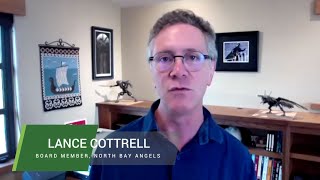
Lance Cottrell, Sasha Bezuhanova, and Ivan Ivanov share what separates good angel investors from bad ones. Don't invest too quickly or chase hype. Build a baseline through group deals first, then focus on strong teams, defensible models, and realistic valuations. Most angels need 20+ investments to see real returns, and the best ones act as co-pilots for founders, not just money.
Chapters
Hello everyone and welcome to our Founder Institute event on how to become a better angel investor. My name is Ryan McLeady and I'm head of global operations for the Founder Institute. Over the last 12 years, Founder Institute has launched over 5,000 startups across 200 cities with our mentor network of 21,000 mentors. And in addition to being the largest company creator in the world, We also recently launched a new venture capital firm accelerator program for VCs called VC Lab, where we help emerging venture capital managers launch their funds. And so this is very exciting because now we're not only the largest company creator in the world, but we're quickly becoming the largest VC network and VC firm launch program in the world. So all of that is to help serve the founders and the people that we, we serve throughout the world. And so if you're an experienced angel investor or ecosystem leader who supports startups, and if you're interested in launching either a startup accelerator through Founder Institute or a venture capital fund, you can visit fi.co/lead to learn how you can help. And we'll send you a couple follow-up emails after this, and you can also contact us with any questions you have. So let's jump right into the agenda for today. So in a moment, I'll introduce our investor speakers. We'll do live audience Q&A, and then at the end of the event, we will conclude with an optional networking event on Airmeet. So at Founder Institute, we're, you know, a big believer in trying to create as much synergies and collisions as possible. So we always run networking events after our webinars and sessions, just to give people an opportunity to connect with each other. Founders can meet other founders, investors can meet other investors, etc. So at the end of this, we'll send a special link in the chat for everyone to move over to Airmeet where you can meet other people who are here on the webinar today. Okay, so as a reminder, this event is live and the most important thing is that we get your questions answered. So if you have questions at any time, please feel free to post it here in the chat. Our lovely producer Megan is gonna send those questions over to me and then we'll ask the panel. So I'm excited because today we have an all-star international panel joining us. And so I'd like to first introduce a friend, Founder Institute mentor, Silicon Valley angel investor, and the chairman of North Bay Angels, and the founder of Feel the Boot, Lance Cottrell. So Lance, do you want to do a quick intro?
Yeah, thanks, uh, Brian. It's great to be here. Like you said, I have an entrepreneurial background. I dropped out of astrophysics to found a privacy company in the mid-'90s, and after I exited that, I moved out here into wine country in 2012 and started getting active in angel investing, you know, joined the screening committee, started looking at all the different companies, and then began getting involved in mentoring as well. And that's how I also made my way to Founder Institute. And yeah, feeltheboot.com is a website where I sort of am socking away all the startup advice. I think tomorrow I'm dropping episode 59 of that series.
Awesome. Yeah, we're excited. I love the content too on Feel the Boot. So definitely check that out. And thanks for joining us, Lance. So next up we have Sasha Bezuhinova, who is also a Founder Institute mentor. She's an angel investor, founder of move.bg, and also recently she's an investor committee member at the EIC program, which is the European Innovation Council. So Sasha, do you want to do an introduction?
Thank you, Ryan. Happy to be on this panel and Hopefully I'll be able to contribute, but a few words about me. I'm a business person and philanthropist, and I'm very much committed to sustainable social development. And also I'm supporting entrepreneurship and women in digital industry agenda. All this relates to seeds which I'm doing as an angel investor. As MOOBI-G was mentioned, maybe it's useful to say that 8 years ago I've decided to quit my professional business career and founded MOOBI-G, which is a platform supporting societal development by innovation in this disruptive transformative process in the world. And we do a lot on really engaging with the startup ecosystem, which is one of the biggest pillars of our activities. And because of my business background, I was having almost every week startups knocking on the door and coming for consultancy. This was unstructured at the beginning. When I started to hear, we have finished the money, but the team is so very very motivated to continue without salaries, I started to put some money into prospective companies and in a way entered the investment from the back door, if you want. Today, of course, I have a portfolio of about 10 companies where I invest in seed stage, mainly green tech, a few fintech companies, and I'm also LP in 3 venture funds. And as Ryan mentioned, I'm working on a European level as member of the investment committee of the European Innovation Council. I may share a bit more about this initiative, which is very impactful for the European and European-driven business. Thank you.
Thank you, Sasha. Yeah, that's really interesting. And I feel like we could do an entire event just focused on what's going on in Europe with all the different support from the government as well as the different funds that are being set up. So I'm excited to learn more. And finally, I'd like to introduce Ivan Ivanov, serial entrepreneur, investor, and founder of Ambionik. So do you wanna say hi to the audience and do a quick intro?
Yeah, happy to be here. Thanks for inviting me. I really enjoy having worked with the DeFi community for the past about a year. My background briefly, originally from Bulgaria, moved to Austin about 20 years ago. Career-wise, I've been through a variety of startups that cover web infrastructure, telecom, and more recently, ambient intelligence. I had a few decent exits, a few bumps, and learned a few lessons. Happy to share some lessons with folks that are interested in learning from mistakes so that they don't have to make them. In terms of angel investing, I've been involved in that probably about last 6, 7 years. Put money into about 20 companies or so. One exited, two had shut down, the rest are still in play. So I have to share experience with that.
Awesome. Well, I appreciate the time for all the panelists. And so let's go ahead and get started today. So while the audience puts their questions in the chat, I do have a couple of questions I'd like to start off with. You know, there's lots of information out there about angel investing. There's books, there's lots of content, and even webinars. So what I want to do with this webinar specifically, I want to dive into some of like the tactics and things that you've learned kind of on the front lines of being an investor, angel investing, that can help some of the investors in the audience refine their skill set and their craft as an investor. And so, you know, just to kick this off, Uh, and this is a question sort of for everyone, um, so feel free to jump in, but what are some of the common mistakes that you see, or maybe that you made yourself when you first started your angel investing career?
I think one of the most common mistakes is making investments too soon. I see people join our group and the first group of, uh, founders comes in, they present, they get super enthusiastic and they invest, and they don't have any kind of a baseline. And so the first thing I tell new members is don't make an investment probably for the first year. Get in the due diligence, learn the companies, but really try to get a sense of kind of what the range of quality is so that you can recognize the good deals when they come along.
That's a really good point. Yeah, you got to create that baseline. That's super important. Evelyn and Sasha, do you have any comments or—
Maybe I can share something that is more specific to our part of the world. Where the investment process is generally young. And what we see is that it became fashionable to invest in startups, and people that have free money, they want to go into this process. But because they have— they're coming more from a traditional business background, they want either to invest so that they control the company, meaning that they will kill this company or make it very difficult for these young entrepreneurs to continue, or perceive this as just a financial investment. So in my view, they know sometimes advising newcomers in angel investment. If you want to make fast money or for you this is only about return, don't become angel investor. You better invest in different financial instruments like stock options, or you may choose investing in crypto tokens, or join syndicate where someone else will take decisions for you. So there are alternatives, but if you perceive yourself as an angel investor, you need to be prepared to participate and co-pilot the development of this company, which is totally different mindset and attitude and involvement in this process. And that's a very common mistake that some of the new angel investors are doing.
Evelyn, what about you? What are some of the common mistakes that you see?
Yeah, I think this was a pretty good one. I'll just extend a little bit the whole notion of angel investing for folks that have not done it for a little bit. Often seems to be motivated by reading about or hearing about an angel investor who made a bunch of money that they put in a unicorn. And that's the end of the story that was heard or read, which is a tiny fraction of the full story. And these are kind of the wrong motivations because it's just, as Sasha just said, the ROI is not statistically anything closer or better than much safer vehicles for investment. As Lance mentioned, if you can actually dip your toe and spend a little bit of time with other angel investors and founders to get an actual sense of what it means to grind through a company and try to get it somewhere, you might develop an appetite to find a purpose in helping and contributing to some sort of cause. Just because you want to make the world a different place maybe and not so much because you missed out on some major exits which is kind of the wrong motivation.
Yeah, you know what? You all kind of touched on something pretty interesting here, right? Because there's different types of angel investors. There's someone who's like either part of the startup ecosystem, maybe they're a former entrepreneur, they had an exit, they wanna give back and invest in new companies. Or you have someone that's like completely outside of the ecosystem that's heard the buzz of angel investing. They want to get involved because it's new, it's cool, it's really interesting. And so it's sort of like there's almost like different pathways that you can become an angel investor, and therefore you also want to figure out, you know, different ways that you can kind of engage in the ecosystem. And so I definitely recommend for the people who are outside of startups that don't have a lot of experience with startups as they're going in and trying to start their angel investing career, they should really try to get involved in the startup ecosystem somehow. I mean, there's so many programs and accelerators. There's lots of mentoring opportunities, like, in everyone's local city that I think it's important that you start kind of doing that so that you can, as Lance said, create that baseline, which will enable you to kind of spot better deals. And so, Anne here in the chat actually has a really good question. This is for you, Lance, and then the others can jump in. So Lance, Anne is asking, you know, you talked about baseline to kind of calibrate and figure out like what is a good deal. So in your opinion, like what do you look for in a startup? Like what is a good deal in your mind?
So I think there's, to me, really 3 big aspects. One is what's the team like? Do I believe that this is a group of people who can execute on the vision that they've got and be successful? Do I believe in the business model? Is this something that I think could be successful, that could be big enough, that can return? And then finally, is there realistic valuation so that I have an expectation of getting that exit multiple that I need based on the whole portfolio and the number of failures that I'm likely to have?
[Speaker:IAN_CASSEL] What do the others think? Evelyn, do you have any comments on like, what do you look for that would qualify as a good deal?
Looking at the comments, I'd like to pick on something that was mentioned there which aligns with my thinking. As I mentioned a little bit earlier, angel investing, kind of the background of that is, some of you may know, some may not, but apparently the term was used like 100 years ago, long time ago, for people who were trying to save and help Broadway shows survive. So that notion of, "Alright, let's keep the world a fun place instead of only focused on financial results," is a lot of what I still believe is the notion of angel investing. I'm not a professional investor by any means. I don't have the energy nor the interest to do the deep diligence that professional investors do. VCs dig very, very deep into spreadsheets and the performance before they go on to other factors in a company. With angel investing, very often we don't have that information because the company doesn't have that history and track record of any sort of results. So what I look for is something that I get excited about, something that I'm passionate about, whatever cause it might be. I don't know, lately in the last few years it's been ambient intelligence. Like, how do I help folks like my dad that are aging independently, you know, go from day to day with fewer risks and with less dependency on people showing up? So find whatever is— whatever you're passionate about currently, try to— but you're not personally in the position to start a company for whatever reasons, it's pretty difficult. To do that, but if you don't have the energy, you don't have the time, but you have the money to somebody else who is taking that humongous risk to start a company, I mean, help them however you can with the money, with advice, whatever. So that's my picking. It's not at all what a professional VC would tell you, like how to pick a company correctly.
So create a baseline, figure out what you're passionate about and what you're good at and find people and companies that fit that criteria. Via it. And there's also, like you mentioned it, like, you know, there's a network component, right? If you're an expert in energy and you're looking at energy startups, well, you could probably help make introductions to corporate partners, other investors in the space. Sasha, do you have any advice or feedback for us?
Well, just to continue to the comment of Evelyn, I'm personally investing into ideas that I find interesting perspective. Sometimes they are very risky still, and the challenge and the provocation here is really to help those. And of course, it's driven by smart team. Team is very critical. They should be people that I personally like and believe rather in the personalities. And of course, in their out-of-the-box thinking and what they have put together as an idea or prototype. Then going through very formal due diligence, of course, you check the main pillars like IP, es, no, what is the history, the financial status of the company. But not as deep. And for me personally, the challenges that I like is to be part of building the corporate culture by not interfering too much and keeping authenticity, but empowering those people still to go the right way and not to make bigger mistakes that of course can be avoided through someone with an experience. And yes, a good deal for me, just to close with a sentence, is a good idea, a smart team, and people that I personally believe in that can be good partners in accordance to help together with them and help them to develop in a field where I can add value to their business.
So that's a really good point. And I actually see a couple of questions here in the chat around geography. So let's go there for a moment. Stanzio is asking, as foreign investors, what's your personal view about investing in startups in Latin America? There's another question here about what are your views of investing in Africa? But I think this is like a greater conversation around like, how do you as an angel investor view geography, right? Do you care? Do you not care? Is there an advantage or a disadvantage to investing internationally? Lance, maybe let's start with you. How do you view international investing and do you have any kind of geographic restrictions for your angel investments?
So our angel group is geographically restricted. We focus in the Bay Area and since COVID we've opened it up to US, but the group does not look at international investments. I think there's a very strong bias to being able to reach out to them, not too many time zones, things like that. Personally, I don't know enough about many of these other countries, what their economic situation is, what the business dynamics are in those locations to feel able to have the kind of judgment that I have on companies that are more local that I'm more familiar with. I have been doing a fair amount of international investing, but I'm doing much more more of it through syndicates or funds or things like that, where I'm relying more heavily on someone else's research and experience. And then sort of looking and saying, yeah, that makes sense. I buy the argument they're making and jump in. I'm also taking more of a portfolio approach internationally. So I'm making more but smaller investments because I feel less able to sort of make those high conviction bets with larger dollar amounts.
Yeah, that's a good point. And Sasha, for you, I mean, you know, you're in Europe, so are you looking at U.S. companies at all? What's your international exposure right now?
Um, biggest part of my companies are logically based in Bulgaria. I have one investment in Germany and one in Austria for the time being. But all of them are companies that have developed a solution that has a global potential. So part of the process of helping them growing is to advise them or to engage from my ecosystem friends and partners, people that can help them to go internationally. So in that respect, obviously Founder Institute is a very good network where different profile of mentors, investors can help each other as a community, not only with deals but also with expertise in the case. And I know Adeores is doing this, of course, with you as a team. But for the time being, Latin America as investing directly looks at least to me a little bit far because I don't have anybody to help me to understand the local context. If this is the case, no limitation to do it.
Evelyn, what about you?
I think there's a theme here. I'm personally spending more time with, naturally, with folks that are around me, you know, Austin, Texas area, US West Coast that I travel quite a bit to. But I'm obviously very biased towards startups in Eastern Europe and Bulgaria, particularly, right? The problem is that the time zone is pretty big and I'm not tapped into the day-to-day dynamics of the markets. So in the past, I've been fortunate enough to travel before COVID to get customers and make some friends in lots of countries around the world. So what I like to do is make introductions when appropriate to somebody who's angel investing in whatever region The startup needs help. And that's one of the reasons why I've been involved with Founder Institute, because I see the potential for this network to become a little bit more structured so that everybody can learn from the experience of a global network, but then apply their actions and their knowledge locally. You know, contribute in a meaningful way, not just with money but advice. Which is, I would say, just as important to startups trying to find their footing in the early days. You gotta know what the local dynamics are to be helpful.
Yeah, that's super important. And that actually touches on something that we teach our founders at FI, which is basically the earlier you are in your company's life, the closer your investors are going to want to be with you, right? Like maybe if you were like, a Series A company, US investors might invest in you if you're in Latin America. But for the most part, what we see in terms of trends is that your first round investors like angel round, pre-seed, seed are gonna wanna be closer to you geographically so they can understand that local context. So I think that's really important. And going back to your original point, Lance, that's how you create your baseline, right? Like if you don't have a baseline, I think it's a really good idea to kind of leverage other people, groups, syndicates, organizations that already have that baseline to reduce the risk. So that's a really good point here.
I think coming back to sort of— we started with advice for new investors— is getting into groups, getting other investors around you so that you can kind of learn the right questions to be asking, listen to what their opinions are of the companies you're talking to. And they'll just ask questions that you don't think of. I'm always— when I'm doing due diligence, I think I've got my full list of questions that I want to ask, and someone else will ask asked something really pointed and telling. I'm like, how did I not think to ask that question?
And it helps a lot. So kind of related to that, you know, there's some questions in here about, you know, how do you as an angel source your deal flow? Lance, you're in a group, so that obviously is a good way to do it, but are there other ways to like validate like where the startup is coming from? Do you take cold introductions or like, you know, I'm sure you get hit up on LinkedIn a lot, but like, tell us a little bit about where you find your deal flow.
Yeah, a lot of the deal flow is definitely through the North Bay Angels. I'm in a couple of syndicates, and so I get deals through there that I can either through the syndicate or directly invest in. And because I do so much advising and really like working with founders and helping them with their companies, I'm pretty responsive to cold intros. So I do get hit a lot. But occasionally one of those will be more than just, here's some advice and feedback on the deck. I'll actually be interested enough to be wanting to get into due diligence and look at them as a potential investment.
Sasha, what about you?
In my case, I'm a very active member of the ecosystem and I'm not looking into this only from a lens of potential interesting companies to invest in, but I'm involved in lots of development activities for different type of communities and for ecosystem, for policy initiatives, for sourcing different opinions. We have the whole if you want, holistic program. And naturally also we are very close connected with the senior people within this ecosystem. Many of them are either investors or have venture funds. We collaborate on a regular basis around how to build the overall environment for, for the innovative business. And people know me, they very often come new ideas and some of them where there is a match we would discuss possible investment and for the others I would potentially direct them to someone that is an expert in different field or is looking in a different type of portfolio but is, if you want, more natural process Honestly, cold calls are something that I would not pay big attention. Rather, this may come as a recommendation from someone else that I trust too.
Evelyn, do you have any input on like where do you source your deal flow?
Yeah, I think partially through structured organizations. I used to be a member of Central Texas Angel Network for a few years. And then I was a member of and active in the local Capture Factory community. But then as I went through these networks, I realized that there are smarter people that are willing to help local startups. I kept looking for, okay, what is the next area where people actually need help that I can be of any use? And so I moved on to kind of taking more cold calls and helping folks actually reach out to me for help that are not in an area that is with high concentration of smart investors to already help them. Like, the Bay Area obviously has a ton of talent there to help startups, right? So they're not in trouble for any time soon. Austin seems to be an area where there's a ton of smart investors to help people. So I keep asking myself, what is the next area where I can actually make an impact where people need help and they don't have it readily available? So if I had been lost, you're a good source of startups that are smarter, trying to make a difference. And Sometimes they're in areas that do not have access to too much help. That's kind of—
So let's talk about impact, 'cause I see some questions in here. Mike, who's one of our local leaders in San Diego, he asked that for investors that identify as impact investors, how are they measuring that impact and do they clearly define it in their investment thesis?
Impact's very subjective. Ask a professional investor, there's gonna be a very, very strong focus on numbers, on returns, right? And like secondary, there may be something in the mission statement or whatever about the intangible impact, but that'll be secondary. And then as you shift towards maybe angels, that balance is very different.
Yeah, I agree. I think it's very idiosyncratic. I mean, some of the funds have very clear sort of mission statements around, we require a female founder or CEO or minority or whatever the criteria they are. It's got to work to benefit the third world, it's got to be a benefit corporation. Angels, I think, tend to be much more loose, although many of them are heavily focused on areas of impact of interest to them. But I think even where they're not explicit about it, I have seen that it almost always— there's an implicit bias towards impact. So that if you have a couple of companies that are presenting to you that are roughly equivalent in sort of business opportunity and value, but one of them is the next Candy Crush and another one is doing some sort of medical device that's addressing some unresolved issue that'll help a large population of people, the investors want to go there because that's the thing you're proud of. You want to have this impact. You're going to be excited to tell people about your involvement in doing that kind of thing. It makes you feel good. And so there's definitely a bias among the angel investors that I know towards those kinds of companies.
Now, I've heard a lot of different advice when it comes to impact investing. And one of the sort of I guess, truisms that have come out of that is that impact investing is great, but you need to make sure that the business has a solid foundation, it can still return, you know, the investment, and that it's a good business deal. And the impact part becomes like this, like almost like the cherry on top. It's like this really good thing that you can feel good about, but you wouldn't necessarily invest in an impact company where there's no chance of there being any kind of financial return or success.
It is an investment. And of course, if the company isn't going to be successful enough to do that, it probably won't have the impact either. If you're not there and functioning and growing and having size, then you're probably not moving the needle.
Yeah, I think that's a very, very big point versus just charity donations. The fiduciary duty that a founder has towards investors puts a really strong meaningful legal pressure on thinking about sustainability. If you really mean to make an impact, you gotta figure out how to make it sustainable. So voting, investors voting with money and putting, you know, doing this legal paperwork, okay, I'm financially responsible, make sure you actually do what you say you're gonna do.
Maybe to add on the topic, I think that business is going in generally into more impact direction. If you look even the traditional big global companies, they start to introduce themselves, to self-identify themselves towards the public through the impact they are doing. And this is not part of their CSR or marketing policy, but it's just a response to a world that is under very big transformation process where there are many, many challenges before us. I personally started as an angel investor with a focus on fintech, as I've mentioned, but today I'm investing, and that's my rational decision, exclusively into green businesses. Why? Not that the return on this investment is higher, But because I find this is my commitment towards limiting the challenges related to climate change and helping those businesses, of course, you have a business framework, you have green tech agenda, you have policy component that is checked, you have the drivers that make one business successful. But my, let's say, understanding is that if I'm investing not only my money but also my business knowledge, my authority and influence into direction that those businesses that are working for addressing, solving this big huge challenge, this is at least from my perspective more contributing than if I go and invest into let's say one very promising deep tech computing business which is my choice. And I believe that things are going into that direction more and more not only related to climate. But another perspective is that I follow some of the female syndicates, investment syndicates, and if you see what are the dynamics in those syndicates, they more tend to invest into impact business that has an inclusion component or in educational businesses with relatively small return on investment But that's the, let's say, the focus to really help some of these challenging areas.
I think you bring up a really good point there, which is, you know, if you have like two equal startups, right? They're good businesses, good entrepreneurs, similar levels of traction, but one is doing good in the world and it will have an impact, and the other is maybe just doing something that can be, you know, increase efficiency in a process, B2B SaaS, that sort of thing, right? Maybe as an investor, you're more inclined to do the thing that's going to do more good. But if there's a situation where maybe you have an impact company and it's, it's not as strong as one of these other sort of normal, uh, like B2B SaaS companies, maybe you're less inclined because obviously, you know, the point is to invest to make a financial return. And so I think that's really interesting that you mentioned that, and, and that's actually a good argument for impact investing. right? And for also startups to weave that narrative. One of the things that we do as part of Founder Institute is we help our startups identify what those I-KPIs are, or impact KPIs, so that they're able to kind of measure and talk about that impact. Because again, it's not that the investor is going to go and invest in them just because they're an impact company. It's going to be a good deal, and on top of that, there will be some measurable level of impact that can help get the deal across the cross the finish line.
Yeah, I tend to think of impact as being just a slight thumb on the scale.
Yep, exactly. So, Mike, you know, your questions— going back to your question about, like, you know, how do you define it? You know, what should you include in your investment thesis? That seems to be definitely focused for, you know, people who are raising funds and what would resonate with an LP who is investing in a fund. And so, you know, it's a little bit more nuanced than angel investing, but I think there's a Good distinction there. One other question here related to impact is around like, you know, how do startups identify impact angels? And they specifically go on to say that they're a social enterprise and they're looking for people who are interested in finding those impact investors. So do you have any recommendations on places where a startup could find an impact investor?
I think that people who are actively, you know, that is their core thesis usually make a very— make that very prominent. So if you go on to looking at angel groups or startup funds, or if the investor has a webpage about their investment activity, if they're focused on impact, that's gonna be front and center there. So some Googling around, you can also look on, you know, AngelList or other sources of data for what other investments have these people made, look for impact companies and see who their angel investors have been. And that may give you a way of locating people who are interested in those kinds of investments.
Evelyn?
I mean, that's a fair way to go about it, right? Even if you find angel investors that can put money in a similar company, if they're not active right now, they may make introductions because they care for the cause. And that happens quite often. Somebody's too busy with or not investing right now, but they have a bunch of friends who are. That's a good way to source. Obviously, FI is a good network and there is now a growing interest in the crowdsourcing for crowdfunding. You know, portals and platforms that allow you to do this type of outreach. So they're starting to become more effective. You know, what I've noticed is becoming a trend that is also meaningful from what I see is, as you get a little bit of traction, spread the word to your customers to let them know that you are looking for angel investment. Make it part of the outreach, make them part of the journey. Maybe they'll reach to people that they know who want to vote with and I'll support you with some advisory money.
So let's talk a little bit about the startup ecosystem. There's a question here of what advice can you share on developing an angel investment ecosystem or framework in a city that has very little or is underdeveloped in angel investing?
Maybe I can share what we did Because as I've mentioned earlier, the angel investment culture is relatively young in Central Eastern Europe in general because we've been living in different economic setup until a couple of decades ago, and the experience from Silicon Valley is not automatically transportable. I remember we've been on a mission in maybe 20 years ago, uh, going to Plug and Play, uh, to, uh, really evaluating, uh, with the help of Stanford University how this is organized. But obviously, uh, this was not replicable, uh, directly because of the specific context. And what we recently did was to create a couple of formal/informal meetups among angel investors and to have a formal training program for them where we invite someone Obviously, online, this is easy, what we are doing today, but we've been doing also personal invitations of experienced angel investors. And we organized a couple of events with networking afterwards, and that's one way. Second is after every of those topical events, We are helping this community with the respective more structured materials where they can study for themselves. And the Natural Angel Investment Group is organized around the VC funds where obviously they are LPs or co-investors that are also part of this process. That's my experience, and we also are collaborating with a couple of pan-European angel investment networks where we also source experience, primarily not so much deals.
Is there anything else that the other investors on call would add?
It's a really, really significant and meaningful problem to talk about and do something about. There is absolutely no doubt that As much as it's discussed, the concentration of brainpower and ecosystem and money is absolutely not uniform and anything close to the distribution of talent around the world. You probably have the Bay Area and then you have somewhere Austin, Boston, and then East New York is who knows where. But the distribution of talent is very different than that. And bringing investment advice and capital to these areas where talent exists and problems exist but experience doesn't is a very meaningful and ongoing topic. I don't know what is the solution, but I think on this call, people that are joining are trying to do little steps towards figuring that out. AFI obviously is helping a lot with networking everybody.
Yeah, for local ecosystems, I think it does come down to having a critical mass. That if you don't have enough people who are interested in doing startups, enough people who are at a point in their career where they could be angel investors, could be advisors, then it's gonna be really challenging. But I've seen people be very effective when there's kind of enough interest, but the infrastructure doesn't exist yet. With setting up events and promoting them, you need someone who's really a big networker and good at generating excitement, putting on cool events that will bring people in that they'll talk about, that they'll share with their friends. And they've been able to spin up fairly vibrant communities in a reasonable amount of time, but it's a lot of work.
Yeah, those are all really great points. And from Founder Institute's perspective of ecosystem building, you know, it all really starts with like building the startup ecosystem, right? You have to have deal flow in order for there to attract angel investment. And you're seeing a lot of interesting things happening right now in emerging markets such as Africa. And there's a lot more activity that is going on. And so there's, there's a lot of great material out there on ecosystem building and sort of the theories around it. But at the end of the day, one of the best things you can do for building that ecosystem is really just starting off with like creating companies for that ecosystem. You got to create that, that side of the market. So a couple other questions here. I know I'm being mindful of the time, so let's do a few more here. There's a question here around like selling out of like an investment early. So, you know, specifically they're saying if the— it's a lagging investment, Would you ever sell it to free up capital? And what does that process look like?
Sounds like somebody got involved in angel investing for the wrong reasons. If anybody's looking for exits earlier than 10 years or exit at all, definitely got involved for wrong reasons.
Yeah.
I'd say if an investment's going bad and you want to get out because you don't think it's going to pay off, getting someone to pick up your shares is going to be really, really hard. The fact that you're trying to exit is a huge indicator that I shouldn't be buying. And so my expectation is that these things are illiquid, as Evelyn said, on like a 10-year time horizon or more sometimes, and that the vast majority of them will go to zero. And so that really informs the way you have to invest. You never want to put most of your portfolio in startups or even most of your startup investing in any one startup. You need to be planning to make, I think, a minimum of 20 investments over several years to have statistically reasonable chances of having a decent return. And from one or two of those companies will generate almost all the return, but a priori, you don't know which those are. But trying to unwind them and expect to get some money back out of the ones that aren't performing, I don't see it happening.
There's a rule of thumb out there that if someone wants to buy your shares, it's because they think it's going to increase in value, right? So if someone's coming to you wanting to buy it, that's probably— that's right.
Uh, in my experience, this is, uh, rare. This is very often technical, and, uh, either people sell early their shares because of private reasons, they just need money or because of restructuring of the cap table, where eventually another investor is buying out, or there is an exchange. It is, as it was said already, this is not a typical case where angel investor would sell early with premium. That's not the philosophy of this type of investment.
Makes sense. So I just want to remind everyone, because I see like there's a lot of people who are connecting here in the chat, which is awesome. We're going to continue the conversation on Airmeet in a couple minutes. So we'll put the link in the chat, but they'll enable you to share your cameras, meet other people in the ecosystem. And so feel free if you have time to stick around and we'll make sure that you get the right link for that. In the last couple minutes here, let me just ask one last question to the panel, which is what is the one last piece of advice that you have for fellow angel investors here who are watching this event? Maybe Evelyn, let's start with you.
You know, prior to this call, I tried to make a few notes to concentrate the things that we can talk about. Probably for this particular question, which I thank you for asking it, would be to encourage angel investors to share with their founders knowledge about their mistakes and failures. I think I hear too often from founders that what investors and angels want to talk to them about is kind of brag about their success and their, I don't know, how great they are to be part of a team, to join a team, but they rarely hear true stories from hard-learned lessons like mistakes and failures, which are very important. There's this notion of survivor bias. It's a scientific thing, but I think it's very strong in the startup community. Everybody talks about the the successes, but there's so much missed learning opportunity from the failures.
Lance, what about you? What's the one last piece of advice you would want people to walk away with?
Yeah, I think you want to invest in companies that you can have an impact on beyond the money you're investing. Uh, you know, that way you, you have an ability to influence the probability of success of that investment. Because you're coming in early, you can contribute. And make sure you're investing in people that you like. If this goes well, you're probably going to spend a lot of time with them over a lot of years. And if there's a chemistry there, that's a huge amount of fun. I describe angel investing and advising as all the fun of doing a startup without the 100-hour work weeks. But still, you're going to interact with these people a lot on an ongoing basis. So make sure that these are people that you enjoy, that you think are ethical, that, you know, you want to be around.
Yeah, that's solid, right? Team, team, team. So Sasha, what about you? What's the advice you want other angel investors to walk away with?
What maybe I can add to what my colleagues on the panel said is really when you invest, perceive yourself as copilot, as somebody who is part of the team, who really care about the business, And yes, you have put money and you spend some time, but it is all about growing this company to a success. You came in the picture so early, eventually, that this notion of being one of the builders is very much satisfactory and motivating about this very often young that perceive you not only as a role model, but as an investor, but also as a role model. And this has multiple positive effects. And I would recommend to the angel investors to really jump into this investment journey with this attitude. That's at least my experience and the experience of of successful investors around me.
Very cool. Well, so just to wrap up here, you know, this has been a really incredible discussion. Thank you, mentors and panelists, for joining us today. Before we wrap up, I'd also like to remind the audience that if you are an experienced angel investor or an ecosystem leader in your community and you're interested in launching a startup accelerator that can help you with your angel investing career, go to fi.co/lead You can also follow up any of the emails that we've sent you and ask questions about it. But we're currently scaling globally and we're looking for more leaders who want to help run the Founder Institute Accelerator to build your local ecosystem. So this is recorded. We're going to send out the recording in the next 24 hours. We're going to go ahead and put the networking session on Airmeet here in the chat, and we hope to see everyone there. Thank you so much for joining us, everyone.
Thanks, everybody.
Thanks. Great questions.
Thank you for inviting us and having a chance, hopefully, to contribute.
Yeah, this was great. We'll do more of these in the future, so excited for that. And I'm going to go ahead and leave this session open for another minute or so, so everyone can move over to the Airmeet and get the link. Mentors, feel free to jump off the line whenever you're ready. Thanks everyone.
Thanks, Lance.
Ciao.
Ciao.
Bye-bye.










