How to Become a Leader in Your Startup Community
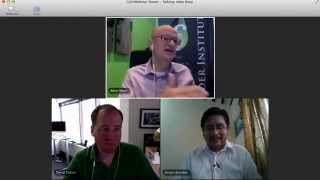
David Cohen from Techstars and Sergio from Founder Institute explain how to build leadership in your startup community. They outline Brad Feld's four pillars: leaders and feeders, a 20-year commitment, inclusiveness, and substantive activities like accelerators and events. Start with low-effort meetups and spend about 10% of your time on community work while building your own startup.
Chapters
We've got essentially 3 people here, myself, a venture capitalist and startup ecosystem builder, David also works in investment and ecosystem building, and then an actual ecosystem builder with Sergio. So I just want to give you guys a big round of applause because your initiatives around the world are super awesome. Well done, guys. Before I jump into questions and stuff, let me let you add something about your own backgrounds. David, do you want to just say something that I might have overlooked in my 1-second intro?
Sure. Great to see you guys, as always. Yeah, just, I guess, a little background on me. Serial entrepreneur, kind of come from that operating side, technical background, turned angel investor. Started TechStars in 2007, which is now operating primarily as accelerators. There are 18 of them that run a year in Europe and the US. And then, yes, as you mentioned, through Startup Weekend, now sort of hoping to inspire more entrepreneurs around the world to get educated and go build companies. And then, as you mentioned, also have a series of venture capital funds around TechStars today, about $300 million that we manage.
That's called Bullet Time, right?
It used to be. We call it Techstars Ventures now. We decided to take advantage of the brand a little more directly. And you know, we do most of our stuff that comes out of Techstars, but we're also early investors in other companies that weren't in the accelerator—Twilio, Uber, companies like that—but primarily targeted with that capital at companies that come through our accelerators today.
Sergio, add some color to your background as well.
Yeah, thanks, and thank you for the opportunity. So my name is Sergio. I'm one of the Global Founders Institute directors. I'm co-leading the efforts to run the Montreal chapter in Canada. Originally, as you can hear by my accent, I come from Bolivia in South America, and I've been living in Canada for the past 20 years. I'm a 5-time entrepreneur, never launched less than 0, a unicorn, but still I managed to launch 2 technology-based startups, one in e-commerce and the first mobile payment company in Canada. Also some non-tech related companies, very wide, like a meat packing plant, an ostrich farm, you know, a handicraft manufacturing facility. And you know, right now I'm also, besides my work in Montreal, I also mentor entrepreneurs in 3 continents, I mentor for startup accelerator programs such as Momentum Accelerator, Founder Lab, Startup Bootcamp, AngelHack Accelerator, Startup Peru in Latin America, and for the fun on weekends, I also facilitate Startup Weekend in Latin America and Canada.
Not sure if you can hear us, but we can't hear you, Adel.
Nope. No.
Can you hear me now? Yeah, you're good.
All right. Sorry about that. We got 4 topics we're going to cover today. So first, mentorship. What is the importance of startup mentorship? How you can help startups in your community, the types and programs, types of tools and programs you might recommend, and how you can get started. As an individual in your community. Let's start with mentorship, right? So, I mean, all three of us have been mentors, right? And, you know, you— and so you have experience mentoring companies. What would— you know, if someone's on the call today, and I'm sure there are tons of people on the call today that have mentorship experience but want to know how to do it better, um, What were some of the tips that you could give where someone could get engaged with the community, start mentoring, and have a big impact? We'll just go in sort of right to left, or why don't we—
David, do you want to go first, and then Sergio? Sure. Actually, I wrote a blog post about this a while back that's gone around a lot called The Mentor Manifesto, and it talks about how to think about being a mentor. I think too many people assume that mentor means you're on some kind of pedestal and you're this like, you know, perfect being that tells you what to do, tells entrepreneurs what to do. And I think actually, you know, just the opposite is true. I think everyone in a community is a mentor and everyone has something to learn, right? And so I may be an expert in something and Sergio may be an expert in something else. We can teach each other these things. And so I think if everyone gets in the mindset that everyone in the community has to be a mentor, that that is the secret weapon of sustainable entrepreneurial communities, that there is this culture of helping others with what you know and sort of giving first and getting back as needed from the community. So I think that's very important. Obviously, there are great places to engage, you know, through programs like we all offer, you know, Startup Weekend, Founder Institute, you know, TechStars. StartupNext and so on. I mean, there's so many opportunities to engage as a mentor, and really it's just about getting out there and trying to be helpful with what you know in the community.
So you don't have to be some storied super mega entrepreneur to be a mentor. You're saying pretty much anyone can be a mentor. I mean, would you say there's maybe then a difference between, let's say, a mentor and an advisor? And then I'd love to hear your thoughts on the bolder thesis before we jump over to Sergio?
Sure, I mean, in my parlance, you know, a mentor is someone who gives. They're just trying to be helpful, and there's no expectation of return. It's not transactional. An advisor, in my language— and we all use different language, it'd actually be great to standardize— is someone who's probably, you know, being compensated by the company in some way, you know, maybe has some options in the company or whatever. I do think obviously there are sought-after mentors who have specific experiences. And we do filter the mentors that we allow to engage at different parts of the ecosystem that we create, just based on how much they've helped companies and the ratings they've received and what they've actually done. So to be a mentor in a Techstars accelerator, for example, is a higher level than being a mentor at a startup weekend. It's just the amount of feedback we get from the companies that and say how much those people are helpful, and we track that and try to get them helpful at the right stages. I, for example, might be a really good mentor at helping companies raise money, right? I've helped lots of companies do that. I'm probably not the best mentor at, you know, how to manage 100 people. I can tell you something about that, but I'll tell you it's not my expertise. And I think the best mentors understand their strengths and weaknesses. What was the second part of your question, Mateo?
Oh, the bolder thesis. You know, why don't we come back to that and let— because you did it. You threw a lot of great stuff out, so we'll come back to Boulder Thesis in a moment. Sergio, do you want to comment on what David was saying about different types of mentors, advisors, and your thoughts on how people can jump in?
Yeah, so I think that's kind of true for some markets. I would say some sophisticated markets. You know, I remember when we started in Montreal in Canada and also in Latin America, you know, I opened Paraguay, German, Bolivia. So there were no mentors at all. So that kind of mindset to give first, to have subject matter experts with tech startups, were very few of them. And all of that, all the people in the community were asking the same kind of questions to those 5 to 10 people. So you need to build that kind of layer, you know, of first entrepreneurs. And if in your community you don't have that layer, That's a big challenge. So the way we solved that was to appeal to the diaspora, the expats. So in the case of, what are the Bolivian expats, what are the Paraguayan expats, the Canadian expats, sorry, my daughter came in. So that was the first step, you know, appeal to the expats to build that first layer. And then as David said, start with the hackathons, you know, have people with subject matter expertise mentor for the first time in hackathons, Startup Weekend editions. And once they get, you know, some kind of experience, first, second time, third time, then you start, they start moving ahead and then they are able to mentor real startups, real companies. But that's a big challenge with like emerging, emerging economies.
Yeah, the first time we, um, opened in Colombia the country of Colombia, we had in Bogotá, we invited all of the top CEOs to lunch and they had never met one another before. So, you know, not only were they not mentoring, they really didn't even ever physically— they knew one another because they were written about in magazine articles or newspapers, so they knew of one another, but they had never actually physically met. So that's a good point that in some ecosystems you actually need to physically introduce people to the concept of mentoring, which is a good segue into the Boulder thesis, right? So Boulder, David, is not like a big city with like tons of technology companies, and you have transformed it into a thriving startup hub. And maybe you can talk to us a little bit about that. And while he does, if you have questions, please let our team know and we'll try and get them answered. Right now, again, we're focused on mentorship, but please ask any questions in the audience as well.
David, on the Boulder thesis? Yeah, thanks. So, you know, I think that the most definitive work on startup communities and what it takes to build them over time, I think that's what the people who are on this webinar are kind of interested in, is how do I make my community better? That was why I started Techstars in 2006. It was, I want to do angel investing better, but really I want Boulder to be much better than it is. I don't say we're trying to build the next Silicon Valley. That's silly. We're 100,000 people. We're not going to beat Silicon Valley. We're going to be the best Boulder we can be. For those that don't know Boulder, it's a small town in Colorado. It depends on the month you look, but either number 4 or 5 in the country in venture capital now, right? Most of that flowing into the little city of Boulder, not the big city of Denver, in the IT and software space. So, and that's what we're focused on. So in this book that Brad Feld wrote called Startup Communities, he lays out something that he calls the Boulder Thesis, which is simply observing over a 20-year period how Boulder went from, you know, a place that, you know, people would say, well, you can't do a startup there, to a place that people say, oh yeah, you know, we know lots of people there and we understand that, you know, good companies are built there and we have companies going public, right? I mean, it's obviously very vibrant now, and people use it as a bit of a case study because they know they can't be Silicon Valley, right? But perhaps they could be like Boulder, right? And so we tried to help them understand what had happened here. And there are kind of 4 components to this Boulder thesis. I'll give you the Cliff Notes to the book. But essentially that you have the idea—
Can you just say for everyone's benefit, just that it's Brad Feld and the book is— Start-up communities. Okay, so this is a great, you know, we've read it, we have copies here, it's definitely an excellent thing. So cliff note it quickly and—
Yeah, so you know, the idea is this kind of 4 central points to this thesis of how to build up a start-up community, and obviously the book goes into much more detail, but you know, there are 2 types of people in the community, that's the first concept, there are leaders and feeders. The leaders primarily have to be the entrepreneurs. So as an example, in Boulder, when I started TechStars, it was entrepreneurial. I wasn't a VC, I was not a government agency, I was an entrepreneur, entrepreneur trying to do something to help other entrepreneurs at a meta-level. You then have the feeders who are people like government agencies, universities, capital providers, right, that can help the leaders, right, need to support the activities they're doing by funding them or whatever. But if you want to create a better startup community, The central point here is don't go create a government agency. Go get the entrepreneurs doing stuff and then support what they're doing. So that's the first point. The second point of the Boulder thesis is take a long-term view. It's going to take 20 years from today to make it better. And so if you ask me how long am I going to keep working on the Boulder community, it's 20 years from now. It's been 20 years since the first time I ever thought about it. It's not going to happen in a couple of years. So do things that will have impact 20 years from now or 10 years from now. That will help. Third, you have to have a philosophy of inclusiveness. You have to enable people to engage in the startup community through different mechanisms. We're talking here about the mentorship mechanism, but if I'm an entrepreneur that, you know, or a would-be entrepreneur, I have to have ways like the things that we all provide to engage as well if I want to become a new venture firm, I'll sign up to teach them how to do it, right, even though they're going to be a competitor of mine. And so inclusiveness is very key. And finally, fourth, you have to have substantive activities that engage the entire entrepreneurial stack. Things like accelerators, right, things like Founder Institute that allow both the entrepreneurs, the service providers, the mentors, and the investors to engage together. Rather than cocktail parties where they hand out awards, that's not real engagement. We want to work on companies together, we want to build things together, so engaging that whole stack is the fourth piece.
All right, so two of your last points were inclusive and engagement, and Siddharth is asking from India, some countries like India people are more competitive than collaborative. And I see this all the time. I see it in Spain, I see it in— and it's sad, right? You literally see like two people trying to have startups, like with knives at each other's throats. And you're thinking, you know, why aren't— and I mean, Sergio, maybe we'll give you a shot on this one because I know you've seen it in Montreal too. There's a lot of places where they're the same goal, working in the same city or country, and all they want to do is take down the other guy rather than help, and the rising tide floats all boats. It's called a zero-sum game mentality where there's a finite number of resources, so if you take half of them, then there's only half left for everyone else. If you take 75%, there's 25%. What David's talking about is a non-zero-sum game theory where the more people that help, the bigger the market gets. So Sergio, do you want to jump in on that a little bit?
Yeah, so it's, it's part of like growing the ecosystem for the first time, you know. We always talk about being a first-time entrepreneur But nobody talks about like being a first-time mentor. There's no guideline how to be a mentor, you know, to build your community. And for the same thing, there's no kind of for first-time startup community leader or first-time government trying to build a community. So, you know, people try to implement policies, people trying to implement programs, and you know, when they see a competitive program arriving to the market, They are afraid. They are afraid of competition, they are afraid of losing, you know, the edge or the power to control the community, and then because of that fear, maybe they are scared, you know?
Well, governments are super competitive, you know, if Startup Chile comes out, then like Startup Colombia has to come out, then Startup Peru has to come out, it's like, and they definitely do not collaborate, you know, they're That's funny, it's not just the programs, it's the governments, it's even the entrepreneurs themselves are super competitive. Do you want to add anything on that, David? Like, how do you break the logjam of this zero-sum game thinking at every level in some of these new ecosystems?
Yeah, and as we start to operate in more places around the world, we see the same phenomenon, right? I think the mistake is that the these government agencies think they're the leaders and they're actually the feeders. I think it's fine, it's good, it's good activity, but if they're not going to fund companies that are interesting who go on to build the community over a long period of time, it's just spending money and it doesn't amount to a great startup community. I think Startup Chile has been an excellent example of this. A lot of money poured in, probably some good results, but also a lot of startup tourism going on where people go there for the money and then bounce to wherever they're going next. that's okay, that builds connections to the community, but in and of itself is not the answer. We have to support the entrepreneurs, and as far as the 0 to 60 problem of getting the mentorship community off the ground, there's always going to be entrepreneurs, that's the easy part, right? People who want to go change the world and do stuff. Not having mentorship and capital, right, which are tied closely together, can be a big limiter for the community over time. So how do you get that going? I think the answer is once again like many things in entrepreneurship, counterintuitive. You need to get people from your community embedded in communities that are already working. Meaning people need to go and participate in Silicon Valley or Boulder or New York or London or wherever where it is working. They need to experience how people in the community give first to them, how they just help. And don't ask for anything, they provide mentorship, they don't view it as a zero-sum game, and that is a big part of why it works. In turn, those entrepreneurs will become experienced and successful, right, and they will go home, right? And so this idea that we only want to fund people that are here, even though we have no mentorship and not much capital, to me is silly. Like, let's fund people no matter where they are that have ties to here so that they'll ultimately come back and know how to provide mentorship the right way, know how to build a startup community because they've experienced it, So I think that's a way to jumpstart it that many countries and locations don't recognize.
Well, let me comment on that a little bit. So our view on that is somewhat similar, in fact substantively similar, but a little different. Let me explain. So in a lot of these countries and cities, and we do this all the time, we're in Afghanistan, we're in, you name a a place that you would not think we would be, and we're probably there. If you don't have companies, you can't have capital. If you don't have companies, if you have good companies, then it's easier to find capital than it is easier to find mentors. And you're exactly right about the level of sophistication. Our view there is that, you know, we'll fly in and, uh, people. So rather— but I think your idea is equally good if not better, which is take the people out as well. So you know, it's an in-out, right? You have to put some people in to sort of inject the expertise, but then you also have to take some people out and train them remotely. Plus we also try to train the ecosystem leaders, but it doesn't— if there's a fundamental zero-sum game mentality in the market You can train the ecosystem leaders all you want, and they're still buttressing against a hostile operating environment nonetheless. Minna has asked a question as well, and for those of you who have questions, we're going to be moving on in a moment to helping startups in your community, but Minna has a question about mentorship. You can ask questions in the questions tab on your dashboard. How to incentivize mentors to ensure they keep coming back? We gave Sergio the last time, so David, do you want to take the mentor incentive question? I'll take a stab at that one too. Why don't you go first, David?
Another very counterintuitive thing.
Well, you talk about the difference between mentors and advisors, right?
So obviously advisors are compensated, right? If you adopt my language, but I don't know that everyone uses the same language, but we're talking about people, how do you incentivize people to give their time? If I'm a successful entrepreneur and I've made a bunch of money, I have a couple of choices. I can go sail around on my yacht, and I don't have a yacht by the way, but I could. I could sail around on my yacht. I could just hang out and snorkel and sit on the beach, or I could try to give back and help my community and keep my brain engaged. Think of it as investing activity one way or the other, right? I think many successful entrepreneurs want to mentor, right? They ultimately want to give back. The question is how do you incentivize them to do it? To me feels a little backwards because the best ones don't care about that as a transactional thing. They want something, like that's human nature, they want something. But for many of them, you'd be very surprised what they actually want. Do they want to be paid? Sure, maybe, but again, if they've done really well, does that change their life at the level that you're going to pay them? Probably not. It's the ones that need to be paid that probably aren't the best mentors, right? Yeah. In many cases. So I think—
That's actually— wait, can we just stop on that for a moment? I would say that that's actually a very good litmus test if someone is a good mentor or not. If they're like very transactional, like I need equity, I need to get paid, it's probably not a good sign. Right.
And so, you know, I remember building the initial mentor set here in Boulder, you know, 2007. I had 100 meetings. I think one person said, what's in it for me? And I said, hey, you got this free lunch. And, you know, I bought you lunch. That's it. I don't need anything. And I was just done with that person. Right. And no one else asked me that question. But they, of course, being human, do want something. It's just not financial. It's not direct. What they want is engagement with other high-quality people. Right? Everybody wants that. I can learn from the other mentors. I can learn from these amazing entrepreneurs. They want to learn in general. Right? This is a great way to keep my brain engaged, and I have fun with this, right? And that's why I mentor. I also want to filter, right? Like, I'm getting bombarded by people who want me to mentor them. People like us are providing them a nice filter. Here are some good companies to mentor. So I think that's important.
Yeah, so Phil Libin, who is the longtime CEO of Evernote, literally said in a New York Times article— it didn't actually get printed in the article, ironically, but he said it to me multiple times and in multiple other venues— that mentoring has, particularly at the Founder Institute but in general, has not only made him a better CEO, it allowed Evernote to be the success that it is today because It's that process of thinking about the stuff that you do every day, both in ways to present it to others but in ways to help others, that makes you more critical about your own daily activities and ergo better, right? Plus you learn from the other people who are mentoring all the things that David said as well. You know, I'd like to add that, like, look, our view on mentorship is exactly as David said. 9 out of 10 people that we write offer to be a mentor with no, uh, in one email with no compensation, but we do give a small piece of every company in the program through what we call bonus pool. And if there is a big payday, so we've had mentors get $50,000 checks for showing up and talking for 3.5 hours, and those people, including CEOs of public companies, have told me it is the most amount of money per hour they have ever earned as an entrepreneur, which is both, I guess, good and bad. I mean, my hourly rate is like $2.50, so, you know, and I've had billion-dollar exits. It just means you work a lot of hours. So let's move on to the next topic. Um, how can you best help startups in your community? And Sergio, you've been doing this a long— you've been doing this very well for a long time. You know, what qualifications must someone have to start being a community leader in your mind? Is there something like that you say, oh, I was a community leader because I did this, or is it just the will and the desire?
I think that people don't talk much about that. I haven't seen any kind of blog post on TechCrunch or anywhere else.
Can you move the mic a little closer?
For me, the values are the most important asset for any entrepreneur. So, but coming back to the, to the Boulder thesis: leader, feeder. So this is very important for a startup community leader. If If we don't choose wisely leaders having strong values, say honesty, integrity, you know, willingness to associate yourself, building trust, sharing information, caring about the local culture, then we will kind of fail to build a good startup community because those leaders have to share those values to the entrepreneurs and it will bring, you know, smart people together. Like for example, have strong, like I like to work insane hours, I like to work a lot. So most likely the kind of people that surround me, I ask them to work insane hours. So I create this community. In Paraguay, for example, I have a startup community leader who's a big fan of corporate social responsibility, anything that has impact investment. And guess what? Now in Paraguay, we're popping up with startups, all of them having impact investment thesis, which is very much different than the ones that I'm building in Canada.
No, that's awesome. What do you think about the qualifications point? That was a great point, Sergio. David, do you want to add anything? Sorry about that.
I lost my mute button there. Qualifications, I mean, look, I think, again, different skill sets at different levels. I think this Mentor Manifesto that I put out, right, if people think this way, if they're willing to share the benefits of their experience, right, it's not, "Now you should go do X," but, "I did X and here's what happened," right? That's the subtlety. I think those people make the best mentors. And people who understand the direct experiences they've had, you know, versus I just want to comment on everything and tell you how you should do everything. These people shouldn't be running the companies. Their attitude should be, I'm going to share my experiences, give you some data points, and hopefully what they're sharing comes from actual experiences. I think often we see mentors who are just sharing their opinion but haven't done the thing. And as a mentor, I say, I don't know all the time. I don't know, but I know somebody that does know. Let me go get this person. I think that's a key. Trait of the best mentors.
But this isn't just mentors, this is also the leaders themselves. So I would say there's a lot, which is an interesting question in and of itself. Do you think startup ecosystem leaders need to have the capacity to be a mentor, or is there in fact a difference between the two?
Yeah, I mean, so I guess people would say I'm one of those people in Boulder. I mean, you know, I was an entrepreneur when I started trying to do this. Now I say, well, other people are the leaders, I'm just helping them be be successful, right? I think I have learned much more about how to be a good mentor by doing it over a long period of time and having, you know, 700 portfolio companies and, you know, all this activity, right? I had 3 of my own startups, but I've had hundreds of other people's startups, right, that I've now engaged either at the board level or as an investor. And so I think you can certainly get better over time. It's not like you have to get, you know, here's the threshold, for you to engage. You should not engage until you hit this threshold. I don't think that's the right model. I think it's try to be helpful with the things that you can be helpful with. I was angel investing. That's helpful, I hope. I wasn't, you know, going around telling everybody you have to do this, you have to do that. I was just trying to be helpful with whatever they needed help with. Over time, I learned, you know, patterns. I see patterns and pattern matching, and I could be a little more aggressive and a little more confident in the advice I'm giving. And today I'm very confident in a lot of the advice I'm giving, right? Or I know who the right expert is. So I think you evolve as a leader in a community, and I think everybody who would like to engage should engage at the right level at the right time. Right.
So I mean, back to the point, you know, I would say your thesis is, hey, anyone can do it, right? But you got to start somewhere and start with the skills that you have. Sergio says, you know, you should have good values, right? Like, and you need to be very reflective about what those are. And I would add a third point, that if you want to really start organizing and getting involved in the startup community, you know, really the two values that I would say are probably top of the list in my view are honesty and integrity. Right? Because you need to be honest with these companies, and I wrote an article in Forbes recently, you know, if you're just like, "Oh man, great job, great job," and they're not doing a great job, that doesn't really help anybody. It doesn't help them, it doesn't help you, it doesn't help the startup ecosystem, and you're just patting them on their back as they walk off a plank. Right? And then the The integrity part is, you know, if you're saying, oh no, I just want to help, but secretly you have this desire to squirrel away some equity or something like that, that's not good either. Because the leadership, a lot of people look to the leader, as Sergio was saying with the social impact group, the values of the leader get instilled in the community. So if you don't have a fundamental integrity in what you're doing and a fundamental integrity to who you are, and of course I believe most people do— then you know you're going to poison the well of your startup ecosystem. Ryan asked a question from the audience here, how do you balance the amount of time you give to the community without neglecting your own company if you're working on an early stage or a startup yourself, right? So if you want to help your startup ecosystem and you're a CEO, how do you do that without And David, myself, and Sergio, we all have lots of experience there. Raise your hand if you want to take that one. Sergio, David, David, you want to go? Go. Sure.
I mean, look, one of the things we tell all of our portfolio CEOs is you've got to be on another board. You ought to be engaging in the community. And of course, you try to balance that. Maybe have investors, right? They don't want you spending half your time out there helping other companies. But the smart ones want you spending some of your time because of the learning we talked about earlier. There's not a day that goes by that I don't learn something from one of these early startups or one of the— Me too. Right? It's just amazing learning, and you can take it back to your own company. So I don't know. I would say rule of thumb, at least 10%. Right? I mean, a lot of people do a lot more. But if you're focused fully on something, take 10% of that time and give it back to the community. We all know that we're not at 100%, we're at 130%. So you're only going down to 120%, right? Think about it that way.
Yeah. Adil, I will come back for the leader and continue for that question. You know, Gandhi used to say, "A good leader creates new leaders, not followers." That's kind of like a distinction. And there's a lot of people that think that they will be the king of the place, of the system. So that's a big mistake. So the kind of approach that I had in Montreal and the places where I used to travel for Startup Weekend, the message is very clear. I told them, okay, now you're trained, you're a leader, but your main mission, or as a mentor, as an entrepreneur, as a startup leader, is to recruit new people that will do exactly the same job that you're doing right now. So that's for me a good component to start, uh, for that community. Uh, what was the second question?
Oh no, Josh was asking like what percentage of time in a startup should you dedicate to helping the ecosystem, or how do you balance running a startup and helping?
So, you know, uh, you don't need like to spend like, I don't know, 10 hours per day usually, like office hours when you're mentoring entrepreneurs. Sometimes like 15 minutes. If you are brutally honest with entrepreneur and you go on deep dive, 15 minutes is like way too much time to help an entrepreneur. So you can say you can spend like 3 hours per week to start, count the number of entrepreneurs that you could be mentoring. So it's huge, it's enormous. So you have to have the willingness to do that step, right? And I think that you had to say the good, the good point to say, I find too many nice mentors that can spend like an hour, 2-hour long coffee meeting saying you're the nice entrepreneur, you're doing nice, you're nice, but you're not helping them. No, it's better to have less, 5 minutes, say, you know, I don't like this, this, this in your strategy, in your project, in whatever thing you're building, your company, the value proposition. Get back to work, you know, the 10-minute meeting is over, come back next week or in 3 days and come back with a new solution, I'm going to spend more time with you.
I meant my average meeting, not the average length of my meeting. The average length of my meeting is probably like 28 minutes, but my average meeting, the normal meetings that I have are 15 minutes long. Because if you dispense with the pleasantries and dive right in, You can get anything you want done in 15 minutes. I've done like multi-million dollar business deals in 15 minutes. I've helped startups raise, you know, hundreds of millions of dollars in 15 minutes. So you can do it in 15 minutes. Now, I don't think maybe you start at 15 minutes. That's like, maybe you start at 30 minutes, but bear it down. Let's move on to, you know, tools. And again, if you've got questions in the audience, don't be shy. There's a questions tab. I've got a team monitoring and we're here to help. So what tools and resources should you utilize as a community leader? So again, I'm thinking of now, you know, I want to mentor, I want to lead the ecosystem, I'm going to take some time from my busy startup, 10% of my time, a few hours a week. Now what are some of the things that I can do today or get involved in today or help today And you know, so obviously you've got things like, we can start with programs maybe to get going. Do you want to do, I mean obviously, you know, Startup Weekend is a great one. Maybe each of you could, and David you have a little more experience, so we'll go David, Sergio, and then I'll round it out. But how do you see the segmentation of programs in the startup ecosystem today? German.
So, you know, having seen so many communities, I mean, recognize that they are all in different stages of development. They all have, you know, some pieces in place and not other pieces. You know, I think the first thing is recognize that you are probably not alone. You are someone that wants to make this community better, right? So recognize that that's probably not an original thought. There is probably somebody else in the city or location that you are in that is thinking the same way. In fact, they are probably already doing stuff. And so the first step to me is go find those people, right? Go find the others in the community that are contributing time and effort. They're probably meeting. They're probably, in some cases there's at least a few people that are connected and thinking about this. And I would try to organize that group of people. If there's not a regular consistent rhythm in that group, create one, right? Because that's incredibly important to—
Organize the leaders, step 1.
Organized leaders, if it's already organized, join it. Don't create a new thing, right?
Can I ask a question on that before we jump off? I agree with that 100%. Is this like, do you see this as a Facebook group, an email list? I mean, what would you do? What would be the mechanism to communicate with?
Ideally, there's some kind of, you know, online communication channel, could be an email list or something, but I think face to face. Quarterly, hopefully a little more frequently. Here in Colorado we have a group called Startup Colorado. People from every city in Colorado come. We do it in different cities. We're thinking of it as a statewide ecosystem now because we have good communities that are local.
Can I add? I don't mean to interrupt you, but let me go back. I mean, that's a very advanced view, right? We just talked about a couple questions ago like, oh, screw them, they're competing, you know, how do you over— so I agree with organizing leaders, and we've even tried to do this. I know that UP Global tried to do this as well and failed. We tried to do it and failed. We're like, UP Global, you know, they must have done it badly. And then we tried to do it and we failed. So people just don't want to meet, right? That's right.
Remember who the leaders are. They're the entrepreneurs, right? We're simply a convener. We're not the leader, right, in my view.
So you're not saying organize the feeders in your terminology. You're talking about the leaders.
Let's get the people together who care about this, right, who are the entrepreneurs who are doing stuff, right, who aren't, you know, the government agency. Like, it's fine that they come and participate, but let's not let them take it over, right? Let's have the individual people who are the entrepreneurs Help us understand what's in place, what's missing, and in a lot of communities there's an awful lot missing, and then have people stick their hand up. I stuck my hand up here and I said we're not teaching enough middle school students about entrepreneurship. They've never heard of it when they get to college. I started going into middle schools. No one else was doing that. I didn't go do the same thing that other entrepreneurs were doing. It's not about, it's not a committee and it's not someone's appointed president of the the leadership council, right? It's just, what are you guys doing? What am I doing? What could she do? How do we all contribute in ways that help build up the community and understand what's going on?
You use some sort of Facebook group, email list, organize the entrepreneurs that really want to help. If the feeders, so to speak, the people who want to show up, great. Do you want to ask— we use Meetup, by the way, as a very effective tool for a lot of that and make sure they try and get together. You know, one of the other things we do, by the way, and I didn't mean to cut you off, is we create something called a Startup Ecosystem Canvas, which you've highlighted in the past, which sort of outlines all the different feeder groups. You can go see it at fi.co/canvas. After you get them together, what's step 2?
Well, understand what's there, right? Use something like the canvas, right? Understand what's there. Ask for people to go attack things, right? We need more bridges to places that have cap. We need someone to build relationships with venture capitalists in Silicon Valley, right? That would really help. And someone says, "I could do that, right? I know a few," right? And they start going out and doing that. It's just entrepreneurs do stuff. That's why they should be the leaders. They don't just talk about stuff. Right? The government will say, oh, I'm the organizer, I'm the leader, I put you on a room and I give you assignments, and all the entrepreneurs go, eh, right? That's not what they want to hear, right? They just want to go do something they're interested in. So give them the forum to kind of pick stuff to go attack.
And right. Let me add something on that. Maybe I'll be more structured and then get your views. So I sort of, I agree with that 100%. But I sort of see like startup weekend type program. Well, so you have startup— let me even use instead of programs, codes and/or descriptors, and then I'll put the programs in them. So you've got like pre-idea, which is people who want— thinking about something, maybe starting a company, but they don't have an idea yet. In that group You've got Startup Digest for events, Startup Weekend as an event, you've got Startup Grind as another event. Then you've got, alright, now I'm inspired but I don't know what to do, and there you've got something like the Founder Institute, which can take people who have somewhat of an idea but not much else. Then after that you've got, okay, so call that idea stage. Then after the idea stage, you've got the sort of getting organized and initial growth stage. There you've got StartupNext, which is a great program by UP Global to help people get into accelerators and incubators. Then you've got an incubator and accelerator stage, and there's no doubt in my mind that Techstars is probably, you know, if not number one, uh, fighting neck and neck to be number one in that space. So you've got the global leaders like Techstars, and there are tons of local ones popping up all around as well. And I would recommend that if a company is in that type of acceleration or incubation phase, and that's really sort of, I have a company, I have a product, but I need to go to a finishing school to get ready for a launch or funding, you know, apply to both the best ones in the world like Techstars and apply to some local ones too. It doesn't hurt. After acceleration, you've got the angel level, right? And Craig, you can just come back and fix me if I get anything wrong. There are local angel groups, local angels, rich people. You know, anyone with money has the potential of being an angel. Then after that, you have the venture capitalists usually come in. There's some seed stage— Venture capitalists are now— All this is like outline-y and there's a lot more subtlety to it, but there are seed stage venture capitalists, later stage venture capitalists, Series A, so there's a lot of specialization in there. But after angels, usually there's some sort of venture round, and if you get that far, Then, you know, there's after that, there's like later stage growth equity and IPOs, but, you know, I think for now we can stay to the venture level. Sergio or David, did I characterize that sort of inspiration, idea, post-idea, incubation, angel, and venture? Am I missing any big categories there?
No, just to add there on the community part, you know, especially for the audience or people in India or emerging countries, you know, the first step will be to go for some kind of startup drinks event, you know, socialize with entrepreneurs, socialize to know, to get to know people. And if you don't have, and it's like a— That's what they did with me. Now, the first good thing— there's a good program called Startup Genome that we use in Montreal in our communities 2, 3 years ago. So actually, to map the community, you know, use a map and start mapping who has been an entrepreneur, launched a company, what's the stage, what's the amount of funding. And then once you have this perspective on the map, on what kind of resources you have, what kind of coworking facilities, you know, then you can start thinking, okay, I want these entrepreneurs, I want to invite these people, I want to do this kind of meetup, organize a tour visit to this company, and then, you know, start— yeah?
What I was going to say is David's point was very interesting there. A lot of times, if you— in our experience, if you invite the feeders, they're competitive, but if you invite the entrepreneurs, That's a really smart lesson. I mean, I'm going to walk away— I learned something today. See, you learn things every day. I actually learned a lot today, but that's a big one. Do you agree with that, Sergio? Yes. Let's go. I want to— we got a few minutes left, so I want to— so now we got a lot of people on the video conference today who are, okay, what's the next step for me? Right, and we talked a little bit about organizing drinks, getting started, and if you've got other questions for us guys, don't be shy. One thing from Josh is, asks, hey, I'm thinking as a first step to start a founder/co-founder meetup in my community, is that a good idea? So maybe we'll start with Josh's question and then jump into like, How else might you get started? So Josh wants to start with the co-founder thing. David, do you want to add thoughts? Co-founder is a good place to start in your community?
It's a thing that an entrepreneur might be interested in that they want to go start. And yeah, there is one here. It's a monthly meetup, and it's great. And people do meet co-founders, and they do start companies together. It's just an example of a thing you can go do. I've had people come and say, I want to do something for the startup community. I'm like, great. In my view, here's the 10 things that we need, and they pick one. I said to somebody, we need more meetups for Ruby and Python or whatever. Why don't you go create one of those? And they did it, and it's now this vibrant thing. So leverage what people are actually interested in. So I'd say, if you are interested in the co-founder thing, go do it. If you're not interested, don't go do it.
Well, do you think— but to your earlier point, David, what happens Maybe there isn't a need. I mean, that's a tricky one, right? Because if you do a co-founder thing but startups aren't very hot, so to speak, you might have 3 people come. That's right. But I guess you won't know until you do it anyway. You're going to get market data real quick.
And you could certainly go, if you're part of this group of people who's thinking about this, you could say, what do you all think? Oh, we tried that a year ago. It wasn't very popular. A higher impact thing for you to go do, but you have to mesh that with your own interests. It's like anything, you're not going to be good at it unless you love it.
Sergio, you want to add something on that?
I mean, David had a good intervention and a good response on how to approach that. I think that if you want to be a startup community leader, you need to have the kind of mindset of a serial entrepreneur. I mean, when I launch an activity or an event in Montreal, I don't expect to run it for 10 years or 1 year. Just do it for the first time. Assemble a team. You guys, okay, want to do a Startup Weekend? Okay, let's do it for the first time. Yeah, it's fun. And second time, there has to be people coming up. Let's bring Startup Grind. Okay, great. Just do it once. Let's bring Mobile Monday. Once. And then you get involved for other initiatives and you start building a community. And as you grow, You will find, as David mentioned, people that are strongly passionate about the co-founders things who will be leading that effort. But you need to become kind of like empathy to any kind of activity popping up in your community. You need to be some kind of solidarity. Okay, I'm gonna help you, I'm gonna give you my hand. And then the community will grow, and then suddenly, you know, in Montreal, 2 years ago, we had 5 community events per year. Now we have like close to 200. It's insane.
I love this point Sergio is making. I mean, I started Open Angel Forum here, right? I don't run it anymore. I handed it off to somebody else. They run it. They love it, right? But I lent my name to it early on. I still come and attend, but now it's this vibrant thing that's on its own. It doesn't cost me any time, but I help make it happen here.
Oh, that's great. Well, Nathan asked a question, and this is probably relevant more to you than me, David, but He's struggling with, in his community, the investment side. You know, he's saying that investors, accelerators, and institutions only release money to the high-potential startups, and, you know, as a result, he feels like there's some good companies that get excluded. And this popularity with unicorns— and I don't have a unicorn within reach, but there's this like unicorn mentality has taken over almost every investor in the world and if they don't think you're a unicorn you're basically quote-unquote shit out of luck in getting money. So is there any way to fix that? I mean this is Nathan's question, is there any way to fix that to get more people engaged in helping different kinds of startups or is it a hopeless endeavor?
Yeah, well, first I'd say welcome to the global startup community. That problem exists in every community. You'll find plenty of entrepreneurs in San Francisco where there's the most venture capital saying, "Gee, there's not enough capital, right? Especially for the kind of thing I'm doing," right? I'd encourage—
By the way, every company, if you ask Elon Musk, does he have enough money? He will say no. If you ask Jeff Bezos, does he have enough money? He will say no. It's like the— yeah, anyway, sorry, David.
So welcome to the problem we all have, right? And I think the specific nuance of your question is, yeah, but there's companies that could be $10, $20, $50 million companies, right? And people are just going, eh, you know, I need a unicorn. Well, a couple things. One, they don't actually know if it's going to be a unicorn or not. Plenty of companies that sounded— I mean, Microsoft was started as a thing that measured traffic going across roads. right? And then it was like BASIC, a programming language. Does this sound like a unicorn? It's a big unicorn, right? You just don't know, right? And so I think the mindset that, you know, it has to look like a unicorn on day one is kind of silly for a lot of investors to even have that mindset. You want to invest in great people that want to change the world and that are mission-driven. I think that's how you create unicorns, right? Companies get permission to do more as they grow. I think the second thing is, you know, you can talk about this issue, right? You can say, hey, that's probably for angel investors, and that's probably for angel investors that care about that space, right? I mean, we need more restaurants. You're not going to get venture capitalists funding restaurants very often, right? One-off. But you have lots of people that want to see more restaurants in their community, want to do crowdfunding, right? I think target the right kind of investor for the right kind of thing would be my response.
My fund may pass on a deal that I may do personally because I have different investment criteria than the fund. I'm happy to get a 3x to 5x on a personal investment that my fund would feel is too small. That's an embodiment. There are different kinds of investors that have different kinds of return profiles that they're perfectly comfortable with. I don't think there is a one-size-fits-all, you know, I'm not like as a fund and an individual like unicorn, unicorn, unicorn. With that said though, what I would say is that, you know, if you're looking, money follows good companies and David nailed it and quickly in something he said in passing, which is what I look for no matter what, whether it's the fund or individually Is it the person? I look at their passion, I look at their commitment, and I look at their vision, right? If they're passionate, committed, with a big vision— and again, I'm an early-stage investor, so there's not much else to evaluate. I can't look at traction, I can't look at product, because usually they don't have either. So I, you know, and so you say, hey, it's not working out here because everyone's looking for the unicorn. But at the really early stage Again, you don't know, as David said, so you've got to look at the person. Are they passionate? Are they committed? And do they have a big vision? And those are 3 things that you can mentor and help, and that will open up the investment opportunity. So what I'm going to say, the final thoughts here, guys. So we got a decent number of people in, and they're like, I want to help my ecosystem. So maybe like one story from your past and a closing thought for them. To inspire them going forward. And we'll go this way from Sergio first, you know, one thing from your past, closing thoughts, David, and then I'll wind up.
Yeah, just think as a global citizen. Like, I'm a global citizen, I speak like 5 languages. If you're an entrepreneur but you think your community doesn't have the necessary funding, or maybe people are funding with low valuations and you think it's crappy, Move away. There are like 1,000 accelerators that are funding right now in US, Canada. Move away. And in every kind of country, Latin America, Asia, Europe, there are new accelerators popping up. So, and new angel investors, you know, in Africa, new VC funds. So move away. That being said, you have to have an amazing value proposition, an amazing product, and pick my side. I was born in Bolivia, launched a company in Bolivia, and I had to move on to a mobile payment company in Canada. So be a global citizen.
Okay, David, something from your past and a final tip. Yeah, quick story.
In 2006, when I started TechStars to try to impact the Boulder entrepreneurial community, I had no clue that it would be in 12 locations and helping entrepreneurs around the world and being a model for others. Instead, what I did is I said, I want to help, I want to invest, I want to create this mentorship-driven thing that I had in my head. I went to some guy named Brad Feld who I had never met before, had a 10-minute meeting, told him I wanted to do it, and 7, 8 years later, the thing I'm most proud about is the meta-impact on entrepreneurship in general around the world, and I had no idea that that that little meeting with Brad Feld would sort of change the world of entrepreneurship a little bit and lead me to venture capital funds. It was not some grand plan. Nobody in this community knew me 7, 8 years ago. Take a long-term view is my parting thought, and sometimes it happens much quicker than you expect.
Yeah, and my story is not very dissimilar. I started The Funded as a reaction to how level the playing field with investors having been taken advantage of as an entrepreneur. And then when I— sorry, there's a police car outside. Then as I was running the Funded, I said, wait a minute, this is like helping a certain small subset of entrepreneurs. Really what I want to do is try and help a wider subset. And I said, all right, if we want to change the fundamental world of entrepreneurship, You got to create a lot of companies that have a much higher degree of survival. So I said, ah, what's a lot of companies? I was like, 1,000 companies. And then I'm like, what's a high degree of survival? I'm like, yeah, you know, maybe above 70%. So 6 years later, after that epiphany, if you will, we're creating about 1,700 companies a year in over 100 cities worldwide with an average of 85% survival rate. Again, like David, a very long-term view, but kind of cockamamie in some way, big vision, and then all of a sudden, 6 years later, we're almost double the size and a greater survival rate, and I think we can go a lot further. What I would say to you guys is, look, nothing gets done unless you take the first step. It's great that you're here today listening in and getting some advice. You know, find a meeting of the people in your community like David recommended. Go out and attend it, or if it's not there, bring together the entrepreneurs in your market and get started talking with them just about the market itself. It could be over drinks or whatever else, but take that first step. If you don't take the first step it will never get done. So with that said, big round of applause for our awesome panel. Thank you, guys.










