How to Build a Strong Online Community, with Gina Bianchini
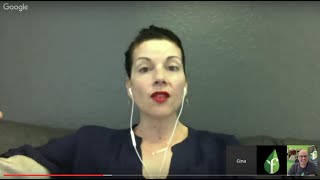
Gina Bianchini, founder of MightyBell, explains how to build online communities as identity networks where people share a specific interest or identity. She covers why people join (support, shared stories, solving problems), concrete tactics like pre-launch interviews and member referrals, and how to monetize through sponsorships and subscriptions.
Chapters
Welcome everyone. How are you doing? I hope you're well. My name is Adeo Ressi. I'm the CEO of the Founder Institute. We have an exciting webinar today to cover the network effects in building your startup. Before we get started, we'll give people a few minutes to dial in. We already have around 500 people in and ready to go, and hopefully might even get up to 1,000 or so. Let me tell you a little bit about myself and the Founder Institute. I'm a serial entrepreneur with about 22 years of experience building technology companies, everything from consumer internet, video games, space, etc. And I created the Founder Institute about 7 years ago to make life easier for entrepreneurs who have not quite launched a product yet, but they're looking to get some experience and understanding about the field of technical entrepreneurship, the things that you need to know to build your business successfully. We operate now in over 135 cities around the world, and at this very moment, over 25 cities are enrolling. So if you're interested, go to fi.co/join. If you're thinking that you're a little bit more experienced, maybe a multiple-time entrepreneur, and you want to open a chapter in your own city, you can go to fi.co/lead, and it should be exciting. So let me talk a little bit about the topic today. The most valuable businesses of the past decade have all achieved growth through the power of network effects. And strong online communities. We have one of the world leaders in this on our call today, and we're going to talk about how to leverage network effects and community to build your business. So without further ado, let's see where we are in headcount. Alright, we're over 600, so let's hope we can get up to 1,000. Let's put Gina Bianchini on the screen. She's the founder and CEO of MightyBell, the first service to help entrepreneurs and innovators create a community in business on mobile. Gina, why don't you tell us a little bit about what you're up to, because you're also a serial entrepreneur with a lot of experience. You co-founded Ning along with Marc Andreessen, but what are you up to? I know there's some other things, but I'll let you talk about it.
Sure, so first of all, thanks so much for having me today. I really appreciate the opportunity. And you know what I do, it's pretty simple. I believe that the most powerful and exciting applications of software and applications of connected software is really how do we bring people together who share an identity or an interest. And specifically, it sounds so simple, But at the same time, it's actually hard because it's not necessarily people who already know each other, which is really how Facebook has achieved massive global success, or people who know each other professionally like LinkedIn. But this is something different. This is basically saying, how do you bring people together who don't actually know each other but who share an important identity, or an important interest with each other and actually want to meet new people around that identity or interest. So we talk about and think about these networks, and they're a very specific kind of network, as identity networks. Pretty straightforward. And examples of identity networks, you know, out in the wild are things like Product Hunt. So if you think about Product Hunt, it's actually an identity network for people who want to be kingmakers and queenmakers of the next great technology companies. Or Houzz, which is bringing people together around a shared interest or identity around home design and home renovations and just home inspiration.
Well, you also are in LeanIn.org. You helped as one of the co-founders.
Absolutely. That's certainly an identity network for women and men who are dedicated to women leaning into their ambitions. Nextdoor is actually another example of an identity network. You know, you don't know your neighbors, but at the same point in time, you actually want to meet your neighbors because you have something in common— the identity of living together in a neighborhood. So, you know, when, when I look at the fact that 3 billion people are connected by supercomputers in their pocket, we are going to create new connections and new networks that layer on top of Exactly, that layer on top of people you already know professionally or personally or by reputation. And I believe that when you look at the fact that everyone has an identity, everyone has an interest, this is going to be the next great wave of new and interesting networks that are created on mobile.
Great, well, and I can't agree more. I mean, whether it's mobile or otherwise, the networks will Go. So we're going to cover 3 things today. The key ideologies behind the strong communities, the main reasons people join a community, and last but not least, specific tactics to build and engage your community. So sort of from theory down to practice.
Absolutely.
What I would like to say is everyone should have, and we're now over 700 people, hopefully we'll get up to about 1,000. You have a little chat area, and if you type stuff in the chat, my team will review it, and I'll try and get questions to Gina from the chat. So if you have questions, don't be shy. We want to hear what you want to know about communities. But let's start out with the, obviously, number one, the key ideologies behind the strong communities. You know, Maybe if you wanted to build a vibrant community, what are some main things that you would focus on? Because for our webinars we have lots of entrepreneurs, I saw Pune, India, all these people from around the world, so these aren't just Americans, these are literally like the world. And by the way, speaking of which, feel free to tweet stuff so that we get break that 1,000 number. But go ahead, what are some recommendations or things that people can do to get the Vibrant Community going?
The number one thing from our perspective at MightyBell is you have to have a really clear and specific identity or interest. So, you know, being a customer of someone's product or service is not strong enough as a motivation for them coming together. It might be in your best interest as a business to bring your customers together, but if they don't have an overarching identity or interest together where they want to talk to each other, not just listen to you, it's very difficult to create the kind of long-lasting, really deep engagement that is going to make a new kind of— and I'm going to call them identity networks because we think that that's actually a better term than sort of just the general more generic community because a general and generic community has really come to mean I talk out at you, you follow me, and no one is actually talking to each other.
So you think the best communities are actually identity networks, but maybe we could be sort of tactical here. So I've got an app and it's like maybe a dog walking summoning app. So I want a dog walker, I hit a button, dog walker comes to me. So I want to build quote-unquote community, but you're saying forget about community, call it an identity network.
So why are people coming to your dog walking app? They probably have a dog and they're probably pretty passionate about their dog because they actually aren't just throwing the dog in the backyard and putting some food out there. But no, they're looking at part of their identity. Something that's really important to them is their identity, their role as a dog owner. They probably also want to meet other dog owners, especially if it's the same breed, if it's the same sort of goal. For example, if they have guide dogs or if they're doing something very specific, they're actually interested in how and where they are able to connect with people. It's why people go to the dog park. So a savvy, especially new startup, new app, is not just thinking about how does their app function in terms of supply and demand for dog walkers and dog owners, but could they actually create a deeper, stronger relationship with both sides of their supply and demand of the app by thinking about how do they also enable conversations to happen between the dog owners and potentially the dog walkers.
So let's— there's a good question that came in here already from people all around Hamburg, etc.
I want to make sure that as we sort of structure the conversation, we're really clear on some examples of identity networks so I can demonstrate in the wild. So I kind of gave you 3— Nextdoor, Houzz, Product Hunt. We're also seeing some incredible, really organic networks emerge around medical conditions. So for example, we had a network launch 2 weeks ago called Beyond Type 1, and within 2 weeks we've had 6,000 members join who are all touched by Type 1 diabetes as caregivers, as as teenagers, as young adults, as children, and over 70% of members are contributing. They're sending messages to each other. They're actually connecting and building real relationships. That is a very different dynamic than, for example, showing up on a web forum where you don't really know anybody. It's whoever is the person who just posted last. And it's really about sort of, you know, hey, you guys all go into this room and share messages. This next generation of identity networks is about how do you connect members because they are near each other physically. So for example, if you take the Founders Institute, what you're doing is connecting people into this global network of entrepreneurs, but also enabling your entrepreneurs to meet up locally. Also by type of business, so we think about it as profession or specialty, as well as by the topics that they care about. So when you start to put together an identity network where you can instantly meet people by location, you can instantly meet people who are most similar to you, you can instantly meet people and see all the activity around the topics that you care about, the end result is that people are actually building relationships with each other not just following you. And that is where your most passionate fans and followers are going to generate the most engagement. You can actually ask them to do more, more stuff. This is actually something that Airbnb has been very successful at with their hosts, especially as they've been navigating the politics of different cities. And so it all starts with what is the identity of the network and the members that you want to bring together and what do they want to do together. So I'll stop there.
Well, so you have a couple questions here, so let's go back to the two high-level things. You said great communities start with a specific niche, which is why you—
identity—
identity network, right? And then great communities focus on connecting people. Now, but let's go back to the dog Dog walker, dog owner, so you've got the dog walker app and then I'll ask you about some other apps. I don't know if I would necessarily want my walkers and my owners socializing because that may disintermediate the app, right? So in a lot of these marketplaces, you know, you're providing a service to the customer and oftentimes you don't want the service providers and the customers talking for any number of reasons including lost business. What are your thoughts about that? I mean, it's a great question.
Yeah, so I come at it from the perspective of if you are building a business where the more people that you get into the network, the better the network, the more valuable the network is, why would you want someone else creating the place where dog owners are talking to each other? And again, it's very fair to say, hey, I don't necessarily want dog walkers and dog owners talking to each to each other, but what could I do to bring down my cost per acquisition because I'm actually getting people to come back regularly and I don't have to pay a second or third time if I want them to talk or meet with each other. And someone else can't go and do that instead of me. And so I think that's actually really important.
The other thing is, You know, um, can I just drill into what you just said there? So let's stay on that dog analogy. So you can have your dog walking app, and I use that mainly because I don't think anyone's doing it. We're well over 800 now. So because the idea is that you click a button and a dog walker comes, if a dog walker meets a family You know, they might disintermediate, but it's the convenience of the app that is the ultimate value, right? So it's like Uber. Every Uber driver hands me their card. I never use their card, right? I still use the Uber app. I like the driver, but it's just more convenient to have the Uber app.
Absolutely.
It's something like that, right?
I think though that a marketplace is not a community.
It could be.
And so that's partially it, but the other thing is there is a fine line, and I think there's a lot of concern in terms of, wow, if Uber drivers or dog walkers talk to each other, that that is actually going to disintermediate the business or create unions and things like that. I think some of those concerns are valid. I take a slightly different approach, though, which is if you are helping to drive and orchestrate the conversations, do you have then the opportunity to ensure that you're not disintermediated? For example, could you actually make your Uber drivers more valuable and to bring them together in ways that are going to allow them to learn faster from each other and to actually be more successful in their businesses? Could you actually bring, you know, Using Uber is not an identity. Like, I don't need to talk to other people who use Uber, but other people who have cocker spaniels or German Shepherds in the Bay Area, it's a different ballgame altogether. It just depends on what you are trying to do. And I just, like, I think that one of the things that I am seeing over and over again is when people embrace the fact that they are always going to have their most passionate users, followers, fans, and if you give them more to do, you can actually drive a more valuable business than if you are simply asking them to follow in the same way that a lurker is. Right, right. Those are some of the concepts. So, you know, again, marketplaces are not easy to build. Thinking about how, for example, instead of thinking about it as I'm going to build a marketplace for dog walkers and dog owners, what about if you actually started as saying I'm going to build the best community, the best identity network for dog owners where they can connect to each other by location and dog park. I'm going to connect them by breed. I'm going to connect them by age or if they have puppies or if they have older dogs.
And then you can do the services underneath the community. There's a question that came in from the audience and I forget who, apologies. I have some more audience questions coming up.
Bring it.
It's what type of business, but I think we covered a lot of that and you brought up, so maybe I would ask, I would rephrase that question a little bit differently and say, what are some areas that you feel really don't work with community? You brought up marketplaces might be one.
And to be clear, no marketplace is made, right? I think it's how— it's the sequencing of them.
And then the second one I would bring up is like, what are some areas that you think community has been overlooked in and you say, wow, you know, there really should be community here. So rather than answering the obvious question, let's— things to avoid, things to go after.
Yeah, so I think it really comes down to first principles of Do people want to build relationships with each other around an identity or an interest? If you have that and you can say yes, absolutely, or no, that doesn't actually work in this case, it is at that moment that your options for creating a business expand exponentially. For example, if you have an identity like people touched by diabetes or small business owners or craft hairdressers. I'll use craft hairdressers. It's one of our networks on MightyBell. It's called Hairbrained. It has over 22,000 craft hairdressers all over the world who are supporting, encouraging, and learning from each other different techniques for their own practice of hairdressing.
I have that problem.
You do, as do I. What they are able to do is offer sponsorships. There is always going to be a subset of brands who want to reach really passionate fans and followers or passionate people who have these identities, these professionals. That's certainly one revenue stream. Another revenue stream that we are starting to see a lot of success with is member subscriptions. As you build a following or a fan base on a Facebook, Twitter, or Instagram, if you can bring your most passionate fans and followers into a monthly subscription kind of app or network, that's actually a very healthy business model without a lot of work. That's why we've set it up on MightyBell, for example, to be built into every network. At our business plan and above subscriptions. When you start to look at that, ecommerce is another opportunity. A marketplace is another opportunity. There is tremendous value in starting with, I don't have an easy way to meet and interact with other people who are like me because we have Type 1 diabetes or because we're small business owners or because we are small business owners in New Orleans who are really focused on product-based businesses, or entrepreneurs who are just starting off.
Yeah, #FIwebinars, #FIwebinars, so tweet it out. We're over 800, let's see if we can get over 900.
I feel like I'm on like a fundraising, let's get over 1,000 members.
900, 900. Alright, so you were saying that the e-commerce was one that didn't seem obvious to me. Is there— but now that you say it, I guess like if you love bamboo spoons or bamboo products, like—
So let's be really clear, this is not about loving bamboo products or spoons. If you are a hairdresser you want to buy the best brushes. You want to make sure you have the best products. If you are a small business owner and you want to make sure that you actually know how to get customers, imagine being able to buy a digital product like a guide to Snapchat. Or certainly all of the things that you want to make your business or your life or your condition better, more efficient, easier, more focused. and that is where ecommerce comes in.
There's a bunch of questions coming in. Roger, someone else just asked something very similar. So, and, and, you know, if you don't have anyone and you want to get started, right, so you have a community of zero, or, or, you know, maybe you are the dog walker or the dog owner, so you have a community of one. How do you get— what are those next steps, right? And maybe you could even talk about how maybe the type 1 or something from your network got started to give everyone an example.
Yes, absolutely. So the good news is no one is a community of zero. You've already started— if you've started, you at least have one person in your network. And the beautiful thing about networks is that as you recruit people in and you ask them to recruit people in, and those people recruit those people in, as long as there's a strong idea, a strong identity, a strong interest at its core, and that there are really clear motivations for why this type of network is going to be valuable, you can grow a network. So it's a little bit like any of the games that anyone has ever played, where you can do it slowly and organically by inviting friends, getting the word out to friends of friends, seeking out whether it's organizing a Meetup in person to get those people in and really understand what is going to make this identity network as valuable as possible to the members who join. One other thing we're seeing is the effectiveness of highly targeted Facebook ads, ads on Twitter, ads on LinkedIn, where you can define audiences that then at a very inexpensive rate you can bring them into their own dedicated space outside the noise of other social channels, where it has a couple of key benefits. One is that unlike other social channels where you actually don't get a lot of data or even email addresses. If you bring your most passionate fans and followers into their own and your own dedicated identity network, you get all the data. You get their email addresses, you get what they're doing, you get to understand what they care about, what they don't care about.
Is there a critical mass of people that, you know, is a tipping point on these networks?
It depends on how specialized the identity is. So for a craft hairdressing network, if you have 1,000 people, there's a lot of value in that craft hairdressing network. If it is people with a very specific specialty, one of the networks at Ning I remember was for data scientists back in the day when there were like 5 data scientists. Or the first Bitcoin paper was actually published on a Ning network. It depends on how specialized or how niche the identity is in terms of whether you have critical mass.
And I would imagine engagement as well, right? Because if there are 5 people but no one posts, it doesn't matter.
Well, this is the thing. So the engagement is in the self-organizing dynamics, software can do a lot for that. So where software— No, actually in surfacing the right members to each other. So we've been doing a lot of really sophisticated work behind the scenes of how do you actually connect members to each other so that you can see and have contacts for those small business owners who are near you in Silicon Valley or in New Orleans. Those small business owners who are like you because they are the other wedding DJs all over the country or bakers. They are the other small business owners who care as much about getting customers or personal branding as you do. They are the other small business owners who are just starting off. You can start to see how these kinds of additional qualifiers and variables those really start to break the ice a lot faster so that you get high degrees of contributions, which then trigger notifications that then bring people back and really build the habit of these kinds of identity networks.
Right, because they're around people they like more, so it's a habit building thing.
Exactly, and that's why it's so important to be on native apps as well, so you can take advantage of the mobile notifications.
Someone else was asking about anonymity. Sorry, sorry, there's so many questions. I'm like, ah! Good job guys, keep asking because I have a list of questions. So can you build these identity networks with anonymity? It was one of the questions in the chat. I mean, I don't know the answer myself.
I do. You know, it depends. It depends on what the identity is. So one network we actually Well, I should actually even take a step back.
The funded was anonymous, but you had to be a CEO to get in, so it wasn't completely anonymous.
Well, that's the other thing. Do you want a private network? One of the things that I think is pretty interesting is a very specific tactic that we use regularly is before we start optimizing for, oh, it has to be anonymous, or can you do it anonymously. We don't launch a network at MightyBell without talking to like 20 people who fit the identity or interest of that network. And we ask some very specific, obvious questions, which is, what would you like to get from a community of peers? What's your biggest challenge right now? What's your greatest opportunity?
And So the 3 questions, let's go through them again.
Sure.
Because those are things that people, because a lot of people are like, how do I get started, what are the first steps? So walk to 20 people in the network and ask them 3 questions.
Well, not even in the network, before you launch a network.
Right, right, right, I mean in the quote-unquote community. But what's the first question?
And maybe it even starts with your friends, you know, or people in your network. Do you send an email out or do you post to Facebook and say, hey, can I talk Talk to anyone in your networks who might fit into this identity, who's a small business owner or who's self-employed in Palo Alto.
So what are the 3 questions again?
The 3 questions, I mean, you can make them 3 or 5, but the basic one is, what would you like to get from a community of peers? And you would be shocked at the insights that come from that simple question. So that's number 1. Number 2 is, you know, what's your biggest challenge right now? Because if you can create a network that helps someone navigate the biggest challenge that they have right now in their business or their practice or their profession or with their medical condition or with their personal goals, then the network's going to be valuable. The last one is, what do you think are the biggest opportunities? You wouldn't want a network that is just sitting there and is only about the negative. In fact, actually one of the really interesting things when we launched Own It, which is our network with QuickBooks for small business owners and the self-employed, we had a private group that we experimented with within the network that was for business dilemmas. What we actually found was that no one needed it to be private, and no one needed it to be this thing that was like negative and scary. It's this really interesting opportunity to actually come together as much around the opportunities that people want to seize as it is the challenges that they want to navigate. And those are, you know, those are 3 questions that I have yet to see interesting insights not come from.
So let me just— so, you know, I like the point about not talking at people but letting your network grow. And you said all the network value is based off members creating relationships with each other, so a lot of tools need to do that. I want to move on because we have a lot of questions coming in, 3 topics, and I want to try and get—
absolutely—
the main reason that people would join.
And I would just say, if at any point anyone has follow-up questions I'm just Gina@MightyBell.com, so drop me a note and I'm happy to help. But anyways, keep going.
Awesome. So the second topic is the main reasons people join a community. So we just ended on this, hey, before you even start a community, find out what they want out of it, what their challenges are, what their opportunities are, right? So that gives you a sense. So what are, you know, 3 core value propositions of why someone would join a community, for example?
They are almost universal, and I think that this is actually really interesting because so many people, when they come to us at MightyBell, they're like, oh, my community and, and, you know, my identity or my interest is totally unique. It's, it's not like anybody else's. And, you know, having seen hundreds of thousands of successful networks built around identities and interests, you know, Yes, every community is unique, but they all circulate around the same 3 things, which is I want to meet thousands and hundreds of thousands of people who are like me for support, for encouragement, and to learn from other people. So I want support, encouragement, and to just feel like I am not alone. So building on that further, I want to contribute to and I want to benefit from the largest collection of practical ideas, experiences, and stories from people like me. And this is actually really interesting. Advice is absolutely terrible in an online community because it shuts down the conversation. So what we're very careful to do in our networks and in a MightyBell network is to really talk about how can you contribute stories, experiences, and practical ideas. Obviously there are questions and people can share their stories, experiences, and practical ideas in answers to questions. But advice is actually not necessarily something that is a best practice. In terms of marketing that as part of the value of an identity network.
Right, so number 1 is meet people like you. Number 2, participate in a knowledge base, but it's not advice, it's really stories and experiences, which is how we learn actually.
Number 3 is navigate topics that don't have easy and obvious answers. So the value of an identity network are those topics that you can't really Google and get a black and white answer.
Well, like Stack Overflow.
Right, exactly. So, you know, and even Stack Overflow, you know, has evolved over a decade, you know, in terms of a knowledge base and in terms of a set of information that has sort of easier and more obvious answers that you can Google. But for example, if you're a small business owner How do you get customers is not necessarily something that you can Google and a 5-point listicle is going to get you what you need. What you actually want to do is you want to talk to, for example, the other florists in other cities that are doing really interesting things with promotions that you can take into Palo Alto and offer as if it is a completely new and exciting thing. That you learned about from another florist in Chicago or Asheville, North Carolina. So those kinds of opportunities, again, stories and experiences and navigating topics that don't have easy and obvious answers that you can Google, that is the combination that makes for a magical identity network.
People like you Sharing stories and non-obvious knowledge, and you brought up florists as one, very, you know, gardening might be another. Interesting. And then how do community builders leverage this knowledge to attract more people to their community? You know, how can— so now, you know, I've gone out, I've spoken with the 20 members of the potential community. I've formed a thesis, I believe that it has a network in the knowledge and story sharing and last but not least this arcane sort of non-Googlable stuff and I want to be bringing in people. So what are some things that we can do to get those people into the community?
Number 1 is just the same things that you brought people in already, so using and taking advantage of invitations, networking, and even ads, Facebook ads, other kinds of ads. We also have launched in our networks and are starting to see a lot of momentum is what we call ambassadors, member referrals. In the past decade, people were stoked in 2007 and 2008 to upload every person that they have ever met in their Gmail address book and invite them into LinkedIn or invite them into Facebook. Those days are long gone. But what we have actually found is that there's a tremendous amount of success success we are having across our networks with ambassadors. Member referrals, whereas a member invites more people in, they're able to track it, they're able to measure it, and you as the host of the network—that's what we call the people who create our networks on MightyBell—you are able to reward folks with whether it's a discount to a store—that's what our HairBrain network does—or whether it's if it's goods and services, or if it's just recognition on someone else's Facebook page. I'm getting some juice here. Those are all things that we have seen work extraordinarily well for getting new members in and continuing to grow a network. Right, so just member referrals, obviously.
There's a lot of questions coming in.
And it's really important, people won't do it unless it's measured and rewarded.
So you sort of answered this, how do you find, motivate, and reward community managers? So you talked about tracking everything, you offer them discounts, but let's say now I'm the host of the community in your terms, and for everyone out there who's asking about tools, well MightyBell is a tool. Then, so now I'm a host of a community, but I want to engage the nodes in the network that are super connectors. What do I do? How do I even find them?
Right, so this is where— so a couple things. One is this whole model of I have to do all the work as a community manager, community host. That is software letting us down. We're passionate believers that as the world is and software is getting smarter and better across every area of our lives, the idea that we're going to use 25-year-old technology and structure in a web forum, which is essentially a Facebook group, a subreddit, the list kind of goes on and on. In the same way, and then we're going to just make people work really hard to meet each other. That's just stupid. We believe that networks, and especially networks that now are supercomputers in your pocket or accessible from supercomputers in your pocket, should do the work of identifying not just your super connectors enabling more and more people who aren't super connectors to meet the most relevant members in the network because they're in the same location. Our most popular feature is Members Near Me. And if you think about it in the context of I have diabetes, or my child has diabetes, or I want to meet other small business owners because this is my livelihood and this is what I want to do, It's why we're all on this call today and why Adeo, you've done such an amazing job with the Founders Institute. There is desire to connect to people like us so that we can elevate our practice, elevate our business, be more successful. From a tools perspective, we're believers, passionate believers that the software has to play the role of host. Just like you would do at an event or a party where we can now connect people by location, we can connect people by specialty, we can connect people by the topics that are most important to them. We can personalize a feed so that you can instantly and efficiently get to the things that are most important to you right from your phone, right from a native app, and be in and out really quickly so that you have this habit of the network, that then you can meet people that are relevant to you. So that does not happen on a Facebook group. It does not happen on a web forum. It does not happen on a subreddit. It does not happen. And yet what we have proven is even as a new platform, when you offer a more sophisticated and smarter experience people will turn it into a daily habit much more effectively and much faster than using 25-year-old technology.
Alright, well, there's a couple questions about that. Susan had one, but let's jump into— you brought the 25-year-old technology and you have a mobile app now, and so why is— well, first, mobile Apps are not 25 years old, at best they are like 5 or 6 years old, so that's modern. But why is mobile so important?
Because mobile is with you all the time. I should be really clear, so there is all of this data that is showing that 75% of apps, of the 1.5 million apps in the Apple and Google Play stores respectively, are downloaded and never opened a second time. That is for apps where the user is interacting directly with the app. Networks are a totally different ballgame because the whole point of a network is it is facilitating relationships and therefore conversations and messaging between different members, which gives you a greater diversity of potential ways of interacting. And bring people back more often.
So I just look at my apps, it's like news I use, photos I use, but the apps I use most are the community apps. Correct. Obviously Twitter, Facebook, and they dwarf the others.
Right, exactly. And there's a reason, it's pretty simple, which is if you are bringing a network together, more people are going to contribute. As more people contribute, It triggers more notifications. More notifications bring more people back, and they have more reason to come back because there's a strong identity. There's a reason to meet other people who are like you that you don't yet know. And as we break the ice in, you know, a MightyBell network or an identity network, you actually have the same kind of messaging dynamic with people that you're building relationships with as you have with your friends, your family, your professional contacts, and a network. And this is why a network is so important, especially on mobile, especially if you're trying to build a marketplace, if you're trying to build a new startup. If people have a reason to talk to each other, they will, they will create a habit even from a new network or new app. If it's an identity network.
So you can, with an identity network, get real engagement for your app. All right, which is a great segue into engagement, which is the last topic with the last 15 minutes. So you've done a lot of thought about engagement, clearly, because you've been doing community apps for a long time. You know, you've mentioned 6 things in other writing and thoughts about keeping people engaged, and you brought some things up earlier such as stories versus advice. But maybe we could start with personalizing the experience is one of the— and by the way, for all the people on the webinar, we're going to also be sending out these 6, so you don't necessarily need to be writing them down. So personalizing the experience, why is that important? Well, if you think about— Like color scheme or more?
Specific, yeah. So just taking it from the top, why does somebody come to a new identity network? Because it's speaking to them, because they have Type 1 or they are a small business owner. So that's step 1. Step 2 is what are the motivations, what are the specific promises of that identity network? And it is meet people like you, participate in the largest collection of stories, experiences, and practical ideas. Navigate topics that don't have easy and obvious answers. Then you come into the network, what is the job of the network? It's to engage people and specifically get them to contribute. So that, you know—
There's always an 80/20 rule, 80% of your community are lurkers and 20%—
That is not what we see.
Right, right, well maybe not with an identity network. That's correct. Old truism.
That's exactly right. So we looked at that old truism and we said, like any good entrepreneurs, no, we want more people contributing. Because if more people contribute, it means that there are more opportunities for people to make connections. And because we are introducing new people to each other, we need as many opportunities for them to engage with each other, to build relationships with each other. So our contribution rate are at a minimum 45% and go all the way up to 70-80% of members of the network.
And is that because it is a personalized experience in part?
It's because first and foremost we ask. So we ask people questions, we encourage people to answer polls and have 3 different types of polls that people can start participating in. Suggest live chats, we do all of these things with the goal of breaking the ice because ultimately what we want to do is to get people messaging with each other just like you do with your friends.
Give me an example of how you might break the ice.
We talk and think about these as engagement strategies. A lot of people talk about them as content, like what content am I going to put in my identity network. Well, if you think about it just from a terminology perspective, content is consumed. It's passive. And if your goal is to create active contributors who are then building relationships with each other, you actually want people to engage. You want people to contribute. So what we look at as a very practical set of engagement strategies starting from like before a network launches, the number one thing we think is critical to populate a network with before you launch is stories from ideal members.
Which is one of your other points, actually number 2. So not only customize the experience but write these profile stories. Exactly.
So if you're going to write any kind of content or any kind of profile in an identity network, You want it to be an individual story as if the person is talking to another member.
So for example, I grew up here, I did this.
Yeah, like how did you make your awesome job? How did you become an entrepreneur? What's been the biggest mistake that you've made as an entrepreneur? What would you want to get from a community of other entrepreneurs like you? You started the the Founders Institute because you saw an opportunity for people to actually learn from each other so they wouldn't make the same mistakes that over and over and over again. That is the power of an identity network.
Now you also say write action posts. What are action posts? Is that like— well, you tell me, I can guess.
Yeah, so an action post is simply something that someone can can read and be like, hey, I can do that tomorrow morning, or hey, I'm going to do that in the next meeting that I go to, or the next time I pitch an investor, I'm going to make sure that I do this one thing.
It's moving from the generic to the specific. You don't like to tell people advice, so is the action post like, I did this today and maybe you can try it too?
Yeah, here's a tip or a trick or something that I used and it totally worked in the last meeting that I was in. For example, there's a conversation happening in Own It right now, which is our small business network, and it's how many times do you have to hear no before you hear yes. And it's a whole conversation about navigating nos, and that's an action post.
I've heard no 1,000 times.
I still haven't heard yes. If you flip it on its head, you only need to hear yes once.
That's pretty good, actually. An action post is like, I heard no 10 times before I got the yes on my deal, and here's what I did.
An action post could be, here's my morning routine that's worked really well for me, and here are the 5 things that I do. Maybe other people can find success from that.
How do you get them to write it from the first person perspective? Perspective, because people tend to abstract out and be like, this is the best thing to do, eat cereal in the morning. But that's not, you know, to your point.
It comes from the leaders. So, you know, for example, if you don't write as if it's abstract and you share a personal story, if you go and you interview other people and have them share their personal stories, Talking about your first customer, what was their name, when was it, what was your experience like with them? Very different than what's the best piece of advice you have for entrepreneurs? It really comes down to just taking a different approach, not harder or easier, just different.
Right, so you really got to sort of steer the community. What are member prompts, because that's another— I'm sure trying to get through in time and keep questions. I'm reading the chat. You have a very engaged community around you, Gina.
Fantastic, thank you guys. But specifically, prompts and polls and questions are all designed to just break the ice. So if you ask somebody, you know, what is your most effective channel for getting new customers? Is it Facebook, is it email, is it word of mouth, is it your friends and family? Somebody can look at that and say, oh, I can answer that because that's contributing my experience. That breaks the ice. Now you have somebody who has contributed and they get lots of positive reinforcement for that because Look, we're trying to together build the largest collection of practical ideas, experiences, and stories of small business owners or craft hairdressers or people navigating diabetes. That's really powerful when you can just start asking questions and people contribute their stories and experiences.
And you want to make it something that triggers love or hate, right? Because you want to get someone really like, what's your biggest pricing mistake. It's like, ah, you know.
Yes, you certainly don't want to go out of your way to be boring or milquetoast, but it doesn't have to be so provocative that it creates what we're all kind of navigating today in terms of having everyone you've ever met in one feed and trying to have an opinion about something that lacks context and lacks nuance. So the power of an identity network is you can actually go deeper in a dedicated space with people who are like you just on that topic. And that context allows for practical idea sharing as well. So it doesn't have to be just something that you're being provocative to get above the noise because people are distracted with everything else going on in the world. World because a network— because you did all the work to set up a dedicated space, you can actually have deeper conversations. So there's a couple others.
What are compilation posts? So are these the things like the summaries that you get?
Yeah, so they're summaries of basically like, hey, here is some really interesting conversations that we've been seeing in the network around this poll. Let's capture some highlights. And repurpose and make more efficient some of the things that have been in long threads and long conversations.
And then one more, and there's a ton of audience questions that I'm going to try and get to the big ones, the big popular ones. And then last but not least, hosting live events like this. So what are your thoughts on live events?
Yeah, so the nice thing about live events, and they don't have to be video It's nice, I got to see other human beings today outside of my office. They don't have to be video. Live text is just as compelling in many cases. What's interesting about live events is it's not just the live event, it's the promotion of the live event, it's the 2,402 people that thought about and signed up for that live event. It's the 723 people who are on the live event right now, and then it's going to be all the follow-up that comes from what we've been talking about and the practical ideas and experiences and stories that we're sharing in this live event. So it's kind of like the gift that keeps on giving. And so a lot of times people think about just the time that we're broadcasting together and how many people are participating. Broadcast. And what we've actually found is—
yeah, we put these broadcasts out and they get watched over and over again.
That's exactly right. So, you know, it's— and it's also just overall, it's the difference between I'm just going to keep posting shit to people versus I'm going to take a portfolio approach. Because maybe it's not a question that gets somebody, but maybe it's a, you know, how do you feel about Snapchat for getting new customers that's going to capture someone's imagination, or it's going to be a live chat. People are different, and you want to have different engagement strategies to keep it interesting, to keep it diverse, to keep it, you know, take lots and lots of shots on goal. Just to use a sports analogy before we go.
Left, we might have room for a few more, so I'm going to consolidate. It's like trust, trust, trust, I'm reading chat, trust, trust, trust, trust, trust. So like, how do you ensure that there's, you've got this now community, you've done some advertising, you've done some outreach, you've put these key ambassadors in place, and it's growing, and literally everyone's like, how is the trust going to be maintained? It's a good question. You know, running the funded, I had a huge problem with that. All the VCs are like, it's all lies. Right. It wasn't, but—
So people love people like them. People love people. So when you connect people to each other first and foremost, as opposed to I'm going to set up just a place where anybody without having any kind of identity, anonymous or not, can just post shit, you're going to actually find that that is not a high degree of— that doesn't create a high degree of trust. It's also not that valuable because I don't care about what you say independent of just you saying it. What I care about is the relationship that I'm building with you, and in the context of our relationship, the context of the fact that you've done some incredible things, but also I think you're a cool dude, I'm going to actually want to engage more deeply and will likely have a more trusted relationship because of that. So we're actually big believers that it's not so much about upvoting and downvoting of comments, but rather it's about setting the context of Who the heck is here? And so that's where, you know, again, I probably sound like a broken record, but it's so critical to say and surface who are the members near me, who are the members who share my same profession or specialty or life stage or diagnosis, who are the people who care about the same topics that I care about, how can I learn more about this person that seems like they're really being thoughtful.
One last question. Unfortunately, I'm also time constrained on the tail end here. What is your big quick revenue for the community? A lot of questions about that. Maybe you can just quickly say this, this, this, this, and this.
Yeah, so number 1, sponsorships. When you have a really engaged, passionate, clear identity network, people People want to find ways of doing native sponsorships with you. That's what we see with HairBrain, that's what we see with Bevel, that's what we see across our networks. 2, member subscriptions. We're starting to see a nice uptick of people who are paying $5 or $10 a month to participate in a network where they can meet and go deeper with people who are like them. 3, ecommerce. So we actually have a number of networks that have their own Shopify stores set up with products and services that are relevant to that practice or that profession or that health and wellness.
Right, well, Hairbrained will have hair products, right?
Exactly, exactly. And so if you just think about those— Are those the 3 big ones? Those are the 3 big ones. So sponsorship, subscriptions, events and ecommerce. If you think about it, you can also look at event tickets and ticket sales, which I'm sure you've seen as well. You can look at subscriptions also as a cost of a class. That's kind of if you want to tease out within subscriptions.
You brought up earlier, start with the community first and potentially the business second. If you have a strong enough community, might be e-commerce, might be tickets, might be sponsorship.
That's it, or all of the above.
Or all of the above. Alright, well Gina, this was lovely. I am blown away. I was, just so you know, I was taking notes too to write questions. Probably one of the busiest chat sessions I've ever seen. We got to a lot of the questions, but I want to thank you so much for participating and congratulations with your upcoming launch.
Thanks. If anybody has follow-up questions, happy to be helpful. I'm just Gina, G-I-N-A, @MightyBell.com. We have some resources on the site too that could be helpful as well. All right.
Thank you. Okay, everybody. Thank you. Bye.










