How to Build Your Startup Ecosystem: A Live Video Chat with Adeo Ressi (June 27, 2017)
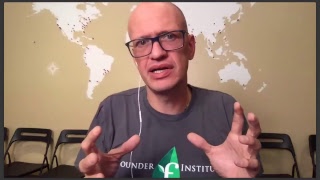
In this live webinar, Adeo Ressi, CEO of the Founder Institute (FI), walks a global audience through the fundamentals of creating a thriving local startup ecosystem and explains how FI can support that effort. He debunks two common myths – that government must drive ecosystem creation and that venture capital must exist before companies can form – and argues that grassroots, founder‑led activity is the catalyst for both. Ressi then outlines a five‑step, actionable framework: (1) foster collaboration rather than a zero‑sum mindset; (2) map existing resources using the FI Ecosystem Canvas; (3) convene the community through meetups and events; (4) engage government and large corporations strategically for policy, grants, and sponsorship; and (5) maintain brutal honesty and data‑driven feedback to weed out weak ideas. Throughout, he shares concrete examples from Vietnam, Colombia, Afghanistan, and other markets, and details the FI program structure (3.5‑month curriculum, weekly CEO mentor sessions, peer groups) and the various volunteer roles (meetup leader, chapter volunteer, chapter director) along with the equity‑plus‑cash compensation model for directors. The session ends with a Q&A covering university involvement, EU funds, NGOs, crowdfunding, and the practicalities of running a chapter.
Chapters
Hi there, everyone. Welcome. My name is Adeo. I'm CEO of the Founder Institute. We're going to be talking about how to build your startup ecosystem today, and we're going to also be discussing ways that the Founder Institute can help. The good news for everyone is that we have a chat on the side of your screen And at any point today, you can just pop in, ask a question, and we're gonna be here to try and answer your questions. So I'm looking at the chat myself. We have a team that's looking at the chat as well, and we'll get to your questions throughout the day. Again, my name is Adeo Ressi. I'm CEO of the Founder Institute. We operate programs to help launch aspiring new founders into the world of entrepreneurship in approximately 180 cities around the world. You can see some dots on the map behind me. We have cities and offer little programs in all those cities around the world. We're going to be covering 3 things today. The 2 biggest misconceptions or biggest misconceptions about growing a startup ecosystem. Ways you can help build and grow it, your ecosystem. And last but not least, ways that the Founder Institute can help. And so if you have questions, again, you can pop them in the chat. And as we go through, we'll try and answer them. So if we don't answer them right away, we'll get to them within the agenda. I'll just a little bit about my background. I've been an entrepreneur for now almost 25 years. And taken a company public, raised tens of millions of dollars of venture capital. And I can tell you it's an extremely hard thing to do. But when I started out in the '90s, somewhat early '90s, there weren't a lot of entrepreneurs. And so in a lot of cities where especially working in technology and in a lot of cities where we're going, they're facing the same conundrums that I faced starting out almost 25 years ago. So we're going to go through some things to help you really build your ecosystem. And I see a lot of people coming in from different areas of the world— Nigeria, the Philippines, and various places, Singapore, etc. So we're going to have an exciting call or webinar today. So let's start with the agenda. Again, we're going through 3 things: misconceptions, things that you can do, and how we can help. So let's start with 2 really big misconceptions. And if you have questions, pop them in the chat. So the thing that we often hear when someone wants to build a startup ecosystem is that, hey, you know, we need the government to get involved. And it's great to have government support, but the government does not need to be involved to build the startup ecosystem. In fact, a lot of times government involvement can hurt rather than help. So startup ecosystems are built by people like you who take initiative, to, to help companies get off the ground and help companies get started. And this is a bottoms-up approach that we've seen work in countries like Vietnam, Colombia, etc. So what we very commonly see is that a group of people really care about technology and seeing their city prosper. They start doing initiatives to launch their startup ecosystem, help entrepreneurs get started. And then later on, the government gets involved by providing various incentives and programs. And in fact, you see governments tend to get involved in startup ecosystems 2 or 3 years after some initial efforts by individuals to get those startup ecosystems off the ground. So there's usually a very large lag time before a government may even take interest in a startup ecosystem or take any initiative to help a startup ecosystem. Now, staying on the topic of government, some of government involvement can be harmful. So, there's something that I call startup welfare. And you see that in a lot of cities around the world, like Finland or countries and cities around the world like Finland, etc. And that can be bad. So, if a government says, "No matter what you do, good or bad, you're going to get money to start a startup," right? And in the case of Finland, it can be to the tune of $1.2 to $1.5 million in very easy-to-receive government grants, that creates a really unhealthy startup ecosystem because it's almost too easy for companies to start. So governments can in fact make things so easy that the companies don't really try And if the companies have it very easy and they're not really trying, they end up not getting very big. So not only do you not need government involvement to build a great startup ecosystem, so this is a very big misconception, government involvement can actually hurt the growth of a thriving startup culture. Now, I hear that someone can't hear anything. Hopefully others can hear. Okay, it might be your connection. Does anyone have questions on the misconceptions relating to government being involved in a startup ecosystem? Wow, we've got a lot of great people here from all over the world. Canada, a few more people from Africa. Any questions on government involvement? Someone, Jeffrey, you were asking, would you consider these comments about government to be inclusive of public university systems, or do you mean these thoughts mostly about local and/or federal government? Universities play a different role in the ecosystem. You definitely need, universities to produce talent, right? They train technical talent that goes into startups. They train marketing, business, financial, et cetera, talent that startups need to grow and prosper. Universities also do a lot of initiatives with students. So they'll put together student entrepreneurial initiatives. And for the most part, these are all good and supportive. You know, I found that in terms of the rigor of academia or the processes of academia don't lend themselves very well to creating companies, but they do create smart talent that can later on create companies. But this, the process of academia to train someone is not really well organized and well defined for the purposes of creating companies. And that's why you haven't seen very large startups come out of university-based incubators. You know, one of the most successful ones is a program called StartX out of Stanford. And StartX is really not run by the university. It's run by a group of people outside the university. It just happens to focus exclusively at Stanford. Spencer's asking, what about using a government entity to fundraise to better support the FI cohorts? We have had partnerships with governments once our program has operated. So in Afghanistan, we have a partnership with USAID, a US government program for our cohorts there. It not only provides operating capital for to run the program, but it also provides some capital for the companies themselves. In Canada and Toronto, the city government, the mayor's office is providing each graduate company with $5,000 Canadian dollars upon graduation of the program as a kickstarter to their their business. So it's a small amount of money that will help them, you know, cover some initial setup costs of the business. So we've seen different initiatives with government that are mostly positive once the Founder Institute is running. But in terms of waiting for the government, or waiting for someone in government to do something before starting to build your startup ecosystem, that is not a good idea. And then, Joe, what type of university involvement is ideal? You know, a partnership with the university between different entities in the startup ecosystem can be very productive. So as I was mentioning before, universities produce a lot of high-quality talent from their engineering programs, from their business degree programs, et cetera. So if you can set up partnerships where local startups can recruit talent very cost-effectively from recent university graduates, that would be an amazing way to leverage a university in a startup ecosystem because most of the talent in a city is going to be coming from some sort of university. Not all, but most. And to be fair, there's a lot of great new training programs like Galvanize has a degree in data science. So it's not just traditional universities that are producing high-quality talent. You're seeing some new and innovative models now. Okay, Renoir, I hope I'm pronouncing your name right, is asking, what about EU Commission funds to support the setup of FI Okay. So let's take a step back. Sorry, I have a bit of a cold. EU funds are a mixed blessing. On the whole, they have not really helped the EU. Now, the EU funds have many different buckets. And I would actually classify the vast majority of the EU funds in that startup welfare category I was talking about before. That I consider somewhat detrimental to startups. But there are some EU funds that are effective. So they have some EU funds that are doing fund of funds. They're doing some EU funds that are going into seed accelerators. And if you can get some EU funds to help with setting up FI, that's great too. Again, though, all of the funds from governments, even when it is startup welfare, they take a lot of time to secure. And so time is probably the most precious asset in startups. So if you have to spend 6 to 9 months to get an EU grant and you can use that time instead— excuse me, downside of having a cold— you can use that time instead to build your business faster or to raise your money as a fund or as a seed accelerator from private investors, I would strongly recommend that you use the time to go after private investors or to build your company, then seek EU funding. If you have— Philip is asking, if you have no equity grants from government or local community, can you not change that? What is the best action you can do as an NGO in the startup ecosystem? Well, you know, so NGO is like a nonprofit or a non-government organization trying to help. And so if Philip is essentially asking if you can't get the government to give away money or can't get money from government, what are some other things that an NGO can do? Well, there's a lot of things that an NGO can do. A lot of— okay, so let's take a step back and say there are some things that governments do that are very important to the startup ecosystem. Funding is not one of them, right? Funding is something that is best done by professionals. As much as possible. But governments can play a very vital role in startup ecosystem in other ways besides funding. So governments set all the corporate regulations, how quickly you can incorporate. They set the— whether they're, you know, the policies around options and things like that. And so in many, many cities and countries around the world, The underlying corporate law is insufficient to support a thriving startup ecosystem. It might take months to incorporate. It might cost a lot of money to incorporate. There aren't proper regulations for startup companies. So, you know, an NGO may influence government policy around corporate setup, which is very viable for startups. Other key areas are Startups unfortunately tend to attract a very homogeneous group of people, usually male. So NGOs can play a vital role in helping to create a more diverse startup ecosystem where you have more women, different minorities participating in entrepreneurship, etc. So Keeping diversity at the top of the pool is pretty important. Okay, so Darryl was asking, is there a mechanism to facilitate corporate innovation that large companies can find opportunities? And I want to— that's not related. Right now we're on the two biggest misconceptions, Larry. I'll come back to that in a little bit. Another big misconception. So the first misconception is governments need to be involved to get a startup ecosystem off the ground. And I can tell you, they really do not. In fact, you're almost better if the government leaves you alone. Another very big misconception that we have is that, and this will probably lead to a lot of questions. So get ready with your questions, but let me say it first. Ecosystems need venture capital or other angel financing first before, you know, they are able to have companies, right? It's a chicken and egg question. Which comes first, good companies or money? And the reality is that there's— this one's easy. Good companies always come first. In fact, it would be impossible to have investors in a city or a country unless there were good companies. So I'll give you a story. We entered Vietnam quite a number of years ago, and we opened both in Hanoi and Ho Chi Minh City. And when we went into Vietnam, which is a largely communist country, at the time, there weren't a lot of startups, and there was certainly no venture capital. Of note. Fast forward a number of years later, there's a relatively thriving venture capital scene in Vietnam and a decent angel investment scene. 30% of all seed and Series A deals go into Founder Institute graduate companies in the country of Vietnam. And this is starting from a cold start, there was nothing. Okay. Add a few years later, there's thriving angels, thriving seed funds, thriving venture capital by comparison, right, for the size of the country that it is. And 30% of all those investments go in at the seed and Series A stage, go into Founder Institute graduates. And so the thesis is that Good companies lead to interested investors, lead to a thriving funding community. It takes some time, but, you know, a simple thing that I like to say to people is if you have a Facebook in your city, right, or the next Facebook in your city, investors will invest in it. Right. People who traditionally invest in real estate will invest in it. People who traditionally invest in XYZ will invest in it. They're rich people pretty much everywhere. All right. So, ha, Adil is asking, why not create a virtual country where anyone can incorporate? You know, people are working on that. There's something called seasteading and a few others. You know, I tend to be more pragmatic, Adil, in that I think today we live in a world where there are geographic boundaries, for better or for worse, and local laws. But I think there's a massive change happening in the world where an entrepreneur can really start anywhere. And you're going to see that the country of Colombia or the country of Chile or the country of Argentina or wherever, they're going to start homogenizing their corporate law. And so I don't know if you need so much to create a new country, but you're going to find that starting in Colombia is just as easy as starting in Chile or Argentina. And you can build a great company anywhere in the world. So I don't know if you need to create a virtual country just yet in order to be successful. Now, if anyone has questions on which comes first, money or companies, I'm happy to answer that. I can definitely tell you that companies come first, and Vietnam is one example. But we're in Afghanistan now. It's still a little early because we've only been there a couple of years. We're in a lot of places where there was no funding, nothing like that. And we're starting to create more and more good companies, and then the funding starts coming later. Okay, so Jen is asking, hi, our city is supporting us really a lot. Do you think it's a good idea to focus on our incubator prior on solving problem issues of our town? For example, smart city challenges, etc. So do you— well, if you're talking about giving back to the community, I guess, Jan, and what I would say there is— and we're going to go on to that in a moment, which is how you can help. And so unless there's any other questions or comments on which comes first, money or companies, I can tell you from vast amounts of experience that companies come first. Build great companies first, and then the startup ecosystem will thrive. So just to conclude on the major misperceptions, then we'll jump into Jan's question, which is really how you can help. You don't need government involvement to get started. And you don't need a lot of money and venture capital and investors, right? You just need to get going and start helping great companies get off the ground. And the premise of Ian's question is a great segue into the next topic, which is what are some ways to build a startup ecosystem? And we have 5 suggestions for you. And Jan's point is like, hey, giving back. And that's actually one of our points. So it sort of relates to start with a collaborative mentality, right? So a lot of people and I'm answering your question and staying on the agenda as well, which is a lot of people look at things in a zero-sum game way. And let me explain what that means. So zero-sum means that there's a certain amount of stuff, and if I get some of it, less is available for someone else to get. And so if I get 100% of something, no one else can get anything. Okay. And that's not really how startup ecosystems work. And let's use an example of coworking spaces or incubators, as Ian was talking about. So If there is one coworking space, you know, it probably won't get 100% of the market because people can work from cafes and other things. If there are two coworking spaces, it's not like these two coworking spaces are fighting for every customer. As the more infrastructure in a city gets built, it doesn't— more startups end up getting created and you create more of everything. So if there are two funds in a city, right, it's not like the two funds are fighting for deals. They are, but there are also more deals for them to fight over. So the community expands with the amount of infrastructure that there is. Right. And so this is a very important point back to what Jen was asking, which is— or Jen, however you pronounce it, sorry— which is that, hey, you know, how do I give back to the city? One of the best ways that you can give back to the city is by adding increasing amounts of infrastructure to the city, because the more startup infrastructure there is in a city, the more startup activity there will be. And as a result, then the more funding there will be, the more success stories there will be, the, the greater that city, uh, will rise in the world of startups. So starting with a collaborative mentality is very important as a first step in building your startup ecosystem. You need to not only add value by creating programs and maybe like launching a Founder Institute chapter, for example. But you can't really look at it as, oh, and now we're competitive with other people. You need to find ways to collaborate with them, even if they are your direct competitor. So I'll tell you a story. In New York, there's something like 70 or 80 seed accelerators and incubators, okay? And our director in New York City, a gentleman named Kevin, organized all of these guys into an association. And now they meet once a month and they discuss the best practices, when their deadlines are, all of this stuff. And it's not like the 70 to 80 seed accelerators and incubators have all as a result suffered or are struggling. They're actually all growing as a result because they're sharing admission timetables so that they don't, you know, compete with one another on admissions directly if it doesn't make sense. For example, you might have different hardware, like a hardware-focused accelerator and a software-focused accelerator have the same admission state, and another software accelerator may agree to do a different admission state as a result. They're also talking about standardizing the, the applications so that all of the different accelerators have a similar application, making it easy for anyone to apply apply and apply to multiple. They're talking about best practices on running the programs, right? So that one program isn't vastly better than another program, which creates this weird dynamic. So, so back to the point, collaboration in an ecosystem helps all of the companies grow as better and better companies come out of a city. More money is available for those companies. The city starts to receive global recognition as a leader, and the whole ecosystem grows as a result. Okay, yeah, so Jeffrey said that's interesting. Please, is equity crowdfunding viable? Okay, I'll get to that in a moment. So step 1 on building your startup ecosystem, everyone, is collaboration is key. Um, sorry for having the cold. Step 2 is mapping the local market. Now, um, in every place where we operate, even in Silicon Valley, um, there are lots of resources available today, and entrepreneurs just don't know about them. Uh, so for example, uh, even in very undeveloped markets like Kabul, Afghanistan, there are some programs from different governments there that are trying to, you know, aid programs and things like that. So even in the most remote parts of the world where you would expect there to be nothing, there are some things to help entrepreneurs. So we have something called the ecosystem canvas. You can go to fi.co/canvas. Hopefully someone will paste, paste the link into the chat. And if I'm not getting your question right away, we'll get to it soon. And someone asking Faisal if there's slides. I had slides, but I think slides are boring, so I'm just going to talk to you about these things. So if you go to fi.co/canvas, what we've created a framework for you as an ecosystem leader or someone in the ecosystem to map all the different resources in your ecosystem today. So you can look at who the influencers are, like maybe it's a prominent entrepreneur that has a big follower on social media. You can look at the different accelerators, different university programs, et cetera. And it's very important if you're helping to build a startup ecosystem that not only do you have that collaborative mindset, but you know who to collaborate with. So creating this ecosystem map is really important. And so if you want, you can participate right now by starting to map your ecosystem, and that's going to be super helpful. Okay, so I'm looking at— okay, I'm going to get to some of these questions like the ideal question a little later on because I'm going to stay on the focus of the section. So again, collaboration, map the market, step 3, gather the local network. What we have found, one of the most successful things that you can do to bring an ecosystem together is to organize events. So I'll tell you a story related to that. So about 5 years ago, we launched in Colombia and I flew down to open the Founder Institute chapter there, which was a little challenging because they really had no startup infrastructure at the time. Time as well. They had bits and pieces like our director Alan Kalmanovitz was kind of— he had a handle Tropical Gringo and he had a following, but there really wasn't much. There were some tech companies and maybe a newspaper had written a story or two, but it was pretty primitive. And so I organized a lunch in Colombia, in Bogotá, and I invited all of the mentors and there were about 10 to 12 mentors there. And these were the people who were running the most successful technology companies in the country of Colombia at the time. And they had never met each other. Right. Never. Because there weren't a lot of regional events. Right. And there were not any real events in Colombia. And there were some security concerns at the time. And so they had never actually once physically met one another. Now, they had read about each other in a newspaper article or maybe online or seen their site somewhere, but they had never actually met. So bringing people together with events, bringing seasoned people together, bringing aspiring entrepreneurs together, bringing other people who are just starting out in their entrepreneurial journey, Events really help the community. And one thing that you can do right now on gathering the local network is we have, for example, a meetup. Meetup is a great community. We actually are running the largest meetup in the world. Maybe they can post it in the chat. It's founder-institute.meetup.com. Last I checked, there were over 300,000 members. It might be like 330,000 members in the meetups around the world. And just getting a meetup started around entrepreneurship in your community, and they could just be going out for drinks, then following up with maybe a speaker, but they don't really need to be a lot. Just going out for drinks is sufficient to get started. As a step one in a meetup. Now, Jeremy was at— or Jenny, excuse me, was asking, what about limited mentor speaker resources in a small market? So that's definitely a problem, right? If you go to some smaller cities in Canada or even some larger cities that really have not had tech innovation. When we first entered Houston, many years ago, there was only a few people who had built tech companies there. It just wasn't a hub for technology. So as I was saying before, you know, I think at this point most cities in the world have someone building a tech company, right? So you can have them as a speaker. But even if you don't have many, one or two people, then what you can do is just do social events, right? Where you get people together who are thinking to start tech companies and having coffee, having breakfast or having a drink. And it's not that you need really experienced people. What you need is that community feeling and events really creates the community. You can also invite people in these meetups once you're doing the social stuff to do webinars or to attend webinars like this. Now, Arbonne was asking, startup events, is there an fi recipe to events? So, okay, so fi, as you can clearly tell from the size of the meetup, Founder Institute, founder-institute.meetup.com. We run a lot of events. We run well over 1,000 events per year, and over 100,000 people will attend our events worldwide. And our event numbers are growing like crazy. So, we've had more people attend events over the summer than we did in the spring, than we did in the fall. So, and the summer is one of the slowest months for event attendance worldwide, especially professional events. Yet our numbers are going like this. I would say that from our perspective, you know, when we run events, we have two kinds of events, Armand. We have what we call content events and conversion events. And then in the conversion events are more just talking about the Founder Institute. So I'll leave those out for the moment. But in terms of content events, there, we try to do a variety of different types. So we have like one type of event, which is office hours where founders come in and you have some seasoned experienced CEOs and they sit with the CEOs and they talk about their problems. And if the event gets big, you might have 3 or 4 experienced CEOs meeting with 10 or 15 different groups of founders in pockets throughout the world, throughout the room, excuse me. And so the office hours event is very good. If you go to the other kinds of events where you might have traditional speakers, what we find is it's very important to have feedback and interaction. So what we might do is have 2 speakers and then we might have people come up and pitch a little bit to the speakers. And then we might do an empaneled, almost like unconference Q&A where the audience and the speakers are all discussing the issues of the day. And these tend to be based on themes. So how to come up with an idea, how to fundraise, things of that nature. Annabelle was asking, Well, how about the topic of speakers? What's the best interest, or what will best interest them to join the event? Generally speaking, most entrepreneurial CEOs who have done one or two tech startups can talk about anything. So really what attracts them to come to the event, Annabelle, is the interest of giving back to the community and helping the next generation succeed. Okay, so there are 5 ways to help the startup ecosystem. Number 1, be collaborative, don't be zero-sum. Number 2, map the local market. We talked about the ecosystem canvas. Number 3, get everyone together with events, and we talked about using Meetup and possibly working with a FI on that. There are two more. Number four is actually working with your government, right? So even though I said before you don't need to have government involvement, I did say there's a lot of ways that working with the government can be helpful. So they can't make the startup ecosystem, but they can help. So here are some examples of how you can work with government. I brought some of them up before, but I'll go into more detail right now. You can connect with a chamber of commerce or similar entity that works with small businesses in the region for the purpose of helping to promote your events. You can talk with government entities like I mentioned in Toronto, about giving small grants to companies that are created from credible programs. So instead of like these larger grant programs, which are so social welfare, you might do sort of more targeted and smaller grants. So, hey, if you graduate from a credible accelerator incubator, we'll give you $5,000 or $10,000 or something like that. You can get involved with the policies, which we also talked about. So, there's a lot of corporate regulation and things like that that many governments aren't doing well. And so, you can lobby or reach out to run those, to change the policies to be more favorable. I'll give you a great example. Excuse me. In a lot of countries, it can take months and months to incorporate. So reducing the amount of time it takes to incorporate is very valuable for the startup ecosystem. In many countries, it's also very expensive. So they have something in many countries called a notary, and the notary acts as a law firm. And in many of those countries, it can cost $5,000 to go to the notary to incorporate. To incorporate, which is just insane when a lot of this stuff can be done online today. You also have reserve requirements of, you know, $10,000, $20,000, $30,000 and more that a company might need to put into a bank account to incorporate. All these antiquated things need to be done away with to be successful. And, you know, so Aram was asking, what are the role of large corporations in building startup ecosystems. So not only would I say maybe we could amend step 4 to Ram's point and say not only work with your government but work with large corporations. So large corporations are excellent for sponsoring and providing capital to your startup initiative. So for example, so I would actually say step 4 work with your government on certain select things and large corporations, because almost all the things I said you could do with government, you can also do with large corporations. So you can use large corporations to do outreach. So for example, Microsoft is a large corporation. They have something called BizSpark. So they actually have lists of startups in every city around the world, sometimes thousands of startups. And so if you partner with Microsoft and you get an opportunity to work with BizSpark, you might actually be able to access the thousands of startups that they have in the local city. Start— the companies also regularly provide funding. So you might be able to partner with a corporation and get funding for small— for some of the new technology companies. You might get sponsorship funding. So there's just a lot of opportunities. Plus, these big companies also provide knowledge, expertise, almost like technology transfer to startups. So, you know, I've heard that RGA, which is a big design and advertising firm, will provide startups with resources like designers and and creatives. So big companies and governments can play an important role in helping the startup ecosystem. Okay. Last but not least, step 5 is stay honest. And, you know, we are very adamant about honesty at FI. And I don't mean like Mary Poppins type honesty. I mean that if you think someone is doing something wrong, or if you think someone is doing something in a dumb way, you need to tell them. Because what I find happens is that you enter this world of polite society where it's like, oh, your idea is great, or good luck, keep going, you know, everything will work out. And a lot of times, like, someone's working on something just that will never work out. That's not smart. It's not a real business. And because they get such positive feedback from the startup ecosystem, they win prizes, they win awards because everyone's trying to be nice. They end up— you end up getting these really bad ideas created in startup ecosystem instead of trying to be blunt and say, hey, I don't think that's a good idea. I don't think it's gonna work. You might wanna try something else. So honesty is very, very important in a startup ecosystem because if you don't help someone, if you think that helping is patting someone on the back and pushing them along, you're gonna be sending a lot of bad ideas and unprepared people into the world who are going to fail. And then the more failure you have in your startup ecosystem, it's not going to— you really want more success than failure, right? Failure is inevitable, right? A lot of companies are going to fail no matter how much you try, right? But you want to have some really big successes. And the only way you're going to get the big successes is by being brutally honest with them. So, um, just honest feedback. So, for example, at the Founder Institute in this regard, we grade everything on a 1 to 5 scale and we don't allow 3s. And it's a psychological thing, right? Because then someone's like, why don't you just make it 1 to 4? And I'm like, well, you know, it's by— yes, you could do that as well. But by pulling out the 3, you're either saying someone's bad or they're good. There's nothing in the middle. Right? So, you know, and a lot of times that gives mentors and people who are grading the work of founders, so to speak, pause because they're like, oh, I think it's a 3, but now I have to pick it instead if it's a 2 or a 4. Now that I think about it, it's more a 2, right? So, like, it's really forcing people out of that middle comfort zone to be very honest. And So not only, you know, do we not allow any 3s in our rating system, we also are very data-driven. And that's another way to go to help you be intellectually honest with your ecosystem. Like, dive in and look at the numbers. How many startups were created? How many of them were successful? How much money did they raise? By really collecting data, you can never go wrong. So now we've got a lot of questions. Coming in, a lot of commentary. And the last part of the talk today, we went a little long, is going to be about how we can help you. So, well, first of all, let's start with the basics. Everyone here is more than welcome to set up any number of things. So let me start with the sort of things that we have. So on the one hand, we have meetups all around the world and we're looking for people to help run them. That's very easy. You can run it at whatever frequency you want and they don't have to be big events. They could just be social events, right? So being a meetup leader and something like that is one way to get started. Very light. Then I guess I can talk in order of difficulty, if you will, but nothing's very difficult. So being a meetup leader might be a few hours a month, right? We are in many cities looking for volunteers to help existing chapters. So if you're not sure you want to lead a chapter, but we may have a chapter in the city already, there's a variety of associate and other positions within a chapter that are just like a few hours a week, and you can help the chapter run and build great companies. And then last but not least is actually directing a chapter itself. And I'll talk a little bit more about that since that's the top of the pyramid. And that takes about 8 hours a week. And running a chapter is pretty straightforward. And I got a bunch of other questions I'll get to in a moment. So if you want to ask questions about anything, pop them in there. But so being a director is, again, an 8-hour-a-week commitment, and 90% of that time is spent face-to-face with founders helping them build their business. You do that in group sessions where there might be a number of people in the room plus experienced CEOs, or you'll do it one-on-one in what we call office hours. The program, the Founder Institute program itself takes a person who has an idea all the way up to having an MVP. So these are very early entrepreneurs and we put them through a 3.5-month-long intensive program that creates a company on the other side and a company that has about an 80% chance of survival. Now, we create the companies with a process. That process has 3 components. We have the CEO mentors. And so there's a session once a week at night and the 3 CEO mentors come in each week. In fact, I have my session later tonight. We have a great group coming in. I'm very excited. And the mentors share their experiences building a business and interact with the founders and you all interact with the founders in these sessions and really We help them. Then we have a curriculum. So all the sessions follow an order and there's company building work. So we have almost like a Mad Libs to build a fast-growing technology company. Our curriculum is 14 sessions long and it takes a founder through everything they need to do to build a modern technology business. In the program, the founders are broken up into groups of peers. There are usually 5 peers in a working group, and they share the best practices, the challenges, the hardships, the joy with one another, and that creates a lot of camaraderie. Um, now Jacob was asking, can you elaborate on the characteristics of Local Founder Institute leaders? Um, yeah, sure, Jacob. So Generally, we have directors that fall into one of three buckets, and oftentimes a director has all three, but they have some entrepreneurial experience, right? These are the chapter leaders. They have some entrepreneurial experience. They have some ecosystem experience, so they know the different players in the ecosystem. And then last but not least, They'll have some operational skills so they can run an event. They, you know, they get basic logistics. Now, as I said, many of our directors have all three of these. Some may be a better entrepreneur, some may be more knowledgeable in the ecosystem, but a lot, a lot of our directors have all three. Some are more specialized in one or the other. Generally, we have a team of 2 or 3 directors per city. If you're interested in being a director, you can go to fi.co/lead to learn more about leading a chapter. Now, I want to see, does anyone else have questions that I can quickly help with on being a— we've gone over on time and this was really lovely and we've kept most of the people out. There were a lot of questions about funding, crowdfunding, and stuff like that. So why don't I answer, you know, an earlier question about what do you think about crowdfunding as a solution. So I think crowdfunding is going to become more prominent over time, but right now it's still very early days. So, you know, the good thing about something in the beginning is it tends to get a little bit more momentum and then it kind of peters out. So like AngelList and syndicates in the beginning were very easy. Now, you know, syndicates don't work as well. And so they're sort of falling out of favor. Jacob, so back just to finish the seed investor, sort of how to get these crowdfunding type situations. I think right now is a good time for crowdfunding, and we'll see if it can break through and ultimately last the test of time, something that like angel syndicates has not been able to do. Now, Jacob asked, is directing voluntary work because as a way to increase your network? No, I didn't talk about the compensation. So if you're interested in being a Founder Institute director, you actually make both equity and cash. So each of the companies that go through the program contributes some equity into what we call a shared liquidity pool, or sometimes called the bonus pool. So you as director or directors get 1% of each of the graduating companies And that makes you the equivalent of the largest angel investor in your market. So instead of investing $25,000 or $50,000 per company, you invest your time and you get a relatively large portfolio of angel investments. You should, on the low end, get, you know, 15 to 20 companies a year. And if you're in a bigger market or bigger city, you could get as many as 40 portfolio companies a year, which either of which would require hundreds, many hundreds of thousands to millions of dollars of investment to achieve. But through the Founder Institute, you get equity without investing. Now, the equity is much earlier than a traditional investor comes in, but that is both a bet. I look at it as a benefit because you help the company with things like naming the business model and everything else. So you're getting earlier equity, but you've also had a heavy hand in shaping the future of the business, which I think is fun. Um, and the bonus pool, or the shared liquidity pool, the graduates own a piece of each other, the mentors own a piece of all the graduates, and the directors also own a piece of the graduates. And that creates camaraderie in the market because everybody owns a piece of the outcome. And so they all share in the success. The other form of compensation, the cash part, comes through sponsorship. So we'll help you with sponsorship. And the average semester is doing about $17,500 in sponsorship. And this includes everything from you know, Afghanistan to Paris. Some semesters do a lot more in the six figures per semester. A number of do in the mid-five figures. And that money goes to you as income. So you make some equity and some income from sponsorship. And so directors are in fact compensated in the role, Jacob. Now, we have gone through a full hour here and covered a lot of different things. I want to thank everyone for their time. I want to leave you with some thoughts. So I'm a director right now myself, leading a chapter of the Founder Institute up in San Francisco. And I can tell you it's one of my favorite activities. I'm looking for— even though I have a bit of a cold, I'm looking forward to going up tonight and helping the different companies We're in the last 2 weeks of the program, so I'm kind of sad because they're all about to graduate, but I'm looking forward to meeting with them all tonight and really helping them work through some of their growth issues because I think we're going to have quite a few interesting companies. And as I mentioned earlier, we help them pick their business model, name the business, refine everything about it, and then they go out and they start building these successful companies. And you say, hey, you know, I remember when I helped them pick that name or that business model. And it's one of the most rewarding things that I think that I can do with my time. And I hope some of you decide to join us as directors. So thanks everyone for your time today. You can learn more at fi.co/lead. This was awesome. Appreciate it. And I hope we have a chance to work together. Bye, guys.










