How to Build Your Startup Ecosystem: A Live Video Chat with Adeo Ressi (Aug 1st, 2017)
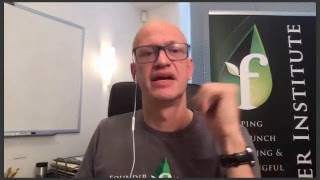
Adeo Ressi, CEO of the Founder Institute, walks through five steps to build a startup ecosystem: adopt a collaborative mindset, map what exists, organize regular events, engage local government, and give founders honest feedback instead of cheerleading bad ideas. He debunks the myth that you need venture capital first, sharing data showing 34% of FI founders graduate globally.
Chapters
Hi there everyone, my name is Adeo Ressi. I'm CEO of the Founder Institute and I am excited today to be talking with you about building your startup ecosystem. So we have people streaming in right now. Let me quickly introduce what the Founder Institute is and maybe why I know a bit about the the startup ecosystems around the world. The Founder Institute runs programs that helps create new companies in about 180 cities in every inhabited continent. So I think we have chapters at this point in every time zone. And when we open a chapter and we start to launch these new technology companies, We work with different players in the different ecosystems. So everyone from law firms to government agencies, mentors, etc. And we bring together the different people for the purposes of creating the companies. And in so doing, we help create the ecosystems. So I'm going to cover 3 things today in the talk about ecosystems, the biggest misconceptions of creating a startup ecosystem and growing a startup ecosystem, ways that you can help grow your ecosystem, and then I'll briefly discuss how maybe the Founder Institute can also help you in doing so. Now, one of the things I'd love to do, if you guys— I am in the chat, so I'm going to say hello right now, and hopefully you're in the chat as well. The chat usually is on the right hand side. If you have questions, pop them in the chat and I will get to them as we go through the different topics. We're going to keep this to about 30 to 40 minutes. And if we can get as many questions as possible, I'll try to answer them as best that I can. Hi there, Ben. Nice to meet you. So first part of the talk today is going to be about the biggest misconceptions. I have PowerPoint slides, but I find PowerPoint is boring. It's a lot better for me to talk, answer the questions that people have in the chat. So hi there, Diomea. I hope I pronounced your— Dioma. I hope I pronounced your name right. We're gonna go over essentially a big misconception that happens in a lot of startup ecosystems. And I'm gonna keep it a little bit shorter and work to answer your question. So one of the biggest misconceptions is that you need angels and venture capital, thriving angel and venture capital market in order for startup ecosystems to thrive. And generally speaking, we find that that statement is incorrect, right? So I like to say that if Facebook was started in Mexico City or Facebook was started in some country or city in Africa, then the reality is that the venture capital, the angel, and the other investment money would flow into that city or country because money goes after good companies regardless of where those good companies are. You see major Silicon Valley venture firms like Sequoia, they will invest in companies all around the world assuming that that company is doing very well. So the reality is that The genesis of a great startup ecosystem are great startups, right? And once you have great startups, then the money will come. And so, you know, as an example, you see some great companies getting started in India, right? And for a long time, India had a relatively bad investment climate. It had very difficult regulations, very difficult restrictions. And once you started having big companies like Flipkart or others, the whole funding ecosystem, if you will, and the whole startup ecosystem in India really exploded. You have now very developed angel groups, very developed seed funds, very developed venture funds. And the genesis of all of that in the country of India was the creation of quite a few very strong Indian startups that warranted that kind of funding. So if you are in an ecosystem and you're worried about the level of funding, my recommendation to you would be don't worry about the funding. Worry about creating a great company that deserves the funding. So I want to, before we move past the ecosystem question and misconceptions on ways to build the ecosystem, does anyone have questions about their ecosystem or misconceptions in their ecosystem? You can just type them in the chat and I will do my best to answer them. Anyone have a question? I have a coffee. Okay, well, Ben, where are you from? If you can type it in the chat. I can tell you that, you know, the good news is that we have at least one person from Mexico City. And in Mexico City, the funding ecosystem is already developed because a number of good companies have already come out of Mexico. So And then you may, let's say, worry because in the case of Mexico, Ben is from Toronto, also a very strong ecosystem. But let's go back to Mexico for a second. So you may not have, let's say, a very strong VC climate in Mexico just yet, but you have very good angel groups and angel investors. You also in Mexico have very the beginnings of very good seed funds, and you have a limited number of venture funds that's growing. And the reason that the venture funds are growing is because the number of companies that need venture capital is growing. So I see we have Guadalajara also from Mexico, another Mexico City, and Toronto. Ben from Toronto was asking, ecosystems seem to be a little siloed. FI is a global How can they support each other? That's a really good question. You know, the reality is one of the ways that ecosystems support one another is sharing best practices. I think that what you'll find is each ecosystem needs to evolve on its own pace. And the Founder Institute itself acts as a catalyst to help jumpstart the evolution of an ecosystem, right? So we go into places like Kabul, Afghanistan, or Abidjan in Côte d'Ivoire. And these places are very raw, in some cases just getting out of years of war. And we're bringing together the different pieces of the ecosystem and helping that ecosystem grow. So each ecosystem will start growing on its own trajectory based on where it starts. So Mexico City and Guadalajara and Toronto are a little further along compared to a place like Afghanistan or Abidjan. And then what you can do to help is take some people from one ecosystem who shares insight and experience with someone from another ecosystem so that you can learn the best practices. And we help facilitate that at the Founder Institute because we have a regional Slack channel where cities in a region share best practices, challenges, etc. We also have a weekly call where directors from around the world get on and we discuss the different things that are happening and you always learn new things. So for example, we learned this week that a lot of universities are starting to experiment with with different kinds of programs. And they're not as close-minded as you might think. So originally, we were— universities are starting to launch training programs. They're starting to launch different kinds of incubators. And in fact, they're taking a roulette-style approach in that they're going to be willing to do and try almost anything to jumpstart the innovation ecosystem, if you will, or the innovation cycle. So if you say, oh my God, you know, so-and-so university has an accelerator, they're never going to talk to me. It turns out that a lot of our directors were saying that they are very interested in talking to different parties because they're trying different things. Anyone else have any other questions that they want to talk about, about possible misconceptions before we go on to 5 different ways to build the ecosystem? I'm checking in the chat. Anyone else wanna share where they're from? All right, well, while you queue up your typing hands, you can type in the chat. And then I'll start moving into the next topic of three. So we discussed some misconceptions, right? Now we're going to go into some ways to build the startup ecosystem. And there's 5 suggestions that I would make. Now, for all of you in the chat today and watching, you have an opportunity to really change the world. And let me take a step back on that subject before we go into the tactics. Let's talk about strategy. Okay, José Luis was asking, how important is the niche regarding building an ecosystem? And how important is it to build a pipeline for VCs or funds was asked by Diego. Let me take those two questions right after I outline the strategy because those go into sort of misconceptions and tactics. So, first strategy, questions, and then tactics. Okay. So startups are the future. Okay. At this point, that's pretty clear. We're moving to a world where, you know, manual labor is being eliminated by robotics and other things. That's so a lot of traditional jobs are going to go away. On top of it, the systems being developed by startups are eliminating a lot of the white-collar jobs. So, you know, the need for accountants and even lawyers are being obviated by AI systems and crowdsourced systems and other types of technologies. So, the way that we live and work is facing a massive disruption today. And the jobs of the future, the potential of the future is in the companies that are essentially building the new vision of how we are going to live. And those startups are being created all around the world. There was an important milestone in the 2016, 2017 era where for many years, in excess of 20 years, something like 50% of all the global venture capital was consolidated in Silicon Valley. And if you recall from my previous statement, venture capital follows good startups. So if there's good startups in a country or city, a lot of venture capital will go there. Because they want to fund and find the good deals. Well, at the sort of 2016, 2017 timetable, the shift was pronounced in that Silicon Valley dropped well below 50% of the total funds available in the world, which just means that lots of other places around the world are starting to see really good companies get started. So, let's talk about those questions and tactics to help those companies get started in your backyard. So we'll start with a question from Diego. How important is it to build a pipeline for VCs or funds? And I would say that's the, that's if you're building a startup ecosystem, that's the, that's the what you're doing, right? You want to create the highest quality companies possible. And, you know, if in the world, right? But, you know, sometimes you might not be able to do that for one reason or another, but certainly the highest quality companies possible and as many of them as possible too. And those will become essentially a pipeline for VCs. Now, the VCs may not even exist. When you start to create the company. So you may be in a country or city where there are no VCs, right? But if you create those incredibly high-quality companies, the first thing that will happen is the companies will attract venture capital from neighboring countries or even from as far away as Silicon Valley. And then local VCs will get started. So it's very important, Diego, to build a pipeline for VCs. And how important is the niche or niche opportunities regarding building an ecosystem? Well, I'm not exactly sure what you mean, José Luis, but I can guess and I presume you mean like, are you talking about building a broad, like a wide range of different companies? Or specific types of companies with specific niches. So all great companies start with a niche, right? Facebook was photo sharing for Harvard dorm students, right? That's pretty niche. Twitter was a text messaging service for engineers at Odeo to let one another know where they're going. So all great companies start with a niche. Now, most cities and countries, certainly cities, have a focus, right? So just to use sort of classic examples, New York has a focus of finance and advertising and also is well known for art. Silicon Valley is known for technology companies. Los Angeles is known for entertainment and movies, right? So different cities around the world have a focus and a niche, if you will, that they're known for. So oftentimes it would make sense to leverage the strengths of your city in the type of companies that are being created, the type of startups. So a lot of times it gets a little bit confusing because a big city like Mexico City is really the economic hub of Mexico, right? But it's also really a big trading city for all of Latin America. So creating a pan-Latin American brand in a place like Mexico City would make a lot of sense because in some ways it's the capital of Spanish-speaking Latin America. It's one of the largest cities and most prosperous cities in the entire region. So, you know, starting to think about, you know, hey, what is this city really good at, what niches is it successful in, and, you know, looking at startups that capitalize on those strengths is a great way to think about things. So let me give you the 5 pieces of advice. And if you have other questions, don't be shy, pop them in the chat. I'm here to work with you, talk about building great ecosystems and help out however I can. So, I'm going to quickly outline the 5 things, like 1, 2, 3, 4, 5, and then go into a little bit of detail on each. And don't be shy with the question. So number 1 is collaborative mentality. Number 2 is mapping the market. Number 3 is starting to organize the network. And 4 is working with the local government or government. And then Number 5 is sort of being very honest and true. And I'll sort of walk through each of these. So in terms of a collaborative mentality, and I'll tell you, this is actually a definitive problem in Mexico City. And we have a couple of people from Mexico City. There's two ways that startup ecosystems emerge. You have a zero-sum game. And you have a collaborative mentality. In a zero-sum game world, there is one unit of assets. And if someone takes a little bit of the assets, then there's less assets for other people to take. And so people fight over the pie or the assets because they want 100% of that. And when you apply that to startups, it doesn't really work, right? There's, it's not like there's 100 startups in a city. And if someone has 2 of them, you only get 98. New startups are being created every day. The value of those startups are growing. And so it's really not a zero-sum game world, the startup world. As in large cities like Mexico City or any of these other cities, Toronto, etc., you could have hundreds of startups be created in a single day. The value of those startups could be measured in the hundreds of millions to billions of dollars. So fighting over them as though they're a finite resource, like mining coal out of the ground, is really unproductive. The different entities in a city need to collaborate to try and make more startups, to try and make those startups more valuable, to try and think of ways to help them expand into other markets. And whenever an ecosystem has come together to make itself better, you've seen better outcomes. And so the second one is sort of mapping the market. So the first one is the collaborative mentality. And don't be shy with questions, anyone. You can type them in the chat. I'm reading the chat as I go along. And the second step is to map the market. So once you enter with this collaborative mentality and you're trying to bring people together, you need to understand who those people are. Where they're located, what they're doing. And we actually have something called the Ecosystem Canvas. And if one of my team members can post it into the chat, fi.co/canvas. And this provides you with a framework, right, to put everyone who's doing anything that's helping the startup ecosystem onto one page, one piece of paper, one spreadsheet, right? These things include law firms, pundits, incubators, venture funds, angel funds, et cetera, right? And you'd be surprised in a lot of places where people think, oh my God, no one's doing anything. When you actually sit down and start mapping it out, there's a lot more people doing things than you suspected. Universities with programs, governments with grants, things of that nature. And so creating them, a lot of times people say, oh, there's not a lot going on in my city. But then when they sit down and they start going through a structured process, of mapping it out, they actually see there's more than they expected. And with that collaborative mentality, you can reach out to the law firm, the university, etc., have them come together and try and help you fill the ecosystem map out even more. So you can start with a rough outline reach out to the people and leverage these people in the ecosystem to grow the ecosystem map even larger. Now, gathering the network is step 3. You know, we had— so our New York director of the Founder Institute set up a— and I forget what it's called. I think it's called the Accelerator Network in New York, Accelerator Network, something like that. And he just said, hey, you know, there's now something like 60 accelerators in the city of New York or greater New York region. We should just all get together once a month or once a quarter and have a beer. And then everyone started coming, right? And they actually realized and started sharing best practices that By collaborating, they're going to make the entire New York startup ecosystem even better. And Montreal, our director in Montreal has been organizing a joint demo day with the different accelerators. Because if a city has like New York or Montreal, many different accelerators, in some cases, many dozens of accelerators, you know, you're not gonna, a demo day every week is not viable. So consolidating the demo days is good. So the main way to gather the local network, at least in, you know, 2017 is by doing events and not virtual events, real-world events. So there's a number of events that you yourself can create. Like I mentioned this, gathering of the accelerators. Or if you prefer, you could sign up and run, let's say, a chapter of the Founder Institute. And the Founder Institute actually has a number of events that we have in our standard series that brings the ecosystem together. So for example, we have a standard event called How to Start a Startup in— and you put your city name in there— Mexico City, Montreal, or whatever else. So how to start a startup in Mexico City. Let's use that example. For when we organize that event in Mexico City, we invite 5 to 10 other accelerators, incubators, government agencies, law firms, things of that nature. We invite the ecosystem in and we have a panel discussion about the best practices to start a business in Mexico City. So a lot of times these events are really the backbone of starting to unify the ecosystem. So remember, first you go in with a collaborative mentality, you map out what the ecosystem looks like, and then third, you start bringing the ecosystem together with events. You can either do events on your own, or you can work with someone like the Founder Institute that has a preset series of events, making it a little bit easier for you. And again, events are really critical to bringing the ecosystem together. Now, if you have questions, again, don't be shy. I'm watching the chat on the side because we're moving on to step 4. Now, Step 4 is working with government. And there's a, you know, I normally would be like, ah, so governments take a long time to do anything and to react at all. Ben was asking a question. Volunteer with FI considering doing events of my own that would be related. Yeah. So Ben, if you wanted to do something with FI, we'd be happy to work with you. We definitely, if I recall correctly, you're from Toronto. And ironically, in both Toronto and Mexico City, and we have people from both places, we're looking for co-directors. So as a co-director, you're going to work with a strong director that's already in place. Making it slightly easier for you to get onboarded. And then you can immediately start helping the ecosystem without as much setup and figuring things out because we have some infrastructure already in place. Working with your government's important. And let me explain why. In most countries and cities, The government can play a good or bad role. Unfortunately, a lot of times they end up playing a bit of a bad role. And so if you can gain some momentum with your events and reputation, you can start working with the government to make their role a net positive versus a net negative. And let me explain a little bit. About that for a moment. So, a lot of times governments and in different cities and countries around the world make it very hard to set up a company. So, Mexico is sort of in the middle, leaning towards hard. Then you have a lot harder places and then you have a lot easier places. Probably one of the easiest places in the world is Singapore. Singapore, you can literally go on a website, click a couple buttons, and you'll have a company within the, by the time you hit the final submit button. And that makes one of the easiest ones in the world. Mexico, you have to pay a bunch of money to a notario. It's a kind of semi-corrupt, if you will, you know, paying someone to stamp something hundreds or thousands of dollars seems a little ridiculous in the modern era, but it still happens. So working with government to streamline corporate law is one thing. Working with government to provide proper incentives is another thing. So I'll give an example there. In Toronto, where Ben is from, our director worked with the mayor's office and the mayor was Mayor's office was like, we want to provide money to startups, but we don't know how. And so the Toronto director was like, well, our graduates are very high quality. So why don't you just give our graduates some money when they graduate from the program? Because at that point, we know they're high quality. They made it through the program, et cetera, et cetera. So the Toronto government is giving $5,000 Canadian to every graduate of the Founder Institute. And that had an amazing positive net effect. I think we tripled the number of companies that have applied and we're tripling the number of companies that are graduating from the program. Now the program itself has a The Founder Institute program, we don't like letting in more than 50 people. So, we couldn't actually triple the number of people that enrolled in the program because it just becomes unmanageable. But we have tripled the number of people that applied and we have tripled the number of people that come out on the tail end. And it was with a simple economic incentive provided by the government and an intelligent way. So working with the government, there's a lot of different things that they can do to help. And so it's good to be connected and know who they are. Again, if you have other questions, don't be shy, pop them in the chat. Last step, and then we're going to talk a little bit about FI, is just staying honest. And, you know, I know that sounds a little bit like preachy or morals, but actually there's a very practical reason. So in reality, running a startup is super hard. You know, it's a giant roller coaster ride with countless hours of work. You know, I was looking at it like I look a little tired and I probably do because I work like, you know, 18 hours a day. We have our graduation in Silicon Valley tonight. I'm really excited about that. So, last night, I was just emailing mentors and working on logistics and stuff like that. I'm really excited, but I ended up staying up late. The point being is that I'll probably stay up late tonight at the graduation as well, which I'm excited about. But, running a startup is hard. And if you're sugarcoating the truth, if you're saying things like, oh, you know, your idea is great. Oh, you'll be super successful. That's essentially being intellectually dishonest. And it's very important to be very honest with the founders in the program. Or excuse me, founders in general. And I say founders in the program because of the Founder Institute, but founders in general, right? And a lot of times what you see in startup ecosystems is a bunch of people patting each other on the back saying, good job, good job, good job. And they might have a bad idea. They might have a badly formed company. They may not have really any traction. And as a result of this, supportive culture, you end up just getting bad companies. And unfortunately, we do see that sometimes in Scandinavia, like Helsinki in Finland. The government gives away tons of money and has put hundreds of coaches in business. And these coaches are former executives from Nokia, And they come in and they're like, you're doing a great job, keep going, push through. And in fact, they may not be doing a good job. They could have a terrible business model. And as a result, after Rovio, all this money, effort, and time has flowed into startups and nothing, no other good startups have really come out of Finland since. Because it's just not being intellectually honest. Now, Adam was asking, I remember the Toronto FI mentioned a low graduation rate. What are the major reasons you— well, let me tell you what the graduation rate is, Adam, and then what are the major reasons you think the remaining percentages fail? So, we graduate— the average I checked last was about 65% 66% of the class will drop out. And so therefore, 34-35% of the class will graduate. Now, that's the average. The most recent Toronto semester had a 44% dropout rate. Someone else dropped out today, I believe I saw. So maybe 46%, something like that. And so it's graduating around 54% of the class. So the global average is about 34% graduate. Right now in Toronto with this financial incentive from the government, it's about 55%, 56%. Now, the people that drop out make the decisions themselves to leave the program. And, you know, with few exceptions. So if someone's not showing up to the program and not doing any work, which happens, but rarely, right? So if you're not actually coming and you're not doing anything, you know, yes, we'll actually hit a button to drop you out. But that's rare. Again, 1 in 50, 1 in 100 people. The reality is most people make the decision themselves to leave the program. And there are two major reasons, but I actually think there's one reason. There are two major stated reasons. One is they're just not ready to be an entrepreneur. So, they think they're ready, they get into the program, they realize, oh my God, this is super hard. And they're like, I'm not ready. The second major cited reason is they're just— the idea that they love and they think they want to go after is not really polished enough or good enough to take forward. So they leave the program to sort of regroup and rethink about what they want to do with their life and with the idea. Now, anyone who drops out of the program is invited back to a future program for free. So if they come back and if they leave the program, they say, okay, now I really want to be an entrepreneur and I have a really good idea. They'll reapply and they don't need to reapply. They essentially move they move their application over and we admit them into the next semester for free, right? So, and the idea there is like, we understand that maybe it's not the right time for you to start a company today, or we understand that your idea may not be fully baked enough. So we want to invite you back to try again when you're ready, because at the end of the day, we want to help as many people as possible create great businesses. Now, let's talk a little bit about FI and how we can help in the last few minutes here. And I appreciate everyone. And if you have questions on FI, you have questions on the ecosystem, I'm still monitoring the chat pretty closely, so don't be shy. So how can FI help you? Well, so we have an out-of-the-box program to essentially create very high-quality companies in a city and unify the startup ecosystem in a city. So you go to fi.co/lead, you can submit some information, and then we'll put you through a process to become a director. Just to give you a sense of scale, we take something like 20 to 40 new cities come in each week interested in launching. Some are duplicates, right? And we create somewhere between 2 and 5 new chapters per week. So we're approaching about 200 cities worldwide. And in each of those cities, we're creating these high-quality companies. And Dio Hema was asking, how can I help in Mexico City? In Mexico City, it's a great one. Toronto is a great one. Guadalajara is great. So I'll speak to the 3 cities mentioned. So in Mexico City, if you get in touch with us at fi.co/lead and get some information in, we're looking for someone to help our current director there. His name is Eugenio. He's a great guy. And he needs a, what we call a co-director. So the same is actually true in Toronto. We have a leading ecosystem pundit, Sunil. Sunil is running both the Founder Institute, his own venture fund, and Techstars. And he's looking for a strong co-director to join him in Toronto. In Guadalajara, we need a new— well, we don't have a chapter, so we'd launch a new chapter there from scratch. So, we need a whole brand new team. We've never actually operated in Guadalajara, but so we need co-directors, et cetera. The average city where we operate will have 2 or 3 co-directors, sometimes 4, but mostly 2 or 3. And so again, in Mexico City and Toronto, we have one co-director today, and we need to supplement that team with another. In Guadalajara, we have zero. So if you apply to be a director, in that application process, we'll ask you to identify some co-directors, form a team, and launch the chapter. There's some benefits to being a director. Let me just let you know what they are. You get some money from sponsorship. So, there's some cash upside. It takes about 8 hours a week to run the chapter, nights and weekends. So, this is not a full-time job. Actually, in some weeks, it's even 5 hours a week or even less, sometimes 3 hours a week. So, it's a nights and weekends thing to really help build the ecosystem. But you do get some cash compensation from sponsorship, and you get a decent amount of equity as well. You get the director split a 1% share in each of the graduating companies. I think in Toronto, by the way, we're going to graduate something like, I think it was 27 companies are graduating from Toronto right now. So just to give you perspective, that's a small amount of equity, but in 27 different companies in a single cohort, that makes you, if you did 2 of those, you know, you're over 50 companies in 1 year. So, you're taking equity in a huge number of startups, trading a little bit of your time for the equity. And just to give you a sense, that kind of equity position, if you were to purchase, might cost, you know, $50,000 to $100,000 for 1%. Depending on how well the company is doing, it might be a little bit less, but it's not uncommon for these startups to raise, let's say, $500,000 and sell anywhere from 10% to 20% of the business. So after they graduate, So, yeah, just to give you a sense of the value of that underlying equity. So, what would the responsibilities and ideal background of a co-director be? That's what Ben was asking. We'll do a couple more questions and then wrap up. So, every director in the Founder Institute has one or more of these attributes. They're either somewhat experienced as an entrepreneur, they have some decent ecosystem knowledge and/or they are good at operations. Now, in both Mexico City and Toronto, we're looking for mainly operational people. And it would be great if they have ecosystem and entrepreneurial experience as well. The two directors that we have, one in Mexico City, one in Toronto, are very well-known in the ecosystem and have entrepreneurial experience. So that operational background is really valuable. So essentially the operational side is, you know, just making sure the trains run on time, right? So the Founder Institute, at the end of the day, we We host a lot of events. We have about an event once a week. And we have a massive system that manages it all that makes it relatively easy, but you still have to have a venue, you have to have mentors, there's some logistics involved. So, someone just keeping an eye to make sure the trains run on time. So, last night I did a couple hours worth of work preparing for the graduation tonight, identifying what mentors are going to speak. I made a nice little thing to print out with the company names. We have about 100 people coming and I want everyone to see the companies that are graduating. So, you know, it's just some basic blocking and tackling on the logistical side. Well, listen, this was lovely and I hope you all decide to get involved somehow with the Founder Institute in building a startup ecosystem. You know, I'm really, it's funny because what we do now in most cities is we invite a lot of people into graduation. So that, and it's the kickoff event for the next semester. So it's this bittersweet moment where you're graduating a bunch of companies into the world. And yet starting this new endeavor to create more new companies. And so I have this sadness to see one beautiful cohort of companies graduate tonight, but excitement, and that we'll be meeting a whole bunch of new people interested to start amazing things and pursue their dreams and build great companies. Just to give you a sense of why I do it, when you see a company get started and then grow, like let's say Udemy, where I was there and I helped Udemy pick the name, pick the business model, get the initial customers and everything else. And now, you know, it's making enormous revenues and worth over $1 billion. And to be there at the genesis and then to see how far it goes is really one of the most rewarding things that I do with my time. And I hope you have a chance to join me and create some great companies. So with that said, guys and girls, thank you so much for your time. You can learn more at fi.co/lead. When you submit that form, myself and a team member, Corey, review everything and we'll get back to you with any questions you have that we haven't been able to answer on this call today. So thanks everyone. Thanks for your time. And I'm really excited. Hope we have a chance to work together. Bye, guys.










