How to Create an Impactful Company, with Kimbal Musk
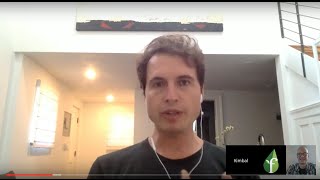
Kimbal Musk talks about pivoting from tech to food after a life-changing accident. He built Kitchen Community, a nonprofit learning garden, and Square Roots, an urban farm accelerator. His advice: find a problem you love, balance 90-day decisions with 50-year vision, and build mission-driven teams.
Chapters
Hello everybody, welcome. My name is Adeo Ressi, I'm CEO of the Founder Institute. I'm very excited today, we have a super special guest coming on, Kimbal Musk. Kimbal is a longtime friend of mine and brother of the infamous Elon Musk, and Kimbal is an amazing entrepreneur in his own right. He's on the board of some amazing companies like SpaceX, Tesla, Chipotle, but we're not going to be talking about those today because we want to talk about some of his own endeavors in the food space and beyond. Let me tell you quickly about a little bit about my background. I'm actually sitting here in front of a room of about 100 Croatian entrepreneurs and they're looking for speakers to try and set us up, maybe you can hook it through there. My background is I'm a 22-year veteran entrepreneur, created 9 companies. The 7 previous companies have generated about $2 billion of shareholder value. I run something called the Founder Institute right now. We operate chapters in about 150 cities where we train aspiring entrepreneurs how to best launch their company. We've created about 2,500 companies that are valued between $25 and $30 billion. So without further ado, we're going to cover 3 topics today that Kimbal is very experienced with: finding a problem that you're passionate about, developing a business around your passion, and then talking about some of the things that Kimbal's passionate about, particularly food. So let me call Kimbal on stage and we'll see if we've got some speakers working here. Kimbal, you want to come on stage?
Hey there.
Hey, welcome. So I gave this— I mean, to some extent you don't need any introduction, but is there any introduction you want to add?
That's funny. I think the big thing is I built a lot of businesses and had a very serious accident in 2010 that made me really focus on passion in my businesses. I think that's probably the only addition that I'd be interested in. We can chat a little bit about that during the interview.
Yeah, so we'll talk about things. So for everyone who doesn't know, that serious accident is— so there are no speakers in the room, not my fault, so don't yell because we have lots and lots of people listening. You had a very serious accident. It was life-threatening, and that was really an eye-opener to you. Do you want to talk a little bit about that to open up, and then we'll go into—
Yeah, sure. I think it will help explain my focus on food. So I've been part of many great companies. When I was starting out, I bought a franchise for a painting business where they put a business in a box. They teach you how to be an entrepreneur. It was a phenomenal program, but it was painting houses. My first year I made enough money to pay university, second year I made so much money that I was like buying cars and stereos and having a lot of fun with it, but the business just didn't do it for me. So I took the training, and the training was great, but I never worked for anyone else again. And I learned a lesson that how important my passion was to really create a great long-term business. Did the internet, which was amazing, did that with my brother, then helped my brother out with his companies, Tesla, SpaceX, PayPal, and a few others. But I kind of got really frustrated with my lack of passion in business. I like technology, but I don't love it. And every time I'd work in technology, it would be a little bit difficult. When I opened a restaurant, I learned how much I love food. And then I'd go back to technology, and I liked technology. And it was when you go from something you love to something you like, it was like chewing sawdust. And so then I had a very serious accident in 2010, broke my neck. I was horizontal for 2 months, paralyzed on my left. And I know, Adé, you came and visited me all the time in the hospital. I was there when you were there.
Come on. Don't be mean.
But the truth is that I told Sonia to help with that part of it, and it was amazing. It's been an amazing success.
So let's talk about— my heart was with you, man, by the way, on the accident. We got a little bit of echo. Hopefully it's not too bad. So what I was going to ask you is, let's go back to the painting business. You got this painting business in a box, you started painting houses and making lots of money, so much money you could pay your school off and make huge profits the following year and then you just gave it away one day. You know, what, I mean, we have a lot of entrepreneurs in Europe, we have a lot of entrepreneurs and my advice to them was do a business that makes money because raising money is really hard. Do you think you can actually not compromise, find a business that makes money but also do something you're passionate about? Is that possible?
I think you can do that. I think that it took me a long time to figure it out. For me, the training— I mean, I was 19 years old when I did this I was 19 years old when I did this painting business, so there wasn't a lot of options. It wasn't like, "Oh yeah, I'll go do something amazing in food or go work on something that was truly my passion." And you know, when you're 19, it's hard to figure out what your passion is. You're still figuring out who you are. And so I thought it was actually a fantastic training ground. I don't regret it at all. I mean, it was absolutely the hardest year of my life building the business the first year. It was when the second year came along that I started making money and it wasn't that hard that I kind of realized that I'd learnt what I needed to learn. I knew I could be an entrepreneur and I was making money and I saved that money and it helped fund the startup that I did with Elon in '95, which was Zip2. So it was great, I mean it gave me the skills and gave me some cash. To go do what I wanted to do, but I could only do it for a period of time until the challenge wasn't there anymore, and then I had to realize that life was more than just making money.
So you think you don't have to compromise?
I think when you're younger, do what it takes. When you have some freedom, then don't compromise. I mean, I've made enough money to Since I was 26, I made enough money to never work again, so why would I compromise?
How did you find your passion? You said you were passionate about tech, and then you did a little bit of food, then you went back to tech, then you went back to food, and then you realized food's it for you. There was some back and forth there. The accident played into it, but how did you know it was food? What was the big signal for you?
So I always loved food as a hobby, and I decided to go— I went to train as a chef in New York for 3 years to learn how to cook, learn how to— just mostly as a hobby. So I work during the day, but I train at night and wanted to be really good at it because I'm a believer that if you're going to do something, do it well. I love food, and why not? And I also had the money or the financial security to go do that. So I did do it, but again, it wasn't going to be a business for me. I had this incredibly intense experience to cook for the firefighters during 9/11, and it was a 6-week volunteer right at Ground Zero driving ATVs of food. We'd cook it in a restaurant that had been destroyed on the front end, but the back of the house was fine. You cook the food, put it in a cooler, you drive it in an ATV down to Ground Zero You feed the firefighters and then you come back and you cook it again and you go back. It was just— that's when I kind of realized that was such— I mean, for me, so extraordinarily beautiful and showed me how much food does for community, how much food matters to people even in such traumatic circumstances. In fact, especially in traumatic circumstances. And so that's when I sort of found my love for it, and that's when I decided to do a restaurant. And I decided to do that as a passion project, side project, still working in tech. And we opened it in 2004, a few years after 9/11, and in Colorado. We expected to serve 40 people a night. I expected it to be— you know, I didn't go into it with bright-eyed bushy-tailed. I expected it to lose money or be hard or be all these things that people say about restaurants. I mean, it's always hard, but it was very successful and I loved every minute of it. And kind of the opposite thing happened there with the restaurant was I got to a point where it just didn't scale. So you had a great restaurant, I opened a second one, and earning really good money, but I was already pretty wealthy, so for me the money was nice to have, not need to have, and I just kind of I loved it, but I was still bored. I just couldn't see how to scale the business, or at least I didn't understand how it could scale relative to how internet businesses could scale. If you build an internet business, within a few years you could reach the whole world. Restaurants just don't work that way, and so I had to— so I just decided to go back to tech just to get the intellectual muscle going again in terms of how to scale businesses. But that's when I went to tech and I kind of liked it but I didn't love it and that's when I was chewing sawdust every day. And then when I broke my neck that's when I actually decided fuck it, I'm going to figure out how to scale food. I've got my whole life to live, I've got to restart, I'm just not going to sit back and think that the only way to scale is doing something on the internet. Since then I've realized it's a— massive industries, a $5 trillion industry, software is a $400 billion industry, so I was so crazy to think that it didn't scale. I just wasn't willing to allow myself to think that. I think maybe because I loved it so much that I didn't want to destroy my passion. Can't hear you.
—Can we talk about that for one second before we go into the vision for the kitchen? Because that's a really important point. Is it possible, as you said, that, you know, by starting to scale it out, you can lose your passion and vision? I mean, clearly you were worried about it. So has that happened, or have any of your concerns in that regard come true?
—You know, actually, no. The— The more I work on it, there's a different skill set I've had to train myself on. So I've always been good at starting businesses, and then within a few years, you know, something will happen. It will either— some CEO would take over, or we'd sell the company, or something like that. And I don't want to do that this time. I want to be CEO and run these companies. So it's a new skill. It's much more of a wake up and make the donuts kind of experience. And I don't actually make donuts obviously, but it's like you wake up in the morning and you just got to meet your team, you got to drive them to the next conclusion, you got to keep them focused, you got to strategically decide where to go next, you got to figure out fundraising, you got all these things that are not actually skills when you're young. When you're young you're just busting your ass, you know, hoping with a prayer that this is going to work out.
So let's talk about what the vision for the kitchen is and the mission for the kitchen is, because this is one of your big initiatives. And tell us, you know, and how that fits within your passion and how you want to scale things.
Yeah, so our mission is to bring real food to everyone. So we join communities and we work across the system. We work in our nonprofit work, we work with schools, We teach kids about real food and what that is. They learn science through the growing of vegetables. We have built 300 learning gardens in schools across the country. We go into deep scale. We do 100 schools at a time in a community. So we have Memphis, Chicago, Denver, LA, Indianapolis, and Pittsburgh. And we built 300. We have contracts for another 200 to 300. Hope to get to 1,000 schools by 2020. And then we have our restaurants which are— real food for everyone means we have to get price points to prices that most people can afford. So we have the Kitchen Bistros which are a little more high-end, that's where we started and that's a bistro style, very casual but it's still upscale. Then we have Next Door and my goal there is to displace all of the TGI Fridays, Applebee's, Chili's just for kind of make all of those guys go away by giving a restaurant that competes at the same price point but is real food that's healthy and nourishing to the body, the farmer, and the planet. And then we are experimenting with Kitchenette, which is even a lower price point, which will be more grab-and-go. I hate the word fast food, but it's probably going to play a role in that category. And then we've just launched an urban farm accelerator called Square Roots where we're teaching kids similar to that painting business idea where I learned a business, I got a business in a box for a year to run a painting business. We're creating a business in a box for real food entrepreneurs to learn how to grow food and sell food, learn door-to-door sales skills, building businesses, P&Ls, hiring, firing other kids their age, building little mini businesses for 1 year and when they graduate we hope that whatever they do whether they found the next Google or work on a food company, they have in their roots great entrepreneurship skills and a deep understanding of food.
Awesome, that's amazing. Let's just give a big round of applause. So a lot of the people that are watching you right now, we have about 870 live, another 100 here, and 1,000 will come in and out. Are mainly going to be in Europe, right? A lot of the cities you brought up were in the US, and you said 1,000 cities by 2020. Do you plan to go outside of America? There are huge markets, obviously, here in Europe where real food can play a part. There are huge markets in Latin America, Asia. Talk to us about your international thinking, if you have any at this point.
Actually, we've been asked by a number of cities in Europe to come. I spend a lot of time in London. I met Boris Johnson before he was supporting Brexit, so I've disowned him since then. And then we've met a lot with the Scandinavian countries that want to do what we are doing, especially in the Northeast. So what we do in Chicago and New York have similar weather systems to Scandinavia. So we think that there will be ways we can help those communities, but frankly, I believe the need in America is so strong And if we invent it in America, the rest of the world is going to copy it anyway. So my goal is real food for everyone, and rather than try and own it all, we'll create the model here. We got a massive market here, so we don't have to worry about limited market size for us. But China, Europe, Africa, see what we're doing and copy it because it's going really well.
So this is something interesting. In your particular case, because you are a mission-driven organization, you don't really care if someone copies it because they are just doing the right thing in the right part of the world. Is that accurate?
Yeah, as long as they copy it with the right mission at heart, and rather than— we have examples of people trying to copy us, but they have no mission, they are just simply trying to steal the brand. That ain't cool. That we get really upset about. But if they really have a mission to bring real food to everyone, and I'll use Oslo as a great example. The mayor of Oslo really wants us to work with him to figure out how to do learning gardens there, to possibly do restaurants or square roots and a few others. Great, we will help him succeed or the community there succeed, but we don't have any plans to do the actual execution there.
So let's talk about your happiness, because it's— I knew you before. You're always generally a pretty happy guy, just so for everyone knows. Kimball has a smile on his face 9 times out of 10 and is one of the happier people I know on the surface. We all have problems, but would you say that your happiness now is much greater as a human being than before? Are you more feel like what's the difference like before you were working on your passion and now after you're working on your passion?
Well, I think that there's a— I mean, I am a very happy guy, but there's a term actually my brother and I use which we call the mental torture loop, which is when you are doing something that is not correct in some form, and it could be as simple as walking down the street and helping a lady cross the road, and if you choose not to just because you're busy, you get a little mental torture loop that runs for about a minute after that, and then you probably forget about that one. But in business, if you're doing something that isn't really core to you, that mental torture loop runs all the time. And so how do you make sure you're honest with yourself that that frankly doing something that you're not passionate about isn't actually making you happy and certainly isn't building a great business. Because if you do tie your passion to your business, then that mental torture loop goes away and you have so much more mental capacity to actually succeed at your business.
Awesome. So I want to segue into the— we got two other big topics we want to cover, so let's go into the second one. We got again lots of entrepreneurs, over now 1,000 people watching. And, you know, what advice would you give to them about how to find their calling? Maybe things that from your experience or things you've counseled other entrepreneurs with, or even things you're going to use with in your own incubator as tips. So any insights you can give them on their process?
You know, I actually give this advice a lot. I think that there's First and foremost, if you do have a passion, figure out a way to build a business around it because that's such a rare thing to have if you're young that you should be cultivating it because it will make you happy and financially successful. The phrase, "Do what you love and the money will come," is absolutely true in every single person's experience that I know. I don't know a single person that has done what they loved and the money didn't come. So I think that does happen, maybe it takes a little longer, maybe it's not as lucrative as working on some opportunities, but it will be enough for you to pay the bills and be happy. The other thing I always tell people is you pretty much spend the money you earn and your standard of living doesn't change that much anyway, so if you have the opportunity to do something you're passionate about, then even if the money is lower, it doesn't matter, even if you're paid more I know Wall Street bankers that really do not love what they do at all. They're earning millions of dollars a year and they spend every dime every year because you get into that lifestyle and you start spending because you spend according to your peers. Elton John said something really great which is the problem with why he keeps performing for the rest of his life is the wealthier I get, the wealthier my friends get. His lifestyle just gets more and more expensive. It's really about Understanding that you are going to spend what you earn anyway. It doesn't matter if you earn $1 million or $100,000 or even less. I think the happiness factor, you start getting happier in the US if you're earning more than $75,000 a year, which in almost any entrepreneur's business you'll be able to do that. So do what you're passionate about rather than what will make you money, because eventually the money will come and it doesn't really matter anyway because you're going to spend everything you earn anyway. Until you're so wealthy that you're going to be giving it away. The final thing I say to young kids is if you don't have a passion or you don't know what it is, find people you're passionate working with, because if you love working with the people you're around, you'll probably enjoy yourself anyway, and you might find a passion through those people, and you might actually— firstly, you'll enjoy yourself on the way But through those people, I think you'd be surprised what can spark inside you in terms of getting passionate about someone else's mission and you can make it your own.
So you talked loosely in that second piece about essentially forming a team, right? Someone shares a passion with you, theoretically you start working together, you become a team. Why don't we take a minute and talk about that? You've been fortunate to be among some of the most, on some of the more interesting teams the planet has ever seen, right? So how important is team in your view of going after your passion, and how much time should someone dedicate to it? Any sort of insights or thoughts you can give on it would be great.
Yeah, I think Tesla is a good example for that. So I do a pretty good job nowadays of being ruthless about who's around me, like do I want this person around, is this person someone I'm truly going to want to hang out with, and when the shit hits the fan, we're going to be in it together. So that's really, really important to me nowadays, and I'm much more aware of it and able to do that better. But Tesla is a good example. Tesla is a total mission-driven company. None of us needed to start another company during the middle of building other businesses. But we needed to prove to the world that electric cars should exist, could exist, and were actually better than regular cars. Everything was hunky-dory and we had our challenges as any startup does, but when 2008 came along, we got a real feel for the fact that we really didn't have a good team around the table. And at the board level, we just had to make— we had to sort of— some of these people might be perfectly good, but they just weren't our team, they weren't good for us. And so as much as 2008 almost caused the bankruptcy of Tesla, it gave us an opportunity to really restart that team and create a board that is now one of the most cohesive, fun, energized boards, and we're here to make a difference in the world, not anything else. And if we were to go through another 2008, there's not a single person on that board that wouldn't stand behind us figuring out a long-term solution for success, because we just have to.
That's awesome. So one of the other things you talked about, do what you love and money will come, you know, however, some people may need to bridge the gap with funding or something, because money may not come for a year or two. It's a super big issue in Europe because money may never come, but if there is some advice you could give for entrepreneurs where funding is available about pursuing their passion and looking for funding, because I mean, one thing that most people may not realize, you do a ton of fundraising yourself.
I'm a living fundraiser.
But I mean, you're right, so maybe you could talk about fundraising, the pros, the cons, any tips? I'd love to hear. He's doing it all the time, right?
Yeah, so actually, we have a nonprofit which we build learning gardens in schools. We teach kids science about growing food. That is a cash flow business. There is no venture capital that's possible. There's no private equity. There's no public markets. There's nothing. So it is absolutely— if you don't fundraise, you don't pay the bills. People have to lose their jobs. It is extremely stressful and it's extremely hard to do and requires total focus on cash flow and every day you're raising— you're not raising $5 million and you get 2 years to figure out what to do next, you're raising $5,000 in that meeting, $10,000 in that meeting, $50,000 in that meeting, next day, okay, that meeting we didn't raise a dime, next meeting we didn't raise— and then you go through a day and you didn't raise anything, oh, that sucks. And then we go through every year, maybe every year or two, we'll go to a point, oh shit, we might not make payroll next week, and there is just no institutional money for nonprofits that exists in the private world, especially in the US. So maybe the analogy could work in Croatia where you do have to create a business where cash flow comes in right away, but you can still build a business that way. I mean, our nonprofit we had $6 million in revenue last year, this year it's growing to $9 million, and it's hardcore sales and fundraising that if we don't make it, we don't pay the bills. So I think there's an analogy there, but I still love it, and in fact, I love it arguably more than the other businesses I'm building, so I don't mind going to those meetings. I don't mind it even if someone says no because then it's more likely the next person will say yes.
Well, let's talk a little bit about the social enterprise versus the for-profit or the nonprofit versus the for-profit because that was one of the other topics. So you run them both now and you just said something very interesting which is in some ways you love it more than the for-profit. Maybe you, there are not too many people that have having such direct experience running both and being on the board of some of the biggest ones in the world, maybe you can talk to us about your views for profit, nonprofit, pros, cons, things like that, social enterprise. Yeah, sure, I think that actually it's irrelevant.
So the reason why we do a nonprofit is because if you're a for-profit you cannot grow a business like this. If you cannot get on school grounds as a for-profit without enormous amounts of bureaucracy. So this is a business that is a business. We build $50,000 to $60,000 outdoor classrooms on school grounds, and it's a significant general construction, it's managing politics, it's sales, it's all this stuff, just like a business. If we were a for-profit, the bureaucracy would prevent us from actually getting on school grounds without two competitors When you're a startup, you don't have competitors. Even today, there are only very few decent competitors where if we go into a city and we say we're a for-profit, they'll say, "By law, we need two other competitors to submit bids as well, and then we will choose the best provider, probably by price." Since there are no competitors, I had no choice but to do it as a nonprofit. But I didn't have any concern or thought to do it as a nonprofit. That was just the business structure that was needed for this business.
So you work on probably some of the most— and we're friends, so I know a lot of this stuff— you work on some of the biggest challenges that entrepreneurs, the world is facing today, right? So what I would love to do, and we have literally over 1,000 entrepreneurs watching right now, what are some of the big challenges that if you were to say they were going to go and do something today, what are some of these really important things you think they should be thinking about or should be working on that will make humanity better?
Yeah, I think that there's two major categories that I'm familiar with. One is energy which is what my brother works on and you can probably learn a lot from him on that side of things and the opportunities. What I'm seeing in food is extraordinary. So the only analogy I have to this is in 1995 I came to America, an immigrant from South Africa, I didn't care what it took, I had to be on the wave of the internet. You know my passion is food but but you couldn't not be part of that world-changing experience of the internet. We started our company in '95, we grew it for 4 years, the opportunity just kept coming at you from— as people started to understand what the internet was, it continues of course to be amazing, but in those times it was the dawn of the internet. I mean, we were 22 and 23 years old. Honestly, we didn't do a very good job of running that company, but it didn't matter because the opportunity was so huge. Now we've gotten better over time, but back then you could almost do no wrong. It was such a huge wave of opportunity. In food, I'm starting to see the same thing, which is I call it the dawn of real food, where people want food that they trust. There's a massive disconnect between the industrial food system and people trusting the food that they eat, and for good reason. There shouldn't be any trust. That food is awful. It causes obesity, diabetes. It's a massive tragedy at the personal level and a disaster at the economic level because we're creating expensive, unproductive people. And so there's this backlash against industrial food, and so the opportunity in real food over the next 5 years in a $5 trillion industry is so extraordinary that you can almost do no wrong getting into the space. Figuring out how to get into it in a way that truly scales, I think that's a fascinating problem, and I continue to work on ideas on how to do that. My goal with Square Roots is You train someone for a year on food and you train them on how to be an entrepreneur and then when they graduate, just kind of similar to your programs, they have these skills and this understanding and I don't know what they're going to do but I will be paying attention to every single graduate and what they end up doing because if I can support them I will or if someone else, if they need the support from someone else I'll try and help them.
So you said a couple very interesting things. You said expensive, unproductive people, and that's, I presume, because they eat crap, they get sick, and then you're essentially paying for the crap they ate in the healthcare system.
Yeah, and they have diabetes, they lose their limb, they go blind. I mean, these are not productive people, and that's a tragedy on both sides of the aisle. So I mean, it's really— we have to get in and stop that from happening.
I couldn't agree more, but to some extent, and this is my question, and I'm curious as to your answer, the mass production of food, and I know you've done research on this by going to the back offices of Chipotle and see how they all work, but the mass production of food has sort of caused that problem because in sort of mass production, we've cut corners and done things that's lowered the quality and made it just bad. So, you know, is that one of— I mean, it seems like, can you have mass production and the type of quality that you're aspiring for? Do you—
Yeah, yeah, absolutely. So you can create massive-scale real food businesses. There are some structural things that get in the way. And one of the structural things is the corn and soybean industry, which the subsidy that the government provides in America isn't that big of a subsidy. It makes sure you earn 2% return on your money. Like, that's it. It's not like you're like, oh, popping champagne corks. But in a good year, you're earning 3% return, and in a bad year where you actually lose money, subsidies will make sure you earn 2%. It's the worst possible industry in the world, but it's so safe. That as you get older as a farmer, you just start just using that as your backup, and it starts growing, and that starts growing, and over 5 decades, we have so much corn and soybean produced that 40% of our corn is actually used for ethanol because we don't know what else to do with it. And ethanol is retarded. It uses a gallon of oil to create a gallon of ethanol, The oil companies hate it. Everyone hates ethanol, but we don't know what else to do with this land because the government has just painted themselves into a corner, because if they tell the farmers all of a sudden there's no subsidy, what are the farmers going to do? These are women that are 75, 80 years old. They don't have the ability to change their business, so it's a very complicated problem. But at the other side, they're old ladies, so they're going to die soon, and when they do, we'll have tens of millions of acres of land available to young farmers to figure out what to do with this land in a way that scales and provides real food. So then again, that's where I start seeing this amazing opportunity coming down the pipe that's structural opportunity. It's not like, well, maybe it'll change. No, structurally, people can't live forever. And it's going to be a very interesting avalanche of supply of land in the next 5 to 10 years.
So what are some of the other interesting businesses that you see that will be coming out of this transformation in the nature of farming, this transformation in the food industry that you're talking about? What are some types of businesses, let's say, because we have a lot of entrepreneurs here, I see them nodding their head and laughing. When you're talking about some of this stuff. So give them some areas of inspiration.
So I think there are a few areas that I'm constantly curious about, and I haven't seen home run opportunities yet, although there are some good examples out there. One is in soil, so trying to figure out how to regenerate soil in quicker and more interesting ways so that you can farm real food again. So if you take farmland that has been pummeled with pesticides and artificial fertilizer for decades, it takes years for that soil to be able to grow normal food again, real food again. So there's some very interesting research going on around how do you accelerate the regeneration of soil, and I think that will be the— I know people don't like Monsanto, but it's a $60 billion company. That will be the Monsanto of the future, the guys that figure out how to regenerate soil faster to be able to go back to growing real food again. I think that's going to be very, very interesting, and I continue to watch that closely. And regenerating soil for tomatoes is not the same as regenerating soil for zucchini. So you really need to kind of think carefully about where you're— what you're doing and what climate you're in. So if you're in the South, regenerating soil there is you're actually dealing with cotton and you're going to grow beans. So you've got to figure out something very different there. If you're in Iowa, you're going to take corn, soybeans, you're going to regenerate the soil for tomatoes and others. So you kind of have to understand where you're coming from, but that actually means that there's very unique geographical opportunity for Croatia to California where there's the drought issues, where you have weather issues. So that I think is going to be a fascinating area. The other one is in the rebirth of home cooking. So there are some great companies that are coming up like Blue Apron and HelloFresh that are coming out, very, very scalable businesses that are getting people cooking at home again. And I think that, I mean I'm seeing it obviously through the eyes of those companies, the desire to get back to eating together as a family in affordable ways, not as cheap as McDonald's. You'd be surprised how expensive McDonald's is compared to many of these companies, but in a way that is very much about getting the family back together and eating real food again at home. So I think that's another major, major opportunity that will be a multi-hundred billion if not trillion-dollar opportunity over the next 5 to 10 years.
So that's the— yeah, and there's a lot of food delivery startups, there's a lot— maybe we can also look at some of the trends that you're not excited about. So maybe let's go the other way for a moment. I'm excited, the things you said got me excited, right? I saw the food— but what are some of the trends you're seeing? Because I think there are a lot more food startups today than I've ever seen in history.
Well, I think they're seeing the same opportunities that I'm seeing, and they're probably a little bit behind the 8-ball because they're starting now instead of 5 years ago. But again, it's such a big opportunity, and food moves a lot slower than the internet, so today is perfectly good. In fact, tomorrow, even next year will be— the opportunity is just so huge, and it's slower moving than the internet. The other thing that's interesting about food is it's not a winner-takes-all business. In the internet, if your social network in your Facebook, you crush if you win. And everyone else is sort of forced into a significantly second or third place position that is much less attractive than the number one player. In food, it doesn't work that way. You can actually have first, second, third, fourth, fifth, you know, the top 100 companies can all be billion-dollar businesses. I lost my train of thought there. The food companies that are starting, I think there are some that that I don't agree with. I don't know if they'll be successful or not, but I don't like the businesses that are anti-real food. So if you look at— if I see another business plan about we're here to show you how to increase yield of corn and soybean crops by 0.05% this year, that does matter because the scale is so huge, but oh my God, is that boring. And structurally you're playing a game that we are so good on yields already that as soon as we stop, for example, stop doing the stupid ethanol, we've got 40% of corn land for corn that we don't need. And when you're optimizing at the margin of half a percent and you can all of a sudden get 40% of supply returned to the market, your business is dead. I see a lot of yield optimization companies, and I think that's just painfully boring and dead. The other one that I hope don't succeed are the food as a pill companies, so the Soylent Greens of the world or whatever else stuff is out there that takes the joy of food out of your life. Why would we want that? I don't even get it. I think some of those companies might make money, but I would have a tough time waking up in the morning.
Let's talk a little bit about Soylent for a moment. It sort of segues into something that's not on the agenda, but I want to just talk to you about, and it's Mars. This is an area that your brother and I are passionate about. I know you have a lot of the same thoughts. We're going to go to Mars somewhat soon. We don't have to get into details about that. Let's focus on the food part of it. Something like a Soylent may be necessary for Martian habitation. Maybe even, have you thought about what intergalactic food would be like?
Sure. Don't get me wrong. You need food as a pill when you are on a spaceship from Mars for 6 months. I mean, there are times when you need it. Would you choose it? No. And if we really want Mars to colonize, we're going to have to have some of the pleasures of life there, including food. If you go and do— if you try and— here's the sales pitch for Mars. We're going to give you food as a pill and you're going to stare at a computer screen for 24 hours a day. Because we can't let you outside, you can't see the sun, you can't eat real food, you can't talk to anyone. I don't think we're going to get a lot of takers. So we need the whole picture, which includes a good meal every now and then, but maybe there'll be a few options to, you know, backup plans of food as a pill.
Right, in case the worst-case scenario. Alright, well, let's go on. Tell us a little bit more about— and if you ever want to talk more about Mars, we can do a whole webinar on Mars as well. Just geek out about all the things. But I agree with you, if you're stuck there at a screen with no sunlight, eating food as a pill, no one would go. Tell us a little bit about Square Roots here, Irving, and your thinking there, what you hope to accomplish, because maybe we'll have some takers from the group here. Are you taking people from around the world first off?
Yeah, they have to be willing to move to Brooklyn because that's where we're doing our first accelerator. But we are working with other cities in the US. This will definitely be a US-based program, but we're looking at other cities in the US, and we would be totally open to anyone from around the world being willing to move here for the program. So there's a phenomenal company in Boston called Freight Farms, which has figured out how to grow vegetables in a storage container, literally one of those storage containers that sit on the back of a ship. And you take those storage containers and you put vertical farming equipment in the storage container so that you'll have rows of vegetables growing in the dark with LED lighting. And the advantage of that is a number of things. One is by stacking it, you get 2 acres of the equivalent of land of vegetable produced in one storage container. So that's kind of enough to build a business for someone. The other advantage is you can move them. So we're renting a parking lot in Brooklyn, and there's some fascinating things going on in parking lots. Because of Uber and because people are now learning to bike to work, they're living downtown again, they're stopping to live in the suburbs, people don't need cars as much. So these parking lots are just kind of sitting empty, and code still requires them to exist. So what we're doing is we're creating a campus of these freight farms, so it will be these storage containers lined up, 10, we'll start with 10 but it can go up to a 50-farm campus. It should be 100 acres of farmland on one parking lot and it will be a community of entrepreneurs learning how to farm, they'll decide what they want to farm, they'll have to figure out who their customer base is, we'll help them of course, we'll train them on how to sell, go door-to-door, build up a customer database. If they get very successful, like I was in my painting business when I was a kid, they'll start hiring people, they'll learn how to hire, they'll learn how to fire, they'll learn how to run a P&L. And after a year of doing this, they will have learned what food is, what real food is, they'll have learned incredible skills on how to be an entrepreneur, and they may choose, they can even do this while they're in university, they may choose to then go study something become the next Google, but they will do it with an unbelievably powerful understanding of what real food is and how to be an entrepreneur. Their business that they create next, if it's a food business or if it's a technology business, will be more successful and more oriented around food.
The program is a year long. Are you going to— and it's in Brooklyn. A couple things, are you going to be in Brooklyn? or how often do you plan to be there and how will the mentorship happen? So you got the 100 acres of food in the containers, presumably they'll live nearby, they'll be working there, and then so like is there mentorship, will you be there, like what are some other structural details? Are you still working on that?
No, no, we have some really good ideas. So Tobias, who's the CEO, used to be a mentor for TechStars, which is a phenomenal incubator for tech in the US, so we have a lot of understanding and skills for that. I'm going to bring more of the business model mentorship for folks, so if you think about the initial business model of the farm, that's already been figured out by Freight Farms. The campus business model around mentorship, that's going to be done by Tobias. What I'll do is as they graduate is I'll be helping them figure out whether the the business plan that they choose to create after the fact is truly a fundable, scalable business that they'll be able to leverage their skills better. So different parts of the process will be taken care of by different people, but what I get most excited about is as they come to the end of their year, what are they going to do next? And that's the role I'll play.
does it cost them, is it free, do they get money, do they take any equity, what are sort of the economics of it?
Absolutely, so the economics are basically, they start their own business, so it's about a $10,000 commitment, which the USDA will provide loans if they need the loan or they can bring the money to the table themselves. The USDA is so excited about this program because what it does is, their goal is to, they don't care about $10,000, they want to give a much bigger loan to people who want to be in food, but they want some experience. So by giving a microloan to an entrepreneur that could eventually take a bigger loan like hundreds of thousands or multimillion dollar loan, that gets them very excited. But there are many other sources of funding from banks that will fund students or young entrepreneurs, 18 to 21-year-olds is kind of our sweet spot. We will obviously, we're not discriminating on age, but we have found that there's an enormous amount of loan programs for people of that age. So $10K is sort of about the table stakes, and then they should, as an entrepreneur, based on what this business does, generate anywhere from, after paying back the loan and everything else, generate anywhere from $20,000 to $40,000 a year as an entrepreneur. It's a 20-hour-a-week commitment, so this is designed for people who are in university or in community college, and they do this as a business on the side, very similar to what I did when I was in university, where you, you run a business that can actually pay for your university, and then when you graduate, you have both the skills you learn at the university as well as the skills as an entrepreneur and understanding about food.
One question that keeps— that sounds great, by the way, and I encourage everyone— is there quickly, is there a URL to apply? Then I got a question from the audience, and I will summarize.
Yeah, the URL is squarerootsgrow.com.
Awesome, we'll paste it in the chat. So a question that keeps coming up in the chat, it goes back to the for-profit versus nonprofit. There's a lot of misconceptions in the world about for-profit, nonprofit. A lot of people think nonprofit is good and for-profit is bad, but can you tell us like why a for-profit mission-driven organization is good in your mind, or why for-profit in general is good?
Yeah, I much prefer for-profits, I'll be honest, and I haven't done both. I just think that if you do a for-profit, you have the discipline of of running a P&L according to the feedback from your customer. So if you're in the nonprofit world, you're usually selling a product to someone that is not getting the product. So if you, for example, we build a learning garden on a school that's $55,000, the school doesn't pay for it, a donor pays for it, and so we have to do an enormous amount of work to make sure that the school has some skin in the game and feels like this is something that they have to look after and really use well. Whereas if you are a for-profit, usually you're selling it to the customer that is— the person who is going to use it is the one paying the bill. And so I much prefer the discipline of a for-profit than a nonprofit. That being said, a for-profit that doesn't have— that isn't mission-driven, that just simply runs purely on the P&L I just struggle with really growing it long term. I love the idea of doing the kitchen for the rest of my life and we'll spin off companies like Square Roots, we'll spin off a nonprofit like the Kitchen Community, but frankly I'm going to do this for the rest of my life and I want to build a business and make it successful and the discipline that for-profit businesses provide are much, much stronger including the ability to get money from an institutional investor. If you get money from a venture capitalist, they are going to put a lot of discipline in place. They may not be mission-driven, which has its faults as well, but there's something about the discipline that I prefer. But in every case, whether it's a 100% for-profit or 100% nonprofit, if you're not mission-driven, I think you eventually run out of gas.
So let's talk, I mean, the Founder Institute, the reason why I made it for-profit, it's almost logical in some ways to make it a nonprofit to take some of the advantages you talked about, was that we can just run it forever, right? Because if the thing makes money on its own and it's mission-driven, then it can go ad infinitum until the market changes where it's not necessary. So that's one of the reasons to do a mission-driven organization as a for-profit, so continuation will be there.
I'll push you on that. If you found you couldn't do it as a for-profit, you probably would have done it as a nonprofit. I think that's where I would start. Every idea should be a for-profit, but if you really need to do it and it just doesn't seem to be possible to run as a for-profit, that's when you start thinking about running it as a nonprofit.
We got last few minutes here, we got a lot of people, and what would be some closing thoughts or advice that you could give them as they either start their entrepreneurial journey? So I did a survey of people in the room, and I'm sure it represents the people online. It's about a third ecosystem builders, people who are helping startups, a third people who have companies, and a third people who are aspiring to start companies. So you might even want to give a few pieces of advice, but what are some big closing thoughts for that audience that you can give?
Yeah, I think the advice is always the same. Be very flexible as long as you stay on your mission. I look at food for me and I've had to come up with multiple restaurant concepts to tackle the demand and make money and stay on mission. If I had stayed with the Kitchen as a more upscale restaurant, if I had just said, "You know what, I'm just going to stick to that because damn it, that's the one I want," I actually would have not been able to get my mission of real food for everyone because it's just too expensive. So we created Next Door, which is a more affordable version of the Kitchen. Almost everything is under $10. and it's incredibly successful. We serve 10,000 people a week across 3 restaurants. It's amazing. So be flexible but stay on mission. The other thing that I like to, you know, the way I would sort of dig a little deeper in terms of being flexible is I like to think in terms of 2 ways. You're either thinking, you have to balance these 2 thoughts in your head. What do I need to do between now and the next 90 days and make the best, most thoughtful decision based on reality, which if there's no financing, that's reality. Go figure out a way to live through the next 90 days. If you're struggling with competition, that's reality. Figure out how to deal with it, and it only matters if you can fix it in the next 90 days. Anything past 90 days is like a waste of energy. And then also balance in your mind the next 50 years. So if you think that you're mission driven, you're going to do this for the rest of your life. I think I'll probably live another 50 years. I think 50 years out, am I going to be happy with what I build, and 3 months out, what do I need to deal with today? And anything in between is irrelevant because in the next 90 days, or the next maybe 120 days, I'll probably be facing a completely different business problem that I am facing now, or different crisis, or different opportunity, or different whatever. So I just choose not to think beyond 90 days.
Wow, so that's very interesting. So 90 days and 50 years, I've never actually heard anyone say that before. So, you know, since we have a couple minutes left, let me just drill into that. So be flexible, make these decisions, think for the next 90 days and make sure your decisions work in in the 50-year timeframe. So can you get— the 90-day thing I think everyone gets, right? It's like, okay, 90 days I can get. The 50-year thing, you know, I find that intriguing. I mean, I'm sure guys, you find that intriguing as well. So give me some examples of a 50-year decision that you may have been facing, and it change the way you did it now, or if you can elaborate on that piece a little bit, it would be very interesting.
Yeah, sure, I'll use Square Roots as a good example. We launched it last week, so it's on my mind. We incubated it at The Kitchen, we created the idea, the business model, and we did the due diligence on the tech. One of our team members became CEO of Square Roots. We had to make a decision whether or not it would work, so that's the 90-day thing, as you said, that's a bit easier. Okay, will a pencil— but I also had to think 50 years out, should I do this or should I not do this? And it was one of those beautiful examples where if I am on my deathbed and I'm 93 years old, I'm going to be really happy I did Square Roots, whether it succeeded or failed, I will be really happy that we did it. And if I didn't do it, I would think, you know, I really should have done that. And so, you know, it's about feeling good about what you've done but also not having regrets.
So you really contextualize these decisions from that life journey, where you want to be at the end say, "Yeah, that's a great way to look at it." So very interesting. Well, Kimball, we came on to a perfectly wonderful hour of great insights around food, entrepreneurship, and everything in between, for-profit, nonprofit. Can we give him a big round of applause?
Thank you guys, it was a pleasure.
It was lovely to chat with you. For everyone watching, if you haven't applied to the Founder Institute, please do, fi.co/join. And if you want to lead a chapter, fi.co/lead. Kimball, you can look at my— you see pictures of the audience if you look on Twitter. Again, thank you so much and have a lovely, lovely afternoon.
Thanks guys.
Bye.










