How To Create Products People Love w/ Alberto Escarlate, Patrick Schoonveld, & Kevin Siskar
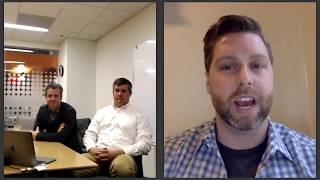
Alberto Escalante and Patrick Schoonveld explain how to build products people actually want. Start with real user interviews instead of surveys, use the vitamin-painkiller-candy framework to classify value, and launch in stages (alpha, beta, production) rather than all at once. Pick tools that fit your team's workflow, not the other way around.
Chapters
Hello everyone, welcome to How to Create Products People Love, a webinar brought to you by Founder Institute. We have some great mentors with us today. We're going to give it a minute here for— to let people join in and get in here. My name is Kevin Siskar. I'm the Managing Director of Founder Institute New York, and we are coming to you live from New York City. Patrick and Alberto are in the Criteo offices. I am in Midtown. So the topic of today's webinar is getting users to interact with your product isn't exactly easy, and no matter how large your company. So on this webinar, we're going to discuss how to build products that your customers love, that they get to really bury themselves into and come to a de— to enjoy. And so today we have product development experts Alberto Escalante and Patrick Schoonveld joining us with their insights. Alberto is the CTO at Throwing Fruit. Before joining Throwing Fruit, he was the CEO of a Paris-based startup, FileChat, and before that worked as a VC at Collaborative Fund. And we are also joined by Patrick Schoenfeld. He's the product management director at Criteo. Patrick has over 15 years of experience across the full lifecycle of software development products. Gentlemen, welcome to the webinar. Thanks for being here.
Thanks, Kevin.
Welcome, everybody.
So we're going to introduce each speaker, and I want you guys to maybe open it up with a few keywords, maybe a little bit of your background. I know I touched on it a little bit, but how you think about products and how you think about building them for consumers today. So Patrick, you want to go first?
Sure. So Patrick Schoenthal has spent the last 15-some-odd years in ad tech for the most part. Before that in banking and automotive. I basically built products and businesses around those products for ad tech companies. And when it comes to my philosophy, my focus has always been B2B. I'm very not, not as much of an expert on the B2C end of things, where I think things are, can be quite different. And when I think about the products, about solving a problem somebody has, some way of resolving that issue, and if you can effectively resolve that issue, in a way that delivers value every single day, you will have users that stick with you for the entire life of your company.
All right, awesome. I love that, Patrick. And for all those viewing now, I love that you're kind of throwing in the chat where you're coming from. We got Australia, DC, someone said go Eagles. Tell us a little bit about what you're working on, what sort of products you're building, and feel free to throw questions in. We're going to throw them to the guests here. Alberto, do you want to introduce yourself and say a few words?
Yeah, so we have an interesting setup because Patrick is a B2B expert and I'm the opposite. I've been doing mostly consumer work on early stage and he's late stage growth, growth size companies. And I've been doing very early, you know, from idea of being a serial founder, I started a few companies, being on the venture side, and being through a lot of exposure to early ideas. And I think we can have a kind of different, you know, perspective on both ends of the spectrum of product creation.
Okay, awesome. So with that, I'd love to jump in. We got a few questions on Twitter earlier today, and we're going to have some questions coming in on the chat here. So, you know, what tools do you guys best recommend, you know, people use to communicate with the product team? And how do you initially build out your product team? How do you create those relationships?
I'll take the tools part and Patrick can jump on the second question. But I think there's the good news that You know, nowadays it's very easy to get lots of tools that can help communicate with your product team or your stakeholders and everyone that's on the team. You know, there's obviously, you know, email is one tool that's overly used, but not necessarily the most effective one because there's a lot of latency and, you know, the communication is not as real-time. And we see lots of organizations moving to more kind of real-time tools like Slack, you know, like, you know, chat, chat tools that allow you to basically be in the same kind of virtual room even though, you know, there's a lot of situations where you work across in different, different states or different countries even. So that's one thing. There's tools to control the work you've been doing and kind of annotate what it has and things that each member of the team is supposed to be working on. And I think that there's as many tools as there are tastes for, for, you know, what, you know, styles of work. I typically, I like working with Trello because I think it's very simple, it's very easy. You know, if you haven't seen it, it's like card-based, and, you know, every card has, could be a task, could be a thread about some if you have some issues, something you want to share with the team, you can attach files, you can assign the cards to different people, you can follow up, you get notifications. At Trello there are many, many others, Jira, there's, you know, I don't know what experience you had lately on this, but I'm a Trello fan.
The one I came across last year was Asana.
Asana, yeah.
It feels like the right mix between the power of Jira, which is also kind of constrained in some areas, and the simplicity of Trello, so I kind of put them together for a collaborative environment. I feel like Trello is really good for my— I use it personally, but I wouldn't— I'd be disinclined to roll it out for a team because I feel it's hard to see lots of things at once. If you have more than a few work streams per person, I struggle with it.
Yeah, no, it makes sense. For highly complex projects, you might want something more sophisticated. I agree.
I think my fundamental on tools is that it's the tool you know. I always liken this, I do a little carpentry on the side as a hobby. I've got some friends who are really into hand tools. I am not good at using hand tools. I find I like power tools. I don't know why, maybe it's 'cause they make a lot of noise, but that's what I like. And I think as I've gotten to know people that are really expert woodworkers, two people can make the same thing, the same quality, using completely different tool sets. And I think the same is in product, that, or any other, any other world. We need, for example, software development, you know, both of us having engineering backgrounds and a real focus there. I am loath to dictate a language other than this is the language that we're going to unify on. Because if somebody's going to build a one-off and they're really fast in Python, or somebody's really good in Java, great. Pick the thing you know because of the overhead of learning the tool can destroy the project the whole way through.
Yeah, and I think technology got to a point today that, you know, speaking of any languages, you know, all languages, you know, have different types of focus, but I think at the end of the day they all perform really well. So, and I think, you know, overthinking the two, you know, I think you should use the one that the entire team buys in. You know, you don't— because once you start doing it, you don't want to change, right? Because all your logs and all the history of work will be there, and you don't want to move from one tool to another because that's not going to work.
Yeah, it's definitely an area where bottoms up can make a big difference. Although I will say, a number of years ago, Kevin and I actually used to work together, and we rolled out a ticketing system for 3 different groups that normally communicated through email, hundreds and hundreds and hundreds of emails every day at a relatively small company. And we gave them a ticketing system that was really cheap. It was not very pretty. It lacked a lot of the key features you'd look for in a ticketing system, but we happened to have it and it was free. And we did a— the senior leadership were like, this is never going to work. We have to do this, we have to do that. We did a pilot with the first 3 pieces of these teams. And the idea was to test it for a few weeks and see where we came out. By the end of the second week, everybody was using it because it was so much better. And I think the point there wasn't that it was a good tool, because it wasn't. It really was not. But it really solved the problems as a product.
So I love that. I love Trello, Asana, great tools, great recommendations. And I think your point about execution being more important than the tool and making sure you can keep moving forward is great. So our next question from Sonia. You know, before you have the team really, you know, how do you go about envisioning a new product? You know, and how do you know that you have maybe something that's going to click, right? Like, is it a gut feeling? Is it talking to customers? How do you know that you're onto the right track when you're envisioning a new product and that it'll take off?
Yeah, so I think, you know, we're talking about products that people love, right? So you can't, you can't figure what people love without asking them or without making sure you observe them and you realize what's really, you know, they love or they need, you know, maybe there's a pain point, maybe something that they really, you know, are looking forward to having. So you always have to start from user, from customer, from the people who you're trying to build the product for. I've seen so many great ideas that basically when they hit the road, they fail because The founders, the product team, they were very in love with the idea, but they forgot to actually ask people if they really wanted to use them. And same thing in the degrees of complexity. Maybe people have that need for the product, but the teams end up building way more things that are necessary, and the product ends up being confusing, hard to use, or people don't have clarity on actually What is it for?
Yeah, that's— I can't echo that enough. I worked with a company last year and had some issues, and that was exactly what happened. So the founder was the one that set the product vision, kept pushing more features in and not testing that with users enough. Result was an overly complicated product. His fundamental idea was brilliant, but— and the way that he built the UI was really interesting. He had a really good value system for how that worked. There wasn't enough testing. So I think that making sure you really understand what value you're going to provide back to your consumer, whether it's a similar from Albert, Alberto from a couple years ago, is your product a vitamin, a painkiller, or candy? And candy I've never heard before. It doesn't really matter what that thing is, it's that what is it, what are you going to do for this person? How are you going to get them to use this every day? I tend to be very mechanical and value-driven just as a human, so I don't, I don't I don't play social games that much, so it's probably a bad example for somebody who's an expert in that, but I think about, okay, so when a user logs into my platform, their goal is not to buy digital media or, you know, run a report or whatever. Their goal is to do something else, and I'm just here to help facilitate whatever that is. So I try to figure that out, identify the values that are gonna be really important to them. Is it speed? Is it ease of use? Is it one of those things? And then test against it and test against it and test against it. And that to me is what builds a great product.
Yeah, and I just want to add something. A lot of teams or founders, they tend to work too long on a product before they decide to launch it. And, you know, the syndrome, you know, it's not perfect, it's not perfect, and then, you know, the team keeps, you know, postponing the launch and And the longer it takes, the longer you see reaction from real users, the longer you realize the things, the assumptions you had that are wrong.
So this is a good segue because Alexander in the chat asked, you know, how do you create products that are simple enough for people to use but effectively deal with the problem? And, you know, I think you both touched on not being overly complex, right? And, you know, making simple things is hard. Making really good simple things is hard. So what advice do you have for that and keeping your product simple but also effective?
I think it's about really understanding the problem and then starting to think about what are the simplest things to get there. So what are the least amount of steps? I think we've seen Apple kind of mix and match on this where they've gone very high and very low. The idea of what is somebody really trying to do? Evernote's a really good example of this too. Evernote got really bloated for a while. It's a product I love. It's something I use every day. And at some point it was kind of getting annoying. It went through a huge revamp. And now when you log, open the app, when you, you know, whether it's on your desktop or on your phone or whatever, immediately first thing, new note. And it gets you there immediately. And from there you can tune what kind of note you have. To me, that's an example of that simplicity where Okay, well, we wanna ingest business cards and we wanna read them and do these things. Well, okay, is that— it takes another step if the user has to say new note, then choose business card, take the picture. Can you shortcut that? And to me, that's about the value. The value for ingesting the business card is to store this information quickly as possible and use it later. I'm not taking this picture because I'm gonna then go do something else. I'm just trying to get the business card in my system so I can move on. That might be different from an expense system, for example, or whatever, but the idea of understanding what is the user really trying to do and shortcutting every single piece of the way.
Yeah, and also realize that a simple product doesn't mean poor design or UI. So I mean, sometimes people mix, I'm going to do, you know, like a prototype or proof of concept or MVP, you know, whatever term that is. And, but sometimes, and I think more and more these days, the first interaction that the user gets with your product will make or break. You know, they'll fall in love or they're gonna say, "That's not exactly what I was looking for." And I think the design and the user experience is very critical for that. So, You know, don't think by simplifying means cutting corners or making, you know, like, products that don't look or are not attractive.
Although I think it's really hard. I got a phone call today from a guy who's— so I knew him for 15 years. He's starting a new business. He's already down the road and he's got the UI basically created, but he said, you know, I'm terrible at building pretty UIs. I need somebody. And that's an area that I think we still do not have a great supply chain for finding these people. And you end up with folks that are really focused on research or really focused on design or really focused on UX and finding the right person to help guide you through it. Because undoubtedly it's maybe 1 out of 100 person that's both a founder of the company or even a product manager that's good at building pretty thoughtful designs. It really is a skill that has impressed me greatly over the last 5, 6 years.
Yeah, I agree, it's a skill, and I think it should be part of the, you know, the DNA of your company to start from that, you know, kind of assumption that you've got to deliver the best quality. Again, because, you know, once you were exposed and you're out there, people will make a judgment of, you know, the quality of the product, you know, sometimes based on the looks and that might not be the best thing.
So you guys touched on something earlier that I want to kind of come back to because I think it's really a useful mental trick to realize what you're building. You guys talked about the vitamin, the painkiller, and the candy. Can you guys unpack a little bit very quickly of what you meant by what is a vitamin, what is a painkiller, what is a candy?
Yeah, so if you think the metaphor is very much like— so The painkiller is something you take when you really need it, right? So you're feeling pain, you need something at that moment, exact moment to take the pain away. So some products are like painkillers, right? So you have something that's not working, you have a real pressing need, and if you— and I guess there's a lot of discovery of those products through Google. So you Google, I need to do this, and then a bunch of products and try one, try another, and try to figure out which one will work best for you. The vitamin is something that makes you feel good, makes, you know, but not necessarily addressing a pain, but something that, you know, the more you use, the more you get into the products, the more you feel like you're engaged with. So I think it's kind of more kind of continuous use. And sometimes the painkiller is just you use once and never, you know, I need to, I need to, example that happens probably many times, I need to merge two PDFs into one file. So Google it and find something and do it quickly and then the pain's gone and you're never going to use that again. And then next time you're going to Google that again and maybe find a different product. The vitamin is something that you keep using and using and you get into that the more you get it. The candy is kind of a little different, right? So it's something that you don't need and maybe it's a game, maybe it's a social tool, maybe it's something that you share with friends, but it's not necessarily addressing any pain points on your day-to-day life, or it is not making it better. Maybe it's something more kind of that comes and goes depending on the time of the day or the time of your life when you use it. Nice.
Well, thank you for unpacking that a little bit. So it's clear now that thinking about those different types of products that you need to talk to your customers, right? So, you know, where do you recommend people, you know, one of the questions here coming from AM is where do you recommend to find people to test your product on? And then I also want to follow up with a question from Warren, which is what is the best way to estimate how much it costs you to acquire those customers throughout that process?
So I think the first thing to do is around user personas. So when you think about your target market, who you think are going to be the first users, First, narrow your market down by 90%. So most people say, oh well, you know, I could, I could sell this to anybody. And we hear this a lot at the FI Founders who are like, oh, anybody with a pet would like my service. And as you really would tell, oh no, it's only anybody who has a pet, doesn't have a car. Oh, and somebody who doesn't have a pet, who doesn't have a car, whose pet can fit into a bag. The narrowing your market down to the most narrow group that you can actually think about helps in moving to the next stage. So the first thing is that almost always everybody comes in with the newest ideas, like, this is going to address a problem for a billion people. It's almost never true. So find the smallest market you possibly can, and within that market, start segmenting who do these people look like. Give them a name, tell a little story about them. What's their age? What's their gender? What's their household income? Where do they live? What do they, what do they do in their free time? And then start patterning from there. So once you know who you're gonna go after, you can then go reach out to those people. I was sitting with a friend of mine who has a lighting startup. She was thinking about pivoting her business. She wasn't really sure about how small to talk to small businesses. And we have to have this conversation at a coffee shop in Chelsea, right here in Manhattan, like super convenient. I'm like, well, here's the target market. How many light bulbs can you sell inside of here? Will your solution work for them? The manager happened to be walking around and we talked to him for 15 minutes about could her product idea solve his issue. So I think by first of all, understanding who your target is, that will help you figure out where to go and market to find them. 'Cause if you, if you can go through the checklist and say, oh, I'm looking for a small business owner who has a retail business that works in the city and is the manager of the business, check, check, check, check, you know it's somebody you can talk to. That also helps you when you, as you go into market later on, giving to your marketing people, to your salespeople, these are the types of people you should be talking to and working with them. And I, so I don't think there's a generic answer for how to find the users. It really depends on your product. And unless you have a clear target, you're never going to find them anyway. So figure that part out first and then move from there and adjust your targets as you go.
Yeah.
Yeah.
I'll put it up to you. Like, how do you measure the cost to acquire those customers?
Well, it depends on the stage of your product at the moment, right? So, well, basically, you know, it's not scale. If you're going to Starbucks talking to people and selling a product, you know, the cost is probably your time, right? So, but so how do you, how to scale that? I think you have to first of all figure where the target, the personas kind of hang. Hang around and see where they are and see how to reach them. So if you reach them through Facebook ads, which is probably not a good idea these days, terrible.
I'm pretty good myself.
Creo, yeah, which is—
It's a more refined approach.
You know, through an ad network to be more generic or through, you know, kind of word of mouth, maybe you try some kind of Friend refers friend. You have to first find what the channels are. So there's multiple channels, right? You can do through email, you can do through ads, you can do through PR, you can do through guerrilla marketing, you know, distribute flyers at Grand Central Station. So there's all these different channels. You have to figure out which ones are gonna be more effective. And once you find which channels are working for you, then you can, I guess, do the back of the envelope calculation on how much it costs. So if you realize, you know, Criteo ads is the way to go, and then you talk to Patrick, and then how much it costs to drive that number of users to convert to my product, right? And then you do the back calculation. Same thing for every channel. I think early there's no clear idea of what channels will work for you, so I think it is important— some channels you know are not going to work, but for instance TV, right? TV ads might not be for early-stage company, but you figure, you do a little test on each and every channel and see which ones are getting better ROI, I think. So maybe some channels convert well, but they're too expensive. So you have to gauge that, right?
Yeah, for sure. One of the tools that I like is called quickmvp.com, which basically takes a landing page and then quickly runs some ads on the internet across a few channels, and then gives you sort of a rough, very light cost to acquire a customer. And then I think your point also about, you know, making sure you're testing all the different channels, because your product is going to be a different cost across each of them, right? And so there's a really good book called Traction if you're looking for different marketing channels to test out that I would recommend people find out. I'm going to combo a question here from Mark and Sonia. And Patrick, maybe you can lead this one, because I know that you've used it. So do you think surveys through Mechanical Turk, or focus groups or other similar sites are effective in finding the right price point or to find different results about going to market?
I think it really depends on what question you're asking and to whom. And I know that's kind of a lopsided question. I think Mechanical Turk is just cool, so, but the idea that you're going to get this in front of somebody isn't the right—
Do you mind just saying what Mechanical Turk is?
Oh, sure. So Amazon Mechanical Turk is you pay people to do something. And I haven't looked at it in probably 18 months, so I'm not sure what the latest and greatest is there. But traditionally, you couldn't give very selective feedback. There are other survey tools that exist. I'm not going to buzz market any of them, but that will help you get the right person. The catch here is that if you were just looking for a general, UI test, having a random person do it, you might be okay. Mechanical Turk is heavily used by a small segment of population that actually do it either as kind of a hobby or actually make money doing it. So you're already incentivizing people potentially in the wrong direction. Again, if you ask the right question, you do some tests around it, you might be fine. It might be a great way to do it. I think if you don't reach the right user with the right question, you're going to be upside down anyway. So it's not about— any tool can be completely useful. Um, I've not seen the quick MVP thing, but my concern would be, okay, so if you have a— if your product is truly a generic product and you spray and pray some ads on the internet and see who actually took advantage of it, you've already kind of lost. You, you built a commodity product. Why bother? There's no reason to get into the commodity product business when you could be targeting something at a particular audience that resonates with them and tune your message to actually get proper feedback. So it may be a little bit harsh in saying that, but that's my opinion.
Yeah, I agree. Also, you have to be very careful with the questions you ask, because if you want some answers, you're going to get them, so depending on how you ask. So some people say that the best thing to do is not ask questions, but just observe people. Using products and see how they react, where they get stuck, where the bottlenecks that they face when they're using products and where they drop off. So like usual, they have an onboarding process, people sign up for a product. So you can get a lot of data as well. So you basically measure how many people out of 100, how many drop off on every step until they complete to be a user. So there's a lot of things that not necessarily mean you're asking questions. So the thing about focus group you mentioned, Kevin, my opinion on focus group is that you typically get answers that you want because people will be there in that environment, you know, you're feeding them Chinese food and cookies and M&Ms, And they have a hard time to say bad things about a product, whatever the questions are. So you have to be careful of the environment. It could be almost like the observation affects the experiment somehow. So we have to be careful of that.
So clearly you have to talk to your customers, you have to test your cost to acquire them. How do you know when it's time to launch? So how much user experience research is enough? When you're prototyping new features? And when should you launch your product? And is it okay to launch, launch more than once?
Well, it's— define— again, like, this is— I think people see these companies being, oh, we're going to launch. Well, launch means different things to different people. And if we look at what different companies do, we can pattern off of that. So generally, you want to— I think Alberto hits on this in a really good way. If you don't have a clear marketing funnel, the stages you want to go through— so if you aren't familiar with marketing funnel, please Google it. It's something you should be aware of. Somebody's aware of your product, they consider your product, they purchase your product. So how do you walk them through that lifecycle? That's how you reach out to them. Once they start getting— they get your product, the idea is to build stickiness. So you should be measuring what are the steps you want them to do and how often do you want them to do that to be able to get through it. So if you can get to the point where that second phase where they can get the product in their hand, they can act with some sort of confidence, get the thing through, you launch into alpha. That's, that's my advice. Somebody could actually use it successfully and it drives your value. So I spoke to one of the FI grads who has something like an expense management platform, let's call it. He's at the point where somebody can create properties in this thing, track all the expenses associated with them, he should launch to alpha. He should find 5 to 15 somewhat friendly people who are willing to try his product and measure how often they're using it, whether or not it's actually getting there, and go back and talk with them about it, test where he can. Launching is never just a big bang. It's usually a series of explosions that result in you getting somewhere. Whether you're segmenting by market geographically, potentially, or within your target audience markets to see where you're at, you're constantly working from alpha, beta, to production launch and trying to figure out the new features along the way. So whenever it actually drives value, I would say get it in somebody's hands. When it's actually, you know, when should you spend big marketing dollars on it is when it's actually gone through alpha, it's gone through beta, You've been successful, whatever gates you've created for yourself. And then you can say, oh, well, we're gonna buy $10 million worth of TV ads for our new video game or whatever.
Yeah. So I think it was Reid Hoffman, the founder of LinkedIn. I think he said, if you're asking if you should have launched, you should launch a project, a product, that means you're already late. So I guess the question is when you should launch is now. 'Cause every day that you're not launching, you're not learning from users, right? So you're basically overthinking or working internally within your organization. So that's one thing. And also, you know, this notion of, you know, launch and making this big event that like, you know, like used to be in the, you know, in the 2000s, right? You know, a big party, the PR, and doing all the bells and whistles for launch. I think that doesn't— it may be for some categories it still applies, but I think for the most part it doesn't. And you shouldn't, even if you're doing that, you shouldn't do before you're sure you have a product market fit, right? So the thing is, you have an idea, you prototype it, you test with people, and basically what you're trying to do is see if there's an actual need in the market for the product. Product market fit, if people really need it, you know, the product, if people are willing to spend their time, their money on your product. And only that, I think, you know, when you talk about, you know, marketing funnel and spending any money bringing users, because think of it, you know, your product when it launches is like a bucket, you know, full of holes and the water is just leaking out. So it doesn't mean if you spend a lot of marketing money, it's like pouring water in the bucket, you know, it will just— you're just wasting it. So we have to kind of fix the holes and, you know, of course there will always be leaks, but you minimize them. And I think when you get to a point where the product market fit is, you know, it's leaking, but it's not, you know, it is in decent numbers, then you can start thinking like more from launch terms. Awesome.
Well, we have time for a few more questions, so throw those in the chat and we'll get them answered. So question here, you know, what do you guys prescribe to, right? Are there any books or platforms that you, you know, subscribe to or read or follow or thought leaders in the product space that, you know, other people on here should check out?
I just reread Crossing the Chasm. That's really the one that was one that I've been thinking about that a lot lately in some of the— particularly with some of the conversations with FI startups. This idea of having people that are risk adopters and then the next leap up to people who are a little bit— not laggards per se, the term uses— that one just came across my mind recently. The idea of how do you break your audience through that and get to having a comfort with buying that. I thought that was interesting.
Yeah, yeah, yeah, that's a great book. A book I would mention, even though it's not specifically about products, I think it's more about this technology space overall and how great companies like Lyft are disrupting Uber, disrupting the market by doing something really that people haven't done before. It's What the Future, WTF, from Tim O'Reilly. Yeah, I don't know if you saw that. So, so I think, I think he, he gets this really interesting metaphor that products are maps. And, uh, and, and as you— and what I try to do is, is, is, is map. And then he, he thinks in, in terms of, you know, thinking ahead the future. So basically we're trying to do is map what's going to happen in the future And not, you know, because the moment you print a map, it's outdated, right? So keep iterating the map and trying to think where things will go so you can drive your company or product to that direction. And then there are a lot of case studies about all this. It talks about how open source came about, how this, you know, the sharing economy company Airbnb and so on. So it's really interesting.
Awesome. So, you know, talking about direction, you want to make sure you build a product in the right direction. So how should people think about market size when building out their product?
You mean the addressable market?
Yes.
Well, yeah. Does it matter? Yeah, I think it matters, right? If you want to spend, you know, 5 years of your life on something, you better do it something that that has a big market. So your effort and your strategies are potentially somehow rewarded down the road. So I think, you know, there are different ways of thinking what's the addressable market. You know, there's a lot of people say, oh, I'm doing a travel product and if people spend $10 trillion traveling every year, If I get 1% of that, I'm gonna be a unicorn. So I think that's the wrong way of thinking, right? 'Cause you're not gonna take 1% of travel market, maybe, you know, if you do it, congratulations. But I think ways to calculate, you have like bottom-up strategies where you figure, you mentioned that before, who are the people who are, You know, what did the example say? So, you know, you have pets, you have pets and small pets and, you know, they fit in a bag. So I think that's how you actually should go about, you know, trying to address your size of your markets.
Yeah, I think cut it down as far as you can. Poke as many holes in your market as you can and get other people to help you. One of the things I find interesting about founders is they universally believe their idea is a good idea.
Right?
Otherwise, you wouldn't be passionate about it. So that's one thing that's good about it. But purely by virtue of looking for a different way to achieve the goal, whatever that goal may be, you are no longer your own customer. You're thinking outside of that. And so the idea of, oh, well, anybody would want this because it works because they have pets. It doesn't take long before you can poke holes in the idea. And I think We as humans are quick to defend our ideas. And I think that having the humility to say, oh yeah, that's not gonna work for those people, is it? Huh, all right, I'm gonna put them off to the side. I'm gonna figure out how to make it work for these people and continue winnowing it down until you have the smallest market. And the best thing you can come out of that is when you have a market that's so small, it's not worth doing because it allows you to step back and rethink your market, the way that what you're gonna actually put out there. Maybe you need to provide more value, or maybe you need a little bit different of an adjacency to work on. Finding out that you're at a dead end is a painfully delightful moment. You know that you get to move on to the next thing, and doing that quickly is a, is a very difficult skill that I think not many people really achieve. But when they do, that's when you see the really great serial entrepreneurs.
Yeah, letting go is hard, harder than starting. So yeah.
I love that having thrown away a few products over the years, you spend 3, 6, 8 months with a team of developers, you get to the end of the road and something happens, you're like, and we're blowing this up. And the next version is so much better if you get to do it. And I've done it a few times and it's so tormenting to make the call, but when you do and you see the next version, now it's been, yeah, it's been another 8 months, but Wow, what a great feeling of accomplishment. And I think the same is true when you look at your market.
I think that's a really good point. And, you know, a lot of the— I think the FI mentors have echoed that. Jeff Stewart was telling me— another FI mentor was telling me he once spent 2 years researching a project and they started to bring it to fruition, and then they just scrapped it because it wasn't a good fit. But his next thing was huge, right? So you just got to have that discipline to to tell yourself that. Quick follow-up question for you, Alberto. What was the name of that book?
It's WTF, What the Future. I can, you know, if you have notes on the webinar or your blog, I can send it. It's Tim O'Reilly. Got it. Tim O'Reilly.
Awesome.
So switching it up here, when is a product done? Is it ever done? Patrick, I know that you've talked about product arcs before. Maybe you can talk about what product arcs are.
How do you—
when is the product done and when do you launch the next one?
So this was something that I explained at FI, and it's best over the whiteboard. I'm a visual person, so bear with me as I play on my hands. If you think about a product, there are physical products that have a clear life cycle. I think automotive is my favorite point in this. There's about every 7 years, whatever the sector is, that manufacturer will blow up their platform and rebuild it in a different So you look at the Ford F-150, they came out with a new one in the, somewhere in the mid-'90s. There's a new one in '04, there's another one in 2015. It's about every 7 years. And you know that through that life cycle that during the early phases they weren't making a lot of money, they're trying to get inroads in something kind of new. And then there's this meaty, nice area where they're profitable and scaling. And then all of a sudden it's kind of long in the tooth. And the ad network business, In previous companies that I've worked at, you have like a 9-month cycle in some of these products. Like, you do them for 9 months, and at the tail end, you're kind of blowing them up. And it doesn't mean that you're completely starting from scratch. It's just that you're transitioning your product, either expanding its utility to your customer or revamping it some way or another. And I think it's— you are never done. The instant that you stop developing your product and adding value to it, it is decaying. Code rots. Whether you're starting— it's a physical product or anything else, you've got another market that's out there that's looking at things. So if you're not continually evaluating and figuring out, is our product delivering its core value every day, and keeping track of when it starts to diminish in value, then you are going backwards. And we've seen this a lot with— I, I love to point at automotive again because it's a really easy place Go get a 20-year-old car. Now get in one that's 10 years old. Then get in one that's new. And it's not just decay in terms of the vehicle actually being old and rattly or whatever. There's actually technological improvements that happen, better ride quality, the seats are more comfortable, it's easier to drive. All those things are happening constantly. And if you're not improving your product every single day, your customers will eventually feel like they are left to a deserted island and they will bail.
Yeah, yeah, I think products always can get always better, right? There's no nirvana where, you know, okay, I'm done, it's a perfect product. It's not never going to happen. Your user is going to change, you have a very dynamic user base, so some people will go away, you acquire new users, their needs will slightly different. So we have to kind of say same thing with the cars, where you just— the cycles happen faster.
Yeah.
So clearly, you know, building a product is hard. It requires a lot of grit and mental toughness to— and maneuvering strategically, figuring out how to position the product, build it. Um, you know, how do you guys keep yourself motivated at the hardest times in your career path or, or building products? To make sure that you keep hitting your goals and you build a great product?
I think that's more kind of a personal style. I like to build things and I like to see them coming to fruition. So you were saying, oh, the team worked for 2 years, 9 months, and they had to throw away, scrape everything. As sad as it is, it happens. But once you launch it and see people using it, you get kind of re-energized and you want to keep changing, making it better and better. So I think what drives— because if you stop and you do the same thing over and over, one thing, your product is not evolving and it's decaying. And you end up getting bored of working on it. So the good news is, you know, that it's very dynamic technology. Technology is changing very fast, so you have to adapt, you have to implement new technologies. There's a lot of things, you know, all these days, you know, people talk about AI and, you know, blockchain. So there's always a way to make it better. So I think that's what drives Most founders, you know.
Yeah, I guess I think there's a few things.
And making money too.
Making money is always fun. Uh, oh, I like to have a process so everything gets reevaluated at some point, so you're not leaving things behind. Just going back and finding, you know, finding things you should have done, to me, is very discouraging personally. I'm like, why didn't I do this? So I like to have some sort of process that keeps me moving so that week by week, I'm not losing track or getting distracted, which I think particularly for founders and in small companies, you get stuck for 2 months fundraising and doing something else and you forget about the product development side of things. The other thing is to avoid burnout. I take 2 weeks every summer and go sailing. It's just not negotiable. I don't always 100% check out, but I get out of town for a little while. And everybody's got their own level of what they need for this. Beware of not rewarding yourself too much with such things. If you take too much checkout, then things go sideways. You need to figure out your way of managing burnout. The last thing, and having worked at a bunch of, you know, later stage, you know, it's called Series B, Series C companies, and then also consulted a lot of early stage, like very early stage in Series A, there's a moment where you need to decide whether you are the right person to continue on for whatever it is. And that may not mean you leave the company, it may not mean you leave the product, you might just shift somehow. But giving fresh blood is one of the other key things, I think. And that recognizing that, hey, you know, maybe the CTO that was with you to get you launched may not be the woman to get you to the next one. Maybe you need somebody a little different and augmenting that. So I think there's something about fresh blood, including yourself, that being able to step back, turn over the reins to somebody else and get some true outside influence, it's very, very hard. But when you do that, that is what creates sustainable long-term businesses.
Awesome. Well, gentlemen, I wanna thank you both for taking the time today. For everyone watching, you can look for a follow-up email from us that will include a recording of this webinar tomorrow. Alberto, Patrick, any closing comments from you? Where can people find out more?
Should they check out your Twitter, website, etc.? Yeah, sure. You can search me on Twitter, you know, @angelis. You know, I'm very open. If you have questions, you can reach out. I guess, you know, a piece of advice is, you know, be for them. If you really think founding a company, starting something is what you want to do, it's very rewarding, but it can be very frustrating at some points. It's not easy. I think it's coming about balancing some work with something that gets your head out of the day-to-day issues, but be sure this is a long-term thing, right? No one starts a company for, you know, I know people these days, they like to take a job and every couple of years change jobs. You don't do that in a startup, right? You start a startup, you're there. So we're stuck with that in a good sense. So, and good luck.
Patrick? Same as Alberto, you can find me on LinkedIn or AngelList, always happy to talk to people. And give my two cents for whatever it's worth. I think to Alberto's point, the same thing. It's be— keep persevering, keep at it, find the mentors that help drive you and give you that— the moments of positivity when things get dark, because it will happen. There's a lot of room in this world. We look at the American landscape particularly, where I'm most familiar, small businesses are really driving the United States economy. So don't be afraid to have something that's small, profitable, and successful and growing and doing great things. That's, that's an amazing place to be. And just keep at it and hopefully it'll happen for you too.
Awesome.
Well, thank you everyone for listening, staying with us for the hour. Founder Institute New York is now accepting summer applications. So maybe you want to apply, get in and you can, you can come with me, Alberto, and Patrick, and we could talk a lot more about product building, team building, everything we do through Founder Institute New York. If you wanna know a little bit more, I also had our founder, Adeo Ressi, on my podcast, Ambition Today, so you can check that out and listen to that episode as well. Thank you everyone, thank you again Patrick and Alberto, and I will see you all next time. Take care everyone.
Thanks, Kevin.










