How to Design your Business to Create Change in the World, with Steve DeAngelo
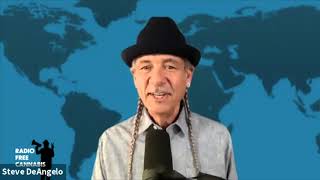
In this Founder Institute webinar, host Rachel Shepherd interviews cannabis pioneer Steve DeAngelo about building mission‑driven businesses that generate social impact. DeAngelo recounts his journey from teenage underground activist to founder of Harborside, the ArcView Group, and The Last Prisoner Project. He shares practical advice on scaling startups, hiring complementary talent, and maintaining control during growth. The conversation emphasizes community‑first strategies: deep local outreach, partnerships with social groups, and leveraging media to amplify advocacy. DeAngelo explains the two‑pronged approach of The Last Prisoner Project—pursuing clemency/compassionate release for cannabis prisoners and providing re‑entry support through mentorship, training, and industry funding. He discusses stigma‑reduction tactics, such as showcasing compassionate patient stories and humorous stereotype‑busting campaigns. The dialogue also covers the global expansion of cannabis, COVID‑19’s impact (essential‑business status and anecdotal health benefits), emerging research on CBD for Alzheimer’s, and resources for industry news. Throughout, DeAngelo stresses the importance of aligning profit with purpose, staying rooted in personal conviction, and encouraging founders to enter the rapidly growing, environmentally beneficial cannabis sector.
Chapters
Hello and welcome everyone. I see people joining us in, in the webinar today. I see you logging in and I'll just give everyone just a few minutes to log in. We're so grateful to have you here with us today. And you're here for the webinar, How to Design Your Business to Create Change in the World. My name is Rachel Shepherd. I'm the Director of Global Marketing at Founder Institute and the co-creator of the Female Founder Initiative. The Founder Institute is the world's largest pre-seed startup accelerator, having helped launch over 4,000 companies across 185 cities and 6 continents. If you're interested in learning more about Founder Institute, we're currently enrolling, and you can learn more. We're enrolling in a lot of different locations, particularly in the virtual world we're in today. And you can learn more about where we're enrolling at fi.co/enrolling. But that's enough about me. And Founder Institute. I'm calling in from the Bay Area today, the East Bay. And so I'd love to hear where you're calling in from, if you could put that in the chat. We're very excited to have a global audience as we do at Founder Institute for a wonderful conversation we're gonna have today with Steve D'Angelo. So Steve is the founder of The Last Prisoner Project and the co-founder and chairman emeritus of Harborside Inc. Who is known as the father of the legal cannabis industry. Steve is known, um, Steve is the co-founder of the ArcView Group, the first cannabis investment firm. He's the author of the Amazon number one bestseller in the wellness category, The Cannabis Manifesto: A New Paradigm for Wellness. In 2009, he was the subject of the New York Times cover, the first ever by the publication to include a feature story on legal cannabis. And in 2016, Steve was named one, named one of the 7 most powerful people in America's cannabis industry by Fortune. Steve, welcome. We are so excited to have you here today.
Well, thank you for having me, Rachel. I'm excited too. It's great to be here with your global audience of founders.
Thank you. Awesome. We have people calling in from Chicago. Welcome, Rob. Breezy Labs, welcome from Clearwater, Florida. Super excited to have you. Henry from Colombia, thank you for joining us. And if you're just now joining us in the chat, please do say where you're calling in from. Both, both Steve and I are calling in from the East Bay, which is a wonderful place to be. And we'll talk a little bit more about that later on as well. So today Steve is going to share his experience as a cannabis leader, advocate, and educator to discuss how to design a business to create change in the world. And we're really excited to have this conversation. We're here for you and we're here to answer your questions as well. So please do be sure to put your questions in the chat for Steve. And let's get started. So Steve, to kick it off, you've spent your career being an activist for the cannabis industry and for social equity. How did being an activist lead to becoming a founder?
Well, I have been a cannabis activist and cannabis entrepreneur since I was a young teenager. And most of the time that entrepreneurship was unlicensed, it was underground. And so I was basically selling cannabis on the underground market to finance activities to legalize cannabis eventually. So the activism really was the starting point for me. That was the most important thing. I decided to become an activist because I fell in love with the plant and didn't want to be a criminal the rest of my life. And so it was necessary to my happiness. So the legal cannabis businesses that I started were, You know, in part, they were efforts to feed myself and my family, but they were mainly efforts to bring the truth about cannabis to light.
Fantastic. And I know that you feel very passionately about your industry, and I wanted to know, for founders out there who are joining us today, more who are coming in from Australia, Fort Collins, Colorado, and the Philippines, welcome. If you feel really passionately about an industry as a founder, how can those founders balance growth without losing control or quality over their product or service as part of their growth process as a founder in a company?
So scaling is a really difficult thing. It was an extraordinarily difficult thing for me. I'm very comfortable in the pioneer phase and the startup phase of making something happen that hasn't happened before. But once you make something and it works and it starts getting traction, then you need to scale it up. And I found out that the skill sets that you need and even the culture that you need for scaling as opposed to starting is quite different. And I found it was necessary to make some changes in our team as we scaled up. I found that it was necessary to bring in some other kinds of discipline as we scaled up. I have to tell you though that, you know, that I am not terribly satisfied with the job that I did in that area. Out of all of my business experiences, I think, you know, one of my weakest performances has been on scaling up. Partly that's just because who I am, but it's a difficult thing. And so my advice is to approach that point very consciously. Understand when you're shifting from putting your thing together to scaling your thing up. Study, read books, talk to other people who have been there before. It's a tricky thing to put yourself around, so be careful and make sure that you, most importantly, that you keep control of the thing that you built as you scale it up. It's a point at which many, many founders lose control of their company, so be careful.
Absolutely. And I love that point you made about really making sure you're, you're hiring people and getting to know people that you can bring in and trust to help you build this vision, right? And maybe have skill sets that are complementary to yours, especially as you move from the initial phase to the scaling up phase of the business. I love that point. That's great advice for founders listening. One of your very successful businesses is Harborside, which is a significant pillar in Oakland and the East Bay. For those out there who are calling from all over the world, how do you choose— well, this is a two-part question really. How can founders build a movement around the location they're in and use the fabric of the region to achieve advocacy for their industry? Then my second part of that question is, how did you choose Oakland and the Bay Area?
Well, I think that we had some particular advantages with cannabis, which I'll talk about in the second part of the question. But as to the first part of the question, you need to see your community as a vital stakeholder in the business and reach out to it. The very first thing to do is open lines of communication. So at Harborside, we were regulated by the city, but then we went and we did outreach to every community organization that we could find, Adopt a Spot, the Little League team, the Police Bereavement Fund, you know, just about any social advocacy group that we could find, the Museum Rehabilitation Program, the Fox Theatre, and, and reached out and tried to find ways that we could be of service and, and engaged in a dialogue with them to hear that. And it's, you know, very, very unusual for any business owners to do that, to reach out to the community. And you generally, I think, get a great response just by reaching out and saying something like, "Hey, I'm here, I'm a part of the community, and I'd like to hear how possibly we could be of service to you." In the Bay Area, well, I chose the Bay Area because it was really the very first place that the political and legal conditions allowed me to do what I wanted to do. I had always wanted to, not always, but, you know, So from the time I think that I saw my Eden Hashish Center poster, this was a poster from the last legal hashish shop in Nepal, which was closed down in 1973, I believe. Ever since I saw that poster promoting that store, I had wanted to open a legal cannabis business. And it was not legally possible anywhere until it started happening here in the Bay Area. And I was a part of that movement. At the time, I was living on the East Coast, I was coming out to California to buy cannabis and then working on activist stuff while I was here. And so I was monitoring the situation really carefully. And the city, I came out to California just a few years before the city of Oakland became the first city to actually license any form of cannabis business. So I was there when that happened and I submitted one of those applications and received it. So the Bay Area, because it's where it was possible, The interesting part of that story really comes when the federal government targeted us and tried to close us down by seizing the property we were located in, by taxing us out of existence. The reason that Harborside was able to survive was because of the community outreach that we had done, was because we had been of service to our community, and the community responded and came to our support. The City of Oakland actually filed suit against the federal government, trying to block the federal government from closing us down, one of the reasons we're still here today.
Wow, thank you so much for sharing that with us. That's an incredible story and an example of how if you become value-first with your community as a founder and you go to your community, you say, how can I provide value to you? Let's work together. How effective that can really be in not only growing your company, but also in saving it in this case, right? And that's incredible. So for founders in the chat, that's a great takeaway that you can have for if you're building a business, especially something that's new and cutting edge, right? Which is, which cannabis was and has been this whole time you've been growing the industry as well as the various businesses you've been working on. So founders in the chat, if you have any questions for Steve, please do put them in the chat. We're here to talk today, especially if you're working on a business that's, different or cutting edge or wanting to create an industry or disrupt an industry. You know, Steve's done quite a bit of that over time, and so we'd love to share his experience and, and be able to guide you in any way we can today. So moving on to another question I have, which is regarding social equity, which has been a really big topic of advocacy that you've worked really hard on in these last few years, and you started the last The Last Prisoner Project, which is a nonprofit coalition of cannabis industry leaders, executives, and artists dedicated to bringing restorative justice to the cannabis industry. Can you share what motivated you to create The Last Prisoner Project?
Yeah, I mean, the basic motivation was that once we made cannabis legal in my home state of California, I felt that there was a moral imperative to make sure that as we built the new legal industry, that everybody who is still in prison on cannabis charges, some of whom are friends of mine, and collectively that population, of course, is disproportionately people of color, need to be released. And I felt that it was a kind of a test for the industry, a test of our integrity and our compassion and our morality because I looked at the size of the problem, I looked at the size of the industry. Right now, we think there's something like 40,000 prisoners in the United States still serving time on cannabis charges. And then you think about the billions and billions and billions and billions of dollars that this industry has already generated and the many more it will into the future. And we're talking about something that's not just a noble cause, but it's, It's possible. This is something that we could get done. And so the idea is just to call on the legal industry to take care of everybody who's still in prison for doing the same thing we do every day.
Which is such an amazing cause and a great project to learn more about. Felicia from my team has put a link in the chat for those who want to learn more about The Last Prisoner Project and its very important work. And then Steve, could you elaborate a little bit too on the steps The Last Prisoner Project is taking to create lasting change? So you've identified an issue you felt very strongly about, you're there to create change, and what are the different pillars The Last Prisoner Project is focused on?
So the two main areas that we work on is release, making sure that our prisoners are released, and then reentry, making sure that when they are released, they have the resources and the support that they need to rebuild the lives that were stolen from them. On the release side, we work in a number of different ways. We pursue clemency petitions. The governor of every state where cannabis is already legal has— even where it's illegal for that matter, but we think we can persuade them in the states where it's legal— has the ability with the stroke of a pen to release any cannabis prisoner. And so we're working with governors' offices to get them to do exactly that. We think that there are thousands of cannabis prisoners who have eventually could be freed that way. We are also working, especially now in the time of COVID our work pivoted a little bit. The clemency process is a— it's a long-range process. It takes some time to go through that process. And then of course COVID hit and threatening the lives of many, many of our constituents. And so we pivoted and have been working on a process of compassionate release, which while we don't like because the compassionate release program usually leaves leaves our constituents somewhat less than full freedom, but we like it because it's fast and it potentially saves their lives and gives us an opportunity to continue working on a long-term resolution to their cases. On the reentry side, our work is probably even more active there right now, or at least more visible right now, because of course we're dependent on getting prisoners released from the government, but Every day cannabis prisoners who are completing their sentences are being released and they all need support. And so we have a variety of programs. We have a mentorship program that puts our released prisoners in direct contact with and builds relationships with industry executives who can help guide them as they build a career or build businesses in the industry. We have training programs so that released prisoners can learn the basic skills that they're gonna need for the legal cannabis industry. Many of our constituents already know a lot about cannabis, but they may need to learn more about things like permits and compliance and marketing, things that they didn't have the opportunity to learn about in the unregulated marketplace. So that's the general thrust of what we do in terms of service. We also have a number of programs that that allow cannabis companies to participate in what we're doing. And that's how we derive our funding.
Fantastic. I'm so glad you shared with us more about the Last Prisoner Project and the work you're doing, 'cause it's incredibly important. And I think something that is key to the industry, right? And really, you know, making sure that there are, the industry is fully brought up to speed and fair and equitable for all of those involved and everyone who's been involved over time. And so thank you for that. And my next question is regarding sort of stigma around different industries, right? So cannabis has, as it's become more legal over time, it's breaking barriers and changing people's minds. And there's, you know, sometimes occasionally stigma associated with that. Gabe in the chat wants to know, and his question is, I think, a bit related to, which is, when you're working on something that is illegal but you believe could be legal in the future, how do you go about promoting those entities and really changing people's minds and releasing some of that stigma?
Well, you— I think that you need to compartmentalize, right? So if you are currently engaged in commerce with a product that is illegal but you want to move towards legality, The big danger is that as you become public about legality, the authorities are going to follow that train of information back to you and arrest you for the illegal activity. And so keeping a wall of separation between your underground commercial activity and your above-ground educational activity is really important, A, for your own survival, and B, to maintain the credibility of the information that you're putting out. So that would be my advice. Is that you think very carefully about the kinds of barriers and separations and really creating appropriate organizations to do each of those activities.
That's a great tactical answer and sort of making sure to keep things separate and as you recommended. So Anonymous asked as well, can you share some specific ways of engaging a startup community to promote some form of behavior change or, I guess, opinion change of an industry over time?
Well, you know, any kind of messaging is most effective when you can demonstrate to people why the message is valuable and that you yourself are committed to it. And so, you know, most of the things that I have called upon the cannabis industry to do are things that I first did in my own cannabis organizations. And setting that powerful example, I think, is really, you know, the best way to convince people to adopt the mission that you're urging them to adopt. And then related to that is just really demonstrating the service that you can provide You know, I remember at Harborside when we first started giving medicine to people who were unable to afford it. And we started getting covered on the news and our competitors heard about it and they saw the favorable news coverage that we were getting and they started emulating that. And, you know, same thing now with the Last Prisoner Project. One of our programs is called Roll It Up for Freedom, where cannabis retailers ask their consumers to donate the change from their purchase to the Last Prisoner Project. Simple, but it brings in a lot of funds for Last Prisoner Project. And we now have companies who are really competing with each other to see who can raise the most money in that program. It's kind of like the Native American concept of potlatch, where you gain status not by how much you accumulate, but by how much you give. And so demonstrating that service and the value that service brings to people's lives, I think, is also a powerful motivating factor.
That's wonderful. That's great. And Rob asked as well, social and for-profit enterprises is a balancing act of numerous strategies. Which guided your strategies, profits first or social equity first?
Profits have never been important to me beyond the money that I needed to keep telling the message and growing the message. So what I found is that when I made decisions that came from the heart, that came from my love for cannabis, that came from my love for the cannabis community, that came from a desire to be of service, commercial success followed almost automatically. The times when I double-checked those impulses and when I said, "Oh, well, maybe I should listen to the analyst or I should take a look at this analysis," or I started double-guessing myself that way is the times that there were stumbles and there were stalls. So I think that if you're really coming at this, if the activism is important to you, As much courage as it takes, I encourage you to just embrace the activism part of it and as boldly as you can when you have those choices to make and tell people that you're embracing them. Tell them why it's a hard choice. Ask your community for support as you make those choices. And I think that you'll probably be rewarded for doing that.
Yes, it's all going back to that value-first sort of mentality and serving the people in your community, which, which I love. And really quickly, you have some donors for The Last Prisoner Project in the audience as well. So I want to make sure you know about that, which thank you for supporting such an amazing cause. Moving on to another question, and which is kind of building off of what we just recently talked about, is, is you believe so strongly in the healing aspects of cannabis and you actively participated in the evolution of the worldviews of this industry. Industry. What kept you motivated to continue to seek change despite meeting endless challenges with government organizations and anything else that you faced as well?
Well, part of it was my original motivation. I fell in love with the cannabis plant as soon as I encountered it at the age of 13 years old. I knew that it would always be a part of my life, and I knew that I was not willing to be a hunted criminal for the rest of my life. That's still true today. That work still has yet to be done. And I'm not the kind of person who, once I take on a mission, will abandon it until it's completed. So part of it is just that original motivation and seeing the mission through and making sure that it's completed. The other part is that the more I've studied this plant and how and why it was made illegal, the more I come to recognize the horrifying, horrifying damage that has been done, not just to the human species, but to almost every species on the planet and to the planet itself. And the more I learn about the ways that cannabis can heal our bodies, the ways that cannabis heals our souls and our societies, and the ways that it can heal our planet, the more I learn about the reasons that it has been made illegal, mainly over the ages by different elites who were concerned with preserving their power. I just, I just, I just, that determination gets redoubled every single day. You know, I didn't think that when we started out working to liberate cannabis that we were also working to liberate the cure for cancer. But it turns out, you talk to my friend Didi Meiri, who's doing the research in Israel, right? That's exactly what we're doing. I didn't realize that what we were doing was, was, was making the most important medical breakthrough since the discovery of germ theory. But if you talk to my friend Rafael Machado, Shulamit will tell you, that's exactly what we were up to. This is a plant which, if we embrace it the way that I think we can and should, will allow us to build a new global economy that will clean up the planet instead of destroying it. And that's why I get up every single day and keep on doing what I do because I think we have no time to waste in that task.
What a wonderful mission we can— many of us can get on board with, right, is saving the planet and, you know, really making a difference for a lot of people's health and wellness as well. And so another question regarding your founder journey, and don't forget, if you're just joining us, you know, please put your questions in the chat. We're here for you. We've answered We're here to answer your questions and hear more about your companies as well. Feel free to talk about what you're working on. If it's an industry you feel very passionately about, I had a wonderful conversation with the founder earlier today who's very passionate about pet health, as am I. And so, you know, I'd love to hear more about what you guys are working on and definitely put your, put your questions and thoughts in the chat. So moving on to the next question is, what are some of the strategies to execute on a first mover advantage. How have you changed people's minds when you were thinking more progressively than others?
Those are two kind of different answers, very different questions. So the first one, you know, really goes to that, that scaling up, right? And That's, you know, that's, it's really a challenge to take that core that you build and then maintain it as you scale up. And I don't think I can give any better advice than I've already given, which is that you need to really choose your team very carefully. You need to do a lot of research. You need to understand the various different options that exist. For you to grow this vision more before you start taking those steps. Could you just repeat the second part of the question for me?
Absolutely. The second part of the question is, how have you changed people's minds when you were thinking more progressively than others?
So that's a, that's a question I feel a little bit more comfortable answering. The way that I did it really was trying to identify someplace that I could meet keep my audience where they were. And cannabis again made that really easy. So one of the first big breakthroughs that we had was children with intractable childhood epilepsy. And this came shortly after we created Steep Hill Laboratory, which was the first cannabis analytics laboratory, and that allowed us at Harborside to start selling cannabis that was CBD-rich. Before then, it wasn't possible because there was no way to test the cannabis because no commercial labs would test it because the federal government terrorized them out of doing that. And so we had the ability then to sell the CBD to patients for the very first time. And the images of what happened with those children were really powerful. We had, extensive news coverage of the first child who we provided cannabis medicine to, a child named Jayden David. And Jayden, at the time he came to us, was 5 years old. He had not had a single day in his life free of seizures. He was taking something like a dozen different pharmaceuticals, and the doctors had told his father that he was at the point where he was going to be suffering permanent developmental damage because of the heavy sedatives that he was being given. In desperation, Jason David, Jayden's father, came to us and we filmed what happened the very first time that Jayden took the cannabis medicine. And one moment you saw a child who was in misery, who was shaking, literally almost shaking themselves to death. And 3 minutes later, you saw a child who was smiling, who was calm, who was not spasmodic. And over time, that progress just continued. It continues to this day. So identifying your product or your service with a highly sympathetic demographic. We did the same thing with veterans. We did the same thing with seniors. Usually if there's a stigma that's associated with what you're doing, there's a stereotype that, that goes along with that stigma. Figure out a really colorful and visible— the more visible, better— way to explode that stereotype.
That's fascinating advice. Do you have an example in mind or any other specifics regarding just really changing the stereotype as much as possible?
Well, there's this one really very funny vignette. I think people can probably find it just by Googling, you know, cannabis smoking grandmothers. And it's a very simple, short piece of 3 or 4 women of grandmother age or maybe a little little bit beyond grandmother age, who are taking their first bong hits of cannabis. And the contrast between their physical images of who they are and the stereotype of what the original— of what cannabis consumers are is striking in itself. But then they, as you see the cannabis taking effect, they just have these beautiful gentle smiles and laughs. And it's such a lovely, lovely scene that you see there. That any kind of notion that this is criminal or that it's deranged or demented or unhealthy just kind of goes flying out the window. So I think that's one really great example of a humorous kind of way that it's been done. In other less humorous ways, more biting ways, you can take a look at interviews with veterans who have talked about how using cannabis has prevented them from committing suicide. And, you know, really super powerful testimonials like that. So the key to it is just blowing the stereotype, right? Veterans are patriotic, they're all American, they don't do anything that's considered subversive, and here they are smoking cannabis and getting great results from it. So that's the key. Is blowing the stereotype. Blow their minds.
That's a very, that's a very great example. And yeah, I could see how that can really change a lot of people's opinions, right? And sort of challenge the norms that people consider. And so Mary in the chat, she has some very important work that she's working on and would like some advice as well. She said, my company is helping survivors of childhood abuse continue their healing journey based on the foundation of a spiritual approach to self-love in hopes that they'll conquer PTSD. She's looking to create a business model to serve survivors worldwide. She'd appreciate any thoughts or advice you might have on really sort of breaking that down and seeing how she, how we can, or how she can help, you know, people who have survived childhood abuse continue to heal.
I think the first question— first of all, wonderful mission for a company to have. What I wonder is, who is the customer? Where is the revenue going to come from? And really think carefully about that. And once you've identified the various different sources of of ways that you could get paid for doing that work, because in general, the constituents that you'll be serving are not going to have the ability to come up with the kind of money that's needed to support a company like that. You'll have a list of options. Evaluate those options not necessarily by who can bring you the most money or how easy it is to get the money from them. Evaluate them according to the closest fit of consciousness. One of the things that I always make sure in all of my business relationships now is making sure that there's a fit of consciousness. Do— are we trying to accomplish the same basic things? Are our priorities in alignment? Do I like being in a room with this person?
Fantastic advice. That's great. And then next up, I kind of want to shift gears back back to your founder journey. As you mentioned in your intro, in 2009 you were the subject of the New York Times cover, the first ever by the publication to include a feature story on legal cannabis. How did the media play a role in your advocacy and activism for the cannabis industry?
I, I think my relationship with the media has been my most valuable tool in my activist be when I first started talking to the media, it was a time when it was pretty dangerous to be a cannabis business owner. Just a few months before I opened Harborside, there had been a number of raids by the federal government. People had been arrested, they'd been charged with a list of very, very serious crimes. And it was a scary time to be a cannabis business owner. I'm sorry, Rachel, will you repeat that question for me?
Absolutely, so it was how does the media play a role in your advocacy and your activism?
So what, I was a little bit crazier or a little bit more courageous than other folks and I opened the doors of Harborside to the media. And it was a huge opportunity because nobody else was willing to talk to them at the time. So I got a huge amount of coverage very, very quickly. And because I was proud of what I was doing and I was careful about what I was doing, believed in what I was doing, I didn't have any problem being completely transparent with the media. And it was a time when they were really hungry for the story and it was just a great meeting. So the media coverage that we got did a number of things. First of all, it blew the business up because this was a time when you, it's still difficult to advertise a cannabis business, then it was basically impossible. And so getting that publicity, let people know that we were there and that we are in business and it brought a lot of business to the door. It also helped me develop a lot of political relationships. Once you get into the media and you have a voice in the media and you are identified as being the leader of a community, then it's possible for you to have more effective conversations with other community leaders and organizations, with elected officials. And so it was very helpful as well from that point of view. It was very helpful in terms of making new business relationships. When you get that kind of elevation in the media, people who you never would have been in touch with before whether it's investors or potential customers or suppliers, get in touch with you and you reap a harvest of relationships that you wouldn't have otherwise. So I, you know, I encourage people to reach out to the media. I think that business leaders who have unsuccessful relationships with the media have unsuccessful relationships generally because they're not at peace with the models that they they've built and they're not willing to be fully transparent. So I always made it my practice not to do anything, anything that I wasn't willing to have on the front page of the New York Times. So I was able to give 100% transparency. I think that's one of the things that's really needed in our world today. And I would advise all founders to build a business that you are proud enough of that you can just have any spotlight shine on it and it's not gonna do anything but make you feel good.
That's very good advice. Yeah, just to have that solid foundation and be ready to have the media shine a light on you and really share your mission with the world. And so to shift gears a little bit and talk about your experience with the ArcView Group as well as with the cannabis industry as a whole, is there anything you're really excited about that's happening in the cannabis industry right now? And I know that that's a very broad question I know that's a very big question for you, but is there anything specifically you're very excited about that's very innovative in the industry?
Well, the thing I'm most excited about in the cannabis industry is that we're present now in so many different countries around the world, that there are so many activists, that there are so many entrepreneurs, that there are so many investors in so many different places who are all getting active. And so the spark that we, that we lit 20-some-odd years ago here in California is now this blazing fire all around the world. And, you know, every day I hear about, you know, new places. A couple weeks ago, it's Thailand, which is expanding its medical cannabis program. Now it's New Zealand, which is going to have a vote on legalizing cannabis for adult use. Now it's Colombia, where just last week this week, the Colombian Senate took the first steps towards full adult use legalization in Colombia, and every day I open up my feed, there's more and more news. So I think that that's tremendously exciting. The reason I started this thing, Radio Free Cannabis, this podcast, is I think that we can be tremendously powerful if all of us around the world start developing a global consciousness, right? There are hundreds of millions of people around the world who have been touched by this plant. We've all had the same kinds of experiences, we've drawn the same lessons, and we've built a common value system out of that. So what can we accomplish together, hundreds of millions of us? It has yet to be determined. German, but I think that that potential is the most exciting thing to me in the world of cannabis.
Wonderful. We have a very global audience today and maybe even people in those locations that you mentioned, so hopefully they're also taking part in this conversation that you're very excited about. And Andrea wanted to know, could you speak on a little bit of the international Alzheimer's work that's being done with the CBD research. Anything about that that sparks interest for you, or you have any thoughts on?
Well, cannabis is tremendously effective for Alzheimer's. I had firsthand experience with this with my own mother, who died ultimately of Alzheimer's and spent the last several years of her life living with me in my house. And so, you know, I was able to see on a daily basis how helpful cannabis was. And, you know, the doctors initially loaded her up with all kinds pharmaceuticals that just made the situation much worse. And by the time that she passed, the only medication that she was taking was cannabis, and it worked very, very well. The research, look, there's research that's being done on cannabis all around the world now by many, many different sources. I'm skeptical of the research, which is limited to monomolecules. So to the degree that we're talking about using a monomolecule isolate of CBD for anything, I'm a bit skeptical of that. I look at, you know, cannabis formulations needing, really needing to be whole plant extracts and having a full spectrum of cannabinoids in there to be maximally effective. But there's no question that cannabis is not only effective for Alzheimer's, but what we're learning now in some of the more recent research is that it has properties of neurogenesis, right? That it can actually restore parts of our brain that have been damaged. So the potential here is limitless. In Colombia, there is a center which was developed, a cannabis center which was developed for adults with dementia, including Alzheimer's, and it's a cannabis-centric treatment where patients are given nutritional cannabis, they're given therapeutical, therapeutic cannabis. They receive massages with topical cannabis, a vegetarian diet, and a lot of outdoor activity and human connection. And it's just a complete turnaround in their conditions. So this is a tremendously healing plant. We're just beginning to learn about all of the healing properties. And hopefully one day, you know, Alzheimer's is another one of these things that we're looking over our shoulder, a thing of the past.
Yes, and I'm sorry to hear about your mom, and thank you for sharing that with us and sharing with us your experience. And, and I'm, although I'm, I am glad to hear that she had a good experience with cannabis and that, that improved her condition, and it sounds like her outcome as well. So appreciate you sharing that.
My pleasure. That's, that's, you know, Mama would want me to.
And then Andrea also asked, with my nonprofit concentrated on women's health advocacy, how can I integrate promoting CBD and MMJ within a 401(c)(4) for contributing to legislative purposes?
Okay, that is a mouthful. Look, I think that there's some very compelling basic facts about cannabis and the female body, right? One that's not very widely known is that the largest, most dense concentration of cannabinoid receptors in the human body is in the uterus. Another is that human breast milk contains elevated levels of endocannabinoids. So there, there are some very compelling basic facts about cannabis and women's reproductive health. I think that, that what I would focus on is trying to get the funding that's needed to really demonstrate the, the many positive effects that cannabis can have on women's reproductive health. I think that that's going to be the first step to getting any kind of legislative action. The last time I checked, there was not a lot of research in this area. So that's what I would focus on is first just establishing that in fact cannabis is effective for women's reproductive health issues. And I would take a look at some of the research that's being done in Israel if you wanna drop me an email offline. Rachel can arrange that and I'll— I can hook you up with the right people who are doing that research.
Fantastic. And you can email me, Andrea, at Rachel@fi.co. That's Rachel. We'll make that happen. Wonderful. So next question is, what effects have you seen COVID have on the cannabis industry? Industry. So seeing that we're sort of going, a lot of consumer behavior is shifting as well as, you know, just this generally very difficult time. What changes have you seen in the industry as a result?
Well, I mean, I guess the most notable thing is that in most legal cannabis states in the United States, in the wake of COVID we were declared essential businesses, which meant that we were not shut down during the various shutdowns and quarantines. And in fact, largely because people have been going through such tough times, most cannabis companies have seen an increase in sales during that period of time. So that's, it's been positive, I would say, you know, it was really remarkable that so many governments in so many places immediately recognized cannabis as being an essential product. And I think it's a testament to the work that's been done to explain cannabis to the public as a wellness product, rather than an intoxicant. The other thing I'd have to say about cannabis and COVID is that so far, there seems to be a correlation between regular cannabis use and a lack of COVID infection. Infection. And this is all anecdotal right now, but there's some pretty solid science backing up this idea, both science that indicates that cannabis can reduce the susceptibility to infection in the first place, and also can stop or quell the cytokine storms that so often lead to fatalities in the most extreme COVID cases.
Yeah, that's definitely some very interesting data that's coming out of that as well. And so next up, Anonymous wanted to know, what are your best resources for, or source suggestions for cannabis news these days?
Oh, it depends on what kind of news that you're looking for. You know, one of my favorite sources is Benzinga and Javier I think that he does a really great job of getting information out. I think that Deborah Borchardt at the Green Market Report does a great job. I think that Leafly puts out a lot of really good material. For educational, deeper educational stuff, my pick would be GreenFlower Media. I think that, did I mention Cannabis NOW? They're coming out with some good things. So those would, you know, those would be my most immediate picks. Again, the world of cannabis is expanding so rapidly. There are so many people who are picking up this cause and lending their talents to it that there's just every single day, there's new sources of information and education that are coming out. In the Spanish-speaking world, my friends at CannaLatino, I think are doing a great job, and there's so many people that I'd like to list here in this category, but I'm gonna stop there and really encourage you not to stick to my list, but to seek out all the new sources of information that are happening, and of course Radio Free Cannabis is a good place to check in.
Absolutely, absolutely, and ArcView as well. I think ArcView has some amazing resources for the cannabis founders in particular and startups and things like that too, and some of the events and things that they're doing, which, which is awesome. And so another question is, and we have 10 minutes left with Steve, so please do make sure you put your last minute questions in the chat. We'll be sure to queue up as many as we possibly can within our short period of time because this is going by so quickly. So really quickly, what advice would you give founders on the call today? So just founders who are just getting started, they're, they're people working on incredible and very important work in changing people's lives and making people's lives better in the audience today. What advice would you give them as they get started on their founder journey?
Well, once you get started, the, the only way that you lose is if you stop, right? So don't stop. Don't stop no matter what you encounter. Hold on to that vision. Make sure that the vision, once you adopt it, is something that you care deeply enough about that you will be able to go through the inevitable obstacles and disappointments and miscalculations. All of that is going to happen. Know that when you begin on the journey, because you're starting something new, that there's just going to be one cascade of mistakes and difficulties after another that you're going to have to figure out and you're going to have to overcome. You just don't stop. And so that's really the most blunt and basic answer. But I think that deeper than that is really really thinking in the fullness of your being about what it is that you're dedicating yourself to before you dedicate yourself to it. And not just think through the business aspects of it and the personal aspects of it, but maybe go up to the top of a mountain, maybe stay on the top of that mountain for a day or two, maybe listen to the wind, maybe listen to the bees, maybe listen to the birds. Maybe really consider in the greater unfolding of the universe and the time and the place that we as a human species are, what your work means. And if you come off of that mountain and you are convinced that it is valuable and meaningful work, then I think that that's probably the single thing that you can do for yourself to meet all of these challenges that's going to come. Make sure that you are as rooted in spirit as you are in mind.
Great advice for life and for founding a company as well. And then what do you want people to walk away with today in terms of learning about, one, The Last Prisoner Project, and two, the cannabis industry as a whole?
Well, the cannabis industry as a whole is, I think, I think, you know, for entrepreneurial-minded young people, probably one of the very best places for you to take a look at. And the reason for that is that it's such a big sector that just about anything, any skill that you have or any interest that you have can fit within this umbrella. And it's an umbrella that from a commercial point of view is going to be expanding and scaling up for the rest of your lives. So it's a great place to be, whether you are into creating software, whether you're into studying history, whether you're an archaeologist, whether you are going to make consumer goods, whether you're gonna provide services to people. All of these things need to be made in the cannabis industry because our industry's been illegal since the birth of modern business technology. So it's all there waiting in front of us. And I'm sorry, you have to repeat the second part of that question again.
No problem. The second part is, what would you want people to walk away with knowing specifically about or learning specifically about The Last Prisoner Project?
Well, The Last Prisoner Project is really, I think, it's for me, it's a sacred mission. It's something that I feel powerfully called to. I think that if you feel called to the mission, know that we have tried to create Last Prisoner Project in a way so that anybody who wants to contribute their talents to what we're doing has a way to do that. So again, whatever it is that you do, we can probably find a way that you can help. If you can write a check, great, but whatever your skill set is, is we have a huge job in front of us and we can probably make use of it. So reach out to us, tell us who you are and what moves you and where you think you might be able to fit in. And if you don't know where you might fit in, just tell us about yourself and we'll help you figure that out and drop us a line. And then if you're cannabis consumers, make sure that the people that you're getting your cannabis from are supporters of The Last Prisoner Project.
Right, so if they're cannabis consumers, they can talk to their local dispensary and make sure that they're connected to The Last Prisoner Project and supporting their mission is what it sounds like as well. And yeah, for those of you out there with any sort of tech skills or skills in general, definitely feel— make sure that you loop back with The Last Prisoner Project and support in some way. And so sadly, our time has come to a close. Has come to a close just about, and I just want to leave you with some space. Steve, you're such an amazing activist and educator and visionary in the cannabis space, and you've done so much. So is there any last piece of advice you want to give to founders on the call today and just let them know whatever it is that's top of your mind that you think they need to know in order to be the best founders they can possibly be out there?
Well, I hope that you come to the cannabis industry. We, you know, we need your energy and we need your talent. I think that the cannabis industry within the period of your lifetimes is going to be by dollar volume the largest sector, economic sector on the planet. You can make out of hemp almost anything that you can make out of a tree or out of cotton or out of petroleum. And when done at scale, you can do it at the same price, maybe less expensively, and in a way that cleans the earth rather than destroys the earth. So it's a fantastic place for people who wanna build new things to be, and I would encourage you to come here. My advice to founders in general is just, You care deeply about what it is that you're gonna do. You are choosing a path that most people do not choose. Most people choose the path of less resistance. They choose the path of doing things that other people have already figured out. So know that what you're doing is challenging before you go into it. Steel yourself, expect to meet challenges, persevere through those challenges, and look forward to the day when you'll look over your shoulder and have a lot of notches in your belt, be able to feel really good about having met those challenges and overcome them. And then of course, there'll be more coming down the pike.
Thanks so much, Steve. That's great advice. And you're getting amazing applause in the chat. People are so grateful for you and your time and for, you know, really putting together some amazing thoughtful answers to their questions and being here as a resource. Of course, which you have been for a very long time and have continued to be, which is really incredible in driving an industry forward and driving entrepreneurs forward in the cannabis industry in particular. So we really appreciate your time. Thank you so much for being with us this evening. Thank you to everyone out there in the audience. We really appreciate you joining us, and I hope everyone has a great morning, evening, afternoon, wherever you are. Have a good one. Thanks so much, Thank you. Bye everyone.










