How to Launch a Frontier Technology Startup: NASA, SV Space Center, Ceres Robotics
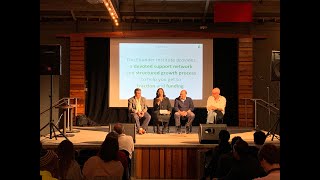
The recorded panel, moderated by Founder Institute CEO Dale, brings together NASA’s Technology Transfer Office (represented by Arun Banerjee), seasoned space entrepreneur Sean Casey, and robotics founder Michael Sims, along with other founders, to discuss how frontier‑technology startups can leverage NASA’s vast portfolio of patented and flight‑tested technologies. The conversation opens with a call to work on “things that matter,” followed by an overview of the two core risks for space startups – market risk and technology risk – and how NASA’s licensing structure (evaluation licenses, startup licenses, and facility‑use agreements) can de‑risk the technology side by providing ready‑made assets. Sean shares his personal journey from NASA to founding the Silicon Valley Space Center, emphasizing perseverance, the importance of customer discovery, and the need to shift from a victim mindset to a proactive, resource‑management mindset. He highlights the current propulsion gap, noting that modern liquid‑propellant rockets are near their theoretical limits and that a more efficient off‑planet transport system is a critical, unsolved challenge. Sean also stresses that launch economics dominate space costs; reusability, as demonstrated by SpaceX, is essential to drive launch prices down to levels that make downstream satellite and robotic missions affordable. He warns startups to manage cash carefully to avoid running out of money, and to focus on technologies with large Earth‑based economies of scale—robotics, 5G communications, AI, IoT, drilling, computational imaging—that can be repurposed for space. Arun adds a safety perspective, drawing parallels to the evolution of commercial aviation and arguing that repeatable, reliable systems are a prerequisite for routine lunar or Martian missions. Michael describes his company’s experience getting selected for NASA’s CLPS program, the challenges of building autonomous lunar robots, and the broader vision of robots for space and medical applications. The panel also touches on space mining, the analogy to aviation’s evolution, and the long‑term vision of a multi‑planetary humanity. Throughout, the speakers stress the value of mentorship, community (Founder Institute), and a mindset of abundance versus scarcity. The session ends with a Q&A covering topics such as micro‑gravity testing, space medicine, and the need for new propulsion or transport systems to lower launch costs.
Chapters
Hi there everyone, my name is Adeo, I'm CEO of The Battery Institute, I'm the other bald guy. And what we're trying to do today is to inspire you to work on something that matters, right? There's a lot of changes that are needed in the world, a lot of positive changes. That are needed in the world. A lot of smart people sitting in this room today, and if you're not working on something that matters now, you need to stop and start working on something that matters. We have a great group of very smart and established lovely people here who are going to give you tips, guidance, and insights on steps you can take, and we'll take your questions as well on how we can all start working on things that matter. And, you know, I was telling Sean, uh, before you came up, that, you know, I feel very inspired right now because I think that people are going to start working on things that innovation spread and start solving the problems of the world. And so, uh, without further ado, let me, uh, let— I don't know which way to go. You're holding mics. Go. So, so again, my name is Dale. I'll be both the CEO of the Founder Institute and somewhat of a moderator of the panel. I've been an entrepreneur for about 25 years. I've done a lot of work in space exploration. So obviously NASA here, there's a tech and space side, uh, and I'm really proud to be joined to my right by a lovely man who has an amazing company. You want to tell about Siri Robotics? Yeah, my name is Michael Sims and I'm striving to be the third wealth guy. Close. So, um, Strange Robotics is a company that builds robots and surfaces to move Mars asteroids, and we were just approved for funding to be part of a program that NASA's calling NASA CLPS program, which is a small set of companies. When we joined Monday, we were joined by Blue Origin and SpaceX and throughout as companies build language code. So we're really excited about that. And Siri switched here in 2020, about 2 years ago, and it's been a great process and very— I'll say more about that in a little time. Next, down the row.
Hi, I'm from Brazil. I know that you speak complicated, so You can call me Dr. Banerjee or Arun, and I have my colleague also here, and what I don't know, she can teach you. Yes, so whatever you have the questions, ask me when I'm speaking in the stage, and if I cannot, I am always going to seek her expert opinion. So after the Portuguese, she studies here I wanted to say something here. I, when I read the event agenda, I thought of something. Why we are here today? I am from NASA Technology Transfer Office, and we want to make your life easier. The startup companies have founders, and I myself had two companies which I did in the past. And what I felt today after I came here is that I wish I meet all of these people early in my life, because sometimes in the entire process, starting from zero to the PDM here, you are being lonely and you always think if somebody told you how to do it, somebody coached you and you had an impact, then you would not have being at the verge of going into the back of the lake. So it's an loneliness and not knowing what to do at instances which Founder Institute is teaching you. So I do not know how fortunate I feel today, you know, to be here, and I want to thank everybody in the Founder Institute that they are thinking that somebody else needs their help. So here is a, you know, about the internet, it is written, I find out what the world needs, then I go ahead and invent it. It was told by Thomas Edison. You know, I just want to piggyback on that but change the statement. Now you go ahead and find out what the world needs, but NASA has developed n number of technologies and we have a huge portfolio where you don't need to start to make the solution, you may develop on the already invented solutions which we have in our portfolio. So we are here, we are not making money from the startup companies, so we are extremely easy agreements. If you want to do work with us, license our technology, please come and contact us. As far as the space, aerospace, and our technologies. I think we have 1,500 patented technologies, and we have humongous amount of software which is there free to use. And, uh, sometimes you need to pay a little bit amount, and it is very negligible amount. So I would tell you, don't have to walk from the zero, because there's something called time to market. If you have something already there and even improve on it and then go to the market, you save your time, you save money, and investors love having some technology in your company which they call asset. So they are investing into something not zero. And with this, I thank you all to come here, and I thank Founders Institute to invite us to the esfera. And I hand over my money to the person who gives you money.
This is, uh, I'm Sean Casey. I have the honor of being a mentor with the Founders Institute. I spent 20+ years working at NASA, left NASA, and started Silicon Valley Space Center working on space entrepreneurial startups, which is how I Fidel and the Founders Institute program. That being said, the purpose of today's announcement is to roll out this relationship between both Founders Institute and NASA. When you talk about startups, there are really two things that you focus on, and that's— well, number one is retirement risk. So, but there are two things: there's market risk and technology risk. Some of the things that we're going to be talking about with with licensing of technologies from NASA is that these technologies are available. They're the research dollars that have been spent within NASA. NASA's taken, made an effort to list those technologies and create a licensing structure for you. If you're an entrepreneur, as Abel says, we need to be focusing on the big problems that we face today in the 21st century. It's going to be entrepreneurs that help solve those problems. When you're talking about entrepreneurship, you're like, is this problem a real problem? And what I create— and what I create— am I creating a vitamin or an acid? Hopefully what you're creating is an acid. That acid needs to have market traction and it needs to be a compelling technology. With NASA partnership, we talk about taking NASA technologies where you're prototyping the technology in this and rolling those into a product which is solving a real problem in the marketplace. I can't emphasize enough how important the Founders Institute has been for a number of entrepreneurs that have just come out of the science and engineering background and said, well, actually, how am I going to start a company? And I will, um, constantly are recommending entrepreneurs look to the Founders Institute sign up for their program to take, you know, the courses that, uh, that were out on, uh, previously to get in there and learn how to build, how to build your company and go out and get traction in the marketplace, build your team, do the sales and marketing, and, uh, you're gonna raise the money and continue on to be a successful, uh, high-growth company. So, um, with that, I'll hand it back over to Dale. Yeah, speaking of Mike, well, thank you. Wow, that was nice. Thank you. Among us, really, guys, someone who's achieved an incredible milestone in their career, which is, uh, for anyone who works in space, to have the opportunity to send hardware to space today and send hardware— this is a huge accomplishment for you, but it's not an easy journey, right? And what I— and I'd love to just start off with a question, and obviously we'll start with you. You want to tell us a little bit about the journey and how that's been? Because it's tough, right? Yeah, it's tough. It's— and it's no joke. So I began with a passion, a love for humans being in space and for human exploration in space, and I saw robots as a tool to do that. To make it cheaper and easier for people to get into space and do things we wanted to do in space. So that was a passion I began with. I spent a number of years at NASA, and that was critical in getting to where we, this company and I personally, are. And what's important about that is that in general, when you're gonna try to sell something, you need to know that that thing you're selling and the need for that is at least as well as you trust you. You need to understand very well what it is you're trying to get away— what you're trying to get to somebody's hands. So that was the utility of Indexa more than anything else. And if you're going to start a company, you want to take some technology from there. We have two wonderful people here that you should get to know because they are actually the way to get there. Most business is personal. Most business comes from knowing the right person to talk to, the right person. So, you know, it's going to be hard if you want a space company, for example. It's going to be hard to actually know the right people to speak to in the right places, but you have people that help you along the way. Things of that sort. So we— so I worked at NASA for 5 years. I would have certainly started a company decades ago, um, and— but the timing was really not quite right. There were a number of reasons, primarily about launch vehicles, that were much too expensive for small commercial companies to access them. That's drastically changed. Um, so at some point I said, okay, this is cool, and I got recruited by a couple of space companies to go to SpaceX, and that's another story, but it's not what I'm here to do. And then we started to germinate with the goal of building robots for services. We had a lot of experience in doing that kind of thing, so we weren't unknown in that arena. But it's been a couple of years playing that game, and then 6 months ago we were slated to be the first commercial robot to land on the Moon. —trumpet around with them. And we were all getting ready, and just about to get our first paycheck from NASA, when the founding company behind it said, "No, we aren't going to want to do this." And that was a pretty silly response in my evaluation, but that's what they said. So we, as the supplier of robots, didn't have a way to get there. So we decided, okay, well, maybe we can We said, "We'll build our own vendor to do that." And that's what we've been up to for the last 6 months. And people with power to be able to evaluate decided, you know, we gotta do reasonable things and we can do a good job, so they can sense there. And it's still day-by-day struggle. There's stuff you have to do every day to make it work. And it's kind of the passion for what you're up to in the Spanish that lets you get past the stumbles along the way. Like the mission you were on being completely canceled because someone didn't really understand what they're having. This is literally crazy. So he wins the award within a team, and one of his team members is like, yeah, wow. It's like, wait, wait, wait, dude, you gotta actually just quit. No, I'm playing. So, and then he came back and went, yeah, ha! And that's a great thing to talk with you about, John. And I hope that's something that we want to thank you for noting. I may not be loud enough. Perseverance. You deal with a lot of startups in space and other deep tech industries. And, you know, the story that you just said is not unique to you, unfortunately. So, John, you want to talk a little bit about perseverance? Yeah, absolutely. Perseverance is one of the key components of an entrepreneur, um, because there's, you know, here in Silicon Valley there's a lot about what you know that everybody else doesn't know. And that if you're an entrepreneur, you're not going to get a lot of buy-in from people. I've seen entrepreneurs, they go out and they just talk about their idea in order to validate it. And they talk, talk, talk, talk, and eventually somebody goes off and implements it. You've got to be confident in yourself that even though everyone's going to be telling you, "Why are you doing that?" That's probably a good sign. You don't expect everyone to say, "Yeah, that's a great idea." Once it becomes obvious to everybody that it's a great idea, it's probably too late. So every morning as an entrepreneur, you're going to wake up and you're going to say, "Why am I doing this?" Probably a lot of people are going to ask you, why are you doing this? I don't see why it is, you know, what the opportunity is. And I always find that that's, it's a really challenging conundrum that you've got to surround yourself by people that sort of believe in that idea. And hopefully that's your other, uh, your other co-founders, uh, in that. But, um, it's, it's just that everyone is always looking for validation. We live in a world of social networking. Everyone's posting their photos on Instagram. Why are they doing that? They're looking for validation. As an entrepreneur, you have to fundamentally be uncomfortable with people challenging your ideas. And as you go through, you know, something like the Founders Institute program, you're actually out there interacting with customers because those are the people that really matter. It's what your customers say. Are your customers saying, yes, I want to buy your product? You gotta go out and talk to your customers. That's how you're going to get to be more comfortable. You can't really sit as an engineer does in your cubicle and think, oh well, isn't this a great idea, and surround yourself with a lot of other people that say this is a great idea. You gotta get out of the lab and start engaging with the marketplace and looking for those customers and then taking that feedback and then shaping your product associated with them. So entrepreneurship is not for everybody. I haven't taken the test that you guys have, so I'm afraid to figure out what I am. But, um, uh, it is something that we all need to be thinking in an entrepreneurial mindset about how can we identify big problems in the world and then what are the things that we can do. Yes, so you talked about something very interesting. In fact, this is something we talked about before. Coming on stage, which is like NASA has an amazing library of tech which includes things that have been used for everything from making food to your conventional stories of lasers and everything else. So I, and I asked the question, I'll ask you again, if you're an entrepreneur looking for some tech, do you come to NASA with, with an idea, with a customer problem, Or do you come to NASA and say like, oh, you know, I have some things I'm interested in, but I'm open to seeing— and your answer was sort of both ways, right? You can come to NASA with an idea of what you want to do and look for tech to help you and look at the library to get inspiration. Maybe you could tell us a couple of examples that you saw.
Yeah, so we say, um, you know, arrangement where we have sanitary products and we can create real good combos. It's like Taco Bell or something. There are so many different things. We can keep some nuts and we can have some kind of dairy product. Quite good part of these vegetables. So what happens is our office, that's the transfer office, sent it back NASA. You know, we have been together to create something very unique. Before I go, while we have a market and offer, I wanted to actually complement something what all of you say. For the entrepreneurs, it is very important to know that you are unique. Because you are unique, you have your brain and your eyes where you have found some kind of problem and thought of a solution. Which nobody has done. So the validation is your own unique value proposition to yourself, and that should be so profound that you don't, you know, learn when the people are saying, oh, it's not good. Like, look for validation, but not exactly the validation. It's already validated by you. And then next thing is whatever solution you thought of Think what that proposition you have to offer through your technology or through your service or through your company to the customers, and then reorient or reshape or redevelop the whole thing according to the market need. And NASA, our Technology Transfer Office, comes to satisfy that part of the story. We have some technologies we have developed for space And it has been done, proven. Things have gone to space, came back, and it's all about the cases that we can make things work. So we look for two different kinds of, you know, applications from those technologies for the space science and space technology companies. That is one set of value proposition. The second set of value proposition, what else we can do with those technologies, can you solve bigger problems, bigger applications, and we look for that. So the way NASA Tech Transfer Office has, you know, oriented themselves, if you have some solutions you have thought about and we directly do not have exactly that technology in our portfolio, we have different kinds of arrangements, facility usage agreements where you can engage with our researchers and do some development as a small business and part of the, you know, big business. So we have all sorts of different kinds of arrangement, maybe ways you can come, but we request you to come with your some idea. The other side of the story is we already have something similar what you are looking for, then we work with you and give you the technologies you can evaluate in your own company. Which we call evaluation license, and then if you like it, you can do the license from us to do things freely, which we call startup license. So we have different mechanisms, we have plenty of leverage. We want people to use our technology so that we spend already money and research products and people's talent to create something which is seeking that to be used. So please come to us, that's the first step. And second step, we will tell you what the unique value propositions our technologies have, but you need to believe in yourself and come with some kind of so-called unique value proposition from yourself.
So I want to talk about the crazy thing for a moment. Um, so, you know, I know something about, uh, space and being called crazy. I get called crazy frequently, but one of my favorite experiences of being called crazy was when I started working in space. So this would have been sort of 1999, 2000, 2001, and a gentleman many of you know now, Elon Musk, and I We were college roommates, and this was not— this was after college, obviously. And we decided to start a space company to go to Mars. And, you know, privately. So, let's just add this up. Starting a space company to go to Mars privately. You can imagine how people felt. When you told them, oh yeah, we're creating a private space exploration company to go to Mars. They were— they literally laughed us out of the room. No offense, NASA included, probably you, everyone was just like, you're insane. And we're like, well, you know, maybe. And, you know, now 20 years later, 19, I think, The first company was literally called Life on Mars and morphed into SpaceX. But, you know, he's going to do it. And, you know, how Elon's going to do it— he doesn't really talk about this very much, but it's a pretty straightforward plan. And actually, the plan hasn't changed that much since, you know, whatever, 19 years ago. Is you build a bunch of highly reusable rockets. So after you rent one to go up, you basically have a free rocket, right? If you can recover it, most of it. And then it's really just, you know, polish it up and refuel it, pretty much. So, and, you know, fuel's expensive, but not nearly as much as as a whole rocket with all its component systems and everything else. So you essentially have a free payload to space, um, or the cost of fuel. And of course, the cost of fuel is much more efficient than the cost of a rocket. So he's building a free arsenal of launch vehicles to send equipment, uh, initially to orbit, and then from orbit to Mars, and then we're going to colonize Mars privately in our lifetime, probably in the coming decade of 2020 to 2030. Yes. So that was considered, and in some ways it is, even when I say it now it sounds a little far-fetched, but that was considered super far-fetched, uh, 19 years ago. And, you know, we have in the audience here a gentleman who's building a steerable robot that will eventually steer itself around in your gut, but he wants to get it small enough that it can steer itself around in your bloodstream. And imagine what great things can come of that. When we have all sorts of cancers and other things that we don't really know how to treat. And sitting right next to me, and I remember when he said that he was going to build robots for space, and I'm like, well, you know, we're not really in space right now, we're in the middle of it, but like, you know, there is a robot with his arm on the space station, like, But if you then— if you believe far enough in the future that we are going to be on the moon, we are going to be on the surface of Mars, we're going to be exploring asteroid belts and asteroids, etc., and doing various things on those places which are not very conducive to human beings running around, we're going to need robots, right? And so I was somewhat skeptical, right? And so, but I left an open mind and we laid out a plan and now we see the land robots on the moon, right? And that's only been 2 years. So you can do it, right? You got 3 people here who've done it. You got other people here who want to help you. You can do it. We need people doing hard things that matter right now. Sean, I know I didn't reach you for a mic, so— You know, when you talk about Elon Musk and his grand vision for going to Mars, there are a bunch of intermediate steps that he has successfully executed. But when he was talking about reusable vehicles, a lot of the industry said that we've been there, we've done that, we can't do that, and they sort of had a kind of closed mind to developing a reusable— I think everyone's seen those two Falcon 9s that land simultaneously. That's sort of just a phenomenal capability. But it does, it creates a huge cash cow. Falcon 9, Block 5, is a huge cash cow for SpaceX, and they can use that along with additional venture capital or strategic investment to build SpaceX to get that longer-term vision. What I was going to say is that when you talk about going to Mars— I was there— when you talk about going to Mars, the point that I make about lunar activity is that in the United States in 1966, we landed the first robotic mission on the moon. 10 years later, in 1976, we landed the first robotic mission on Mars. And so that kind of gives you— it's kind of like the 4-minute mile. It shows that it can be done. So that's over a 10-year baseline. In 2013, the Chinese first landed on the moon. So you might say, gee, that model would predict in 2023 the Chinese would land on Mars. In fact, Chinese announced some time ago that by 2021 they expect to be on Mars. Uh, for example, Michael and a number of other people, my expectation is that commercial companies land on the moon in 2020, 2021, 2022, that 10 years later, in that '23 time frame, we can expect them to land on Mars. And it could be the These guys fast-track it and do it in less than 10 years. No, and I think it's a beautiful time right now, guys. Really, it is. And you have such amazing, smart people here to support you in the journey that you can make to do really anything you want. You have talented and smart investors. You got You have great agencies with lots of available resources to help you and wanting to help you, right? That's why you're here. You've got other entrepreneurs that have been through the journey that are here to mentor you. And so if you have that fire in your belly, there's really no excuse for you to wait at this point. Let's make it happen. Let's start working on things that matter. And for me, you know, so we kind of, um, you know, You know, it's not necessarily a space night, but kind of is also. I can't tell why we have space nerds up here. I'm probably the most closeted of the space nerds. But I'd love to hear, like, so I'll answer the question first, but the question is Why do you think space is important for humanity? And, you know, I'd like you to go as deep as you can. Don't give us the, like, you know, like, kind of stock answer. Let's go deep. So, so for me, space is important because it shows what we collectively can do together against what appear to be fairly insurmountable odds. And when you take that privately, right, those odds are even more insurmountable, right? Because you have funding issues and team issues and, you know, regulatory issues. You know, I was on the board of the X Prize for many years. One of the big problems is like There's no regulatory framework for a lot of the private stuff. Many years ago, now there is. But so, you know, I think it shows like what we can do. And that to me is like, we clearly can— excuse my French— fuck things up, right? We're really good at that. But we can also do really amazing and inspirational things together. And I think space is like the place where we see the great things that we can do together first in kind. So I will just go down the line if that's okay. So the question is why, why go to space? Well, why do you think space is important? When I was, um, I don't know, 8 or something, my parents gave me an old book of the planets, and I just read it back and forth, one page of each planet, the moon, the asteroids, and the sun. And I think my passion for space began at that point, and it just became something that was part of me. So from a personal point of view, it's just been sort of part of my life by sea, and I have always gone for science fiction. Um, I, from time to time, give talks at grammar schools and to kids, and I would often ask them, you know, who would go into space today? Give that half a beat. Who would go into space to never come back to Earth? And about a third of the kids would raise their hand. It doesn't really matter much It doesn't matter where I am or what's going on. It just seems to be that there are some of us that that's a passion and an excitement. I'm one of those people. Clearly not everyone. I mean, there are people who cringe at the idea. My wife and I have an agreement that we're going to divorce when I go beyond low Earth orbit. But— so not for everyone, right? But I also think that that it's not an economic question, although the Elon Musk people give you the reasons that humanity needs a second home. I think it's more— I think what drives this is more the same thing that drew Europeans to the Americas, the same thing that drew Asians to inhabit North America 20,000 years ago, the same thing that Southeast Asians to go and look at Australia 40,000 years ago. These are pivotal points in human history, and we're barely in the middle of those. Humans are going to expand and become multi-planetary. It's going to happen within most of our lives, I would predict. And it's just— it's just— how glorious is that? It's a time— the whole history of humanity, which is very, very special. I'm just delighted to have a chance to play a part.
For me, you know, when I started the calculus, it was— there's a huge discontinuity, there are two chapters. And in that limit, zero to infinity. And I never could actually understand why that word is limit and yet it could infinity. So for me, the space is something which represents the explorative side of the humanity and Mission Impossible made possible, you know. So we don't We don't limit our thoughts that we have to be limited into our imagination or limited into our capabilities, and we can do something beyond what is really obvious. So that attracts me for the space science and technology, that human being has unlimited capacity, and it is a realization and it is a maturation of that thoughts. As well as we can see that people are doing, so it is clear and we can basically unlimited, you know, belief in our ability. So space exploration is some kind of celebration for me, and that's what I want to do.
Variation because it reflects kind of your mindset. And I don't know how many people, you know, when you talk about multi-dimensional geometry and stuff like that, how many people have read the book Flatland in order to explain how to think about higher-dimensional things? Flatland is a very thin book talking about creatures that live in a two-dimensional space. And of course we all live in a 3-dimensional space, so when we talk about creatures that live in a 2-dimensional space, they have their own limitations about how they, they think of the world. They don't think of themselves as living in 3 dimensions, so they all live in squares and they have doors that open and they stick to that flat plane. And you're like, how is that possible? But today we live in a world where the The concept of abundance seems to escape everybody. We have sort of a scarcity mentality. A scarcity of ideas, a scarcity of money, a scarcity of natural resources, a scarcity of any number of things. And that's really not the case, certainly when it comes to ideas. In the knowledge economy, when you have one plus one, you have an idea, and I have an idea, and we both interact with those ideas, then one of us can actually do three. I can have an idea, you can have an idea, and today, together, we can have a third idea. So, the knowledge economy works in that fashion. We need to be thinking about abundance. We need to get off of the two-dimensional world that we live on, which is the surface of the Earth, and the perception of scarcity within our lives on a two-dimensional 2-dimensional surface. Space is an opportunity to think beyond that 2-dimensional surface into a 3rd dimension. The nice thing about the solar system is that, as far as I can tell, we're like the only indigenous people of the solar system. When we go out to Mars, when we go to Venus, when we go to anywhere else, um, I think everybody on this planet is entitled to the resources that are part of our solar system. When we talk about what's happening in the 21st century, we can see that industrial production is having a pretty clear impact on the planet. That's not debatable at this stage. But, um, the resources of the planet, the resources that we need are not just here on this planet. They're out there in the rest of the solar system. And I think moving forward throughout the 21st century, we need to figure out how to take advantage of those resources and bring them to bear on the economic development engine of this planet. If you look at aviation and the growth of aviation in the 20th century, a little while ago there was a, uh, YouTube video talking about the history of World War I, like from 1914 to 1918. Here we're getting into 2020. You could say, what was the history of aviation from the beginning of the— the end of the 20th century to the end of the 20th century? Look at how aviation changed over that period, from low overwriting, from the airplanes, from the biplanes that were developed in World War I to where we ended aviation at the 20th century, the growth of global air travel, the fact that you can get on a plane and pretty much, you know, within 20 hours be halfway across the world. And, you know, of course with a bunch of layovers and unpleasant airplane experiences and those sorts of things, but still, at the end of the 20th century it was very easy to get on a plane for a reasonable amount of money and travel all the way across the world. So now you say, okay, let's look at 2020. How is space going to change over that same period of the 20th— of the 21st century? Now aviation changed throughout the 20th century. The beginning where we had no airplanes, you still had horse-drawn vehicles competing as part of World War I. And where we would be into the 21st century with, with space travel. I think if you follow that curve, it's hard to predict where we're going to end up. But unless we're focused on driving that curve, it's probably not going to happen. I believe the resources that we need are out there. It's not about a battle for resources here on the surface. The resources we need for continuing economic growth on the planet are in our resources, and we need to figure out how to get them, how to use them, how to use them for the benefit of everybody else on the planet. Before we run out of time, I'm not sure how much German you have, but I want to say something. Just, uh, some of you probably can't hear me. Thinking about Founders Institute, do you want to go with this program? Or is this something that makes sense for you? And I want to sort of give you my experience of that and my experience of that in the political space, just to sort of get it out there so you can hear what we want. So the Founder Institute sort of showed up on my radar mostly because I was following the space of investing And since they opened, Steve set up a program, StarFellows or something like that, and I was one of the first of those people going through. And the intention of that was to enable space companies to prosper. And I don't know the internal status of that now, but these guys continue to refine what they're doing to continue to improve. And most of the things that might not work for that looks like to me as part of this, I would consider. Second, um, it is going to be hard. In the end, we only had about 35% of my class make it through. They were all my friends at the end, and there were some of the people that left for German firms. Um, so, but For whatever reason, not everyone made it from beginning to end, and it was really about the ones that made it was commitment. Were you committed to, you know, seeing this program work for you? And then probably the most important thing about the founder of S.T.U.K.E. from my perspective was that an ongoing— this commitment at the time I mean, a real serious commitment on the part of the Founders Institute to support each of you as a person going through this process. But then also, as important as that, there's a real commitment to the community of Founders Institute graduates and what goes on. And it's probably not— hey, I probably communicate with more like the other of the local team, you know, every week or so, and sometimes much more often than that. They just— it's just a phenomenal support. And that stands on top of the fact that being an entrepreneur, even if it's a solo entrepreneur in a business, is not a solitary job, right? There's a whole bunch of things you don't know how to do. It's a whole bunch of stuff that you need support or used to have support, it would get done much more quickly if people were guiding you through that process. And just from personal experiences, I'd like to say thank you for that. Thank you. We're so proud of you. So proud of all our grads like this. It's really amazing. It comes from a place of love, guys. Like, we love to see you reach your potential. And we know that by you reaching your potential, we can all do great things. And I want to go to the abundance thing because we're talking about a relationship with NASA. NASA has an amazing amount of technology available for you. Like, talk about abundance. I promise you, they probably have something you wouldn't expect that could help you, whatever you're doing, right? And then abundance of resources, abundance of money. And, you know, I like to look at entrepreneurship as a resource management game. And, you know, if you ask Elon today and you think, like, Elon has all the money in the world, right? No. You know why he's doing what he's doing? To amass more money so that he can take us to Mars, right? But it's not like cheap to go to Mars. It's like tens of billions of dollars to go to Mars. He doesn't have that much. So he— so what you're like, oh, but he has all the money in the world, he can do whatever. Like, I'll give you the greatest example of someone with all the money in the world: Bill Gates. Bill Gates has like, like just, you know, really a large amount of money. More money. And he can't build a goddamn toilet, right? He was struggling to build a toilet, right? Fr— I don't even know that he succeeded in ever building the toilet he wanted to build. So if you think about that, like, here's someone with all the resources of the world and he can't build a toilet, right? So it's not necessarily about money, it's not It's not necess— it's more than money. And here's what I would say for you it is, okay? It's a resource management game, so you're always kind of leveling up, right? And no matter what level you get to, you're never going to have enough resources, right? And that's sort of unfortunately or fortunately the nature of the game. But here's what it is about. It's about belief. So if you believe in yourself, and you were talking about this, and you were talking about— everyone's talking about this, right? You were beautiful saying this. And then you get team members to believe in you, and then you get investors to believe in you, you get partners to believe in you, and eventually you get customers to believe in you. And if you do really well, you get the whole world to believe in you. Leading what you're doing, then you're going to be successful. Then you're going to be mastering the resource management game. Now what I want to do is take some questions from you guys. We have really an amazing group of people up here, so let's do a few questions. Hey, let's go. Yeah, so you mentioned earlier we're still in the age where we're cutting the top off of mountains to go look for scraps of precious metals to built by industries. And yet there's an asteroid in the belt called 16 Psyche with over 1% of the mass of the belt that's thought to contain the protoplanetary core, essentially a nickel-iron asteroid floating out there with all the resources you could ever hope to mine. Can this team speak a little bit towards the future of space mining? Space mining. Has anyone here seen Expanse? It is, it is, it is awesome. Very, in my opinion, very accurate. Who wants to take the space mining question? Yeah, you're right, there are a lot of resources that are out there. Um, if you look at the history of material that we brought back home, we brought back hundreds of kilograms of lunar rocks. We brought back micrograms of asteroids. When you talk about NASA programs, there are usually 5 stages to a NASA program. It's flyby, orbit, land, rover, and sample return. Uh, for most of the asteroids, we've done kind of flybys, orbit, Asteroids are kind of, uh, they're not— even the Moon, you know, it looks like a round object, but when you do the orbital calculations, they're actually nodules of material in there. So it's sort of like a three-dimensional— can't reduce everything down to a point structure to do the orbit. Asteroids have even more of a problem about that. Not only do you worry about the mass distribution around the asteroids, you also worry about the debris that might be around there. So we've done the orbit, uh, we tried to do the land, uh, we certainly haven't done any roving on asteroids. And then, as I said, you know, we're not mature, we'll be wrong with that. So, um, today that's a, that's a tough problem. But again, my example of look at aviation, look at how aviation changed in the 20th century. Imagine where we might be with regard to landing an asteroid over the 21st century. Um, I think the moon is in our crosshairs. Um, we have tremendous economies of scale on robotics. I don't believe that our lunar missions are going to look like lunar missions back in the '60s. We're going to have a 21st century solution to lunar missions. It's probably going to rely on the incredible investment in enable robotics and AI for a whole host of other applications. Applying to space, we're pretty much focused on the moon, I would say, in the next decade, assuming things don't change in NASA's, uh, NASA's direction. And then the, um, continued robotic exploration of Mars throughout the 21st century. And then figuring out how to get to and how to operate on asteroids, which we're working on, but it's still a hard problem. There have been some early-stage companies that were focused on asteroids, mainly, um, uh, planetary resources and deep space industries. Sometimes, as you know, in the startup— in the startup arena, you can be either too early, too late, or just on time. I think those guys were too early and then were not focused on the SpaceX solution of what's my incremental solution with hopefully relevant milestones to get me to the, uh, the end state. And then of course there's always people and politics, you know, co-founders and lot of other things. Yeah. Question for Sean. You mentioned how you had the model of state or aircraft innovation over a century. Some could see that, say, the first 50 years we had great advances in technology for flying, but since transcontinental planes in the '60s and '70s, that's stalled out major innovation. Is there anything entrepreneurs can do to stop the spacecraft pathway from stalling out at some pace? You know, the economics to get to lower orbit, like, that seems pretty solid. But how do we get past that to farther levels of space exploration? Um, well, by aviation scaling out, you mean like with supersonic? Yeah, everything. Because I feel like the supersonic vehicles got pushback from, you know, for environmental reasons, that nobody wants to be sonic boom, you know, a corridor with a sonic boom flying over their home. But if you look at Virgin Galactic, they pulled in $20 million from Boeing. What's Boeing focused on? Boeing's probably focused on taking Virgin Galactic and growing the company as a point-to-point suborbital vehicle. There are a number of companies that are— Blue Origin is one of them, Axiom is another— that are looking at how can we build destinations in low Earth orbit, destinations for human habitation. One of the NASA astronauts, Tom Pettit, was on the ISS, he would do these Saturday morning experiments. And the theme of the Saturday morning experiment was building your microgravity intuition, right? What do you— how do you intuitively know how things are going to work in a microgravity environment? Living here on the Earth in a 1G environment, I can tell you you probably don't have very good microgravity intuition. How do you get microgravity intuition? Probably by flying on vehicles that have micro— that have a microgravity, uh, experience. So where I'm going with that is that there are companies that are aggressively pursuing destinations in lower orbit. Companies like Sierra Nevada that are talking about being able to deliver people to SpaceX and Commercial— the Commercial Crew Program with SpaceX and Boeing delivering astronauts to lower corporate destinations. And then, you know, if you look at any of Jeff Bezos' videos, he's talking about how can we get thousands or tens of thousands of people working in lower corporate. How do we have innovation? People generate innovation. People that are experienced in the industry generate innovation. So I think as more people, um, you know, Michael was an example of that, all the Google or X Prize teams plan it is that more people that have experience operating in space and have opportunities to find space to come up with new ideas, that that's where the innovation will come from. By lowering the barrier to entry to allow more people to participate in this sector, that's what generates innovation. What we're seeing today in space is lowering the barrier to entry and allowing more people researchers, existing companies, new companies to innovate in the space sector. And that's how we're going to go from a stagnant situation to— that's happening right now, right? This is happening right now, right here, because you have, um, like, all you need, right? You have a program that's going to help you You have technology available, you have mentors, you have funding, you have friends, you have— so that's lowering the barrier of entry. I'll tell you something, when Elon and I went and started a space company, the barrier of entry was big. People were like, not only are you crazy, you're also stupid. The old adage in space is, how do you make a, uh, a small fortune in space. Start with a big one. We start with a big one. Yeah, you know, um, I think Elon's probably the first space— hopefully you're the second— that's actually truly inverted that paradigm. But yeah, so other questions? Uh, don't be shy. You already asked one. So for, uh, small business, you know, like NSA and NASA, they also have these type of grants. So it's a startup company with a very attractive, with a non-technical team that can support technology development, which often doesn't come from VCs. So apart from the grant, is there a possibility to do Yeah, it is possible.
So, you know, you need to contact the ACII. We have a complete different all together big program for NASA small business innovation research, and it is with our partnership office only. So it's another arm, and we work So if you already have a defined technology into your startup company, we need to understand what exactly you need. And in that, if you want some help from our researchers, we can create the agreement for doing that. It is available. So you can come, you can come to our strategic partnership office. Actually, is going to, you know, have— which takes like, you know, our structure for the office. And you can come to the transfer office also, and we can tell you like who to contact. And we also can write the agreement for getting into the relationship with our embassy. That's if you want them to help you during your university.
We'll go here for any other questions. Questions, don't be shy. Okay, shoot. Yeah, so sorry for the but we are trying to make tiny robots to go inside the human body. And as more and more people go into space, right, as this, you know, goes through several orders of magnitude, we are going to find ourselves needing to do more space medicine. And so at Endbiotics, we're kind of interested in potentially seeing if our robot can function inside a human in a weightless environment. And I, I'm wondering, is there any advice on who we might approach if we wanted to take a ride on the vomit comet. Yeah, I know it's probably you. I don't have a question like that. I have no advice. I can give you a start. There's a flight opportunity somewhere with the lab. I was gonna connect.
Something I want to also tell you, NASA also has a program where we do a lot of space and bio research. So what will happen to the human when they are in space? And we have the drug delivery technologies which also delivers things into different areas of the body and taste how they function. So if robot is something of a deliverable subject I think we already have the priorities for that. Other questions? Yes. Um, on the first session of the Winter 2020 cohort, should we come prepared with like our ideas and summary or pitch decks, or just how do we bring our information and ideas in the most, you know, efficient form to you where you kind of digest and then advise.
Yes, and this is a super sensitive mic. Sorry. So for those aspiring entrepreneurs that are enrolling or joining the program or thinking to enroll and join the program, you know, the best thing that I can tell you is First and foremost, come to as many of these events as possible. The other bald guy in the back who's far better looking than Mike and I, we've got a couple grads and mentors here. Just come and talk to us at these events and use these events as an opportunity. And I would literally love to hear as many of your ideas as possible tonight and try and give you some feedback. So to your question, you can come in the program just a little further ahead, a little more advanced, I think, because you had an opportunity to speak with people about it before the program actually began. So that would be one thing. Second, you know, I— the biggest thing that I can say is that most of the world— so it goes back to what you were saying about the German I'm going to talk about this from the perspective of that question. And I'm going to give you a bit of a philosophical way of looking at the world. And, you know, like, Carl Jung referred to this in some ways as a first principles concept, but I'll phrase it slightly differently. A lot of the world trains you to believe that you're a victim of circumstances that are outside of your control. Control, right? It's like, ah, you know, I, you know, had a bad day because this happened and that happened and this happened. And it's always these things outside of yourself that press upon you, right? And then you're somewhat of a victim of the world around you. And what I'm going to say is, like, if you're going into the world of entrepreneurship You're in fact starting to realize your power and prominence as a human being, where in fact you make the world around you into what you want it to be. And so one of— so a lot of entrepreneurship is really a mental game of switching out of that victim mindset which, which happens. It happens to everyone whether you're an entrepreneur or not, right? I'm sure when your partner company pulled out, you felt victimized. It happens, right? It's like, you didn't pull out, you were ready to pull out, they pulled out. Like, what's going on? So it's not— it's always a balance, but a lot of the work as an entrepreneur is working on your your own mind, your own psyche to lead. And look at this, a few months later now he's won it direct. And he doesn't have to rely on anyone else who might make mistakes because he can do it himself and control his own outcome. So in some ways, what was a stumbling block and a setback and something that might have forced him into this victim mentality, he broke out of that triumph and now controls his own destiny and probably is going to be much more successful and much more happy, though it's not easy, as a result. So what I would say is spend some time with people at events like this sharing your idea and talking, and then also spend some time and really work on your own mindset and trying to find those times when you feel like a victim. Find those times when you feel like the world is not inside of your control. And then look at ways where you can be a leader, where you can control the world around you in a positive way, and really start to set the agenda for a future that you want to see. And, you know, I think the world would be a much better place if everyone actually, instead of being like, oh, this person is doing this, and, you know, blaming everyone, started to take providence and say, hey, I'm going to make the world the way that I want to see it. I'm going to treat people the way that I want to be treated. And I promise you, the world would get better much faster. Is there another question, or should— Yes, young lady, and then the gentleman. Hi.
After you, um, colonize Mars, is exploring, like, other planets and colonization just over, or are you going to, like, looking at other planets to colonize, and if you are, do you have a plan in mind?
Well, other planets, uh, uh, you know, They're kind of hot or super cold or like crushed, um, instantly. You know, unfortunately, like, uh, we don't have a lot of— like, humans are kind of super nicely adapted to like 1G and, uh, yeah, pretty much. And like, even Mars is going to be a little tough for us, but it would be kind of cool because like you could leap from here to the to get a table over there pretty easily without being like some sort of super athlete. But, um, the answer is we're going to go everywhere. But I think, you know, for the immediate future, uh, you know, the next 100 years, we're going to go to places that are either fairly close, like the moon, um, just like a day trip-ish, or fairly, fairly comfortable like Mars, where it's got a 26-hour day and then very close gravity to Earth. So it will feel like somewhat earthy, and maybe we nuke the poles, that would feel super earthy. Let me give you an example. The data says it's absolutely right. But if you go a little further out, there are actually quite a few places humans could survive in the human landscape. If you look at the clouds of Venus, you know, there's a certain place in there where it has Earth-like atmospheres. It's not a bad place to live. So if you figure out some really silly city Star Wars or something. In the clouds of Venus, you could do something similar to Jupiter. Although the radiation is really nasty. You could probably walk around comfortably on Titan, except that it's damn cold. The atmosphere is fine. It's nitric, not enough oxygen. But pressure-wise, it's okay. Some of the breather units, nothing to do. So there are actually Yeah, I think if you're interested in traveling to exotic places, I think you could take a job down in the Antarctic. And everyone's like, "Oh, I want to go live on Mars." Go spend a year down in the Antarctic and see how that is. Because you get— it's cold, you live in an isolated area. You don't have the benefit of, of 1/3 G and then the exotic aspect of being on Mars, but you could do, you know, something along those lines. I think that's— there's a part of it. You had a question? Yeah. Yes, one question I suppose was for a friend who works at SpaceX. similar, or can you actually come in and like open up the book and say, here, you know, these are some of the technologies you can use to help build upon itself?
So the question is whether you need to have an idea to come to us, or—
yeah, I think you mentioned that you get the idea first and come in and you see if you have technology that's relevant.
Um, we have a group here, and all of the technologies we do have in our technology portfolio is listed here. There are 15 categories. So idea means, you know, there are two kinds of people who actually think that we are going to be looking into any communication businesses. Like, about the market, you need to have some idea which markets you are trying to go into. If it is Spanish market, if it is the, you know, communication market, if it is the Portuguese market. And then you can come to us and ask, like, what do you have to offer? That is one way of living, and the other is you can look through our technology and think that I may be better off taking these kind of technologies and going to be smarter. But some idea about where you want to go has to be there. So I think everything is online, so we have plenty of copies of these, our cards, and these particular copies has everything. Small brochure. What are the different technologies you have? You can go online and you can read about it. Every technology has— we call it top sheet, like what is the technology, what are the good things about it, what are the bad things about it, what are the field of applications. Everything is written in one single page about the technology. You can go read it. Any question? We have our guards on it.
Spanish. Um, I think if I look at myself and I look around, I think there is a characteristic that some of us have which stands in the way of being who we want to be. And when you see the opposite of it, you say, "Oh, phenomenal." That characteristic is being afraid to ask or being ashamed of what we know or don't know. And if you can get past that, you can actually just be who you're you are, and you don't understand something, say it. You may not know how to get to the yellow bottle, you may not know what's the right thing. Go to someone that does, right? That is a very powerful skill in finding what you want and getting it.
Yeah, so I think, you know, sometimes I get a phone call, um, I want to become, you know, entrepreneur, and then I want to do something I want to start a company. Do you have something to offer me? Oh yeah, so what do you want to do? What is the most painful thing you think you want to solve? You know, so somebody called me and said that we have arsenic in our water and people are dying, and I want to do some kind of water purification. I said, here in India, no, because, you know, NASA sends up space shuttle and the water which we purify, we cannot supply to huge 5 billion people. you know, to the moon and Mars. So we have, we have technologies which is just a closed bio-system. Nothing goes out, everything stays in and everything gets purified by itself. So there are so many technologies around that. And then I said, okay, fine, we have very good, you know, water purification systems and other purification systems.
So come and take a look at the technology.
And then I find after maybe 2 months or so, suddenly apply for licensing. So it's not like, you know, as he mentioned, like you might mention, like don't be afraid to ask, pick up the phone and ask us. We are there to help you. It's like, you know, for usually if something happens from our technology and it goes to the better place for the mankind, we feel great about it. And if you are benefited That's a big thing for us. So we are in a community situation no matter what. So call us.
Shame is not good for opera. We can be shameless. That's okay. Opera is shameless. All right, so any other questions tonight? Yes, she. Like a technology or a capability that you think it's a big gap right now to expand space or colonize, sustainably, Mars? So, so are you asking like what's something that we need that we don't have, or are you asking what's, what's something— okay, um, in my mind, something that maybe— this is a great question for everyone— what, what is something that we need Wow, that's like a big open question. Like, obviously, like, faster than light travel would be pretty awesome. Teleporting, or— like, if you're talking about like in the range of what we could do in the short term, or you just open it? Accelerate, accelerate the polarization. Spanish. Something that we could accelerate. So if you look, so we're at the theoretical edge of rocket propulsion right now. I know just from speaking with Elon what is, you know, his margin of error is the theoretical edge of what's possible with modern-day liquid propellant rocketry. And it's kind of like a nasty experience that the cable leads to kinetic disassembly. So, you know, I would say some sort of transport system to get stuff off the planet that is more efficient than, you know, lighting a bunch of fuel on fire and projecting it in a certain direction. And then there's a lot of ideas, and there's even some innovation, but, you know, right now it's just like, oh, light it on fire, see what happens, you know, high five, it blew up in the right direction, so we were there. And so I would say like that's, that's in the future. Awesome. Um, so great question, and Let me start by saying why I shouldn't answer. People— hey, I advise graduate students, PhD students along the way, and you'll find people choose the topic that they're going to spend, you know, many years investigating, and they decide on that topic over lunch, right? And it's pretty common. Modern arenas that people spend only a tiny bit of time looking up the problem list, and then they prepare to spend huge amounts of time trying to solve it. One of the great things about Founders Institute is they make you actually, in the process, look very carefully at what the problem is you're trying to solve, what's the justification for it, etc. So in that sense, I would say my answer is not so good. On the other hand, I'll give you one excuse, and that is space is very expensive, and the question is why. So there's a whole arena at which if we could actually understand the letters of economics on this, on this deal, it would make a huge difference. Elon made a phenomenal transition. Space is what space is today, I would say. Almost individually because of Iván Royston and his partners in this game, right? Because they looked at the economics differently than anyone else. And that is true in the things he did which were associated with launch, which was the biggest element of the whole game, right? But launch has come into— es, de, fr, fr, de, fr— people need, you know, the next generation rocket, it's going to be very cheap. It's going to be $2 billion for about 150 tons of aluminum or some such number. It's just crazy. That's a crazy number. That just means it's very, very cheap. Um, so then suddenly everything else you do in space becomes the expensive parts. And those— and the expense is what's keeping us from actually doing powerful work. So it's very expensive to build a satellite. Why is it expensive to do that? How do we do business? It's very expensive to have robots in space on planetary surface. And how do you get the price level? That's what our company is all about, is getting that price down. But it's a business driven by economics, and that's not a problem for everyone, but some people may have a problem with it.
But I think, as you said, you know, economics is a driving factor. And as Sean pointed out, so many years back, we never thought we'll be doing the transatlantic or transpacific flight, AFA. Like, I come from completely opposite side of the world, and First time when I got into the place was later, and on top of that, 1971 engine failed. So I was sitting and thinking, how many years the plane had? I don't have any idea. Can we replace it just like that, like a car engine or something? And I was sitting and thinking, the patient exited, all the red lights were on, and I just said, I'm going to die. And then I was not coming Suddenly I found the announcement that they have managed somehow and they will land it in Heathrow. And I was so safe. And then I came out and I thanked the pilot. The pilot says, not me, thank the maintenance people. So, you know, the whole industry has come to a situation where it is a commercial flight, people are paying for it, and people have 100% faith that they are going to reach their destination and come back. So once we are going to believe that we are going to go for moon landing in our Thanksgiving holidays, it will take some time to make safety at that level and speed at that level and repeatability, what we call, you know, it is a key factor for any manufacturing business. Similarly, we need to have some time to do it, but I believe that, you know, this is mission impossible made possible. Therefore, I really hope that yes, it can be possible what you asked for.
Thanks, Simon. I think there's an interesting part about, uh, they say in the mind of the beginner all things are possible, in the mind of the expert only a few things are possible. And the amazing thing about that statement is both of them are in fact true. And you want to strike a balance between all things are possible and here's the right answer to that. What Adel was describing for SpaceX and Elon Musk is a lot of people have thought it's not possible to have a reusable vehicle. SpaceX pursued and faith in their engineers was persistent in going out and achieving reuse of Falcon 9. And, uh, you know, if they're great, you go YouTube, you look at all the crashes they have. In a startup, what you got to do is you got to make sure number one is you don't run out of soon as you run out of money, the game's over. So, um, you know, with SpaceX, they had the opportunity to have many, many failures and kind of live to fight another day on that. But what they had is a belief in themselves that there was another way of running this business. Nobody builds an airplane and flies it all the way across the Atlantic or across the Pacific and then cheats it up, you know, gets rid of it at the end of the day. Reusability was key. Reusability is key to the scale-up-aeronautics industry. Reusability is going to be key to the, um, uh, the space industry. Reusability is something that everybody thinks about, of all these other industries. What I find important about the new space sector is, um, not just the entrepreneurial mindset, but looking for technologies that have large economies piece of the scale. In the aerospace sector, there's a great deal of reluctance for adopting new technologies. What are entrepreneurs doing? They're bringing in new technologies into the sector and disrupting the sector, creating lower-cost business opportunities. I think, you know, if you're talking about technologies, the way technology is going to influence the new space is looking at those things that have large economies of scale here on Earth. That's why I say it's robotics, 5G communications, things that aren't really being applied to space, saying, how could I apply that to, to the space sector? I think we're going to see, and we're already seeing a lot of investment in robotic capabilities. You would say, how could I apply that to a whole bunch of different applications. There's certain specific verticals, you know, about drilling technology, about computational imaging, about AI, how to incorporate those sensors, IoT. And those will all have a role. But I think look for, look for technologies, and if you're, you know, as a graduate student or something. I'm going to go out and solve a problem, you know, identify what that big problem is, what's the technology that can actually solve that problem, and then how can I take that technology and also apply it to, uh, to the space system. So here's what we are— we're going to be here for a little bit, and I encourage everyone instead of, uh, now doing group questions. Let's talk one-on-one, and I'll give you a framework to think about things as well. Pretty easy. Um, pretty much everything that we have here on Earth, whether it be a cell phone or GPS and stuff like that, which we rely on every day, um, will not work in space, at least the way it works here on Earth, right? So imagine, like, as we become spacefaring civilization, we're going to want a lot of the same creature comforts that we have here. A cell phone, a map, whatever, a Roamer, like, you know, frisbee, you know, forever, like, you know, type of mood of the solar system. So we're going to need to reinvent all these things or repurpose or upgrade them all. For us as a spacefaring civilization and a spacefaring being. And so it's an exciting time of opportunity where all of the things that Sean— all the things we've been talking about here are going to be reenclaved. So it's really endless opportunity. So thank you very much for coming out. Thank you, amazing panel.










