How to Raise Funding for Your Startup In Asia w/ Andy Zain, Jeffrey Paine, & Adeo Ressi
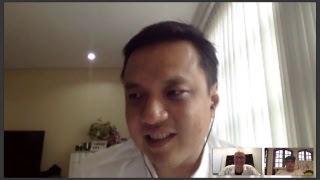
Andy Zain and Jeffrey Paine, investors in Southeast Asia, explain why the region has plenty of seed money but few late-stage funders. They advise founders to build multicultural teams, pick Singapore or Malaysia as a base, and pitch the team and execution, not the idea.
Chapters
Hello everyone, my name is Adeo Ressi. I'm CEO of the Founder Institute. We've got an exciting webinar here for you today with two amazing guests talking about Asia and how to raise funding across Asia. The Founder Institute is an idea stage incubator that helps you take your business passion and turn it into a thriving technology startup. We have chapters all throughout the world and many throughout Asia, and we have two of our directors who run funds in Asia here tonight to talk about raising money at this juncture. So, um, according to TechCrunch, investment in Southeast Asia startups doubled from 2015 to 2016. However, the total amount of startup funding is still much lower from where it should be, given the amount of startups and innovation coming out of the region. Raising funding in Asia is still very challenging. So today we have two of the top early-stage investors in Southeast Asia that are leading the funding change, and they're going to help you navigate these challenges. So I'm going to call them on screen and give them a second to introduce themselves. First and foremost, let's call Jeffrey Payne on. Hey Jeffrey, how are you, sir?
Good, how are you?
Yeah, do you want to tell us, give us a little one-second or a few seconds on your amazing fund Golden Gate Ventures, which is really probably the leading fund in the region for its stage. Tell us a little bit about what you do.
Sure, thank you for that. So hi everyone, basically we We are a seed and Series A fund based in Singapore. We invest exclusively in Southeast Asia. So, anywhere from $500K US to $3 million US.
Oh, awesome. I thought you were going to say more. So, how much money under management? How many deals have you done?
We have $70 million under management. And we've done in excess a little bit over 35 companies. So we have been around since 2012.
Wow, that's amazing. So you really, you're probably one of the more active funds in the region. Is that accurate?
That's right.
That's amazing. Let's call our, so we're going from Singapore over to Indonesia now. Andy, are you online? You want to tell us a little bit about It might be a little bit early, but you announced a fund recently, a pretty large one at that.
Yeah, thanks, Adil. So Kujira Ventures, we've been around for the last 3 years. We started actually as a venture builder, whereas we invest not a big amount, it's half a million, but from a really early stage on a seed-level company. We built like 30 companies the last 3 years. Recently, we announced our new fund of $80 million, so 8-0 million. We are expanding our presence. We just announced our office in Thailand a few weeks ago, and soon we're going to be announcing our operation in 5 countries in Southeast Asia. With the new fund, actually, we're looking to investing in bigger amounts, so we can do between $2 to $5 million per projects.
Wow.
Another thing also is that I'm also running an Idea Box. Idea Box is a tech accelerator in partnership with Indosat Ooredoo. Indosat Ooredoo is a telco with 80 million subscribers in Indonesia. That one, we put in less amount of money, just $50,000 to $500,000 per projects. And we're looking into company which have a good fit with the telco environment.
Right. Jeffrey, what is your, since you've done, Andy, you have a new fund. And you just described your other vehicles. Jeffrey, what's the average deal size that you're doing with Golden Gate Ventures?
Um, the sweet spot is anywhere from half a million to $1.5 million. And then we'll kind of double down as the round kind of goes. So the next round, we will double down on them.
So is the average like $750K or is the average closer to $1 million that you're putting in?
Yeah, close, closer to a million.
Yeah, awesome. All right, so we got 3 topics we're going to cover today for everyone, uh, and I'm really excited about them. The challenges of investing in Asia that startups need to understand, right? Then we're going to talk about how startups in Asia can position themselves to overcome these challenges, obviously. And then, uh, for the various founders, uh, who are watching live and are watching offline, Where to start? What are some requirements, tools, accelerators to use, etc.? So let's jump right in. Now, I want to add one thing. If you're watching, you can type in the chat questions. And what we're going to do is we're going to collect the questions and try and get them on screen because we really do have two of the world-leading experts here on this topic. And so if you have a question, we're going to try and get in front of them as well. So jumping into the challenges of investing in Asia, that startups need to understand.
If—
does anyone want to start with one? I know it's— there's a lot of different areas such as the difficult late-stage prospects. There's a lot of options for angel and seed funding, but after seed funding, it can be pretty challenging. We can start off with that one, or if you want to add your own. Maybe we can start this one with Jeffrey because you've been investing for a long time. Jeffrey, do you want to talk about some challenges that you're seeing?
Yeah, so I think the overall thing is just there are 2 or 3 types of things that you guys have to watch out for. One is Um, whether you are one market only, meaning one country only, or whether you are regional from day one. Um, less than 10% of companies in Asia are actually global from day one. So the chances of you being global is extremely hard, but it's not impossible, but it's very, very hard. Um, so aside from that, there is also the type of businesses you start. Over 90% of the top performing companies here are copycats. So chances are you're going to be starting a copycat. So you need to know, you need to know how to start a copycat. Um, so there is timing issue, team issues, and competition issues, as well as whether you actually will make money. Um, different countries here, you know, give you different business drivers. So you may either never ever make money, or it will take you longer than you think, and along the way you might pivot. So, so that's, that's, that's other challenges here. Other than that, there are not as many late-stage investors, Series B and C. Um, there are now pretty significant amount of seed investors, um, so from private individuals to institutionals, which means if you get funded, it doesn't mean you will succeed. So that's, that's a trickier— that's a trickier situation, right? So once you get funded, you think you're all okay for the next round, but maybe the next round guys will still think you will fail. Um, so if you were to start a company, I would suggest you talk to different investors in different stages. Yeah, that's my take.
Let's jump in, Andy. Maybe we'll zero in on the copycat thing for a moment because you've launched a lot of businesses from other markets into Indonesia. What are your thoughts about that statement? And, you know, Jeffrey said you need to know how to do a copycat, so to speak, to be successful. What are your thoughts?
Yeah, so exactly. I think the copycat model is the one that we are more preferred. So I prefer not to say copycat, it's more like you take successful business model, a proven business model in another market, and quickly implement it in your home market. Because there's no reason why you should come and invent something new. Where the market is still greenfield. Like Southeast Asia is a big market. You can't imagine how big is it. Just a comparison, there's more mobile broadband users in Southeast Asia than compared to US. So that's why I say that there's no reason why you need to plan to go to global and go through all this pain and competing with someone you don't know in a market that you are not familiar with while you have such big market in your home your home turf. That's why what you do is that, and there's no reason why you need to come with something innovative that no one heard before. If you can take something proven in another market and quickly deploy it here, and you become the king here. So that's our model and those are our thesis. So we're looking into investing company who start something proven, but they have a strong execution team and we back those team up. That's what we're looking. And I agree also with Jeff saying that, yes, I agree with what Jeff mentioned that there's not difficult to start a new company in Southeast Asia, but how to last a company in Southeast Asia, that's a problem because the follow-on funding is not there. That's why our approach now is that we're willing to invest a bigger amount of money to a young team and get them through Series A. And our amount actually is the size of Series B investment. However, we're willing to go earlier-stage company and support them all the way until they're successful. So that's why our sweet spot at the moment that we can put in like $1.5 million, $2 million, those are the amount that we're ready to commit to a company which we come in.
So let's, a couple people in the chat are asking, what is a copycat business? Maybe do one of you wanna take a moment and define it? Andy, you were talking last, do you wanna? Or Jeff, you brought it up first. Why don't we go to Jeff? Jeff, what is the copycat business in Asia?
Copycat is defined as you are simply not the first in the world to do it. So for those who are in Asia asking the question, if you look around the companies that you transact with and the apps that are on your phone, In fact, I would dare say 100% of them are copycats.
So I'll give an example. So Uber is a big ridesharing/taxi-hailing business, and there are similar ridesharing/taxi-hailing companies in Asia that are not Uber. And Uber was the first, so anyone else doing it is a quote-unquote copycat. there's a lot of copycats around insurance marketplaces, etc. So there are dozens of different businesses that are copycatted, food delivery, etc. Speaking on that front about international, because you brought up, Andy, that— and you brought up, Jeff, that less than 10% or 10% of the companies even go international. But Andy, you were saying that maybe going international is not so important. So, uh, if you're in Singapore, going international is very important, but maybe if you're in Indonesia, it's not. I don't— what are your thoughts on that? Do you want to respond to his comment, Jeffrey, quickly?
No, uh, yeah, yeah. So, so that's the reason why, you know, it's less than 10%. So, um, most entrepreneurs, they, they, they they work well in their home comfort zone, right? So their home market is a comfort zone. And if you are so lucky to be born in a large country, then chances are it's enough for you to tackle for maybe 5 to 7 years. So, and, and that's perfectly okay. I think some investors are perfectly okay that some may want you to go out of that even, right? So some, some niches are still too small or still too early. So single market companies are fine, I think both of us are fine with that. And then regional from day one in Asia is also something we are open to. And to be global, it is extremely difficult because your competition goes up tremendously.
Andy, do you have any comments on that?
Yeah, I will say that going global is not a requirement, but being in regional, I think those are important. Unless that you are in a country like Indonesia where you have 250 million population, then one country business will give you enough size. But if you are, let's say, in Singapore or Malaysia, you need to be in multiple countries in Southeast Asia, otherwise that your company don't have the scale. But we've seen a lot of successful companies coming out of Malaysia and Singapore, for instance, like Carousell, They're successful in multiple countries. And Grab also, they're successful in— they start in Malaysia, but then they are also very big in Indonesia. And I think they put a lot of effort to win Indonesia market, because without Indonesia, it'll be hard to really reach like $100 million valuation.
So I want to— there's some other things that were brought up by both you and Jeffrey. But there's a kind of a— big elephant in the room, so to speak, in China. What are your thoughts on China? Is it a good thing, a bad thing? It's an isolated market, it's enormous, it's next door to many of your countries or nearby. So any thoughts that you want to add on China, good, bad, indifferent?
Andy?
Jeff knows a lot of China, right? Jeff, you stayed in China for a while, maybe you start first?
Yeah, yeah, yeah. So let me cover it. So the way we look at China changed over time. I think as of today, the Chinese, I think the top 100 unicorns are looking at Southeast Asia, especially India, to start. Now, going— so if the question is going into China, I would say in the past it's much harder. Now it's slightly easier. It's not easier, it's slightly easier. And if you were to do that, I would suggest you drop every other market and just do that. So it is slightly easier for foreigners now to do China, but you really have to do it 110%. On the flip side, on the flip side, the Chinese are doing a few things which is going to scare us in the next 3 years. Number 1, Chinese unicorns may be coming to invest or compete with you in Asia. So that's something that's going to be something that we have to watch out for. So the venture guys have to also watch out for. The Chinese competition coming in. Two, Chinese VCs with overhanging money will be investing in Chinese entrepreneurs launching in Indonesia. So that's going to come. So, so the way we look at things is going to be a little bit different for, for the next 3 to 5 years.
Wow, so that's interesting. Chinese unicorns are coming, uh, And, you know, Chinese VCs are coming too, but they're probably, as you said, not going to invest in necessarily local entrepreneurs. They'll invest in local Chinese entrepreneurs. Andy, do you want to add anything to that? Maybe the threat of China since we're still on the challenge of the market? Okay, it looks like Andy blacked out a little bit. So that's always interesting running the Asia webinar in a US server. Can be a little mixed. Well, you brought up India, Jeffrey, and you know, that's also an enormous market, much more addressable than China. As you brought up, China's only slightly easier. Is India a threat? 'Cause there's a lot of India unicorns, or is India an opportunity? And when you're thinking about going regional or international?
I think very still somewhat very few companies do enter India from here. So it's the same thing, it's either your investors are from India or one of the co-founders are from India though, so that will work a little bit better. And then it also depends on what you do. So B to C, you, you actually should be doing the same thing as China where you drop everything else and just focus on India. So B to B, you, you might have a little bit of a shot, uh, provided you know what you're doing when you land. Um, yeah, then the other thing about India versus China of what I said, the Indian companies are coming out to Southeast Asia. But not in droves. The reason is the last one year there's a lot of problems happening in India. So most of them are trying to secure their positions in India as opposed to divert their attention away.
Expand regionally. So we're getting some questions in the chat like, what's a Chinese unicorn? Well, by definition for everyone, a unicorn is a company with a valuation of $1 billion or greater. Some obvious Chinese unicorns are Alibaba, Tencent, Baidu. I actually think it's called BAT for Baidu, Alibaba, Tencent. There are plenty of others. I think Chinese, from my understanding, Jeff, I think outside of the United States, China has the most unicorns, companies worth $1 billion or more of anywhere in the world. Is that right?
Yes, yes, that's right. So I think one example is a company called Toutiao. Toutiao is something called, uh, uh, headlines, if I'm not wrong. If you translate it, um, it's the largest news app, kind of like Flipboard in the US, right? And they're worth— right now they're worth $10 billion in 4 years.
Wow.
They just raised $1 billion at $10 billion valuation. And they are only 4 years old.
That's bigger than you see even in America after 4 years. That's pretty incredible. Well, while we wait for Andy to connect, Jeff, why don't you and I start moving in? Is there any other problems you see in the Asian market? You did a great outline, so let me just recap, so to refresh your memory and everyone's memory. We talked about copycat businesses, which is both a challenge and opportunity. We talked about going international, which is again both a challenge and opportunity. You mentioned time, team, and competition, really having an understanding. It might take longer than you think to make money, and there's not a lot of late-stage investment. And we also had a conversation about China, India. Any other challenges in the market, Jeff, that, that come to mind you'd like to discuss?
I think the rest of the challenges are pretty straight standard. I think like hiring challenges, talent challenges, those are pretty straightforward. I think for those who are from slightly smaller countries like Singapore, Malaysia, there lies a bigger challenge, right? Do you, do you start your first beachhead market in your home country and then you go out, or should you pack up your bags and leave, right? So this is the tricky part. So if you are a copycat, chances are within a year there will be 5 copycats in every other country around you. So the question is, what do you do, right? So, so that's, that's the, I think, the most challenging for founders in those countries. If you're inherently from Vietnam, Indonesia, or Thailand, you tend to stay where you are.
Okay, well, we got, um, we had a little technical hiccup there, but Jeff, that is a great segue into how startups in Asia can position themselves to overcome those challenges. Essentially, where do you start? So if you're in a smaller country, let's say Singapore, which is very small, Malaysia, which is smaller, Cambodia, etc., which might not have a very big market, do you, as you said, do you pack up your bags and leave? Where do you even incorporate? And so, you know, Andy, since you're back, do you want to— I mean, obviously you might say, hey, come to Indonesia and start with us. Right? What are your thoughts, Andy, about— and then we'll go back to you, Jeff.
Not really.
What I'm looking to start— if you're in one of these smaller countries.
I've been talking to many parties in different countries as well. I think what you need to see is that our enemy is not between us, but we talk about Chinese startup coming in, Chinese VC coming in, and they're investing in China entrepreneurs only. So we need to prepare for that. And for us to do that is that we need— we are not launching Indonesian company or Malaysia company or Singapore company, but it needs to be a Southeast Asia startup, right? So the founders can be a mix between different countries. We can say that because, uh, we can say the company is established in Malaysia or Singapore because the government gives more support, uh, then, then that country can become the holding, uh, of operation, but then the CEO can be from Indonesia, then the marketing guy can be from Singapore, let's say the technical guy can be from Vietnam. So from day one, the company is ready to scale in the region. And we're starting that model. In our office now, we have people from 11 nations working together to launch their company. And we do have mixed founders between countries, and they're doing very well. So the Indonesian founders, after a year that they become the Indonesian CEO, Then the other founders, they start going to the other market and establish operation in Philippines, in Thailand. And we will see that more and more of this will happen in future. So it is not like one country startup, but from day one, already a regional startups.
What is the interchange language? Is it English? Are they all speaking English to one another, Andy?
Yeah, they all speak English. So I think in the startup community, English is not a problem. They all communicate well.
Jeffrey, did you agree with everything he said? So you basically set the company up in Malaysia or Singapore and you bring a multicultural team together from different nations from the beginning as an optimal way to start?
It depends, I guess. So if it's for one single country, It depends on the founder, founding team, and their DNA. So if it's a one single country play, the team tends to be very local. But if the team tends to know that they're going to go regional, they'll tend to hire people they used to work with, and they tend to be, you know, international. So, um, so I think you have— we have both types of setups.
Yeah, but I mean, what, what's the optimal, right? Because we got a bunch of people here who are thinking of starting companies, thinking of raising money, and if you had a team that had— it says like, look, we're starting in, I don't know, Thailand, but we want— we've got a founder from the Philippines, a founder from here, and we're incorporated in Singapore. Would that make you happier?
Uh, actually, uh, incorporation is fine. Singapore would be ideal, or or the most preferred. International teams are okay if they, you know, execute. And then I think the most important is actually being able to speak English, actually. So if you cannot articulate your business, you can't do all the stuff that is required to do to raise large amounts of money, then chances are you won't be able to raise large amounts of money. So I think the international flavor tends to bring the sense that you can handle a lot of money, you can manage a lot of people. So that's something that probably the teams need to just be wary about.
So the leadership with mastery of English. Ed is asking in the chat, if you want to raise funds from Asia, might it make sense to incorporate in the US? So have you guys thought of investing in a company that maybe have a Delaware C corporation but actually operations in Asia, or do you prefer Asian incorporated companies, or you don't care? Andy, do you want to take that one first?
We don't care. I do have investment in company established in Hong Kong. So far, no one from US yet. Hong Kong company but operate in Southeast Asia. We now looking into some Korean incorporated company, but they focus a lot in Southeast Asia. So those are also open with us. So initially when we found that a lot of investor, they prefer the company to be hosted in, let's say, in a neutral and safer country like Singapore. But I say it is something nice to have. But what we found later is that a lot of investors are more pragmatic. They say as long as you save costs, do whatever is needed, only when your company grows, then we can restructure it in a better, let's say, global or regional setting. So many of my companies, when they started, on the first day we say, oh, let's incorporate in Singapore. But after a while we say that the cost is very high. For all the corporate services. Then another side is that we have company, everything is just Indonesia, then when the investor comes and says, "Yeah, it's okay, just continue with whatever you have, as long as you save your cost, I don't mind, and you grow your company." Only when later on you want to open a second market or third market, then we decide whether we should set up a Singapore holding. But when we become regional, I think Singapore becomes a preferred structure to have.
Awesome. I want to go and address some of the other problems. So you can— it sounds like you're saying there's some better jurisdictions to start, but you can pretty much start anywhere. And if possible, it's better to have a multicultural team, but not absolutely necessary. So if you want to— and that's great advice. Let's talk a little bit about One of the other things that you guys brought up earlier, which is this lack of late-stage capital, right? So we can sort of look at the inverse of that. I would presume that there's a decent amount of seed funds and venture funds now in the region on the earlier stage. Is that correct? And then if that is correct, like, what are you— how does the lack of late-stage capital affect your thinking about investing in startups? Jeffrey, do you want to take that one first and then we'll go to Andy?
Sure. I think late stage there are, but not enough. So that's the first thing. I think as companies grow out of seed and A, you know, some of them are still trying to find footing. Some of them are trying to refocus and not do too many things. Some of them, right, found something and then they need money to push it. So, so that's where, you know, things lie. Like I said before, um, Southeast Asia is a little bit tricky. Your timing might be a little bit off, which means you might still need a little bit more time. You might need a bridge round in between. You might need to, you know, shut down some countries and refocus. So, so that's where I think bridge and late-stage guys come in sort of like, oh, once you figure that out, then we'll try to push it for you.
For everyone on the call, a bridge round is where, let's say you raise the Series A and you want to go raise a Series B, but you're struggling to find the Series B. So you take a bridge, which is like a bridge from the Series A to the Series B. it's usually done as some type of debt. Have you had to do a number of bridge rounds, Jeffrey?
We do some, but not too many.
And Andy, what are your thoughts about— because you've commented numerous times you want to build sustainable businesses because in part you're worried about the later stage crunch. What are your thoughts on the later stage crunch? Are you there? Can you hear me?
Uh, yeah, sorry, I missed a part of that. I tried to answer as per what I, I can understand. Uh, we got chopped off a bit earlier. Uh, so, uh, I think in some way that I, uh, I see there's an issue with the later stage investment Not because we don't have the money. In case like Indonesia, we're starting to have few funds size of over $100 million, right? And they can invest in post-Series A company. However, those funds, most of them are started by corporate ventures, or it is backed by one large family, and they are in no rush to to quickly make investment. That's why they take their time and select only good companies. The issue is that there are only limited good companies, strong companies they can invest. I think those are the issues. Then because of that, we said there's kind of like a crunch of that. So the crunch is not like we don't have the investors, but the investors are taking their time. And many of these funds, they just established like a year ago. And they're in no rush to spend all the money. So it's more like wait and see. But this become a pressure for existing company which they pass through their early stage and now they want to go to the next level and no one actually putting their money. This bridge round actually is helping, but again, it is limited. Like I found some, I found, accidents of some startups actually, they're looking to, they passed their Series A but having problem to go to Series B, but looking for someone to like bridge that also. How to say that? There's a lot of proof points that they have to put in and many times that the company actually not fast enough to do that. That's why I say that you need to have a very strong and very supportive Series A investor. Then this Series A investor will lead you, and they're the one actually providing the bridge for you to go to the next round. So we've done that a few times for our startups, uh, then, and we see that if you don't jump in, uh, the startup is actually having trouble because the B round is, is, uh, it's very challenging.
So the B rounds are very challenging. A lot of questions are coming in, guys, about you and your decisions to make investments. So let's jump right into that and we'll cover resources next. So there are a bunch of seed and Series A funds in the region, which is great. And, you know, I think people really care. You two are running some of the most prominent and more sizable ones. So help us or help the various people on the webinar today understand, like, what do you care about when you evaluate a startup? And maybe, you know, obviously there's some no-brainer stuff like team, market traction. And because we have some newbies on the call as well, if you can explain any jargon or any— when you say traction, don't just say, hey, we care about traction. Try and get into what that means. Jeffrey, do you want to go first and then Andy second on what do you look for when you make an investment decision? Sure.
So if I were to reference the last two investments we did, it's going to be first is the team. Why do they do what they do and how did the team come together. So that is a very important thing for us. Then product market type of fit. So I would say the last studios we did was more or less first mover type of companies. So first mover is interesting, you know, not Not saying that we are afraid of investing in copycats around the region, but first mover in the region is kind of interesting. Thirdly is the actual traction. So product, we have to look at it very deeply, traction numbers and retention numbers and all the little metrics that we track, right? So mobile is different, web is different. Um, yeah, so I think now we, at least we kind of look at things a little bit deeper now, and, and then looking at macro and then looking at micro. So, so it takes a bit of time to, to review companies, but generally it's going to be team first, market and markets, and then, and how well the product is doing.
So let's go in. You brought up, um, something, and I, I don't want to because it's jargony, right, which is Product market fit, right? And obviously for many of us, we sort of know what that means, but maybe if we can spend a second to explain it, it's kind of hard to measure, right? But you know when you see it. Do you have like— so give me an example. How do you know if a company has product market fit when you're looking at them?
Um, actually, at seed rounds, you actually don't know. So I can tell you, you have no idea. Uh, so what we tend to look for is, uh, you know, just as, as much, you know, numbers showing us. So it could be some of the stats, uh, it could be transaction growth, it could be just growth rates. But it doesn't mean if everything is pointing up and you're still in Singapore, you will still be big, right? So I would add a few things: product, market, founder, unique economics fit. So everything has to fit or else it's gonna get harder and harder.
Right, so it's gotta be a perfect— the founder, the growth, the market all sort of aligned. Andy, What are your investment criteria? Now, obviously for you, you've got a bunch of different entities and people have been asking about like, how do I get into the talco? How do I get into this? How do I get in that? Maybe what you can do is outline for the incubator what your criteria is and then outline for your fund what the criteria is, if that would be okay.
Yeah, I think, I think both are very similar, but, but, uh, only on the different focus. The one that relevant for the telco, uh, will mostly go to IdeaBox because we can leverage the telco distribution muscles, uh, with the 80 million subscribers. There's something very good. But what we're always looking is that number one, it needs to be a proven business model. So someone have done it before in another market and they are successful. Then it is relevant for Southeast Asia. All right, doesn't mean that it is successful in the home country, in, in the other market, but when coming here, it's totally— it's not relevant because the regulation-wise does not allow that to happen. So it needs to be a proven model that we can, we can replicate here. Number 2 is that it needs to be in a sizable market size. So we did not— or we, we, we, we, we are not looking into investing in a niche business yet, in a niche segment yet, because there's still available a lot of the big verticals that we can come in. So if you're looking into just smaller segment of an e-commerce or in healthcare or in, let's say, fintech, we don't look into that. We want a general market because for the next few years, that opportunity is still available. The number 3 that we're looking into is that we want to invest in a team that's relevant to that, to that industry. So if we are investing in a fintech company, we want the founders not just keen about fintech, but they need to have a fintech background. So they need to work in a bank or in insurance, or really understand that industry. Otherwise, we won't come in. So those are the basic ones. Then later on, when we go to our fund where we invest a bigger amount of money, then we want to see that the team able to execute and have able to prove revenue. So they're able to generate revenue, no matter how small is it, we want to see that they're able to sell the service to that. And I think the cost for acquisition, how they come into this market, how much it costs to win this market, if it becomes too expensive, maybe it's not the area they want to come in yet because the market is not ready. And the last thing is that we see that it is good to know if they already have the abilities to enter the second market. So sometimes from day one, we know it already when we saw a team, whether the team is focused only local or the team have abilities or have the ambition to go to the second market. If they have that ambition, there's a plus point for us.
There's a lot of questions coming in, and this could be a quick, quick one. I believe that Henning was asking, would you invest in a single founder? And since you're on screen, Andy, would you invest in a single founder? And then Jeff.
Yeah, we did invest in several companies with single founders, but quickly we required them to work with co-founders. And it happened many times. Most of the time that we, when we found single founders, if they are foreigners who come in to, you Indonesia and they have skill set in certain area. So they built another startup in their home country already, or they're part of a bigger team in their home country and now they want to start something in Southeast Asia. But quickly we match them with some local partners that they can work with, then end up become their co-founders after like 4 or 5 months. But rarely they become a single founders, like, until the second year, usually like the first 6-7 months, then they get someone to work together with them. Investing in single founder is risky because you don't know what happened with them.
Uh, Jeffrey, what about you? Have you done single founders?
Yeah, yeah, uh, we have invested in single founders. Uh, they tend to be slightly later in, in the game, so they have, you know, they have traction, they have a full team, but then it just so happens the, the senior management are not founders from day one. So the answer is yes, but so, so when I get, you know, pitches and it's a solo founder, I tend, I tend to kind of either wait for them to kind of push it out, or, you know, or they have so much traction that, you know, I will look at traction and not look at a team for, you know, when I'm evaluating.
So I've got another one here and then we're going to move into tools. There's so many questions coming in. What about the ideation phase? So you're a founder in the ideation phase, maybe you don't have product at an MVP stage or maybe you just have a very concierge MVP. Are there funding options in Asia for them? And that question is from Nye and a bunch of others. Andy, maybe? Because you—
okay, uh, so we have a few ways for, for, uh, to work with founders, uh, to have our deal flow. One, of course, is through Founder Institute. In fact, that from the last batch, uh, we, uh, we, we took two of the graduates from Founder Institute to come into IdeaBox accelerator. So what we require when we invest is that on IDBOX, we are a bit more flexible because we work with a carrier, and the carrier can help to bring the company to traction. So, but we're looking into someone with at least is a prototype that come in, and they have a strong team to execute that. That kind of company can come into IdeaBox because we're going to work together with them for the next 4 months to finalize their product, to have a kick-ass product. Then we hand it over to Indosat, our telco partners, to help bring traction to these users. So those are the companies in our accelerator. We accept only if they have a prototype. On our fund, on Kijora, that we require them to have, uh, uh, to do more. Yeah, we want them to be in the market already and they already get some traction. Those are the ones we're looking at at the moment at the, uh, in the Kijora fund. So, and two ways to come into us, either an easy one through IdeaBox or Kijora, which is like you have to be more, uh, you need to prove more points.
And, uh, Jeffrey, do you want to add anything to what Andy said about, uh, the, the, that really early stage? Are there options for money? Obviously Founder Institute's a great one, um, to help.
Yeah, um, I think regionally there's, there's, there should be somewhat enough accelerators, um, so if you're at MVP or version 1 pre-launch, I would suggest you either raise your own money, private, like your own private friends and family rounds and try to ship and, you know, launch stuff. If not, try one of the accelerators. So, I think Thailand is fine, Singapore is fine, Malaysia is somewhat lacking a little bit, Indonesia is, I think, fine.
So, there's a lot of seed accelerators. For those of you who don't know what a seed accelerator is, When you have a team and you have a product and, and people are starting to use your product, there are structured programs that will offer you, um, some money, uh, and some guidance to essentially accelerate your growth. That's why they're called an accelerator, and they usually culminate by introducing you to investors. So normally in a market you have a program like the Founder Institute, which is, hey, I've got an idea, but I don't know what to do next. Then out of the Founder Institute, you create a company. That company will start to get the team traction, etc. Then you go into, let's say, a seed accelerator. As Jeff said, you might raise money from your friends and family or raise money on your own. And then after a seed accelerator, like Idea Box, for example, you would go into a fund, and both Jeffrey and Andy run funds. What are some other good resources that entrepreneurs starting out should know about in Southeast Asia and across the region? Any other, like, sort of things that you would recommend that they try to do or try to get or try to use? Jeffrey, do you want to take a first stab at that? For example, there's a lot of government money out there. Would you recommend it or say no? Jeffrey? Any other— did you hear me? Any other resources entrepreneurs should know about in when they're getting started?
For funding-wise?
Ah, funding or just thinking about launching their company.
Oh, okay. Funding-wise, I think depending on which country you're from, just go with what most founders have good feedback on. So don't just jump in without checking with people who have received the money before. Um, there, there will be a mixed bag of people running programs and investing. So just, just be aware. If you, you know, if not, just ask some people. Sometimes it's a fellow investor, sometimes it's fellow founders. Um, yeah, other than that, uh, focus on probably getting your team, whether it's founding team or your initial hires, or your initial outsourcing partners, get them right in the very beginning.
Right, and Jennifer was asking, is there a platform or online site that you might recommend to look at these options? Because you said, hey, go talk to other successful founders in the market. That's certainly one way. Are there any resources that you think are particularly good, Jeffrey?
I think directory-wise, I think e27.co and Tech in Asia, they do have some kind of a startup database that has the investor database there as well. So you can start with that. Yeah.
So okay, so those are a couple of good blogs. Jeffrey— excuse me, Andy, what are some of your recommended resources that a new founder should be aware of or think of in terms of launching the company and securing funding?
Okay, I think that for the new founders, you need to get yourself known, heard by the angel investor or investors. So, uh, I think you need to show up, uh, in, in different, uh, activities. There are few accelerator actually popping up in the market. Now, Foundry Institute is one of the best ways for you to get access to over 60 mentors, which a lot of them are angel investors also, to get to know them. Those are the easiest, cheapest way for you to get access to them. There are a few accelerators like Plug and Play just starting their operation in Indonesia, in Jakarta. IdeaBox among them also. Then yeah, I think there's no other things that not much competition also happening in Indonesia. Yeah, pretty much is that. Bring your product out, try to win some press coverage to be very close to the tech blog like Daily Social, Tech in Asia, 827. Try to get to know them and try to do something unique about your product. Then show it. Then get some advisor to your team. Those advisors usually have access to more parties that you need to, be it strategic partner or be it investor. So I think work on that. But mostly important is that just pitch deck will not bring you anywhere. Nobody interested on a pitch deck. You need to start building your prototype, your product, try to get some customer if you can. And bring your product to this conference or to bring your product to an accelerator, try to join there and get advisor to help you to spread the news. And in here also.
Is there a particular conference, Andy, that you would recommend since you brought that up? And I have another somewhat related question in a moment, but is there like a big conference that you say, hey, if you want to bring your company to a conference, you should bring it to this one? Andy, do you have a recommended one?
Yeah, I think the usual one is like Tech in Asia, is Echelon. Those are the main ones happening in the region. There's some new initiatives happening like TechSource, the initiative come out of Thailand is coming as well. There's not much, so it can be in any of them, they'll be good. I don't recommend like one as compared to the other because there's some fatigue happening in the investor community as well. They get bored of this event and they want something interesting, something new. So the newer event can be useful for you.
There's so many questions, I don't know where to begin, but there's a couple that I think will be pretty good. So Jeffrey, let's go back to you with this next question. You've been investing for some time, you've been investing across the region. Are there trends that you think are hot right now in Southeast Asia that the audience should know about? So is there a type of company you're particularly excited to see? Any areas that you think are very interesting?
Oh, I think the last 2 years was fintech, but there is— there are still niches there to to tackle. So I think entrepreneurs can look at that. Healthcare is coming, it's gonna come kind of slowly, but it's gonna come. And media entertainment is coming as well. And then B2B as well is also coming as far as the software as a service. So there's still a lot of problems in our region. Yeah, so just make sure you know why you're doing what you're doing. That's what I can say.
And Andy, you had mentioned you like big markets, like because Asia is still fairly wide open. Are there any areas in those kind of big open markets that you think are interesting right now?
Okay, I think what you can do easily is that go look at what happened in US, look at what happened in Europe, look at what happened in Korea, Japan, try to list like the top 20 or top 30 tech companies over there and try to map it back to your home market if you're in Southeast Asia. Which one is already taken and who have done it and who has been successful and try to see if there's a gap which is not available. Plus, before you execute, to see that do you have the team who can execute those ideas? Are you good, let's say, in fintech? Are you good, let's say, in healthcare? If you're good, those may be the area they can come in. Those are the easier ones because investors look for something familiar for them, right? So if you can refer back to a proven or successful model, that will be good for them. If I want to point in several areas which is—
Yeah.
Give me an example of one.
Several area. Correct, correct. So one example, let's say that fintech might be a bit harder if you're not in the industry, if you're not part of the subject matter expert, because there's a lot of regulation, then there's a lot of red tape for you to— and also gatekeeper for you to pass through. If you're not from that industry, don't ever try to attempt doing fintech. I saw so many companies, so many founders, they say I want to do remittance and they have no idea what is it about, even though it's a big market, not a good idea. But healthcare is something coming up. Indonesia is among other countries that only on the recent year, government have this national policy to make universal healthcare benefit open for everyone. So there's a lot of money will pour into healthcare. And as a startup, as a tech company, you can take benefit out of that. I think O2O and service, those are easier, especially B2B because it's still very hard to get money from the end user. Payment is still an issue for many countries in Southeast Asia. So if you can get money that the corporate or the business is paying to you, those can be a good way for you to come in. Yeah, I mean, and variation of existing Large services. So a lot of the industry are tired, let's say, need some innovation. For example, like job portal, we only have like one or two major players and there's no innovation on that area. You can come in and bring innovation to that segment. Those area is good also for you to consider.
So I wanna— wow, time flew, guys. This was awesome, like so many questions. So I want to just leave fi.co/chat will allow you to continue the discussion as we wrap up. And I want to leave you guys with a wrap-up question. You know, a lot of different things. So any— first, someone asked a funny question. Alex was saying Hey, what are some of the things people should avoid when pitching you? I thought that was pretty funny. But then I'd also add like any closing pieces, words of wisdom. We got a lot of entrepreneurs on this webinar, a lot more will watch offline. So anything to avoid and anything you recommend? Jeffrey, do we wanna go with you first? Anything to avoid, anything to recommend?
Anything to avoid? I would say there's nothing. Just be yourself, because if I tell you what to avoid, then you are not yourself, and then I find out you are not yourself when you pitch to me, then I will be pissed. So just be yourself. Second thing is, I guess, yeah, the last comments, I would say make sure you know why you're doing what you're doing. I would assume most of you actually really don't know what you're doing. You're kind of like, oh, this one will make money, let's go get it done. So you do have to kind of be a bit more flexible, nitpick your idea a little bit more, uh, ask more people whether this is something that will be, that will be good. Uh, and, and just to let you know, you don't have to raise money. You know, some, some businesses you raise one family round and then you're profitable. So you don't really have to raise money, but then you need to know that this business is worthwhile doing.
Andy, one thing to avoid and One, so maybe some closing recommendations.
Okay, uh, for me is that I think what to avoid, uh, most of the piece, uh, that, that problematic when I found is that the founder talk a lot about the industry, uh, sometimes like 70-80% of their, of their pitch deck or what they discuss is about the industry. Industry is good, but I mean We can do our own research. You don't have to give us like 20 slides or 10 slides all about industry because that industry is nothing about you. We want to know more about you, about your capabilities, about what you have done before and what you can do. So show us your product, show us your background, show us that you can execute well. Leave 1 or 2 slides about the industry, the rest we can find out ourselves. So I think those are my tips on pitching.
All right, and any other— any like leave behind, any quick advice for them?
Okay, uh, yeah, I, I, I like this format. Sorry if there's some technical issue with that. I think I need to have a faster computer. Uh, but, uh, if you can follow me, I, I leave my email and I leave my social media account. You can just follow me at Andy Zain, my full name. Uh, I might, I might be doing like a meetup for anyone who want to bring in your ideas, anything you want to talk within the next 1 or 2 weeks' time. Just follow me and then we can meet up face-to-face and discuss more about this.
That's very lovely. You guys have been amazing. I want to just give a big round of applause for our 2 guests. Just to recap who they are, From Singapore and a major investor in the region, we have Jeffrey Payne of Golden Gate Ventures. He is really one of the biggest-hearted investors in the region and very prolific. And then from Indonesia, we've got Andy Zain. He has IdeaBox and Kajora Ventures doing both seed accelerator and seed and Series A rounds. These two gentlemen are really amazing leaders in the region and honored to have you on this webinar. I hope we can do it again. We're gonna share this out and maybe we can focus more specifically on some, maybe even get some founders on screen to pitch and walk through some, some practical advice one-on-one. So thank you, gentlemen. Thank you, everyone. Continue the conversation on fi.co /chats. Have a great one. Thank you, Andy. Thank you, Jeffrey.
Bye-bye. Bye, Jeff.










