How to Raise Money from a 'Dragon', with Michael Hyatt (Co-Founder, Bluecat)
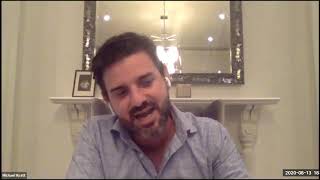
In this live webinar, host Wade interviews entrepreneur and investor Michael Hyatt (Co‑Founder of Bluecat) about raising capital in the post‑COVID world. Hyatt explains how the pandemic forced founders to discard pre‑2020 business plans and accelerate digital transformation, urging entrepreneurs to treat fundraising like climbing Everest—first establishing a solid base camp (product‑market fit, traction, gross margins) before seeking high valuations. He stresses de‑risking deals by proving customer demand, understanding VC/LP structures, and negotiating term‑sheet provisions that matter more than headline valuations. Hyatt advises founders to pick investors and mentors as carefully as they pick partners, to conduct deep due‑diligence on the people behind the firm, and to avoid “celebrating” fundraising. He discusses personal sacrifices of founders, the importance of mental health, the norm of failure, and the need for a clear mission and culture. The conversation also covers government grants, incubators, the rise of AI‑driven businesses, social‑enterprise trends, and Hyatt’s philanthropic work funding medical research and community programs. Throughout, he balances pragmatic advice with a candid, motivational tone, encouraging founders to focus on sustainable growth, strong margins, and purposeful leadership.
Chapters
OK, I think let's start. Ladies and gentlemen, we do apologize for a bit of a late start here. There was some confusion on whether it's at 5:30 or 6 o'clock, but we're here now. We've got about 117 participants from around the world, including Claudio from Argentina. Thank you, Claudio. Delighted to have you. And very, very interested in what I think could be an interesting session here tonight. Michael Hyatt is a guy whose age belies his experience. He comes from a background that is varied and has done basically every side of the entrepreneurship thing, from startups himself that he's taken through to exit and sold, to being on various funds and raising capital and targeting those investments in strategic endeavors of various types. To running a charity and plowing the fruits of his success back into the community, back into communities in fact, around the world. So I think a lot of that narrative is gonna come out over the course of this interview. But I can tell you that I'm personally delighted to have Michael here. I found him to be a humble man, an interlocutor with ideas, and very open to basically anything people wanna ask. And so we'll be collecting some thoughts here. Kaylin is working the panel, the chat room. And she will be kind of aggregating, collecting some of the questions that people come up with. And we'll be putting those out to Michael in due course. So Michael, why don't we just turn it over to you? You've got some initial thoughts I think would be great to kick things off.
Yeah, thanks, Wade. So hi, everybody. Good evening and good morning or wherever you are in the world. Hi to Argentina. I wanted to just start off by just giving a couple of slides, just a couple of ideas of just kind of what's souping around in my brain. I want to talk just a little bit about where I think we are right now in the world. Then I want to talk about entrepreneurship, and I want to talk about one of the topics here tonight, which is raising money. I want to give you a couple of broad concepts, and what I want you to do with some of the things I'm saying is I want you to maybe take a few notes, and I want you to kind of absorb them and sleep on it and think about the concepts that I'm kind of giving you. If you had a business plan before March of 2020, you most likely have to take it and put it in the shredder because the world is so different after March. It was like, you know, March 8th was kind of normal, normal, and kind of March 11th or 15th or something was completely different. And we all know why. This global pandemic is an absolute shock to the system. And what it did, it's effectively done— and it's kind of showing itself, but it's kind of pushed us through a wormhole. Literally, if you like Star Trek, you like these space analogies, it pushed us through the other side of the galaxy. And basically, it's taken what I would call what we would naturally do in 5 or 10 years into digitization of the world in retail and law and medicine and whatever, and it's forced everything forward to about 5 months. And it's done that in just incredible, incredible pace. And it's been shocking to the system. And I believe that every month that this goes on, it becomes the new normal. And everything you're experiencing now becomes more and more normal. And people are funny that we just get used to things as the new normal. So I think the world you're living in now is the new normal. And for the next few years, it's going to seem more and more normal. Yeah, we're going to— we hope there's a vaccine and things are going to change and get back together. Look, you know, broadly, 25% of people are never going back to the office. It could be 50. That's a new normal. 30% of people are gonna just Zoom their doctors, you know? And there's a whole bunch of things that are gonna happen and not happen, and that's going to just keep going on the way it is. So if you're sitting there with your business plan hoping that your business plan from last year comes back in September because there's a vaccine or whatever, you'd be wrong. You really, really have to look at the world very differently now. And really, whatever sales and progress you're making between March and kind of now, is really telling on your business. So if I looked at your business today or where you were, I'd like to know maybe the past 60 days of revenue. What's going on? Because revenue last year, I don't know. It's a very, very different world. When you build a company, it's very much like climbing Everest. Everest is like 30,000 feet and it's so high, that's the kind of height a jumbo jet would fly across Canada at. And when you, if you ran up Everest real quick, you die. And there are bodies all over Everest. Building a company is like climbing Everest. And you have to learn to get to a base camp and then acclimate. To climb Everest, you go through 4 base camps. You get to base camp 1, you acclimate, a couple of days later, you go up again. Overall, hope is not a strategy. Math is. Math counts. And if you're thinking on making this big epic company and doing all these things, step back for a second and try to get to base camp 1. What is base camp 1? You know, every company pivots. Every— founder changes their company. Facebook started off as a university thing, I think at Harvard, and then it pivoted out. Everything great has pivoted. Microsoft, one of the greatest companies ever, pivoted. And it pivoted even the past couple of years to look at the huge run that it's had. All great companies pivot. All great entrepreneurs pivot. And they pivot as they move through those base camps. So if you have a company, you've started something, don't just try to climb to the top of the mountain. Find your base camp one. And let's kinda dig into that a little more. And let's talk about, I just wanna dig into raising money and building your business. Raising money, I used to see a lot of people have parties over raising money. And there's Scrooge McDuck. Here's a bit of your Disney past. I wouldn't celebrate raising money. Now the minute you decide to raise money is the minute you've decided to sell your business because your investors and your VCs and people coming in want an exit of some kind. The minute you decide to raise capital is the minute you've decided to sell your company. It is not a time to party. You should party over hiring a great individual or landing a great client or revenue. When— as soon as you raise money of any kind, even from angels, you're on the clock, and that return is expected, and the pace and tone get different, and you're going to have to change, and you're gonna have to get into a rhythm. and you shouldn't be willy-nilly about it. You should start getting yourself fundamentally around a very tight process, a strategic plan on a monthly basis where you look at everything critical in your business on a traffic light basis. What's red, yellow, and green? And what can you discuss that with? I strongly recommend out there, if you're raising money, try to get yourself one really good advisor who will hold you to account, because often as founders, we, we are too close to our company and we own too much of our company and we make all the decisions. Try to get someone to help you hold yourself to account on a quasi, as if you were a public company, on a monthly and then quarterly basis. Think about that. If you want to raise money, you really need to stop being an entrepreneur just for a minute and take off your entrepreneur hat and put on your investor hat as if you were investing. The first rule of investing is it's not the return on your money. People don't go out there giving money thinking about what's the return on my money. The first thing you think about in investing is will I ever get my money back, the return of my money. This is critical. And if you for a second step back from your company and ask a simple question, which is would I invest in this business How, if I put money out there, what's my expectation of return? And why? And why? Would I even get my money back? And you know, you might go out there to your friends and family because you're starting a company and they go, oh my God, your idea, it's amazing. It's so good. Oh, I love it. I love it. Okay, ask all those friends and family for $5,000 to invest in your company. Suddenly you're going to hear what they really have to think about your business. Ask them to put skin in the game. It's different. You know, we kind of poison each other that way. It's the return of your money, which is the first rule of investing. Think about it. And to understand if you really want to take money from a VC, if you take some angel money already, now you want to take VC money, take some time to read and go to YouTube, go to wherever and learn how a VC operates. Why would you take money from a VC if you don't understand how they operate? They're a general partnership of a bunch of men and women that are super smart and experienced, and they get their money from LPs. They're a GP, and they get their money from limited partners who invest in them. And they're in the business of returning money that way, taking a piece of it and returning money. You have to understand the GP-LP relationship and how that matters to you. And they are on the clock. And once they give you money, they expect you to go up and they want to mark it up. And they want to get their return. So the minute you take that VC money is the minute you've decided you're selling your company and you are working for the LPs who invest in them. You only have one job if you want to raise money. And the higher the valuation goes, it's the people that can de-risk the deal. Take this concept. This is the most important concept I can give you about raising money. If you want to raise money, de-risk the deal. How do you de-risk a deal? I don't know. You have a PowerPoint and you're all first-time founders and you got this great idea. One of the founders can code. You're not de-risking the deal. You're a bunch of smart people together doing something. But if you're a repeat founder or you've launched your product and now you have traction with clients, and not only do you have some clients buying, they say, "I love what I just bought from you. I want to buy more." So it's kind of this thing. Is not only do you not have churn in the, in your SaaS licensing, you have negative churn because it's going up. So think about all the things you can do to take risk away. So the further you can push out, the more traction you can show with clients where the dogs are eating the dog food or the people are drinking the champagne, the more you de-risk the deal. Your only job as an entrepreneur is to de-risk the deal. So if you want a higher valuation, you've got to de-risk the deal, and you do that by getting more traction. This is really important, is who decides. If I look at your business today, no matter what I say, no matter what your VCs say, no matter what your friends say, it doesn't really matter. What matters, the decider, the decider of your business is really only your clients. And are they buying, and are they buying more? If you take any business that would buy your product, or any person, In any given month or any given quarter, they can only spend so much money. And you have to get in that priority list. And the deciders of your business is literally your clients. That's it. Jeff Bezos, back in the early days, would have a table, and I think it was only 6 chairs, and every time he famously had one chair 100% vacant. And who was that chair for? That chair was symbolic of the client. The reason why Amazon has done so well is they were, they've been maniacal about the client experience. I can prove it. Go to Amazon.com and search for something. Go to many other retailers. Look at the incredible differentiation. Because Jeff, building this company, did it by putting the client first and was maniacal about the client experience. And that, that, that relationship with the client is everything. And until you have clients buying your product and buying more of your product, I'm gonna say something you don't want to hear. I'm not sure you have a company. Let me say it again. Unless you have people or clients or businesses buying your product and wanting it more and more and more, you might not have a company. Right? You have nothing to— there is no connectivity here. You think you do. You're all really smart. You got this great software. You had the best coders. You have great marketing. You've got that cool website. You've got the music, you've got everything going on, but until you can show traction, you might not have a company. So what do I do when I'm approached by somebody that has— I was approached by a great guy today about a real estate SaaS product for commercial real estate. I called my friends up in commercial real estate and I said, listen, dude, I want you to try this and I want you to give it out. And let me tell you, if you love it, if my friends who are subject matter experts love it, buy it and want it, That's a good lead for me to go back in and go, "Okay, you got something." The deciders of your business are the clients, not the VCs, not me, and not you. Choose wisely in a foxhole. In World War II, there are many people trapped in these horrible foxholes because, you know, you're in the middle of a literal battlefield. And let me tell you something, when you pick a VC, when you raise money from somebody, you be prepared to marry them for 10 years. 10 years. If you don't want to hang out with them at an airport for 4 hours, don't take their money. There's a lot of money out there. Money is very fungible. There's 3,000 private equity firms in the US alone. Interest rates are at an all-time low. There's more money available today, even with the crisis, than there's ever been. There's nowhere for the money to go but into good assets. There's always money to fund good and great things. There's always good money to fund businesses with traction. Money has to find somewhere to go. You should spend your time deciding who to take money from, de-risking the deal, take money from people, but you will be married to them for 10 years, right? And if they say to you, "I got a great Rolodex," I'm like, "Okay, show me some of the Rolodex before I invest." See if you can build that relationship. How— what is that investor like on their worst day? How do they treat you? Are they gonna— and did you take the time to call any other founder that took money from them and say, "What is it really like to be with this person in a foxhole?" Because you should want to get married to someone who's candid, who's upfront, who's honest, who's going to give you the best advice for the business. I took money at times from VCs in my companies over the past 20 years that were able to bring me phenomenal enterprise clients that really brought value to my company. You know, there's some VCs out there that bring tremendous value. You are responsible for doing your due diligence on them as well. Even angels, you need to do your homework. And if you get a bad investor, kind of your fault. Valuation and terms. Everybody's out there wants to talk about the highest valuation. Let me tell you something. I had a friend who sold 5% of his company to an investor. That company, that guy had 5%, but he had so many protective provisions, he decided if the company sold, if they took debt, if they could get another board, anything. This guy for 5% owned the company. So terms are valued probably more than the valuation. And those two ideas, the terms that you give money out at, they juxtapose each other like this, right? And sometimes when you see people with really high valuations, you don't know the terms. The terms could be they get a 3x liquidation pref. So, you know, they have a big number that they put on the headline there on whatever. But that's not— you don't know the background. Terms, and the lawyer friends will tell you, are more important than the valuation often. It's critical, critical you understand your terms. And if you don't understand your term sheet, if you don't understand your deal, you need to stop everything and understand your term sheet. Get together with your lawyer and ask what these shotgun clauses, ask what drag-along rights are, ask what these— that's your job as a founder is to understand this term sheet. You're fully responsible for this term sheet. Lastly, and then my last slide, and I'll answer questions on anything you want in business or your careers, your personal lives. Be very careful. Everybody's pushing for— I mean, even in these markets, I see people pushing for these sky-high numbers. But let me just give you a kind of idea. If you get out there and you get this really high valuation, your next round probably has to be done at probably 3 times that number. So let's say you got out there, you got a phenomenal valuation on your first round. Let's say it's $20 million. That VC wants that next round up at $60 million. So they write it up. So they tell their LPs, this is a winner chicken dinner, right? We talked about this. But to get to $60 million, what does your revenue have to be? You better meet— you got to chin up. You got to chin up. If not, I don't know, you come to do your next round and now it's at, you know, an extension round of that $20 million or it's a down round and that can be punishing. Be careful. Make sure you can chin up to that 3x or that multiple, or you and your investor understand each other for the next round. You really need to understand what you're subscribing to. So numbers can be very murky at best. Okay, I'm gonna stop giving advice about raising money, and I can answer more questions about it. But thanks for everybody coming tonight, and I'll just open up to the floor, Wade, and anybody that wants to ask questions about raising money, and I'll stop sharing there my pigs. Thing and kind of go from there.
Okay, thank you very much, Michael. That was a rich and rather intense little foray into some of the stresses and concerns of entrepreneurs raising capital. Katelyn is compiling some questions, so people, please put some questions down as we go here. But let me ask you, Michael, about the personal side of entrepreneurship, how entrepreneurs who You know, they've been at it for 24, 36 months. They're at the end of their rope. It's taking a financial toll. It's taking a personal toll. Their spouse is grumpy. Their kids are grumpy. And they're balancing all of the stress and anxiety and other psycho effects of this. And maybe this is a side gig. Maybe it's their main gig. Who knows? Against the pressures of taking money and succeeding and, you know, balancing the ideal world considerations that you're talking against the real world considerations that are their daily lives. How do you navigate that stuff sometimes?
Look, I tell people being a founder and being a CEO of a startup is a very lonely experience. There's something called YPO, Young Presidents Organization. That organization exists because it's a bunch of people like us getting together to commiserate how hard it is. This is a very long— it's a marathon, it's not a sprint. This is not for the weak at heart. It's like going through a tunnel and there's light at the end of the tunnel. Actually, there may be a light at the end of the tunnel, you just don't know when it's going to be. It's like you're training for the Olympics and you just don't know when the Olympics is. So first off, let me just say it straight up. Not everybody should start a business. And if everybody could start a business, then everybody would, because the risk-reward can be very, very high. Most businesses fail. Most people, in my opinion, should just take a paycheck on the 30th and 15th and not do this. You're married, you got a couple of kids, you got a minivan, you got all this property, got all these pressures, and you're kind of just making it. You got to have a sit down with your partner and say, okay, I'm going to go make our lives in one way for the next 3 years much worse. I'm not going to be around. I'm going to be really stressed. I'm going to have terrible anxiety. I'm going to have a lack of sleep, but I want to go change our lives. Unless your partner's built, you know, bought in with you, you won't be able to survive that journey. You really have to think about the personal sacrifice that needs to be made. And just because you make that personal sacrifice, it doesn't mean you're going to make it. And that's the brutal truth about this thing.
Can you talk about failure as the norm? What does that actually mean in entrepreneurship?
You know, you— like, even today I fail. Even today I fail. I get I had to create like a— I outworked everybody else to get where I got to because I was never the smartest or fastest. But what I did is that I have the ability to take a punch. You ever see those poker players on TV? When they win a big hand, they get a little happy. When they lose a big hand, they don't really go crazy. They just hold it, their emotions in the middle. That's what you really have to be. There's days where I lose a million bucks, gain a million. It's just kind of the way it is. You've got to be able to hold your emotions to a center. This is a marathon, not a sprint, like I said, and this is a tough journey.
Yeah. I got a question here from Shoshana, who's asking, and she's in on this whole thing about VCs and valuations that you were speaking about.
Yeah.
Is it better to go for the big gold-plated platinum brand that's going to look so sexy on your website Or is it better to go for a smaller, maybe hungrier, a little more personalized kind of investor?
In my experience, you have to hunt the partner that you want. Okay. I mean, there's a reason why Sequoia is at the top. There's a reason why NEA is at the top. These are brilliant investors. You know, Andreessen Horowitz, I can just keep naming the brilliant ones. Sure. That may not make them right for you. Your job is to do the due diligence. You tell me that you have a B2B retail product or SaaS product, whatever. You tell me the partner that you want. Buy into the partner, don't buy into the brand. Often, unfortunately, with the biggest brands, there's a tax. And the tax is, hey, we're XXX whatever partners, and we're going to give you a lower valuation, but look, look, look back here of all the things we've done. And it's true, they have done them, and they bully the pulpit by saying that they've done great things, and they have, but you often will pay a tax for that. I suggest that you forget about the firm altogether and start figuring out the partner. And then I would say to that partner, show me 3 entrepreneurs you've invested in and you're on the board of for like 3, 4, 5 years, and I want to call them, and I'm really going to level with them and see what you're like. I'm going to back— I'm going to backtest you. I'm going to every backdoor I can find about you. I want to know what you're like on your bad day. What if I miss my quarter, what are you going to do? You need to know everything. Do not go for the firm, go for the partner.
Yeah, I like that. So way more focus on interviewing the angel or the VC than I think we typically hear from. Um, what are your thoughts on government grants for bootstrapping companies? I mean, Canada's got all these programs, IRAPs and everything else, and they present It's amazing.
I mean, if you can get them, great. I mean, why not? It's non-dilutive or this or that. And there's some other good ones. There's Scaled AI. There's a ton in Canada. You can get them, but, you know, that's great. I think they're hard to get. And I think there's some really good ones. They had in Toronto something called Mars, and they have the IAF Fund. And I believe once you have funding, they'll come alongside, and they've done some amazing investing. I've really appreciated them. They've done some great investments alongside a lot of firms I've invested in, and it and they go along with it. But I think they're great if you can get it, but you know, that's not— shouldn't be your strategy. Yeah. It'll never be. It'll be like, you know, add-on money. It won't be your primary capital.
Yeah, and I've seen companies, tech companies in Canada that get addicted to that drip, drip feed from the government. It's the RFI, RFP feed, and they just— and it takes them off of the big play and they become all about that cycle. So it's a risky thing. Got a question here from Mark Grayson here. How do you start the valuation conversation? You know, after saying quote unquote, "The market will let the market decide," when's a good starting point for going into the angel round with a company that's pre-revenue, if indeed that's what you want to do, and trying to figure out, you know, you're still trying to figure out your MVP. How do you tackle that question of valuation? And Wayne, what you said—
Okay, let's— is this Mark's question?
This is Mark.
Yep. Mark, here's the deal, Mark. Go back to my slide, de-risk the deal. What have you done to de-risk the deal? Tell me about you. How do I know you're going to execute? Like, what's my bet on you? So get your entrepreneur hat on, put your investor hat on. Why invest in you? Why invest in your product? Okay, but here's the truth. In your angel round, whether I invest at a $3, $4, or $5 million valuation, it's either going to go up or it's going to be zero. So it doesn't, in a way, matter. Good VCs will go, look, I really love your market. I love what you're doing, and I think you can win because I'm going to bet on you. I know you're probably wrong in this hockey stick revenue thing. You've been— by the way, it's all crap. I get it. I understand. But I'm going to bet you can pivot out of this. All great initial investments by angel investors or early-stage VCs is predicated on one simple idea, that I bet you could pivot to the right place. You're going to be wrong. Mark Zuckerberg was kind of wrong in being— he pivoted. He did it brilliantly, right? So like, we're all wrong in the beginning. But can you pivot? Are you coachable? Do you listen? Right? And what are you doing to ensure that I'm going to get a return of my capital or return on my capital? Like, why would I put money into this? Like, what's your expectation here? And not just some hockey stick thing. Folks, understand some concepts about markets. If a market is growing at 20%, and you're growing at 15%, you're losing market share. If a market's growing at 20% and you're growing at 25%, you're taking market share. So once you get your company going, where are you as opposed to the growth of the market? You can be growing at 50% and losing market share. It really depends on what the market is, right? And I really think you need to understand that. I'll give you another hint. I mean, I have a big bias towards B2B. I like selling to businesses. 'Cause I like bigger checks. I like things that are big. I love one concept when I invest. I love gross margin, which is, you know, what do you sell this pen for? And then you minus off the cost of whatever this pen is. Not the operating costs and heating and lighting and stuff. I'm talking about literally the plastic, okay? I sell it for a buck, but it cost me 10 cents to make. I got a 90 cents, a 90% gross margin. That number, that gross margin, is the most illuminating number I can come up with as an investor. Why is that? Because if you don't have a gross margin, you're never going to have a net margin. And here's the concept. This is important. All companies on the planet Earth are eventually only valued in one way, and that's future cash flow potential. So eventually you get to the point where you got to spit out some cash. Okay. As an example, the average S&P company gives around 10% net bottom line. Facebook at some times was up like 40%. That was the prediction early, and that's why the valuation was so high. If you're a software company, your gross margin to be adequate needs to be 70% and above. The best software companies in the world are in the 80s. That means whatever I sell my software for, I subtract off my AWS fees and my installation fees and my setup fees, all that, and it should be sitting there with other licenses above 70. And if you're AAA, you're the triple prime beef, you're that Canadian steak, you are above 80%. Right? So really tell me, like, if you don't even have a gross margin, if your gross margin is 20%, how are you ever going to spit out 20% EBITDA, which is your profit later on? You're not. Right? So it's very hard to have a company, you know, scale and show me how big this is if you don't have these juicy, beefy margins up here. Margin matters. You know, where there's mystery, there's margin. I like that.
I got a question from Barry here, who's getting on some of this some of the new trend of companies basically developing ideas for products first, testing them in the market, and then— and I'm kind of combining another question as well— and then failing fast if it doesn't work. Okay. And so, you know, I want to link that back to your comment earlier about if you don't have customers and revenue, you don't have a company. But you do see this new trend where people kind of posit an idea, posit a solution, they don't really have a solution or service yet, but they do test it in the market and they kind of iterate it and then if it doesn't work, they fail fast. What are your thoughts on that kind of trend?
I don't like it. I don't like it. I'll tell you why. Because great companies have never been built that way. Let me tell you how a great company gets built. A guy can't get a taxi, can't get a cab. So he gets a— he sets up this thing with a BlackBerry. He gives one limo driver a BlackBerry and makes it so he can call it off of his, you know, Bayes app that he made, right? Then his friends start going, hey, I needed a ride tonight. Can I, can I borrow your limo guy? Can I text your limo guy? That's what happened in the beginning, right, with Uber. That's how this started. What happens is that, you know, uh, uh, I can't remember the Uber founder right now, but my head's spinning. But, you know, when, when, when they started, um, he had to get— he couldn't get a cab. So he— the genesis of Uber was that he needed a cab. He needed to solve this problem for him. He solved this problem and he did. He told his friends and his friends said, can I have one? Other friends said, can I have one? Right? And he got to the point where— Travis got to the point where everybody was asking for that one BlackBerry that one limo driver had. What you're saying to me is I'm going to invent something. I'm going to throw it around the room. I'm going to see if there's a problem. Ah, I won. It's like you're— it's like you're I don't know, you're fishing around, you spent all this money, now you're running around to find the problem. You know, great companies have been built because there's a problem, you had that need, you went out to find it, you solved it yourself, you created the Advil, you created the Tylenol for you, and then your friend said, hey, can I have one? That'd be great. Can I have one? That's a business.
Because you've identified or you've stumbled upon, maybe it's blind luck, but you stumbled upon a real itch that needs to be solved.
Because you couldn't solve it by buying it, and you're like, this is a business, let me see if my friends want to buy it.
Right.
Oh, it is, it's really good, it's really good, it's really good.
I got a question from Michael here I like. Um, can you talk a bit more about term sheets for founders that aren't lawyers? The traps, the pitfalls, the things to be cautious of, how VCs are sneaky and the gamesmanship, that kind of stuff.
First off, you do not have the time to understand all that unless you want to go to a 6-month course. You get yourself a really good tech lawyer and you have them walk you through every line and explain the ups and downs of it and what is— here's what's going to happen. You're going to get a term sheet and they're going to say, hey, hey, hey, hey, this is, um, this is standard, this, that's standard, that's standard, that, that's, that's standard. Every time I've ever done a deal, every lawyer on the other side says That's standard, that's standard, that's standard. French standard phrasing. I've pushed back on everything always, always, always. So for example, you could give a VC something called redemption rights. What does that mean? Yeah, it says 7 years they have redemption rights. Well, that means that it could say something like in 7 years they can call back their capital and you could owe them interest on that money above that. That means basically they're pulling off— they've loaned you money for 7 years. They're gonna take it out when it could be very bad for you to take it out because you're trying to raise another round where they're like, hey, why am I paying off that VC? So redemption rights could kill you. That alone could kill you. How about it's something— look in the section called protective provisions, protective, which is the protections that they want. You can't— okay, you sold them on the SaaS company. You can't make it a pizza pizza company because that seems normal. So give them that one. But there could be things in protective provision that make it so you can't raise any other money. That's kind of standard without, but they're going to want that. You can't raise any debt, but you want to change it to say something like, well, I can raise up to this much debt, but then after that I need board approval. How about, you know, that they write in they're controlling the board from day one. Well, if they're controlling the board, they're controlling your company with a minority investment. Why would you let them do that? I mean, you got to go line by line by line. The terms are more important than the valuation. The terms are reflective of the valuation.
Sure.
Right? So you've got to— You really, you know, there's some great lawyers in Canada. You know, I myself work as an entrepreneur resident at one called Blake's, and there's a program there called Blake's Nitro, and where you get to talk to me as part of it. There you go if you want that. But they have an amazing system there. You know, there's other great ones in Canada like Osler's and, you know, and what have you. But there's, at the end of the day, you know, you are totally responsible for every section. And if you don't understand it, stop and ask.
I like this question from Stacy. What advice can you give a founder on choosing the right mentor? Let me say, actually, if I may edit her question slightly, on finding the hard-to-get mentor and bringing them on board in a way that they want to do so. Because I imagine you get these asks every single day, all the time, and you have to say no most of the time. Yeah, that's unpleasant, but a bit of a skin, harder skin to do so. But so Stacy wants to find a world-class mentor who's going to be great for her. How does she do that? How does she get creative?
Okay, so the truth is, is that people do things for people they like. So if Stacy, for example, only started working her network and building her LinkedIn and getting to know people today, she's gonna have to take some time to build trust with people, right? So what you should be doing is when you're employed, or when you should be triple downing on making your network amazing, right? When have you just gone to meet someone and asked them about their journey? When have you built a relationship with somebody? We mentored this young guy, Tom, my brother and I, since he was 14. He was like this prodigy. At 22, he starts his company, comes back to us, and we put money in his company. And actually, that company's getting— coming out as a real company in about 2 months. But, you know, like, he really put the time in. We put the time in. We built the relationship. Another thing that I do is I put a paywall up, which is basically I get approached so often that I just say, okay, you know, I put some— a paywall up of shares or money, whatever. And if people don't want to value my time, which is the only thing that I have of tremendous value is my time, then it's a way that if they— my job's not here just to kind of make you rich. My job is to great, I can help, I can be part of something great. And I love being, I love great founders and working with great people. I like being candid, I like shaping their company, and I bring tremendous value. But what I do is, what I do is I put up a paywall. All great mentors, I think, put up a paywall of shares or something so it makes you think that, you know, the time isn't free. Because no one's time is free, and that's not fair. Your time is not free. You wouldn't want someone to, you know, ask you to work for free, right? So what are you also giving, I think, what I'm trying to get at.
Yeah, I like it. What's your favorite thing about what you do? What drives you as an entrepreneur, as an investor? Speaking personally, because you spoke about the hard stuff earlier and the scars and the fact that this is not for everybody. Why is it? Why are you in this? This is from an anonymous questioner.
Winning. I just like winning. I don't know if I— I just like I love the fact that I can get together with other founders or my brother, whatever, we invent something and then companies start using it and we're winning. Like, we invented that, we did that. Like, to me, it's like, wow, that's great. You know, I funded these two brothers 3.5 years ago, and it's a well-known Canadian company called Second Closet, and they're in the, you know, the logistics business. And Second Closet is ramped up to a tremendous good size in 3.5 years. But the journey I go on with these 2 brothers that are 22 and 24, and sometimes I think they are 44 years old. It has just been a joy to build a company with these young guys that are so smart and dedicated that actually outwork me, which is shocking. It has been a wonderful personal experience for me to work with these founders. I love great people. I like exciting stories, and I like winning. That sounds very— who said that, winning? Charlie Sheen, I think, but Anyways.
It's very Gordon Gekko. It's very Gordon Gekko.
There you go. Very Gordon Gekko.
Jordan here. Big picture stuff, back to kind of your opening comments. What industries, verticals are you most bullish on post-COVID?
OK, so this is what I think is going to happen. First off, I want everybody to— this is an important part of this talk. The world is getting dramatically better. Forget what you're hearing. The world is getting— substantially better. Forget about COVID forget about the elections, forget about North Korea, forget all the problems you hear about. There is nobody on this Zoom right now that wants to go to the hospital and get medicine from even 2017. You wouldn't take it from 2018, and you don't even want it from 2019. Everybody on this call today would want medicine at the hospital from the year 2025, 2030, 20— keep going, because everybody knows the world is getting better. Literacy is getting better, childbirth, everything is getting better. The fake news is that it's not, right? And I just think that you have to understand that there is a supercycle now within the supercycle. And this is what I want to get at. The world is getting better. And in the next 3 to 5 years, there's only going to be 2 types of companies. Ones that have adopted AI, or what is AI for real, which is a prediction machine, which is using tremendous computing power to make a prediction to an answer that we need so we can make a better judgment. Companies that can do that and companies that haven't done it. Every insurance company, every financial company will be turned upside down by the startup that comes in and says, "I'm going to use the power of big computing, big data, and AI and turn this industry upside down." It's going to happen in medicine. It's going to happen in finance because humans cannot keep up with computers, and that's a good thing. That's a good thing, right? 2,500 medical journals on something, or studies, are published today in this world. How would any doctor keep up with 2,500 a day? They can't, but computers can. So when you get sick, the big blue computer will tell you which ones go to your DNA. Medicine's going to get cheaper and much better. But companies are going to be divided of the have and have-nots. One that have understood that they need to add prediction machines, which is AI. We're not C-3PO. We're not there yet, but we're into prediction machines. Like I can read a billion times faster radiology charts than a radiologist. Which is true. So doctors will do something else which is better. They'll go up. It's like in the 1980s when spreadsheets came in, they were gonna kill all the accountants. There's more accountants today than there was in the '80s. We also didn't kill all the bank tellers with bank machines. They just don't have to sit there counting money all day. There was crappy jobs for these professionals. They're not counting money. Do you know back in the '60s we would make accountants add up the phone book as part of a test to get their accounting license? That's a stupid thing to do now, right? Because we don't need to do it. We're better, you know, right? So just remember that the trends, to add to your question, are the companies that can really take the power of computing, and Moore's Law still exists. Yeah, it's 18 months or 19 months. It's still going up double every 18, 19 months, halving in size and price, still going on. And then one day we're going to have quantum computing, which is just going to boom. Right at the S-curve again. We're at the flat point of the S-curve. We're about to do this again. And it's going to just fire us out such a distance. It's mind-numbing what it's going to do. But it's going to make the world cheaper, faster, better. And you're part of that. And this is a great time to be alive.
Yeah. I couldn't agree more. What are your thoughts on incubators such as FI? And how do you— you've had some, obviously, some experience here. What are your thoughts on the value they provide to the early, early stage? Entrepreneur.
I'm jealous because I wish I could have like gone to FI and met people like you and people on this call. I'd love to have camaraderie. And I was doing it, my brother was doing it in the '90s. In the first, like, we— there was none of this. There was no internet. It was just starting. And there was— we used to have a disc and we used to go to this place called the post office and we would mail a disc and we'd ask somebody, did you pick up our disc? Remember '95? That's what you did, right? I'm not sure if I should explain a disc or a post office. But one of those two, they don't know. And listen, I'm jealous. I'm jealous of your ability to network, and FI has just been fantastic for— I mean, there's a lot of incubators I don't like, but I love FI. I think they just— people have committed so much volunteer time to make this place better and to give you advice or be on the Zoom today. I could never have experienced this type of information ever when I started. I think it's wonderful, and I've seen some wonderful people there try really hard and go out there and fail. It's okay. And if you're watching this right now and you're in your 20s or 30s, you're super young. Your job is to go out there and fail. It's okay. Go crash the bus. If you fail and you're 26 or 36 and you became a multimillionaire at 40, they're going to call you young. It's okay. Go out there and fail.
Yeah. How do you help entrepreneurs solve the big team-building task, especially early stage, especially pre-revenue? I heard you say in slightly different words that fundamentally investors are investing in you, in the people, in the leaders, and looking for their ability to pivot and dodge and duck and weave their way through the problems, the inevitable problems they're going to have, and to develop a new business plan because it's inevitable. How does the founder make those critical early decisions of finding the co-founders that are going to add the value and help build a business? What do you look for?
I just lost you. Can you hear me?
I can hear you. Yes, Michael. Can you hear me?
Yeah. Can you guys hear me still?
Yes, we can.
I'm back again. Zoom does this unstable thing every once in a while. I got the gist of what you're saying, and here's the deal. This is what you do. Okay, everybody in this call, I'm going to break some news to you right now. If you're not the world chess champion by your age, or probably up there at 14, you're not going to be the world chess champion. If you haven't made the Olympics gymnastics at 14 or 12, you're not, you're not going to make it. It's over. Meaning that you are special, literally, in a way, and you've got to decide what that special sauce is and focus on it. If you're, if you're really good tech guy or tech girl, don't go try to be a salesperson. We're fully formed. You need to work on your strengths only and hire your weaknesses. Work on your strengths and hire your weaknesses. If you're going to hire an A player, let them be an A player. Okay? A players hire A players and B players hire D players. And that's how this game works. You got to— the whole— if you went to literally World War I, any war, watch Gladiator, watch anything, They literally, leaders bring armies and they follow up over the hill to a death match. Like, will people follow you anywhere? So if you get up right now from your desk and you say to people that you know, I'm going over there to that company, how many people will blindly follow you? Because only when that happens you're going to find out what kind of leader you are. Leaders, people will blindly follow them. Great leaders. Sometimes when I hire a great VP sales, I could literally hire them and only meet the 2, 3 people they're going to bring under them. And not even meet them and know if they're great or not. That's how this works. So great leaders ask for help. Great leaders have vulnerabilities. They bring people in. They get people to row in the boat with them, right? It's not about being strong. It's about being part of something special. And answer that question that Simon Sinek's so great at in his books is why. Why, why, why are we going over there? Not where, why. Why are we going there? And why are you bringing us there? What are we doing here? Because guys, after a certain amount of money, like, it's— people aren't working for you for money. They're working for you, with you, to do on a mission. A mission. What's your mission and why are you going there? Why should I follow you? Why should I give you 5 years of my life? Right? What are we doing? Why are we special? And that's your job. You don't have to be charismatic. You just have to be real. I mean, you know, the greatest management teams in this country answered the question why and got people rowing behind them. Just imagine a company like one of the greatest tech companies ever, Shopify. These guys, you know, they really did it. You know, Toby and the guys really did that, right? That's what they achieved.
You talk about— this is a question from LP— the whole emerging trend of social enterprise. Businesses, which I think touches on what you're talking, which is finding meaning in work and what the company is all about. What do you think some of the big lessons are that are coming across now out of the social enterprise trend?
Like what in particular? Like the idea that I'm doing something because, you know, it's socially more relevant than making money, or how do you mean that?
Well, I don't know what LP is asking, but let me phrase it in my words. I mean, the old Milton Friedman idea that a business's sole and exclusive purpose is to create value for shareholders, and if you deviate from that purpose, you are basically stealing from your shareholders. You're indulging in your own fantasies, you're lining your own pockets, you're doing what the state and what the nonprofit are meant to do.
Right.
Articulate that very brilliantly. But you see now a very clear trend at big tech all over the place. Where people are saying, "No, no, no. Our mandate is about more than just lining the pockets of our shareholders." 100%.
Look, what we've learned is I understand why Milton Friedman said that, and there was a time and a place where that made sense in that context. But today, with our level of communication and our awareness and how certain windows have opened up, and by the way, we've evolved. We've evolved. You know, I mean, you know, all the people that smoked a lot of pot in the '60s are now in power, right? I mean, and then, you know, think about it. I mean, You know, just think about the concept that, you know, Gen Y, like 98% are accepting of gay rights. That was never the case back then. Like we've evolved as a society so much. And I think if you walk into a company today, people want more than that paycheck. And people have realized that life is more, and they're expecting more from you, and they want to know why, why we're doing this, and are we good people, and are we going a great place. So I would very much upgrade the idea of what is good for the enterprise, what is good for the business, is having people solely bought into this mission statement. And why you're doing something. You know, the world's getting better, and what we're allowed to do today and these windows that have opened up and movements that have opened up that are so important right now and so much recognition happening, these are people, people put their blood behind this, their life behind this, and they're critical. I do believe that every company is organic, and whether you like it or not, you have a union. And that union is the decider inside your company of what the soul of your company is. But at the end of the day, as the founder and the CEO, a fish rots from the head, meaning that, that you are solely in charge of stipulating that culture. And let me just say this to you, and please write this down, culture is everything. Culture is everything. And if you understand that, then you will, you, that's the starting point, that's the base, that's the concrete of our basement to build this, this building, to build something great. It's truly all about Culture is everything, and people want to follow leaders that understand that culture is everything.
Yeah. Michael, you have been successful on the entrepreneur side of this. You've been successful on the, the investor side, and you seem to be spending more and more of your time in your still youth on the giving back side, on the humanitarian side. Can you talk a little bit about some of the things that really fire your imagination in terms of giving back and the foundation and so forth, and why you do them? Why does it matter?
You get to a point, I think, some people get to the point in their career where you've done well monetarily, you've gone well to the point where, you know, you're not thinking about making more money and stuff. And in a weird way, you always think about that, but Things that get you excited is when you can make some real change. And after we sold one of our companies, we took some money and we put it in a foundation, and I put all that money in the stock market, and it creams off money by dividends and growth every year. And we take all that money and we give it away. And I'm hoping that my legacy has much more to do with that than anything I've done in business. So for example, I started something in Toronto called Venture Philanthropy. And it was a little bit unknown before we started it. And what we did is that we went in and we took our foundation and we decided to back research at Sick Children's Hospital and at Mount Sinai to try to make a discovery. And, you know, we've done this twice, and on two occasions we're actually part of a paper that's being written up in Nature, the top science magazine. We have made a fundamentally huge breakthrough that hasn't been— it's just been published soon in muscular dystrophy. If people watching this could understand this, we funded a CRISPR study, which is genetic manipulation, that basically took mice and cut muscular dystrophy out of these mice. For the first time in human history, we cut muscular dystrophy out of a mouse. Like, I'm so excited about that, and we funded that research. And we just funded a great researcher, Ronnie Cohen there, and Of all the things that excited me, it was that this past year. It's like, oh my God, we deleted muscular dystrophy from a mouse. Like, that is just to me, you know, imagine what that would mean if we get that up to a human stage in 5 years, 10 years, and then child that had muscular dystrophy, we just edit their genes and we did this. Like, that is something that would, you know, when you leave this world, we're not here for long, but that would be a lasting legacy. I think you should think about about what things mean and how you can affect people. And if you grow a company, you do well, and you have the ability to create a foundation and give money away, I ask you to do things that are meaningful, that are going to really help people. I mean, right now we fund 80 families of very sick children in Victoria Island in Canada, by BC there, and BC. And we do it because these kids can't get out of their house much because of COVID And I know every week this big box of vegetables and fruit come there and it makes me feel happy. Maybe that's why I do it, because I feel happy and I get something from it. And we fund a lot of girls in India going to school in a very deserted region and we fund job programs in Toronto for people that are finding it very hard, immigrants finding it very hard to come here. We fund a Black entrepreneur program at DMZ and at Ryerson because we truly believe that Black founders are truly and poorly represented in our society, and if we could create more Black role models, that's what we need. So for every 13-year-old young Black man and girl and boy to see another Black founder, that's very meaningful years from now. So you try to affect the change that you want, and then you could do some very meaningful things. So if any of you sell your companies, you know, really think about doing things on the ground where you can affect change that you'll bring you a lot of happiness, I think. You know, I've actually had this wonderful experience once where I got a call from one of the children that we funded, and he wanted to tell me that he was very worried because he's a very, very sick child, but he was going to the Make-A-Wish trip to Florida over Christmas. And he calls me, and he was really upset about going to Disney World or whatever over Christmas. And I said, well, what's the— what's What's wrong, André? And he says, well, I asked Santa for a bike and he's not going to know where I am. So where is he going to put the bike? And, you know, he's like terrified. And so I told him, well, that's funny because I actually know somebody who knows Santa. I have a connection. I'll call and I'll call you back. So I called him back and I said, I think we figured it out. And I was able to deliver this bike. But that to me was just a very meaningful thing. We don't publish it. I mean, we're talking about it because we're talking about it, but I'm trying to get across is that things become very meaningful that are like life-changing small things, like these water projects or these women in jobs and medical research, where you can affect change. And meaning in life becomes much more warm, much nicer, you know. It's nice to know we can do things. Yeah.
Look, on that, Michael, I think we'll wrap it up. I think it's good to leave people wanting more. It has been a tremendously rich discussion, and I really thank you for your honesty and your lack of bullcrap and your real humanity too. I mean, I think that came through very, very nicely. So—
Thank you. Thank you, everybody, for sticking around and coming to this and asking questions. And I truly hope that everybody here knows that You know, we're gonna get through this COVID, things are gonna be fine, we will have a vaccine next year, life will get better, life is getting better, it's okay. I mean, and this is a hard time, I get it, but everybody here is gonna make it through and it's gonna be fine. The world is getting dramatically better. Don't get entrapped with all the fake news and all the media and all the clickbait you're getting. The world is getting better and we're gonna get through this together and we'll look back on this and go, that was a crazy year. You know, or two, but it's okay. We'll get through it. The world's gotten through a lot worse things.
We have indeed. Yeah, thank you very much, Michael. All right, thank you everyone.
We appreciate it.
Thank you, everybody. Take care.
Bye-bye.










