Impactful Company Demo Day (Jan 31, 2017)
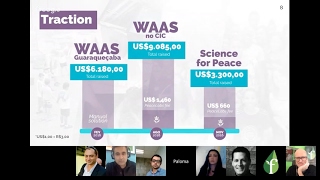
The webinar, hosted by Adeo Oresi (CEO, Founder Institute), featured a live demo day with four early‑stage startups from four continents, each presenting a three‑minute pitch followed by investor and audience Q&A. The session began with introductions of two investors, Sunil Sharma (Extreme Ventures) and Jason Primo (Primo Ventures), and highlighted the Founder Institute’s global reach and mission to solve world problems through entrepreneurship. The startups presented were: (1) CO2 Cards (Sofia, Bulgaria) – a B2B2C API platform that lets travelers and businesses offset carbon emissions via a marketplace of verified projects, with a $500K seed ask for 18‑month runway; (2) Peace Labs (Curitiba, Brazil) – a SaaS platform that digitizes corporate social‑impact monitoring, charging a 20% fee on project budgets, seeking $300K for 18‑month runway; (3) Indigo Drones (Costa Rica) – a precision‑agriculture data‑analytics service that combines drone‑collected imagery with satellite and ground sensors to optimize agro‑chemical use, targeting $180K for 18‑month expansion across three crops; (4) Oneness Cleanup (South Florida, USA) – a marine‑pollution removal service using remote‑controlled “jellyfish bots” and AI‑driven fleet management, projecting $900K funding to reach $1.2M profit in 2019. Throughout the demo day, investors asked about market size, pricing, traction, competitive landscape, technology partnerships, IP, and scalability. The host emphasized the advantage of local founders addressing problems in their regions, and the session concluded with thanks to participants and a promise of future global demo events.
Chapters
Good morning, good afternoon, and good evening everyone. Welcome to this exciting webinar today. We're going to be talking about some amazing businesses that are designed to make the world a better place. My name is Adeo Oresi, I'm CEO of the Founder Institute. We're going to have a great show for you today. You're going to meet some amazing companies, it should be very exciting. And, uh, we have a lot of people tuning in from all around the world. The Founder Institute is an idea stage and launch stage incubator that helps entrepreneurs who are looking to build meaningful and enduring technology companies. We're currently enrolling in 6 continents. You can see, uh, the number of cities that have programs coming up at fi.co. Fi.co/enrolling. And if you are an experienced entrepreneur or investor and you want to help, uh, launch a new chapter in your city, you can go to fi.co/lead. Um, so today, uh, at the Founder Institute, we believe that governments don't solve the world's biggest problems, entrepreneurs do. And you'll see 4 graduates that are solving some of the big problems we face today: reducing greenhouse gases, increasing agricultural output, cleaning our oceans, and empowering social entrepreneurs. And these are just a few of the many great ideas that we help entrepreneurs pursue around the world. And we have companies coming from 4 different countries in 4 different regions: the US, Central America, South America, and Europe. So what we're trying to show is it's not— a lot of people say Silicon Valley is the heart of innovation, and it's definitely a big part of the innovation ecosystem, but there's a lot of great cities around the world creating a lot of great companies. So I'm going to invite some of the investors and luminaries on the screen first, and then we'll jump into the companies next. So who better to start it off with than one of my favorite people, Sunil Sharma. He's from Toronto. Sunil, can you come on screen here?
Uh, yeah, um, am I on screen?
Uh, you are on screen, and you're looking very handsome, my friend.
Oh, thank you.
Uh, do you want to do a quick introduction? You're the managing partner of Extreme Ventures, and I'll let you, uh, dive in, as well as the director of the Founder Institute.
Yeah, so thanks, Hideo. So yeah, I'm based in Toronto, Canada, and I run a seed venture capital fund here called Extreme Venture Partners, EVP, and as well an accelerator called Extreme Accelerator. It's a reincarnation of a previous accelerator that we launched a few years ago, and it's focused very much on international startups. So one of the reasons I love Founder Institute and any sort of really best-in-class global platform is it's a way to find find great entrepreneurs, great companies from around the world, and do something, I think, in this state, in this moment, very topical, which is to encourage founders to expand their companies and to consider relocating part of their team to a fantastic country like Canada, which at the moment is a good place to be, I think, for reasons we all are aware of right now. And I love the idea of bringing companies here into cities like Toronto and being part of this vibrant tech ecosystem we have going on. Across this country, and I've been very involved with Founder Institute running the chapter in Toronto and one in nearby Waterloo, and hopefully several more across Canada. We've been graduating large batches of companies that have been doing exceptionally well. We've had more than 70 graduates already from Founder Institute here. So I'll turn it back to you.
Yeah, so we have an amazing group of people coming on in the chat. Kenya, Amsterdam, Brooklyn, London, Zurich. So really great group of people. Thanks to everyone for tuning in. Let's introduce our next investor, Jason Primo. He was having some connection problems, so hopefully he's here. He's the chairman of Primo Ventures. He does a lot of work as an angel with Space Angels Network. He also runs the Greenville chapter of the Founder Institute. Jason, has your connectivity been improved? Welcome. Okay, it looks like Jason is muted. Can anyone else hear Jason? All right, well, I for some reason cannot hear Jason, but we have a lot of great people coming in, so we're gonna try and get the technical glitches resolved, and then come back to Jason in a moment. Again, a prominent investor and a leader in the Greenville, greater Carolina ecosystems. So today we're going to have 4 different pitches that will be 3 minutes long, and then myself and the investors will ask the founders some follow-up questions and provide feedback. In the past, it's been very interesting. I'm going to try and take some of the questions and comments that you have in the chat. There's a chat bar. It should be on the right-hand of your screen and make sure that they get answered as best as possible. We've also asked the entrepreneurs themselves when the next presentation gets started to respond to questions that come in the chat. So as you ask questions in the chat, you're going to— very likely that either we'll ask them on screen or the entrepreneurs will get them off screen. Okay. So one thing of note, there will be a little switching time between the pitches, which is fine. Let's get started with our first pitch. And is Jason on yet? Can Jason— Can you hear me? We can hear you, Jason.
All right, great. I joined via my iPhone.
How about now? Yeah, we can hear you. All right, want to just say a quick word of hello and then we'll get started?
Yes, hello. Taking time in between an acquisition of a $50 million aerospace company, so excited to hear about these wonderful startups.
Excellent, me too. So welcome and thanks for figuring out your iPhone connectivity. That will be a first in these webinars.
All right.
Excellent. So let's get started with the first pitch. Jump right in. We've got CO2 cards. So can we call CO2 cards from Sofia on screen?
Yes, one second. Hi, everyone.
Hi there. Welcome.
Thank you. Thank you for the invite, Adele. Thank you all you're watching. One second. So do you see my screen?
Yeah, we see— now we see your screen. Yes. So just for everyone watching, it will take a moment to do the switching with each pitch, but here we go. Welcome.
Okay, thank you. So hello everyone. My name is Yavor and I'm coming from Sofia, Bulgaria. And the company I founded recently last year is named CO2 Cards. Actually, our mission is to spur the low carbon economy transition by providing much-needed funding to carbon offsetting projects. So what we do, we help you compensate your carbon footprint by supporting green projects to produce the same amount. So I've been working on this market like in the last 6 years, and I know there are a lot of struggles, a lot of pain points in it. But recently we switched all our operations into the carbon emissions offsetting, which is a UN-developed mechanism to support climate change mitigations. So the service we provide is that we can calculate and help you easy offset your CO2 emissions at a fair price. Talking about the market and the opportunity, we find it a perfect moment to launch this business. We've tried this before and the market was not ready, but right now we have several factors that really incentivize us to go as fast as possible. So there is a public awareness momentum right now like majority of the interviewed people or corporate managers say that they are for acting on climate change. There is also a Paris Agreement implementation which will start globally, already started, so they're going to be taking measures on every level to reduce CO2. There is also a recent rise of travel and event tech which will definitely use, which will allow you to scale and reach global travelers. And Trump is also in our favor. I could explain it later why. So the current carbon emissions offsetting market is valued at $600 million, and 90% out of it comes from corporate social responsibility programs, while the personal social responsibility, as we call it, takes about 10% share. And this is— it shows that like rapid growth in the last years on an average like 30-35% annual growth rate. So if you look at the market size, if you look at the value of the transportation emissions, it's $60 billion. Actually, it is formed by all our transportation services. For example, the aviation industry's emissions are valued at $8 billion. We have identified like 175 million passengers willing to be green and pay for the service, which could bring us half a billion in annual revenue when we reach this number. As well, like the biggest share of the transportation emissions comes from the road transportation, and the offsetting among this industry is actually not popular. No one is taking care of it. Neither governments nor private initiatives. That's why we have some estimations here, but we highly bet that this can be developed hugely. So let me tell you about how our product looks like. Since we are pre-launch and we have developed mostly APIs and backend systems, This is a screen of how our offering should look like through our distribution channels or customers. For example, this is an Airbnb hotel booking page where you can choose to sleep green or relevantly fly green, travel green, etc. Do it easily without leaving the comfort of—
I want to just be conscious of time here. You're already in 4 minutes versus 3 minutes. So if you can get to the last couple key slides and we'll wrap it up.
Okay, so last year we started development of the tech side. We got a few pilots on board. We did a good strategic partnership with a company, with industry leader as well. And we also have presented on some European ventures and other climate-related venues. Our business model is quite simple. We take commission on each transaction, we direct funding to green projects, and we collect them from, from all our customer base.
Okay, we're gonna wrap it up now because you've gone over by a couple minutes. So thank you very much.
Awesome.
CO2 cards. So I'll ask that the presenters coming up try and keep to the 3-minute time because it's really here for the feedback. And I'd also ask that everyone in the audience, if you have questions, pop them into the chat. I'll try and bring them to the presenter. If not, we'll ask that the presenter answer them once he's finished with feedback. Sunil, you seem to have a little bit better connectivity. Do you want to start with any questions? Questions or feedback to get started, and then we'll go to you, Jason. Welcome back.
Sure, okay. Well, Yavar, that was a good presentation, very clear, good slides. I guess you were rushed at the beginning. Your last two slides were kind of interesting to me because you were— and they're not on the screen right now— but you were mentioning by name some of the corporate partners, brands that you're looking to work with. And, you know, I've actually been thinking when I use I use my airline points card, and I'm always encouraged to do some more offsetting, some more socially responsible activities that relate to my CO2 activities just from traveling or commuting or whatnot. But I've always wondered, what is the level of uptake on that? How many people are actually donating or taking part in these programs? Is this something that we can sort of quantify or segment by age segments, millennials, older people, like how much uptake is there on this? Or is it really just a good idea?
Yeah, thank you for the question. Actually, we have like relevant data for aviation industry where anywhere between 5 and 10% of the travelers choose to travel green. And it includes all age groups. I mean, It doesn't differentiate much from, I mean, everyone between 25 and 55 is in our target group, actually.
Jason, I know you had still some connectivity problems, but do you have any questions next? I certainly have a few myself, and there's some in the chat.
Yeah, I mean, some of them, from my standpoint, I usually get into traction and kind of your path to revenue. And I know you ran out of time, so I thought your presentation format was very slick, very organized, very clean, as some little mention, but obviously ran out of time. So you started to answer some of the questions around traction. How far have you gotten along your beta test? Do you have any kind of premier customer segments that have started to kind of pick up the product and run with it, and even if it's in beta form? And what kind of responses have you gotten?
Okay, okay, sure. So the initial industries, because our product is— it can serve different industries and sub-industries. We go to like B2B, B2B2C channel, and we'll also target later B2C channel. We have strong business plan on that as well. So right now, like the beachhead market are all those industries, accept online payments for travel, like travel agencies. Event organizers are the second because they accumulate huge turnover based on transportation. And so those are our pilots, as well as event organizers as offline business. So, so far we have pilots with a mobile ticketing app which is used for ferry transportation and public transportation. We have 2 travel agencies in process of implementing our solution as well. They will go live at the end of Q1. And we also have like a pipeline of 20 event organizers that are— some of them have signed LOEs or we are in process of forming the contracts. So those are the industries we are targeting right now and we are talks with some of the global leaders in ticketing systems as well, making special offers for them, as well as taxi companies like Uber, like GetTaxi, or other car sharing.
Gotcha. Second real quick question is $500K for 18 months just doesn't seem like enough to me.
Well, they're in Sofia. Okay. Yeah, it's not Silicon Valley.
You still got a lot of marketing. There's still a lot of work to be done, not just on the product, but marketing and getting it out there. So what makes you confident about $500K for 18 months?
Okay, so I mean, this $500K actually is a number which comes with a little bit traction. So that's why, but this is the amount we're raising actually, because we want to have one year of traction and then do a series round or something. But this is going to be enough for us since we pay less here in Bulgaria for development and also for—
I'm reading some of the comments in the chat and a lot of it centers around the price, right? So, and I don't want to surmise all the questions, maybe you can clarify. This will be the last question for you. If, how does this change what a consumer pays for a service, right? So Is it 10% more expensive? Is it— how does that work? Or because I know you're going B to B to C, so what does it affect at the C step, at the end of the, of that 3-step process?
Actually, our pricing is like quite good. We're among the, the most affordable solutions on the market, uh, and I mean, there are good enough margins included so far because we're trying to do retail, which rises our transaction costs.
But I mean, are you looking at it like, let's say I wanted to take a green taxi or a green flight. Is it a small amount like 50 cents or is it like 5%? How does the pricing work?
You're going to be amazed how affordable it is. Like a taxi ride is about 20 cents, or a carbon-neutral flight continental is about $3, or overseas is anywhere between $5 and $10. But 10 cents or 20 cents for a taxi ride, this is, I mean, something not to mention that is a cost, right?
Absolutely, much more affordable than I originally thought. All right, well, thank you. For people who have questions about CO2 Labs, type them in the chat and hopefully we'll get them answered. Let's move on to our next one, Peace Labs. Paloma is a Curitiba FI graduate. Peace Labs is a platform where corporations and other social investors can support, track, and invest in effective social initiatives. And what we wanted to do here is not just get a bunch of companies from one city, we want to bring in companies from a variety of cities, a variety of regions of the world. So I'm really excited to have Brazil, Curitiba in Brazil, represented on the call today. One of the other things I point out while she comes on screen is that you, if you're interested, not only can ask questions but contact the founder about investing as well. In our last webinar like this, some of the companies got a lot of investment interest. All right, Peace Labs, are you there?
Yes, thank you so much, Adele, for the introduction. So my name is Paloma, I'm from Peace Labs. We help large corporations to monitor their social responsibility projects. So for the past 10 years, I have worked with social projects in Brazil. And today I want to share a little bit of what I learned with you guys. So the main issue we identified was that the way corporations communicate is really different from the way social projects communicate. So there's this miscommunication between these two parties, and a lot of information is lost through this process. So corporations really struggle to keep track of their social investment. So that's why we created PeaceLabs. This is an easy channel for large corporations to monitor their social responsibility projects. So step by step, we create a clear communication channel where corporations have access to information about the projects they invest. So this is how a little bit the product, how it works today. Corporations go online and the fund manager of that corporation would select a project that already exists in our portfolio, or you register a new one, and then you commit some sort of funding to that project. And then we will monthly or weekly send by email the biggest milestones, updates, how the budget's being spent, and any extra information that corporation needs. We are also that open channel for that. And then by reaching milestones, the projects get funded little by little. So there is transparency in the process and it's empowerment for the social project manager. We work with a 20% fee on the budget of the project. We do not work with only one project. Our main focus is to get portfolio of large corporations. So this 20% will come from corporations that have over 2,000 employees. and that are already spending about $2 million or up every year in social responsibility programs. So it's a big market. We're ready with 3 pilot projects today. We have as a— so this is the 3 projects we've done so far. One of them is our main customer, it's Bosch, the German multinational. We taught kids technology, hardware and software in a marginalized community in Brazil. And Peace Labs monitored that and kept 20%. So right now we have as direct sales our project. We have been in this first quarter negotiating with 2 new customers portfolio. And there is a few competitors out there. Most of them focus in mapping, social focus and we focus on digitalizing social problems so we can know best practices and help them get better. Our team is really, uh, have been working a few years already as volunteers in parallel projects. That's the first time we all came together to take Peace Labs to the next level. And we are right now raising $300,000 for a runway of 18 months. We plan to reach 6 large corporations in the next 18 months and the potential revenue of $1.6 million. So thank you very much for this opportunity, Adil, and we're really excited to hear about your questions.
Well done, well done, Paloma. Jason, so again, I'm going to pre-answer your question. How does $300,000 last so long when you leave America? $300,000 goes a long way. So, uh, let's maybe flip it around to you, Jason. Uh, what— do you have any— you're muted right now. Um, okay, now you're not muted. Do you have any questions on Peace Labs?
Yeah, so for me, I've seen a lot of these products emerge, especially over the last year. I, uh, I didn't really—
I do—
I, I didn't really understand your secret sauce. It didn't really differentiate it that much amongst, you know, a dozen or so other competitors? Can you really highlight your competitive matrix and what's the one or two things that will really make a company that's probably hearing these pitches a lot, why would they choose to further explore you?
Okay, yeah, Paloma, you might want to speak a little slower because you're coming in choppy right now. That's one of the advantages of having a global community is it's amazing and empowering. One of the disadvantages is the internet. So if you could speak a little slower. So did you hear the question about your competitive advantage?
I heard half of the question, so can you please repeat?
What is— I'll do it.
What is your competitive advantage compared to other products out there? Maybe one or two things.
So what we have built, it's a way to incentivize the social project manager to enter all the data about the project online. So what we do is, uh, let's say the corporation wants to invest R$100,000 in this project. We will set milestones with them, and every time they reach a milestone, they will report their progress. And that's the only way they get part of the percentage of the funding. So we're still testing that model. It's still in a prototype phase, right? Like we're doing the pilots, but we've seen that that's a way of triggering the corporate, the social projects to actually give the right data. There is no other competitor we've seen that's doing, being able to digitalize the project in the ideation phase. There's a lot of crowdfunding platforms, just in the funding part.
So Paloma, let me just chime in on that and then we'll go to you, Sunil. I would think that you being in a developing nation that might be the recipient of some of these corporate programs would also theoretically be a competitive advantage versus a company headquartered, let's say, where there's a lot of prosperity in that country or region. I don't know, I'm interested in your commentary before we go over to Sunil.
Yes, definitely. There is a lot of social investments being done in Brazil, and the way corporations do track that is usually through Excel sheets. And you have one organization sending a PDF report, the other one is sending a PowerPoint, and it's really hard for you to compile that information and present to your board in the end of the year. Most of the 80 corporations that invest in Brazil are like multinational, so they already have systems in other cities too. It's not only Brazil they invest.
Okay, I'm sorry, Sunil, do you have a question quickly, or do you want to finish your point and then we'll go to Sunil? Let's go to Sunil. Sunil.
Okay, sure. So Paloma, good presentation, it was very clear and easy to understand. One thing as you were talking, you know, I think about— there's no question that corporations across the world have this interest in being responsible in doing activities that relate to the kind of mandate and interest that we all have. It's always difficult for tracking and accountability, so you certainly would be solving problems that do exist in a way, and I think of, you know, if there was ever a way to integrate with large companies like Atlassian or Trello, you know, the way that we look at tracking in the way that we operate our corporations, our small startups, our companies. This is in fact a nice, in a way, feature that could be integrated with some larger purpose if you can do this really well. And you know, as you were talking, I was thinking of some big news yesterday where in one day, the world, Americans gravitated towards supporting an organization, the ACLU, the American Civil Liberties Organization, $20 million in one day, whereas normally they raise $3 or $4 million $1 billion in a year because that hot-button topical issue came to mind. So in your case, if we were to look for projects that are supportable, that are really contemporary issues, things happening in Syria, happening in Venezuela, happening in Sudan, that can create a beacon or some sort of project that corporations can buy into, can agree to support, and if you can facilitate that, I think you can get a lot of momentum to build your business from a foundation.
So a great idea, Sunil. Paloma, I'd like you to comment on Sunil's first idea, which is integrating with existing corporate communication platforms, because I think you mentioned in the opening, if I recall, of your presentation, that the social stuff is in fact very different from the way the business operates today. And what Sunil's recommending is maybe use some of the tools. So I'd love to hear your feedback on that before we move to the next pitch.
Yeah, so we are looking into the way we're building already the platform. It's already an API that we can integrate with other, uh, with other services. We do see that Peace Lab is going to be the showcase of a social project, but it will be integrated with other features. So let's say It's really hard to think that a social project will go into a different service to upload a picture. It already does in Instagram. So if we can mine that and put it in a nice way that the corporation can absorb that information without having to go into all these other channels, it's really important. We did look into Trello. We actually tried to support— we have a lot of mentors that support our social projects to take agile into their development. So we use Trello a lot with them. Right now, right now there's no integration, but we're already advising them into a few new technologies that's really like intuitive and easy to use. And in the future we plan to kind of put that all together. The whole idea is to make it easy for the project to report with tools that it already uses and make it easy for the corporation to understand without having to look at a Facebook page.
Okay, Paloma, one question from the chat before we move on. Again, fantastic presentation. Lydia was asking, it seems a bit strange to profit from managing a business social project, and some other people chimed in on that. And again, anyone ask questions in the chat and you'll have the chance to get them answered offline, but do you want to just comment on that before we move?
I didn't see the question. What was the question?
That, you know, it seems strange that you profit from social initiatives of a company. And so I'm sure you've rationalized this and you can explain it. And I'd love to hear your justification.
So this money is already usually spent through corporations because they have to hire people to manage all this process. Projects. So we have some, uh, research we've done ourselves because there's not much number on that in Brazil, but corporations are already spending 40% of their budget on operational costs to make sure that they track everything and they know where that money is going, where to invest. So we're actually reducing the amount of that the corporation has to spend so more of it can go to the project. Uh, That makes more sense to have.
Yeah, you should bake that into your deck because I don't think anyone got that judging from what I heard in the chat. But in fact, if that's true, and I'm be— you know, of course that's your own analysis, um, that's probably your best unique selling proposition. Uh, well, well done, well done. I would say that that is definitely, uh, an amazing, uh presentation, and congratulations on your hard work. We're now going to move into a little north, Costa Rica. Sergio, Sergio, we're going to call you to screen there. Hello, hello, sir. So you are making drones. Do you want to tell us a little bit about Indigo Drones, which works on agriculture, using drones for that vital industry.
Exactly. We actually—
I watched your presentation, by the way.
Oh yeah?
Of course, you are a handsome young man, but your presentation may even be more handsome. I've seen it, so I'm pretty sure. All right, while we wait for the presentation to come on screen here, again, if you guys in the audience have— and girls, for that matter— have questions for Peace Labs, please pop them in the chat and Paloma and her team will try to answer that. Okay, I see your screen. If you make it full size, we'll now switch over to Indigo Drones. And if you've presented, please read the chat to try and answer questions that are coming in.
Perfect. So my name is Sergio Valles-Ter, and I'm the founder of Indigo Drones. I will present our smart agriculture division dedicated to monitor, analyze, and process agriculture data. In the—
according to FAO in the tropics, The farmers right now, right now we're just looking at the PowerPoint thing. If you could make it full screen and, um, and we're only seeing the first slide.
Uh, did you— when I changed, did you see the change?
No, that's why I pointed it out.
Okay.
Yep. And your slides look good, so it'd be a shame to, uh Again, there are a lot of questions coming into the chat.
How about now?
You can get started with what you have. We just see it in PowerPoint view. Why don't you get started to move the process along? There you go. I see the second slide now. All right. So why don't you restart from the beginning? Let's get going. You got 3 minutes.
Okay, perfect. So the problem, according to FAO in the tropics, the farmers use 10 times more agrochemicals than the rest of the world. They are also unable to meet export requirements due to mistakes in their yield predictions and their lack of appropriate technology to make accurate financial decisions. For this, we create a computer vision and data analytics platform that can optimize the use of agrochemicals, reduce the yield variability, and allocate financial resources to produce more profitable and sustainable over time. Uh, so first, the data is collected and uploaded to our platform by our subscribed pilots. Second, the farmers process the data with the algorithms that we create. Third, the farmers check online their results and make real-time decisions. And fourth, They track the area analyzed and they predict how the crop will behave over time. We are using Costa Rica as a pilot market, and with our current traction, we can reach around 40% of the total market in 3 crops: coffee, pineapple, and sugarcane in 3 years. Our prices ranges from $10 per acre to $50 per acre. Monthly or by demand. We can train also the farmer that wants to collect the data by itself and not use the pilots' license listed in our platform. We have the advantage that we have the only waterproof and spraying UAV in the market. We have a partnership with a multinational company. We have done tropical research for more than 10 years. We are the only ones to integrate the aerial data with the field data, and we can track the data over time in order to reduce costs. With our current structure, we expect to reach $4 million in revenue in 5 years, considering only in Costa Rica, and we have to increase the operation and expenses that we already have planned in 2017, and we will introduce ourselves to multinational companies such as Five's in pineapples and Starbucks in coffee. We are a multidisciplinary team that covers all areas of expertise: business, computer vision, robotics, agriculture, finance. And we also have done special partnerships to support us with universities and important institutions. So now we need to expand our business faster and enter to Central America, the $180 million market. For this, we are looking for only $180,000 per crop, this investment in 18 months. And we consider right now 3 crops. The investor can consider more crops in the region or could consider the same crops in other continents as well. We have done the difficult part, that is to create the software. Now, the speed— we need speed to enter the market, and we have the plan to do it, and we can reach it, the 10% of the Central American market in 5 years, only in this 3 crops. Thank you very much.
Great. Okay, if you can switch now to your face. You know, I'm going to start with a question this time, guys, and then turn it over to Sunil next and Jason third. You— I think it was your market slide, you talked of just a few million dollars is the total size of the Costa Rican market. And I was assuming, and if I recall correctly, that's your potential revenue from achieving 40% share of Costa Rican agriculture, not the size of the overall market. And I don't think that was very clear.
Exactly as you were explaining, yes.
Okay, great. And then, uh, so, so you, you have a multi-million dollar opportunity to get a 40% share in Costa Rica. So related to that, I have the question, which is, um, you know, I presume you're looking at the larger, uh, farms and agri— not, not the, the smaller ones.
And what percentage of Costa Rica farming is, is run by those larger Okay, agriculture companies, uh, 65% of the market is run by multinationals basically, and they are— they also own small farmers. So basically if we get, uh, one cost— one big customer, it's like a domino effect because all of the small ones will want to copy it. So, uh, we have start with a medium This past 2 years we developed the idea and the software through medium farmers, and this year we have the same— we have actually the algorithms to show to multinationals.
Okay, Sunil, you're next. Question. Okay, and I'm reading the chat as well.
Okay, good job, Sergio. I have a bit of experience in this area. I'm on the board of a of a Canadian public company called EarthKast, where we have multispectral sensors in space on satellites. And one of the big use cases is for agriculture, for precision agriculture, for data collection for farmers in real time to devices. And the way that we're looking at this is drones are certainly an important part of data capture, but one part. And so it's about the sensors that you're going to be developing for these drones, how they interact with the data that's coming from satellites that are able to see through clouds and look into crops and below tree cover, and then communicate to tractors and precision agriculture type of hardware that are able to then immediately interact with the fields, and of course interacting with the farmers through mobile devices and all this real-time information. So my question to you is, I looked at your team and you do have people with data visualization and electrical engineering, which is great. But are you building your company now in anticipation of how we're going to be connecting with all types of other sensors in other types of modalities so that we actually have a solution that is going to remain cutting-edge as farming demands are looked at worldwide?
Thank you, Sonil, for the question. Actually, What you're saying is the drone itself, it's only a way of taking one of the small data that can be taken in the whole area. We are using sensors on the ground. We are using also the weather conditions and our main— we don't create the sensor actually. We use what exists and what we create is the algorithms that correlate the information of these sensors. So it will tell you if the data can be related to production, and if it can, then you can predict how this can behave. But we are doing this especially in coffee because production itself in coffee— when the— in a national institution of coffee in Costa Rica, They're mixing the information they have with satellites and the drone imagery and the spectrometry also from the ground is what they are looking at.
That's what we are into. I would just suggest also that if your ability to make farmers comfortable with your partnership, with your technology, with your team and be comfortable to adopt what you're offering now, as technology advances, your relationship with farmers, not just in Costa Rica, but in other Central American agriculture-rich markets, and in other countries where agriculture is a dominant industry, that will be a very valuable series of relationships to have, because it's the trust of the farmers as they are introduced to new technology that can be very overwhelming, very complicated, that, that in the long run can be your competitive advantage.
Yes, let's go on to Jason. Jason, do you have a question? There's some good questions coming in on the chat if we have a minute.
Yeah, two quick questions. So if I, if I understood correctly, you are more of a software company, company versus a drone hardware company. So I'm assuming your solutions tightly knit with a drone OEM manufacturer? Do you have a strategic relationship with a drone manufacturer who's providing the hardware? Because I'm with a company that makes a drone for the Korean Air Force. I know how hard just the drone technology is. So how are you? What is your relationship like?
Perfect.
I started actually to try to do the drone and it didn't work because the technology, I don't have access to that, but I have access to the knowledge of software. So I do, we specialize in the data that is obtained by the drones or the sensors of the drones. And we grab the data and we link the data from the field.
But just going back to the question, do you have a relationship with the specific drone?
I do have, it's with this Chinese company called DJI, and we have the agriculture drone. So it's specialized for spraying and it's waterproof. So also it's for tropical conditions, basically.
Okay, just a second, a real, real second question, really, and I honestly just an idea for you is to look at what I call adjacent markets. So you're, you're addressing agriculture, but in those same areas you could look at deployment of insecticides to fight malaria, both for the human population and then also for livestock as well. Disease prevention for livestock where there are livestock and people in remote areas, and this could be a delivery system for that. And that could make your target market more diversified and a lot larger.
Let me bring up— and that's just an idea, so you don't need to comment— let me bring up a comment from the chat, and then we got to move on. Um, multiple people have asked and seconded, what is, uh, you know, how do you— who's your biggest competitors and, and how do you see yourself as different from them? And if you can keep this one short and sweet so we can get to our final presentation, that would be great.
Um, we actually create a platform where the pilots can upload— any pilot in the world can be hired by a farmer and upload the data there, and the farmer runs the data in their server and obtains the data. So this, this way of making everybody independent by itself, so it's our key. And our main competitors will be will be foreign competitors. Actually, we don't have local competitors, so that's why I will say it's easier to enter the market. Um, look, foreign competitors such as DroneDeploy or Precision Hawk, however, they will never enter the market because their business model is for large areas, so it's very hard to enter with their technology into small farmers, let's say.
Okay, that's a good answer. So you're— that, and by the way, it's a great answer for the general thesis of this call or this webinar, which is a lot of these companies, the social innovation, carbon credits, etc., are in the countries and regions of the world where these problems exist directly And that in and of itself can be a major competitive advantage over U.S. companies or other companies that are trying to help, but they're one step removed. So thank you very much. Well done. And we're going on to our last pitch, Oneness. Melanie is a South Florida grad, so we're actually moving a little northward. And, Melanie, are you there? Can we hear you okay?
Yes.
Great. Maybe if you can speak up a little bit. Try again.
Yes. Do you hear me?
Great. We do. Yeah, maybe put it a little closer to your mouth. Welcome. You're coming in a little up, but your presentation looks beautiful.
Great.
Awesome. Perfect. So, Oneness Cleanup is an eco-friendly, scalable service aimed at removing pollution from our rivers and coastal waters. Issue near and dear to my heart. Why don't you get started? Welcome.
Thank you, Adil, for the introduction. I'm very excited and thank you for the opportunity. So my name is Melanie Berguero and I've been raised in the shipyards and all of my family is in the marine industry. Therefore, I'm very passionate about the environment and especially the ocean. That's why One S was born. Juanes offers water cleaning services specialized in intercostal water because 80% of the pollution comes from marinas and shipyards are being all responsible for any damage done to the environment. Pollution influences and affects human well-being and economic activity. Today they use a very primitive solution and the technology used in intercostal water is not effective. Money and time spent for a little result. So the solution is to have an adapt and effective technology as well as related services that will save time, money, and will be effective to decrease pollution. One of our effective technology is the jellyfish bot. This is like the first version that we have right here in Fort Lauderdale. This is a remote control vehicle that can collect waste, trees, oil spill, and also painting removal, which is an issue in some of the shipyards. So in the future, we want to have an electrical boat with a fleet of jellyfish bots on board. Each one of them will have a specific task to accomplish, and they will communicate together with an artificial intelligence. Our market opportunities, cities spend $4 trillion in sustainability projects, and we have like 12,000 marinas and more than 120,000 lakes in the United States. So our business model, we are offering like contract, one-time contract, half-year contract, one-year contract, and emergency contracts. Attraction, is our projected monthly revenue is to reach our first contract in month of February and then double our like monthly revenue growth every other month to reach $30,000 in December. Our market adoption is to go with events like marina boat show, on-site demonstration via environmental and marine organization as well with word of mouth. We want to enhance the collaboration. This is in the middle, you can see or partnership. We also want to create awareness with branding and create a community with cleanup events and education for the kids. This is our, my competitor landscape. So most of them, they're focused on the project, they don't focus on the services. Their technology is not adapt for the intercoastal water and they don't respect the marine life because they're focused on the project. This is my team with myself, Sylvain, our CTO and engineer in robotics, and Philippe Dumont with 28 years of experience in cleanup technology, my father, a naval architect and architect, and Nicolas, who's gonna bring the software engineering to— for the artificial intelligence. So we look forward to reach 900K to reach like 1.2 million of profit in 2019. Thank you.
Okay, keep the comments and feedback flowing in the chat, everyone. Jason, you're muted right now, but do you have a question for Melanie?
Well, I wanted to understand as look like you were demonstrating remote control. I think to be able to get the sales that you are projecting, you're going to need to get that product a lot farther downstream, especially with your interconnectivity and artificial intelligence. And I don't think $900K is gonna get you there.
Yeah, that's the same question coming in on the chat. 900K might be not enough money. Do you want to comment on that?
Yes, it is enough money according to my business plan. And my founder is the— like, my co-founder is the, like, the inventor of the jellyfish bot. And for the artificial intelligence, we are planning to reach that in year 4, because we're gonna do, like, step by step. So now we have, like, in 4 other languages, we have the first version. And we're going to use it and like, uh, right, right, we tried for our first contract, uh, like at the beginning of this month. And, uh, each version of the Jellyfish Bot will, will, will, uh, will be improved, but we're gonna do it like step by step. So we have like a roadmap and we, uh, we then we're gonna do like a second round.
Can you hold that mic up again? It was a little bit better when you were speaking closer.
I think your ability to find a keystone customer, just like a lead angel, I think here you need a real key customer that might even fund you with advance purchase orders, someone you have relationships with.
And let me just, you said something, so I wanna clarify for everybody, 'cause you said your co-founder is the inventor of the jellyfish boat. Does that boat currently exist and is it in use today in any way that you— I mean, we saw a video of one, so are they, you know, how many are made? How widely used are they?
So the one that you saw in the video is the second one. They are already working on the third one, like the third version. And yeah, it's right here in Fort Lauderdale. So like this week, actually, we're going to make a try into a marina, into a shipyard.
Okay, let's go on to Sunil, and I'll keep reading some questions from the chat. Sunil, comments, ideas? And Melanie, if you could speak into the mic again, that would be great.
Yeah.
Yeah, that was really interesting, Melanie. I think as we think of, you know, marine pollution, aquatic pollution. One place where many of us see it regularly, where we would find it unacceptable, is in fact in marinas. We see those oil slicks when we're out there on our summer walks, or having dockside dining and all that. So I can see that the marinas would be very motivated to clean that up and to use it. I think you built basically, well, the Jellyfish Bot is like a Roomba for marinas. And so I would say that the important thing is your IP, like, is there— are there patents here? Have you built something that's protectable? Because with some adoption from some marinas that will give you kind of operating revenue, really the play is that you've built the world's most advanced robotic marina cleaning device, and that, that, that's the play, that's what would be exciting to investors, and that's what would make this, you know, a very acquirable company. Someday.
So that's a bit of feedback I have, which is great, and I love it. There's some questions coming in from the chat. How quickly— how many would be required, and how quickly could these jellyfish, let's say, clean up an average-sized marina? Is this something that, you know, they would— you would run and would be done in a few days, and you would do it again in a month, or how do you see them actually working working in practice? Melanie, did you hear the question? We may have lost Melanie. Can anyone else hear her? I don't. Well, with that said, what I would recommend is, Melanie, why don't you take a few minutes and answer questions in the chat. And while you do that, is there any other final pieces of feedback for Melanie from the judges?
I don't think she can—
I don't think she can hear us, but we're recording it, so she'll get it sooner or later.
Okay, well, I am curious to know about IP. I mean, is there— are there patents filed? On this, or is this the— I'm a bit confused now, is the product the bot, or is the product a service play on top of the bot, like a relationship with marinas?
Well, she was able to— she had some connectivity problems, so she dropped off. Again, one of the pros and cons of having people from all around the world. She did describe it as a service in her deck, so And she had it as a subscription starting with the remote operators and then moving to the AI over time. With that said, we are coming up perfectly on an hour, so even though it was a technical glitch, we ended perfectly on time. I see that Melanie is back in the chat. So what we're going to do is I saw a lot of questions being asked and answered in the chat as time was going on. Melanie, I want to give you— oh, much better connectivity, or it appears to be much better connectivity. There are two questions came in quickly. One, do you have any intellectual property or patents relating to it?
No, we don't have any patent. We are planning to patent the artificial intelligence part.
Okay, the second question, because we're coming up on time here, was asked in the chat is, is how long would it take and how many jellyfish would it take to clean the average size marina? And would this be something you do, let's say, once a month, or is it always ongoing?
Okay, that's a very good question. So basically, with like one robot, we can cover two marinas, and we can work like 5 days per week. Then we do a survey in each marina or shipyards. And generally we don't go once a month, but it's more like once a week. So it can be like once a week, twice a week, three, three times a week, or every day.
Okay.
Like for one week, like five days, we can cover like two marinas with just one robot.
And these will be consistent recurring contracts, which is asked in the chat and asked also by Sunil. Neil, correct? These are service contracts that are ongoing. Okay, well, we lost Melanie, but as I said, we're at the time limit. So I want— we've had well over 700 people concurrent, over 1,000 sign up throughout the program. This is really interesting and amazing. Again, we covered Everything from carbon to keeping the oceans and coastal areas cleaner, drones and social responsibility programs. These are businesses all designed to make the world a better place. I want to thank the entrepreneurs for tuning in from all around the world. I want to thank Jason and Sunil for helping to review these amazing and interesting ideas to make the world a better place. And I want to thank everyone for tuning in to watch this. And we're going to try and do more of them with more places around the world to show you innovations that people are doing everywhere to make our lives better. So thanks for tuning in today. Welcome everyone to this and future webinars. Thank you, Sunil. Thank you, Jason.
Thanks everyone. A lot of fun.
Bye.
Bye-bye.
Thank you.
Thank you, bye!
Bye-bye!
And good luck!










