Interview with Bursity Founder & CEO Charles F. Milton
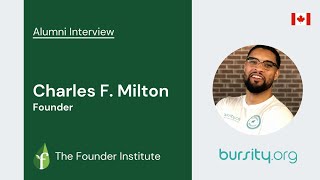
In this Founder Institute interview, content editor Dustin Betts talks with Charles F. Milton, the founder and CEO of Bursity.org (formerly Varsity), a social‑venture ed‑tech platform aimed at lowering financial barriers for marginalized students in North America. Milton shares his personal journey—from a mature‑student who relied on a government‑funded program, to a 5‑time founder who built a scholarship‑matching database after an internship that required him to manually compile 126 awards. He outlines the systemic problem: a $1.7 trillion student‑loan crisis, $45 billion in untapped scholarship funding, and stark enrollment gaps for Black, Hispanic, Indigenous and other under‑represented groups, who often pay up to 2.7 times the “sticker price” of tuition. Bursity’s beta (≈300 users) offers a curated, algorithm‑driven list of 49 000 scholarships worth $4.5 million, delivered via a concierge service while the team builds a sponsor‑facing CRM. Milton discusses go‑to‑market hurdles (12‑18 month university sales cycles), pivots from direct student revenue to institutional partnerships, and the broader mission to “lower hurdles to higher learning” and improve long‑term representation in the workforce. He predicts post‑COVID cost reductions through digital curricula and AI, but warns that change will be gradual. Milton also reflects on personal challenges as a Black SaaS founder in Nova Scotia, the importance of authentic passion, seeking help, and staying true to one’s vision. The interview closes with a call to action for students to join the beta and for institutions to partner with Bursity.
Chapters
My name is Dustin Betts. I'm the content editor at the Founder Institute, and I'm here this afternoon with Charles F. Milton. He's the founder and CEO of Bursity.org, an FI Toronto company that's developing North America's largest resource of financial awards and post-secondary scholarship opportunities for marginalized students. Charles F. Milton, thanks so much for joining us today.
Thanks for having me, Dustin. I really appreciate being here. It's been a while since I've had some face time with anybody from FI, so it's always a pleasure.
Yeah, great. So before we dive into your company, Varsity, the first question I always like to ask is tell us a little bit about yourself or your startup story. You know, what were the experiences of yours, professional or personal, that led you to founding this company focused on bringing, you know, educational and financial opportunities to marginalized students?
Okay, deep question. So for everybody watching, hi, I'm Charles F. Milton, um, 5x founder, 4-time failure, 3-time father and currently working on Bursary.org, one of the first startups I've been working on that I'm actually passionate about. We play in the social venture space, and what we're trying to do is we're trying to help marginalized students find more equitable access to post-secondary education through facilitating access to funding opportunities from the 4.5— no, from the $45 billion in scholarships available across North America. As well as streamline recruitment and enrollment opportunities. The reason I'm so passionate about Bursary, literally following something that I love for the first time in the startup world, is based on my own lived experience, in all honesty. As we'll probably discuss as we get further into it, people from marginalized backgrounds, whether it's socioeconomic, whether it's racialized and ethnic, or even just gender-based, there's a lot of costs, financial costs and and non-financial, non-tangible costs associated with pursuing post-secondary education. I've lived that firsthand. I was only able to go back to school as a mature student, and it wasn't even at my own expense. It was through a government-funded program for skills development in Halifax, Nova Scotia. Shout out to NSCC, Nova Scotia Community College, where I graduated as a data analyst and database developer, and that was on the government dime. While there, I— kind of went through school and thought I wanted to be a web designer, hated CSS, got into programming, syntax wasn't my thing, fell in love with database development and analytics. And in my third year going into my fourth, I did an internship with an organization called the Delmore Buddy Day Learning Institute that asked me to build a database of scholarships for African Nova Scotian students, specifically students of African descent who are Indigenous to Nova Scotia. And it took me 3 weeks to build a list of 126 scholarships basically just trawling and crawling through Google and the internet to build a list of about 126 scholarships worth about a quarter of a million dollars. But when I realized the difficulty for myself as somebody who's trained technically to actually use the internet and find those scholarships, I said, for your average Joe, it's significantly more difficult. But having had the lived experience of not being able to go to school on my own dime and only being able to do so as a mature student, having built the list and seeing how much money is actually out there, and having seen the difficulties that were in it, With all the previous startup experience I had had, I knew that there could be not only a business that could be run out of it, but a social solution to a massive problem that affects millions of students all across Canada and the US. And I just fell in love with the idea. I dedicated myself to it. So I went back to school and negotiated with all my faculty to let me do all the business research that I needed to do for the program, for the product of Bursiti. And be able to tender that as work to be able to get my credentials to graduate through school. Uh, it was a fight, but they agreed with it. And after going through that final year of school, I graduated from NSCC with a Business Innovation Award for all the work that I had done on Bursiti to bring it forward, and was lucky enough to go directly from graduating as a mature student into founding Bursiti, um, incorporating it about a year later. And then have been working on it for the last about 28, 30 months. So it was just all about the fact that I've, I've lived it firsthand and I've seen youth growing up in my area who unfortunately, it seems as though they're heading the same path that I was in. And I just said, let me— our mission statement is lower hurdles to higher learning. So I said, let me just remove the obstacles from their path that nobody removed from mine.
Yeah, perfect. I think for like recounting that full startup story, because I love how all the pieces connect together, you know, with what you were studying and ultimately to the product that we're gonna talk more about and the lived experience. So yeah, really, really cool. I appreciate you recounting that.
It was serendipitous.
Yeah, yeah. And I love too that you built it into your studies as well, because I did something a little bit similar as a student. And so that's really cool to see other people who are bending the system through their entrepreneurial ways. And that's very cool.
You gotta hustle, man. You get what you want, right?
Yeah, absolutely. Now I know because I'm somewhat familiar, we've obviously alluded to it here a bit, that your company Varsity, as it says online, one of the fastest ways to fund your tuition. But let's kind of hear it straight from you, the founder. Please give us your short elevator pitch for somebody who's coming in totally blank or just joining us live now. You know, what is Varsity?
Okay, so our long-term goal really is to be the fastest way to fund your tuition. But at this stage where we've just recently launched in August and we're still technically in our beta with about 300 students, Bursary.org is an online web portal or platform that helps marginalized students just generate more access to all the millions of the billions of dollars of funding opportunities, $45 billion in funding opportunities across Canada and the US, to help them be able to get better enrollment opportunities for post-secondary education. We basically streamline the application process for the students when it comes to finding and filing scholarships. And we do this so that we can create a curated list of scholarship opportunities tailored to their individual situation. That's really the sexy side of what we do. Truth be told, if we were to talk about the actual business aspect of it, we've realized that there are business problems that these scholarship sponsors are facing. So we're creating a CRM, uh, customer relations management, uh, software where they can list all their scholarships on our site, and then we can help them intake awards, and we can help them streamline the process to help them cut their costs and put more money into their impact initiatives.
Perfect. I love how you explain kind of both sides of it because obviously most people probably who are listening are more thinking on the consumer side. But yeah, thanks for providing the, you know, the business case side as well. And now I want to kind of zoom out and talk a little bit about the problem. So I mean, it's, you know, no longer a secret anymore, you know, the price of tuition for college and university students has skyrocketed. Over the past couple of decades, and, you know, so it follows that we kind of have this post-secondary education system, at least in the United States, where, you know, students largely finance their own educations, and so attainment is kind of like limited by ability to pay. So kind of just give us the hard truth in numbers, you know, what is the full scope of the problem today across North America, your target area, you know, how difficult is it right now for marginalized students to fund their college education?
So it's not just difficult for marginalized students themselves, even though our focus is mostly on the marginalized student. But let's look at students as a whole, first things first, before we break it down. So as a whole, students overall, since about 1979, we're looking at a $1.7 trillion student loan debt crisis. That's the second biggest crisis next to consumer debt in and of itself. And especially in the States with Biden coming in, there's been a lot of talk about how to handle that debt recently. But truth be told, if the debt was just to be forgiven, then that's going to be a huge bubble pop, and it's going to affect the entire economy. So there's a huge problem across the board for everybody to be able to attend post-secondary education. But if we're talking specifically about marginalized students, whether it's going to be gender or racialized and ethnic-based, marginalized students, they— I mean, they typically see their life goals, they see their opportunities stinted due to only being able to graduate either later in life than your average student would, or at a much higher cost. Typically, if they're graduating, it's going to be somewhere after the 30 or mid-30 mark, and in that situation, um, they're, they're already like, you know, not talking idioms, but they're already behind the 8-ball, and they're trying to catch up to their peers who graduated with their first degree in their mid-20s. So talking numbers, if we're looking at it as of 2018, on a large scale for post-secondary institutions in Canada and the US, If we're talking total enrollment across like colleges and universities alike, the total of enrollment in and of itself for Caucasian students was just over 55%. So that means just more than 1 out of 2 Caucasian individuals would have been graduating or enrolled in post-secondary education. When it comes to the Hispanic demographic, we're looking at 25— 20%. So that's 1 out of 5. But if we're talking about the Black demographic or people from the African diaspora, We're looking at less than 15% of Black youth who are able to enroll in post-secondary education, which means even less are actually graduating. Uh, over the research we've done over the summer, we have seen that coming out of high school, out of the 100 who would graduate high school, only 5 would actually end up going the distance and graduating from post-secondary. And that's not in the 4-year period, that's in like a 6 to 8 year period. When we're talking about Indigenous youth, from like Native backgrounds themselves, the numbers are even harder to calculate at this point in time, unfortunately. So if we're looking at the institutions themselves and the racial makeup of the institutions, looking at private 4-year colleges, if we're looking at undergrad students alone, depending on whether it's a public or private college, we're looking at enrollment numbers of 56% to 64% makeup Caucasian at a 4-year university or college. At 2-year institutions, it's about 49%. So looking at the racial makeup overall of the entire campus, if you're looking around at all the students, then we're saying in that situation, um, either 1 out of 2 individuals you see or more is Caucasian. And that's one racial demographic versus Hispanic, Black, or any of the international students we're actually looking at. So there's a significant disparity there. When it comes to the African descent or Black youth, we're looking at numbers of representation of 1 out of 3 in the best scenario, or in the worst case scenario, we're looking at 1 out of 10, which is only 10%. Hispanic students do— they do marginally better in some areas where it could be 1 out of 4 is represented by Hispanic, or 1 out of 5, so 22-25%. This is a huge problem in my opinion because it goes to show that increasingly, and the gap's only getting bigger, there are certain ethnic demographics who are being left behind. Now we're not even going to get into the gender-based demographics and stuff like that, women in STEM or anything. These are things that have been approached and progress has been made over the last couple of years, but not a lot of progress is being made from the ethnographic perspective. Now, not even just talking about representation, another struggle that a lot of people face, which is one of the reasons why there might be a lack of representation as well, is the ever-increasing cost of post-secondary education. Yeah, inflation goes up on a regular basis, but when it comes to post-secondary education, that's one of the things that either always matches inflation or actually exceeds it. And we're currently looking at an average of about $32,000, uh, $28,000 to $32,000 in graduation costs or student loan debt alone for your average person to graduate in 4 to 6 years. I'm going to speak specifically from the perspective of somebody like myself who would look like myself coming from the African descent demographic, the cost is significantly larger than the sticker price for a person like me to be able to go to school. Again, I'm going to say it, I got lucky. I was able to go back to school as a mature student, and the government funded the dollars for me. And I'm very, very much appreciative of it, which is somewhat part of the reason why I'm giving back with Bursary. But if we're looking at your average student from African descent, after all the loans, after all the delays in graduation, Students from the African descent are actually paying 2.7 times the sticker price, almost 3 times the sticker price to graduate with the same quality education that their Caucasian, Hispanic, or international counterparts are paying. So going back to the numbers again, on average, if we're looking at $28,000 to $32,000, let's cap it at $30,000 right in the middle there. If I'm doing $30,000 to graduate and I'm paying 2.7 times the amount, I'm actually paying $81,000 to graduate for that degree. Later on in life than other people. The reason is that a lot of the cost that's being covered by people from the African descent is actually coming out of student loans, and it's coming out of the student loans because they don't— they haven't had the luxury of saving money and putting money aside to be able to attend school. So with the fact that they get the loans to go into school and there's significant other responsibilities that they have to juggle at the same point in time to be able to make ends meet day to day but graduate when they finally do graduate as well, and then going into the workforce and then having difficulties securing gainful employment, I'll say. It takes the average African descendant 17 to 19 years to pay off their student loans. So it often goes into default. It's often compounded interest over interest, whereas for our Caucasian counterparts, it takes 7 to 10 years to clear that debt completely with little to no consequences. At all. So looking at so many different factors right now, um, outside of just the cost of tuition, which is exorbitant, we're going to agree on that, certain demographics are facing hurdles that prevent them from being able to access higher education. And preventing them from accessing the higher education, of course, prevents them from getting the quality of life that they want to help them change that stigma and help them change the situation in the future.
Yeah, thanks for kind of recounting that in full, because I think the whole scope of the, of the issue is sort of what's hidden to a lot of people who are fortunate maybe to not have looked hard at this problem before, and I think kind of some of the disparities that you sort of outlined, which are like disparities in wealth or like savings that, you know, was put aside for education and how, you know, having to finance your education or starting your post-secondary education later in life, like all of these factors that are disparities are compounding on each other. And so, yeah, I appreciate kind of like outlining that whole—
A beautiful thing about the day and age that we're currently living in is that a lot of the people that you're talking about now, like, you know, that you mentioned that haven't actually looked at it themselves, truth be told, they're not really responsible for looking at it because they do have their own lives that they have to live. And if they have the benefit of actually being able to go through life without the difficulties, I don't want to take that away from them. But the beautiful thing about it is that a lot of the youth today who actually have that benefit are seeing the disparity. And now they're talking about it. So bringing this information forward and then having that generation hear this and being like, oh my gosh, I've had it good, but somebody I care about deeply who I might have met in college or university doesn't have it the same, and I respect them enough and value them enough to want them to have the same opportunity that I have— it's beautiful. So if the information's out there and the knowledge is known, then only over time as the conversations keep going is there going to be change.
Yeah, perfect. And that leads really well into kind of what my next question is, which is to kind of focus in on, on Bursiti, bursiti.org. Thanks for tuning in. So I know you recently launched your beta. Please walk us through kind of the solution. If I'm new to the platform, I'm one of the target users who fits your criteria, I would be a strong fit, be eligible for some of these scholarships or financial opportunities. You know, I guess what can I expect as a user looking for new ways or potential opportunities to finance my education?
Okay, so before we talk about our solution, I just want to mention like, you know, there's a couple different other things people are saying are solutions to this problem out there. One, make post-secondary education free for everybody, or two, make it so that you don't need a post-secondary degree to actually be able to have to get a job. At Varsity, we've looked at both of those. We don't think either one of those is the case because if you're making post-secondary education free to everybody, the cost is then transferred to the entire populace instead of being on the onus on that one individual who's going to school. Also, as somebody who's currently running a business now and understanding the difficulty of running a business, I don't know if I'd be comfortable hiring somebody who doesn't actually have the training to do the job that we need to do. Not having to actually have a degree in itself is also troublesome. Having learned that adversity, we looked at what issues can be solved. And when we realized that there was so much money out there, especially after I went to the internship and I had to build a database myself, we realized that it would be really easy just using technology, building a website, creating a database in the background, creating an algorithm that where an individual like yourself, Dustin, was to sign up and you were to tell us what your— what life was like for you in high school, what you want to study, where you want to study, what your grades were like, um, is there anything that's special to you, like perhaps, uh, any disabilities, any organizations that you're a member of, like maybe it's going to be the YMCA or Big Brothers Big Sisters, uh, any recreational activity, sports or music or anything that you would do. All of these things are typically questions that scholarship sponsors want to know. So we basically get you to give us this information up front. And our long-term goal is to have scholarship sponsors uploading their awards directly to our platform, and then we connect you guys together with them. But when we launched in August, we had the algorithm built. And with that algorithm, we've had over 300 students who have gone on to create profiles so far, and they've been able to access over 4— 49,000 different awards that we've had in our database worth about $4.5 million. And just by answering the algorithm alone, we've been able to turn around and we're still kind of doing the concierge mode. And for those of you guys who don't know what concierge mode is, doing things that don't scale where you create the profile and after you create the profile, we automated email saying, hey Dustin, please wait about 24 hours for us to get your list back to you. We typically have the list back to you before the end of the day nonetheless, but then we generate and populate a list for students of anywhere from, I think it's been like 160 to 500 different awards In Canada, it's been about $300,000 in opportunity. In the US, it's been about half a million dollars of opportunity that we've been able to generate for individuals based on their gender, their ethnicity, their likes and dislikes, and the regions that they wanted to end up going to school.
Awesome. Yeah, that's really— that's perfect. So yeah, taking away that pain point, you know, put all the data in. I love that you are honest about the concierge because sometimes A lot of founders who we talk to that are really early stage think they have to like build the product first. And I love that you're like upfront about, you know, there's a little bit happening manually on the backend because frankly it's just that, you know, people are afraid of that or they don't realize that you can do that concierge when you go to market. So that's really cool.
To touch on that, we did try to build the product out, we did try to build the product outright, but Varsity literally is a product that is built for students by students. I came up with the idea while I was still in school. My co-founder Edward, he's somebody that I met when I went back to school myself, and we're very good friends. We're both technically trained. I handle most of the business, he handles most of the tech, but the MVP that we actually built, we're happy to say we were able to build it with first and second year students who were interning with us. So like the database itself was actually built by students who truly understood the pain and they loved the idea so much. So it was built over a period from May to just about August 2021. And to be honest, we were worried towards the end that we weren't going to be able to make our deadline, but we just, just hit it. And if any of them are watching, like, super happy to have had them on their team, built for students by students. And yeah, we're not worried about saying we're more than we are at this point in time. It's a slow progress.
Perfect. Yeah, no, I love that kind of insider look at the company itself. Want to pivot a little bit. I mean, we've been talking about this in some sense, but to focus really in on the impact that you're making. You've obviously built this company to help solve a problem that you're really passionate about. And at Founder Institute, we've been, you know, increasingly working towards trying to help more founders to think about ESG, the umbrella environmental, social impact. Talk to us a little bit about, you know, your sort of mission at Bursi, or how you see yourself as an impact founder? And then apart from, you know, the standard KPIs that startups use to measure their traction, you know, how are you thinking about measuring the positive impact that you're making at Vercity?
Yeah, so if we're talking standard KPIs, you know, I'm gonna get into metrics, users, their dwell time, the bounce rates, all that kind of stuff. Those are important to our business as we scale, for sure. Those are gonna be important to our business. But at Vercity, our core mission when Ed and I first developed this company could be summarized in a quick sentence: lower hurdles to higher learning. So for us, we want to help marginalized students just lower their hurdles to higher learning. Our vision truthfully is a world where everyone has equitable access to post-secondary education and higher learning, and they can go on to achieve a satisfactory quality of life so they can feel fulfilled and they can achieve their dreams. Now, if I was to talk about the regular KPIs, I would only bore you guys, but that's not where we think our real impact is. I remember in the beginning of FI, Founder Institute, when we first got into the cohort, they were talking a lot about the UN SDGs, so the Social Development Goals. And we had maybe— our main goal was like to help eradicate lack of access to education and get education to everybody. One day, sure, we'd love to see, you know, Burstly.uk, Burstly.au, Burstly.whatever it would be for China or India or Nigeria or any of these places. As well. But right now we're local, so we're focused on Canada and the US. But for us in VERSITY, if we're successful in this, the social impact will have a long tail effect. It's only going to be revealed long term. So, but we strongly believe that's going to actually be beneficial in all honesty. If we're looking at what could really come from VERSITY, where we're helping individuals access school, Like we said in our mission statement, we're helping people change their quality of life. I've learned this myself as somebody who graduated school as a mature student and had to struggle with menial jobs that were below what I wanted to do, but I didn't have the accreditation for the company to justify. Even if they would look at me and they'd be like, oh my gosh, you can do this, they couldn't justify giving me the $40,000, $50,000, $60,000 a year to do it because I was just missing a piece of paper. So many of the high-profile jobs that you can think of, they require accreditation, whether it's going to be college or university. With the numbers we had cited before, when it comes to the representation of specific demographics in school, and then if we talk about the individual hurdles that we had discussed as well when it comes to certain minority demographics and what stops them from being able to get into school, you could likely see the cause for lack of representation in the workforce. Because if your job requires you to have— let's not even talk about 5 to 10 years of experience in a skill that was only created yesterday. Let's talk about the degree, uh, a degree in business or degree in law. You can't become a lawyer if you don't pass the bar. You can't pass the bar unless you studied law. You can't become a doctor if you don't actually go to school. So this speaks on why there's a lack of representation of certain demographics in these fields. At VERSITY, we believe that over time, access to education will equal access to these jobs, and access to these jobs will lead to representation. That representation, we believe, will actually have an effect over time on all of society because the representation itself will lead to familiarity. The familiarity will lead to acceptance and respect. And we're just coming out of 2020. COVID was bad, but COVID wasn't the worst thing that we saw in 2020 in North America. I'm gonna say it honestly as a person from African descent. In Canada, yes, I'm happy as a Black founder in Canada because Justin Trudeau just turned around and said, hey, we're gonna give $221 million to Black founders. That's amazing. On the other hand, if we're looking in the US, Breonna Taylor, George Floyd, things like this. It was a very, very different situation. And where many people did come together and they said, you know, like, we stand in solidarity. On the other hand, a lot of people still aren't familiar with many people from different ethnicities because it's not what they see in their everyday environment. So if we can create access to education, we can change the fabric, the makeup of the workplace. If we can change the fabric and makeup of the workplace, where people have to be every single day for 8 hours a day so they can make the money they need to survive, gradually we can change the fabric of society. So I mean, for us, our impact isn't going to be something we can measure within the next months or the next 6 years. Yes, we can measure how many sponsors do we have signed up, how many students do we have using it, how much money has been given away on our platform. We can measure all that. But for us, the real impact, the real goal that we're striving for I'm fighting for is just people being able to actually have dignity through graduating and doing something that they enjoy. And then I'll leave it at that.
Yeah, I appreciate that because as you mentioned, like there's like the kind of KPIs that you can measure more short-term, but I think in your case, it's great to have that longer tail view and to be thinking about the role that representation plays in having those compounding effects. Again, if you can see somebody like you in that career that you want to be in, that makes a difference longer term. And so definitely having like the long tail to see like where the real impact is going to be down the line, I think that makes a lot of sense. And it's probably really important for impact founders to have that kind of longer-term perspective. So that makes a lot of sense.
Appreciate that.
All right, next question I want to ask is to have you make a prediction, you know, We've kind of just been talking about disrupting higher ed for a couple of years now. EdTech's kind of been hot. Now there's COVID-19 has actually disrupted higher ed massively in a lot of ways with students paying full tuition to, you know, to do fully remote learning. What is your prediction, I guess, for biggest changes that are coming down for higher ed in North America over the next 10 years? Or if you prefer, you know, a change, I guess, in financing higher ed over the next 10 years, what do you think is gonna change?
So I, I've— one thing I've noticed is that as a result of COVID-19, there's been changes everywhere, and tech really is being implemented all over the place. Now you could tell just by looking at the campuses themselves, um, they're rooted in the old school. So, and there's a lot of— I've learned this reaching out to schools— there's a lot of administration and bureaucracy, so it takes them a long time to change. For us, if we're trying to onboard a university, we're looking at like 12 to 18 month, uh, sales cycle. So like it takes a while for them to be able to make decisions. Though they recognize at this point in time that change is essential, it's still going to be some time before it's fully unrolled. I think what's going on this year is going to be a test. Over the next couple of years, there's going to be a lot of startups that are thinking of that, that are probably going to come out with something that they're going to think is going to be the best way to solve that problem. I'm going to go completely left now, talking about the reality of it. I think we're really moving towards the jet set. Because like even with what you and I are doing right now, screen comes up, we have this conversation. A lot of the costs associated with the schools, yes, it goes into the overhead of paying staff and developing curriculum, but then when you have these sprawling campuses, I mean, there's a lot of cost associated there as well. Now that's not all covered through the tuition in and of itself, but if we're gonna be moving towards a virtual curriculum, at some point in time, even possibly a curriculum where teachers themselves— I don't want to say teachers have to be replaced because I don't believe they are. There's always that human interaction that's key, and you need a mentor to be able to go back to. But if we're going to be able to move into a platform where using things like AI or evolutions to things like, um, evolutions of things like, you know, multi-choice tests that you're able to do online and the like, I honestly hope that there will be a significant reduction in cost. To post-secondary education. Because as the resources change, so long as the schools know that, you know, you're going to have a small server upgrade cost or maintenance cost every single year that's going to be going up, but it doesn't have to be so high, I hope to see a reduction in the cost of tuition. But then at that point in time, the question is going to end up being, who really likes to say, you know, I'm charging $10 this year and I'm only going to charge a dollar next year. So there's going to be a significant drop in revenue for them, but I think it's going to be a possibility. And just going back to talking about stuff like— going back to talking about stuff like, um, BLM— with the voices having been raised, there's been a lot of change in the last year alone. And when I say BLM, I just want to share with everybody, for me it's not really the BLM movement. It's no different from the civil rights movement that Rosa Parks refused to get up, that Martin Luther King marched on Selma, that Malcolm X talked about all the time. So it's not a new movement, but BLM, because as a result of BLM and social media and the like, there's been an uproar and change has happened. If people learn what they're actually paying for and then they speak up about it as well, power in numbers, they might see some changes to the cost of tuition, but I don't think it's going to happen maybe for the next 2 to 3 years. Perfect.
I like that vision. I mean, personally, like, I'm very bought into it. I think, like, education, the prices definitely have to come down, and that that would create more access, uh, and presumably, you know, would, would lower barriers.
Um, but, uh, yeah, let's talk about that for a second though, because the thing about it is, is that even in the situation that we're currently in right now, where as a result of COVID um, You have to access post-secondary education through your school. Just imagine, though, if you're from a socioeconomically disenfranchised household and you have 3 kids who have to go to school virtually, but you only have 1 computer and they're all in different grades. On one hand, yes, it seems as though we can create more access, but then there's still other problems that have to be tackled for that to work properly.
Yeah, definitely. I think there's a kind of sense of false scarcity, especially at the highest-end institutions where it's like they might have massive endowments, and they could maybe make their curriculum more accessible by having parts of it be more digital instead of having this exclusive sprawling campus with only a limited number of 10% acceptance rate or something like that. I don't know, I just, yeah, we'll see how it gets disrupted, but hopefully, however it does, I think it's going to be, it's gonna have to serve more students. It's too exclusive right now, so. Great. We've obviously done a huge amount to build VERSITY to where it is today. We've kind of talked about the founder journey a bit. You know, what are some of the biggest challenges? Feel free to recount some of the things you've already spoken about, the challenges that you feel you've overcome and are proud of in building the company to where it is today.
Okay, so first things first, I appreciate what you said there, but I haven't done this all by myself, so I want to take a moment and just acknowledge my co-founder Edward's been there with me every step of the way. To the interns that we had last year, Katie, Lily, Cherish, Chi Chi, Sandrico, thank you guys all if you guys happen to see this. Versity wouldn't be what it is without your guys' support and your belief, so thank you guys all for that. Now the biggest challenge is though that I think— wow, what a question. I mean, anybody who's out there listening who started a company themselves, they're like, where do you begin answering this question? Sometimes just getting up every single day and being like, oh, like I don't have to punch in is nice, but at the same point in time, if you don't have to punch in, where's your paycheck coming from when you're early stage? But for me, one of the biggest issues was getting over myself as the founder. The ability to be able to separate my initial desire, and even actually coming to terms with my co-founder Edward about what we thought was best and negotiate that, getting over our initial dream and vision perversity, and separating that from what's actually best for the company long term. It was one thing when we came up with the idea and we ideated and we technically founded the company, but then once we incorporated and it became its own like legal entity and it had rights and then I had responsibilities, I went from the founder and then having a team building to that CEO kind of role, and I realized I can't do what I want even though I have a dream of changing the world. I can't use this, I can use it as a vessel to do that, but I have to give the company its rights. So not being married to my idea, um, was really hard, and it was so hard that for a while being married to the idea and stubbornly not pivoting held us back from actually getting on a path to our first dollar to revenue. And it's only within the last 3 months that we've actually accepted, like, we tried, we tried pre-selling a platform to scholarship sponsors who were basically saying, we've not been able to, to do a lot of the stuff we did in 2019 because of 2020. So we don't know where we're going to be next year. We can't afford to give you money up front for something you claim you're going to end up building. So we realized we had to pivot. And then we started speaking with post-secondary institutions, the universities themselves. When we were finally able to do that and move past being married to our own idea and looking at new streams of revenue, it made me realize I'm finally past saying like, I know what's best for the company from my own dreams and my own hopes versus we have to bring that money in. Ultimately as well too, if I hadn't pivoted, I would still be going down a path where I'm only hurting myself because of that feast and famine life cycle. Where I'm saying, okay, I'm not going to take money from somewhere else. So one biggest challenge, um, separating my own desires and my own vision from what's best for the company long term. Two, doing a social venture isn't easy, um, and even if you're not doing a social venture, being in the edtech space definitely is hard enough as is. But then for me as well, um, doing it as a person of color, it wasn't the easiest And the reason being is that the tech SaaS space traditionally is dominated by individuals who don't look like myself. And I hate to say in that situation like marginalized, but literally I kind of felt like I was, not that I was being marginalized, but often whether it was in some of the accelerators I had done before, some of the workshops I had gone to, I would see other folks of colour, especially in the university circuit, but they were always international students. If I looked around as a domestic African Nova Scotian Black person, I never saw anybody else like myself. That weighed heavily on me for a very, very long time. Through imposter syndrome, made me ask myself like, is this for me? Can I actually do this? I've always been resilient. I've always been a little stubborn too. So, you know, strap my helmet on, tighten it up, just put my head down and keep going. But before walking into FI, the Founder Institute cohort, where I was able to see virtually, we were able to access so many different people from all over the world, which was beautiful. People from Nigeria to China to Palestine. There was many different folks. So it's like, okay, it's not only one specific demographic with me as the outlier. And then afterwards, I joined the Ryerson DMZ cohort, which is an exclusively Black fellowship, which felt really, really good to see other folks like myself working in tech. Just feeling alone in the room is a really heavy burden to bear, even more so here in my hometown of Halifax, Nova Scotia, where just based on some numbers I saw over the summer, I could very well be the only domestic Black SaaS founder in Halifax, Nova Scotia in the last 10 years, if not the first ever. So like, if we look at the startup ecosystem and how old it is, and even if we just go back to like, you know, like the dot-com bubble, we're looking at like 25, 30 years. It's personal to know that in 25, 30 years I might be the only domestically— sorry, the only technically trained domestic Black founder in Nova Scotia. That's tough to live with, in all honesty. But at the same point in time, for a person like myself who kind of wants to challenge the status quo and just open up avenues for other folks to come after me, it's also kind of a challenge that I'm up for. But it's a heavy hat to wear.
Yeah, but you didn't ask for it. I mean, somebody has to be first if it is you. But yeah. Definitely, I appreciate you kind of sharing that whole bit. I want to ask you also about just other advice that you would offer to an early stage or aspiring entrepreneur, say in the tech space, who's just getting started today. So, you know, rewinding before Ryerson, before FI, any advice, sage wisdom you would offer to yourself years ago when you were just getting started?
Any advice I'd offer to myself if I could go back? It's tough because on one hand I want to say get a 9-to-5 because you don't have to worry about where your paycheck's coming from, but on the other hand, I know I'm not the kind of guy who's like gonna let down a challenge. So I've had experience in the past, like I said in the very beginning, I'm a 5-time founder, 4-time failure. I've had experience trying to start other companies while I was just going through the post-secondary startup circuit. And even though I wasn't successful in founding those companies myself, I've gone on to see 3 of those ideas actually end up being patented. One by, one by 2 different actual customers I did customer discovery with. They had the bank and I didn't have the money for it. But I've seen ideas that I've tried to start go on to be patented and be successful. But when I was pitching those ideas in the circuit, everyone's like, you got the gift of the gab, you can really sell. But one investor after a competition that I had won shook my hand, he says, congratulations, great idea, but you are not passionate about it. And in that moment, I let it down and I'm just like, No, you're 100% right. Like this is a big data play in big box grocery and there's money. It could have been a unicorn, but I didn't care about the end goal of that product. So the first thing I would say, having lived that experience myself, is that make sure if you start a company, you follow your heart and you solve a problem that you care about. And the reason I'm saying that is because if you have to wake up every single day as a startup founder and go to work to move your product forward. First things first, if you don't wake up every single day and go to work and execute, it's not going to move forward. You're only lying to yourself. But if you have to do that, solve a product, solve a problem that you love, because when you're going through the feast or famine cycles, knowing that you're doing something to solve a problem that you care about will motivate you to wake up and spring out of bed every single day. And work 8 to 10 hours, 12 days of the week to make sure you get that thing done. Two, even if you follow your heart, even though you're gonna be following your hearts, don't be scared to ask for help. Like I said before about separating myself from the company and realizing that we're two separate entities, and even though I wanna do one thing, the company deserves something else, and I have the responsibility to fulfill that. Follow your heart, but don't be scared to ask people for help or ask for their opinion. And even though you ask for their help and you ask for their opinion, take the insights that you think are going to work for you and don't be scared to politely disregard everything you think is not going to apply to your circumstance. If you're coming in for the first time or if you're coming in for the fifth time and you're the type of person to just ask for advice and immediately listen to everybody else, you have to understand that not everybody fully understands what you're trying to do. Not everybody has the same background and experience that you have, so they're never going to approach their answer the same way you're actually asking for the advice in and of itself. So follow your heart, ask for the advice, and learn to filter what's going to work for you and your company and what's not, um, and then execute on what's going to work for your company. The last thing I would say with all that, if I can give myself any advice would be from the gates, be yourself, be authentic, be genuine, just be true to you. The startup world is filled with folks like you had mentioned before, Dustin, you know, like we're always trying, we're always trying. I don't wanna say like, you know, we're trying to spit shine a turd or anything like that. That's not the way that I wanna put it, but we're always trying to make things look better than they are. Be true to yourself. Don't be one of the people who's going around always trying to make your company sound like something that it's not, or you're further ahead than you really are, because it always gets uncovered. It always gets found out. Whether you're going into an incubator, whether you're just talking around the water cooler, or whether you're trying to get VC money, if you're talking up your company and it's not where it is, again, you're only lying to yourself, and the carpet's gonna get pulled away pretty quick. So Be yourself, be real, be true, be a maverick, do things differently from everybody else. Don't be scared to do it and just keep executing along the entire way because the moment you stop executing, that's— that you start leaving yourself behind.
That's awesome. Thanks so much for sharing that wisdom. I feel like that was all applicable to almost every founder journey. So really, really good advice for for anybody listening at the early stage. Final question I have is just, you know, in conclusion, you know, where is Varsity headed next? Any news or updates you wanna share with the FI community or any asks for the audience who might be watching here?
Yeah, so if anybody's watching this and you guys actually need, if you guys are considering going to school, you always thought that it wasn't something that you want to do, but you didn't think that you can do it, at Varsity we're here for you. We want you to go take a look at our websites and sign up for beta. It's bursary.org. Please bear patiently with us. I mean, create your profile and we'll send you a list of scholarships that are going to be tailored to your situation. We're currently approaching the end of the scholarship season and we do kind of have to revamp our list, so we're still going to do our best to be able to give you ample opportunities, but we'll be sure to provide you from what we do have. Outside of that, the next stage for us is just, just building the CRM aspect for the sponsors as well now for universities. Uh, we want to be able to onboard sponsors as soon as possible just to facilitate the streamlining of the scholarships and match people with, um, awards as best as we can. But the next step for us too is a pivot that we recently came upon where we've decided that we're not going to wait a couple of years to approach post-secondary institutions. I mean, it's one thing to be able to facilitate funding for marginalized students, but we're also realizing that a lot of universities and post-secondary institutions in Canada, they do want to increase their representation of marginalized demographics, specifically domestic marginalized demographics. They're beginning to differentiate between, you know, like diversity versus having international students. Versus domestic. So they want to have more local impact as well. And we're in the process of speaking with a few local post-secondary institutions, and we invite anybody who's from a post-secondary institution who wants to speak with us as well to reach out to us. Yourfriends@versity.ca, that's the email address. We're looking to see what we can do to help create a recruitment platform to help post-secondary institutions contact the marginalized students who are currently using our platform to find scholarships. And facilitates recruitment and enrollment opportunities for those students as well. So soon enough, not only are we going to be the fastest way to fund your tuition, but we're going to be a one-stop shop for students who are looking to find money to attend school and get accepted into the post-secondary institute of their choice.
Perfect, perfect. So if that's you, either, either side, again, if you're on the educational provider side, I guess, or, or your side for somebody who would like to try out the beta, bursity.org. This has been really interesting, you know, learning a bit more about the higher education space, how it's changing, what are the challenges. We're all really looking forward to keeping up with bursity.org and where you're headed next. Charles F. Milton, thanks so much again for joining us today.
Thank you so much for having me, Dustin. It's been a pleasure.










