Interview with CurveBlock founder Gary Woodhead
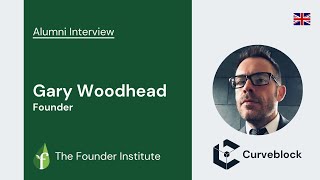
Gary Woodhead built Curveblock to let anyone invest in net-zero homes from £10 through a blockchain platform. The company avoids crypto's pitfalls by staying FCA/SEC-compliant and stable. Woodhead came from the armed forces and construction, and plans to reach a public listing by year six.
Chapters
Okay, my name is Dustin Betts. I'm the content editor at the Founder Institute, and I'm here this morning with Gary Woodhead. He's the founder of Curveblock. It's an FI London portfolio company that's applying blockchain to allow users to invest in energy-conscious real estate development projects. Gary Woodhead, thanks so much for joining us.
Thank you, Dustin. Pleasure to be here.
So before we dive into Curveblock, your startup, I always like to ask first, you know, tell us a little bit about your personal or your background story. What were the experiences, I guess, professional professional or personal that led you to founding this green real estate company powered by blockchain technology?
Yeah, certainly. So my background, as a young guy, I joined the forces and upon leaving the forces stepped into the construction industry. And it was nearly 2 decades in as a hobbyist investor, I was investing in businesses, predominantly fintech. And it was roughly 3 years ago, I spotted a gap in the market and thought, I have nothing to lose, created a business plan, and the rest is history.
Perfect, perfect. Now I know because I'm somewhat familiar with Curveblock as a Founder Institute company that it's, you know, real estate investment using blockchain. But let's hear it straight from you, the founder. Please give us your short pitch for those totally unfamiliar. What is Curveblock?
So Curveblock effectively is a two-vertical business. The blockchain side of it, we are effectively democratizing construction so that the working-class public are the primary financial beneficiaries of that. And the product in construction that we're using are net-zero energy positive houses. So these are houses that don't use gas and produce more electricity than they actually consume.
Yeah, perfect. That leads right into my sort of next question, which is about the impact, I guess, the impetus and your motivation for starting this business. You sort of defined it there really quickly. You know, what is net zero, I guess, in the context of real estate development? And maybe, you know, why is it so critical that we move towards net zero for future development?
Yeah, well, I mean, statistically, the Earth isn't getting any bigger. Yet population compounds yearly, and construction traditionally is brick, block, steel. The problem with construction is, you may or may not be aware, it is the biggest polluter of carbon globally.
Yeah, yeah, I know, like, something people don't often think about is like the use of cement and things like that. So building materials have these big carbon footprints that when we think about vehicle transportation or burning coal or something, they don't tend to come to mind. But yeah, yeah, so huge carbon impact. Also want to ask you about the technology on the blockchain side. So for those who are not super familiar with blockchain, in brief, you know, give us just a high-level overview of like what is a distributed ledger and maybe like how can this technology then be applied for securities products or real estate investment projects.
Okay, so blockchain effectively is a digital ledger that create— that has consensus created through cryptography. So without going deep on the tech and switching people off, it originates from Bitcoin, and there is a world of blockchain businesses out there, predominantly all of them doing it wrong. Um, the bulk of the industry businesses out there basically do several elements that will never be accepted in real-world use case. Firstly, they're decentralized. So the problem with decentralization is that creates a huge issue with anti-money laundering. Secondly, they peg themselves to Bitcoin. So if you pair a business to Bitcoin, as that basically is manipulated and highly volatile, you have no stability for the business. So that can't be used in real-world use case. And thirdly, none of them are basically embracing jurisdictional compliance, whether that be the FCA in the UK, the SEC in America and other regulatory bodies around the world. So there's a major failing there with how the very early businesses in blockchain have effectively got an Achilles heel that will never see them get mass market adoption. However, we're the opposite. So we are not pegged to Bitcoin. So that brings stability. We are basically compliant, so we effectively have FCA, SEC filings to deal with. Now, the good thing for us is that allows us to get public mass adoption as we walk the roadmap, and it also helps with dealing with the anti-money laundering that currently is rife within real estate. And what effectively that technology allows us to do is it allows us to digitise and then fractionalise all the future revenues of construction. Basically meaning the public, the working-class public, whoever they are, whether they're in McDonald's flipping burgers or stacking shelves in a supermarket, they can own part of the future revenues in an evergreen sense for as little as £10. Whereas historically that market has been controlled by the wealthy, the institutions, the banks. But the reality is the biggest and strongest financial entity on earth is the working-class public. Collectively, these people have more financial power than, than anything out there. And using this business model with the technology, it's immutable, it's transparent, It cleans up the market and it opens up the market, most importantly, to the working class. You know, just because somebody has a 9-to-5 job and doesn't have much money spare, pardon me, that shouldn't stop them having the right to partake in real estate that has huge, huge uplifts in return on capital employed. And we hope that we're on the brink of effectively creating the biggest wealth shift for the working public.
Perfect. Yeah, I love that vision. It leads well into the next thing I want to ask about, which is the user experience. Tell us a little bit about CurrentBlock, what your centralized exchange looks like versus the decentralized exchange. If I'm somebody new, what does it look like for signing up and getting started with making my first investment as a user?
Yeah, the problem with the decentralized world is it's very tech visual, very difficult, very difficult to grasp. And effectively, if you're not a technologist or into that market, you would struggle to partake. Whereas we did our MVP on this, on the basic primary sense that it has to be able to be used by a teenager or a grandparent. So we keep it simplified and effectively click to register. So that's where you're onboarded and you do your KYC, AML, click to invest. So click to buy part of all the future revenues forever, um, from as little as £10 and basically click to stake. So you commit, um, and then click to take your profits as liquidity events, i.e., as houses are built and sold. And worst case scenario, click to exit. Perfect.
Is there any other features? You've talked about a lot of the features and what makes it different, being a centralized exchange, not being pegged to Bitcoin so you avoid that volatility market. Are there any other product features or things in the platform that you want to highlight for those watching? Yeah.
Our go-to-market, there's another problem in the market and there are property educators that charge the public £5,000, £10,000, etc. Kind of with a carrot on a string as you'll get rich quick, no money down. And the reality is these people are effectively making millions off the back of selling snippets of knowledge from a sector that they're not really partaking in, in any significant volume. So what we're aiming to do, our go-to-market strategy is going to be Curveblock hacks. So all this education from acquiring and finding sites, going through planning, site preparation, delivering the sites. We're going to basically give all this education on the platform for free now. And this isn't a sales funnel. This is basically showing the world, if you want to be a self-builder, these are the steps, this is how you do it. And at the end of all this education, if people still feel that it's a bit too submerged for them to do, and that could be because they're strapped for time because of family commitments or work. Well, there's a simple solution. You can own part of Curveblocks digital dividends. So it's a win-win for everybody.
Yeah, I love that content strategy. That sounds, um, really cool. And you're calling that Curveblock Hacks, um, for those who are— oh, cool, awesome. Um, I want to ask you to make a prediction. This is always where I ask our founders to go out on a limb here. So What do you envision for the future, I guess, of real estate investment, whether it's through like a digital tokenization, moving into, I guess, real estate plus blockchain over the next 5 years? What do you envision for the future of that landscape?
Me personally, I feel that every sector around the world, irrespective of what the sector is and what the niche is, will see displacement from blockchain. I actually think blockchain used in a centralized and compliant manner will make the birth of the internet look like a drop in the ocean. I do think the next 10 years is going to be the disruptive decade. It changed— everything changes with it. Digitization, fractionalization, done compliantly, it levels the playing field for everybody. And obviously, yes, we've picked a fight with the world's biggest asset class, but 2 years in and we're still winning.
Perfect. You've obviously done a huge amount to build CurveBlock to where it is today. You know, what are some of the biggest challenges that you feel you've faced as a founder and overcome, I guess, in terms of building this company so far the past 2 years?
Yeah, the hardest one was education. When I originally showed this business idea, you know, people looked at me like I had 10 heads. This was— nobody was really talking about this technology. But thankfully, a year down the roadmap, we've seen adoption occur globally. Just recently in the UK, the first digital securities exchange was approved by the FCA. So this is going nowhere and it's only going to compound and effectively go from traction to critical mass and displace— I don't like to use the word disrupt, I'd say displace many sectors, but for the good of the people and the planet.
Yeah, absolutely. What advice would you offer for an early stage or maybe even just an aspiring entrepreneur who's just kind of getting started? I don't know, anything that sticks out that you wish somebody had told you 2+ years ago when you were just conceiving of this idea?
Yeah, there were 2 verticals for us. First of all, tell the world, you know, visibility is credibility. You're going to get laughed at, but just keep chiseling away. Yeah, accelerators. So we were accelerated by some universities down south, we were accelerated by a bank, and then we decided to leverage COVID and step into the world's hardest tech accelerator. Founder Institute. 430 applicants, 10 graduates, and we made it through. So that would be tip number 1. Accelerators is key. It's all about the people and the connections to take concept through to a viable business. The other one for us in the UK is HMRC, which is the tax body. They basically offer what's known as SEIS and EIS, and what that basically means is the UK government give back angel investors the bulk of their investment. So it makes the angels active to invest in innovative startups. They're hedging their investment because the taxman's giving them the relief and virtually limited capital gains. And that's obviously key for a lot of startups because, you know, if you don't get that investment, there's only going to be so much of the roadmap you can survive before you know, the cash burn and there's nothing, there's nothing left in the pot. So they would be my two for a UK tech startup.
Yeah, that's really interesting. I didn't— I've never heard of this tax structure for angels in the UK. So yeah, for UK companies out there, it sounds like really a great thing to take advantage of. Very cool. Final question I have for you, Gary, is just where is Curveblock headed next? I guess any final updates or anything you want to share with the Founder Institute community or asks for the audience that might be watching?
Um, P&L, I don't like to say the word unicorn because I think it's a bit oversaturated in the startup world, but we're on track on the P&L to get to that status by year 6, where we're looking to float the business on the stock exchange and go public. Um, there's many, many positives in the background. The one that ticks a big box for me is every time there's a liquidity event, so a house is sold, 5% of the profits basically go to charity to help the homeless and the housing crisis. And we don't say where that goes. The people on the platform use the blockchain to vote where that money goes. And the market sentiment is huge from what we've seen so far, basically because we're so different to traditional investment in crowdfunding into real estate and real estate investments because Our business model is fair. Crowdfunding, the problem for that at the moment with the public is they have to pick a development. They don't have the diligence levels to pick the right development all the time. There's no liquidity in it. So once their money's in, it's locked and it could be there for years. And it's an uneven profit share. So they may invest and get a 10% return on their money. Whereas the development company may be getting a 40% return. Whereas our model, it's an even profit share. 5% goes to charity. The remaining pot is split evenly with Curveblock and the public. And we've removed the headache of having to pick a development because you're owning future profits of everything the company does, a bit like a digital mutual fund. Um, And there's liquidity because it's digital. So if people, if you invested in the January and you have a life crisis in April and you need your money back, well, because it's digital, you can just sell what you want to somebody else on the platform. So you have an exit, which, you know, the working class public, their life savings may be £500 or £1,000. They need to have that comfort blanket. So if something does happen, they can get out. And thanks to blockchain in a centralized manner, we can offer that to them.
Yeah, really interesting on the liquidity exit side of a new asset class. This has been really, really interesting for me, learning about how blockchain is changing the real estate investment landscape, touching so many different sectors of the economy. But this is my first foray into the technology applied to real estate. And I know myself and everybody else at Foundry Institute, we're Really looking forward to keeping up with Curveblock and where you're headed next. So Gary Wood, thanks so much again for joining us today.
Thanks very much, Justin. It's been a pleasure.










