Interview with Play Out Apparel founder & CEO Abby Sugar
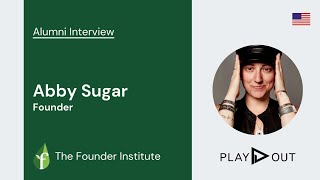
Abby Sugar founded Play Out Apparel, a gender-inclusive streetwear brand that rejects the men's/women's split. Fifty-six percent of Gen Z shop outside their assigned gender. She's raising pre-seed funding from values-aligned investors and pledges to donate 20% of net profit to LGBTQ+ and BLM causes.
Chapters
My name is Dustin Betts. I am the content editor at the Founder Institute, and I'm here today with Abby Sugar. She's the CEO of Playout. It's a gender-inclusive apparel brand focusing on delivering underwear and streetwear that make a social impact. Abby Sugar, thank you so much for joining us today.
Thanks so much, Dustin. It's great to be here. As a graduate of the Founder Institute, I love talking to you guys, and I'm a big proponent Awesome.
Yeah, so before we kind of dive into the details of your company Playout, can you tell us first just a little bit about yourself or your startup story? You know, what were your experiences that led you to founding this inclusive apparel startup?
Yeah, so I can share, you know, a little bit about who I am and what Playout is first, and then I'll get into maybe sort of my personal inspiration to embarking on what I call this crazy journey of being a startup founder because you do have to be a little crazy. I think that most of us in the industry know that, and we will talk about it all the time. So, you know, as Dustin said, my name is Abby Sugar, and I'm the founder and CEO of Playout Apparel. We're an inclusive, digitally native streetwear and underwear brand. So what I like to tell people is the gender binary is over. And research shows that actually 56% of Gen Z shops outside of their assigned gender. And this was something that that I personally experienced, that my co-founder and I personally experienced, and just for anyone who doesn't conform to gender stereotypes, shopping for clothing can be incredibly stressful and intimidating. So our tagline is, "No genders, just style." Can you see yourself shopping by style and not by gender? At Playout, we are building the future of inclusive fashion through a new gender-equal, values-driven shopping ecosystem. So we offer clothing to help Gen Z shop their authentic selves while supporting their values with gender expression affirming apparel in limited edition designs and an inclusive shopping experience. Our apparel is sexuality, gender, race, size from extra small to 5X, age and ability inclusive in our designs, construction, and the brand marketing DNA. And we're talking about social impact here. We're committed to responsible manufacturing. We do identify as a social good enterprise, which means we have a 20% net profit donation promise to LGBTQ+ and BLM organizations. It's also Pride Month, so, you know, I think we should say it all the time, but especially in June, I always start and end almost every conversation with happy Pride. So happy Pride to everyone.
Yes, happy Pride. There was a ton of details in there that I really want to kind of dive into. You gave some, some quantitative statistics too that are really interesting and talked about one key differentiator in your store, which is just basically like not having the the typical gender sections of like an e-commerce store. And so that's like very unique and interesting, and I want to talk about too. But first, I want to talk about the problem a bit more, like the whole scope of challenges that your customers face. I think, you know, because clothing is so key to gender expression, it's really central to the whole demographic or market need. But for people who are outside the LGBTQ community, they might be like totally unaware of the challenges around gender affirmation and that your customers face. Can you kind of talk to us about that scope or what the challenges really look like, you know, in the apparel industry today? How big is the need or underserved is the market that you talk about?
Yeah, absolutely. And I love this question because this is not simply about the LGBTQ+ community, but it's about fashion as a way that people express themselves. So for so long, my co-founder and my COO have been in corporate fashion, luxury fashion, in the industry for 20 years, right? I've been in the industry for 10 years. And the industry itself created itself around being exclusive, especially in luxury marketing, which is where you have all the like fashion runways and things coming down that are being marketed to the general public. You should dress this way. You should express yourself this way. And the advertising was only really to aspirational white, thin, cisgendered shopper. And I'm really optimistic, my team is really optimistic that Gen Z is so demanding in fashion and in the greater, you know, way that they move through the world, that people should be truly able to authentically express themselves and in, in whatever they do, be accepted, be inclusive of difference and individuality. Fashion is like a really expressive way that everyone shares who they are with the world. You know, we were— we— if we talk about our original inspiration, my original inspiration was underwear because it is so hyper-gendered and hyper-sexualized. So, you know, part of the question that you asked was around what does the fashion market look like now? How big is this problem? And it's not Again, it's not just about LGBTQ+ shoppers, but it's about the images, the advertising to women of the male gaze of you should look sexy in a very specific, certain way in your underwear. And I love the fact that in the past few years, especially marketing around underwear, it's about you wearing something for yourself. And so for Play Out, for me, that started with gender equal, gender affirming, the first thing you put on in the morning, everyone should be able to get dressed and move through the world with confidence. And so when you're doing that with the first thing you put on, and then that for us, we started designing streetwear because of consumer demand for non-gendered, non, you know, telling you what you should wear things. So in addition to that, you know, we are body shape and size inclusive, so extra small to 5X. And I do, if people aren't part of the community, you know, they might not understand the terms cisgendered or transgendered, but cisgendered means someone who identifies with the gender they were assigned at birth. So I was assigned female at birth. I identify as a woman. I use she/her pronouns. Someone who's trans, you know, has transitioned. And then you have people who are non-binary, but it's not like clothing is just clothing, right? It's not that there's, you know, men's and women's for us. It's just wear what makes you feel good. And that's not something that the mainstream fashion industry has been doing up until now. What I like to say, what my team and I know, is that what we call gender equal or gender neutral fashion, Gen Z just calls fashion. Here's some clothes, wear them, express yourself.
Yeah, and the statistic that you mentioned at the top, which was so interesting with Gen Z, was that 56% said they would shop outside of their assigned gender, basically. Yeah. And so I think that's just like super, super interesting with the demographic that's rising right now, how it's changing. I love the way that you frame it. I mean, it's not to like beat up on a big brand, but it's like Victoria's Secret is the opposite, right? That's the one that everybody thinks of right away where it's super sexualized. It's them telling you how to be. And so, yeah, I just, I think it's so interesting in this fashion industry because it's like very clear. Yeah, the framing makes a lot of sense.
And it forces people into boxes, right? And, and people can't be contained in boxes. They should— and especially the younger generation doesn't want to be told how to spend their money or how to shop or who they should be, right? They want to be themselves. They want to express themselves. And in addition to that 56% statistic, there was a New York Times article, um, about a month ago 50% of Gen Z thinks that traditional gender norms are outdated, right? In addition, 16% of Gen Z out-identifies as LGBTQ+, which is nearly double the 9% of millennials that do. So I also like to say, you know, authentic gender expression, trans individuals, non-binary individuals, all of the just different aspects of how a person shows up in the world, It's not new. This has always existed. Queer people, LGBTQ people, trans people have always existed. It's just society is finally more welcoming to people being able to be themselves.
Yeah, yeah, yeah. That makes a lot of sense. We've kind of touched on some of these details, but I want to talk a little bit, you know, just about your brand and your company here for this part. So, I mean, do you consider yourself— I guess this is a direct-to-consumer business. You kind of talked— What are your, in your minds, the key differentiators? I mean, I think we've sort of talked about them a little bit with the just styles, not gender concept. But yeah, just like your special thoughts, kind of tell us just a little bit about the brand.
Yeah, so when you're talking about, you know, consumer goods and you're talking about fashion and apparel, I definitely like the term, newish term in startup land, which is digitally native. In in fashion, in the industry. I think that it's a little bit of a newer concept to tech-enabled companies and to the startup ecosystem because direct-to-consumer with, you do have higher margins, was really, really hot 5 or 6 years ago because investors love these higher margins. At the same time, tech moves so fast that the online landscape has gotten so packed. Right? You have to compete for eyeballs. You're being charged to have people's eyeballs, right? Whether it's by Facebook or by Google, et cetera. And so the overhead, what you used to spend on a brick and mortar retail location, you're just transitioning to what is an online storefront, right? It's, you're increasing, you're still elevating what those costs are, even though your per product margin might be higher. In the fashion industry, And it's been, it's changed drastically, right? But coming from department stores 40 years ago, in the past 10 to 15 years, you know, people are, have been talking about us in fashion, have been talking about omnichannel retail, which is multichannel marketing, which is reaching your consumer where they are. And that combines our vision for Playout is absolutely much bigger, right? So reaching our customers through retail partnerships with other, you know, brick-and-mortar locations, boutiques. We do, you know, the easiest place to find us right now, of course, is online. And also doing pop-ups, eventually, you know, having a Playout flagship brick-and-mortar for ourselves. Absolutely. Gen Z, as we're talking about, you know, they're pushing forward this movement. We're creating the brand that we wish existed when we were younger. Right? And they're also shopping differently. So they shop mobile first. So for us, that looks like on our roadmap as a startup, definitely having a social shopping, our own app, right, that they have on their phone, they can open us up, and we are community driven. So what excites us, you know, a lot is engaging with our customers around content and topics that they, that they're that are important to them, right? Specifically in terms of like our products, one of the reasons that we say gender equal and not gender neutral is that when you say gender equal, it's not about erasing pronouns or gender identity, but for us, it's about removing the categories that tell you what you should or should not wear based on them. And I always like to point out that in neutralizing gender expression or using the term gender-neutral apparel, it seems to approach design as reinforcing the default and neutral as androgynous masculine. And that's completely unfair, right? So when we say gender equal, we mean all prints and colors available equally and equality in marketing and self-expression. Um, and so we— one of our sort of special products that we created that no one I know of was doing before we started doing it this spring. We launched our flat front jockstrap. You have women's lingerie, you have assless panties, right, that gets into this hypersexualization that we talked about. And there are men's jockstraps that are just comfortable everyday underwear that you could wear. So we were like, let's make this equal, right? And when I say flat front or pouch front, I mean that we don't have gendered sections of our website. There's no men's or women's sections. So we have styles on the bottom, shop by pouch front, shop by flat front, everything available equally across prints and colors. So there's no subliminal allocation of gender. Pink is for girls, blue is for boys. Here's our colors available equally, our prints, My co-founder, E, is a painter, so all of our prints are actually paintings that they make. Yeah, and that contributes a little bit as well. I like to talk about our move into streetwear, our expansion into outerwear apparel, everyday apparel, because streetwear tends to historically, it as a market, is as a subset of the fashion industry, tends to be defined more as like a more luxury, higher price point, artistic collector's items, secondary resale market, et cetera. And that also is exclusive, right? It's not affordable. So we're taking the art, high elevation, limited edition with our prints. We envision working with artists in the future for collaborations and limited edition runs into an affordable price point, into everyday wear, you know, streetwear-inspired athleisure, outerwear type of stuff. So we design, we do design everything ourselves. And as a gender equal company, as a queer owned and trans owned company, that also doesn't look like, I want to be very clear that it doesn't look like, you know, we only make things that are rainbow colored. It doesn't have to be a rainbow. It's about self-expression and being who you are.
Yeah, so much awesome stuff that you said there. And yeah, thanks for outlining like the kind of defining the gender equal part as well as correcting my de to see, I think, describing it the way that you did, as being digitally native and then speaking to having a mobile platform specifically for the Gen Z target customers. That, that all makes a lot of sense, and I appreciate kind of that, those industry details, because I have never been in the fashion industry. And so yeah, I really appreciate that, like, insight into the way that the industry is changing and how customers are approaching it. So all super interesting. I want to kind of pivot towards social impact, which we talked a little bit about at the top. At Foundry Institute, we have this For Progress initiative to try to make impact frameworks more accessible, even for super early-stage founders. But you're obviously super well aligned with SDG 5, which is gender equality. But how are you as the founder thinking about quantifying or otherwise measuring your company's social impact today?
You know, it's interesting. Gender equality seems like the super obvious one. But what I like to, you know, when you, when you read about how the UN describes their SDGs, you know, a lot of gender equality talks about democratizing access to education, to healthcare, etc., for women and girls. And when we talk about the expansiveness and no gender binaries, because gender is a social construct, I actually think that we're most aligned with Goal 10, which is reducing inequality, because— and I will quote this, they have notes— which the UN says that by 2030, to empower and promote the social, economic, and political inclusion of all, irrespective of age, sex, disability, race, ethnicity, origin, religion, or economic or other status. So this includes sex, right, which goes to what we were saying about SDG 5. But I like to point out that the list doesn't explicitly include sexual orientation or gender expression, and it should. So what we're doing in our social impact is working directly to combat homophobia and transphobia through our brand marketing DNA. Through our product design, our partnerships, and our monetary donations. For us, it's also— it's— there's a mental health aspect to it. If you're feeling unsafe, if you're not able to truly be yourself, that's a problem. As well as representation matters and plays a huge role in reducing inequality, right? If you can see it, you can be it. If someone else can— has seen it and can relate in some instead of, you know, keep locking you out or, or, you know, being mean to you, etc. It's really important to have that, that representation out there. You know, I receive emails from customers, something that really inspires me, and I love sharing it with our team whenever we get a customer service email, or even an email from not a customer yet, a potential customer who just finds our website and visits the page and is so moved to send us an email. We've gotten a few that have said like, thank you so much for what you're building. Clearly your website is a safe space. Or I've never seen myself represented before, but I found your social media and this is amazing, right? Thank you for creating this. And even people that aren't our target demographic, but an email from a customer who has said, my daughter is trans, you're making the world a kinder place. And it's, it's so inspiring. We absolutely measure our impact by our social good pledge, which is choosing to support also smaller and more local nonprofits to really be able to see the impact and be very closely aligned with our communities. So For Pride this month, we're supporting the Trans Emergency Fund, which is a local Massachusetts-based nonprofit that provides critical assistance for low-income and homeless transgender people, especially trans people of color. And this includes gender expression-affirming medical care assistance, housing assistance, help with changing their gender markers on legal state IDs, and that type of stuff. So we're really— that impact, it's part of our DNA, it's part of who we are, and it's really important to us.
Yeah. And did you say the pledge that you currently give 20%? Is that correct?
Net profits. Yeah.
Net profits.
Yeah.
Yeah. So you're like, this is a real commitment in terms of how you partner with these other organizations because, yeah, that 20% is a big number. I mean, for a lot of founders, they go, whoa, that's a lot. Yeah, that's like a real commitment to your values.
It's a lot of a future pledge as well, right? So with our growth, the way that my co-founder, my COO approach everything is about abundance, right? So if we're talking about the mission, our mission to be a full lifestyle brand, the first thing that we get asked for is children's and teens gender equal apparel, right? Because it's so gendered, right? Like trucks for boys, fairies for girls, etc. And that's definitely something, you know, we have a big vision growing into that. The way that Ralph Lauren has different departments and really is your full lifestyle brand, people relate to it. If you're going to be something the size of Ralph Lauren, or even for example, Lululemon, right? Which when Lululemon started, they created the athleisure market. It didn't exist, right? And right now, the gender equal market doesn't exist. It is us and a few other startups that are really leading this new market creation in the fashion industry. And if we're going to be— Lululemon alone, alone did $4 billion in sales last year. Right? And so if you're doing $4 billion, I think we can spare 20% net profits to really uphold our values and give back.
Yeah, that's amazing. And just hearing from you, like, I guess the lack of how much competition there is right now and the numbers that you've cited before, I mean, it just feels like sometimes when you say you're gonna like make your own market, you can be skeptical. But I think like given the numbers that we've talked about before, like it seems like this is definitely a market that is emerging. And so Lululemon is like bringing athleisure like inventing that kind of category. That's just so interesting as an analogy because yeah, it really, it really makes sense to me. I also really liked what you said about SDG 10. So thanks for bringing that out because yeah, I think teasing apart that difference is really important and yeah, it does align super, super well. I had some specific questions that are sort of about Pride Month and the startup ecosystem support for LGBTQ founders. So, I mean, these are a little sensitive maybe. I know, you know, totally say whatever you want.
But so, yeah, in designing underwear, I, I have spent a lot of time editing photos of people's crotches, and I talk about all the things.
So, yeah, perfect. Well, I— so then, I mean, in your opinion, you know, what, what is the startup ecosystem doing well, or, and where is it most lacking in terms of its support, uh, right now for LGBTQ+ founders in general, and then, you know, maybe for the Founder Institute specifically, if you have any ideas or feedback on how we could improve or our support for founders in our internal community. Super appreciative for any insights you have on kind of the state of the startup industry as it is today.
Yeah, I think one of the most important companies, nonprofits that I like to talk about in case people aren't aware of it, is StartOut. And I know that recently, just this year, but correct me if I'm wrong, the Founder Institute has partnered with StartOut to do an event or two. And, you know, I like to point out that we're queer 365 days a year, not just during Pride Month. So it's in the startup ecosystem, you know, it comes down to Democratizing access, which I think is something you can do by partnering with StartOut, right? So that, you know, you— the Founder Institute, and there's this whole startup ecosystem that anyone different, right, or an LGBTQ+ founder might not know how to access, right? But if the founder is able to find support through StartOut, and then StartOut helps facilitate those connections, I think that building more of those panels and relationships with those types of programs. There's a, there's also a group called Out in Tech, right? And so sponsoring any of their events, right? And people that are in, if we're talking about the tech ecosystem, you know, there's a lot of developers in tech that maybe want to, that are LGBTQ+ that maybe want to be founders, they want to have their own startup, but they don't don't know how. So if you can also reach out to the tech community, Out in Tech, Lesbians Who Tech, etc., those are other ways to provide support. And then once you're doing that, it's about being inclusive in your interactions, right? So that it's not just performative. And one thing that's really difficult, you know, how the question of how is the startup and VC investing ecosystem doing in terms of supporting LGBTQ+ founders. And I recently gave actually a little talk on this. So I looked at some statistics, right? And we all know the statistic in 2020 that 2.3% of VC funding went to female founders. We all know that statistic, right? StartOut did an index. They did some research. And there was an article a couple years ago in Entrepreneur— well, no, last year in entrepreneur.com, where they said that more than $1.5 trillion was invested by VC firms globally from 2010 to 2019. But what they were able to find out was that less than 1%— over 10 years, less than 1% of those funding deals went to LGBTQ+ entrepreneurs. Now, it's hard to get these statistics because there's also the aspect of I walk into a room, I identify as a female founder, that's obvious, right? And that's the same for other, you know, certain other minority founders. People can't hide what race they are, right? So there's the question of people not being out, so not publicly identifying as LGBTQ+. So that definitely affects those numbers. But then I ask you, Why aren't they out? Right? So how can we make the ecosystem as a whole more inclusive and supportive so that people will, you know, feel comfortable being themselves, being out, and then will be able to secure that the needed funding?
Yeah, yeah, that's perfect. I mean, going back to what you're saying at the beginning, it just feels like, I mean, the most things, the most ways that the ecosystem can like improve its support is by building partnerships with the organizations like StartOut, that are really dedicated to this. So it's not just for Pride Month, and so that maybe there's a pipeline to kind of connect resources. Because, yeah, obviously those kind of VC funding statistics, it sounds really horrendous, but I guess like the way to improve it is to make sure that people are being brought into the ecosystem and aren't, you know, being left out.
And that people feel, feel safe enough to be out in the ecosystem, right? Because if you're doing all this outreach, people that are seeking out StartOut, for example, likely already are out and publicly identify as an LGBTQ+ founder. But what about those— if we don't have that inclusion and visibility, then people that are not out aren't going to feel safe coming out, right? So how do we create like a more supportive and inclusive system itself?
Yeah, yeah, that makes a lot of sense. Yeah, so super appreciate your kind of candid feedback and view on on that. So, yeah, thanks a lot. My next question is the one where I always ask people to make a prediction. So, you know, probably for many people, they may think of this as niche. Now, we've given a lot of statistics about why, you know, this is really actually growing and becoming, I guess, much less niche, you know, still niche, but much less niche. You know, what is your prediction for the biggest changes coming in, in just say apparel or fashion industry as it relates to gender in the next like 5 years? Where do you see this going?
Yeah, absolutely. So I may have already said this today because I say it all the time. Gender equal, gender fluid, this is the next generation of fashion, right? So what we might label today as genderqueer apparel Gen Z shoppers are simply calling fashion. And so if we want to talk about market size and opportunity, the fashion industry is massive and it's subdivided by category. So when I talk about our competitors or when I talk about our market opportunity, I talk about the apparel that we design, which is gender equal streetwear and underwear. Those are the two markets. If we were making gender equal dresses, right? If we were making gender equal prom dresses, the prom dress market is its own market, right? And we did talk about some of the numbers, right? For streetwear is a $40 billion industry itself globally, right? Athleisure is $104 billion in sales in the US last year, right? The emerging gender equal market can be seen outside of like me as a startup. It can be seen in the marketing and advertising and how people are shopping coming from the luxury market, from, you know, Fashion Week runways, all the way to the loungewear and athleisure market and startups like us. How do we inclusively and authentically design and reach our customers?
Yeah, yeah, perfect. And yeah, we kind of talked about some of the hows already in omnichannel and some of these definitions within the industry. So yeah, perfect. I understand that you're currently fundraising, you know, say only as much as I guess you can say publicly. I heard that a co-founder of Bonobos might be an investor in your round, which seems very cool. You know, tell us what can you tell us publicly or want to tell us publicly about your current fundraising efforts? Where can somebody who's potentially interested in being an investor who might be listening, where's a good place for them to get in touch with you?
Yeah, yeah. So up until now, all of our growth has been bootstrapped. And so I'm really excited about what we're building, raising our first investor round, and seeking values-aligned investors. As part of that, like, I always fangirl about my team. So my co-founder, E, is the former director of creative production at Intermix, And we just have such an aligned vision. It's all about— I've spoken actually to the Founder Institute, right, about co-founder relationships. And so they do all of the designing. And then my COO, John, came to us as former country CEO of H&M Mexico. And so we know, like, what we are doing. We know the industry, and also this is who we are. And when I'm seeking investors also, from our inception that we have an environmental impact approach just as a startup. Like, that's also part of the fashion industry, like climate change, etc. And so we're working, you know, currently we design with e-designs very closely with our responsible manufacturer in Mexico, who is a female-owned factory. And we design around overstock of raw materials from larger companies. As we grow, That's going to look like sourcing recycled fabrics as well as working on sort of a subscription and return, like receiving returns of underwear because that can't be resold, right? But there's been a lot of research and a lot of progress made recently into textile-level recycling. So breaking it down to like the raw material parts. So receiving that back as well as a brand-only resale marketplace in-house, right? So I'm really excited about all of that growth. It's Pride Month, right? I'm being very direct about this, right? I'm challenging investors to be more than simply LGBTQ+ allies, but to be true champions by hopefully investing in Playout, right? So my pre-seed round is open. I would love people to get in touch with me directly. But also, like, you know, Invest and Playout is a queer-owned and impact mission-driven company. Or, you know, take a look at what other LGBTQ+ founded startups are out there. And so that's my challenge to investors right now. I couldn't be happier to welcome the support of a vocal advocate of underrepresented founders, like the co-founder of Bonobos, right? That's what being a true champion looks like, is really stepping up and supporting us and doing your part in that way. Get in touch if you're interested, you know, check out the website. I don't know if I should say my email out loud, but, you know, you don't have to.
You don't have to.
Yeah, if you're in touch with me, Abby Sugar, LinkedIn.
Yeah, yeah, perfect. They can find you. Oh yeah, perfect. Uh, yeah, and thanks for speaking to the environmental impact in terms of speaking like aligned investors. You know, we've talked mostly about the social impact pieces, but yeah, speaking to, you know, your responsible production in Mexico and those elements of, yeah, recyclability and fashion, those are definitely things that people who are more of the environmental mind as it comes to fashion are thinking about. So, um, yeah, thanks for speaking to that as well. My last question I have for you is just, um, you know, where Where is Playout headed next? If you have any final news updates you want to share with the FI community, ask for the audience, anything in closing?
Yeah, so, you know, we are available at PlayoutApparel.com and he designs everything in capsules. So we currently just launched our Pride collection and our themes are joy, journey, and play. And so all of these capsules make multiple outfits. The pieces can be mixed and matched, which I just love. And we're— I'm really excited that recently, just last week, we rolled out our rewards and loyalty program because that's about, you know, our community, right? Building this community, as well as our community blog on our website, talking about really important topics for everyone. So definitely check those things out because they're— I'm really excited about what we're building.
I will check out the blog because I do a lot of our FI blog and I'd love to share some of that out with the FI network. So I will be checking that out as a follow-up to this. Yeah, this has been really interesting for me. Yeah, hearing from you kind of the definitions around gender equal, how talking to— yeah, just how the industry is changing. And yeah, myself and we at the Founder Institute Institute. We're really all rooting for you and looking forward to keeping up with Playout and where you're headed next. So Abby Sugar, thank you so much again for joining us today.
Thank you so much. Thank you to everyone here watching, watching on recording, and happy Pride!
Happy Pride!










