Interview with Zowasel Co-Founder & CEO Jerry Oche (FI Lagos)
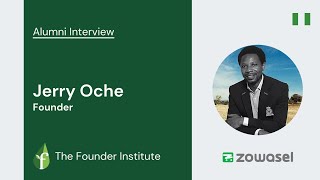
Jerry Oche, whose mother struggled as a smallholder farmer, built Zowasel, a digital grain marketplace that tests crop quality and pays growers within 24 hours through invoice factoring. The platform connects growers, middlemen, and buyers across Nigeria, with plans to expand to other African countries.
Chapters
My name is Dustin Betts. I'm the Community and Content Manager at the Founder Institute, and I'm here today with Jerry Oche. He's the founder and CEO of Zawasow. It's an FI Lego startup that's bringing fintech to agtech through a new marketplace to buy and sell grains. Jerry Oche, thanks so much for joining us.
Hi, los, thank you for meeting you. Nice to have you on board.
Yeah, so before we kind of dive into your startup Zowasel, I always like to kick it off by kind of just asking a little bit about you, the founder. So tell us a little bit about yourself, your personal story. What were the experiences, professional or personal, that led you to founding this digital marketplace to help growers and crop buyers?
Absolutely. My name is Jerry Ucha, co-founder, CEO of Zowasel. I'm a son of a grower. A trained economist and entrepreneur. Of course, I co-founded Zoasta with some of my friends, my school, my long-time school friend and business associate, Kome, a financial and business strategy expert, and Andrew, a professor and blockchain and AI expert. Well, before founding Zoasa, I, I, I was doing my master's in the United Kingdom. I had a company, one of Nigeria's pioneering digital marketing agencies in Lagos. We grew quickly to working for brands such as the World Bank Group, Amnesty International, British Council, and lots of other national banks and insurance companies. Of course, I've experienced firsthand what my mom went through as a smallholder farmer. She lacked access to market, access to finance, and of course, lack of knowledge of crop quality. And of course, she would take her crops to the market and unable to sell her crop to the middlemen, who in turn would only pay her after 90 days. When they got that money back from the big buyers in the city. And that affected our family negatively. We're in and out of school, unable to pay our fees and stuff like that. So that was a motivation actually that made us to— made me to come back and look at, hey, what can we do in the AgTech space from my mom's experience? And like my mom, there are equally millions of small growers around the continent who are struggling with lack of access to finance, access to market, all of this stuff to today.
Yeah, really cool founder story. So like the both the personal connection as a son of a grower and kind of your previous experience working with like international development organizations and stuff. That's really cool. I mean, so you kind of got a little bit ahead talking about the actual marketplace and some of the invoice stuff. I know because I'm somewhat familiar with your company as a Founder Institute portfolio company that your vision for ZOASL is to use technology and alternative financing to simplify agriculture in developing economies. But let's hear it kind of straight from you, the founder. Please give us kind of your short pitch, you know, what is ZOACell for those unfamiliar?
Yeah, so basically ZOACell is a crop, it's an online crop marketplace that provides crop quality testing, connects growers with buyers, and provides financing within 24 hours.
Awesome. Yeah, that's a really tight pitch. So you really made it like an elevator pitch. So thanks so much. Yeah, we're going to dive Let's dive into the details then. Yeah, so for like those who are, you know, outside the industry, they're not kind of familiar at all, I'd like to kind of have you paint a fuller picture for us of the grain marketplace complexity. So like, who are some of the key stakeholders in the marketplace or in the supply chain that you're sort of working with?
Yeah, so basically we have 3 kinds of customers. We have the buyers, we have the middlemen, and we have the growers. What we've done basically is because we understand that in Africa, 75% of the growers in Africa are either illiterate, lack access to the internet, or unable to use smartphones to access our technology. So we would categorize them into what we think and the kind of product that they need. Then we have the middlemen who typically aggregate from this, from these farmers who are kind of maybe digital savvy, and they're able to use our technology, they're able to trade themselves through our platform. So those are pretty common, those come pretty easy for them to use. Then we call it, have the big, the buyers who are divided into different categories. The big buyers, we call them blue chip. We have the national buyers, we call them brown chip. And we have the individuals or the small companies who need crops for their production, so we call them red pot. So what happened here is for the big buyers, the blue-chip companies, they are easy to do business with because you can actually trace their credit history, understand their rating, so easy to deal with them. For the brown-chip, equally well, we have some credit line we can give them as well. While for the red-hots, we have to pay online before we can make delivery to them. But interestingly, for the growers, what we find out is because they lack access to the internet, they are either illiterate or lack access to smartphones. So we understood that early enough, so we developed what we call the Zoasset Crop Test Center. Now the Crop Test Centers are managed by our trusted local partners who enable the growers to access our financing or marketplace through their local communities without them actually having issues of barriers of going through the internet or coming to look for us in the city.
Awesome. Really, really cool. All right. So now to kind of— so those are all the different pieces. And now, you know, from say I'm a grower and I'm just coming into the ZoeSell marketplace, what does that kind of process look like on the grower side as far as, you know, registering before they can, you know, start, I guess, putting their crops for sale on the marketplace?
Yeah, it's pretty straightforward. I just, I was maybe about 1 to 5 steps. So you do, you sign up, of course, it's free. You post your grains. Once you verify that you post your grains, of course, you match. When you match, you you probably make the deal, and when you make the deal, you get paid within 24 hours. Is that simple?
Awesome. That's, well, that's really cool. And so I wanna kind of talk a little bit about the invoice settlement, the fintech part of Zoosell. So, you know, I guess you said kind of before, a typical crop sales invoice could be 30 days, it could be even 90-day terms. Yes, yes. But so how does this invoice factoring work just to kind of, you know, make this clear for the user, for a grower? What is the invoice factoring and how does it work?
Yeah, so the way it works is simple. Once you sign up as a user, as a buyer, we're able to categorize you into brown chip, red hot, or blue chip, so we know where you fall. So that gives you access to credit because the risk there is actually with the buyers, not the sellers. So for the sellers, Once they supply to any of these customers, I will determine when they get their money. So if it is top blue chip, who are the major customers, of course when supplied to them you get money immediately. But how we've done it is simple. Once you supply, you— if you're a blue chip company, you, uh, of course you can get access to credit without paying immediately. So we pay— you pay us back in 30 days or 90 days. But if you're a brown chip company, you probably want to make some they probably want to make payments maybe up to maybe 70% for you. But if you are a red-hot company, then you have to pay before delivery. So for the growers, basically, once your crop meets the quality qualification after delivery, you get your payment within 24 hours. So the idea for us basically is to accelerate invoices within 24 hours to provide working capital and cash flow for growers to keep them in business.
Yeah, that's really, really important. I know for the growers, for anybody, you don't want to wait for the full invoice term. Have much faster turnaround.
Yeah, absolutely.
I want to kind of ask you about the transport complexities, just because I feel like I know that there's transport as part of the marketplace. You know, how can growers using the ZOASell marketplace benefit from like the logistics providers, or is that part of it?
Yeah, so again, what we've done again, because we realized logistics was a major part of our business. If the crops don't get delivery, we don't get paid and we make money. So what we've done is we are developing a system where we aggregate other truck owners, other delivery platforms on our system using some— sharing some APIs with them so that we can call and we'll get price of truck at the moment and we can key down some logistics. So that for the grower, a lot of them don't have money to even pay for their transportation. So with that, what we call ZoaSet Transport, we are able to lift their crops and deliver to the buyer. And of course, we can deduct that after delivery when making payment to them. So the idea is to make it easy for both the grower and both the buyer against looking for other logistic arrangements that would be difficult to get and time-consuming. So this just happened within a minute. Once you come to terms of agreement between the buyer and the seller, then you are available to just use our logistics available and make your delivery. So basically, we don't own the logistic companies or the trucks. What we're doing is using our technology to develop that so that other logistic company could potentially partner with us and individuals who could actually drop their trucks on our platform.
Very, very cool. Yeah, so we've kind of— it's obviously like if the platform is sort of, you know, from start to finish, like the grower can just do, you know, so much. Obviously there's the other key stakeholders too, but I just want to touch really quickly kind of before we move to other more general questions about the platform's like other key features. And I think you might have touched on some of this before, but I know smart sourcing and traceability. Is there anything else you want to emphasize sort of about the platform here?
Yeah, absolutely. We're trying to— we're piloting smart cropping, traceability, and smart sourcing. So what— from our experience working with our customers, we've understood that for the buyer side, they need smart sourcing, they equally need traceability. So buyers will begin to understand that the top buyers we work with, like Diageo and all of those, Olam, so they are more interested in not just buying crops or buying grains. They say, you know, where are we getting these grains from? Who are these smallholder farmers producing the grains? How are they— what is supply chain like? How are they brought to us and our location? So they want to know all of this. And we thought it would be good for us to use our technology to probably develop something that will probably provide— track all of those touch points for them to understand what we are doing. So again, A lot of them equally want to know, okay, so we want to know, track our impacts, footprint, and all of those. So that's where the traceability comes to play, and we're trying to develop that. For instance, again, for the smart cropping, a lot of buyers now, because of the nature of smallholder farmers on the continent, a lot of people probably want to play smart, try to provide some wrong information, or probably try to provide some wrong detail about their crops. So we are pioneering the smart cropping where we're able to do realtime, smart, realtime virtual inspection. So like we do this meeting now, we're able to verify crop using our virtual conferencing solution for buyers to see the crop is available and all of that. And probably sometime we're able to probably use the system to test the crop even right from the comfort of our buyers' homes and offices.
Basically, really, really cool. Yeah, super interested in, yeah, the traceability aspects and stuff. I mean, that's, uh, yeah, definitely like from a consumer side, I guess you see what, you know, the buyer is looking at because, you know, the buyer is ultimately passing it on to the consumer. So when you hear trends about, yeah, like you were talking about, like traceability and wanting to, you know, measure impact and things like that, that's really key features that you guys are piloting and developing for the, um, for the buyer side. Super, super, yeah, super interesting. So obviously you guys have put in a ton of effort to build Doasaa to where it is today. You know, what are some of the biggest challenges that you faced as a founder, particularly sort of in the earlier stages of launching the business and sort of how did you go about overcoming some of those challenges?
Well, so definitely we had lots of challenges. But I think some of the key challenges we had was able to understand our customer, to understand the exact model that fits into the kind of customer base we have. Remember, we are working with 3 kinds of customers. We have the growers, the middlemen, and the buyers. So for us to understand the model, and of course for us to be able to work with these guys without doing the conventional thing, what everyone else was doing or is doing in terms of supporting growers with some kind of continuous cultivation before buying from them. So we don't get involved in all of those cultivations. Our focus is just for them to produce and we're able to provide crop quality for them to get more from their crop and for them to get payment within 24 hours. So I think that was the challenge to understand the business model, able to build the business model. It took us about 2 years for us to come up with some research and all of that. Then after my graduation from FI late last year, it was easy for us to get a clearer picture of what we wanted to do. And of course now we are focused on doing that. Then secondly, I think another biggest challenge we faced was able to get a financial partner who could potentially provide backup funding for invoice settlement. So it's difficult for us to raise funding now for kind of a third-party invoice settlement. So what we tried to do that didn't work, so we came up with the idea of working with our financial partner. And we're lucky enough to find a local financial partner in Nigeria, the Commercial Bank, who actually came to our rescue and provided all the funding we need for the back of financing. So again, that was the biggest— that was our biggest challenge, able to get that, but we overcome them and now we are good. I think we're doing well with that now.
Awesome. Yeah, I think the challenge that you mentioned about just the different kinds of customers, I mean, that's something that most marketplaces are going to have different sides of the marketplace. So really interesting. And yeah, I mean, that's a big challenge to understand the different kinds of customers and make the marketplace, you know, fit, fit all the needs together. So yeah, really, really cool. What advice would you offer to, you know, other early-stage entrepreneurs, maybe just aspiring entrepreneurs that are just kind of getting started now? Maybe something that would have been helpful for you to hear 3 years ago or whenever you were just getting started. Any kind of wisdom like that for the very early-stage founders out there?
Well, so I think, for me, I think I probably have maybe one or two things to say. One for me would be the reward for work is to work more. There are no shortcuts to success, so you have to pay your dues. You have to go through the process in working for you to come up with a good company. Secondly, I would say you're going to need to surround yourself with smart people. It's interesting to understand that when I started my first company, I never had a co-founder. So, or I did all my mistakes, I learned from my mistake without having a co-founder, but it was difficult for me alone to do all of that. But when I started Zoacel, I wanted to do the same mistake, but I found out that that would not work. So I had to go and look for like-minded individuals with complementary skills to support what we're doing. And I think that's pretty important because if you Want to do everything yourself at the early stage, it will be difficult for you because not just the resources that you need, you need to have a lot of capacity and some kind of support possible for you to do. So I think it's important to look for complementary founders who support what every entrepreneur is doing and who believe in your vision. And above all, for you to build a company, of course, you You have to burn the candle sleepless nights. So it's not something you do just over a day. You have to believe in yourself and believe in your vision.
Awesome. Yeah, really, really good advice for any early-stage founder. I love that. So final question here, kind of, you know, where is Dohwoso headed next? Do you have any news or other updates that you want to share with the Founder Institute community or any asks for the audience that might be watching?
Yeah, great. At the moment we are fundraising. At the moment what we plan to do basically is to try to develop our technology further and equally try to equip our crop test centers, open more crop test centers, recruit some of the best talent we can find around, such as developers, agronomists, and all of that. And before the end of the year and sometime next year, we are part of our expansion plan, we tend to pilots across maybe 1 or 2 more countries before the end of this year to see how the market goes. So those are some of the plans we have at the moment. Others again will come maybe at the time it goes. Awesome.
Yeah, we'll definitely include the link to your website everywhere that we share this video. So if you're interested, if you're that person, investor, agronomist, you know, you can reach out to Zoé. So this has been really interesting learning about the marketplace for grains and how you've kind of gone and pieced all these different key stakeholders together through ZOACell. And, you know, we're really looking forward to keeping up with your progress and where you're headed next. So, Jerry Oche, thanks so much again for joining us today.
Thanks so much. Thanks for having me.
Thank you for your time.










