Investor Insights: Raising Funding with Stavros Pavlidis from DEEP CAPITAL GROUP
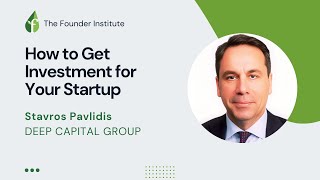
In this Founder Institute webinar, host Ryan Michaeletti interviews investor Stavros Pavlidis, Head of Direct & Strategic Investments at Deep Capital Group, a Greek single‑family office. The conversation covers the landscape of early‑stage capital – distinguishing angels, venture capital funds, and family offices – and explains why family offices provide "patient capital" and can stay invested for decades. Pavlidis outlines the key criteria he uses to evaluate pre‑seed and seed startups: a strong founding team, clear founder‑market fit, validated problem, early traction (paying customers), and realistic unit economics. He lists common red flags such as inability to articulate the problem, lack of validation, over‑staffed early teams (e.g., premature CFO/CTO/CMO), and excessive focus on features rather than outcomes. Valuation guidance is provided – typical pre‑seed deals involve selling ~15% for $200K, implying a $1‑$1.5 M post‑money valuation, with emphasis on the quality of shareholders over headline numbers. The panel also discusses practical fundraising tactics: building trust through concise, honest LinkedIn outreach, leveraging warm introductions, and treating investors as partners who can open doors. Sector‑specific advice is given for highly regulated markets like health‑tech, recommending direct engagement with industry experts to de‑risk the venture. Pavlidis stresses frugality in early spending, noting that a functional MVP can be built for $10K without a full‑time CTO, and that founders should prioritize cash runway of 9‑12 months. Team dynamics are highlighted as the top cause of failure – co‑founder alignment, clear expectations, and avoiding solo‑founder pitfalls. The session ends with a networking invitation and a forward‑looking statement about the community’s future.
Chapters
And for me, it's also a red flag when I see startups at pre-seed level having, like, say, already a CFO, a CMO, a CTO. That's, like, say, a red flag, right? People, like, say, are going for the title, they're not going, like, say, to do something. Typically, you can walk, like, say, quite, like, say, a long way without having, like, say, any internal CTO. And what's also very interesting now these days, I see more and more people that they can create an MVP for you, a properly working MVP for $10K, right? And I said, it's not about like, say, creating a fully fledged product. You create two features that are like perfectly working, and then like, say, they go and test with the customers. That's very important. For that, you don't need CTO, especially, I mean, the last years, it's like saying it's becoming a commodity, the tech stack.
Hello everyone, welcome. We're excited to have you today for an insightful session with our guest investor Stavros Pavlidis. My name is Ryan Michaeletti. I'm head of global operations for the Founder Institute. I'm also a venture capitalist at the Veteran Fund where we invest in top-performing US military veterans who are building deep tech and dual-use technologies. So for the webinar today, it's more than just a webinar. It's really a chance for you to learn and connect and take actionable steps towards building your startups. And so what we'll be discussing today are, you know, everything around key metrics and prerequisites for funding. How do you make yourself more attractive to investors and the best ways to source different funding resources such as angel investors, VCs, grants, loans, etc. And so no topic related to fundraising is off the table. If you have a question you'd like to ask, please put it in the chat. There's a Q&A button that you can use, and that will allow us to dive in and get to as many of your questions as possible. And the overview today is, you know, right now until about 11 AM Pacific in 52 minutes, we're just gonna do the introduction and then a discussion around fundraising and the Q&A part. After 11, there's open networking for you. So you'll go back to that room where you were just in, you'll be able to meet with other founders and people here who are in the audience. So let's go ahead and get started. It's my pleasure to introduce today's guest, Stavros Pavlidis. Head of direct and strategic investments at Deep Capital Group. Stavros, thank you for joining us today. We're going to bring you up on stage and then I'll let you do a quick introduction. Okay, yeah, go ahead.
Okay, great. First of all, as you probably understand, the name is Greek. Right. My background is computer science and financial derivatives. I'm 51 and I bought my first PC in 1983. So when the first personal computers came to the market, I started doing some programming and this, like I say, made me love technology very much, which, like I say, let me do things in the technology sector. Now to Deep Capital. Deep Capital is a Greek single family office. Our pedigree is technology, we come from technology. We own a percentage of a very large game tech company in sports betting, which is very interesting because it's one of the leading tech companies globally. It's called Kaizen Gaming. And the interesting part is they depend a lot on technologies like heavy technology, cybersecurity, KYC, geolocation, GenAI stuff for user engagement. A lot of DLT, fintech stuff. So all that helps us as a family office to evaluate startups at pre-seed, seed level, up to Series A on the technical side. And then, like, say, put some capital and, like, say, get people started. That's it. In related to, related to Founder Institute, I'm quite an early member of the Swiss chapter. So I joined the people that started the FI chapter in Switzerland 2019, slightly before COVID And I just love, like, see the space. I love, like, working with people. And for me, it's very rewarding. And I get more— I think you get more stuff back than I give to people. That's it. Thank you very much.
Let's start. Yes, thank you so much. I think, like, a good place to start is, um, you know, some founders here maybe have already raised capital. Others are just learning about the terms and maybe are in the very early stages of exploring launching a startup. Um, let's talk about the different types of investors, right? So there's angel investors, there's venture capitalists, and then in your case, there's a family office. Would you mind just going one layer deeper as to like what a family office is traditionally? Like, what types of deals would they invest in? And of course, there's many different family offices, but maybe a quick overview would be helpful for the audience.
Yes, that's a good question. Um, a single family office manages the wealth of a single family, of a person. Right. And the very interesting part is that compared, like say, to the typical VC, is that a single family office can be a strategic partner to a startup, which means a typical VC will invest in you and will try, like say, in 4, 5, 6, 7 years, like say, to get out of the position, to return capital to the LPs. And then launch the second or third 10B fund. A family office can stay in the, in your startups for 10, 15, 20 years, can help you strategically with resources. They can offer you capital again, again, until you reach like, say, further stages. They can take your pre-seed and lead you up to growth stage, even like, say, pre-IPO. So it's a different symbiosis between a startup founder and capital. Uh, this, like I would say, for me, I would call it patient capital because really what, like, say, distinguishes a family office typically from a venture capital fund is the patience and the strategic view.
Yeah, I think, I think that's really great. So just to, like, um, put a really fine point on that, so for people in the audience here, if you're talking to a VC, what they are is essentially a finance professional who has raised money from other investors, a lot of times family offices or, or high-net-worth individuals, and their job is to deploy that money into startup companies that will provide a really, really big return and give that money back to the investors in like a 10-year time horizon. Versus a family office, like, they might be looking at the investment from a strategic angle. Like, we're just talking about gaming. So if you have, you know, if you invested in a gaming startup that was like early stage and 12 years later they're a unicorn, you might not want to exit the position because you've got capital that's held in that company. That's one of many different resources and assets that you have. And so I think the patient capital piece is really interesting. On the other end of this spectrum, we also have angel investors, which are typically high net worth individuals. Check sizes could be anywhere from like $25K to, if you're a super angel, $500K. Stravos, do you have any insights as to like, the profile is actually very similar between an angel investor and a family office. The difference is like the scale and maybe the assets that they have and like the institutional— the institution behind them. Do you have any thoughts on like when does an angel investor turn into a family office? Like when that— like from like a net worth perspective?
Look, an angel investor can be like, say, your sister, can be a good friend who puts like, say, 10K, $10,000 into a safe with you and help you pretty much like, say, do your first MVP, test a bit the idea, like very, very early stage. It's like, say, at the ideation stage very often. So we're talking about tickets, as you said, between $10K, $25K, $50K, $100K, maybe the whole round, let's say $150K, $200K. Now, one of the family office, because let's say we're talking about wealth of $300 million, $500 million, $2 billion, $5 billion, $10 billion, they typically invest larger amounts. So you'll not find them easily as angels. But what you can find as angels is you can find, like, say, people that belong to the family, they have their private portfolio of angel investments, and at some point they go to the family office and get more capital to help these companies in the next rounds. But typically you will not find many family offices at an angel stage. This is not very common. Angels typically are private individuals.
Yeah, yeah, that makes sense. So let's go ahead and jump into some of these questions here. Um, you know, it looks like we've got a question which is like, what gets you personally excited to back a startup at the earliest stage before product market fit or before generating revenue?
Look, that's, that's one of the great questions, and is the reason that I'm like say working for FI. It's very rewarding to see people having dreams, not like say going for safety, and this is a fundamental cultural fit between the US and Europe, and I think the gap will close over the next years because of specific reasons, also because of Trump. That's my expectation. But it's like say when you help people that have an idea Pretty much narrow down the options, create priorities, understand how they define the problem, if they have a valid problem. Many people I say we meet, they don't have a valid problem. They have a wish to build something, right? So it's very different than when I feel a pain, I want to solve the pain, then I like building an app and I quit my job to build an app. So the goal is at the early stage, let's say, to help people move quickly to a sustainable setup so they can raise the first capital. And that's for me very exciting because when you read like the history of venture capital back in the '50s with Fairchild Corporation in the US and how, let's say, California became the cradle of venture capital, then you understand these people, let's say, that were very collaborative. It's very nice to be collaborative in a very difficult society these days. And all that creates a very nice ecosystem that pretty much creates also innovation. Innovation is the force behind most of the things we're doing. So this for me, let's say, the main reason.
Yeah, the only thing I'll add to that, Dave, is like every investor has a different thesis behind their investment and different things they care about. So for example, like I think here in the chat, there was something around, someone was talking about how They're developing like a platform that merges banking and gaming. Me as a defense tech and national security investor, I don't care at all about that, right? So like, but Stavros, who actually has like a lot of experience in gaming, probably is like, okay, that's really interesting because there's a lot of stuff going on in fintech and banking. And if you can combine that with gaming, maybe there's a really interesting opportunity. So the first thing I'd say is like, make sure you're targeting the right investors who are who care about what you're building and in that space, because they're going to be more excited for what you're doing versus just kind of targeting a random general angel. The other piece is at the earliest stages, the people that are going to back you are people that trust you and know you. And like, you know, you might not be able to list out like your, you know, in order to raise capital, you need to meet with at least 100 investors and you might not be able to list out 100 investors that you know right now. Maybe you could list out 2. But what you're going to be doing through your fundraising process is making sure you have a really good pitch. So assuming you have a really good pitch, a really good business opportunity, and you're an investible company, meeting with an investor, getting them excited about what you're doing, getting them to have this conviction in you to potentially invest, but also to potentially open up doors to then meet with other investors. And so you kind of do this meeting with someone to then open up the doors to then meet with more people until you get to that 100-person investor list. And that's essentially how that fundraising process will look like. And so it's really important, like the things that we look for, especially in the early stages, is very credible. What I would even define as elite founders, and I don't mean that from a pedigree necessarily, but it's just sort of like, Is this person the 1% of companies that we're going to invest in based upon their background, based upon the market opportunity? And so just having really great, being able to demonstrate that through your pitch and through the opportunity, how you describe it is really important. And you're going to start with the people that know you and trust you the most and then leverage up from there.
The reality is, if I can add something, is that you said something about angel investors. And because, like I said, pre-seed level, who is your angel investors extremely important. Because as you said, if these guys can open doors to you, the optionality in a good cap table with good angel investors, it can, like, say, be very decisive on how, like, say, you get your next funding round. That's extremely important. So, I mean, something like, say, that I see again and again, that if you start, like, say, with good people inside this, in your sector, what they provide to you in intangible resources, it's even more valuable than the capital itself sometimes.
Yeah, I think that's a really good point. And, you know, this kind of ties into James' question here, like, what's the best approach for pre-seed and pre-revenue companies? Seeking funding. I mean, there's so many different angles to talk about that, but let's just kind of start at the 100,000-foot level. Why are you raising capital? Well, we need to raise capital to pay people to sell the product or build the product or create some traction within the business. So really, if you look at what capital is, it's your ability to deploy labor. And that labor, depending on the quality of that labor, is going to do a really, really good job of delivering or it won't. And what I think founders sort of get, they fall into this trap of thinking that they actually need capital to get to the next stage. You don't actually need capital. What you need is willing people to help you get to a certain level of ideally $1 million in revenue or break even of some type so that you could then use that as your foundation. To then continue building. And so one of the best approaches when you're looking for, for funding, James, is think about it not in terms of raising capital. Think about it as how do you get the best labor behind you? So you could start off with like, who's a world-class advisor that, that believes in what we're doing, that you bring aboard? Then how do I leverage that advisor to bring on a co-founder or bring on someone else that believes in the mission, that can build the product or open up doors to like potentially sell the product. So I think really the most important thing is getting the right people on the bus. We call them at the Veteran Fund, we define them as values-aligned investors. How do we find the values-aligned investors that really, really get it and believe in what we're doing, who will then not only provide capital, but also open up doors and resources to Stavros's point. And so I would start with looking at your team and making sure that you have an exceptional team. And if you do, you should be able to make really good progress on your fundraise. But Stavros, what would— anything else you'd like to add to either the team piece or like the best approach for pre-seed companies seeking funding?
When you like say you raise this your first $150K, no one expects from you a product, not even one like say that is like say in beta test. What they see is like say if this person, they like what we call the founder market fit. So if you give me like, say, the impression you can solve the problem, if the problem is credible and big enough to justify me risking my money, which like, say, can get lost very quickly. And then it's also the people that are around you. So you don't buy anything else than just like, say, the team and the problem when you raise your first, like, say, pre-seed round. That's very important. So don't, like, say, get too anxious about not having a CTO, a CMO, a product working. No, people, like, say, will give you money just, like, say, based on a presentation. Simple as that.
There's another question from Roman here that's related, which are one, like, what are the key things investors want to see in startups to invest at the earliest stages in pre-seed and seed? And then what are the key red flags for investors? Maybe let's start with red flags and then like let's work backwards to what they want to see. What would you add as a red flag?
Yes, red flag, for example, let's say if it's not like saying in the proper order, just I mentioned a few points. For example, when I see someone who is like say starting, cannot explain the problem clearly within like say a very short like say period of time, like that understand the problem. Or people who they cannot like say show us they validated the problem, right? And validation means that you go out, you talk to people, you talk like say to your ideal customers and then say I'm understanding very well who I'm targeting at. For example, when Uber was defining the ideal customer, the they took a different approach than like, say, other applications before. So they tried to understand what are the pains they're solving. This is like, say, one of the key things. So when we try how do you validate, and people like say they said, for example, we asked like say two friends, or we didn't validate, that's like say a red flag. Or for example, when they cannot clearly define the problem, it's again a red flag. Or when they don't have a clear motivation, they don't feel the pain why they start this a new venture, these are red flags. I'm not worried. I mean, startups don't get shut down because of missing funding. They typically don't. They haven't found, like, say, a product-market fit. They haven't validated. This is, like I said, typical problems. Not a solid founder team. These are, like I said, the main problems that repeat again and again. So it's like a repeating pattern. Once you've seen, like, say, 100 pre-seed companies, Then, like, say, you can, within, like, say, 5-10 minutes, understand, like, say, if it's working or not. And this, like, say, how people will judge you. Do not spend, like, say, more than 5 or 10 minutes on your case.
Yeah, I, I think that that's a really good point. Um, other— I mean, there's, like, probably a whole list of red flags. Like, a big thing is, is, um, getting caught lying or, like, not knowing, like, a really important piece of information, like a major competitor in the space. So you essentially need to demonstrate mastery of your domain. And what that means is like, hey, like I'm the expert that is very uniquely qualified to bring the startup to market because of my background. And so, you know, going back to that founder product or founder market fit, that's exceptionally important. And so, you know, it's a fine line too when you're raising capital. Like everyone talks about like you wanna create FOMO with investors and, And while that's certainly true, you also want to make sure you're walking the line appropriately where you're not lying to them because lying is not only unethical, but it's also the number one way that you're going to get in trouble with investors. And so I would say that's a big piece. And then going to the opposite of this, which your question is, what are the key things that investors want to see in startups? One heuristic that we look at is increasing confidence in the founder over time. So you're never going to meet with an investor where they're just like, I love you, take my money, right? Unless you are really, really good and you're exceptionally qualified for the thing you're building and they're an expert and know you, it's very rare that they're just going to say that. So what actually ends up happening is you have this like 3 to 6 month long engagement with this person where it's like, hey, let's jump on a call. Here's my deck, here's the overview. Like, let's stay in touch. They'll say, put me on your update list. And, and so like, there's going to be this like kind of interaction over time. But if every time I talk to you, I get a little bit more confident in what you're doing, meaning like, and this is something that we go over in, in Funding Lab, which is a program that I think I see some alumni here on, on the call. All alumni can take Funding Lab. For free. Anyone who's not a Founder Institute alumni, you should go become one so that we can help you raise capital through FundieLab and the FI Venture Network. But going back to this kind of increasing confidence over time, if I meet with you and I say, okay, like, you know, Stavros seems like a good founder, I like him, but I'm not fully convinced yet on that market opportunity. Keep me posted, let me know how it goes. Then 2 weeks later, I get an email from Stavros and it's like, hey, we just closed this like really big customer. Oh, that's great news. Like, congratulations. Like, any news on the round? You know, and then like 2 weeks later, like, hey, good news, we got a lead investor. Now all of a sudden I'm seeing the trajectory, right? You're looking for that, that, that, that growth. And so if, if you can demonstrate that, that confidence over time, it does a really good job of getting the investors across the line. And then the opposite is true, which is like, maybe I meet someone like Roman here in the chat and I'm like, wow, Roman's really awesome. Like, he's like really good at pitching and like, this seems like a really cool opportunity. And then, you know, he checks in with me like 2 weeks later and like, you know, something happens that makes me think like, oh, like I'm starting to lose confidence in this founder now because like, So a co-founder quit, or like they lost a customer, or maybe their lead investor fell through. All of those things are now decreasing my confidence, and it's going to result in that like downward trend versus the upward trend. Stavros, what— is there anything you'd add to like key things investors want to see in early stages?
Look, what I see like seeing companies is, um, it's very simple. I see like, say, the team, the market opportunity, and the early signs of traction. Right? And then if, like, say, they can prove to me they have, like, say, 1, 2, 3 paying customers, that's very important, that they have, like, say, 2, 3 paying customers, even small ones. As you said, it's about, like, say, building this trust that you are about, like, say, to risk money with a founder or the other. So they're not, like, say, there's not a magic recipe. It's, like, say, a gut feeling you develop over time talking to startups. Or, for example, one thing is that's very interesting When you see someone's working on an idea for 6, 9 months and there's no progress, this is typically a red flag, right? Because good founders, people like, say, who have, like, say, the odds on their side, they create small steps. Sometimes you get a small step in a month, then a larger step in the second month, but you see progress happening there. You see how they work. They talk with numbers. They don't talk like about wishes. They are like, say, very focused. This is something like, say, that you can put, of course, on Excel and try, like, say, to create a scorecard, but you develop a gut feeling. But they're not many. It's a founding team, the quality, the market opportunity, the traction. If they can decide, like, say, and talk about unit economics, for example, on the business model, they can describe the product. Typically, a red flag is when people start talking about features, right? When they say, oh, my product has, like, say, 200 features. Not a good sign. What you say, create your first revenue stream with like say one client and then you can scale it. But just like say show traction in one pillar at least. Don't focus too much like say on the minor stuff.
Yeah, really, really good points. Um, uh, Asta Dolor, uh, is asking a couple questions here. I'll just, I'll just say it out loud. It basically comes down to like valuation, right? So an investor is essentially asking, you know, what, what is your valuation? Um, what's your opinions, Davros, when investors ask that from, from the founder perspective? Some, some people say, you know, don't answer that and like flip it to them and like, you know, ask the investor, well, you know, we're still discussing that internally, but what do you think our valuation should be? What, what have you seen as a best practice?
Yes, what I say, we tend to say is that valuation is what someone is willing to pay for acquiring a part of your company. As simple as that. I've heard like say stories of people selling my company's worth like say $100 million valuation and they couldn't justify that. So there was like say valuation that I was willing to pay was a million or two as an investor. And for me, very important is when you are like say pre-seed level that Assuming, let's say, the typical deal is you sell, let's say, 15% of your company for $200K, right? So valuation, let's say, $1 to $1.5 million. And these are, like I say, some base models because let's, like I say, don't, like I say, fool ourselves. You cannot, like I say, create anything at a specific level that, like I say, is based on numbers. There are no numbers. It's about assumptions. So for me, it's more, like I say, if I could get, like I say, Elon Musk as an example, for half a million valuation, I prefer that than getting, let's say, someone who is, let's say, not related to my staff for 3 million valuation. So you find a balance, but it's the quality of the shareholders that define the valuation. But of course, let's say, the market standard. So typically you'll hear 1, 1.5 million is, let's say, pre-seed level when good founders start raising money. This was my experience so far. And of course, what, like, say, you need to know is, like, say, if, like, say, you sell half your company at the half a million valuation, 1 million valuation, it's not a good sign because you start getting diluted very early. That's not a good sign, like, say, for future rounds.
Yeah, I agree. I mean, ultimately, it's like, what, what are people willing to pay? Some of you may have seen— I'm just going to share my screen really quickly. If you go to fi.co/benchmarks, these are the fundraising requirements and milestones that we've put together, like, based on fundraising rounds that we've seen. And so, you know, at the top part here, it kind of defines, well, what is pre-seed versus seed versus Series A in terms of like the traction growth rate? What's the revenue look like? Team size? What's the round size? Company valuation? And so, you know, here you can say like, okay, if you're pre-seed, you're probably somewhere between 1 to 8. And again, this is kind of skewed towards US. I've seen some pre-seeds higher than that, which is a little bit crazy, but it's it's usually like AI in Silicon Valley or with like, you know, a very experienced founder. But you could see like, you know, $1 to $8 million is like reasonable. And then the question then becomes, okay, well, what is the traction that justifies this valuation? You know, again, this is a big— $1 to $50,000 a month in revenue is a really big range. But it just gives you a sort of sliding scale for you to figure it out. And so what I would do if I were you is I would actually like, look, go to this page. I would look at this and then even like go down and look at the traction metrics. I think this is really important to see and understand. Sometimes founders think they can go and raise capital with just like an idea or maybe an MVP. And certainly there are times when you can do that, but for the vast majority, the 80% of the people who raise capital, you're gonna fall into like one of these categories, which is like, If you're building SaaS, you better have at least paid pilots, a full-time team, a product in the market before you go out and raise capital. And the reason for that is you're competing with every other founder who has this level of traction for that same dollar amount. And so, you know, Stavros, I don't know how many deals you look at, but like, you know, you're always as an investor, you're always like comparing one founder to another. 'cause you can only deploy so much capital in a certain amount of time. So maybe you're gonna do like 3 deals in 3 months. So you're gonna be like comparing like, you know, 20 or 30 or 100 different founders to find those 3. And so you wanna make sure, and so obviously like the more traction you have, the better. And if you're investing in like an idea stage, first-time founder versus, you know, a second-time founder who's got traction already, even if that valuation is a little bit higher, the risk profile is significantly lower. So you might, you might end up investing in that one, but go to fi.co/benchmarks and you can kind of get some, some real data to see. Okay. Tarek is asking, how much of a vision would you want to hear about in the stages of getting to know the founder? And then how do you measure the position of the founder regarding his vision? Do you have an opinion on that?
Look, of course, like say, vision is like say what one of the things you buy when you invest like say at pre-seed level. But I would like also to hear facts that like pretty much support this vision. So if people like say can make me understand like say the size of the problem and how this problem can be converted to paying customers, then I'm happy like say to hear about like say the vision. But typically in the Osso pattern, people who understand exactly, precisely the problem, they are very precise in describing the problem. So they don't talk a lot about vision. They talk about this is a big problem and they're like, say, passionate about solving the problem. When people don't have, like, say, a sense, a good sense for the problem and how to solve it, then they deviate to vision and then it becomes a bit fluffy. So for me, it's a I prefer data to just like say storytelling. Like when people like say, for example, agentic AI, right? The big stuff. I mean, I get like say tons of agentic AI proposals, but when you drill down and you talk, I talk to the founders and you see how people actually describe the problem. I mean, you very quickly disqualify many people for not like suitable to get funding.
Yeah, I agree with that. I mean, vision is important, right? Because it's sort of like, you know, that's what the big opportunity is, that's where you're going. But, you know, the question that becomes, well, then what's the plan to get there? And then like, can you prove to me that you're the operator who can execute that plan? And so like, I think it's good to say, hey, like we want to dominate this market by doing X, Y, and Z. But then you also have to like work backwards and know like how to get there and make sure that's a reasonable plan.
Steve Jobs said many times that an idea is an idea, execution is key, right? So I'm like on the side of execution. Execution means I understand what I'm executing, and to understand that I need data and facts. Simple as that.
Exactly. Um, all right, let's— so Nathan's asking a very specific question: what traits or metrics do you look for in a health tech company targeting a highly regulated market like Norway's? I have— I don't invest in health tech and I don't invest in Norway, so I don't have like really good feedback for you. I mean, we can talk about this in terms of like, you know, highly regulated industries.
Stavros, I don't know if you have any opinion on that, but we try to avoid— I mean, health tech can be anything. What's the definition of health tech? Health tech can be AI-supported ecosystem and marketplace between patients, insurers, and clinics, or can be like say something more complicated. Generally regulation is like say an issue, right, to scale your fund, so your fund, your startup. So I cannot tell you, I need like say to drill into details, but what I would do like say I would talk to people who are in the health tech sector close to what are you doing and then try to get a consensus, talk to 3, 4, 5 of them You can find the LinkedIn, you can search them. It's better, like, say, not to assume, but to ask people, like, say, what they are facing. So you don't need to guess, just go and ask people that are in this sector already.
Yeah, yeah, you definitely want to talk to specialists and experts in that area. Now, from a high level, like, from a risk mitigation perspective, I can kind of share some insights that might be helpful, which is, you know, imagine you've got like this dashboard and like you've got these different levers, and each lever is like a different amount of risk. So you have You have team risk, you've got market risk, you've got execution risk, and there's like probably like 6 or 7 of them. When you go into— so health tech is higher risk, um, especially if it's medical device health tech, because hardware is more expensive, so it's going to require more capital. That increases risk. The sales cycles are, are much longer, um, which also increases the risk. And then if you take a highly regulated market like Norway, which You know, it is probably more regulated than, than the US. That's more— that's increasing market risk. So now you've got all this increased risk on the company without even knowing what you're doing, just like in general, like the, the high-level concept. So the question that becomes, how can I justify investing in that company based on all that risk? Well, what are some things that you as a founder can do to de-risk it? Maybe you're the president of some hospital system that exited a company before and is just Oslo's number one expert on it. Okay. Team risk is actually very low, so that might compensate for the market risk that you're talking about. Or the more likely version, right? Because not everyone has that level of pedigree, is traction, right? Can you go in and show that hospitals are willing to use it or whoever your customer is? Is, are there other things that you can do to increase that traction? So it's like, yeah, it's highly regulated, but you have $1 million in revenue. And so therefore, like, you know, the, it's a sustainable investment. And then, you know, a factor of that is also like the valuation risk. If you were to come to me and say like, hey, I've got $1 million in revenue and, but we're in this highly regulated market. So as a result, we're going to raise at like a $4 million valuation versus a $20. That might be very appealing because I know in order to 10x that investment, you just need to sell the company for $40 million, which might be more obtainable than if you're raising it at $20, you'd have to sell it for $200 million for me to 10x my investment. And so there's all sorts of different factors, but always think about it in terms of the different buckets of risk. And then what can you do? What advantages do you have to reduce risk in those areas?
I put a website in the chat. This is a Swiss company that pretty much help people— sorry, excuse me— that help people scale the health tech companies, especially the ones that fail, that face highly regulated sectors. So you can go on the website and see how they do that. They are based in Zurich, and they describe the similar, like, say, thing that you asked before. How do I survive in highly regulated sectors in the health tech space? But it's, I mean, you add like, say, many layers of difficulty. Of course, that makes your case highly defensible. So yeah, there are pros and cons. But of course, let's say, if you understand what you're doing and you have, let's say, the good partners, you just, let's say, tilt the odds to your favor.
A question here from Dave. Is it common to give liquidity to seed investors to get profits first once the company is profitable?
That's not a good practice. What you can give to investors is you might give them what we call liquidity preference. But for example, if something like, say, goes like, say, south, then they get compensated first. But I mean, at the beginning, you want to reinvest all your capital into growing the company, right? If you want to get dividends, go and buy Exxon. So it's not something like, say, you are facing, like, say, up to a very late stage. So to me, it's not something like, say, you'll be facing, like, say, down the road. I haven't seen so far in my life that this was an issue.
Yeah, I mean, I think you're gonna start seeing, like, evolution in the VC and investing industry. But I will say this, like, you wanna make sure that your incentives are aligned with the investor's incentives. And generally, that's through your stock price and your valuation. Right. Um, I could see some angels maybe saying, hey, like, this is kind of risky for me, but if I get like profit sharing up to a certain amount, I'll write a check. You'll probably see it more at that level than like a VC firm doesn't want dividends. What they want is for you to exit for a billion dollars and then have like one single big payout that they send to their investors. So the, so the bottom line is like, if an investor proposed that, I would push back and just do it for equity or or through like a Safe Node evaluation because it's not a standard practice. Okay, um, let's see. When you review early-stage startups, what operational flaws or team issues often cause you to hesitate?
Okay, that's, that's a good question. I wouldn't call it like, say, flow. First of all, what I tend to ask is if, like, say, they, for example, if you ever see two co-founders, do they know each other, like, say, from the past? Have they worked together, or is, like, say, the first venture together? Because when, like, say, we're all, like, say, special characters somehow, so when you put, like, say, people in the first bench together, typically, once, like, say, a friend met Ray Dalio on an event, and he said typically in your first year you lose half of your friends and half your capital. And the reason is true because a lot of egos, people come like say in with their own expectations. So it's not so much the operation, it's more like say the team issues, like it's more about the personal thing that like say doesn't work out in the first months of an operation. And this is like say where you see like say people leaving a startup because they came in with different expectations. Some people come in, like, say, for the excitement. Some people come in, like, say, for a quick buck. Some people come for different reasons. This, like, say, what we often see, that team issues. Operationally, you don't have much, like, say, to do wrong at the beginning.
Yeah, I agree. I think the majority of the time it's going to be team issues. I think that's, like, the number one reason why startups fail is it's a team issue. And the reason why these team issues come up come down to the expectations that they have. Because like in the, in the early stage, it's like, okay, you and your buddy, you're on this mission and it's going to be really fun and awesome and you're going to make tons of money together and you both share this big vision. But so when you kind of are, you know, in that mode, your expectations of what compensation is, timeline of compensation, you know, roles and responsibilities might be totally different than your partners. But because you're feeling good and you're like on the same, you know, you feel like you're on the same page. You might not think to like discuss those kind of hard questions. So I think it's important for you to have that, that important talk with your, your team and co-founders upfront, which is like, hey guys, like this is going to be really hard. Like there might be times where we need to work nights, work weekends. Like, is your family going to support that? And then also like, even if we raise money, like we're still going to be making a small salary. right? Like most, a lot of founders, like, I think the reason why founders wanna raise capital so much is because they wanna start paying themselves and make money. But the reality is like, you don't really get a good salary till your Series A, which is like, if you're just starting off right now, you know, and you're, you're at the idea stage, your Series A could be 5 years from now. Imagine going 5 years with like no or minimal salary. Most people can't do it. And like that creates a lot of tension and conflict. And so, you know, in a perfect world, like you'll be able to raise capital or get to revenue, but like those are the conversations that need to be had within your team. And then also make sure you're bringing aboard the right people. Like, so if you and your co-founder have those conversations, you know exactly who's doing what, what the responsibilities are, what the compensation is. And then you're like, okay, now we need to go and hire a CTO. You want to have that conversation with them as well and make sure they're a culture fit too. 'Cause one bad hire can kill your company. And that also dovetails into Ophir's question here, which is, I'm a solo non-tech founder of a mobile app in the advanced ideation stage. You've got a spec, design, business plan, go-to-market plan, et cetera. Is it mandatory to find a tech CTO before funding? What are my chances going solo to fund and run a dev team? Stavros, why don't you start?
So this is actually the typical question, and for me it's also a red flag when I see startups at pre-seed level having, like, say, already a CFO, a CMO, a CTO. That's, like, say, red flag, right? People actually are going for the title, they're not going, like, say, to do something. Typically you can walk, like, say, quite, like, say, a long way without having, like, say, any internal CTO. And what's also very interesting now these days, I see more and more people that they can create an MVP for you, a properly working MVP for $10K, right? And I said, it's not about like say creating a fully fledged product. You create two features that are like perfectly working and then like say they go and test with the customers. That's very important. For that, you don't need CTO, especially in the last years. It's like, say, it's becoming a commodity, the tech stack. And then once, like, say, you see, like, say, you have traction revenues, then you can start deploying capital into more dedicated functions. At the beginning, I would be very frugal and very conservative with how I spend my money, and CTO is not on my priority list.
Yeah, here's some things I'll add to this. So first, like, it sounds like you've got, like, you know, your business plan, go-to-market. Okay, that's all great, right? You're not a technical founder, and it's not that you need like a CTO per se, but you need someone on your team that has significant equity to run the development of your company. You're a tech startup, like the value is your tech. And if you don't have someone that could build tech, you're not worth anything. And so like, you need to be very sure that you have someone that could manage that part of your business. And so whether they're a CTO or a VP of engineering, right, ideally this person is like heavily incentivized with the same thing you are and the same thing your investors are, which is equity in your company. And so if you can find some technical co-founder that can build the product for you for free or for equity, that's the ideal scenario, right? Like the classic, like, You know, it's like you need the hacker and the hustler and the whatever, right? Like, you know, so you do need someone on your team to manage that side of the house. And also, and here's the reason why, you know, let's say, you know, you successfully raise money and you just pay this development shop. And you know, what they quoted would be $100,000 has now turned into $200,000. And then you find out, oh, like, The customers actually don't like that feature. So now you need to go and spend another $100,000 to fix it. It's just you're burning money. Whereas instead of burning money, you could be having someone burn their time in exchange for equity. And as soon as you run out of money, the product development shop's gonna not work with you and not answer your calls. But your CTO who spent the last year building with you and they have equity in the company, will probably still work with you and build. And so there's a couple of things here, Ophir. Like one, there's a bunch of data out there that show that solo founders have a much, much higher failure rate than teams of 2 or 3. There's many reasons for that. I think the number one reason is it's a lot less fun and it's a lot harder. And so everything is just on your shoulder. I have some friends who are solo founders and my God, I mean, it's just like they have to take the weight of the world on their shoulders and there's no one to share it with. And so like, I would strongly encourage anyone here to not be a solo founder. Go out and find someone that shares your vision and your excitement and has complementary skill set that will help you build. It'll make the journey so much better and more rewarding as long as it's the right person.
Ryan, one thing I need to add. And because as you said, when you quit your job and pretty much the one of the functions of the FI, like say, program is to make people understand if they're suitable to become an entrepreneur or not. And not like say quit the life and take a huge financial risk just to find out 4 months later that it doesn't make any sense. And it's very important like say to calculate your financial runway. So to have, like, say, money for at least, like, say, 9-12 months, right? And your co-founder too, because if one of the two gets shaky because of financial concerns, then, like, say, this will actually absorb you too. That's very important because once, like, say, you are— you have a co-founder, it's a marriage, right? If one gets shaky, the whole thing becomes shaky.
Agreed. Um, all right, last few questions here because I know we gotta run in a few minutes. Um, Let's do the last question, which is like, what is the best way to reach out to and build trust with an investor? How often do you read or respond to emails or LinkedIn messages and requests?
Okay, I respond to all the messages as a matter of respect, right? This, like, say, unless someone is very intrusive or like say cannot like say offer me what's about, right? So people like, say, who pretty much, like, say, get into a, like, say, talk with you on LinkedIn without, like, say, pretty much being very precise why they are, like, say, get in touch with you. So I prefer people who say, look, I'm X, that I am raising funds for my startup, we like in this sector, are we relevant for you or not? And then you have a yes or no. The worst thing is a maybe. So I answer everything And what, let's say, honesty is very important. Like that you don't, let's say, really bullshit people. That's like, say, people like, say, are very experienced, they understand exactly what's going on. And like, see, come straight to the point, because if, like, say, people realize you're wasting the time, then they're gonna, like, say, move to the next one. To me, like, this is, like, say, the basic idea. We get a lot of traffic through LinkedIn. And I like LinkedIn because it's a very actionable tool, meanwhile.
Yeah, I agree with that. I think, you know, the only time— so the best case scenario, you'll get a warm introduction by someone, and there's like different levels of warm introduction. There's like, you know, hey, like if a founder that I invested in was like, hey, Ryan, you should really talk to this guy or gal, I would take that meeting without seeing a deck. Then, so that's like the best warm introduction. The worst warm introduction is probably like, you know, some con, some, someone I'm connected with on LinkedIn who I have no idea who they are, but somehow we're connected, does an intro to some founder. You know, that, that's still technically a warm introduction, which is better than just a cold outreach. Cause at least I can see like, you know, it catches my attention more. And so therefore I read it and I pay attention to it. With the amount of companies that people review and the amount of opportunity and emails and LinkedIn messages, like, I just, I can't even, I can't respond to everything. And so, so a lot of VCs will use the warm introduction as a filter, um, and, uh, as a way to, to just kind of, you know, like maintain their sanity in their workflows. Now There are times where, you know, the only time I've actually taken a meeting from a really cold outreach, which I think was like maybe on LinkedIn or something, was when the founder was very targeted to what we were doing. They're building in like the drone and autonomy space and they had really interesting traction and it was like a custom email to me. And I was like, wow, this person took the time to like write this custom email. It's super targeted. I don't know them. but look at their traction, they're crushing it. Like, I definitely want to talk to this founder. And so we ended up not investing in them, but like, I took the meeting and like made some introductions for them. And so like, that's the spectrum you want to consider, um, which is like, you know, I'm sure like our names are on some investor list that's been like sent around the web 300 times and like you'll get cold emails and things like that, you know, because of that it's happening more and more. And so therefore I'm even, I have even more of an allergic reaction to cold emails. Simply because there's just a higher volume of them. But everyone's different. So like the way you cut through that is with traction and being a really good founder or getting a warm introduction.
One thing you can add is that when, let's say, you talk to someone through a warm introduction, they're like— say, two things how you can approach the situation. One is if, like, say, I can get into it, like, say, a more in-depth discussion with this person but also like say what sort of second layer introductions I can get through this person. Because each person you talk to, they have like say another network behind them. So think like say in two dimensions, the person, I mean him or herself, and the network, because this gives you like say this, this scalability in your, in your, in your process.
Yep, sounds good. Well, that's all the time we have today for the AMA session, but we are going to do the networking part, which You know, in a moment when we end this broadcast, you'll be brought back into the other room where you have different tables. You can meet with the folks here. There's still a lot of really good questions in the chat, so I encourage everyone to join that and meet with fellow founders, especially if you're looking to build out your team. Um, Stavros, thank you so much for joining us. Any final thoughts or, you know, words of wisdom before we end the broadcast?
It's very interesting what are you doing. I mean, what we're doing, like, say, as a community And I'm looking forward to the future. I think we have a very exciting future despite all, let's say, the ups and downs. And I'm looking forward now, let's say, to networking session. Thank you guys. Thank you very much.
Yeah, thank you. Take care, everyone.










