Jason Calacanis: Founder Showcase Fireside Interview with Adeo Ressi, CEO of the Founder Institute
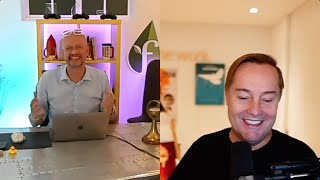
Jason Calacanis discusses what makes venture-scale companies with Founder Institute CEO Adeo Ressi. He breaks down his angel-investing process, explains why he looks for the rule-of-72 growth mindset, and gives concrete pitch advice: get to the product in 15 seconds, show don't tell, use one-point slides. He names Robinhood, Calm, and Superhuman as examples of companies that work, and predicts Silicon Valley's dominance will fade as remote fundraising becomes normal.
Chapters
All right, thank you so much, John, and welcome, Jason. Remember everyone, if you have questions, pop it in the chat. I have a big screen, I'll try and get them on stage for Jason or I to answer. Jason, interesting year it's been. Yeah, I mean, I know you're a little more optimistic than I am. We chat about this all the time.
And Dr. Doom, you're Dr. Doom. And I'm a Doctor Strange.
Yeah, I mean, it's all strange, right?
It's pretty strange. That seems strange.
It doesn't seem to have really taken a hit at all. It's been going great. Maybe you could talk what you're seeing in the market, what you're interested in, etc.
Sure. So thanks for having me. And, uh, I spoke at Adeo's first class ever for the Founder Institute. I feel very proud of that. And in fact, my third largest investment, uh, was because one night Adeo took me to Antonio's Nuthouse with his college roommate. I forgot the guy's name, but— and yeah, the guy who you— who was your roommate in college that you threw parties with. Anyway, a guy came up to me and pitched me a stock trading app at Antonio's Nuthouse that night, and I put in $50,000, and it's worth more than 8 figures. So, or it's, you know, 8 figures of return. So, Adeo, thank you for that. I give you, as a thank you, a virtual high five. Thank you. I appreciate giving me my 7th unicorn and my 3rd biggest win of my career. I will buy you a beer at Antonio's Nuthouse.
If it ever reopens.
If it ever reopens. But to your point about this year, obviously, you have to start with, my God, so much pain and suffering, millions of people dying globally. Unnecessary death going on, poor execution, and just incredible economic suffering for a group of people. And that requires us to just take a moment and reflect on just all these people with so much wisdom who were our essential elders who died 5, 10, 20 years too soon. I mean, and, you know, thankfully, you know, I haven't had to deal with that with anybody in my family, but my mom's best friend, who was in her 70s, Kathy Darrow, just a wonderful, beautiful woman who worked in hospitals her whole life as a nurse, you know, she died last month, and my mom was really broken up about it. And she died, you know, whatever, 6, 8 weeks before she probably would have been vaccinated. And so, and that leads us to the second half of this, which is, oh my God, look at science and what science can do, even in the face of politicized science, poor execution, totally incompetent, you know, governments from the local level all the way up to Trump's seat, you know, just incredibly horrible execution. And then science saves the day. This mRNA vaccine means we've been working on mRNA for two decades, from what I understand. I'm not a scientist. Um, and we had a vaccine almost instantly. And now new strains come out, the vaccine comes out. We did 1.8 million vaccines on Saturday. Uh, you and I have been doing the math on this. You've been pessimistic, I've been optimistic. And the truth is Not only were you wrong, Adeo, I was wrong. And I was wrong because I wasn't optimistic enough. They think with this Johnson Johnson coming out that we could hit 2.5 million vaccinated a day. And so we— you and I were debating when we were at 200,000 or 300,000 shots a day, like, oh my God, this is a disaster. And then we 6xed it. And now we're going to double it. And then that'll be a 12x. And all of a sudden, things seem really possible, which is a really important lesson for founders who are listening, which is when You have, uh, growth. There's a— there's something called the rule of 72. So somebody look up rule of 72, find an explanation of it, and— or a rule of 72 calculator, and put it in the chat since we're using chat here. There's a million rule of 72s, and I teach this to all my founders. Take your growth percentage. You're growing 5% a week. How many weeks does it take for you to double? Well, there's a very simple way. You just divide 5 into 70, which is 14 point something, 14.5-ish. So that means every 14 weeks you're going to double. Can you grow your startup of 100 customers, paying customers, by 5 this week? Sure you can. You just sign one customer a day. And compounding growth and that discipline is what makes huge companies, and it's what makes huge careers. People who get 5% better at something every month— say it's a podcast or running your organization, and Adele, you've been relentlessly innovating— people don't remember the 25 things you have done that didn't work. They remember the 4 that you've done that have worked, right? And the Founder Institute's become a phenomenon on a global basis. Now, what you're doing with venture funds, but you just got to get 5% better. You don't need to get 100% better. It's too hard. But 5% are compounding. And that's what I saw in the numbers. I think, hey, we're growing 4% to 8% a day. That means every 10 days, we're going to double the vaccines going out. And so I feel incredibly optimistic that— and Scott Gottlieb said this on CNBC on Monday— that In March, the end of March, 15th to 30th time period, certainly into April, he said, "You're going to be able to walk up and get a vaccine because we are now producing them faster." And all that time Trump spent, I don't mean to make this political, but it really goes to leadership. Trump was not focused on anything for the last 60, 70 days of his presidency, but trying to overturn this election and all this craziness that's going on, when he could have just focused on the goddamn deployment of those vaccines. And Biden got there and there was no plan. So they basically were starting from scratch, and he wouldn't do a transition with him. So they couldn't have even known that there was not anything. So really, you can't just have science. You need to have science plus execution. But at the end of the day, I'll take the science over the execution because you can add execution later. And now there's some businesses that are proven antifragile. And I think Disney is the canonical example, or Amazon. Amazon was doing fantastic. Then everybody gets locked up, and it's like, oh my God, what's going to happen now? It's like, they're going to do even better. Everything's going to sell out. And then you, and storefronts are, people are not gonna go to stores, so they do even better. You look at Disney, this is the best example. You know, they really, if you were to look at their business, they needed to take the medicine and decide, screw it, we're gonna go all in on Disney+. Everything is about Disney+. Forget about movies, forget about theme parks, forget about merchandise, forget about ESPN. Disney+, Disney+, Disney+, get the whole organization focused on this. But that was not what they were doing. Disney+ was like this little side project that they were like, yeah, let's put The Clone Wars up there and maybe we'll make this Mandalorian thing and see if it works. Now they're at 70 million members a day. And they said they— I think they launched 20 shows for this year, you know, Ahsoka, Book of Boba Fett, 20 different Marvel things. I mean, they're going to get to 500 million or a billion paid subscribers, I predict. And then they're going to put Disney Plus Plus, which will be you get 2 tickets to go to Disneyland a year that never expire. Or they put Disney Plus Plus Plus, you get, uh, all your merchandise in there. So you're the first person to get one of the 10,000 collectible Yoda dolls, right? And so, they haven't even begun to unravel what their Amazon Prime is, and really, Disney+ is Amazon Prime for Disney. And then Uber is the other canonical example, which they hit a record high today. I'm still a major shareholder. I was on CNBC talking about it. And I think I was like the third or fourth investor in Uber. It's an inside meme joke. What was really interesting about that is they kept telling them, "Get rid of the eats business. You're crazy. You're never going to beat Postmates and DoorDash." And then they bought Postmates, and then they're right behind DoorDash. And if they didn't have that eats business, they would have got crushed like Lyft did. And so if people go out to eat, which is what we used to do in the previous times, you would take an Uber because you don't want to get a DWI, uh, or DUI. Then everybody has to stay home. Okay, they deliver you food. So you stay home and watch a Disney movie. Great. You go to the theater and watch a Disney movie. Great. Disney wins either way. You stay home and watch a movie. Uber wins because you order Uber Eats, or DoorDash wins, and then you go out to a movie, Lyft or Uber take you there. So that's what I've been thinking about is what are these antifragile companies. If you don't know that book, it means companies that would do better in uncertain times. In other words, chaos would benefit them. Amazon, Disney, Uber, the chaos benefited them. And so it's not just that they do good in one way, they do good in times of uncertainty. And so, yeah, I mean, it's— and then obviously what's happening in the stock market, people staying home, not gambling, having more time on their hands, it's a forcing function. How many people do you know in your life, Adeo, who did not know how to order stuff online? Just that. Like, did your parents order food from Instacart or use Good Eggs or DoorDash or Uber Eats or whatever? Probably not. Do they have Amazon Prime? Maybe, maybe not. And then this happens and everybody downloads those apps. So that will stick with us, just like Disney+ will stick with us, et cetera. So it's a tale of two cities.
Turning back from the stock market and the pandemic to startups, the reality is startup investing investing hasn't slowed down at all. I, I, at least I haven't seen it. What, are you seeing the same thing?
For early-stage investing, uh, angel investors, when the stock markets crash, will feel poor, they'll feel conservative, and they'll make less bets. Well, the stock market's doing great, so when the stock market's doing great, they get loosey-goosey because they would look at, oh, I own Uber at, I don't know, I bought it at I bought it at a penny, but whatever. But, you know, somebody who bought it at $15 or $20 at the bottom and now it's $60, or Disney, the same thing, they're thinking to themselves, oh my God, I got all these gains. Well, screw it, I'm gonna, uh, I'm gonna take a couple flyers. You know, I made a million dollars buying on these stocks, great, I'll make 50 bets of $20K each and see what happens, or I'll make 5 $100K bets and try to put that money to work. It's like somebody wins a bunch of money in Vegas, they might hit some, you know, at a poker tournament The poker tournament people, uh, they always give them chips when they win so that there's a chance they'll put it on a roulette table or a craps table on the way out, because most people can't carry those chips to the cage and put them for cash. And so, you know, I think that's what happens. And so if you need to raise money, now is the easiest time in the world. If you can't raise money right now, it's because you, your business, your presentation of that business are not venture fundable. Let me say that again. If you can't raise money in this market Something is wrong— you, your presentation, your business, or the belief that this business can scale. And you need to meet with 150 or so investors. You need to email or get introduced to 150 investors in order to get, you know, let's say call it 25% hit rate on meetings. And then you probably get 10% of those then to do second meetings. So now you're down to 15 people or something. And that's really how a fundraising process works. I get asked about that a lot. And the Launch Accelerator, that's one of the things we specialize in, is companies with $5,000 to $50,000 a month in revenue and then helping them get their $2, $3 million round closed. And so you really need to run a process for raising money, and you need to understand how much work it is. And most people think they meet with 10 investors and, you know, all 10 say nice things to them, and they're like, oh, this is going to be easy. And it's like, if you— you have to get a second meeting with more partners than were in the first in order for it to mean anything. The first meeting It's nice, but it literally means nothing. So only judge yourself. That's what I tell founders. Only judge yourself on getting the second meeting.
Yeah. So it's a numbers game really. And a lot of people I see are stuck. Oh, can I convince them to come in the deal? I'm like, if they're not interested, just move to the next person.
Yep.
Maybe tell us like, how are you seeing this change in the virtual world? Because you're seeing virtual pitches.
What's your— we moved our entire accelerator, as I'm sure you did, to virtual. This means we're able to do maybe Um, we made the program from 12 weeks to 16 weeks, so, uh, and we were able to get 3 times as many investors to come each week. We used to introduce people to 250 investors. The last class we introduced to 1,000. So we were able to tell our, our, you know, our partner companies— and we only accept 7— you're going to meet 1,000 investors. If you can't raise a $500K to $3 million round after that, we really made a mistake accepting you, or you didn't do your part in following up with them and You know, it could be a little bit of both. I'm more risk-taking, our team's more risk-taking. But generally speaking, I haven't met with a founder in person since the first week in March, and here we are a month away. So I'm in 11 months and I've done more deals and put more money to work in the last year than I ever have in my career. In fact, this past year, the amount of money I put to work would equal the first 6 years of my investing career, and I've only been investing for 11 years. And then the number of people joining our syndicate, which is thesyndicate.com— we were the first syndicate on AngelList. We left to do thesyndicate.com. We're adding 100 angel investors, accredited investors, per week. We have maybe 7,000 people there now, and 3,000 have done a deal. So that is indicative, I think, Adeo, of people are online, people are seeing stock gains, they want to invest in the next group that could 10 years from now do stock gains. So it's a great time to be a founder, and people are now switching in the meetings. Today I'll just end on this: people are switching the meetings. It used to be get to know somebody and their personality, then do due diligence. The first meeting is like the diligence occurs on email and you kind of get to the product and the customers very quickly. And then after you do the deal, what I understand is some founders are doing walk and talks or whatever with people, and the socialization is either not included in the process or done afterwards.
Interesting. So, so maybe you could, since you've done a lot of investments, like what's something that someone does on video that you're like, that's great. What's something that someone does video pitching that you're Instant no.
Um, instant no for me in this year. Um, you know, if things don't— are not venture scale, it's very easy to say no. What's not venture scale? A movie, uh, you know, a restaurant. Those are obvious non-venture scale ones. And then there's another group that are hard to scale. And so hard to scale isn't necessarily a no, but it's in all likelihood a no. Tools fall into that. If you're building like a very niche tool that's part of a bigger product or something like that, it's probably not going to be enough. And, um, so it's probably going to be a no. And then direct-to-consumer products, you know, Kickstarter, Indiegogo, beverages, all this kind of stuff, very hard to make work. That being said, we've probably done 10 or 15 direct-to-consumer companies like Eight Sleep, um, etc. And we look for two things. One is how unique is the product, and two, how How amazing is the team at, um, how amazing is the team at, uh, doing online growth marketing? So if you have a really innovative product and you don't know how to do growth marketing, it's not going to work. If you have a generic product and you do exceptional growth marketing, it might. That's certainly a better combination than great product, no marketing would be generic product, incredible marketing. So Roman or, you know, those kind of brands. They are selling something generic, right? Like, in fact, it's literally generic drugs.
Literally.
It's literally generic drugs they sell. And, but they've done, they've made the process and the onboarding and the, and the growth techniques are just transcendent. Same thing with Dollar Shave Club. Would you really want to invest in Dollar Shave Club? I passed on it. That was a big mistake. I probably lost $10 million not doing that investment, you know? And so you look at something like Dollar Shave Club, that would have been better. That one had exceptional growth techniques. They knew virality. So, you know, and then hardware is super hard. We've made maybe 10 out of 250, 300 investments these days has been hardware, and they're generally hard. So we like Haas hardware as a service. So CafeX sells a coffee machine that sells the hardware and software, and then you— it goes in the real world. Density does people counting with a hardware-software solution. The hardware is bundled into the price of the software. So those can be nice, but, you know, we had a, we had a smoke detector 7 years ago, we invested in 6 years ago. We also had a, like, a drop cam kind of competitor, and none of that stuff worked because it was just a race to the bottom. I mean, there's a drop cam company that sells $40 or $50 drop cams. I forgot the name of it.
Well, the Chinese are copying all the good hardware.
Yeah, hardware is just a sick race to the bottom.
So we have so many questions, Jason. Let me turn to some from the audience here. I'm going to go with Susan's question. You know, what are some ways that if a founder, let's say, wants to pitch to you, they can practice and perfect their pitch beforehand?
So I teach people for a living how to pitch their companies. I will give you the entire secrets right now. Number one, never— somebody write these notes in the chat room, please. Number one, get to the product in 15 seconds. You don't need to play a movie clip, you don't need to set the table, you don't need to give us a history lesson, because most investors have heard a zillion product pitches. So number 1, you want to get to that product in 15 seconds. Everybody in the chat room must write each bullet point before I go on to the next. So get to the product. I want to see like, well, there's 584 people here, so I want to see 585 chats. I want to know you're paying attention.
Questions, come on.
Number 2, number 2, I want you to show, don't tell. In other words, don't tell us about your product, don't tell us about your business, don't tell us about your growth. Show us in one slide. One slide, one message. Don't tell us your margin, show us your margins in a chart. Don't tell us your customers, show us the logos on a page. People talk, they don't show. And then examples matter. So inevitably people are like, hey, meet Fred, and here's his wife Wilma, and here's Barney, you know, his friend, and then here's his son Bam Bam. It's like, don't use the Flintstone characters or me or Adeo as your customer in your deck. Use your goddamn customer. Now if the customer doesn't want to give you a video, a picture, take a stock photo, make a joke, and say Here it is. Uh, here's our customer Susan. She works at Acme Ventures. Um, I'm using a stock photo here. She didn't want us to use her real photo, but that is actually her real name. And if you want to talk to her, you can. And here's how she uses our product. And then don't break out of that. So number 1, get to the product in 15 seconds. Number 2, show, don't tell. Number 3, you're going to want to have great examples. Number 4, synchronicity. What's on the screen is what you're talking about. People go off on tangents. The screen says one thing, they're talking about the next. Synchronicity, keep it together. And then there are some other smaller things I like, which are one slide, one point. Sometimes people will try to make 5 points on a slide and then you can't figure out what they're talking about because you're reading the slide, there's too much information on it. So those generally are the things that people get wrong, and if you just fix those things, it's gonna be great. And then when you answer questions, listen to the person's question and answer their question and only their question in as short a period of time as possible. So Adeo, ask me a question.
Well, I have a question on screen. Well, let's ask this one. What would be a great question for a founder to ask you?
What value do you provide to startups? Tell me a story.
What value do you provide to startups?
I am relentlessly positive and available and loyal to the founders. So I go to war with them. I want to make sure that they win. So that loyalty and that candidness and responsiveness, hopefully I'm known for. If Robinhood had a problem the last 2 weeks, you saw me on TV defending them when it was very difficult to do. When Uber had problems, you saw me out there defending them and saying, hey, listen, we're going to solve these problems. The company's going to get there. And I specifically, I don't do that without the permission of the companies. I always tell them like, hey, listen, I do CNBC every week. I have my podcast, I got my Twitter. Do you want me to talk about this? I'm willing to go out there and do it. Sometimes they say no, that's a legal issue, leave it alone. Sometimes they say yes, please go out and talk. I need cover. And you know, that's, that's who I am.
So, okay, uh, any other things on the pitching? Because we got some other great questions.
Give me every question now.
Okay, so Tony's asking, uh, with that $50K story you opened with where you decided to invest in Robinhood, what were the 3 things that stood out to you immediately?
Well, they were very smart. Um, uh, Baju and Vlad are just super smart cats. 2, they had an idea to go after a market that was I guess most people would say blue ocean. Millennials trading stocks didn't exist. Millennials were on their parents' Netflix account, living in their basement, taking Ubers and Lyfts, not buying cars. They were commitment-phobic. So to get a group of people who are financially illiterate, young people— I'm not saying that's millennials, we were all financially illiterate as Gen Xers as well— but young people tend to be financially illiterate. They also tend to not save for the future. Um, so to actually get them, if you do get them, it's a huge prize. And here we are I think they have 20 million members, they said, or something crazy, 18 million. They really succeeded in doing that. And the second thing is they had a very innovative idea of a business model, selling the data, the paper trade data, then having a premium version so that they could let people trade for free. And so it's a little bit of a controversial thing, but people really want to trade for free. They want to have that experience. It takes all the friction out, just like Ubers and Lyfts, your credit card's in there, or Amazon has your one-click with credit cards. Taking that out, Those things were derided at first. Oh my God, what if you make a mistake? Or I want to put my credit card in every time. And then people like, fuck it, just whatever credit card I put in last time, charge me that so I can keep moving on with my life. So those are the things I saw in them. And, you know, it doesn't have to be perfect, but I like people who are swinging for the fences and doing something ambitious. Okay.
Multiple people were asking, what are some other examples of antifragile businesses that you're interested in right now?
I think consumer subscriptions we've had great success in, and I think is, you know, still very early days. I think every single vertical that a consumer could be passionate about will have its own app that will cost $100 a year. We were the first investors in Calm. That's our second-largest position. We bought 6% of the company or so when it was a $5 million company, so it's a 9-figure position for us as a firm. And we invested when they had $10,000 in revenue, and it really seems stupid that consumers would pay for meditation. Everybody's like, you're an idiot, you can get meditation stuff for free on iTunes, there's a free podcast, there's free YouTube videos, there's a free UCLA Mindfulness Center gives away all the stuff, and it's the top mindfulness people in the world. Why would anybody ever pay for this? And it's just a beautiful package, and they make great content, they innovate. Why does anybody pay for anything? It's good. Then we did Steezy for dance, FitBot for CrossFit, Brilliant.org for math and science and education, ToneBase for classical music. We did Musician for more like casual musicians, and we keep pulling that string and finding great companies in consumer subscriptions. That means instead of doing a free product that's ad-based, you challenge the customer to pay you, call it $10 a month or more.
Wow. Any others? And then I got lots of questions in categories or companies.
Well, any other—
well, types of companies that are—
I mean, everybody's obsessed with SaaS for good reason because, you know, businesses have money, uh, and they want to be more efficient and people are working from home. So I mean, arguably remote work stuff is doing well, but I would stay very focused on products that are so good that people will pay for them and that people will not unsubscribe from them and that they automatically subscribe for them. So we were the first investors in a company called Superhuman. Um, we put $500K in it the first round, and I was the one of the first investors in Raul's first company, which was, um, Reportive, which was sold to LinkedIn. And so, you know, he decided to make a, an email client that cost a dollar a day. Now, that seems ridiculous. Why would your cousin or uncle or brother or mom or sister pay $365 a year for something they get for free from Gmail or Hotmail or whatever, Outlook? They wouldn't. But if you're in your email box for 2 or 3 hours a day like me in a day, if somebody makes you something more elegant and beautiful, that's a small price to pay. We pay $10 a day. We pay $3,000. I mean, I literally would pay $10 a day if somebody could manage my inbox better, right? There's no amount of money I wouldn't pay to tackle that.
So this is a good question from Ben. With accelerators going remote like yourself, what does that mean for Silicon Valley and New York City as being hubs where you find these great unicorns? So it's over?
Well, I mean, I think what's over is the dominance. So the, the, the you have to be here was ending already. And so statement.
Is this the first time you've ever said that? I can't— I agree.
I think it's over. The dominance is over because once people realize that they can raise the money when they're not here, um, people have already realized they could come here, raise the money, and move back. When Dale and I were in the industry, you know, 20 years ago, if you got a term sheet, it said you had to be within 50 miles of the VC. Some VCs would say 25 miles. They wanted you in the peninsula as opposed to the city, where they certainly didn't want you in the East Bay or Oakland. They don't want to go over bridges. So you have to be within 25 miles of Sand Hill Road. So you can go as high as like Burlingame or San Mateo, but don't go any higher and don't go any lower than, uh, Sunnyvale. Um, and then it's changed to like, if you really want to, maybe we'll invest in LA, maybe New York. Then it became, you know what, this place is filled up, do not move here, it's too competitive. You will not be able to get a developer to quit Facebook where they're making $200K. Stay in Toronto, stay in Vancouver, stay in Miami. Come here 4 times a year or whatever. And now it's kind of young people don't want to come here anymore. And San Francisco is so dystopian as a city, it's not a great destination. It's too expensive, it's too dangerous, um, and people would rather be in Miami, New York, LA, Austin, Salt Lake, whatever. So, and then now investors are realizing, well, if I can invest over Zoom, do I need to be here? And so when Keith Rabois is like, well, I'm out, or Peter Thiel's, you know, a couple years ago left for LA and he's spending time Miami, all of these investors are leaving. So you're gonna see a group of super routers leave. Luke Nossett and, and who was the other guy, Joe Lonsdale, both went to Austin. So you start to see those super nodes. Those are people who have just super, super amazing groups, you know. That's— that gets crazy and it changes everything. So I think it's all changed.
So a lot of people are asking, okay, what about international startups? Are you funding them and how do they get investment from top angels and seed investors?
Okay, so you got to talk about languages. In, in the— if you have an English-speaking language and product and company, you qualify to get the top American investors. So if you're in Australia, Ireland, the UK, Canada, anywhere where the prominent language is English, The product is built in English, that's fine. You cannot expect if you're building in Japanese or Chinese or, you know, pick a language that you're going to land American investors because they in all likelihood don't speak your language and they can't use the product, so it just becomes too hard. Does that make sense, Adeo?
Yeah, so if the investor understands, but have you done deals outside the—
We have 6 or 7 companies in Australia we've invested in. And Canada. As long as they create a Delaware corporation, then it's fine for us. So Australian companies typically make a Delaware corporation if they want to go down this route using like Atlas or something. Yeah, they can use any of those products to do it. It's really easy. It's a little more complicated, but the benefit you get in taking money from American investors greatly outweighs whatever mechanical legal difficulties there are in, you know, setting up a Delaware C-Corp. So You have to be willing to set up the Delaware C-Corp. We have invested in Europe. It's a little bit of a pain in the ass, so we really don't do it unless they're a Delaware C-Corp because it creates downstream problems for us. We're reliant on downstream investors. Um, and, uh, yeah.
Okay, so, um, I will do a few more and then we want to get to the companies here. Neeraj is asking, and I know you have a lot of thoughts on this about sort of revenue targets that you like to see before making an angel investment, or what founders might look for in revenue targets?
Um, we're very clear about our Goldilocks zone for our accelerator, which is the Launch Accelerator. Um, what we're looking for is companies that have a handful of customers and a couple thousand dollars a month in revenue for 3 to 6 months. In other words, you've gotten from— you've gotten penny You've moved from making $0 to a penny. If you just crossed that Rubicon and you've got some customers paying, there's somebody we can talk to. We started, we called it the Launch Incubator, and we were probably 5 out of 7 companies were finishing their products. And what we found was we would introduce them to investors and the investors say, oh wow, it's really great. That's got great potential. When you launch and you have some data, check back with me. And I was like, you know what? I need to move downstream just a little bit. So in our world, we consider all of our free products how we engage with pre-launch companies. This Week in Startups, my books, Foundry University, all that stuff is free. And it's for people who haven't gotten their products to market. After you, you can use sweat equity, friends and family, or small seed rounds to get to our accelerator. The accelerator is designed to double or triple your revenue and to get you, help you introduce you to 1,000 investors and act as an accelerant. That's why it's called an accelerator. And then we have the syndicate, which has gotten bizarrely large today. I haven't given you an update on it, but the last two deals we did were $3.2 million and $2 million. Syndicate, and then $500K from our fund. So we're doing like, you know, $2.5 to $4 million deals now because we have 7,000 members, 3,000 of which have done a deal. The average check size is $7,000, and you can have up to 250 investors. So you start doing that math, you know, hitting $1.5 or $2.5 million is completely possible now. Even we did one with $3.2 where we had a minimum of, I think, $5K or $10K for that deal. Usually our deals are $2K.
Minimum to get that big. Let's hit a few more questions and then because we want to wrap in a moment. A couple of people are asking, what's a downstream investor?
Okay. So downstream just means the people who come after me. Okay.
Now, what, like, let's use this as a closing question and ramble as long as you feel. What advice, and this came from Nick, do you have for young or aspiring entrepreneurs?
So your number one skill as an entrepreneur is your ability to learn new skills. And, you know, you look at somebody like Adeo, he was a technologist, marketer, advertising, hiring, company formation, raising capital. He basically— and you don't need to be 100% or be the best at that. You just need to be, call it 50, 60, 70% of the knowledge. So really, my friend Tim Ferriss has gotten incredible at when there's a new thing he wants to learn, he can be 50, 60% as good as a good player, right? Not, not Michael Jordan, but, you know, literally Tim and I were on vacation and we— he had never played basketball, and I was— I said, hey, come shoot hoops with me. He's like, I've never done it. I was like, I'll show you how. And I watched Tim Ferriss try to do a layup, and it literally looked like somebody took a dolphin out of the ocean and like shot it and then let it try to dunk the ball, you know? It's just like the most least graceful thing you've ever seen. And then to Tim's credit, his unique gift was he watched me do a bunch of layups and turn moves and my little Hakeem shake, my dream shake, and my Patrick Ewing flick, you know. And I, you know, I'm starting to show him some magic from Brooklyn, from the schoolyard, and he picked up on it real quick. Um, and so that's you as an entrepreneur. You don't know how to do hiring? Fuck you, learn. You don't know how to do design or make a logo? Fuck you, learn. You don't know how to raise money? You don't know how to do HR? You don't know how to do this, that, and the other thing? Fuck you, go learn how to do it. If you don't, if you're not prepared to buck up and to watch some YouTube videos or buy some books and read some shit over the weekend and work 12, 18 hours a day getting skilled, well, fuck you. You're not— you don't deserve to be here. Go do something else with your life. This shit is hard. Anybody who told you it's easy is full of shit and they're not telling you the truth. It's a zero fucking sum game. If you get the money then the other person doesn't get the money. There's a limited number of investors, a limited amount of capital. There's unlimited capital— there is unlimited capital theoretically that could be printed and whatever, but there's only so many meetings VCs can take. They can only deploy so much money. They can only keep so many founders, uh, keep relationships up with so many founders. So therefore, there is a gating factor. They're going to place bets. If they place a bet on you, they cannot place a bet on somebody else. There's 608 people here. 60 of you will get funded and 540 will not. And you need to be one of those 10. How do you become one of those 10? Be fucking impressive. Learn skills, you know, be great at something. Make your design 10% better every month. Make your sales process 5% better every month. Just get relentlessly better at everything. And if you are not innovating and getting relentlessly better and you're making excuses and crying in your coffee, well, fuck you. Don't don't do it, you know, like it's too hard. It's reasonable to not do it.
Well, let me, let me, let me just one thing.
Yeah, you're pissing me off again, Adeo. You're pissing me off. You're telling me shit. I mean, I gotta tell you the truth, Adeo. You gotta work harder.
So, so let me—
I always tell you, Adeo, work harder.
A lot of founders get like pigeonholed in the one thing they like to do or the one thing they're good at, and then they ignore HR. They ignore— how do you, how do you break out of that? How do you— what's your—
it's very simple. You know, businesses really at the end of the day are about an incredible product or service that delights customers. Anything you're doing outside of that, you know, you have to wonder how important is that at the end of the day to your growth rate. VCs and seed investors are looking at your performance more and more these days. It's less about the promise, it's more about the performance. There's more people than ever who want to start companies. There's more more companies that get to MVP stage or some basic stage. So you need to switch your thinking and say, I have to perform and my performance is how I will be judged. And if you're not growing, it means your product sucks or you're not listening to customers or both. So anything that is not product, customer, product, customer is not super important except for team, because the team has to talk to the customers, the team has to make the product. So unless you happen to be a savant who makes the product and talks to customers, which there are people who do that— Travis was one of them, he was designing the product and, you know, he was talking to customers and he was driving Ubers, you know, for fun on the weekends and, you know, out in the, you know, the burbs just to understand how it worked and, uh, or how it was working. Team builds product or service, delights customers Give a thumbs up to your team, build out your team, give them better compensation, give them more purpose, get them to do a better product that then delights customers, listen to the customer more, study the customer data. It's a flywheel, right? And, you know, speaking at conferences and starting a club on Clubhouse, and, you know, people distract themselves with every bullshit they can think of, um, and none of it matters, right? So growth matters, of course, the growth techniques, but you have to have a great team. That makes a great product, that listens to customers. Really, that's the core.
Ian's calling you the Rambo of investment.
I have no idea what that means, but it's a great tagline though.
So everyone, we're going to be judging your performance in a minute because we have a bunch of founders coming on stage right now to pitch. Jason, like usual, that was amazing.
Thank you so much for having me, brother. Good luck.
Thank you, guys.










