Latin America’s Top Startups Pitch to Investors: LATAM Founder Showcase
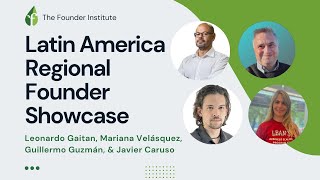
The video records a Founder Institute Latin America regional showcase held on March 10, 2025, where three alumni startups—Brandu (a B2B merchandising marketplace), Autoparty (a SaaS platform for auto‑parts sellers), and Lyconic (an ethanol‑powered generator with IoT) —presented their businesses to a mixed audience of investors and mentors. The session opens with introductions by local leader Guillermo Guzmán and angel investor/entrepreneur Javier Caruso, who set the tone by emphasizing regional market pain points. Each founder delivers a concise pitch covering market opportunity, problem statement, solution, business model, traction, team, and fundraising needs. After each pitch, investors ask detailed questions about competitive landscape, go‑to‑market strategy, product scope (new vs. used parts, subscription terms), scalability (hardware manufacturing, AI/ML vs. AI agents), pricing, incorporation jurisdiction, and capital allocation. The investors repeatedly stress the need to contextualize Latin‑American “mess” for non‑regional investors, to clarify competitive advantages, and to illustrate concrete IoT benefits. The event concludes with a brief wrap‑up and a call to action to visit the Founder Institute platform.
Chapters
as I really feel it, you know. So I know the problem because I know where I live and the issues that they have here. But from your presentation, I think that if you go to other investors, maybe from the US, maybe they are not going to feel the same thing as I feel. So I think that when you mention the problem, I will do a double click there and try to explain that it's a mess, right? So explain a little bit more the mess that they have, because as I mentioned, I understand it because I live in Latin America. But maybe an investor from the US is not seeing the things as I see it. So that is my recommendation.
Hello everyone, uh, this is the Latin American Regional Founder Showcase, and today, Monday, March 10th, we are having 3 wonderful founders, alumni from the Founder Institute, which is a global network of startup incubators, accelerators, and investors on a mission to activate and empower communities of entrepreneurs worldwide. I am Guillermo Guzmán, top local leader for the Founder Institute Colombia chapter that includes also other satellite countries in the region, in Latin America. And well, I've been a mentor, and local leader for a few years, basically after the pandemic. And I'm very glad to introduce today our mentors and investors, as well as our three founders that are going to be pitching their startups for our audience all over the world. So it's a pleasure to hand this over to Javier Caruso. Javier, welcome, and please, a little introduction from yourself.
Thank you very much. It's a pleasure for me to be here. So hello everyone there that is listening. I'm Javier Caruso. I'm from Argentina. I am also an entrepreneur, so I have my own startup that I created like 6 years ago, and you know, it's very rewarding to see a lot of people in the region that they are advocating to Founder Institute and they are launching their, their own company. So that is great. And I'm also an angel investor. I have been investing in, in the Latin America region, I think for the past 2 years, investing in different companies from different industries. And for me, what drives me to, um, to invest in companies is like I have a ton of ideas, and sometimes you do not have the time to achieve those ideas. So what's better to help people that they have the same ideas as you, and you just empower them with a little bit of money but also with the mentorship? So I always, when I invest, I always try to have like monthly or bimonthly meetings with the founders in order to know them a little bit better and try to guide them. And, you know, just listen for their needs. So it's really good, and I hope that, you know, everything that we hear here will be great. So looking forward to it.
Okay, well, thank you, Javier. Well, it's a very exciting time these days. A lot of, let's say, turmoil all over the world, political changes, political conflicts, but those, let's say, problems are, they become opportunities for founders to add value, to create value, to communicate it, and to deliver to our community all over the world. So today we also have the presence of some investors. We have We have our investors and I will ask them, please, to introduce themselves. So I hand it over to our first investor. I can see if they are around. Javier, can you see our investors in the room?
No, not here. Let me check.
Okay, Arturo, can you please introduce yourself? Arturo just joined us, so will you please introduce yourself to the audience?
Sorry, I think I know he didn't show him.
Okay, okay, I'm sorry, I'm sorry. Yeah, well, so basically, uh, what we can do is, uh, go straight to the pitches, uh, from our founders. Uh, today we have 3 wonderful startups: Brandu, Autoparty, Autoparty, and we have Liconic, Liconic from Brazil. So if we are all set, we can get started with the first pitch for today, which is Brandu from Mariana Velásquez. Let's listen to her pitch.
Hi, I'm Mariana. I'm the CEO and founder at Brandu.com, a one-stop shop B2B for merchandising products in Latin America. And this is a market opportunity of about $85 billion, which is a blue ocean opportunity because there isn't any competitor that has more than 1% of market share in Latin America. And what's the problem? Buying merchandising products is a really inefficient process in this part of the world because there isn't suppliers that implement technology in the process. So for companies to buy a hoodie like these or bottles, caps, t-shirts, or other supplies, they need to go to different suppliers, ask for a quote, and then wait days or even weeks to receive, um, the quotes. That's why Brandu simplifies the merchandising buying experience in a one-stop shop and in minutes. So now clients can quote, design, buy, see stock availability, quote their products with, with their logo on it in minutes so they can make a purchase decision. And our business model is that we integrate different suppliers through APIs and templates, we organize all the data so the client can have everything in one place and in an easy way to find things and buy from only one supplier in a one-stop shop. In terms of competition, we have similar companies as Brandu in the US that are billion-dollar companies as Halo, Swag.com, 4imprint, Custom that are large companies and that have similar solutions as Brandu, but in Latin America, we are in a blue ocean where we have a huge opportunity with our scalable model through our technology. Last year, we invoiced $644K US in sales, And this year we project to sell $1.3 million. We are suppliers of large brands such as Netflix, SAP, Holcim, Edgewell, among others, SET, other large brands. And we have really good metrics. We have a lifetime value CAC ratio of 7.8 times. And also in October last 4 months ago, we launched our e-commerce for SMEs, and we've been investing small amounts of money, only $500 US in ads, and we already closed more than $30K US in sales within 4 months of launching. So we have a really great trend team with a proven track record and vision to succeed. We have Marco Quintero as our CTO that has more than 12 years of experience being project manager and software engineer and CTO at different companies, as well as my experience as an entrepreneur that has led a lot of projects and companies and raised capital. As well as we've been selected for Stanford for a scholarship to help us grow our business, as well as having great advisors with excellent experience in the startup ecosystem. We are launching our seed round to grow our business. We will focus specifically on growth. And we have really good metrics in terms of being capital efficient. We already had profitable months, so the capital will be only invested on growth and technology to improve our user experience. Thank you very much.
Thank you, Mariana. Very impressive, and congratulations. I see that you were Startup of the Year for, um, in 2023 for, uh, Founder X. And, uh, that's, that's great, that's wonderful. So this is now our section for Q&A, uh, for those investors, um, willing to ask some questions to Mariana. Well, if I may, my first question I mean, I'm not an independent of investors, but my question is, where is Brandu Incorporated, Mariana? And then I'll hand it over to Javier. Mariana, where is Brandu Incorporated?
Sure. Can you see me? I don't know why I see it's black.
Well, we see just a picture of yours.
I don't know why.
But I can listen to you. We can— ah, now we can see.
Yeah, sorry. Um, thank you, Guille. Um, well, Brando is incorporated in the US as the holding company, and in Colombia and Mexico operating with actual clients in both countries.
Wonderful, wonderful, great. Uh, well, I'll hand it over to Javier and our investors. Javier, questions from viewers.
Uh, yeah, I don't know if I'm the only investor or if there is anyone else, so sorry if I give you, you know, my personal opinion. I will— it would be great to have more people here joining. But first of all, Mariana, awesome presentation, I love it. I think that I was thinking what to ask and then I saw the answer there, so that is is, you know, a really good sign because you know what we want to hear, right? And probably there are a few details that they are not there, but that's good because that will make me to ask you later for some more details. So first of all, congratulations, and I think the idea is super great. Uh, yeah, I love it. So a few questions from my side. No, please. Uh, will be, um, Regarding competitors, I do not know exactly competitors in Latin America. You mentioned that this is like a blue ocean, but then I start thinking like, I do not know these competitors in the US, but do you think that is probable or possible for them to join over the next years? And thinking about also related to the same question, companies like, for example, MercadoLibre, Right, so they are not a direct competitor because they are not doing, but you can find people there that will do what your company is not doing exactly because they do not have API integration, but you can find things there. So what's your opinion about those competitors?
Yes, I think that's, um, why we are building a competitive advantage in Latin America. So we are becoming very important for our suppliers as we are pioneers on, on this market as a global supplier that attends SMEs and large companies. And so we're building this, uh, like, en, enter barrier for, um, like, other competitors from the US. I also see they're focused on that market that is still a blue ocean for them too, because in the US there isn't any competitor that has more than 5% of market share. That's why there is also a big opportunity to, to grow the industry. Um, in terms of, uh, local suppliers, they here in Mexico, Colombia, Latin America, and they are very like traditional suppliers that are used to have recurring clients that are used to buy in the traditional way. That's why with Brandu we become this solution that it's innovative, it's, it really, really, um, it's giving them a, a good solution. We are having, um, meetings with large clients and showing them what they can do with Brandu, and they're absolutely in love with the product and, and the solution. So we're becoming more important also for our clients, and we're building these strong relationships because we're solving them. Not only the fact that they now can quote in 1 minute what they had to quote in 3 days, weeks, um, but also with— they are seeing us as a, as a, um, partner because we can also develop technology for them and for their marketing campaigns. So we are doing that, for example, for Netflix, uh, we are storaging their products Managing all their logistics and creating e-commerce for them so they can manage their marketing campaigns with us. So that builds a very strong relationship, and then that is very hard to, to, um, uh, like, to break that relationship with other competitors. That's what we're focusing on, is like to become very important for our clients and our suppliers and build this competitive advantage that will be hard for other competitors to come and, and, um, like damage a little bit that, that relationship. And sorry, but I forgot the other question.
No, I was asking about Mercado Libre. If you see Mercado Libre as a competitor, I know that they do not do exactly the same, right? But you can find people doing this, you know. If I want to buy hats, I can just go— at least here in Argentina, I can go to Mercado Libre and I will see some options. So do you see Mercado Libre as a competitor? I know that what you're doing, you are doing a lot more, right? But do you think that it can eat part of your market?
Um, I think a lot of companies use Mercado Libre to find products. But, but they, they have to do the other part. Like, they can find products, but then they have to find, uh, suppliers to brand the products, right? Um, and the other thing is that they have to buy from different suppliers for each purchase. What we do is that we simplify that. And imagine you're like a, a large company. You are Netflix, you are, uh, this, uh, large companies that For them, buying from suppliers, it's, it's also a sophisticated process because you need to, um, have a, a supplier that it's legally, um, created on your, on your platform, that it's approved. You can't pay it like in credit card, like you, you have your payment, um, like methods So it's very hard for a large company to buy from MercadoLibre. Actually, some clients ask me to buy certain products for them because I'm their authorized supplier. And so this can work for small companies that have to be more creative in terms of what to buy, but then Brando becomes a better solution because they find everything, they can see stock availability, they can buy immediately, they can design online. And they can have their products within 3 days because we, we have express deliveries. So we become this solution that has everything in one place, and I'm buying from a trusted supplier that is brand new. And so I, I really don't see like a, a big competitor in the merchandising industry with something as MercadoLibre.
Cool. Exactly.
Javier, if I may, following that interesting question that you asked, I think it's relevant to ask you also, Mariana, now that I see that Netflix, a huge company, is one of your clients, what's your strategy to grow this year or this and the next year? In order to, you know, increase your revenue. Your strategy goes focus on big companies or SMEs, or what is that growth strategy that you are willing to apply with this money that you are raising?
Yeah, so we at the beginning, we focused first on large companies that was like Strange because it's harder to get to large companies as clients, but I had a background in this industry and I already had big clients. And so we have SAP as a recurring client, we have Holcim as a recurring client, Netflix, large brands. So That's good because now with these clients that are recurrent, that the lifetime value of those clients are— it's very interesting because once they become your client, they want to have a long-term relationship with you. But now that we built that, we of course want to continue opening new large brands because they are good clients. Their average ticket, it's 2, 2.3K, um, they're— they buy 8 times a year from us, um, but then we see a big opportunity in SMEs. And now the product that we have for large companies, it's the same product for SMEs to buy online. And that's where I see our exponential growth, because as I said in the pitch, um, We only invested $500 from October to now, and we have been close to $30K in sales. And these are sales that are like in cash, or so we don't give credit to SMEs and we have to give credit to large companies. So, and SMEs is an unattended market, right? Like they are the ones that when they ask for a quote, nobody pays attention to them because it's like a small quote. It's hard to reach out to them. But with Brando, we become this platform where they go and they can do everything very fast. So our strategy is to focus right now with our technology in having more SMEs, um, buying online and actually With the few months that we've been having these products for them, we already have recurring clients in that channel. So, and with small experiments that we are doing, we're having good, very good leads. Our strategy is to use platforms as Apollo to prospect, SEO. We are focusing very hard on SEO and becoming like first Google search. And then that's why we're raising capital, because we want to invest in marketing. Like, right now we're having this good response from the market, but with like a very, very, very few investment in, in marketing. So what can we do if we have a stronger like SEM strategy and combined with SEO and with like good chatbots in our platform so we can attend more SMEs buying online. That's where we see our exponential growth from now on.
Awesome. Thank you, Mariana. We're about to finish this Q&A section for Brando, but I'm dying to ask How did you feel when you were declared FounderX Startup of the Year in 2023? How did it feel?
Ah, very excited. As you know, because Guille was my— like, we did Founder Institute together, and like, we've been together in this path. When I entered Founder Institute, I think I was the last interesting startup in the batch. Nobody, nobody like was interested in, in Brandu. And actually, I didn't came with the idea of Brandu at the beginning. It was my previous company, Create Arte. Um, so for me, the path has been very challenging. I had bankruptcies before, uh, when I started a founder institute. I haven't I hadn't had like technology background, like I was completely lost. And this program for me was like a wake-up call and I got so involved in the startup ecosystem and I was so passionate about it. And then seeing that after the years, my resilience and passion brought me to where we are now. In like in two countries, um, like got selected as a startup of the year 2023 for Latin America. Was like, wow, this is fully passion and resilience and, and like keep going, keep trying, keep not, not letting yourself, um, to, to quit because it's been very, very, very, very challenging. In many difficult, um, scenarios. I had to move to another country to establish the company here by myself. So, so yeah, then seeing that, like, like your work and your effort and, and all the passion you put to it, it's recognized as something beautiful and And that's when you say, okay, this, this works, the efforts.
Awesome. Wow, it's, it's really amazing now that you are telling us all those, you know, minor details that at first you thought you, you were a small idea, but now you have become a giant. And this looks like the journey of the hero, in this case of the heroine. That comes from very little expectations into the big spotlight in the whole world. So congratulations, awesome, Mariana. And well, that's a great story. And I don't know if Javier has a last question for Mariana. We are about to close.
Yes, I do have, but I think we do not have time. So I think it's good, Mariana, because I have questions, so I would love to connect later. And ask you a little bit more details about, you know, how is your revenue model, for example, how do you solve the issue about shipment from multiple API providers and shipment to multiple countries and that kind of thing. So I would love to continue talking later if you have time.
Sure, of course.
Thank you very much, and again, congratulations.
All right. Beautiful, thank you very much, Mariana. Congratulations again, you are a great example of the talent that we have in Latin America. And well, now we turn to Autoparty. So we're going to listen to this pitch from Leonardo Gaitán. So let's watch.
¡Hola a todos! Soy Leonardo Gaitán, CEO y cofundador de Autopartes. Estoy aquí para compartir mi viaje creando Autopartes. Durante los últimos 14 años, he estado profundamente inmerso en la industria automotriz y he visto cómo las empresas han luchado con procesos obsoletos y la falta de herramientas digitales. En 2021, como exdirector ejecutivo de la Columbia's Automotive Association, I saw firsthand how businesses had been stuck in the past for decades. Their hesitance to adopt digital solutions was costing them thousands of valuable sales opportunities. If this continues, they will disappear facing e-commerce giants and big industry players. To address this gap, we created Autoparty, a software as a service specifically designed for auto parts sellers. Through a subscription model, Autoparty simplifies and improves sales and marketing processes, helping businesses to be more competitive by reducing marketing costs and boosting digital sales. Our business model is subscription-based with a $126 average per customer. We launched in 2023 and we have been growing 10x year over year. Today we have 25,000 monthly active users, more than 500 businesses served, and $29,000 in monthly revenue. Our success is driven by 3 key factors: industry knowledge, technology approach, and sales expertise. This mix is our main advantage over any potential competitor. Also, a great team of advisors and investors are helping us to make better decisions. About the expansion strategy, we are focusing growth in auto partners number in Colombia, Mexico, and United States in the next years. About the competitors, they are other platforms, e-commerces, marketplaces, directories, advertising agencies, But we are none of those. We are a sales tech. We are helping businesses to sell more and better. We will be the sales copilot for thousands of auto parts sellers around the world. And we are looking for partners who share our vision of transforming the automotive industry. Together we can scale Autoparty and make a lasting impact. Thank you and welcome to join us.
Wow, awesome, Leonardo. Thank you very much. What a great pitch. And I'm pretty sure that Javier has plenty of questions, but let me get it started with this, the same question that I asked Mariana regarding the geography of incorporation of Auto Party. Tell us about that, please.
Hi, Guillermo. Thanks. We are incorporated in— we are a Delaware corporation as a holding, and we have an operation company in Colombia.
All right. All right. Thank you. Well, I guess Javier has plenty of questions, so go ahead, Javier.
Yeah, Leo, well, great presentation, and I think that this really big issue what you are solving, because here in particular in Argentina where I live, I see that this is a problem, right? So I think that your solution is a good fit. I think that regarding the presentation, when you mentioned the problem, I didn't feel it as I really feel it, you know. So I know the problem because I know where I live and the issues that they have here, but from your presentation, I think that if you go to other investors, maybe from the US, maybe they are not going to feel the same thing as I feel. So I think that when you mention the problem, I will do a double click there and try to explain that it's a mess, right? So explain a little bit more the mess that they have, because as I mentioned, I understand it because I live in Latin America, but maybe an investor from the US is not seeing the things as I see it. So that is my recommendation regarding the pitch. And I think that the volume was not really good, but I don't know, it was my computer or whatever. But apart from that, I think that this is really good. So again, congratulations. Um, so my first question will be about what you sell through your platform. Is only going to be new parts, or you are going to do used parts?
We are, we are selling the, the access to the tools the businesses need to sell. Yes, we are not selling parts. So the, the businesses that are our customers, our ICP, are auto parts sellers, new brands parts. And, um, we have a little group of mechanical workshops, but our ICP is fully auto parts sellers.
Yeah, sorry, I did the wrong question. My intention with the question was, is if you sell used parts, right? So if used parts can be sold through your platform, maybe that is kind of an issue, you know, because the legality of things. Again, thinking about Argentina, there is a lot of auto parts that they sell things that they should not sell because they are not theirs, if you know what I mean, right? So I was thinking about that, like, if you plan to support user parts, maybe you need to offer some kind of warranty or something. I don't know, but, you know, I think that that might be a mess. Me as an investor, I would say, yeah, but what if we start supporting, you know, these people that is not selling good parts? So what do you think about that? There is something that you can do in order to avoid that, and maybe, as I was mentioned, maybe focus only and only in new parts and not in used parts. What do you think about that?
The used parts are a problem because in countries like Colombia you can find parts from stolen vehicles. So, um, I'm actually— I am ambassador of the legal commerce for auto parts by the Colombian police. So we are working hard to do a big effort to help businesses to sell legally, and the used parts aren't a fit to this business because it is very difficult to find sellers who are selling used parts from legal source.
Yeah, that was exactly my question, right? So what do you think, are you going to support user parts or not?
No.
Oh, we are not.
Okay, cool. And about the subscription, can you remind me how the subscription works? Like, because you didn't mention a percentage of fee or anything. I think this is like a base subscription, but what— how many subscription levels do you have, or if you have one, what does that include?
Yeah, and we have 3 revenue streams, and the, the first one is the enterprise subscription, is around $2,500 per month. Customer. That's the, the big one, and but we have a few customers in that. And we have another revenue stream that is the AutoPartner subscription. They are paying $40 per month and they have access to a suite of services, on-demand services like marketing, and they have an average ticket per customer including both the subscription, the base subscription, and the on-demand services. And the third revenue stream is from the advertising we are selling for big brands. They are paying us for advertising our platform because we have a lot of customers using our platform every day, so we are getting revenue from that.
Okay, cool, excellent. And yeah, that's good. And my next question is about how much money are you looking for and what are you going to be using that money for?
We are, we are looking for $1 million in this round. We are planning to, to use the money in scale our sales process. We have a repeatable, scalable sales process, but we have to do it bigger because today we have a team around 9 people. We are planning to hire around 30 people this year. So it's to improve the platform. We are working in the new version on our platform. So we are moving from the machine learning design to the AI agents design. So we have half of our platform is working over AI agents and the other one is working through machine learning. And we need to improve the second part and hire more people because this is a very traditional industry. So we need to visit people door to door and trying to, to do a big effort in the street. We have a BDR, a role in the street hunting opportunities for the sales rep.
Have you already raised some money or this will be the first round?
We are raising money. Actually, we are launching our pre-seed round next week.
Ah, okay. And any idea what percentage of the company will you give with this $1 million round?
Like us?
Yeah, let's say that I put $1 million. What percentage of the company will you resign for that deal.
Yeah, the cap is 5 million, so we, we will give around 20%, but we, we have raised 200,000 right now.
Okay, cool, cool, cool. Okay, I, I think that's, um, maybe, you know, a comment for your next pitch. I think that you should comment, you know, beforehand what I mentioned about the new versus the used part. I think that is something that I would love to hear before I ask even. So that's one thing. And another thing that probably is something that you should not focus right now, but there is something that I would love to see with a solution like this is usually when you go— when you need to buy this, you know, you can sell to B2E, maybe to other repair shops, or you can sell directly to a consumer, right? But if I'm a consumer and I'm buying some part, it's because I have a problem, right? So just for you to think, not right now because I think that you should focus on what you are doing because it's your expertise, but, uh, one thing that I would love to see is like, hey, I have this issue that is kind of a repair, and for this repair I need all these parts. You know. So it will be maybe good to have that concept in, in the software saying, hey, I need to do this, and for this I need to buy all these, you know. Just have that concept. Again, I do not think that you should focus on that if you like right now. It's something for the future. Because I think that me as a, as a consumer is like, yeah, I have this issue and I don't know even what I want to buy, so I will need your recommendation about what why and where to fix it.
So yeah, thanks for the feedback and I will look. Thank you.
If I may, well, now that Leonardo told us about his expansion strategy into Mexico and the US, but listening from your own words, Javier, that this is a big problem in Argentina. Would you, Leonardo, be willing to also expand into Argentina or any other countries besides the US and Mexico?
Actually, our platform is going to be global because the issues are common in several geographies. We have a few customers looking for us in India, en US, south of the Latin America. And so we are, we are doing pilots every, every day and, and trying to do our best to test markets, to reach out. So yeah, we are looking for, for markets like Argentina, Chile, Peru, Ecuador, Alright, beautiful.
Oh my goodness, wonderful. Congratulations, Leonardo. You are a serial entrepreneur and we are pretty sure that this value proposition is going to get plenty of alliances and these relationships that you are asking for. So I guess that's all for Autoparty. Thank you very much, Leonardo. Congratulations again. And now we are continuing with João Arruda and Lyconic. Let's listen to his pitch.
Hello, I'm Jovis, CEO of Lyconic. Bringing a definitive solution for sustainable energy backup with IoT technology. Industries, hospitals, and condominiums in Brazil suffer severe operation disruptions due to frequent power outages, resulting in an economic loss of R$500 billion due to the lack of reliable energy solutions. Econect Technology has created the Eco Generator, a sustainable ethanol-powered generator with IoT technology, ensuring energy security, reducing operational costs, and eliminating the environmental impact of diesel generators. Our current focus is on 2% of the 18,000 condominiums in São Paulo, a R$1 billion market with a revenue potential of R$22 million per year at an average ticket of €4,000 per month. Our system detects power outages and activates the AC generator automatically within 30 seconds, providing 10 hours of green, smoke-free energy. Our proprietary IoT generates data that helps us to be more efficient in the maintenance, in the bio-refueling, and on our 24/7 remote support without needing customers' interaction. And it's precisely our platform that allows us to scale this operation. It records emission reductions and an AI predictively identifies failures, optimizing the maintenance. This technology automates processes, enabling greater scalability and reliability, ensuring customers' never run out of power. The Green Subscription simplifies everything by offering installation, 4.0 maintenance, bio-refueling, and remote support with a predictable cost. Because in the end, our customers don't want a generator, they want energy security. The EcoGenerator is quieter, emits less CO2, and costs less than a diesel generator. It also outperforms batteries and biomass solutions. In terms of cost and operational practicality. We have a multidisciplinary team from the automotive sector now fully dedicated to the company and our board with over 3 years of experience in innovation, technology, and corporate strategy. In 2024, we achieved steady growth, installing an average of 2 systems per month, even with limited resources. We generated over 100 leads in the recent months. We are fundraising to scale our growth in 2024. This is Liconic Eco Generator, more than just reliable energy. We generate sustainability through technology.
Wow, Jovis, thank you very much. Congratulations and welcome to our Q&A section. Let me get started also with the first question. And you were speaking about the market in São Paulo and probably in Brazil, but what about other markets in Latin America? Tell us about your growth expansion strategy for LiConic.
Sure. So it's, um, first of all, we are a hard tech company, so scalability is a problem. One of the things that help us with scalability is our IoT solution because, uh, it's very expensive to, to make the maintenance of this equipment. So we can scale the maintenance doing everything with sensors and IoT solutions and So this is one of the things that help us, but even that we can't scale that fast for other states or even other countries because of the— we have the two sides of the problem, of the scalability problem from a hardware solution, which is from one side the manufacturing. So it's very hard and expensive to manufacture these acogenerators, and we could improve it on a larger scale doing in other countries like India or China, but we— it will require a lot of money. Um, the second thing is the service, because nowadays we are installing in every client with our operation. Um, in the future, we hope that we can make some sort of franchisee and in the rest of the country. Brazil is very, very huge, so we, we have like a whole Europe here. So every state is almost a country. And later on, on other countries, we— it wasn't the plan to go, to go abroad, but we have already, um, TFA approval on India with a spin-off company that we, that we, we are doing there, and some projects in Germany. But this all are just special projects, they're not on this basic business model. So going on that is scalability is a problem. For hard tech companies. And our main goal will be still São Paulo for a couple of years, I guess.
All right, thank you, Jarvis. Thank you and congratulations. One last little question: R$700,000 are how much in US dollars?
Yeah, that was all in reais. I'm sorry for that. I will, I write down some information here. So we charge $25 per kilowatt, which is $216 for building reception, which is the main thing that we do here in Brazil because we have a lot of power outages and most of our building receptions are they have no people, so they're all autonomous. It's very common here in Brazil. So R$216 per month. And an elevator is around $400, I'm sorry, $400 per month. And in this subscription, the client has the installation, the eco-generator, the IoT with the platform form and the whole data that is directly to his email with all the— how many— how much liters of ethanol he has consumed and how much CO2 he has reduced from— if in comparison, if it was with the diesel engine.
Okay, thank you, Jarvis. Okay, so now I hand it over to our investor Javier Caruso. Javier, go ahead, please.
Hey, Jovis, congratulations. The presentation was good. I have a few things that maybe you can take and improve, but first, a question for you. I'm not at home, I'm in a café. Can you guess why I'm in a café and not in my home?
Because you are out of energy? Yes, exactly.
So we have a storm, we have a storm a few days ago that took out the electricity from my block, and they are just, you know, fixing it right now. So what I mean by that is like, yeah, totally, you have something here, because I think that the demand for this sadly is super high, uh, and here in Argentina we have a lot of these issues. So I have a ton of questions that probably we will go over, so let me try to, you know, ask the more specific ones. And, um, let's see. But again, I think that this is a problem that is super worth solving. The, the first is like regarding the subscription, right? So I pay, I don't know, $130 per month, but do I need to pay for X amount of months? Do I have a minimum amount of months? Because I think that you should go to, you know, you need to go to my place, you need to put the device, let me know if I get it. This, you need to put the device, that is a lot of cost. But can I just say, hey, yeah, I don't like it anymore after 1 month, or do I have to pay like some months in order to get the service?
Let's say, uh, we have a minimum contract of 3 years.
3 years?
Yeah, and this is the minimum we can go. The standard contract is 16 months. 16 months. So that because of this complexity of the— so, and we don't sell— that is the important thing— we don't sell, uh, the maintenance and we don't sell the energy. We sell reliable green energy. This reliability is a big complex thing because when you install on this big thing called generator that makes energy on your building, you have to remember it monthly. You need to make the maintenance and you don't know if you're doing the right maintenance. So the big 3 bigger problems that I found, I find with our clients, and that's exactly the, the why we are only going for condominiums, at least for right now, is because they, they don't want to be without energy because it's important. Because somebody has a meeting and you have to go to the meeting, you, you wish you were home. Second thing is maintenance, because if the generator doesn't work when you need it, so it's not feasible. And the third thing is smoke. We know that green solutions are not our first thing on mind because it can probably be more expensive, but in this case, being the green solution is insanely best from our competitors because this generator is near a lot of people. It's in condominium, so, and it's near streets. And when you have a solution that is greener and you have no smoke, it's not only because the, the, the sustainability, is because of the smoke. So, and we do it, the green subscription is all of it. So it's the installation, is the equipment, is the IoT, is the maintenance, is the refill, we call bio-refill. So this is, this service is also something that we do by ourselves. So the client pays for the whole solution. The client pays for the whole solution to not be without energy anymore.
Yeah, yeah, I think that is great and it's a problem worth to be solved more on this point. So regarding that, I think that's something that I would love to see in your slides or at least in a picture. You do not need to mention, but at least I didn't saw it in a picture. Like, you are showing me just a normal generator, right? At least from what I see. But that, it doesn't seem to be insonorized. And for me, there is a big issue with that. Maybe you have a picture over there, but as it was passing too fast, I didn't saw it. But I think that is something that it would be worth to mention, right? Because right now we have a lot of complaints in my neighborhood because, you know, everyone is with that monster thing running all day. And there is— so it's something that I would love to see, like, hey, this is not only green, but it's also insonorized. If you are not doing it, that's okay, but I think that is something that you should consider, because otherwise it will be like really a pain. And also, when you mention, uh, IoT, I would love to learn a little bit more or at least to see something else about why are you mentioning IoT into this. It's like, okay, so I can turn it on and off from my phone. I can turn it off, like, can I program this? Hey, I want this to be off at 12 at night because I do not want to bother my neighbors. So you mentioned IoT, but I didn't, like, for me it was just a word because I think that I didn't get why are you using IoT and probably I cannot even turn it on if I do not have Wi-Fi. In order to have Wi-Fi, I need power. I would love to hear about why are you mentioning— I think you mentioned IoT 3 or 4 times. I was intrigued about why are you using it. I think you just didn't answer that at least on the slides. The other thing also to, to ask for this slide is when someone tells me, hey, we are going over— I think you mentioned 2% of the market— and I always ask, why 2? Because for me it's just an arbitrary number. You can say 0.3, or you can say 50 or 15. Like, for me it's just a number. So where that number is coming from, you can tell me we are going to raise that amount of money, and then with this amount of money, we are going to buy this amount of things. So we plan that if everything sells from here into, I don't know, 2, 3 years, we have all this market, you know. So for me, if you have an answer, let me know. But for me, when someone tells, hey, we're going behind this too, like, why 2? Why not 50? Why not 100, right? So I want to see your thought about those, that 2%? If you have any answer, please let me know. If not, you know, just take it for the next time.
Sure, sure. I will— let me begin from this last one, which is the rationale for the 2%. And the main complication is scalability for operations in farm manufacturing. So we nowadays are, we are able to install at least 10 Eco generators per month. So this is our bottleneck on scalability. And not that it would be always like that, we could just spend a lot of money and to grow fast. But from my point of view, I have seen a lot of friends. We started in 2020, and we pivot sometimes. So there's 2 years that we are with this product. And from this time, I've seen a lot of my founder friends just burning a lot of money and doesn't getting anywhere because they just wanted to grow but not with health. So I do understand there's a lot of complicated technical and operational complications that we have to get right before we could really scale. So that's why this bottleneck is important for me because I'm able to manage and change it, the complications and mostly things that are expensive and we are understanding how to get it less expensive. Obviously, a mass fabrication of the equipment is one of the things, but it's not the main thing. Because you— I think one of the things that is in your head right now is, why isn't he just selling this equipment? He could just sell to the B2C directly. Um, there's a lot of guys doing here this, this with diesel generators, and it's, it's not the solution that we wanted. It doesn't solve the whole problem. Yeah, Javier.
Yeah, but I think that one alternative that I wanted to mention, probably, you know, down the road I was about to mention this, but you can also potentially sell the product with a minimum of 3 years of maintenance. So you can charge me $1,000 today, $1,000, and then I will pay $50 per month for 3 years. And I think that if you can do that, you can just get more money today in order to build more equipment, right? So I think that is something that you should also consider. And another thing that I have in my question— and sorry because we're probably getting out of time— but that what if I already have a generator that is a gas? Can I pay you to do the change? I don't know if this is you know, I'm not a mechanic, so I don't know if you can do it, but maybe I do not want to pay that, the $1,000. Maybe I want to pay $300 for you to come change mine to ethanol, right? And then I will pay you the subscription. I think that the subscription is a good thing. Again, I would love to see the numbers because, like, for example, um, Friday it was a really big storm here. So with the storm, you are going to have ton of houses without power. So how many ethanol can you bring, right? And maybe we are like 3 days without power, so it's a lot. So like, what will your subscription cover? Because can you bring ethanol for, you know, 3 days for I don't know how many people, like 200 people? So I have a lot of questions, that's my point. But I think at this a super interesting point to be solved. I should— I would consider, if I was you, about, as I mentioned, selling the thing and then lowering the, the monthly that you pay. So you sell this, but also think this: I can just pay you one month. I live in a closed neighborhood. You bring— you, you bring the equipment, and then I do not pay you anymore. And if you don't bring the police, you cannot enter in order to take it away. Right? So that's another way to reduce costs. So you have this, you can— hey, yeah, I can just pay $130, that's it. But also I want to pay $1,000, and then yeah, lower this or offer me something else, you know, in order to push me to buy the, the, the thing earlier. Because again, if you get the money today, you can just buy and do more, right? So that's my point with this.
Yeah, um, I will just sum this understanding. Yeah, and it would be awesome for our cash flow if we could do that. And this is one of the things that I have already tested. Um, for one way, you can see that we can have more money, uh, selling the product right now. On the other way, uh, I win I have a very, very high ticket, uh, with this other green subscription model. We do like, uh, I have to change to dollars here, but like it costs like $4K, the equipment, and the LTV for our clients, you know, in a ticket is $70,000, $80,000. So it's a lot more that we could do just selling. And even, and I tried to change it, sell and the maintenance IoT solution. But in this configuration, it doesn't seem the client will not like to pay so heavily on only the maintenance. But if you do it with the whole product, they don't know the price of the product, so they pay.
Yeah, yeah, yeah.
The IoT was one of the biggest things for us for be able to do the scalability. One side is the manufacturing, so just scale mass production, and the other side is the operations. If we don't sell, we only— if you don't sell the equipment, we do the service. So we have to make the services scalable. So the IoT is a lot of sensors that goes to a platform, and this platform can have the predictive maintenance. So we don't waste our time going to the equipment to see if it's everything all right. They can predictively lower our maintenance cost.
Yeah, but one thing that I would love to hear in that specific point is like, if you tell me, you know what, we can know if you are running low on ethanol, so we're going to preventively go and fill you up because we already know that you are low on this. So that is something that I would love to hear. That, that's what I was asking about. Why you mention IoT? It's like, it's just a word for me, but if you mention what are you doing with that IoT, I think that is a better selling point for me. Oh yeah, if I'm running this, you are going to automatically come and refill it, and maybe I'm sleeping and you just, you know, if you can access to—
yeah. And you call it right, because this is the main sale point that I do with my clients. They, they just love it. And yeah, it's one of the things that I have already heard from a lot of investors. Um, your clients are not going to understand IoT And it's totally opposite. They do understand and they say, oh my God, it's so amazing that you guys are looking for me and I trust you guys. And I see every week you turning on the generator here and it's amazing. And I have reports in my email. So they do understand and they do see the value of that.
Yeah.
But it needs to be clear in your pitch. I get it.
All right. Wonderful. Thank you, Jarvis. What a great session today. We have had 3 of our best startups in Latin America: Brandu, we have Autoparty, and Liconic. So, well, remember to check fi.co. Founder Institute is a global network of startups, incubators, accelerators, and investors on a mission to activate and empower communities and entrepreneurs worldwide. We thank you very much and we hope to see you in our next event. So, Javier, thank you very much and cheers to our audience in Latin America. Have a wonderful day.










