Making Impact Accessible: How Entrepreneurs Can Make a Difference
In this 2021 talk, Jonathan Gritchen, co‑founder of the Founder Institute (FI), outlines the Institute’s “For Progress” initiative, which aims to embed United Nations Sustainable Development Goals (SDGs) into early‑stage, pre‑seed startups. He explains how technological advances (cloud, pay‑per‑click, lean startup, crowdfunding) have democratized entrepreneurship, but most founders still build businesses that do not address societal challenges. Gritchen identifies two common objections: (1) profit‑first mindset that dismisses impact, and (2) the feeling that a small startup cannot meaningfully tackle large problems. He counters these by emphasizing the “long‑tail” effect—if even a modest percentage of the 650,000 new U.S. startups each year adopt impact‑oriented practices, the cumulative effect can surpass that of large NGOs or corporations. He introduces concrete tools: the FI “For Progress” web portal (fi.co/progress) where founders can search SDGs, sub‑goals, and over 500 curated Impact Key Performance Indicators (iKPIs) that translate broad SDG targets into actionable, measurable metrics. Founders are encouraged to select up to three iKPIs, embed them into their business model, track them (fi.co/ikpi), and publicly publish results to avoid impact‑washing. Gritchen showcases real‑world examples—Asusu (rent‑payment‑linked credit scoring), Sworkit (free fitness app for schools), Total Control (food‑waste reduction in large kitchens), and Fairlead.ai (bias‑reduction in AI models)—demonstrating how seemingly ordinary SaaS or consumer apps can align with SDGs. The talk also covers the Pitch for Progress competition (pitchforprogress.com), a free global contest that invites founders to submit short video pitches describing their SDG‑aligned business. Winners receive coaching, demo‑day exposure, and potential prizes. Throughout, Gritchen stresses a mindset shift away from binary for‑profit vs. impact thinking, advocates focusing on a single, measurable iKPI to avoid founder dilution, and acknowledges the risk of “SDG‑washing” while arguing that the net positive of many small, honest efforts outweighs occasional misuse. He concludes with a call to action: use the FI tools, define an impact thesis, track and publish metrics, and join the competition to help grow the collective impact pie.
Chapters
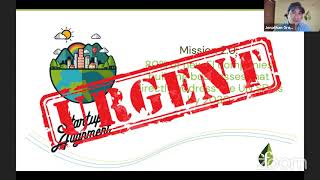
All right, cool. So welcome everybody. My name is Jonathan Gritchen. I am a co-founder of the Founder Institute, and the Founder Institute is the world's largest pre-seed startup accelerator. So we now operate in over 190 cities around the world. We have over 5,000 alumni, and they've created a lot of value, raised about $1 billion worth of funding. And when I say that we're a pre-seed accelerator, What that means is that we work with companies at the various early stages. So we take entrepreneurs really at that idea stage and we move them and we get them to that point where they sort of have that escape velocity where they can get to traction or funding to bring the companies to that next step. And FI started in 2009. So this is a picture from our company offsite that we did in January of 2020. 2020, right? And that was kind of our 10-year anniversary. It's 11 years technically, but basically we were going into the 2020s at this offsite and trying to be a little bit introspective and be like, okay, we accomplished a lot in those first 10 so years, the first decade of the Founder Institute. What do we want to do now with this next decade, right? As we go into the 2020s, what do we want to do? And Yeah, if you go back to January 2020, there's no sight of masks here. There's no sight of any sanitizer or anything like that. We were so young and precocious and we had no idea what was coming our way, right? But anyway, at that meeting and really what we had realized throughout the 2010s, I guess you can call it, right, is that entrepreneurship has largely been democratized, right? Or at least definitely relative to what it used to be before, right? And this is sort of on the bright side of things. Like the barrier to entry for people to launch businesses has significantly dropped, right? And there's a couple of main reasons for it, in my opinion, like the advent of cloud technology, Amazon Web Services, and other similar types of technologies just drove the cost to launch, especially online businesses down to basically zero, right? You would just pay as you go. Secondly, the pay-per-click models, right, that Google sort of invented, or really the GoTo.com invented if you go really back into the early times, but those pay-per-click models made it super easy for you to reach a very specific audience, right? So you didn't have to be some big consumer brand and buy ads on television to reach a mass audience. Instead, you could just go to Facebook and, define, okay, this is my very specific audience that I only want to pay when I get an action, right? And then third, just the amount of resources, mentorship, education, and funding that came out through new methodologies like the Lean Startup, new platforms like crowdfunding, accelerators, like all these different things just really, you know, came together with all of these different technologies to make it super easy and super cheap to launch startups, right? So now that's the bright side of things. Now the downside of things is, um, I think collectively as a society, right, I'm not speaking to everybody obviously, but collectively as a society we have not used these powers, if you will, for the better, right? Instead of using these powers and these innovations to make the world better and to actually help people, instead, uh, most entrepreneurs have been using it to appeal to some of the worst parts of humanity, to be honest with you, to consumerism, to waste, to vanity. Hello, social networks, right? To political division. And I'm sure I don't have to elaborate on that. So basically, we just saw there's just way too many entrepreneurs building things in the world that simply do not matter. Essentially, you know, we just— there's this promise of technology. We can use it for the better. All these innovations, technology is just moving forward at an exponential speed at all times. But the masses are using it for bad things, generally, right? Not for good things. We just simply not delivered as entrepreneurs where we should be trying to make the world a better place. So this mission that we came up with in January 2020, um, this this kind of Mission 2.0, was that we wanna create a society where there's startup alignment, right? Where there's entrepreneurs building great companies, where there's venture capitalists funding great companies that are building all good things in the world, and where there are consumers that are supporting those companies as well. And so what we said was that by 2030, we want 80% of our companies to now be building businesses that directly address the UN SDGs. So this was, January of 2020, right? 2020, not my favorite year. I've had 37 of them now. I'd say 2020 was maybe at the bottom. I don't remember the first couple of years, but I'm pretty sure 2020 was probably worse. So what 2020 did, it's our mission that we established back then has only become more important. All right. In fact, the Undersecretary General of the UN, I mean, we basically have gone back decades on all this progress that we made. And to be honest, at least in my perspective and from a startup and entrepreneurship perspective, you know, the progress that we made was sort of questionable at best, right? But now subjectively, it is, we're getting pushed back very, very, very far. So, so what do we do in this situation, right? Like any good entrepreneurial kind of company, we're like, all right, let's go talk to some of the entrepreneurs in our program. Let's talk to the local leaders that that run our programs all around the world, right? We have hundreds of local leaders, over 5,000 companies that have come through, and we have a large network of venture capitalists. Like, let's talk to them and see why aren't people, why aren't entrepreneurs at this idea stage, right? These early stages, why aren't they trying to build something that matters, right? Like, we're not all terrible people, right? We all generally have good intentions. So why aren't people using their energy towards building something that is meaningful. And the first bit of feedback that we got usually would fall into one of these two kind of paradigms, right? It is this idea that, look, we're a for-profit company, like, why? Impact's not our domain, right? I'm here, I need to make money for this business. This is a business that, again, is for-profit. We're not a nonprofit, so I don't— impact is just, it's just simply not our domain, right? It's like we're not speaking the same language here. And this is something that honestly shouldn't be too surprising with the political discourse that is going on in the world right now in the last couple of years. Like, it's, uh, it's just binary, right? It's like one path or the other. You're either for-profit or you want to do something that does good in the world, right? And that's just this mentality that we have. It's very similar to political discourse where it's like, look, if you like this, you can't like that. Like, no, you can't. You have to be all in on this way or all in on this way, right? It's just two extremes. And it's not productive, all right? And not only is that thinking not productive, it's just— it's outdated. And there's no reason why a company can't be for-profit and also, you know, doing good in the world. But people are still kind of stuck in that mindset, right? So that was kind of the big first thing that we saw. Now, the second major piece of feedback that we got when we were talking to entrepreneurs is this idea that, you know, look, and I get it, right? It's like, I'm an entrepreneur of this fledgling business. I'm just trying to, you know, make payroll next month, right? Or I'm just trying to build something to create a nice living. I'm not trying to change the world, right? Like, what difference can I, really make against all these massive problems that we have in the world, right? And I guess I would call this sort of the Elon comment, right? It's just like, look, I'm not Elon Musk, like, and I'm not him. I don't— I, you know, he's smarter than me. Like, I can't be him. Like, I'm not trying to be Elon. I'm not trying to change the world. I'm just trying to build this little business that I have, right? And a lot of it is, it's sort of a feeling of despair, right? Or just like, I don't know, indifference would probably be the wrong way to categorize it. But the idea is like, look, I'm just building this little business. How the hell, you know, this is the first SDG, no poverty. How the hell can I fix poverty, right? I'm just a single entrepreneur building like this little app or something like that. That is something that is the domain of other businesses, right? Or other massive organizations with their massive budgets, right? And I just threw a couple on here real quick. And so there's just this feeling of indifference and just not a feeling of helplessness of being able to do anything and just like, look, that's not me, right? So in working through this with the team at FYI, we kind of came to this realization, right? While it is true that any small singular business, single startup or whatever is probably not going to have the singular impact of any of these organizations or any of these large organizations, and I'm not saying you can't, right, but the chances are pretty low. That's a terrible excuse to not try to have some impact, right? And the reason why it's a terrible excuse is because while the small businesses and startups, you know, they don't have the monetary resources, they don't have the political connections, they don't have all of that kind of stuff, that those other organizations that I just showed have, but what they do have is strength in numbers. Okay. On a yearly basis, over 650,000 companies are started in the United States alone.
All right.
So start to do the math on that, right? While maybe not one of those companies, well, hopefully one of those companies will become a Tesla or something like that, right? But even if they don't, of those 650,000 companies, if you had like, imagine a world where just even a small percentage of that Right. 10% of those, of those companies are just trying to do their part, trying to do a small part, maybe not trying to solve poverty or solve climate change or any of these massive problems that honestly just aren't a reasonable thing to take on in that context. Right. Imagine 10% of those 650,000 in the US alone are just trying to do a small part of getting towards these SDGs. right? Now that cumulative impact will— can equal or far surpass the impact of any of those big businesses, right? So, um, basically the idea here is that, look, not every entrepreneur needs to change the world, not every entrepreneur can change the world, and frankly, not every entrepreneur even wants to change the world, right? And that is totally 100% Fine. All right. If you do, that's great too. Right. But I'm here to talk about democratizing impact. And that is where, you know, I think there's this idea where it's like, okay, if I can't singularly change the world, then I'm just going to not try to change the world and just try to squeeze a dollar out of this transaction or something. Right. Like, no, every entrepreneur can do their part. To make progress on the SDGs. And if we can do that, if we can sort of activate that long tail of entrepreneurship, right, again, now you have tens of thousands, hundreds of thousands of companies. While they— each of those companies doesn't have the singular impact of a Bill and Melinda Gates Foundation or the UN or Tesla or anything like that, their cumulative impact can be much, much greater. So I'll give you some examples here too, right? Because one of the biggest pushbacks we'll get is like, hey, I'm just, I'm building an app or something. I'm building a SaaS product, right? I'm not building like smart wheelchairs. And we have a company that does that, which is awesome, right? But, you know, I just, the business that I'm building is just simply not like impact, right? So I'll give you two examples here of two businesses that you might not think would be impact, but are. So we have a company called Asusu out of New York City. At its core, Asusu is a SaaS product, software as a service, essentially for landlords to manage, collect billing, and all this stuff with tenants in large commercial buildings, right? Or sorry, in large residential buildings, big condo buildings, things like that. That's what it is at its core. Now, Asusu goes the extra step, all right, of not only help— of not only helping those landlords get collect those payments and stuff like that. But now it's integrated with credit agencies so that all of the tenants and all of these buildings, right? Normally as a tenant, if you pay rent on time, what does that mean? Nothing, right? It's like the money's out of your account and you don't get evicted, right? Not a great strong carrot there. Only if you don't pay the rent on time, then it hurts your credit, right? So Isuzu is trying to kind of flip that on its head. When you pay your rent on time, guess what? Now you can increase your credit score. It's created a whole interface for all the tenants in that building. And basically that is directly impacting the SDGs because it's helping people build up credit and build up access to finances where hopefully they can buy a home eventually. So again, it's something at its core, you would look at it, oh, it's a SaaS product for commercial landlords or residential landlords. And there's probably thousands of those, but they go that extra step and it's really helped them become a better business, honestly, because it's getting the tenants much more engaged. And when they're much more engaged and when there's positive reinforcement, they're going to pay their rent on time, which makes the landlords happy. So again, this is the places where you can get creative. So Swarkit is another company and they're based out of DC and they were on Shark Tank probably about 5 years ago or so. And it's an app, fitness app and it syncs with a lot of different music services and things like that. Basically, it's one of these apps, right, where you don't need any equipment or anything and you can just get a really great workout in. There's different playlists and stuff like that, right? Sworkit takes the extra step where they're donating a good part of their profits towards something what they call the youth initiative, and they're providing the service for free to all of these different schools, and I'll just look at this right now. They've provided free access to over 15,000 schools, nearly 11 million students, right, to help them again get free access to these apps, to these different training regimens and things like this on their phones, which most of these students will probably will have or will have access to. And again, that helps fight childhood obesity. Right. Another UN SDG. So two companies, right? I got a SaaS product. I got a fitness app. Right. If you were looking at that past paradigm where it's like, look, I can't be Elon, right, then you may not do anything about it. But these products have gotten creative and they figured out a way to do good in the world while also turning a profit. Two other ones that I'll put here, these are you know, very much technology products built by programmers and computer scientists, right? Total Control is a SaaS product again, and what Total Control is helping to do, and this is a company based out of Oslo, it's helping large organizations, governments, large buildings, big companies and stuff reduce the food waste in their kind of large kitchens, right? And again, this is something that saves money for those companies, so they're willing to pay, right? Total Control is not a nonprofit. but they're doing it in such a compelling way, and again, they're saving food from being wasted, right? Fairlead.ai is another company built by a bunch of computer scientists, and they are helping large businesses that are starting to leverage AI or machine learning, whatever you want to call it, a lot of buzzwords, right? But they're helping those businesses sort through all the algorithms that they've started building to sort through their data to remove bias. Okay, once again, that is not only good for society, right, when we're removing bias, it's good for the business when you're removing bias, right? It will lead to better and more, uh, objective outcomes. So I know some of these solutions and stuff that I've talked about are like, it takes a little bit of creativity, okay? If you're not building a smart wheelchair or if you're not building some machine to clean up the oceans or something like that, right? You do have to take a little bit of an extra step to figure out, okay, how is my business going to create good in the world? And the good, the good news is that the UN did a lot of the heavy lifting here, okay? They created these SDGs, they broke them out into a lot of different categories, but we wanted to take sort of the next step on those UN SDGs to help them be a little bit more applicable to entrepreneurs at the ground level. And that is what we call this For Progress initiative, right? And basically it's, you don't have to be a nonprofit, you can be a for-profit company that is for progress on the SDGs. And we created a tool to help you find very specific action items that you can use to make your company impactful. And you can see these tools at fi.co/progress. And what we identify a a For Progress company as is a company that, again, can identify achievable and actionable impact metrics. All right. And to try to make this a little bit more digestible, we call these IKPIs, right? So they're impact key performance indicators. And then secondly, you know, you have to track these things, right? If you don't track it, you're not going to— like, you only achieve what you track. Basic, right? So not only should you do it just to keep yourself accountable and so that this doesn't devolve into some kind of like just marketing campaign for your business, you should track them because it keeps you on point to see what actual impact you are making in the world. So let's use that example I had before where a lot of people are saying, look, I'm just an app company. How the hell am I going to solve something like poverty? Right. Well, you can log in to fi.co/progress. On the left here, you can see You can either search by keyword, right, on the type of business that you're building, or just some of the other keywords about your business, or you could choose one of the actual specific SDGs, right? Then within SDGs, within each SDG and within each SDG sub-goal, we have now created these iKPIs, which you could see here. So let's say again, like, I'm, I'm a SaaS company. Right? Yeah, I can't solve poverty, but then I go in here and solve poverty and I go down to 1.4. And you know what? I can't solve poverty, but I probably could help people get access to fair loans or other opportunities for homeownership. Right? That is a much more actionable, realistic goal where you can actually make a difference, right? Even if it's a small difference, you can make a difference. So you can select these different goals on this tool. You can kind of create a, a set of different iKPIs that your company will adhere to and that you want to plan around, you can download this PDF, which could be a worksheet or a PowerPoint slide, and you could show it to your team and work with your team to figure out how to actually put this plan into action. So here you could see an example. You don't even have to provide an email, okay? We're not trying to collect leads here. It's totally free, totally open tool. You can download this information, share it with your team, and ideally you could figure out what your IKPI is going to be as a business to drive this forward, right? The whole goal of this tool is to make it as easy as possible for you to find actionable smaller things where you don't have to necessarily change the world, but you can just do your part. And here's an example, as I mentioned before, the last part of being a for progress company is to publish and track your results, right? So this is a live page that you can see on fi.co/ikpi. At Founder Institute, we've picked 3 iKPIs ourselves. First is on the first SDG, which is decent work and economic growth, and we are trying to launch as many companies as possible, right, around the world. The second one is on helping— is the SDG Goal 9.1, B, which is industry innovation and infrastructure. And there we are tracking the number of new accelerators that we're running in developing nations as defined by, uh, I forgot who it was, probably the UN or somebody like that, right? We're trying to use objective forms of measurement here. And then finally, the last SDG that we're going towards is to reduce inequality. And basically the one that we have seen there, especially because we work globally, uh, is to focus on helping, uh, women launch more companies and get more access to economic opportunities. And that's something that we're tracking as well. Now you can go on to fi.co/ikpi, right? And guess what? It's not going to be a hockey stick. Okay. And that's not the point, right? The point is not to make it— I mean, ideally it would be a hockey stick, right? But the point is to publish it whether you're doing it or not. And just to be transparent about what you're doing, because that's going to keep you keep you in check. I don't think we're— I think we're doing pretty, pretty well. We're doing decent, right? But the numbers go up and down, and we have a seasonal business, so part of that is, is a function of that. But regardless, anytime that chart goes down, that's not a bad thing. It gets us off our ass to figure out other ways to do it, right? And that, that's where the, the real progress will come. So I'm gonna wrap up in a second, but there were a bunch of new concepts that I reviewed today. And one way that we have, you know, we've launched this competition called Pitch for Progress, okay? You can see it at pitchforprogress.com. Basically, it's a free competition where anybody can submit a pitch via video about a business that they're building that addresses any of the UN SDG goals. We're trying to get people using that tool. We're trying to get more feedback on that tool. And we're gonna run a very, very large demo day of the companies that get selected, all right? And we're gonna get a very big speaker for that demo day. We have a few in the works right now. I'm not gonna spill any beans for you, but it's gonna be exciting. We have a lot of awesome partners, a lot of awesome journalists that are getting involved in this initiative. And really our goal with this competition is to help empower people right, to figure out ways with their businesses to make an impact in the world. And then for the people that are doing that, to highlight them to the world as well, so that they can get more opportunities for press, hiring, funding, whatever it is, right? It's an international competition. I believe we've gotten applications now from over 50 countries. Please check it out at pitchforprogress.com. Totally free to join, totally free to apply. We'd love to hear your ideas and we'd love to hear what you're working on and see if we can highlight you and help you push it to the next level. And as a closing note here, let me just reiterate this, right? And I'll go a little bit more in an aggro stance, okay? There are no excuses. Any company of any size can help make progress on the SDGs. Okay. All it requires is for you to change your mindset and say, okay, if I can't fix poverty, then what's the use? Like, no, that's not true. You are part of a mass. You are part of a growing mass of entrepreneurs. The number of entrepreneurs around the world is growing on a daily basis. It's growing exponentially. You are part of this growing mass. And if you can just play your part as part of this growing mass, that will have a more cumulative, a larger cumulative impact than the biggest NGOs, the biggest governments, the biggest for-profit companies that are making progress in the world. All right. Let's just each try to do our part. Thank you.
Thank you, John. Thanks for going through all of that amazing framework and insight into what is for progress, you know, why is it so important, how we were able to focus on it as a company ourselves, and also how we built tools to help other companies focus on impact moving forward. That was a really wonderful overview. So some of the things, if you do have any questions, if you're there in the chat and you have any questions about impact, about measuring impact for your company, we've done a few different sort of Clubhouses and things working with founders and live sort of helping them find their different IKPIs. So If you need some help today or would like some insight, please do put your questions in the chat. In the interim, I'd like to talk a little bit more about the Pitch for Progress competition really quickly. So let's say a founder is very early stage and is working on something that doesn't seem aligned with the UN SDGs right now. They've officially gotten on board because you've inspired them, and now they're going to go to their For Progress tool, they're going to identify some subgoals to work on. And now what's the next step in terms of from there to getting to the Pitch for Progress competition? I'm assuming it's working on what we call an impact thesis, right? Which is building that piece into your pitch. Can you share us a little bit more about what that could look like, John?
Yeah, sure. And I, first I'll just take a step back and say like, this is, this methodology, right? And that's why we called it IKPIs. Right? Impact KPIs, because it's the same methodology with key performance indicators, right? You can, you take a huge problem, right? Okay, I want to boil the ocean. Well, you know what, going in and saying I want to boil the ocean, not very useful, right? You have to figure out actionable and measurable ways for you to do, take the first step of boiling that ocean, right? And every single business can be equated to that, right? I don't care if you are literally trying to boil the ocean, Or if you were literally trying to, you know, just build a little app for, for, to help connect people in your neighborhood or whatever, right? All of those things are, require thousands of steps. So, um, in the beginning you really just have to break it down into actionable KPIs to build your business. And we want to encourage people to not only do actual KPIs on the business side, right, and necessarily building the product and things like that, but also from the impact side. Because believe me, in addition to just doing good in the world and being morally correct and hopefully maybe sleeping better at night, it's going to make you a better business. Right now the world is so divided. Everything, and I alluded to a little bit in the presentation, everything is just been gone to the extremes, right? You're either here or you're here and you can't be anywhere in between. And as a result, consumers, especially millennials, or I'm losing track of the terms now. I don't know. I think I'm a geriatric millennial. That's something I just learned. But there's millennials and Y, X, whatever, right? Young people, let's just call them, are more and more, they're voting essentially with their dollars, right? When they buy a product, They're not just buying it because it's cool or whatever. More and more, the values of that product, the values that that product stands for, the causes that that product supports and those brands support is becoming a much larger part of what everybody's purchase decisions. So the businesses that do not think about this stuff that are getting started right now, are going to put themselves at a significant disadvantage, all right? Because a big business, you know, let's say a Walmart or something, okay, here in the US, the biggest retailer in the US, I believe, you know, they started a long time ago and they definitely didn't start with any impact initiatives. Now they're just kind of slapping impact on the side of their brand, right? Because it's important to their consumers, right? People are more and more seeing the difference between a marketing campaign and actually what a brand stands for, right? As an entrepreneur, as a company at the very earliest stages, you have the opportunity to bake it into your company's brand, product, processes, culture, everything from day one. All right, and that is a significant advantage. It's just as much of an advantage as a startup is, you know, the ability to move fast, the ability to target small audiences, all these different advantages that you have as a startup. That advantage is there as well, and you should use it. Okay, it's going to help you attract customers. It's going to help you attract great talent, right? It's a small company. You're not going to be able to pay— you're not going to be able to compete with the Walmarts and these other big companies on salaries, right? So you can attract people by your mission, by the social good that you're trying to do in the world. It's going to help you attract talent. It's going to help you attract funding. It's going to help you attract press. Right? The media loves to write about people doing good in the world, not the people squeezing another 2 cents out of every dollar. Right? So it is an advantage for you to do this. And that's why we built this tool, you know, and again, it's— I can't accentuate it. I can't say it enough. Like, it is to help you not only do good in the world, but it's also to help you build a better and more enduring business.
Absolutely. And every little bit of impact that's made is exponential, right? Every little bit of work that's done by each individual company compounds and ultimately, you know, sort of creates a better world for us all. So one of the things that you touched upon was the ocean. And so, and I think you used the sort of phraseology because it's such a big, you know, place, and it's obviously an incredibly important piece of our Earth and something that plays a huge role in our climate. So like if somebody was trying to save the ocean, so to speak, right? And, you know, they have to, they have to bring that down from I want to save the ocean all the way down to what is actionable, right? So an example of that might be, you know, reducing the amount of waste in the San Francisco Bay Area that pours into the ocean, right? And so that's already making it smaller. And then how else would you sort of dig down from there, right? Then our call to action to you is to say, okay, the next step is maybe it's actually cleaning up a single beach. And then maybe even more so than that, it's actually, and what we would encourage you to do is say on your website, We have reduced the amount of waste on Ocean Beach in San Francisco by 5%, for example.
Yes, I think that's a super, super useful and super quick way to look at it, right? It's like, okay, how do you divvy up a pie? Geography, right? Number one, right? And let's say you even wanted— what are other ways to do it? It could be on who are the people, or who are the— I don't want to say people, right? But who are the, whatever, entities, maybe they're companies, businesses, whatever, like what is contributing to the most waste, right? You could also start there, and that could be geographic, nationally, internationally, whatever, right? It's just educating yourself on exactly what are the causes of the issue and figuring out how you could make some little impact on that, right? And ideally, it is tied to what you're doing as a business. If you're building an app that is completely unrelated, while it's a nice thing, right, and I always look at these as sort of marketing campaigns, right? If I'm buying a hat or something and it's like, hey, every dollar you spend on this hat goes towards the oceans or whatever, that's nice, okay? That's great. I don't want to discourage people from doing that. I do think that's a useful thing to do, but I think it becomes so so much more powerful when you actually tie it into like the fabric and what you do as a business, right? So instead of maybe this theoretical hat company just giving a dollar to the oceans, 'cause it's, you know, maybe it's like a brand that has something to do with the oceans or something, which is, you know, very marketing aligned and does do good in the world, so that's fine. But it could be a lot more powerful if that hat brand actually was devoted to changing something that was part of their business, like the supply chain. Like where is this hat being made? I don't even— this hat's made in Vietnam. My guess is the people making this hat are not being paid very well. And a lot of these ingredients that are in this hat that I'm wearing, and now I feel like a dick, but seriously, a lot of the ingredients in this hat, the materials that I'm wearing are probably not created sustainably. So I would much rather that hat company try to dive into those problems, right? Because again, not only is it just— will be much more powerful and create more impact in the world, they need to dive into their supply chains, they need to dive into all that stuff anyway, right? So it's part of their normal kind of doing business, it's part of their normal workflow. So that's where I would encourage people to do that. But also if just, you know, attacking other things and other charitable causes and stuff that maybe aren't completely related to the mechanics of your business, that's obviously great too.
We have some questions from the chat. Sander has a very thought-provoking question. He said, are you concerned— or Sander said, are you concerned that maybe this approach of selecting IKPIs and broadcasting your measurements could become an SDG washing tool, i.e., something, something positive impact that is measured while ignoring or excusing negative impact?
Great question, right? And this is something that we definitely thought about a lot as well. And we actually went through a very large process as part of that thought process that I presented about before of like, okay, how do we define impact? right? And we sort of went down this rabbit hole and there's a document, I think if you— is it still up? fi.co/declaration, right? Our first kind of way of attacking this problem, Sander, was to say, all right, you know what, like this term impact is so broad and so many people are using it. There's impact washing, right? There's all this stuff. Let's try to engage tons of people and see if we can put a meaningful definition around impact. Okay, and then people— and then that gives everybody like kind of a common target to go towards. And what we found was, and I think our work there was, was pretty good, right? Like I think it's useful, but what we found is that's not useful for entrepreneurs. Okay, as an entrepreneur, you need to make it accessible, right? The idea here has to be that we're growing the pie, so to speak, of impact. Whereas if you're looking at it at big companies and NGOs and stuff, right, when you, when you're measuring those types of organizations against impact, it's not a question of growing the pie. It's usually the question of policing because you're policing their impacts because they're getting grants or funding or something like that. Right. And that is just a totally— as for entrepreneurs at the early stages, a totally different approach. And that's what we found. So that's why we essentially pivoted and we said, look, it's not about like trying to create a unified standard definition. It's about trying to make it accessible, about trying to give entrepreneurs and anybody a way to figure out how they can make impact. Now, Will some people cheat the system? Sure. Right. Like, you know, we can't be naive about that. But again, like, we're not like, you know, the For Progress initiative is not like a seal of approval. It's not like you're not going to get funding through it or anything. Right. The idea is to inspire and empower people to make a difference in the world. So your question is very much on target, Sander, and it's something that we pored through a lot. But what we found is that that question is totally geared towards the big companies. And what we're trying to do is, you know, that's top-down kind of thing. And we're trying to do the bottom-up and just trying to grow the pie of doing— of people trying to do good in the world. Will some of those people maybe take advantage of it and maybe not do good? Sure. But the cumulative impact will be much, much greater.
Awesome. And then we have another question from Andrew in the chat who said, are FI's IKPIs exactly the same as the SDG targets and indicators, or have we amended them?
Well, the IKPIs are— we came up with all the IKPIs ourselves, okay? And there's a document, and maybe if someone on the team can put that into the chat, we basically— there's an open Google document, okay? And we shared this with hundreds, if not thousands, of people around the world. And basically the first version of this document was every single SDG, right? Copied and pasted from the, the UN because they did a great job, right? And on, under each SDG, according to the UN, there were sub-goals, right? So basically what we started sharing this out with all these other entrepreneurs around the world and we're like, look, this is what the UN created. It's super useful, right? Our thesis was that it's super useful for big NGOs, big organizations, governments, et cetera. Again, top-down, right? We want to make it more useful for bottom-up entrepreneurs, small businesses. How can you take those SDGs and sub-goals and make them a little bit more actionable? All right, and I believe we have now— there's something like 500 iKPIs in there. Essentially, we added another line item, right? Much more actionable things under each sub-goal. So there is an open Google Documents. We're still trying to get more people to submit these ideas, right? I actually don't. That's a living, living, breathing thing. Like, my goal is to just upload another maybe several hundred iKPIs every quarter or so into that tool that I showed you, because again, it requires creativity, right? Everyone's building a different kind of business, and I think it literally is just sort of that spark where it's just like, oh wow, okay, this is poverty, and you go down to a sub-goal, you go down to an IKPI and you see one of them and it just sparks. It's just like, you know what, I, yeah, I can actually make an impact on that metric, right? And that's, those are the kinds of things that we're looking for. So yeah, on netbuy.co/ikpi, those were IKPIs that were, you know, built using that research method. And again, there are about 500 of them. And I also don't think necessarily, you know, that those, maybe we'll change the IKPIs that we're looking for in a couple of years. I think like any anything, you know, that those types of things can change. But I think we did a pretty good job of picking the first few because they're very integral to what we do as a business, right? We help— we launch accelerators around the world and we help startups build companies, right? So what can you extrapolate from those things? All right, well, let's make sure that we're doing that a lot, right? We're helping a lot of people build businesses and, you know, try to create wealth and opportunity opportunities for themselves and their community. Let's try to help people do that, not just in New York and Silicon Valley and California and London or whatever. Let's do that in developing nations as defined by an objective body. And let's help do that in a way that's equitable. Right. And we could have picked a lot of different, quote unquote, minorities around the world, but because we're global, picking women was the most actionable for us. So that's the one that we picked, and that's where we think we can make the most impact.
Thanks for elaborating on that, John. And Vladislav has some feedback and suggestions for us, which I think is quite interesting. So FI is already the third VC accelerator to develop its own methodology. Would it be helpful to create one framework in order to avoid confusion and be possible to compare generated impact? And I would start that off by saying, I believe the UN SDG is the one framework I think that many people are building things off of, but I do think it's super interesting to work cross-collaboratively either with different accelerators via stage, because we're pre-seed, right? So maybe that's a different stage, or to try to create a holistic path to— and something that's very comprehensive for startups to take. So thoughts on that, John?
100%, flat out, it would be useful for all of us to combine those things. I think it At FI, we're pretty unique, okay? We work with founders that— oh, sorry, that's a rookie mistake on my end that I mute that. But we work with founders on my— at the Founder Institute, a lot of which are pre-incorporation, right? A lot of which maybe still have a full-time job. They are at the very, very earliest stages of building a business. Right? So a lot of times the word accelerate— that's, and that's why we call ourselves, by the way, a pre-seed accelerator. Okay. Most accelerators will work with the team that's incorporated that, that like they're already sort of on the path of building the business. We built our methodology specifically to address people sort of at that ideation stage so that they could build these things into the very fabric of their business. Right? So So that's why we did it this way. Now, would I love to collaborate with others and is creating standards good for any industry? 100%, blah, blah, blah, right? You're right on the mark there. But for us, we looked at it where for our specific use case and for— and it's not just the founders coming through the Founders Program, it's just we work with founders at the idea stage. So that's, that's where we wanted to, you know, that's our audience, essentially. So that, that's what we built this methodology around.
Fantastic. But that is great feedback. We'll definitely take that into account. Jacques asks, do the SDGs have to be seen in a holistic or transversal way, even if they make only 1% of each, or rather focus goal by goal until each of them have been accomplished?
So, okay, I'm trying to understand the question, but I think what you're saying, Jax, is that do you, do you need to look at each SDG individually, or can you do a little bit of all of them? And I think that's what you're asking. Okay, so it's or something along those lines. If that's what you're asking, I think in our SDG tool, which is at fi.co/progress, it actually, after you choose 3 IKPIs, it stops, it stops you, okay? It says you can't choose more than 3, right? And that's not to limit your ambition or say, okay, you picked 3 on poverty and none of the other SDGs matter. Right. It's just as entrepreneurs, as early-stage founders, you have to focus. All right. It is, in my opinion, I talked, I speak at a lot of conferences about this. Focus is the number one killer of startups.
All right.
You essentially have a limited amount of time, a limited amount of money, a limited amount of resources. So what you focus on determines whether you even give yourself a shot to be successful or not. So in that same vein, Jax, I would say that, yeah, it's better for you to focus on one, and not even just one SDG, one IKPI, right? Each SDG is going to have like 50 IKPIs or whatever. Focus on the smallest possible one that you can, and you should be taking the same approach with the other parts of your business as well, right? You shouldn't focus on reaching 20 different customers. You should focus on reaching one very specific customer that has one very specific problem, and your product should very specifically solve that problem with one feature, etc. Right? So focus is key, I think, not just in SDGs, but just in entrepreneurship in general and just getting shit done. Right? Excuse my French. But that's the methodology and that's our thought on it. So rather than spreading yourself too thin over several I-KPIs or several audiences or several products as an entrepreneur. The more you can focus, the better chance of success you're gonna give yourself.
I agree, and I think that that's one of the things that we've really focused on too, right? So for example, we've talked about the Female Founder Initiative and helping women create more companies around the world. That can, in theory, fall into a lot of different categories or a few different categories on the UN SDGs. And it really came down to how we're going to measure it. And our measurement for success is the number of women-founded companies year over year and quarter over quarter. We want that to increase. And so we've been holding ourselves accountable to that number for, you know, 4+ years now and working towards— we've come, we've gone all the way from 17% now up to 34%. And so we're very proud of that number and we're very proud of that progress. And I think—
Still got a long way to go though.
Still got a long way to go, absolutely. We're working towards 40, and when we reach 40, then we're working towards 50, right? So that is our ultimate goal. But I do think that the specificity of goal, and then also the measuring specificity gives a north star to your impact, as well as really gives the team some way to— your whole team some way to actually see that success is happening. And that impact, well, especially while we're all working from home separately in our homes, it's hard to feel the impact you're making in the world, right, through our computers, through what we're building. But I do think that the EI KPIs also allow people to really understand and feel like they're part of the impact as well.
That's a really good point, Rachel, right? Like having that north star, right, as you called it. For IKPIs, right, impact key performance indicators, or even just a key performance indicator for your business. Like, it's always important, and it's hard, by the way, right? Like, it's digging in and trying to figure out, okay, it's essentially saying what number will go up or down to tell me if I'm doing a good job or not, right? Like, that's not an easy answer in a lot of cases, right? Sometimes it's easy, sometimes it's just like, okay, how many of these toothbrushes that I sell, right? But most businesses, especially businesses that will create impact, aren't going to be that simple. So, you know, diving down and figuring out what that North Star metric is, what those KPIs and IKPIs are, can be challenging. But what I would say too is just publish them. All right, like nobody's perfect. I'm sure our IKPI page, it's again, it's not a It's not a hockey stick, all right? If somebody looks at our page because it went down last month, it's like, hey, I can help you do this and we can partner with them. I mean, that's freaking awesome. You know, like we're not perfect. We make mistakes. You'll make mistakes. You don't have to project this hockey stick thing on everything, especially when it comes to impact because when it comes to impact, the transparency is much more powerful and also the ability for people to reach out you know, that share— there's the emotional connection, right? If you're trying to do something in the world and you have a cause, there will be an emotional connection where people will reach out to you to help, and that could lead to some interesting relationships.
Awesome. And we have our final question we'll take from the chat. Yue, I apologize if I'm mispronouncing your name, but Yue asks, is the FI methodology more more applicable to forming for-profit companies?
Yes, it is, it is UA, and maybe I should have made that clearer, but yes, it is. The whole purpose of For Progress is that we believe that there's no reason why companies can't be for-profit and for progress, okay? I think that looking at All right. I think a long time ago, there was a concept where if you wanted to do good in the world, you had to be a nonprofit company because we could rely on governments to fix all of our problems. OK? In my opinion, we can't rely on governments to fix our problems. I wholeheartedly believe in the power of the market in creating large-scale change, right? Whereas before, maybe a government could just say, hey, do this, right? And it's done, right? Now we live in a society where information is shared all the time. So you have to care not just about what the government tells you, right? And I'm talking in a global perspective. Perspective, right? I understand there's some countries, there's different cultures here, but from a global perspective, if you want your message and your cause or your product, right, to get out there and to have reach, it has to appeal to the needs of people. It has to appeal to the needs of consumers, right? And that is like, how do you measure that? That is for-profit. Okay. So I— that's why, like, the power of the market and the power of actually providing something to a consumer that solves their problems and is something that they want. Right. And again, that consumer can be a business, it can be an individual person, it can be a government, it can be a company, whatever. Right. That is the strongest method that I believe that we have to create large-scale change. In the world. Now, as I was telling in my presentation, I do believe that that power has been used negatively, right, which sucks. But I do believe that you can create just as much, if not more, and I believe more, impact as a for-profit business that has, you know, that has these values at its core than you could as a government or some big NGO or something like that, right? It's just a different method of doing it, but that is the— for Progress tool is to try to help you find ways that, you know, you're building a business that is still, you know, very much in tune to, you know, building something that customers want, but that it also creates, a lot of good in the world. And that's the goal of For Progress. And that's what we think about the dichotomy between— and honestly, I just think it's a misunderstanding between what nonprofit and for-profit means, right? For-profit, I feel like people think it's somebody diving into a pile of cash. It doesn't have to be that way. Founder Institute's for-profit. Believe me, we don't— this isn't a mansion that we're in right here, right? We're trying to do good in the world while also turning a profit to hire people and do all of that kind of stuff. And it doesn't have to be a dichotomy of like, oh, you're for profit, then you're taking money from somebody else. Very old school way of looking at things. You can create new value, not extract value.
Thank you so much for elaborating on that, John, and thank you to the audience for for some amazing questions and also some challenges and feedback for us to improve on our processes even further from here. So really quickly, if you were here for John's presentation, you may have visited pitchforprogress.com, and you may have even been interested in submitting your short pitch video to tell us about your impact company. And we're here to announce that actually, because we had so many amazing submissions, you may see on that page that the deadline says it's tonight, which it is, but we are here to extend that deadline and share it first and foremost with the Change Now audience to June 11th. So you have until June 11th to submit your short pitch video so that we can hopefully— if you become a semifinalist, you'll get some coaching and some feedback from us to help you work on your pitch deck. And if you become a finalist, you'll be live on the demo day and may even get to win the grand prize live on the demo day on July 14th. So we're here to make that announcement for you today. If you've gone to pitchforprogress.com, don't worry, you don't have just until tonight. We will actually extend that for 2 more weeks because we're getting so many amazing submissions and we want to hear more from these impact companies around the world so we can elevate you on the global stage and really showcase all of the wonderful work you're doing. John, any last-minute thoughts or suggestions for people submitting their pitches here very soon?
I'll just say again, like, just, we have to break ourselves out of this mentality of, it's this binary mentality, right? Like, things aren't necessarily right or wrong. You don't have to be for-profit and doing good in the world. Like, there's, those are extremes, right? There's a lot of in-between space. Face here. And I agree, like, Vladislav, again, you brought up a good point, right? Where, yes, like, success washing, SDG washing, right? That's an issue. And again, like, there's pretty much no way you can prevent that kind of stuff, right? But we have to look at this as sort of like with an abundance mentality, right? Like, okay, if we can help inspire and if we can help tens of thousands of 100 people try to do a little bit of good in the world, will a couple hundred of those maybe do some bad in the world? Yeah, probably, right? Unfortunately, that's the world we live in. But let's just try to create more value, right? Let's try to grow the pie. And again, whatever kind of company that you're building, you can figure out a way. It may not be as obvious, right? But you can figure out a way to do your part to build something that creates a good impact in the world. And check out fyi.co/progress. That tool is there to help you do it. And if you come up with some good ideas, please submit to this pitch competition at pitchforprogress.com. And we'd love to see what you have. There's going to be some educational opportunities as part of this pitch competition. We're lining up some really great partners, and we're really excited. I believe the demo day will be in mid-July, if I'm not mistaken, Rachel. And we are, you know, we're expecting several thousand people to register for that, and we're excited to just showcase some of the companies that again are, are just doing good in the world, but while also making a profit.
Awesome. Well, thank you so much, John, for sharing your thoughts with us today. That's it for us, everybody. Thank you for joining us. Go to pitchforprogress.com, and we look forward to seeing your impact pitch. So have a great day, everyone. Bye-bye.
Thank you.










