Making the Leap from Employee to Entrepreneur (Online Networking Event)
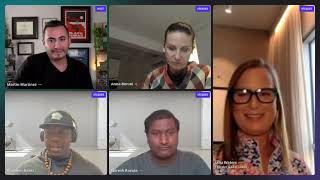
Four founders discuss leaving corporate jobs to start companies. Brandon Gantt, Naresh Ravula, Lulu Waters, and Anna Benini share how they validated ideas while employed, handled IP concerns, and navigated the shift to full-time entrepreneurship.
Chapters
Welcome, welcome to another Founder Institute global event. While we're waiting on y'all to come in, we're waiting to get our signal up and we're ready. Happy to have y'all here. I'm based in Austin, Texas. My name is Martin Martinez, Executive Director for the Texas chapters of Founder Institute, but also our entrepreneur in residence for Founder Institute headquarters. Tell you a little bit about Founder Institute before we jump into our programming today. But while I do that, please, we got a lot of people in the audience already. It's not uncommon for us to have, you know, well over 100 for an event like this. So tell us where you're coming from. We're a global organization, started at a classroom in Stanford back in 2009. Fast forward nearly 13 years to the present, we cover about 200 cities in 100 countries around the world. Our program breaks down like this over the course of about 14 weeks. We look for entrepreneurs, aspiring founders that are trying to turn ideas into companies, and our program can help them. Very— it's a very difficult program. Not a lot— most people don't complete it, but that's by design because not all ideas really do have the strength to become companies, and the work that it takes can be a little shocking for people that are just kind of jumping into the entrepreneurial world. Not to discourage you so much, if you're here for the employee for entrepreneur event, which this is, and you're in the right place, You're gonna meet some amazing entrepreneurs from all around the world that have gotten through this core program and are now building enduring things. But also, just like you, we're struggling with, you know, that when, when is it time to quit my day job? When is it time to kind of leave the comforts and luxuries of just having a 9 to 5 and building something that actually is gonna give you more purpose and meaning to not just yourself, but the people whose problem you are trying to solve. So Founder Institute right now, many of us are still strictly virtual in terms of our programming. So if you aren't in specifically one of the cities that our chapter operates near you, you can still attend a lot of our virtual FIRST programs. Some of us, like us in Texas, are going to be moving back to in-person programs. So definitely check if you are interested in applying. We'll be dropping links into the chat. Head on over to fi.co. En/join. Get an application in today. We have some winter programs about to start that are finishing up applications, and then we're going to be ramping up into the spring 2023 with applications open all around the world. So we're always helping in new cities. We always have new chapters getting ready to open applications. So head on over to our website and learn about maybe some chapters in your region. So let's get started. Looking at the chat again, we got some people out of Austin. What's going on, hola? We got out of Pakistan. Love seeing that. Nigeria, South Africa, Cyprus, Israel, Brazil. I love that. Come on, keep telling me where y'all are coming from too. You're going to get a chance to interact with a lot of people in the audience at the networking lounge immediately following our discussion as well as our founders. Let's bring our founders up to the stage. We've got 4 awesome ones. For today, then we're going to learn a little bit more about their stories, and all the great things that they're working on. More specifically, to what drove them to finally transition from an employee to an entrepreneur. So let's get y'all up. That's great. Lulu, Naresh, Brandon, Anna, once y'all get kind of settled, we'll get everybody here. And, and let's have, let's have some fun. In the US, we got a big long holiday coming up. So, and it's already starting to get a little cold. But otherwise, it's been a good week so far. How we doing, Founders? What's going on?
How's it going, Martín? Doing great over here.
We're doing— yeah, we're doing great, my man. It's good to see you too. For all you out there in FI land in the audience, Brandon graduated from one of our Texas programs. Just recently. So it's good to see him and have him on the main stage as well. So let's go in. Alright, let's see, we got people out. Just going back to the things while y'all get y'all's audio and video going up. We got India, Denver, Palestine, Sweden, Chile, Canada, Bulgaria. I love this global community of ours. Every continent I'm seeing minus Antarctica, we need to get some penguins showing up. It's that time. So let's begin. Founders, I'm gonna start with you, Brandon, since you're down here at the bottom. I'm gonna work my way counterclockwise. Brandon, if you'd be so kind, tell our great crowd here today for Employee Entrepreneur, almost about 100 at this point, kind of who you are, where we can find you right now, maybe what your past life was before you started this company, which I can't wait for you to share. Yep.
All right. Sorry about that. I just added my information to the side, my LinkedIn information.
You can find me.
I'm Brandon Gantt, founder Founder and CEO of Sapi. We're a food marketplace connecting hungry people to food startups, so local food startups in their area. I am here by way of spending the last 12 years in the field of education. So I've been a teacher, coach, administrator at the district level, at the, you know, at the main office level. And decided to take the jump into entrepreneur. I'm one of those that went headfirst. That's how I learned how to swim. My dad just threw me out in the pool and said, make it to the wall. So that's exactly what I did. I look forward to telling you guys a little more about that as we continue to go on, but glad to be here.
Fantastic. It's good to see you again, Brandon. Thank you for being with us today. Again, I mentioned I'm going to go counterclockwise, so just on my view, I'm gonna start with, uh, go to next to you, Naresh. Yeah, sure.
Uh, first of all, thank you so much and welcome everyone. My name is Naresh. I'm the founder of Home Cuisines. It's an online marketplace for the traditional and authentic homemade food. When it comes to my background, I did a bachelor's degree in information technology. I worked in Fortune 500 companies like Microsoft and Amazon before coming to Canada. I'm originally from India. I moved to Canada in the year 2017 to pursue my Master of Business Administration. I'm more interested towards the business rather than being an employee. So I thought of like, you know, I was thinking of multiple ideas, like I was brainstorming what is the best way to get some kind of a business which will flourish. One thing which came into my mind is when I came to Canada, Canada is a diverse country. It is like, you know, full of like almost like 22% of the Canadians are immigrants. They are from like, you know, from Asia, like South Asia, like South America, Europe, and all these countries. The biggest problem which I found out was because it's a diverse country, people were unable to find out. They have all the dishes from all over the world, but some kind of the authenticity and traditional what we used to get back in India or maybe other countries, the authenticity is missing. So that's where I realized that I need to work on a problem which is going to solve a lot of immigrants, where it is going to help them to satisfy their cravings. The food is something which I always love to share and doing this stuff. Then I decided like I should start working on it. So then I completed MBA and then started working on the startup. This is my first startup and I'm fortunate to know about Founder Institute. It helped me a lot in order to understand how to work on the problem and how we can do the market validation. That's where I started and then So the journey has started last year, so it's going pretty good so far. Back to you, Martin.
Oh, thank you, Nirash, and I'm glad to hear that too. Coming out of big tech, I'm going to come back to you on that in a second. Lulu, how are you? Taking up most of the real estate on this screen.
It's a little strange.
I love it.
I don't know, maybe our producer backstage can toggle a little bit, but I'm enjoying it.
Hi, fellow founders and alumni, and hi, everybody. Pleasure to be here. I forgot the question, Martin.
From the top. So tell us a little about who you are, where you're from. You already got through that first part, but also kind of what was your life in the before times before you decided to start your company? And maybe a little bit about what it does.
Okay, bear with me if my lighting— this is an interesting internet connection I have. So, yeah, so I'm actually on my 7th go at a company. I've bootstrapped my other ones, and I probably had a very early indicator around age 7 and 8 when my brother and I started our first 2 businesses, uh, living across from a dorm, and started making money by starting a recycling business and also selling gum, bubble gum, by the piece, because we lived in Oregon and people couldn't have sugar. So we were like, you know, the Hubba Bubba dealers at school, basically. Yeah. So it went on from there, and I am the person— I found out in corporate America who says what everyone is thinking in a meeting, but apparently you're not supposed to say out loud. And I didn't really understand those rules. I'm incredibly literal and incredibly direct, and I didn't understand why we couldn't just flush out the big giant elephant in the room that no one was talking about. So I've always just kind of created my own businesses from products and service, and now this is my first time in a tech or edtech type of field. So it's really fun and, uh, And I like it. And obviously coming from corporate in those areas, culture is very important to me and how we create it as a team. So that's that.
Awesome. So tell us a little bit about the corporate stuff. I know you had a lot extensive on the services kind of entrepreneurial world, but now you're in a different kind of bucket. There was a transition from that to corporate, now back. So what were you doing in corporate before you came back over to the dark side?
Yes. My most recent corporate position was in sales and it was in education sales, but a very high ticket price. Oh, my music just came on. Pardon me. And so I one day packed up my office and left after my director decided, after we had done a 5-week sprint of really intense work days and work hours, and then we take a week off as a team. To be inappropriate and speak to me in a way that was highly unprofessional. And I decided I get what I give myself, and I decided to give myself something better. And I had a backup plan. And I'm very similar to Brandon. I jump out of the plane, I figure out how to make a parachute on the way down. And this is not my first time doing it. My last company I ran for 11 years, and I was constantly parachute building. And, you know, it's a lifestyle, so to say. But it's definitely worth it because I have a lot of control. I have a lot of agency in my life and I am able to do that and shift how I work.
Awesome. I'm glad you're here with us today, Lulu. Can't wait to learn a little bit more. I think you got some great tidbits of advice here that the audience is going to love. But last but not least, running back around in the counterclockwise circle, we have Anna. Anna, how are we doing?
Hi, Martin. Hi, everybody. Sorry for my voice. I hope I can arrive to the end of the speech today. I think I'm the oldest one here, so it's a long story and I try to make it short. So I'm an organizational psychologist originally, and I've been working for 20 years in corporate business as human resources executive. So I've been working in L'Oréal, first in Italy, then at global level in Paris. Then I moved to pharmaceutical industry where I worked as country HR director, then regional HR director, and then in position to become a vice president, I just understood that that was absolutely not the life I was interested in. And I felt that there was not that sense of life after 20 years in that corporate business. I was talking to many people as HR and leader in the business, and most of the people were unhappy in the work environment, in that kind of corporate stuff, and I thought at one point in time that I had to do something for making the life different. And therefore I started my business. My business is Liana Care, it's in Italian, Lion Care in English. It's a flexible benefit platform for working caregivers, right? So we do provide services through the platform for basically everybody, because as human beings we all care about somebody else, right? Either kids, either elder, either animals. Caring is one of the most typical activities of human beings. So I'm trying to advocate companies for this and to talk with a lot of people, trying to make corporate business understanding that life is happening and they cannot keep that aside and that they need to manage this through the platform. So this is a little bit my background and where I come from. I was the first one woman a woman graduated in Italy in 2018 on the regular program. And at that time, so in 2018, and now I'm in the, in the lab, so in the acceleration program for raising more funds.
Awesome. Again, thank you. Thank you all for joining me and 130 of your closest new friends. For the Employee Entrepreneur event. So let's dive in because certainly we're going to have some quick, quick conversations here on the main stage, but certainly want you all to sit down at y'all's tables and meet some of these awesome people in the audience. Again, just looking at it, again, every single continent represented at this point. North America, South, Africa, Europe, Asia. It's beautiful. So beautiful. And I'm sure many of them can— are in a similar position as y'all found yourself in many moons ago or even just recently. So let's actually start with you, Naresh, because as you mentioned, your— what you were in your past background, again, you had worked in big tech. And just to start there, we're all reading what's going on in the news. There's a whole ton of people you know, that have built their careers in big tech working for those big names that we all know, and love or hate depending on your emotions towards those. But, but essentially, again, those are cushy jobs. All of y'all have had those opportunities, great benefits, awesome perks, great salaries, consistent, you can build, you know, it makes sense why a lot of people would just stay there. I mean, I would. But But that's not enough for, for a lot of people, or for a lot of entrepreneurs, most entrepreneurs, right? Maybe for the general populace, but for an entrepreneur, that just ain't gonna cut it. So what was one of those first indicators, you know, in that, in those, in those lives, those past lives of yours, where it was— we started to realize, yeah, this is great, but, um, I really would rather be doing something else?
Yeah, so it's, it's a kind of like, I mean, a long story, but I will put it in a very, in a, like, in a very short form. So I was like, before, when I was doing my bachelor's degree, I was very much passionate about like, you know, tech, tech industry and everything. So then I started like, you know, getting the job and doing the stuff. For the first 3 years, it was wonderful because I have been learning a lot of stuff and doing with like, you know, some enterprise-level applications. And we used to deal with like, you know, basically my role was into a backend, the database systems and etc. We literally used to see the like, you know, billions and billions of dollars which like, you know, the Microsoft sales system used to have. And we used to do a lot of like, you know, the backend logics and stuff. The first 3 years was wonderful, but after 4th year onwards, I started seeing that, okay, yes, I've been doing the same thing again and again. So there is like some kind of change in terms of the logic or something, but I didn't feel like there is a kind of like, you know, something which I am creating something for myself in a long run. Also something where like I have a funder in myself that as we came onto the earth, By the time we leave, we need to put our footprint somewhere in the world. That is my one single funder which I have. Then I thought like, I mean, okay, so I'm working from the past 3 years, maybe in the next 3 years maybe I might go to a different level positions. But in terms of like, you know, as a personal satisfaction, it is not the way which I wanted to have it. Then I realized that, okay, I need to get out of this rat race and I don't have any kind of a business background previously. I was into completely tech. Then I realized that it is better to have a technical background with a business degree that will elevate me to understand the market and understand the business. What are the things which the people are looking for and how it can mold my business ventures? That's where I decided to do my MBA. But I thought I do not want to do it in India because I wanted to get a global exposure. I wanted to go and meet people from different countries and different environments, etc. Then that's where I came to Canada to pursue my Master of Business Administration. I mean, if you consider about like most of the immigrants, the people who come from other countries, their motivation might be like, you know, different way of like, you know, coming and settling in here. But my motivation when I thought of coming to Canada is once I do the MBA, I wanted to start the business. There is no other way that, like, you know, when I was doing the, like, you know, work in the tech industry, I was giving some kind of excuses for myself. Okay, I don't have a business background, maybe I don't have a capital, and those are the excuses which I used to give. I mean, sometimes I feel like bad about myself, but I thought, like, as soon as I complete my MBA, I need to start something. So in 2019, I completed my MBA, and then because of, like, immigration rules and etc., I started working for a Canada-based company as a business technology manager for almost like, you know, 3 years. And then I exited that one. During the process, uh, like, you know, I started doing some kind of a background— what are the, like, you know, um, the— what is the, like, a market validation, whether the people really need the idea which I'm looking for. So that's where came into the picture of, like, you know, getting into the entrepreneurial system.
Got it, that's awesome. Um, so it was gradual for you. For, and like a slow burn. And I think many of you in the audience are probably in that same bucket. It's there, it's lingering, but there's no like, aha, like the world's changed, I'm changed, we're building this thing. Brandon and Lulu, y'all are very much on the opposite side of that spectrum where you just packed it up and said, we're jumping, right? So before I get to both of you, I want to touch base with you, Anna. Was yours more— it was similar to kind of Naresh's journey in terms of it was just like a gradual kind of thing to where it's just, you know, we're building the skills and now we're in a position to finally do it and maybe have a cushion. Or is it going to be more— is it more like Brandon or Lulu's where it's, oh, training wheels are off, we're diving in, I'm going to learn to swim in lava, uh, and, and just start? Anna, you're on mute.
Yeah, sorry, sorry, sorry guys. Um, yes, so for me the insight happened— so for me it was very clear, it was a moment very clear. As a human resources, my practice was always the open door, right? So my open— my door was always open for employees, and I started to close the door, right? So I was just so, you know, I couldn't stand anymore just to bring people around. It's true that in the final time of my life, I did a lot of M&A, so not the nice part of HR. So probably this is part of the reason why. So, but I really have the image, me closing the door and didn't want to do that anymore. But on the other side, it took me time to prepare. Okay. Because you don't leave a job, you know, €300,000 you know, in a nutshell, with a family and people around you where they want to do something. So you need to plan. So you need to have a little bit of patience. So at the beginning, since my, you know, my background was not business, I say, okay, even if I've been in a corporate environment for many years, right? So I said, okay, I need to be prepared. So I did an MBA. A global one because that was my interest. So I did that MBA while I was in the corporate business. It was very tough because my children at that time, they were 2 years old and 4 years old. And I did my job plus an MBA, global traveling, I don't know, but around 70% of my time around the world. So it was very tough, but I say, okay, I'm doing it for a good reason. So I did that and then I plan and prepare. And at one point in time I was ready to to leave the company. But the things that for me has been, and it's always still very important, is that for me it's so important to keep learning, right? So even if I did an MBA, then I graduated in the founder institute, then I'm in the lab, then I did other courses. So I keep on learning a lot. Uh, sometimes people say, but you are not tired, you know, you are always trying to do something more and more. But for me it's very important, especially when you are an entrepreneur, also having different experience and also getting access to different network. That I think is also absolutely important. So I can have, you know, the network of my MBA, I can have that network of the founder institute. I'm an advocate of women empowerment, so I've been president of Association for Women Empowerment and Women Leadership in Business. So that is absolutely key for me Um, uh, also for some time not be so lonely, you know, sometimes I think one of the difference, uh, even if now we are 15 in my company, you know, so not that many, but we are still a team. Um, in corporate business, you don't feel that loneliness that you as a founder, you know, and sometimes you feel very lonely and you don't know if you're doing or if you're going in the right direction, you know. So keep me updated with courses and learn. It's very awesome.
Thank you, Anna. You hit on so many notes. I'm going to try and touch on all of them at some point in this conversation, but I only have so much time. Lulu, you know, as you— and we just heard from Naresh and Anna about how they're getting this gradual build into finally getting into full-blown founder, founder mode. Acquiring skills along the way. You had a ton of it already just being an entrepreneur since you could walk, right? But those are different kinds and we share that similar thing. I had a lot of services business when I was young, didn't really jump into tech till much later in my career. But in between had some corporate work, right? So for you, not necessarily talking about the tipping point because we know what that was, it was almost instantaneous. What was, what were some learnings, I guess, from being more of a kind of a traditional entrepreneur, for lack of a better term, to now kind of a tech entrepreneur that definitely added to the learning curve?
Like, what'd you have to learn on top of it that added to the learning curve, as you're asking?
Yes, yes, yeah, exactly.
Definitely the amount of platforms that I'm learning. And I do deal with dyslexia and ADHD. I mean, that's what we're all about. Is making a difference and impact in that world. So for me, it takes 3 to 5 times longer to learn, especially when there's reading involved. So that's been a huge thing on how do I hack my learning. Like, Founder Institute's a great example. I'm on my third accelerator this year. Platforms from Figma to Airtable to Softr to everything we need to build in our tech stack to not only communicate and work and do operations as a team, but also to get the product out there. So on my end, that's been a big thing. And then also understanding what is a good idea, how to validate that idea. And now we're at the product market fit stage. And so understanding the stages or the order of operations of a tech company versus a product or service company, very, very different experience for sure.
Absolutely. Couldn't agree with you on there more. And it seems like there's some people in the audience resonating with that as well. Brandon. Oh yeah, absolutely. Before we go to Brandon.
Biggest learning curve I would say is work-life integration, right? I don't believe in work-life balance. It's a tipping point to get balance. And as soon as you have it, it's gone. You ever tried to walk on a ball? I have. It's, you have it for a minute. So the work-life integration is, has been one of the biggest learning curves on how to stop myself and take breaks.
So.
Oh yeah, I'm glad you mentioned that too, because that's going to go right to Brandon now. No pressure, Brandon. But essentially, again, kind of given what everyone else has shared, I know your story a little bit better than everyone else because you went through one of our programs at Texas. But again, the balance— you came from, again, like traditional kind of industry education, made a big, big switch, but you also had to communicate that to your family. So that's a big thing that happens. When you know, when you're starting entrepreneur, to Anna's point, it feels very lonely. But especially when you have people around you that don't understand it. How did you communicate that with your loved ones, with your partner, with your family? This is what we're doing. Yeah.
So that was a tough one, especially when, you know, my wife is a teacher and I have a job that's making six figures in education. So it's like, you know what, I'm about to get rid of that steady income to do something on— not on the whim, but we're gonna, we're gonna really take a dive here. We're going to invest in ourselves. Um, and the conversation between my wife and— luckily, and I have to say this, guys, everybody who's on here, it— I think the most important thing you can have around you is at least one person that believes in you that's not you. Even if it's your mom, it could be your sister, it could be your cousin. You have to have somebody like I think my wife served as that person that was like, go ahead and push me out of the airplane. We talk about jumping from an airplane without a parachute, trying to build it. My wife was flying the airplane, was like, we got this, right? And so in my situation, it was just like literally having that conversation with her to say, you know, this is something I want to do. And she saw the time that I was working, she saw the hours that I was putting in, right? I'm working you know, 8 to 5, uh, doing my regular job, and then I'm turning around working 5 to 3 in the morning, you know, working on my startup. And so really having that conversation, and she's like, look, man, you gotta, you gotta be able to do this full time. And for me, you know, that's the— that's that. I have their faith. Like, I have 4 daughters, right? I have my wife, 4 daughters. We sold our house and we really went all in. Like, And I think some people would say it's a gamble, but I don't see it as a gamble. And, you know, I've started kind of service-related startups in the past and, you know, had success in that. So I use those past success to kind of excel my, my own personal motivation and then had her support, full support. So we're able to— we were able to make it happen and really jump into it. And I think for an entrepreneur, like, it was what was eating me up every day. Like, I would literally be at work thinking about, you know, safety. And then when I got home, it was all safety. And, you know, it was actually— we talk work-life balance, like there was no work-life balance, right? I was putting in 23 hours a day, 22 hours a day of really thinking about safety, putting my job on autopilot, right? And trying to figure out, like, which ways can I be most efficient in the work that I'm doing with safety? And then it got to a boiling point where it's like, you know what, this is a good stopping point for me. This is a good time for me. My wife was behind me, and for that reason, we were able to, you know, I say we, right? We were able to start the business the way we had to do it. And even now, like, if you talk to my wife about safety, she's like, yes, our business. And she's absolutely right because, you know, she's been behind me every step of the way.
Oh, that's fantastic. A few of you in the audience already discovered the emoji feature down there. Go down to the bottom, you see a little happy face, click it, you got a variety.
So give me—
when you hear something you like, give it, give it— there you go. That's a good crowd. I like it. I'm really starting to get some people from the audience asking questions. If you do, please drop them in the chat or production team will serve some to me. I'll pick out some of the best ones while we have time and share them with all of you. So let's actually dive into this. I think there may be at least one of you that probably had to deal with this, as you maybe started tinkering, right? And I say, again, you and Lulu kind of just jumped out, but maybe Ana or Naresh, since y'all were a gradual build, did you— and I hear this a lot as well with entrepreneurs that are at that employee-to-entrepreneur stage. They're worried that that work during the day will not only conflict with their evening work building the company. Brandon, you did mention it, so maybe you can answer this too. Ownership, right? Especially if you're going into big tech, like when you work, like, you know, Naresh, when you're joining those teams, I know I've had to deal with it too. You got to say, disclose stuff you're working on. So if you're working on something that inevitably you're going to take, how do you deal with that ownership? And again, anybody, anybody that might have this experience, please chime in. Just based on what I've heard, it seems like I may start with you, but any of y'all, was there anything, best practices maybe entrepreneurs in the room might be able to apply as they're starting to tinker on things to ensure that they're not rubbing up against any legal conflicts with their employer?
Um, yeah, sure, I can go first. So, um, with regards to the, like, um, conflict of interest, like, when I was working, I mean, I started working, uh, parallelly with my previous job and as well as my startup at the same time. So I did the entire FI program during my stay, like, while I was working in the company. There is actually, there is no conflict of interest until unless if you are working in the same industry and the same sector where I was doing the business. So mine was completely into automotive tech, which is completely different from the food industry. So there was no conflict of interest. And actually, it was great that I spoke with my VP of it that I have been working on this one. He encouraged me to like, okay, you can do your own thing, but make sure that the other things are not piling up in terms of the daily operations and the business, what we are actually doing it. So that was one thing. But there was a clause which is there in our employment agreement and everything where we should not do anything conflicting the same industry with the same thing which we have been doing it. So that was a case for me actually.
I'm seeing a bunch of nods. Anybody else have the same issue with their employers? Lulu, I see you nodding. Do you have anything to share there?
I think Naresh summed it up beautifully. Check your contract, check your employment contract. Check for conflict of interest. You're in a different sector, in a different industry completely. So that really helps. And make sure that your IP is your IP for your company and you're not taking anything from a prior company.
Yeah.
And that was a lot, you know, coming from education to now food and tech. Right. And so I was in two different sectors. So that wasn't really the biggest problem, what I did was when I was in education, I was around a lot of people. So it allowed me to ask a lot of questions about the business that I was actually doing. So I was able to ask, I use that time to research. And that was the biggest part. I know in the chat, we're talking about validating the problem, right? So it was a lot of times me being able to be around, you know, those educators in that community, people who are eating quick lunches, people who are eating out, those type of people, those are my customers, right? And so being able to tap into them and ask them questions around what I'm trying to do. And anytime I ran across a problem, it was like, hey, what'd you eat last night? How'd you determine, right? I was able to actually pick brains and then I'd go to my office to kind of keep my little— I literally had a little small sketch or notepad where I was keeping all feedback that I can get. I was really trying to be efficient in my job as an educator, which would allow me to kind of venture out and ask questions. And really it was all about research and other times just watching videos and things like that or reading books to try to feed my brain. And who's going to tell an educator they can't read on the job, right? So I took full advantage of my environment to be able to kind of double dip.
Nice. All right. And is there anything that we may have missed on that? And working with the employer, dealing with just the IP protections, conflicts, and anything else that we may have not touched on that, that you saw?
Okay, sorry, because I'm clicking too many times. So I'm gonna off mute. No, I think, you know, regulation, I think you're— I know very well the regulation in Europe. You know, regulation changing from country to country. So I think that one of the points that it's very important. So I totally agree with all the other things. So do the right things, right? Do it properly, read your contract, do these ethically. But what I would like to add is that it's absolutely important to do it the right way, because when you are an entrepreneur, it's just your face, right? And credibility is everything. Credibility is everything for employees. Credibility is everything for raising funds. So also the fact that you're exiting from your corporate environment in the right way is something that is important because, you know, business is small and the world is very small, so people know things very quickly. So I think one of the things that is very important is working on this credibility starting from the beginning, you know, that you are a trustful entrepreneur.
Awesome. Good stuff. So I'm gonna go right back to you. Because Brandon mentioned, you know, he was validating, you know, while he was working too. And a lot of the questions, trying to distill a couple, are about understanding that customer in the beginning, trying to get close as possible to that product-market fit that Lulu was talking about, which takes time, y'all. It's not going to happen overnight for those of you in the audience. But this is why you talk to people like Brandon has done. So how did you do that? How did you kind of acquire that early interest to find the customer and then really settle on this is who I'm going to be selling to, at least in the short term?
So, okay, I made so many errors. In our, in our case, uh, was very long journey, right? As I told you, I did a Founder Institute in 2018, the first program. And actually, at the origin, the project was helping people working but on transportation. So we were making transportation for fragile people, But that was the era just before COVID right, where transportation was different. COVID happened and basically we didn't have a business anymore, uh, and, um, so we, we were obliged to pivot. We totally changed the business model, and I'm very happy that we did that because, uh, the idea we, we have put in the market last year is much more strong. We have clients, uh, we have— we fundraised. So definitely at the end, if something not all the wrong things, you know, the bad things are for the bad. Sometimes they are for the good. Um, so, but it took me a long, a long, long time, uh, to, to find the right solution, and also the solution where my distinctive skills, uh, could have, um, had a role, you know. Sometimes I really— this is something that I underestimated, right? I wanted to solve an issue And I felt that that was enough to find a solution and underestimated how much important the key competence I had, because I had some competencies, right? And all of us have some competencies, were important to develop my business. And when I did the pivot and I really put at full service all my competence, because then I really leveraged my HR experience, talking with my previous colleagues, put all my network on that, then things, you know, very quickly, you know, happen immediately. So this is something that, for example, was one of the errors I did at the beginning and took me time to do the right market fit, market product market fit. So for us was long, but when we launched last year and in one year was super quick.
Wow, wow, that's awesome progress. Lulu, or any, any thoughts there? And you were talking about product market fit, you've built a lot, and you've gone through a lot of validation stuff with the accelerators, including us, over the past year. Any, any tips at that very beginning?
Well, for us, we also pivoted. We've pivoted a lot, and that took me being honest about my why, why I'm doing this. And that's really important if you're setting out onto this journey, is really get clear on your why. And if your why is simply to make money, choose a different why, because the amount of commitment and pain and mountains and cliffs we climb only to fall off and pick ourselves back up. You've got to be committed and love what you're doing. You really do. But on my end, I forgot the question.
Yeah, the early validation stuff, the early customers.
Early validation.
How do you find them?
Yeah, so we spent time interviewing people until we got to the point that all of our interviews were yielding very similar information, and it's called diminishing returns. So that's when it's time for us to start building, and that's where we're at right now. So we have validated our idea and we have a waiting list, but we haven't done product market fit because we have to build and then test it and make sure it's going to work, right? Because we can build it and it could not work. So it's a lot of hypothesis. And the way we did that is we've gone from many different iterations to finally, one, figuring out how to do customer interviews or how to interview people that would be using what you're building. And we use the book The Mom Test, hands down the best book. I had to throw out our first 50 interviews because they were totally biased. And so it's a way to interview people and remove bias, not to show them feature sets, just to really get into their world and learn about them and understand them. Understand their pain. And so from that, we have some mockups and we're gonna start building, and then we're gonna test our product. And that's where we start to understand if we're gonna have some product market fit. And then from there, we'll move on to sales. So that's, that's where the stage we're at now. Did I answer your question, Martin?
Oh, you nailed it, Lulu. Thank you. And you hit it right on the head. I have a whole nother event where we talk about how to do that, but you may wanna share just in the chat. I know I'm gonna get a question or two about which book that was. So if you can find it, drop it.
Just a heads up, guys, I had to turn my chat off. So I please apologize if I'm not responding. I just get distracted so fast. And I want to be really present here. So I don't forget too many of Martin's questions.
We appreciate you for that, Lulu. Thank you, Brandon. Yeah, you talked about the validation, talked about pivoting too. You're starting to see patterns here.
Absolutely.
All you in the audience about pivoting, it's not you're not on the spot with it right off the bat. There's a lot of learning. So Brandon, tell us a little bit about those learnings yourself.
Yeah, and I'll say, so, fi plug, like, I learned to embrace the pivot, right? You, you gotta pivot with the pivot, I think. And, you know, coming in in June to where we were when we left, we, we were on iteration number like 6, um, like in terms of my hot seat pitch. It completely shifted from that first month to the last, but, you know, trying to find— I'm a non-technical person, so I'll see a lot of the chats about the non-technical, getting an app developer. I can't remember her. I think her name was like Yara or something that we had, Martine, who spoke about the importance of— or the lack— it's not that important to have, you know, a technical background. What I had to do really was I wanted to validate the process, the thinking, the overall concept. And so I tried to do whatever I could that was not tech related. So a big part of what we do is we connect food businesses with people in the area, right? And so a lot of that validation early on was literally having conversations with people. Have you eaten at such and such place? Have you tried such and such place? Have you tried this food? Bring in things like things that people regularly do. And then asking the question about, you know, how could I put this, you know, on a technical platform? How can I put this in the app and still accomplish some of the same things? And really what we were able to find was, you know, how much we could do from— and we're talking pure validation, right? What can we do and how much can we do that's not online, that's offline, and still get a similar result? That aligns with our why. And then from there, Lulu, you're right. The mom test, like being able to ask specific direct questions was everything. Because once you start asking those questions, you get at the meat of what is really needed. You get at the meat of that gap that you're trying to look for and really being able to find that gap. Once you find that, you know, that question, that actual problem, I was always told, you know, chase the problem, find the problem. You know, the problem is everything. Martín, you've said it a bunch of times in our, you know, in our FI sessions, right? It's all about the problem. And once you can put your finger on the problem, and that's, that's what we did initially. Like, we were trying to find the problem, and we have a marketplace, so we have two sides. And so it was really, what can we do offline to find those problems and then say, all right, here's a solution. And then from there, we were able to, you know, put together a team, build that. And then now we're at that product-market fit stage. And so we're trying to, you know, make sure our product is meeting the needs and solving that problem so we can truly get product-market fit. So I'm definitely right there with you. It's been a journey. And if I think to take the leap, you really have to prepare for that journey. And it's a journey that you're not— you're walking in the dark, right, with nothing in front of you. And every step is a big one. So definitely something that, you know, you all should look forward to as you're embarking on this journey, but it's very rewarding.
Awesome. Awesome. Which is going to tie into my final question, Naresh. I'm gonna start with you on this one. Because we're running short on the live broadcast time. And I want our awesome audience to meet these awesome people that I'm getting to talk to right now. So Naresh, I like to wrap up all of my events with this question. So I'm going to start with you. It's very simple. It's very simple, but it ends up being a complicated answer because you want to say everything. Um, if for all of these entrepreneurs or aspiring entrepreneurs, hopefully many soon-to-be founders in the audience, if there was just one piece of advice you could give them— and it's going to go for all y'all, so we'll go around, but we'll start anything, just one piece, what would that be?
Network. Having a strong network is take your business from nowhere to like, you know, to the like, you know, highest level. That was one of the things I have been learning from the past one and a half year. Network is everything, whether in order to find out your initial customers, whether you need to find out your initial, uh, like, you know, the first few employees, like, you know, your core development team, or maybe like your operations team, the marketing team, or sales team, or like, you know, getting access to the investors. Having network is the one of the core thing which you need to have. If your network is very weak, you need to start working on from that network from the day one. Because I realized that like, you know, very lately, so I started my journey last year February, like, you know, through Founder Institute until late recently, like, you know, starting up this year January and February, I was like, you know, like, you know, trying to work on the product and trying to find out the, like, you know, developers to, uh, like, you know, build the product and etc. But later I realized that if you have a network, that network will open the doors to multiple avenues in terms of connecting to the investors, in terms of connecting with some kind of people who they have. For example, if you, if you know a fellow founder from another company, maybe there might be a spot the like, you know, one of the person who is, uh, like, you know, they, they might have completed the work and that person might be looking for a work in another startup. So there is some kind of like an avenues which will open through the network. And the one thing, if you ask me only one thing, the network is the key to build a successful business.
Brilliant, brilliant. Lulu, same question, one piece of advice, only one thing. There was any— is there just one thing these founders or soon-to-be founders could leave this room from you?
So my job, and I figured out this during this journey of this project, I call it, right, is that I get up every day and I commit to the unknown. And when I realized that is actually my job, my role, right, I know a little more than I learned yesterday. I don't know as much as I know tomorrow. However, I know what I know today. And today is today. That's it. That's how I work. And so when I realize that that is my job and that's what I commit to, when I feel lost, when I fall down, when I'm banging my head up against a wall or I feel like I want to quit, because the biggest thing being a founder is to keep your head in the game, keep your eye on the ball, so to speak. Right. And so I remind myself, what is my job? What is my role? And it is to commit to the unknown. So if you can get yourself to be comfortable with working in the unknown, you can create something for yourself and you learn something from every project or every company that you do. I know I have. And the second thing I'll add to that is to commit to the unknown. You need to remember everything happens for you. Nothing happens to you. And that takes you out of victim mindset and you get to get the gifts of everything that happened, right? Like, you know, in my cohort, I went through a flood and I moved 6 times in 4 weeks through 2 mentor idea reviews, which is absolutely insanity. So just remember to trust yourself and commit to the unknown, and you can do it.
Oh, this is powerful stuff, y'all. Some good knowledge. I hope they're taking notes in the audience. Anna, same question. One piece of advice. If there was just one thing you could tell them, what would that be?
So it's difficult selecting one. I would say, I think, don't compromise, right? All the time in my experience as a founder that I compromise for something, like for example, I hired a person I was not convinced because I didn't have enough money, or I accepted an investor that was not on my page on some values, and then this has created some issue at a second time. So all the time you don't feel is the right way, don't compromise. I know that sometimes it feels that you have to accept everything because otherwise the business is is not going on. Don't do that. You can choose and you need to feel that you can choose, right? Even if, you know, the cash is burning and you don't have money and you don't have clients, look for the alternatives and don't compromise because in my experience, so I don't know if this is a general rule, but all the time I did it, then I, I said I did something wrong. And be resilient. That is the other things, you know, there are up and down. It's a roller coaster. This is not questioning yourself. So just keep going.
Fantastic. Thank you, Anna. Last but certainly not least, Brandon. They may have taken all the good ones.
So you've taken some great ones, right? The one thing I'll say is this is not a place for egos. This is not, this is not the business to be a founder. You don't know everything. And as soon as you realize that you don't know everything, and that people think differently than you, then it helps you get an extra step towards success. So you cannot have your ego. Leave it at the door. That's with customers. That's with, you know, your team that you're building. That's even with, you know, people that's in your corner. Don't have an ego. People are going to say things that are contrary. Get over it, right? Deal with it and keep it moving. So that's the one thing I'll leave with.
Check your ego at the door. I wish I had 90 minutes with y'all. 45 just ain't enough by any means. I could go on for all day. I should do a roundtable live at some point when we bring everybody together, which hopefully maybe next year. But either way, Brandon Gantt, Anna Benini, Nareesh Ravula, and Lula Waters, thank you again for joining us today. Hopefully y'all can stick around a little bit longer, a little past top of the hour, meet some people in the audience. But again, use those emojis, y'all. Tell us if y'all enjoyed this. Let us know in the chat, was this useful. But in any case, thank you all again for being with us at the Employee Entrepreneur event hosted by Founder Institute. My name is Martin Martinez. What we're happy— what's happening next is we're all going to disappear into the ether, and you're going to see these tables pop up, these virtual tables. Maybe some of y'all were jumping at them a little earlier before we started the broadcast, but we'll be back to those. Each of our founders will have their own specific table. They'll sit down for a little while, They got businesses to run, y'all, so they can't stay with, with us all day, but they'll certainly make a little time to chat with you all a little bit more about their journey. Y'all had some very great questions. I wish we could have gotten all of them, but if you have some specific for any of our founders here, please connect with them. Follow them on, on LinkedIn. We were sharing some stuff. Definitely follow their journey. If you're, if you're resonating with what they're working on, definitely learn more about it. See how you can help. Maybe you're a customer. Heck, maybe you're an investor in the audience who wants to learn more and support them. Please do. Please do. You know, again, and as a reminder, you know, if you are in this audience waiting to quit that job, or unfortunately maybe you just got recently let go out of, you know, some of the big waves, the big tech world and elsewhere, Founder Institute is a great place to start that journey. Just take it from these people, not from me, in terms of what they're working on. It's all brilliant. But in any case, you know, we'll have some recording of this up, hopefully. By the end of the week. And if you are interested in start taking the leap from employee to entrepreneur, head on over to fi.co/join, hit that application and join us for some of the upcoming programs in the winter and spring of 2023. But that's it for me today. For all you in the US, hope you all have a very happy Thanksgiving. We're going to take a little beat off for tomorrow at FI Land. For all of you out there too in the world, we hope you're safe, you're well. Please take care of yourself. Take care of each other. Build that future that we all want to see. And we'll see you all next time.
Martín, are you putting the link in the chat for the tables?
Oh, it'll happen right now.
Okay.










