Mental Fitness, Mindfulness & Meditation for Entrepreneurs: AMA with Mark Montalban of MindfulText
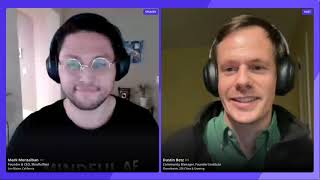
In this AMA, Mark Montalban, founder and CEO of MindfulText, explains why modern entrepreneurs need mental fitness and mindfulness. He frames the problem as a mismatch between our 2‑million‑year‑old brain and today’s fast‑paced, technology‑driven environment, which drives autopilot thinking, chronic stress, and unproductive fear‑based reactions. Mark cites scientific research (e.g., 47% of daily activity is on autopilot, 300 mindfulness studies in 2019) and corporate ROI examples (Aetna 11:1, SAP €90 M saved, Dow $22 K per employee) to show that mindfulness delivers measurable business value. He then walks through a practical toolkit of nine mindfulness practices, ranging from simple breathwork (deep breath, 4‑7‑8, Wim Hof) to open‑awareness techniques (Triangle of Awareness, body‑scan), attention‑training (candle focus, mantras, insight/vipassana), and habit‑formation strategies (Tiny Habits, BJ Fogg). He discusses technology options—SMS‑based delivery, Muse EEG headband, and low‑tech approaches—highlighting that the tool is secondary to consistent practice. Throughout the session, Mark answers audience questions about productivity, the mental‑health startup landscape, and personal R&R, emphasizing that mindfulness is a service mindset, habit‑stacking, and a lever for both personal well‑being and organizational performance.
Chapters
Guess I'm thrilled to introduce Mark Montalban. He's the founder and CEO of MindfulText, which is a startup that delivers science-backed mindfulness experiences through SMS-based content. And he's helping leaders to enable mental wellness across their company's workplace. Mark is the host of MindfulText Perspectives show and is a frequent speaker on the topics of mindfulness, future of work, mental health, and leadership development. He's also notably a former team member of Founder Institute HQ where he spearheaded work across a whole bunch of different areas, growth operations and partnerships over 6 years, scaling with FI from just 30 cities to more than 170 cities over the 6 years that he worked with us. So yeah, we're really excited to have you with us today, Mark. Yeah, please take it away. Cool.
So today I'm going to be talking about mental fitness, mindfulness, and meditation specifically for entrepreneurs. And it's a very important topic for everybody here. And there, there, there's a reason why so many people are, so many top-level people, leaders in the market today are practicing mindfulness. You can see a list of them here. And many of them are market leaders and people that we all look up to in terms of business and how to run businesses. This is just a small list. Of people that practice mindfulness and are outwardly speaking about their mindfulness and meditation practices. So what do they know that you probably don't know? They know that our brain is very old and that it was built over 2 million years ago. The reptile part of our brain was actually made 350 million years ago. Other scientists are noting it's 40,000 years old. Nonetheless, our brains are very old and technology has only been around for 120 years. So we're working to keep up with these rapid advancements that are happening. Our brains weren't designed to be living in the worlds we're living today. And to technology has just exacerbated how we perceive life. And these are many of the issues that are clinically being diagnosed for people. And being an entrepreneur, this is just becoming more and more of an issue. You know, if you ever are getting bombarded with information and you're getting overwhelmed and you need to take a break, That's because of our inability to work with our minds and understand how our mind is working. Chronic illness is a function of our brains. Part of it is a function of how we perceive stress, and stress is obviously pervasive throughout everywhere in our lives right now. We wake up to an alarm that is jarring us And then we go from meeting to meeting without having a calm sense of mind most of the time. We're just being pulled by life, primarily working on autopilot. So the good news actually is that mindfulness helps bring awareness of these issues, and that's actually the first step. And research actually suggests that 47% of our time is actually spent on autopilot. So we're not even aware that these sort of issues are happening. We don't pay attention to the fact that we're having a bad night's sleep. We just continue our days and we don't work to solve that issue. And I'll share with you how pervasive this is soon here. And these are some of the consequences to not working on these issues for yourself. We're constantly reacting to fear. You know, being an entrepreneur, if you are working with people and you're just automatically becoming aggressive, that's actually not your fault. That is the result of a 2-million-year process of our brains being in a caveman, caveman-type body. We've been working in humanity primarily in the Sahara, in the, you know, in caves, just eating, living, sleeping, and doing just primal things that our brains are not used to adapting to today. So, you know, like if you sent a poorly written email and you're just ruminating about how that was poorly written and you're spending minutes and seconds on that, and you know, that equates over time to a lot of wasted time. And that's just a small example of something that we spend a lot of time on, fearful on, and that's how our brains are configured to, to be. We're attached to the fear, we're attached to reacting aggressively, and just bringing awareness to that is really the first step of how to fix this issue and why it's so important. So just to recap, we're using a 2-million-year-old brain to process the world in, you know, the volatile, complex, and ambiguous world that we are in today. The good news is that mindfulness is the solution to this, and I will go into why that's super important. You know, when you wake up, you bring awareness to your thoughts, emotions, and body sensations. You're not just reacting to the Perhaps the dream you don't even remember. Maybe you had a really negative dream and you wake up pissed off and you think that people are angry at you, but perhaps it was your dream that put you in a bad state. When you wake up conscious, you can choose to be positive when you wake up, and therefore that spreads throughout many different people and relationships that you build. So you can put your biases aside. And I know this kind of sounds like complex and ambiguous, like, okay, I understand these concepts, but it becomes very simple once you put the practices in place. And when, when you think about meditation, meditation is what allows you to speed up the process. You can sit and really think about how your brain is impacting your life. You can sit and really take time to build a relationship with yourself and your mind. So the reason why this is— why mindfulness is the key is because people are starting to do much more research on on mindfulness. It started in about the 1980s with Jon Kabat-Zinn, who brought mindfulness-based stress reduction to the clinical space. Mindfulness is now in about 700 hospitals and medical clinics globally. And just in the last decade, we're seeing many, many researchers and scientists becoming more and more interested in this topic of the power of the mind. Just in 2019, there were 300 research studies. And actually, my company contributed to one of those research studies in 2020. And you know, what drives me to be in this space is how this is not only good for yourself and your business, but it's also good for humanity. It's a promising vehicle for human progress. It's been proven to Increase altruism, for example, right? This is something that many people in the world could benefit from building relationships across borders. So I'm gonna go into this next research study now, which many of you might know here. And I see somebody mentioning here that they do tai chi. That's a super awesome practice for, you know, building a relationship with your energy. And your mind. So that's great. And when it comes to mindfulness, uh, there are some misconceptions actually. So before I get into this case study about Wim Hof, mindfulness is— some people think of it as religious. It's, it's less religious. I mean, it can be considered religious, but from the perspective of where mindfulness is going now, it's much more of a scientific process for understanding and training the mind. So with Wim Hof, one of the most remarkable studies of the mind comes from this individual. And if anybody knows about this guy, feel free to ping in the chat if you have heard about him, but I'll go through what's so great about him. Just a little story. He kind of had a rough life recently. His wife committed suicide and he just got into a massively depressive state and he went into some really cold weather and just like felt better going into the intense cold. And what he found was that through his breathing practices, he was able to withstand crazy amounts of level of cold. He was actually able to walk to the top of Mount Everest without any, with just shorts on. And so scientists started to look at this guy and really want to study this, the process that he has built. And what they did is they actually injected this guy with E. coli, and he was able through his breathing practices to really mitigate the effects of being injected with a toxin. And not just that, he was able to teach these practices, which are based on mindfulness and meditation, to other people. So other people were able to leverage these practices of simply just learning to breathe and be mindful of our minds. So You know, it's not just good for yourself, it's actually also good for business. And these are some of the companies now that are starting to leverage mindfulness and meditation in, uh, as a strategy. You can see many different companies here that are also market leaders in their space. And so, you know, like, you can say that companies are doing this and that, but the actual ROI is looking to be quite large here. So you can see Dow Chemical saw a $22,000 per year productivity return on implementing a mindfulness and meditation programs for their employees. Microsoft, you know, all these companies are seeing a massive reduction in stress for their employees. And this is really because of the relationship with our mind. We often go on autopilot and allow these negative thoughts to just guide our days. But if you just take a moment to step back and think about, okay, I'm thinking negatively right now, I'm actually going to choose to think positively. And often we just allow these negative thoughts, which have been trained into our minds for millions of years or 2 million years, to think negatively because that's what allowed us to survive back then. But now, as so much technology is impacting how we live and changing how we live, it's a very important practice to build that relationship with your mind. And a lot of companies are seeing these benefits for their employees. So as a founder, this is not only just good for your own personal cognitive abilities and well-being, you practicing this will reverberate to all the employees that you have. And actually, I attribute a lot of my positive attitude and mindfulness practices to the reason why I have now 3 engineers working with me just on equity. And I know a lot of companies are fighting for engineers to work with them, but I leverage these tools with mindfulness to understand how, what drives somebody, you know, just understanding the holistic view of people that gives you this sense of how to best serve others, especially the people that work for you. So it's just been a big game changer for me and it's going to start to be a big game changer for other companies as well. So I have some other statistics here. The World Health Organization saw a big ROI for people that invest in mental health. The former CEO of Aetna saw an 11-to-1 return on investment with helping employees become more present and aware through mindfulness. The head of the Chief Mindfulness Officer at SAP, over the span of 3 years, they were able to get a return. I spoke with this person through a webinar actually, or was in an event with this individual, and he mentioned actually up to €90 million was saved. And they did a 3-year study on implementing mindfulness practices Throughout all of SAP, they've got around 40,000, I think, employees. And just with a 1% increase in engagement, they were able to save €60 million in operating expense. So as you can tell, these— the mindfulness and meditation is very powerful, and how you use it is more complex, but the actual act of doing it is actually quite simple. So for these next few slides, I'm going to cover some of the best mindfulness and meditation tools for everybody to practice as an entrepreneur that I found. And some of this actually is brand new in terms of the framework for how to think of mindfulness. Maybe I'll just get into that really quick here. I'm going to skip Forward a couple slides. So this is brand new research from the Institute for Organizational Mindfulness. And this is really putting together how can we organize these practices of the mind into a structure that helps different aspects of life. So this pyramid works very well as a pyramid, right? With a breathing practice, most people actually breathe shallowly. The first tool that you can use to start to build a relationship with yourself, become aware, is the breath. I'll get into a breathing exercise soon here, but I just want to share with you all this framework that is becoming the foundation for how to think about mindfulness practice. Again, it's not religious. It's an actual set of tools that you can use to train different aspects of your mind. The breath is really what tells your body that you can calm down. Like right now, are you breathing shallowly? I'm breathing shallowly right now. I want to take a deep breath. I'm going to take a deep breath right now. And I can already feel that, you know, I'm chilling out a little bit just from, you know, being excited about looking at these screens and speaking with all of you here. And the next aspect of that is awareness. With the practice of the breath, you can use breath as an anchor to direct your awareness, right? Like, we're being pulled so many different places from our phones to Slack notifications, you can choose to focus your awareness and that goes directly into an attention practice. So all these different parts of the, um, the pyramid here are actually scientifically validated to improve these aspects on the right side of the column here. And so I'll go into those a little bit more, these specific practices in a second here. So for these next few slides, I'm going to recommend about 9 different practices for different occasions that you can use even right now. And so the first one is super simple. We just did one, or I just did one. Looks like Dustin just did one as well. Simply a deep breath. When you notice yourself becoming stressed out, just take a moment to take a slow, deep breath. That's A right there. And it gets more complex here, or the applications become different. So if you're noticing your mind going to the next one here, after that first one, you can just literally use a deep breath whenever. And it's super powerful to just take a moment, step back, sit back on your chair, take a deep breath really quick. I know it sounds kind of lame, but literally it's scientifically proven that if you take a deep breath, It communicates to your body that everything's okay. You're not in the Sahara. You're not running away from some tigers. You're sitting at a desk, just very safe in front of your computer. Take a deep breath and remind your body that everything's okay. The next practice here, there's a little diagram, and this practice is actually recommended by some doctors, and it was created by a doctor. And the reason why it's structured like this is because it distracts your brain enough that you think less about other things. So it's a structured breathing practice. What you do is you inhale for 4 seconds. So 1, 2, 3, 4, and then you hold for 7 seconds and then you exhale for 8 seconds. And just doing this repeatedly and counting in your mind or out loud distracts the brain enough so that you're just not— you don't have time or the capacity really to be distracted by anything else. So this practice is something that you can take anywhere with you to just do whenever. And so the last breathing practice that I really like is is the Wim Hof breathing exercise. And so I'll explain this one a little bit. He developed a— so I mentioned how he was able to train people to decrease the effects of a toxin actually being injected into them. He has his practices online, and you can simply go to YouTube and search Wim Hof breathing exercise. It's a very powerful exercise. And actually, there are now trainers and startups adapting that breathing process and teaching more people. So this concept of breathing, you know, if you're new to mindfulness or meditation, it sounds like so trivial. But if you actually dive in and do the research, it can get very complex. But from a beginner's perspective, It's, you know, you can start off with a deep breath, but you can get into more complex breathwork exercises. And the Wim Hof one I recommend to a certain degree. You can, if once you start doing it, you can feel very tingly. Do not do it in a pool or while driving because you may pass out. But I'll explain a little bit about the mechanics of how it works. So what you do is you, you do about 40 breaths at a normal pace. And what that does, it kind of puts you into a hyperventilative state. And what you do, you do those 40 breaths and your, your body starts tingling a little bit. And what you do is you hold your breath after you do those 40 breaths. And what that does, it shuts off the part of the brain that is overreactive. This has been scientifically noted that happens when you do the Wim Hof exercise. So it, it like you get into a super concentrated, focused, and calm state when you do that. And then you, um, you exhale once and then you inhale and then you hold that. For, I think, 10 seconds. And so that's one cycle. And you can do that up to 5 times. And I was actually doing this. I was actually able to hold my breath for over 3 minutes. And that's because you hyperoxygenate your body. And so this, that, that, you know, I don't even fully understand how to explain it. I just did a bare explanation of the actual process. The main thing I recommend is to not do it while driving or while in a pool. Just do it in a safe place. And you can feel some pretty cool effects from just doing the Wim Hof breathing exercise. And it's a great intro to how breathwork exercises can actually be beneficial for you. Sometimes I actually like to do the Wim Hof breathing exercise before a presentation Or if I'm feeling really stressed out, I just go straight into a Wim Hof breathing exercise and I just feel so much better after. So the next type of practice that I'm going to share with you is an open awareness practice. And this is great for entrepreneurs because especially if you're, uh, maybe you don't have a great creative process. This actually trains the brain to become hyper-aware of your surroundings, but in a very mindful and focused way. So with this first exercise, this is called the triangle of awareness. And what you do— this is a mindfulness, is a meta habit. So we can all think of like habits that we consciously do, but if, if you have a habit that you just do that you don't even think about anymore, it's considered a meta habit. If you make your bed every morning without even like having to force yourself to do it, it's considered a meta habit. So the goal of where you should go with mindfulness is to turn it into a meta habit. And this is a meta habit that I have when throughout my day, anytime I notice I'm off my center, off my equilibrium, I do a triangle of awareness check and I check in with my emotions. Am I like pissed off right now? What happened? No, I'm not. None of that's happening. Are my thoughts veering off into something negative or am I daydreaming too much? And then I finally check my body sensations. Is, you know, is my lower back just really painful or something like that? So oftentimes we're not paying attention to any of this at all. And yet a lot of these things that happen to our thoughts, emotions, and body sensations, they're actually guiding a lot of how we act. If our thoughts are going a certain direction, subconscious thoughts even. Maybe you're like thinking about something that happened yesterday and it keeps coming back and, you know, distracting you. Many people aren't aware that those kinds of things are happening. So doing this, having a practice of awareness, gives you the ability to stop whatever is not productive for you and choose the actual direction that you want to go, choose the how you want to spend your energy. And so another practice along the same lines of open awareness is body scanning. And this practice has been highly scientifically noted to be beneficial. And you know, you can just search YouTube and search body scanning meditation. And this really gives you a great relationship with yourself. I, I use this meditation really to practice being okay with, um, well, so first I use it to just check in with my body because many times, a lot of, in a lot of cases, we, we get sick because we're not paying attention to how our bodies are doing. So that's one great reason to practice body scanning, especially if you're not going to the doctor too often. You can actually pay attention to your body. Are you like twitching in your eye all the time? Does that mean you're not getting enough sleep? Are you not getting enough vitamin D? You can pay attention to your body and fix it with your awareness. And so, you know, that, that practice is also very useful. Going on, I have a couple more slides here on some different practices that you can use. These are a little bit more intermediate, but also very important because our attention spans actually have recently been noted to be less than a goldfish. So that's like, we only have time enough to watch a a short TikTok, and that's where our attention span is going. But what you can do and what's recently been proven from a research scientist in Florida, actually, named Amishi Jha, she did a lot of research on attention. And actually mindfulness and meditation can allow you to build a superhuman ability of attention. It's like basically being on Adderall, uh, but not having to put your body through Adderall. Um, and so these practices here will help you build a superhuman ability of building your attention. And so a candle meditation is pretty simple. What you do is you can just put a candle in front of you and For increasing amounts of time, your goal is to focus on the candle, the flame, and nothing else. And the goal here is to increase the amount of time that you can spend looking at that candle without getting distracted. So you can actually build up the time that you're looking at a candle for up to an hour. You might start off with just a minute looking at a candle, and maybe you're just like, you're, uh, you can't bear it anymore and you get distracted. You can build that up through practice and just look at the candle and focus all of your attention, emotion, body sensations into that candle, and that will actually change your brain physically to have more focus, to have an insane amount of focus on anything that you want. There are many guided meditations that you can Look up online for focused attention guided meditations. We actually participated in a study, and in just 6 weeks with— through our program, we were able to reduce mind wandering with people just by reminding people, where's your attention, on a weekly basis, and having them do focused attention meditations. 20 minutes, even 3 times a week even is just the least amount that you can do to really build your attention abilities. And this last one here, this one is more, this one is kind of a tricky one. It's, it can be considered religious, but it's actually, I was just talking to a famous angel investor and he uses mantras pretty heavily. And really, you know, if you think about it logically, it's a very easy and useful practice. If you're ever distracted or if you're feeling down, you can really just use a set of words to remind yourself where you want to go or the feeling that you want to feel. And the reason why I put imprinting here is because the state that we're in right now is that we're being bombarded by so much technology and emotion, even from social media. You might've heard that Facebook is actually really bad for teenagers. It's because they are constantly bombarding themselves with these negative emotions. And what that does to your brain is it trains your brain to feel that emotion often over time. So what can you do to reverse that? You force yourself— maybe not force yourself, but you train yourself to think positively. And there can be other effects there. You could literally build the habit of having motivation just by doing something as simple as having a mantra and saying, when you wake up in the morning. The angel investor I was talking to, he plays this recording by Muhammad Ali every morning, like over and over and over again. And he goes, "I am the greatest. I am the greatest." He just repeats that in his head. And even just now, if I— me saying that to myself, I can feel like a change in my body. You know, a lot of us like tell ourselves a lot of negative things all the time. Just be aware of how negative you're talking to yourself and just know that if you continue to do that, it's going to send you in a direction that's not necessarily positive, uh, likely. And through practices like this, you can set yourself up for success. And as entrepreneurs, we need everything we can get to be successful. And so the last one here Insight, I, I used a lot when I was starting my startup. And this is really about discovering your why for me. And this is advanced because if you're not comfortable sitting with yourself and so many different thoughts come up, then you're not gonna be able to necessarily get all the benefits from a vipassana meditation where you really get insight into where you want to go in life and what you want to do, what makes you happy, what makes you motivated. So this is an advanced practice, but once you start to practice mindfulness, you can then be able to quiet the mind with very little effort and then go into a state of just open-minded awareness and ask yourself a question. What do I actually want to do with my life, for example, and just meditate on that question for an hour and you can come up with some really awesome solutions for yourself. And so I use this when I'm feeling stuck, for example, and I need something, need an idea, or I— there's some problem that I'm running into that I need help with. And there, there's some guided meditations online as well on this topic, but the insight type of meditation as mentioned here is really about, uh, you know, deepens your self-knowledge and awareness. And it's at the top of the pyramid here because you have to have built upon these other tools within mindfulness in order to best leverage, um, the insight type of tool. So that's pretty much it for me. I think I went a little bit over time. Sorry, Dustin. But if you— if anybody here wants more resources on this, feel free to email me directly, and I will just— I'll share this presentation. I made a little link here if anybody wants to subscribe to any stuff. I can just send you a lot of great stuff for entrepreneurs. And the last thing I'm going to have everybody here end with, if you don't remember anything at all, is that energy flows where attention goes. So by really choosing where you put your attention, even if for the first 5 minutes it's really boring, if you continue to focus your attention on something, energy will eventually flow to it. So thank you all for being here. That's it for me.
Thank you, Mark. That was a super interesting presentation. And yeah, I feel like just to kind of kick it off, please don't be shy, put your questions in the chat. But yeah, for me, and I am not entirely new to this concept, I've done a bit of mindfulness meditation for a while. But for those who don't meditate, I think these notions of mindfulness can seem vague or fluffy. And so I really like how you explained it, that in actuality today, these are really firmly grounded in the sciences of human psychology. And as you showed with like Wim Hof going into the machine, even neurophysiology increasingly, but looking at the brain and actually seeing how these practices can change how your brain works. So yeah, I liked how you really grounded it in that science. I want to kind of ask about productivity and I sort of hate to like take it in that very deliberate direction because that's not usually where most people like approach this. But for entrepreneurs who are seeking to like get something really practical about it, like that kind of productivity element that flows downstream or from coming as you like ascend that pyramid that you showed is maybe a reason or a motivation for why they would want to start, you know, getting into this stuff. So how do you think about, you know, mindfulness as it relates to productivity? And are there really specific mental exercises, maybe some of the ones you already talked about, or techniques that, recommend founders put into practice if their explicit goal is really to achieve some greater level of productivity downstream as an outcome?
Yeah, it's an interesting question and definitely a topic that people perceive differently. Corporations are thinking about productivity with the employee in mind now, right? It's not about productivity for them, but about focusing on their well-being. And they're, they're thinking that by investing in employees' well-being, then it will build the foundation for motivation. Um, and that's where my mind is in right now because I'm working with a lot of, uh, businesses. But when it comes to entrepreneurship, like, if you're worried about productivity, to me that sounds like a misplaced list of priorities, and that can come down to your why. Like, maybe you're not executing on your priority list because you haven't really convinced yourself that this startup idea isn't the right thing for you to do. So, um, you know, I'm just thinking about all the reasons why an entrepreneur would be worried about productivity, and it sounds like it's really to do with the priority list. I'm not 100% sure that mindfulness addresses every aspect of how to organize a priority list. It sounds like, you know, there's some business aspects to that as well, like do you focus on fundraising first? Do I focus on my team? Do I, you know, do I, do I spend a whole day each week just looking at my priority list and For me, I've really been focusing on my team as one of the biggest areas that I spend time on. And because, you know, like, I'm just one person, but if I focus on making my teammates happy, then that just creates an exponential amount of work that can get done. So the relationship angle is something that I focus on heavily, not just with my team, but with everybody that I work with. And through a mindfulness practice, you can, you know, it's less about yourself. It's more about, okay, how can I serve this person? And how does that, you know, secondarily, how does that help me in the business? But it's like, you know, how can I be of service to people? And then putting away the fact that, you know, what's in this for me, all that kind of stuff, you know, leveraging mindfulness, you can really put doubts aside and just think about what motivates you and just continue to work. You know, given that, you know, some of us, a lot of us are working on tight budgets and all that kind of stuff. So, you know, there's also, of course, that type of mindset that also needs to be considered.
Yeah, there's a question in here, and I'm going to do this. I haven't done this before. I think this is like a new Airmeet thing, so I can put it on the stage. This question is, uh, yeah, from, from Rashmeet, any, um, asked, can you talk about— this is really your personal experience, I guess, as a founder, you know, potential for startups in the mental health space, especially as it relates to mindfulness? Do you see a lot of, or do you have to do a lot of convincing of your investors, customers? I guess that's kind of like saying that we're in some kind of early adopter phase here where these things are becoming more and more mainstream. But yeah, what are your thoughts on Rashmeet's question here about just the shape of the spaces today?
Thanks, Rashmi, for the question. Uh, definitely from my perspective, it feels like an early adopter type of landscape. With that, there's a lot of appetite from existing, uh, players in the space. We just landed a partnership, uh, that was signed with this organization called the Institute for Organizational Mindfulness. And we're co-launching a product with them this January, actually. But when it comes to, you know, the appetite, I have been doing a lot of educating publicly and privately with people like, you know, what is mindfulness? Is it religious? How does it apply to business? And a lot of this stuff is just now getting researched. Our partner IOM is researching They came up with that pyramid actually, and how these specific practices, how do they align with solving specific business goals? And so we're at the tip of the iceberg here when it comes to how mindfulness can be applied to business. And I, I, I forget his name, but I heard another individual say that some guy that works with the military actually, that, the mindfulness and the study of the mind is going to be relevant for the next 2,000 years.
Yeah. Well, I loved how at the beginning of your talk, you talked about old brains, like in our new age of modernity, because I do feel like that's the core tension. Like that was a really good setup because yeah, our brains, we just didn't evolve to live in the world that we now live in. And that's like the reason that we have all these stress responses and stuff when we're kind of have to be so deliberate in retraining our minds to not be Neolithic age people because that's what our brains are. At any rate, yeah, I had a kind of related question about sort of technology in mindfulness and meditation. You use SMS as your content delivery platform at MindfulTeks. People are probably familiar with some of the big market-leading meditation apps like Headspace and Calm. Yeah, I'm just curious if you have like other thoughts about that, like these practices becoming more and more mainstream, kinds of technology platforms that these big organizations— you talked about the ROIs that Aetna and SAP have had. Yeah, I mean, how do you think they're going to change in the coming years, how people like use technology to build up their mental fitness muscles, so to speak? Is it better as people go back to the offices? We used to sit in rooms and have meditation, but I feel like it's more and more, it's kind of solitary, like people are sort of pursuing it on your own. I don't know, do you feel like there's better or worse ways, or I don't know, thoughts on like the technology aspects that are involved?
It's interesting because the nature of, you know, traditionally learning mindfulness has been on a one-on-one basis with a coach, guru, a person. And there are certainly a lot of technologies coming about to address how to train the mind. And they're really awesome. Like I use the Muse headband and it really taught me like just one shift in a stressful thought turns off— it gamifies your thoughts basically. I don't know if anybody here has used the Muse headband. But if you're like not thinking anything, you start to hear birds. And once you start, like maybe a thought comes straight into your mind, then the EEG band knows— oh, sorry, I just turned on music by— I can't hear it.
It's not coming through your microphone.
Okay. I just turned it off. When it comes to technology, you know, this is similar to all the other industries in my opinion. Everybody right now is talking about the metaverse and how VR and AR, you know, people were recently just talking about crypto and all that kind of stuff like NFTs. A lot of this, a lot of the hype is being driven by a lot of these trends that are coming. But when it comes to wellness, like a lot of this is just in the mind. So really whatever gets the job done, to help people build a relationship with their mind. I, you know, this is part of the reason why we're in such a low-tech type of technology, although we are building high-tech into it. It's not necessarily needed to have high-tech, although it helps to get mainstream into it.
Yeah. Or it helps to get more people their foot in the door. I think it's really interesting that you replied with an example that I wasn't even thinking about, a wearable device, which is definitely definitely like even more in, uh, getting more technological than just using like a meditation-based app, which is usually like you're listening to a guided meditation. That's definitely another level. I've never used that headband, but, um, yeah, so there's all kinds of ways to get you started. But like you said, it's really just about doing it, whatever works for you. I have another question that I want to ask you sort of about habits. You talked about that habit formation, and like, yeah, so many of the positive outcomes or like it's driven by like this very deliberate habit building in mindfulness. And I don't know if you have tips kind of in general on going about that positive habit formation or building your stick-to-it kind of mental muscle because how to make yourself get back on the horse again when you inevitably fail, you have to pick it back up. That's like always happens with meditation, that's sort of the name of the game. Yeah, do you have like any really things you use for habit formation or thoughts on like that higher, I don't know, that general concept? It seems to apply to like all the different practices.
Yeah, when you, so I'm gonna start off at the end here. And when you start to have a mindfulness practice, at least in my experience, then you can like instantly choose a habit that you want and have it be a habit the next day because you are fully aligned with your thoughts, emotions, and body sensations. And you don't need to take the time to continually remind yourself. And I'm not saying that I can do that with everything, but it's definitely much easier for me to build a habit just by choosing and setting the intention to set that habit. I will build that habit. There are— there is a bunch of research now going into habit formation. I'm forgetting his name, the person that is responsible for behavioral research at Stanford. He wrote this book called Tiny Habits, and he developed a process to Hack your habits. And really, that's what we have to do. We have to trick our brains because it's so old school in order to do what we actually want it to do, uh, because there's so many different subconscious strings pulling us in different directions. You know, oh, TikTok, let me just spend 30 minutes on TikTok, and it turns into 3 hours of just like continually scrolling. We don't actually want to do that, but we're getting pulled to do that because of how sticky the external is. So with, um, this, this book, Tiny Habits, what he says to do is to choose the habit you want to build and create steps to it. So if you want to start walking more, the first step is to get your walking shoes closer. Right, and to make it incrementally easier and easier for yourself. So I actually do this with myself. Uh, if I want to work on my startup more, I take away everything that could convince me not to work on my startup. I gave my Xbox to my nephew, for example. That was a huge time suck. I, uh, make it easier for myself to work. I Bought a monitor that's really nice. So, you know, I get more attracted to coming to sit at my desk. I have a really nice chair. And so the other aspect to the tiny habits formula is to create micro-celebrations. And so this is similar to, you know, just clicking like on Facebook. That's like a little mini celebration to receive a like and give a like. And so you can do that same process physically. So say, for example, your goal is to run more. Your first step is to put on your running shoes. Next step after that, according to the tiny habits method, is to celebrate just putting your shoes on. And you can do that by, you know, like yelling Awesome. Or like drinking a cup of water, you know, there, the celebration doesn't have to be like a super strong celebration, but you could just designate something to be a celebration, do that. And that actually tricks the brain into rewarding itself and building that habit to do something.
I like that. Yeah. You get a little dopamine hit. It's like the, the, I like how you relate it to the distraction economy of the likes. Like, yeah, you get those dopamine hits from, from that, but if you can build the habit of rewarding yourself for positive things, it can have the same effect. That's really interesting. I like that. Yeah, what's the book called again? Tiny Habits?
Tiny Habits.
Okay, yeah, cool. Well, yeah, if anybody else has any questions here in the chat, please— oh, by who?
BJ Fogg.
BJ Fogg, yeah. Please drop your questions in the chats if you have any more. The final question that I have for you, Mark, if nobody drops any other ones in, it's just sort of You and I have known each other for a couple of years, but what are you personally doing right now to find some R&R time apart from actually practicing meditation? You just recommended a book, but is there anything else that you are streaming, reading, listening to, watching that you would want to recommend to founders, whether it's related to mindfulness or just something that you've found interesting recently?
First thought that comes to mind is that there are many different hobbies and things to do to enrich your life. And for better or for worse, my wife and I recently started a TikTok for our dog. And, you know, I'm also very mindful of how much time I spend on TikTok, but it's undoubtedly a great growth channel. So we're testing out TikTok, and she's actually just in the last couple months gotten like close to 3,500 followers. And so what I recommend is to tie something productive, uh, to a hobby that you can do that makes you happy. It, you know, it doesn't have to be related to technology. That is you know, can bring a whole host of other problems. But find something and just act on it. You know, we all come up with these ideas, oh, I want to visit this place, so I should reach out to this person, or I want to connect with so-and-so, I want to try out this. Just do it.
Yeah.
And just see how it goes and try out new things. You know, there's that old saying that we progress the most outside of our comfort zone. So I know that's kind of, you know, going outside of your comfort zone might be more stressful, but if you continually practice going out of your comfort zone on your free time, it can definitely be a great process for being successful in entrepreneurship, at least from my pre-seed status Yeah, yeah, that's really interesting.
I've often— I've been thinking for like a year now, well, pretty much since I moved during COVID that, you know, I would also like to develop a side hustle like that ties to one of my personal hobbies. So I'm really thrilled to announce that, yeah, you're spending time on your dog and making like content about it because it's something that, yeah, it relates also to habit formation as well that you're talking about. It's kind of something that I've been telling myself I should do something similar. I was thinking like plant-related content. I'm into gardening, but I haven't done it yet, so maybe that's an action item I can do. One final question, I guess, before we switch to the open networking, uh, because somebody asked here, uh, that I'll put it on, um, tools to manage anxiety and stress. Feel free to recommend names or something. He says he's practicing meditation, but it seems to be not enough. So, um, yeah, any recommendations for Daniel?
Mm-hmm. I'm not sure. Thanks for the question, Daniel. I'm not sure if you saw what some of the practices that I was sharing, but, you know, it really depends how serious the anxiety and stress is. And, you know, you're not alone with this because, you know, especially being an entrepreneur, it is one of the most stressful jobs. And, you know, base level anxiety for the entire world right now is through the roof. So this question, just from you being aware of that, is actually the first step. And one of the practices that I mentioned was building a breathwork practice. And just by having a breathing practice, it can quell a lot of that anxiety and stress. Uh, for example, the Wim Hof breathing exercise I love to do when I'm just like, almost feeling burnt out or feeling too stressed. I just like, that's the first thing that comes to mind for me to do. If it is more serious than that, then I would recommend even going to a therapist to talk about these things, talking with a professional. If you feel that it's too, it's light enough for you to handle yourself, then, you know, breathwork exercises are super great. There are You know, a lot of the top market leaders and entrepreneurs that I mentioned at the beginning of my presentation, they all have their own mentors and coaches that are helping them. So, you know, having somebody that you go to when you're feeling stressed out is definitely something that the people at the top of their games have. So it could be worth investing in somebody like that.
Yeah, that's really interesting. Yeah, having a, having a coach. Yeah, finding a mentor who can do that. But definitely, as you said, there's Yeah, a lot of professional, you know, ways that you can address it too, if it's— but yeah, thanks so much for asking the question, Daniel. We appreciate kind of the vulnerability and engaging on the topic because it's definitely a process, right? Like, you never— there's master meditators out there, but it seems to me at least that my practice over the past couple of years, it's always a journey. You know, you never really get exactly at the top. So I think The stick-to-it-ness is part of it. And yeah, not getting upset with yourself. Like, that's another— I don't know. Now I'm speaking anecdotally, like just telling you what I think. But yeah, when you fall off the horse with your meditation practice, like you just can't be upset about it. Like, take a couple of days off. It's not the end of the world. You know, you can pick it back up again. But yeah, I super appreciate all your time here, Mark. I'm going to throw a couple of slides back up here just to talk about the networking session before we switch to open networking. Thanks, Mark.










