NuLife Founder Interview: JD Meints, on Virtual Behavioral Healthcare
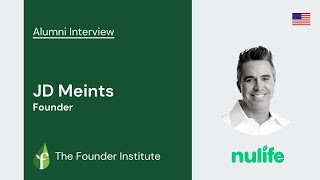
JD Meints founded New Life Virtual, a social-network app connecting addiction patients with therapists, peer support, and family. Only 10% of people needing addiction help receive it, and 50% don't finish treatment. His platform uses wearables and analytics to alert providers early and tracks recovery through social, financial, and cultural capital.
Chapters
¡Hola!
Welcome everybody, my name is Dustin Betz. I'm a community manager at the Founder Institute, and I'm here today with JD Mintz. He's the founder and CEO of New Life, which is an FI San Diego portfolio company whose platform aims to revolutionize patient behavioral health treatment. JD Mintz, thanks so much for joining us today.
Thank you very much for having me, Dustin, and Founders Institute. I appreciate it.
Yeah, so before we dive into your company, New Life, the first question I always like to ask founders first is, could you please just tell us a little bit about yourself and your startup journey? You know, what were the experiences of yours professional or personal that led you to founding this platform for mental and behavioral healthcare?
Yeah, absolutely. Um, very personal story. So, uh, I am a third generation entrepreneur. I, um, previous to this company, um, I found my own recovery on March 17th, 2012. So I got sober approximately 10 years ago, uh, last week. And in 2013, started a brick and mortar addiction treatment and mental health treatment facility in the LA area and did that all the way through 2019. And during that journey, really realized what worked and what didn't. And that's what led me to what I'm doing today with New Life Virtual.
That's awesome. And congratulations, yeah, on your 10-year sobriety anniversary. I know these things are always a journey. So that's a big one. Sure. So I know because, you know, you're an FI portfolio company, I'm already somewhat familiar with New Life, that you're delivering holistic care to maximize patient engagement retention. But please give us your version of the short pitch. So for those most watching would be totally unfamiliar, what is New Life?
Yeah, so absolutely. Let's just start with, you know, the fact that 100,000 people died over the past 12 months from drug overdoses. And that's just the tip of the iceberg. And that's one human life every 5 minutes. And we know that opioids are addictive. And so New Life Virtual was a company, is a community healthcare app and platform to help people struggling with addiction get and stay better. We use the same addictive nature of social networking to engage people in a positive manner, connecting them with the best of the best treatment providers, providing an on-demand community treatment ecosystem. So what this does is keeps people connected. It bridges the gaps in current treatment models increases access to care and social support. Because the reality is that 10% of the people that need help get help. And of the ones that get help in the current model, only 50% complete treatment. And some, you know, it's a little bit worse than that.
Yeah, yeah. We're gonna talk more about the kind of full scope of the problem. I guess like, you know, if there was one sort of silver lining of the past 2 years, the pandemic, it does seem like we're in a new age of like real possibility for telemedicine. And I'm assuming that, you know, pre-COVID, the tech options available to mental and behavioral healthcare practitioners and recovery professionals, that it was more limited. But yeah, like New Life, you're using tech, as you sort of alluded to, to enable that connected and holistic experience for patients. So yeah, I guess this is kind of similar to how you framed it, but talk to us just a little bit more about that full scope of challenges you're addressing, or maybe just hit those stats again, because it really is very impactful how how big of an issue it is and maybe why is patient connectivity so important for behavioral care in particular?
Yeah, I mean, because in general, the old model or the current model of treatment tended to treat addiction and put everybody in a box and treat it as an acute care situation. And it's more of a chronic disease, much like diabetes. And so You know, part of the problems with addiction treatment is, number one, people don't know where to turn, and there's the limited access. So 10% of the people that actually need care are actually getting the care that they need for a variety of reasons, whether it's affordability, access, transportation. And so what the digital— in 2017 and '18, when I owned the brick and mortar, we started to experiment with doing virtual virtual care environments to put together a full outpatient treatment program delivered online. So we were delivering group therapy, individual therapy, and case management virtually. We realized once people kind of were like, hey, what's this? They liked it because they could get their treatment done and then get back into life, whether it was looking for work or going back to school. And COVID has exacerbated the situation substantially. The numbers are through the roof. Group, I mentioned the overdose deaths in the past 12 months, that was up 30% in one year, the greatest jump we've ever had. But more alarming is, you know, it affects 1 in 3 households in America. You know, drug abuse and use is up, you know, over 60% in our adolescent populations. And we've yet to see really the tsunami I think that we have coming out, you know, that's gonna be the aftereffect of COVID for years to come. And so providing on-demand care and kind of whether it's professional care or peer support, we wanted to start an app and a platform where people could kind of drive their own care and develop relationships with providers that best match what they need. And whether it was going in person or attending online treatment or just engaging in peer support or support groups like AA or NA, we wanted to give them a platform to build those relationships and connections all in one place.
Yeah, yeah. So just in the United States, as you said, 1 in 3 households, 90% of the people who would fall into, I guess, the addressable market, if that's one way to kind of frame it, who need this kind of support are not currently getting it. So yeah, so we've really talked about the need, I guess, a lot. Tell us more about NewLife, your platform, your solutions. Yeah, how is it working or will it work for patients or to flip it on its head, then on the practitioner provider side.
Yeah.
What's it like using the NüLife platform?
Yeah. So what, you know, I got sober going to AA and, you know, for those of you that aren't familiar with AA or NA or any of the 12-step programs, there's a lot of that. It's not for everybody, but there's what has worked And what continues to work with that is really the fellowship in the community, right? Addiction is what I call a disease of isolation. And we need to find connection and to feel connected to others that have gone through something similar. So what we wanted to do with our platform was very unique in the fact that, you know, I'll say something. The fact is we know heroin's addictive. Opioids are addictive, and we've heard a lot of studies about how addictive social media is and social networking. And so we wanted to use the addictive nature of social media and social networking, but in a positive way, to allow people to make very positive relationships with people that have, have, or are, or are going through, or are in similar situations. And so they can, they can be positive influences to those that are looking or seeking answers to why they drink or why they use or why do their children and what steps can they take to help them. And so the app is really built in a kind of a social networking engagement aspect of it so that people can engage in their journey how they'd like. And from an enterprise or provider's perspective, One of the most difficult things that we had as a brick-and-mortar facility was number one, finding access to great providers and clinicians to provide care. And number two, just the physical limitations of where we were located made it difficult to serve everybody that needed help. And then just the pure scheduling of everything that we have to do in a, you know, in developing a treatment plan or a treatment course. You know, there's group therapy, you know, 3 to 4 hours group therapy in an outpatient setting multiple times a week, individual therapy, you know, with, with their therapist, maybe case management to go through, you know, social issues or, or legal issues that people might be having. And, and so from a provider's perspective, we allow them to digitize all of their services. So think maybe, you know, Shopify for, for an e-commerce distributor. They can, they can digitize all of their services and schedule those with their existing clients but then also warm up new potential clients or prospective patients that might need their help, you know, in a softer, more educational way. So what it does is it, you know, in the traditional model, treatment is very, is kind of short-term, right? You have this 30-day program and maybe they're going to continue an outpatient program for another, you know, 60 days when in reality They need to be engaged and connected with their care team or peer coaches or peer supporters for much longer than that, a year, 2 years. And that's simply what wasn't happening. And that's one of our main benefits that we provide with New Life.
Yeah, yeah. I really like how you framed on the provider side, like how the platform solution sort of can make the lives easier, I'm sure, for all the practitioners. And I also really liked Yeah, how you said it's something I've heard before, but yeah, addiction being a disease of isolation and how that lends itself to a solution that's social, as you said, to like maintain that ongoing relationship far after you would have had like a traditional outpatient service. So yeah, so that makes a lot of sense. I want to ask you next about sort of social impact. You know, talk to us, it's a buzzword, but talk to us how you think as a health tech founder about this notion of building and measuring wellness as an outcome. You talked about your background in your brick-and-mortar world, so you can attest to lots of positive patient outcomes in one-to-one settings, but now building wellness at scale, if you will, to use another Silicon Valley word through New Life's tech, how do you conceptualize those positive impact outcomes that you're making? Is that something you're measuring? And, you know, if so, how?
Yeah, I mean, it's a great question. I mean, I think, you know, in telling a story about that is recovery is different for everyone. And I want to say that, you know, what I state here a lot are my opinions, and people have different opinions about what recovery and sobriety and all of these things might be. And it is one of the favorite dinner table conversations that come up when I am at dinner with friends or associates and, you know, you get the question when they know you are in this business. It is like, hey, I drink this much. Am I an alcoholic? Or, you know, I take these pills and, you know, am I an addict? And it is really not for me to answer. But, you know, from a wellness and recovery perspective, it is all about is my life getting better? Am I engaged in my life? Am I engaged in my community? Am I engaged in, you know, helping other people find a positive path in what they're on? And from a scalability perspective, you know, one of the things that I hadn't mentioned is that we have a significant shortage in treatment providers. And that gap of the amount of people needing help and the amount of people there to provide help is gonna continue to widen over the next in the next few years. And so the only way to bridge that gap is through the use of technology. So one of the different ways that we look at measuring wellness and recovery is, you know, through tools like the Recovery Capital Index, which helps measure long-term. You could take it, I could take it with 10 years of sobriety and recovery, and it kind of tells me how am I doing today in relation to how I was doing, you know, 30 days ago or 60 days ago with regards to my social capital, financial capital, my cultural capital. And by taking this, I realize, you know, how am I doing right now and what's kind of missing in my life? And what can we recommend for them at that point? Do they need to engage with some more people in their community? If they're having financial struggles, can there be resources that we can point out for them to utilize to help their financial situation? So measuring wellness and recovery at scale is just is using technology to, in a non-invasive way, ask people questions. And by getting— by using the social engagement and social networking part of our app, we can improve the amount of responses that we get and have better longer-term data to kind of predict how people are doing longer-term and which providers As importantly, which providers are getting the best outcomes over time?
Yeah, yeah, because long term is really kind of— everybody wants to have that anniversary like you, 10 years sober. Like, that's the ultimate goal for everybody. So yeah, that makes a lot of sense. So the key features, I guess, you know, first from the patient perspective of using the platform, I know there's a lot of features that are built into the NewLife app. Ability to monitor patients, obviously, virtually, have virtual sessions, personalized content that's personalized to that particular patient. And then, yeah, for outcomes and assessments, which is sort of what you alluded to, the ability to do that virtually is much easier. Are there any key features that we haven't talked about yet that you want to highlight? Or conversely, like on the provider enterprise side of the platform, anything that you want to tell us about, Nuley?
Yeah, I mean, I think, you know, long term it's really going to be important for us to understand and learn about our clients and both providers and families that are using the app and the platform to make really intelligent recommendations to people to interact with. So on our roadmap, our using both assessment type of data that we gather, behavioral analytical type of data to determine someone's path and to make positive recommendations. And so really also the integration of wearables, right? Devices that we wear that are measuring, you know, you've got things like Apple Watch, You've got, you know, other wearable devices that measure, you know, our fitness levels, our, you know, blood pressure, how are we sleeping, things like that where we can start to determine, hey, is somebody starting to be at risk for perhaps, you know, a slip or reuse, or do they need an early intervention? And could that early intervention just be, hey, we want to send you pictures of your family or different positive things that get you back feeling inspired. Or is it something more, hey, we wanna prompt an interaction with your care team or with your peer recovery circle that helps you stay on the right path just by detecting that it seems like you have anxiety that's cropping up. So we want to intervene earlier so that people don't fall further and require more assistance than they would if there wasn't that early intervention. So that's probably some of the most important things is to go upstream and to try and keep people on the right path or whatever the right path is for them. And one of the other big things that I think gets overlooked overlooked, and I haven't spent enough time talking about it, is the, the, you know, interaction, integration of working with someone's family or support system, which is so important to recovery. If I go to treatment and then I leave and I go right back into the same situation that I was before, my chances of success are extremely slim. And so how do we engage family and support systems to help build trust for somebody long-term. So that's one of the big aspects that we wanna focus on is incorporating the entire family system into the recovery process.
Yeah, I love that. I love that insight 'cause yeah, I kept asking on the patient side versus the provider side, but definitely that main third node, 100%. Yeah, that's so critical to recovery and behavioral health is the family, as you've said. Yeah, really explain. So yeah, that seems really smart. And anyway, you can do that with big data or some kind of wearable device to have that early intervention happen, whether it comes directly through the app or through their personal network, the family or their connections. Yeah, that makes a ton of sense and seems like a really impactful solution that tech enables. So yeah, very exciting stuff. This part, this question is always— I like to ask our founders to go out on a limb and make a prediction. What is your prediction for how technology will ultimately help us to achieve greater wellness in the next 5 to 10 years? And you can take that as like specific or as broad of a definition of wellness as you, as you like. Any insight there? You already mentioned, you know, big data kind of and wearable devices. So maybe that's the answer.
Yeah, I mean, I just think that technology is going to be, you know, the blending of technology with with real people and real support, whether it's professional support or just our peer network and support, because it is so critical. And technology is going to bridge those two, I think, going forward and into the future. We see and hear a lot of negative effects of technology and social media and what people position their lives like and how that affects people mentally. And I think we're gonna go through an evolution to where, and we're starting to see influencers and other people starting to post areas of vulnerability and making it okay to say, hey, I'm not okay, and to reach out. And I really think that that's where technology is just gonna help make those connections for people where it's very hard to pick up the phone or it's very hard to make connections, you know, on our own. And I think it's going to give us early indications when we need to or reach out to for help when we can't do it, you know, ourselves. So I think that we're going to go through and we're going to see that over the next few years that our technology and our platforms are going to— I mean, we're seeing in other fields, you know, really be taking stock of what our body is telling us. And, you know, in helping us, you know, maybe change some of our behaviors, change some of our patterns, and, you know, stay on the right path. And in the disease of addiction and alcoholism, sometimes we need to connect with a stranger because we, you know, we feel, you know, ashamed or hesitant to talk to people that we know about it.
Yeah, yeah, that makes a lot of sense. I think that's a really strong prediction, and I hadn't thought about this. I don't think you used the word stigma, but how, yeah, in, in social media and how people are just sharing on general social media platforms, yeah, the stigma around different kinds of mental health challenges that people are facing, it does seem to be disappearing. So I really like that kind of techno-optimist answer.
I'm a techno-optimist, that, yeah, that community can be there for people, that they can be vulnerable, and that that provides then an outlet for somebody to, you know, the funny thing is about stigma and you mentioned it, I just in 30, 10 seconds is, you know, once you get past that and when I first admitted, hey, you know, I'm an alcoholic, you always think you're the first one to know. In reality, you're the last one to know. And, you know, it's amazing the outpouring of people once we get to that point, we say, hey, I need help. The level of support and people that are out there to help. And it's just like any other community, you know, whether I'm an entrepreneur, you know, and I'm on this lonely journey, there's a lot of those shared experiences. You know, once you ask for help and need help, you know, that, that, you know, that help shows up.
Yeah, yeah, definitely. Very insightful. What advice would you offer for a very, very early-stage entrepreneur? So I know, you know, it's I think it's sometimes hard for a founder, like in your own headspace, to rewind to where you were earlier, but you know, very early stage or just aspiring entrepreneur, any kind of sage wisdom on getting started that you would offer in general?
Yeah, I mean, you know, besides the real cookie-cutter, hey, you know, find something you're passionate about, you're willing to work hard with. I mean, it's definitely hard, it's definitely, you know, lonely, but find things that you, that absolutely you're compassionate about, passionate about. But number one is find a client, right? Find a client that is willing to work with you to help solve that problem, solve the problem, and then go on to adding that second client. So really my first advice is always decide what you wanna do and what problem you're looking to solve, and then find a client that's willing to work with you and go from there.
Yeah, I think that's good advice. Final question I have for you is, where is New Life headed next? Are there any other news or updates you want to share with the FI community or any asks for the audience who might be watching?
Yeah, I mean, just give us a look. I think where we are at, we're at the point where we're releasing our go-forward platform right now. We have clients in South Africa, UK, the US. We're in our own capital raise situation, and so we're looking to secure that so that we can start to grow our penetration into the space and get more people aware of what we're doing and just making more of a positive social impact. And, you know, I look at this as, you know, so critical. I have 2 daughters, 18 and 14, and, you know, I see what goes on in families all over. There is no face of addiction or alcoholism. So, we really want to get past that stigma and, you know, and provide a platform where people can connect around it and live happy, healthy, you know, well-lived.
Absolutely. Yeah. And I put the website there in the, in the animation. So newlifevirtual.com, go over and check out the New Life platform for everybody who's watching. And yeah, this has been interesting learning about tech and connectivity, how that's transforming behavioral patient care. And yeah, we're all really looking forward to keeping up with New Life at the Founder Institute and where you're headed next. So, Jason Mintz, thanks so much again for joining us.
Awesome. Thank you, Dustin, and everyone out there. Appreciate your time.










