Online Founder Hotseat: Startup Idea Pitch Feedback - 24 March 2020
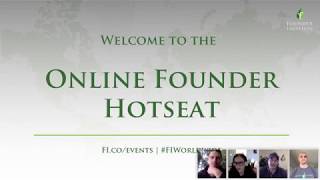
In this Founder Institute webinar, co‑founder Jonathan Gritchen introduces a panel of mentors (Mike Supravici, Ryan Nicoletti, Rachel Shepherd) and walks 70‑plus attendees through the "Startup Mad Libs" pitch framework, emphasizing a single, clear sentence that states a defined offering, a specific target audience, the problem being solved, and the unique solution. The session then reviews a series of live pitch submissions from founders across various sectors (media matchmaking, AI‑driven loan services, portable sanitizing ovens, influencer payment platforms, smoking‑cessation apps, privacy‑focused email aliases, AI sales‑training, restaurant menu‑cost analytics, healthcare team communication, and a blockchain‑protected creative marketplace). For each pitch, mentors provide concrete, actionable feedback—pointing out vagueness, over‑use of buzzwords, lack of domain credibility, unclear go‑to‑market, missing differentiation, and insufficient problem definition—while also offering suggestions for tightening language, specifying target users, highlighting market timing, and clarifying revenue models. The session concludes with collective advice on crafting concise, audience‑tailored pitches, avoiding marketing fluff, and iterating based on mentor critique, plus information about future Founder Institute hot‑seat events.
Chapters
Hey everybody, welcome to this Founder Institute online founder hot seat. My name is Jonathan Gritchen. I'm a co-founder of the Founder Institute and I already see we got about 70 people in the room. We had almost 300 people registered today, which was awesome, and we had over 100 submissions for pitches. So we're going to get to a lot of pitches today and, and hopefully we'll get to yours, but we probably won't be able to get to to all of them, and then for that, I pre-apologize. But basically what we're going to do here today is, number one, I'm just going to go through, introduce the speakers, and then we're going to give a very quick outline on pitching your startup. And after that, we're just gonna go, you know, 1, 2, 3, just go through all of your pitches and just try to give you as much feedback on your pitches and your startup ideas as we possibly can. So in the meantime, if at any time you want to submit your pitch still, we still are taking submissions. We will be basically giving preference to all the people that pre-submitted, but we still will take some in the chat. And if you want to put your pitch in the chat, you can do so by following instructions. I'm just going to put a little sticky note here on the screen. You can follow the instructions right there. To put any of your stuff into the chat. Okay, so with that being said, let's get quickly into the speaker introductions. So, and I know our cameras are a little bit small here, apologize for that. We're having some technical difficulties with this webinar tool, but Mike, who looks very small there, although he's a very, very large man. Mike, do you wanna introduce yourself first?
Hello everyone, my name is Mike Supravici. I lead the Alumni Success Group at the Founder Institute. And our role is to help alumni scale in any way. And we do that in any way that we can. Sometimes we do that through virtual programs. Other times we do that through like one-on-one kind of hand-to-hand combat kind of advice and tactical help. Other times we do it through, you know, various other types of webinars and things like that. So that's basically how we manage a portfolio of over 4,000 companies. So it's very likely that I've seen a lot of companies or ideas kind of in a, in a, in your space or some things that have worked and some things that have, don't, so I'm happy to kind of share that insight with you as well. Cool.
All right. And next, just going left to right here, we have Ryan, who's somewhere out there in the wilderness, and we may need to join him out there if the world continues to go south here. But Ryan, you want to introduce yourself?
Hey everyone, I'm reporting in from secret Founder Institute headquarters in the Santa Cruz Mountains. So secret that most of our team doesn't even know about it. It's good to meet everyone on this. My name is Ryan Nicoletti. I'm head of global operations for the Founder Institute. And so my role is to work with all of our local leadership teams around the world in 180 cities, making sure that we're creating a really great program and as a result, helping you build a really strong and successful global company. And so Mike and I both run the Silicon Valley program as managing directors. And so we actually run our own accelerator here in Palo Alto, California. And we're excited to be here today.
Cool. All right. And last but not least, we have Rachel on the line. Rachel, you want to introduce yourself?
Yes. Hi, welcome everyone. My name is Rachel Shepherd. I'm the Director of Global Marketing here at Founder Institute. And I'm also the co-creator of the Female Founder Initiative. My role is to support our marketing efforts at both the local levels as well as the global levels, which right now is, is is an interesting mix of both. And I also work with a lot of female founders to help them start, launch, and grow their companies. And so I've seen a lot of ideas come through there as well. And I see some of our female founders even here in the chat. So I'm so excited to speak with everyone today and hopefully review some great ideas.
Cool.
All right.
So let's move on now to some pitch guidelines. Okay, now for anybody that did pre-submit, you would have seen some of these guidelines and you could also learn more about these at FY.CO/MADLIBS. But basically a big issue that founders have when they're pitching their startups is that they sort of get in their own heads a little bit and they start talking and describing their idea in a way that nobody else can understand. Okay, so one of the most important things of talking about your idea, pitching your idea, whether it's to investors, journalists, potential team members, anybody, right, is being super, super clear about what it is that you do so that people can understand what you do really, really quickly and then actually get into the meat of the conversation, whatever it is, right? And for that reason, we use something called Startup Mad Libs, which if you remember the old Mad Libs games, literally we try to make it as easy as possible for you to create a pitch that anybody can understand so that they can actually start to critique it in an intelligent way. And this is the pitch format that we use. And essentially, and anyone else on the line here, feel free to jump in if you guys have any tips here for each of these sections. But basically, my company, right, and here this is where you would insert your name of the company, is developing a defined offering. And by defined offering, don't say a platform or something that's really nebulous or something with buzzwords, right? Just say I'm developing a mobile app. I'm developing a website for teachers or something like that. Okay, just be super specific. So my company is developing a defined offering to help a defined audience. And again, specificity is key. Don't say that you're trying to help women, right? That's like half the world's population. Be more specific. You're trying to help this defined audience solve a problem. Be very specific about the problem that you're trying to solve. And then finally, you're trying to do it with this secret sauce or, you know, kind of this unique sales proposition, right? And when you're able to describe your idea like this, which is a lot harder than it looks, trust me, uh, you know, people will immediately understand what you're doing, and then you can actually get into a good conversation. I'd probably say, uh, 90% of conversations that I have with founders, I spend 5 minutes just trying to figure out what it is that they do, whereas if they had built this one sentence properly, we could have skipped all that and been having a much better conversation. Any, any of you have any additional feedback here before we actually start getting into the pitches?
Um, it does really help us a little bit as far as like the guidance that we can provide you with if you can talk a little bit about your secret sauce, right? Like if you're like super vague and super high level about this, it's really hard for us to give you like tactical advice for your business. So just something to think about with that, that really, really helps, helps us. Uh, the second thing too is Try to stay away from buzzwords, like, you know, I'm doing AI for this or like platform this or whatever. Just try to keep it as low-level as possible. So, you know, I'm building a mobile app that does the XYZ is really helpful, for example.
Yeah, just to add on that too, I think I see a lot of founders, they try to You know, this is not where you want to impress somebody, right? By saying, I'm building this revolutionary or something like this and use all these buzzwords to make you sound really smart. Like, it's the exact opposite, right? You want to give a pitch that anybody can understand. Any other, any other final feedback here before we get into the pitches?
I would just say, like, it might help to tie it all into, like, a real-life example. So, so we can use Founder Institute As an example, so my company, the Founder Institute, is developing a training and mentoring program to help entrepreneurs launching a new startup create meaningful and enduring technology companies with shared equity that encourages peer support. So that's something that we've used in the past for that. So just by having that one super quick, like 15-second-long blurb at the beginning, it sets the foundation for everything else to have a more meaningful conversation. Yeah.
Okay. All right. Well, with that being said, we're just going to roll into— well, actually, first, I'm going to give you all about, you know, this is going to take 30 seconds, all right? So if any of you want to get your pitches into the chat, we have somebody on our team, Virginia, on our marketing team, very nice, very attentive person, is in there looking at your chat. So if you do want to submit any pitches, again, follow the format that we just described. Put them into the pitch now, and you could use this time to create that pitch if you'd like. But really quick, just about the Founder Institute, we are the world's largest pre-seed accelerator. We operate in a lot of cities. We have a lot of mentors and a lot of alumni that have created a lot of value. We are in over 180 cities, so we probably are in a city near you. You can see a list of chapters at fi.co/global. And what the Founder Institute does for founders at the pre-seed is we help you get to traction and funding by providing you with a really structured process, you know, basically taking out all of the analysis paralysis that you may have in building a business and really giving you a very structured way to build it step by step. And also, we combine that with support and feedback every single step of the way so that not only are you building a business quickly and efficiently, you're also building something that people actually want and making sure that you get feedback from experienced entrepreneurs, investors, and other founders all throughout the process of building that business. So you can learn more about Founder Institute at fi.co, or you can apply for free at fi.co/join/webinar. Okay, so let's get started. So as we get into these pitches, here again is the format of mentors we want to basically, and I don't know, we could do numerical pitches, it's sort of up to you guys, or numerical ratings, but we want to sort of look at it in two aspects. First of all, the pitch, and then secondly, the actually the business idea itself. So first we're going to do Victoria from New York, and I am going to be pasting this all into the chat as well so everybody can follow along. Victoria from New York's pitch is my company Amplius Televentures, aka Amplius TV, is developing an online platform that helps bring private investors and creative professionals together to find each other and partner to create programming for the expanding television marketplace. Investor subscribers will be able to discover projects via searchable database as well as connect with creatives via online chats and real-life networking and pitch events. Who wants to jump in on this?
I'm happy to jump in first. So Victoria, thanks for your submission, first of all. So, you know, I'm not going to be looking at like critiquing the pitch along like the framework we provided. You did a pretty good job, you know, focusing on that. Just really quick feedback would be, you know, you say online platform, be a little bit more specific. Could be a website, right? I think it just creates a little bit more tangibleness to the pitch. You know, I think in general that This is kind of an interesting idea, but you started off like focused on bringing investors and these creative professionals within the TV industry together, but then you go on to talk about like searchable databases, online chat groups, and real life networking and pitch events, and that's where you start getting distracted and start to lose it a little bit because as a startup, you're only going to be able to do one thing really, really well. Especially in the beginning. And so going from building something that's like fully online, you know, connecting investors and these TV professionals, to also doing live events and also doing chat groups and networking, it may— it kind of dilutes the value proposition a little bit, and you're not going to be able to successfully do all of that at once. So you're really going to have to pick one thing and focus on it. And, you know, I do know that, you know, funding for independent you know, producers of films is actually a problem. And so I do think that you're solving a problem in the market, but I would focus on just that component in the beginning because it's going to take a lot to just do that one thing right versus trying to also do live events and networking and all of that.
For a pitch like this, it's really important that you talk a little bit about your background, why you, Right? This is a very specific thing, and in order for you to pull something like this off, it's really helpful if you have like kind of some kind of domain expertise in this area. And I assume that you do because of just kind of like just how you thought about this idea, but it's really important that you mention that because people have to essentially believe that you can pull this off. And then I also strongly recommend that you demonstrate a little bit of like, like domain expertise with regards to how this could kind of work, right? Like for the average consumer, like investing in film and movies, right? It's kind of a foreign thing. And you really wanna talk a little bit about that. And also you wanna talk about kind of like the potential return, right? Most of these types of films and things like that are pretty risky. Most of them fail and the kind of capital requirements. So, you know, why is this a better fit or why is this a better investment process than say other things that are available for people? And what have you done to essentially figure out like how to do diligence, right? So this is, again, this all kind of ties into like your background if you have it. It's like, look, I, I spent, uh, you know, 25 years in, in Hollywood producing film. Um, I have a pretty good idea of kind of like how to bet various projects and things like that, and then we can increase like the success rate as a result of that, as well as the systems that I put together. Something like that would be really, really helpful in this case.
I agree, and I think that's a great place to like put in, or that's a great thing to put into your secret sauce, like that space or that part of the structure of your pitch. And in addition to that, I would say, well, you're solving a problem. If you feel like it's a, it's a market, or you're solving a specific problem to where you live, that's a great place to sort of give us a little bit more information, because sometimes we're unfamiliar with a problem in a certain location, or within a certain industry. I would say being a little bit more specific about how you're going to be expanding the television marketplace, just because, you know, TV is changing and how people consume content online is changing. So are you using creatives to be able to, you know, to produce more, you know, content regarding streaming, or how are you going about sort of bringing TV into this, you know, new wave, and really how is it expanding. So I would just be a little bit more specific on things like that. But I agree with Ryan, it's very interesting that you're putting together, you're bringing people who are able to create the content with investors and giving them a platform to do so. So just be a little more specific on the how would be great.
Yeah, I agree with that. And so James is saying here, you know, they keep saying film, she's talking television, it's unclear. And I mean, it's called Amplius Television Ventures, but, you know, it's, I think where I got lost again is a lack of specificity. Creative professionals, right? Is kind of like when I used the example before of saying women, you know, creative professionals is way too broad, right? If you're targeting television producers, if you're targeting, you know, whoever it is, right? You need to be super specific about that. And Victoria is actually writing in the chat here, you know, it requires more than a 2-sentence pitch. It doesn't, Victoria, right? You know, if you can't explain it simply, then you don't understand it well enough and you haven't done enough of the pitching with other people to see what resonates and to see exactly just the 1-sentence thing that you need to give to people so that they understand it right away, right? Then you can explain all the other stuff, but you need to just explain it right away so that they understand what it is and that, so we're not guessing on, kind of the problems that you're trying to solve. And, you know, definitely with what Ryan was saying, there's just, you're trying to do too many things at once here. Networking events, pitch events, et cetera, right? You know, focus on solving one problem. And I think there's something there, right? But I think the pitch leaves a lot to be desired. Okay, so next up we're gonna go to Rob. Bravo, that's a, that's a cool name. Sounds like a, like an action hero. So Rob Bravo, my company For AI is developing a loan offering in the face of the coronavirus where many independent professionals and next to graduate have financial difficulties. My company is a special way to administer the Ask Nation criteria with artificial intelligence algorithms that are designed for this population and purpose?
So maybe I can start with this one. Rob, I don't really understand what you do from this pitch, right? Loan offering is just too, too, too broad. But also just in general for the audience here, look, obviously coronavirus is a pretty big deal right now for various reasons. Heavily impacting society in many different ways. However, you know, it is something that will pass at some point. We don't know when exactly, but it will pass. So whenever you kind of think about like whatever business you're going to do or whatever idea you want to do, you know, it needs to be kind of designed for a post-corona world, right? So if you have some insights of like how the world is going to be different after we basically get through this, then you should try to kind of weave that in, right? I say, so loan offers were done this way. And they started moving into this direction for, I don't know who your customer is right now, but let's say it's for college graduates, you know, the payback system. Coronavirus has accelerated this and we're gonna basically piggyback on this trend and really take this to the next level. Try to kind of weave that in into your pitch.
Hey, Rob. So I agree with Mike on like the timing and, you know, the coronavirus will pass. So where does that leave you? I think there's an interesting opportunity in the market around freelancing, right? Because it's, you know, what we're seeing like just on a global level is that the rates of entrepreneurship, especially on a freelance and independent professional level, are increasing, especially in the wake of this, right? You know, you need to have that flexibility of being able to, you know, work remotely and operate and bring in money to support your family. And so You know, it's not super clear in the pitch, but I kind of can see where you're going with this, that there could be continuity in your business for freelancers, right? And that's a big issue right now because if you look at like what Uber is doing and, you know, all the legislation that's coming down of contractor versus employee, I do think that the freelancing market is something that's set to grow. Remote work is going to grow. And you see all these like, especially, you know, related to COVID-19, you see all these relief programs that are starting to pop up. The SBA is giving out special loans at like 3% to small businesses, but where does that leave the freelancer who maybe just, you know, is a creative professional, they're doing something independent, they're not a big company that has a lot of payroll, but they still, you know, it's affecting them. And so if you could get that specific and that niche focus on that one target customer. Now again, it doesn't have to be freelancers. I'm just kind of using that as an example of how, you know, you could turn it into something beyond that. That's gonna be very, very important. 'Cause you have to really nail the problem and the solution for one very specific market before you can start expanding and opening it up to other people. And I think the freelance wave that we're seeing right now is a really good one to ride. Yep.
I agree with Ryan, and I think it's really interesting if you focus on one, you know, set of people in particular, one customer, that'll give you a little bit of opportunity to pivot this coronavirus and the subsequent results of it unfold, right? So if your whole, you know, model is designed around, I'm trying to help the freelancer make money, you'll be able to be a little bit more fluid in how you solve that problem. As you know, right now, you know, the situation would be very different from 2 days from now, right? We just don't know. So that's something I would say about the idea. Regarding the pitch, definitely be more specific regarding like loan offering, right, in this case. So Loan offering is really vague, and then also, you know, I'm not sure, are you helping people refinance their loans as they move from graduate to employed, or is this, you know, is this a new loan that's offering for people who just graduated? You know, trying to give us a sense of where you sit in regards to your competitive landscape is really helpful because then that helps us better, you know, sort of judge the idea as well. So just feedback for others putting their pitch in the chat too.
Okay, yeah, and I would— I think the idea is really solid. I just think the pitch is confusing, right? Yeah, I mean, there's a definite problem here of independent professionals, freelancers, we're assuming is what you're talking about, not having, you know, any kind of revenue right now, or at least the revenue is going to go down. I would imagine maybe it's some kind of future profit sharing or future revenue sharing arrangement where they can get some money right now or something like that, right? I mean, there's definitely something there. I would tighten the pitch up. And also it seems like AI is a big part of your business considering it's 4AI is the name of the business. But, you know, as far as the pitch goes, the AI just sort of seems to sort of be like thrown in there at the end. And that's, you see the word AI thrown into a lot of pitches these days as a buzzword, right? So I would just warn that if AI is not at the core of your business, don't just throw it in there. Because people that, you know, people will start to dive into that and unmask it pretty quickly as just sort of a buzzword because a lot of people are just throwing that into every business now for any algorithm, right? Just saying AI. All right, so let's, we're gonna speed it up a little bit, all right guys? So let's try to be a little tighter. As I said, we had over 100 pitches. Now we're not getting to 100 pitches today, unfortunately, but we're gonna, Let's get to a little more. So here's another one that comes in and also very timely. I promise we're not only gonna do coronavirus-related pitches today 'cause I'm sure all of you are just really, you know, sick of reading about it as I am. But Aaron from Austin has an idea where my company, Tresagüion, let's say, is developing a portable sanitizing oven. To help medical practitioners reuse personal protective equipment during the equipment shortage with non-thermal plasma irradiation?
All right, I'm happy to start off. So one, the name is super confusing and hard to say, right? I think it kind of fails the name test, which, you know, for everyone on the call, it's basically like you're sitting at a bar having a beer with someone, it's loud, and you tell them the name of your company, they should be able to, one, understand very clearly what your company name is, and then two, have it be memorable to where when they go home later that night, they Google it, meaning they can spell it correctly. And then, you know, the icing on the cake would be it's easily found within Google. And that comes to SEO and doing a lot of other things. But in general, like, this name would fail the test. So I would definitely recommend at the beginning, try to figure out a better name. I think that the concept of this sanitizing oven is really cool. It sounds like you're an expert in this space. I don't know, out of all my friends, I don't know any experts on non-thermal plasma irradiation. And so I would talk about why that's a better value proposition for the business. And again, you know, this is like the one sentence pitch, guys. I know we're trying to squeeze you into this framework, but Ideally what would happen is like that would then expand to your 60-second pitch, right? Someone might ask a question, oh, well, tell me more about that, and you dive into your problem, right, and use data to support the problem. But for this specifically, like, you know, is it cheaper to, you know, build these sanitizing ovens and reuse PPE? A lot of the— depending on what the PPE is, right, if you're talking like specifically masks, We're facing a shortage right now, but that's a manufacturing problem, and they're relatively cheap. So you're going to have to kind of describe why it's so much better and it justifies hospitals or whoever going out and purchasing these sanitizing ovens versus just going out and buying new gear. And so that doesn't— the business case doesn't come across here. But I have a pretty good sense of what it is that you're doing without knowing necessarily the science behind it or why it would work. Okay.
I agree. I think it sounds really cool. To me, it sounds like a large autoclave, although autoclaves use, you know, temperature and pressure, and this definitely seems like new types of technology. But I think it's really interesting to have this opportunity to be able to quickly sanitize equipment. And, you know, to be a little bit more, you know, sort of fluid as the situation unfolds, I would say maybe address too is the non-thermal plasma irradiation. Is that technology that can be used in other ways, like long-term ways that already fit into business models that will inevitably sort of bounce back from the coronavirus and the aftermath of it? So I agree, I think you could If you could share a little bit more about maybe your expertise and other sort of long-term ways that this technology could be used, that would be really helpful.
I think you need to differentiate around other sanitizing ovens and products that are already in hospitals. People have been doing this for a long time, right? So you'd really want to talk about why this is better now and what it is about yours that's really important. But more importantly, I think for you, like, the elephant in the room is basically how you're going to go to market with something like this. You know, even though You know, there's a lot of debate over the FDA, particularly in the United States, about how it's like kind of like limiting some of the response. You know, you still have to generally make it through that. Also, who exactly is your customer, right? Is your customer the hospital, in which case is a fundamentally different types of sales process that could take you a year to close? Or is it basically like a clinic? Is it somebody else, right? And so make sure that you kind of talk about that because that's actually super important to like the validity of your business.
Yeah, okay. So for the sake of, uh, of timing, I'm gonna, I'm gonna go to the, the next one here. But I, I thought it was a pretty clear pitch, uh, probably the clearest one so far, at least to me, understanding what they do. Um, as far as the science goes, I'm a little lost, so I'll recuse myself. Um, Ricardo from New York: my company Paid Exposure is developing the first platform That's not a good sign, Ricardo. It's probably not the first platform, but my company Paid Exposure is developing the first platform to help social media influencers to manage and scale their own business by reducing the time it takes to finalize transactions within 24 hours instead of weeks or months. So I'll start on this. Yeah, number one, don't, don't say first. I can assure you, Ricardo, that that's a lie. You're not the first, especially not in the social media influencer space. There's— you're probably not even like the thousandth First, uh, secondly, um, okay, so you're helping social media influence manager and scale their business. So basically you're helping them get money faster, right? Is what you're helping them do for plugging products, I would imagine, and things like that. Um, which, which it sounds good in theory, I guess. I guess my question would just be like, don't, don't they have to, you know, show it? I would imagine that the money's held in escrow or something, and because they actually have to tweet out their things and stuff like that before they actually get paid. But so that's sort of a big conflict I see already. But yeah, don't— already you lost me on the first platform. Someone else want to jump in?
It would be good to just use an example here. Meet what's, you know, XYZ name. She's a, you know, major influencer on Instagram with 10 million followers, she goes to paid exposure, does XYZ, then she gets XYZ back, and that's how it works, right? Then all of us could be like, and guess what, there's a million, you know, people like that.
Yeah, I would say, um, sorry, Ryan, I would just say that like within finalizing transactions within 24 hours, from who, um, it's unclear as if this is regarding the affiliate side of the influencer marketing or, you know, sort of paid marketing as it for influencers where they get paid from the business that they're asking and it's sort of those campaign style payments. So unclear as to what type of, what angle of influencer marketing you're really tackling.
Hey, Ricardo, we've actually spoken before, so, you know, happy to just jump in here. You know, the problem you're talking about is like helping them scale their business. But I think the bigger problem is like helping them drive revenue, right? Because like you, in your follow-up chat, you mentioned that most platforms are really geared at helping businesses find good influencers versus helping influencers find good sponsors and businesses.
There's an obvious reason, right?
Well, so I think Yeah, so to a certain extent, like, I think that, you know, you should be a little bit more clear on that on the business transaction side. And I think like helping them scale their business and saving time is valuable and it is a big problem, but helping them, you know, make more money is going to have more of an impact. I think it might resonate more with your audience, but you might want to test it and see.
Yeah, I'm not a social media influencer, but I would agree, Ryan. I would imagine that if you did some customer development there, it's not the getting paid in a timely fashion that I would imagine is their biggest pain point. It's probably just closing those deals to begin with, right? Is my guess. But so our next pitch is from Dima in Kiev and Their company is my company, Quiti. It's developing a quit smoking service to help smokers and vapers to quit smoking with personalized tasks and gamification. So I see the gamification in there, so I'm gonna immediately go to Mike, 'cause Mike has built a company that heavily relied on, he built an online gaming company. So Mike, what do you, although Mike has certainly never gone anywhere near a cigarette, he's the healthiest person I've ever met, but Mike, what do you think? What do you think of this idea?
I mean, I think gamification is not enough here. Generally, gamification is something that helps a product maybe do a little bit better if it's designed correctly than it already was, but it's not enough of like a differentiator. Here you probably wanna just talk about how this service would work, right? Right now it sounds like, it's unclear if it's just like a product or if this is like a service where, you know, like a consulting service, for example, right? And so I think there's definitely an opportunity, obviously, I think a lot of people would like to try to quit smoking, but I would really try to define a little bit more of like kind of how the product offering would work and kind of like a little bit what your secret sauce is. Gamification itself is not a secret sauce. There's a lot of companies that use some form of gamification, but that doesn't mean that it works, right? Just throwing a leaderboard on something, for example, doesn't help. Getting people badges and rewards doesn't necessarily like help all that much. What really helps is, you know, creating a really good experience, a really good game experience that's designed correctly. Around a task that you're trying to achieve, right? So just kind of talk a little bit about that and talk a little bit about how you help people. Maybe it's through community support, for example, or something like that, and that's what, uh, will help you get better, uh, you know, uh, you know, reduction rates than, say, some of the medical treatments like the patch and the other things that are available already, right? So you don't— you want to talk about that. You definitely need to weave in, especially like the you know, the things that are available already to smokers and build that into your pitch.
And just really quick here, sorry, but if anybody— I want this to be interactive, right? So if anybody in the chat is a smoker or has quit smoking, let Dima know what you think of this pitch too, right? With any pitch, you need to get as much feedback as possible. So anybody here is a smoker trying to quit or did quit, go into the chat here and give Dima some feedback, right? Let's get her— obviously her mission here is a laudable one, so let's get her feedback to help her on her way. But yeah, sorry. So Rachel, you were gonna say?
Yeah, I was gonna— I agree with Mike. I automatically assumed when I read this that this was an app, but it actually doesn't say. So it would definitely be unclear on what type of, you know, service this is or what service is quite Yeah, exactly, and sort of how people interact with it. It would be really interesting. And then just a really quick way to maybe start to explain the type of gamification you use, or even, you know, behavior change, you know, sort of ways that you can use your technology, would be to maybe draw a parallel even. So like, for example, you're the Noom for people who want to quit smoking, or something that's, you know, very similar in a different marketplace, something that's familiar to people, because a lot of people don't smoke or vape, or a lot of people do, but a good amount of people don't as well. And so how are they going to be able to relate to your pitch and understand what type of offering you're creating is something worth thinking about as well.
There's a lot of comments, or several comments, around behavior change right now in the chat room. Behavior change is one of the most difficult things to do in products in general, right? Most good products don't end up doing that. What they end up doing is they piggyback on existing behavior and they're able to kind of make that a little a little bit better. Changing behavior radically is very, very difficult, right? Some games have done a decent enough job, but just something to kind of think about, right? So is there an existing behavior that you can maybe piggyback on or something like that to help you get there?
Yeah, I'm liking all of the comments here, so I'm kind of reading through. You know, I would like to just, again, without trying to, you know, harp on the service aspects, that has a very specific definition here in the US, but just, you know, talk a little bit more about like the value proposition for the founders, or excuse me, for the customers in this equation, right? Because there's so much out there, right? You almost need to justify why gamification can help, right? And why it's better. And it's hard to do that unless you have data. So it'd be much stronger to say, you know, something like we've already helped 50% of our customers quit smoking. And then you kind of run into the issue where that dating app space, which is like, if you're successful, then that means you lose a customer. Right. And so that's not necessarily like, you know, that's something that could be overcome because a lot of people smoke, but that is a paradigm that you're operating in with this business. Yep.
And yes, some of these, this feedback from the chat is great. So please, yeah, anybody If with any of these pitches they hit home to you just because it's a specialty you have, or even if you're in the target audience or it's a problem you have, please chime in. You know, everybody needs to get as much feedback as possible, whether it's from people like us or people that are actually their target audience. So here's another one coming from nearby San Francisco, Encel. I hope I'm saying that correctly. So my company sup.email, uh, not a great URL, but, uh, anyhow, my company sup.email is developing a clean slate email service to help consumers protect their privacy and security by provisioning unique email aliases for each transactional account that a user has set up. So I, I understand what the business does. I think you probably could have explained it much more simply, personally, right? And so basically when you create purchases, this is going to create a unique email and that should help protect you from spam and maybe security issues and things like that. But what do you guys think?
Yeah, I think that you want to talk a little bit more about the business case and why now, right? And so, you know, a pitch like this would be really helpful if you could talk about just you know, for example, how awful Superhuman is, is basically tracking everybody's like interactions. Like if you use Superhuman and you send an email to somebody, or you get an email from somebody, you— they're literally are able to like track like everything. And most of the email clients that are like dominant have like enormous amount of like privacy issues with regards to what you're talking about. And what you want to say is that this is happening, and then people are really upset about it. I don't know if it's true or not, I'm just making this up, right? And people don't like this, they're, they're upset about it, they're upset, they think, they think that this is Regis. And what's happening right now is that there's like a change where people are looking for ways to basically clean this up, you know, as well as like all the regulations that we're seeing from like governments and things like that with like the, you know, you know, all the different type of regulation with regards to the internet and stuff like that. So the time is now to do this, and we think we can do it like this, and we're gonna charge for it. Every email client is free, but you're, you know, you're giving up a lot of privacy, so we're gonna charge XYZ for it. So just think about that as you kind of build that into your pitch.
Yeah, you know, I agree. Like, you know, the time is now. I mean, you look at like the success of DuckDuckGo, it's clear that there's a lot of people are concerned and it's a hot topic, you know, in terms of email security and just online privacy in general. You know, for the— to a certain extent, right? Like you're going after a different market because there's gonna— there are gonna be people who love Superhuman, for example, and they don't care that they're reading their emails because it leads to a more customized and better workflow experience. But then there's gonna be a subset of people that, you know, care a lot about the privacy, right? And so, you know, I definitely think that this is a good market to go after. And I would also, I would just try to state that a little bit just more clearly into the pitch. And you kind of dive into provisioning unique email aliases for each transactional account. And like, you know, for the one-sentence pitch, it might be getting too granular just because, you know, you could probably consolidate that into fewer words. But overall, I think this is a really interesting company.
I agree. I think I would say based on the way you worded this, that you're very familiar with the technology and have a lot of background and experience in it. But I would say that all of these pitches, including this one, they need to be able to speak to everybody, right? So, so the potential investor, the person who can give you feedback, the customer, as well as, you know, maybe a B2B case, you know, so you have to be able to have different audiences understand this one sentence pitch. I think this is very granular in the technology and maybe not as accessible to consumers.
Yeah.
I, uh, I, I understood the pitch, and I think that's why we're having some pretty good conversation around it. My only, my only warning here is that, um, because we, we've had a lot of situations where one company that comes to mind is, uh, what was it, enroll.me? Is that— was that the one, right? Or, uh, unsubscribe— it was an unsubscribe service where they were allowing you to unsubscribe from all these different things, right? And pitching themselves as, oh, we're going to clean up your inbox, we're going to help your security, but then they were selling your information, right? Because a lot of these businesses, it's hard to make money. So I'm assuming from this pitch that you're going to charge your users to create these emails, right? I am assuming that you're not going to sell their information. So if you're going to sell their information, you need to change the pitch. Um, but just, uh, just something to, to keep an eye out for because a lot of these businesses are are, you know, are really hard to do, are really hard to have a sustainable business model around because we haven't quite got to the point where consumers are willing to pay for their privacy. They're still so used to getting stuff for free, and that means not having privacy, right? Um, all right, so let's, uh, let's, let's pick it up even faster. All right, we got about 15 minutes to go here. Uh, here's one from, uh, from Fernando, my company AudioWeb is developing a training platform called RolePlay to help sales teams to train themselves and learn how to respond to different situations through the sales process, giving them real-time feedback with AI engines. So I guess if I were to rephrase this pitch, you know, the— you don't have to say your company in this, right? You're creating a platform. Called Roleplay to help, um, it's not sales teams, right, to help the, the leaders of sales teams to train their constituents, their team members, uh, to, to close more sales through an AI, you know, bot, essentially a conversation bot that can, you know, help prepare them to, for the questions and the conversations that they're going to need to have. I think that's what your pitch is. And I believe you're in the chat too, Fernando, so elaborate on that. But yeah, anyone want to jump in?
Well, I mean— sorry, go ahead, Mike.
It's unclear that AI can actually do what you've said, right? Like there's so much nuance to sales and the way things are said and body language and things like that that I'm just not really sure. You could argue that this is more like— could be more like a machine learning play where you literally like kind of hard script every single like potential like objection and an answer, and then you kind of like deal with that that way. And then it's not really AI, it's just like machine learning essentially, and then you're kind of like forcing through that, um, through all those different like templates that you've essentially built, and you kind of create a question and answer. And that may be able to test something, but I think you really— there's just so much nuance here that it's, it's, it's hard for me to kind of figure out exactly like, you know, how, how this would work or or why it would necessarily be valuable. So here's what I would do with your pitch. I would focus on a very specific type of like salesperson. Outside sales is fundamentally different from inside sales. Small business sales is fundamentally different from large enterprise sales where you have to like build relationships and learn the political game in like a huge like organization, right? So I could see something like this working really well for like telemarketers, right? Where basically they're reading off of a script and then the customer gives you some sort of like objection and you know exactly what to answer with that, right? Because it's like super like, you know, like, uh, controlled, right? But it gets much more difficult for me to kind of see the use case with this with like enterprise people, right? So then really the user is the salesperson and the buyer is like the director of sales for that telemarketing company, right? So those are two different things that you probably want to think through.
Yeah, I like the repositioning of it, right? Because, you know, one of my pieces of feedback would be, you know, someone who's dealing with phone calls and face-to-face, you know, meetings with their prospects, you know, it's a different field than, you know, typing an answer using, you know, in response to a chatbot, right? And so, you know, there's a whole other dynamic of, you know, you might be able to like spin up an answer by typing, but can you can you convey that information clearly through verbal communication, like if you're in a live meeting or something like that. And so I do think that like there, this solution, there is a market for it, but you just wanna be specific as to the customer archetype and what, like, I always ask like, you know, whenever we do like office hours and things like that, like who has the biggest problem with this? And it's always, you wanna be careful like, you know, building a solution and then finding a market. You need to first find the market and then build the solution. But it sounds like you, you may have something here, right? And so you really gotta, you really gotta figure out who has the biggest problem where this solution is relevant. And it could be telemarketing, could be, could be other, other types as well.
I agree completely. More specificity regarding, you know, what type of sales team could be really important. But in addition to that, you know, through the sales process as Is there a very specific part in the sales process that you're solving or that AI can solve? Because to a certain extent, sales is a little bit customizable. So is it in the beginning, you know, and so that you don't get, you know, hung up on in the case of a telemarketer, like Mike said, or, you know, what exactly are you solving within the greater sales process would be helpful as well.
And one thing I'll add here before, when I kind of repositioned it, and the reason why you want to reposition it is because, you know, in this stated pitch, the problem you're solving is to help sales team train themselves to learn how to respond to different situations. That, that's really not the problem that you're solving, right? The problem that you're solving is to increase your conversion, right, of whoever the lead of your sales team is. That's the problem you're solving. And once you understand that that's the problem that you're solving, your competition becomes very different, right? Because there's a million tools that can help or that are at least, they're trying to help, uh, sales teams increase their, their closing percentages. So, um, you know, understanding exactly what the problem is that you're solving is important. Like, you just have your strategy to solve that problem is to help the sales team. So, um, you know, that's what you're up against. So it's important to, to understand that. All right, so next pitch we got, um, let's see here. Roman from Munich. My company Uh, Miticus Analytics is developing a SaaS-based solution for restaurants and commercial food service operators to help chefs cut food costs by replacing traditional paper-based menu planning with a sophisticated and easy-to-use machine learning-based platform.
Roman, for, for your pitch, what I would talk about instead is I would add more around like the analytics that company provides, uh, and how that helps chefs basically withstand like some of the challenges that they may have in the market, particularly now, uh, and, and moving forward, and how they can basically optimize their menus, uh, based on like, you know, consumer behavior. That's like super important. It's actually better, better than the sophist— the last part, like the sophisticated early machine learning platform, because that's like really interesting. So just, just Consider that in your pitch.
Yeah, I agree with Mike's perspective here because, I mean, you know, it's clear, at least through the pitch here, that, you know, they're using paper-based menu planning. And so, I mean, that's clearly something that should be going online if it hasn't already. And so I do think that it's more about giving them the right information and you know, providing analytics around this versus like, I don't think most chefs are going to be, you know, interested or aware of like sophisticated, easy-to-use machine learning-based platform, right? So you kind of need to, with all of your pitches, you kind of need to pitch it from the customer's perspective, right? And so, you know, they would be interested in, you know, providing analysis on curating the right types of food to buy based on customer demand. Right.
And like, right, Ryan, like it's like larger customers that I know you spent some time in this industry. Like there's, there's, it's the large customers that would want this, right? It's like multi-location restaurants or massive restaurants, like hundreds of tables, uh, you know, commercial food service operators. They're the folks that need this kind of thing. Like the mom and pop shop that has like their little, like, you know, bed and breakfast or whatever might not. Care as much.
Yeah, exactly.
Yeah, I would also cut back on descriptors like sophisticated. You know, easy to use makes more sense because that speaks to the customer, like Ryan was saying. But like sophisticated, like, and easy to use, you know, those may be, you know, counterproductive even within their own, this own sentence, you know. Like, so I would really get a little, you know, just a little bit more specific. I know we've said that a bunch of times, but truly, truly be specific and get rid of other words. Like, I've seen other words in some of these pitches like creative and all that other stuff, like let us decide if it's sophisticated or creative once we get the chance to talk more about it. You know, just be to the point. All words matter in a pitch. So be to the point, make sure that you're actually driving something home with the words that you use, not just describing it in a very ethereal sort of, you know, high level.
Yeah, great. I think it's a good— I mean, I think it's a good business idea. I'm sure that there's probably other things out there like that. Which is what I assume that you were trying to get to at the end, where it's easy to use, right? Because I could imagine where a chef doesn't want to go into some complicated SaaS product, right? They want to make food and they need to do it in a cheap way that makes the restaurant money. So I think focusing on the easy-to-use aspect of it might be really interesting. And that's where I would recommend you go. All right. So we're going to do a couple more pitches here. We're going a little overtime today, but that's just because we're the nice— we're really nice people and we're awesome. So the— because we're not busy or anything, you know, these are actually slow times in the world. So Cheryl asks, my company Pomi Health is developing a customizable and simple communication platform that empowers interdisciplinary healthcare teams to quickly prioritize a complex patient's functional issues and to develop a single convergent care management plan. It empowers teams to collaborate with clarity and confidence.
So, you know, just kind of the usual stuff, right? Like a customizable and simple communication platform. Like, I still don't know what that is. It could be an app, right? It could be through Epic or whatever, right? Like, I don't think you need to put in the word customizable. It's almost assumed most things are customizable, and so like, you know, I take the approach that if a word isn't adding value to a pitch, it's taking away value. So you could, you know, shave a little bit off there. You know, communication amongst healthcare teams is super important, right? I mean, you know, it could drive costs down, it ensures more importantly that patients are getting the right care. So I do think that this is a worthy problem worth solving. And I think there are solutions out there. So you might wanna talk a little bit about like what makes yours different because there definitely are other kind of care management solutions that doctors and nurses are using. And so like maybe talk a little bit about like what your advantage is, what your competitive advantage is. And then that way it's very clear, like maybe it's just like cheaper or faster or whatever it is. And then, you know, I think looking at the last part, empowers teams to collaborate with clarity and confidence. I think that's a, I think that's a good mission. So that's all I have for this one.
I would say that there's something, you know, this, this page brings up something that we talked about before, which is what is the difference between your user and your customers. So you talk about who uses it, which is empowers interdisciplinary healthcare teams, but who's actually buying your service or your platform? And, you know, who are the decision makers there? I would maybe— and, and why is it their pain point? Obviously, you know, better communication in healthcare saves lives, and it's very, you know, you know, important. And, you know, and I think people have all— a lot of people have their eyes on healthcare right now, so it's somewhat topical as well. But just if you could be just a a lot more concise. And in addition to that, you know, just be a little bit more specific on exactly who would be using your platform as well as who would be buying it. That could be really helpful as well.
You got to mention the market and where you are, right? Because healthcare in the United States is very different than healthcare in Canada and England and other areas in the world, Africa, right? So mention that, and because that will help you get better feedback and also make sense. So for example, if you're in the United States like pretty much all the hospital systems have an EHR system, so you're really going to kind of have to deal with that. And on top of that, half of them use this, this EHR system called Epic, and they're notoriously difficult, uh, to work with, and they charge you a lot of money to try to even integrate with them, and they don't want you to integrate with them because they want to own all the data, so they don't want to basically work with you, right? So it's like, it's like a very complex kind of like situation. So what you've essentially described here is basically like an electronic health records, uh, play based on what you've said. Now they're— so in, in anybody's mind, or a lot of people's mind, will go into that direction. It's like, how is this different than a, you know, EHR system? So you can come at it, it's like, look, EHR is broken, we're going to fix it, and we have a plan for how we're going to rip out all these EHRs that are available and we're going to put ours in, which is super difficult, but it's, you know, it's possible. Or you can make a case that There's all these new doctors that are going to come online here pretty soon. They're all going to be looking for like new EHRs, and particularly if they're in private practice, and we can come in with that, right? Or we're building like a WhatsApp for like the medical system, and that way we don't even have to deal with like the EHR system, and that's how we manage that, right? So you really kind of have to deal with like the elephant in the room here when you kind of work with a pitch like those.
For me, I'll, I'll just mention two things. I want to double down on what Rachel was saying. You don't sell any product to a team. There's a head, right? And since, and because that's a fact, since you're selling it to one person, that person has a particular KPI or goal that they need to reach to reach their next bonus or whatever, right? So you need to really focus in on who that person is that's going to make the purchase decision and exactly which problem you're solving for them. And the other thing I would say here is that there's just a lot of buzzword bingo going on in here. You know, I would— this pitch could probably be half the number of characters or words and say the same thing in plain English, right? So specify who would buy, and then, you know, and then just make it a lot clearer and don't use some of these large words that, again, I think are just they're just gonna be confusing for 99.9% of the people that hear this pitch. Okay, so I got one last pitch that I'm putting in here and then we're gonna go through, where'd it go? Sorry, let me grab it again. And this is from Jason. Jason's been in the chat here for a while. So we're gonna get to Jason's pitch and then we're gonna wrap things up. But for everybody who's still hanging around, thank you. You will receive a video recording of this session within 48 hours, number one. And number two, we're also, because a lot of us are all cooped up in our homes, we're gonna be running a lot of online events over the next coming weeks. And then over the next coming months, we're gonna be adding a lot of them very frequently. So you can see some of those at onlinestartupevents.com. So Jason's pitch, my company Market Sense, Market Sense, is developing a crowdsourced marketplace to help creatives meet their future clients by bidding on campaigns while protecting their submissions through blockchain technology.
It's unclear to me why, why you would need blockchain to do this. So I don't think you necessarily need it, and you want to be careful, you know, using it because, you know, again, people say, you know, you're throwing in buzzwords. Like, and blockchain could very well be, you know, a legitimate technology for it, but it's unclear why you need it. And I would also, I would get a little bit more specific to creatives, like kind of going full circle to the very first pitch here. There's television creatives, there's freelance graphic designers. And so you're gonna have to start off with a pretty specific niche.
Yeah, I agree 100% on the whole entire, You know, marketplace thing, obviously a lot of like buzzwords here, crowdsourcing, things like that, blockchain technology, you know, um, you know, specify who the creative is and specify basically what advantage you have by matching them, or, you know, how can you make this marketplace work. Marketplaces are really hard to start, but once they get going, there's a lot, there's a lot of network effects there. So, you know, under helping us understand kind of like the size of this and how big this could actually be is really helpful, because if this can't get really big, there's just not enough transaction fees for it to you to build a really good business. So I'm not saying that there isn't, I just, it's really unclear from this pitch.
I think, yeah, I think there's something missing here in this pitch and that's exactly what problem you're trying to solve. So like creatives are meeting clients already and, you know, working on projects, you know, in general, right? Otherwise they wouldn't be, you know, sort of doing either creative work potentially on the side or potentially full-time. So is the problem that— and I wonder if the blockchain technology steps in to try to protect, like, you know, basically their designs or their ideas from being stolen. Maybe that was something I was thinking about. Like, maybe that makes sense, you know. But yeah, really kind of digging in on what the problem is would be super helpful for, you know, helping us better understand your business.
Agreed, because this just sounds like 99designs plus blockchain. Right? So, and maybe as Rachel said, maybe that's the point, right? Maybe it's because people on 99— and this is a problem, right? If you ever use 99designs, like once the other designers see which projects are being hearted and favorited, they all just start copying that same project, right? Now, while that's bad for creatives, at the end of the day, it does help the paying customer get a better product. So it's sort of a complex issue, but yeah, I would— this— if blockchain is in there for an actual functional reason versus just being a buzzword, then that should be the core of your pitch because right now it just sounds like 99designs plus blockchain.
All right.
So thanks everyone for joining. You know, I always like to wrap these things up with just— we've gone through a lot of pitches today. I'm sure there's been some themes that we've seen here. Uh, any of you guys have any kind of final, final feedback, final things that you've seen? And I'll throw us all in a little Brady Bunch here. So now you can finally see our faces a little bit larger. Uh, maybe that's a bad thing, I don't know. But, uh, any, any final feedback you guys have just from the, the pitches that you've seen to help, to help some of these people in the future? And by the way, we will be hosting more Founder Hot Seat events So if we didn't get to your pitch today, which is probably likely because we reached over 100 of them, you know, probably one of the reasons we were randomly selecting some of them to a certain degree, but also a lot of the ones that we just didn't understand, we couldn't put on here. So follow the feedback at fi.co/madlibs and check out some of the new events coming up at onlinestartupevents.com. But final words of wisdom on pitching from any of you guys?
I actually don't have one on pitching, but I just want to say that I'm like extremely excited about like, you know, the future of humanity from all this, all these exciting ideas. And, you know, this is— we only went through a few, but there's just lots more in the chat room. And, you know, I think the world's going to be in a good place. And as a result of this, it's basically entrepreneurship that's going to like create the new future once we get past this coronavirus situation. And I think this is really exciting. I mean, I think the world is in— is in good hands and I'm really excited to have helped you in any way that we can.
Yeah, I would just say, you know, it's easy to sit here and look at your one sentence pitch and bash it and so, you know, definitely like, and this goes kind of to something that we teach in the program, but when you're getting advice and feedback from mentors, you're gonna sometimes get things that are helpful and you're gonna get some things that aren't helpful. But overall, like, we're just kind of spinning back to you, like, how we perceive your pitch. And you want to look at the things that we say and the things that we don't say and the things that, like, we, like, kind of get in our head and see how we've interpreted what you're saying to then go back and refactor the pitch and make it stronger, right? Because there's this entire opinion in cloud that exists, and you as the executive of your company, you have to cut through all the BS and you have to figure out like what's helpful, what's not. But you also need to know like when you're wrong and have that level of self-awareness to say, okay, like this wasn't coming across clearly, I need to go back and adjust in, you know, X, Y, and Z ways. Like Mike, I'm also optimistic and excited about, you know, helping more and more entrepreneurs around the world. So drop us a line if you want to join a future webinar, please do. We're going to be running these more often, and we'd love to hear from you.
Yeah, I would say, you know, just get one very tactical thing is to go through your pitches and just like get rid of all of your marketing words, just get rid of them and try to rebuild it with less descriptors, you know, and less, you know, sort of nonessential words. I think that's something that everybody could do, and it could really, really improve your pitch a lot. It's much different to pitch in one sentence than it is to describe your company on your website, for example. So think about how you're going to be using this, who you're going to be speaking to, and how you can best go about using, you know, words to their— to the best of your ability. And then secondly, I would say thank you to everybody for submitting your ideas. You know, our job is, you know, not to pat you on the back and just say thanks. Our job is to sort of critique these ideas and these pitches as much as we can. Otherwise, we're not really helping you. So we really appreciate you, you know, sort of taking in our feedback and helping each other in the chat. I saw a lot of that today, which is really incredible. And that's what we're here to do is help founders. So thank you to everyone who participated in this today.
Yeah, thanks to everyone again. We will run more of these and I'll just— my last parting thing is just, well, while, you know, the one sentence may seem like, oh, my business has so many other facets and stuff, right? You can't do the one paragraph, you can't do an effective pitch deck, you can't do any of those things until you get that one sentence down, right? Because, you know, you can call it the elevator pitch or whatever it is, but until you can very quickly within 10, 15 seconds be on the same page as somebody, you can't then get to what the next step is and actually have the fruitful conversation. So it seems easy, but believe me, Being concise with your pitch and getting into that one sentence thing is really hard. And the more you work on that, you know, the better feedback you'll get and the much better product you'll be in a position to create 'cause you'll understand the problem, the market, the solution, and all that. All right, so thanks everyone for joining. Again, onlinestartupevents.com. And if we didn't get to your pitch, I apologize, but I hope you have all a great, morning, afternoon, or evening, and stay safe, isolated, and healthy out there. Thanks everybody. Bye.










